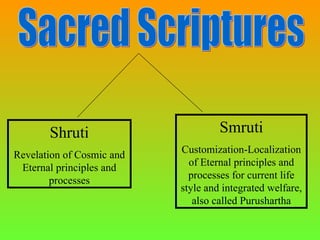
Shruti                       Smruti
                           Customization-Localization
Revelation of Cosmic and
                             of Eternal principles and
 Eternal principles and
                             processes for current life
        processes
                           style and integrated welfare,
                              also called Purushartha
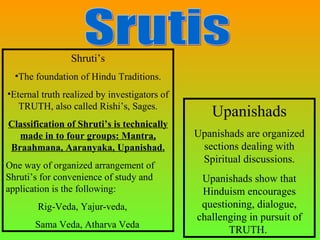
Shruti’s
  •The foundation of Hindu Traditions.
•Eternal truth realized by investigators of
   TRUTH, also called Rishi’s, Sages.
                                                 Upanishads
Classification of Shruti’s is technically
  made in to four groups: Mantra,             Upanishads are organized
Braahmana, Aaranyaka, Upanishad.               sections dealing with
                                               Spiritual discussions.
One way of organized arrangement of
Shruti’s for convenience of study and          Upanishads show that
application is the following:                  Hinduism encourages
        Rig-Veda, Yajur-veda,                  questioning, dialogue,
                                              challenging in pursuit of
       Sama Veda, Atharva Veda
                                                     TRUTH.
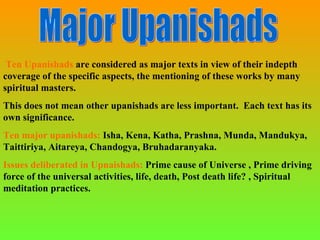
Ten Upanishads are considered as major texts in view of their indepth
coverage of the specific aspects, the mentioning of these works by many
spiritual masters.
This does not mean other upanishads are less important. Each text has its
own significance.
Ten major upanishads: Isha, Kena, Katha, Prashna, Munda, Mandukya,
Taittiriya, Aitareya, Chandogya, Bruhadaranyaka.
Issues deliberated in Upnaishads: Prime cause of Universe , Prime driving
force of the universal activities, life, death, Post death life? , Spiritual
meditation practices.
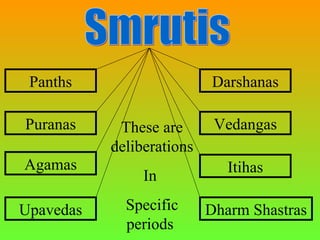
Panths                    Darshanas

Puranas     These are       Vedangas
           deliberations
Agamas                        Itihas
                In

Upavedas     Specific      Dharm Shastras
             periods
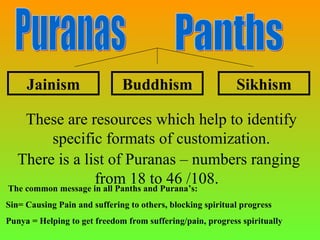
Jainism                  Buddhism                      Sikhism

    These are resources which help to identify
         specific formats of customization.
  There is a list of Puranas – numbers ranging
                   from 18and Purana’s:
The common message in all Panths
                                 to 46 /108.
Sin= Causing Pain and suffering to others, blocking spiritual progress
Punya = Helping to get freedom from suffering/pain, progress spiritually
Shakta         Shaiva     Jain      Vaishnava


  Shilpa        Dhanur    Gandharva      Ayur
Architecture    Defense     Music       Medicine
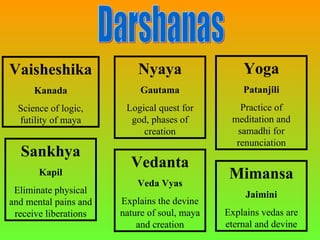
Vaisheshika                Nyaya                  Yoga
      Kanada                Gautama               Patanjili
  Science of logic,     Logical quest for        Practice of
  futility of maya       god, phases of        meditation and
                            creation            samadhi for
                                                renunciation
  Sankhya
                         Vedanta
       Kapil
                           Veda Vyas
                                               Mimansa
 Eliminate physical                                Jaimini
and mental pains and   Explains the devine
 receive liberations   nature of soul, maya   Explains vedas are
                           and creation       eternal and devine
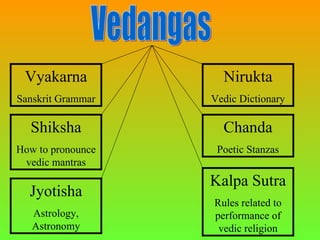
Vyakarna            Nirukta
Sanskrit Grammar   Vedic Dictionary

  Shiksha            Chanda
How to pronounce    Poetic Stanzas
 vedic mantras
                   Kalpa Sutra
  Jyotisha
                   Rules related to
   Astrology,      performance of
   Astronomy        vedic religion
Ramayana               Mahabharat
     Valmiki               Ved Vyas
Life history of Sita    Story of Padavas,
and Rama teaching       Kauravas and Sri
   ideal values              Krishna
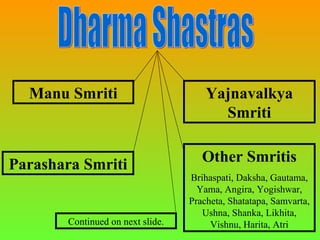
Manu Smriti                          Yajnavalkya
                                         Smriti


Parashara Smriti                      Other Smritis
                                   Brihaspati, Daksha, Gautama,
                                     Yama, Angira, Yogishwar,
                                   Pracheta, Shatatapa, Samvarta,
                                      Ushna, Shanka, Likhita,
        Continued on next slide.        Vishnu, Harita, Atri
Upasmritis                    Tirukural
  Narada, Pulaha, Garga,          Tamil Shavite
Pulastya, Shaunaka, Granu,
                             Behavior, Conduct, Ethics.
Boudhayana, Vishwamitra
           …etc.

   Niti Shastra               Artha Shastra
Chanakya, Vidura, Shukra.      Kautilya Economics,
                                  Politics, Law.
The essence of Vedas and
upansihads is condensed into 700
concise shlokas.
These provide a guidance to the
science of self- realization.
Sruti                   Smruti
                        Dealing with particular
Dealing with internal
                         application of eternal
     principles
                              principles.
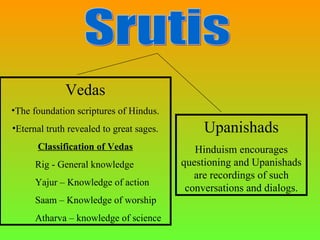
Vedas
•The foundation scriptures of Hindus.
•Eternal truth revealed to great sages.        Upanishads
      Classification of Vedas                Hinduism encourages
      Rig - General knowledge             questioning and Upanishads
                                             are recordings of such
      Yajur – Knowledge of action
                                           conversations and dialogs.
      Saam – Knowledge of worship
      Atharva – knowledge of science
Ishaa – Philosophy of God and God realization
Mandukya – Niraakaar(without form) aspect of god
Prashna – Questions like root cause of universe, functioning of vital force
      of life
Aitareya – Atman and births of atman are described
Kaushitaki – Course for souls after death, doctrine of prana and moksha
Katha – Q&A between Yama and Nachiketa
Taittariya – Tells more about the creation of god
Brhadaranyaka – Negation of all conceptions of self
Chhandogya – Sacrifices and other forms of worship
Kena – Sacrifices and other forms of worship
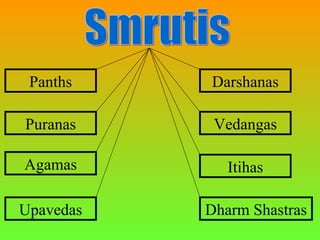
Panths    Darshanas

Puranas     Vedangas

Agamas        Itihas

Upavedas   Dharm Shastras
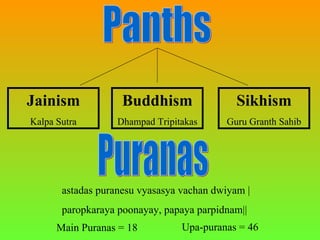
Jainism             Buddhism                 Sikhism
Kalpa Sutra        Dhampad Tripitakas     Guru Granth Sahib


       astadas puranesu vyasasya vachan dwiyam |
       paropkaraya poonayay, papaya parpidnam||
      Main Puranas = 18          Upa-puranas = 46
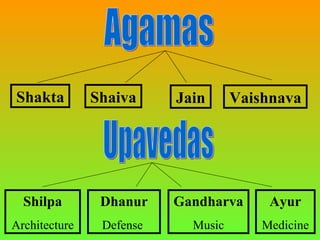
Shakta         Shaiva     Jain      Vaishnava


  Shilpa        Dhanur    Gandharva      Ayur
Architecture    Defense     Music       Medicine
Vaisheshika                Nyaya                  Yoga
      Kanada                Gautama               Patanjili
  Science of logic,     Logical quest for        Practice of
  futility of maya       god, phases of        meditation and
                            creation            samadhi for
                                                renunciation
  Sankhya
                         Vedanta
       Kapil
                           Veda Vyas
                                               Mimansa
 Eliminate physical                                Jaimini
and mental pains and   Explains the devine
 receive liberations   nature of soul, maya   Explains vedas are
                           and creation       eternal and devine
Vyakarna            Nirukta
Sanskrit Grammer      Dictionary

  Shiksha            Chhanda
How to pronounce    Poetic Stanzas
 vedic mantras
                   Kalpa Sutra
 Jyotishya
                   Types which give
   Astrology,       concise form of
   Astronomy         vedic religion
Ramayan               Mahabharat
     Valmiki               Ved Vyas
Life history of Sita    Story of Padavas,
and Rama teaching       Kauravas and Sri
   ideal values              Krishna
Manu Smriti                               Yajnavalkya
  Useful for other yugas.                     Smriti
                                           Useful for other yugas.


Parashara Smriti                           Other Smritis
  Suitable for people of                Brihaspati, Daksha, Gautama,
        Kaliyuga.                         Yama, Angira, Yogishwar,
                                        Pracheta, Shatatapa, Samvarta,
             Continued on next slide.      Ushna, Shanka, Likhita,
                                             Vishnu, Harita, Atri
Upasmritis                    Tirukural
  Narada, Pulaha, Garga,          Tamil Shavite
Pulastya, Shaunaka, Granu,
                             Behavior, Conduct, Ethics.
Boudhayana, Vishwamitra
           …etc.

   Niti Shastra               Artha Shastra
Chanakya, Vidura, Shukra.      Kautilya Economics,
                                  Politics, Law.
The essence of into vedic
knowledge has been
crystallized into 700 concise
shlokas, which provide a
definitive guide to the
science of self- realization.

Sacred Scriptures

  • 1.
    Shruti Smruti Customization-Localization Revelation of Cosmic and of Eternal principles and Eternal principles and processes for current life processes style and integrated welfare, also called Purushartha
  • 2.
    Shruti’s •Thefoundation of Hindu Traditions. •Eternal truth realized by investigators of TRUTH, also called Rishi’s, Sages. Upanishads Classification of Shruti’s is technically made in to four groups: Mantra, Upanishads are organized Braahmana, Aaranyaka, Upanishad. sections dealing with Spiritual discussions. One way of organized arrangement of Shruti’s for convenience of study and Upanishads show that application is the following: Hinduism encourages Rig-Veda, Yajur-veda, questioning, dialogue, challenging in pursuit of Sama Veda, Atharva Veda TRUTH.
  • 3.
    Ten Upanishads areconsidered as major texts in view of their indepth coverage of the specific aspects, the mentioning of these works by many spiritual masters. This does not mean other upanishads are less important. Each text has its own significance. Ten major upanishads: Isha, Kena, Katha, Prashna, Munda, Mandukya, Taittiriya, Aitareya, Chandogya, Bruhadaranyaka. Issues deliberated in Upnaishads: Prime cause of Universe , Prime driving force of the universal activities, life, death, Post death life? , Spiritual meditation practices.
  • 4.
    Panths Darshanas Puranas These are Vedangas deliberations Agamas Itihas In Upavedas Specific Dharm Shastras periods
  • 5.
    Jainism Buddhism Sikhism These are resources which help to identify specific formats of customization. There is a list of Puranas – numbers ranging from 18and Purana’s: The common message in all Panths to 46 /108. Sin= Causing Pain and suffering to others, blocking spiritual progress Punya = Helping to get freedom from suffering/pain, progress spiritually
  • 6.
    Shakta Shaiva Jain Vaishnava Shilpa Dhanur Gandharva Ayur Architecture Defense Music Medicine
  • 7.
    Vaisheshika Nyaya Yoga Kanada Gautama Patanjili Science of logic, Logical quest for Practice of futility of maya god, phases of meditation and creation samadhi for renunciation Sankhya Vedanta Kapil Veda Vyas Mimansa Eliminate physical Jaimini and mental pains and Explains the devine receive liberations nature of soul, maya Explains vedas are and creation eternal and devine
  • 8.
    Vyakarna Nirukta Sanskrit Grammar Vedic Dictionary Shiksha Chanda How to pronounce Poetic Stanzas vedic mantras Kalpa Sutra Jyotisha Rules related to Astrology, performance of Astronomy vedic religion
  • 9.
    Ramayana Mahabharat Valmiki Ved Vyas Life history of Sita Story of Padavas, and Rama teaching Kauravas and Sri ideal values Krishna
  • 10.
    Manu Smriti Yajnavalkya Smriti Parashara Smriti Other Smritis Brihaspati, Daksha, Gautama, Yama, Angira, Yogishwar, Pracheta, Shatatapa, Samvarta, Ushna, Shanka, Likhita, Continued on next slide. Vishnu, Harita, Atri
  • 11.
    Upasmritis Tirukural Narada, Pulaha, Garga, Tamil Shavite Pulastya, Shaunaka, Granu, Behavior, Conduct, Ethics. Boudhayana, Vishwamitra …etc. Niti Shastra Artha Shastra Chanakya, Vidura, Shukra. Kautilya Economics, Politics, Law.
  • 12.
    The essence ofVedas and upansihads is condensed into 700 concise shlokas. These provide a guidance to the science of self- realization.
  • 13.
    Sruti Smruti Dealing with particular Dealing with internal application of eternal principles principles.
  • 14.
    Vedas •The foundation scripturesof Hindus. •Eternal truth revealed to great sages. Upanishads Classification of Vedas Hinduism encourages Rig - General knowledge questioning and Upanishads are recordings of such Yajur – Knowledge of action conversations and dialogs. Saam – Knowledge of worship Atharva – knowledge of science
  • 15.
    Ishaa – Philosophyof God and God realization Mandukya – Niraakaar(without form) aspect of god Prashna – Questions like root cause of universe, functioning of vital force of life Aitareya – Atman and births of atman are described Kaushitaki – Course for souls after death, doctrine of prana and moksha Katha – Q&A between Yama and Nachiketa Taittariya – Tells more about the creation of god Brhadaranyaka – Negation of all conceptions of self Chhandogya – Sacrifices and other forms of worship Kena – Sacrifices and other forms of worship
  • 16.
    Panths Darshanas Puranas Vedangas Agamas Itihas Upavedas Dharm Shastras
  • 17.
    Jainism Buddhism Sikhism Kalpa Sutra Dhampad Tripitakas Guru Granth Sahib astadas puranesu vyasasya vachan dwiyam | paropkaraya poonayay, papaya parpidnam|| Main Puranas = 18 Upa-puranas = 46
  • 18.
    Shakta Shaiva Jain Vaishnava Shilpa Dhanur Gandharva Ayur Architecture Defense Music Medicine
  • 19.
    Vaisheshika Nyaya Yoga Kanada Gautama Patanjili Science of logic, Logical quest for Practice of futility of maya god, phases of meditation and creation samadhi for renunciation Sankhya Vedanta Kapil Veda Vyas Mimansa Eliminate physical Jaimini and mental pains and Explains the devine receive liberations nature of soul, maya Explains vedas are and creation eternal and devine
  • 20.
    Vyakarna Nirukta Sanskrit Grammer Dictionary Shiksha Chhanda How to pronounce Poetic Stanzas vedic mantras Kalpa Sutra Jyotishya Types which give Astrology, concise form of Astronomy vedic religion
  • 21.
    Ramayan Mahabharat Valmiki Ved Vyas Life history of Sita Story of Padavas, and Rama teaching Kauravas and Sri ideal values Krishna
  • 22.
    Manu Smriti Yajnavalkya Useful for other yugas. Smriti Useful for other yugas. Parashara Smriti Other Smritis Suitable for people of Brihaspati, Daksha, Gautama, Kaliyuga. Yama, Angira, Yogishwar, Pracheta, Shatatapa, Samvarta, Continued on next slide. Ushna, Shanka, Likhita, Vishnu, Harita, Atri
  • 23.
    Upasmritis Tirukural Narada, Pulaha, Garga, Tamil Shavite Pulastya, Shaunaka, Granu, Behavior, Conduct, Ethics. Boudhayana, Vishwamitra …etc. Niti Shastra Artha Shastra Chanakya, Vidura, Shukra. Kautilya Economics, Politics, Law.
  • 24.
    The essence ofinto vedic knowledge has been crystallized into 700 concise shlokas, which provide a definitive guide to the science of self- realization.