Communication
Chanu Bhattacharya
Author : Dr Russel F D’Souza
SACBT
Non –Denominational Therapy
Parts of therapy
2/6/20162
 Cognitive Aspect
 Behavioral Exercises
Helps
2/6/20163
1. Explaining stressful situation
2. Don’t know what to do
3. Help unavailable
4. Unable to solve
5. Failed expectations
6. Loss of meaning and purpose
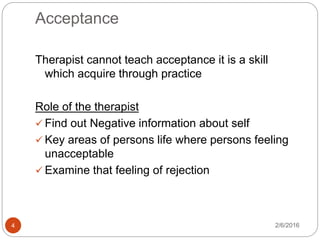
Acceptance
2/6/20164
Therapist cannot teach acceptance it is a skill
which acquire through practice
Role of the therapist
 Find out Negative information about self
 Key areas of persons life where persons feeling
unacceptable
 Examine that feeling of rejection
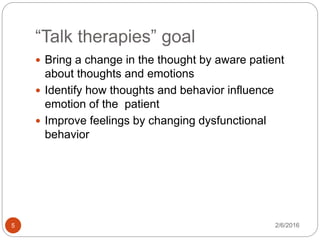
“Talk therapies” goal
2/6/20165
 Bring a change in the thought by aware patient
about thoughts and emotions
 Identify how thoughts and behavior influence
emotion of the patient
 Improve feelings by changing dysfunctional
behavior
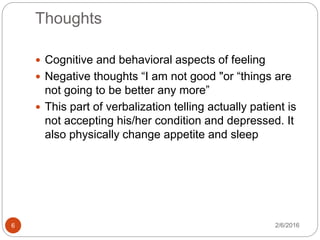
Thoughts
2/6/20166
 Cognitive and behavioral aspects of feeling
 Negative thoughts “I am not good "or “things are
not going to be better any more”
 This part of verbalization telling actually patient is
not accepting his/her condition and depressed. It
also physically change appetite and sleep
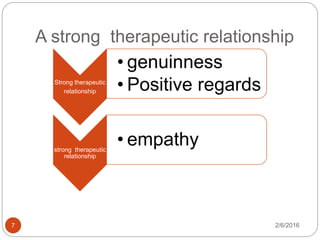
A strong therapeutic relationship
2/6/20167
Strong therapeutic
relationship
• genuinness
• Positive regards
strong therapeutic
relationship
• empathy
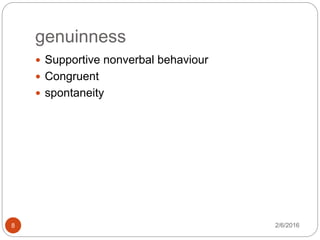
genuinness
2/6/20168
 Supportive nonverbal behaviour
 Congruent
 spontaneity
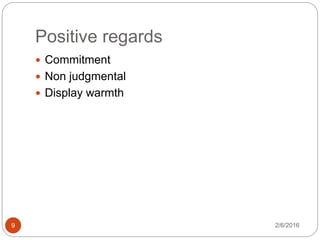
Positive regards
2/6/20169
 Commitment
 Non judgmental
 Display warmth
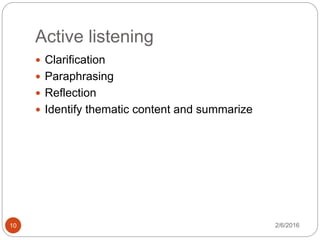
Active listening
2/6/201610
 Clarification
 Paraphrasing
 Reflection
 Identify thematic content and summarize
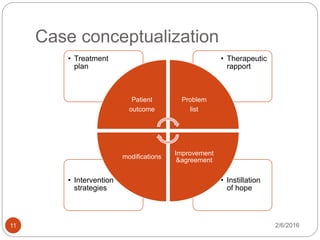
Case conceptualization
2/6/201611
• Instillation
of hope
• Intervention
strategies
• Therapeutic
rapport
• Treatment
plan
Patient
outcome
Problem
list
Improvement
&agreement
modifications
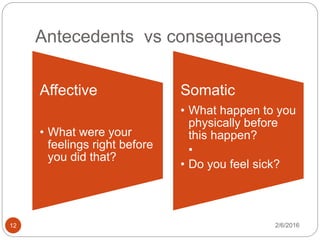
Antecedents vs consequences
2/6/201612
Affective
• What were your
feelings right before
you did that?
Somatic
• What happen to you
physically before
this happen?
•
• Do you feel sick?
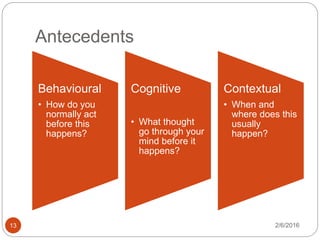
Antecedents
2/6/201613
Behavioural
• How do you
normally act
before this
happens?
Cognitive
• What thought
go through your
mind before it
happens?
Contextual
• When and
where does this
usually
happen?
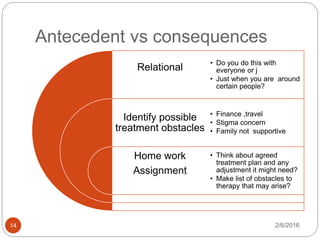
Antecedent vs consequences
2/6/201614
Relational
Identify possible
treatment obstacles
Home work
Assignment
• Do you do this with
everyone or j
• Just when you are around
certain people?
• Finance ,travel
• Stigma concern
• Family not supportive
• Think about agreed
treatment plan and any
adjustment it might need?
• Make list of obstacles to
therapy that may arise?
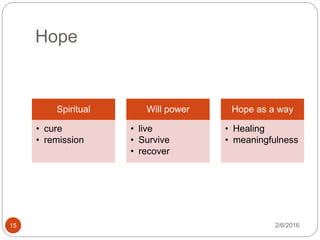
Hope
2/6/201615
Spiritual
• cure
• remission
Will power
• live
• Survive
• recover
Hope as a way
• Healing
• meaningfulness
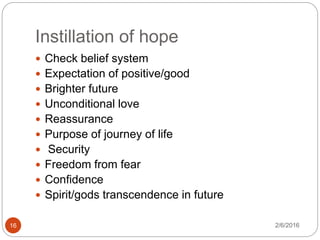
Instillation of hope
2/6/201616
 Check belief system
 Expectation of positive/good
 Brighter future
 Unconditional love
 Reassurance
 Purpose of journey of life
 Security
 Freedom from fear
 Confidence
 Spirit/gods transcendence in future
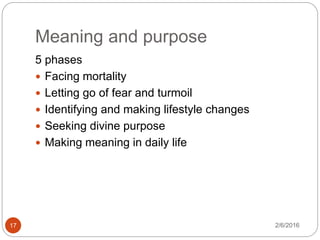
Meaning and purpose
2/6/201617
5 phases
 Facing mortality
 Letting go of fear and turmoil
 Identifying and making lifestyle changes
 Seeking divine purpose
 Making meaning in daily life
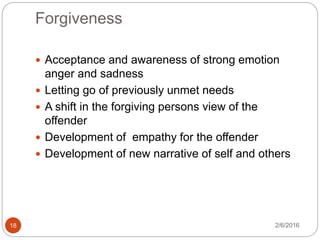
Forgiveness
2/6/201618
 Acceptance and awareness of strong emotion
anger and sadness
 Letting go of previously unmet needs
 A shift in the forgiving persons view of the
offender
 Development of empathy for the offender
 Development of new narrative of self and others
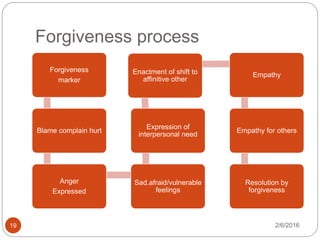
Forgiveness process
2/6/201619
Forgiveness
marker
Blame complain hurt
Anger
Expressed
Sad.afraid/vulnerable
feelings
Expression of
interpersonal need
Enactment of shift to
affinitive other
Empathy
Empathy for others
Resolution by
forgiveness
Session structure
2/6/201620
 12 weeks/3months
 50 min /session
 Twice a week 4 weeks= 8
 Once a week 8 weeks=8
 Total 16 weeks
SACBT
2/6/201621
 4 weeks = IPR, case conceptualization, treatment
plan, goal setting
 4 weeks=explore thoughts and beliefs ,problem
solving, meditation, prayer
 4weeks=explore thought, challenge thought,
develop balanced thinking ,relaxation, rituals
 4weeks=mainitaining changes ,ending treatment
SACBT

SACBT