The Future of
Security Architecture Certification
By Dan Blum, Managing Partner
March 18, 2015
1Copyright (c) 2015 Security Architects, LLC
About Us
• We are a consulting firm dedicated to helping
organizations plan, specify and develop security
programs, policies and technology solutions.
Copyright (c) 2015 Security Architects, LLC 2
About
Us
Clients
Enterprise Security Teams
Cloud service providers (CSPs)
Other Audiences
Areas of Expertise
Cloud
Security
Identity and
Privacy
Endpoint
Security
Cyber
Security
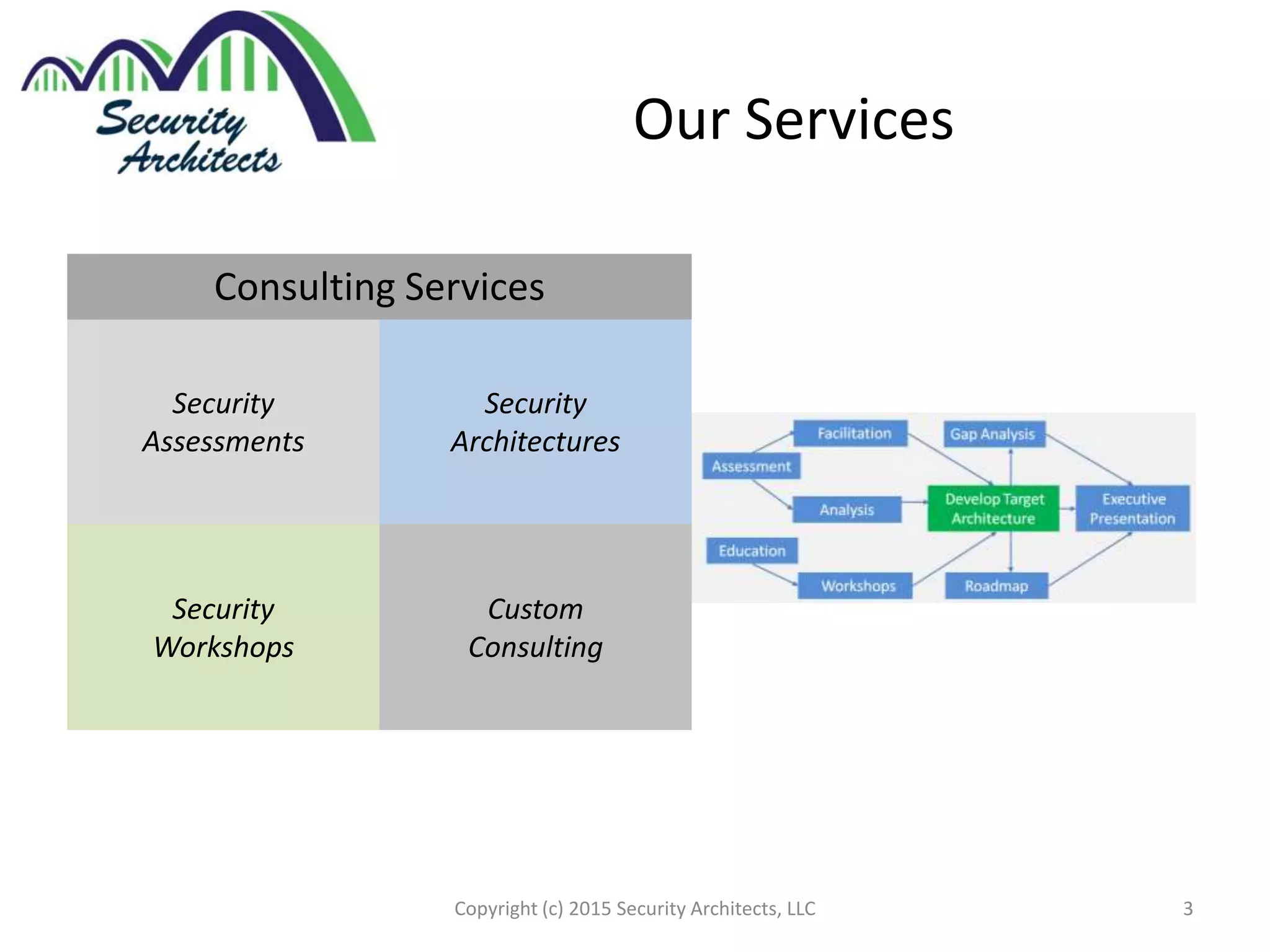
Our Services
Security
Assessments
Security
Architectures
Custom
Consulting
Security
Workshops
Consulting Services
3Copyright (c) 2015 Security Architects, LLC
Special Guests
Copyright (c) 2015 Security Architects, LLC 4
Guest Organization Framework
Bill Ross INFOSECURE, LLC N/A
Jim Hietela The Open Group TOGAF
Fred Cohen Management Analytics Standard of
Practice (SoP)
Maurice Smit SABSA SABSA
Problem Statement
“Would you drive over a Bay Bridge built from an
amateur architect's blueprints?
What if the architect passed a multiple choice
test first - is that good enough?”
Society’s answer to these questions is clearly “NO.”
Depending on the state, practicing architects need:
• University Degrees
• Licenses and Certifications
• Separation of Duty
• Liability
5Copyright (c) 2015 Security Architects, LLC
Problem Statement
• As the information economy and the Internet
of Things (IoT) matures, a Security Architect’s
practice becomes more consequence-laden
• Industry lacks consensus on exactly what a
Security Architect is or should be
• One non-attendee challenged this webinar
– “I think the basic assumptions of this proposal are
not sufficiently defined or developed to the level
required for meaningful result.”
Copyright (c) 2015 Security Architects, LLC 6
Questions to Consider
• What is a Security Architect and how does our
practice relate to others?
• What frameworks should be used for our
practice?
• Should security architects be certified, and
how?
• What training or tests should be required?
• Should security architects require a specialized
Degree?
Copyright (c) 2015 Security Architects, LLC 7
What is a Security Architect and How
does our Practice Relate to Others?
Actual Titles
• Cyber Security Process Architect
• Enterprise (Security) Architecture
• Technical Architect (Security)
• Chief Security Architect
• Security Architecture & Cyber Security Lead
• Director/Information Security Architect
• Senior Security Architect/Consultant
• Senior Technical Advisor/Enterprise Architect
• Senior Security Architect
• Network Security Architect
• Solution Architect
• Enterprise Security Architect
• Managing Architect
• Information Security Architect
Copyright (c) 2015 Security Architects, LLC 8
Types of titles
• Process architect (1)
• Enterprise security architect (4)
• Security architect (9)
• Network security architect (1)
• Solution architect (1)
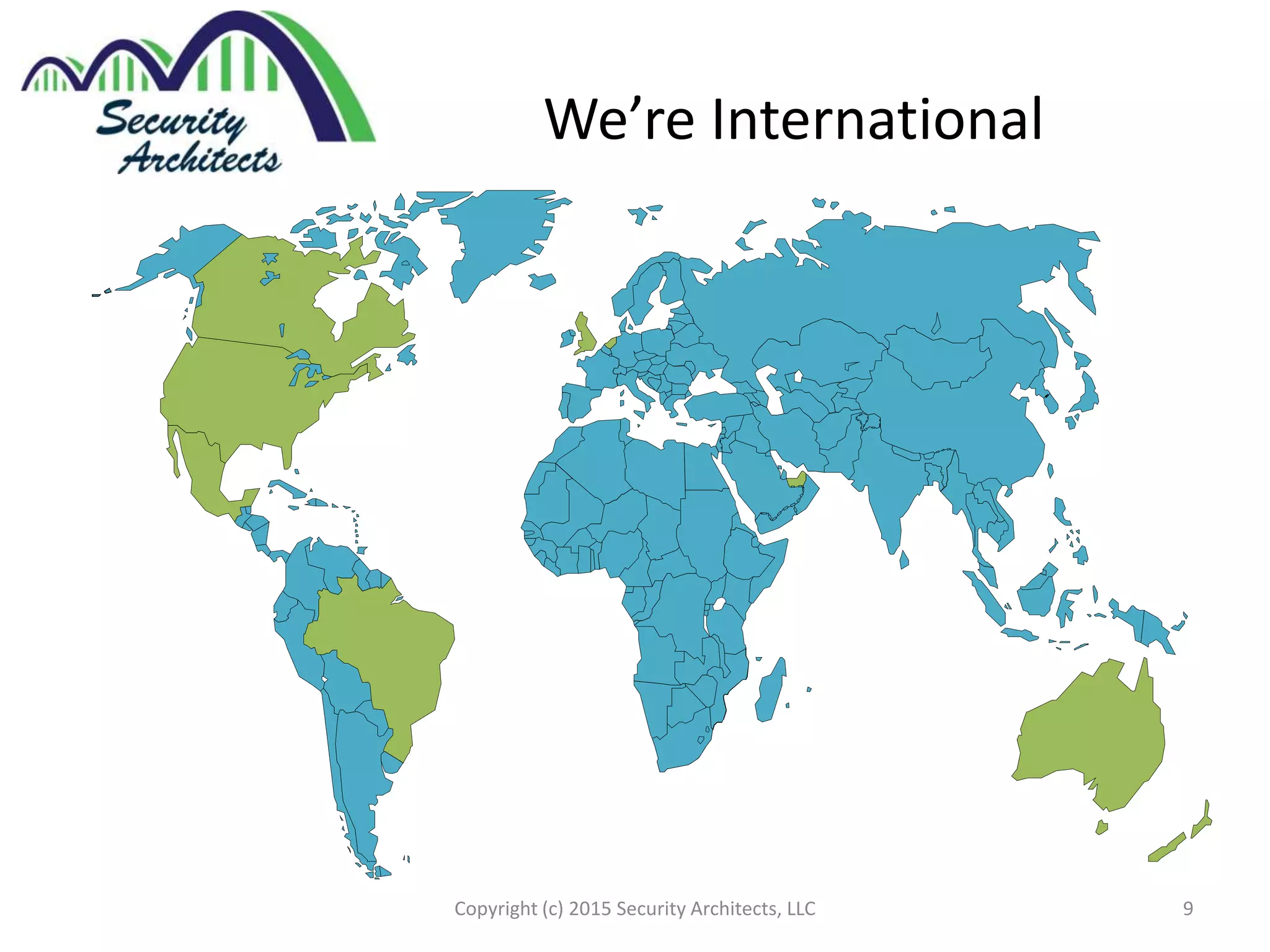
We’re International
Copyright (c) 2015 Security Architects, LLC 9
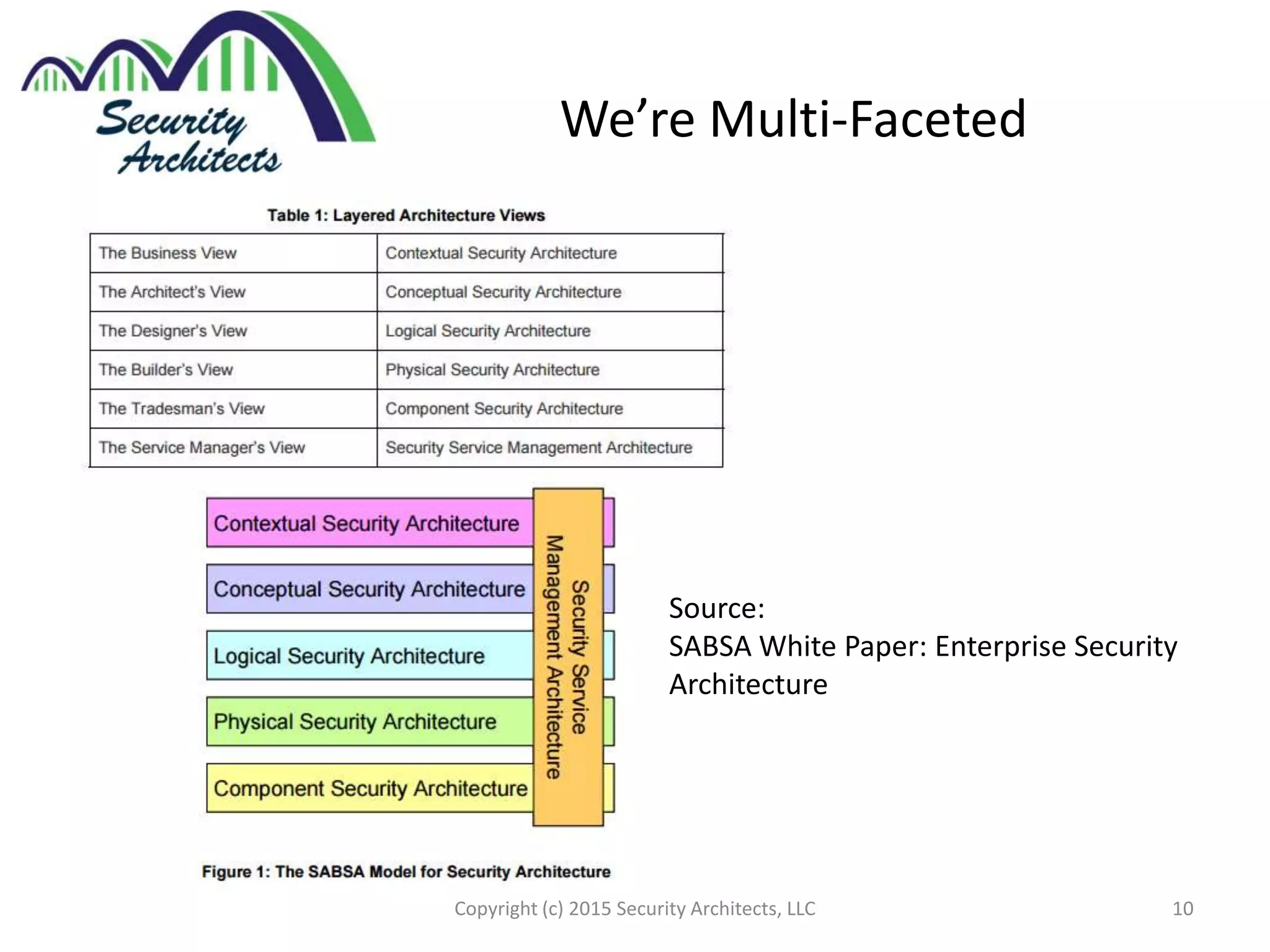
We’re Multi-Faceted
Copyright (c) 2015 Security Architects, LLC 10
Source:
SABSA White Paper: Enterprise Security
Architecture
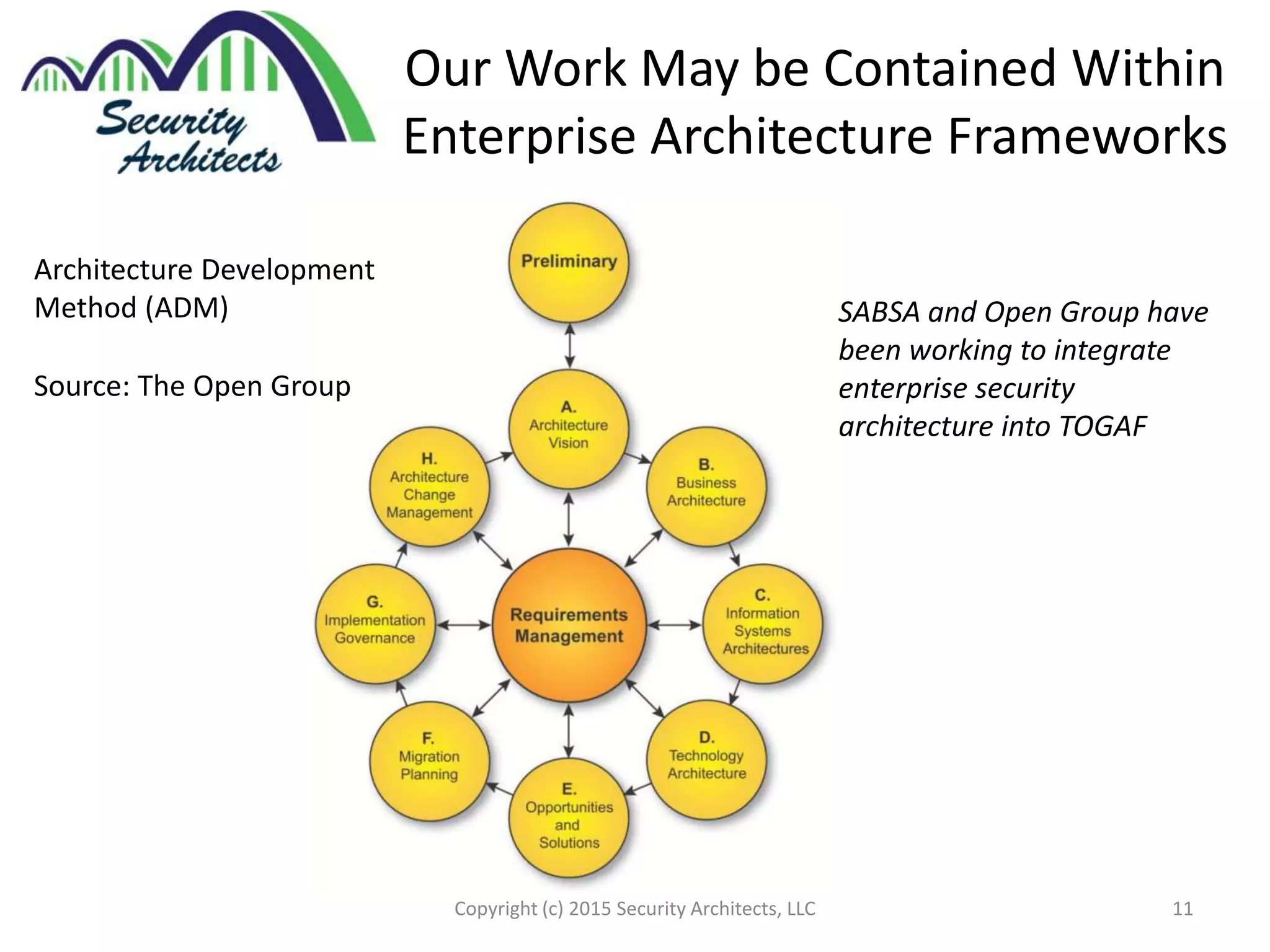
Our Work May be Contained Within
Enterprise Architecture Frameworks
Copyright (c) 2015 Security Architects, LLC 11
SABSA and Open Group have
been working to integrate
enterprise security
architecture into TOGAF
Architecture Development
Method (ADM)
Source: The Open Group
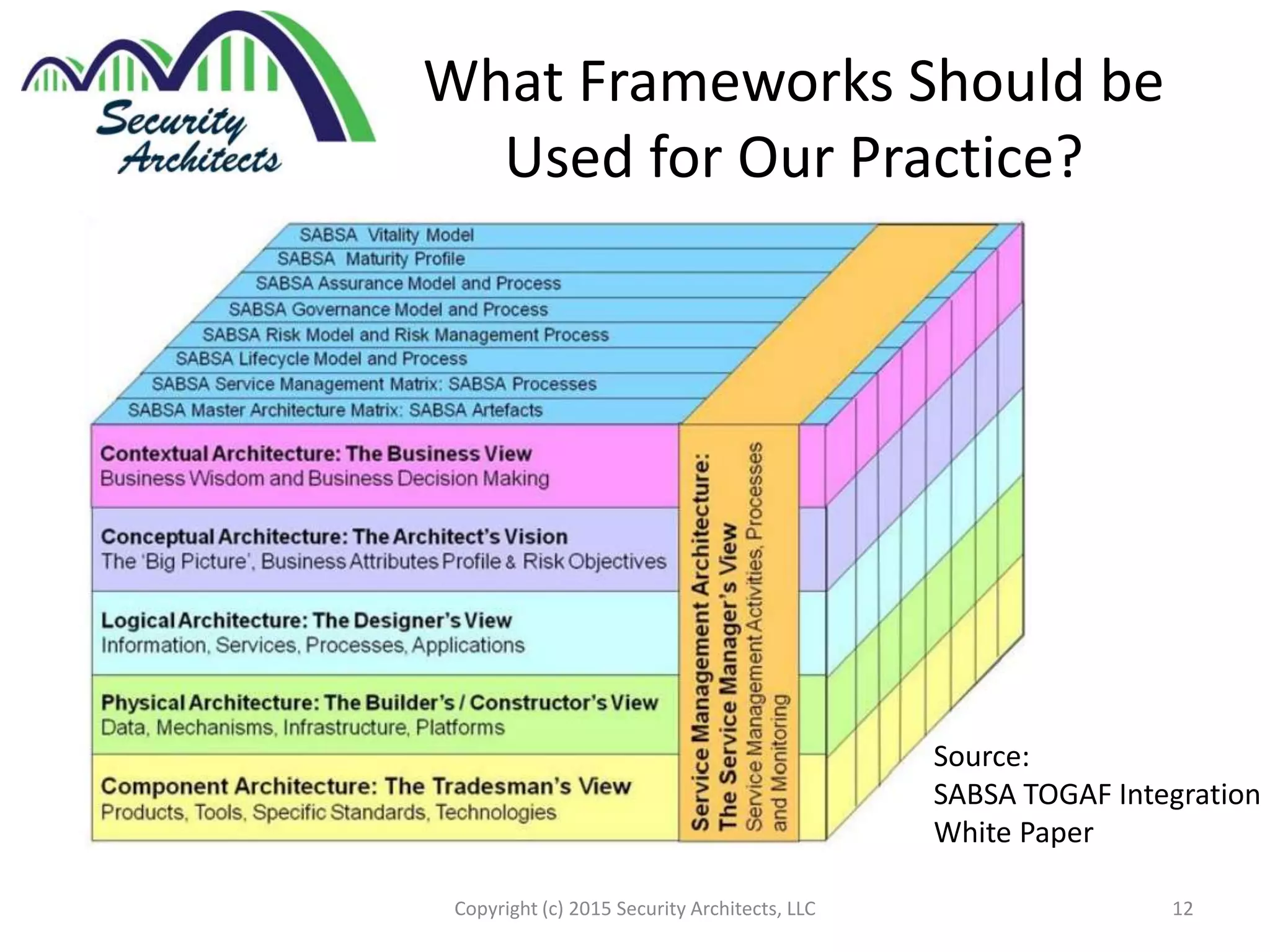
What Frameworks Should be
Used for Our Practice?
Copyright (c) 2015 Security Architects, LLC 12
Source:
SABSA TOGAF Integration
White Paper
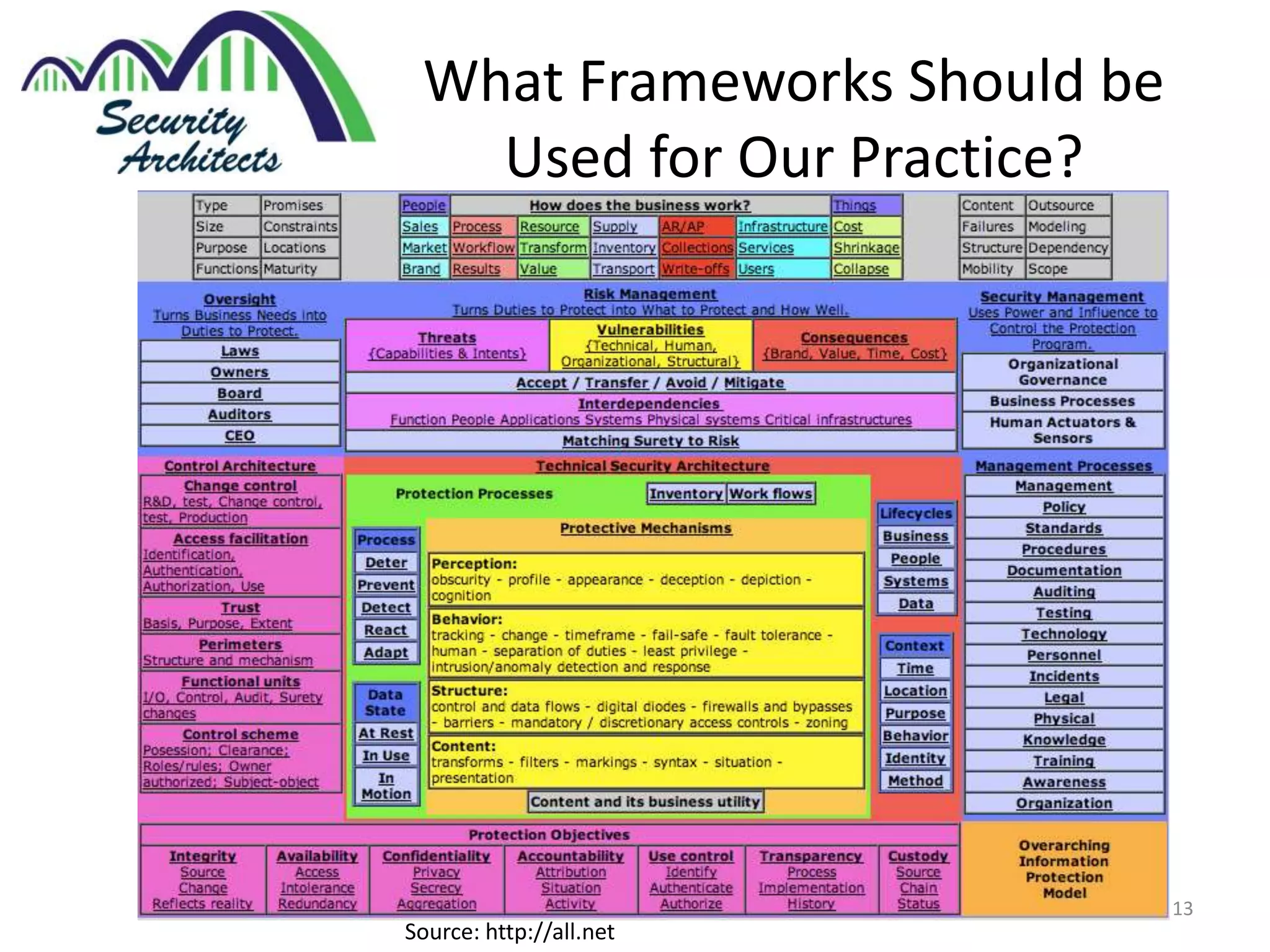
What Frameworks Should be
Used for Our Practice?
Copyright (c) 2015 Security Architects, LLC 13
Source: http://all.net
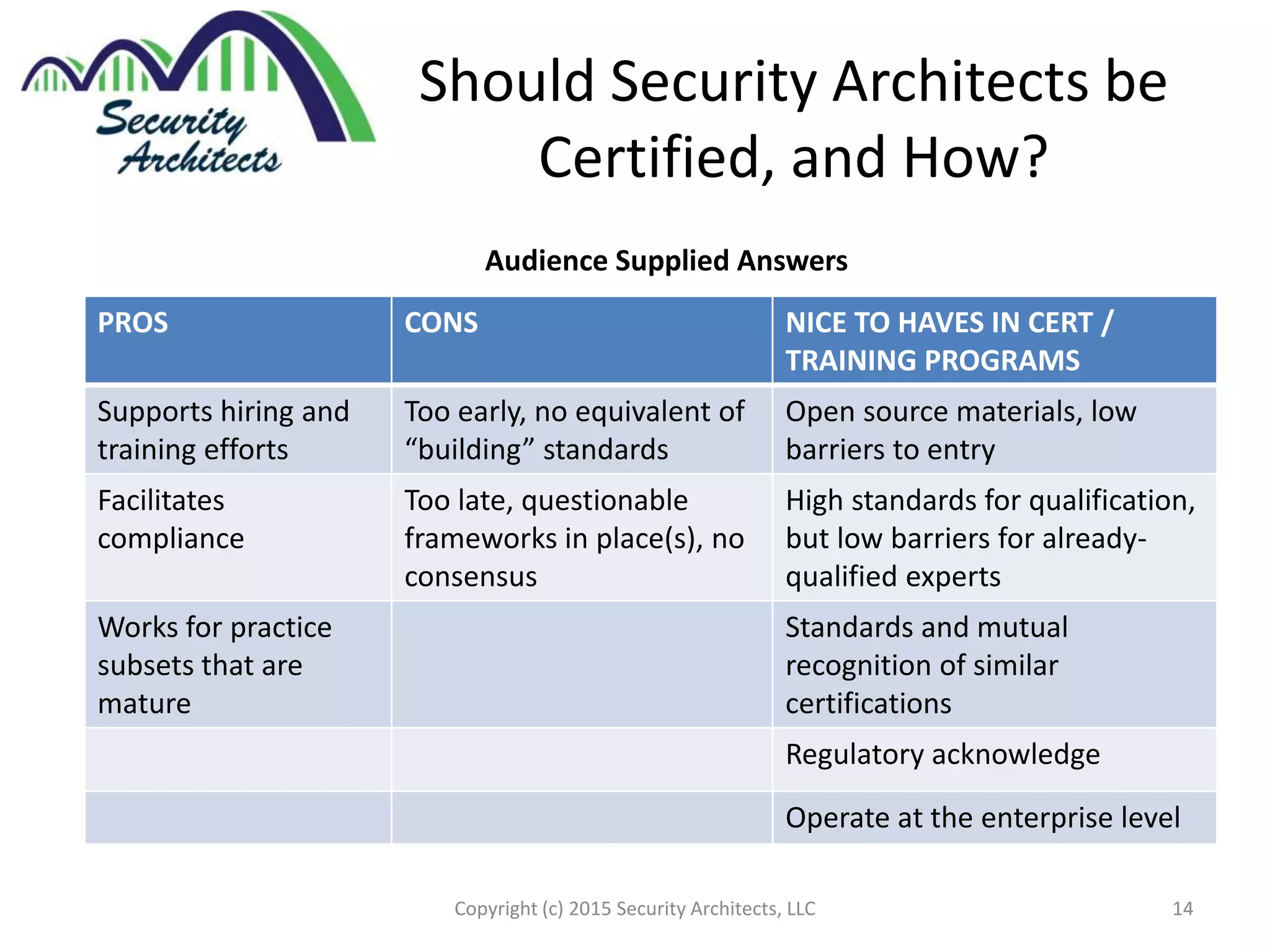
Should Security Architects be
Certified, and How?
Copyright (c) 2015 Security Architects, LLC 14
PROS CONS NICE TO HAVES IN CERT /
TRAINING PROGRAMS
Supports hiring and
training efforts
Too early, no equivalent of
“building” standards
Open source materials, low
barriers to entry
Facilitates
compliance
Too late, questionable
frameworks in place(s), no
consensus
High standards for qualification,
but low barriers for already-
qualified experts
Works for practice
subsets that are
mature
Standards and mutual
recognition of similar
certifications
Regulatory acknowledge
Operate at the enterprise level
Audience Supplied Answers
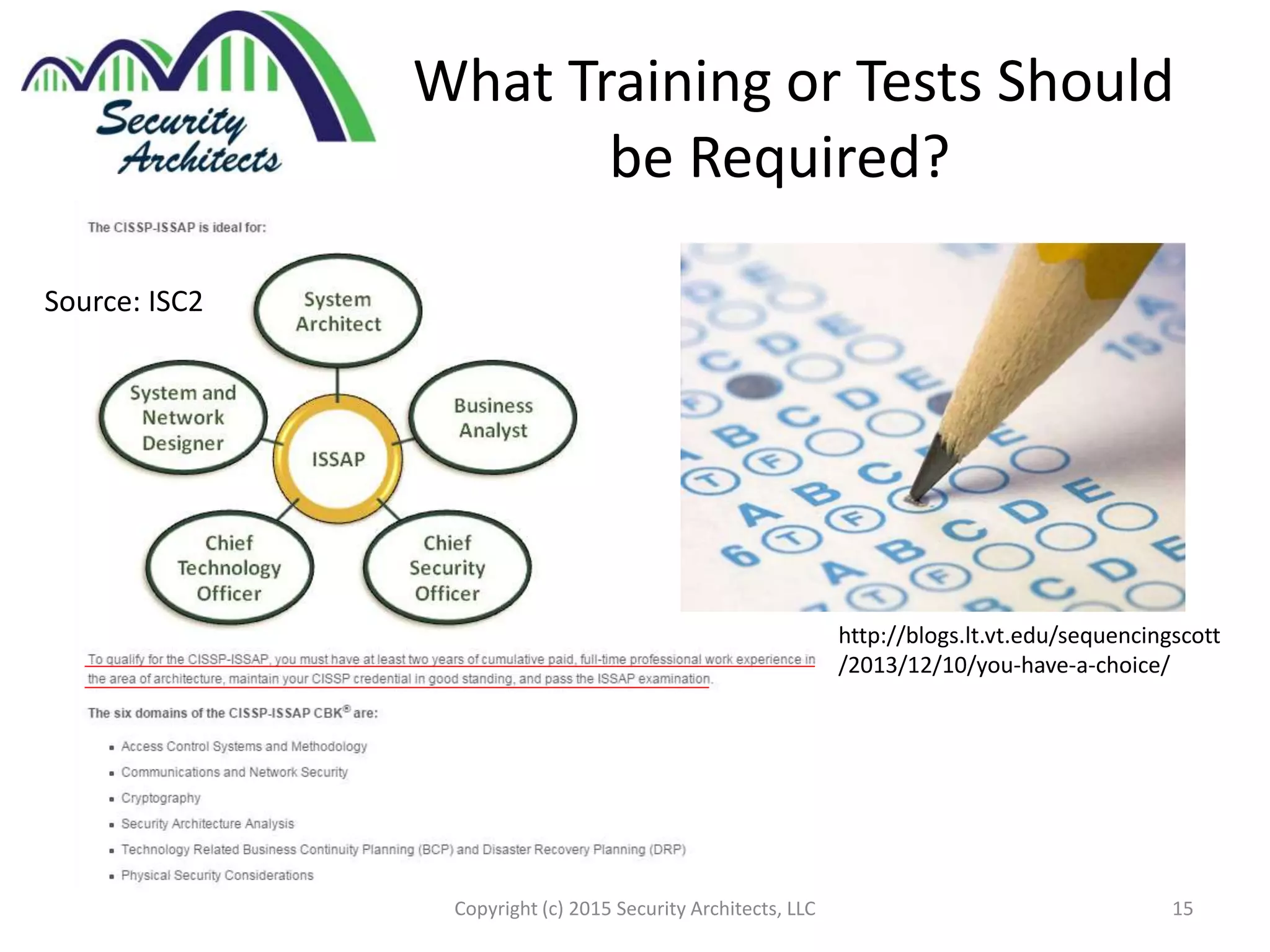
What Training or Tests Should
be Required?
Copyright (c) 2015 Security Architects, LLC 15
Source: ISC2
http://blogs.lt.vt.edu/sequencingscott
/2013/12/10/you-have-a-choice/
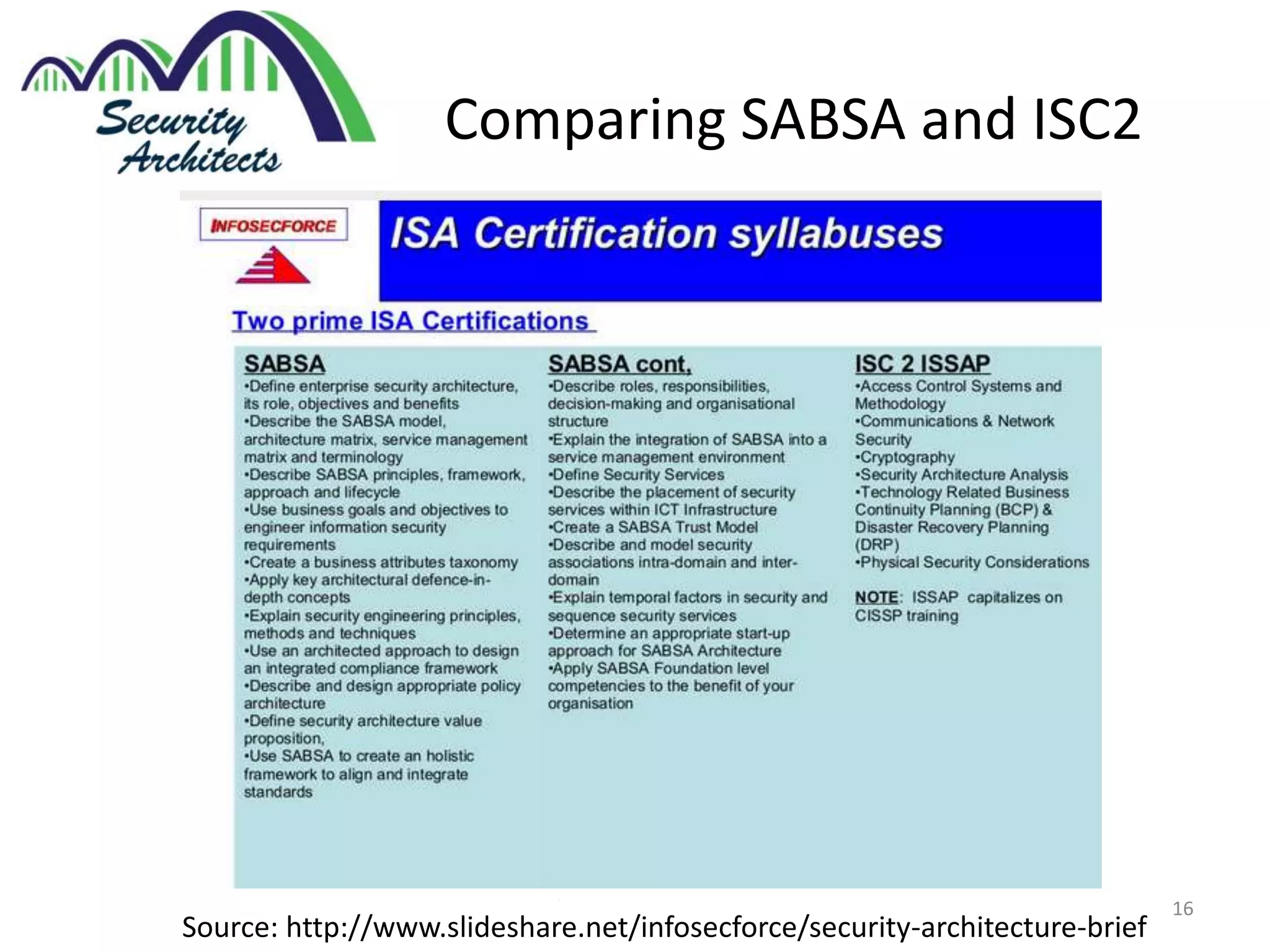
Comparing SABSA and ISC2
Copyright (c) 2015 Security Architects, LLC 16
Source: http://www.slideshare.net/infosecforce/security-architecture-brief
Additional Certification
Programs
Copyright (c) 2015 Security Architects, LLC 17
CREST Registered Technical Security
Architect Examination (CRTSA)
Examination Format
The examination is assessed in both Written
Multiple Choice and Written Long Form.
Syllabus
The syllabus for this examination is
available here
Practitioner Certificate In Information
Assurance Architecture (PCiIAA)
Council of
Registered
Ethical
Security Testers
What format is the exam?
Two hour ‘closed book’
Two sections with 85 multiple
choice questions
Pass mark is 65%
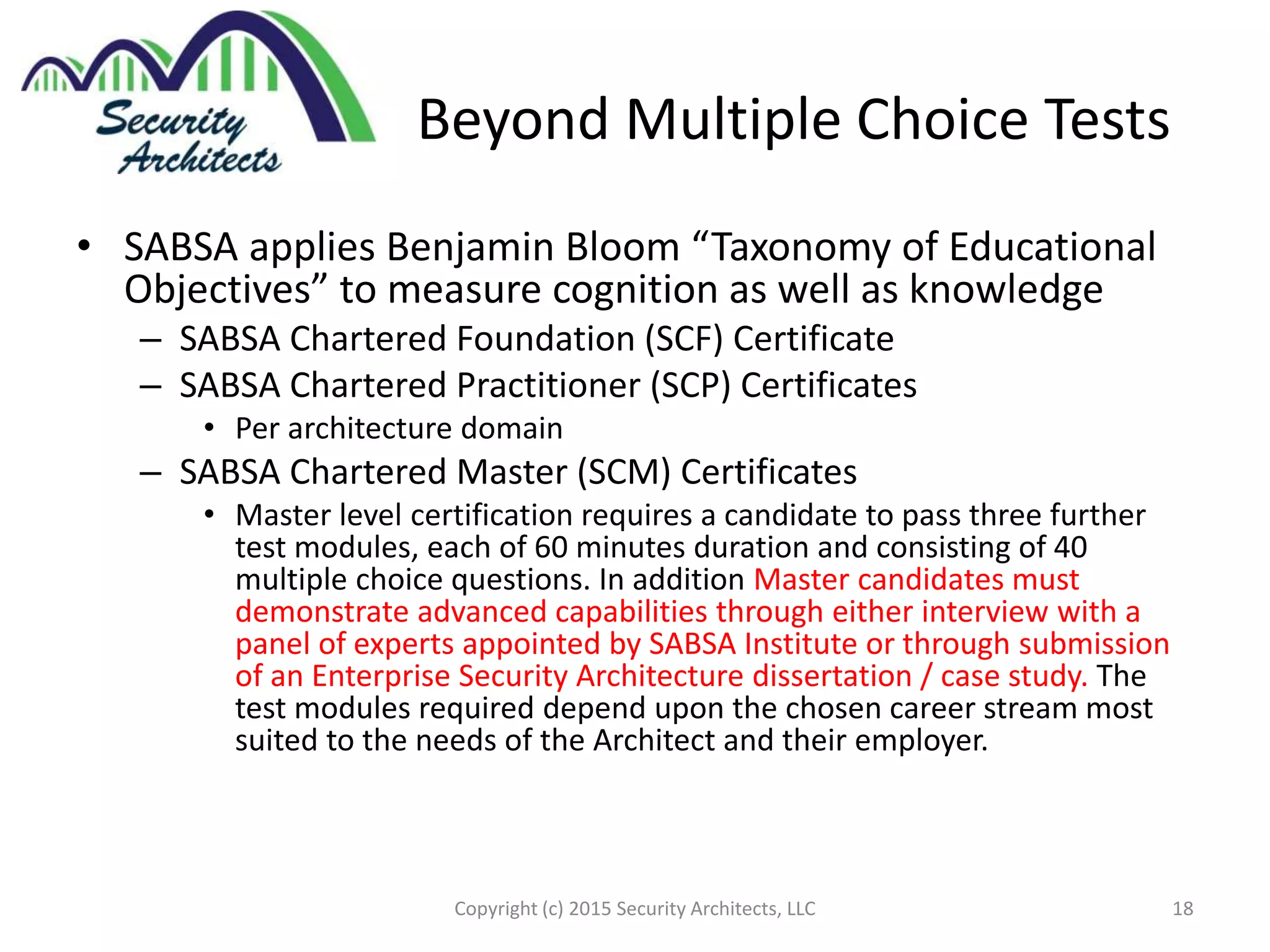
Beyond Multiple Choice Tests
• SABSA applies Benjamin Bloom “Taxonomy of Educational
Objectives” to measure cognition as well as knowledge
– SABSA Chartered Foundation (SCF) Certificate
– SABSA Chartered Practitioner (SCP) Certificates
• Per architecture domain
– SABSA Chartered Master (SCM) Certificates
• Master level certification requires a candidate to pass three further
test modules, each of 60 minutes duration and consisting of 40
multiple choice questions. In addition Master candidates must
demonstrate advanced capabilities through either interview with a
panel of experts appointed by SABSA Institute or through submission
of an Enterprise Security Architecture dissertation / case study. The
test modules required depend upon the chosen career stream most
suited to the needs of the Architect and their employer.
Copyright (c) 2015 Security Architects, LLC 18
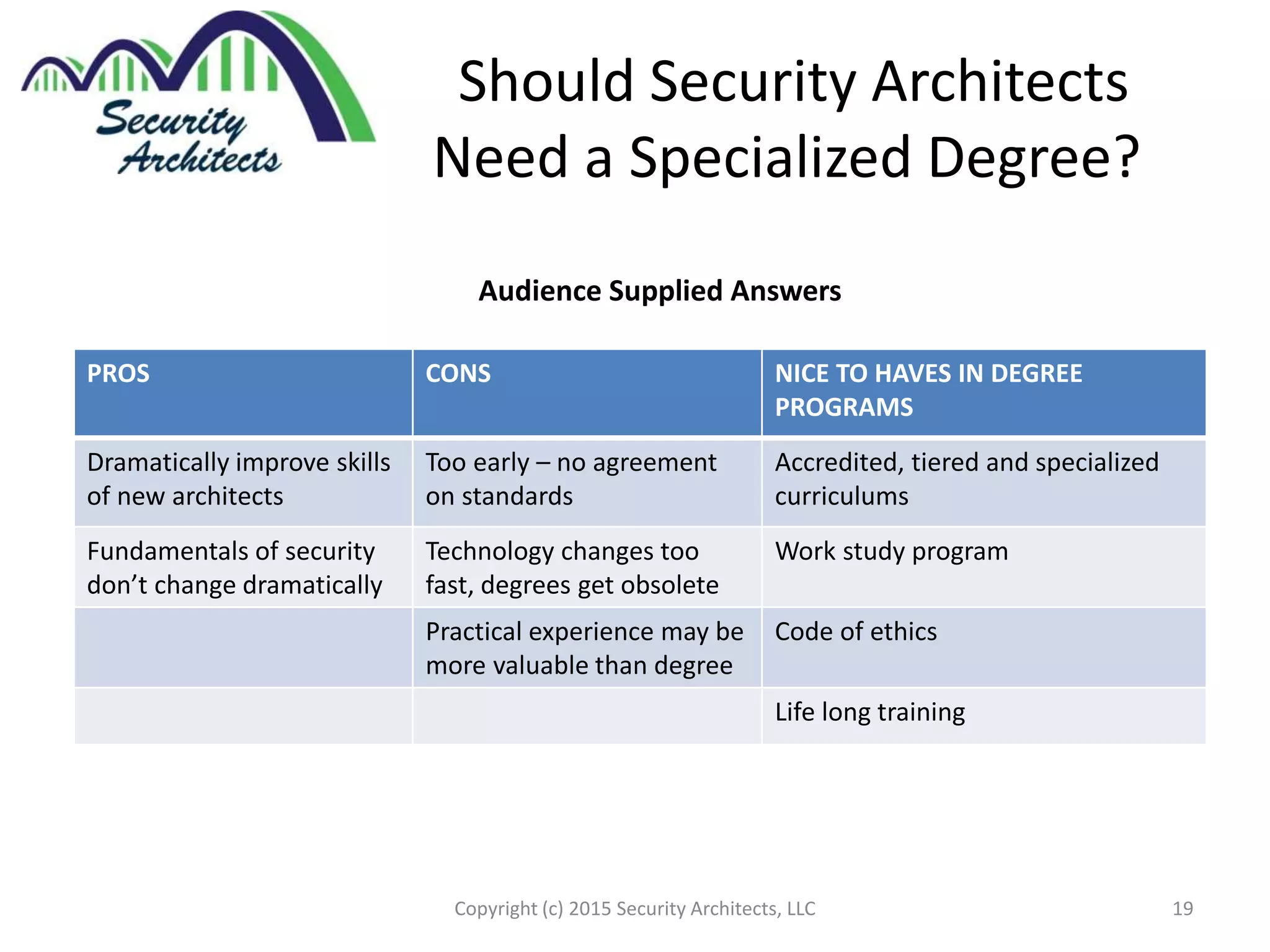
Should Security Architects
Need a Specialized Degree?
Copyright (c) 2015 Security Architects, LLC 19
PROS CONS NICE TO HAVES IN DEGREE
PROGRAMS
Dramatically improve skills
of new architects
Too early – no agreement
on standards
Accredited, tiered and specialized
curriculums
Fundamentals of security
don’t change dramatically
Technology changes too
fast, degrees get obsolete
Work study program
Practical experience may be
more valuable than degree
Code of ethics
Life long training
Audience Supplied Answers
Open Q&A
Security Architects, LLC
http://security-architects.com
info@security-architects.com
Copyright (c) 2015 Security Architects, LLC 20

The Future of Security Architecture Certification

  • 1.
    The Future of SecurityArchitecture Certification By Dan Blum, Managing Partner March 18, 2015 1Copyright (c) 2015 Security Architects, LLC
  • 2.
    About Us • Weare a consulting firm dedicated to helping organizations plan, specify and develop security programs, policies and technology solutions. Copyright (c) 2015 Security Architects, LLC 2 About Us Clients Enterprise Security Teams Cloud service providers (CSPs) Other Audiences Areas of Expertise Cloud Security Identity and Privacy Endpoint Security Cyber Security
  • 3.
  • 4.
    Special Guests Copyright (c)2015 Security Architects, LLC 4 Guest Organization Framework Bill Ross INFOSECURE, LLC N/A Jim Hietela The Open Group TOGAF Fred Cohen Management Analytics Standard of Practice (SoP) Maurice Smit SABSA SABSA
  • 5.
    Problem Statement “Would youdrive over a Bay Bridge built from an amateur architect's blueprints? What if the architect passed a multiple choice test first - is that good enough?” Society’s answer to these questions is clearly “NO.” Depending on the state, practicing architects need: • University Degrees • Licenses and Certifications • Separation of Duty • Liability 5Copyright (c) 2015 Security Architects, LLC
  • 6.
    Problem Statement • Asthe information economy and the Internet of Things (IoT) matures, a Security Architect’s practice becomes more consequence-laden • Industry lacks consensus on exactly what a Security Architect is or should be • One non-attendee challenged this webinar – “I think the basic assumptions of this proposal are not sufficiently defined or developed to the level required for meaningful result.” Copyright (c) 2015 Security Architects, LLC 6
  • 7.
    Questions to Consider •What is a Security Architect and how does our practice relate to others? • What frameworks should be used for our practice? • Should security architects be certified, and how? • What training or tests should be required? • Should security architects require a specialized Degree? Copyright (c) 2015 Security Architects, LLC 7
  • 8.
    What is aSecurity Architect and How does our Practice Relate to Others? Actual Titles • Cyber Security Process Architect • Enterprise (Security) Architecture • Technical Architect (Security) • Chief Security Architect • Security Architecture & Cyber Security Lead • Director/Information Security Architect • Senior Security Architect/Consultant • Senior Technical Advisor/Enterprise Architect • Senior Security Architect • Network Security Architect • Solution Architect • Enterprise Security Architect • Enterprise Security Architect • Managing Architect • Information Security Architect • Information Security Architect Copyright (c) 2015 Security Architects, LLC 8 Types of titles • Process architect (1) • Enterprise security architect (4) • Security architect (9) • Network security architect (1) • Solution architect (1)
  • 9.
    We’re International Copyright (c)2015 Security Architects, LLC 9
  • 10.
    We’re Multi-Faceted Copyright (c)2015 Security Architects, LLC 10 Source: SABSA White Paper: Enterprise Security Architecture
  • 11.
    Our Work Maybe Contained Within Enterprise Architecture Frameworks Copyright (c) 2015 Security Architects, LLC 11 SABSA and Open Group have been working to integrate enterprise security architecture into TOGAF Architecture Development Method (ADM) Source: The Open Group
  • 12.
    What Frameworks Shouldbe Used for Our Practice? Copyright (c) 2015 Security Architects, LLC 12 Source: SABSA TOGAF Integration White Paper
  • 13.
    What Frameworks Shouldbe Used for Our Practice? Copyright (c) 2015 Security Architects, LLC 13 Source: http://all.net
  • 14.
    Should Security Architectsbe Certified, and How? Copyright (c) 2015 Security Architects, LLC 14 PROS CONS NICE TO HAVES IN CERT / TRAINING PROGRAMS Supports hiring and training efforts Too early, no equivalent of “building” standards Open source materials, low barriers to entry Facilitates compliance Too late, questionable frameworks in place(s), no consensus High standards for qualification, but low barriers for already- qualified experts Works for practice subsets that are mature Standards and mutual recognition of similar certifications Regulatory acknowledge Operate at the enterprise level Audience Supplied Answers
  • 15.
    What Training orTests Should be Required? Copyright (c) 2015 Security Architects, LLC 15 Source: ISC2 http://blogs.lt.vt.edu/sequencingscott /2013/12/10/you-have-a-choice/
  • 16.
    Comparing SABSA andISC2 Copyright (c) 2015 Security Architects, LLC 16 Source: http://www.slideshare.net/infosecforce/security-architecture-brief
  • 17.
    Additional Certification Programs Copyright (c)2015 Security Architects, LLC 17 CREST Registered Technical Security Architect Examination (CRTSA) Examination Format The examination is assessed in both Written Multiple Choice and Written Long Form. Syllabus The syllabus for this examination is available here Practitioner Certificate In Information Assurance Architecture (PCiIAA) Council of Registered Ethical Security Testers What format is the exam? Two hour ‘closed book’ Two sections with 85 multiple choice questions Pass mark is 65%
  • 18.
    Beyond Multiple ChoiceTests • SABSA applies Benjamin Bloom “Taxonomy of Educational Objectives” to measure cognition as well as knowledge – SABSA Chartered Foundation (SCF) Certificate – SABSA Chartered Practitioner (SCP) Certificates • Per architecture domain – SABSA Chartered Master (SCM) Certificates • Master level certification requires a candidate to pass three further test modules, each of 60 minutes duration and consisting of 40 multiple choice questions. In addition Master candidates must demonstrate advanced capabilities through either interview with a panel of experts appointed by SABSA Institute or through submission of an Enterprise Security Architecture dissertation / case study. The test modules required depend upon the chosen career stream most suited to the needs of the Architect and their employer. Copyright (c) 2015 Security Architects, LLC 18
  • 19.
    Should Security Architects Needa Specialized Degree? Copyright (c) 2015 Security Architects, LLC 19 PROS CONS NICE TO HAVES IN DEGREE PROGRAMS Dramatically improve skills of new architects Too early – no agreement on standards Accredited, tiered and specialized curriculums Fundamentals of security don’t change dramatically Technology changes too fast, degrees get obsolete Work study program Practical experience may be more valuable than degree Code of ethics Life long training Audience Supplied Answers
  • 20.
    Open Q&A Security Architects,LLC http://security-architects.com info@security-architects.com Copyright (c) 2015 Security Architects, LLC 20

Editor's Notes

  • #11 Reflecting Multiple “Tribes” of Security Excel cowboy Powerpoint wizard