Reference:
Teixeira, M. G., Paix, E. S., & Costa, N. (2015). Arterial Hypertension and Skin Allergy
Are Risk Factors for Progression from Dengue to Dengue Hemorrhagic Fever : A
Case Control Study. PLoS Neglected Tropical Diseases, 9(5), 1–8.
Ruchi Pancholy, MPH, REHS
PHC 6002 Infectious Disease Epidemiology
Article Written Critique Presentation
Fall 2015
Aurora Sanchez-Anguiano, MD, PhD, CPH
Risk Factors for Progression from
Dengue to Dengue Hemorrhagic
Fever: A Case Control Study
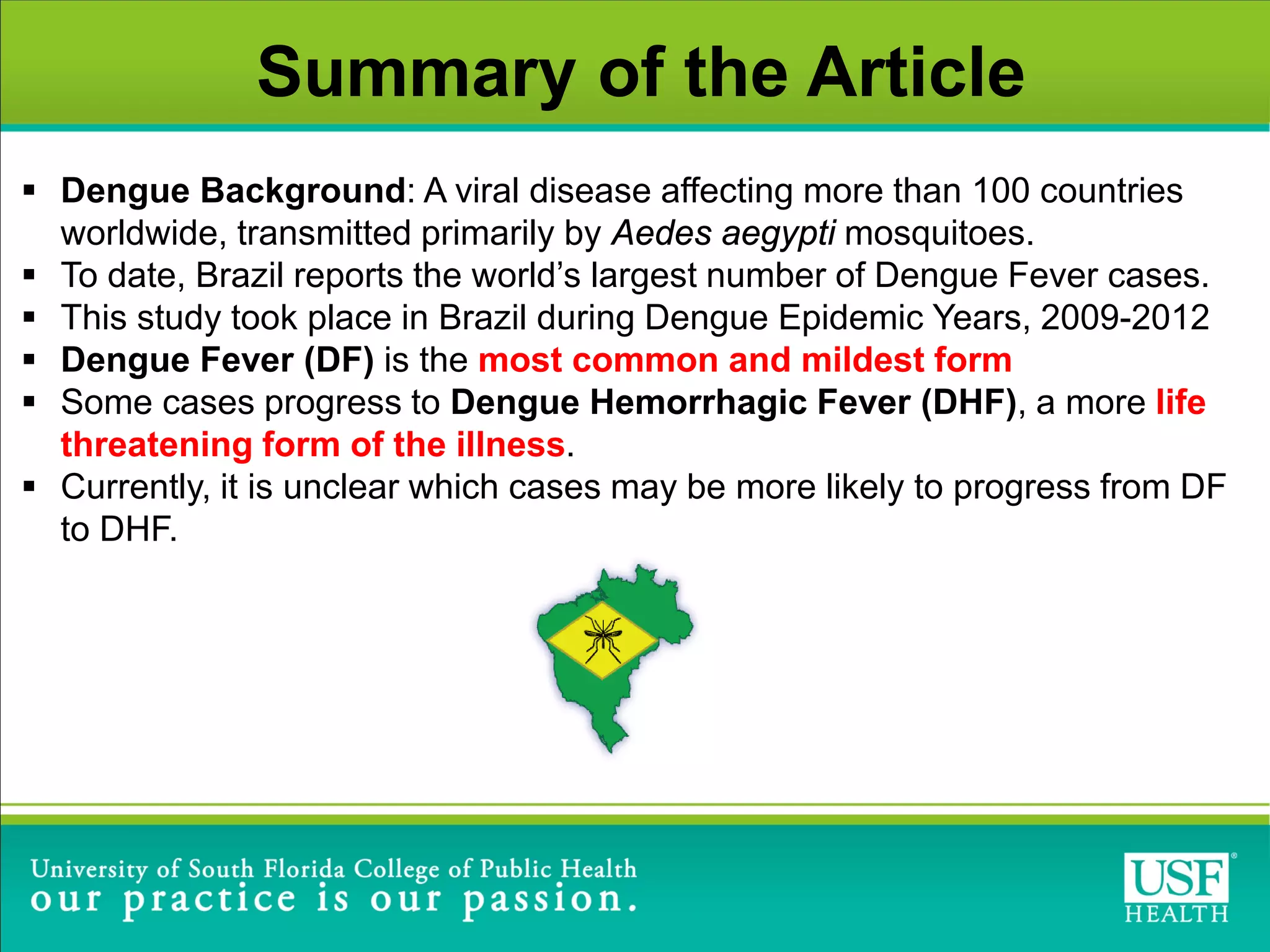
 Dengue Background: A viral disease affecting more than 100 countries
worldwide, transmitted primarily by Aedes aegypti mosquitoes.
 To date, Brazil reports the world’s largest number of Dengue Fever cases.
 This study took place in Brazil during Dengue Epidemic Years, 2009-2012
 Dengue Fever (DF) is the most common and mildest form
 Some cases progress to Dengue Hemorrhagic Fever (DHF), a more life
threatening form of the illness.
 Currently, it is unclear which cases may be more likely to progress from DF
to DHF.
Summary of the Article
Major Objectives/Hypothesis
 Determine the major risk factors involved in the progression from DF to
DHF
 Understanding risk factors involved in the progression from DF to DHF will
allow physicians to initiate early clinical management of cases to limit
severity of illness and prevent deaths.
 Research Question: Which risk factors (comorbidities due to chronic
illness) increase the risk of progression from DF to DHF?
 Hypothesis: The study investigators hypothesize that specific
comorbidities may increase the likelihood that a DF case will progress to
DHF.
Study Design
 Study Design: Unmatched Concurrent Case Control study; Four controls
identified per case)
 Recruitment: Cases and controls were DF patients in Infectious Disease
Reference Hospitals located in one of 6 Brazilian cities during epidemic
years, 2009 to 2012
 Method: Pre-Tested Standardized Questionnaire
 Data Collection: Participants interviewed on demographic and biological
data, clinical information, self-reported comorbidities and use of
medications to control these illnesses.
 Measure of Association: Crude and Adjusted Odds Ratio
Sample Size and Study Sample
 Study Sample: Total of 1,806 individuals
490 Cases of DF and 1,316 Controls with DF
 Case Definition: Patients with DF who progressed to DHF and
presented with symptoms including: fever, hemorrhagic
manifestations, thrombocytopenia, evidence of plasma leakage, and
one positive laboratory diagnosis for dengue.
 Control Definition: Patients from the same hospital as cases
presenting with symptoms of DF including: fever, headache, myalgia,
and positive laboratory diagnosis for dengue.
Study Population
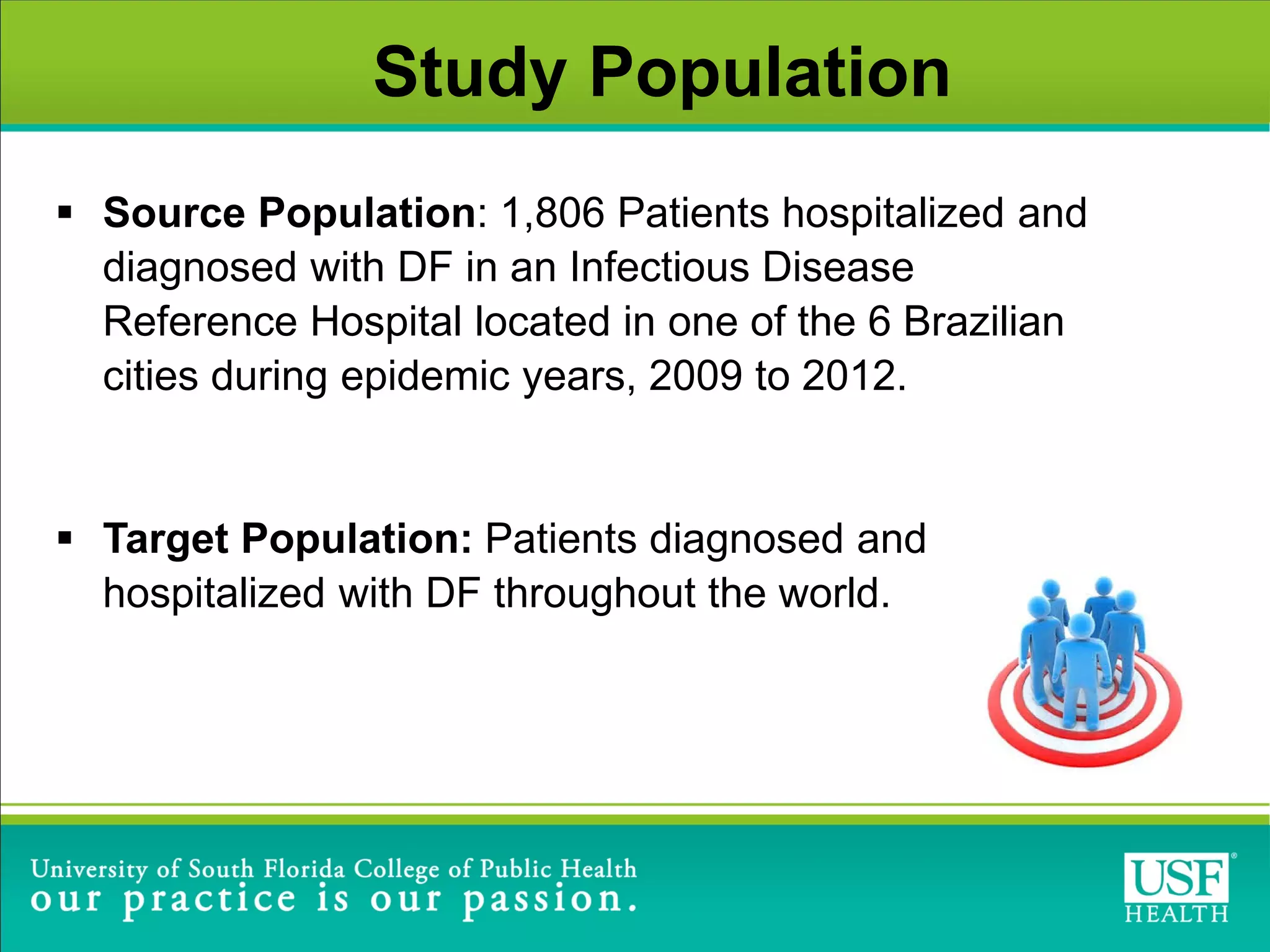
 Source Population: 1,806 Patients hospitalized and
diagnosed with DF in an Infectious Disease
Reference Hospital located in one of the 6 Brazilian
cities during epidemic years, 2009 to 2012.
 Target Population: Patients diagnosed and
hospitalized with DF throughout the world.
Exposure & Outcome
 Research Question: Do DF patients with pre-existing comorbidities increase the likelihood that
they will progress to DHF?
Pre-Existing Comorbidities DHF
Diabetes, hypertension, allergies, asthma
Exposure Outcome
 Identification of Exposed Individuals: Administration of a standardized questionnaire by
trained interviewers at one of the International Disease Reference Hospitals in one of the 6
Brazilian cities during epidemic years, 2009-2012.
 How Exposure were Defined and Measured: Upon arrival to the hospital, DF patients and/or
relatives were interviewed on demographic info, socioeconomic indicators, clinical information
including signs and symptoms of dengue, self-reported comorbidities, and use of medication to
control these illnesses.
 Assessing Self-Reported Comorbidities: Only DF patients able to show proof of using
prescription medications to treat their self-reported illnesses were considered by investigators to
have the condition.
Confounding
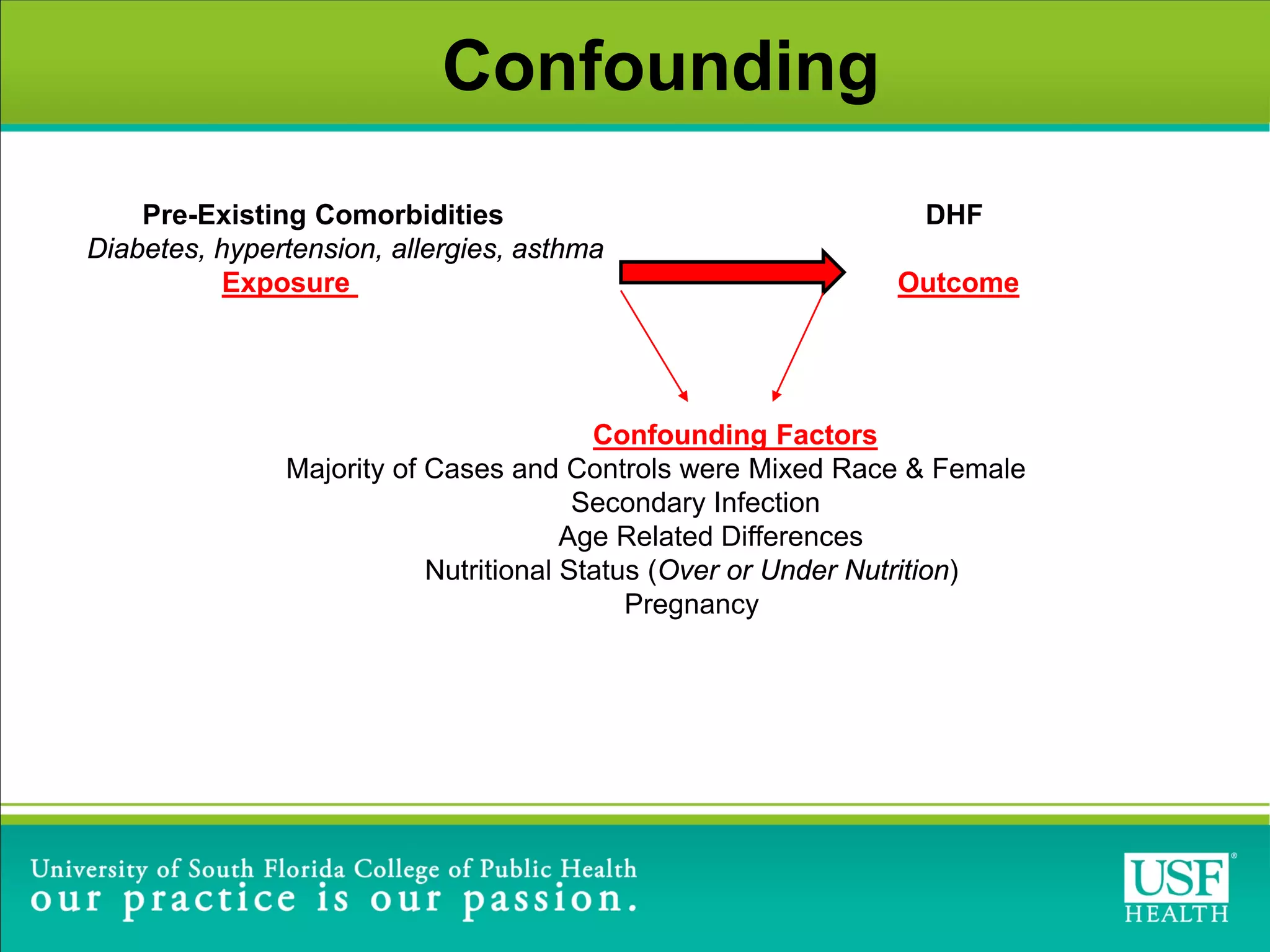
Pre-Existing Comorbidities DHF
Diabetes, hypertension, allergies, asthma
Exposure Outcome
Confounding Factors
Majority of Cases and Controls were Mixed Race & Female
Secondary Infection
Age Related Differences
Nutritional Status (Over or Under Nutrition)
Pregnancy
 Information Bias: Investigators prevent this by conducting a
concurrent case control study by recruiting incident rather than past
cases and collected data from cases as they were diagnosed.
 Selection Bias: Investigators prevent this by recruiting cases and
controls from the same population (or hospital).
 Medical Surveillance Bias: In this study, hospitalization with DF was
related to the exposure; therefore it is possible that individuals
presenting with signs and symptoms of Dengue that were not
hospitalized could have later been at risk for developing DHF.
 Chance: 95% CI, Alpha set at 0.05, Power: 80%
Bias & Chance
Study Limitations
 No Information on Previous History of Dengue- Investigators could not
control for whether DHF cases had a heterologous re-infection.
 Immunological Mechanisms were not explored in this study
 Comorbidity data was self-reported rather than abstracted from
medical records; since the study required proof of medication to treat the
illness there is a possibility that those with pre-existing illnesses may not
have been reported.
 Findings may not be generalizable to DF patients in wealthier nations
Causality Criteria
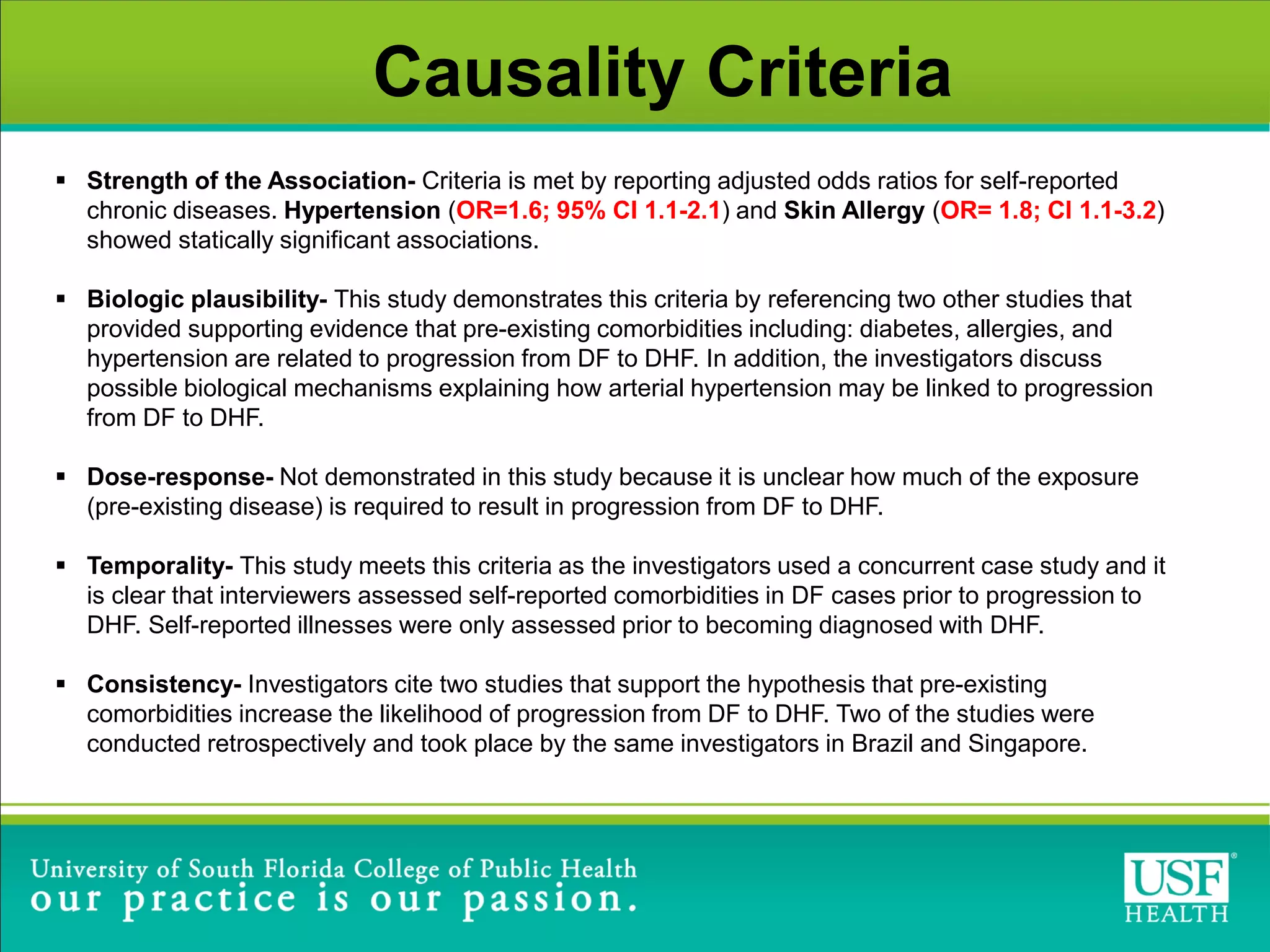
 Strength of the Association- Criteria is met by reporting adjusted odds ratios for self-reported
chronic diseases. Hypertension (OR=1.6; 95% CI 1.1-2.1) and Skin Allergy (OR= 1.8; CI 1.1-3.2)
showed statically significant associations.
 Biologic plausibility- This study demonstrates this criteria by referencing two other studies that
provided supporting evidence that pre-existing comorbidities including: diabetes, allergies, and
hypertension are related to progression from DF to DHF. In addition, the investigators discuss
possible biological mechanisms explaining how arterial hypertension may be linked to progression
from DF to DHF.
 Dose-response- Not demonstrated in this study because it is unclear how much of the exposure
(pre-existing disease) is required to result in progression from DF to DHF.
 Temporality- This study meets this criteria as the investigators used a concurrent case study and it
is clear that interviewers assessed self-reported comorbidities in DF cases prior to progression to
DHF. Self-reported illnesses were only assessed prior to becoming diagnosed with DHF.
 Consistency- Investigators cite two studies that support the hypothesis that pre-existing
comorbidities increase the likelihood of progression from DF to DHF. Two of the studies were
conducted retrospectively and took place by the same investigators in Brazil and Singapore.
Results
Table 1. Socioeconomic and Demographic Characteristics of DHF Cases
(N=316) and DF Controls (N=912) > 15 years of age,
Living in Six Municipalities of Brazil, 2009-2012
Characteristics Cases N=316 Controls N=912 p value
Sex
Female 188 (59%) 579 (63%) 0.206
Male 128 (41%) 333 ((37%)
Skin Color
Black 40 (13%) 132 (15%) 0.003
White 102 (32%) 373 (41%)
Mixed 173 (55%) 395 (44%)
Income
> 1 144 (48%) 286 (34%) 0.000
1-3 103 (34%) 345 (40%)
> 3 54 (18%) 222 (26%)
Schooling
0-3 39 (13%) 83 (10%) 0.146
3-7 39 (13% 143 (18%)
7-10 49 (17%) 151 (19%)
> 10 166 (57%) 425 (53%)
Results
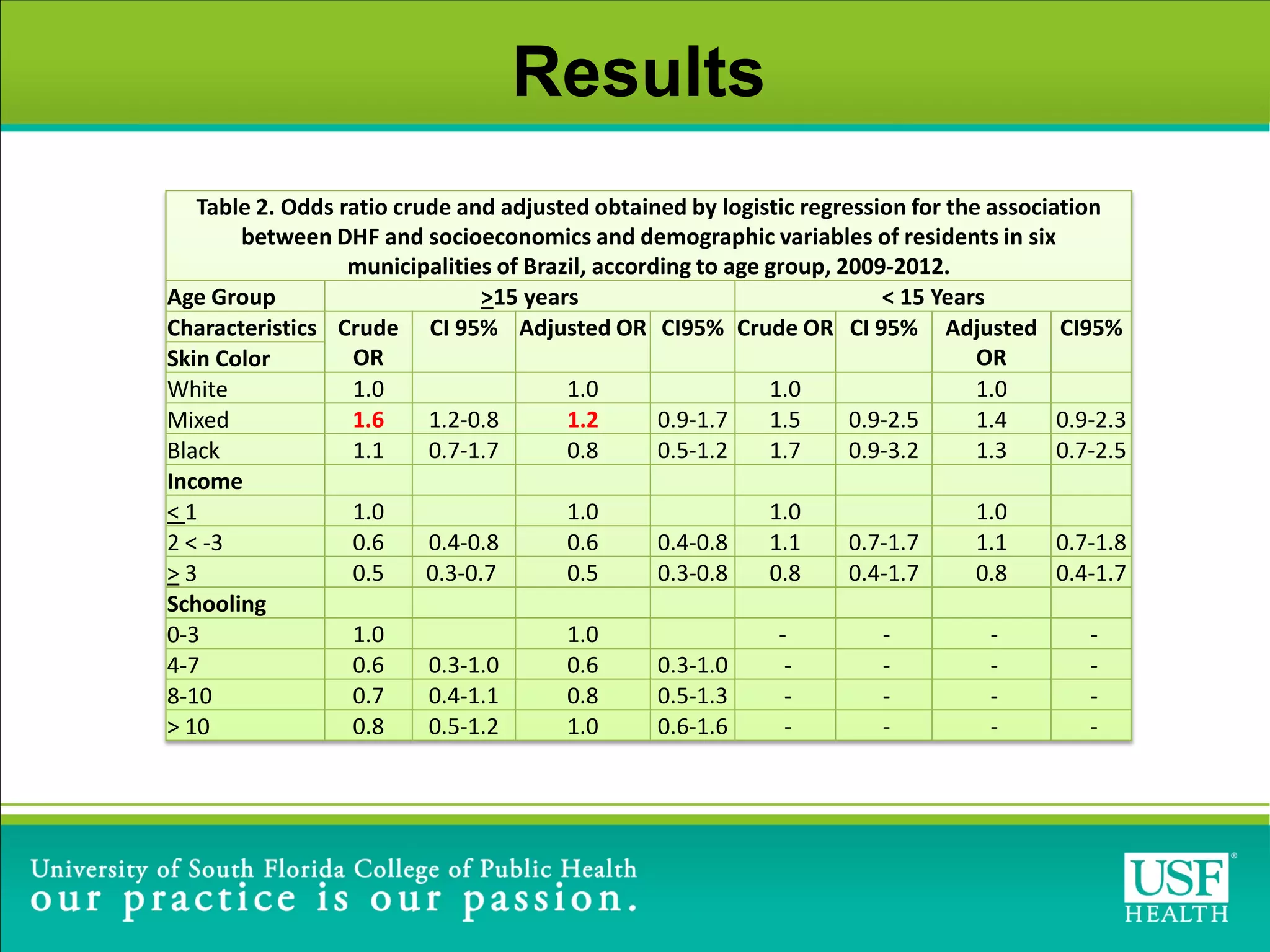
Table 2. Odds ratio crude and adjusted obtained by logistic regression for the association
between DHF and socioeconomics and demographic variables of residents in six
municipalities of Brazil, according to age group, 2009-2012.
Age Group >15 years < 15 Years
Characteristics Crude
OR
CI 95% Adjusted OR CI95% Crude OR CI 95% Adjusted
OR
CI95%
Skin Color
White 1.0 1.0 1.0 1.0
Mixed 1.6 1.2-0.8 1.2 0.9-1.7 1.5 0.9-2.5 1.4 0.9-2.3
Black 1.1 0.7-1.7 0.8 0.5-1.2 1.7 0.9-3.2 1.3 0.7-2.5
Income
< 1 1.0 1.0 1.0 1.0
2 < -3 0.6 0.4-0.8 0.6 0.4-0.8 1.1 0.7-1.7 1.1 0.7-1.8
> 3 0.5 0.3-0.7 0.5 0.3-0.8 0.8 0.4-1.7 0.8 0.4-1.7
Schooling
0-3 1.0 1.0 - - - -
4-7 0.6 0.3-1.0 0.6 0.3-1.0 - - - -
8-10 0.7 0.4-1.1 0.8 0.5-1.3 - - - -
> 10 0.8 0.5-1.2 1.0 0.6-1.6 - - - -
Results
Table 3. Odds ratio crude* and adjusted obtained by logistic regression for the association
between DHF and select comorbidities of > 15 years old residents in six municipalities of
Brazil 2009-2012
Chronic Disease OR Crude (IC a 95%) OR Adjusted (IC a 95%)
Hypertension
No 1.0 1.0
Yes 1.3 (0.9-1.7) 1.6 (1.1-2.1)
Allergy
No 1.0 1.0
Yes 1.2 (0.8-1.6) 1.1 (0.8-1.6)
Food Allergy
No 1.0 1.0
Yes 1.3 (0.7-2.5) 1.0 (0.5-2.2)
Respiratory Allergy
No 1.0 1.0
Yes 1.0 (0.7-1.5) 1.1 (0.7-1.6)
Skin Allergy
No 1.0 1.0
Yes 1.8 (1.1-3.0) 1.8 (1.1-3.2)
Diabetes
No 1.0 1.0
Yes 1.0 (0.6-1.8) 1.2 (0.7-2.3)
Diabetes with Hypertension
No 1.0 1.0
Yes 1.0 (0.5-2.0) 1.2 (0.6-2.5)
Asthma
No 1.0 1.0
Yes 1.4 (0.7-3.1) 1.1 (0.4-2.6)
Implications of the Study
 During dengue outbreaks, close monitoring and observation of DF cases
should be conducted for patients with the following comorbidities: arterial
hypertension, skin allergy, and diabetes.
 In epidemics where healthcare resources are limited, risk factors for DHF
can be used to prioritize hospitalization of DF patients. Potential DHF cases
should remain in the hospital during outbreaks and monitored for early
detection of signs and symptoms related to DHF.
 Early detection and clinical management of potential DHF cases is critical in
order to eliminate severity associated with illness and prevent future deaths.
 Finally, policy makers can prioritize high risk DHF patients for vaccination
when dengue vaccines are available, especially in developing countries.
Future Research
 Further clinical studies to define new protocols on the evolution of dengue
infections in patients with diabetes, allergies, and hypertension (particularly
with respect to drugs used) and appropriate medical management.
 Investigators of this study recommend future research should examine the
influence of the immune system in order to identify immunological
biomarkers that can function as indictors of progression from DF to DHF.
 Similar studies assessing risk factors and progression to DHF should be
conducted in other limited resource countries and developed countries to
determine if differences exist.
QUESTIONS?
References
Teixeira, M. G., Paix, E. S., & Costa, N. (2015). Arterial Hypertension and Skin
Allergy Are Risk Factors for Progression from Dengue to Dengue Hemorrhagic
Fever : A Case Control Study. PLoS Neglected Tropical Diseases, 9(5), 1–8.
Yacoub, S. & Wills, B. (2014). Predicting outcome from dengue. BMC Medicine, 12
(147), 1-10.

Ruchi Pancholy Dengue PPT

  • 1.
    Reference: Teixeira, M. G.,Paix, E. S., & Costa, N. (2015). Arterial Hypertension and Skin Allergy Are Risk Factors for Progression from Dengue to Dengue Hemorrhagic Fever : A Case Control Study. PLoS Neglected Tropical Diseases, 9(5), 1–8. Ruchi Pancholy, MPH, REHS PHC 6002 Infectious Disease Epidemiology Article Written Critique Presentation Fall 2015 Aurora Sanchez-Anguiano, MD, PhD, CPH Risk Factors for Progression from Dengue to Dengue Hemorrhagic Fever: A Case Control Study
  • 2.
     Dengue Background:A viral disease affecting more than 100 countries worldwide, transmitted primarily by Aedes aegypti mosquitoes.  To date, Brazil reports the world’s largest number of Dengue Fever cases.  This study took place in Brazil during Dengue Epidemic Years, 2009-2012  Dengue Fever (DF) is the most common and mildest form  Some cases progress to Dengue Hemorrhagic Fever (DHF), a more life threatening form of the illness.  Currently, it is unclear which cases may be more likely to progress from DF to DHF. Summary of the Article
  • 3.
    Major Objectives/Hypothesis  Determinethe major risk factors involved in the progression from DF to DHF  Understanding risk factors involved in the progression from DF to DHF will allow physicians to initiate early clinical management of cases to limit severity of illness and prevent deaths.  Research Question: Which risk factors (comorbidities due to chronic illness) increase the risk of progression from DF to DHF?  Hypothesis: The study investigators hypothesize that specific comorbidities may increase the likelihood that a DF case will progress to DHF.
  • 4.
    Study Design  StudyDesign: Unmatched Concurrent Case Control study; Four controls identified per case)  Recruitment: Cases and controls were DF patients in Infectious Disease Reference Hospitals located in one of 6 Brazilian cities during epidemic years, 2009 to 2012  Method: Pre-Tested Standardized Questionnaire  Data Collection: Participants interviewed on demographic and biological data, clinical information, self-reported comorbidities and use of medications to control these illnesses.  Measure of Association: Crude and Adjusted Odds Ratio
  • 5.
    Sample Size andStudy Sample  Study Sample: Total of 1,806 individuals 490 Cases of DF and 1,316 Controls with DF  Case Definition: Patients with DF who progressed to DHF and presented with symptoms including: fever, hemorrhagic manifestations, thrombocytopenia, evidence of plasma leakage, and one positive laboratory diagnosis for dengue.  Control Definition: Patients from the same hospital as cases presenting with symptoms of DF including: fever, headache, myalgia, and positive laboratory diagnosis for dengue.
  • 6.
    Study Population  SourcePopulation: 1,806 Patients hospitalized and diagnosed with DF in an Infectious Disease Reference Hospital located in one of the 6 Brazilian cities during epidemic years, 2009 to 2012.  Target Population: Patients diagnosed and hospitalized with DF throughout the world.
  • 7.
    Exposure & Outcome Research Question: Do DF patients with pre-existing comorbidities increase the likelihood that they will progress to DHF? Pre-Existing Comorbidities DHF Diabetes, hypertension, allergies, asthma Exposure Outcome  Identification of Exposed Individuals: Administration of a standardized questionnaire by trained interviewers at one of the International Disease Reference Hospitals in one of the 6 Brazilian cities during epidemic years, 2009-2012.  How Exposure were Defined and Measured: Upon arrival to the hospital, DF patients and/or relatives were interviewed on demographic info, socioeconomic indicators, clinical information including signs and symptoms of dengue, self-reported comorbidities, and use of medication to control these illnesses.  Assessing Self-Reported Comorbidities: Only DF patients able to show proof of using prescription medications to treat their self-reported illnesses were considered by investigators to have the condition.
  • 8.
    Confounding Pre-Existing Comorbidities DHF Diabetes,hypertension, allergies, asthma Exposure Outcome Confounding Factors Majority of Cases and Controls were Mixed Race & Female Secondary Infection Age Related Differences Nutritional Status (Over or Under Nutrition) Pregnancy
  • 9.
     Information Bias:Investigators prevent this by conducting a concurrent case control study by recruiting incident rather than past cases and collected data from cases as they were diagnosed.  Selection Bias: Investigators prevent this by recruiting cases and controls from the same population (or hospital).  Medical Surveillance Bias: In this study, hospitalization with DF was related to the exposure; therefore it is possible that individuals presenting with signs and symptoms of Dengue that were not hospitalized could have later been at risk for developing DHF.  Chance: 95% CI, Alpha set at 0.05, Power: 80% Bias & Chance
  • 10.
    Study Limitations  NoInformation on Previous History of Dengue- Investigators could not control for whether DHF cases had a heterologous re-infection.  Immunological Mechanisms were not explored in this study  Comorbidity data was self-reported rather than abstracted from medical records; since the study required proof of medication to treat the illness there is a possibility that those with pre-existing illnesses may not have been reported.  Findings may not be generalizable to DF patients in wealthier nations
  • 11.
    Causality Criteria  Strengthof the Association- Criteria is met by reporting adjusted odds ratios for self-reported chronic diseases. Hypertension (OR=1.6; 95% CI 1.1-2.1) and Skin Allergy (OR= 1.8; CI 1.1-3.2) showed statically significant associations.  Biologic plausibility- This study demonstrates this criteria by referencing two other studies that provided supporting evidence that pre-existing comorbidities including: diabetes, allergies, and hypertension are related to progression from DF to DHF. In addition, the investigators discuss possible biological mechanisms explaining how arterial hypertension may be linked to progression from DF to DHF.  Dose-response- Not demonstrated in this study because it is unclear how much of the exposure (pre-existing disease) is required to result in progression from DF to DHF.  Temporality- This study meets this criteria as the investigators used a concurrent case study and it is clear that interviewers assessed self-reported comorbidities in DF cases prior to progression to DHF. Self-reported illnesses were only assessed prior to becoming diagnosed with DHF.  Consistency- Investigators cite two studies that support the hypothesis that pre-existing comorbidities increase the likelihood of progression from DF to DHF. Two of the studies were conducted retrospectively and took place by the same investigators in Brazil and Singapore.
  • 12.
    Results Table 1. Socioeconomicand Demographic Characteristics of DHF Cases (N=316) and DF Controls (N=912) > 15 years of age, Living in Six Municipalities of Brazil, 2009-2012 Characteristics Cases N=316 Controls N=912 p value Sex Female 188 (59%) 579 (63%) 0.206 Male 128 (41%) 333 ((37%) Skin Color Black 40 (13%) 132 (15%) 0.003 White 102 (32%) 373 (41%) Mixed 173 (55%) 395 (44%) Income > 1 144 (48%) 286 (34%) 0.000 1-3 103 (34%) 345 (40%) > 3 54 (18%) 222 (26%) Schooling 0-3 39 (13%) 83 (10%) 0.146 3-7 39 (13% 143 (18%) 7-10 49 (17%) 151 (19%) > 10 166 (57%) 425 (53%)
  • 13.
    Results Table 2. Oddsratio crude and adjusted obtained by logistic regression for the association between DHF and socioeconomics and demographic variables of residents in six municipalities of Brazil, according to age group, 2009-2012. Age Group >15 years < 15 Years Characteristics Crude OR CI 95% Adjusted OR CI95% Crude OR CI 95% Adjusted OR CI95% Skin Color White 1.0 1.0 1.0 1.0 Mixed 1.6 1.2-0.8 1.2 0.9-1.7 1.5 0.9-2.5 1.4 0.9-2.3 Black 1.1 0.7-1.7 0.8 0.5-1.2 1.7 0.9-3.2 1.3 0.7-2.5 Income < 1 1.0 1.0 1.0 1.0 2 < -3 0.6 0.4-0.8 0.6 0.4-0.8 1.1 0.7-1.7 1.1 0.7-1.8 > 3 0.5 0.3-0.7 0.5 0.3-0.8 0.8 0.4-1.7 0.8 0.4-1.7 Schooling 0-3 1.0 1.0 - - - - 4-7 0.6 0.3-1.0 0.6 0.3-1.0 - - - - 8-10 0.7 0.4-1.1 0.8 0.5-1.3 - - - - > 10 0.8 0.5-1.2 1.0 0.6-1.6 - - - -
  • 14.
    Results Table 3. Oddsratio crude* and adjusted obtained by logistic regression for the association between DHF and select comorbidities of > 15 years old residents in six municipalities of Brazil 2009-2012 Chronic Disease OR Crude (IC a 95%) OR Adjusted (IC a 95%) Hypertension No 1.0 1.0 Yes 1.3 (0.9-1.7) 1.6 (1.1-2.1) Allergy No 1.0 1.0 Yes 1.2 (0.8-1.6) 1.1 (0.8-1.6) Food Allergy No 1.0 1.0 Yes 1.3 (0.7-2.5) 1.0 (0.5-2.2) Respiratory Allergy No 1.0 1.0 Yes 1.0 (0.7-1.5) 1.1 (0.7-1.6) Skin Allergy No 1.0 1.0 Yes 1.8 (1.1-3.0) 1.8 (1.1-3.2) Diabetes No 1.0 1.0 Yes 1.0 (0.6-1.8) 1.2 (0.7-2.3) Diabetes with Hypertension No 1.0 1.0 Yes 1.0 (0.5-2.0) 1.2 (0.6-2.5) Asthma No 1.0 1.0 Yes 1.4 (0.7-3.1) 1.1 (0.4-2.6)
  • 15.
    Implications of theStudy  During dengue outbreaks, close monitoring and observation of DF cases should be conducted for patients with the following comorbidities: arterial hypertension, skin allergy, and diabetes.  In epidemics where healthcare resources are limited, risk factors for DHF can be used to prioritize hospitalization of DF patients. Potential DHF cases should remain in the hospital during outbreaks and monitored for early detection of signs and symptoms related to DHF.  Early detection and clinical management of potential DHF cases is critical in order to eliminate severity associated with illness and prevent future deaths.  Finally, policy makers can prioritize high risk DHF patients for vaccination when dengue vaccines are available, especially in developing countries.
  • 16.
    Future Research  Furtherclinical studies to define new protocols on the evolution of dengue infections in patients with diabetes, allergies, and hypertension (particularly with respect to drugs used) and appropriate medical management.  Investigators of this study recommend future research should examine the influence of the immune system in order to identify immunological biomarkers that can function as indictors of progression from DF to DHF.  Similar studies assessing risk factors and progression to DHF should be conducted in other limited resource countries and developed countries to determine if differences exist.
  • 17.
  • 18.
    References Teixeira, M. G.,Paix, E. S., & Costa, N. (2015). Arterial Hypertension and Skin Allergy Are Risk Factors for Progression from Dengue to Dengue Hemorrhagic Fever : A Case Control Study. PLoS Neglected Tropical Diseases, 9(5), 1–8. Yacoub, S. & Wills, B. (2014). Predicting outcome from dengue. BMC Medicine, 12 (147), 1-10.