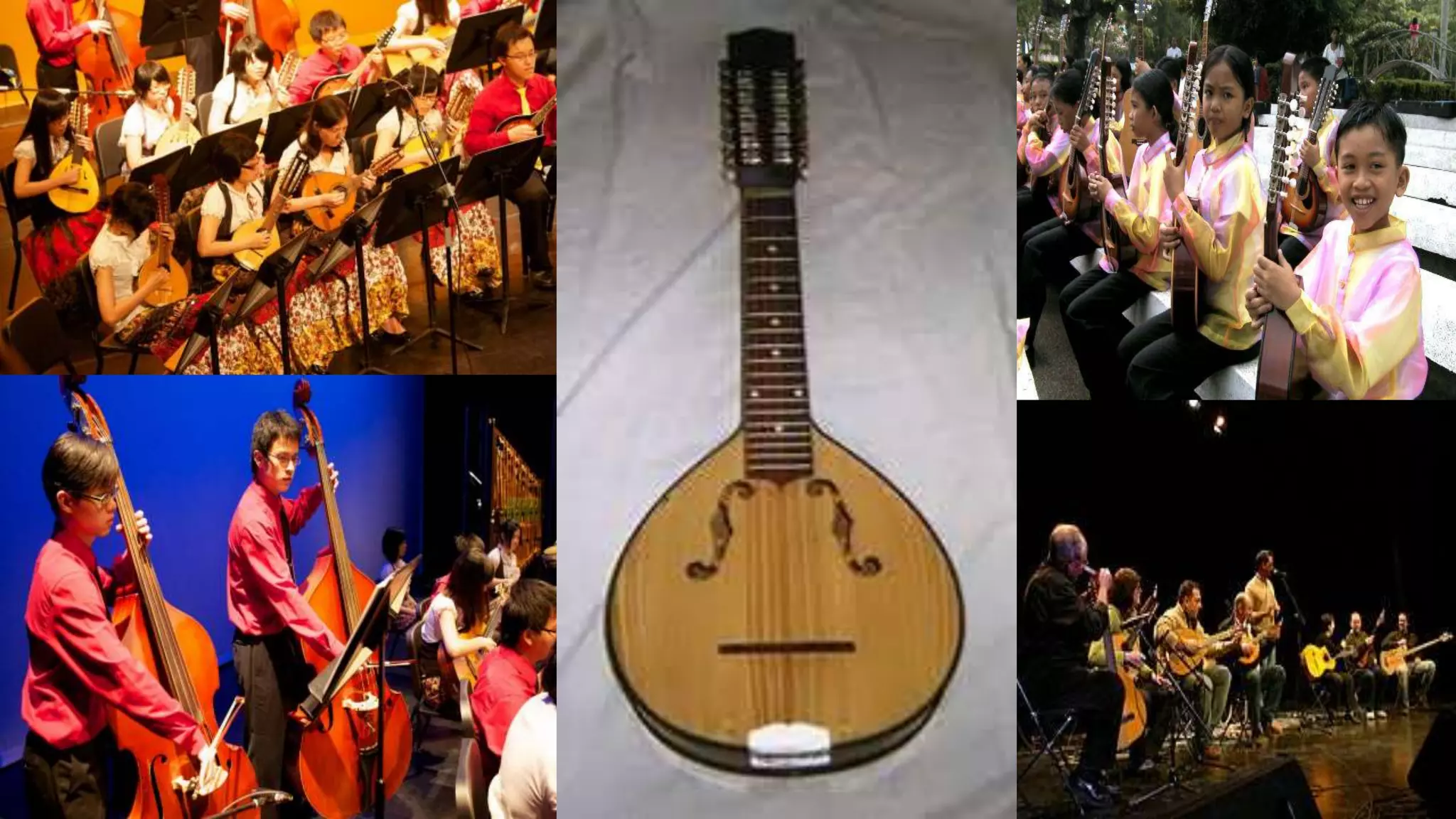


The rondalla was brought to the
Philippines by the Spaniards. In
the early Philippines, certain
styles were adopted by the
natives, especially guitar and
banduria used in the Pandanggo,
the Jota, and the Polka.
The use of the term comparza was common,
however, during the American period in the
Philippines, the term rondalla became more
used.
At present, rondalla, in the Philippines, refers
to any group of stringed instruments that are
played using the plectrum or pick.
The Filipino instruments are made from
indigenous Philippine wood and the plectrum,
or picks, are made from tortoise-shell.
Other stringed instruments
composing the standard Filipino
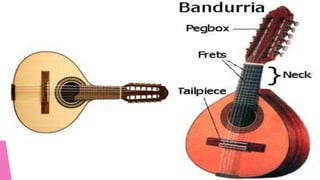
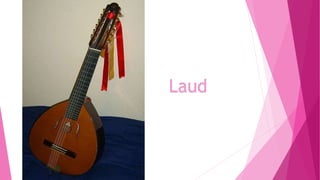
rondalla are the bandurria,
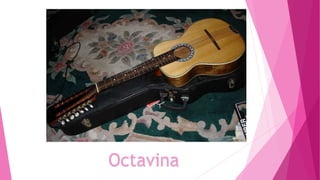
the laúd, the octavina,
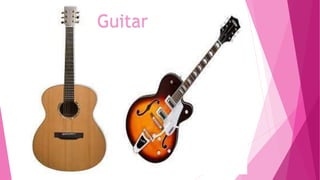
the Twelve-string guitar,
the Ukulele, the bajo de
uñas or double bass,
the Guitarrón mexicano.
Other Filipino-made instruments
modeled and developed after the guitar.
The Philippine
rondalla’s repertoire include folk songs
such as the collar de sampaguita, la
bella filipina, No te vayas a
Zamboanga, Balitaw, the Kundiman, the
"Zarzuela", the "Subli", the "Harana", the
"Tinikling", and the "Cariñosa".
four types:
1. groups of young men who played and sang
regularly in front of homes,
2. bands of musicians known
as murza or murga who begged for alms,
3. a group of musicians known
as comparza who played on stage
4. groups of university musicians known
as estudiantina, dubbed “tuna”.
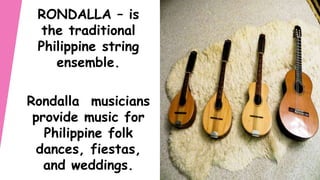
RONDALLA – is
the traditional
Philippine string
ensemble.
Rondalla musicians
provide music for
Philippine folk
dances, fiestas,
and weddings.
14 stringed
consisting of six
sets of strings
tuned in the
intervals of
fourths.
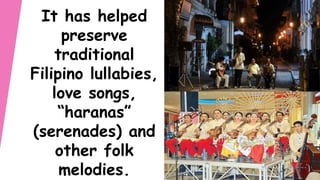
It has helped
preserve
traditional
Filipino lullabies,
love songs,
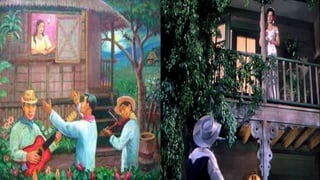
“haranas”
(serenades) and
other folk
melodies.
Octavina
Laud
Guitar
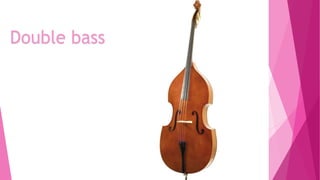
Double bass

Rondalla

  • 2.
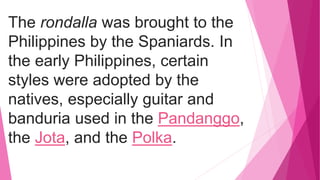
    The rondalla wasbrought to the Philippines by the Spaniards. In the early Philippines, certain styles were adopted by the natives, especially guitar and banduria used in the Pandanggo, the Jota, and the Polka.
  • 3.
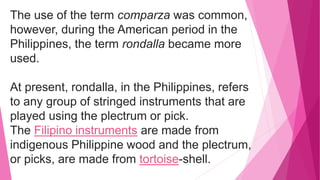
    The use ofthe term comparza was common, however, during the American period in the Philippines, the term rondalla became more used. At present, rondalla, in the Philippines, refers to any group of stringed instruments that are played using the plectrum or pick. The Filipino instruments are made from indigenous Philippine wood and the plectrum, or picks, are made from tortoise-shell.
  • 4.
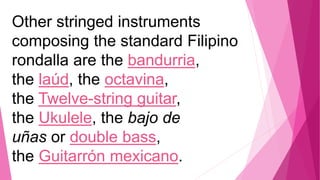
    Other stringed instruments composingthe standard Filipino rondalla are the bandurria, the laúd, the octavina, the Twelve-string guitar, the Ukulele, the bajo de uñas or double bass, the Guitarrón mexicano.
  • 5.
    Other Filipino-made instruments modeledand developed after the guitar. The Philippine rondalla’s repertoire include folk songs such as the collar de sampaguita, la bella filipina, No te vayas a Zamboanga, Balitaw, the Kundiman, the "Zarzuela", the "Subli", the "Harana", the "Tinikling", and the "Cariñosa".
  • 6.
    four types: 1. groupsof young men who played and sang regularly in front of homes, 2. bands of musicians known as murza or murga who begged for alms, 3. a group of musicians known as comparza who played on stage 4. groups of university musicians known as estudiantina, dubbed “tuna”.
  • 7.
    RONDALLA – is thetraditional Philippine string ensemble. Rondalla musicians provide music for Philippine folk dances, fiestas, and weddings.
  • 9.
    14 stringed consisting ofsix sets of strings tuned in the intervals of fourths.
  • 10.
    It has helped preserve traditional Filipinolullabies, love songs, “haranas” (serenades) and other folk melodies.
  • 16.
  • 17.
  • 18.
  • 19.