Romantic Period

  In British Literature
Romantic Period


1798-1870
Historical Context
• The Napoleonic Wars followed by
  economic recession
• Union with Ireland
• INDUSTRIAL REVOLUTION, CHARTISM,
  REFORM BILL
• Development of democracy, sudden
  urbanization, development of capitalism
• Reign of Queen Victoria
Description of The Age of the
 Romantic Movement (1798-1832)
• The first half place emphasis on the
  individual, nature, “an organic concept of
  art”
• Skepticism and cynicism  “abusive
  parody and satire
• Optimism mixed with revolutionary spirit
Description of the Early Victorian
        Age (1832-1870)
• Deeper feel for Industrial Revolution
• Bigger impact of science on religion and
  philosophy
• Romantic feeling came into conflict with
  world around it  “a literature of doubt
  and questioning”
Overall Description
• “Great age for the novel”
• “Serious critical and social debate in
  prose”
• “Weakest period of English stage since
  Elizabeth I” with “blind idolatry of
  Shakespeare” and “bound by PATENT
  THEATERS” and the STAR SYSTEM
Major Authors and Works: The
                Poets
•   William Wordsworth- “I Wandered Lonely as a Cloud”
•   Samuel Coleridge- “Kubla Khan”
•   Percy Shelley- married to Mary Shelley
•   John Keats- “When I Have Fears I may Cease to Be”
•   Lord Byron- Mary Shelley thought of Frankenstein while
    at his house
•   Alfred, Lord Tennyson- “The Charge of the Light
    Brigade”
•   Matthew Arnold- “Calm Soul of All Things”
•   Pre-Raphaelites
•   Robert Browning- Sordello
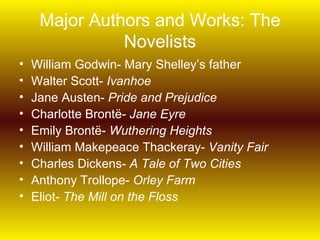
Major Authors and Works: The
               Novelists
•   William Godwin- Mary Shelley’s father
•   Walter Scott- Ivanhoe
•   Jane Austen- Pride and Prejudice
•   Charlotte Brontë- Jane Eyre
•   Emily Brontë- Wuthering Heights
•   William Makepeace Thackeray- Vanity Fair
•   Charles Dickens- A Tale of Two Cities
•   Anthony Trollope- Orley Farm
•   Eliot- The Mill on the Floss
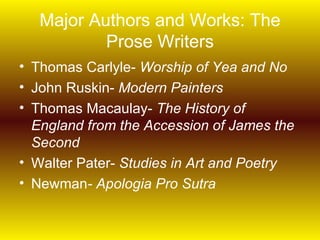
Major Authors and Works: The
           Prose Writers
• Thomas Carlyle- Worship of Yea and No
• John Ruskin- Modern Painters
• Thomas Macaulay- The History of
  England from the Accession of James the
  Second
• Walter Pater- Studies in Art and Poetry
• Newman- Apologia Pro Sutra
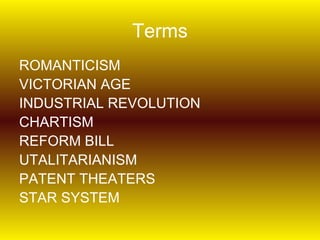
Terms
ROMANTICISM
VICTORIAN AGE
INDUSTRIAL REVOLUTION
CHARTISM
REFORM BILL
UTALITARIANISM
PATENT THEATERS
STAR SYSTEM

Romantic period

  • 1.
    Romantic Period In British Literature
  • 2.
  • 3.
    Historical Context • TheNapoleonic Wars followed by economic recession • Union with Ireland • INDUSTRIAL REVOLUTION, CHARTISM, REFORM BILL • Development of democracy, sudden urbanization, development of capitalism • Reign of Queen Victoria
  • 4.
    Description of TheAge of the Romantic Movement (1798-1832) • The first half place emphasis on the individual, nature, “an organic concept of art” • Skepticism and cynicism  “abusive parody and satire • Optimism mixed with revolutionary spirit
  • 5.
    Description of theEarly Victorian Age (1832-1870) • Deeper feel for Industrial Revolution • Bigger impact of science on religion and philosophy • Romantic feeling came into conflict with world around it  “a literature of doubt and questioning”
  • 6.
    Overall Description • “Greatage for the novel” • “Serious critical and social debate in prose” • “Weakest period of English stage since Elizabeth I” with “blind idolatry of Shakespeare” and “bound by PATENT THEATERS” and the STAR SYSTEM
  • 7.
    Major Authors andWorks: The Poets • William Wordsworth- “I Wandered Lonely as a Cloud” • Samuel Coleridge- “Kubla Khan” • Percy Shelley- married to Mary Shelley • John Keats- “When I Have Fears I may Cease to Be” • Lord Byron- Mary Shelley thought of Frankenstein while at his house • Alfred, Lord Tennyson- “The Charge of the Light Brigade” • Matthew Arnold- “Calm Soul of All Things” • Pre-Raphaelites • Robert Browning- Sordello
  • 8.
    Major Authors andWorks: The Novelists • William Godwin- Mary Shelley’s father • Walter Scott- Ivanhoe • Jane Austen- Pride and Prejudice • Charlotte Brontë- Jane Eyre • Emily Brontë- Wuthering Heights • William Makepeace Thackeray- Vanity Fair • Charles Dickens- A Tale of Two Cities • Anthony Trollope- Orley Farm • Eliot- The Mill on the Floss
  • 9.
    Major Authors andWorks: The Prose Writers • Thomas Carlyle- Worship of Yea and No • John Ruskin- Modern Painters • Thomas Macaulay- The History of England from the Accession of James the Second • Walter Pater- Studies in Art and Poetry • Newman- Apologia Pro Sutra
  • 10.
    Terms ROMANTICISM VICTORIAN AGE INDUSTRIAL REVOLUTION CHARTISM REFORMBILL UTALITARIANISM PATENT THEATERS STAR SYSTEM