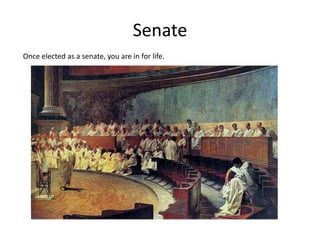
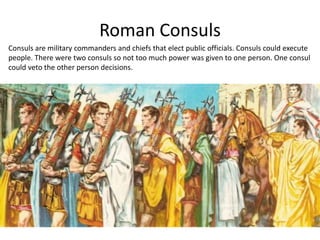
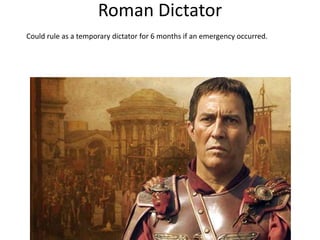
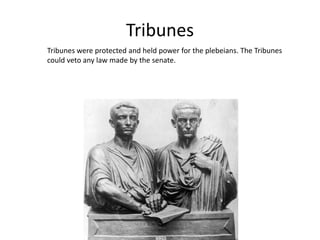
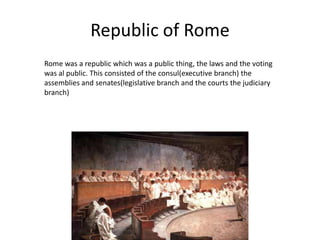
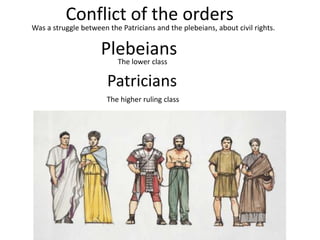
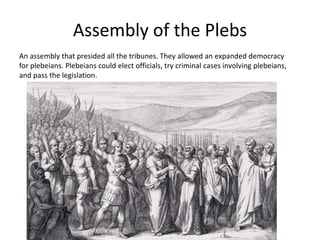
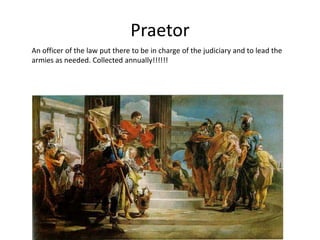
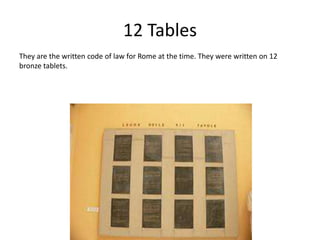
The Roman Republic had a Senate that served for life and two Consuls who were elected military commanders and public officials. In emergencies, a Dictator could temporarily rule for six months. Tribunes protected and advocated for the plebeians and could veto senate laws. Rome had a republic with executive, legislative, and judicial branches. There was conflict between the Patrician higher class and lower class Plebeians over civil rights until the Assembly of the Plebs expanded democracy for plebeians. Other offices included the Censor to collect taxes and organize military duties, and annual Praetors to lead the judiciary and armies. Laws were written on the Twelve Tables tablets.