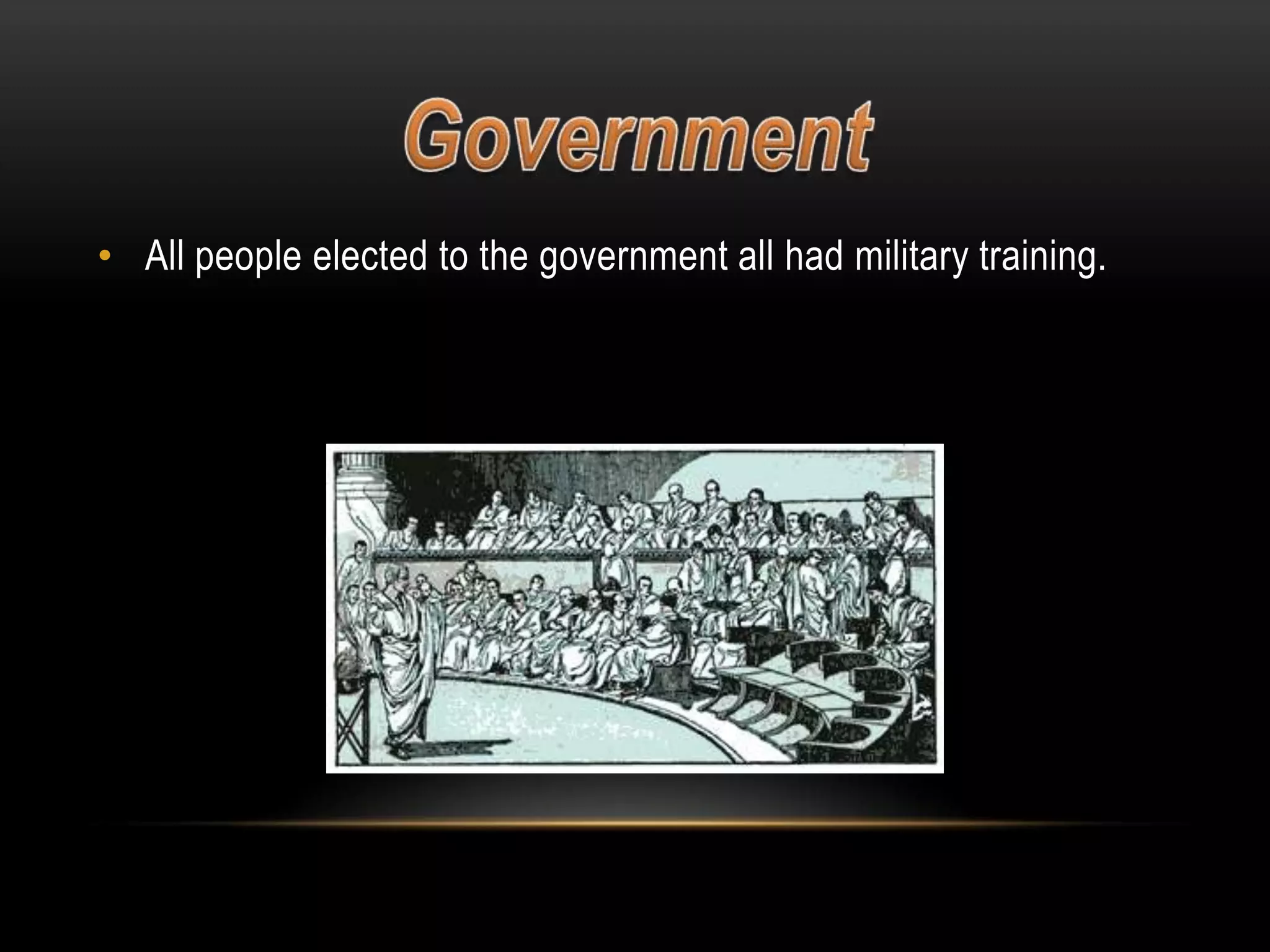
• All people elected to the government all had military training.
• They serve for life

• They were not elected, you have to have been previously
elected as an executive official.
• Rome was reinventing itself as a republic

• It sought to expand its territory
• Grew through the Italian peninsula and beyond
• Romans citizens struggled against each other for civil
rights
• Between the aristocratic ruling class of patricians and
the large class plebieans
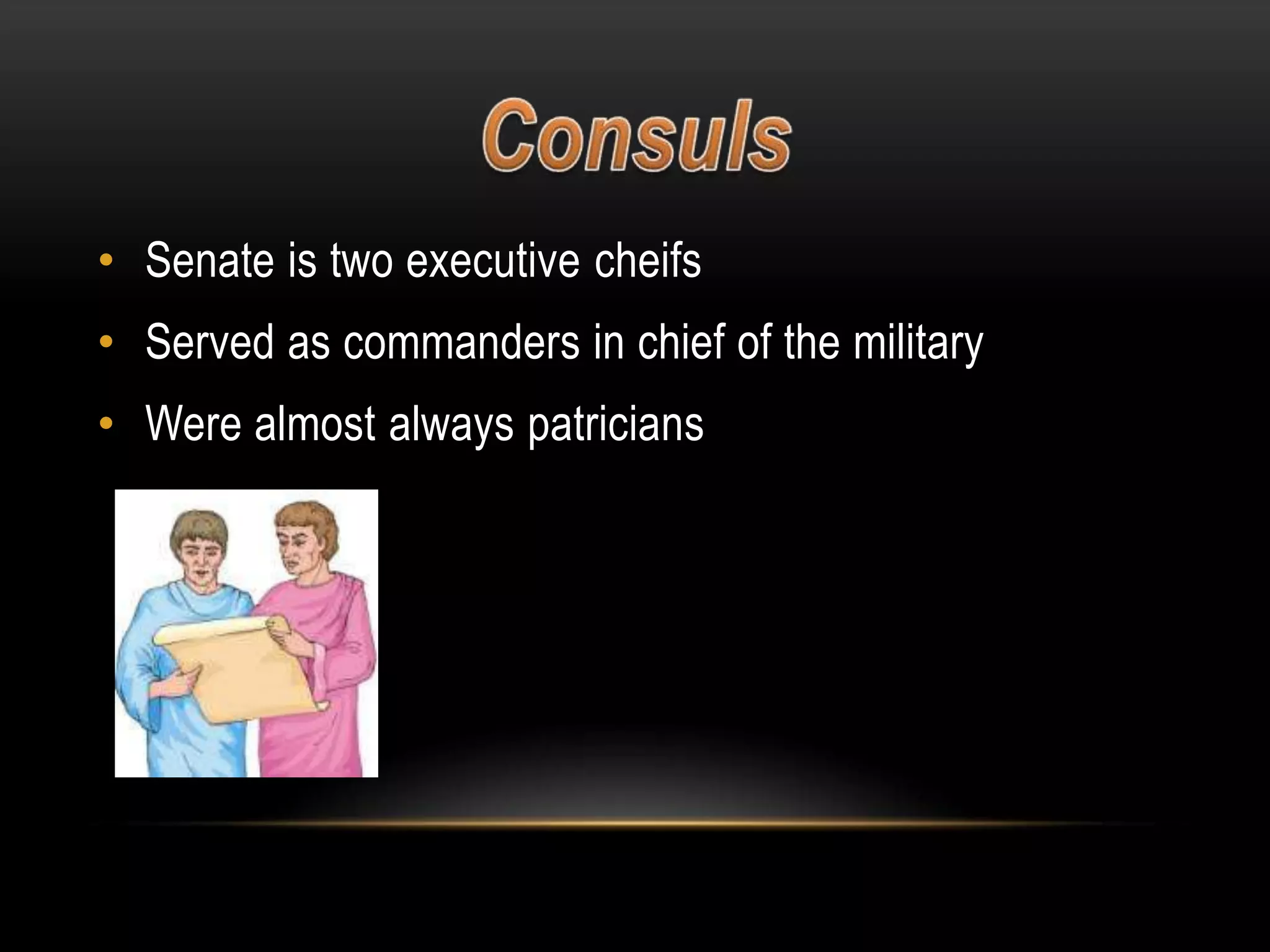
• Senate is two executive cheifs

• Served as commanders in chief of the military
• Were almost always patricians
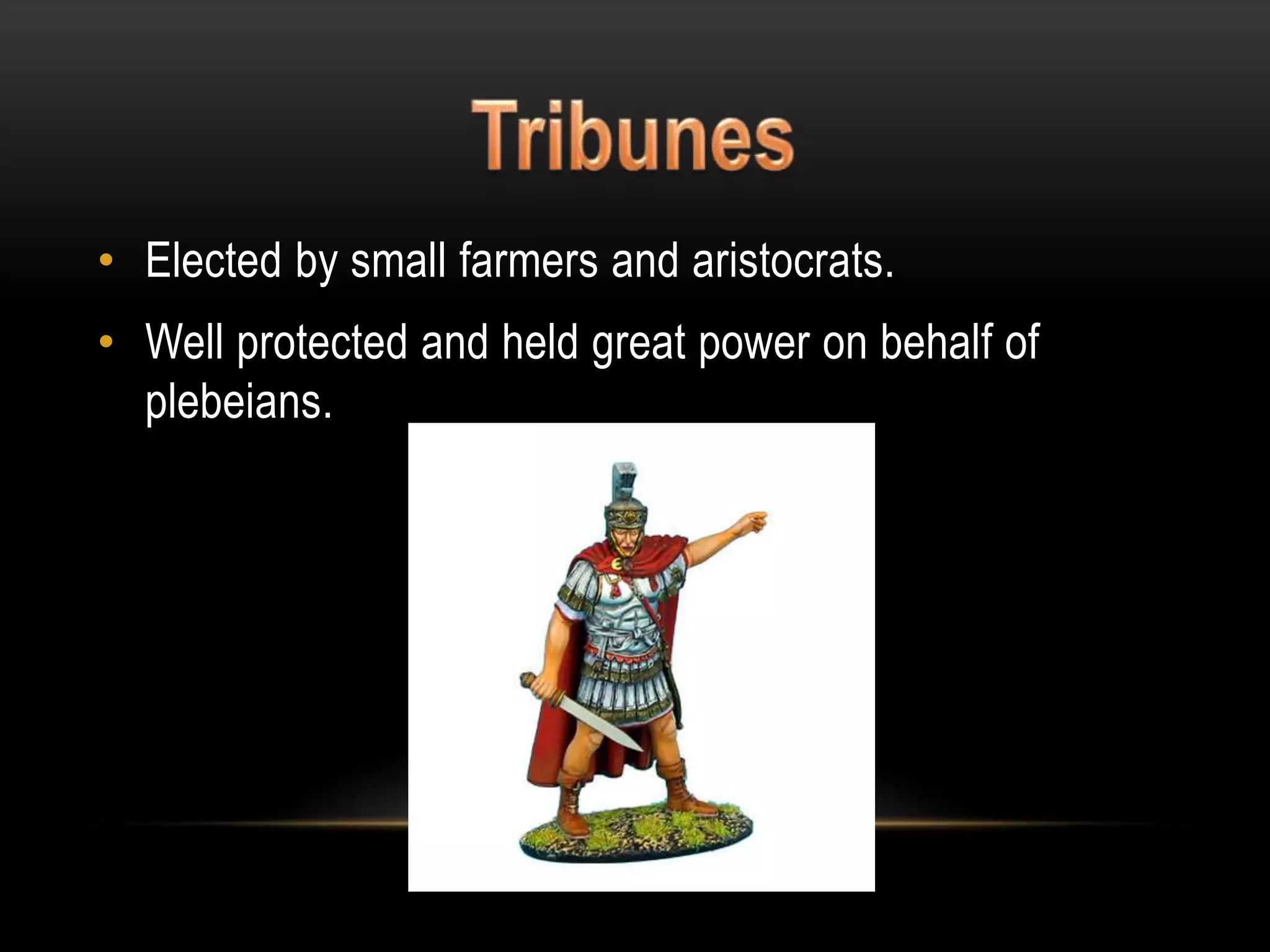
• Elected by small farmers and aristocrats.

• Well protected and held great power on behalf of
plebeians.
• Presided over by tribunes

• Allowed expanded democracy by allowing plebians to elect
certain offcials
• Try criminal cases involving plebians.
• Pass legislation
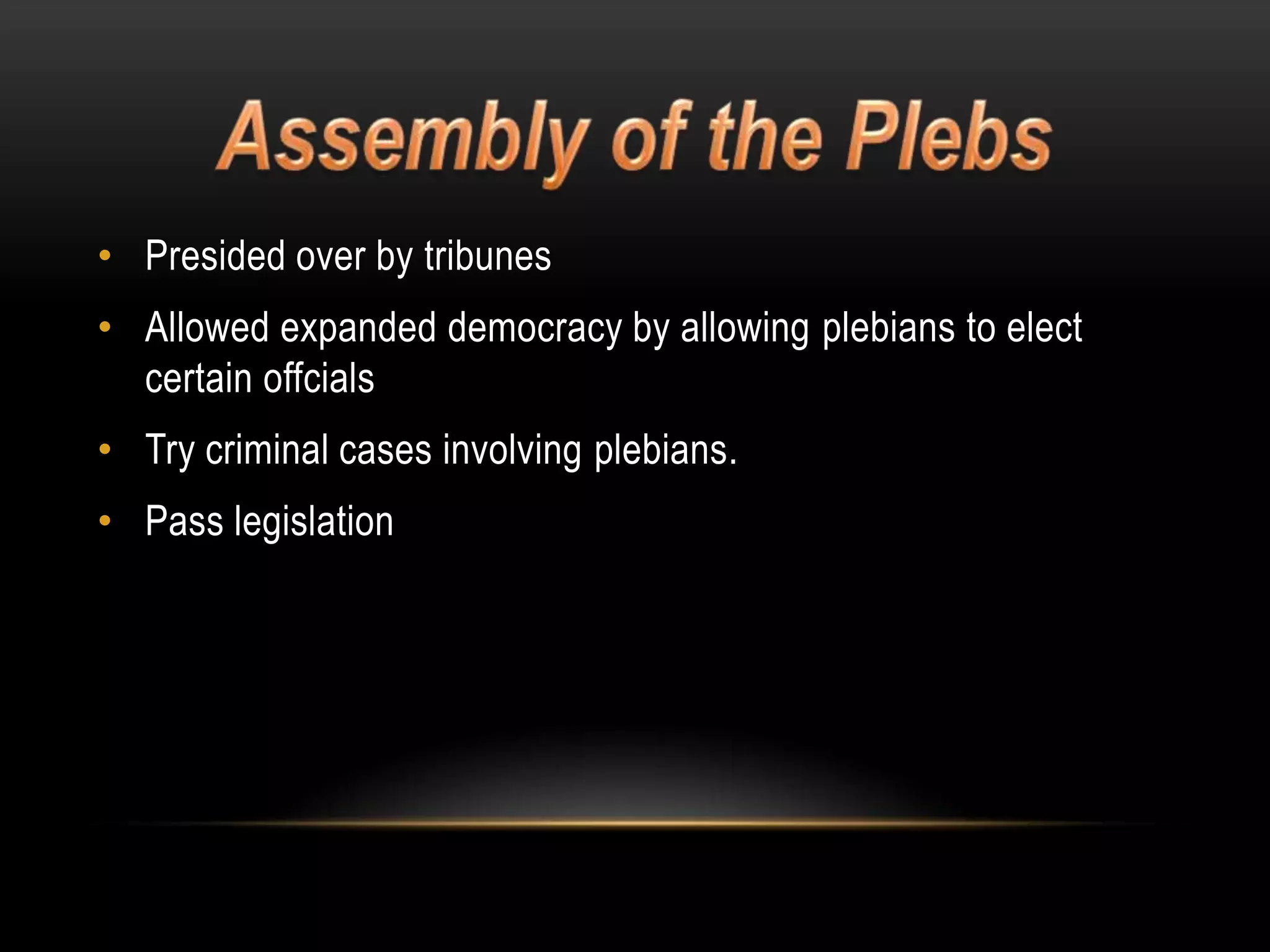
• There are two censors

• They collected taxes and organized military duties.
• Relived the consuls of duty taking the censors.
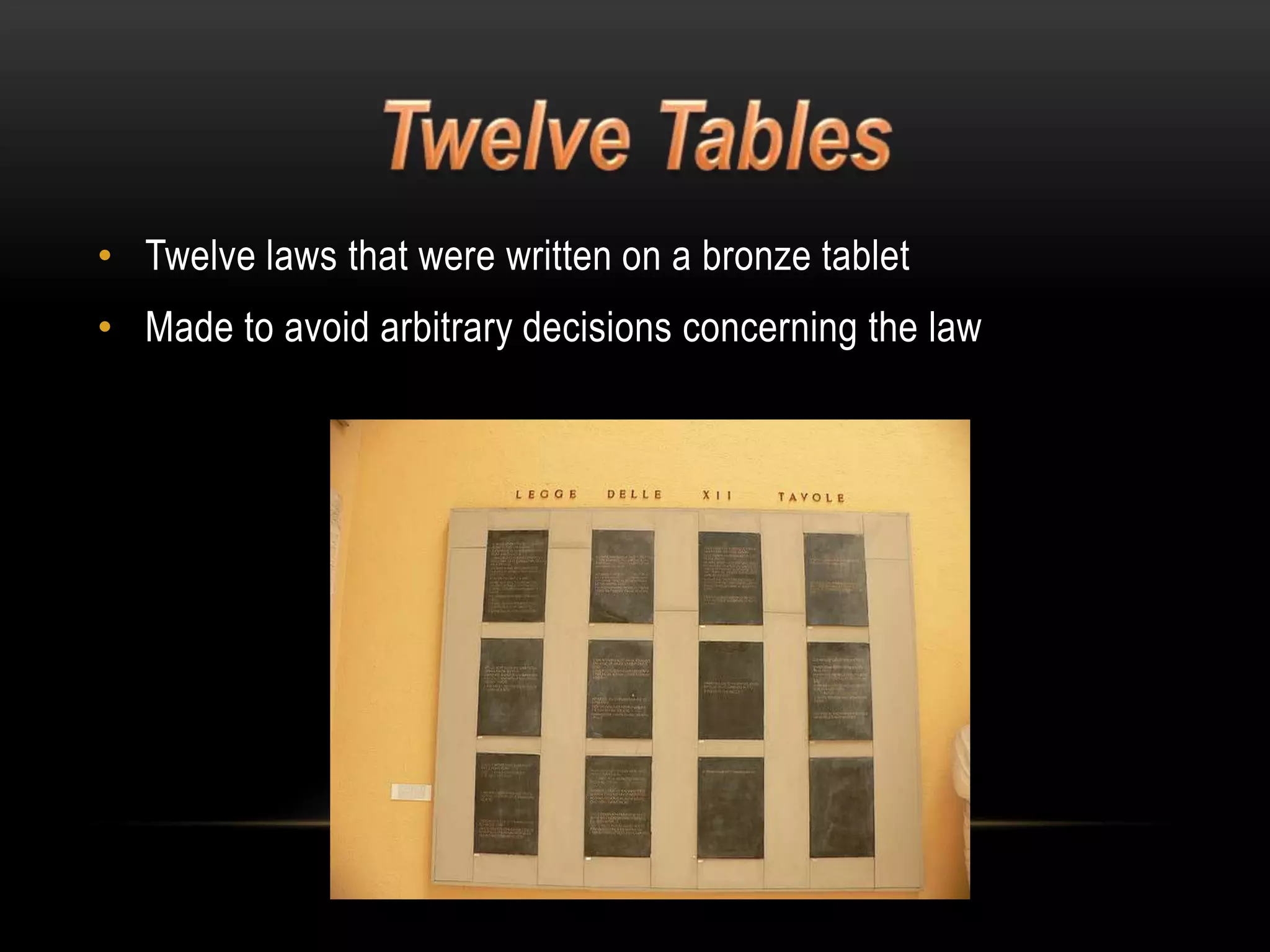
• Twelve laws that were written on a bronze tablet

• Made to avoid arbitrary decisions concerning the law
ffbPresentation1

ffbPresentation1

  • 2.
    • All peopleelected to the government all had military training.
  • 3.
    • They servefor life • They were not elected, you have to have been previously elected as an executive official.
  • 4.
    • Rome wasreinventing itself as a republic • It sought to expand its territory • Grew through the Italian peninsula and beyond • Romans citizens struggled against each other for civil rights • Between the aristocratic ruling class of patricians and the large class plebieans
  • 5.
    • Senate istwo executive cheifs • Served as commanders in chief of the military • Were almost always patricians
  • 6.
    • Elected bysmall farmers and aristocrats. • Well protected and held great power on behalf of plebeians.
  • 7.
    • Presided overby tribunes • Allowed expanded democracy by allowing plebians to elect certain offcials • Try criminal cases involving plebians. • Pass legislation
  • 8.
    • There aretwo censors • They collected taxes and organized military duties. • Relived the consuls of duty taking the censors.
  • 9.
    • Twelve lawsthat were written on a bronze tablet • Made to avoid arbitrary decisions concerning the law