ROLE Kick-off WP 1: Social Requirements Engineering and the RWTH Aachen University Test Bed Ralf Klamma, Zinayida Petrushyna, Dominik Renzel,  Bodo von der Heiden, Veronika Meffert RWTH Aachen University March 2-3, 2009 EPFL, Lausanne, Switzerland
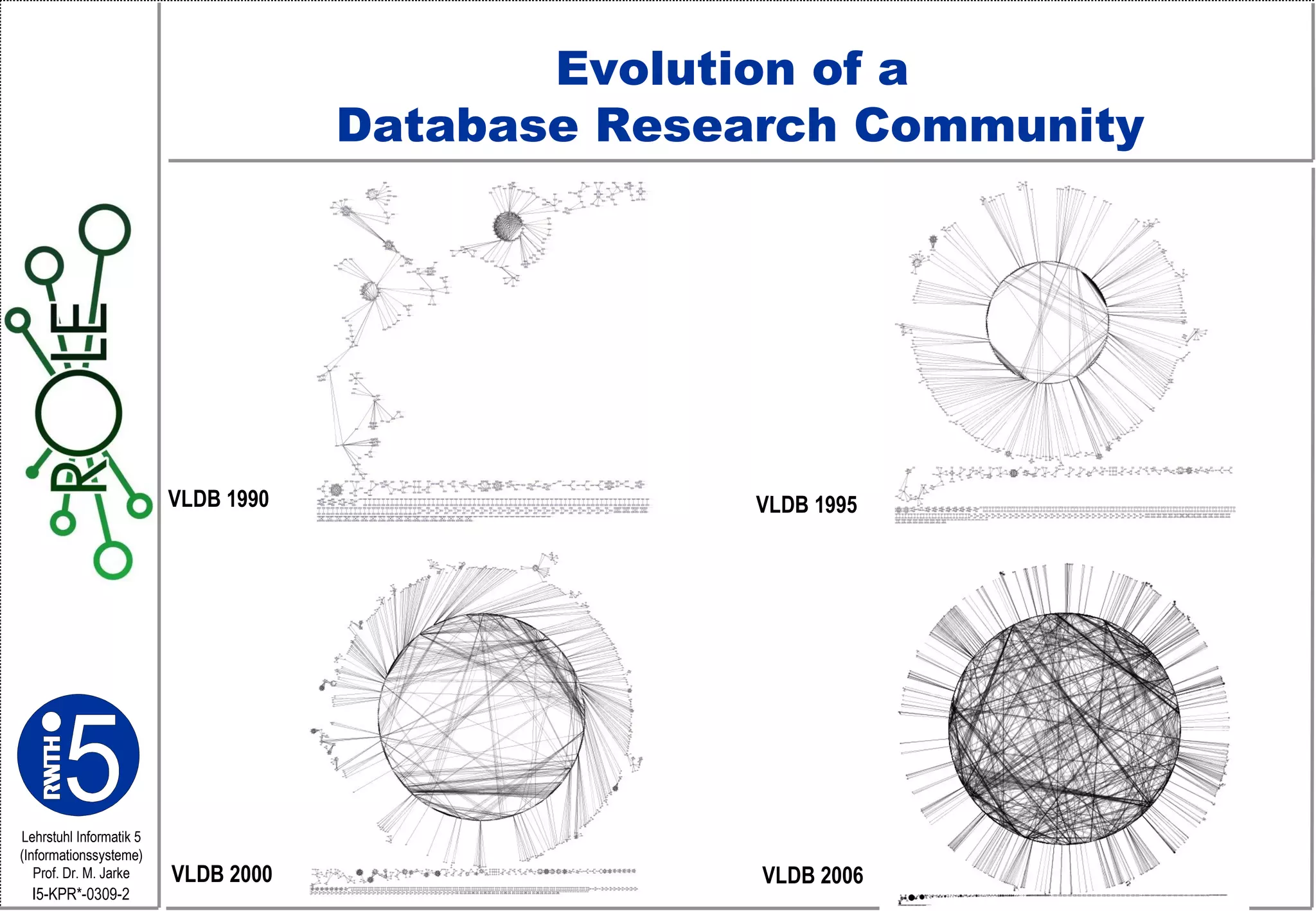
Evolution of a  Database Research Community VLDB 1990 VLDB 1995 VLDB 2000 VLDB 2006
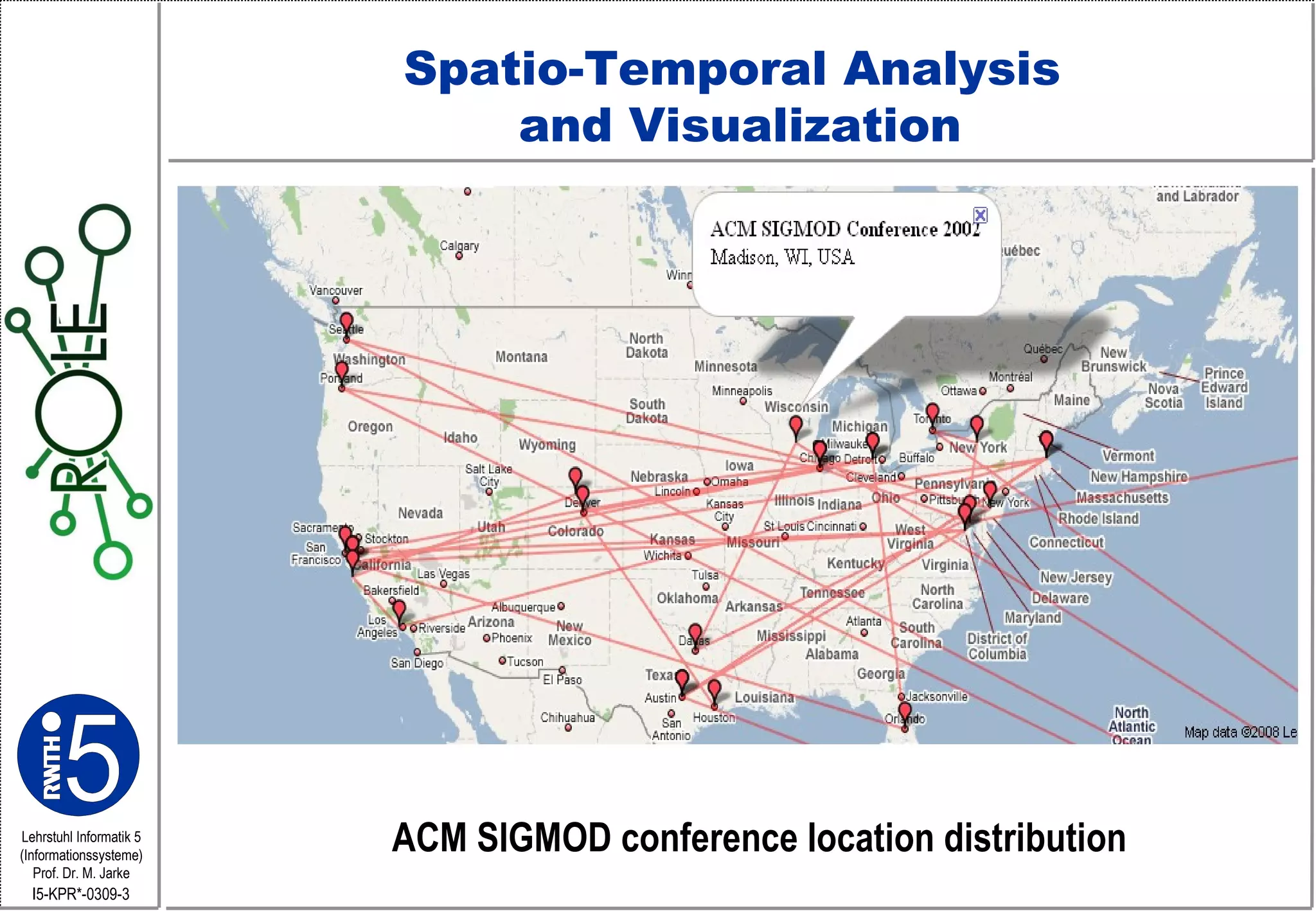
Spatio-Temporal Analysis  and Visualization ACM SIGMOD conference location distribution
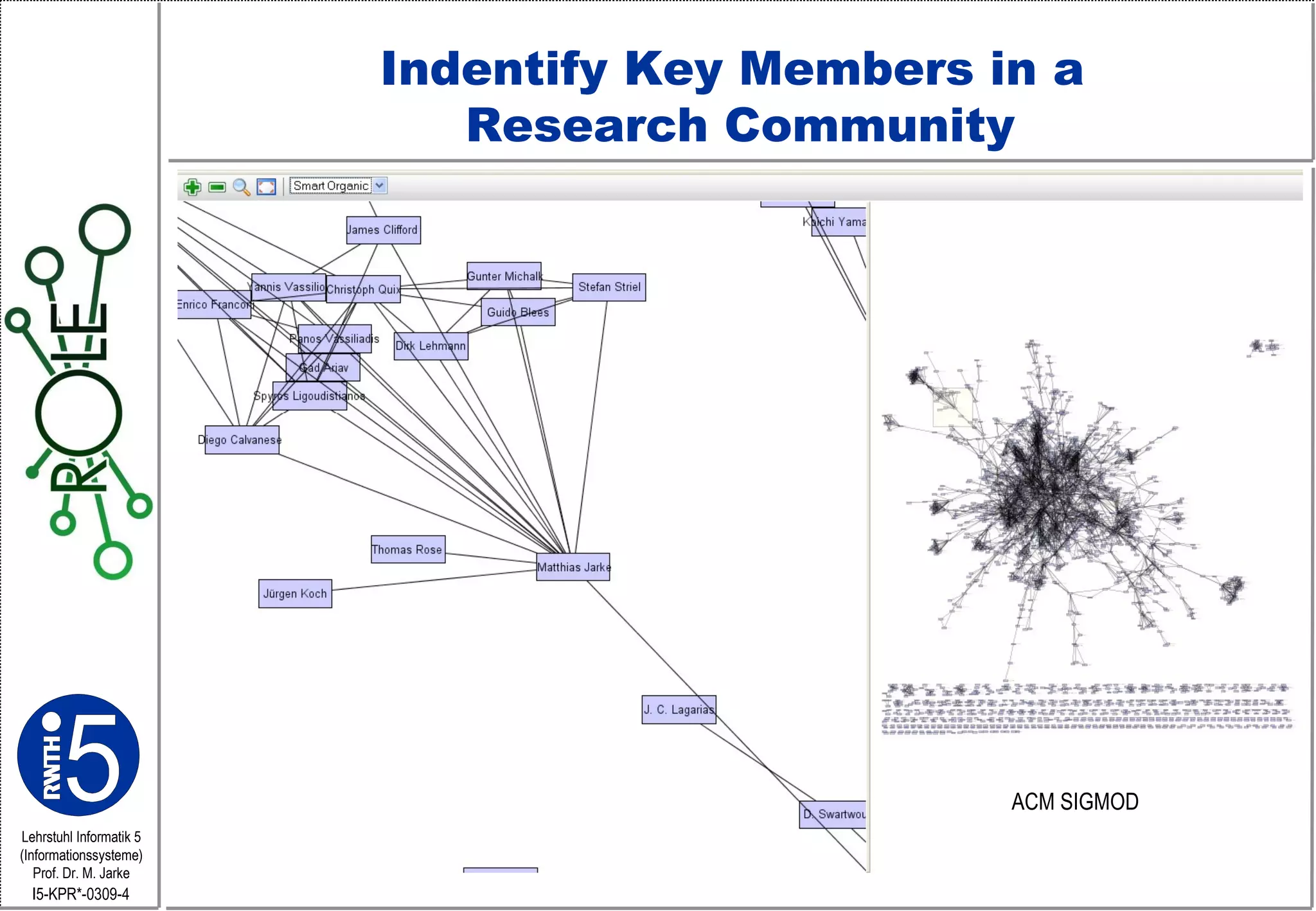
Indentify Key Members in a  Research Community ACM SIGMOD ACM SIGMOD
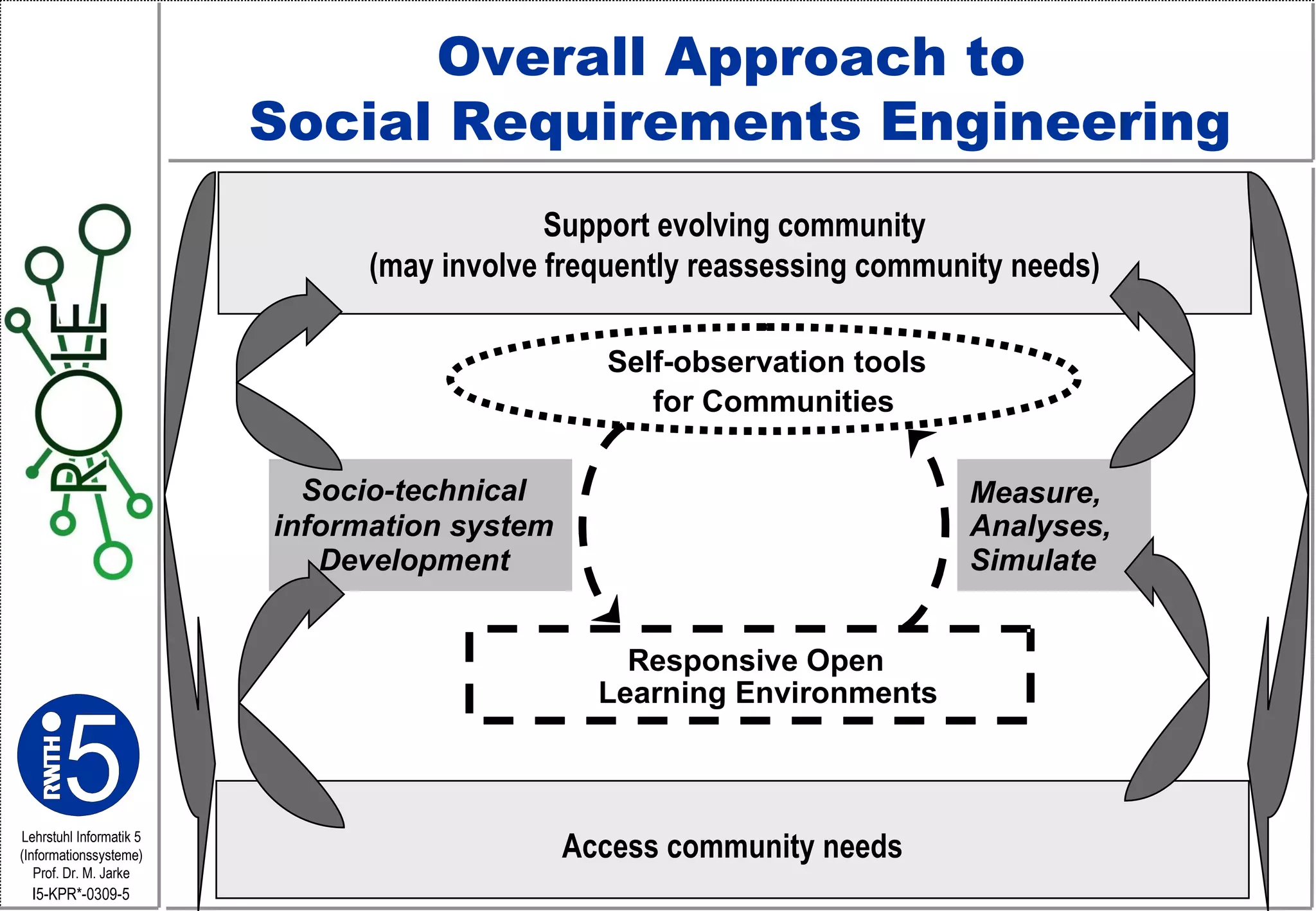
Overall Approach to  Social Requirements Engineering Responsive Open Learning Environments Self-observation tools for Communities Measure,  Analyses, Simulate Socio-technical information system Development Support evolving community (may involve frequently reassessing community needs) Access community needs
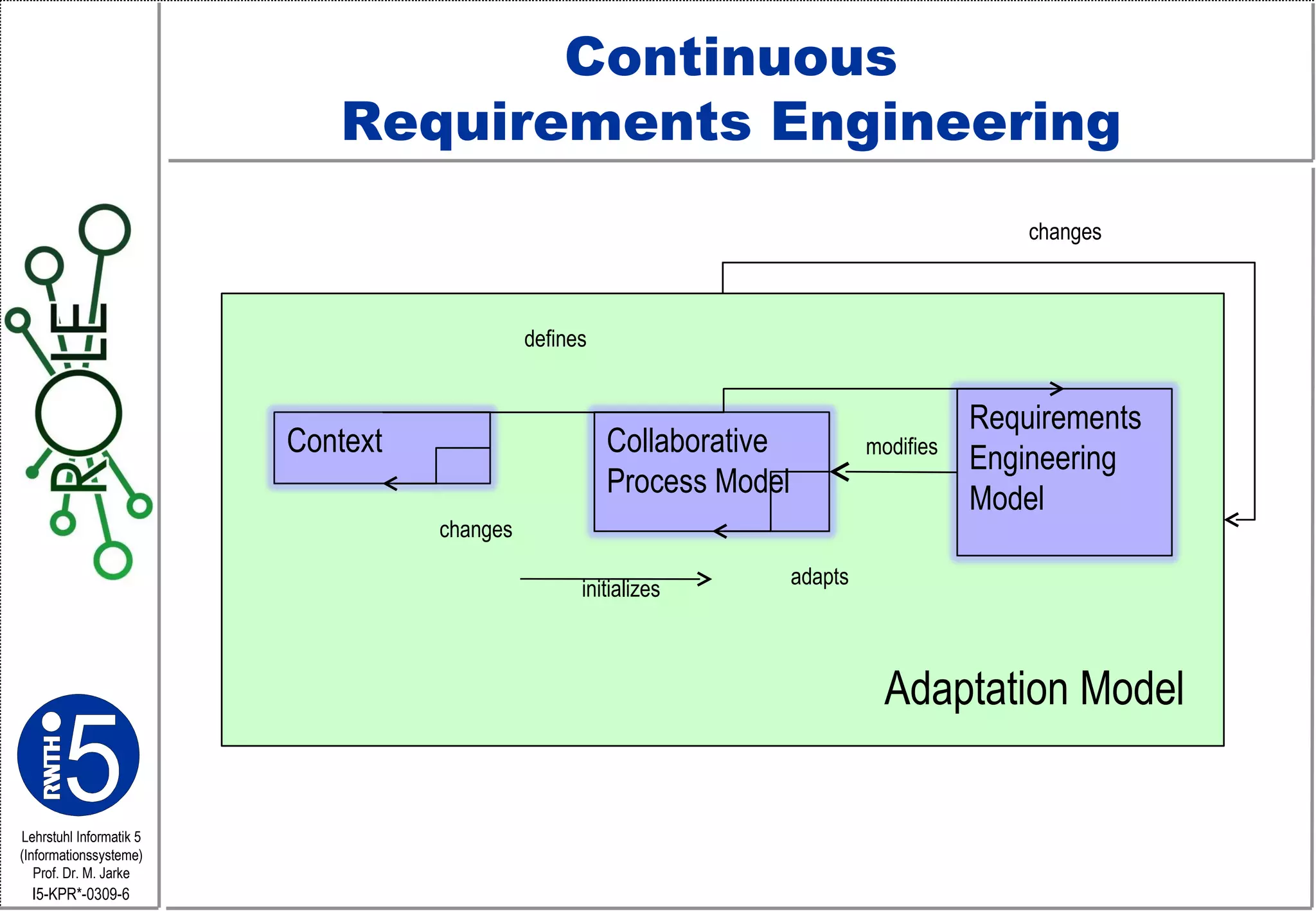
Continuous  Requirements Engineering  Collaborative Process Model Requirements Engineering Model Context changes adapts defines initializes Adaptation Model changes modifies
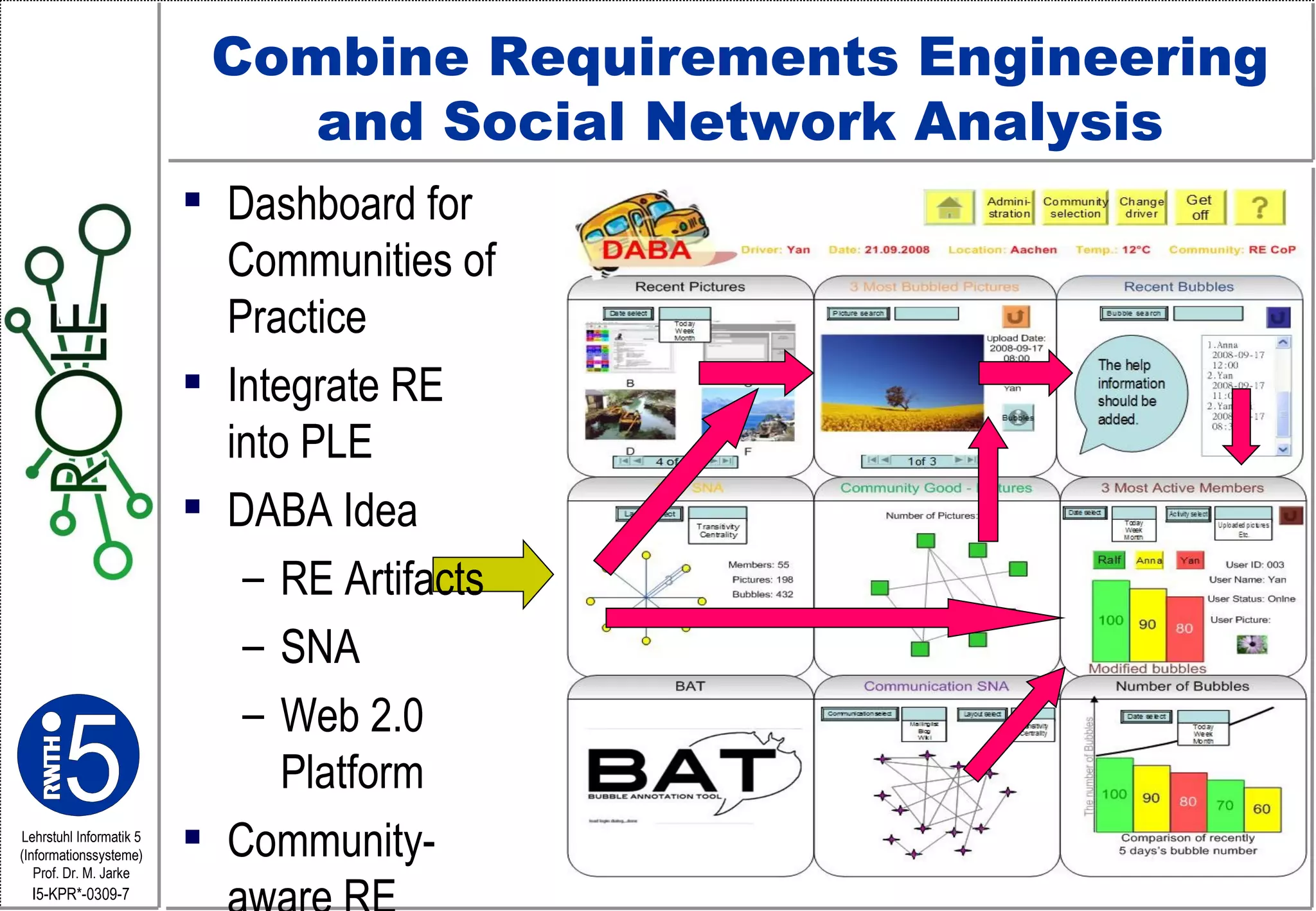
Combine Requirements Engineering and Social Network Analysis Dashboard for Communities of Practice Integrate RE  into PLE DABA Idea RE Artifacts SNA  Web 2.0 Platform Community-aware RE
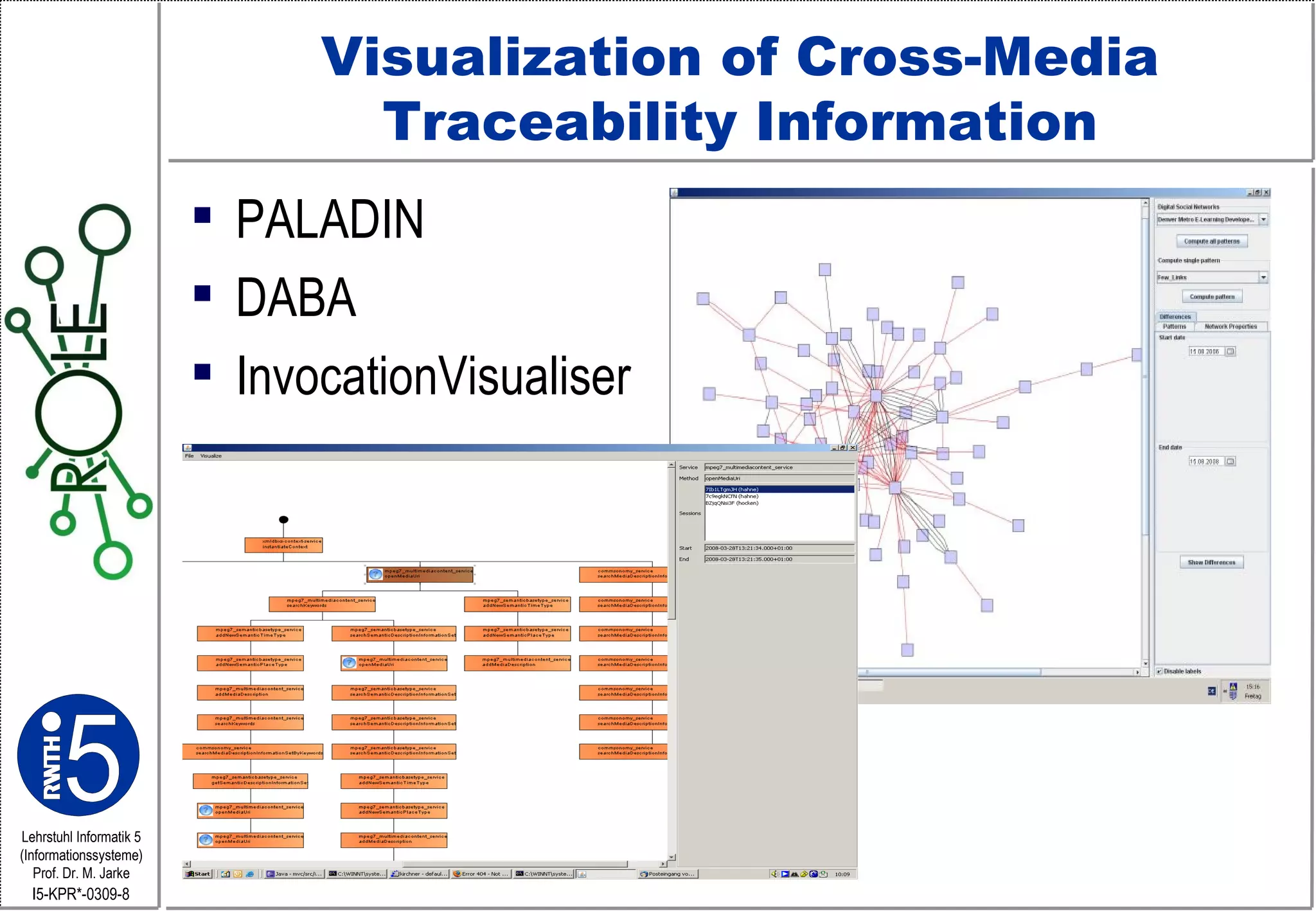
Visualization of Cross-Media Traceability Information PALADIN  DABA InvocationVisualiser
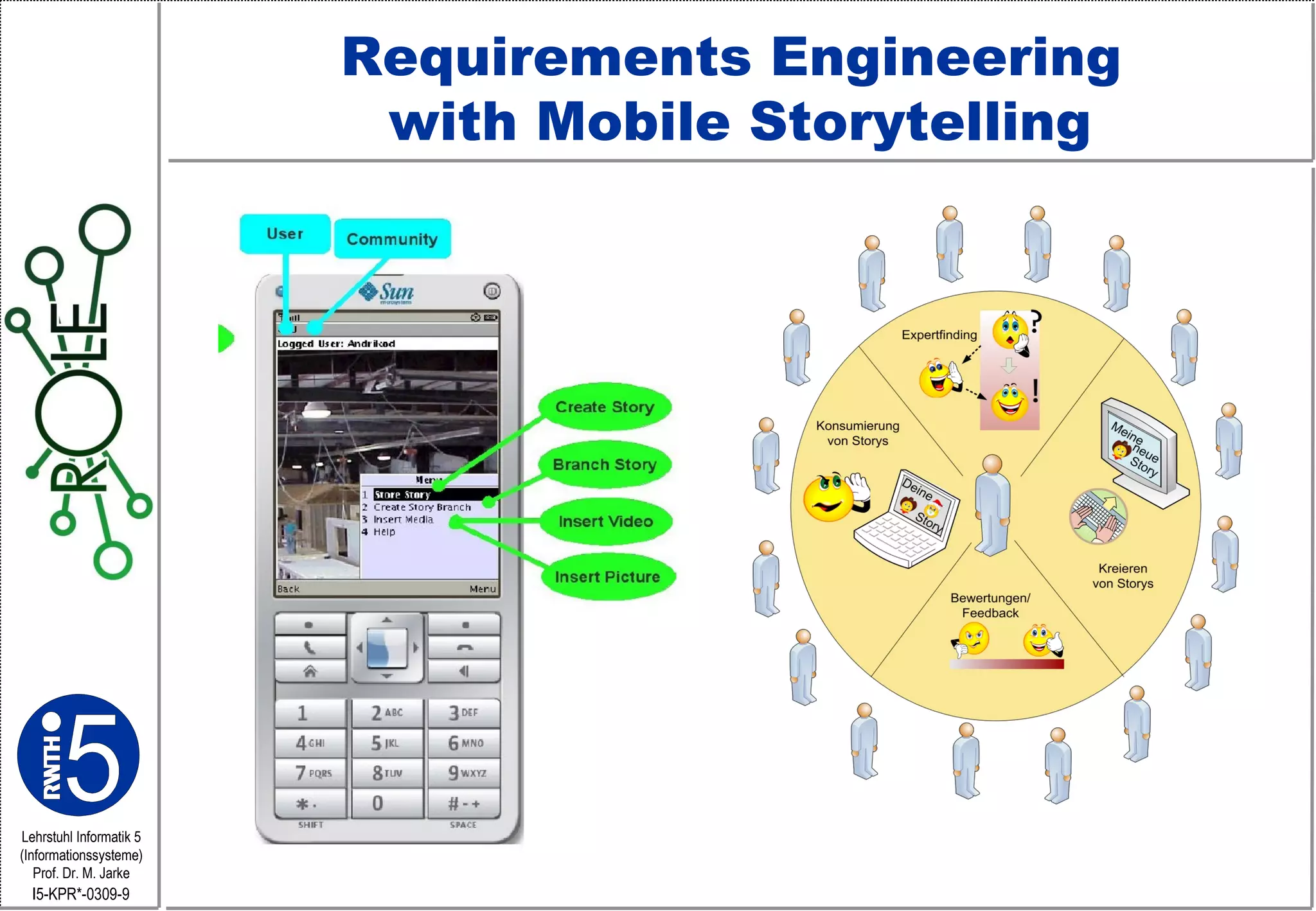
Requirements Engineering  with Mobile Storytelling
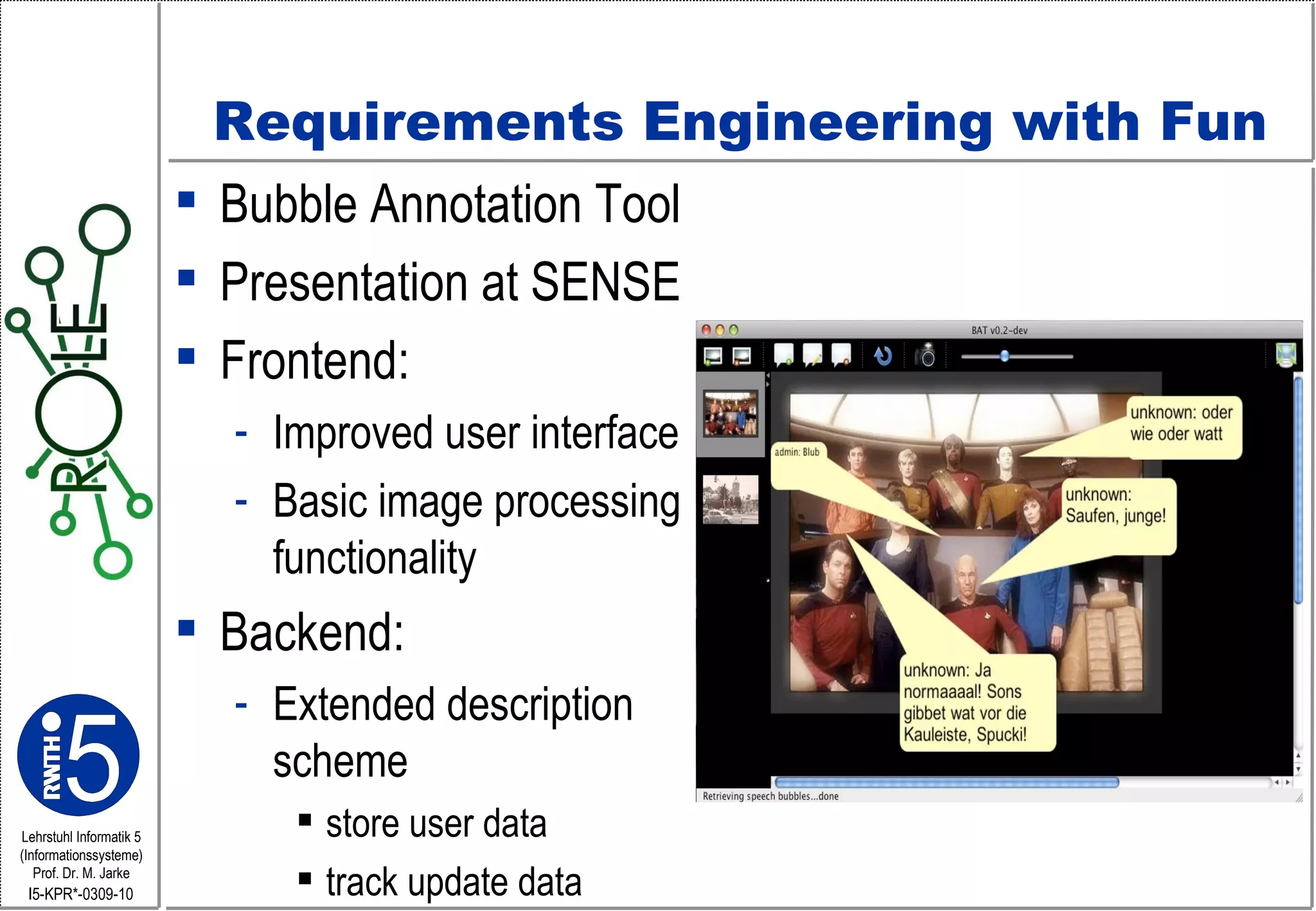
Requirements Engineering with Fun Bubble Annotation Tool Presentation at SENSE Frontend: Improved user interface Basic image processing functionality Backend: Extended description scheme store user data  track update data
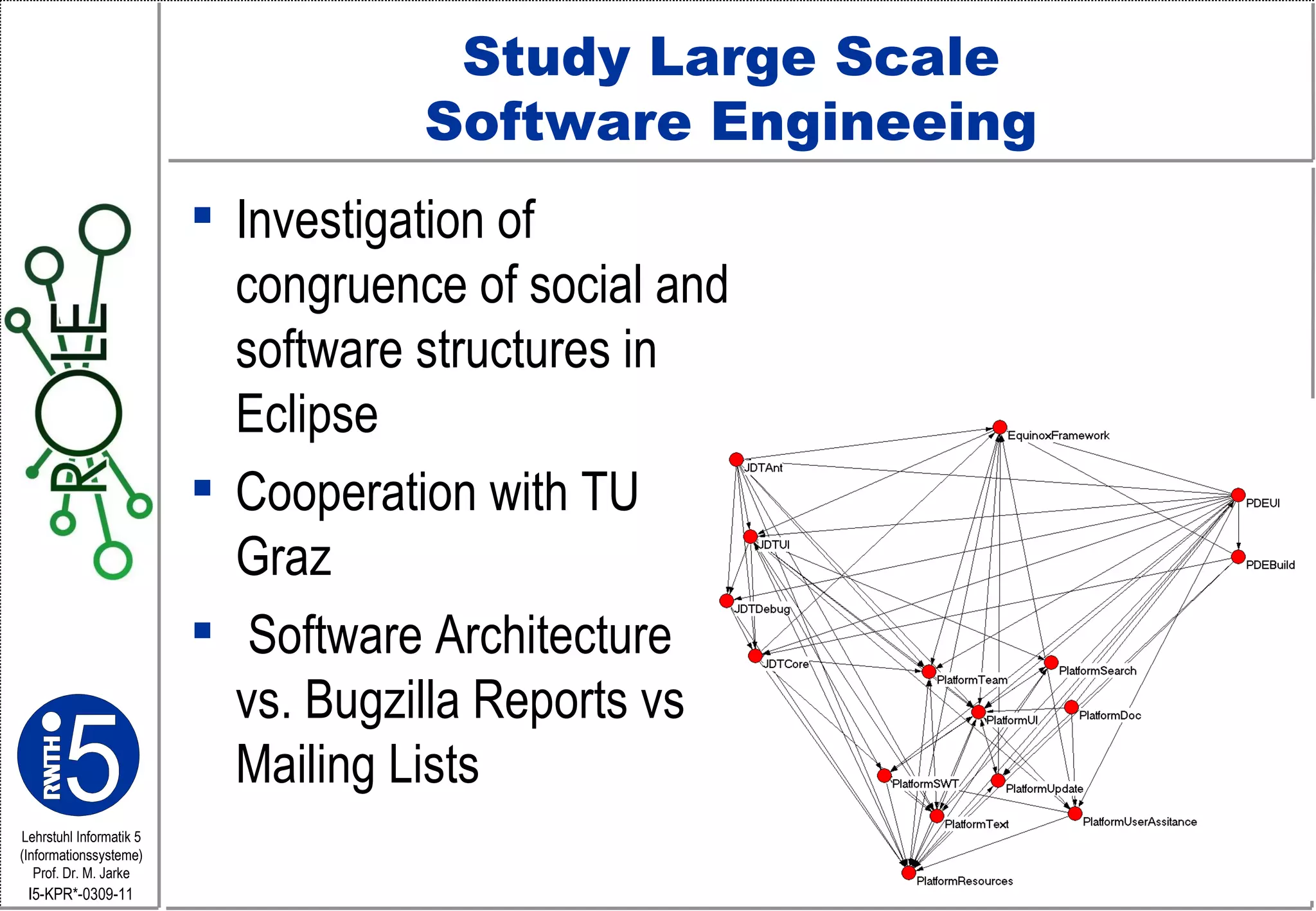
Study Large Scale  Software Engineeing  Investigation of congruence of social and software structures in Eclipse Cooperation with TU Graz Software Architecture vs. Bugzilla Reports vs Mailing Lists
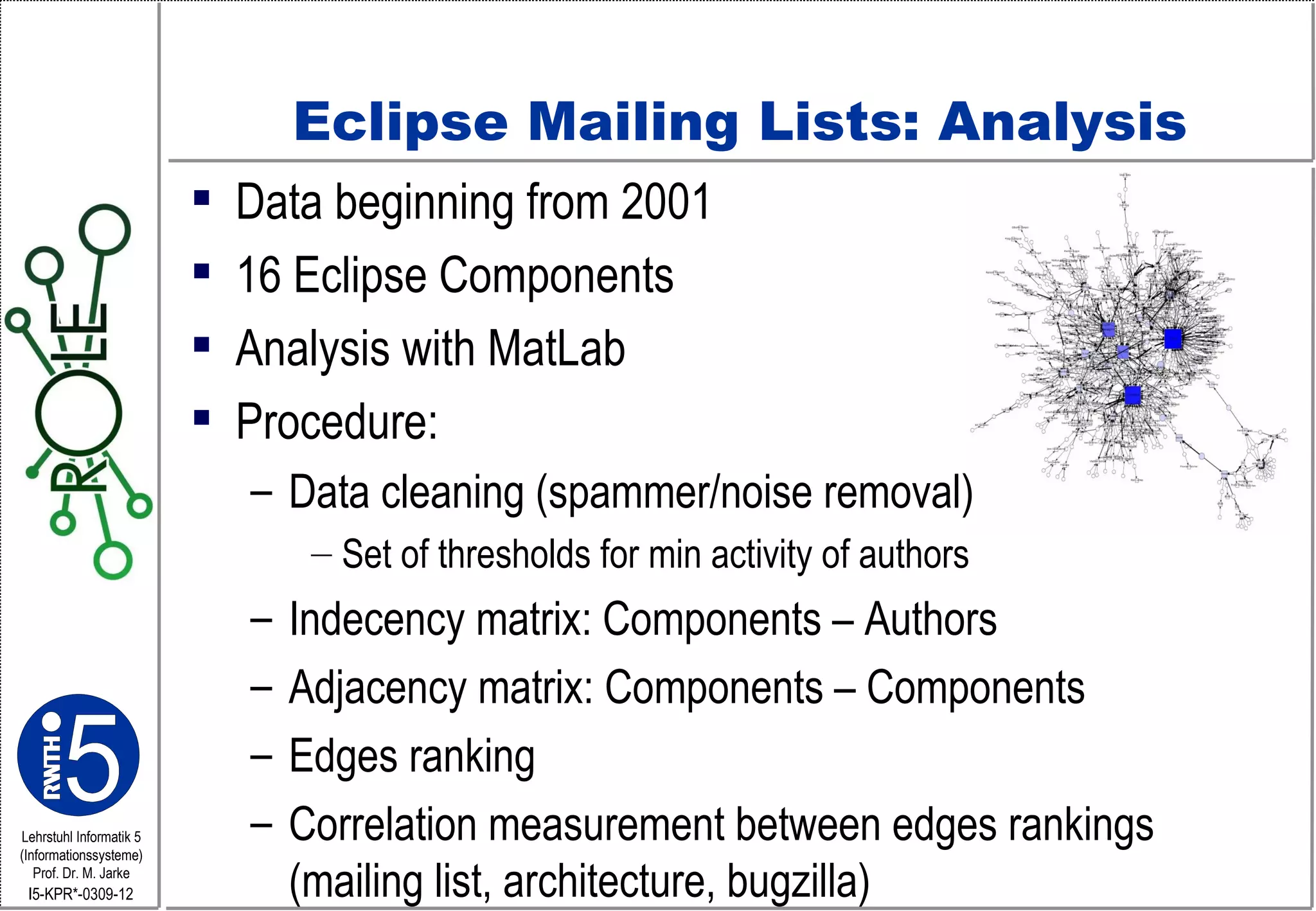
Eclipse Mailing Lists: Analysis Data beginning from 2001 16 Eclipse Components Analysis with MatLab Procedure: Data cleaning (spammer/noise removal) Set of thresholds for min activity of authors Indecency matrix: Components  –  Authors Adjacency matrix: Components  –  Components Edges ranking Correlation measurement between edges rankings (mailing list, architecture, bugzilla)
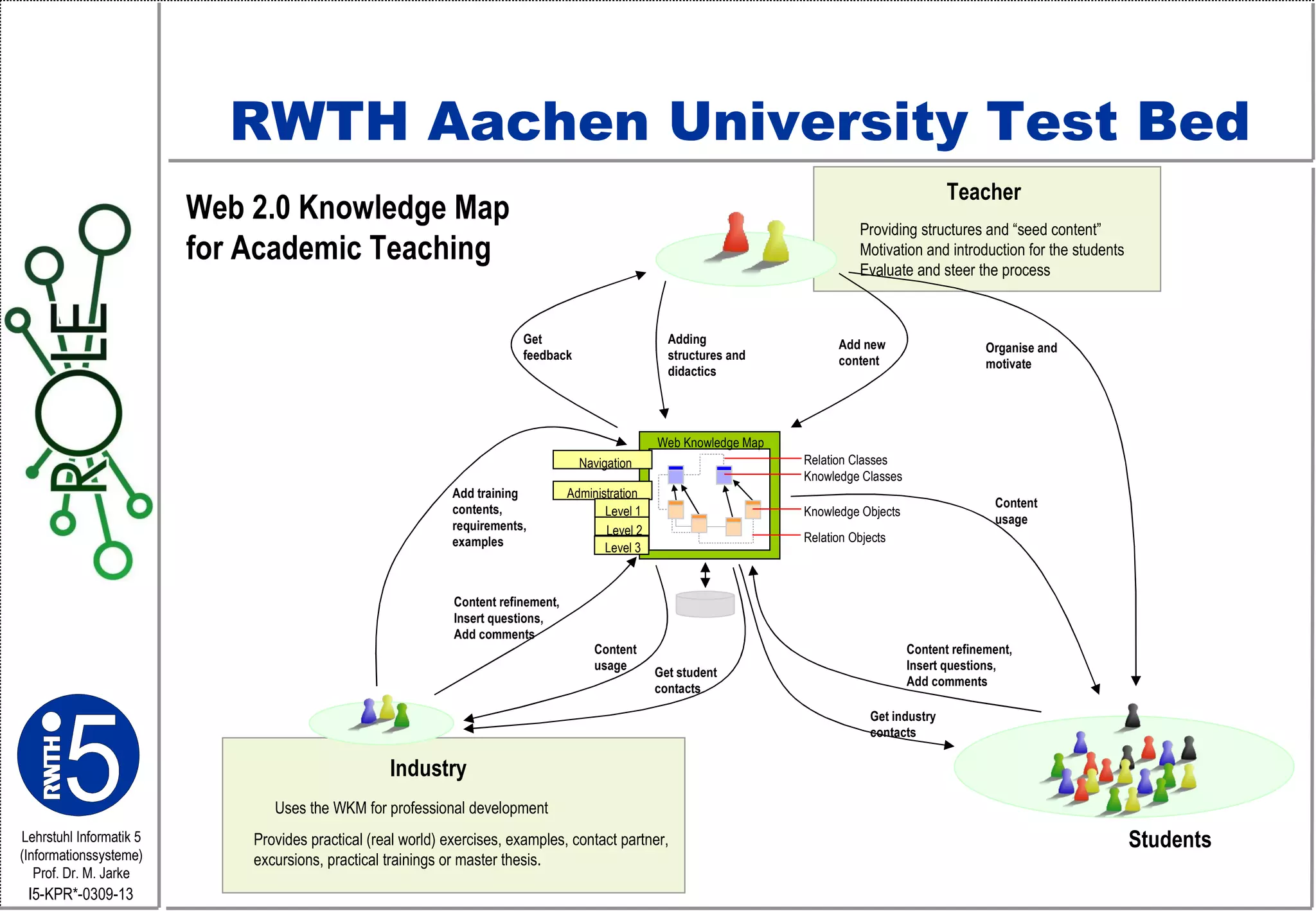
RWTH Aachen University Test Bed Students Industry Teacher Add new content Content usage Content refinement, Insert questions, Add comments Organise and motivate Get feedback Adding structures and didactics Add training contents, requirements, examples Content usage Content refinement, Insert questions, Add comments Get student contacts Get industry contacts Provides practical (real world) exercises, examples, contact partner, excursions, practical trainings or master thesis. Uses the WKM for professional development Providing structures and “seed content” Motivation and introduction for the students Evaluate and steer the process Web 2.0 Knowledge Map  for Academic Teaching Web Knowledge Map Administration Navigation Level 1 Level 2 Level 3 Knowledge Objects Knowledge Classes Relation Objects Relation Classes
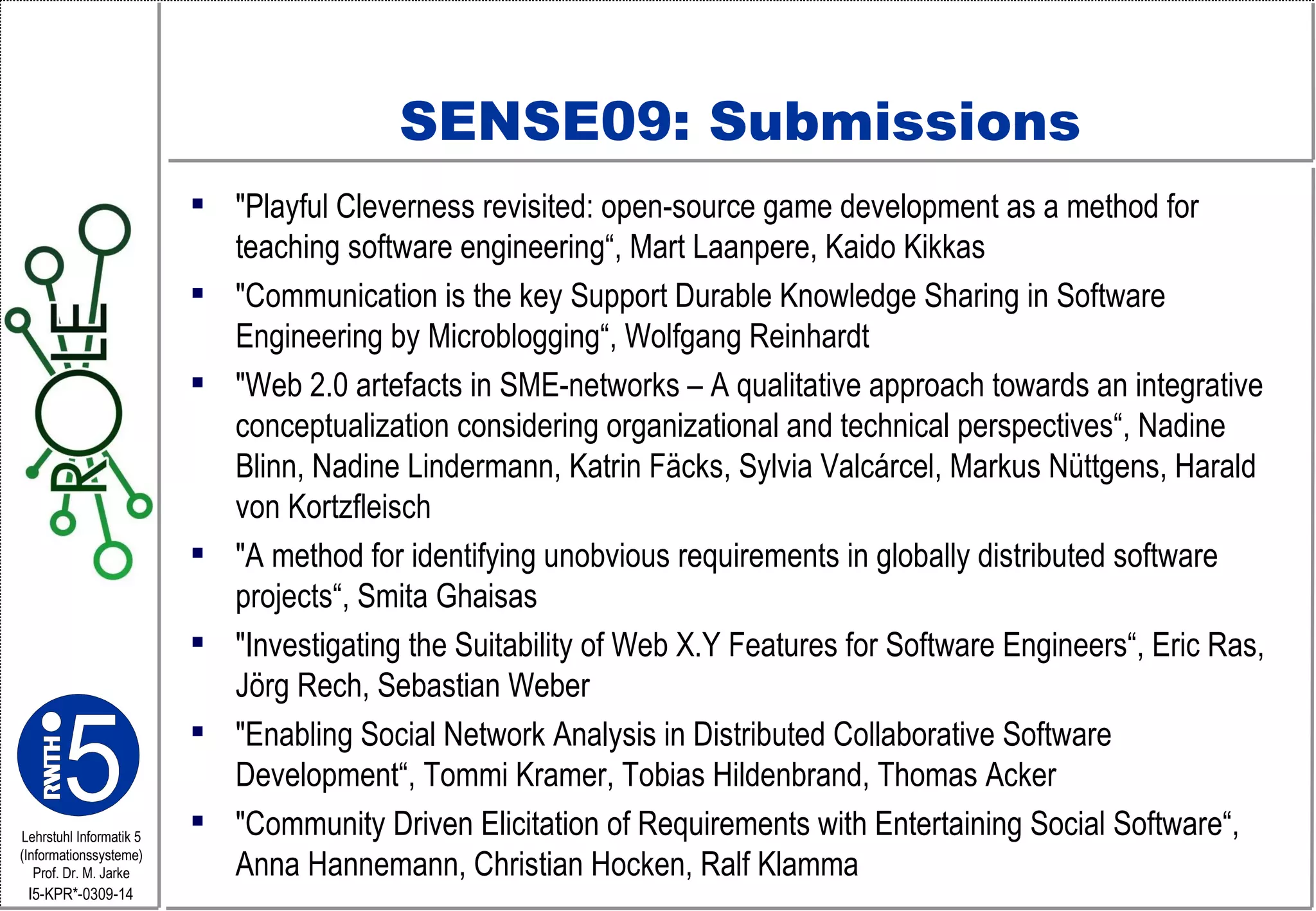
SENSE09: Submissions "Playful Cleverness revisited: open-source game development as a method for teaching software engineering“, Mart Laanpere, Kaido Kikkas "Communication is the key Support Durable Knowledge Sharing in Software Engineering by Microblogging“, Wolfgang Reinhardt "Web 2.0 artefacts in SME-networks – A qualitative approach towards an integrative conceptualization considering organizational and technical perspectives“, Nadine Blinn, Nadine Lindermann, Katrin Fäcks, Sylvia Valcárcel, Markus Nüttgens, Harald von Kortzfleisch "A method for identifying unobvious requirements in globally distributed software projects“, Smita Ghaisas "Investigating the Suitability of Web X.Y Features for Software Engineers“, Eric Ras, Jörg Rech, Sebastian Weber "Enabling Social Network Analysis in Distributed Collaborative Software Development“, Tommi Kramer, Tobias Hildenbrand, Thomas Acker "Community Driven Elicitation of Requirements with Entertaining Social Software“, Anna Hannemann, Christian Hocken, Ralf Klamma
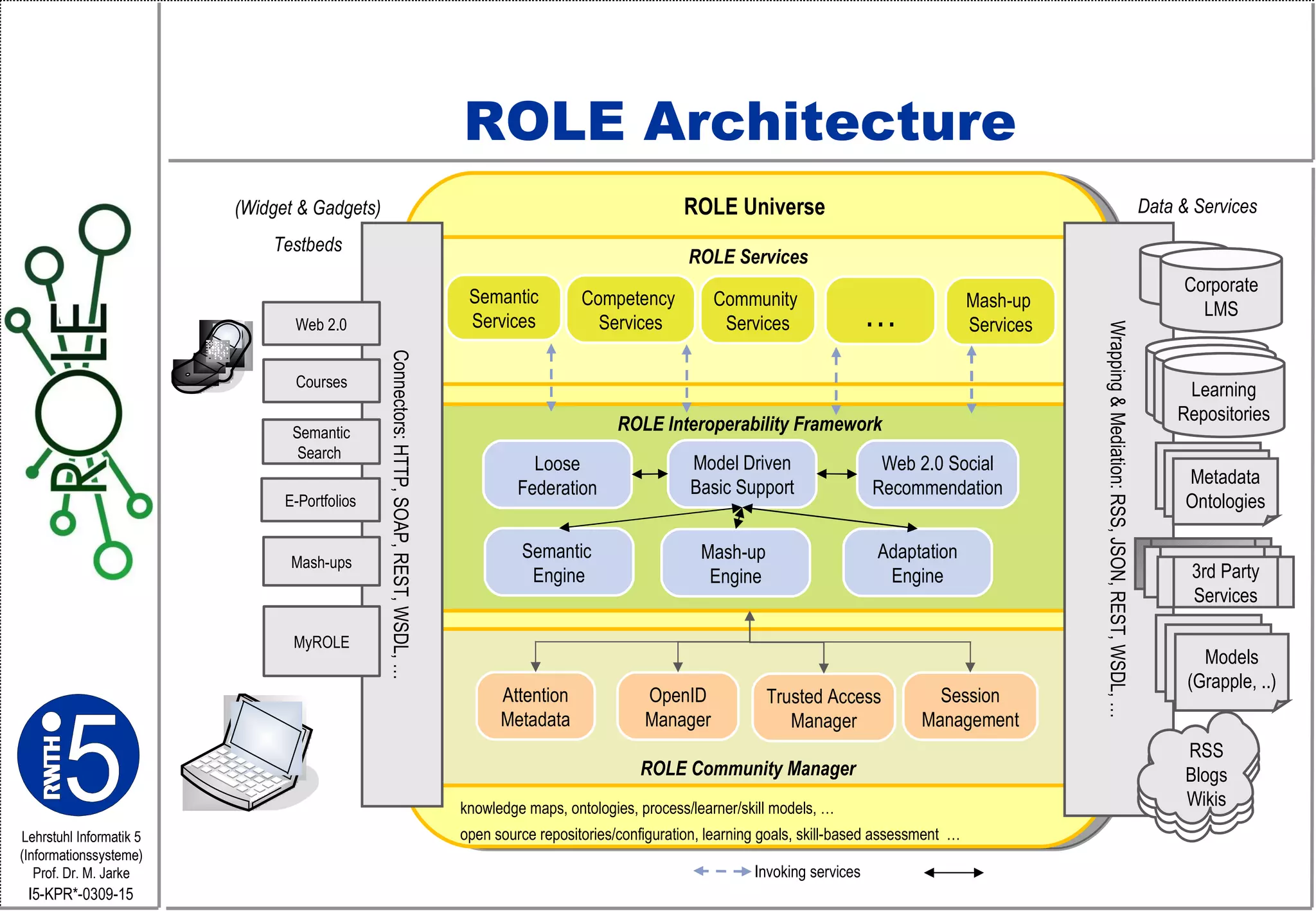
ROLE Architecture ROLE Services ROLE Community Manager Competency  Services … OpenID Manager Community  Services Semantic Services Trusted Access Manager (Widget & Gadgets) Testbeds Attention Metadata Mash-up  Services ROLE Interoperability Framework Model Driven Basic Support Web 2.0 Social Recommendation Loose Federation Semantic  Engine Connectors: HTTP, SOAP, REST, WSDL, … Web 2.0 Semantic Search  Courses E-Portfolios Mash-ups MyROLE Adaptation Engine Session Management Invoking services Wrapping & Mediation: RSS, JSON, REST, WSDL, … ROLE Universe knowledge maps, ontologies, process/learner/skill models, … open source repositories/configuration, learning goals, skill-based assessment  … Mash-up  Engine Metadata Ontologies Corporate LMS Multimedia Repository Multimedia Repository Learning Repositories RSS Blogs Wikis 3rd Party Services Models (Grapple, ..) Data & Services

Social Requirements Engineering and the RWTH Aachen University Test Bed

  • 1.
    ROLE Kick-off WP1: Social Requirements Engineering and the RWTH Aachen University Test Bed Ralf Klamma, Zinayida Petrushyna, Dominik Renzel, Bodo von der Heiden, Veronika Meffert RWTH Aachen University March 2-3, 2009 EPFL, Lausanne, Switzerland
  • 2.
    Evolution of a Database Research Community VLDB 1990 VLDB 1995 VLDB 2000 VLDB 2006
  • 3.
    Spatio-Temporal Analysis and Visualization ACM SIGMOD conference location distribution
  • 4.
    Indentify Key Membersin a Research Community ACM SIGMOD ACM SIGMOD
  • 5.
    Overall Approach to Social Requirements Engineering Responsive Open Learning Environments Self-observation tools for Communities Measure, Analyses, Simulate Socio-technical information system Development Support evolving community (may involve frequently reassessing community needs) Access community needs
  • 6.
    Continuous RequirementsEngineering Collaborative Process Model Requirements Engineering Model Context changes adapts defines initializes Adaptation Model changes modifies
  • 7.
    Combine Requirements Engineeringand Social Network Analysis Dashboard for Communities of Practice Integrate RE into PLE DABA Idea RE Artifacts SNA Web 2.0 Platform Community-aware RE
  • 8.
    Visualization of Cross-MediaTraceability Information PALADIN DABA InvocationVisualiser
  • 9.
    Requirements Engineering with Mobile Storytelling
  • 10.
    Requirements Engineering withFun Bubble Annotation Tool Presentation at SENSE Frontend: Improved user interface Basic image processing functionality Backend: Extended description scheme store user data track update data
  • 11.
    Study Large Scale Software Engineeing Investigation of congruence of social and software structures in Eclipse Cooperation with TU Graz Software Architecture vs. Bugzilla Reports vs Mailing Lists
  • 12.
    Eclipse Mailing Lists:Analysis Data beginning from 2001 16 Eclipse Components Analysis with MatLab Procedure: Data cleaning (spammer/noise removal) Set of thresholds for min activity of authors Indecency matrix: Components – Authors Adjacency matrix: Components – Components Edges ranking Correlation measurement between edges rankings (mailing list, architecture, bugzilla)
  • 13.
    RWTH Aachen UniversityTest Bed Students Industry Teacher Add new content Content usage Content refinement, Insert questions, Add comments Organise and motivate Get feedback Adding structures and didactics Add training contents, requirements, examples Content usage Content refinement, Insert questions, Add comments Get student contacts Get industry contacts Provides practical (real world) exercises, examples, contact partner, excursions, practical trainings or master thesis. Uses the WKM for professional development Providing structures and “seed content” Motivation and introduction for the students Evaluate and steer the process Web 2.0 Knowledge Map for Academic Teaching Web Knowledge Map Administration Navigation Level 1 Level 2 Level 3 Knowledge Objects Knowledge Classes Relation Objects Relation Classes
  • 14.
    SENSE09: Submissions "PlayfulCleverness revisited: open-source game development as a method for teaching software engineering“, Mart Laanpere, Kaido Kikkas "Communication is the key Support Durable Knowledge Sharing in Software Engineering by Microblogging“, Wolfgang Reinhardt "Web 2.0 artefacts in SME-networks – A qualitative approach towards an integrative conceptualization considering organizational and technical perspectives“, Nadine Blinn, Nadine Lindermann, Katrin Fäcks, Sylvia Valcárcel, Markus Nüttgens, Harald von Kortzfleisch "A method for identifying unobvious requirements in globally distributed software projects“, Smita Ghaisas "Investigating the Suitability of Web X.Y Features for Software Engineers“, Eric Ras, Jörg Rech, Sebastian Weber "Enabling Social Network Analysis in Distributed Collaborative Software Development“, Tommi Kramer, Tobias Hildenbrand, Thomas Acker "Community Driven Elicitation of Requirements with Entertaining Social Software“, Anna Hannemann, Christian Hocken, Ralf Klamma
  • 15.
    ROLE Architecture ROLEServices ROLE Community Manager Competency Services … OpenID Manager Community Services Semantic Services Trusted Access Manager (Widget & Gadgets) Testbeds Attention Metadata Mash-up Services ROLE Interoperability Framework Model Driven Basic Support Web 2.0 Social Recommendation Loose Federation Semantic Engine Connectors: HTTP, SOAP, REST, WSDL, … Web 2.0 Semantic Search Courses E-Portfolios Mash-ups MyROLE Adaptation Engine Session Management Invoking services Wrapping & Mediation: RSS, JSON, REST, WSDL, … ROLE Universe knowledge maps, ontologies, process/learner/skill models, … open source repositories/configuration, learning goals, skill-based assessment … Mash-up Engine Metadata Ontologies Corporate LMS Multimedia Repository Multimedia Repository Learning Repositories RSS Blogs Wikis 3rd Party Services Models (Grapple, ..) Data & Services