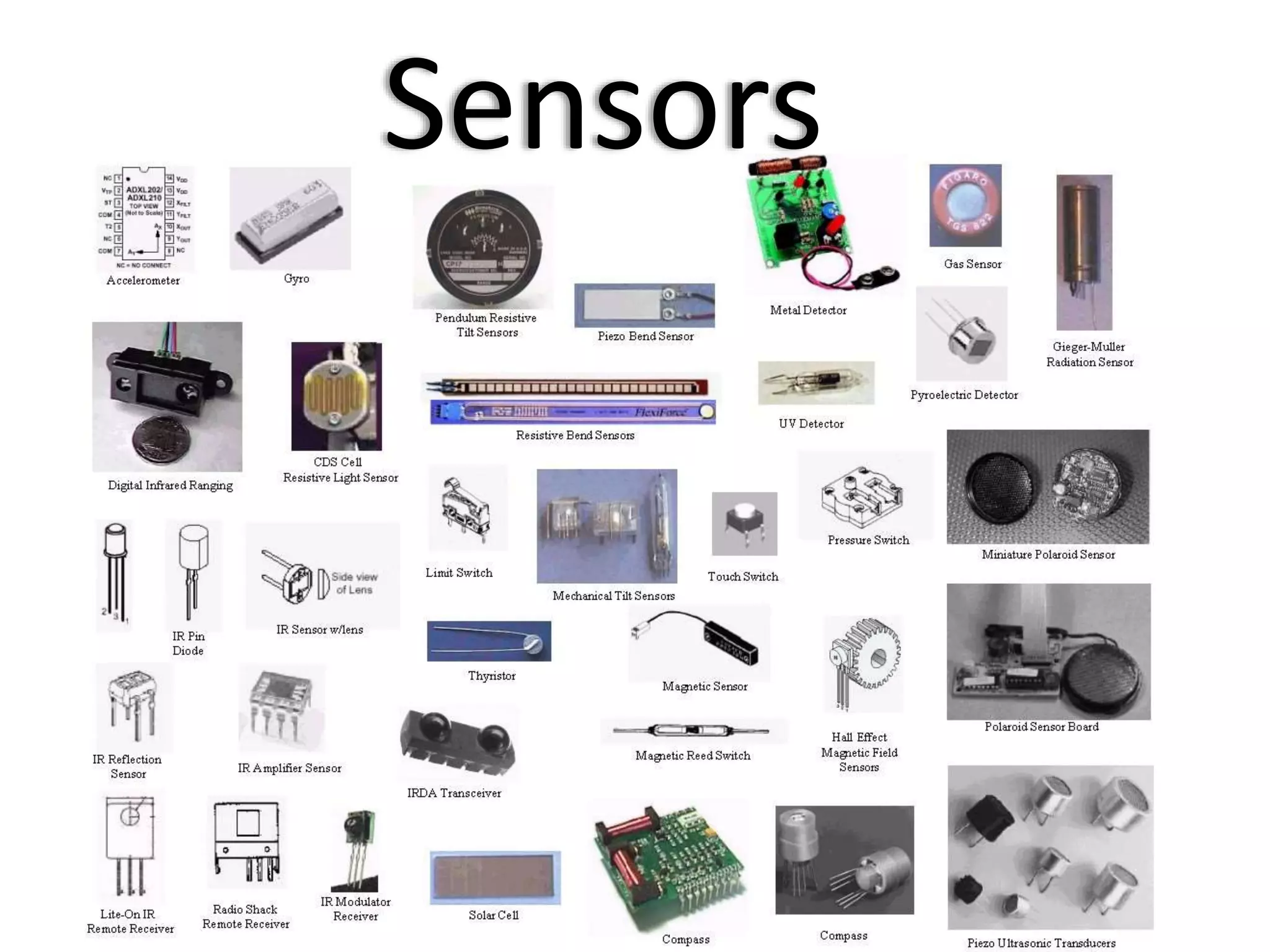
Sensors
Sensors are for Perception
• Sensors are physical devices that measure
physical quantities.
– Such as light, temperature, pressure
• Perceptual system of a robot
– Proprioception (internal)
– Exteroception (external)
• Sensor noise and errors are inherent in physical
measurement, thus the challenge of uncertainty
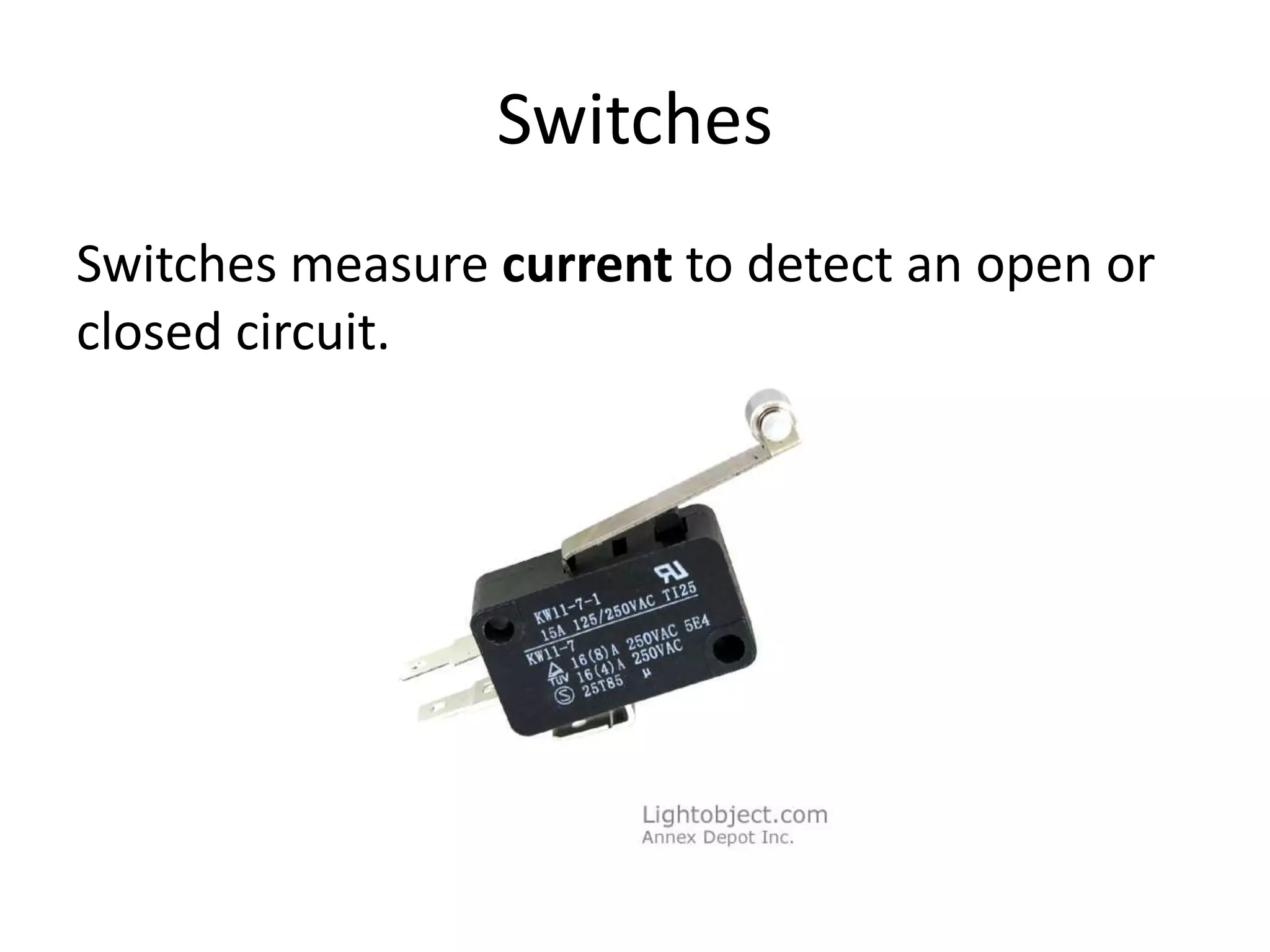
Switches
Switches measure current to detect an open or
closed circuit.
Levels of Processing
• Electronics (low level): such as measuring
voltages
• Signal processing (medium level): such as
separating voice from noise
• Computation (high level): such as
recognizing an object from an image
Examples
Bump Sensors (low)
Odometer (low)
Sonar (medium)
Speech (medium)
Vision (high)
Given the sensor input,
– Both simple and complex sensors can be used to answer the
question:
What should a robot do? (action in the world)
– Complex sensors can also be used to answer the question:
What was the world like? (reconstruction of the world)
Locating People
Camera is the most obvious, but the most complex to process
the signal.
Temperature: locate objects within human body temperature.
Movement: locate objects moving that are a certain size.
Color: locate objects of skin color, or human clothes.
Distance: locate objects that block a previously area that was
open.
The sensors will need to be calibrated before use in the robot.
What kind of sensor would you use to locate
people in a room?
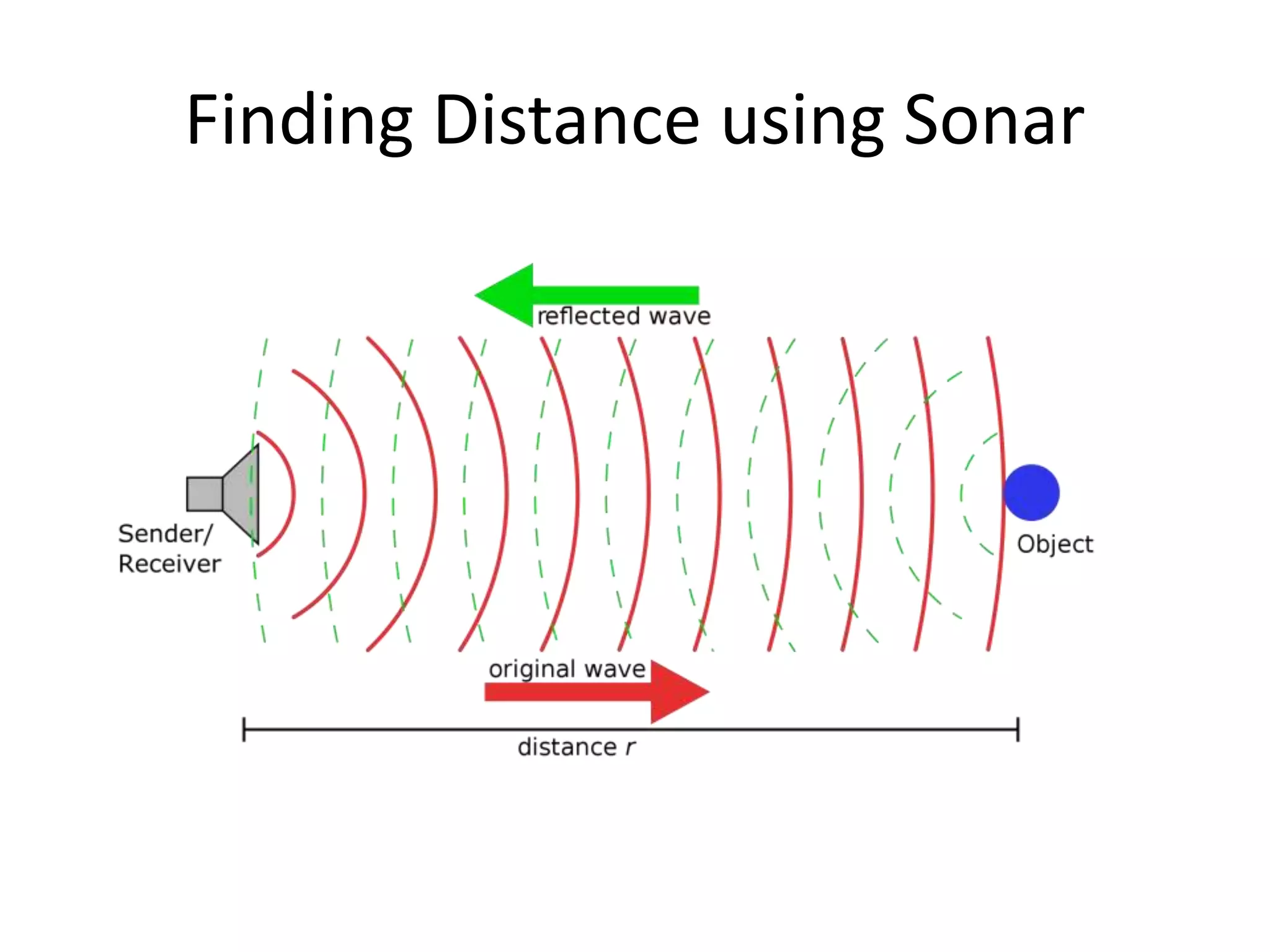
Finding Distance using Sonar
Simple Sensors
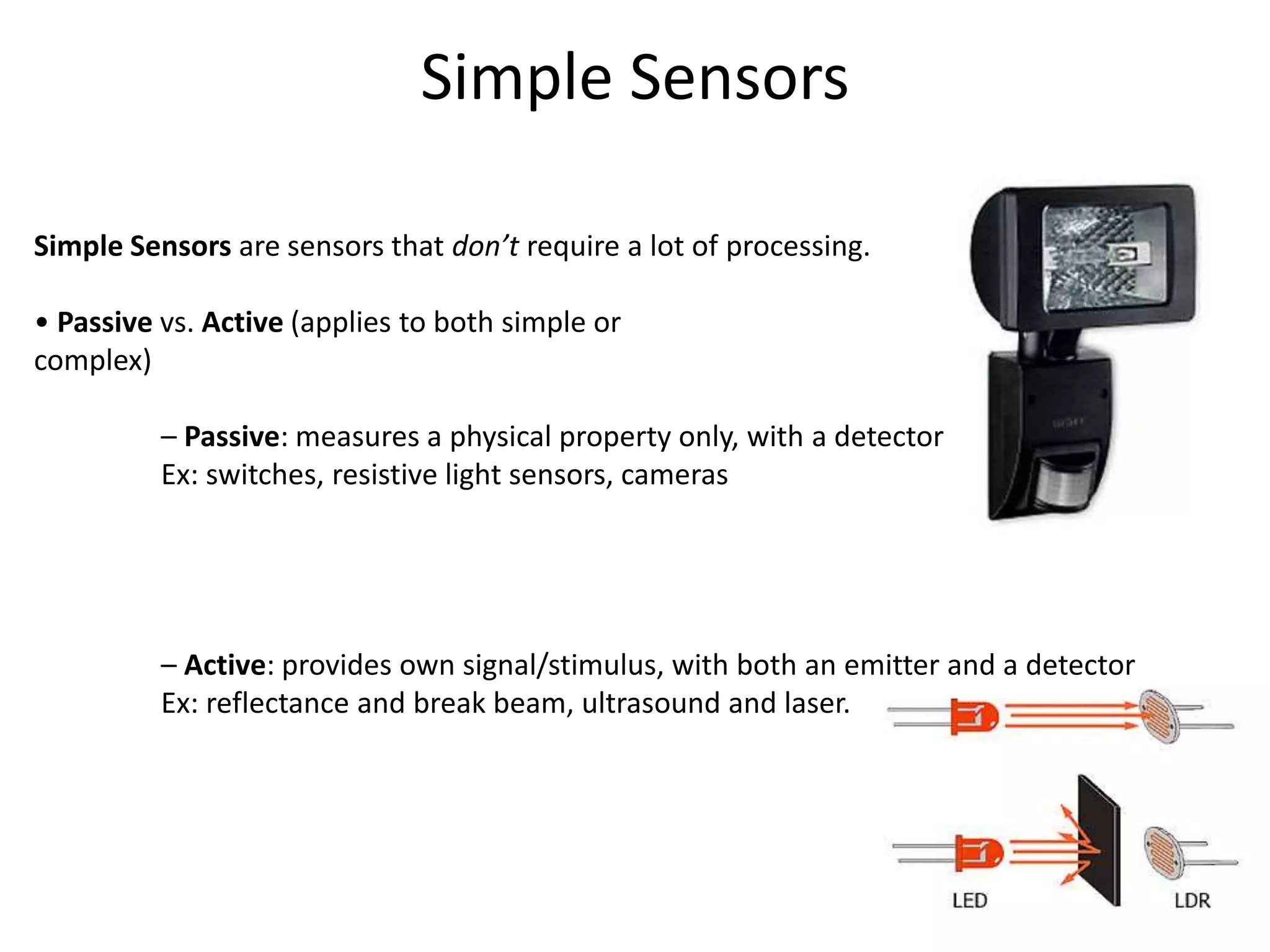
Simple Sensors are sensors that don’t require a lot of processing.
• Passive vs. Active (applies to both simple or
complex)
– Passive: measures a physical property only, with a detector
Ex: switches, resistive light sensors, cameras
– Active: provides own signal/stimulus, with both an emitter and a detector
Ex: reflectance and break beam, ultrasound and laser.
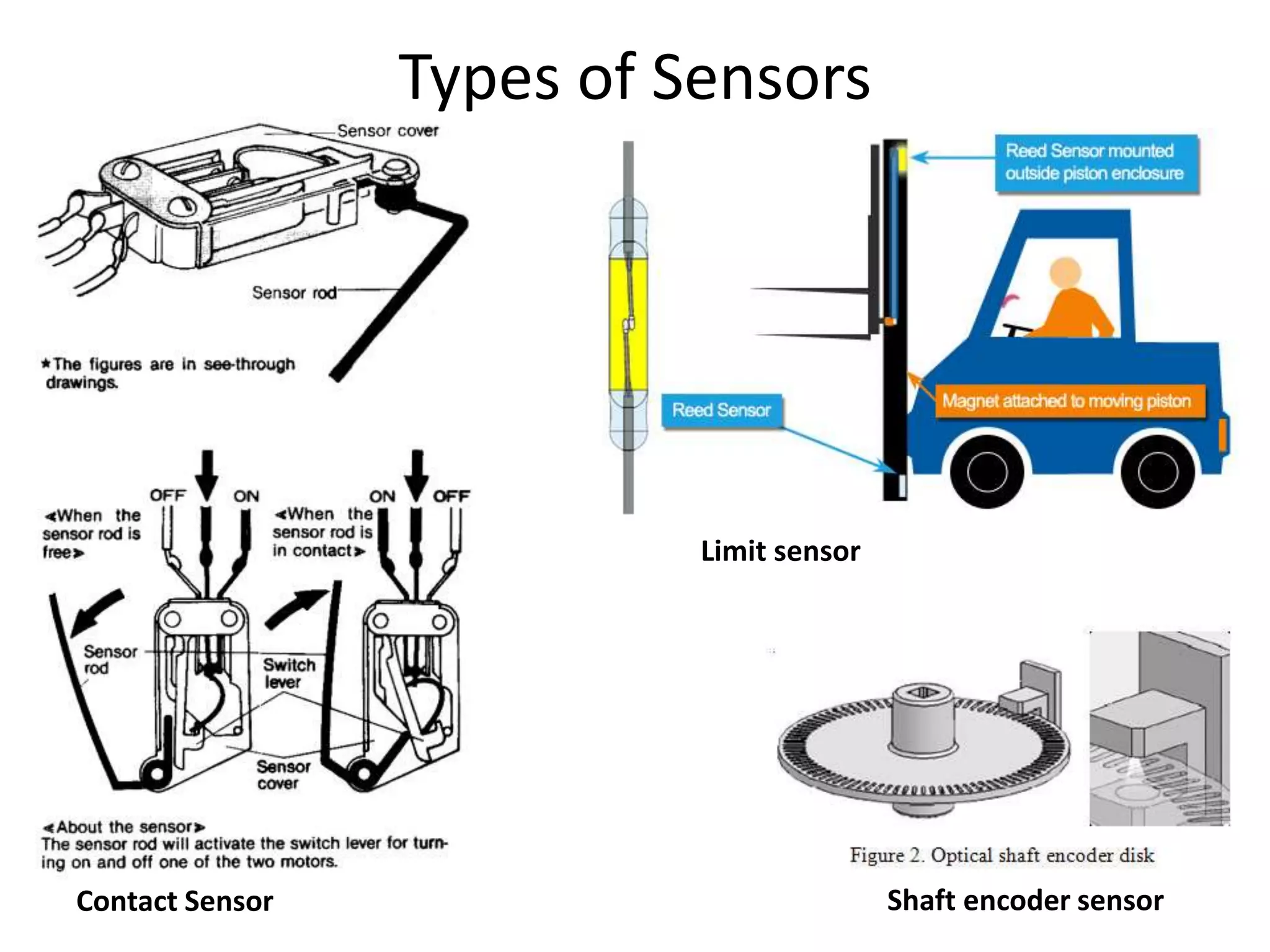
Types of Sensors
Contact Sensor
Limit sensor
Shaft encoder sensor
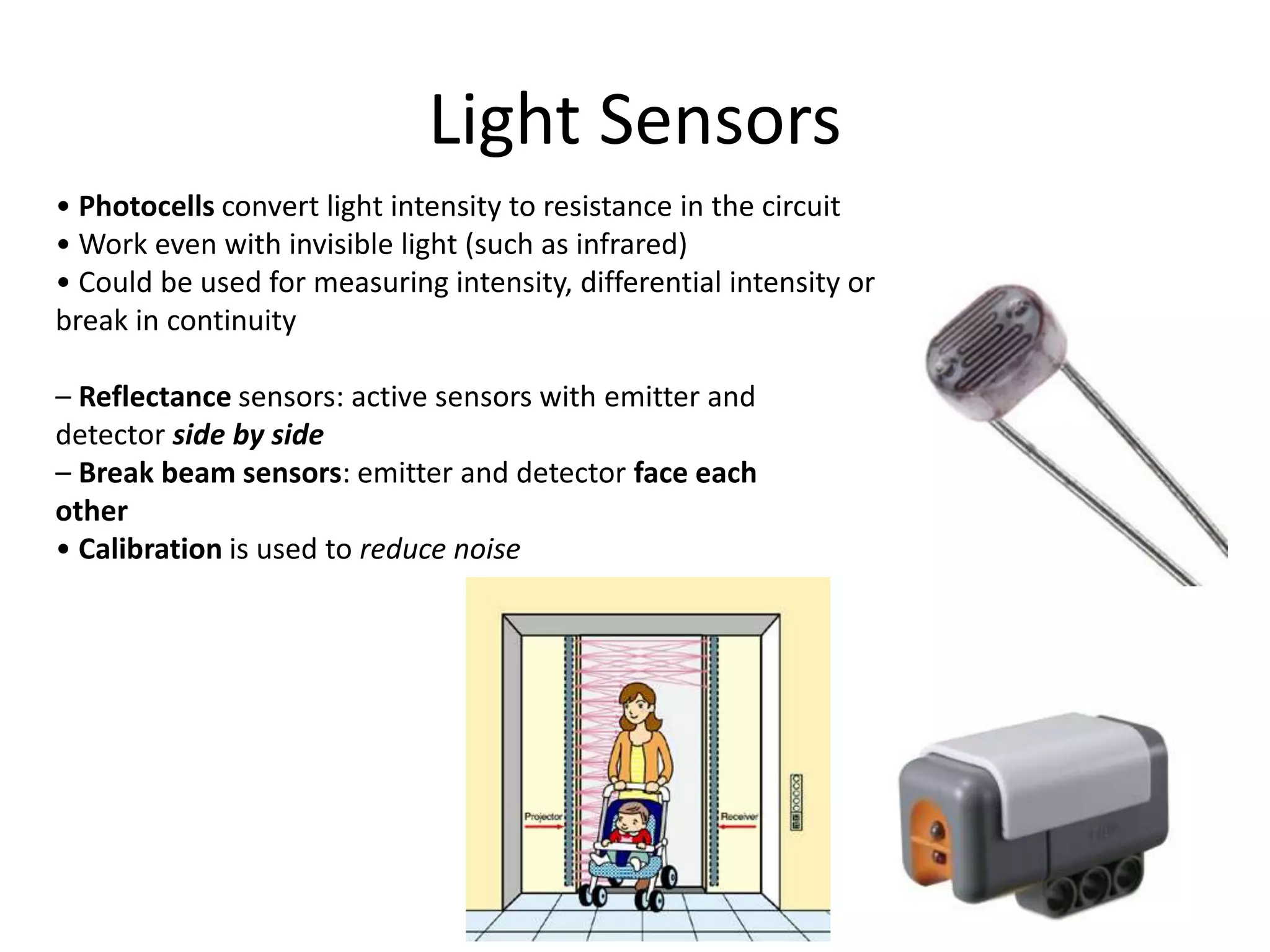
Light Sensors
• Photocells convert light intensity to resistance in the circuit
• Work even with invisible light (such as infrared)
• Could be used for measuring intensity, differential intensity or
break in continuity
– Reflectance sensors: active sensors with emitter and
detector side by side
– Break beam sensors: emitter and detector face each
other
• Calibration is used to reduce noise
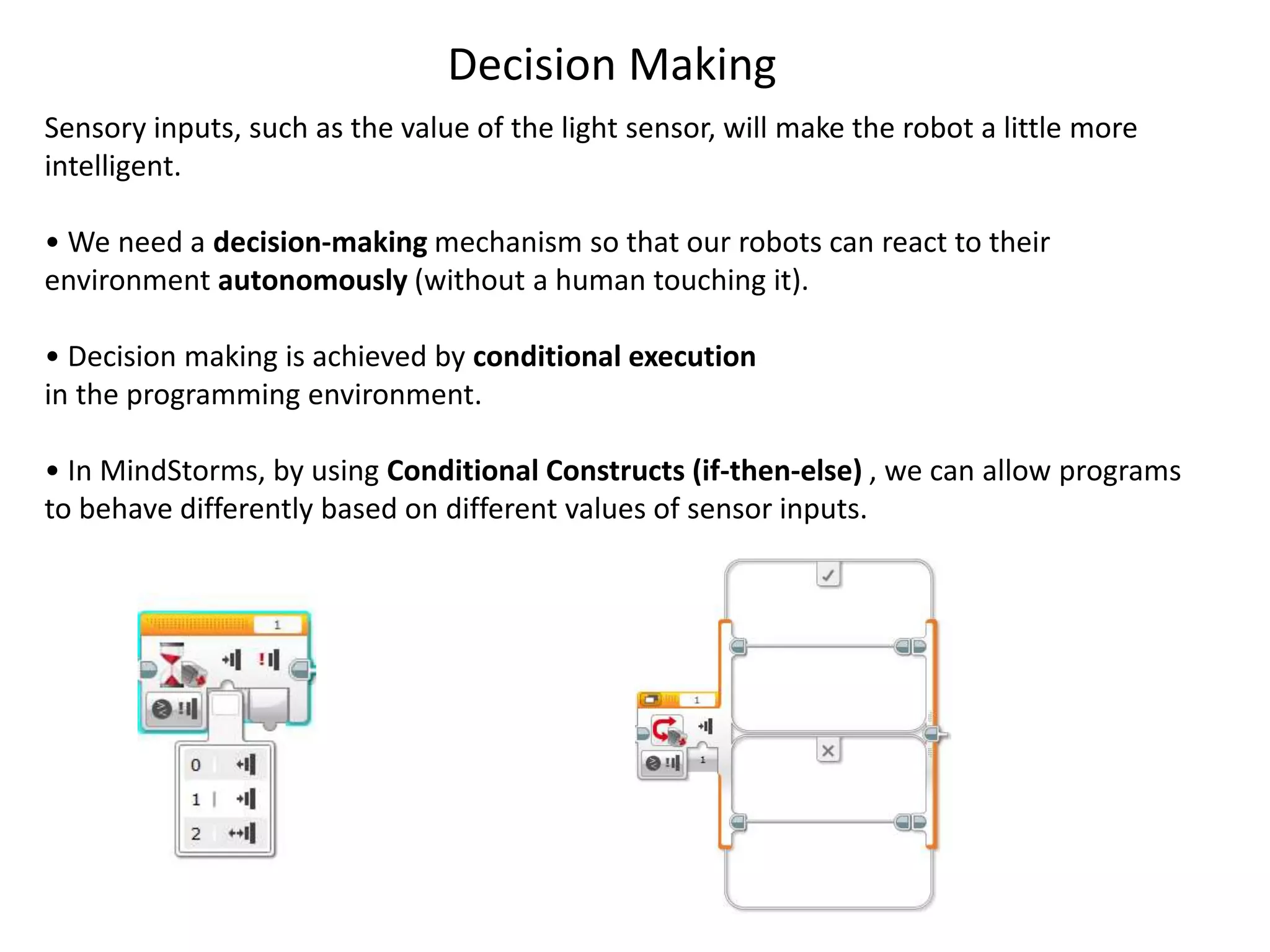
Sensory inputs, such as the value of the light sensor, will make the robot a little more
intelligent.
• We need a decision-making mechanism so that our robots can react to their
environment autonomously (without a human touching it).
• Decision making is achieved by conditional execution
in the programming environment.
• In MindStorms, by using Conditional Constructs (if-then-else) , we can allow programs
to behave differently based on different values of sensor inputs.
Decision Making

robotics sensors.pptx

  • 1.
  • 2.
    Sensors are forPerception • Sensors are physical devices that measure physical quantities. – Such as light, temperature, pressure • Perceptual system of a robot – Proprioception (internal) – Exteroception (external) • Sensor noise and errors are inherent in physical measurement, thus the challenge of uncertainty
  • 3.
    Switches Switches measure currentto detect an open or closed circuit.
  • 4.
    Levels of Processing •Electronics (low level): such as measuring voltages • Signal processing (medium level): such as separating voice from noise • Computation (high level): such as recognizing an object from an image
  • 5.
    Examples Bump Sensors (low) Odometer(low) Sonar (medium) Speech (medium) Vision (high) Given the sensor input, – Both simple and complex sensors can be used to answer the question: What should a robot do? (action in the world) – Complex sensors can also be used to answer the question: What was the world like? (reconstruction of the world)
  • 6.
    Locating People Camera isthe most obvious, but the most complex to process the signal. Temperature: locate objects within human body temperature. Movement: locate objects moving that are a certain size. Color: locate objects of skin color, or human clothes. Distance: locate objects that block a previously area that was open. The sensors will need to be calibrated before use in the robot. What kind of sensor would you use to locate people in a room?
  • 7.
  • 8.
    Simple Sensors Simple Sensorsare sensors that don’t require a lot of processing. • Passive vs. Active (applies to both simple or complex) – Passive: measures a physical property only, with a detector Ex: switches, resistive light sensors, cameras – Active: provides own signal/stimulus, with both an emitter and a detector Ex: reflectance and break beam, ultrasound and laser.
  • 9.
    Types of Sensors ContactSensor Limit sensor Shaft encoder sensor
  • 10.
    Light Sensors • Photocellsconvert light intensity to resistance in the circuit • Work even with invisible light (such as infrared) • Could be used for measuring intensity, differential intensity or break in continuity – Reflectance sensors: active sensors with emitter and detector side by side – Break beam sensors: emitter and detector face each other • Calibration is used to reduce noise
  • 16.
    Sensory inputs, suchas the value of the light sensor, will make the robot a little more intelligent. • We need a decision-making mechanism so that our robots can react to their environment autonomously (without a human touching it). • Decision making is achieved by conditional execution in the programming environment. • In MindStorms, by using Conditional Constructs (if-then-else) , we can allow programs to behave differently based on different values of sensor inputs. Decision Making