RNA
TYPES AND CLASSIFICATION OF RNA
DEEP KUMAR MAITY
1st YEAR, M.S(PHARM)
PHARMACOLOGY AND TOXICOLOGY
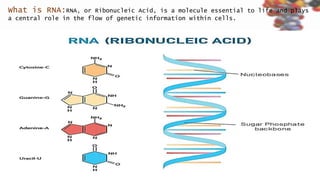
What is RNA:RNA, or Ribonucleic Acid, is a molecule essential to life and plays
a central role in the flow of genetic information within cells.
RNA STRUCTURE
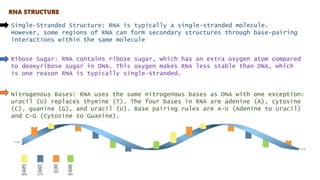
Single-Stranded Structure: RNA is typically a single-stranded molecule.
However, some regions of RNA can form secondary structures through base-pairing
interactions within the same molecule
Ribose Sugar: RNA contains ribose sugar, which has an extra oxygen atom compared
to deoxyribose sugar in DNA. This oxygen makes RNA less stable than DNA, which
is one reason RNA is typically single-stranded.
Nitrogenous Bases: RNA uses the same nitrogenous bases as DNA with one exception:
uracil (U) replaces thymine (T). The four bases in RNA are adenine (A), cytosine
(C), guanine (G), and uracil (U). Base pairing rules are A-U (Adenine to Uracil)
and C-G (Cytosine to Guanine).
TYPES OF RNA:
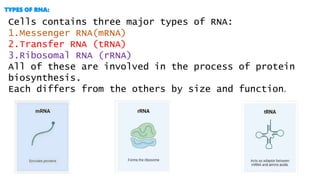
Cells contains three major types of RNA:
1.Messenger RNA(mRNA)
2.Transfer RNA (tRNA)
3.Ribosomal RNA (rRNA)
All of these are involved in the process of protein
biosynthesis.
Each differs from the others by size and function.
mRNA:
Structure of mRNA :
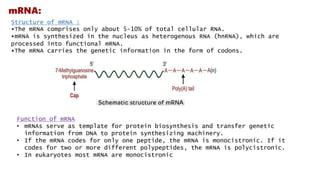
▪The mRNA comprises only about 5-10% of total cellular RNA.
▪mRNA is synthesized in the nucleus as heterogenous RNA (hnRNA), which are
processed into functional mRNA.
▪The mRNA carries the genetic information in the form of codons.
Function of mRNA
• mRNAs serve as template for protein biosynthesis and transfer genetic
information from DNA to protein synthesizing machinery.
• If the mRNA codes for only one peptide, the mRNA is monocistronic. If it
codes for two or more different polypeptides, the mRNA is polycistronic.
• In eukaryotes most mRNA are monocistronic
tRNA:
• tRNA molecules vary in length from 74 to 95 nucleotides.
• In eukaryotic cells, 10-20% of the nucleotides of tRNA may be modified and
known as unusual nucleotides
e.g.
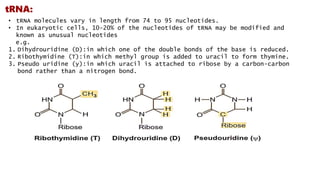
1. Dihydrouridine (D):in which one of the double bonds of the base is reduced.
2. Ribothymidine (T):in which methyl group is added to uracil to form thymine.
3. Pseudo uridine (y):in which uracil is attached to ribose by a carbon-carbon
bond rather than a nitrogen bond.
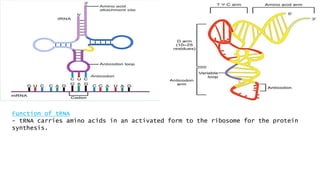
STRUCTURE OF tRNA:
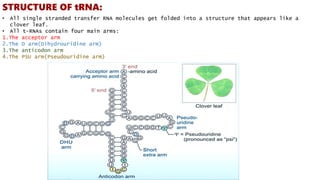
• All single stranded transfer RNA molecules get folded into a structure that appears like a
clover leaf.
• All t-RNAs contain four main arms:
1.The acceptor arm
2.The D arm(Dihydrouridine arm)
3.The anticodon arm
4.The PSU arm(Pseudouridine arm)
Function of tRNA
- tRNA carries amino acids in an activated form to the ribosome for the protein
synthesis.
rRNA:
• The RNA of the ribosomes is called the rRNA
• Most abundant RNA (around 80%).
• A ribosome is a cytoplasmic nucleoprotein that acts as a
machinery for the synthesis of proteins.
• The ribosome is a spheroidal particle and is composed of a
large and a small subunit.
Functions of ribosomal RNA
• Necessary to maintain ribosomal structure and also participate in
protein synthesis by binding of mRNA to ribosome.
• Recent studies suggest that ribosomal RNAs may also provide some of the
catalytic activities and thus is an enzyme "ribozyme".
Other Nuclear and Cytoplasmic RNAs: Besides mRNA, tRNA and rRNA, eukaryotes have
some other RNAs.
These are:
1. Small Nuclear RNA (snRNA): snRNA is involved in the splicing of pre-mRNA
molecules during post-transcriptional processing.
2. MicroRNA (miRNA): miRNA is a type of small RNA that regulates gene expression.
3. Small Interfering RNA (siRNA): siRNA is another type of small RNA that plays a
role in gene regulation.
4. Small Nucleolar RNA (snoRNA): snoRNA is involved in the processing and chemical
modification of ribosomal RNA (rRNA).
5. Small Cytoplasmic RNA (scRNA): scRNAs are small RNAs found in the cytoplasm, and
they can be involved in various cellular processes, including RNA interference
and gene regulation.
RNA.pptx

RNA.pptx

  • 1.
    RNA TYPES AND CLASSIFICATIONOF RNA DEEP KUMAR MAITY 1st YEAR, M.S(PHARM) PHARMACOLOGY AND TOXICOLOGY
  • 2.
    What is RNA:RNA,or Ribonucleic Acid, is a molecule essential to life and plays a central role in the flow of genetic information within cells.
  • 3.
    RNA STRUCTURE Single-Stranded Structure:RNA is typically a single-stranded molecule. However, some regions of RNA can form secondary structures through base-pairing interactions within the same molecule Ribose Sugar: RNA contains ribose sugar, which has an extra oxygen atom compared to deoxyribose sugar in DNA. This oxygen makes RNA less stable than DNA, which is one reason RNA is typically single-stranded. Nitrogenous Bases: RNA uses the same nitrogenous bases as DNA with one exception: uracil (U) replaces thymine (T). The four bases in RNA are adenine (A), cytosine (C), guanine (G), and uracil (U). Base pairing rules are A-U (Adenine to Uracil) and C-G (Cytosine to Guanine).
  • 4.
    TYPES OF RNA: Cellscontains three major types of RNA: 1.Messenger RNA(mRNA) 2.Transfer RNA (tRNA) 3.Ribosomal RNA (rRNA) All of these are involved in the process of protein biosynthesis. Each differs from the others by size and function.
  • 5.
    mRNA: Structure of mRNA: ▪The mRNA comprises only about 5-10% of total cellular RNA. ▪mRNA is synthesized in the nucleus as heterogenous RNA (hnRNA), which are processed into functional mRNA. ▪The mRNA carries the genetic information in the form of codons. Function of mRNA • mRNAs serve as template for protein biosynthesis and transfer genetic information from DNA to protein synthesizing machinery. • If the mRNA codes for only one peptide, the mRNA is monocistronic. If it codes for two or more different polypeptides, the mRNA is polycistronic. • In eukaryotes most mRNA are monocistronic
  • 6.
    tRNA: • tRNA moleculesvary in length from 74 to 95 nucleotides. • In eukaryotic cells, 10-20% of the nucleotides of tRNA may be modified and known as unusual nucleotides e.g. 1. Dihydrouridine (D):in which one of the double bonds of the base is reduced. 2. Ribothymidine (T):in which methyl group is added to uracil to form thymine. 3. Pseudo uridine (y):in which uracil is attached to ribose by a carbon-carbon bond rather than a nitrogen bond.
  • 7.
    STRUCTURE OF tRNA: •All single stranded transfer RNA molecules get folded into a structure that appears like a clover leaf. • All t-RNAs contain four main arms: 1.The acceptor arm 2.The D arm(Dihydrouridine arm) 3.The anticodon arm 4.The PSU arm(Pseudouridine arm)
  • 8.
    Function of tRNA -tRNA carries amino acids in an activated form to the ribosome for the protein synthesis.
  • 9.
    rRNA: • The RNAof the ribosomes is called the rRNA • Most abundant RNA (around 80%). • A ribosome is a cytoplasmic nucleoprotein that acts as a machinery for the synthesis of proteins. • The ribosome is a spheroidal particle and is composed of a large and a small subunit.
  • 10.
    Functions of ribosomalRNA • Necessary to maintain ribosomal structure and also participate in protein synthesis by binding of mRNA to ribosome. • Recent studies suggest that ribosomal RNAs may also provide some of the catalytic activities and thus is an enzyme "ribozyme". Other Nuclear and Cytoplasmic RNAs: Besides mRNA, tRNA and rRNA, eukaryotes have some other RNAs. These are: 1. Small Nuclear RNA (snRNA): snRNA is involved in the splicing of pre-mRNA molecules during post-transcriptional processing. 2. MicroRNA (miRNA): miRNA is a type of small RNA that regulates gene expression. 3. Small Interfering RNA (siRNA): siRNA is another type of small RNA that plays a role in gene regulation. 4. Small Nucleolar RNA (snoRNA): snoRNA is involved in the processing and chemical modification of ribosomal RNA (rRNA). 5. Small Cytoplasmic RNA (scRNA): scRNAs are small RNAs found in the cytoplasm, and they can be involved in various cellular processes, including RNA interference and gene regulation.