RNA Types and Functions
Presented by A. Santhiya
II-BSc Biotechnology "B"
Molecular Biology
Introduction to RNA: The Versatile Molecule
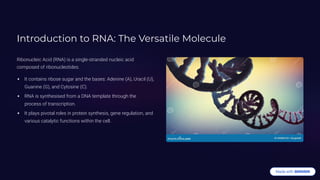
Ribonucleic Acid (RNA) is a single-stranded nucleic acid
composed of ribonucleotides.
It contains ribose sugar and the bases: Adenine (A), Uracil (U),
Guanine (G), and Cytosine (C).
RNA is synthesised from a DNA template through the
process of transcription.
It plays pivotal roles in protein synthesis, gene regulation, and
various catalytic functions within the cell.
The Diverse World of RNA: Key Players
mRNA
Messenger RNA
tRNA
Transfer RNA
rRNA
Ribosomal RNA
snRNA
Small Nuclear RNA
miRNA
Micro RNA
siRNA
Small Interfering RNA
lncRNA
Long Non-Coding RNA
mRNA: The Genetic Blueprint Carrier
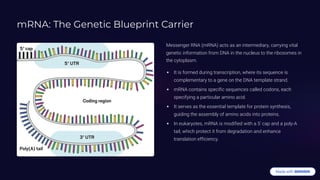
Messenger RNA (mRNA) acts as an intermediary, carrying vital
genetic information from DNA in the nucleus to the ribosomes in
the cytoplasm.
It is formed during transcription, where its sequence is
complementary to a gene on the DNA template strand.
mRNA contains specific sequences called codons, each
specifying a particular amino acid.
It serves as the essential template for protein synthesis,
guiding the assembly of amino acids into proteins.
In eukaryotes, mRNA is modified with a 5' cap and a poly-A
tail, which protect it from degradation and enhance
translation efficiency.
tRNA: The Amino Acid Adaptor
Transfer RNA (tRNA) functions as an adaptor molecule, precisely
delivering the correct amino acids to the ribosome during protein
synthesis.
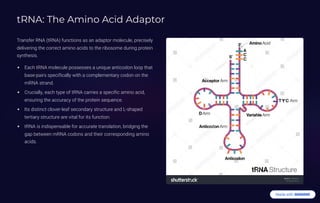
Each tRNA molecule possesses a unique anticodon loop that
base-pairs specifically with a complementary codon on the
mRNA strand.
Crucially, each type of tRNA carries a specific amino acid,
ensuring the accuracy of the protein sequence.
Its distinct clover-leaf secondary structure and L-shaped
tertiary structure are vital for its function.
tRNA is indispensable for accurate translation, bridging the
gap between mRNA codons and their corresponding amino
acids.
rRNA: The Ribosomal Scaffold and Catalyst
Ribosomal RNA (rRNA) is a fundamental component of
ribosomes, the cellular machinery responsible for protein
synthesis.
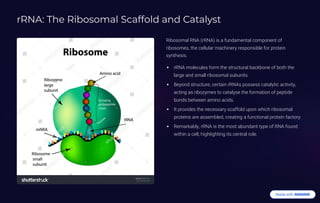
rRNA molecules form the structural backbone of both the
large and small ribosomal subunits.
Beyond structure, certain rRNAs possess catalytic activity,
acting as ribozymes to catalyse the formation of peptide
bonds between amino acids.
It provides the necessary scaffold upon which ribosomal
proteins are assembled, creating a functional protein factory.
Remarkably, rRNA is the most abundant type of RNA found
within a cell, highlighting its central role.
Regulatory RNAs: miRNA and siRNA
These small, powerful RNA molecules play a crucial role in post-transcriptional gene regulation.
miRNA (Micro RNA)
Small (21325 nucleotides) non-coding RNAs that function
primarily to suppress gene expression.
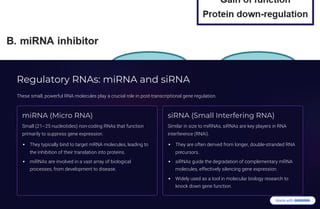
They typically bind to target mRNA molecules, leading to
the inhibition of their translation into proteins.
miRNAs are involved in a vast array of biological
processes, from development to disease.
siRNA (Small Interfering RNA)
Similar in size to miRNAs, siRNAs are key players in RNA
interference (RNAi).
They are often derived from longer, double-stranded RNA
precursors.
siRNAs guide the degradation of complementary mRNA
molecules, effectively silencing gene expression.
Widely used as a tool in molecular biology research to
knock down gene function.
Specialised Nuclear and Long Non-Coding RNAs
snRNA (Small Nuclear RNA)
Predominantly found within the nucleus of eukaryotic
cells.
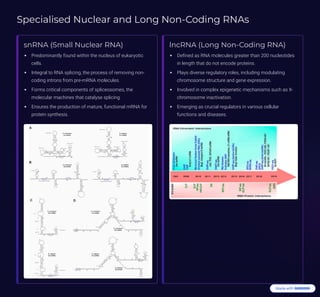
Integral to RNA splicing, the process of removing non-
coding introns from pre-mRNA molecules.
Forms critical components of spliceosomes, the
molecular machines that catalyse splicing.
Ensures the production of mature, functional mRNA for
protein synthesis.
lncRNA (Long Non-Coding RNA)
Defined as RNA molecules greater than 200 nucleotides
in length that do not encode proteins.
Plays diverse regulatory roles, including modulating
chromosome structure and gene expression.
Involved in complex epigenetic mechanisms such as X-
chromosome inactivation.
Emerging as crucial regulators in various cellular
functions and diseases.
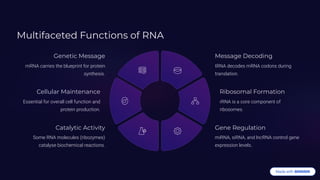
Multifaceted Functions of RNA
Genetic Message
mRNA carries the blueprint for protein
synthesis.
Message Decoding
tRNA decodes mRNA codons during
translation.
Ribosomal Formation
rRNA is a core component of
ribosomes.
Gene Regulation
miRNA, siRNA, and lncRNA control gene
expression levels.
Catalytic Activity
Some RNA molecules (ribozymes)
catalyse biochemical reactions.
Cellular Maintenance
Essential for overall cell function and
protein production.
Conclusion: The Enduring Importance of RNA
RNA is an indispensable molecule, central to gene
expression, intricate regulatory networks, and the
fundamental process of protein synthesis.
The diverse types of RNA collaborate seamlessly to
orchestrate and maintain critical cellular processes.
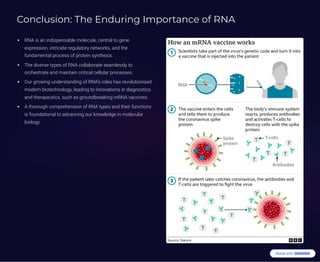
Our growing understanding of RNA's roles has revolutionised
modern biotechnology, leading to innovations in diagnostics
and therapeutics, such as groundbreaking mRNA vaccines.
A thorough comprehension of RNA types and their functions
is foundational to advancing our knowledge in molecular
biology.

RNA-Types-and-Functions.pdfmolecular bio

  • 1.
    RNA Types andFunctions Presented by A. Santhiya II-BSc Biotechnology "B" Molecular Biology
  • 2.
    Introduction to RNA:The Versatile Molecule Ribonucleic Acid (RNA) is a single-stranded nucleic acid composed of ribonucleotides. It contains ribose sugar and the bases: Adenine (A), Uracil (U), Guanine (G), and Cytosine (C). RNA is synthesised from a DNA template through the process of transcription. It plays pivotal roles in protein synthesis, gene regulation, and various catalytic functions within the cell.
  • 3.
    The Diverse Worldof RNA: Key Players mRNA Messenger RNA tRNA Transfer RNA rRNA Ribosomal RNA snRNA Small Nuclear RNA miRNA Micro RNA siRNA Small Interfering RNA lncRNA Long Non-Coding RNA
  • 4.
    mRNA: The GeneticBlueprint Carrier Messenger RNA (mRNA) acts as an intermediary, carrying vital genetic information from DNA in the nucleus to the ribosomes in the cytoplasm. It is formed during transcription, where its sequence is complementary to a gene on the DNA template strand. mRNA contains specific sequences called codons, each specifying a particular amino acid. It serves as the essential template for protein synthesis, guiding the assembly of amino acids into proteins. In eukaryotes, mRNA is modified with a 5' cap and a poly-A tail, which protect it from degradation and enhance translation efficiency.
  • 5.
    tRNA: The AminoAcid Adaptor Transfer RNA (tRNA) functions as an adaptor molecule, precisely delivering the correct amino acids to the ribosome during protein synthesis. Each tRNA molecule possesses a unique anticodon loop that base-pairs specifically with a complementary codon on the mRNA strand. Crucially, each type of tRNA carries a specific amino acid, ensuring the accuracy of the protein sequence. Its distinct clover-leaf secondary structure and L-shaped tertiary structure are vital for its function. tRNA is indispensable for accurate translation, bridging the gap between mRNA codons and their corresponding amino acids.
  • 6.
    rRNA: The RibosomalScaffold and Catalyst Ribosomal RNA (rRNA) is a fundamental component of ribosomes, the cellular machinery responsible for protein synthesis. rRNA molecules form the structural backbone of both the large and small ribosomal subunits. Beyond structure, certain rRNAs possess catalytic activity, acting as ribozymes to catalyse the formation of peptide bonds between amino acids. It provides the necessary scaffold upon which ribosomal proteins are assembled, creating a functional protein factory. Remarkably, rRNA is the most abundant type of RNA found within a cell, highlighting its central role.
  • 7.
    Regulatory RNAs: miRNAand siRNA These small, powerful RNA molecules play a crucial role in post-transcriptional gene regulation. miRNA (Micro RNA) Small (21325 nucleotides) non-coding RNAs that function primarily to suppress gene expression. They typically bind to target mRNA molecules, leading to the inhibition of their translation into proteins. miRNAs are involved in a vast array of biological processes, from development to disease. siRNA (Small Interfering RNA) Similar in size to miRNAs, siRNAs are key players in RNA interference (RNAi). They are often derived from longer, double-stranded RNA precursors. siRNAs guide the degradation of complementary mRNA molecules, effectively silencing gene expression. Widely used as a tool in molecular biology research to knock down gene function.
  • 8.
    Specialised Nuclear andLong Non-Coding RNAs snRNA (Small Nuclear RNA) Predominantly found within the nucleus of eukaryotic cells. Integral to RNA splicing, the process of removing non- coding introns from pre-mRNA molecules. Forms critical components of spliceosomes, the molecular machines that catalyse splicing. Ensures the production of mature, functional mRNA for protein synthesis. lncRNA (Long Non-Coding RNA) Defined as RNA molecules greater than 200 nucleotides in length that do not encode proteins. Plays diverse regulatory roles, including modulating chromosome structure and gene expression. Involved in complex epigenetic mechanisms such as X- chromosome inactivation. Emerging as crucial regulators in various cellular functions and diseases.
  • 9.
    Multifaceted Functions ofRNA Genetic Message mRNA carries the blueprint for protein synthesis. Message Decoding tRNA decodes mRNA codons during translation. Ribosomal Formation rRNA is a core component of ribosomes. Gene Regulation miRNA, siRNA, and lncRNA control gene expression levels. Catalytic Activity Some RNA molecules (ribozymes) catalyse biochemical reactions. Cellular Maintenance Essential for overall cell function and protein production.
  • 10.
    Conclusion: The EnduringImportance of RNA RNA is an indispensable molecule, central to gene expression, intricate regulatory networks, and the fundamental process of protein synthesis. The diverse types of RNA collaborate seamlessly to orchestrate and maintain critical cellular processes. Our growing understanding of RNA's roles has revolutionised modern biotechnology, leading to innovations in diagnostics and therapeutics, such as groundbreaking mRNA vaccines. A thorough comprehension of RNA types and their functions is foundational to advancing our knowledge in molecular biology.