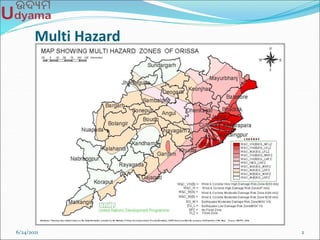
Multi Hazard
6/24/2021 2
Vulnerability
6/24/2021 3
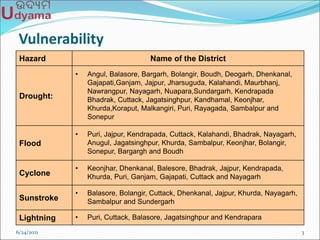
Hazard Name of the District
Drought:
• Angul, Balasore, Bargarh, Bolangir, Boudh, Deogarh, Dhenkanal,
Gajapati,Ganjam, Jajpur, Jharsuguda, Kalahandi, Maurbhanj,
Nawrangpur, Nayagarh, Nuapara,Sundargarh, Kendrapada
Bhadrak, Cuttack, Jagatsinghpur, Kandhamal, Keonjhar,
Khurda,Koraput, Malkangiri, Puri, Rayagada, Sambalpur and
Sonepur
Flood
• Puri, Jajpur, Kendrapada, Cuttack, Kalahandi, Bhadrak, Nayagarh,
Anugul, Jagatsinghpur, Khurda, Sambalpur, Keonjhar, Bolangir,
Sonepur, Bargargh and Boudh
Cyclone
• Keonjhar, Dhenkanal, Balesore, Bhadrak, Jajpur, Kendrapada,
Khurda, Puri, Ganjam, Gajapati, Cuttack and Nayagarh
Sunstroke
• Balasore, Bolangir, Cuttack, Dhenkanal, Jajpur, Khurda, Nayagarh,
Sambalpur and Sundergarh
Lightning • Puri, Cuttack, Balasore, Jagatsinghpur and Kendrapara
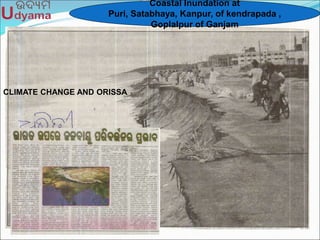
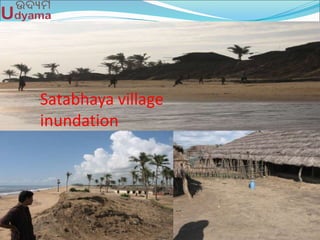
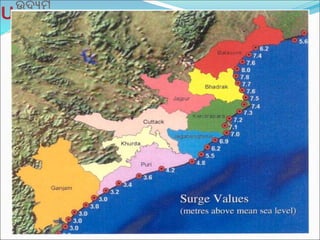
Coastal Inundation at
Puri, Satabhaya, Kanpur, of kendrapada ,
Goplalpur of Ganjam
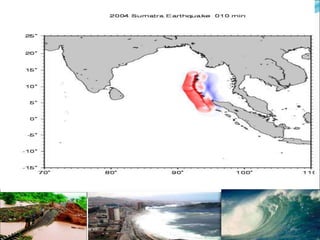
CLIMATE CHANGE AND ORISSA
Satabhaya village
inundation
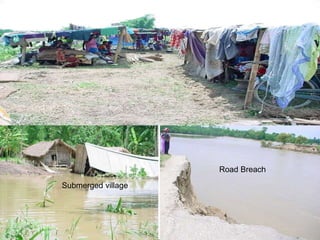
Road Breach
Submerged village
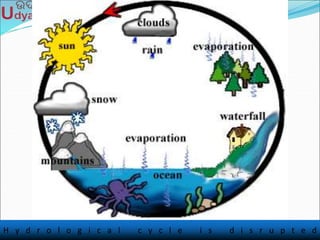
H y d r o l o g i c a l c y c l e i s d i s r u p t e d
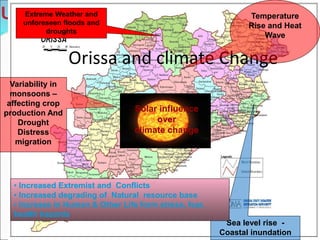
Orissa and climate Change
Solar influence
over
climate change
Sea level rise -
Coastal inundation
Temperature
Rise and Heat
Wave
Variability in
monsoons –
affecting crop
production And
Drought
Distress
migration
• Increased Extremist and Conflicts
• Increased degrading of Natural resource base
• Increase in Human & Other Life form stress, fear,
health hazards
Extreme Weather and
unforeseen floods and
droughts
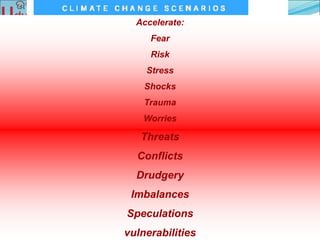
Accelerate:
Fear
Risk
Stress
Shocks
Trauma
Worries
Threats
Conflicts
Drudgery
Imbalances
Speculations
vulnerabilities
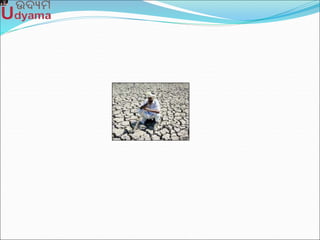
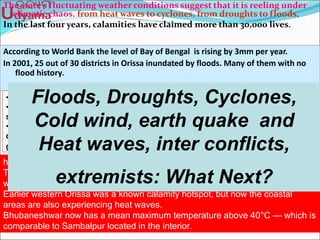
The state’s fluctuating weather conditions suggest that it is reeling under
climatic chaos. from heat waves to cyclones, from droughts to floods.
In the last four years, calamities have claimed more than 30,000 lives.
According to World Bank the level of Bay of Bengal is rising by 3mm per year.
In 2001, 25 out of 30 districts in Orissa inundated by floods. Many of them with no
flood history.
•Districts were inundated affecting one-third of the state’s 30 million residents.
•Areas with no history of floods such as districts in western Orissa were
submerged and suffered one of its worst droughts in the same year.
•It affected the lives of 11 million people in more than two-thirds of the state’s
districts, engulfing earlier drought free district Kendrapada.
government put the economic loss due to crop damage at Rs 2642.89crore2001.
heat wave in 1998 killed around 1500 people, mostly in coastal Orissa,
The Titilagarh and Koraput belt comprising entire south and western Orissa has
witnessed an exceptional rise temperature.
Earlier western Orissa was a known calamity hotspot, but now the coastal
areas are also experiencing heat waves.
Bhubaneshwar now has a mean maximum temperature above 40°C — which is
comparable to Sambalpur located in the interior.
Floods, Droughts, Cyclones,
Cold wind, earth quake and
Heat waves, inter conflicts,
extremists: What Next?
6/24/2021 14
CONCEPTUAL DESIGN
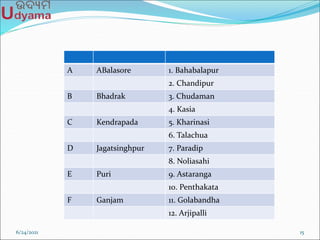
A ABalasore 1. Bahabalapur
2. Chandipur
B Bhadrak 3. Chudaman
4. Kasia
C Kendrapada 5. Kharinasi
6. Talachua
D Jagatsinghpur 7. Paradip
8. Noliasahi
E Puri 9. Astaranga
10. Penthakata
F Ganjam 11. Golabandha
12. Arjipalli
6/24/2021 15
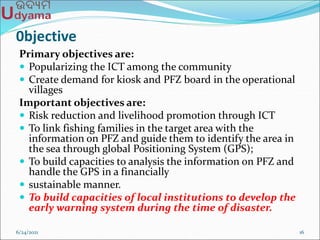
0bjective
Primary objectives are:
 Popularizing the ICT among the community
 Create demand for kiosk and PFZ board in the operational
villages
Important objectives are:
 Risk reduction and livelihood promotion through ICT
 To link fishing families in the target area with the
information on PFZ and guide them to identify the area in
the sea through global Positioning System (GPS);
 To build capacities to analysis the information on PFZ and
handle the GPS in a financially
 sustainable manner.
 To build capacities of local institutions to develop the
early warning system during the time of disaster.
6/24/2021 16
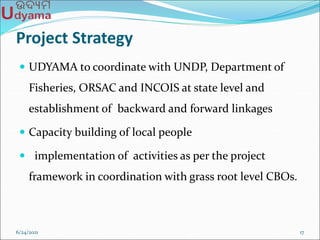
Project Strategy
 UDYAMA to coordinate with UNDP, Department of
Fisheries, ORSAC and INCOIS at state level and
establishment of backward and forward linkages
 Capacity building of local people
 implementation of activities as per the project
framework in coordination with grass root level CBOs.
6/24/2021 17
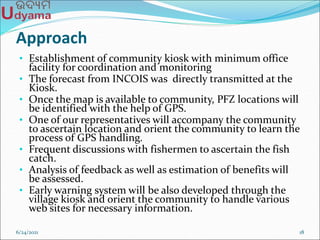
Approach
• Establishment of community kiosk with minimum office
facility for coordination and monitoring
• The forecast from INCOIS was directly transmitted at the
Kiosk.
• Once the map is available to community, PFZ locations will
be identified with the help of GPS.
• One of our representatives will accompany the community
to ascertain location and orient the community to learn the
process of GPS handling.
• Frequent discussions with fishermen to ascertain the fish
catch.
• Analysis of feedback as well as estimation of benefits will
be assessed.
• Early warning system will be also developed through the
village kiosk and orient the community to handle various
web sites for necessary information.
6/24/2021 18
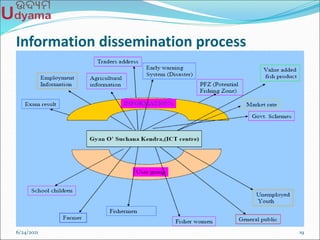
Information dissemination process
6/24/2021 19
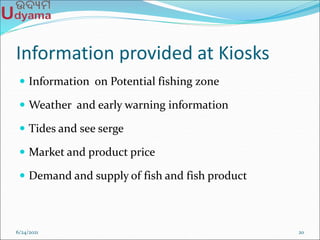
Information provided at Kiosks
 Information on Potential fishing zone
 Weather and early warning information
 Tides and see serge
 Market and product price
 Demand and supply of fish and fish product
6/24/2021 20
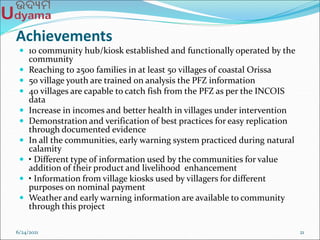
Achievements
 10 community hub/kiosk established and functionally operated by the
community
 Reaching to 2500 families in at least 50 villages of coastal Orissa
 50 village youth are trained on analysis the PFZ information
 40 villages are capable to catch fish from the PFZ as per the INCOIS
data
 Increase in incomes and better health in villages under intervention
 Demonstration and verification of best practices for easy replication
through documented evidence
 In all the communities, early warning system practiced during natural
calamity
 • Different type of information used by the communities for value
addition of their product and livelihood enhancement
 • Information from village kiosks used by villagers for different
purposes on nominal payment
 Weather and early warning information are available to community
through this project
6/24/2021 21
Challenges
 Knowledge on the modern technology (GPS, GIS, Co-
ordinate System etc ) should be simplify to Train the
community.
 Technology should be developed to provides
information in all weather.
 The Knowledge center should be managed by a
trained professional,
 The center should make profit for the maintenance
and sustainability of the center.
 more action will be needed to trained the fisherman
and the community for the use of information.
6/24/2021 22
Thanks to Each One
Pradeep Mohapatra.Team leader
Udyama.pradeep@gmail.com, www.udyam.org
Ph-0674-2475656 , Cell91 9437110892
If
You
have
seen

Risk reduction and livelihood promotion udyama

  • 2.
  • 3.
    Vulnerability 6/24/2021 3 Hazard Nameof the District Drought: • Angul, Balasore, Bargarh, Bolangir, Boudh, Deogarh, Dhenkanal, Gajapati,Ganjam, Jajpur, Jharsuguda, Kalahandi, Maurbhanj, Nawrangpur, Nayagarh, Nuapara,Sundargarh, Kendrapada Bhadrak, Cuttack, Jagatsinghpur, Kandhamal, Keonjhar, Khurda,Koraput, Malkangiri, Puri, Rayagada, Sambalpur and Sonepur Flood • Puri, Jajpur, Kendrapada, Cuttack, Kalahandi, Bhadrak, Nayagarh, Anugul, Jagatsinghpur, Khurda, Sambalpur, Keonjhar, Bolangir, Sonepur, Bargargh and Boudh Cyclone • Keonjhar, Dhenkanal, Balesore, Bhadrak, Jajpur, Kendrapada, Khurda, Puri, Ganjam, Gajapati, Cuttack and Nayagarh Sunstroke • Balasore, Bolangir, Cuttack, Dhenkanal, Jajpur, Khurda, Nayagarh, Sambalpur and Sundergarh Lightning • Puri, Cuttack, Balasore, Jagatsinghpur and Kendrapara
  • 4.
    Coastal Inundation at Puri,Satabhaya, Kanpur, of kendrapada , Goplalpur of Ganjam CLIMATE CHANGE AND ORISSA
  • 5.
  • 6.
  • 8.
    H y dr o l o g i c a l c y c l e i s d i s r u p t e d
  • 10.
    Orissa and climateChange Solar influence over climate change Sea level rise - Coastal inundation Temperature Rise and Heat Wave Variability in monsoons – affecting crop production And Drought Distress migration • Increased Extremist and Conflicts • Increased degrading of Natural resource base • Increase in Human & Other Life form stress, fear, health hazards Extreme Weather and unforeseen floods and droughts
  • 12.
  • 13.
    The state’s fluctuatingweather conditions suggest that it is reeling under climatic chaos. from heat waves to cyclones, from droughts to floods. In the last four years, calamities have claimed more than 30,000 lives. According to World Bank the level of Bay of Bengal is rising by 3mm per year. In 2001, 25 out of 30 districts in Orissa inundated by floods. Many of them with no flood history. •Districts were inundated affecting one-third of the state’s 30 million residents. •Areas with no history of floods such as districts in western Orissa were submerged and suffered one of its worst droughts in the same year. •It affected the lives of 11 million people in more than two-thirds of the state’s districts, engulfing earlier drought free district Kendrapada. government put the economic loss due to crop damage at Rs 2642.89crore2001. heat wave in 1998 killed around 1500 people, mostly in coastal Orissa, The Titilagarh and Koraput belt comprising entire south and western Orissa has witnessed an exceptional rise temperature. Earlier western Orissa was a known calamity hotspot, but now the coastal areas are also experiencing heat waves. Bhubaneshwar now has a mean maximum temperature above 40°C — which is comparable to Sambalpur located in the interior. Floods, Droughts, Cyclones, Cold wind, earth quake and Heat waves, inter conflicts, extremists: What Next?
  • 14.
  • 15.
    A ABalasore 1.Bahabalapur 2. Chandipur B Bhadrak 3. Chudaman 4. Kasia C Kendrapada 5. Kharinasi 6. Talachua D Jagatsinghpur 7. Paradip 8. Noliasahi E Puri 9. Astaranga 10. Penthakata F Ganjam 11. Golabandha 12. Arjipalli 6/24/2021 15
  • 16.
    0bjective Primary objectives are: Popularizing the ICT among the community  Create demand for kiosk and PFZ board in the operational villages Important objectives are:  Risk reduction and livelihood promotion through ICT  To link fishing families in the target area with the information on PFZ and guide them to identify the area in the sea through global Positioning System (GPS);  To build capacities to analysis the information on PFZ and handle the GPS in a financially  sustainable manner.  To build capacities of local institutions to develop the early warning system during the time of disaster. 6/24/2021 16
  • 17.
    Project Strategy  UDYAMAto coordinate with UNDP, Department of Fisheries, ORSAC and INCOIS at state level and establishment of backward and forward linkages  Capacity building of local people  implementation of activities as per the project framework in coordination with grass root level CBOs. 6/24/2021 17
  • 18.
    Approach • Establishment ofcommunity kiosk with minimum office facility for coordination and monitoring • The forecast from INCOIS was directly transmitted at the Kiosk. • Once the map is available to community, PFZ locations will be identified with the help of GPS. • One of our representatives will accompany the community to ascertain location and orient the community to learn the process of GPS handling. • Frequent discussions with fishermen to ascertain the fish catch. • Analysis of feedback as well as estimation of benefits will be assessed. • Early warning system will be also developed through the village kiosk and orient the community to handle various web sites for necessary information. 6/24/2021 18
  • 19.
  • 20.
    Information provided atKiosks  Information on Potential fishing zone  Weather and early warning information  Tides and see serge  Market and product price  Demand and supply of fish and fish product 6/24/2021 20
  • 21.
    Achievements  10 communityhub/kiosk established and functionally operated by the community  Reaching to 2500 families in at least 50 villages of coastal Orissa  50 village youth are trained on analysis the PFZ information  40 villages are capable to catch fish from the PFZ as per the INCOIS data  Increase in incomes and better health in villages under intervention  Demonstration and verification of best practices for easy replication through documented evidence  In all the communities, early warning system practiced during natural calamity  • Different type of information used by the communities for value addition of their product and livelihood enhancement  • Information from village kiosks used by villagers for different purposes on nominal payment  Weather and early warning information are available to community through this project 6/24/2021 21
  • 22.
    Challenges  Knowledge onthe modern technology (GPS, GIS, Co- ordinate System etc ) should be simplify to Train the community.  Technology should be developed to provides information in all weather.  The Knowledge center should be managed by a trained professional,  The center should make profit for the maintenance and sustainability of the center.  more action will be needed to trained the fisherman and the community for the use of information. 6/24/2021 22
  • 23.
    Thanks to EachOne Pradeep Mohapatra.Team leader Udyama.pradeep@gmail.com, www.udyam.org Ph-0674-2475656 , Cell91 9437110892 If You have seen