RHYME & RYTHM
How and why rhymes
help enhance your
child’s learning 
abilities!

v
v
… is the pattern of language
… is marked by stressed and unstressed syllables in the words
… mirrors of life and nature, like day and night
… contributes to the pleasure of the reader
RHYTHM
… is the musicality behind the words
… is the matching up of sounds and syllables
… gives a sense harmony to phrases
… helps the listener understand what is coming
and RHYME
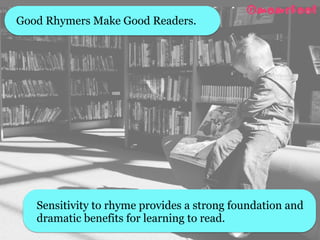
Sensitivity to rhyme provides a strong foundation and
dramatic benefits for learning to read. 
Good Rhymers Make Good Readers. 
Rhymes help children recognize patterns more
quickly, which can make learning to read easier
and more fun. 
Familiarity with rhymes helps children to detect the
phonetic constituents of words. 
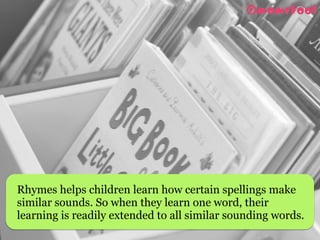
Rhymes helps children learn how certain spellings make
similar sounds. So when they learn one word, their
learning is readily extended to all similar sounding words.
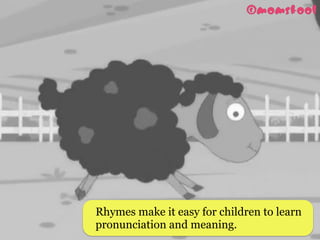
Rhymes make it easy for children to learn
pronunciation and meaning. 
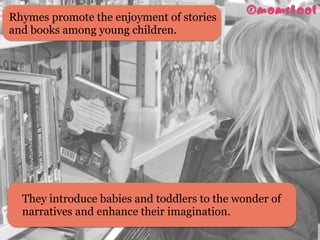
Rhymes promote the enjoyment of stories
and books among young children.
They introduce babies and toddlers to the wonder of
narratives and enhance their imagination. 
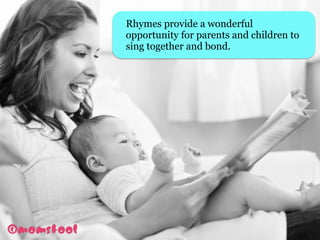
Rhymes provide a wonderful
opportunity for parents and children to
sing together and bond. 
Nursery rhymes teach kids to listen.
The music, subtle nuances and silly outcomes
encourage children to pay attention.
Rhymes help teach many life lessons. Most rhymes
have positive messages and inspire children.
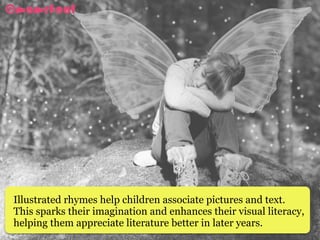
Illustrated rhymes help children associate pictures and text.
This sparks their imagination and enhances their visual literacy,
helping them appreciate literature better in later years. 
Repetition and rhythm makes learning easier.
Simple, songlike rhymes enhance memory and
auditory recall.
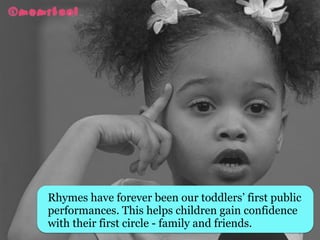
Rhymes have forever been our toddlers’ first public
performances. This helps children gain confidence
with their first circle - family and friends. 
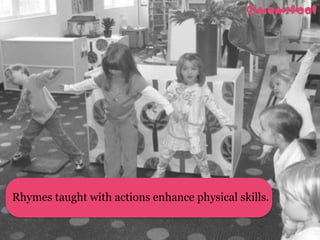
Rhymes taught with actions enhance physical skills.
So, Rhyme away with your baby,
We say at momskool
Add wonder, add fun and add a learning tool
And if you like what we just said,
A like and a share'll be cool! ;)
Rhyme & Rhythm

Rhyme & Rhythm

  • 1.
    RHYME & RYTHM Howand why rhymes help enhance your child’s learning  abilities!

  • 2.
    v v … is thepattern of language … is marked by stressed and unstressed syllables in the words … mirrors of life and nature, like day and night … contributes to the pleasure of the reader RHYTHM
  • 3.
    … is the musicalitybehind the words … is the matching up of sounds and syllables … gives a sense harmony to phrases … helps the listener understand what is coming and RHYME
  • 4.
    Sensitivity to rhyme providesa strong foundation and dramatic benefits for learning to read.  Good Rhymers Make Good Readers. 
  • 5.
    Rhymes help childrenrecognize patterns more quickly, which can make learning to read easier and more fun. 
  • 6.
    Familiarity with rhymeshelps children to detect the phonetic constituents of words. 
  • 7.
    Rhymes helps childrenlearn how certain spellings make similar sounds. So when they learn one word, their learning is readily extended to all similar sounding words.
  • 8.
    Rhymes make iteasy for children to learn pronunciation and meaning. 
  • 9.
    Rhymes promote theenjoyment of stories and books among young children. They introduce babies and toddlers to the wonder of narratives and enhance their imagination. 
  • 10.
    Rhymes provide awonderful opportunity for parents and children to sing together and bond. 
  • 11.
    Nursery rhymes teachkids to listen. The music, subtle nuances and silly outcomes encourage children to pay attention.
  • 12.
    Rhymes help teach many lifelessons. Most rhymes have positive messages and inspire children.
  • 13.
    Illustrated rhymes helpchildren associate pictures and text. This sparks their imagination and enhances their visual literacy, helping them appreciate literature better in later years. 
  • 14.
    Repetition and rhythmmakes learning easier. Simple, songlike rhymes enhance memory and auditory recall.
  • 15.
    Rhymes have forever beenour toddlers’ first public performances. This helps children gain confidence with their first circle - family and friends. 
  • 16.
    Rhymes taught withactions enhance physical skills.
  • 17.
    So, Rhyme awaywith your baby, We say at momskool Add wonder, add fun and add a learning tool And if you like what we just said, A like and a share'll be cool! ;)