WHAT IS RFID ?
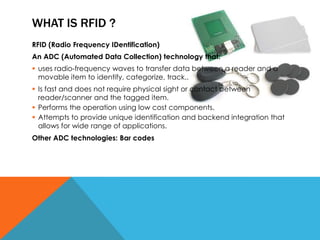
RFID (Radio Frequency IDentification)
An ADC (Automated Data Collection) technology that:
 uses radio-frequency waves to transfer data between a reader and a
movable item to identify, categorize, track..
 Is fast and does not require physical sight or contact between
reader/scanner and the tagged item.
 Performs the operation using low cost components.
 Attempts to provide unique identification and backend integration that
allows for wide range of applications.

Other ADC technologies: Bar codes
RFID TAGS
Tags can be attached to almost anything:
 Items, cases or pallets of products, high value goods
 vehicles, assets, livestock or personnel
Passive Tags
 Do not require power – Draws from Interrogator Field
 Lower storage capacities (few bits to 1 KB)
 Shorter read ranges (4 inches to 15 feet)
 Usually Write-Once-Read-Many/Read-Only tags
 Cost around 25 cents to few dollars
Active Tags
 Battery powered
 Higher storage capacities (512 KB)
 Longer read range (300 feet)
 Typically can be re-written by RF Interrogators
 Cost around 50 to 250 dollars
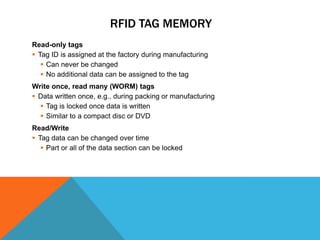
RFID TAG MEMORY
Read-only tags
 Tag ID is assigned at the factory during manufacturing
 Can never be changed
 No additional data can be assigned to the tag

Write once, read many (WORM) tags
 Data written once, e.g., during packing or manufacturing
 Tag is locked once data is written
 Similar to a compact disc or DVD
Read/Write
 Tag data can be changed over time
 Part or all of the data section can be locked
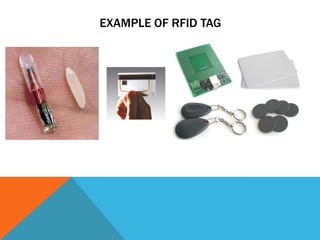
EXAMPLE OF RFID TAG
RFID READER
Reader functions:
 Remotely power tags
 Establish a bidirectional data link
 Inventory tags, filter results
 Communicate with networked server(s)
 Can read 100-300 tags per second

Readers (interrogators) can be at a fixed point
such as
 Entrance/exit
 Point of sale

Readers can also be mobile/hand-held
EXAMPLE OF RFID READER
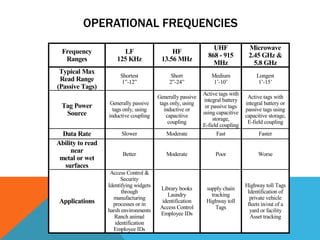
OPERATIONAL FREQUENCIES
Frequency
Ranges

LF
125 KHz

HF
13.56 MHz

UHF
868 - 915
MHz

Microwave
2.45 GHz &
5.8 GHz

Typical Max
Read Range
(Passive Tags)

Shortest
1”-12”

Short
2”-24”

Medium
1’-10’

Longest
1’-15’

Tag Power
Source

Generally passive
tags only, using
inductive coupling

Generally passive
tags only, using
inductive or
capacitive
coupling

Data Rate
Ability to read
near
metal or wet
surfaces

Slower

Moderate

Active tags with
integral battery
or passive tags
using capacitive
storage,
E-field coupling
Fast

Better

Moderate

Poor

Access Control &
Security
Identifying widgets
through
manufacturing
processes or in
harsh environments
Ranch animal
identification
Employee IDs

Library books
Laundry
identification
Access Control
Employee IDs

supply chain
tracking
Highway toll
Tags

Applications

Active tags with
integral battery or
passive tags using
capacitive storage,
E-field coupling
Faster

Worse

Highway toll Tags
Identification of
private vehicle
fleets in/out of a
yard or facility
Asset tracking
Ethernet

RFID SYSTEM COMPONENTS

RFID
Reader

RFID Tag

RF Antenna

Network

Workstation
THANK YOU

Rfid (Radio Frequency Identify)

  • 2.
    WHAT IS RFID? RFID (Radio Frequency IDentification) An ADC (Automated Data Collection) technology that:  uses radio-frequency waves to transfer data between a reader and a movable item to identify, categorize, track..  Is fast and does not require physical sight or contact between reader/scanner and the tagged item.  Performs the operation using low cost components.  Attempts to provide unique identification and backend integration that allows for wide range of applications. Other ADC technologies: Bar codes
  • 3.
    RFID TAGS Tags canbe attached to almost anything:  Items, cases or pallets of products, high value goods  vehicles, assets, livestock or personnel Passive Tags  Do not require power – Draws from Interrogator Field  Lower storage capacities (few bits to 1 KB)  Shorter read ranges (4 inches to 15 feet)  Usually Write-Once-Read-Many/Read-Only tags  Cost around 25 cents to few dollars Active Tags  Battery powered  Higher storage capacities (512 KB)  Longer read range (300 feet)  Typically can be re-written by RF Interrogators  Cost around 50 to 250 dollars
  • 4.
    RFID TAG MEMORY Read-onlytags  Tag ID is assigned at the factory during manufacturing  Can never be changed  No additional data can be assigned to the tag Write once, read many (WORM) tags  Data written once, e.g., during packing or manufacturing  Tag is locked once data is written  Similar to a compact disc or DVD Read/Write  Tag data can be changed over time  Part or all of the data section can be locked
  • 5.
  • 6.
    RFID READER Reader functions: Remotely power tags  Establish a bidirectional data link  Inventory tags, filter results  Communicate with networked server(s)  Can read 100-300 tags per second Readers (interrogators) can be at a fixed point such as  Entrance/exit  Point of sale Readers can also be mobile/hand-held
  • 7.
  • 8.
    OPERATIONAL FREQUENCIES Frequency Ranges LF 125 KHz HF 13.56MHz UHF 868 - 915 MHz Microwave 2.45 GHz & 5.8 GHz Typical Max Read Range (Passive Tags) Shortest 1”-12” Short 2”-24” Medium 1’-10’ Longest 1’-15’ Tag Power Source Generally passive tags only, using inductive coupling Generally passive tags only, using inductive or capacitive coupling Data Rate Ability to read near metal or wet surfaces Slower Moderate Active tags with integral battery or passive tags using capacitive storage, E-field coupling Fast Better Moderate Poor Access Control & Security Identifying widgets through manufacturing processes or in harsh environments Ranch animal identification Employee IDs Library books Laundry identification Access Control Employee IDs supply chain tracking Highway toll Tags Applications Active tags with integral battery or passive tags using capacitive storage, E-field coupling Faster Worse Highway toll Tags Identification of private vehicle fleets in/out of a yard or facility Asset tracking
  • 9.
    Ethernet RFID SYSTEM COMPONENTS RFID Reader RFIDTag RF Antenna Network Workstation
  • 10.