Age Appropriate Materials & Learning Experiences
In Movement
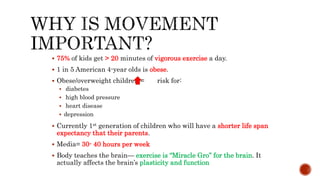
Why is movement important?
 75% of kids get > 20 minutes of vigorous exercise a day.
 1 in 5 American 4-year olds is obese.
 Obese/overweight children = risk for:
 diabetes
 high blood pressure
 heart disease
 depression
 Currently 1st generation of children who will have a shorter life span
expectancy that their parents.
 Media= 30- 40 hours per week
 Body teaches the brain— exercise is “Miracle Gro” for the brain. It
actually affects the brain’s plasticity and function
 develops critical thinking
 develops problem-solving skills
 Fulfills natural need to learn by movement (Piaget)
 Be intentional about movement
 when adults are consciously aware that specific acts support an aspect
of children’s development, they do them more often and become better
at it.
 Provide opportunities for physical activity throughout the day
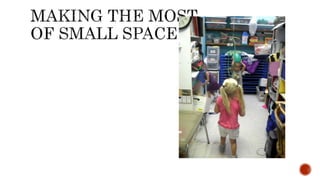
(limited space, circle time, during transitions, outdoor play)
 Be a role model and have fun! Adults teach by what they do and
what they DO NOT do.
 Studies have shown that the amount of physical activity a classroom
has during “movement time” is directly related to how active the
teacher is.
60 minutes
or MORE of time for structured vigorous activity
60 minutes
or MORE of time for unstructured vigorous activity
Young children should not be sedentary for more than 60 minutes at a time except when
sleeping.
 Easily accessible outdoor area for 1 hour daily
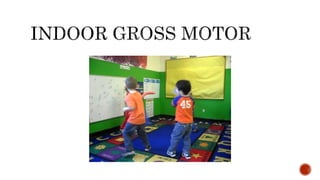
 Open space for active physical play indoors for much of the day
 Ample materials & equipment
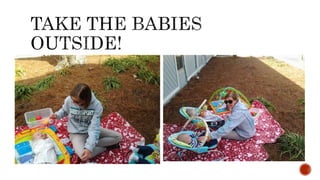
 Infants- outdoor pad/blanket, crib gym, small push toys, balls, sturdy things to pull up
on, ramps for crawling
 Toddlers- riding toys without pedals, large push-pull wheel toys, balls, bean bags,
climbing equipment, slide, balance board, tumbling surface, tunnels, large cardboard
boxes
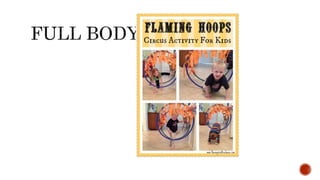
 Materials used daily to stimulate a variety of large muscle skills (crawling,
walking, balancing, climbing, throwing, catching, pushing, pulling)
 ECERS: Gross Motor SPACE
 Space indoors and outdoors for gross motor play
 Space is easily accessible for children
 Space is organized so other types of activities don’t interfere
 ECERS: Gross Motor EQUIPMENT
 Enough equipment so that children have access without a long wait
 Materials should be available at least 1 hour a day
 Equipment stimulates a variety of skills
 Balancing
 Climbing
 Pushing/pulling
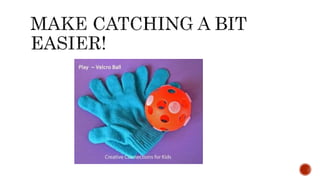
 Throwing/catching
 Steering
 Pedaling
 Stationary and portable equipment used
 Equipment stimulates skills on different levels (ex. Pedals and no pedals)
 Gross Motor
 beginning signs of balance, control, and coordination. (A1)
 proficiency in rolling over, sitting, crawling. (A2)
 Coordinate movements in grabbing, rolling, tossing, and throwing. (A4)
 Fine Motor
 beginning signs of strength, control, and eye-hand coordination. (B2)
 Show increasing levels of proficiency, control, and balance in walking, climbing,
running, jumping, hopping, skipping, marching, and galloping. (A6)
 Coordinate movements in more complex gross motor tasks, such as throwing,
catching, kicking, bouncing balls, and using the slide and swing. (A7)
 Make successful transitions between sequential motor skills. (A8)
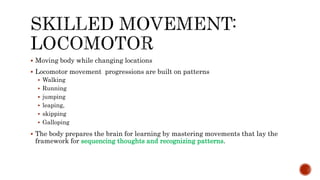
 Moving body while changing locations
 Locomotor movement progressions are built on patterns
 Walking
 Running
 jumping
 leaping,
 skipping
 Galloping
 The body prepares the brain for learning by mastering movements that lay the
framework for sequencing thoughts and recognizing patterns.
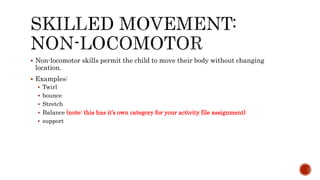
 Non-locomotor skills permit the child to move their body without changing
location.
 Examples:
 Twirl
 bounce
 Stretch
 Balance (note: this has it’s own category for your activity file assignment)
 support
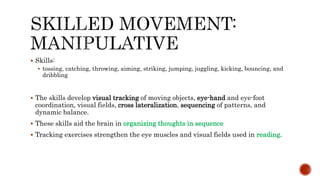
 Skills:
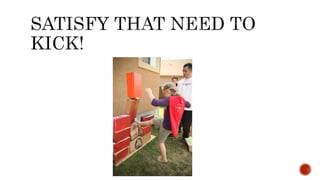
 tossing, catching, throwing, aiming, striking, jumping, juggling, kicking, bouncing, and
dribbling
 The skills develop visual tracking of moving objects, eye-hand and eye-foot
coordination, visual fields, cross lateralization, sequencing of patterns, and
dynamic balance.
 These skills aid the brain in organizing thoughts in sequence
 Tracking exercises strengthen the eye muscles and visual fields used in reading.
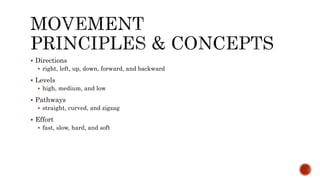
 Directions
 right, left, up, down, forward, and backward
 Levels
 high, medium, and low
 Pathways
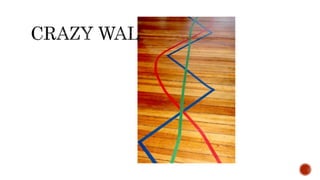
 straight, curved, and zigzag
 Effort
 fast, slow, hard, and soft
 Must include 2 or more players
 Must provide opportunities to
 follow directions in group settings
 use safe behaviors
 follow rules
 take turns
 Demonstrate an understanding of what cooperation means
 Maintain a stable static position while practicing specific balances on different
bases of support,
 standing on toes or standing on one foot.
 Maintain balance while performing a controlled spin.
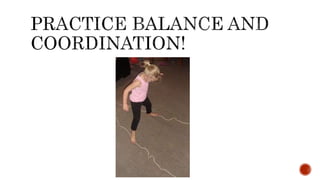
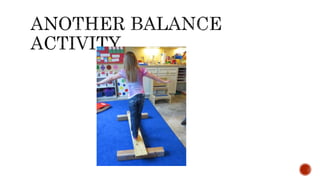
 Maintain balance while walking on a painted line or a low balance beam
 Maintain balance while climbing up steps and walking on a horizontal ladder
placed on the floor.
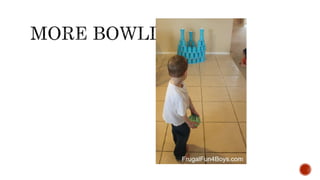
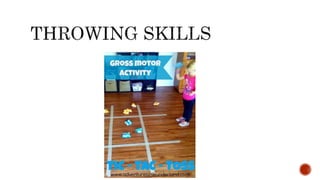
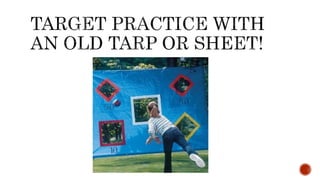
 Hanging hula hoop bean bag toss
 Homemade bean bags
 More precise bean bag toss- cardboard box, paint, and a knife
 Appliance store box tunnels
 DIY DAP “Twister”- a painted sheet
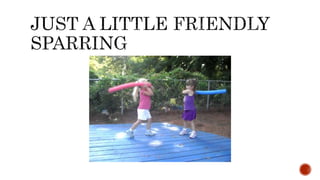
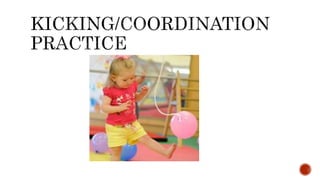
 Balloon in pantyhose & swim noodle = batting practice
 Musical Chairs (don’t remove a chair)
 Balloon (inside pantyhose) volleyball
 Open ended materials:
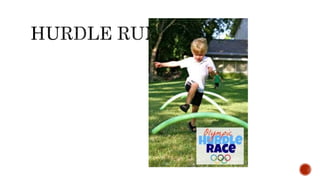
 Swim noodles cut in half
 Pillowcase capes (but Velro the “tie” to avoid choking)
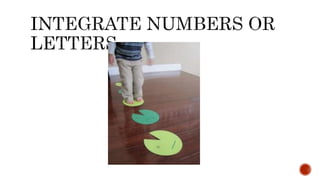
 Masking tape (“the bridge”) & coloring pages (“the crocodiles”) = “the bridge over the
moat” (balancing)
 Spiderweb
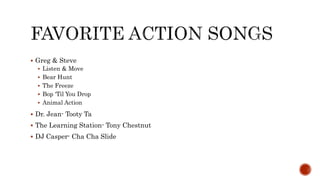
 Greg & Steve
 Listen & Move
 Bear Hunt
 The Freeze
 Bop ‘Til You Drop
 Animal Action
 Dr. Jean- Tooty Ta
 The Learning Station- Tony Chestnut
 DJ Casper- Cha Cha Slide
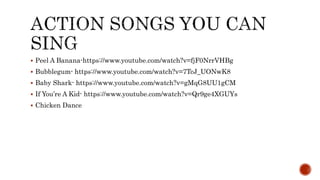
 Peel A Banana-https://www.youtube.com/watch?v=fjF0NrrVHBg
 Bubblegum- https://www.youtube.com/watch?v=7TcJ_UONwK8
 Baby Shark- https://www.youtube.com/watch?v=gMqG8UU1gCM
 If You’re A Kid- https://www.youtube.com/watch?v=Qr9ge4XGUYs
 Chicken Dance
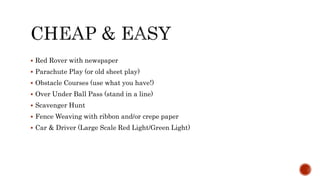
 Red Rover with newspaper
 Parachute Play (or old sheet play)
 Obstacle Courses (use what you have!)
 Over Under Ball Pass (stand in a line)
 Scavenger Hunt
 Fence Weaving with ribbon and/or crepe paper
 Car & Driver (Large Scale Red Light/Green Light)
 Krull, S. (n.d.). Get Your Motor Running! Movement, Play & Physical Activity for
Every Body
 Virginia Department of Education. (2013). Virginia’s Foundation Blocks for Early
Learning: Comprehensive Standards for Four-Year-Olds

Reviving Your Movement Toolbox

  • 1.
    Age Appropriate Materials& Learning Experiences In Movement
  • 2.
    Why is movementimportant?
  • 3.
     75% ofkids get > 20 minutes of vigorous exercise a day.  1 in 5 American 4-year olds is obese.  Obese/overweight children = risk for:  diabetes  high blood pressure  heart disease  depression  Currently 1st generation of children who will have a shorter life span expectancy that their parents.  Media= 30- 40 hours per week  Body teaches the brain— exercise is “Miracle Gro” for the brain. It actually affects the brain’s plasticity and function
  • 4.
     develops criticalthinking  develops problem-solving skills  Fulfills natural need to learn by movement (Piaget)
  • 6.
     Be intentionalabout movement  when adults are consciously aware that specific acts support an aspect of children’s development, they do them more often and become better at it.  Provide opportunities for physical activity throughout the day (limited space, circle time, during transitions, outdoor play)  Be a role model and have fun! Adults teach by what they do and what they DO NOT do.  Studies have shown that the amount of physical activity a classroom has during “movement time” is directly related to how active the teacher is.
  • 7.
    60 minutes or MOREof time for structured vigorous activity 60 minutes or MORE of time for unstructured vigorous activity Young children should not be sedentary for more than 60 minutes at a time except when sleeping.
  • 9.
     Easily accessibleoutdoor area for 1 hour daily  Open space for active physical play indoors for much of the day  Ample materials & equipment  Infants- outdoor pad/blanket, crib gym, small push toys, balls, sturdy things to pull up on, ramps for crawling  Toddlers- riding toys without pedals, large push-pull wheel toys, balls, bean bags, climbing equipment, slide, balance board, tumbling surface, tunnels, large cardboard boxes  Materials used daily to stimulate a variety of large muscle skills (crawling, walking, balancing, climbing, throwing, catching, pushing, pulling)
  • 11.
     ECERS: GrossMotor SPACE  Space indoors and outdoors for gross motor play  Space is easily accessible for children  Space is organized so other types of activities don’t interfere
  • 12.
     ECERS: GrossMotor EQUIPMENT  Enough equipment so that children have access without a long wait  Materials should be available at least 1 hour a day  Equipment stimulates a variety of skills  Balancing  Climbing  Pushing/pulling  Throwing/catching  Steering  Pedaling  Stationary and portable equipment used  Equipment stimulates skills on different levels (ex. Pedals and no pedals)
  • 14.
     Gross Motor beginning signs of balance, control, and coordination. (A1)  proficiency in rolling over, sitting, crawling. (A2)  Coordinate movements in grabbing, rolling, tossing, and throwing. (A4)  Fine Motor  beginning signs of strength, control, and eye-hand coordination. (B2)
  • 15.
     Show increasinglevels of proficiency, control, and balance in walking, climbing, running, jumping, hopping, skipping, marching, and galloping. (A6)  Coordinate movements in more complex gross motor tasks, such as throwing, catching, kicking, bouncing balls, and using the slide and swing. (A7)  Make successful transitions between sequential motor skills. (A8)
  • 17.
     Moving bodywhile changing locations  Locomotor movement progressions are built on patterns  Walking  Running  jumping  leaping,  skipping  Galloping  The body prepares the brain for learning by mastering movements that lay the framework for sequencing thoughts and recognizing patterns.
  • 18.
     Non-locomotor skillspermit the child to move their body without changing location.  Examples:  Twirl  bounce  Stretch  Balance (note: this has it’s own category for your activity file assignment)  support
  • 19.
     Skills:  tossing,catching, throwing, aiming, striking, jumping, juggling, kicking, bouncing, and dribbling  The skills develop visual tracking of moving objects, eye-hand and eye-foot coordination, visual fields, cross lateralization, sequencing of patterns, and dynamic balance.  These skills aid the brain in organizing thoughts in sequence  Tracking exercises strengthen the eye muscles and visual fields used in reading.
  • 20.
     Directions  right,left, up, down, forward, and backward  Levels  high, medium, and low  Pathways  straight, curved, and zigzag  Effort  fast, slow, hard, and soft
  • 21.
     Must include2 or more players  Must provide opportunities to  follow directions in group settings  use safe behaviors  follow rules  take turns  Demonstrate an understanding of what cooperation means
  • 22.
     Maintain astable static position while practicing specific balances on different bases of support,  standing on toes or standing on one foot.  Maintain balance while performing a controlled spin.  Maintain balance while walking on a painted line or a low balance beam  Maintain balance while climbing up steps and walking on a horizontal ladder placed on the floor.
  • 24.
     Hanging hulahoop bean bag toss  Homemade bean bags  More precise bean bag toss- cardboard box, paint, and a knife  Appliance store box tunnels  DIY DAP “Twister”- a painted sheet  Balloon in pantyhose & swim noodle = batting practice  Musical Chairs (don’t remove a chair)  Balloon (inside pantyhose) volleyball
  • 25.
     Open endedmaterials:  Swim noodles cut in half  Pillowcase capes (but Velro the “tie” to avoid choking)  Masking tape (“the bridge”) & coloring pages (“the crocodiles”) = “the bridge over the moat” (balancing)  Spiderweb
  • 26.
     Greg &Steve  Listen & Move  Bear Hunt  The Freeze  Bop ‘Til You Drop  Animal Action  Dr. Jean- Tooty Ta  The Learning Station- Tony Chestnut  DJ Casper- Cha Cha Slide
  • 27.
     Peel ABanana-https://www.youtube.com/watch?v=fjF0NrrVHBg  Bubblegum- https://www.youtube.com/watch?v=7TcJ_UONwK8  Baby Shark- https://www.youtube.com/watch?v=gMqG8UU1gCM  If You’re A Kid- https://www.youtube.com/watch?v=Qr9ge4XGUYs  Chicken Dance
  • 28.
     Red Roverwith newspaper  Parachute Play (or old sheet play)  Obstacle Courses (use what you have!)  Over Under Ball Pass (stand in a line)  Scavenger Hunt  Fence Weaving with ribbon and/or crepe paper  Car & Driver (Large Scale Red Light/Green Light)
  • 54.
     Krull, S.(n.d.). Get Your Motor Running! Movement, Play & Physical Activity for Every Body  Virginia Department of Education. (2013). Virginia’s Foundation Blocks for Early Learning: Comprehensive Standards for Four-Year-Olds