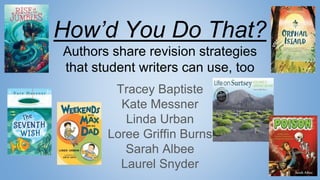
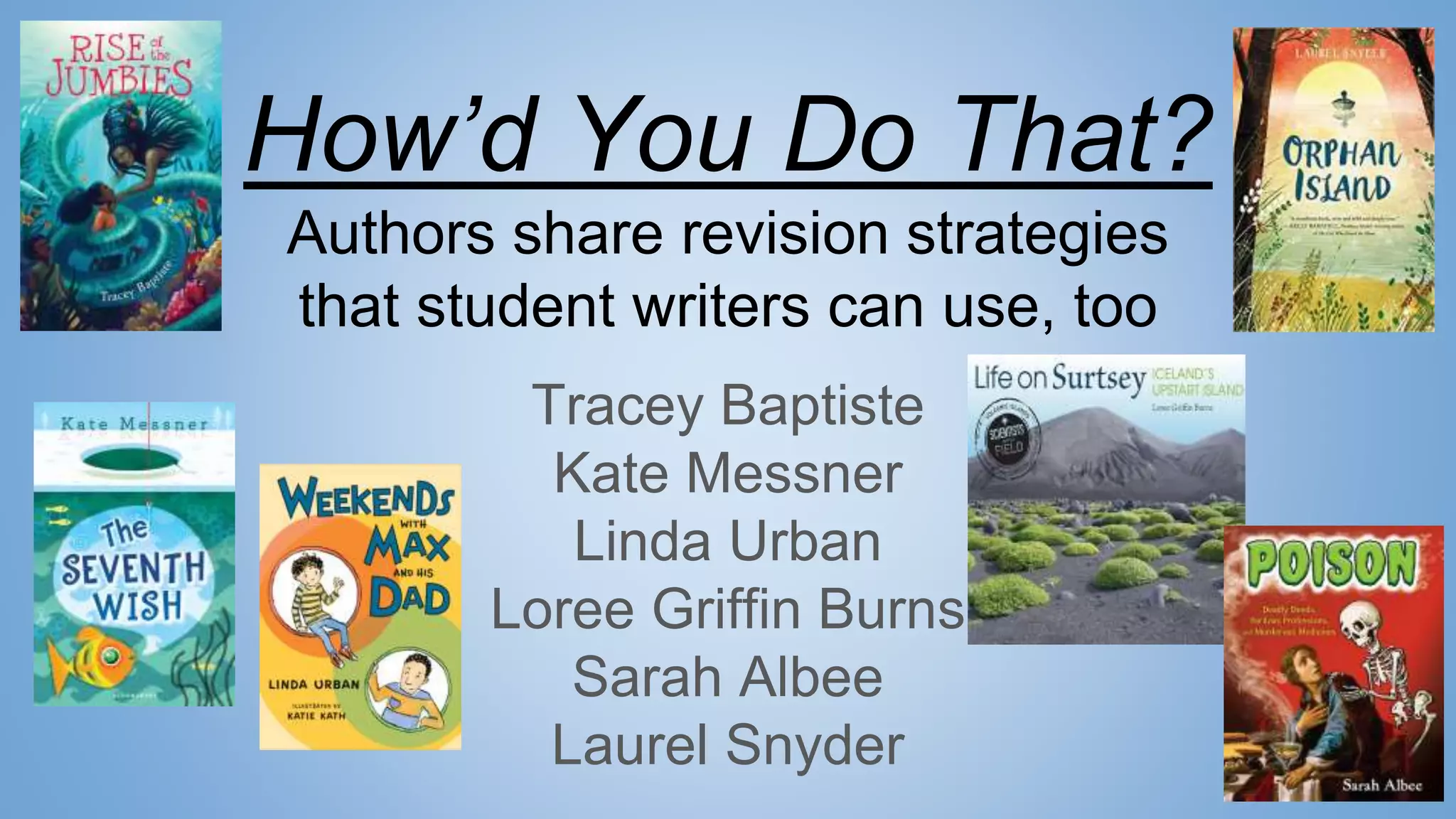
How’d You Do That?
Authors share revision strategies
that student writers can use, too
Tracey Baptiste
Kate Messner
Linda Urban
Loree Griffin Burns
Sarah Albee
Laurel Snyder
Tracey Baptiste
www.traceybaptiste.com
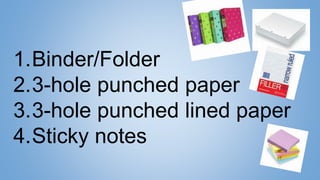
1.Binder/Folder
2.3-hole punched paper
3.3-hole punched lined paper
4.Sticky notes
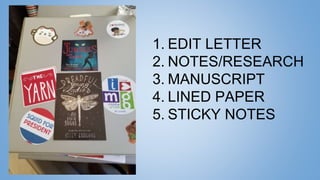
1. EDIT LETTER
2. NOTES/RESEARCH
3. MANUSCRIPT
4. LINED PAPER
5. STICKY NOTES
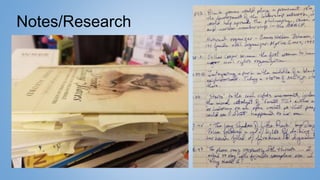
Notes/Research
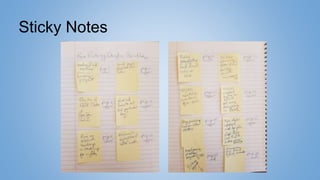
Sticky Notes
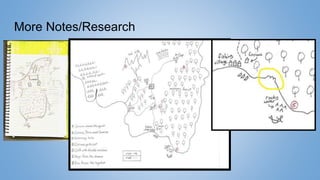
More Notes/Research
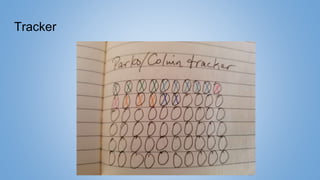
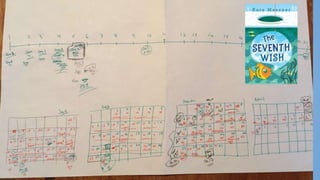
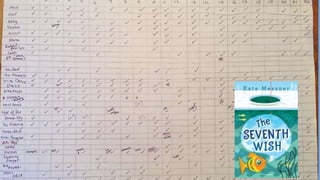
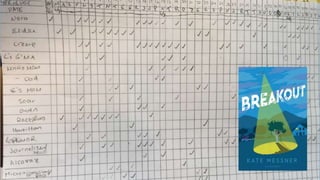
Tracker
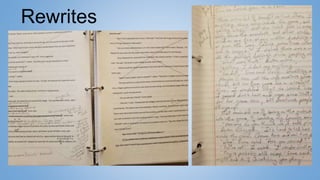
Rewrites
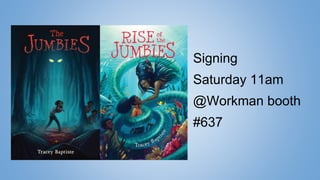
Signing
Saturday 11am
@Workman booth
#637
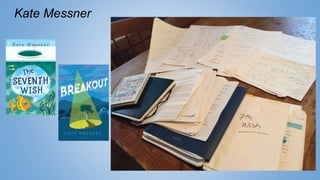
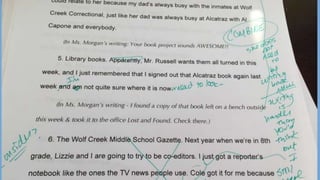
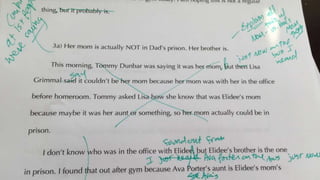
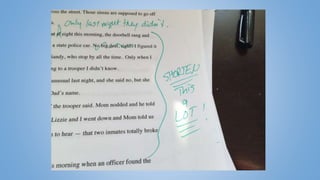
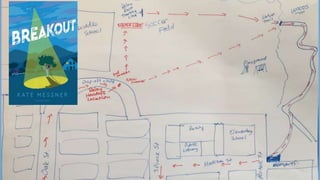
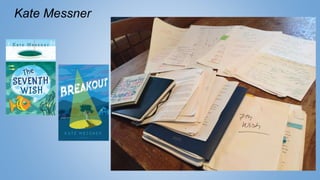
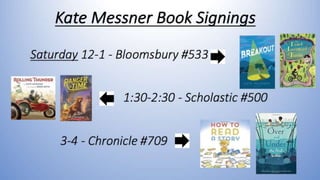
Kate Messner
Kate Messner
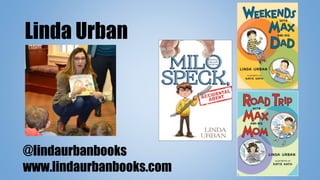
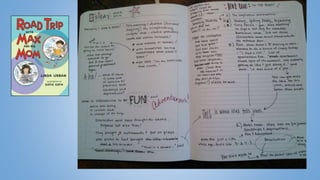
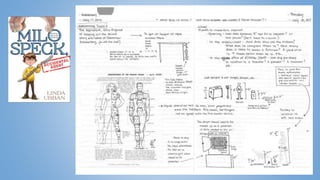
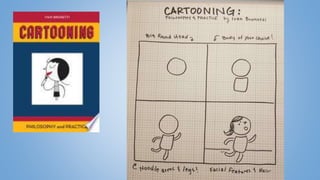
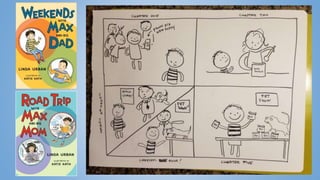
Linda Urban
@lindaurbanbooks
www.lindaurbanbooks.com
Linda Urban
www.lindaurbanbooks.com
Signing Today!
5pm
HMH Booth # 704
Loree Griffin Burns
www.loreeburns.com
@LoreeGBurns
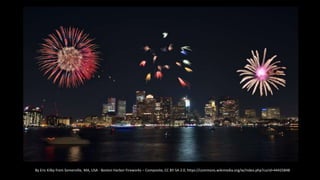
By Eric Kilby from Somerville, MA, USA - Boston Harbor Fireworks – Composite, CC BY-SA 2.0, https://commons.wikimedia.org/w/index.php?curid=44425848
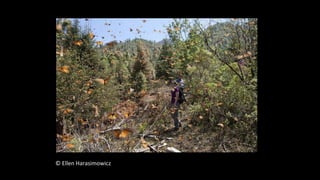
© Ellen Harasimowicz
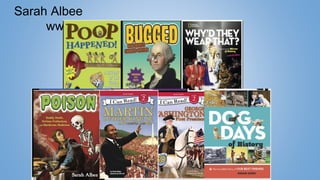
Sarah Albee
www.sarahalbeebooks.com
Tools in the Toolbox:
Adding ZING to your Writing Voice
• rule of three
• misdirection/reversal
• rhythm and sound
• revisit the verbs
• cool comparisons
– Simile/Metaphor
Rule of Three
I can't think of anything worse after a night of drinking than
waking up next to someone and not being able to remember
their name, or how you met, or why they're dead.
--Laura Kightlinger
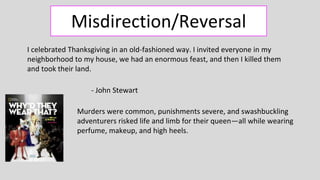
Misdirection/Reversal
Murders were common, punishments severe, and swashbuckling
adventurers risked life and limb for their queen—all while wearing
perfume, makeup, and high heels.
I celebrated Thanksgiving in an old-fashioned way. I invited everyone in my
neighborhood to my house, we had an enormous feast, and then I killed them
and took their land.
- John Stewart
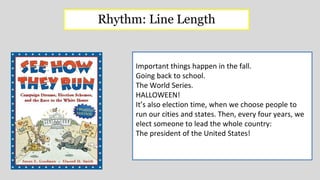
Important things happen in the fall.
Going back to school.
The World Series.
HALLOWEEN!
It’s also election time, when we choose people to
run our cities and states. Then, every four years, we
elect someone to lead the whole country:
The president of the United States!
Rhythm: Line Length
• Trochee: Sarah Albee; cellar window
• Iamb: behold; awake; To be, or not to be.
• Dactyl: merrily, merrily, merrily, merrily;
Indianapolis
• Spondee: black hole; bright star; drop dead
• Anapest: understand; get a life; giant squid
Rhythm and Sound
• Trochee: Sarah Albee; cellar window
• Iamb: behold; awake; To be, or not to be.
• Dactyl: merrily, merrily, merrily, merrily;
Indianapolis
• Spondee: black hole; bright star; drop dead
• Anapest: understand; get a life; giant squid
Rhythm [Anapest]:
“The bleedin’ boy’s got bloody snakes
in the ruddy tub!”
Rhythm [Spondee]:
Drop-Dead Gorgeous
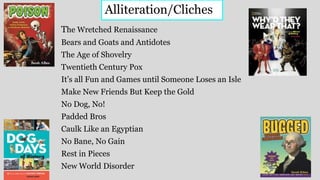
The Wretched Renaissance
Bears and Goats and Antidotes
The Age of Shovelry
Twentieth Century Pox
It’s all Fun and Games until Someone Loses an Isle
Make New Friends But Keep the Gold
No Dog, No!
Padded Bros
Caulk Like an Egyptian
No Bane, No Gain
Rest in Pieces
New World Disorder
Alliteration/Cliches
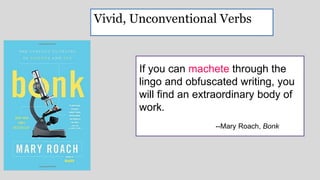
Vivid, Unconventional Verbs
If you can machete through the
lingo and obfuscated writing, you
will find an extraordinary body of
work.
--Mary Roach, Bonk
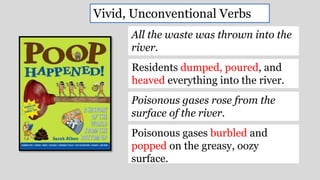
All the waste was thrown into the
river.
Residents dumped, poured, and
heaved everything into the river.
Poisonous gases rose from the
surface of the river.
Poisonous gases burbled and
popped on the greasy, oozy
surface.
Vivid, Unconventional Verbs
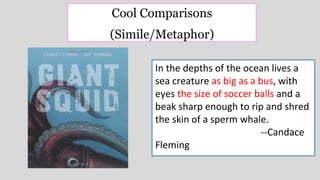
In the depths of the ocean lives a
sea creature as big as a bus, with
eyes the size of soccer balls and a
beak sharp enough to rip and shred
the skin of a sperm whale.
--Candace
Fleming
Cool Comparisons
(Simile/Metaphor)
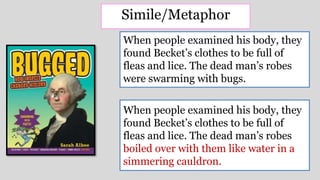
When people examined his body, they
found Becket’s clothes to be full of
fleas and lice. The dead man’s robes
boiled over with them like water in a
simmering cauldron.
When people examined his body, they
found Becket’s clothes to be full of
fleas and lice. The dead man’s robes
were swarming with bugs.
Simile/Metaphor
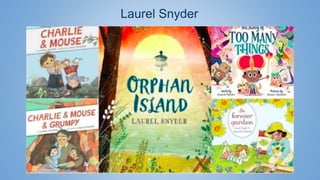
Laurel Snyder
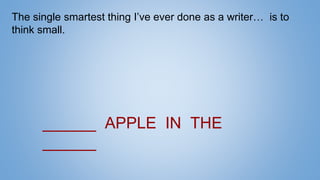
______ APPLE IN THE
______
The single smartest thing I’ve ever done as a writer… is to
think small.
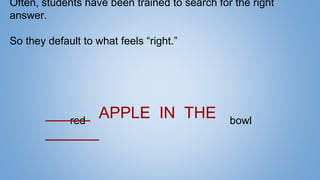
red bowl
_____ APPLE IN THE
______
Often, students have been trained to search for the right
answer.
So they default to what feels “right.”
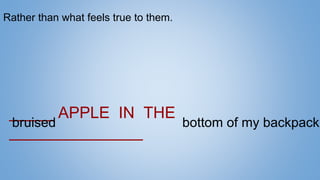
_____ APPLE IN THE
_______________
bruised bottom of my backpack.
Rather than what feels true to them.
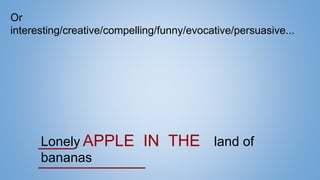
Or
interesting/creative/compelling/funny/evocative/persuasive...
____ APPLE IN THE
____________
Lonely land of
bananas
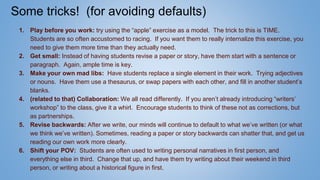
Some tricks! (for avoiding defaults)
1. Play before you work: try using the “apple” exercise as a model. The trick to this is TIME.
Students are so often accustomed to racing. If you want them to really internalize this exercise, you
need to give them more time than they actually need.
2. Get small: Instead of having students revise a paper or story, have them start with a sentence or
paragraph. Again, ample time is key.
3. Make your own mad libs: Have students replace a single element in their work. Trying adjectives
or nouns. Have them use a thesaurus, or swap papers with each other, and fill in another student’s
blanks.
4. (related to that) Collaboration: We all read differently. If you aren’t already introducing “writers’
workshop” to the class, give it a whirl. Encourage students to think of these not as corrections, but
as partnerships.
5. Revise backwards: After we write, our minds will continue to default to what we’ve written (or what
we think we’ve written). Sometimes, reading a paper or story backwards can shatter that, and get us
reading our own work more clearly.
6. Shift your POV: Students are often used to writing personal narratives in first person, and
everything else in third. Change that up, and have them try writing about their weekend in third
person, or writing about a historical figure in first.
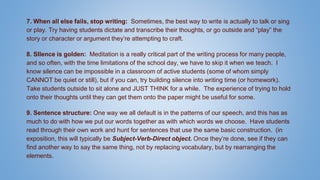
7. When all else fails, stop writing: Sometimes, the best way to write is actually to talk or sing
or play. Try having students dictate and transcribe their thoughts, or go outside and “play” the
story or character or argument they’re attempting to craft.
8. SIlence is golden: Meditation is a really critical part of the writing process for many people,
and so often, with the time limitations of the school day, we have to skip it when we teach. I
know silence can be impossible in a classroom of active students (some of whom simply
CANNOT be quiet or still), but if you can, try building silence into writing time (or homework).
Take students outside to sit alone and JUST THINK for a while. The experience of trying to hold
onto their thoughts until they can get them onto the paper might be useful for some.
9. Sentence structure: One way we all default is in the patterns of our speech, and this has as
much to do with how we put our words together as with which words we choose. Have students
read through their own work and hunt for sentences that use the same basic construction. (in
exposition, this will typically be Subject-Verb-Direct object. Once they’re done, see if they can
find another way to say the same thing, not by replacing vocabulary, but by rearranging the
elements.
Last, but not least… don’t be afraid of poetry!
On the “Poetry Toolbox” handout, you’ll find a lot of terms you probably already know, but might not
always think about in relation to daily student work. In fact, these are all devices/tools a student might
use by accident, in attempting to write a story or essay. But sometimes, when that isn’t happening, having
a list like this can help young writers realize that their natural/default way of saying something isn’t the
only (or always the best) way to say it.
When students get stuck with a revision, I highly recommend revisiting this list, and considering if there
might not be a better, more artful choice. Encourage students to try adding just a single “poetic” element
to each page or paragraph.
I know that these terms can feel very academic, and sometimes intimidating to kids. You don’t have to
introduce them THIS way, using the formal names for the terms, but the tools themselves are actually
pretty natural. Goodnight, Moon uses at least five of them. (personification, alliteration, repetition,
meter, rhyme, and probably more) When your students are writing at their best, THEY are using these
tools, whether they know it or not.
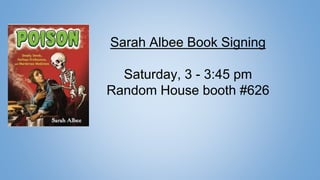
Sarah Albee Book Signing
Saturday, 3 - 3:45 pm
Random House booth #626
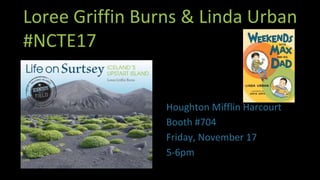
Houghton Mifflin Harcourt
Booth #704
Friday, November 17
5-6pm
Loree Griffin Burns & Linda Urban
#NCTE17
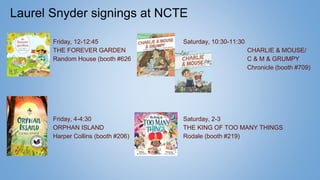
Laurel Snyder signings at NCTE
Friday, 12-12:45
THE FOREVER GARDEN
Random House (booth #626
Friday, 4-4:30
ORPHAN ISLAND
Harper Collins (booth #206)
Saturday, 10:30-11:30
CHARLIE & MOUSE/
C & M & GRUMPY
Chronicle (booth #709)
Saturday, 2-3
THE KING OF TOO MANY THINGS
Rodale (booth #219)

Revision panel ncte17

  • 1.
    How’d You DoThat? Authors share revision strategies that student writers can use, too Tracey Baptiste Kate Messner Linda Urban Loree Griffin Burns Sarah Albee Laurel Snyder
  • 2.
  • 3.
    1.Binder/Folder 2.3-hole punched paper 3.3-holepunched lined paper 4.Sticky notes
  • 4.
    1. EDIT LETTER 2.NOTES/RESEARCH 3. MANUSCRIPT 4. LINED PAPER 5. STICKY NOTES
  • 5.
  • 6.
  • 7.
  • 8.
  • 9.
  • 11.
  • 12.
  • 24.
  • 25.
  • 31.
  • 32.
  • 33.
    By Eric Kilbyfrom Somerville, MA, USA - Boston Harbor Fireworks – Composite, CC BY-SA 2.0, https://commons.wikimedia.org/w/index.php?curid=44425848
  • 39.
  • 41.
  • 42.
    Tools in theToolbox: Adding ZING to your Writing Voice • rule of three • misdirection/reversal • rhythm and sound • revisit the verbs • cool comparisons – Simile/Metaphor
  • 43.
    Rule of Three Ican't think of anything worse after a night of drinking than waking up next to someone and not being able to remember their name, or how you met, or why they're dead. --Laura Kightlinger
  • 44.
    Misdirection/Reversal Murders were common,punishments severe, and swashbuckling adventurers risked life and limb for their queen—all while wearing perfume, makeup, and high heels. I celebrated Thanksgiving in an old-fashioned way. I invited everyone in my neighborhood to my house, we had an enormous feast, and then I killed them and took their land. - John Stewart
  • 45.
    Important things happenin the fall. Going back to school. The World Series. HALLOWEEN! It’s also election time, when we choose people to run our cities and states. Then, every four years, we elect someone to lead the whole country: The president of the United States! Rhythm: Line Length
  • 46.
    • Trochee: SarahAlbee; cellar window • Iamb: behold; awake; To be, or not to be. • Dactyl: merrily, merrily, merrily, merrily; Indianapolis • Spondee: black hole; bright star; drop dead • Anapest: understand; get a life; giant squid Rhythm and Sound • Trochee: Sarah Albee; cellar window • Iamb: behold; awake; To be, or not to be. • Dactyl: merrily, merrily, merrily, merrily; Indianapolis • Spondee: black hole; bright star; drop dead • Anapest: understand; get a life; giant squid
  • 47.
    Rhythm [Anapest]: “The bleedin’boy’s got bloody snakes in the ruddy tub!” Rhythm [Spondee]: Drop-Dead Gorgeous
  • 48.
    The Wretched Renaissance Bearsand Goats and Antidotes The Age of Shovelry Twentieth Century Pox It’s all Fun and Games until Someone Loses an Isle Make New Friends But Keep the Gold No Dog, No! Padded Bros Caulk Like an Egyptian No Bane, No Gain Rest in Pieces New World Disorder Alliteration/Cliches
  • 49.
    Vivid, Unconventional Verbs Ifyou can machete through the lingo and obfuscated writing, you will find an extraordinary body of work. --Mary Roach, Bonk
  • 50.
    All the wastewas thrown into the river. Residents dumped, poured, and heaved everything into the river. Poisonous gases rose from the surface of the river. Poisonous gases burbled and popped on the greasy, oozy surface. Vivid, Unconventional Verbs
  • 51.
    In the depthsof the ocean lives a sea creature as big as a bus, with eyes the size of soccer balls and a beak sharp enough to rip and shred the skin of a sperm whale. --Candace Fleming Cool Comparisons (Simile/Metaphor)
  • 52.
    When people examinedhis body, they found Becket’s clothes to be full of fleas and lice. The dead man’s robes boiled over with them like water in a simmering cauldron. When people examined his body, they found Becket’s clothes to be full of fleas and lice. The dead man’s robes were swarming with bugs. Simile/Metaphor
  • 53.
  • 54.
    ______ APPLE INTHE ______ The single smartest thing I’ve ever done as a writer… is to think small.
  • 55.
    red bowl _____ APPLEIN THE ______ Often, students have been trained to search for the right answer. So they default to what feels “right.”
  • 56.
    _____ APPLE INTHE _______________ bruised bottom of my backpack. Rather than what feels true to them.
  • 57.
  • 58.
    Some tricks! (foravoiding defaults) 1. Play before you work: try using the “apple” exercise as a model. The trick to this is TIME. Students are so often accustomed to racing. If you want them to really internalize this exercise, you need to give them more time than they actually need. 2. Get small: Instead of having students revise a paper or story, have them start with a sentence or paragraph. Again, ample time is key. 3. Make your own mad libs: Have students replace a single element in their work. Trying adjectives or nouns. Have them use a thesaurus, or swap papers with each other, and fill in another student’s blanks. 4. (related to that) Collaboration: We all read differently. If you aren’t already introducing “writers’ workshop” to the class, give it a whirl. Encourage students to think of these not as corrections, but as partnerships. 5. Revise backwards: After we write, our minds will continue to default to what we’ve written (or what we think we’ve written). Sometimes, reading a paper or story backwards can shatter that, and get us reading our own work more clearly. 6. Shift your POV: Students are often used to writing personal narratives in first person, and everything else in third. Change that up, and have them try writing about their weekend in third person, or writing about a historical figure in first.
  • 59.
    7. When allelse fails, stop writing: Sometimes, the best way to write is actually to talk or sing or play. Try having students dictate and transcribe their thoughts, or go outside and “play” the story or character or argument they’re attempting to craft. 8. SIlence is golden: Meditation is a really critical part of the writing process for many people, and so often, with the time limitations of the school day, we have to skip it when we teach. I know silence can be impossible in a classroom of active students (some of whom simply CANNOT be quiet or still), but if you can, try building silence into writing time (or homework). Take students outside to sit alone and JUST THINK for a while. The experience of trying to hold onto their thoughts until they can get them onto the paper might be useful for some. 9. Sentence structure: One way we all default is in the patterns of our speech, and this has as much to do with how we put our words together as with which words we choose. Have students read through their own work and hunt for sentences that use the same basic construction. (in exposition, this will typically be Subject-Verb-Direct object. Once they’re done, see if they can find another way to say the same thing, not by replacing vocabulary, but by rearranging the elements.
  • 60.
    Last, but notleast… don’t be afraid of poetry! On the “Poetry Toolbox” handout, you’ll find a lot of terms you probably already know, but might not always think about in relation to daily student work. In fact, these are all devices/tools a student might use by accident, in attempting to write a story or essay. But sometimes, when that isn’t happening, having a list like this can help young writers realize that their natural/default way of saying something isn’t the only (or always the best) way to say it. When students get stuck with a revision, I highly recommend revisiting this list, and considering if there might not be a better, more artful choice. Encourage students to try adding just a single “poetic” element to each page or paragraph. I know that these terms can feel very academic, and sometimes intimidating to kids. You don’t have to introduce them THIS way, using the formal names for the terms, but the tools themselves are actually pretty natural. Goodnight, Moon uses at least five of them. (personification, alliteration, repetition, meter, rhyme, and probably more) When your students are writing at their best, THEY are using these tools, whether they know it or not.
  • 62.
    Sarah Albee BookSigning Saturday, 3 - 3:45 pm Random House booth #626
  • 63.
    Houghton Mifflin Harcourt Booth#704 Friday, November 17 5-6pm Loree Griffin Burns & Linda Urban #NCTE17
  • 64.
    Laurel Snyder signingsat NCTE Friday, 12-12:45 THE FOREVER GARDEN Random House (booth #626 Friday, 4-4:30 ORPHAN ISLAND Harper Collins (booth #206) Saturday, 10:30-11:30 CHARLIE & MOUSE/ C & M & GRUMPY Chronicle (booth #709) Saturday, 2-3 THE KING OF TOO MANY THINGS Rodale (booth #219)