


Making Crude Oil Useful
Learning Intention
We are learning about how
Crude oil is separated into
fractions and why.
How and why fractional
distillation works.
To use data to evaluate the
use of different fuels

Keywords
& Phrases

Starter Activity
Look at the following formula displayed
on your starter activity sheet.
Write down two facts about each
molecule from its formula (3 marks)

Fractions
Distillation
Fuels
Crude Oil
Evaluate
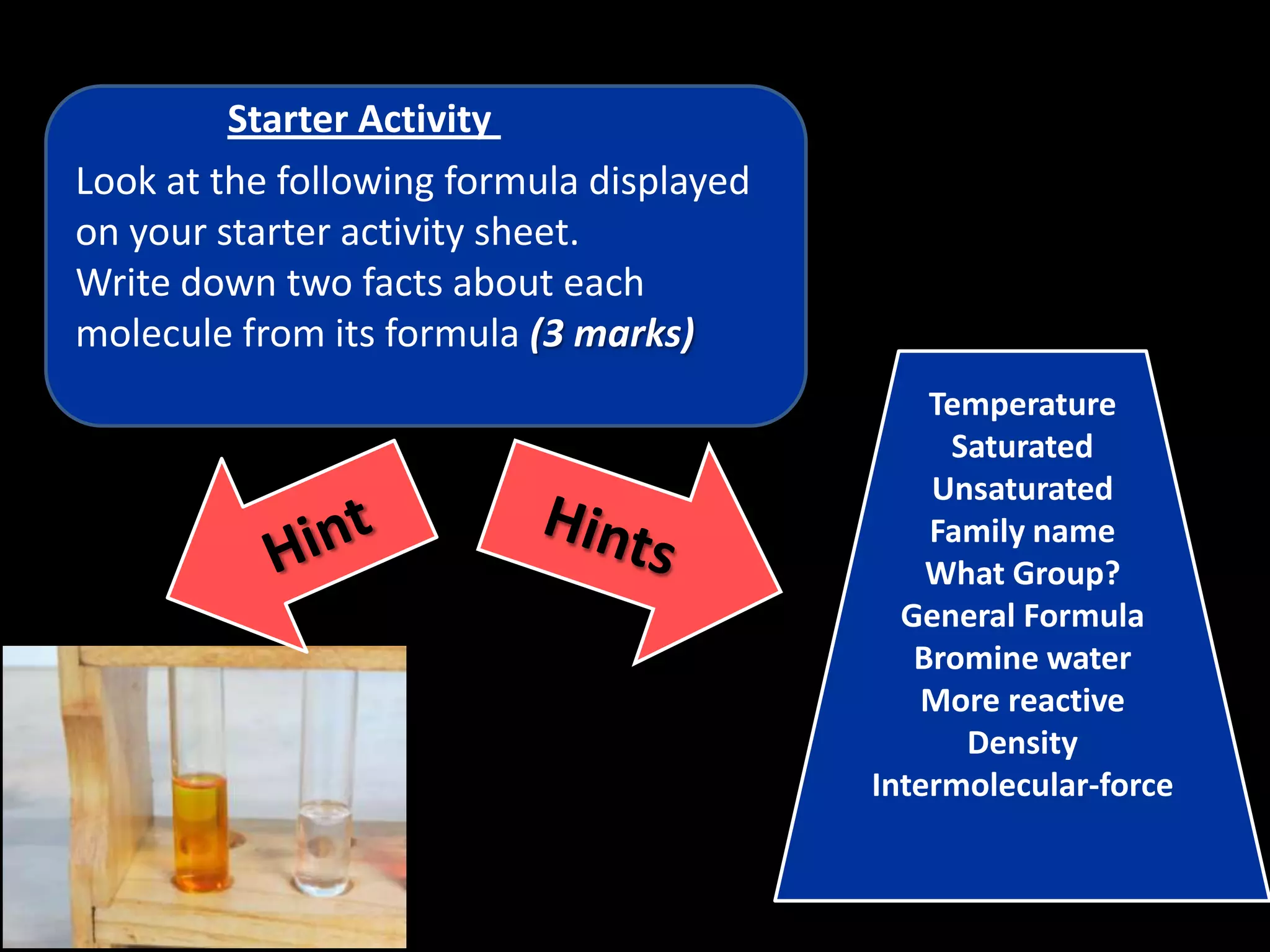
Starter Activity
Look at the following formula displayed
on your starter activity sheet.
Write down two facts about each
molecule from its formula (3 marks)
Temperature
Saturated
Unsaturated
Family name
What Group?
General Formula
Bromine water
More reactive
Density
Intermolecular-force
Why is crude oil separated into
Fractions?
Watch video clip:
http://www.youtube.com/watch?v=26AN1LfbUPc
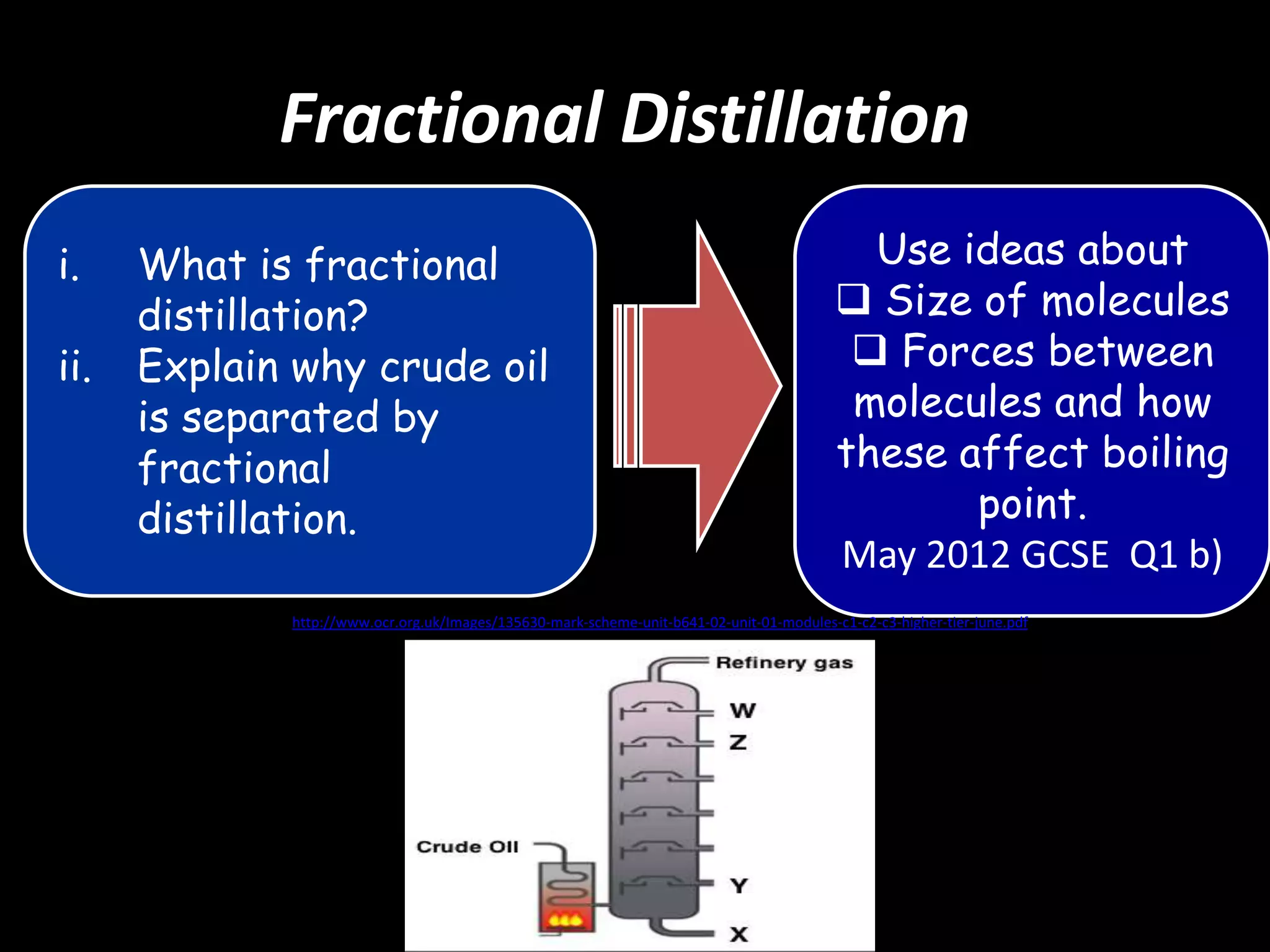
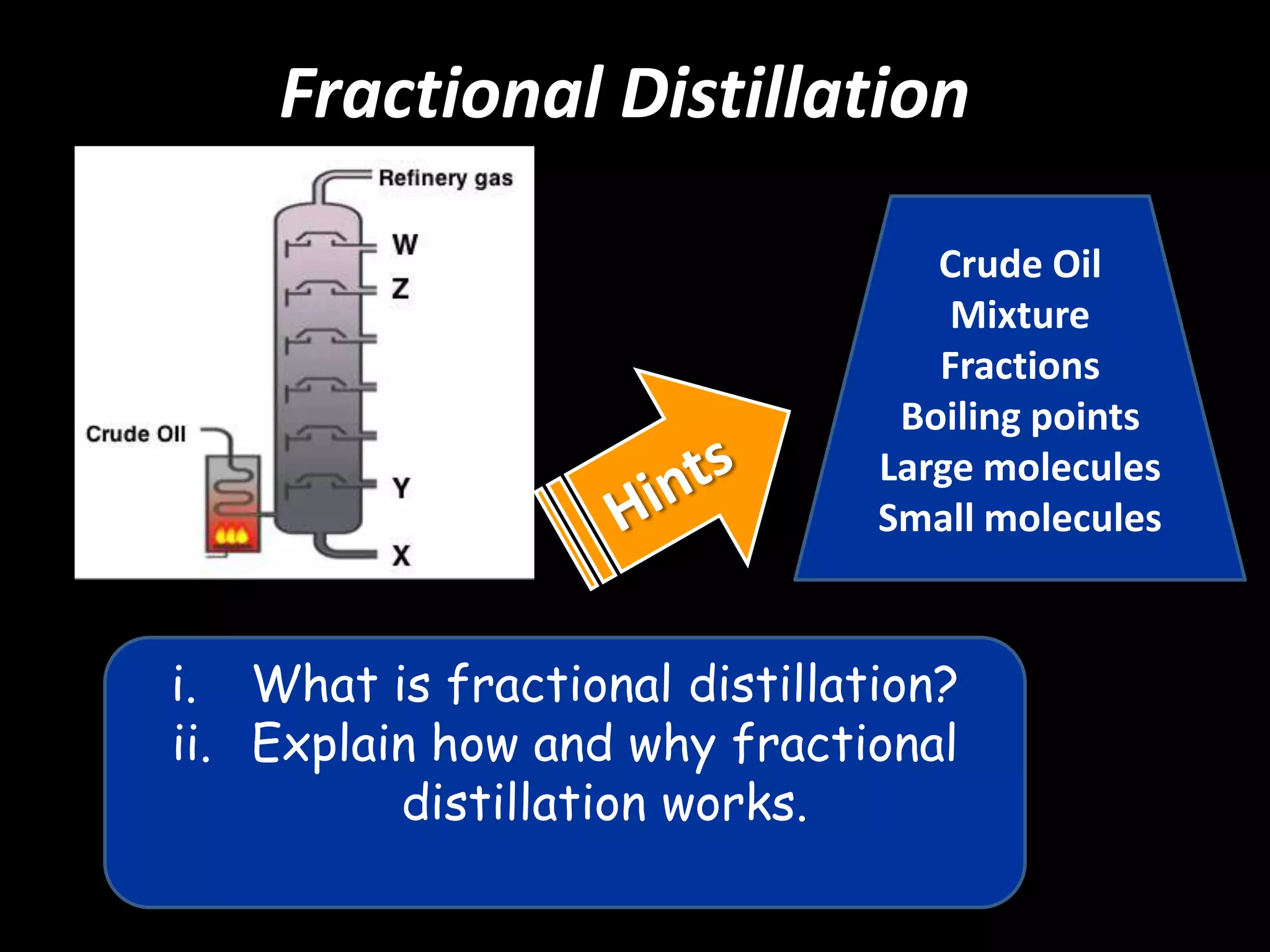
Fractional Distillation
i.
ii.

What is fractional
distillation?
Explain why crude oil
is separated by
fractional
distillation.

Use ideas about
 Size of molecules
 Forces between
molecules and how
these affect boiling
point.
May 2012 GCSE Q1 b)

http://www.ocr.org.uk/Images/135630-mark-scheme-unit-b641-02-unit-01-modules-c1-c2-c3-higher-tier-june.pdf
Fractional Distillation
Crude Oil
Mixture
Fractions
Boiling points
Large molecules
Small molecules

i. What is fractional distillation?
ii. Explain how and why fractional
distillation works.
More on properties of fractions
1. What can you say about the fractions that are
at the top of the column (in terms of its
boiling point – low or high?)

2. What can you say about bigger molecules
and its forces?
Properties of fractions
1. What can you say about the fractions that are
at the top of the column (in terms of its
boiling point – low or high?)
2. What can you say about bigger molecules
and its forces?
 Name the force between
them
 Intermolecular forces
 Strong attractive forces or
weak attractive forces?
 Easily separated or not?
 High boiling point  Low boiling point-
The Fractions In Crude Oil
Petrol contains the alkane with 8
carbons.
i. Can you guess its name?
ii. Draw a picture of the molecule.
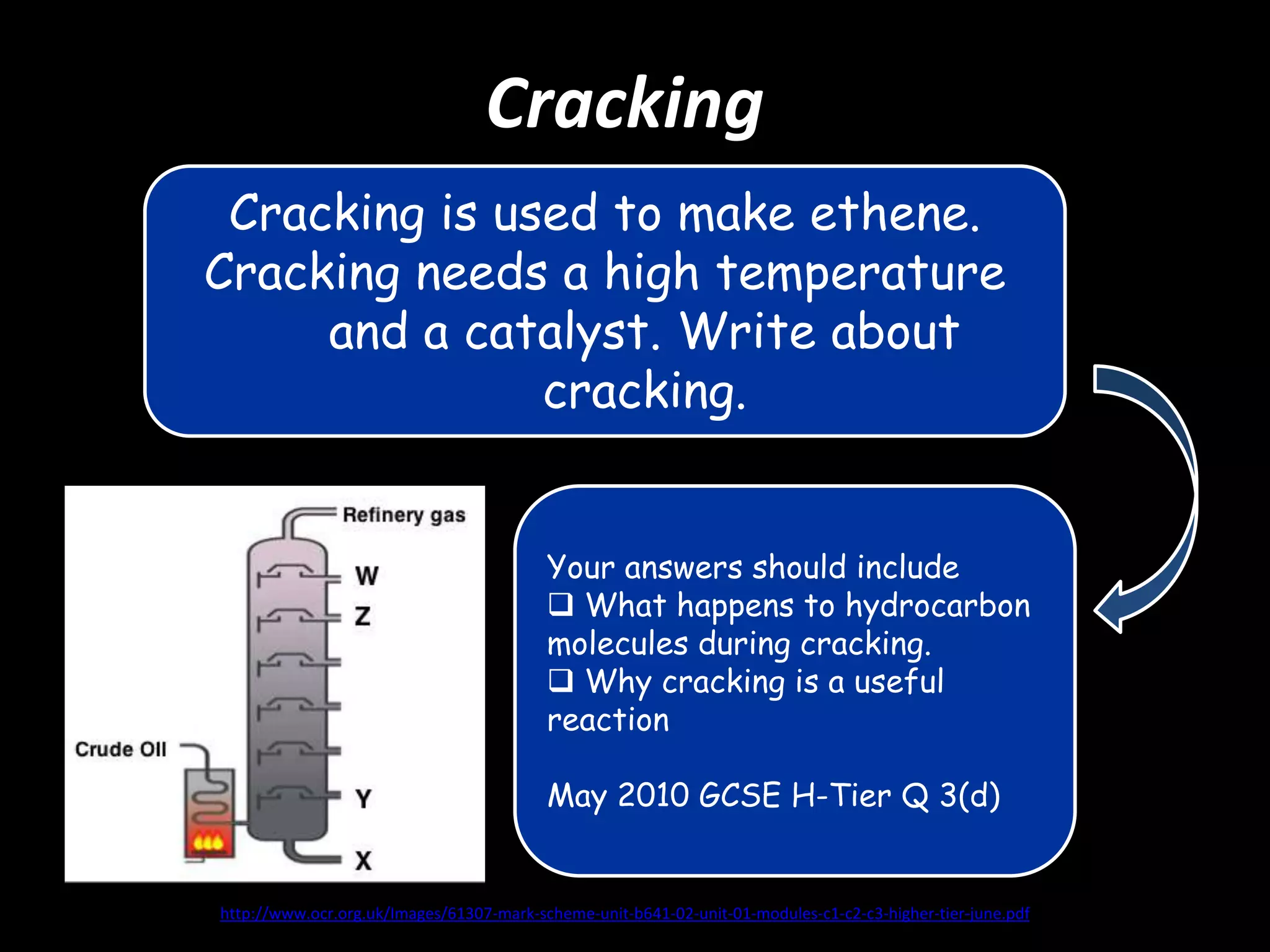
Cracking
Cracking is used to make ethene.
Cracking needs a high temperature
and a catalyst. Write about
cracking.
Your answers should include
 What happens to hydrocarbon
molecules during cracking.
 Why cracking is a useful
reaction
May 2010 GCSE H-Tier Q 3(d)

http://www.ocr.org.uk/Images/61307-mark-scheme-unit-b641-02-unit-01-modules-c1-c2-c3-higher-tier-june.pdf
Cracking Large Molecules
The large molecules from crude oil can be
broken down (or cracked) into smaller, more
useful molecules.
Comparing Fuels – Peer Assessment
Task
You are going to peer assess
your work titled: Comparing
Fuels, based on the following
success criteria/benchmark.
Why Is Cracking Important?
Fuels made from oil mixtures
containing large hydrocarbon
molecules are not efficient. They do
not flow easily and are difficult to
ignite. Crude oil often contains too
many large hydrocarbon molecules and
not enough small hydrocarbon
molecules to meet demand - this is
where cracking comes in.
Plenary
60 seconds challenge – Sum Up
Self Assessment
You have 7 minutes
Self assessment – record
what you’ve learnt, any
difficulties you have had and
set your personal targets.
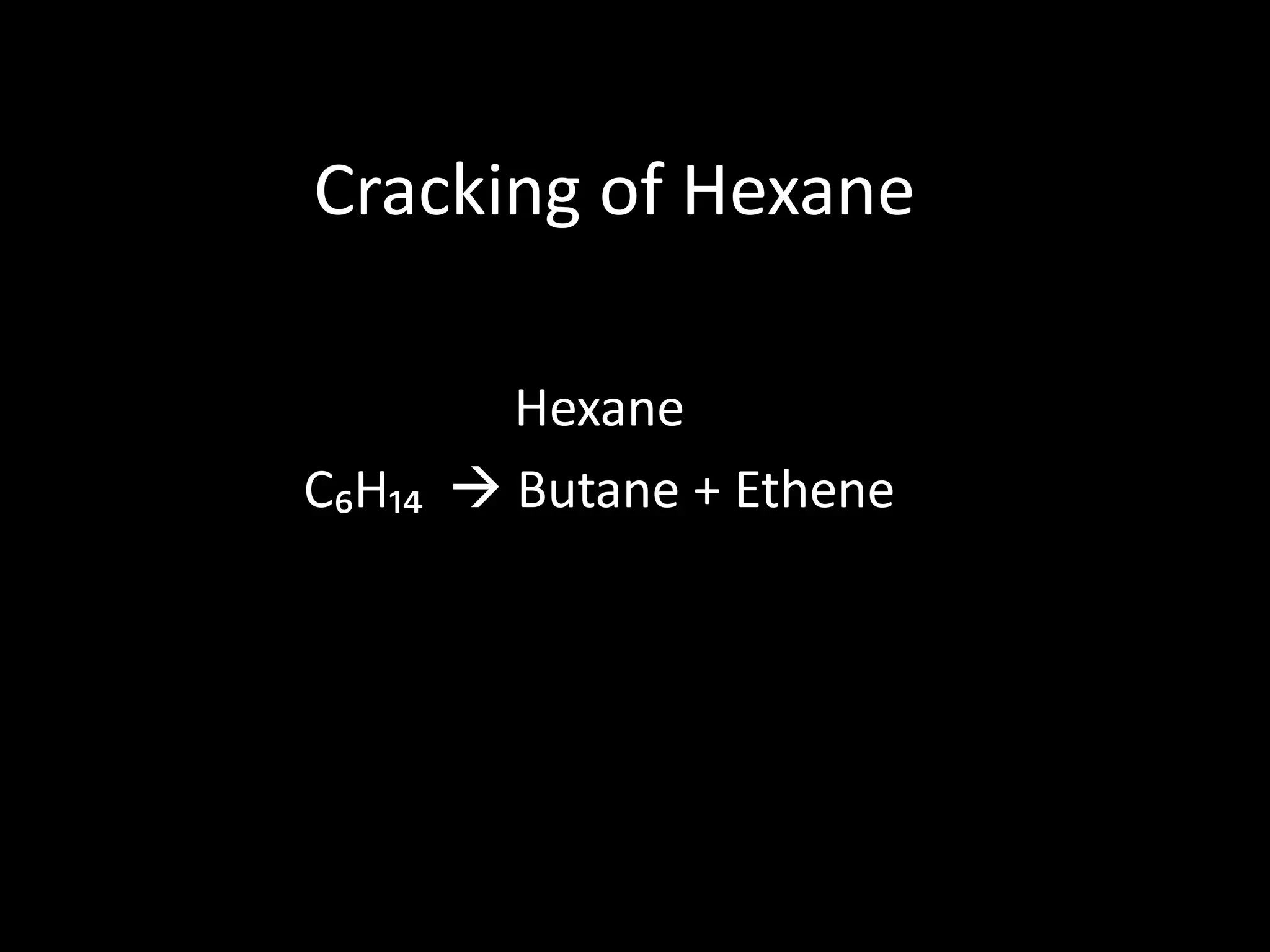
Cracking of Hexane
Hexane
C₆H₁₄  Butane + Ethene
Comparing Fuel Assessment Task
My Improvement target
5 minutes Task
Now your work has been
assessed, choose one or two
improvement targets using green
pen and the template provided.
Best Plenary tips

See tips shown in the link
http://www.teach-ict.com/teacher/plenary/plenaries.htm
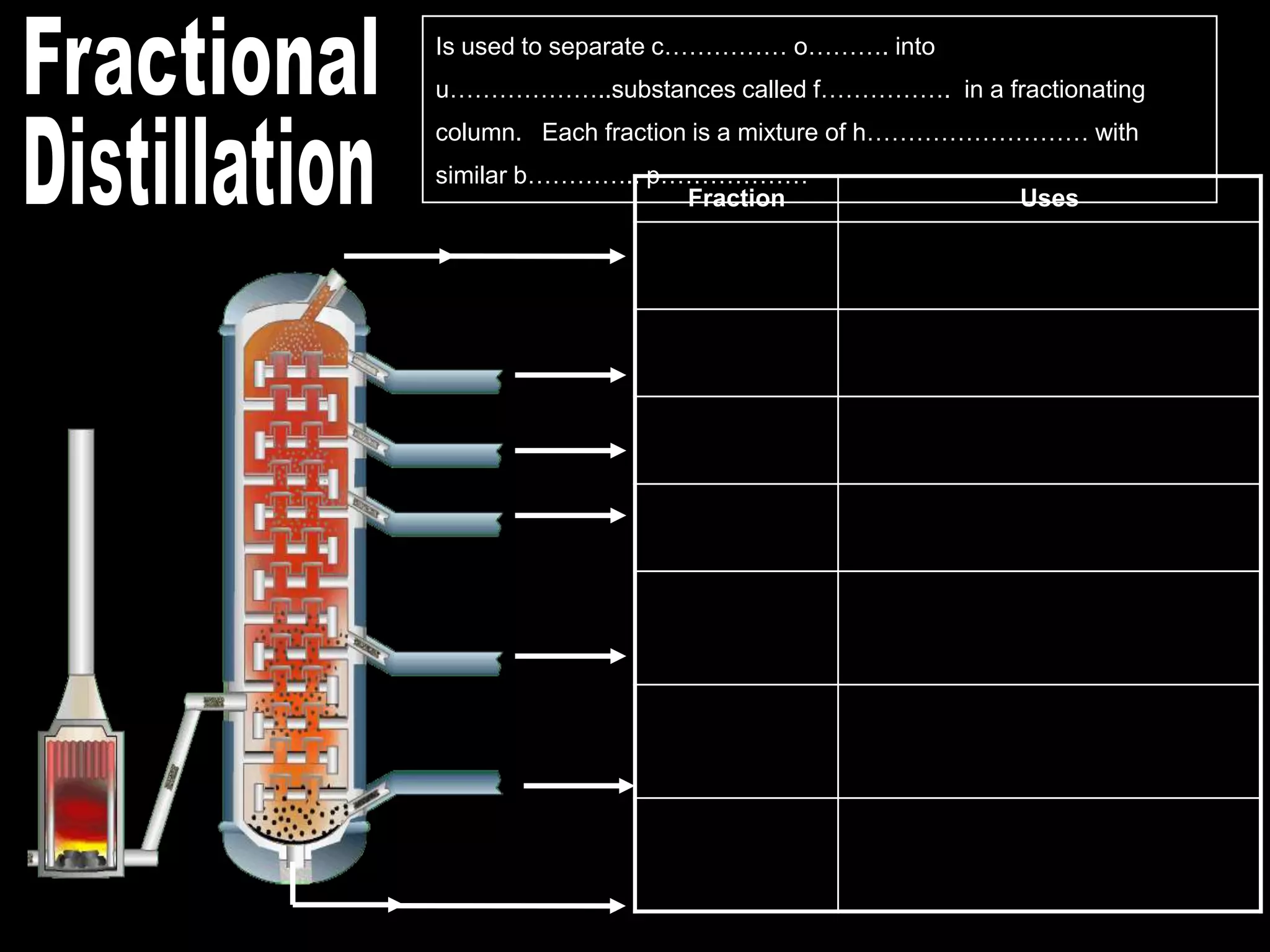
Is used to separate c…………… o………. into
u………………..substances called f……………. in a fractionating
column. Each fraction is a mixture of h……………………… with
similar b………….. p………………
Fraction

Uses
Starter Activity
Look at the following formula displayed
on your starter activity sheet.
Write down two facts about each
molecule from its formula (3 marks)
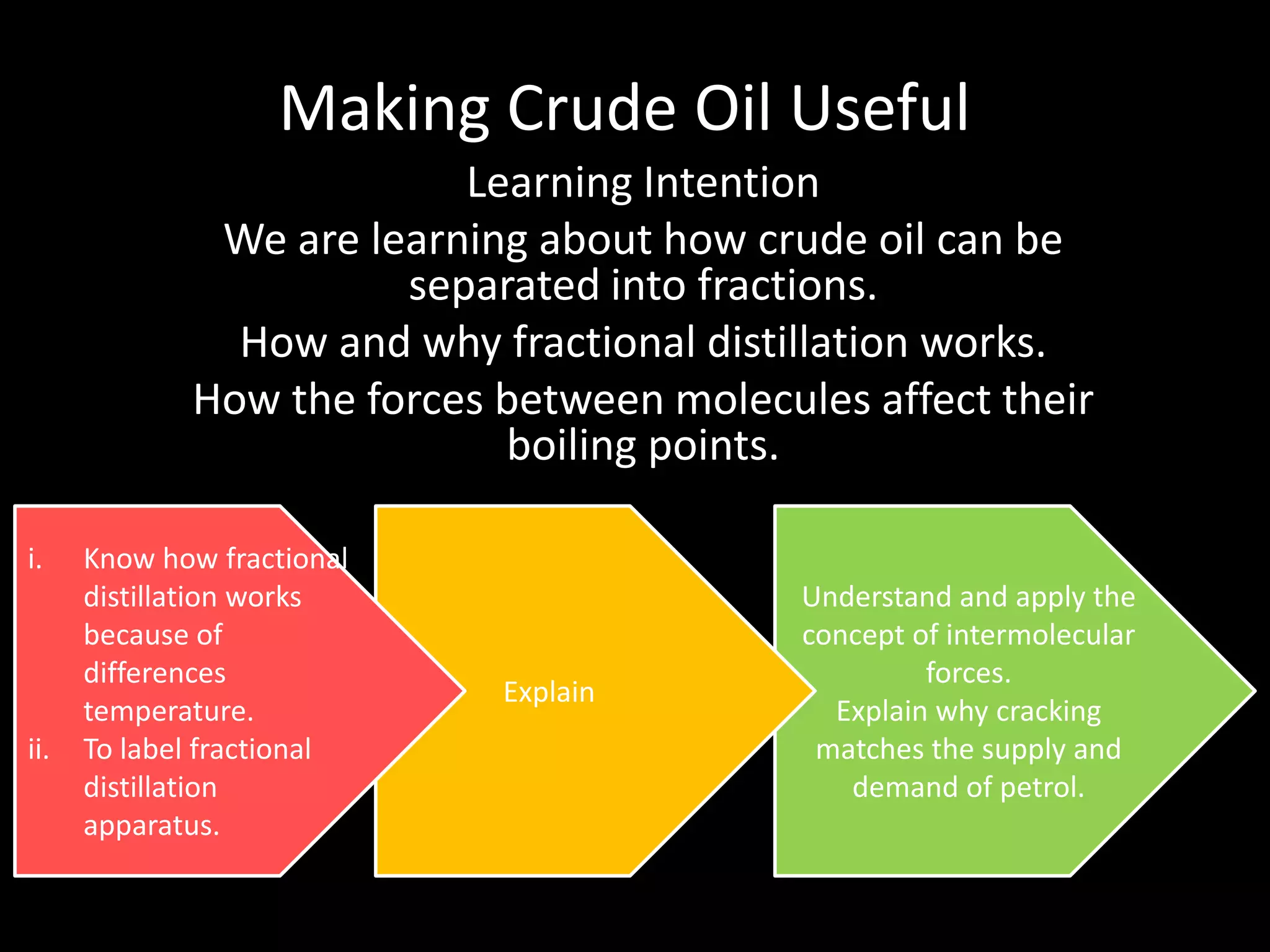
Making Crude Oil Useful
Learning Intention
We are learning about how crude oil can be
separated into fractions.
How and why fractional distillation works.
How the forces between molecules affect their
boiling points.
i.

ii.

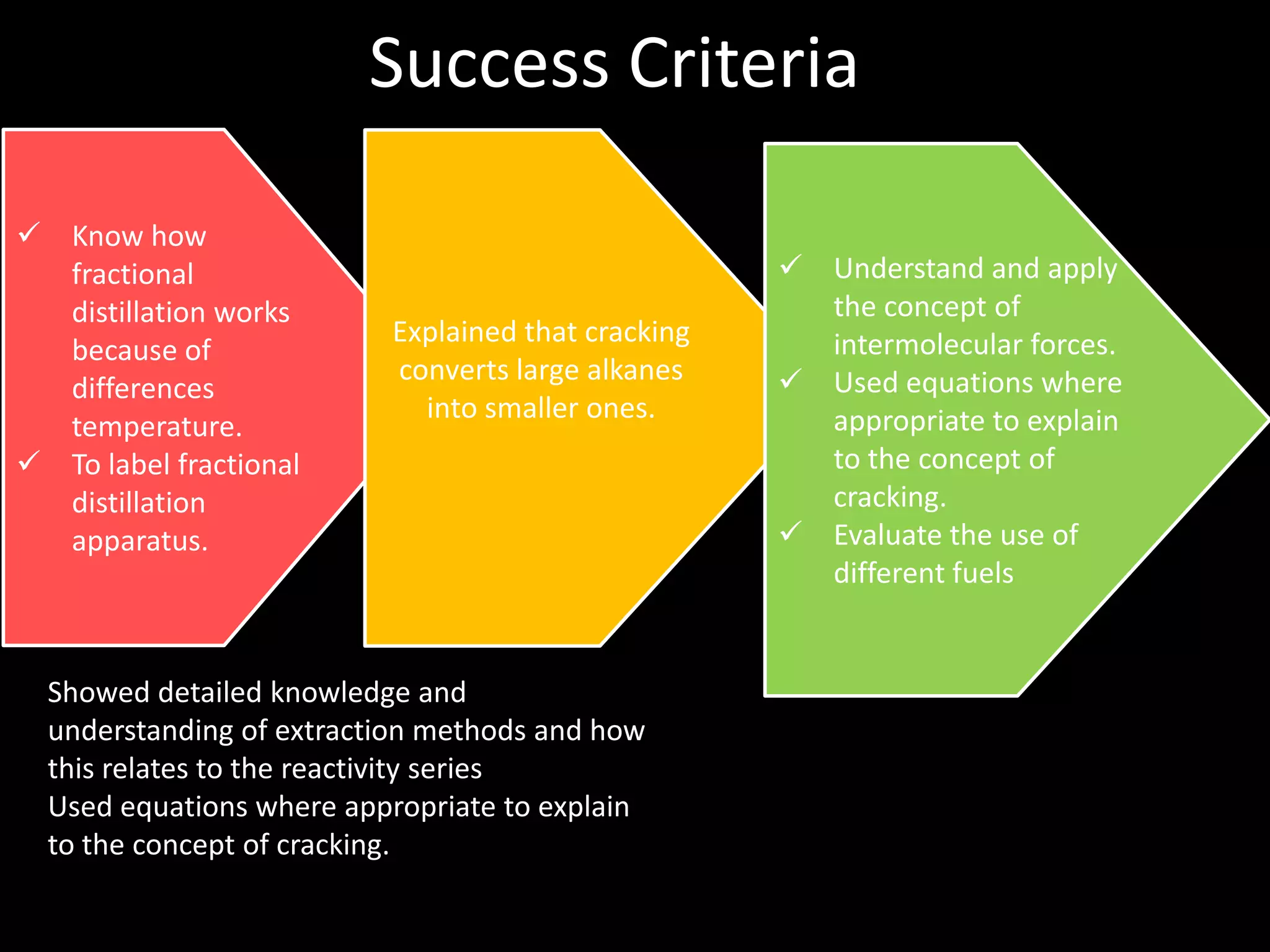
Know how fractional
distillation works
because of
differences
temperature.
To label fractional
distillation
apparatus.

Explain

Understand and apply the
concept of intermolecular
forces.
Explain why cracking
matches the supply and
demand of petrol.
Success Criteria
 Know how
fractional
distillation works
because of
differences
temperature.
 To label fractional
distillation
apparatus.

Explained that cracking
converts large alkanes
into smaller ones.

Showed detailed knowledge and
understanding of extraction methods and how
this relates to the reactivity series
Used equations where appropriate to explain
to the concept of cracking.

 Understand and apply
the concept of
intermolecular forces.
 Used equations where
appropriate to explain
to the concept of
cracking.
 Evaluate the use of
different fuels
Making Crude Oil Useful
Learning Intention
We are learning about how
Crude oil are separated into fractions and why.
How and why fractional distillation works.
To interpret and evaluate data to choose the best
fuel for a particular purpose.

Revision Lesson: Making crude oil useful (Fractional Distillation and Cracking) Part 1

  • 1.
    Making Crude OilUseful Learning Intention We are learning about how Crude oil is separated into fractions and why. How and why fractional distillation works. To use data to evaluate the use of different fuels Keywords & Phrases Starter Activity Look at the following formula displayed on your starter activity sheet. Write down two facts about each molecule from its formula (3 marks) Fractions Distillation Fuels Crude Oil Evaluate
  • 2.
    Starter Activity Look atthe following formula displayed on your starter activity sheet. Write down two facts about each molecule from its formula (3 marks) Temperature Saturated Unsaturated Family name What Group? General Formula Bromine water More reactive Density Intermolecular-force
  • 3.
    Why is crudeoil separated into Fractions? Watch video clip: http://www.youtube.com/watch?v=26AN1LfbUPc
  • 4.
    Fractional Distillation i. ii. What isfractional distillation? Explain why crude oil is separated by fractional distillation. Use ideas about  Size of molecules  Forces between molecules and how these affect boiling point. May 2012 GCSE Q1 b) http://www.ocr.org.uk/Images/135630-mark-scheme-unit-b641-02-unit-01-modules-c1-c2-c3-higher-tier-june.pdf
  • 5.
    Fractional Distillation Crude Oil Mixture Fractions Boilingpoints Large molecules Small molecules i. What is fractional distillation? ii. Explain how and why fractional distillation works.
  • 6.
    More on propertiesof fractions 1. What can you say about the fractions that are at the top of the column (in terms of its boiling point – low or high?) 2. What can you say about bigger molecules and its forces?
  • 7.
    Properties of fractions 1.What can you say about the fractions that are at the top of the column (in terms of its boiling point – low or high?) 2. What can you say about bigger molecules and its forces?  Name the force between them  Intermolecular forces  Strong attractive forces or weak attractive forces?  Easily separated or not?  High boiling point  Low boiling point-
  • 8.
    The Fractions InCrude Oil Petrol contains the alkane with 8 carbons. i. Can you guess its name? ii. Draw a picture of the molecule.
  • 9.
    Cracking Cracking is usedto make ethene. Cracking needs a high temperature and a catalyst. Write about cracking. Your answers should include  What happens to hydrocarbon molecules during cracking.  Why cracking is a useful reaction May 2010 GCSE H-Tier Q 3(d) http://www.ocr.org.uk/Images/61307-mark-scheme-unit-b641-02-unit-01-modules-c1-c2-c3-higher-tier-june.pdf
  • 10.
    Cracking Large Molecules Thelarge molecules from crude oil can be broken down (or cracked) into smaller, more useful molecules.
  • 11.
    Comparing Fuels –Peer Assessment Task You are going to peer assess your work titled: Comparing Fuels, based on the following success criteria/benchmark.
  • 12.
    Why Is CrackingImportant?
  • 13.
    Why Is CrackingImportant? Fuels made from oil mixtures containing large hydrocarbon molecules are not efficient. They do not flow easily and are difficult to ignite. Crude oil often contains too many large hydrocarbon molecules and not enough small hydrocarbon molecules to meet demand - this is where cracking comes in.
  • 14.
  • 15.
    Self Assessment You have7 minutes Self assessment – record what you’ve learnt, any difficulties you have had and set your personal targets.
  • 16.
  • 17.
    Comparing Fuel AssessmentTask My Improvement target 5 minutes Task Now your work has been assessed, choose one or two improvement targets using green pen and the template provided.
  • 18.
    Best Plenary tips Seetips shown in the link http://www.teach-ict.com/teacher/plenary/plenaries.htm
  • 19.
    Is used toseparate c…………… o………. into u………………..substances called f……………. in a fractionating column. Each fraction is a mixture of h……………………… with similar b………….. p……………… Fraction Uses
  • 20.
    Starter Activity Look atthe following formula displayed on your starter activity sheet. Write down two facts about each molecule from its formula (3 marks)
  • 23.
    Making Crude OilUseful Learning Intention We are learning about how crude oil can be separated into fractions. How and why fractional distillation works. How the forces between molecules affect their boiling points. i. ii. Know how fractional distillation works because of differences temperature. To label fractional distillation apparatus. Explain Understand and apply the concept of intermolecular forces. Explain why cracking matches the supply and demand of petrol.
  • 24.
    Success Criteria  Knowhow fractional distillation works because of differences temperature.  To label fractional distillation apparatus. Explained that cracking converts large alkanes into smaller ones. Showed detailed knowledge and understanding of extraction methods and how this relates to the reactivity series Used equations where appropriate to explain to the concept of cracking.  Understand and apply the concept of intermolecular forces.  Used equations where appropriate to explain to the concept of cracking.  Evaluate the use of different fuels
  • 25.
    Making Crude OilUseful Learning Intention We are learning about how Crude oil are separated into fractions and why. How and why fractional distillation works. To interpret and evaluate data to choose the best fuel for a particular purpose.