Monnappa KA – Info Security Investigator
The Content, Demonstration, Source Code and Programs 
presented here is "AS IS" without any warranty or conditions 
of any kind. Also the views/ideas/knowledge expressed here are 
solely of the mine and nothing to do with the company or the 
organization in which I am currently working. 
However in no circumstances neither I or SecurityXploded is 
responsible for any damage or loss caused due to use or misuse 
of the information presented here
Monnappa KA 
 Member of SecurityXploded 
 Info Security Investigator @ Cisco 
 Focus on Threat Intelligence 
 Reverse Engineering, Malware Analysis, Memory Forensics 
 Email: monnappa22@gmail.com 
 Twitter: @monnappa22 
 Linkedin: http://in.linkedin.com/pub/monnappa-ka-grem-ceh/42/45a/1b8
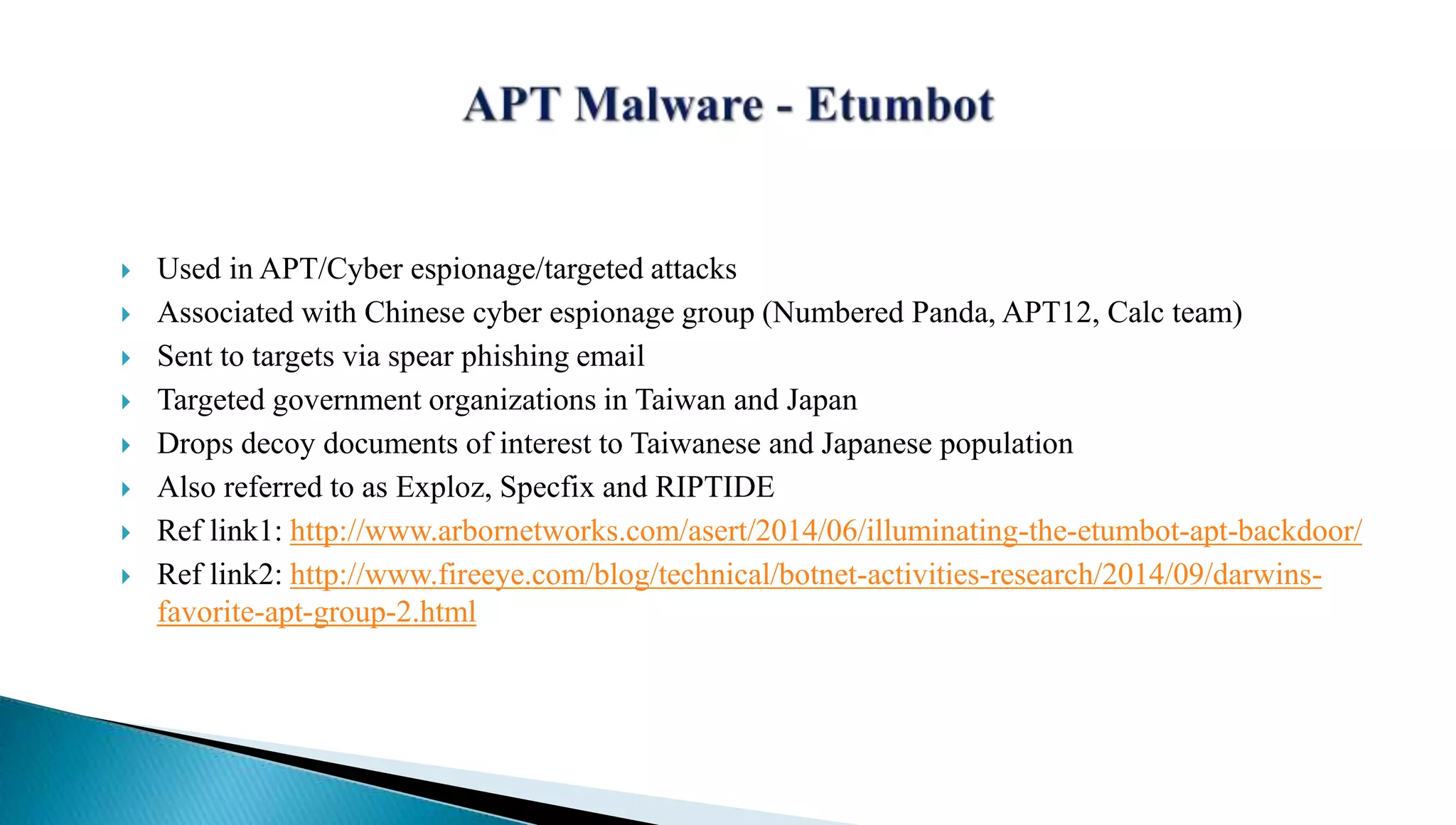
 APT Malware - Etumbot 
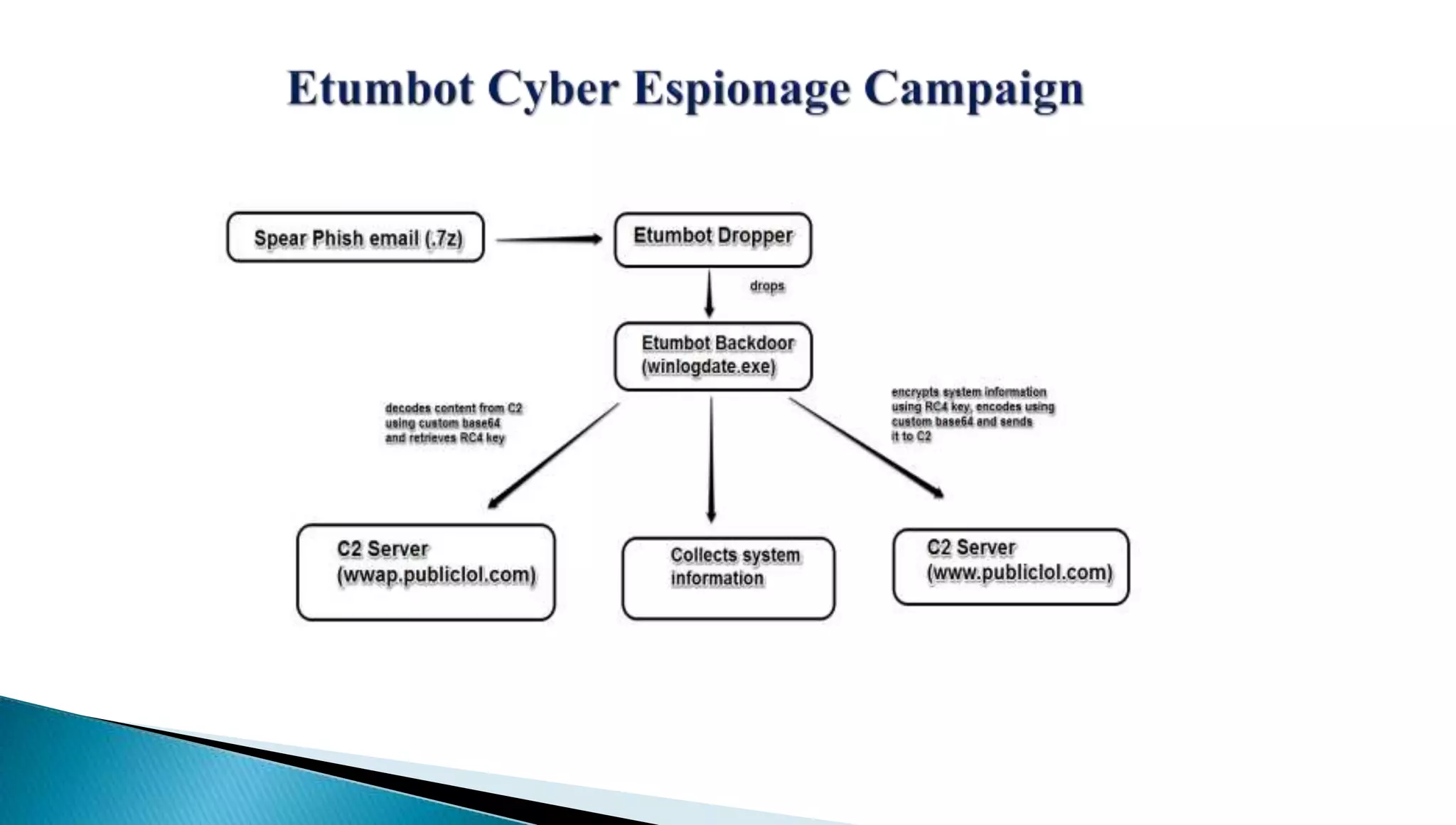
 Etumbot Cyber Espionage Campaign 
 Demo 1 – Sandbox Analysis of Etumbot dropper 
 Demo 2 – Reverse Engineering the Communications of Etumbot Backdoor 
 Demo 3 – Decrypting the Communications of Etumbot Backdoor 
 References
 Used in APT/Cyber espionage/targeted attacks 
 Associated with Chinese cyber espionage group (Numbered Panda, APT12, Calc team) 
 Sent to targets via spear phishing email 
 Targeted government organizations in Taiwan and Japan 
 Drops decoy documents of interest to Taiwanese and Japanese population 
 Also referred to as Exploz, Specfix and RIPTIDE 
 Ref link1: http://www.arbornetworks.com/asert/2014/06/illuminating-the-etumbot-apt-backdoor/ 
 Ref link2: http://www.fireeye.com/blog/technical/botnet-activities-research/2014/09/darwins-favorite- 
apt-group-2.html
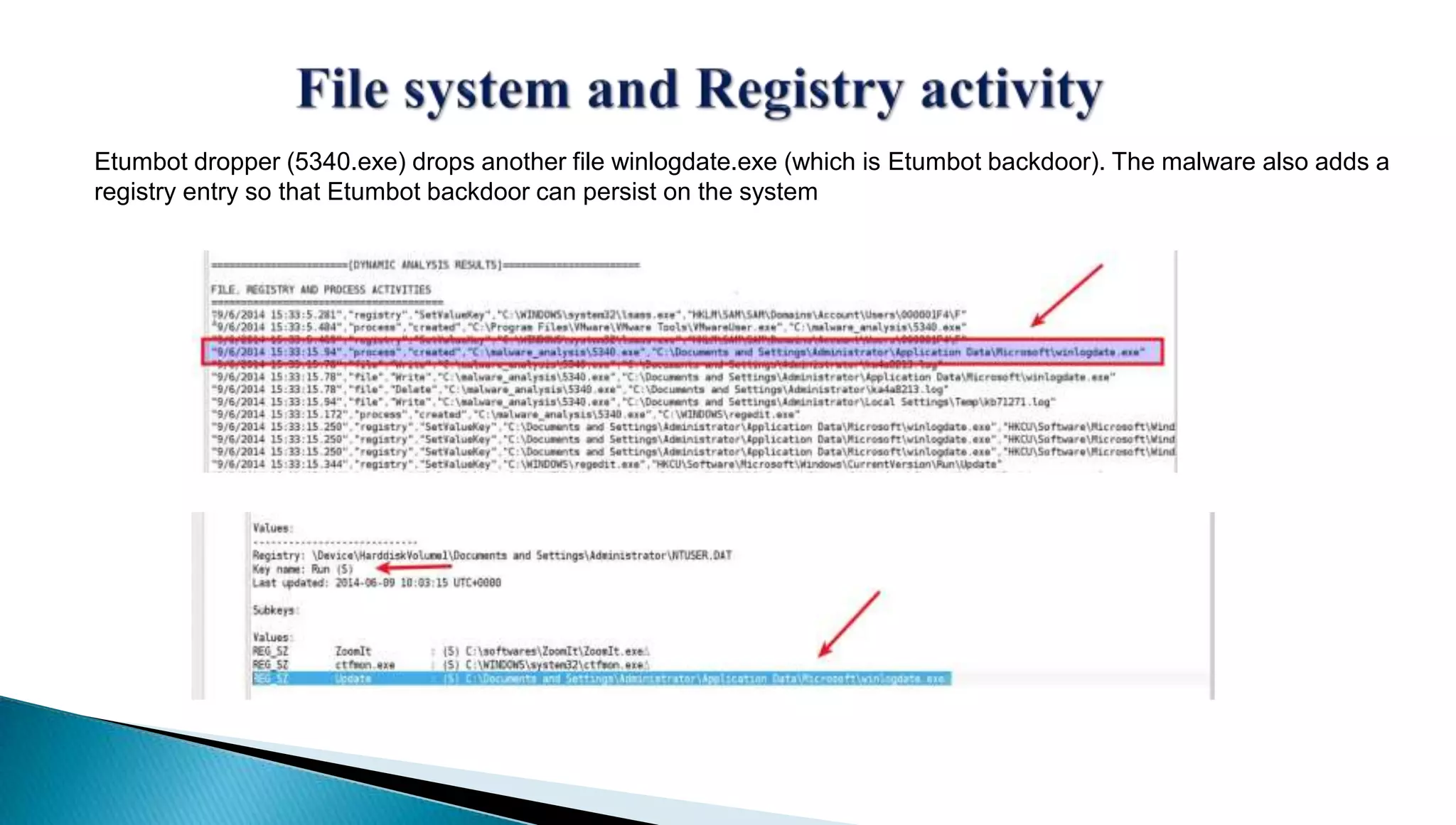
Etumbot dropper (5340.exe) drops another file winlogdate.exe (which is Etumbot backdoor). The malware also adds a 
registry entry so that Etumbot backdoor can persist on the system
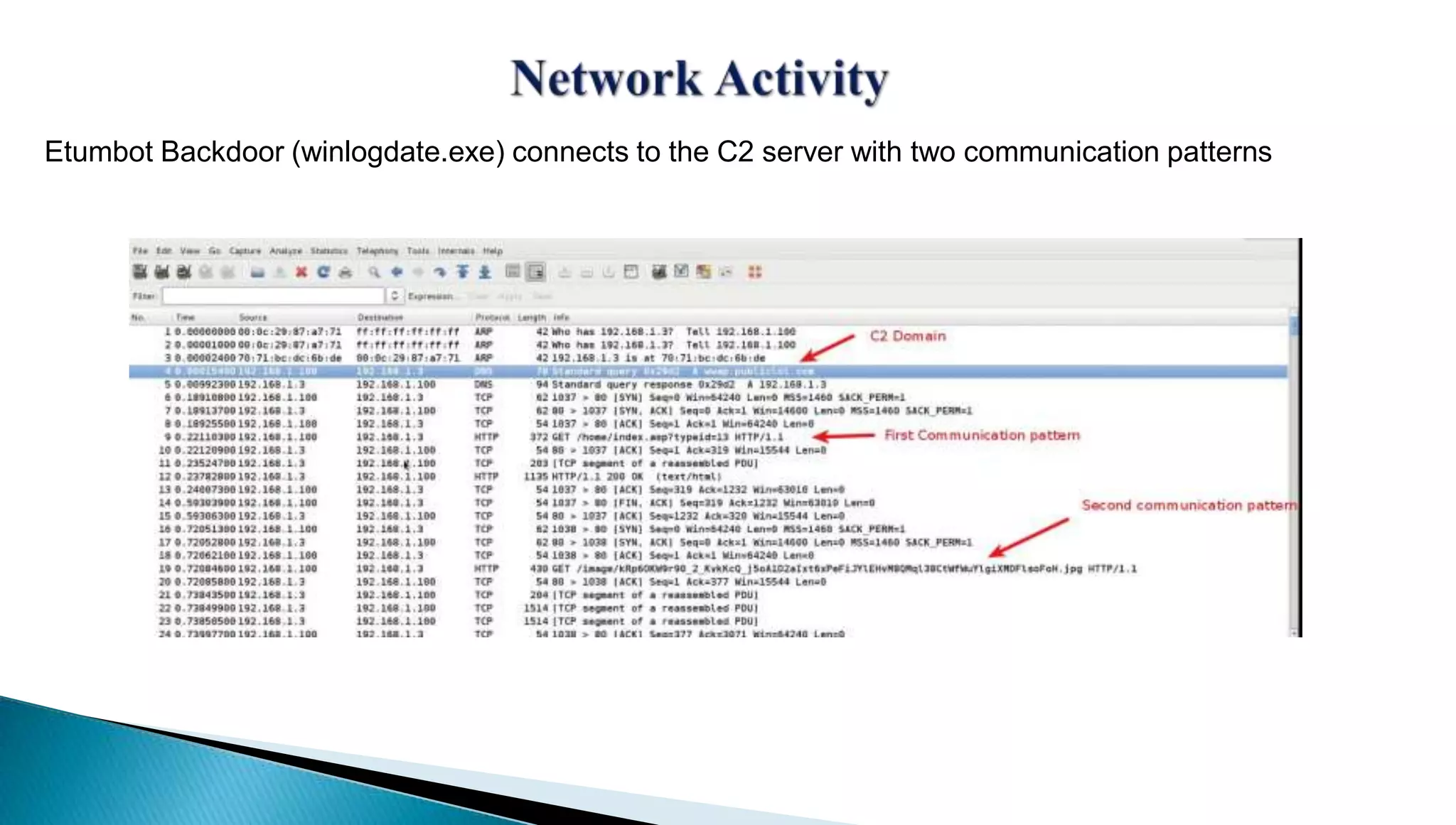
Etumbot Backdoor (winlogdate.exe) connects to the C2 server with two communication patterns
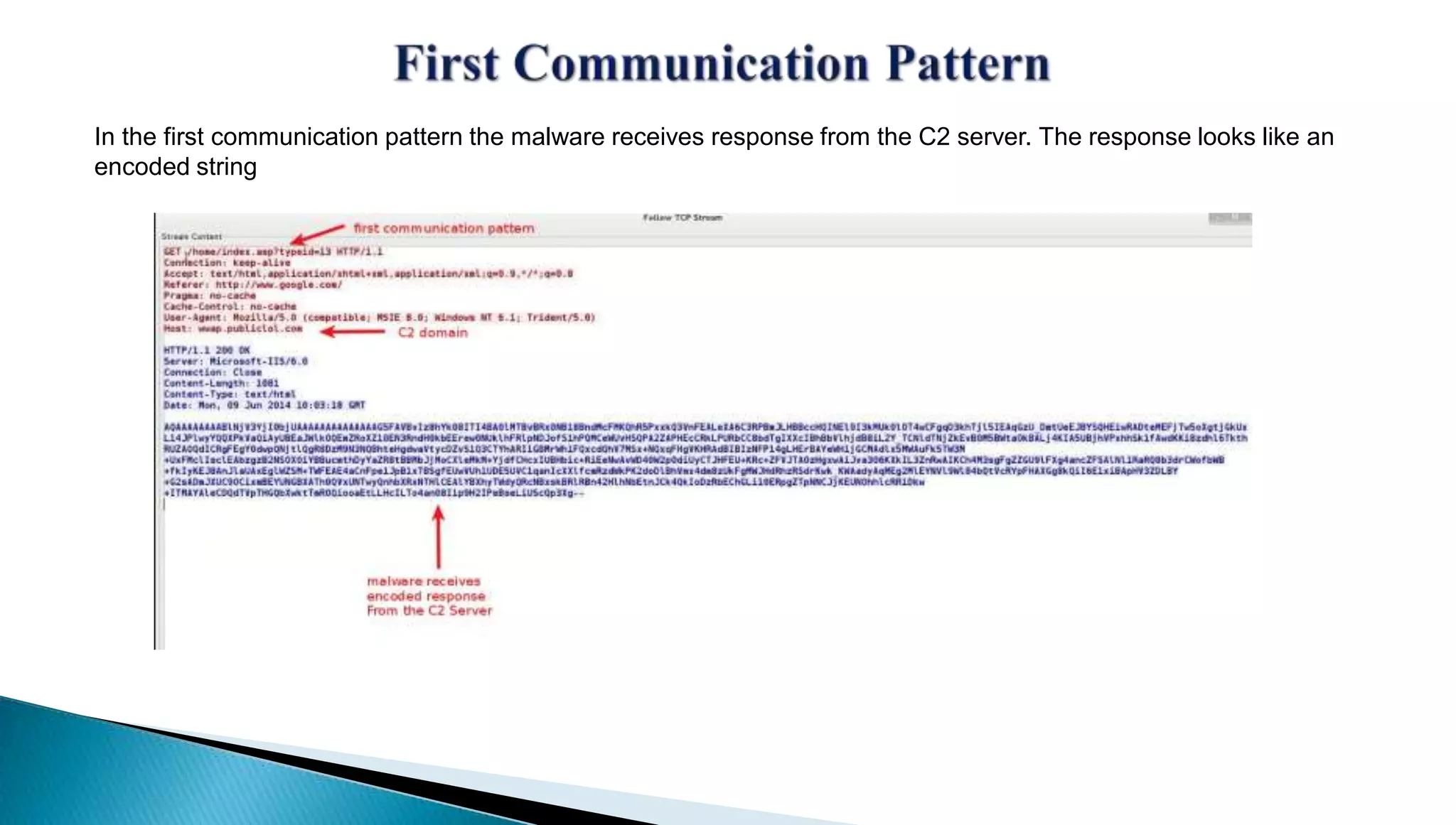
In the first communication pattern the malware receives response from the C2 server. The response looks like an 
encoded string
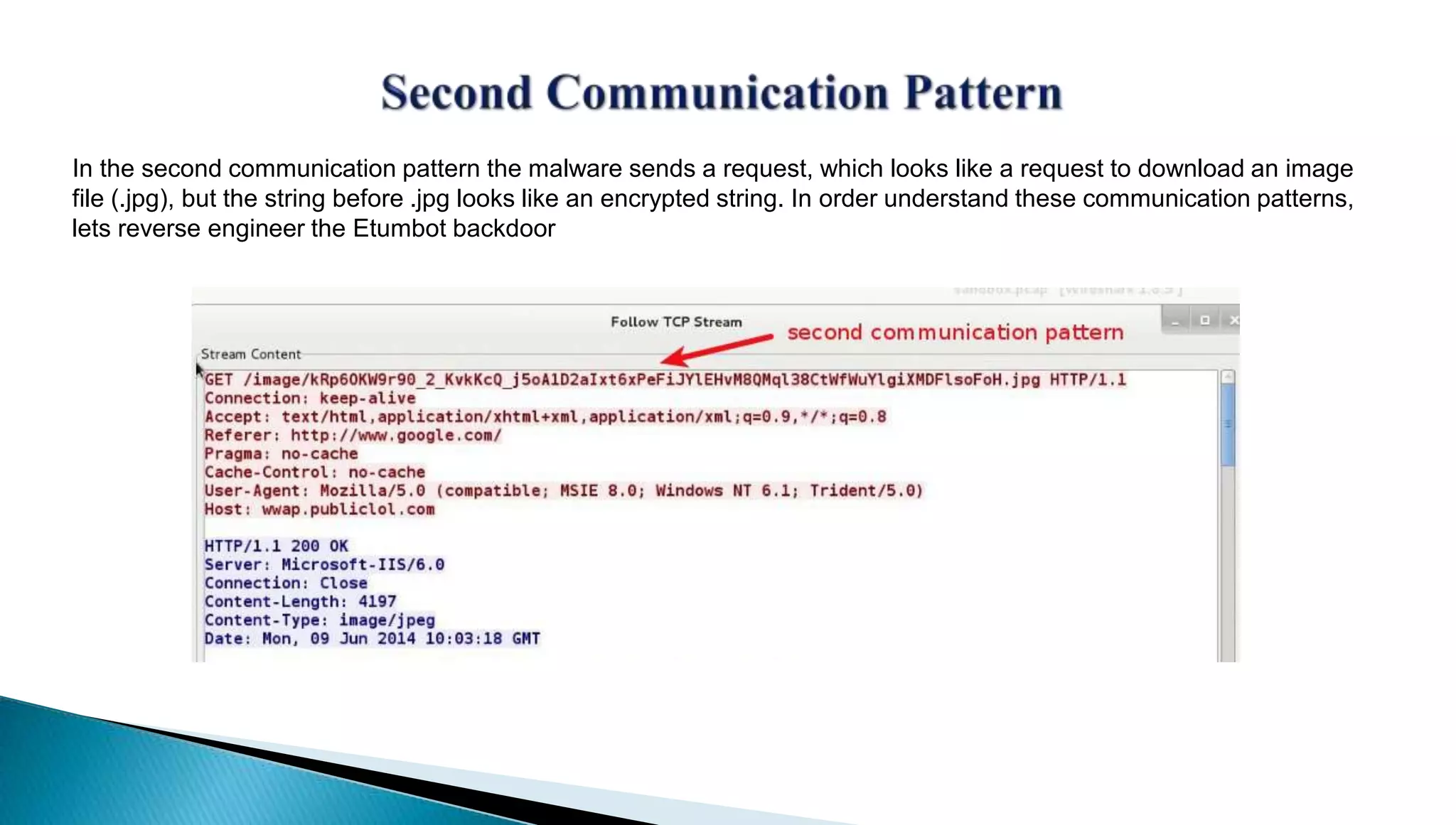
In the second communication pattern the malware sends a request, which looks like a request to download an image 
file (.jpg), but the string before .jpg looks like an encrypted string. In order understand these communication patterns, 
lets reverse engineer the Etumbot backdoor
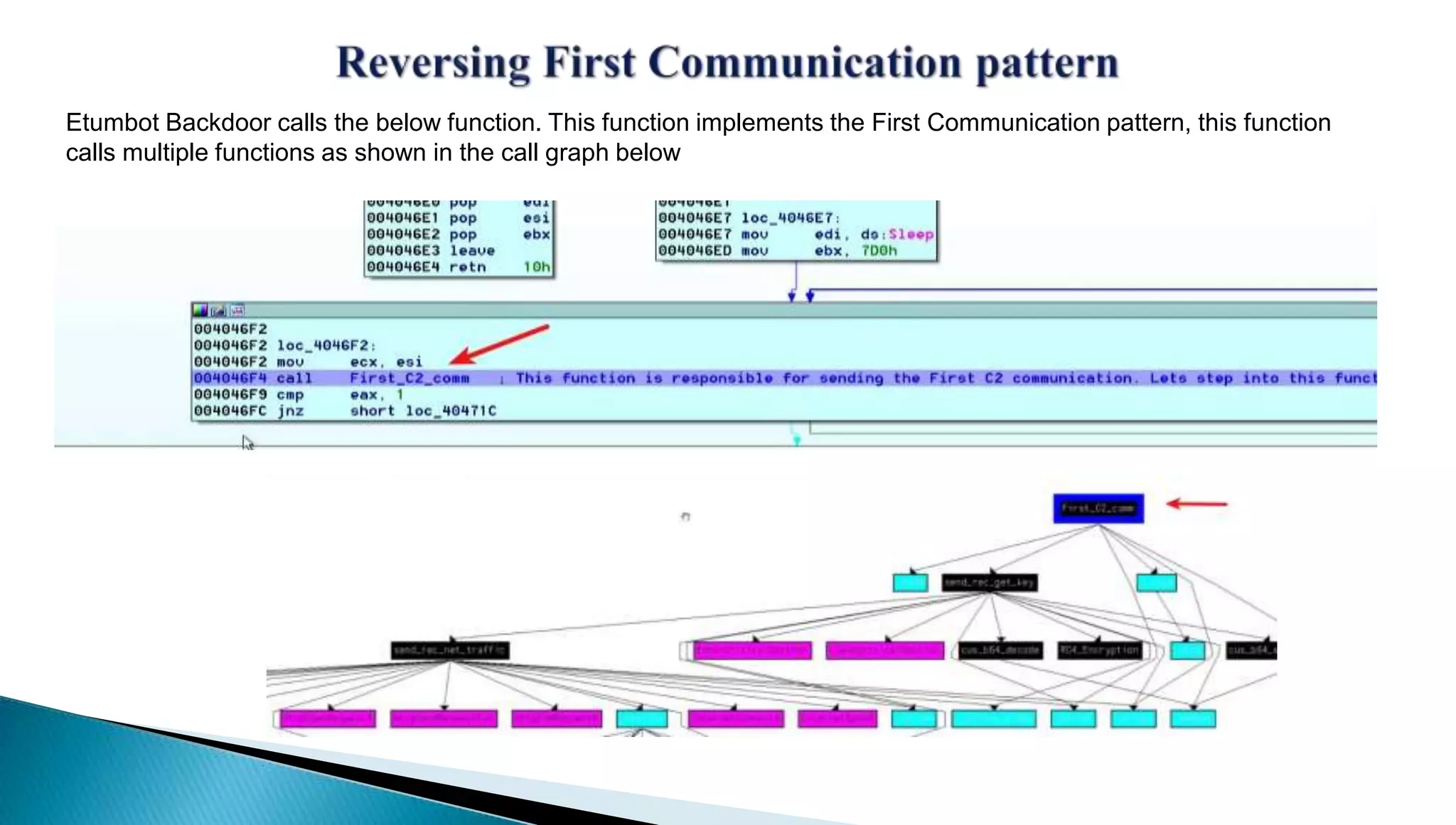
Etumbot Backdoor calls the below function. This function implements the First Communication pattern, this function 
calls multiple functions as shown in the call graph below
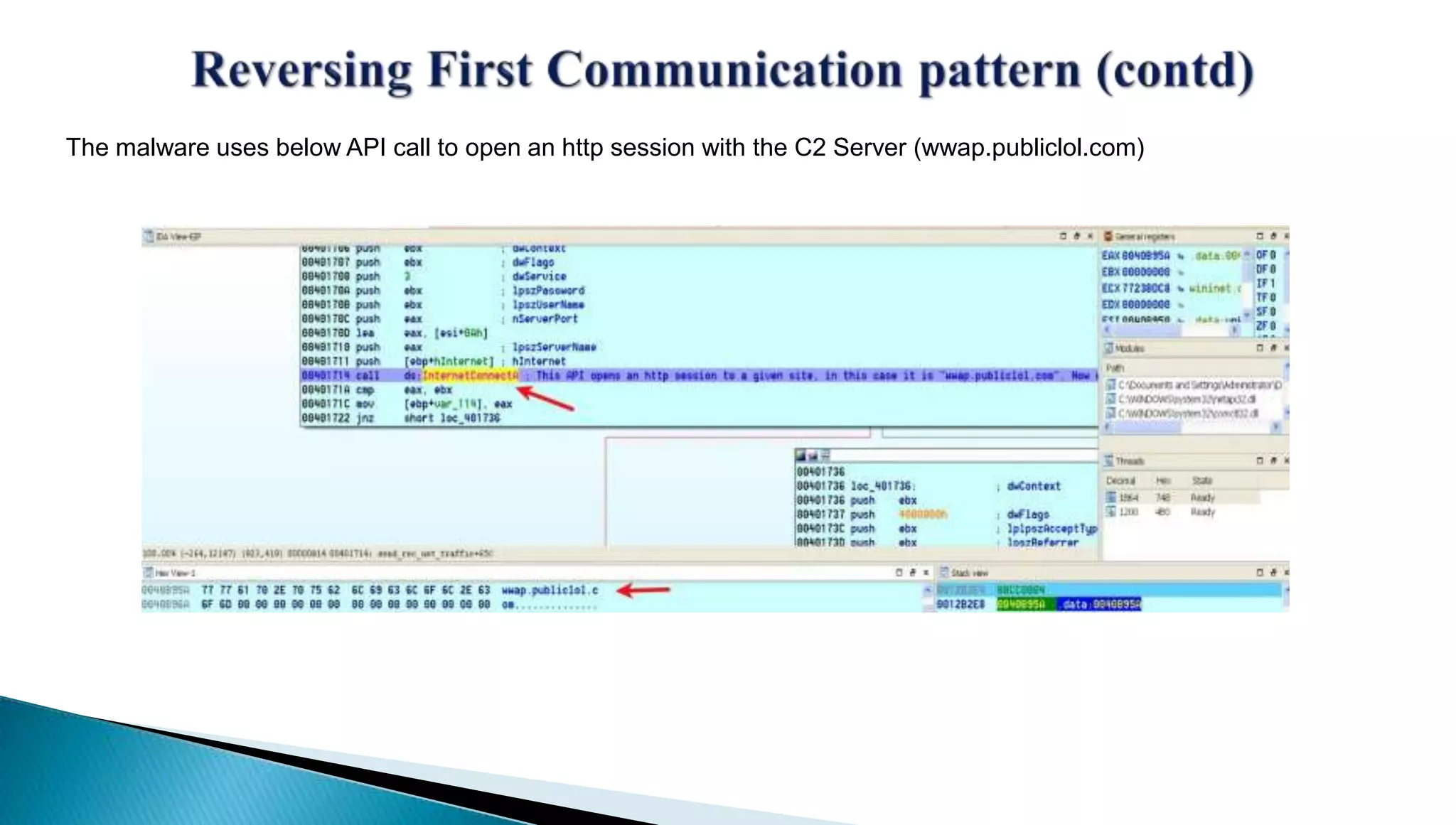
The malware uses below API call to open an http session with the C2 Server (wwap.publiclol.com)
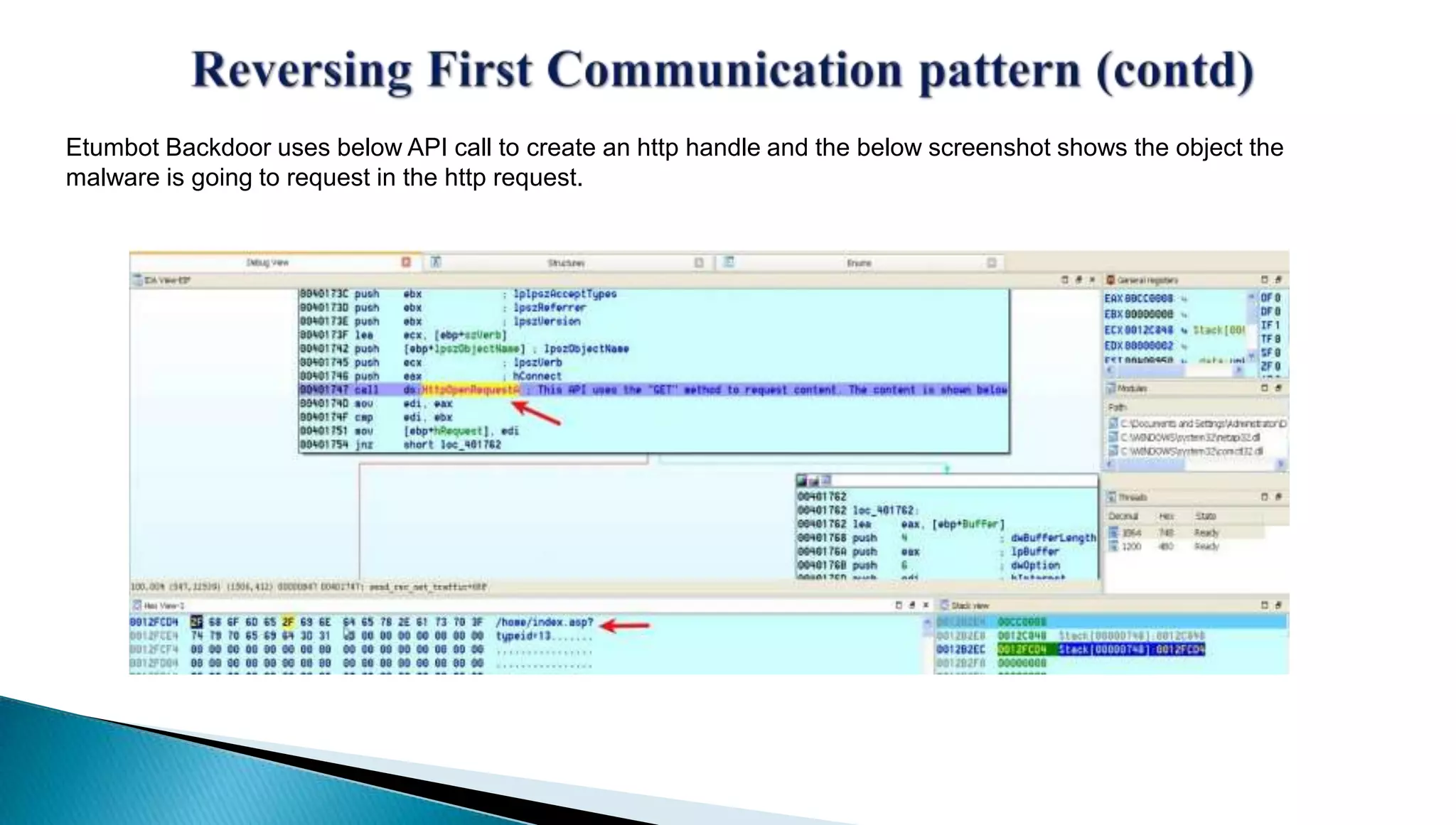
Etumbot Backdoor uses below API call to create an http handle and the below screenshot shows the object the 
malware is going to request in the http request.
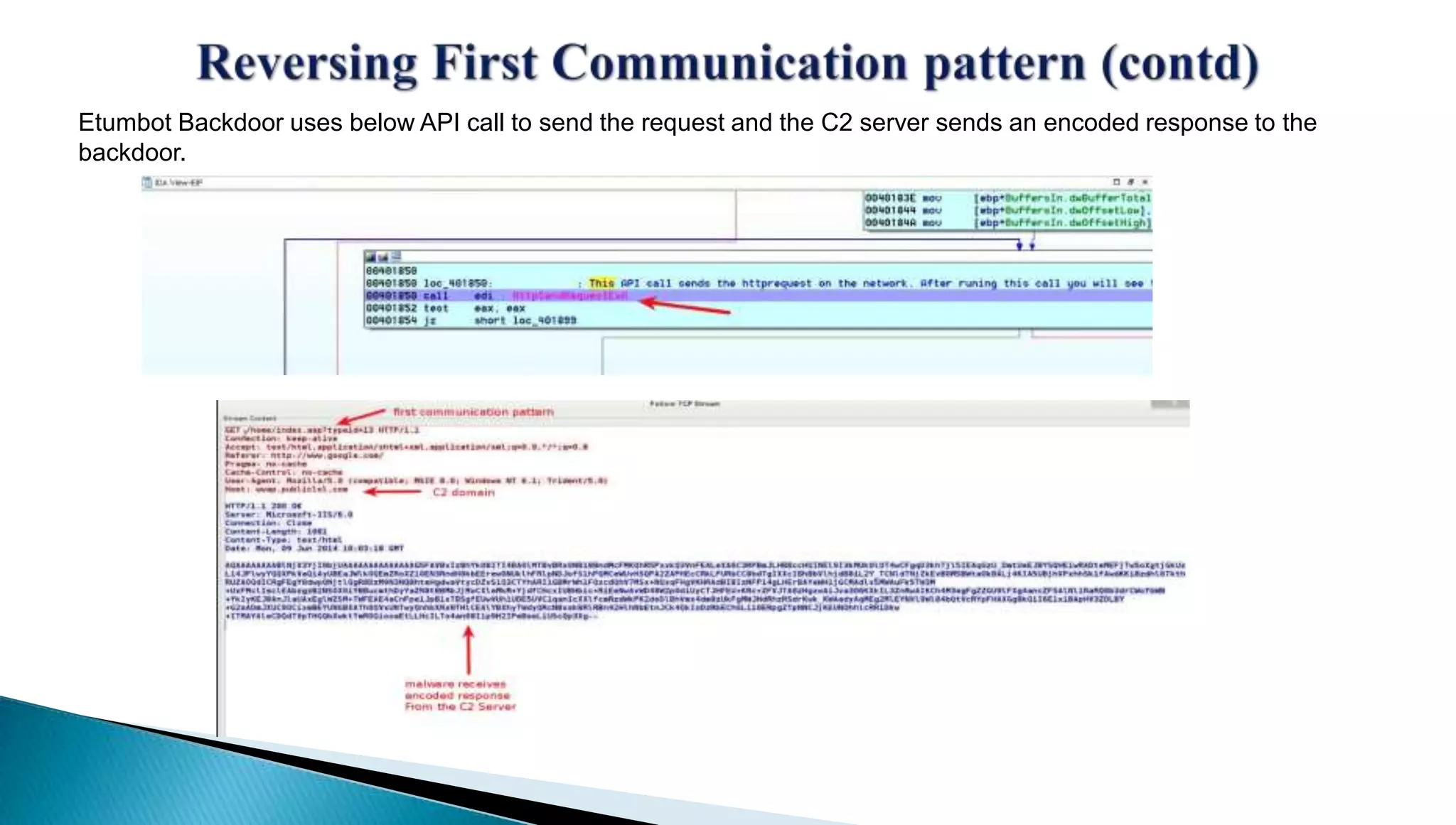
Etumbot Backdoor uses below API call to send the request and the C2 server sends an encoded response to the 
backdoor.
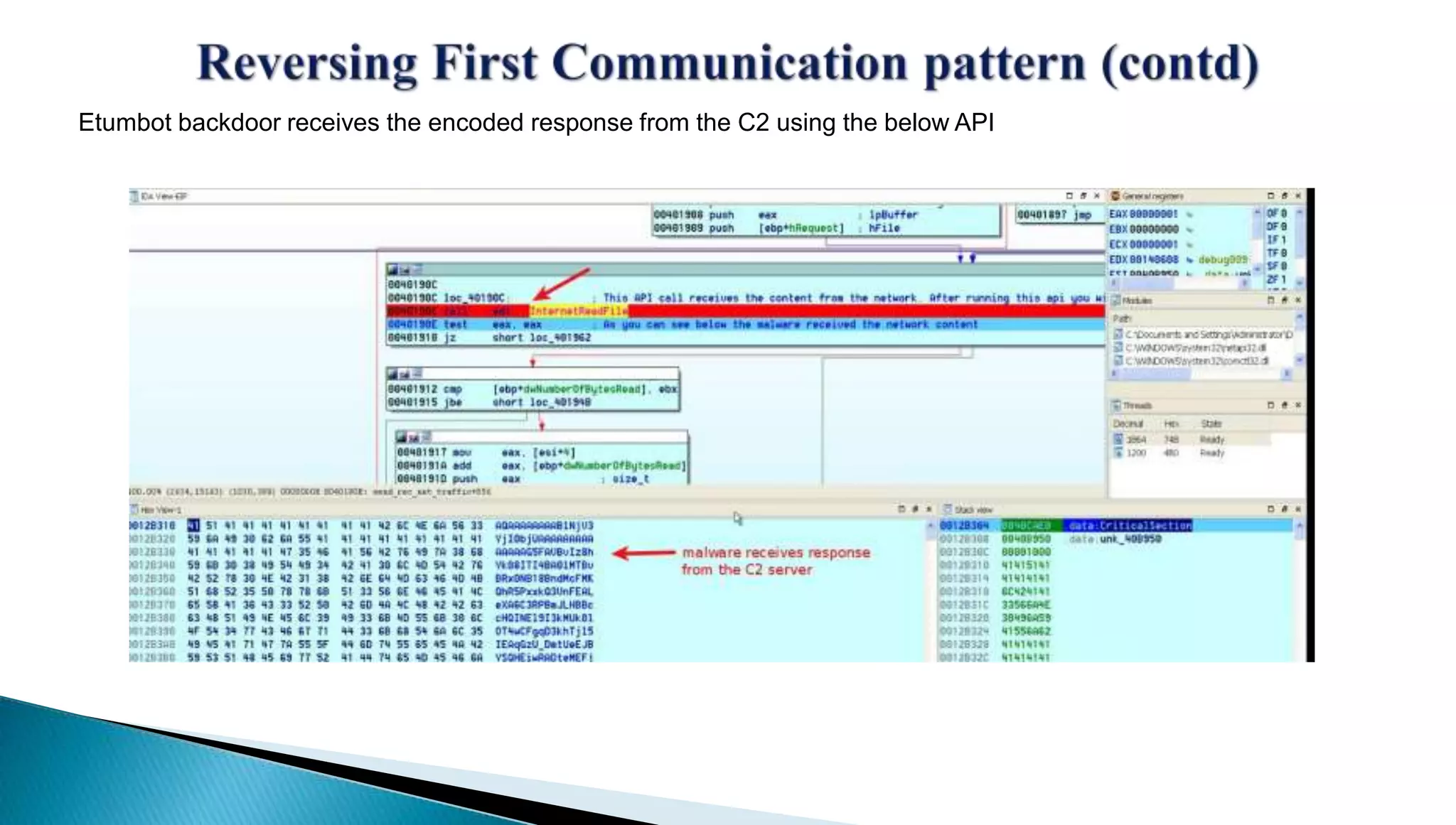
Etumbot backdoor receives the encoded response from the C2 using the below API
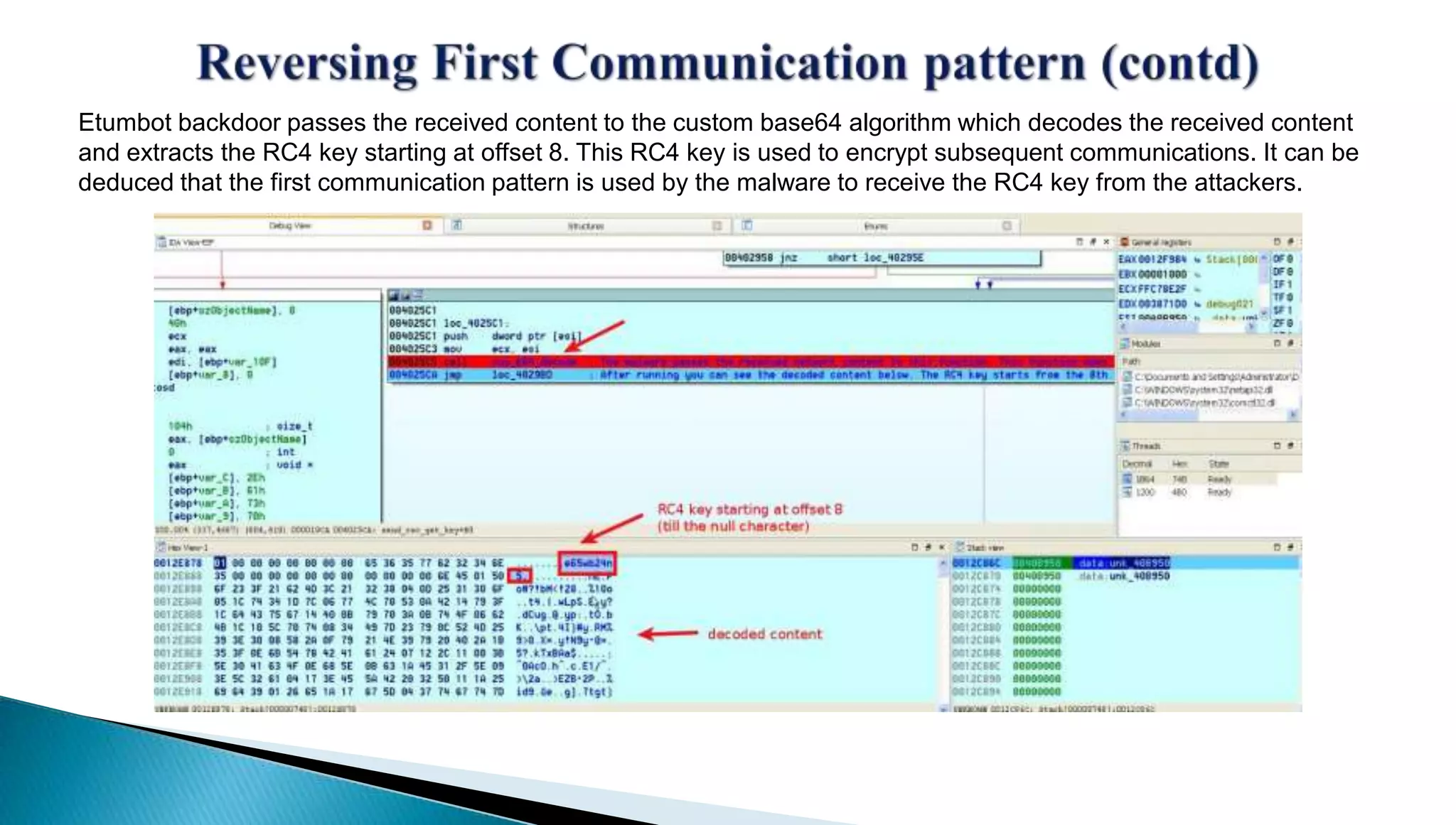
Etumbot backdoor passes the received content to the custom base64 algorithm which decodes the received content 
and extracts the RC4 key starting at offset 8. This RC4 key is used to encrypt subsequent communications. It can be 
deduced that the first communication pattern is used by the malware to receive the RC4 key from the attackers.
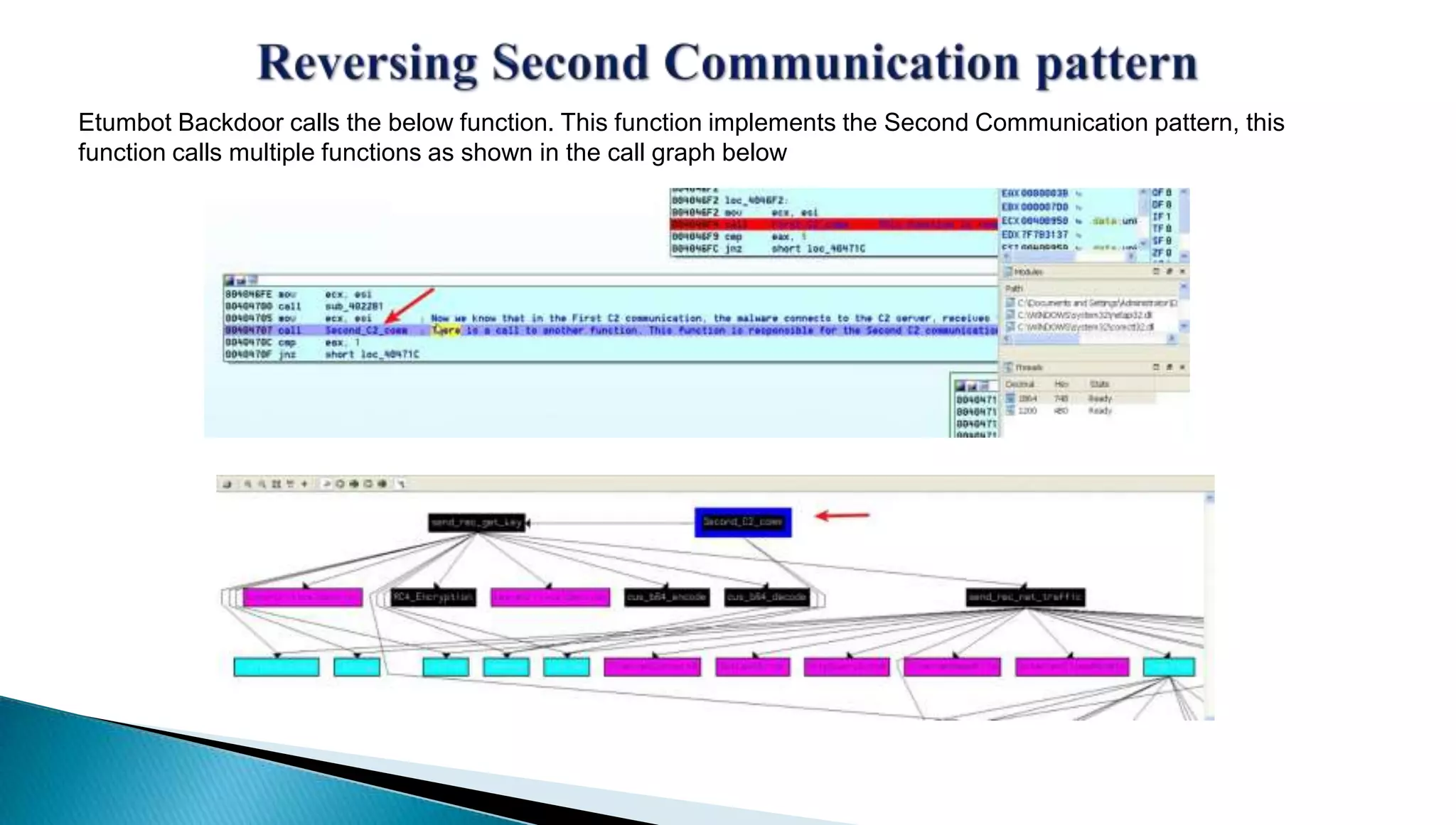
Etumbot Backdoor calls the below function. This function implements the Second Communication pattern, this 
function calls multiple functions as shown in the call graph below
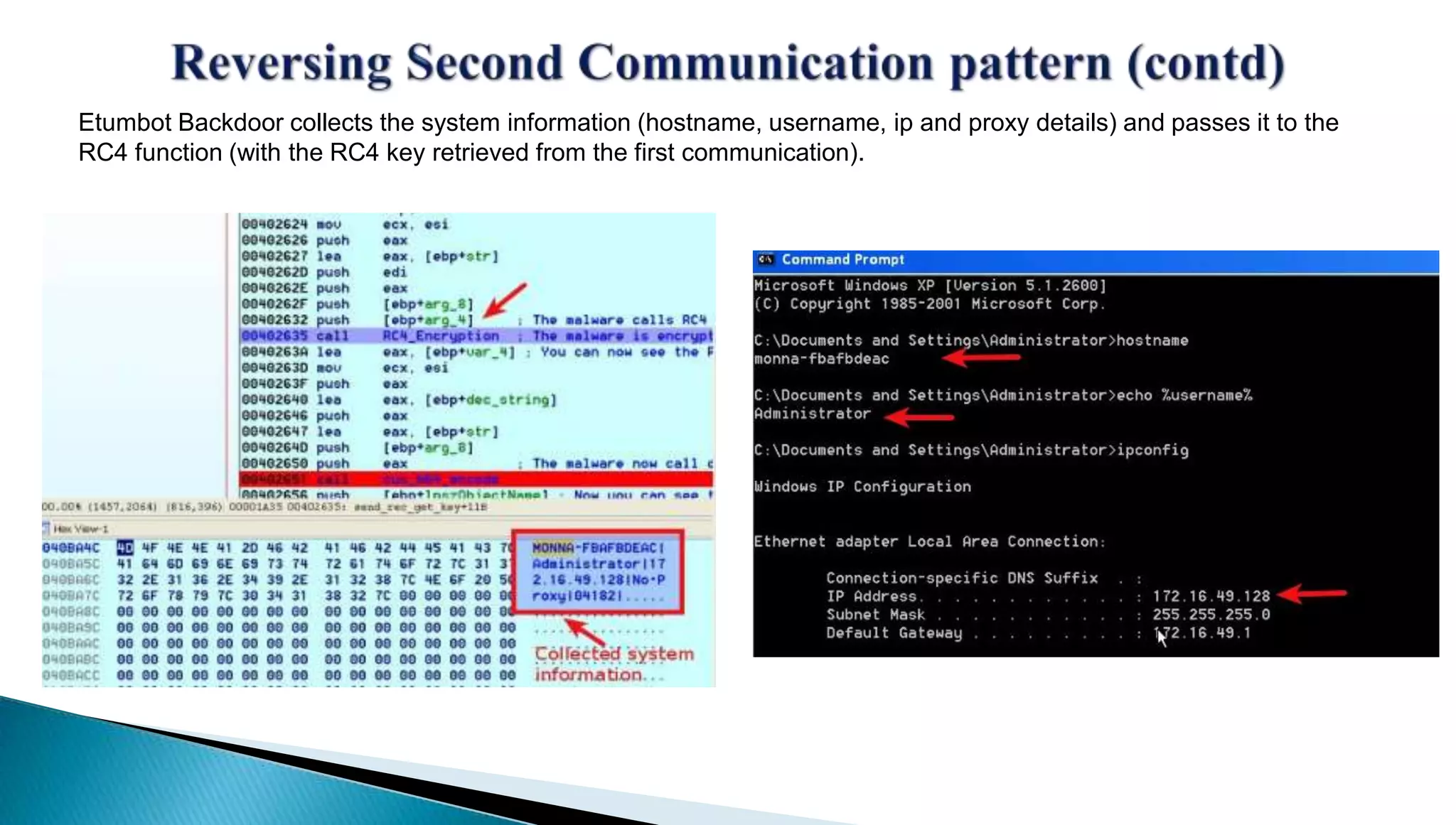
Etumbot Backdoor collects the system information (hostname, username, ip and proxy details) and passes it to the 
RC4 function (with the RC4 key retrieved from the first communication).
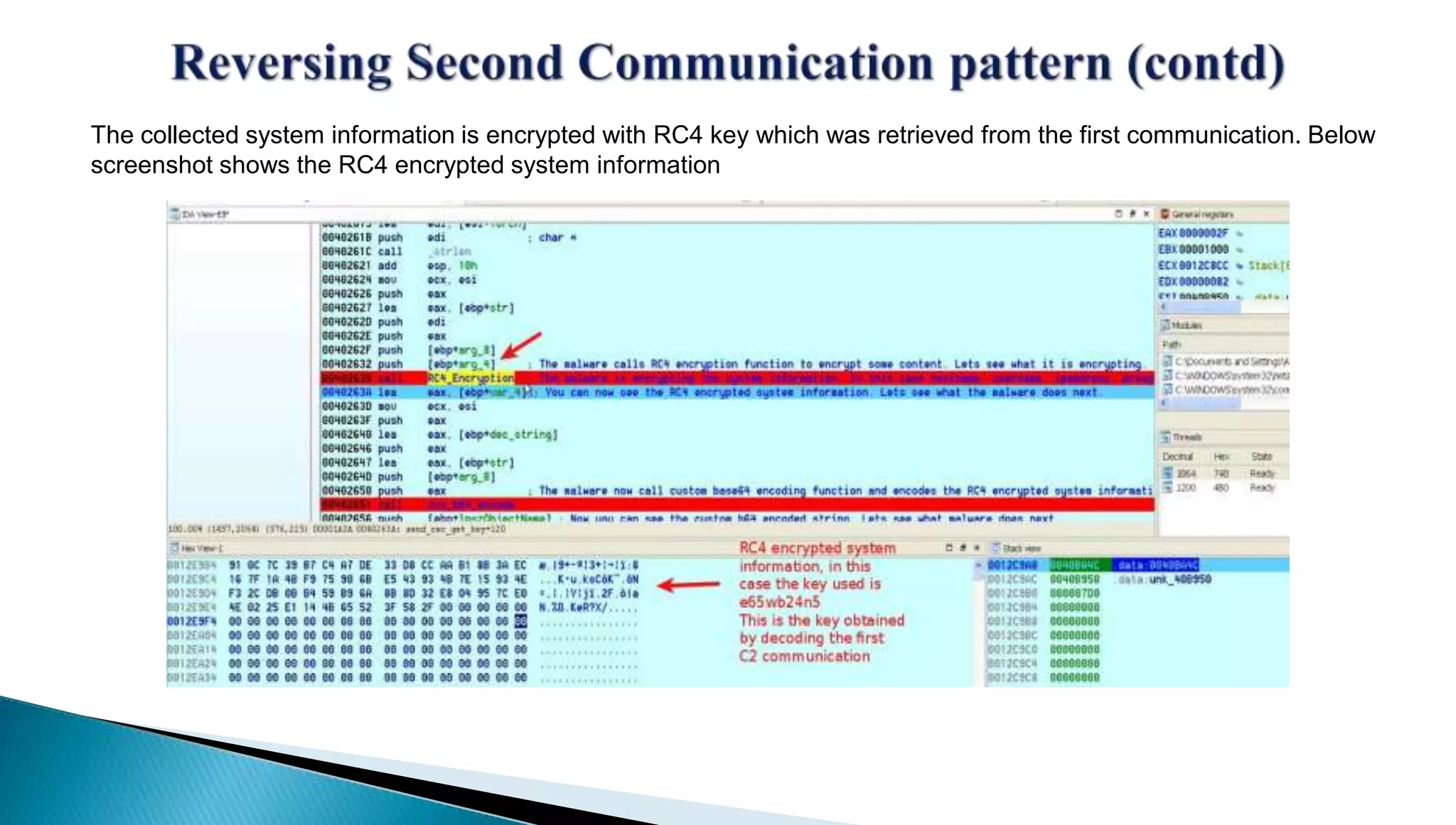
The collected system information is encrypted with RC4 key which was retrieved from the first communication. Below 
screenshot shows the RC4 encrypted system information
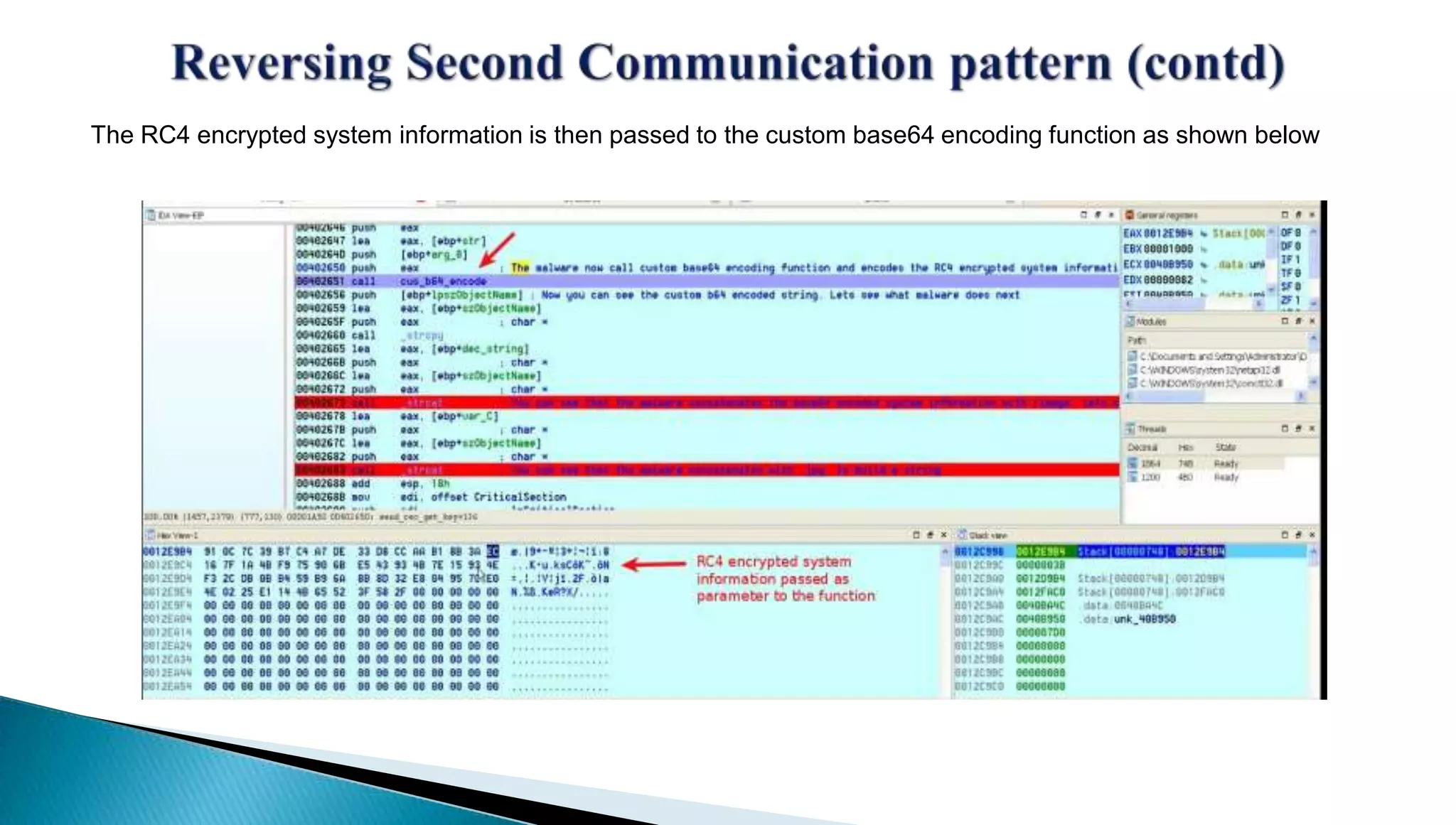
The RC4 encrypted system information is then passed to the custom base64 encoding function as shown below
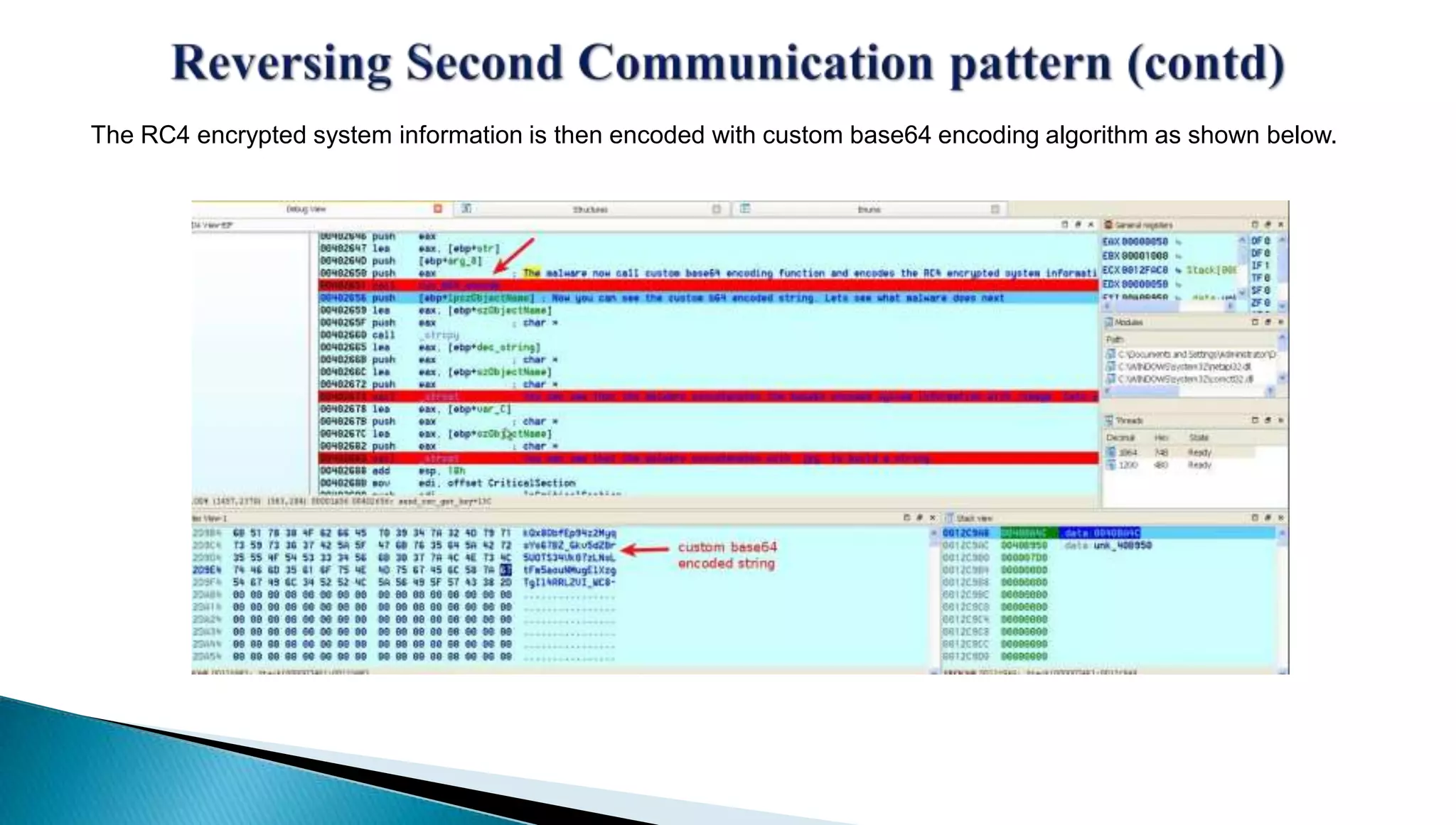
The RC4 encrypted system information is then encoded with custom base64 encoding algorithm as shown below.
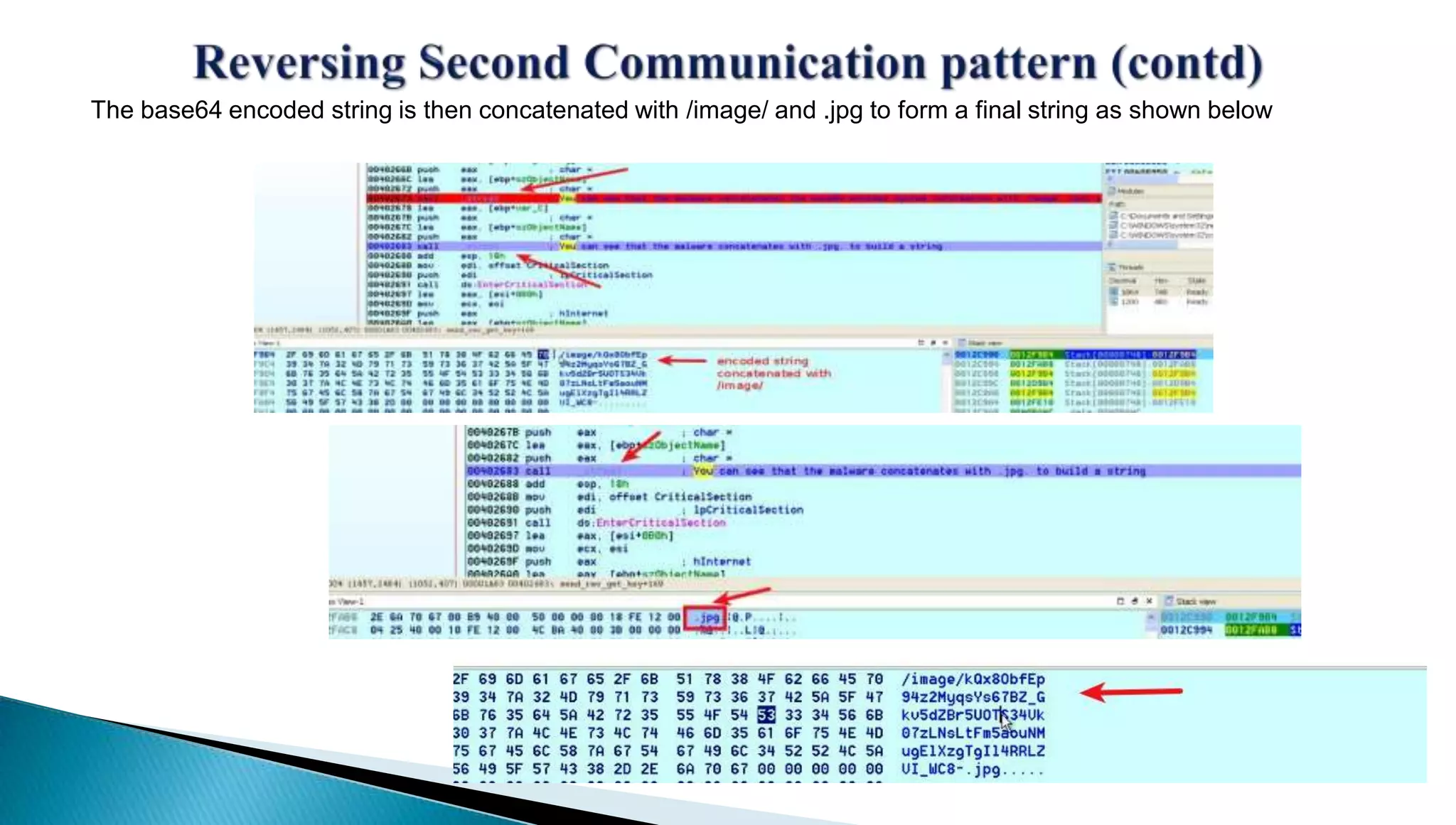
The base64 encoded string is then concatenated with /image/ and .jpg to form a final string as shown below
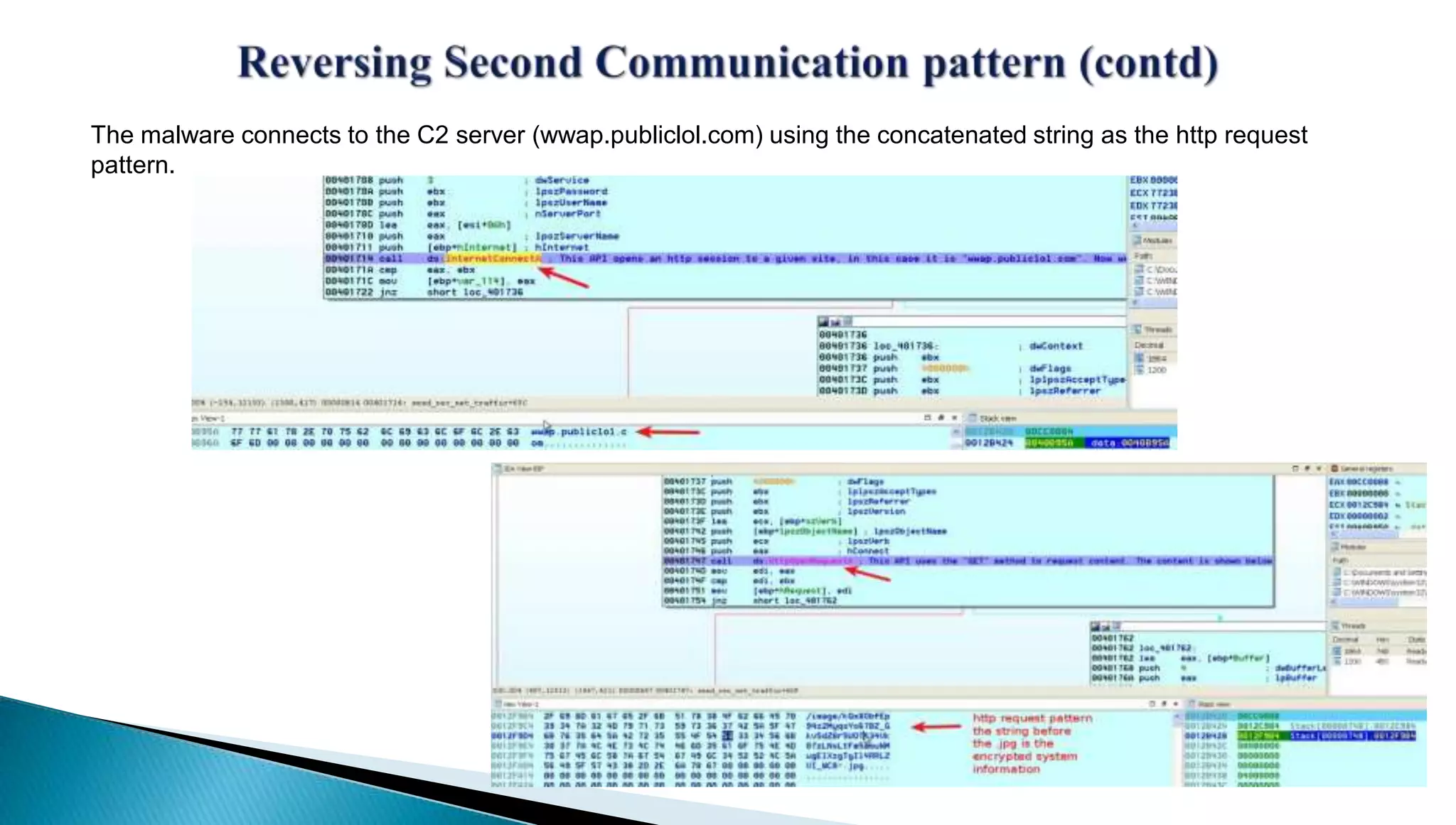
The malware connects to the C2 server (wwap.publiclol.com) using the concatenated string as the http request 
pattern.
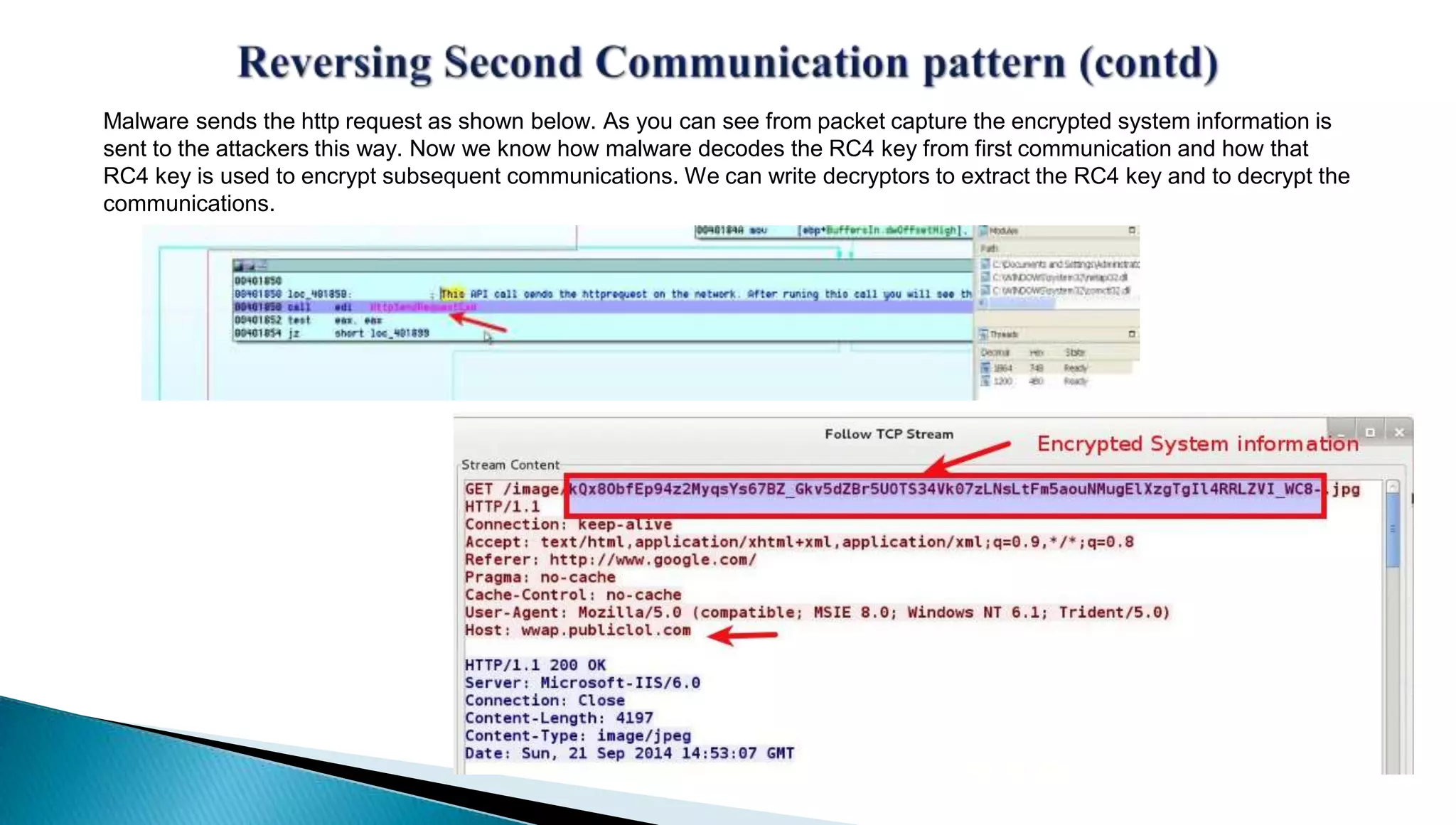
Malware sends the http request as shown below. As you can see from packet capture the encrypted system information is 
sent to the attackers this way. Now we know how malware decodes the RC4 key from first communication and how that 
RC4 key is used to encrypt subsequent communications. We can write decryptors to extract the RC4 key and to decrypt the 
communications.
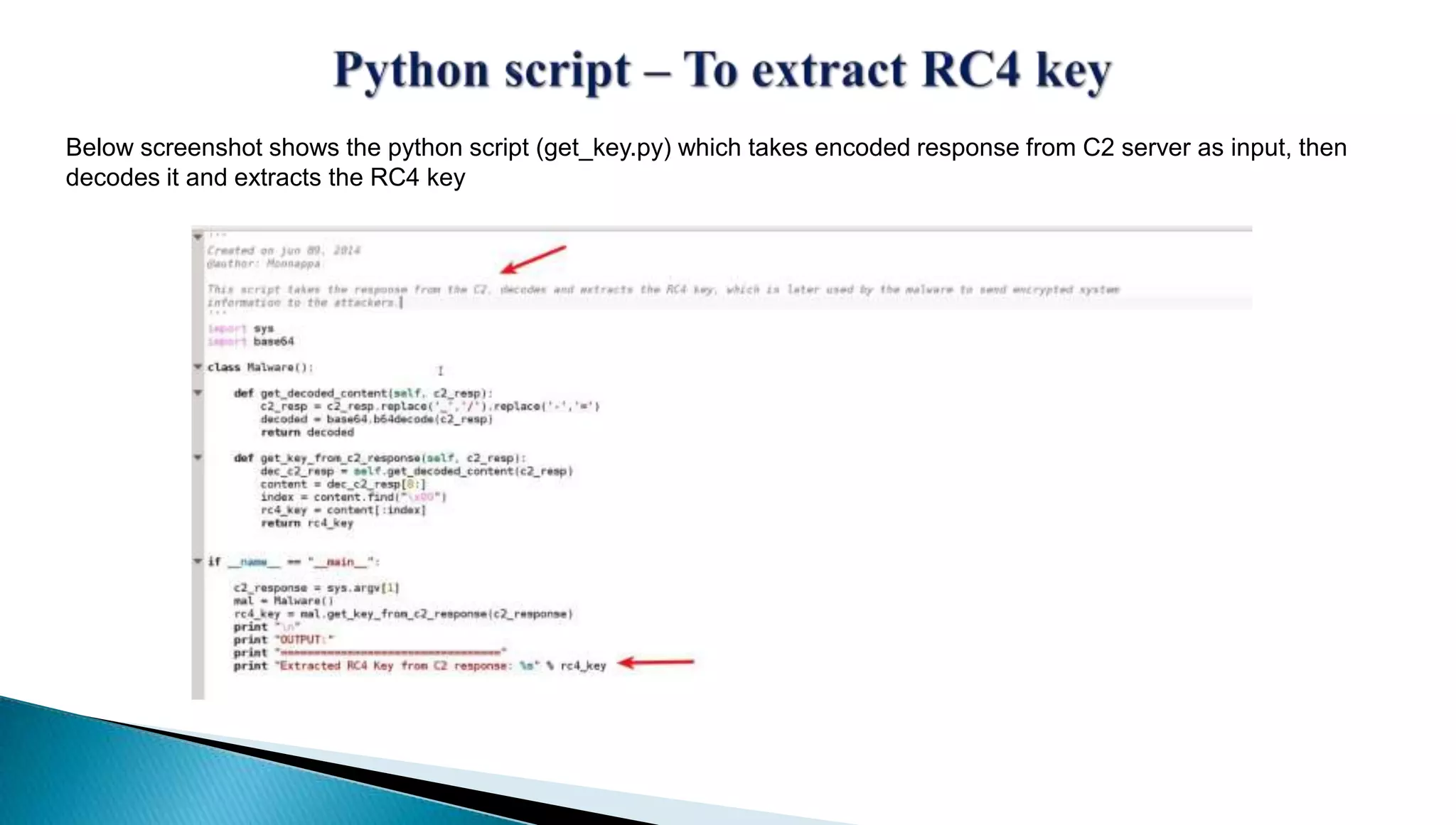
Below screenshot shows the python script (get_key.py) which takes encoded response from C2 server as input, then 
decodes it and extracts the RC4 key
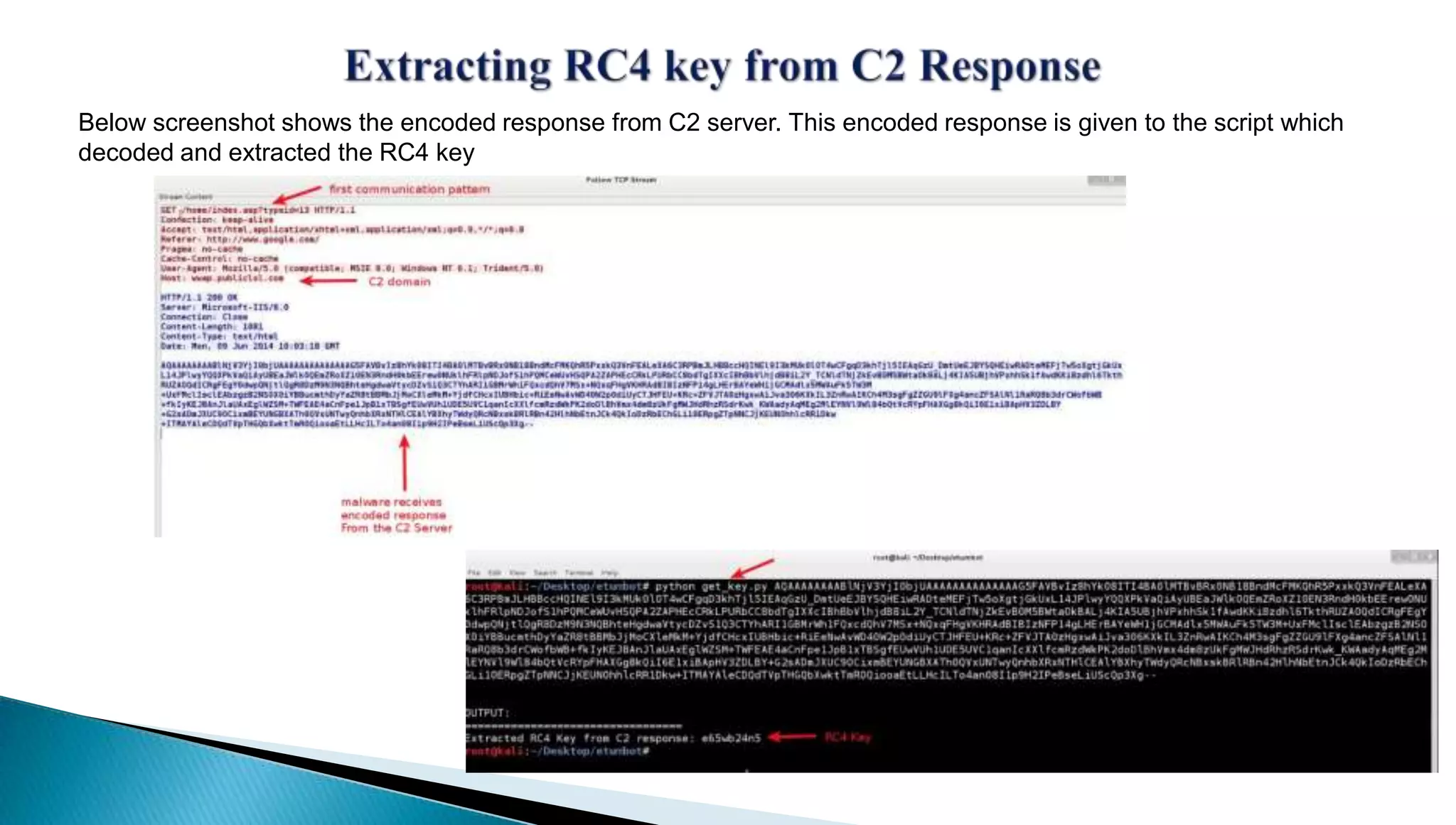
Below screenshot shows the encoded response from C2 server. This encoded response is given to the script which 
decoded and extracted the RC4 key
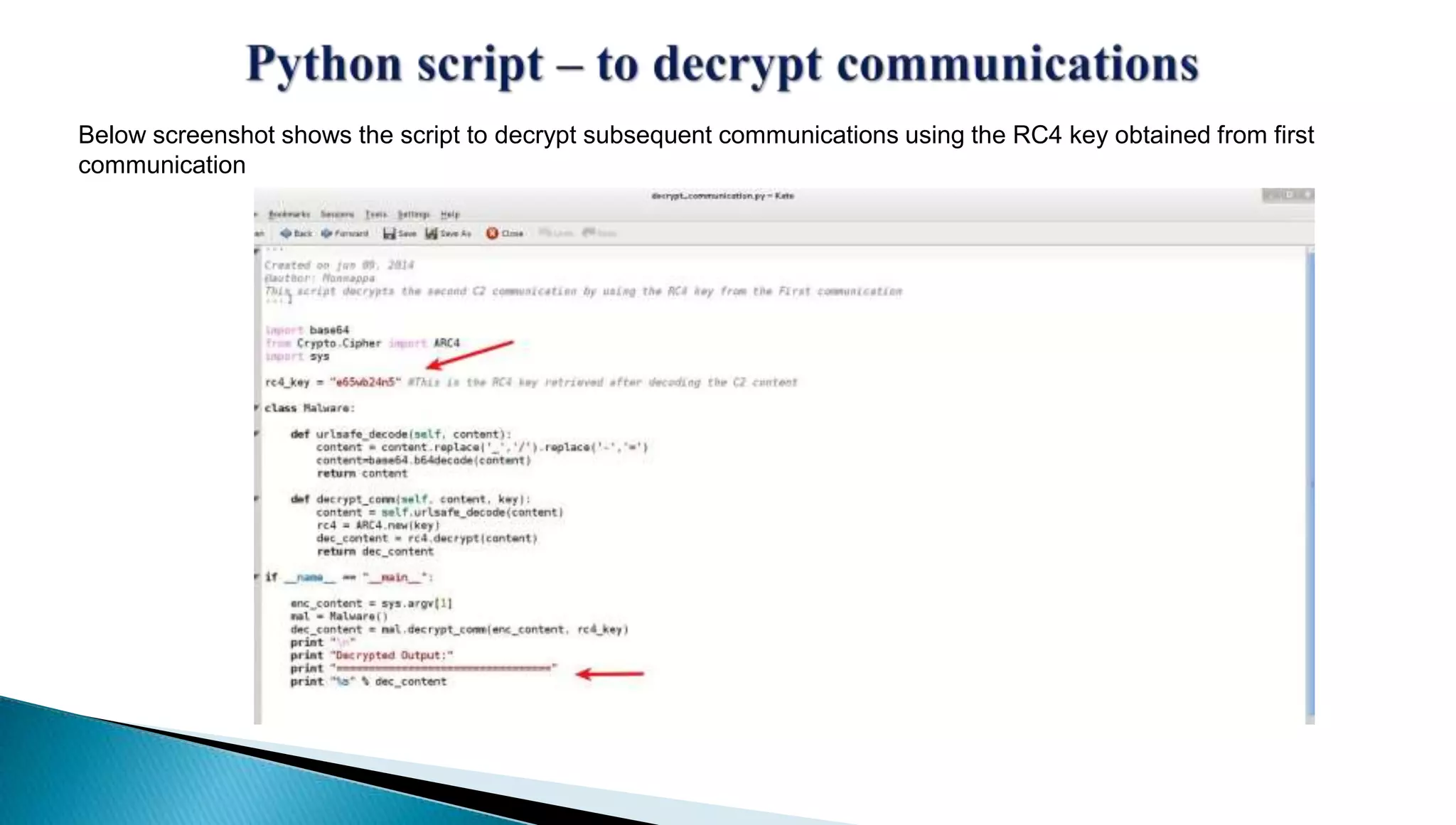
Below screenshot shows the script to decrypt subsequent communications using the RC4 key obtained from first 
communication
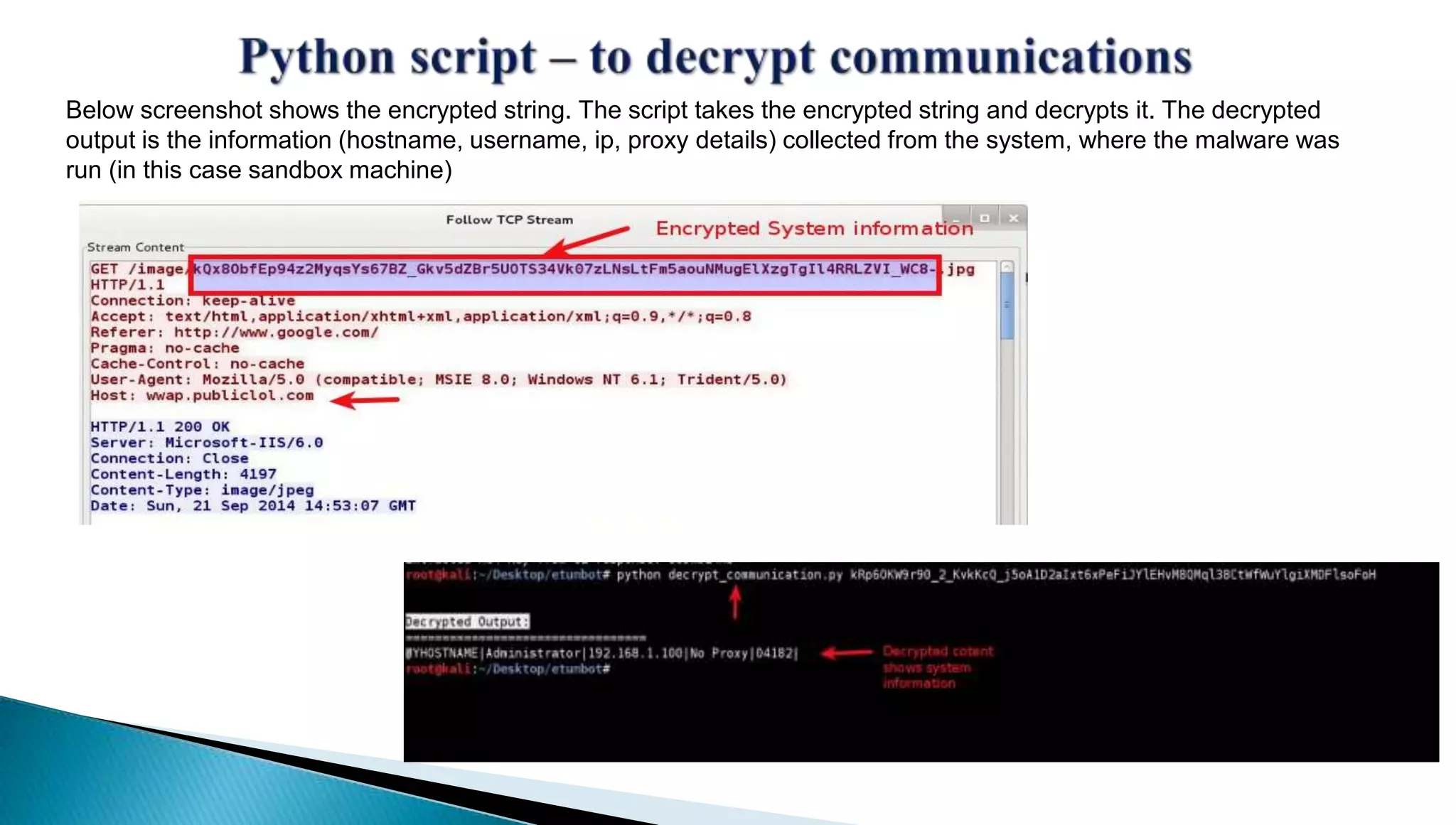
Below screenshot shows the encrypted string. The script takes the encrypted string and decrypts it. The decrypted 
output is the information (hostname, username, ip, proxy details) collected from the system, where the malware was 
run (in this case sandbox machine)
a) ARBOR Networks Report on Etumbot 
http://www.arbornetworks.com/asert/2014/06/illuminating-the-etumbot-apt-backdoor/ 
b) FireEye’s Blog post 
http://www.fireeye.com/blog/technical/botnet-activities-research/2014/09/darwins-favorite-apt-group- 
2.html
Reversing and Decrypting the Communications of APT Malware (Etumbot)

Reversing and Decrypting the Communications of APT Malware (Etumbot)

  • 1.
    Monnappa KA –Info Security Investigator
  • 2.
    The Content, Demonstration,Source Code and Programs presented here is "AS IS" without any warranty or conditions of any kind. Also the views/ideas/knowledge expressed here are solely of the mine and nothing to do with the company or the organization in which I am currently working. However in no circumstances neither I or SecurityXploded is responsible for any damage or loss caused due to use or misuse of the information presented here
  • 3.
    Monnappa KA Member of SecurityXploded  Info Security Investigator @ Cisco  Focus on Threat Intelligence  Reverse Engineering, Malware Analysis, Memory Forensics  Email: monnappa22@gmail.com  Twitter: @monnappa22  Linkedin: http://in.linkedin.com/pub/monnappa-ka-grem-ceh/42/45a/1b8
  • 4.
     APT Malware- Etumbot  Etumbot Cyber Espionage Campaign  Demo 1 – Sandbox Analysis of Etumbot dropper  Demo 2 – Reverse Engineering the Communications of Etumbot Backdoor  Demo 3 – Decrypting the Communications of Etumbot Backdoor  References
  • 5.
     Used inAPT/Cyber espionage/targeted attacks  Associated with Chinese cyber espionage group (Numbered Panda, APT12, Calc team)  Sent to targets via spear phishing email  Targeted government organizations in Taiwan and Japan  Drops decoy documents of interest to Taiwanese and Japanese population  Also referred to as Exploz, Specfix and RIPTIDE  Ref link1: http://www.arbornetworks.com/asert/2014/06/illuminating-the-etumbot-apt-backdoor/  Ref link2: http://www.fireeye.com/blog/technical/botnet-activities-research/2014/09/darwins-favorite- apt-group-2.html
  • 8.
    Etumbot dropper (5340.exe)drops another file winlogdate.exe (which is Etumbot backdoor). The malware also adds a registry entry so that Etumbot backdoor can persist on the system
  • 9.
    Etumbot Backdoor (winlogdate.exe)connects to the C2 server with two communication patterns
  • 10.
    In the firstcommunication pattern the malware receives response from the C2 server. The response looks like an encoded string
  • 11.
    In the secondcommunication pattern the malware sends a request, which looks like a request to download an image file (.jpg), but the string before .jpg looks like an encrypted string. In order understand these communication patterns, lets reverse engineer the Etumbot backdoor
  • 13.
    Etumbot Backdoor callsthe below function. This function implements the First Communication pattern, this function calls multiple functions as shown in the call graph below
  • 14.
    The malware usesbelow API call to open an http session with the C2 Server (wwap.publiclol.com)
  • 15.
    Etumbot Backdoor usesbelow API call to create an http handle and the below screenshot shows the object the malware is going to request in the http request.
  • 16.
    Etumbot Backdoor usesbelow API call to send the request and the C2 server sends an encoded response to the backdoor.
  • 17.
    Etumbot backdoor receivesthe encoded response from the C2 using the below API
  • 18.
    Etumbot backdoor passesthe received content to the custom base64 algorithm which decodes the received content and extracts the RC4 key starting at offset 8. This RC4 key is used to encrypt subsequent communications. It can be deduced that the first communication pattern is used by the malware to receive the RC4 key from the attackers.
  • 19.
    Etumbot Backdoor callsthe below function. This function implements the Second Communication pattern, this function calls multiple functions as shown in the call graph below
  • 20.
    Etumbot Backdoor collectsthe system information (hostname, username, ip and proxy details) and passes it to the RC4 function (with the RC4 key retrieved from the first communication).
  • 21.
    The collected systeminformation is encrypted with RC4 key which was retrieved from the first communication. Below screenshot shows the RC4 encrypted system information
  • 22.
    The RC4 encryptedsystem information is then passed to the custom base64 encoding function as shown below
  • 23.
    The RC4 encryptedsystem information is then encoded with custom base64 encoding algorithm as shown below.
  • 24.
    The base64 encodedstring is then concatenated with /image/ and .jpg to form a final string as shown below
  • 25.
    The malware connectsto the C2 server (wwap.publiclol.com) using the concatenated string as the http request pattern.
  • 26.
    Malware sends thehttp request as shown below. As you can see from packet capture the encrypted system information is sent to the attackers this way. Now we know how malware decodes the RC4 key from first communication and how that RC4 key is used to encrypt subsequent communications. We can write decryptors to extract the RC4 key and to decrypt the communications.
  • 28.
    Below screenshot showsthe python script (get_key.py) which takes encoded response from C2 server as input, then decodes it and extracts the RC4 key
  • 29.
    Below screenshot showsthe encoded response from C2 server. This encoded response is given to the script which decoded and extracted the RC4 key
  • 30.
    Below screenshot showsthe script to decrypt subsequent communications using the RC4 key obtained from first communication
  • 31.
    Below screenshot showsthe encrypted string. The script takes the encrypted string and decrypts it. The decrypted output is the information (hostname, username, ip, proxy details) collected from the system, where the malware was run (in this case sandbox machine)
  • 32.
    a) ARBOR NetworksReport on Etumbot http://www.arbornetworks.com/asert/2014/06/illuminating-the-etumbot-apt-backdoor/ b) FireEye’s Blog post http://www.fireeye.com/blog/technical/botnet-activities-research/2014/09/darwins-favorite-apt-group- 2.html