Hi! I’m Wanda.
info@wandarossi.com
Source: unsplash.com
Source: Wikimedia Commons
OBJECTIVES
• Understand the benefits of team retrospectives.
• Practice a structured way to learn from experience.
• Gather learnings to understand what helps and
hinders good teamwork.
• Formulate insights to improve your future teamwork.
• Practice a structured way to give and
receive feedback.
info@wandarossi.com
DESIRED OUTCOME
• You understand what helps you make progress in a
team.
• You know how you want to apply your learnings in
your future teamwork.
• You communicate more effectively.
• You feel heard by the group.
info@wandarossi.com
Request for
Silence
Source: Pinterest
info@wandarossi.com
LET’S START!!!
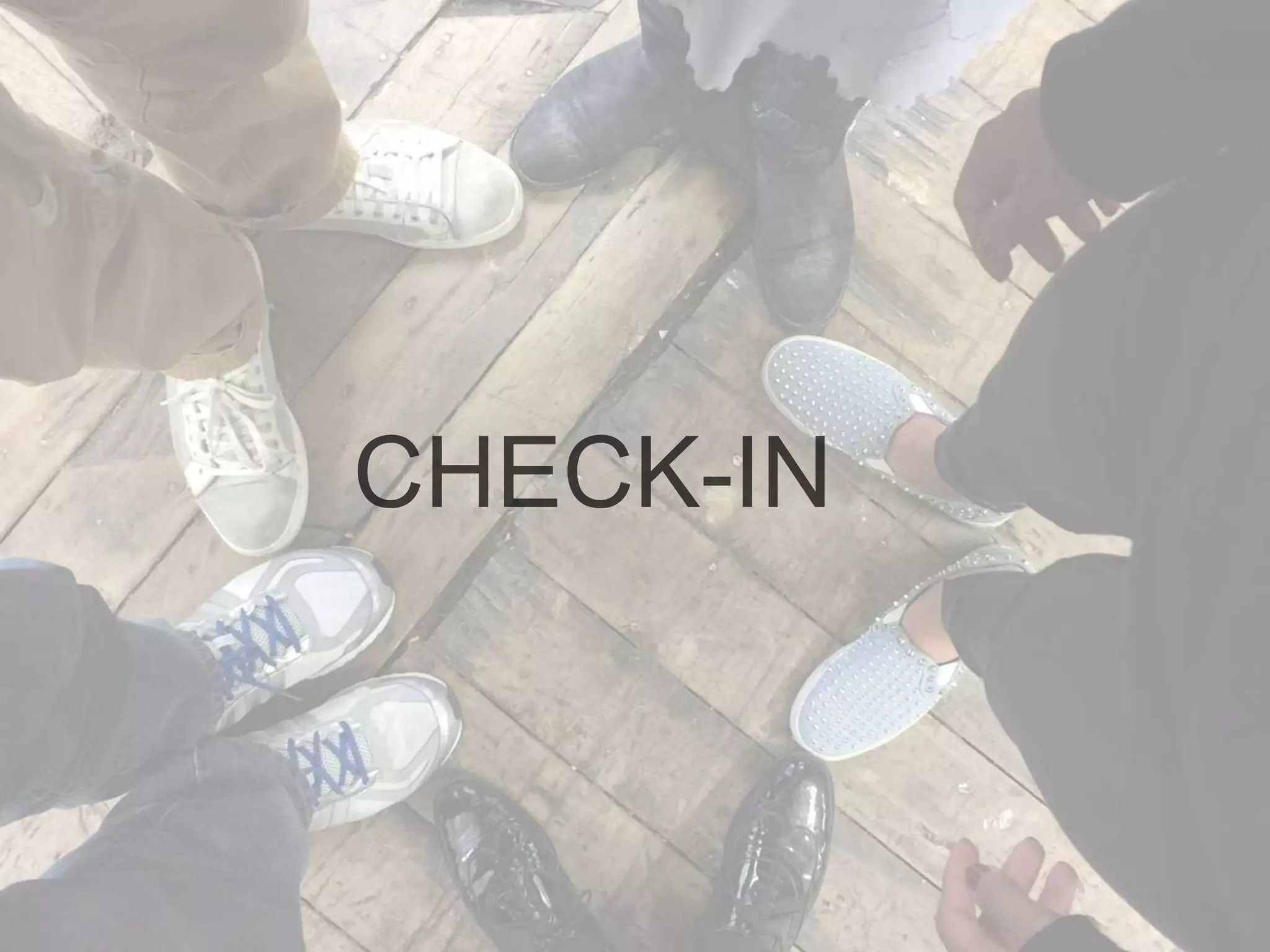
CHECK-IN
FUN STUFF:
THE THEORETICAL
BASE
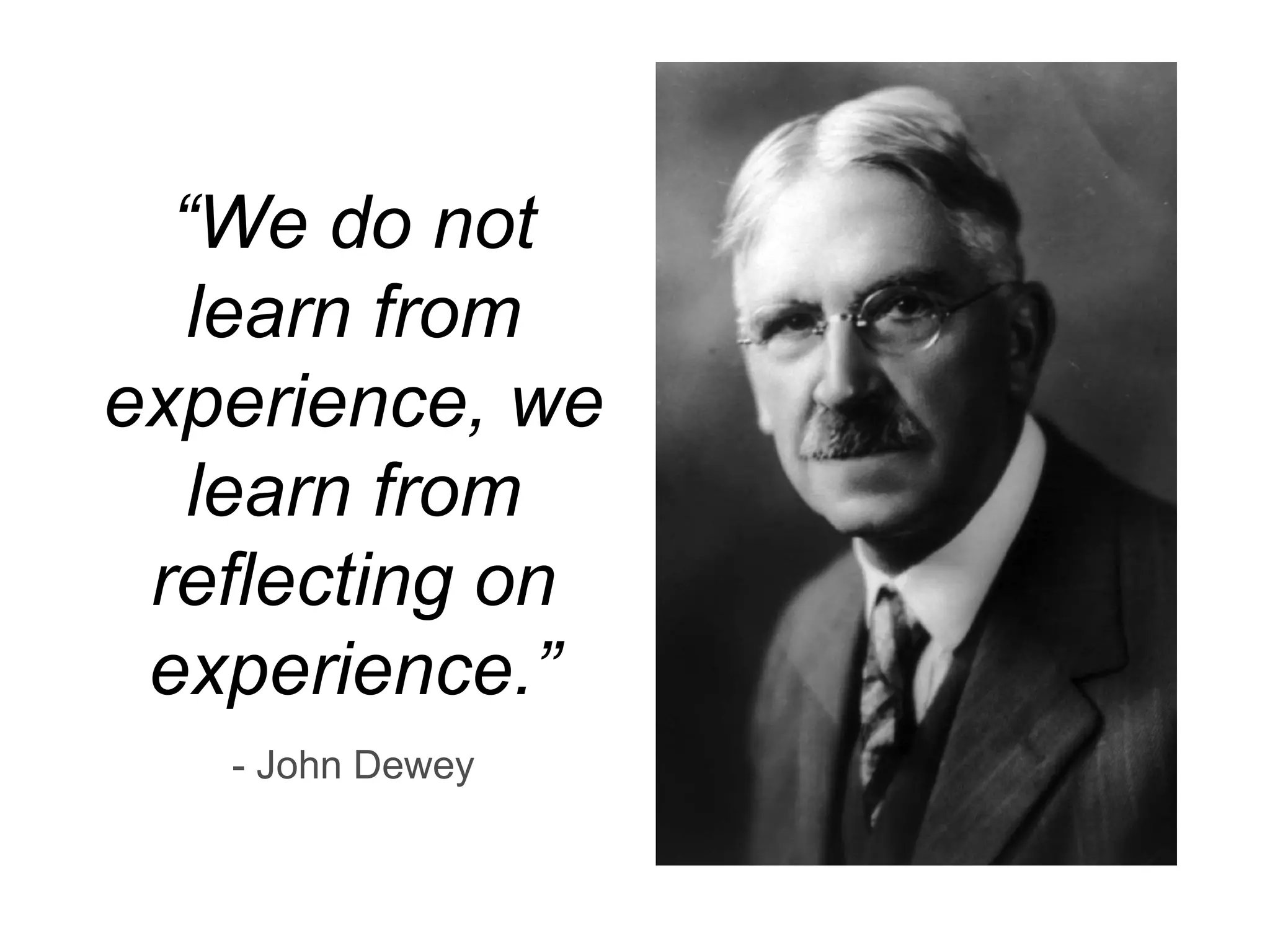
“We do not
learn from
experience, we
learn from
reflecting on
experience.”
Fails Compilation
Source: youtube.com
Reflection: Definition
• Reflection involves thinking about and
questioning WHAT you do, HOW you do it, and
WHY you do it the way you do it.
Reflection: Benefits
• Become aware of the assumptions and beliefs that
drive your actions.
• Learn from your experience and gain new insights.
• Be able to break patterns.
• Develop new effective strategies to approach
situations.
Source: Flat World Knowledge
ONE MORE…
Source: unsplash.com
INDIVIDUAL
REFLECTION
• Focus on your own
observations, reactions,
and feelings. Speak from
the “I”.
• Describe specific events
or behaviours. Don’t
generalise.
• Give the speaker your
full attention.
• Try to put yourself in the
speaker’s shoes.
• Don’t interrupt the
speaker.
• Ask clarifying or open-
ended questions.
• Don’t comment.
• Don’t start discussing.
• Example for speaking from the “I”: Say, "I was angry
and hurt when you criticised my work in front of the
class" rather than "You were insensitive yesterday."
info@wandarossi.com
• Get together with your project
partner.
• Think of what you did each day and
key activities. Help each other to
remember events.
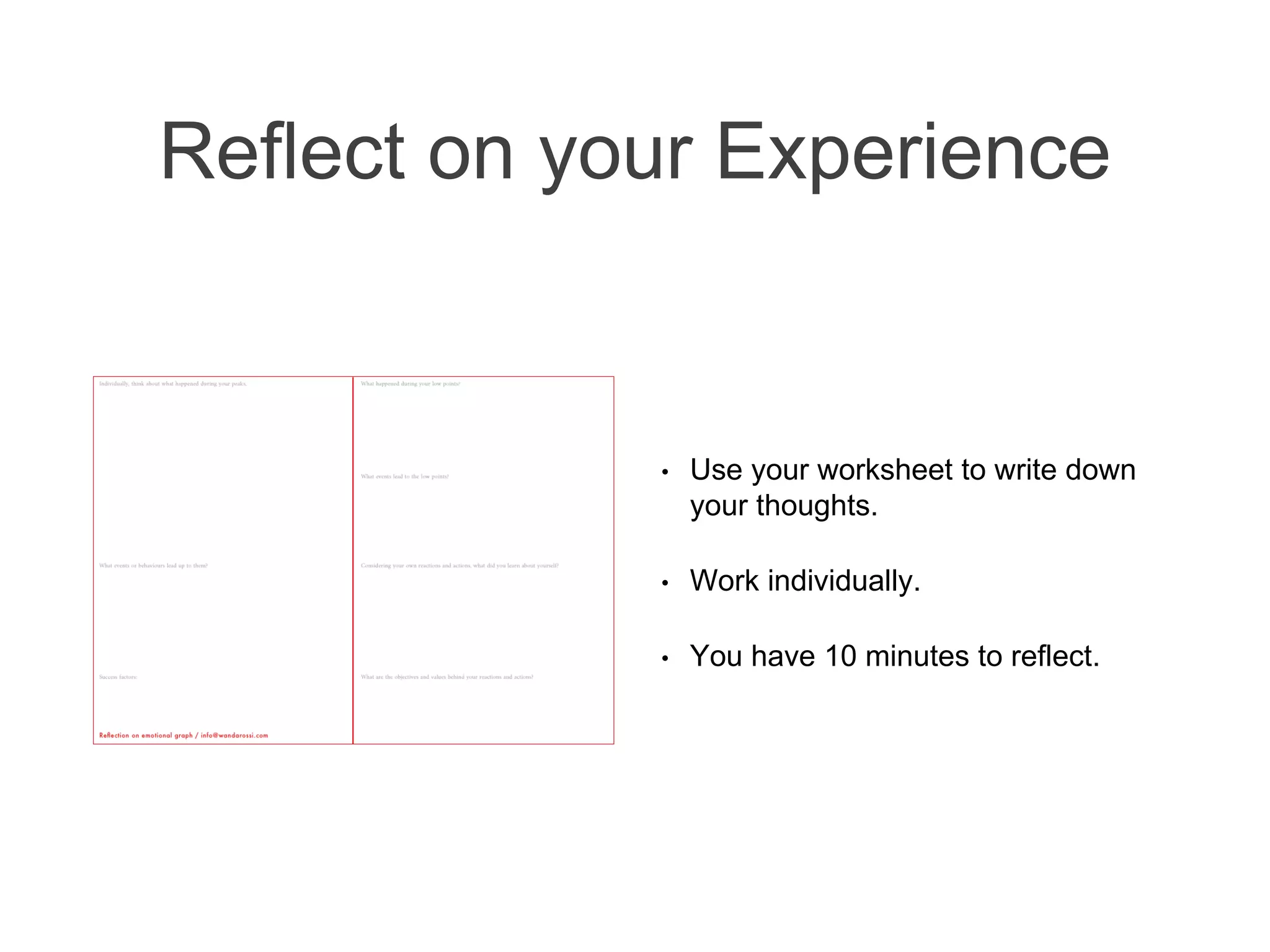
• Use the worksheet to write down
facts and events.
• Individually draw an emotional
graph on your worksheet.
• The graph should mark your high
and low points during the project.
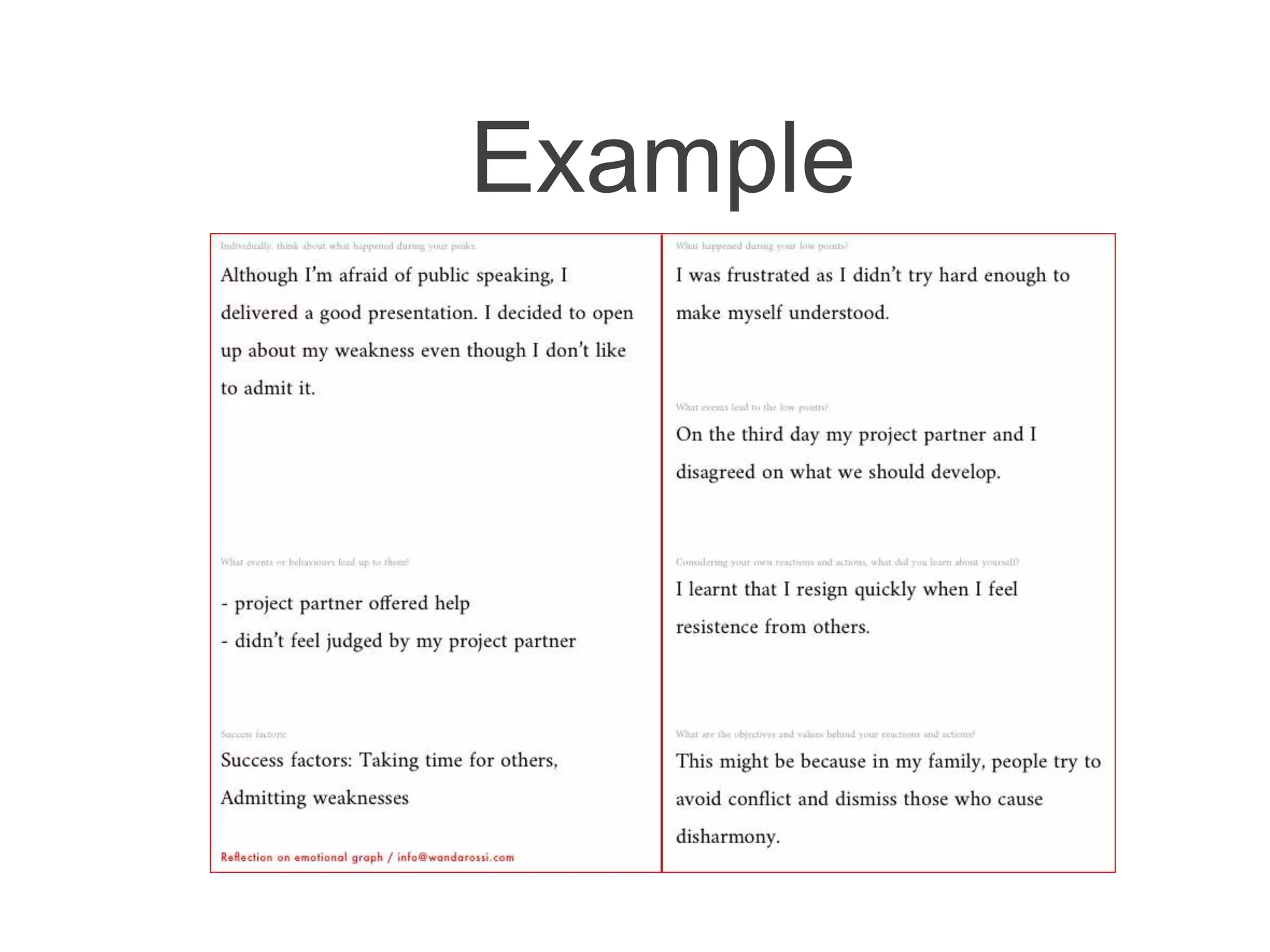
• Use your worksheet to write down
your thoughts.
• Work individually.
• You have 10 minutes to reflect.
BREAK
SHARE YOUR
REFLECTION
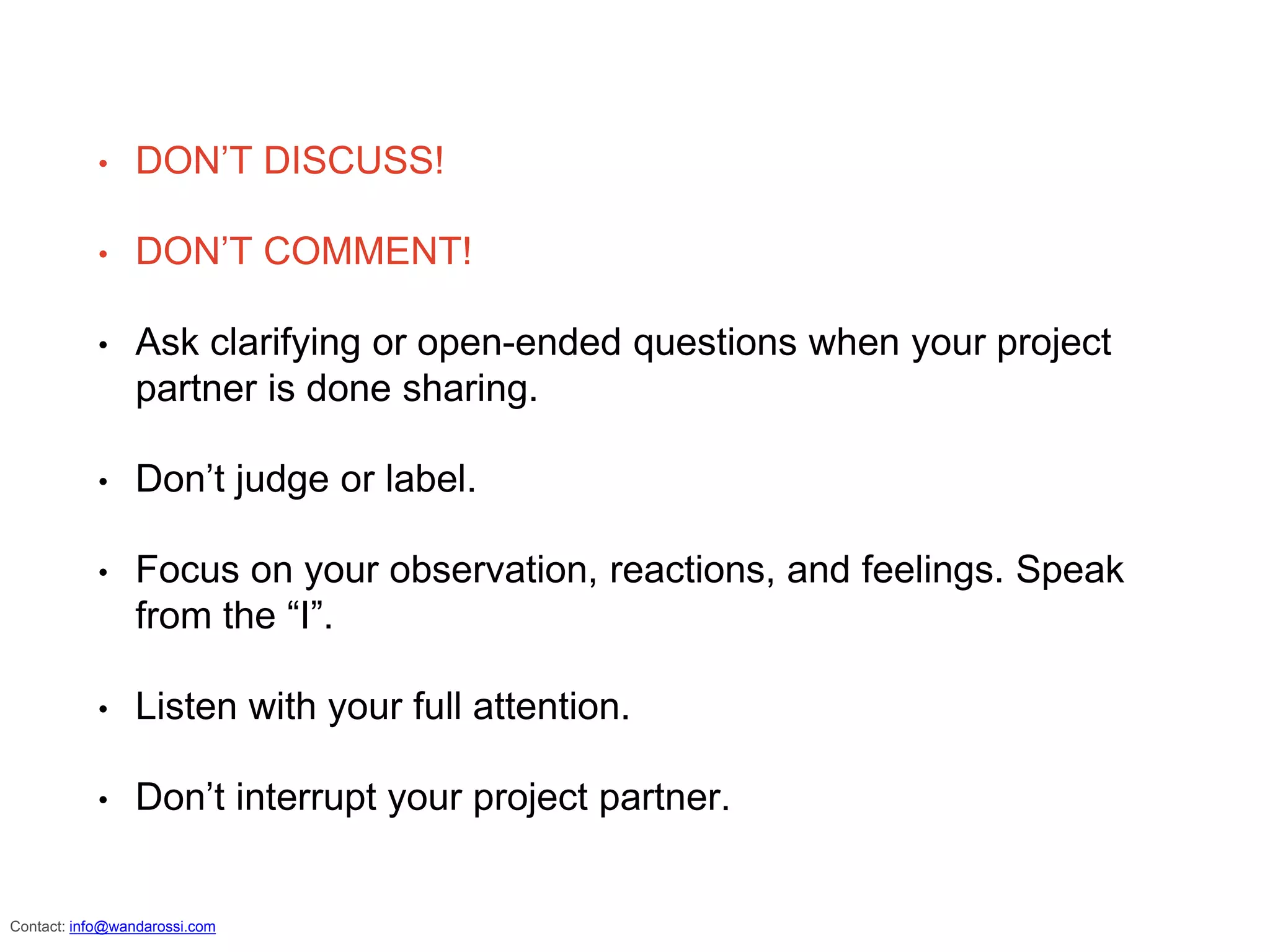
• DON’T DISCUSS!
• DON’T COMMENT!
• Ask clarifying or open-ended questions when your project
partner is done sharing.
• Don’t judge or label.
• Focus on your observation, reactions, and feelings. Speak
from the “I”.
• Listen with your full attention.
• Don’t interrupt your project partner.
info@wandarossi.com
• Get together with your partner.
• One at a time, share your reflection.
• When your project partner is done
sharing, you might want to ask
clarifying questions and dig deeper.
• Time yourself.
• You have 2x10 minutes to share
and dig deeper.
FEEDBACK
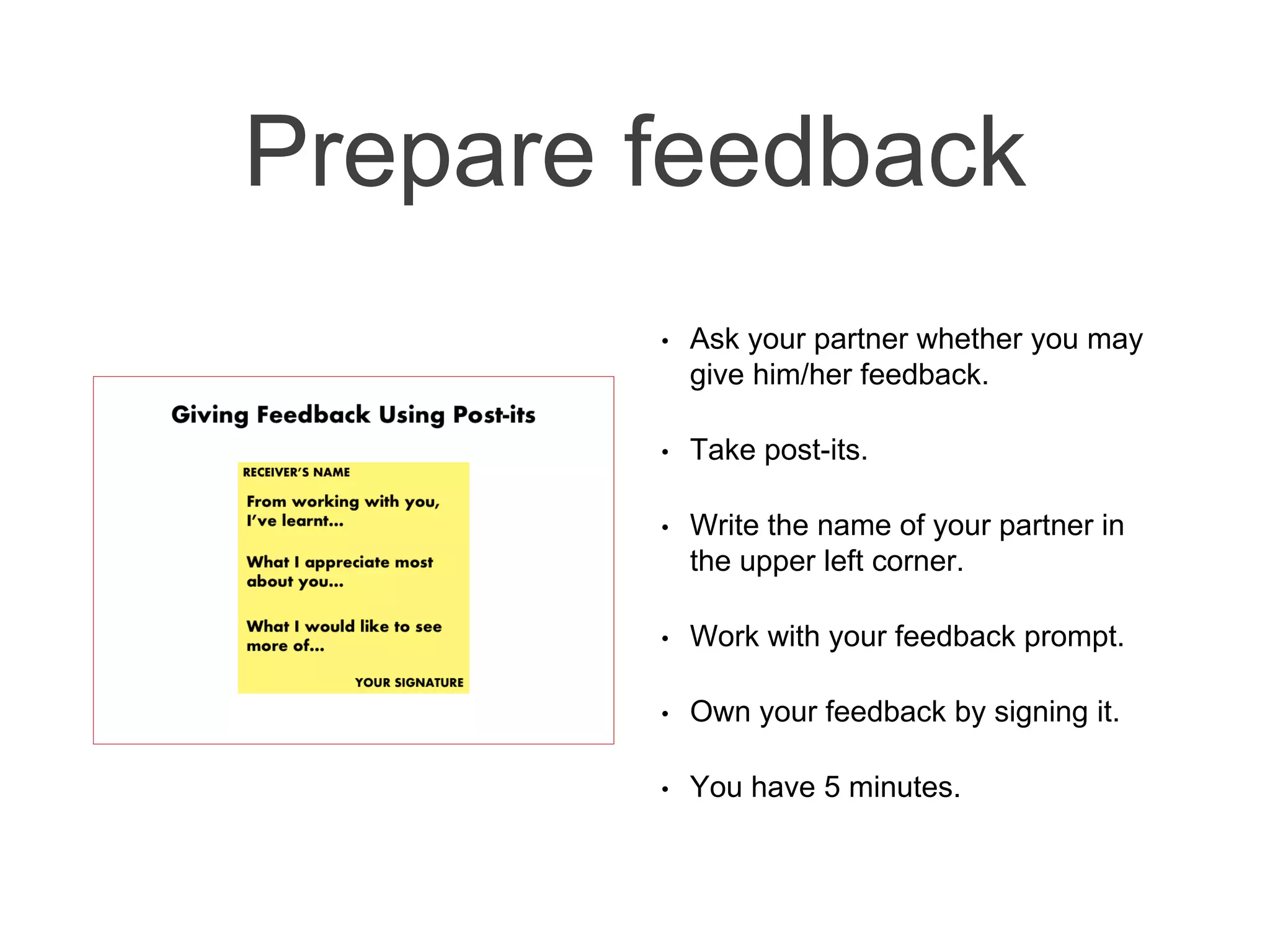
• Ask your partner whether you may
give him/her feedback.
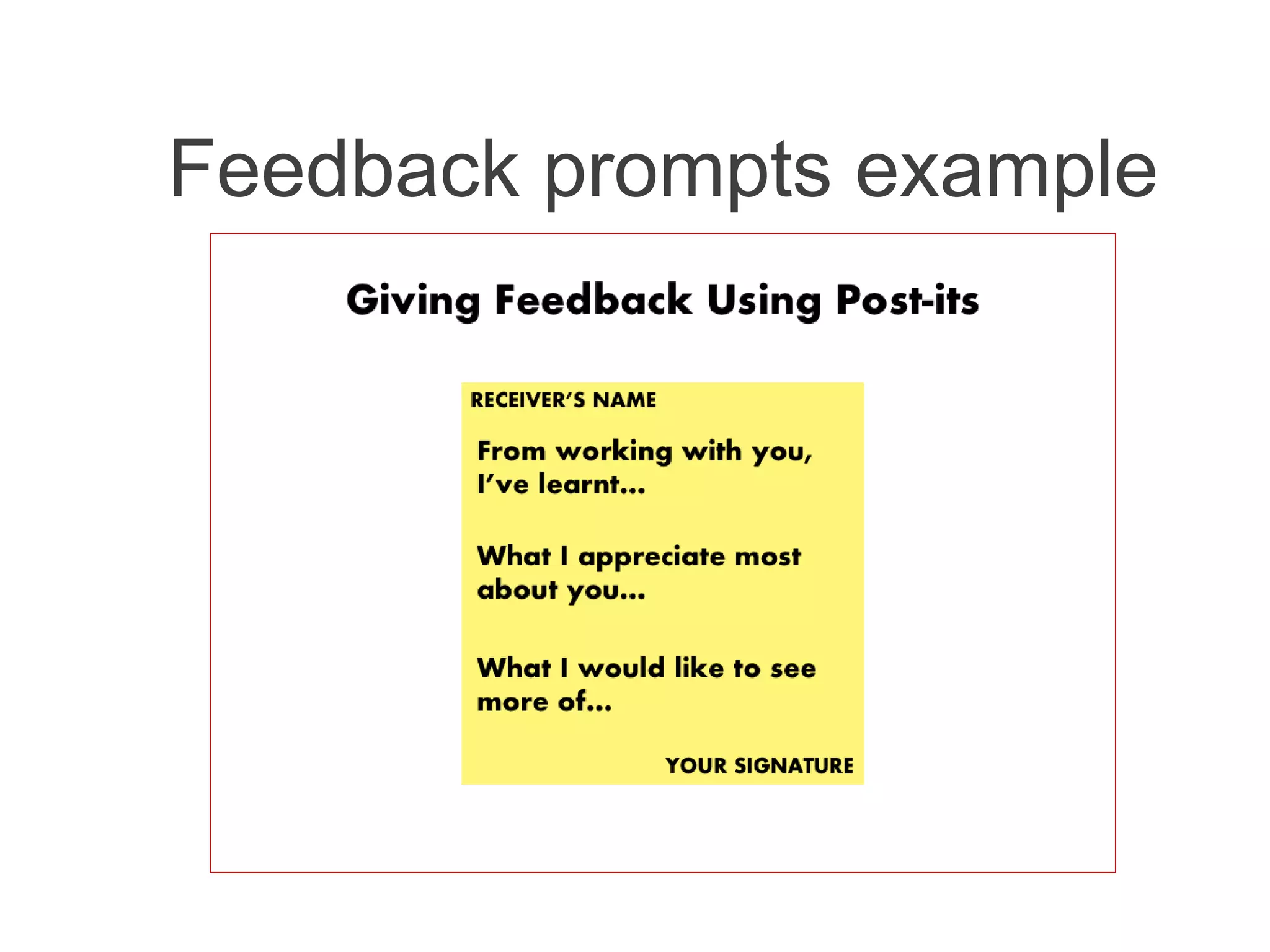
• Take post-its.
• Write the name of your partner in
the upper left corner.
• Work with your feedback prompt.
• Own your feedback by signing it.
• You have 5 minutes.
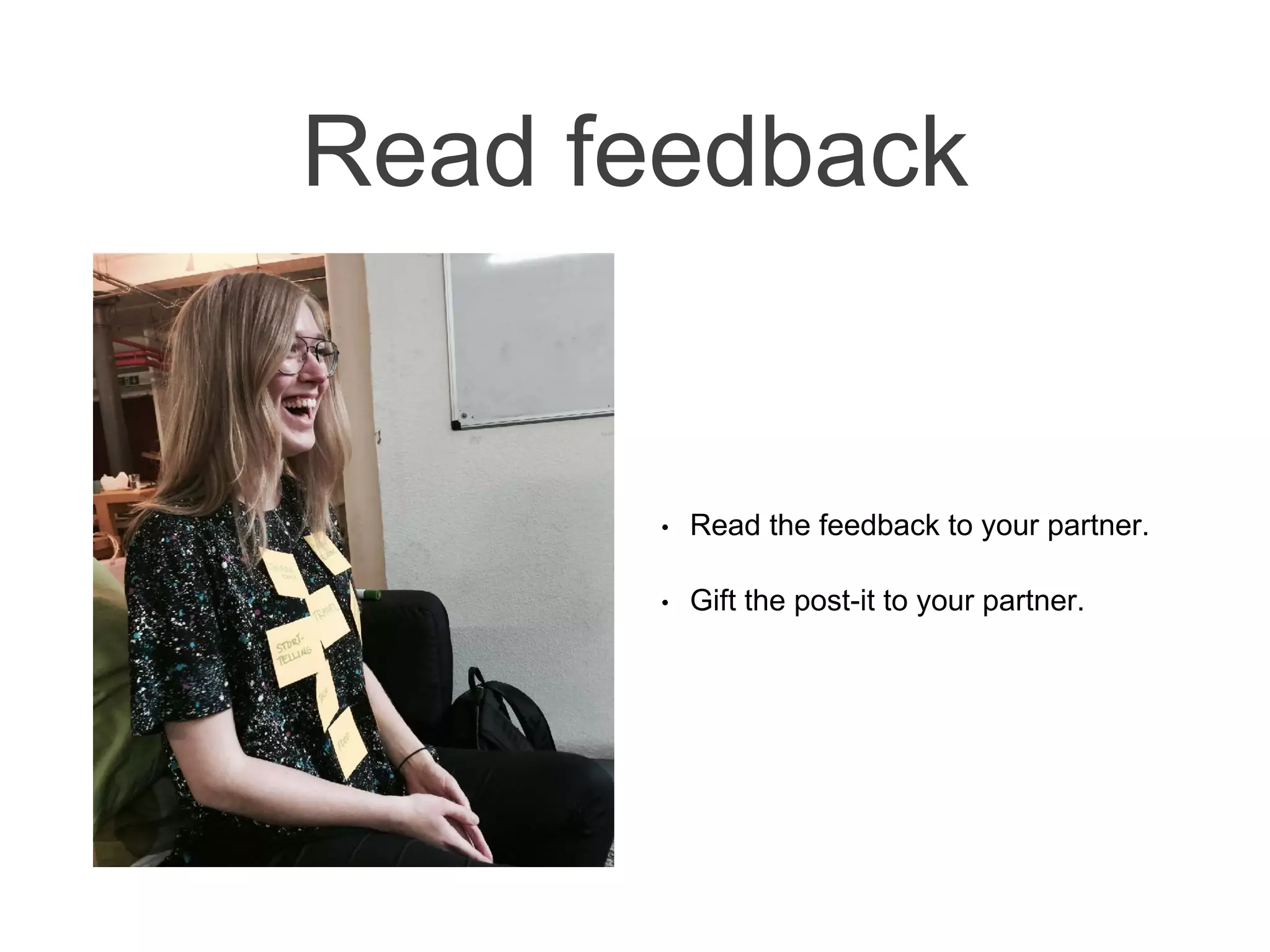
• Read the feedback to your partner.
• Gift the post-it to your partner.
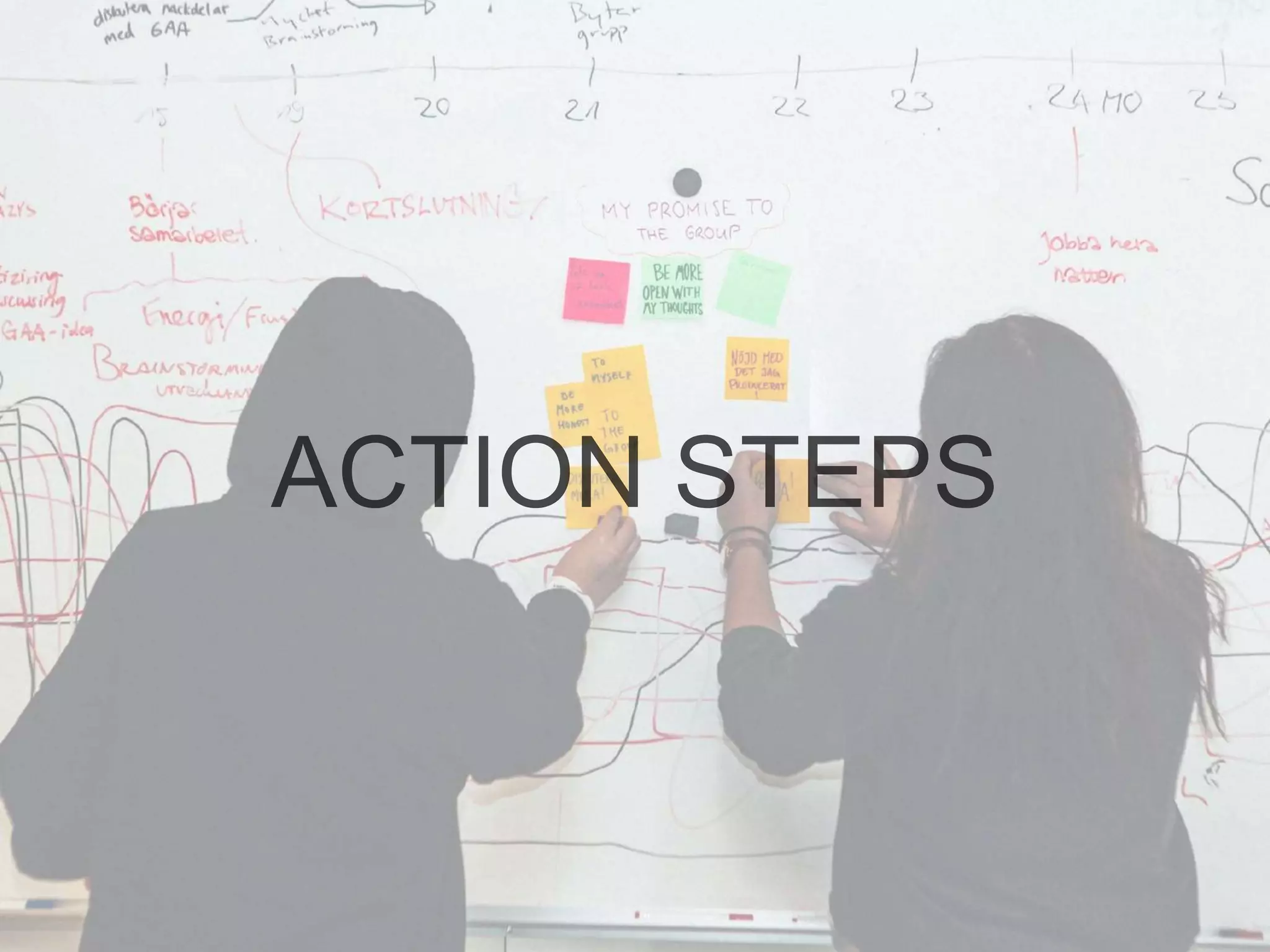
ACTION STEPS
• Think about what you learnt about
yourself and others.
• What are new behaviours you’d like to
try?
• Individually, write at least one
promise to yourself and at least
one promise to your class.
• Example: I want to stay engaged
when I feel misunderstood.
• Use post-its.
• You have 3 minutes.
BREAK
ENERGISER
SHARE WITH YOUR
GROUP
Share with your Group
• Rearrange the room so that everyone sits in a
circle.
• Bring your reflection and your promises.
• Share your reflection with the group.
• Remember the reflection and sharing rules.
APPRECIATION
CHECK-OUT

Retrospective meeting for work and study groups

  • 1.
  • 3.
  • 4.
  • 5.
  • 6.
    • Understand thebenefits of team retrospectives. • Practice a structured way to learn from experience. • Gather learnings to understand what helps and hinders good teamwork. • Formulate insights to improve your future teamwork. • Practice a structured way to give and receive feedback. info@wandarossi.com
  • 7.
  • 8.
    • You understandwhat helps you make progress in a team. • You know how you want to apply your learnings in your future teamwork. • You communicate more effectively. • You feel heard by the group. info@wandarossi.com
  • 9.
  • 10.
  • 11.
  • 12.
  • 13.
    “We do not learnfrom experience, we learn from reflecting on experience.”
  • 14.
  • 15.
    Reflection: Definition • Reflectioninvolves thinking about and questioning WHAT you do, HOW you do it, and WHY you do it the way you do it.
  • 16.
    Reflection: Benefits • Becomeaware of the assumptions and beliefs that drive your actions. • Learn from your experience and gain new insights. • Be able to break patterns. • Develop new effective strategies to approach situations.
  • 17.
  • 18.
  • 20.
  • 21.
  • 22.
    • Focus onyour own observations, reactions, and feelings. Speak from the “I”. • Describe specific events or behaviours. Don’t generalise. • Give the speaker your full attention. • Try to put yourself in the speaker’s shoes. • Don’t interrupt the speaker. • Ask clarifying or open- ended questions. • Don’t comment. • Don’t start discussing.
  • 23.
    • Example forspeaking from the “I”: Say, "I was angry and hurt when you criticised my work in front of the class" rather than "You were insensitive yesterday." info@wandarossi.com
  • 25.
    • Get togetherwith your project partner. • Think of what you did each day and key activities. Help each other to remember events. • Use the worksheet to write down facts and events.
  • 26.
    • Individually drawan emotional graph on your worksheet. • The graph should mark your high and low points during the project.
  • 27.
    • Use yourworksheet to write down your thoughts. • Work individually. • You have 10 minutes to reflect.
  • 29.
  • 30.
  • 31.
    • DON’T DISCUSS! •DON’T COMMENT! • Ask clarifying or open-ended questions when your project partner is done sharing. • Don’t judge or label. • Focus on your observation, reactions, and feelings. Speak from the “I”. • Listen with your full attention. • Don’t interrupt your project partner. info@wandarossi.com
  • 32.
    • Get togetherwith your partner. • One at a time, share your reflection. • When your project partner is done sharing, you might want to ask clarifying questions and dig deeper. • Time yourself. • You have 2x10 minutes to share and dig deeper.
  • 33.
  • 34.
    • Ask yourpartner whether you may give him/her feedback. • Take post-its. • Write the name of your partner in the upper left corner. • Work with your feedback prompt. • Own your feedback by signing it. • You have 5 minutes.
  • 36.
    • Read thefeedback to your partner. • Gift the post-it to your partner.
  • 37.
  • 38.
    • Think aboutwhat you learnt about yourself and others. • What are new behaviours you’d like to try? • Individually, write at least one promise to yourself and at least one promise to your class. • Example: I want to stay engaged when I feel misunderstood. • Use post-its. • You have 3 minutes.
  • 39.
  • 40.
  • 41.
  • 42.
    Share with yourGroup • Rearrange the room so that everyone sits in a circle. • Bring your reflection and your promises. • Share your reflection with the group. • Remember the reflection and sharing rules.
  • 43.
  • 44.

Editor's Notes

  • #3 Today I will guide you through a structured reflection on your experience during this week’s team project. You will work individually, together with your partner, and with your class.
  • #12 Show with one gesture how you are feeling right now.
  • #15 How many of you assume that these guys will try to avoid making the same mistake again? But how likely is it that a situation repeats itself just the same way? How many of you have repeated a mistake at least once in your life?
  • #18 Developed by psychologist Chris Argyris and philosopher Donald Schön
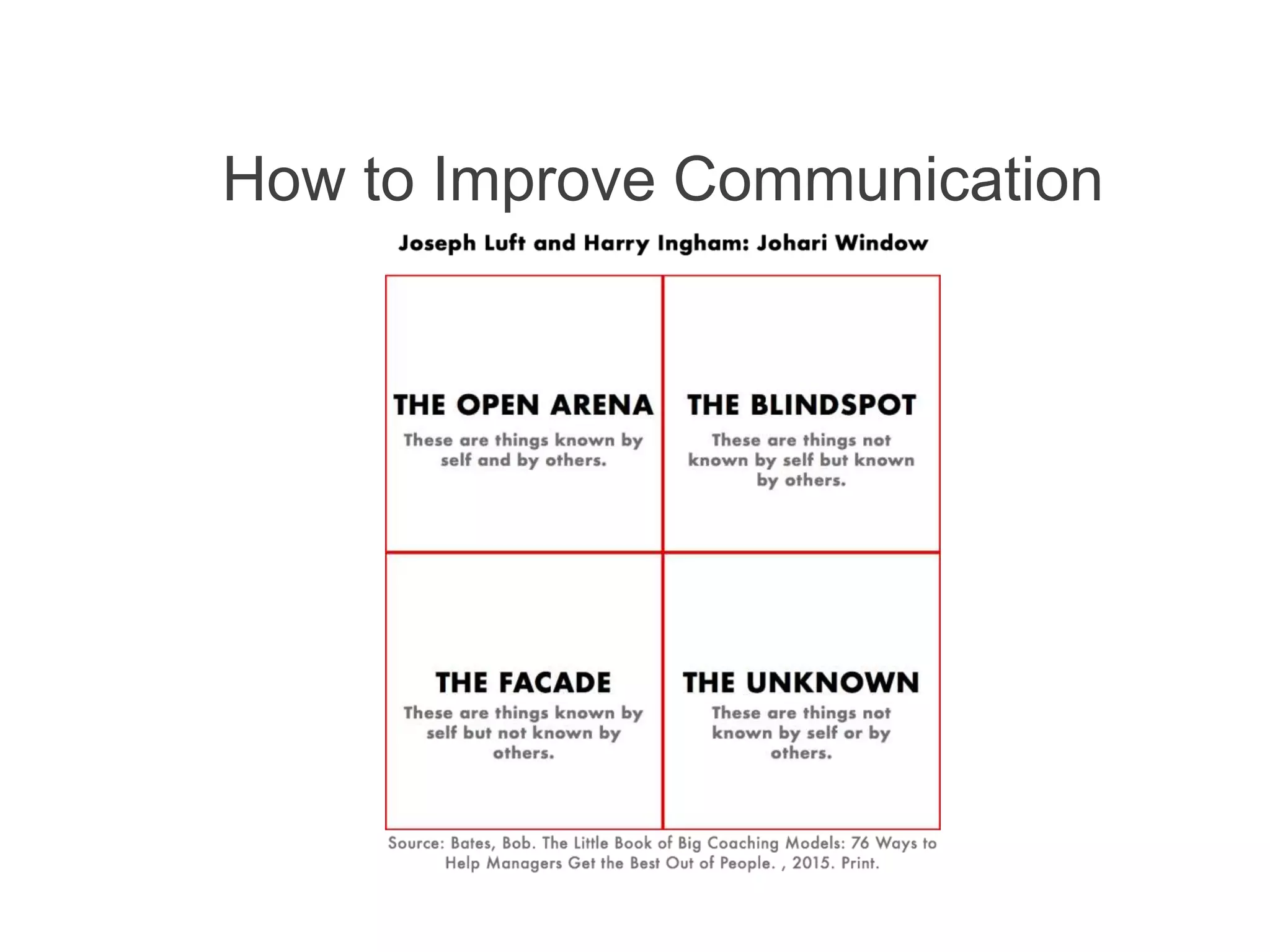
  • #20 The Johari Window is a communication model. It shows what we know about ourselves and what others know about us. It is used to improve understanding between individuals. The word "Johari" is taken from the names of Joseph Luft and Harry Ingham, who developed the model in 1955. The model is based on the idea that the more open we are to others and the better we get at giving and receiving feedback, the better we will be able to communicate with others. The ultimate goal of the Johari Window is to enlarge the Open Area, without disclosing information that is too personal. The Open Area is the most important quadrant. The more people know about each other, the more productive, cooperative, and effective they'll be when working together.
  • #24 What you can do to create a safe space for everyone:
  • #28 Things to mention: Create a safe space for the presenter by paying full attention and by treating things that have been said confidentially. Tell us how the 3 things have shaped you. Don’t be afraid to be emotional. It’s ok. Audience, ask challenging questions!
  • #33 Things to mention: Create a safe space for the presenter by paying full attention and by treating things that have been said confidentially. Tell us how the 3 things have shaped you. Don’t be afraid to be emotional. It’s ok. Audience, ask challenging questions!
  • #37 Things to mention: Create a safe space for the presenter by paying full attention and by treating things that have been said confidentially. Tell us how the 3 things have shaped you. Don’t be afraid to be emotional. It’s ok. Audience, ask challenging questions!
  • #41 Stuhltanz Meditation
  • #45 How did it feel to hear what other people shared? How did it feel to focus on your self during this process?