Rethinking the Policy Agent
Zoltan Tarcsay
@tarcsayzoltan zoltan.tarcsay@gmail.com
What is Node.js?
● Node.js is a JavaScript runtime built on the latest V8
● Headless → server apps
● Async, non-blocking model
○ Callbacks, events, promises
● Package system: npm
○ ~250k packages
○ left-pad-gate
○ Modular architecture
What is Express?
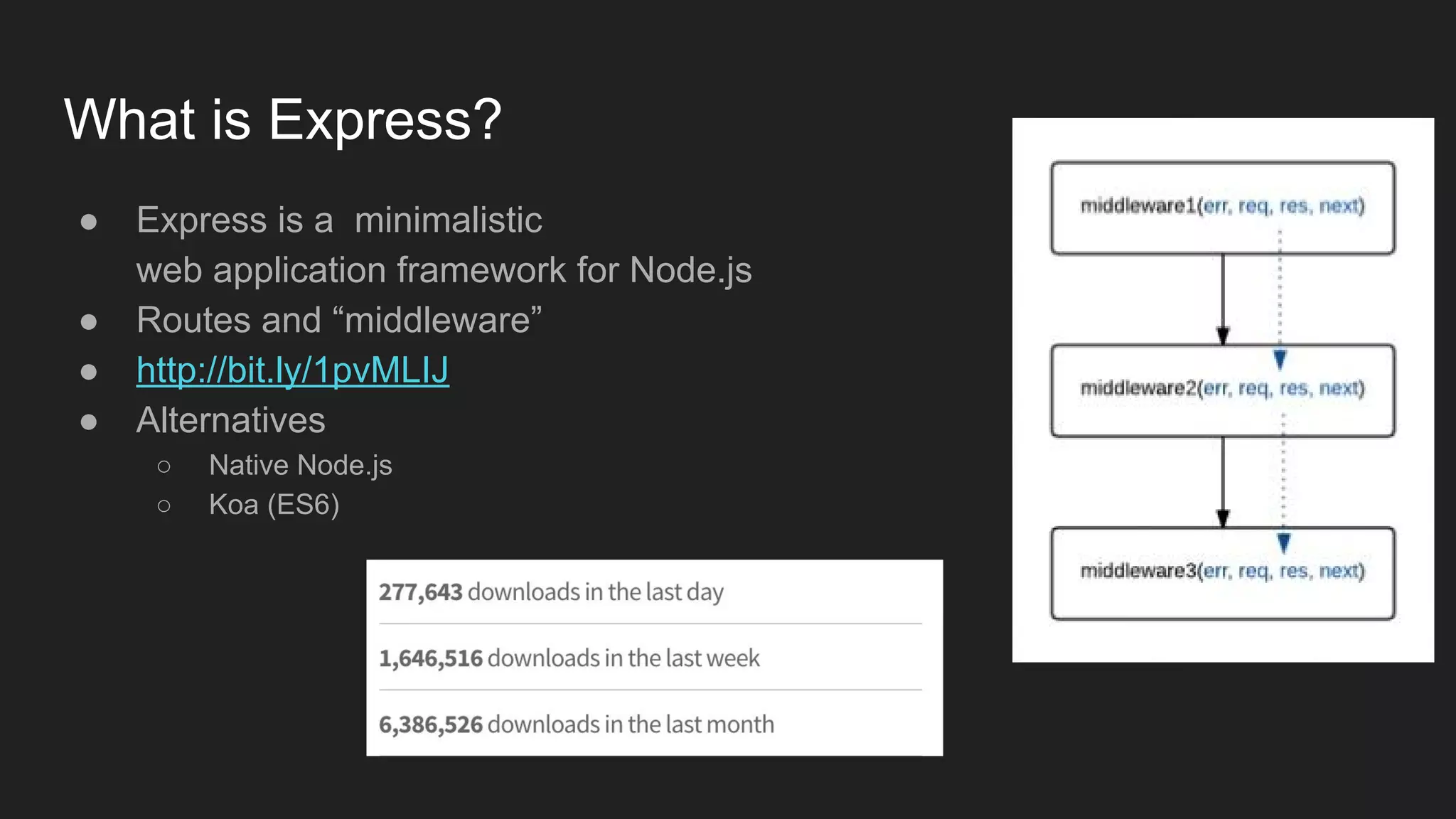
● Express is a minimalistic
web application framework for Node.js
● Routes and “middleware”
● http://bit.ly/1pvMLIJ
● Alternatives
○ Native Node.js
○ Koa (ES6)
Small Web Apps
● Standalone & Portable
○ Node.js web apps are standalone HTTP servers (no container)
○ The workaround is to use a proxy (e.g. Apache)
● Use “Middleware”
○ Analogous to servlet filters
● Lightweight
○ Little code, lots of features
● Versatile
○ They can serve different audiences (browser, client apps, CLI)
● Pluggable
○ You can plug one app into another
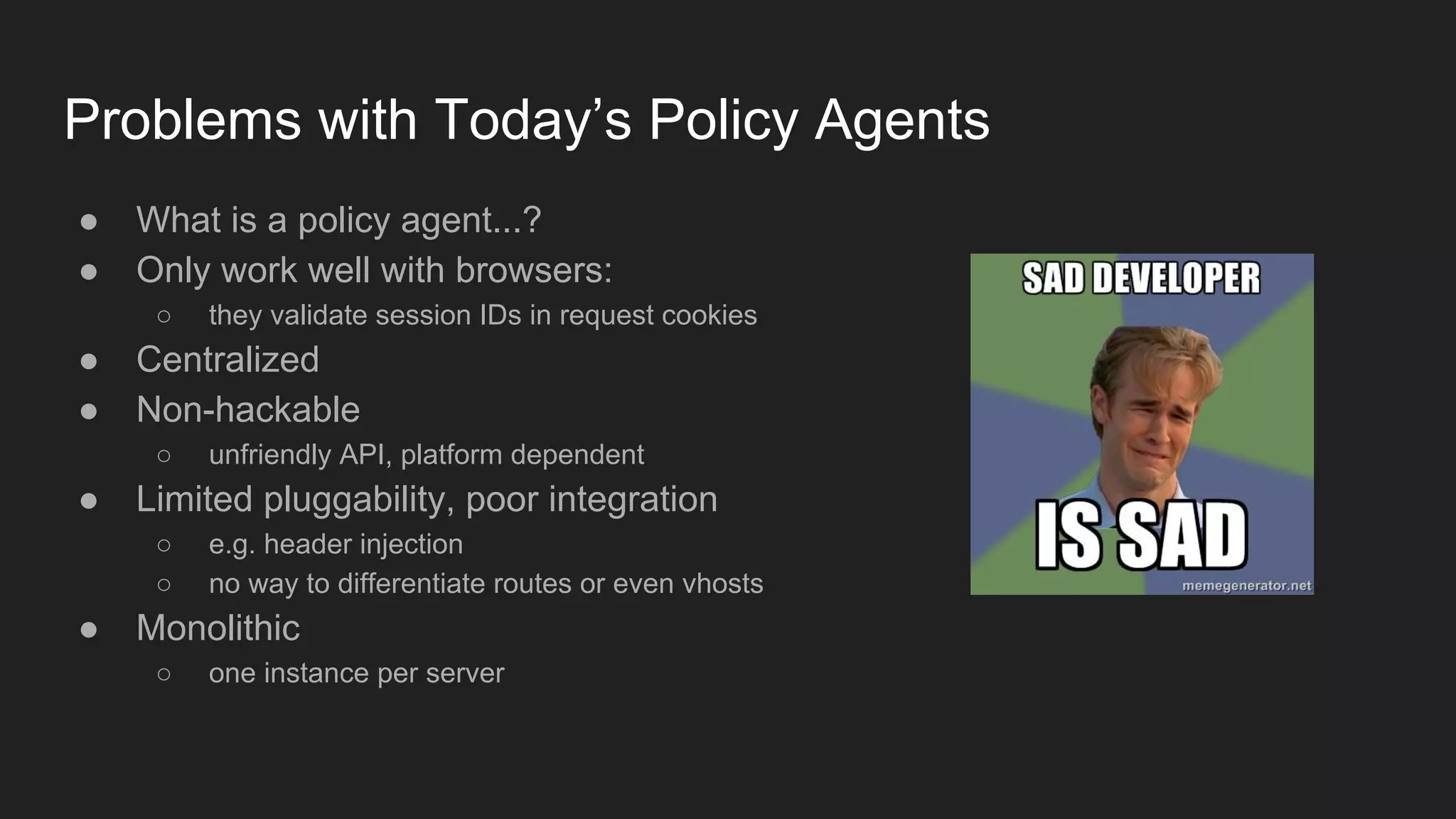
Problems with Today’s Policy Agents
● What is a policy agent...?
● Only work well with browsers:
○ they validate session IDs in request cookies
● Centralized
● Non-hackable
○ unfriendly API, platform dependent
● Limited pluggability, poor integration
○ e.g. header injection
○ no way to differentiate routes or even vhosts
● Monolithic
○ one instance per server
Imagine a New Kind of Policy Agent
● Supports different kinds of protection e.g. OAuth2
● Uses the latest and greatest OpenAM APIs
● Decentralized (think microservices)
● Friendly API for better code level control and less config
● Friendly SPI for extensibility
● Allows for rich and secure integration by sharing identity and decision
information with the application
● Can have many instances running in parallel
● Pluggable so that it’s only used where it’s needed
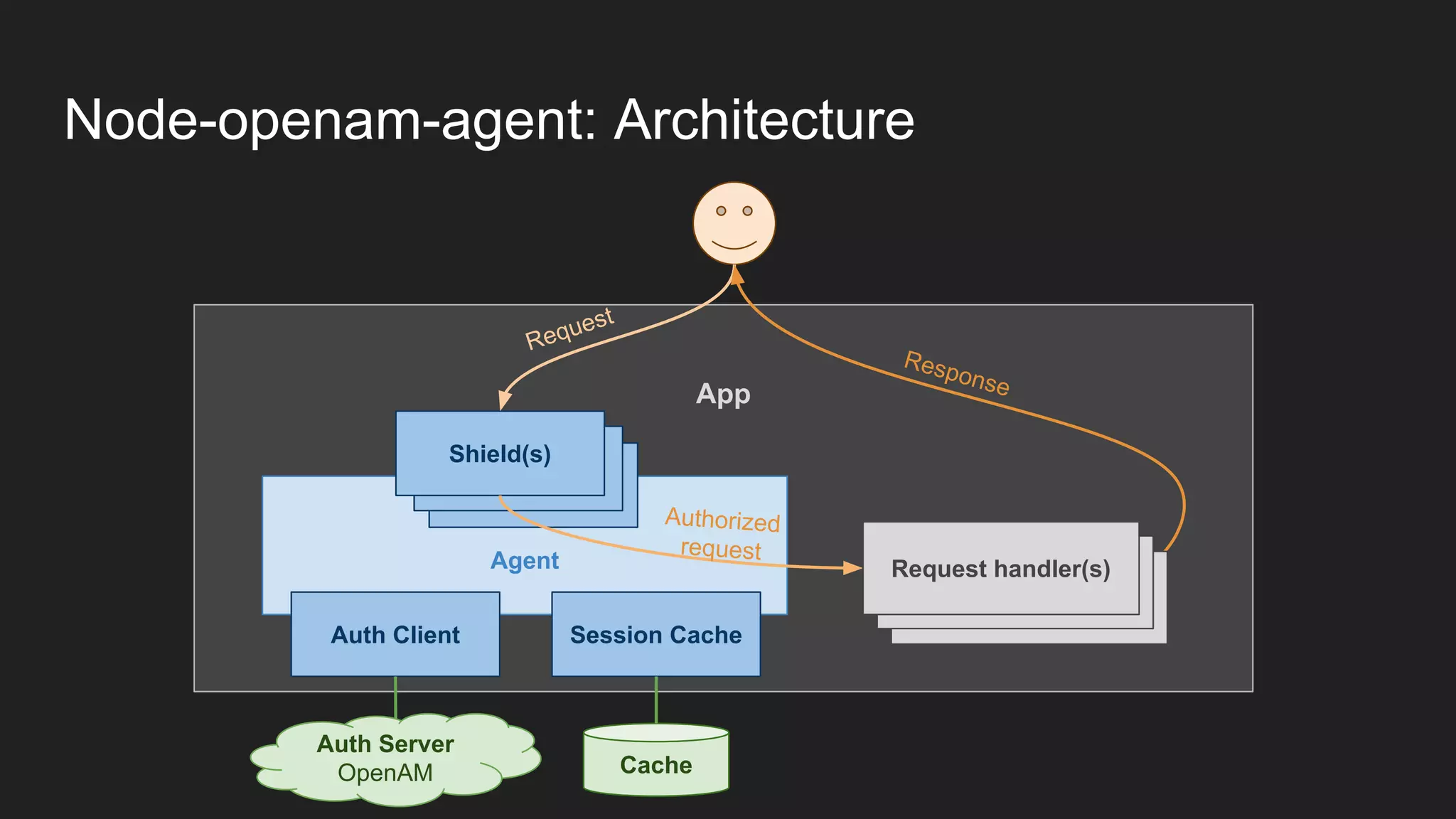
Node-openam-agent: Architecture
App
Agent
Shield
Auth Client Session Cache
Auth Server
OpenAM
Shield
Shield(s)
Request
Authorized
request
Response
Cache
Request handler
Request handler
Request handler(s)
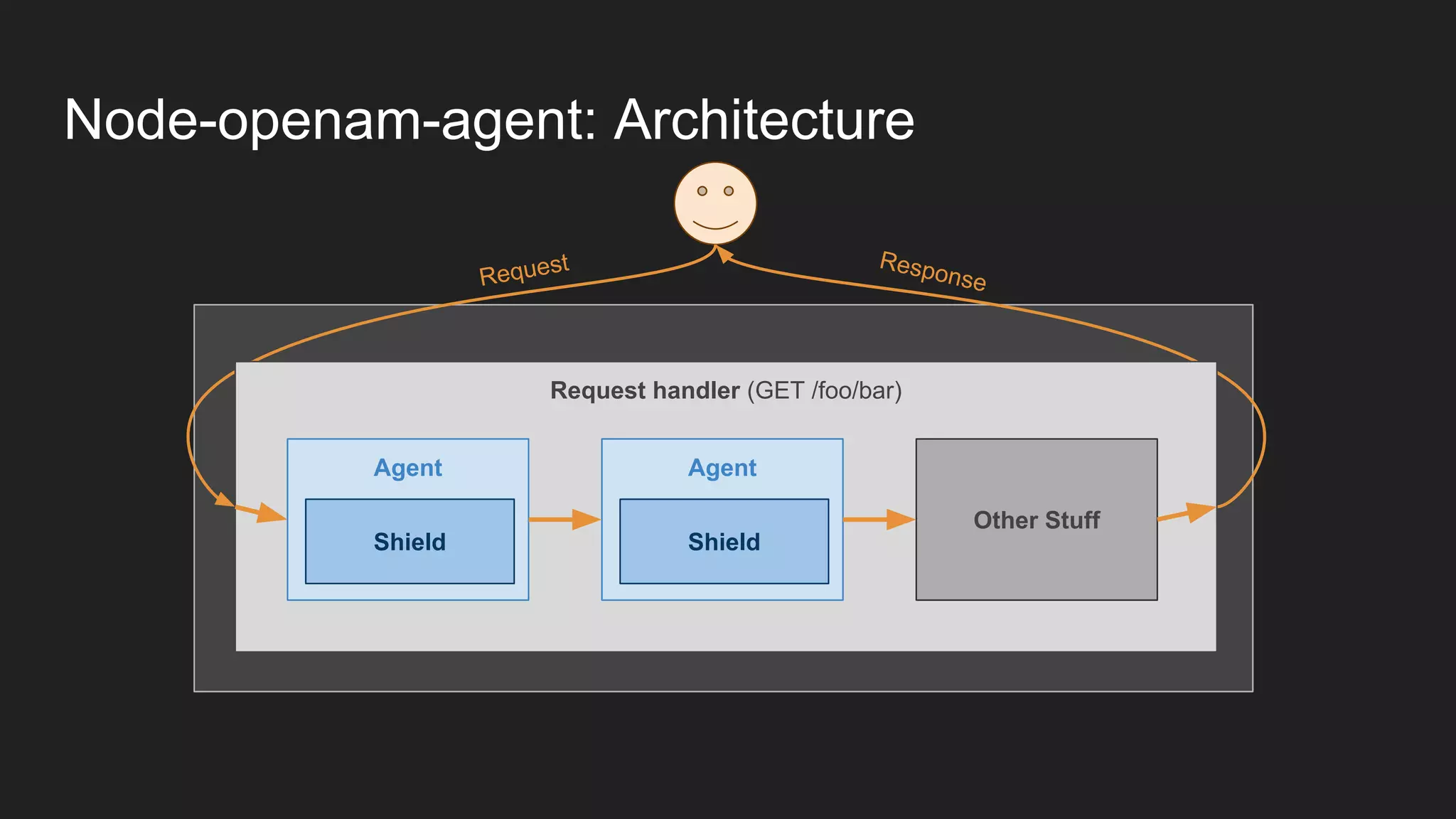
Node-openam-agent: Architecture
App
Request Response
Request handler (GET /foo/bar)
Agent
Shield
Agent
Shield
Other Stuff
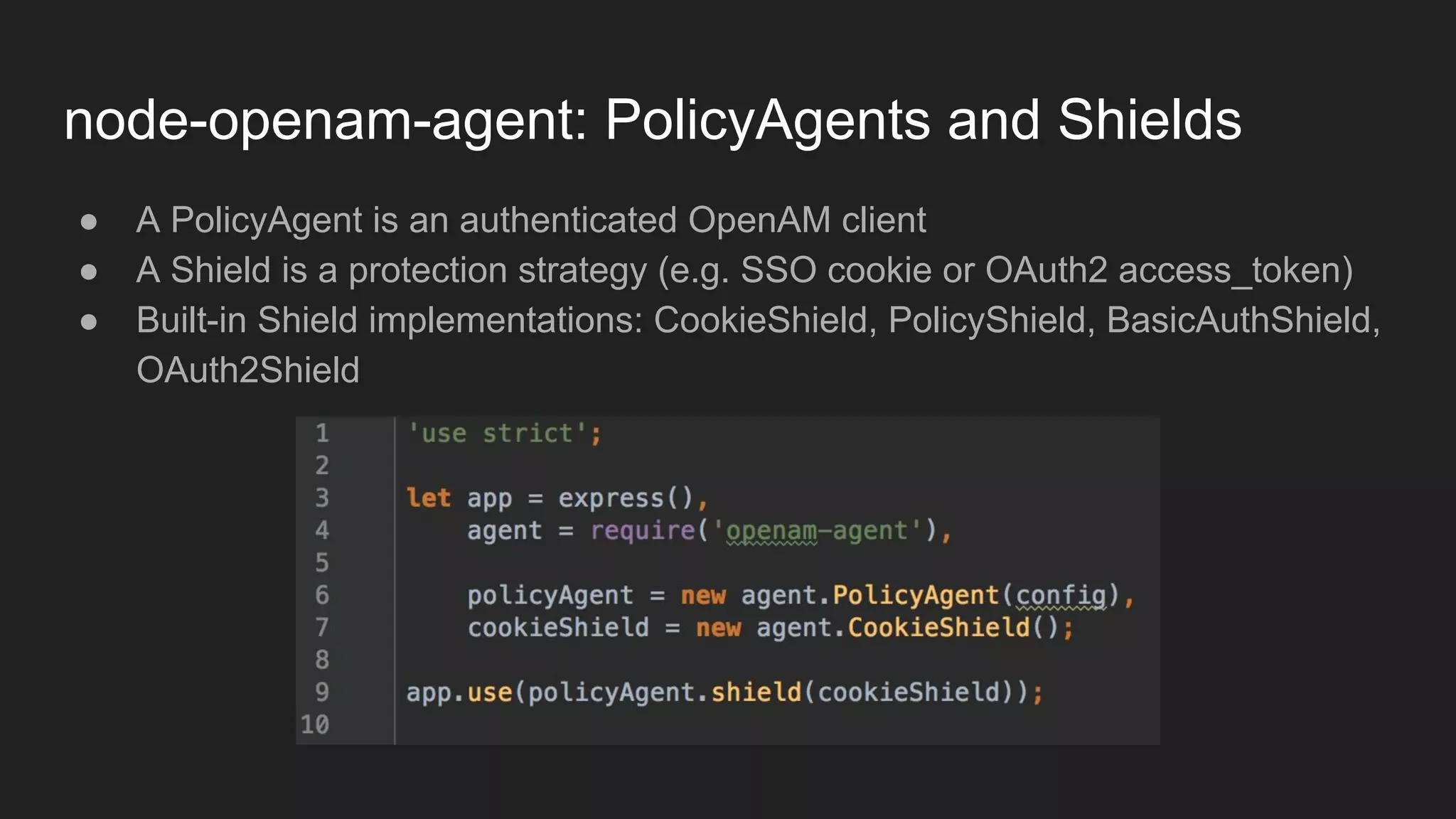
node-openam-agent: PolicyAgents and Shields
● A PolicyAgent is an authenticated OpenAM client
● A Shield is a protection strategy (e.g. SSO cookie or OAuth2 access_token)
● Built-in Shield implementations: CookieShield, PolicyShield, BasicAuthShield,
OAuth2Shield
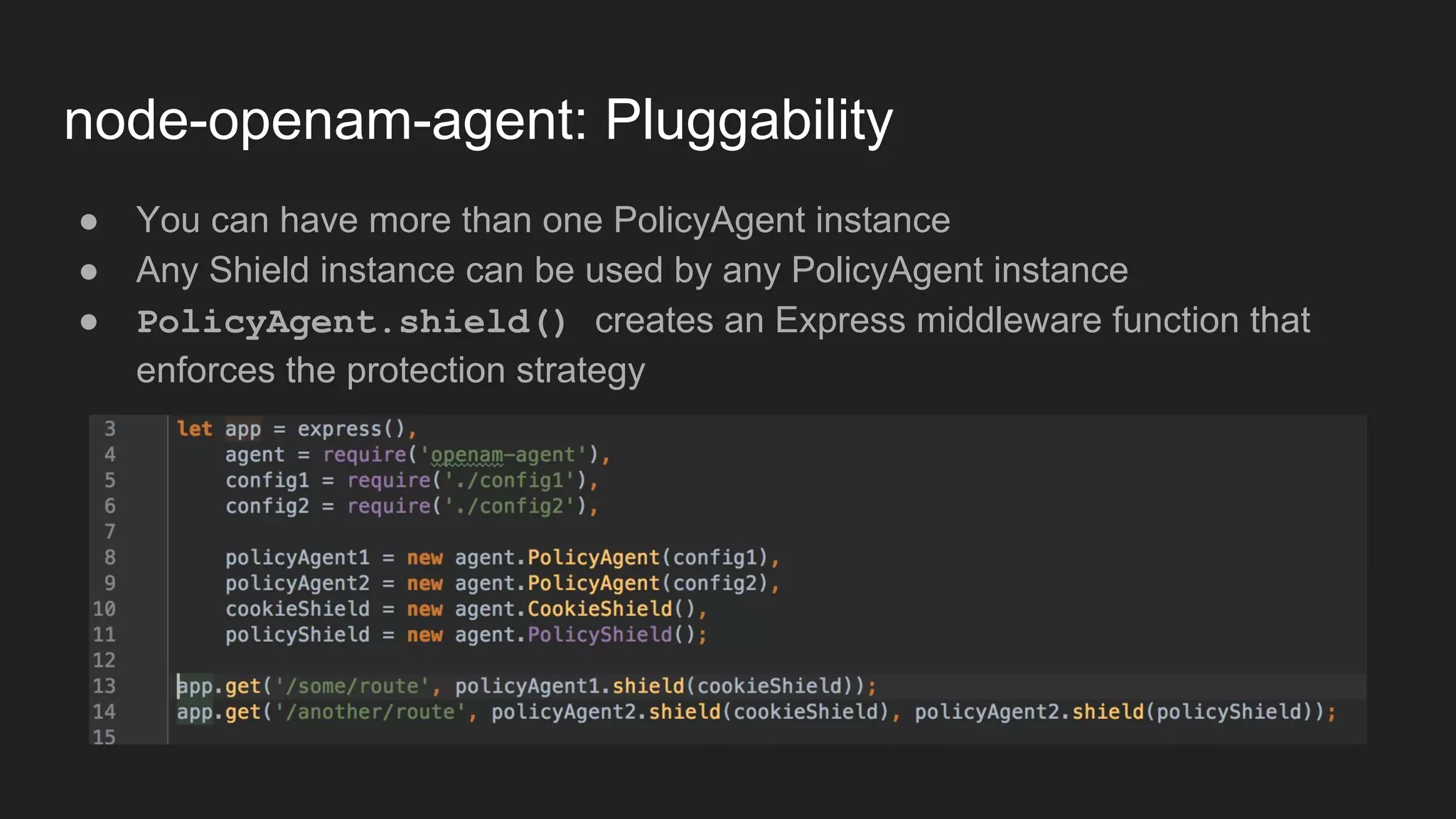
node-openam-agent: Pluggability
● You can have more than one PolicyAgent instance
● Any Shield instance can be used by any PolicyAgent instance
● PolicyAgent.shield() creates an Express middleware function that
enforces the protection strategy
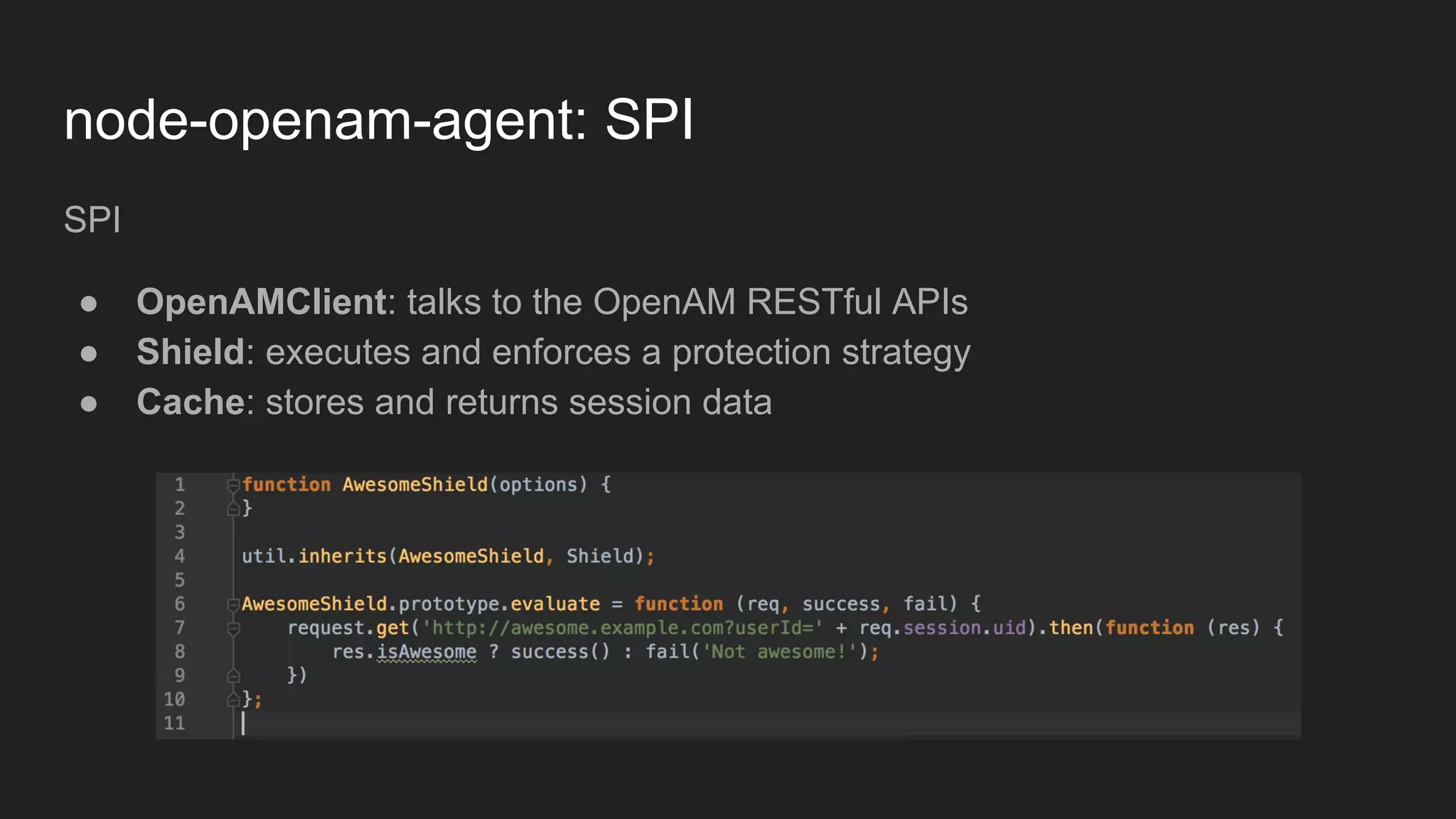
node-openam-agent: SPI
SPI
● OpenAMClient: talks to the OpenAM RESTful APIs
● Shield: executes and enforces a protection strategy
● Cache: stores and returns session data
Demo
Can node-openam-agent Do Everything?
● Supports various protection strategies (e.g. OAuth2)
● API: all features exposed; works with Promises
● SPI: easy to extend
● Closer to the app’s code
● Lightweight → embed in the app → run in Docker, Heroku, etc.
● Shares identity or decision information in the req.session object
● Supports multiple agent instances
● Each route can have its own shield(s)
● Notifications (legacy)
● CDSSO (legacy)
Questions
Resources
● https://nodejs.org/en/
● https://www.npmjs.com/
● http://expressjs.com/
● https://backstage.forgerock.com/#!/docs/openam
● https://github.com/zoltantarcsay/node-openam-agent
● https://github.com/zoltantarcsay/node-openam-agent-demo
● https://www.npmjs.com/package/openam-agent

Rethinking The Policy Agent

  • 1.
    Rethinking the PolicyAgent Zoltan Tarcsay @tarcsayzoltan zoltan.tarcsay@gmail.com
  • 2.
    What is Node.js? ●Node.js is a JavaScript runtime built on the latest V8 ● Headless → server apps ● Async, non-blocking model ○ Callbacks, events, promises ● Package system: npm ○ ~250k packages ○ left-pad-gate ○ Modular architecture
  • 3.
    What is Express? ●Express is a minimalistic web application framework for Node.js ● Routes and “middleware” ● http://bit.ly/1pvMLIJ ● Alternatives ○ Native Node.js ○ Koa (ES6)
  • 4.
    Small Web Apps ●Standalone & Portable ○ Node.js web apps are standalone HTTP servers (no container) ○ The workaround is to use a proxy (e.g. Apache) ● Use “Middleware” ○ Analogous to servlet filters ● Lightweight ○ Little code, lots of features ● Versatile ○ They can serve different audiences (browser, client apps, CLI) ● Pluggable ○ You can plug one app into another
  • 5.
    Problems with Today’sPolicy Agents ● What is a policy agent...? ● Only work well with browsers: ○ they validate session IDs in request cookies ● Centralized ● Non-hackable ○ unfriendly API, platform dependent ● Limited pluggability, poor integration ○ e.g. header injection ○ no way to differentiate routes or even vhosts ● Monolithic ○ one instance per server
  • 6.
    Imagine a NewKind of Policy Agent ● Supports different kinds of protection e.g. OAuth2 ● Uses the latest and greatest OpenAM APIs ● Decentralized (think microservices) ● Friendly API for better code level control and less config ● Friendly SPI for extensibility ● Allows for rich and secure integration by sharing identity and decision information with the application ● Can have many instances running in parallel ● Pluggable so that it’s only used where it’s needed
  • 7.
    Node-openam-agent: Architecture App Agent Shield Auth ClientSession Cache Auth Server OpenAM Shield Shield(s) Request Authorized request Response Cache Request handler Request handler Request handler(s)
  • 8.
    Node-openam-agent: Architecture App Request Response Requesthandler (GET /foo/bar) Agent Shield Agent Shield Other Stuff
  • 9.
    node-openam-agent: PolicyAgents andShields ● A PolicyAgent is an authenticated OpenAM client ● A Shield is a protection strategy (e.g. SSO cookie or OAuth2 access_token) ● Built-in Shield implementations: CookieShield, PolicyShield, BasicAuthShield, OAuth2Shield
  • 10.
    node-openam-agent: Pluggability ● Youcan have more than one PolicyAgent instance ● Any Shield instance can be used by any PolicyAgent instance ● PolicyAgent.shield() creates an Express middleware function that enforces the protection strategy
  • 11.
    node-openam-agent: SPI SPI ● OpenAMClient:talks to the OpenAM RESTful APIs ● Shield: executes and enforces a protection strategy ● Cache: stores and returns session data
  • 12.
  • 13.
    Can node-openam-agent DoEverything? ● Supports various protection strategies (e.g. OAuth2) ● API: all features exposed; works with Promises ● SPI: easy to extend ● Closer to the app’s code ● Lightweight → embed in the app → run in Docker, Heroku, etc. ● Shares identity or decision information in the req.session object ● Supports multiple agent instances ● Each route can have its own shield(s) ● Notifications (legacy) ● CDSSO (legacy)
  • 14.
  • 15.
    Resources ● https://nodejs.org/en/ ● https://www.npmjs.com/ ●http://expressjs.com/ ● https://backstage.forgerock.com/#!/docs/openam ● https://github.com/zoltantarcsay/node-openam-agent ● https://github.com/zoltantarcsay/node-openam-agent-demo ● https://www.npmjs.com/package/openam-agent