Rethinking Empowerment 
to Create 
a Dynamic Team 
Greg Basham 
Chief Executive Officer 
Andrew Cheung 
Client Relations Manager
Agenda 
Our Credo & Beliefs 
Creating an Environment of Empowerment 
The Business Case 
Making It Work 
Netflix 
“The task of a leader is to create conditions under which all followers 
can realise their full human potential.” - Aristotle, 400 BC
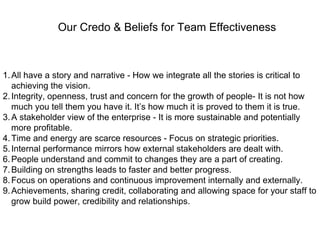
Our Credo & Beliefs for Team Effectiveness 
1. All have a story and narrative - How we integrate all the stories is critical to 
achieving the vision. 
2. Integrity, openness, trust and concern for the growth of people- It is not how 
much you tell them you have it. It’s how much it is proved to them it is true. 
3. A stakeholder view of the enterprise - It is more sustainable and potentially 
more profitable. 
4. Time and energy are scarce resources - Focus on strategic priorities. 
5. Internal performance mirrors how external stakeholders are dealt with. 
6.People understand and commit to changes they are a part of creating. 
7. Building on strengths leads to faster and better progress. 
8.Focus on operations and continuous improvement internally and externally. 
9. Achievements, sharing credit, collaborating and allowing space for your staff to 
grow build power, credibility and relationships.
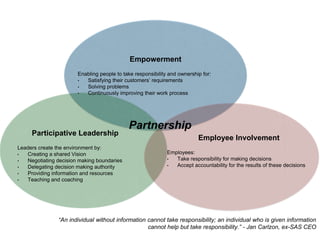
Empowerment 
Enabling people to take responsibility and ownership for: 
• Satisfying their customers’ requirements 
• Solving problems 
• Continuously improving their work process 
Participative Leadership 
Leaders create the environment by: 
• Creating a shared Vision 
• Negotiating decision making boundaries 
• Delegating decision making authority 
• Providing information and resources 
• Teaching and coaching 
Employee Involvement 
Partnership 
Employees: 
• Take responsibility for making decisions 
• Accept accountability for the results of these decisions 
“An individual without information cannot take responsibility; an individual who is given information 
cannot help but take responsibility.” - Jan Carlzon, ex-SAS CEO
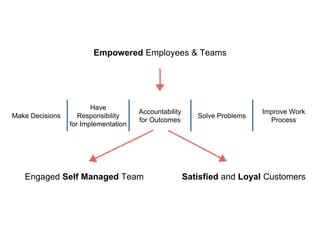
Satisfied and Loyal Customers 
Make Decisions 
Have 
Responsibility 
for Implementation 
Accountability 
for Outcomes 
Solve Problems 
Improve Work 
Process 
Empowered Employees & Teams 
Engaged Self Managed Team
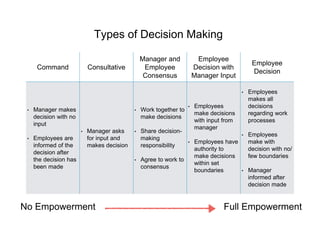
Command Consultative 
Manager and 
Employee 
Consensus 
Employee 
Decision with 
Manager Input 
Employee 
Decision 
• Manager makes 
decision with no 
input 
• Employees are 
informed of the 
decision after 
the decision has 
been made 
• Manager asks 
for input and 
makes decision 
• Work together to 
make decisions 
• Share decision-making 
responsibility 
• Agree to work to 
consensus 
• Employees 
make decisions 
with input from 
manager 
• Employees have 
authority to 
make decisions 
within set 
boundaries 
• Employees 
makes all 
decisions 
regarding work 
processes 
• Employees 
make with 
decision with no/ 
few boundaries 
• Manager 
informed after 
decision made 
Types of Decision Making 
No Empowerment Full Empowerment
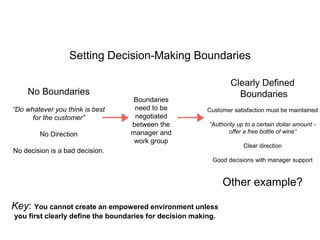
Setting Decision-Making Boundaries 
Boundaries 
need to be 
negotiated 
between the 
manager and 
work group 
No Boundaries 
“Do whatever you think is best 
for the customer” 
No Direction 
No decision is a bad decision. 
Clearly Defined 
Boundaries 
Customer satisfaction must be maintained 
“Authority up to a certain dollar amount - 
offer a free bottle of wine” 
Clear direction 
Good decisions with manager support 
Other example? 
Key: You cannot create an empowered environment unless 
you first clearly define the boundaries for decision making.
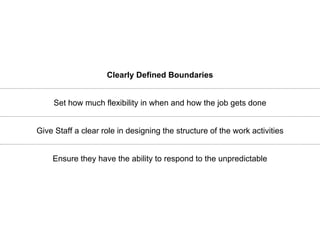
Clearly Defined Boundaries 
Set how much flexibility in when and how the job gets done 
Give Staff a clear role in designing the structure of the work activities 
Ensure they have the ability to respond to the unpredictable
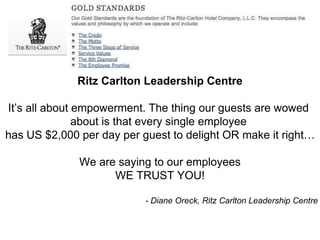
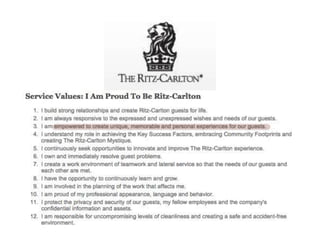
Ritz Carlton Leadership Centre 
It’s all about empowerment. The thing our guests are wowed 
about is that every single employee 
has US $2,000 per day per guest to delight OR make it right… 
We are saying to our employees 
WE TRUST YOU! 
- Diane Oreck, Ritz Carlton Leadership Centre
The Business Case for Empowerment 
1.People resist change that they are not part of creating. 
2.Empowered teams and individuals create better outcomes. 
3.People can function as individuals in more than one team at the same time.
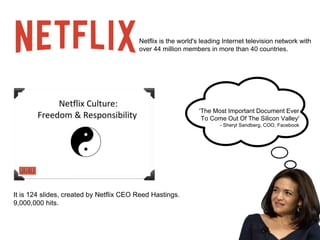
Netflix is the world's leading Internet television network with 
over 44 million members in more than 40 countries. 
It is 124 slides, created by Netflix CEO Reed Hastings. 
9,000,000 hits. 
'The Most Important Document Ever 
To Come Out Of The Silicon Valley' 
- Sheryl Sandberg, COO, Facebook
Seven Aspects of our Culture 
• Values are what we Value 
• High Performance 
• Freedom & Responsibility 
• Context, not Control 
• Highly Aligned, Loosely Coupled 
• Pay Top of Market 
• Promotions & Development
Manage Context, Not Control 
The best managers figure out how to get great 
outcomes by setting the appropriate context, 
rather than by trying to control their people.
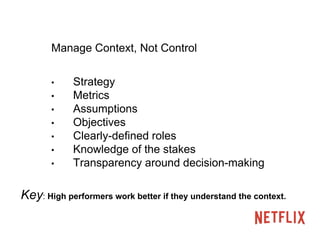
Manage Context, Not Control 
• Strategy 
• Metrics 
• Assumptions 
• Objectives 
• Clearly-defined roles 
• Knowledge of the stakes 
• Transparency around decision-making 
Key: High performers work better if they understand the context.
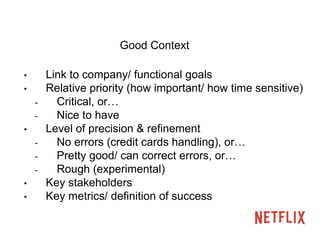
Good Context 
• Link to company/ functional goals 
• Relative priority (how important/ how time sensitive) 
- Critical, or… 
- Nice to have 
• Level of precision & refinement 
- No errors (credit cards handling), or… 
- Pretty good/ can correct errors, or… 
- Rough (experimental) 
• Key stakeholders 
• Key metrics/ definition of success
Hard Work 
It’s not directly relevant. 
It’s about effectiveness. 
We don’t measure people by how many weekends 
or nights they are in their cube. 
We measure by how much, how quick, 
and how well they get work done.
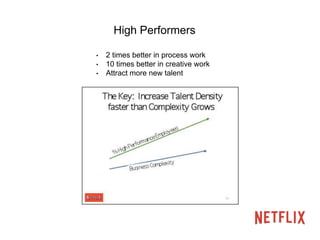
High Performers 
• 2 times better in process work 
• 10 times better in creative work 
• Attract more new talent

Rethinking Empowerment to Create a Dynmanic Team

  • 1.
    Rethinking Empowerment toCreate a Dynamic Team Greg Basham Chief Executive Officer Andrew Cheung Client Relations Manager
  • 2.
    Agenda Our Credo& Beliefs Creating an Environment of Empowerment The Business Case Making It Work Netflix “The task of a leader is to create conditions under which all followers can realise their full human potential.” - Aristotle, 400 BC
  • 3.
    Our Credo &Beliefs for Team Effectiveness 1. All have a story and narrative - How we integrate all the stories is critical to achieving the vision. 2. Integrity, openness, trust and concern for the growth of people- It is not how much you tell them you have it. It’s how much it is proved to them it is true. 3. A stakeholder view of the enterprise - It is more sustainable and potentially more profitable. 4. Time and energy are scarce resources - Focus on strategic priorities. 5. Internal performance mirrors how external stakeholders are dealt with. 6.People understand and commit to changes they are a part of creating. 7. Building on strengths leads to faster and better progress. 8.Focus on operations and continuous improvement internally and externally. 9. Achievements, sharing credit, collaborating and allowing space for your staff to grow build power, credibility and relationships.
  • 4.
    Empowerment Enabling peopleto take responsibility and ownership for: • Satisfying their customers’ requirements • Solving problems • Continuously improving their work process Participative Leadership Leaders create the environment by: • Creating a shared Vision • Negotiating decision making boundaries • Delegating decision making authority • Providing information and resources • Teaching and coaching Employee Involvement Partnership Employees: • Take responsibility for making decisions • Accept accountability for the results of these decisions “An individual without information cannot take responsibility; an individual who is given information cannot help but take responsibility.” - Jan Carlzon, ex-SAS CEO
  • 5.
    Satisfied and LoyalCustomers Make Decisions Have Responsibility for Implementation Accountability for Outcomes Solve Problems Improve Work Process Empowered Employees & Teams Engaged Self Managed Team
  • 6.
    Command Consultative Managerand Employee Consensus Employee Decision with Manager Input Employee Decision • Manager makes decision with no input • Employees are informed of the decision after the decision has been made • Manager asks for input and makes decision • Work together to make decisions • Share decision-making responsibility • Agree to work to consensus • Employees make decisions with input from manager • Employees have authority to make decisions within set boundaries • Employees makes all decisions regarding work processes • Employees make with decision with no/ few boundaries • Manager informed after decision made Types of Decision Making No Empowerment Full Empowerment
  • 7.
    Setting Decision-Making Boundaries Boundaries need to be negotiated between the manager and work group No Boundaries “Do whatever you think is best for the customer” No Direction No decision is a bad decision. Clearly Defined Boundaries Customer satisfaction must be maintained “Authority up to a certain dollar amount - offer a free bottle of wine” Clear direction Good decisions with manager support Other example? Key: You cannot create an empowered environment unless you first clearly define the boundaries for decision making.
  • 8.
    Clearly Defined Boundaries Set how much flexibility in when and how the job gets done Give Staff a clear role in designing the structure of the work activities Ensure they have the ability to respond to the unpredictable
  • 9.
    Ritz Carlton LeadershipCentre It’s all about empowerment. The thing our guests are wowed about is that every single employee has US $2,000 per day per guest to delight OR make it right… We are saying to our employees WE TRUST YOU! - Diane Oreck, Ritz Carlton Leadership Centre
  • 11.
    The Business Casefor Empowerment 1.People resist change that they are not part of creating. 2.Empowered teams and individuals create better outcomes. 3.People can function as individuals in more than one team at the same time.
  • 12.
    Netflix is theworld's leading Internet television network with over 44 million members in more than 40 countries. It is 124 slides, created by Netflix CEO Reed Hastings. 9,000,000 hits. 'The Most Important Document Ever To Come Out Of The Silicon Valley' - Sheryl Sandberg, COO, Facebook
  • 13.
    Seven Aspects ofour Culture • Values are what we Value • High Performance • Freedom & Responsibility • Context, not Control • Highly Aligned, Loosely Coupled • Pay Top of Market • Promotions & Development
  • 14.
    Manage Context, NotControl The best managers figure out how to get great outcomes by setting the appropriate context, rather than by trying to control their people.
  • 15.
    Manage Context, NotControl • Strategy • Metrics • Assumptions • Objectives • Clearly-defined roles • Knowledge of the stakes • Transparency around decision-making Key: High performers work better if they understand the context.
  • 16.
    Good Context •Link to company/ functional goals • Relative priority (how important/ how time sensitive) - Critical, or… - Nice to have • Level of precision & refinement - No errors (credit cards handling), or… - Pretty good/ can correct errors, or… - Rough (experimental) • Key stakeholders • Key metrics/ definition of success
  • 17.
    Hard Work It’snot directly relevant. It’s about effectiveness. We don’t measure people by how many weekends or nights they are in their cube. We measure by how much, how quick, and how well they get work done.
  • 18.
    High Performers •2 times better in process work • 10 times better in creative work • Attract more new talent