RESPONSE THEORIES
THE HYPODERMIC NEEDLE MODEL 
It was developed in the 1920s 
and 1930s after researchers 
observed the ef fect of 
propaganda during World War 
I and events like Orson Welles’ 
War of the Worlds broadcast. 
The Hypodermic Needle Theory 
is a linear communication 
theory which suggests that 
media messages are injected 
directly into the brains of a 
passive audience. 
http://lessonbucket.com/wp-content/ 
uploads/2013/04/the-hypodermic- 
needle-theory.jpg
THE INOCULATION MODEL 
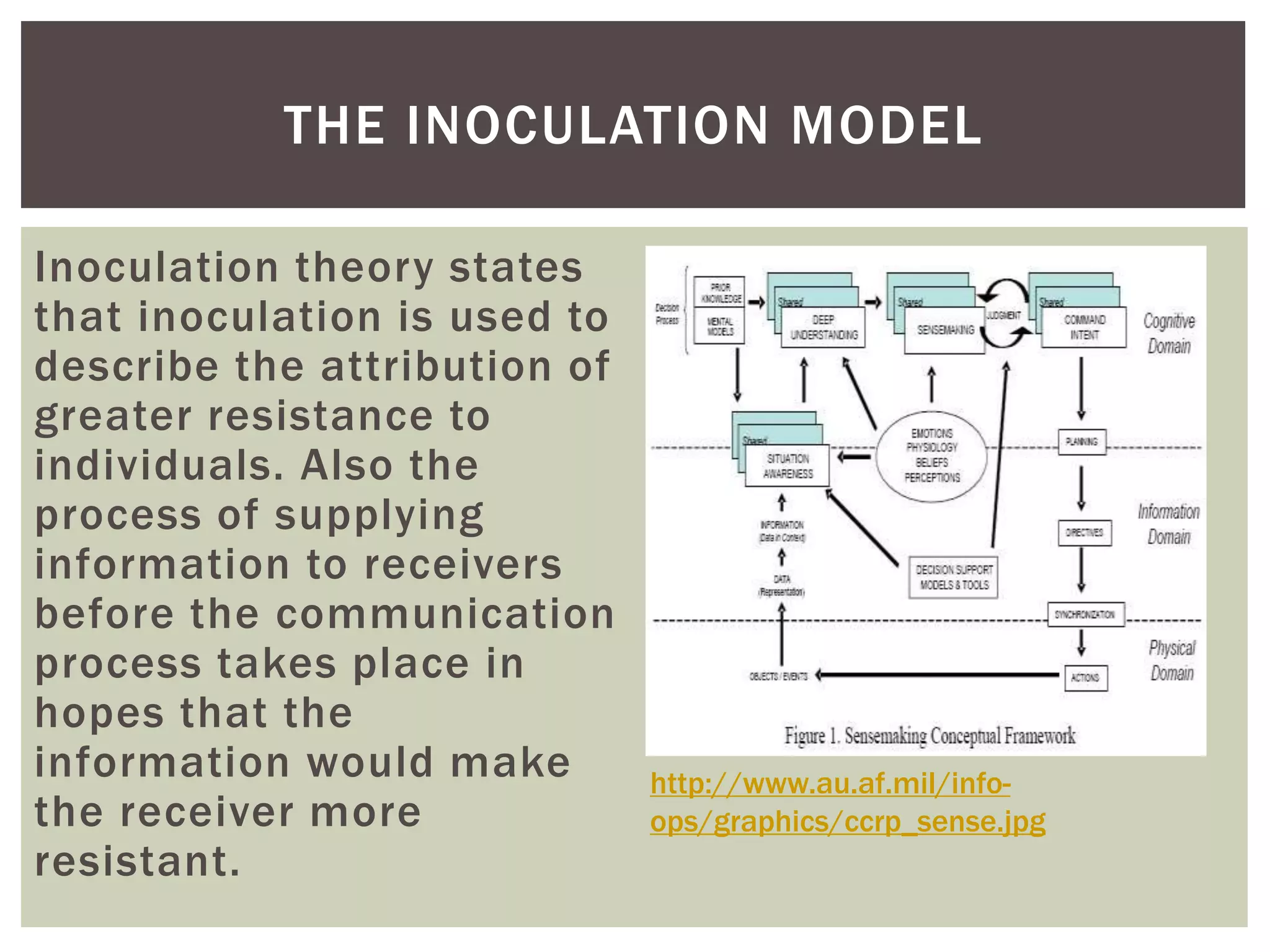
Inoculation theory states 
that inoculation is used to 
describe the attribution of 
greater resistance to 
individuals. Also the 
process of supplying 
information to receivers 
before the communication 
process takes place in 
hopes that the 
information would make 
the receiver more 
resistant. 
http://www.au.af.mil/info-ops/ 
graphics/ccrp_sense.jpg
THE TWO-STEP FLOW MODEL 
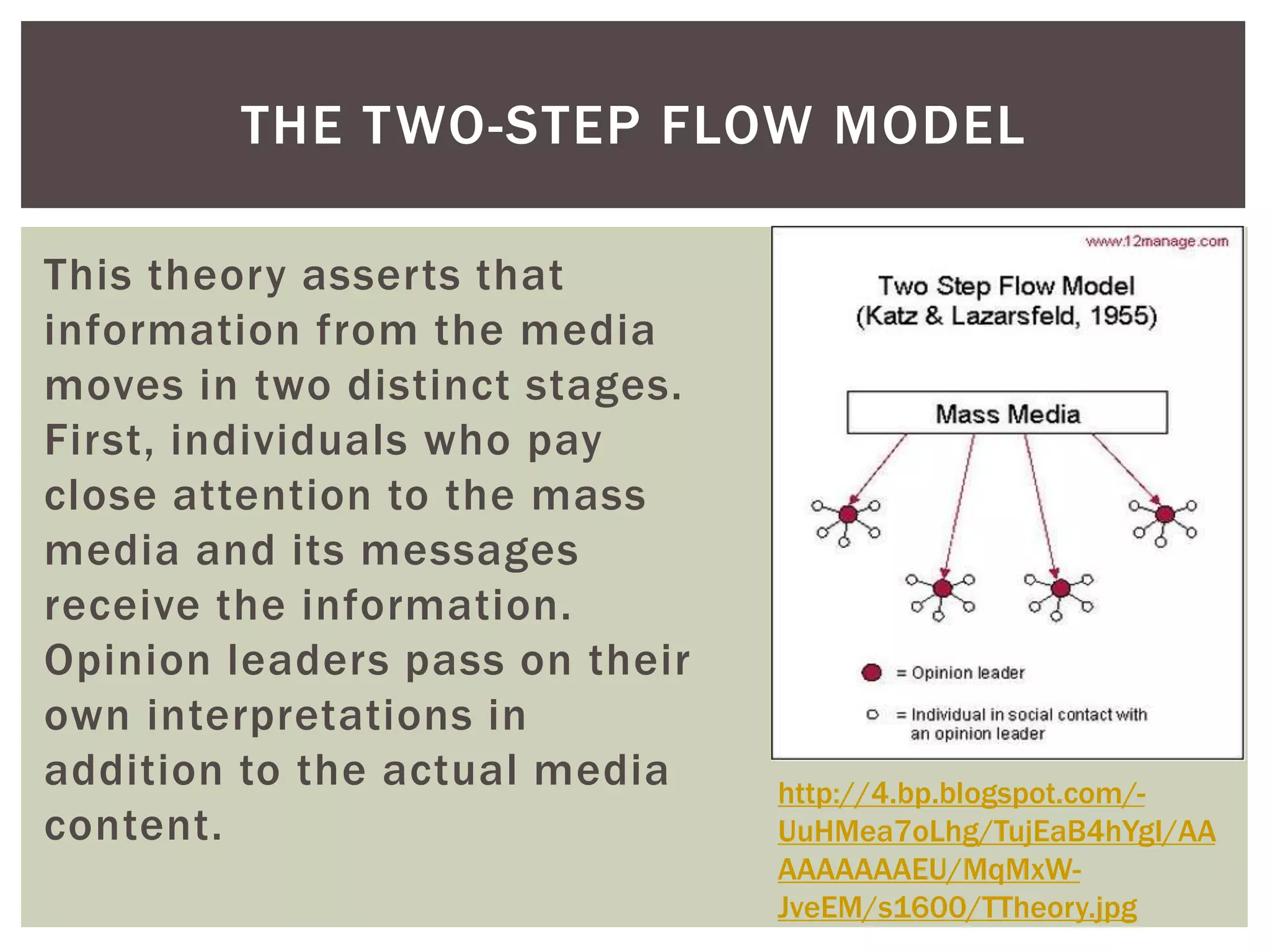
This theory asserts that 
information from the media 
moves in two distinct stages. 
First, individuals who pay 
close attention to the mass 
media and its messages 
receive the information. 
Opinion leaders pass on their 
own interpretations in 
addition to the actual media 
content. 
http://4.bp.blogspot.com/- 
UuHMea7oLhg/TujEaB4hYgI/AA 
AAAAAAAEU/MqMxW-JveEM/ 
s1600/TTheory.jpg
THE USES & GRATIFICATIONS THEORY 
Uses and Gratifications, as a 
recognizable theory, had the 
most influence in the 1970s 
and 1980s. The limited 
ef fects paradigm held sway 
at the time, and media 
theorists needed a 
framework within which they 
could discuss the obvious 
media ef fects without 
straying too far from 
disciplinary orthodoxy. This is 
not the reason that Katz, 
Blumler, and Gurevitch 
formalized the approach. 
http://mediablogofchris.files.wordpr 
ess.com/2013/11/maslow.png
THE RECEPTION THEORY 
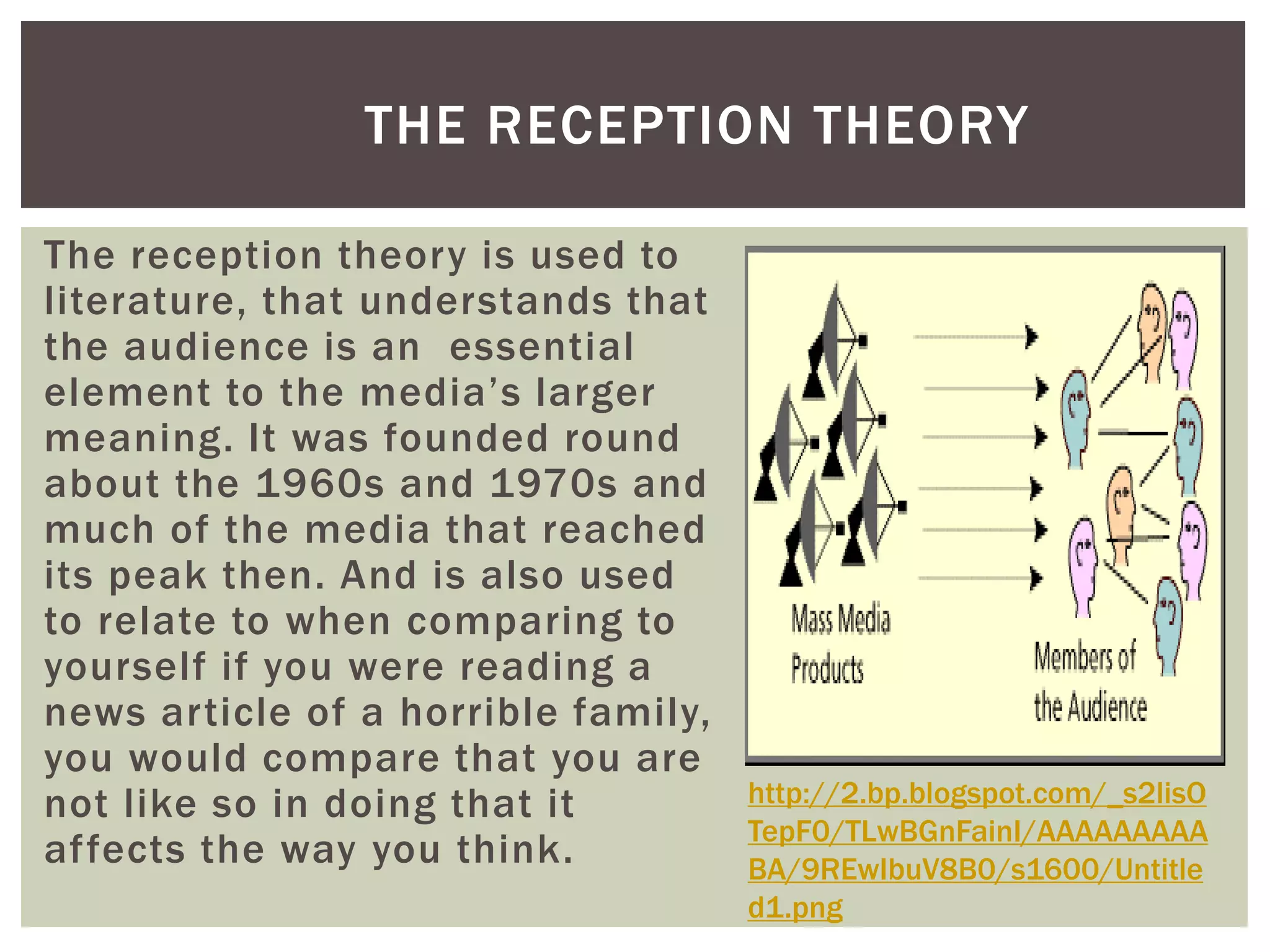
The reception theory is used to 
literature, that understands that 
the audience is an essential 
element to the media’s larger 
meaning. It was founded round 
about the 1960s and 1970s and 
much of the media that reached 
its peak then. And is also used 
to relate to when comparing to 
yourself if you were reading a 
news article of a horrible family, 
you would compare that you are 
not like so in doing that it 
af fects the way you think. 
http://2.bp.blogspot.com/_s2lisO 
TepF0/TLwBGnFainI/AAAAAAAAA 
BA/9REwIbuV8B0/s1600/Untitle 
d1.png

Response theories

  • 1.
  • 2.
    THE HYPODERMIC NEEDLEMODEL It was developed in the 1920s and 1930s after researchers observed the ef fect of propaganda during World War I and events like Orson Welles’ War of the Worlds broadcast. The Hypodermic Needle Theory is a linear communication theory which suggests that media messages are injected directly into the brains of a passive audience. http://lessonbucket.com/wp-content/ uploads/2013/04/the-hypodermic- needle-theory.jpg
  • 3.
    THE INOCULATION MODEL Inoculation theory states that inoculation is used to describe the attribution of greater resistance to individuals. Also the process of supplying information to receivers before the communication process takes place in hopes that the information would make the receiver more resistant. http://www.au.af.mil/info-ops/ graphics/ccrp_sense.jpg
  • 4.
    THE TWO-STEP FLOWMODEL This theory asserts that information from the media moves in two distinct stages. First, individuals who pay close attention to the mass media and its messages receive the information. Opinion leaders pass on their own interpretations in addition to the actual media content. http://4.bp.blogspot.com/- UuHMea7oLhg/TujEaB4hYgI/AA AAAAAAAEU/MqMxW-JveEM/ s1600/TTheory.jpg
  • 5.
    THE USES &GRATIFICATIONS THEORY Uses and Gratifications, as a recognizable theory, had the most influence in the 1970s and 1980s. The limited ef fects paradigm held sway at the time, and media theorists needed a framework within which they could discuss the obvious media ef fects without straying too far from disciplinary orthodoxy. This is not the reason that Katz, Blumler, and Gurevitch formalized the approach. http://mediablogofchris.files.wordpr ess.com/2013/11/maslow.png
  • 6.
    THE RECEPTION THEORY The reception theory is used to literature, that understands that the audience is an essential element to the media’s larger meaning. It was founded round about the 1960s and 1970s and much of the media that reached its peak then. And is also used to relate to when comparing to yourself if you were reading a news article of a horrible family, you would compare that you are not like so in doing that it af fects the way you think. http://2.bp.blogspot.com/_s2lisO TepF0/TLwBGnFainI/AAAAAAAAA BA/9REwIbuV8B0/s1600/Untitle d1.png