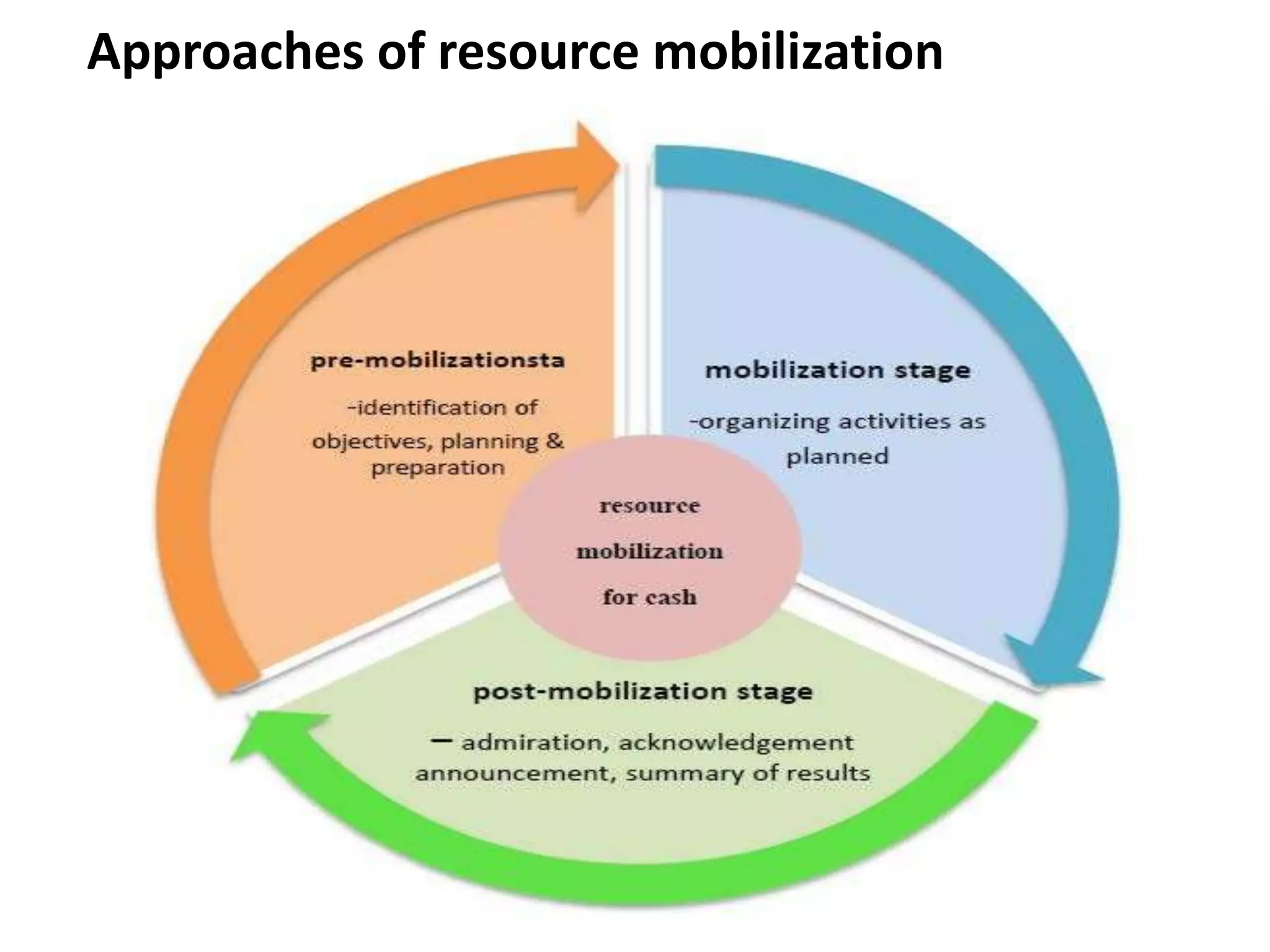
The resource mobilization theory developed by John McCarthy and Mayer Zald in 1977 asserts that the success of social movements depends on their ability to mobilize resources like time, money, skills, and other assets. The theory argues that social movements form when groups that share grievances mobilize resources to take action. It emphasizes that the availability of resources like funding, media attention, volunteers, and support from elites determines whether discontented groups can launch effective social movements. The theory has been criticized for focusing too much on financial resources rather than other assets like volunteer time that can drive successful movements.