WORKSHOP
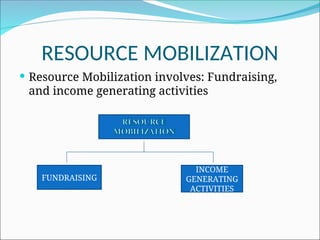
RESOURCE MOBILIZATION
 Resource Mobilization involves: Fundraising,
and income generating activities
FUNDRAISING
INCOME
GENERATING
ACTIVITIES
FUNDRAISING
 Concept of Fundraising
 Why Fundraise? Purpose of Fundraising
 Survival Tactics in Fundraising
 Process of successful Fundraising
 Principles of Fundraising
 Fundraising Strategy
 Identifying Sources of Funds
 Addressing different stakeholders
 Funding Techniques
 Income generating Activities
Concept Of Fundraising
 Fundraising is a component of resource
mobilization.
 Fundraising is giving people the opportunity to
give. It’s a process whereby resources are
transferred from those able to give to those in
need to receive.
Why Fundraise
 Diversify and increase the number of different
income sources the organisation has.
 Develop and expand, or consolidate and maintain,
the existing workforce and programme or service.
 Reduce financial dependency on funds received
from any one source or any international funding
agency.
 Enhance long term organisational sustainability.
 Promote the organisation
 Member recruitment
Survival Tactics in Fundraising
 Know your mission- Do not compromise your values
 Long-term fundraising has to be planned
 Effective internal and external communication
 Investing in its own growth
 Making friends- “Fundraising is friend raising”
Building relationships with community and
supporters
 Servicing the funders and sustaining their support
 It is not a one off attempt- it takes time
 Focus on why you need the funds.
 Leadership is key
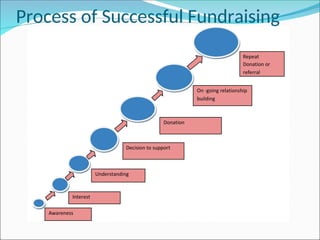
Process of Successful Fundraising
Principles of Fundraising
 Educate
 Ask
 Use personal approach
 Understand the donor’s point view
 Seek ethical donors
 Say thank you
 Invest time and money in retaining donors
 Maintain a good reputation
 Be accountable and transparent
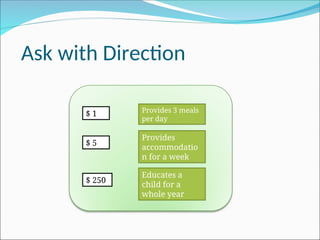
Ask with Direction
$ 1
$ 5
$ 250
Provides 3 meals
per day
Provides
accommodatio
n for a week
Educates a
child for a
whole year
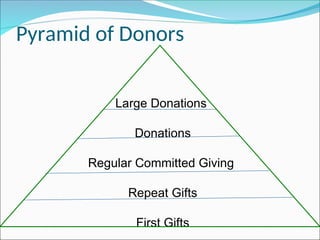
Pyramid of Donors
Large Donations
Donations
Regular Committed Giving
Repeat Gifts
First Gifts
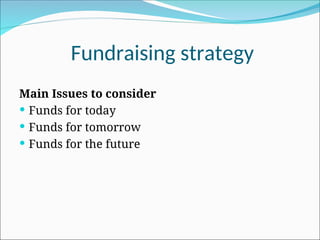
Fundraising strategy
Main Issues to consider
 Funds for today
 Funds for tomorrow
 Funds for the future
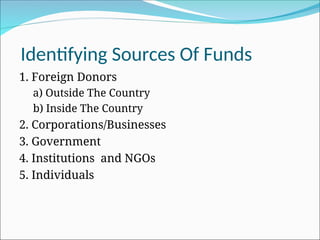
Identifying Sources Of Funds
1. Foreign Donors
a) Outside The Country
b) Inside The Country
2. Corporations/Businesses
3. Government
4. Institutions and NGOs
5. Individuals
Addressing Different Stakeholders
 Developing a case for support
The Case must: “Catch the Eye – Warm the
Heart – Stir the Mind”
 The “case” is an expression of the cause, or a clear,
compelling statement of all the reasons why
anyone should consider making a contribution in
support of advancing an NGO’s vision to meet a
need. A reality of fundraising is that no one has to
say “yes” in response to a call for help. It is up to
the NGO to attract and persuade support.
Raising Money From Foreign Donors
 Identifying donors area of values and interests
 Knowledge of donors application requirements
and deadlines
 Knowledge of operation of international umbrellas
 Money flow
 E.g.
 IHEU
 HAMU
Raising Money From Business Corporations
 Approach
 Research
 Why should they give you money? What can you
give the business?
 Face-to-face approach
 Identify contact persons
 Set up a meeting
Raising Money From Local Community
 Voluntary support services “in kind”
 Cost Sharing
 Special Events
 Offering services to the community for a pay
 Cooperating with similar organisations to cut
costs
 For example hiring services
Raising Money From Individuals
 Ask- How?
 Face-to-face meetings
 Prepare Eye- catching literature
Fundraising Techniques
ANNUAL FUND – CURRENT INCOME (Today)
 Direct mail appeals
 Debit orders/pledges
 Membership Fees
 Special Events
 Competitions (raffles)
 Selling services
 Selling products
 Donor or supporter clubs (Friends of …)
 The internet
 Payroll deductions
Fundraising Techniques
 SPECIAL GIFTS – PROJECTS AND CAPITAL
CAMPAIGNS (Tomorrow)
 Project proposals (Corporations, Foundation,
Trusts, Foreign Sources)
 Face-to-face negotiations
 Matching grants
 Capital campaigns
Fundraising Techniques
 DEFERRED GIVING – ENDOWMENT (the future)
 Wills and bequests
 Endowments
 Insurance policies
 Unit Trusts
INCOME GENERATING ACTIVITIES
 Consider the organisation’s strength- Assets and
capital
 Consider the environment
 Consider low risk ventures
 Involve beneficiaries, given their capability
THANK YOU.
 Questions

resource-mobilization-presentation-halea (1).ppt

  • 1.
  • 2.
    RESOURCE MOBILIZATION  ResourceMobilization involves: Fundraising, and income generating activities FUNDRAISING INCOME GENERATING ACTIVITIES
  • 3.
    FUNDRAISING  Concept ofFundraising  Why Fundraise? Purpose of Fundraising  Survival Tactics in Fundraising  Process of successful Fundraising  Principles of Fundraising  Fundraising Strategy  Identifying Sources of Funds  Addressing different stakeholders  Funding Techniques  Income generating Activities
  • 4.
    Concept Of Fundraising Fundraising is a component of resource mobilization.  Fundraising is giving people the opportunity to give. It’s a process whereby resources are transferred from those able to give to those in need to receive.
  • 5.
    Why Fundraise  Diversifyand increase the number of different income sources the organisation has.  Develop and expand, or consolidate and maintain, the existing workforce and programme or service.  Reduce financial dependency on funds received from any one source or any international funding agency.  Enhance long term organisational sustainability.  Promote the organisation  Member recruitment
  • 6.
    Survival Tactics inFundraising  Know your mission- Do not compromise your values  Long-term fundraising has to be planned  Effective internal and external communication  Investing in its own growth  Making friends- “Fundraising is friend raising” Building relationships with community and supporters  Servicing the funders and sustaining their support  It is not a one off attempt- it takes time  Focus on why you need the funds.  Leadership is key
  • 7.
  • 8.
    Principles of Fundraising Educate  Ask  Use personal approach  Understand the donor’s point view  Seek ethical donors  Say thank you  Invest time and money in retaining donors  Maintain a good reputation  Be accountable and transparent
  • 9.
    Ask with Direction $1 $ 5 $ 250 Provides 3 meals per day Provides accommodatio n for a week Educates a child for a whole year
  • 10.
    Pyramid of Donors LargeDonations Donations Regular Committed Giving Repeat Gifts First Gifts
  • 11.
    Fundraising strategy Main Issuesto consider  Funds for today  Funds for tomorrow  Funds for the future
  • 12.
    Identifying Sources OfFunds 1. Foreign Donors a) Outside The Country b) Inside The Country 2. Corporations/Businesses 3. Government 4. Institutions and NGOs 5. Individuals
  • 13.
    Addressing Different Stakeholders Developing a case for support The Case must: “Catch the Eye – Warm the Heart – Stir the Mind”  The “case” is an expression of the cause, or a clear, compelling statement of all the reasons why anyone should consider making a contribution in support of advancing an NGO’s vision to meet a need. A reality of fundraising is that no one has to say “yes” in response to a call for help. It is up to the NGO to attract and persuade support.
  • 14.
    Raising Money FromForeign Donors  Identifying donors area of values and interests  Knowledge of donors application requirements and deadlines  Knowledge of operation of international umbrellas  Money flow  E.g.  IHEU  HAMU
  • 15.
    Raising Money FromBusiness Corporations  Approach  Research  Why should they give you money? What can you give the business?  Face-to-face approach  Identify contact persons  Set up a meeting
  • 16.
    Raising Money FromLocal Community  Voluntary support services “in kind”  Cost Sharing  Special Events  Offering services to the community for a pay  Cooperating with similar organisations to cut costs  For example hiring services
  • 17.
    Raising Money FromIndividuals  Ask- How?  Face-to-face meetings  Prepare Eye- catching literature
  • 18.
    Fundraising Techniques ANNUAL FUND– CURRENT INCOME (Today)  Direct mail appeals  Debit orders/pledges  Membership Fees  Special Events  Competitions (raffles)  Selling services  Selling products  Donor or supporter clubs (Friends of …)  The internet  Payroll deductions
  • 19.
    Fundraising Techniques  SPECIALGIFTS – PROJECTS AND CAPITAL CAMPAIGNS (Tomorrow)  Project proposals (Corporations, Foundation, Trusts, Foreign Sources)  Face-to-face negotiations  Matching grants  Capital campaigns
  • 20.
    Fundraising Techniques  DEFERREDGIVING – ENDOWMENT (the future)  Wills and bequests  Endowments  Insurance policies  Unit Trusts
  • 21.
    INCOME GENERATING ACTIVITIES Consider the organisation’s strength- Assets and capital  Consider the environment  Consider low risk ventures  Involve beneficiaries, given their capability
  • 22.