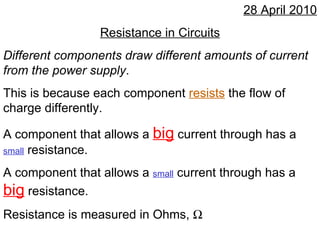
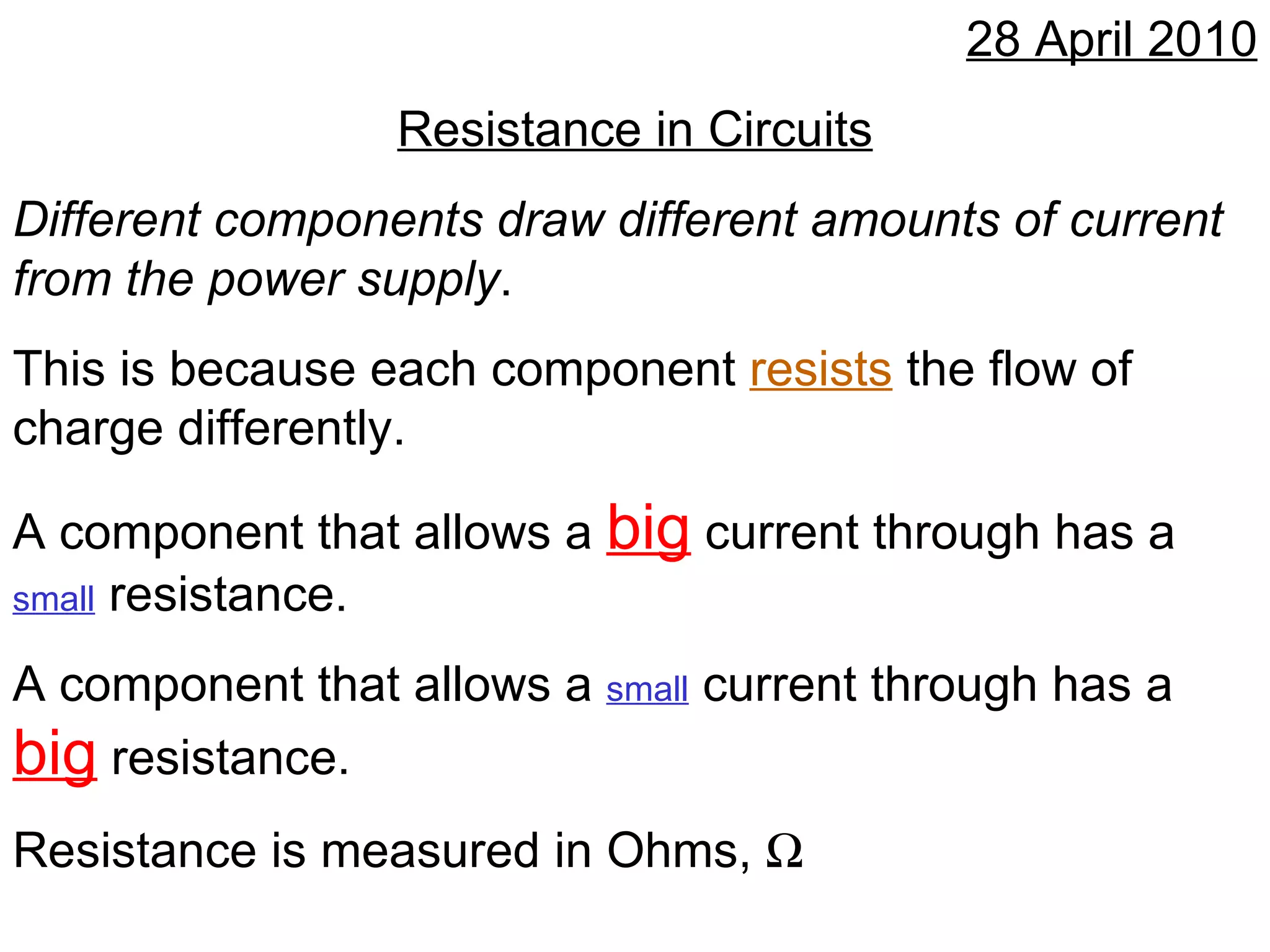
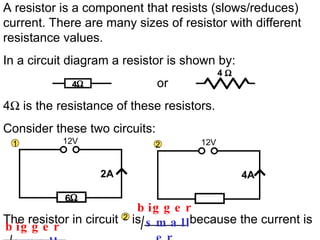
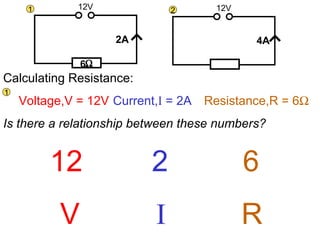
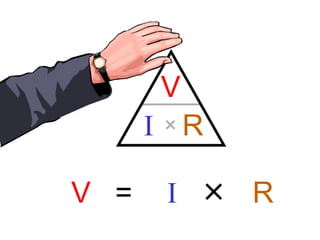
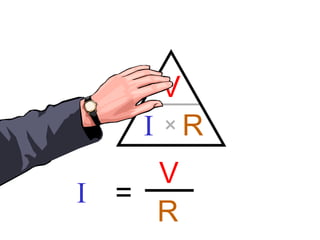
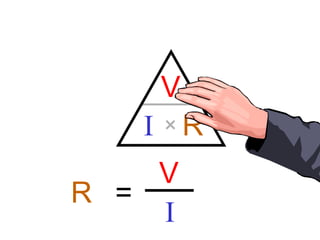
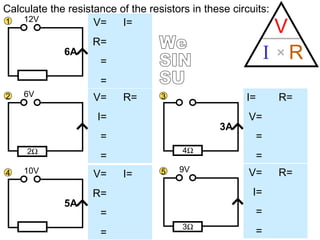
Resistance is a measure of how much a component resists or reduces the flow of electric current. Components with higher resistance allow less current to flow than those with lower resistance. Resistance is calculated by dividing the voltage by the current using the formula: Resistance (R) = Voltage (V) / Current (I). This relationship can be used to determine the resistance of resistors in circuits based on the voltage provided and current flowing.