https://www.linkedin.com/in/profakramhassan/
Asset Management and Trust Companies
Prof Akram Hassan SME @ PMI
Agenda
AM Definitions
01
AM Framework
02
Trust Companies
03
Be Delighted
04
AM grew at 12%
To more than $112 trillion
The forces driving the asset
management industry are shifting,
unlocking new opportunities and
potential for disruption.
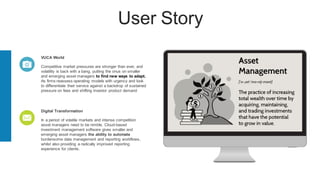
User Story
Competitive market pressures are stronger than ever, and
volatility is back with a bang, putting the onus on smaller
and emerging asset managers to find new ways to adapt.
As firms reassess operating models with urgency and look
to differentiate their service against a backdrop of sustained
pressure on fees and shifting investor product demand
VUCA World
In a period of volatile markets and intense competition
asset managers need to be nimble. Cloud-based
investment management software gives smaller and
emerging asset managers the ability to automate
burdensome data management and reporting workflows,
whilst also providing a radically improved reporting
experience for clients.
Digital Transformation
AM Definitions
Asset
Management
"An asset is an item, thing or
entity that has potential or
actual value to an
organization".
ISO 55000, 2014 (3.2.1)
Asset management is the art and science of making
the right decisions and optimizing the delivery of
value. A common objective is to minimize the whole
life cost of assets but there may be other critical
factors such as risk or business continuity to be
considered objectively in this decision making.
“Asset management is the coordinated
activity of an organization to realize value
from assets."
ISO 55000, 2014 (3.3.1)
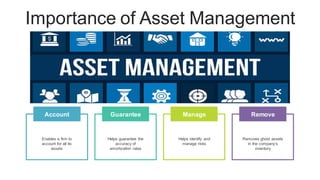
Importance of Asset Management
Enables a firm to
account for all its
assets
Account
Helps guarantee the
accuracy of
amortization rates
Guarantee
Helps identify and
manage risks
Manage
Removes ghost assets
in the company’s
inventory
Remove
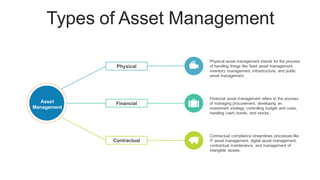
Types of Asset Management
Physical asset management stands for the process
of handling things like fixed asset management,
inventory management, infrastructure, and public
asset management.
Financial asset management refers to the process
of managing procurement, developing an
investment strategy, controlling budget and costs,
handling cash, bonds, and stocks.
Contractual compliance streamlines processes like
IT asset management, digital asset management,
contractual maintenance, and management of
intangible assets.
Physical
Financial
Contractual
Asset
Management
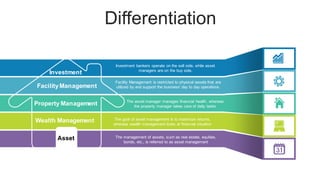
Differentiation
Asset The management of assets, such as real estate, equities,
bonds, etc., is referred to as asset management
Wealth Management The goal of asset management is to maximize returns,
whereas wealth management looks at financial situation
Property Management The asset manager manages financial health, whereas
the property manager takes care of daily tasks
FacilityManagement
Facility Management is restricted to physical assets that are
utilized by and support the business' day to day operations.
Investment
Investment bankers operate on the sell side, while asset
managers are on the buy side.
AM Framework
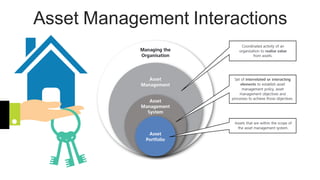
Asset Management Interactions
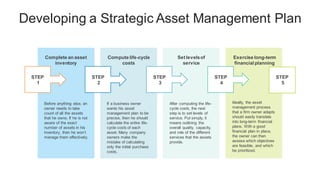
Developing a Strategic Asset Management Plan
Complete an asset
inventory
Compute life-cycle
costs
Set levelsof
service
Exercise long-term
financial planning
STEP
1
STEP
2
STEP
3
STEP
4
STEP
5
Before anything else, an
owner needs to take
count of all the assets
that he owns. If he is not
aware of the exact
number of assets in his
inventory, then he won’t
manage them effectively.
If a business owner
wants his asset
management plan to be
precise, then he should
calculate the entire life-
cycle costs of each
asset. Many company
owners make the
mistake of calculating
only the initial purchase
costs.
After computing the life-
cycle costs, the next
step is to set levels of
service. Put simply, it
means outlining the
overall quality, capacity,
and role of the different
services that the assets
provide.
Ideally, the asset
management process
that a firm owner adapts
should easily translate
into long-term financial
plans. With a good
financial plan in place,
the owner can then
assess which objectives
are feasible, and which
be prioritized.
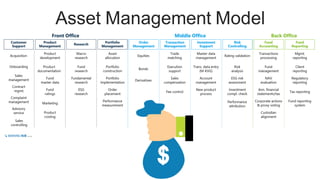
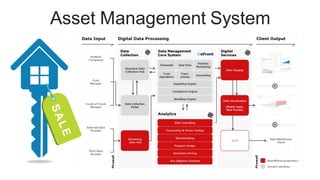
Asset Management Model
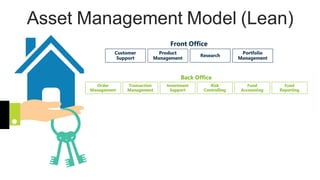
Asset Management Model (Lean)
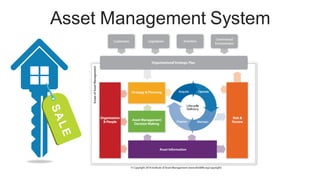
Asset Management System
Trust
Companies
T R U S T
C o m p a n i e s
What Is a Trust Company?
A trust company is an entity that acts as agent, or trustee on
behalf of a person or business for the purpose of administration,
management, and the eventual transfer of assets to a beneficial
party.
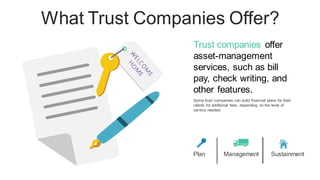
What Trust Companies Offer?
Trust companies offer
asset-management
services, such as bill
pay, check writing, and
other features.
Some trust companies can build financial plans for their
clients for additional fees, depending on the level of
service needed.
Plan Management Sustainment
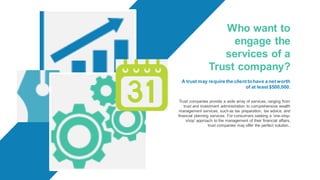
Trust companies provide a wide array of services, ranging from
trust and investment administration to comprehensive wealth
management services, such as tax preparation, tax advice, and
financial planning services. For consumers seeking a 'one-stop-
shop' approach to the management of their financial affairs,
trust companies may offer the perfect solution..
A trust may require the client to have a net worth
of at least $500,000.
Who want to
engage the
services of a
Trust company?
Be Delighted
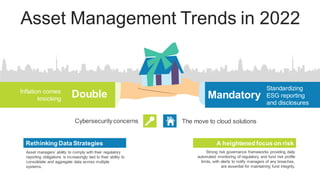
Asset Management Trends in 2022
Double Mandatory
Inflation comes
knocking
Standardizing
ESG reporting
and disclosures
Cybersecurity concerns The move to cloud solutions
Asset managers’ ability to comply with their regulatory
reporting obligations is increasingly tied to their ability to
consolidate and aggregate data across multiple
systems.
Rethinking Data Strategies
Strong risk governance frameworks providing daily
automated monitoring of regulatory and fund risk profile
limits, with alerts to notify managers of any breaches,
are essential for maintaining fund integrity.
A heightened focus on risk
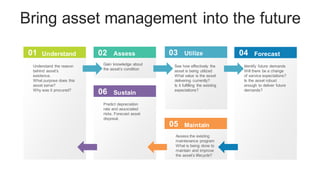
Bring asset management into the future
01 02 03
05
06
Understand
Understand the reason
behind asset’s
existence.
What purpose does this
asset serve?
Why was it procured?
Gain knowledge about
the asset’s condition
Predict depreciation
rate and associated
risks. Forecast asset
disposal.
See how effectively the
asset is being utilized
What value is the asset
delivering currently?
Is it fulfilling the existing
expectations?
Assess the existing
maintenance program
What is being done to
maintain and improve
the asset’s lifecycle?
Assess Utilize
Sustain
Maintain
04 Forecast
Identify future demands
Will there be a change
of service expectations?
Is the asset robust
enough to deliver future
demands?
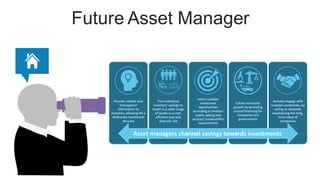
Future Asset Manager
THANK YOU
Prof Akram Hassan SME @ PMI

Asset managment

  • 1.
    https://www.linkedin.com/in/profakramhassan/ Asset Management andTrust Companies Prof Akram Hassan SME @ PMI
  • 2.
  • 3.
    AM grew at12% To more than $112 trillion The forces driving the asset management industry are shifting, unlocking new opportunities and potential for disruption.
  • 4.
    User Story Competitive marketpressures are stronger than ever, and volatility is back with a bang, putting the onus on smaller and emerging asset managers to find new ways to adapt. As firms reassess operating models with urgency and look to differentiate their service against a backdrop of sustained pressure on fees and shifting investor product demand VUCA World In a period of volatile markets and intense competition asset managers need to be nimble. Cloud-based investment management software gives smaller and emerging asset managers the ability to automate burdensome data management and reporting workflows, whilst also providing a radically improved reporting experience for clients. Digital Transformation
  • 5.
  • 6.
    Asset Management "An asset isan item, thing or entity that has potential or actual value to an organization". ISO 55000, 2014 (3.2.1) Asset management is the art and science of making the right decisions and optimizing the delivery of value. A common objective is to minimize the whole life cost of assets but there may be other critical factors such as risk or business continuity to be considered objectively in this decision making. “Asset management is the coordinated activity of an organization to realize value from assets." ISO 55000, 2014 (3.3.1)
  • 7.
    Importance of AssetManagement Enables a firm to account for all its assets Account Helps guarantee the accuracy of amortization rates Guarantee Helps identify and manage risks Manage Removes ghost assets in the company’s inventory Remove
  • 8.
    Types of AssetManagement Physical asset management stands for the process of handling things like fixed asset management, inventory management, infrastructure, and public asset management. Financial asset management refers to the process of managing procurement, developing an investment strategy, controlling budget and costs, handling cash, bonds, and stocks. Contractual compliance streamlines processes like IT asset management, digital asset management, contractual maintenance, and management of intangible assets. Physical Financial Contractual Asset Management
  • 9.
    Differentiation Asset The managementof assets, such as real estate, equities, bonds, etc., is referred to as asset management Wealth Management The goal of asset management is to maximize returns, whereas wealth management looks at financial situation Property Management The asset manager manages financial health, whereas the property manager takes care of daily tasks FacilityManagement Facility Management is restricted to physical assets that are utilized by and support the business' day to day operations. Investment Investment bankers operate on the sell side, while asset managers are on the buy side.
  • 10.
  • 11.
  • 12.
    Developing a StrategicAsset Management Plan Complete an asset inventory Compute life-cycle costs Set levelsof service Exercise long-term financial planning STEP 1 STEP 2 STEP 3 STEP 4 STEP 5 Before anything else, an owner needs to take count of all the assets that he owns. If he is not aware of the exact number of assets in his inventory, then he won’t manage them effectively. If a business owner wants his asset management plan to be precise, then he should calculate the entire life- cycle costs of each asset. Many company owners make the mistake of calculating only the initial purchase costs. After computing the life- cycle costs, the next step is to set levels of service. Put simply, it means outlining the overall quality, capacity, and role of the different services that the assets provide. Ideally, the asset management process that a firm owner adapts should easily translate into long-term financial plans. With a good financial plan in place, the owner can then assess which objectives are feasible, and which be prioritized.
  • 13.
  • 14.
  • 15.
  • 16.
  • 17.
  • 18.
    T R US T C o m p a n i e s What Is a Trust Company? A trust company is an entity that acts as agent, or trustee on behalf of a person or business for the purpose of administration, management, and the eventual transfer of assets to a beneficial party.
  • 19.
    What Trust CompaniesOffer? Trust companies offer asset-management services, such as bill pay, check writing, and other features. Some trust companies can build financial plans for their clients for additional fees, depending on the level of service needed. Plan Management Sustainment
  • 20.
    Trust companies providea wide array of services, ranging from trust and investment administration to comprehensive wealth management services, such as tax preparation, tax advice, and financial planning services. For consumers seeking a 'one-stop- shop' approach to the management of their financial affairs, trust companies may offer the perfect solution.. A trust may require the client to have a net worth of at least $500,000. Who want to engage the services of a Trust company?
  • 21.
  • 22.
    Asset Management Trendsin 2022 Double Mandatory Inflation comes knocking Standardizing ESG reporting and disclosures Cybersecurity concerns The move to cloud solutions Asset managers’ ability to comply with their regulatory reporting obligations is increasingly tied to their ability to consolidate and aggregate data across multiple systems. Rethinking Data Strategies Strong risk governance frameworks providing daily automated monitoring of regulatory and fund risk profile limits, with alerts to notify managers of any breaches, are essential for maintaining fund integrity. A heightened focus on risk
  • 23.
    Bring asset managementinto the future 01 02 03 05 06 Understand Understand the reason behind asset’s existence. What purpose does this asset serve? Why was it procured? Gain knowledge about the asset’s condition Predict depreciation rate and associated risks. Forecast asset disposal. See how effectively the asset is being utilized What value is the asset delivering currently? Is it fulfilling the existing expectations? Assess the existing maintenance program What is being done to maintain and improve the asset’s lifecycle? Assess Utilize Sustain Maintain 04 Forecast Identify future demands Will there be a change of service expectations? Is the asset robust enough to deliver future demands?
  • 24.
  • 25.
    THANK YOU Prof AkramHassan SME @ PMI