Aims
• Define what Resilience means to your group
• Explore when you practice resilience
• Strategies and tools to help you remain
resilient
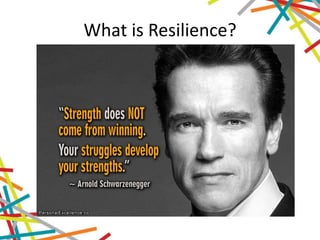
What is Resilience?
What is Resilience?
• Psychological resilience is defined as an
individual's ability to properly adapt to stress
and adversity.
• Stress and adversity can come in the shape of
family or relationship problems, health
problems, or workplace and financial worries,
among others.
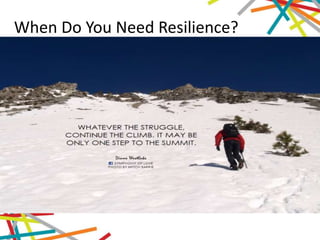
When Do You Need Resilience?
When are you resilient?
• College
• Employment
• Bereavement
• Relationship breakdown
• Ill health
• Losing something
• Learning
• Making habits
• Graded unit
• Paying debt
• Saving money for
something
• Waiting for something
to change
• Being emotionally
challenged in some way
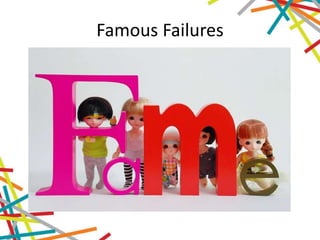
Famous Failures
Coping Strategies
• Ask yourself – What
can I learn from this
situation?
• Think positively –
What is an useful
attitude to have right
now?
• Plan how you are
going to deal with it –
Step by Step
• Get physical –
• Exercise, breathe
deeply, sleep and
stay hydrated
• Talk it out, don’t
block it out
• Find your Safe place
• Seek help
• Practice Curiosity –
What if I tried X, Y ,
Z?
Video
• Nick Vujicic
https://www.youtube.com/watch?
v=6kxSrPD__BA
Resilience
Resilience

Resilience

  • 2.
    Aims • Define whatResilience means to your group • Explore when you practice resilience • Strategies and tools to help you remain resilient
  • 3.
  • 4.
    What is Resilience? •Psychological resilience is defined as an individual's ability to properly adapt to stress and adversity. • Stress and adversity can come in the shape of family or relationship problems, health problems, or workplace and financial worries, among others.
  • 5.
    When Do YouNeed Resilience?
  • 6.
    When are youresilient? • College • Employment • Bereavement • Relationship breakdown • Ill health • Losing something • Learning • Making habits • Graded unit • Paying debt • Saving money for something • Waiting for something to change • Being emotionally challenged in some way
  • 7.
  • 9.
    Coping Strategies • Askyourself – What can I learn from this situation? • Think positively – What is an useful attitude to have right now? • Plan how you are going to deal with it – Step by Step • Get physical – • Exercise, breathe deeply, sleep and stay hydrated • Talk it out, don’t block it out • Find your Safe place • Seek help • Practice Curiosity – What if I tried X, Y , Z?
  • 10.