Research Exam

Encircle the correct answer (1-10) (5 marks)
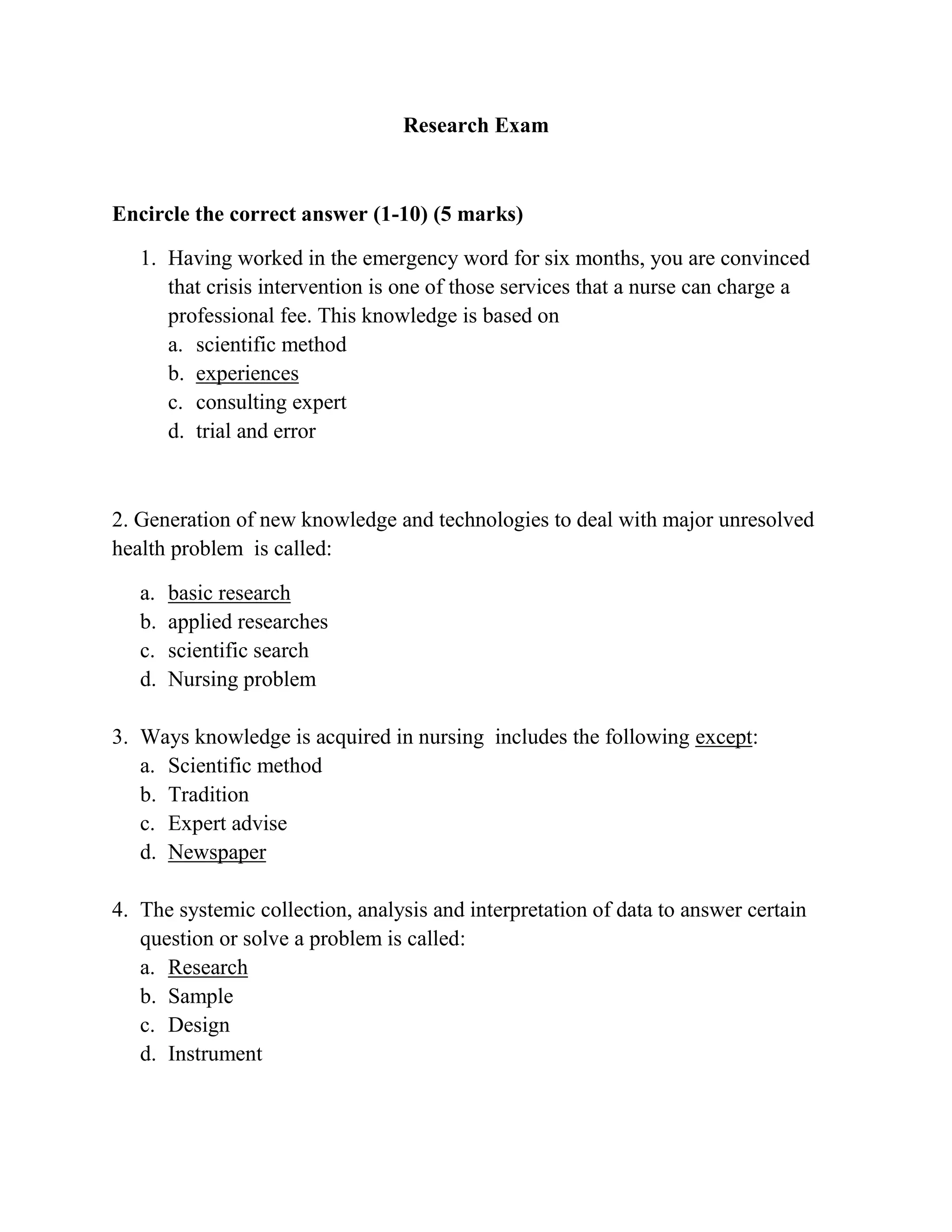
1. Having worked in the emergency word for six months, you are convinced
that crisis intervention is one of those services that a nurse can charge a
professional fee. This knowledge is based on
a. scientific method
b. experiences
c. consulting expert
d. trial and error

2. Generation of new knowledge and technologies to deal with major unresolved
health problem is called:
a.
b.
c.
d.

basic research
applied researches
scientific search
Nursing problem

3. Ways knowledge is acquired in nursing includes the following except:
a. Scientific method
b. Tradition
c. Expert advise
d. Newspaper
4. The systemic collection, analysis and interpretation of data to answer certain
question or solve a problem is called:
a. Research
b. Sample
c. Design
d. Instrument
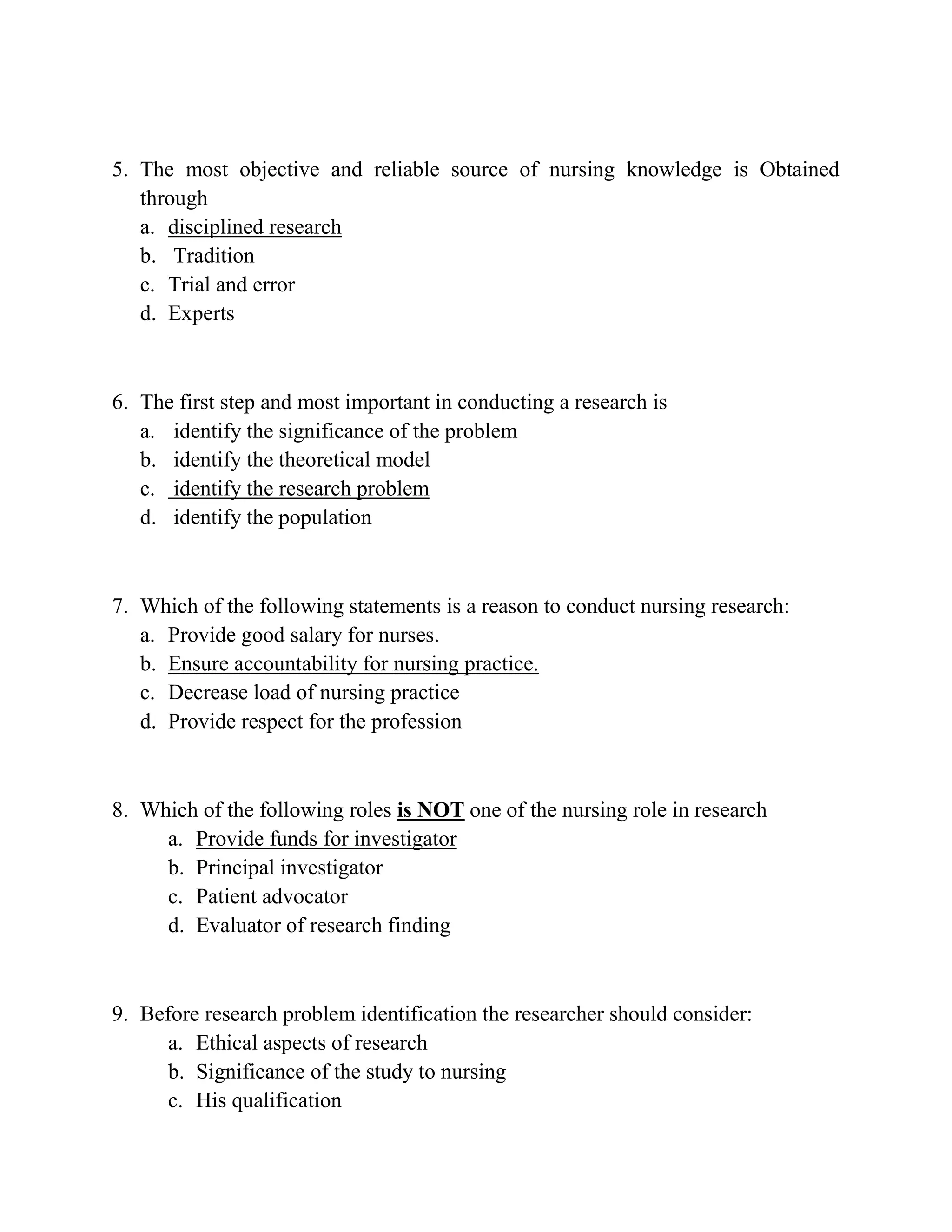
5. The most objective and reliable source of nursing knowledge is Obtained
through
a. disciplined research
b. Tradition
c. Trial and error
d. Experts

6. The first step and most important in conducting a research is
a. identify the significance of the problem
b. identify the theoretical model
c. identify the research problem
d. identify the population

7. Which of the following statements is a reason to conduct nursing research:
a. Provide good salary for nurses.
b. Ensure accountability for nursing practice.
c. Decrease load of nursing practice
d. Provide respect for the profession

8. Which of the following roles is NOT one of the nursing role in research
a. Provide funds for investigator
b. Principal investigator
c. Patient advocator
d. Evaluator of research finding

9. Before research problem identification the researcher should consider:
a. Ethical aspects of research
b. Significance of the study to nursing
c. His qualification
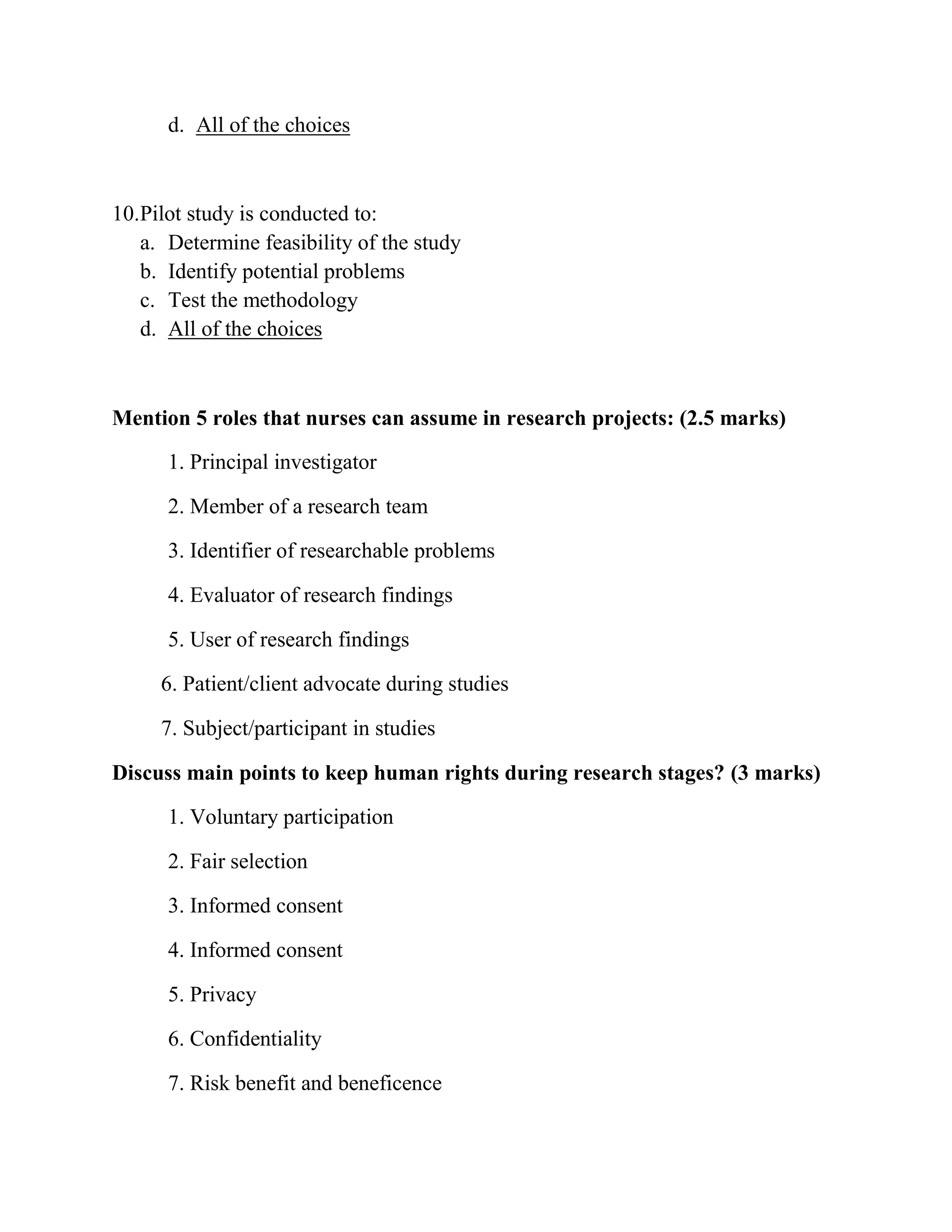
d. All of the choices

10.Pilot study is conducted to:
a. Determine feasibility of the study
b. Identify potential problems
c. Test the methodology
d. All of the choices

Mention 5 roles that nurses can assume in research projects: (2.5 marks)
1. Principal investigator
2. Member of a research team
3. Identifier of researchable problems
4. Evaluator of research findings
5. User of research findings
6. Patient/client advocate during studies
7. Subject/participant in studies
Discuss main points to keep human rights during research stages? (3 marks)
1. Voluntary participation
2. Fair selection
3. Informed consent
4. Informed consent
5. Privacy
6. Confidentiality
7. Risk benefit and beneficence
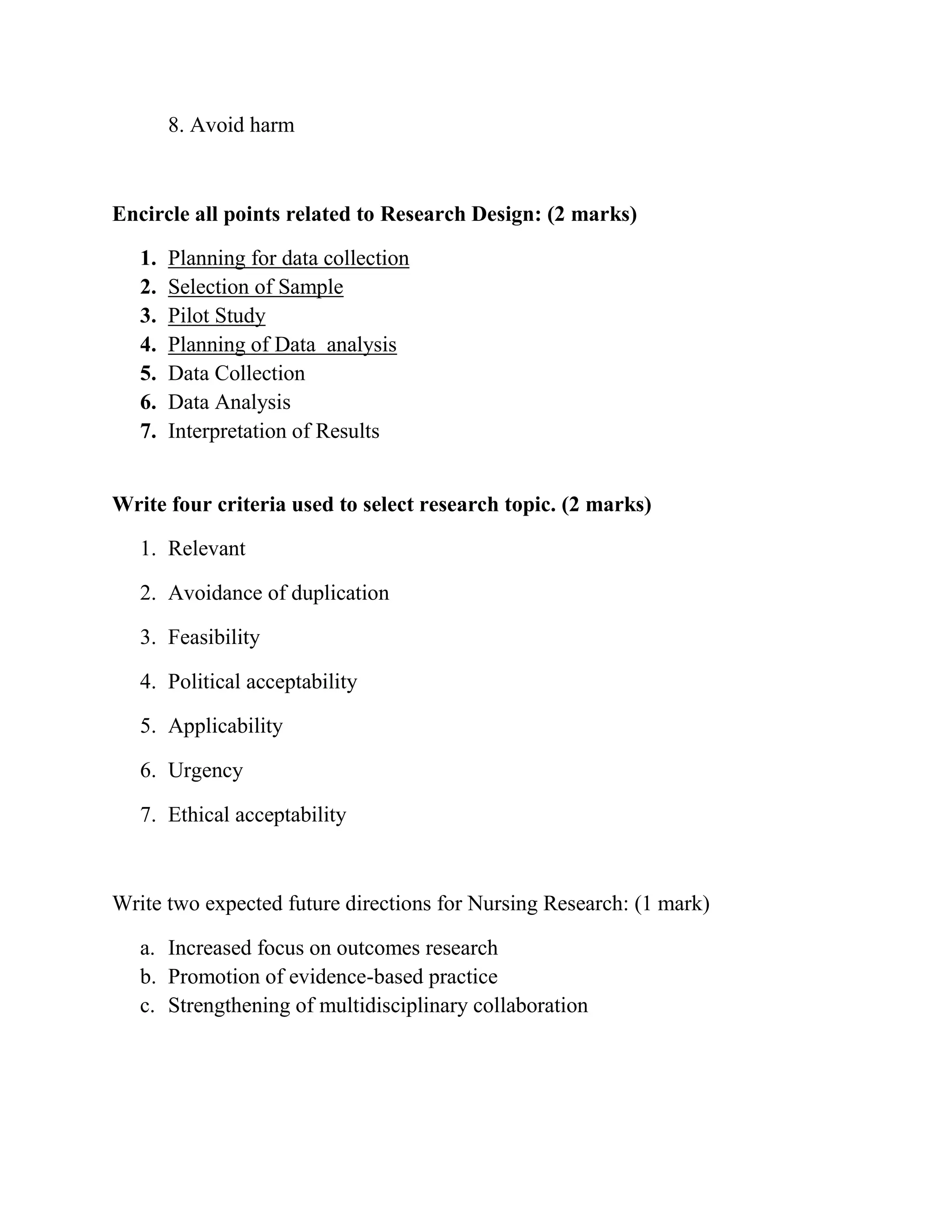
8. Avoid harm

Encircle all points related to Research Design: (2 marks)
1.
2.
3.
4.
5.
6.
7.

Planning for data collection
Selection of Sample
Pilot Study
Planning of Data analysis
Data Collection
Data Analysis
Interpretation of Results

Write four criteria used to select research topic. (2 marks)
1. Relevant
2. Avoidance of duplication
3. Feasibility
4. Political acceptability
5. Applicability
6. Urgency
7. Ethical acceptability

Write two expected future directions for Nursing Research: (1 mark)
a. Increased focus on outcomes research
b. Promotion of evidence-based practice
c. Strengthening of multidisciplinary collaboration

Research quiz -Dr. Khaled Khader

  • 1.
    Research Exam Encircle thecorrect answer (1-10) (5 marks) 1. Having worked in the emergency word for six months, you are convinced that crisis intervention is one of those services that a nurse can charge a professional fee. This knowledge is based on a. scientific method b. experiences c. consulting expert d. trial and error 2. Generation of new knowledge and technologies to deal with major unresolved health problem is called: a. b. c. d. basic research applied researches scientific search Nursing problem 3. Ways knowledge is acquired in nursing includes the following except: a. Scientific method b. Tradition c. Expert advise d. Newspaper 4. The systemic collection, analysis and interpretation of data to answer certain question or solve a problem is called: a. Research b. Sample c. Design d. Instrument
  • 2.
    5. The mostobjective and reliable source of nursing knowledge is Obtained through a. disciplined research b. Tradition c. Trial and error d. Experts 6. The first step and most important in conducting a research is a. identify the significance of the problem b. identify the theoretical model c. identify the research problem d. identify the population 7. Which of the following statements is a reason to conduct nursing research: a. Provide good salary for nurses. b. Ensure accountability for nursing practice. c. Decrease load of nursing practice d. Provide respect for the profession 8. Which of the following roles is NOT one of the nursing role in research a. Provide funds for investigator b. Principal investigator c. Patient advocator d. Evaluator of research finding 9. Before research problem identification the researcher should consider: a. Ethical aspects of research b. Significance of the study to nursing c. His qualification
  • 3.
    d. All ofthe choices 10.Pilot study is conducted to: a. Determine feasibility of the study b. Identify potential problems c. Test the methodology d. All of the choices Mention 5 roles that nurses can assume in research projects: (2.5 marks) 1. Principal investigator 2. Member of a research team 3. Identifier of researchable problems 4. Evaluator of research findings 5. User of research findings 6. Patient/client advocate during studies 7. Subject/participant in studies Discuss main points to keep human rights during research stages? (3 marks) 1. Voluntary participation 2. Fair selection 3. Informed consent 4. Informed consent 5. Privacy 6. Confidentiality 7. Risk benefit and beneficence
  • 4.
    8. Avoid harm Encircleall points related to Research Design: (2 marks) 1. 2. 3. 4. 5. 6. 7. Planning for data collection Selection of Sample Pilot Study Planning of Data analysis Data Collection Data Analysis Interpretation of Results Write four criteria used to select research topic. (2 marks) 1. Relevant 2. Avoidance of duplication 3. Feasibility 4. Political acceptability 5. Applicability 6. Urgency 7. Ethical acceptability Write two expected future directions for Nursing Research: (1 mark) a. Increased focus on outcomes research b. Promotion of evidence-based practice c. Strengthening of multidisciplinary collaboration