Research
Methodology
Topics
 What is research and types of research
 How to formulate a research question
 Literature review and its purpose
 Research Design
 Data collection
 Data Analysis
Steps:
 First priority - formulate your question.
 Figure out - how you are going to answer it:
 How others have answered it?
 How does your proposal fit in with what others have done?
 How will you know when you have answered it?
 Present your answer.
Research Question
 Something youwant toknow aboutyourdiscipline, orabouta specific area
within yourdiscipline.
 Not a topic,fragment,phrase,or sentence. It endswith a questionmark.
 Clear andprecisely stated. Itis nottoobroad,nor is it toonarrow.
 Open-ended,asopposedtoclosed. Itcannotbe answeredin a sentenceor
phrase.
Examples of Research questions
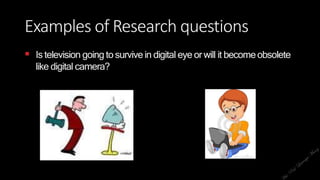
 Is television going to survivein digital eye or will it becomeobsolete
like digital camera?
Examples of Research questions
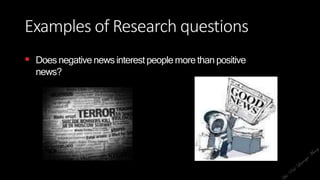
 Doesnegativenewsinterestpeoplemorethanpositive
news?
Examples of Research questions
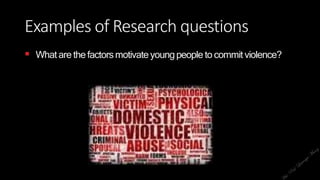
 Whatare thefactorsmotivateyoungpeople to commitviolence?
Examples of Research questions
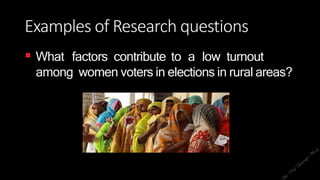
 What factors contribute to a low turnout
among women voters in elections in rural areas?
Examples of Research questions
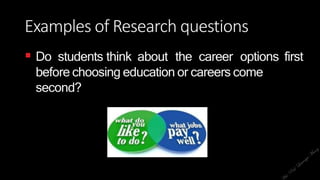
 Do students think about the career options first
before choosing education or careers come
second?
Examples of Research questions
 Does exercise improve the quality of sleep?
Research Question
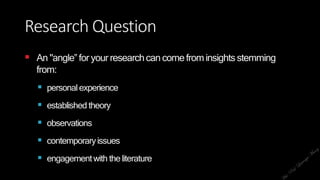
 An "angle‟ for your researchcancomefrominsights stemming
from:
 personalexperience
 established theory
 observations
 contemporaryissues
 engagementwith theliterature
Research question
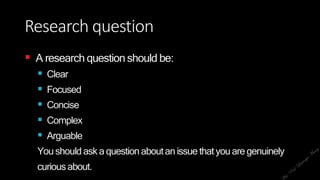
 A research question should be:
 Clear
 Focused
 Concise
 Complex
 Arguable
You should ask a questionaboutan issue that youare genuinely
curiousabout.
Clear
 Unclear: Why are social networkingsites harmful?
 Clear: How are online users experiencing or addressing
privacy issues on such social networking sites as Instagram
and Facebook?
 Whichsocialnetworkingsite?(InstagramandFacebook)
 Typeofharm(privacyissues)
 Whogetsharm?(users)
Focused
 Unfocused:Whatis the effecton the environmentfrom global
warming?
 Focused:How is glacial melting affectingpenguins in Antarctica?
 Sobroad(Can‟tanswerincollegelevelpaper)
 specificcause(glacialmelting)
 specificplace(Antarctica)
 specificgroupaffected(Penguin)
Complex
 Too simple:How are doctorsaddressingdiabetesin India?
 Appropriately Complex: What are common traits of those suffering from
diabetes in India, and how can these commonalities be used to aid the
medical community in preventionof the disease?
 Simple question (if looked up online, you get answered immediately. No role of
analysis)
 Complex onerequiresignificantinvestigationandevaluation.
Literature review
 The review of the literature is defined as a broad,
comprehensive, in-depth, systematic, and critical
review of scholarly publications, unpublished
scholarly print materials, audiovisual materials,
and personal communications.
Purposesof Literature review
 Determine if proposed researchisactually needed.
 Evenif similar research published, researchers might suggest a need for similar studies or replication.
 Narrow down a problem.
 It can be overwhelming getting into the literature of a field of
understand where you need to focus your efforts.
study. A literature review can help you
 Generate hypotheses or questions for further studies.
Purposes of Literature review
 Backgroundknowledge ofthe field ofinquiry
 Facts
 Eminentscholars
 Parametersofthefield
 Themostimportantideas,theories,questionsandhypotheses.
 Knowledge ofthe methodologies common to thefield and a feeling for
their usefulnessandappropriatenessin varioussettings.
Literature review
 Locatedifferenttypesof resources.
 Decide which resourcesmightbe
suitable.
 Select mostappropriateresources.
 Revise researchquestionsif necessary
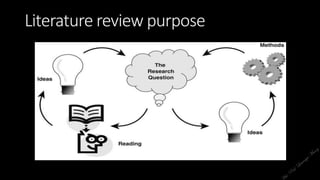
Literature review purpose
Save the information
 Keep a record of the literature you collect.
 Record where and when you retrieved
the information.

Research Methodology/Techniq - Session 2

  • 1.
  • 2.
    Topics  What isresearch and types of research  How to formulate a research question  Literature review and its purpose  Research Design  Data collection  Data Analysis
  • 3.
    Steps:  First priority- formulate your question.  Figure out - how you are going to answer it:  How others have answered it?  How does your proposal fit in with what others have done?  How will you know when you have answered it?  Present your answer.
  • 4.
    Research Question  Somethingyouwant toknow aboutyourdiscipline, orabouta specific area within yourdiscipline.  Not a topic,fragment,phrase,or sentence. It endswith a questionmark.  Clear andprecisely stated. Itis nottoobroad,nor is it toonarrow.  Open-ended,asopposedtoclosed. Itcannotbe answeredin a sentenceor phrase.
  • 5.
    Examples of Researchquestions  Is television going to survivein digital eye or will it becomeobsolete like digital camera?
  • 6.
    Examples of Researchquestions  Doesnegativenewsinterestpeoplemorethanpositive news?
  • 7.
    Examples of Researchquestions  Whatare thefactorsmotivateyoungpeople to commitviolence?
  • 8.
    Examples of Researchquestions  What factors contribute to a low turnout among women voters in elections in rural areas?
  • 9.
    Examples of Researchquestions  Do students think about the career options first before choosing education or careers come second?
  • 10.
    Examples of Researchquestions  Does exercise improve the quality of sleep?
  • 11.
    Research Question  An"angle‟ for your researchcancomefrominsights stemming from:  personalexperience  established theory  observations  contemporaryissues  engagementwith theliterature
  • 12.
    Research question  Aresearch question should be:  Clear  Focused  Concise  Complex  Arguable You should ask a questionaboutan issue that youare genuinely curiousabout.
  • 13.
    Clear  Unclear: Whyare social networkingsites harmful?  Clear: How are online users experiencing or addressing privacy issues on such social networking sites as Instagram and Facebook?  Whichsocialnetworkingsite?(InstagramandFacebook)  Typeofharm(privacyissues)  Whogetsharm?(users)
  • 14.
    Focused  Unfocused:Whatis theeffecton the environmentfrom global warming?  Focused:How is glacial melting affectingpenguins in Antarctica?  Sobroad(Can‟tanswerincollegelevelpaper)  specificcause(glacialmelting)  specificplace(Antarctica)  specificgroupaffected(Penguin)
  • 15.
    Complex  Too simple:Howare doctorsaddressingdiabetesin India?  Appropriately Complex: What are common traits of those suffering from diabetes in India, and how can these commonalities be used to aid the medical community in preventionof the disease?  Simple question (if looked up online, you get answered immediately. No role of analysis)  Complex onerequiresignificantinvestigationandevaluation.
  • 16.
    Literature review  Thereview of the literature is defined as a broad, comprehensive, in-depth, systematic, and critical review of scholarly publications, unpublished scholarly print materials, audiovisual materials, and personal communications.
  • 17.
    Purposesof Literature review Determine if proposed researchisactually needed.  Evenif similar research published, researchers might suggest a need for similar studies or replication.  Narrow down a problem.  It can be overwhelming getting into the literature of a field of understand where you need to focus your efforts. study. A literature review can help you  Generate hypotheses or questions for further studies.
  • 18.
    Purposes of Literaturereview  Backgroundknowledge ofthe field ofinquiry  Facts  Eminentscholars  Parametersofthefield  Themostimportantideas,theories,questionsandhypotheses.  Knowledge ofthe methodologies common to thefield and a feeling for their usefulnessandappropriatenessin varioussettings.
  • 19.
    Literature review  Locatedifferenttypesofresources.  Decide which resourcesmightbe suitable.  Select mostappropriateresources.  Revise researchquestionsif necessary
  • 20.
  • 21.
    Save the information Keep a record of the literature you collect.  Record where and when you retrieved the information.