RESEARCH 
METHOD 
DESCRIPTION TYPE OF DATA 
(qualitative/quantitative 
/primary/secondary) 
ADVANTAGES DISADVANTAGES 
INTERVIEW A formal meeting between 
1 or more people which 
then question, consult or 
evaluate 
Qualitative and primary 
research this because you are 
gathering the information by 
yourself and it’s qualitative 
because it’s usually about the 
person you are interviewing 
and they will provide a lot of 
information needed 
The information you will gather is 
likely to be clear and reliable 
because you have collected the 
information from the person. 
You can gather a lot of information 
needed 
You may not have enough time 
to collect all the information 
you need 
People may become very 
uncomfortable during an 
interview 
QUESTIONNAIRE Consists of a series of 
questions to gather 
information from 
respondents 
Qualitative and Quantitative 
because you may get a lot of 
respondents who go in to depth 
with their answers. This is 
primary research because your 
gathering the information by 
yourself 
Quick and easy to complete 
Reliable data collected using a 
questionnaire 
Information collected wouldn’t 
be a lot because the questions 
that are asked are not detailed 
and clear 
FOCUS GROUP A group of people who 
participate in a discussion 
in order to gather feedback 
Depending on how much 
information and how many 
people are part of this focus 
group you can gather 
qualitative and quantitative 
data. This would be primary 
research because your 
collecting the information 
yourself 
Able to collect a lot of information 
because there’s more than 1 
person involved in a focus group 
Opinions from participants 
Expensive and very time 
consuming 
Possibility not everyone will 
get to say everything they 
want to say 
SURVEY a way in which you gather 
information from 
individuals 
Quantitative and qualitative 
data. This would be primary 
data because you gather the 
information by yourself 
Easy to create 
Can be sent online via email, social 
media sites and texts 
Answers may be unreliable 
Survey can be lost if used 
online
INTERNET 
RESEARCH 
Research done within the 
internet 
The internet will provide a lot of 
information for everything you 
want this meaning internet 
research is quantitative and 
qualitative data. Internet 
research is secondary data 
because you are collecting 
information that has already 
been gathered by somebody 
else 
Easy to find 
Not time consuming 
Information gathered is 
quantitative and qualitative 
Information gathered may be 
unreliable 
Internet connections may be 
hard to get 
Copying someone else is 
classed as plagiarism which 
may impact on your research 
LIBRARY 
RESEARCH 
Research done within a 
library 
Library research goes in depth 
because of the amount of 
resources they have e.g. books, 
this meaning library research 
will provide you with qualitative 
data. Library research is 
secondary research because the 
information is already gathered 
from a different source 
Both qualitative and quantitative a 
lot of information can be gathered 
Help is offered in a library which 
may be useful 
Time consuming 
The library may not offer the 
resources you need

Research Method Table - VEL

  • 1.
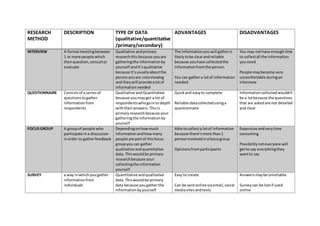
    RESEARCH METHOD DESCRIPTIONTYPE OF DATA (qualitative/quantitative /primary/secondary) ADVANTAGES DISADVANTAGES INTERVIEW A formal meeting between 1 or more people which then question, consult or evaluate Qualitative and primary research this because you are gathering the information by yourself and it’s qualitative because it’s usually about the person you are interviewing and they will provide a lot of information needed The information you will gather is likely to be clear and reliable because you have collected the information from the person. You can gather a lot of information needed You may not have enough time to collect all the information you need People may become very uncomfortable during an interview QUESTIONNAIRE Consists of a series of questions to gather information from respondents Qualitative and Quantitative because you may get a lot of respondents who go in to depth with their answers. This is primary research because your gathering the information by yourself Quick and easy to complete Reliable data collected using a questionnaire Information collected wouldn’t be a lot because the questions that are asked are not detailed and clear FOCUS GROUP A group of people who participate in a discussion in order to gather feedback Depending on how much information and how many people are part of this focus group you can gather qualitative and quantitative data. This would be primary research because your collecting the information yourself Able to collect a lot of information because there’s more than 1 person involved in a focus group Opinions from participants Expensive and very time consuming Possibility not everyone will get to say everything they want to say SURVEY a way in which you gather information from individuals Quantitative and qualitative data. This would be primary data because you gather the information by yourself Easy to create Can be sent online via email, social media sites and texts Answers may be unreliable Survey can be lost if used online
  • 2.
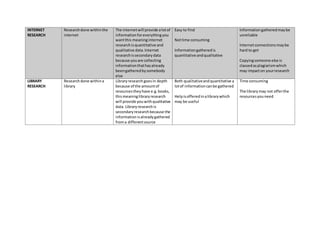
    INTERNET RESEARCH Researchdone within the internet The internet will provide a lot of information for everything you want this meaning internet research is quantitative and qualitative data. Internet research is secondary data because you are collecting information that has already been gathered by somebody else Easy to find Not time consuming Information gathered is quantitative and qualitative Information gathered may be unreliable Internet connections may be hard to get Copying someone else is classed as plagiarism which may impact on your research LIBRARY RESEARCH Research done within a library Library research goes in depth because of the amount of resources they have e.g. books, this meaning library research will provide you with qualitative data. Library research is secondary research because the information is already gathered from a different source Both qualitative and quantitative a lot of information can be gathered Help is offered in a library which may be useful Time consuming The library may not offer the resources you need