Descriptive Research Program
evaluation
surveyin descriptive research Causal-
comparative research
Correlational Research
1.A type of research method that
focuses on describing the
characteristics of a population,
situation, or phenomenon.
3.
Descriptive Research Program
evaluation
surveyin descriptive research Causal-comparative
research
Correlational Research
2. Used to collect data from a
population or sample to describe
characteristics, opinions,
behaviors, or experiences of that
group at a given time.
4.
Descriptive Research Program
evaluation
surveyin descriptive research Causal-comparative
research
Correlational Research
3. is a systematic process of
collecting and analyzing
information about a program or
project
5.
Descriptive Research Program
evaluation
surveyin descriptive research Causal-comparative
research
Correlational Research
4.a type of research that examines
the relationship between two or
more variables
6.
Descriptive Research Program
evaluation
surveyin descriptive research Causal-comparative
research
Correlational Research
5. a methodology used to identify
cause-effect relationships between
independent and dependent
variables.
7.
Descriptive Research isa type of
research method that focuses on
describing the characteristics of
a population, situation, or
phenomenon.
It answers the question "What is
happening?" rather than "Why" or
"How" it is happening.
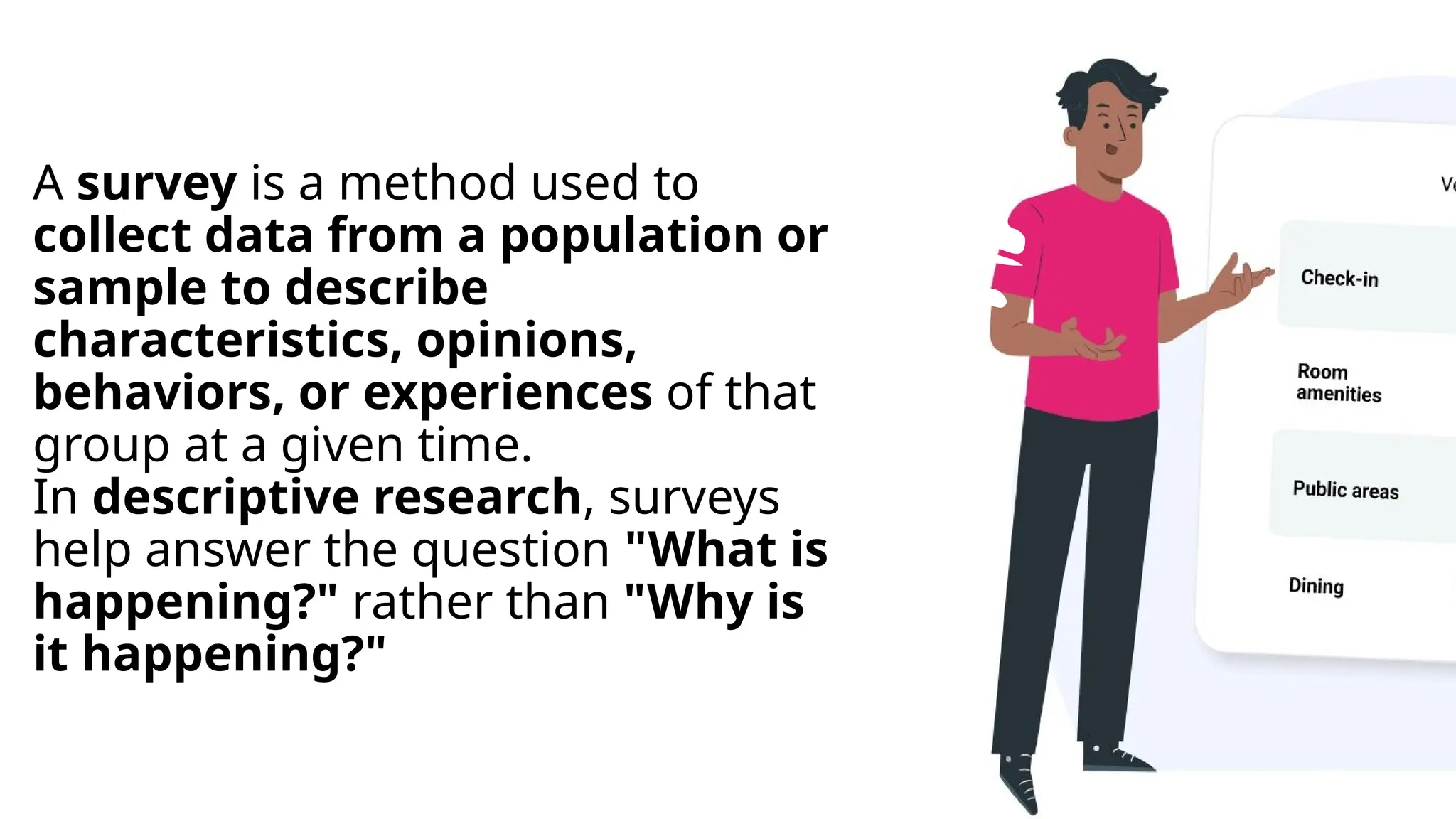
A survey isa method used to
collect data from a population or
sample to describe
characteristics, opinions,
behaviors, or experiences of that
group at a given time.
In descriptive research, surveys
help answer the question "What is
happening?" rather than "Why is
it happening?"
15.
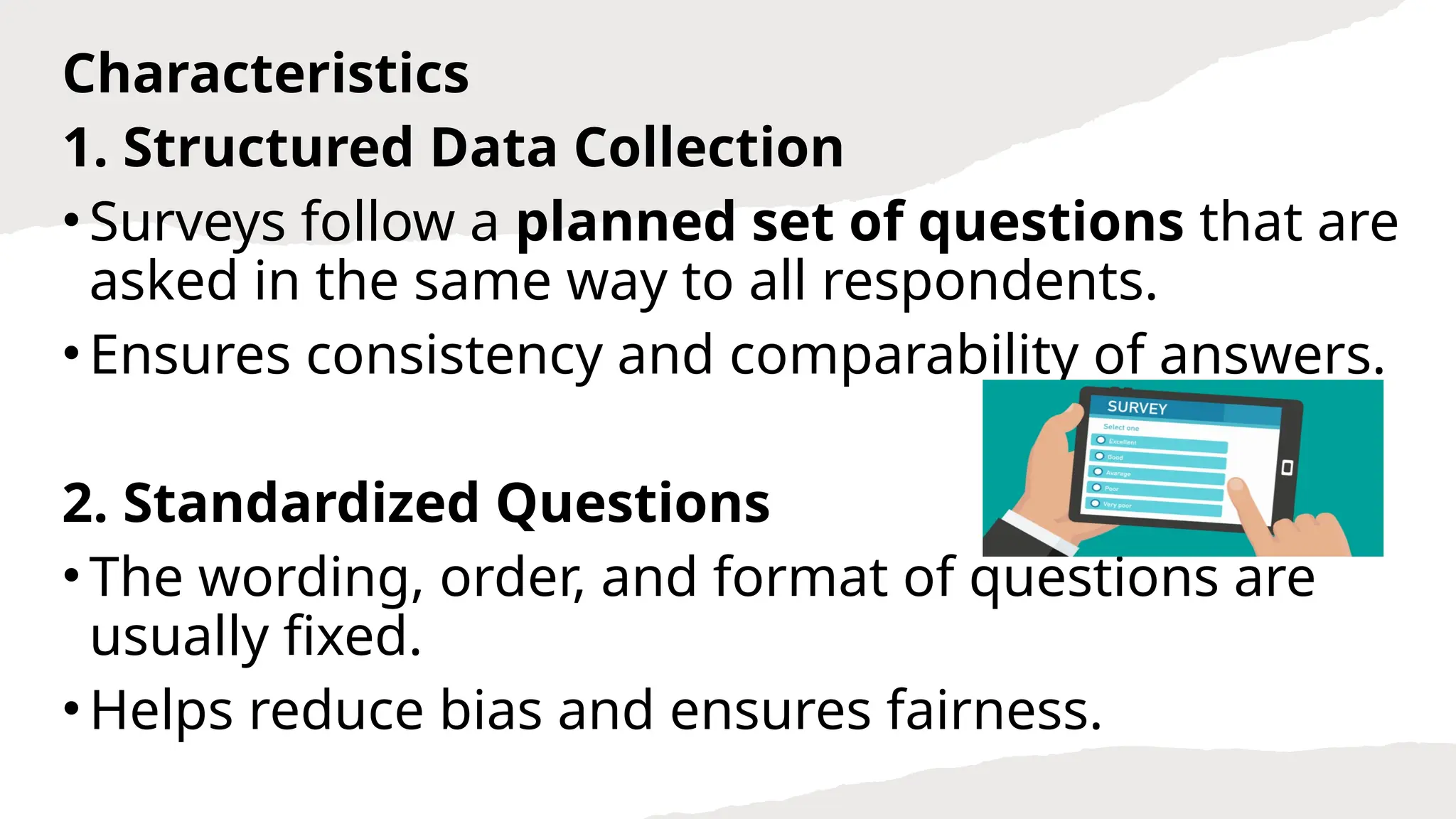
Characteristics
1. Structured DataCollection
•Surveys follow a planned set of questions that are
asked in the same way to all respondents.
•Ensures consistency and comparability of answers.
2. Standardized Questions
•The wording, order, and format of questions are
usually fixed.
•Helps reduce bias and ensures fairness.
16.
3.Quantifiable Results
•Most surveysuse closed-ended
questions so responses can be
counted, compared, and analyzed
statistically.
4. Large Sample Reach
•Can collect data from many people in
a short time.
17.
5. Cost-Effective
Especially whendone
online, surveys can be
inexpensive compared
to other research
methods like
experiments or
observations.
18.
Program evaluation isa
systematic process of
collecting and analyzing
information about a
program or project to
determine:
•How well it is working
•Whether it is meeting its
goals
•How it can be improved
19.
Purpose of Program
Evaluation
1.Assesseffectiveness –
Measure if the program
achieves its intended results.
2.Improve implementation –
Identify strengths and
weaknesses.
20.
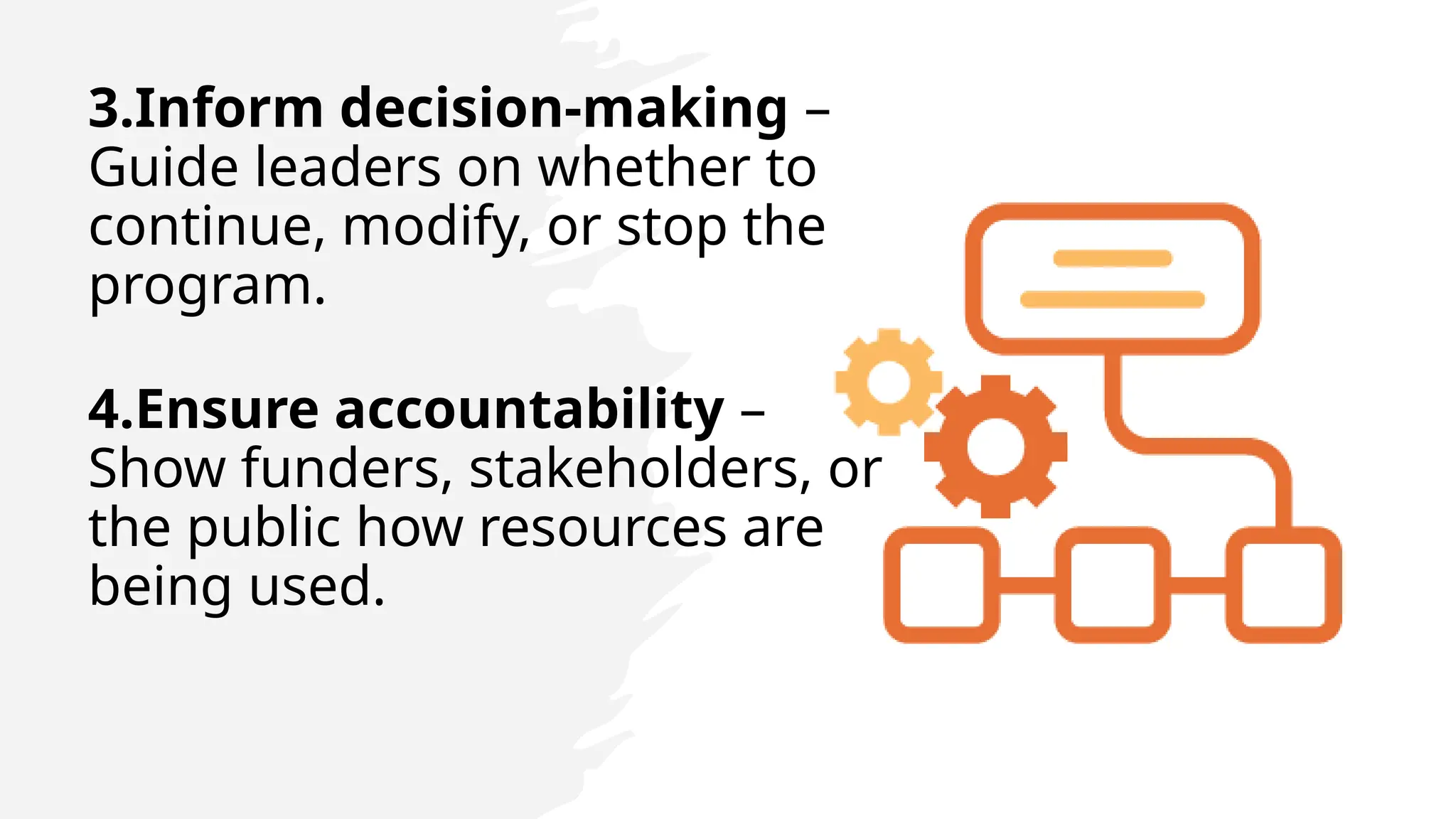
3.Inform decision-making –
Guideleaders on whether to
continue, modify, or stop the
program.
4.Ensure accountability –
Show funders, stakeholders, or
the public how resources are
being used.
21.
Characteristics
•Systematic – Usesplanned and organized steps.
•Evidence-based – Relies on data, not
assumptions.
•Goal-oriented – Measures performance against
specific objectives.
•Ongoing or periodic – Can be done during
(formative) or after (summative) the program.
22.
Example
•If a schoolimplements a reading
improvement program, program
evaluation might:
•Measure changes in students’ reading
scores before and after the program.
•Gather feedback from teachers and
students.
•Analyze whether resources (books,
training) were used effectively.
23.
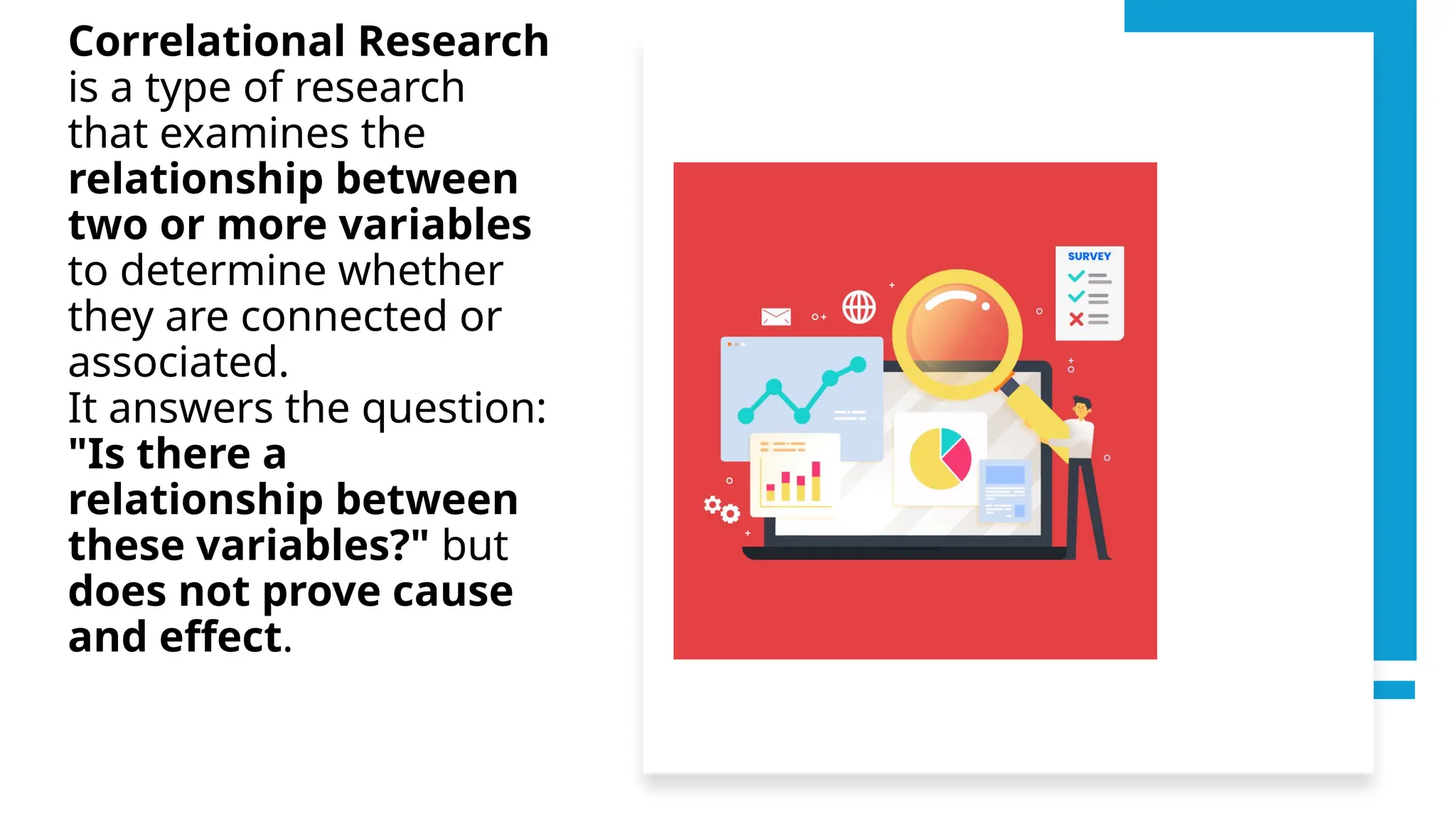
Correlational Research
is atype of research
that examines the
relationship between
two or more variables
to determine whether
they are connected or
associated.
It answers the question:
"Is there a
relationship between
these variables?" but
does not prove cause
and effect.
•Cause-and-Effect Focus –Seeks to find
the possible cause for differences that
already exist between groups.
•No Direct Manipulation – The
researcher does not control the
independent variable; it has already
occurred.
27.
•Retrospective or prospective
–It can look backward to
examine causes after effects
have occurred, or forward to
examine effects after causes
are identified.
•Group comparison – Involves
comparing two or more groups
to see how they differ on a
dependent variable.
#7 Its main purpose is to provide a factual, accurate, and systematic description of the subject being studied.
It answers the question “What is happening?” rather than “Why” or “How” it is happening.
This method often involves observations, surveys, and case studies to collect detailed information.
The data gathered can be qualitative (descriptions, observations) or quantitative (numerical data, statistics).
Sample:Gathering data through questionnaires to describe characteristics of a population, like demographics, opinions, or behaviors.
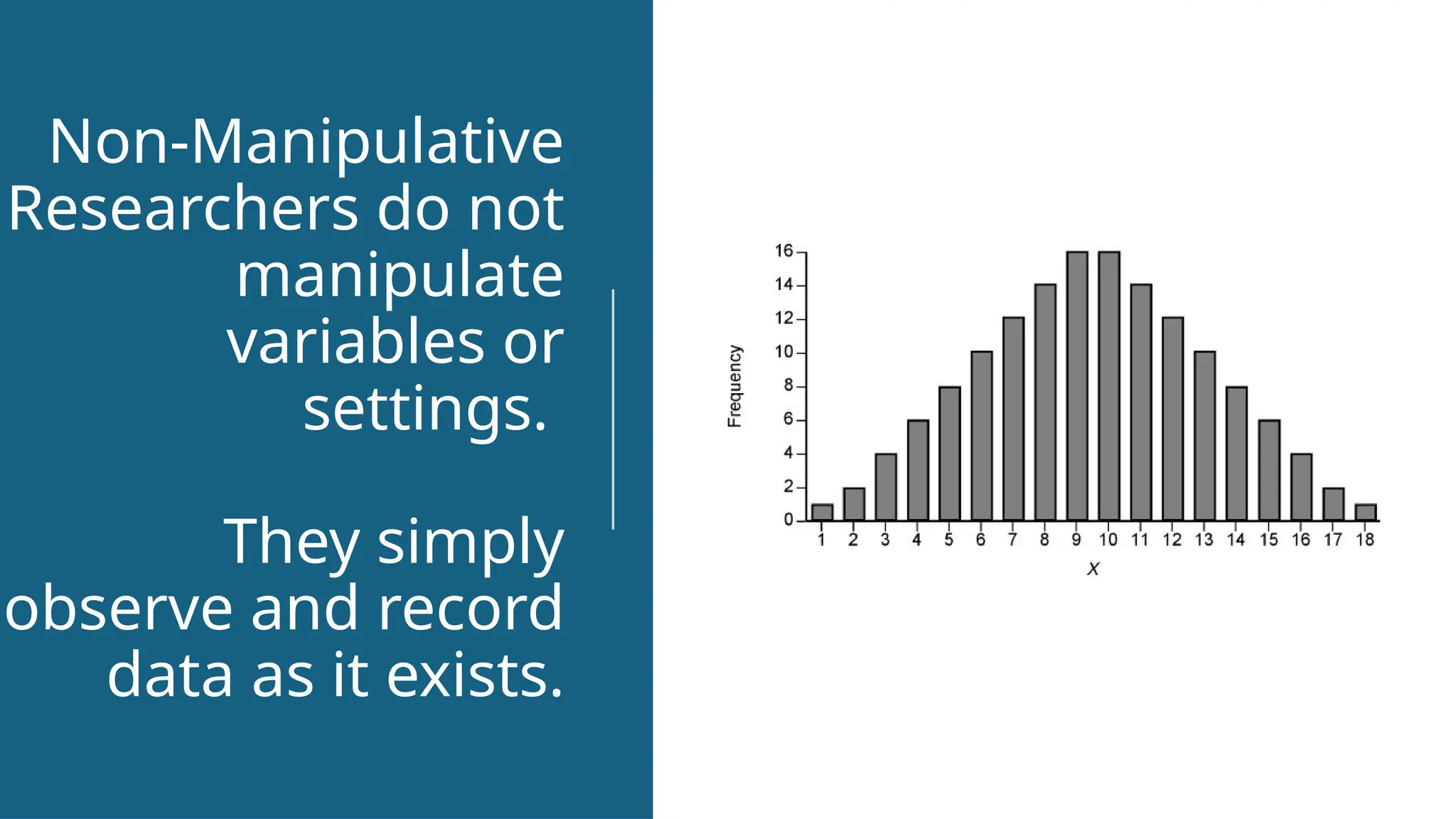
#9 They simply observe and record data as it naturally exists.
No experimental intervention is applied; the researcher takes a passive role in the process.
#10 It aims to describe the characteristics and functions of a phenomenon as it exists in the present moment.
The emphasis is on current conditions rather than past events or future predictions.
#11 It often uses quantitative methods and statistical tools to summarize, organize, and analyze the data collected.
This helps identify patterns, trends, and relationships within the data.
#12 Descriptive research is commonly used to verify and validate current conditions or practices, helping to identify and establish patterns or trends.
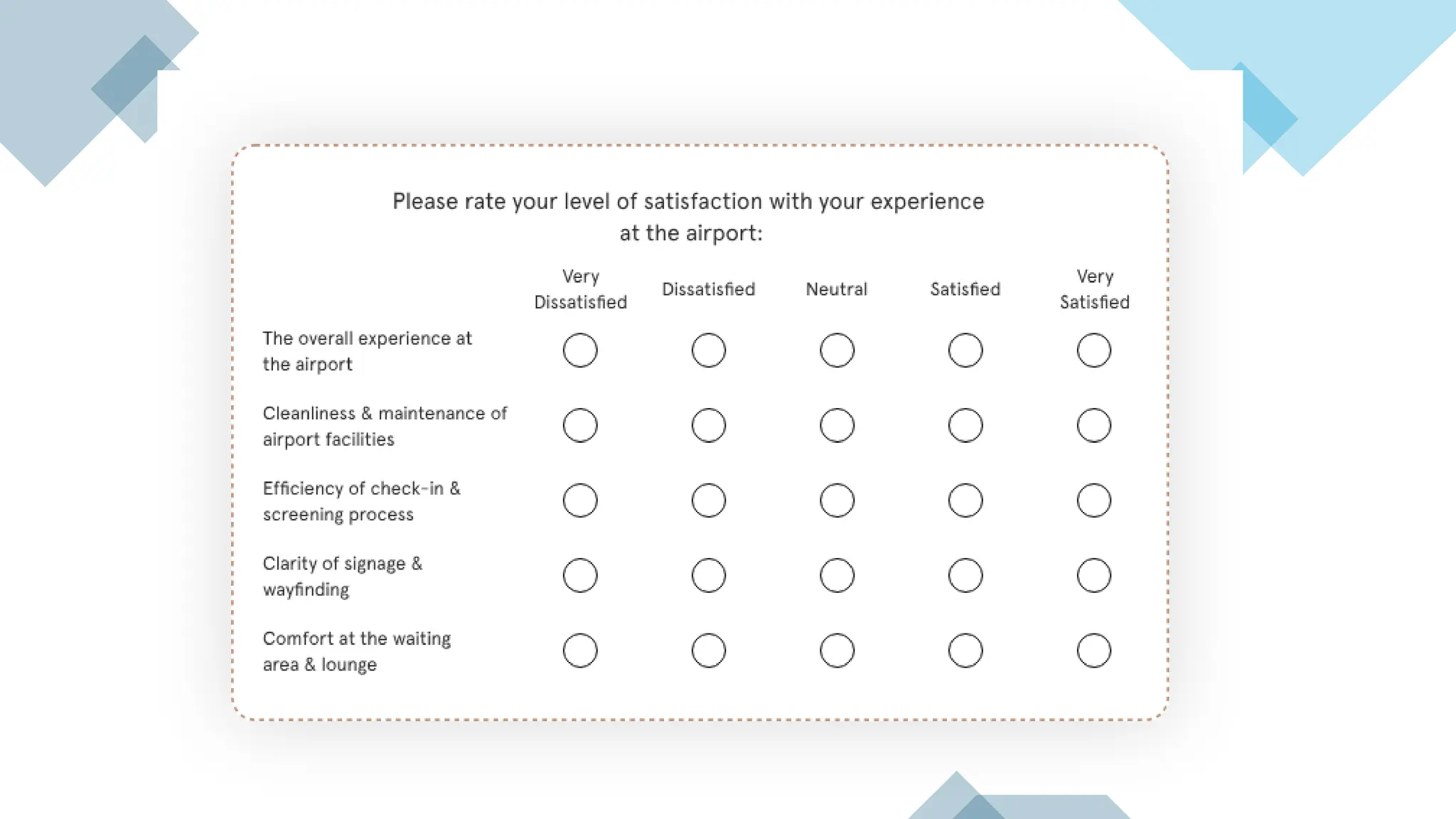
#13 A survey in descriptive research is a method used to collect data from a population or sample to describe the characteristics, opinions, behaviors, or experiences of that group at a given time.
In descriptive research, surveys help answer the question “What is happening?” rather than “Why is it happening?”.
#15 his ensures consistency and comparability of answers across participants.
he wording, order, and format of questions are fixed for all respondents.
This helps reduce bias and ensures fairness in the data collection process.
#16 Most surveys use closed-ended questions so responses can be counted, compared, and analyzed statistically.
Can collect data from many people in a short time.
#17 Especially when conducted online, surveys can be less expensive compared to other research methods such as experiments or observations.
#18 Program evaluation is a systematic process of collecting and analyzing information about a program or project to determine its effectiveness, efficiency, relevance, and impact.
It helps guide decision-making, improve performance, and ensure that goals and objectives are being met.
Sample question
How accurate do students feel their assessments were?
What factors most drove learner success?
To what extent do trainees report changes in confidence?
#19 Measure whether the program achieves its intended results and meets its stated objectives.
Identify the program’s strengths and weaknesses to enhance its delivery and overall performance.
#20 Guide leaders on whether to continue, modify, or discontinue the program based on evidence and results.
Show funders, stakeholders, or the public how resources are being used and what outcomes are being achieved.
#21 Systematic – Program evaluation follows a planned and organized process, ensuring that each step (from data collection to analysis) is done logically and methodically.
Evidence-Based – Conclusions are based on actual data and measurable results, not on guesses, opinions, or assumptions.
Goal-Oriented – The evaluation is done with specific objectives in mind, measuring whether the program is achieving what it was designed to do.
Ongoing or Periodic – Evaluation can be conducted while the program is running (formative evaluation, to make improvements) or after it has ended (summative evaluation, to judge its overall success).
#23 (also called ex post facto research):
Correlational research is a type of research that examines the relationship between two or more variables to determine whether they are connected or associated.
It answers the question: “Is there a relationship between these variables?”
It does not prove cause-and-effect, only whether a relationship exists and how strong or weak it is.
Sample The Relationship Between Students’ Study Time and Academic Performance
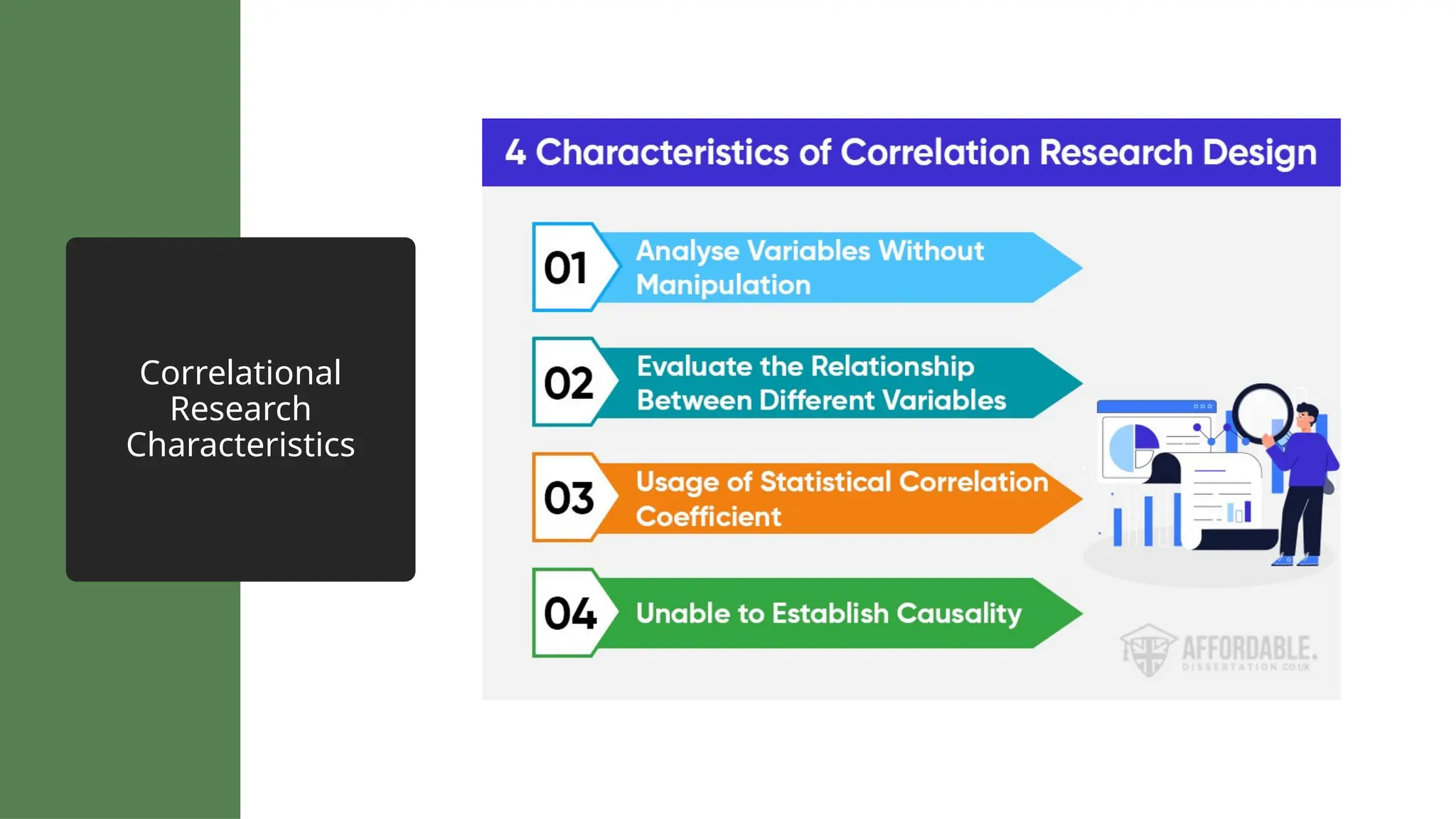
#24 Analyze Variables Without Manipulation Correlation research observes existing variables without altering or controlling them. Researchers do not intervene; instead, they study relationships as they naturally occur.
2. Evaluate the Relationship Between Different Variables The primary goal is to determine if a relationship exists between two or more variables — for example, studying the link between stress levels and academic performance.
3. Use of Statistical Correlation Coefficient Researchers typically use statistical tools like the Pearson correlation coefficient (r) to quantify the strength and direction (positive, negative, or none) of the relationship between variables.
4. Unable to Establish Causality A key limitation is that correlation does not imply causation. Even if two variables are related, it doesn't mean one causes the other.
Sent
Write to
#25 This can help determine the consequences or causes of differences already existing among or between different groups of people.
The Effect of School Type on Students’ English Proficiency
Purpose:
To determine whether there is a difference in English proficiency between students from public schools and private schools.
#26 Cause-and-Effect Focus – Seeks to identify the possible cause for differences that already exist between groups.
No Direct Manipulation – The researcher does not control the independent variable; it has already occurred naturally.
#27 Retrospective or Prospective – The study can look backward to examine possible causes after effects have occurred, or look forward to examine effects after causes are identified.
Group Comparison – Involves comparing two or more groups to determine how they differ on a dependent variable.
#28 Naturally Occurring Groups – Participants are placed into groups based on existing characteristics (e.g., gender, smoking habits, type of school) rather than through random assignment.