Vocabulary learning and
Retention:
THE USEFULNESS OF PRE-READING AND DURING READING
QUESTIONS IN EFL CLASSES
AUTHOR : MAHMOOOD MEHRABI
About Author and context of the
research
 Mahmood Mehrabi, currently working as Assistant professor and Head Department of English ,
Faculty of postgraduate Studies , Islamic Azad University Najafabad Branch. He holds PhD from
Punjab university Chandigarh , India. His publications include one book, one research project,
two articles in foreign journals .
 The research article is based on the English as Foreign language (EFL) in Iranian context. It
covers the debate among the EFL Practitioners concerning which method of using questions
works efficiently in teaching comprehension classes with major goal of developing Vocabulary.
Introduction:
 Reading skill, a skill of Paramount importance , Can be considered as the most important foreign language skill,
 Research has confirmed that reading is in L1 and L2 language has a positive impact on language development an Impact that
has been referred as The power of reading (Krashen 1988)
 Harley (1995a) described vocabulary as the most central element in the social system of communication .
 Richards( 1998) considers vocabulary as the core component of language proficiency
 Many researchers believe that there is a symbolic relationship between reading and vocabulary acquisition.
 Factors influencing incidental learning of meanings from context are Age , reading skill, text type , word characteristics ,
vocabulary size , and topic Knowledge familiarity.
Krashen and Rott ( 2002) shared an assumption that much of second language vocabulary is acquired incidentally through
reading for comprehension .
 impact of reading tasks on incidental vocabulary learning and retention
 different reading activities impose different level of involvement with text.
 lead to different amount of vocabulary learning and retention.
Research questions and hypothesis
 Research questions
(1). Does the inclusion of pre-reading questions and inserted questions account for different
amount of incidental vocabulary learning from text?
(2). Does the inclusion of pre-reading and inserted questions have an impact on student’s
retention of incidentally learned vocabulary?
 Hypothesis
(1). Ho1: There is no significant relationship between the location of the reading questions in
the text (pre-reading as opposed to inserted questions) and incidental vocabulary learning.
 (2). Ho2: There is no meaningful relationship between the location of comprehension
questions (pre-reading vs. inserted questions) and retention of the incidentally learned
vocabulary.
Methodology
Sampling and Participants
 Description of the sample( A total of 88 male and female students studying English at Islamic
Azad University , Najafabad Branch were selected for this study.
 Homogeneity of the subjects was determined by using an
 Oxford placement test (OPT) , comprising of vocabulary and structure questions was
administered , 60 students were of intermediate level of proficiency were selected and by
using a
 Match pair statistical design , two groups were established comprising of 30 students each ,
 Group A (30 students) received their reading texts with pre-reading questions.

 Group B ( 30 students) received their reading texts containing inserted questions.
Instrumentation
 Oxford placement test , comprising of vocabulary and structure sections was administered to
ensure the homogeneity of the subjects. In addition a
 Pretest, consisting of 60 multiple –choice vocabulary questions containing the vocabulary
items intended to be tested was used.
 VOC items as distractors, to apply logical items which were new to the students.
 Reading Passages , with a length o 200 words and approximately at the same level of difficulty
were selected from intermediate reading textbooks.
 Final test : A forty – item teacher made vocabulary test ( comprised of vocabulary of each
test)
 Validity , of the tests was ensured by consulting three university professors and they approved
that test items were well – prepared and served the intended purpose.
Procedure
 A pretest , comprising of 60 multiple –choice items containing the intended VOC items was used to know about the
vocabulary knowledge of learners and , to make sure that these words are new to the students, after test 40 unfamiliar
items were selected.
 Two week after the treatment started both groups were asked to read the same texts but the nature and kind of tasks
were different
 Group –A………….tasks….Pre-reading questions
 Group- B ………..tasks… inserted questions( questions were scattered throughout the body of the text).
 No deliberate attempt was made to direct students’ attention to vocabulary learning .
 Procedure of the classes
(Step.1) warm up exercise was presented and the students were introduced the text, they were asked to read the texts
. Time limit for reading th text was calculated by using the formula described below
(Step2) collected the passages and five-minute break
(Step.3) After the break , the incidental vocabulary learning test , which comprised 8 questions, was administered.
Time limit formula
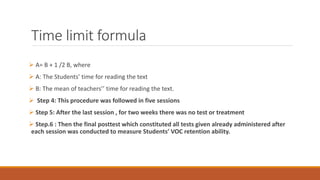
 A= B + 1 /2 B, where
 A: The Students’ time for reading the text
 B: The mean of teachers’’ time for reading the text.
 Step 4: This procedure was followed in five sessions
 Step 5: After the last session , for two weeks there was no test or treatment
 Step.6 : Then the final posttest which constituted all tests given already administered after
each session was conducted to measure Students’ VOC retention ability.
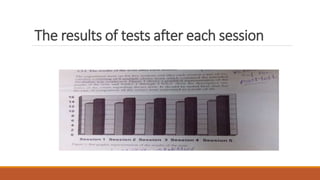
The results of tests after each session
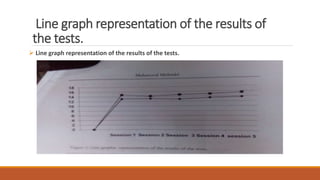
Line graph representation of the results of
the tests.
 Line graph representation of the results of the tests.
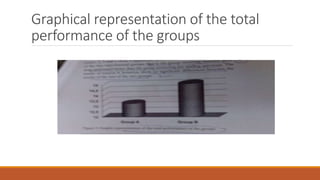
Graphical representation of the total
performance of the groups
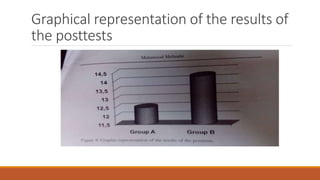
Graphical representation of the results of
the posttests
Descriptive statistics and the results of the T-tests.
 graph of Total performance of the groups.
 Rejection pf Hypothesis (1) .
 The results of the Posttest .
 Rejection of the Hypothesis (2).
Discussion
 Objective of the present research:
 The goal of the study was to determine the possible effects of different reading activities on
vocabulary gain and the time period the new words are retained .
 Results discussion.
Schema theory
 Goodman (1976) reading strategies.
 Mental hypothesis
 Clark 1973)
 mental effort hypothesis and nature of processing.
 Conclusion:
 Goal of the study
 Incidental acquisition vocabulary hypothesis ( Coady 1979)
 Krashen(1989) Input hypothesis
Thank you

Research article main components

  • 1.
    Vocabulary learning and Retention: THEUSEFULNESS OF PRE-READING AND DURING READING QUESTIONS IN EFL CLASSES AUTHOR : MAHMOOOD MEHRABI
  • 2.
    About Author andcontext of the research  Mahmood Mehrabi, currently working as Assistant professor and Head Department of English , Faculty of postgraduate Studies , Islamic Azad University Najafabad Branch. He holds PhD from Punjab university Chandigarh , India. His publications include one book, one research project, two articles in foreign journals .  The research article is based on the English as Foreign language (EFL) in Iranian context. It covers the debate among the EFL Practitioners concerning which method of using questions works efficiently in teaching comprehension classes with major goal of developing Vocabulary.
  • 3.
    Introduction:  Reading skill,a skill of Paramount importance , Can be considered as the most important foreign language skill,  Research has confirmed that reading is in L1 and L2 language has a positive impact on language development an Impact that has been referred as The power of reading (Krashen 1988)  Harley (1995a) described vocabulary as the most central element in the social system of communication .  Richards( 1998) considers vocabulary as the core component of language proficiency  Many researchers believe that there is a symbolic relationship between reading and vocabulary acquisition.  Factors influencing incidental learning of meanings from context are Age , reading skill, text type , word characteristics , vocabulary size , and topic Knowledge familiarity. Krashen and Rott ( 2002) shared an assumption that much of second language vocabulary is acquired incidentally through reading for comprehension .  impact of reading tasks on incidental vocabulary learning and retention  different reading activities impose different level of involvement with text.  lead to different amount of vocabulary learning and retention.
  • 4.
    Research questions andhypothesis  Research questions (1). Does the inclusion of pre-reading questions and inserted questions account for different amount of incidental vocabulary learning from text? (2). Does the inclusion of pre-reading and inserted questions have an impact on student’s retention of incidentally learned vocabulary?  Hypothesis (1). Ho1: There is no significant relationship between the location of the reading questions in the text (pre-reading as opposed to inserted questions) and incidental vocabulary learning.  (2). Ho2: There is no meaningful relationship between the location of comprehension questions (pre-reading vs. inserted questions) and retention of the incidentally learned vocabulary.
  • 5.
    Methodology Sampling and Participants Description of the sample( A total of 88 male and female students studying English at Islamic Azad University , Najafabad Branch were selected for this study.  Homogeneity of the subjects was determined by using an  Oxford placement test (OPT) , comprising of vocabulary and structure questions was administered , 60 students were of intermediate level of proficiency were selected and by using a  Match pair statistical design , two groups were established comprising of 30 students each ,  Group A (30 students) received their reading texts with pre-reading questions.  Group B ( 30 students) received their reading texts containing inserted questions.
  • 6.
    Instrumentation  Oxford placementtest , comprising of vocabulary and structure sections was administered to ensure the homogeneity of the subjects. In addition a  Pretest, consisting of 60 multiple –choice vocabulary questions containing the vocabulary items intended to be tested was used.  VOC items as distractors, to apply logical items which were new to the students.  Reading Passages , with a length o 200 words and approximately at the same level of difficulty were selected from intermediate reading textbooks.  Final test : A forty – item teacher made vocabulary test ( comprised of vocabulary of each test)  Validity , of the tests was ensured by consulting three university professors and they approved that test items were well – prepared and served the intended purpose.
  • 7.
    Procedure  A pretest, comprising of 60 multiple –choice items containing the intended VOC items was used to know about the vocabulary knowledge of learners and , to make sure that these words are new to the students, after test 40 unfamiliar items were selected.  Two week after the treatment started both groups were asked to read the same texts but the nature and kind of tasks were different  Group –A………….tasks….Pre-reading questions  Group- B ………..tasks… inserted questions( questions were scattered throughout the body of the text).  No deliberate attempt was made to direct students’ attention to vocabulary learning .  Procedure of the classes (Step.1) warm up exercise was presented and the students were introduced the text, they were asked to read the texts . Time limit for reading th text was calculated by using the formula described below (Step2) collected the passages and five-minute break (Step.3) After the break , the incidental vocabulary learning test , which comprised 8 questions, was administered.
  • 8.
    Time limit formula A= B + 1 /2 B, where  A: The Students’ time for reading the text  B: The mean of teachers’’ time for reading the text.  Step 4: This procedure was followed in five sessions  Step 5: After the last session , for two weeks there was no test or treatment  Step.6 : Then the final posttest which constituted all tests given already administered after each session was conducted to measure Students’ VOC retention ability.
  • 9.
    The results oftests after each session
  • 10.
    Line graph representationof the results of the tests.  Line graph representation of the results of the tests.
  • 11.
    Graphical representation ofthe total performance of the groups
  • 12.
    Graphical representation ofthe results of the posttests
  • 13.
    Descriptive statistics andthe results of the T-tests.  graph of Total performance of the groups.  Rejection pf Hypothesis (1) .  The results of the Posttest .  Rejection of the Hypothesis (2).
  • 14.
    Discussion  Objective ofthe present research:  The goal of the study was to determine the possible effects of different reading activities on vocabulary gain and the time period the new words are retained .  Results discussion. Schema theory  Goodman (1976) reading strategies.  Mental hypothesis
  • 15.
     Clark 1973) mental effort hypothesis and nature of processing.  Conclusion:  Goal of the study  Incidental acquisition vocabulary hypothesis ( Coady 1979)  Krashen(1989) Input hypothesis
  • 16.