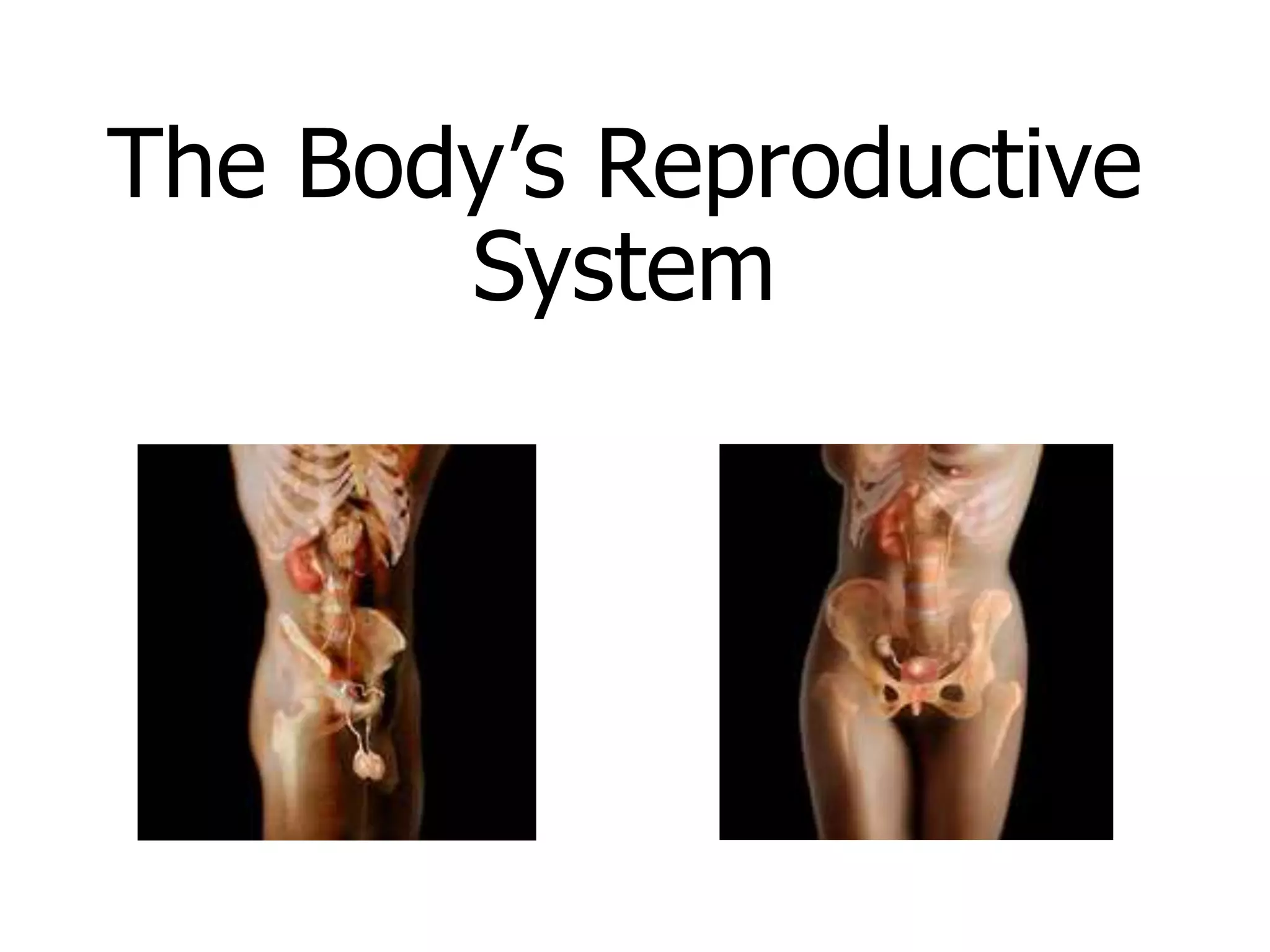
The Body’s Reproductive
System
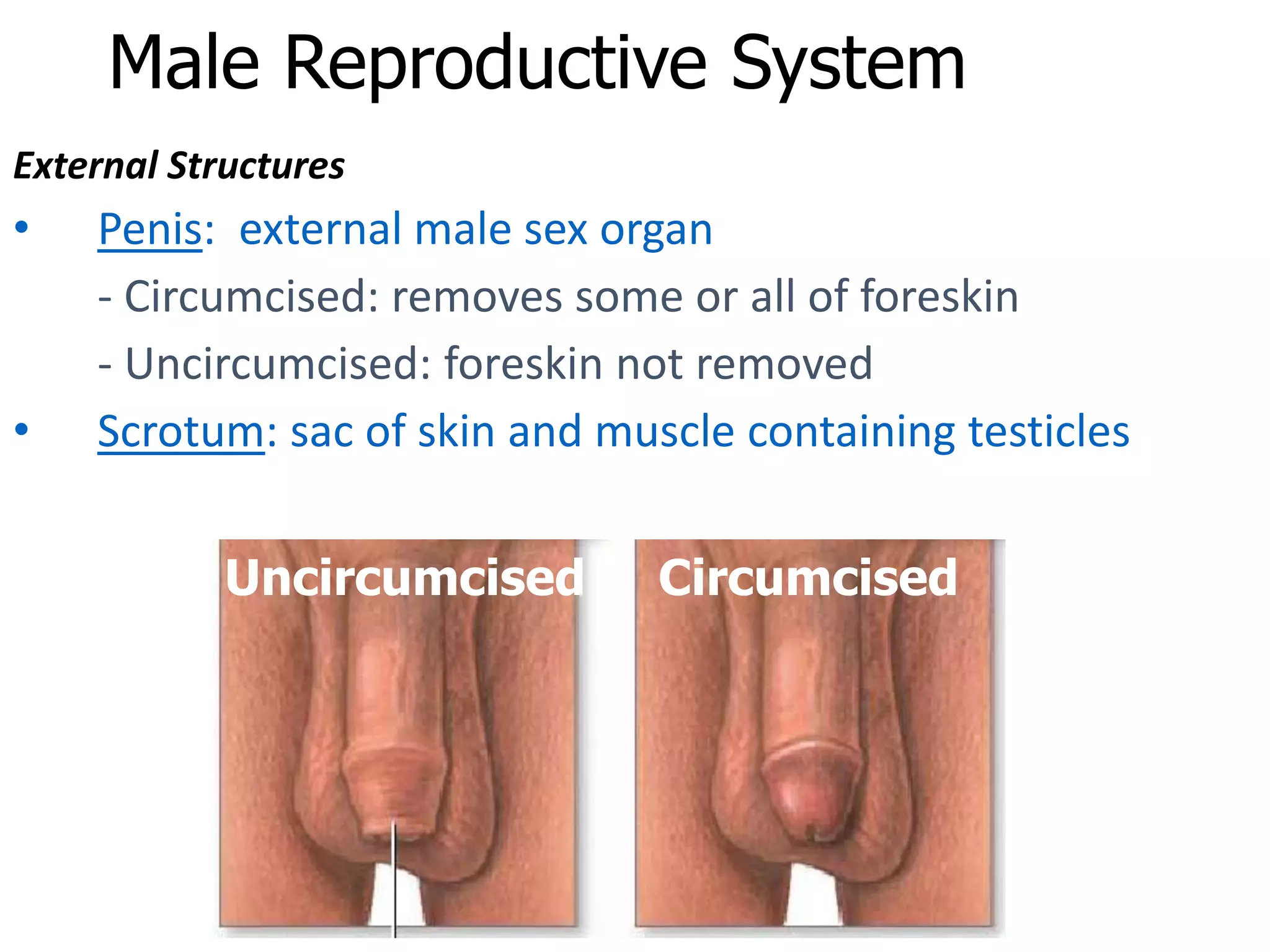
Male Reproductive System
External Structures
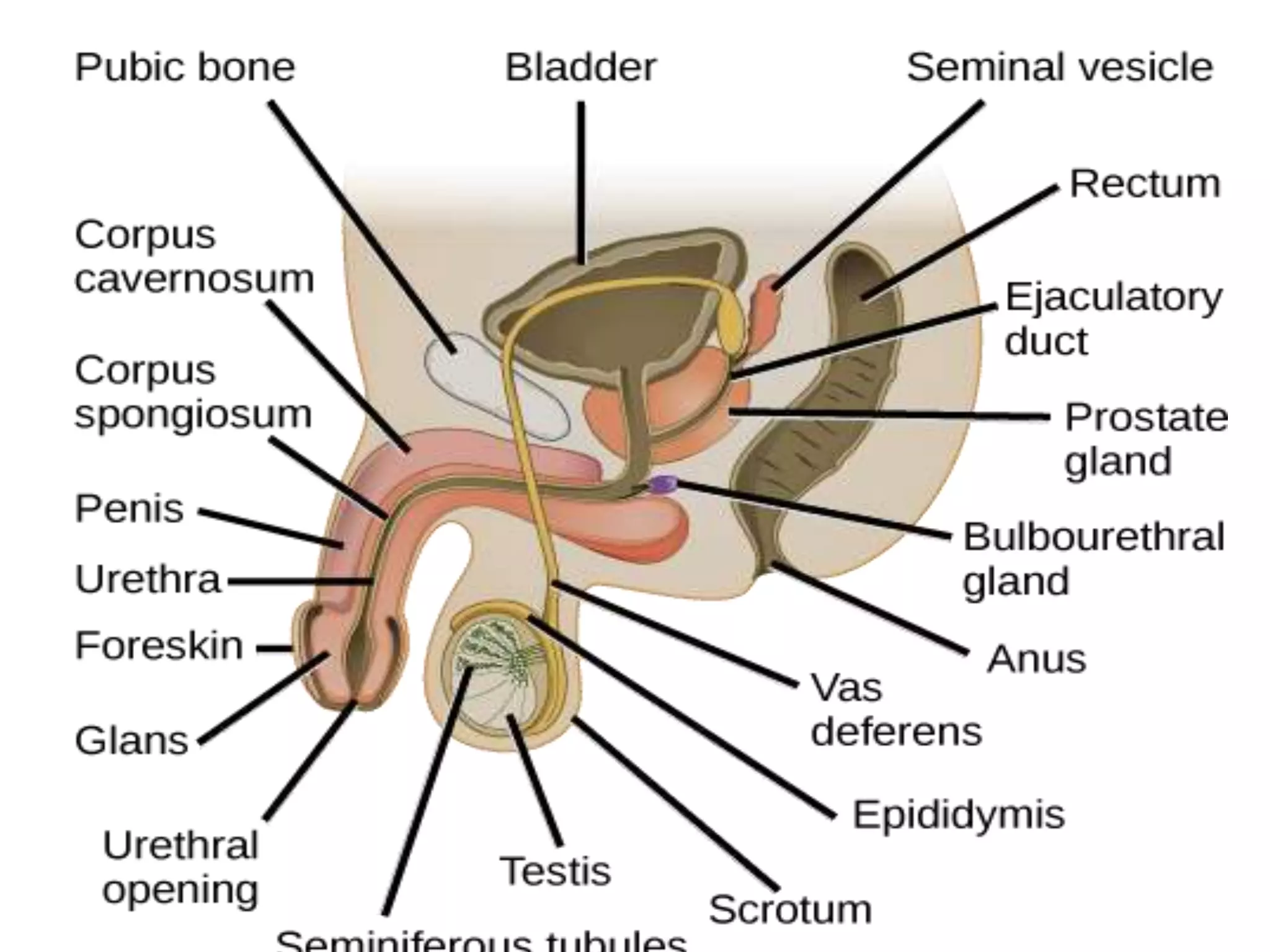
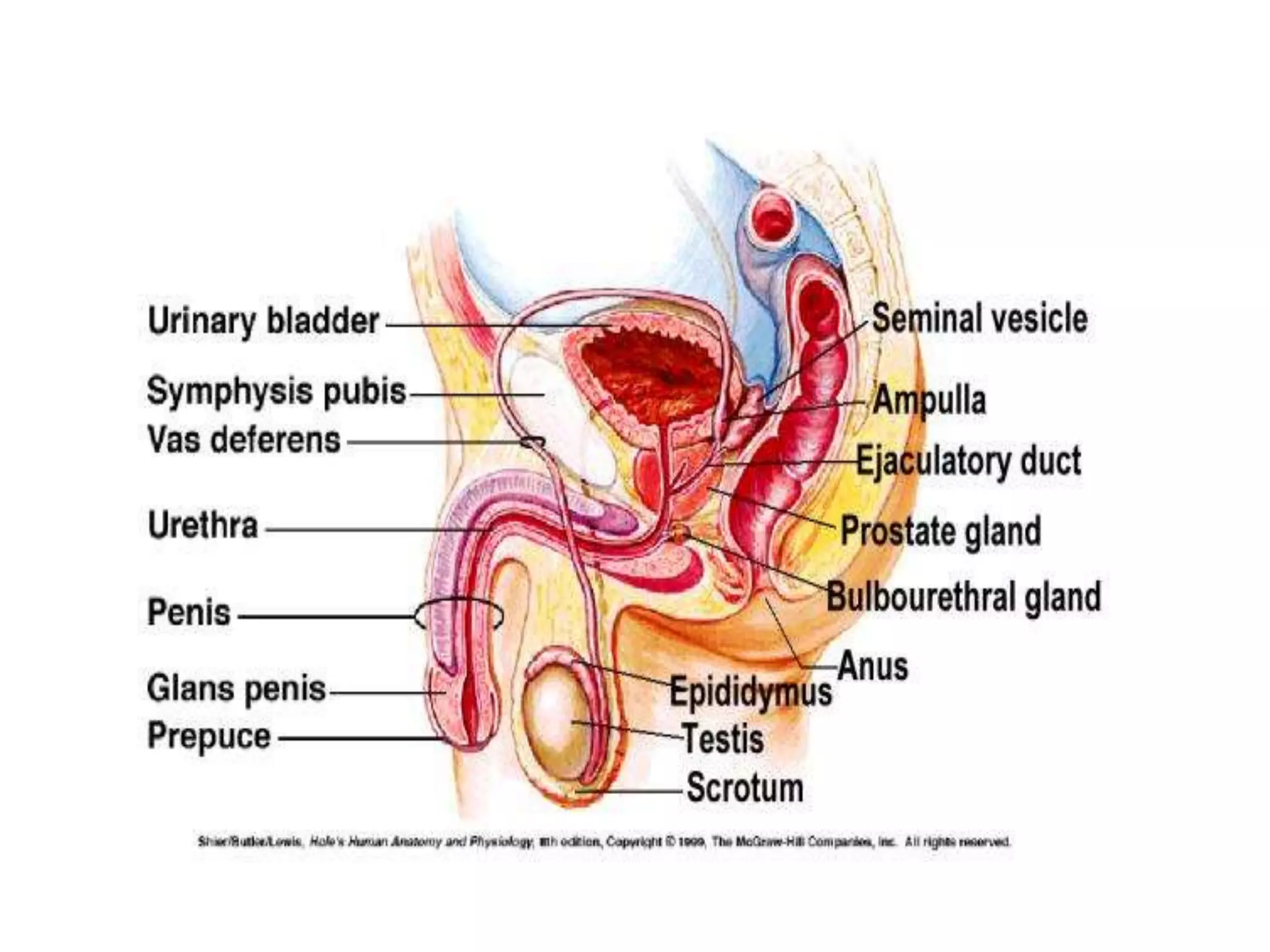
• Penis: external male sex organ
- Circumcised: removes some or all of foreskin
- Uncircumcised: foreskin not removed
• Scrotum: sac of skin and muscle containing testicles
Uncircumcised Circumcised
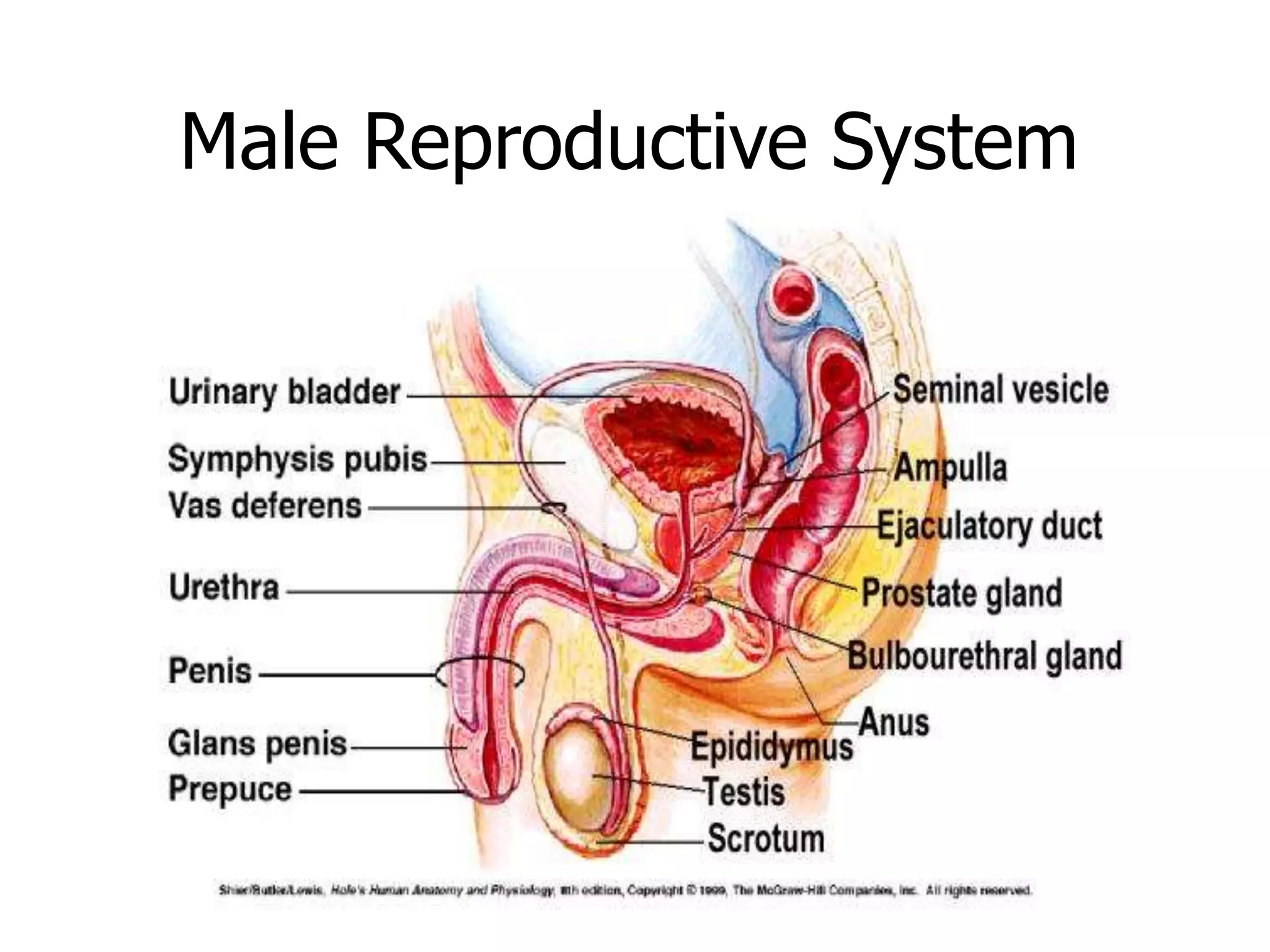
Male Reproductive System
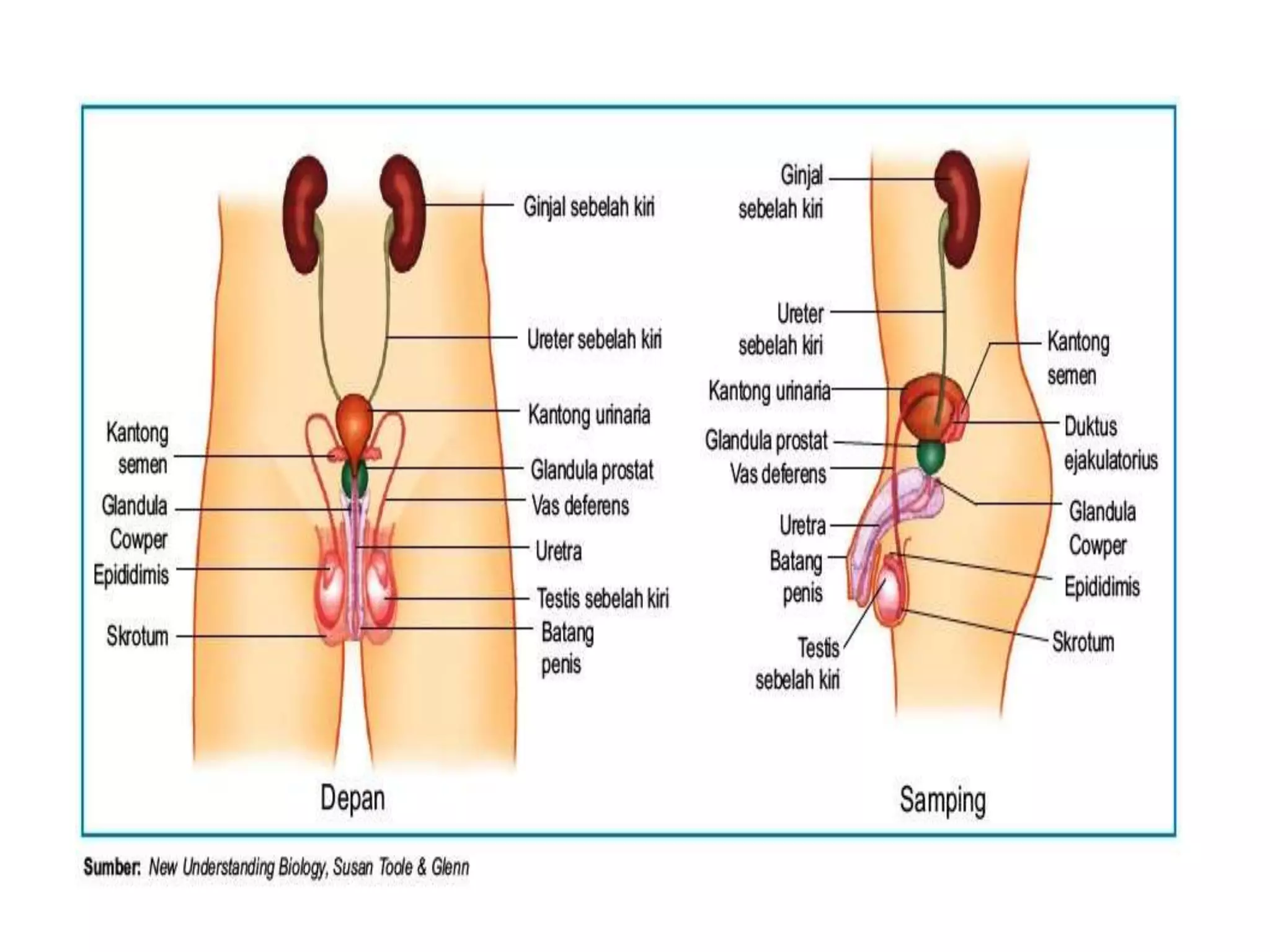
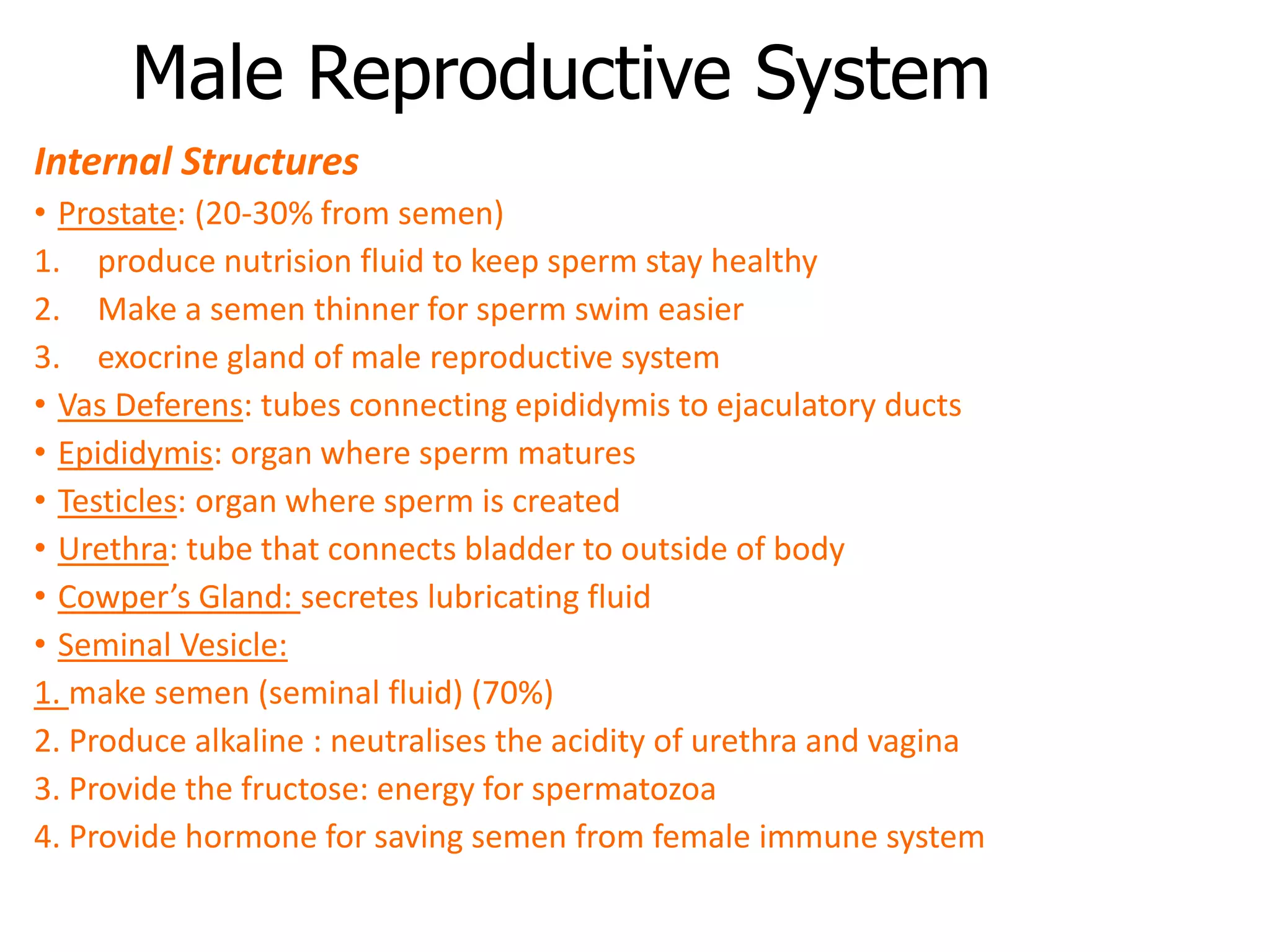
Internal Structures
• Prostate: (20-30% from semen)
1. produce nutrision fluid to keep sperm stay healthy
2. Make a semen thinner for sperm swim easier
3. exocrine gland of male reproductive system
• Vas Deferens: tubes connecting epididymis to ejaculatory ducts
• Epididymis: organ where sperm matures
• Testicles: organ where sperm is created
• Urethra: tube that connects bladder to outside of body
• Cowper’s Gland: secretes lubricating fluid
• Seminal Vesicle:
1. make semen (seminal fluid) (70%)
2. Produce alkaline : neutralises the acidity of urethra and vagina
3. Provide the fructose: energy for spermatozoa
4. Provide hormone for saving semen from female immune system
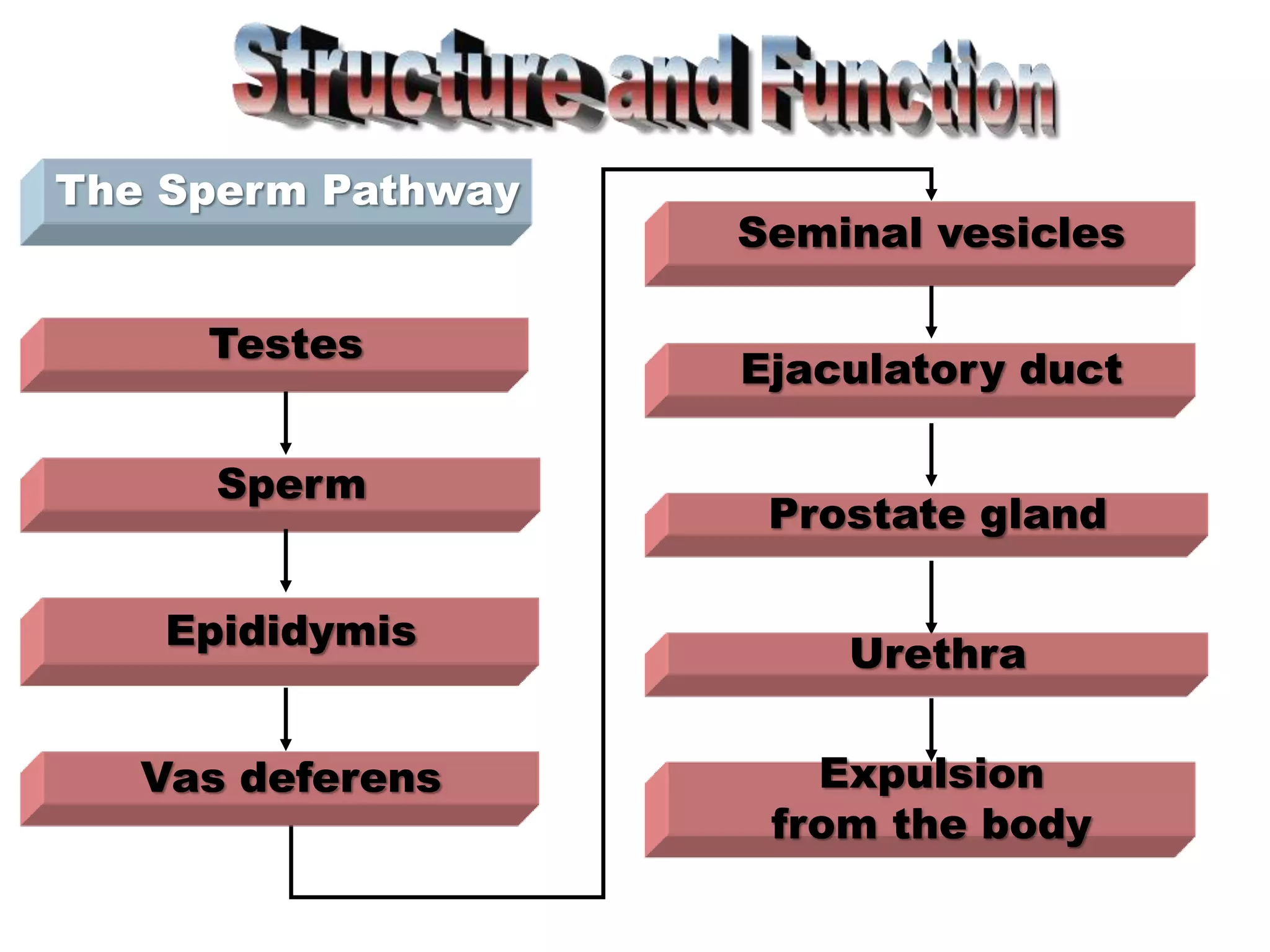
The Sperm Pathway
Vas deferens Expulsion
from the body
Testes
Sperm
Epididymis
Seminal vesicles
Ejaculatory duct
Prostate gland
Urethra
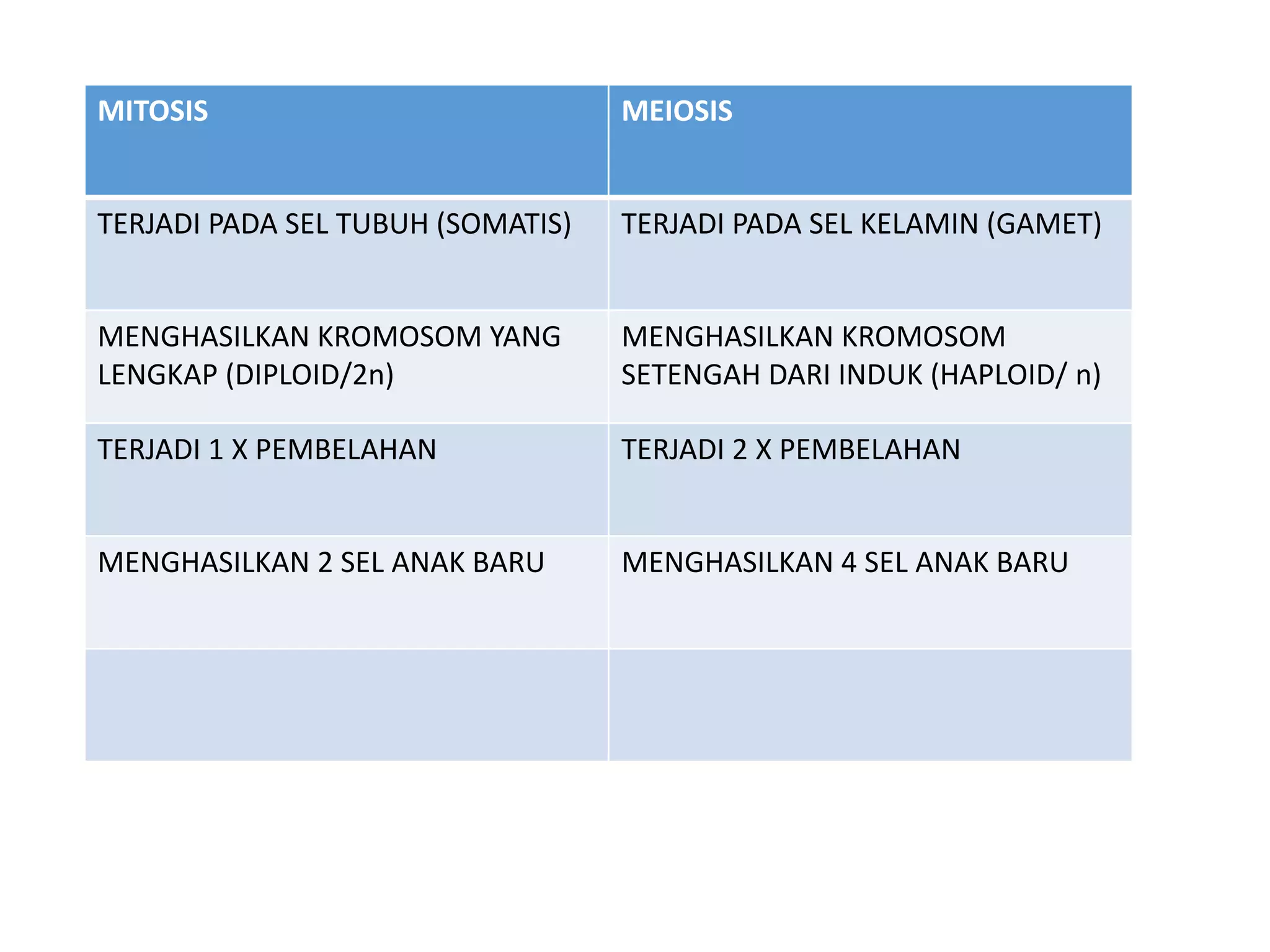
MITOSIS MEIOSIS
TERJADI PADA SEL TUBUH (SOMATIS) TERJADI PADA SEL KELAMIN (GAMET)
MENGHASILKAN KROMOSOM YANG
LENGKAP (DIPLOID/2n)
MENGHASILKAN KROMOSOM
SETENGAH DARI INDUK (HAPLOID/ n)
TERJADI 1 X PEMBELAHAN TERJADI 2 X PEMBELAHAN
MENGHASILKAN 2 SEL ANAK BARU MENGHASILKAN 4 SEL ANAK BARU
Male Reproductive Disorders
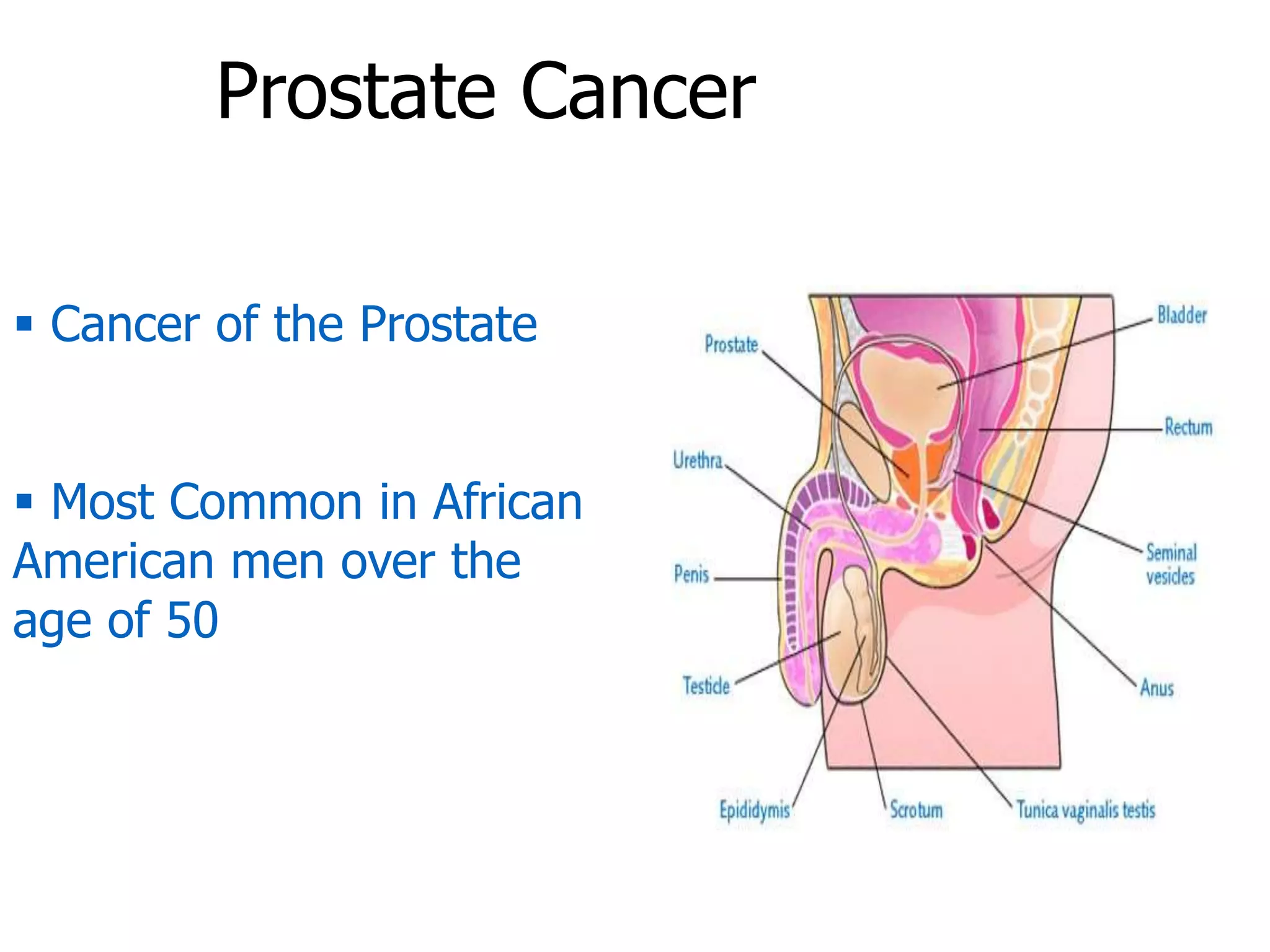
Prostate Cancer
 Cancer of the Prostate
 Most Common in African
American men over the
age of 50
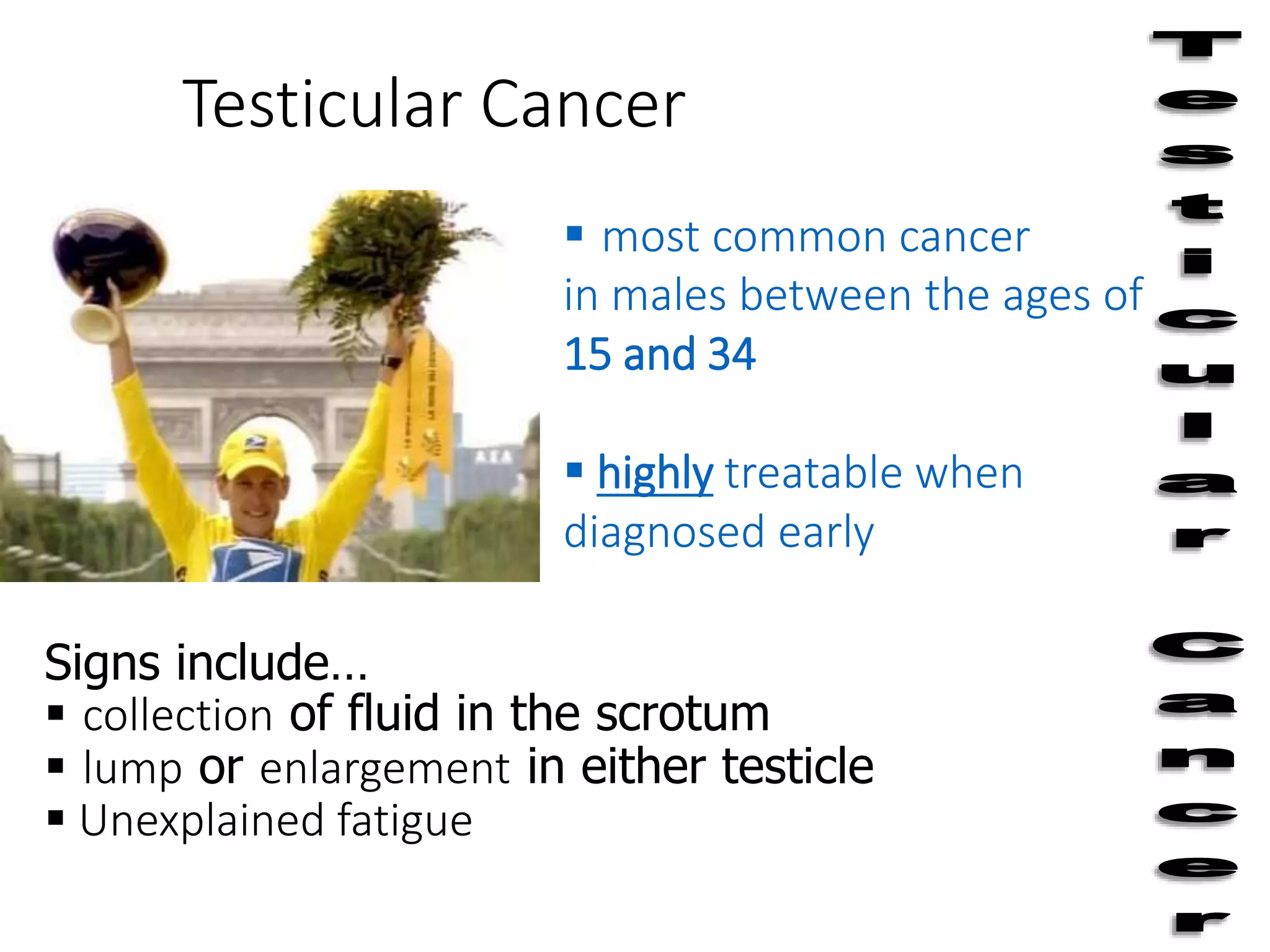
Testicular Cancer
 most common cancer
in males between the ages of
15 and 34
 highly treatable when
diagnosed early
Signs include…
 collection of fluid in the scrotum
 lump or enlargement in either testicle
 Unexplained fatigue
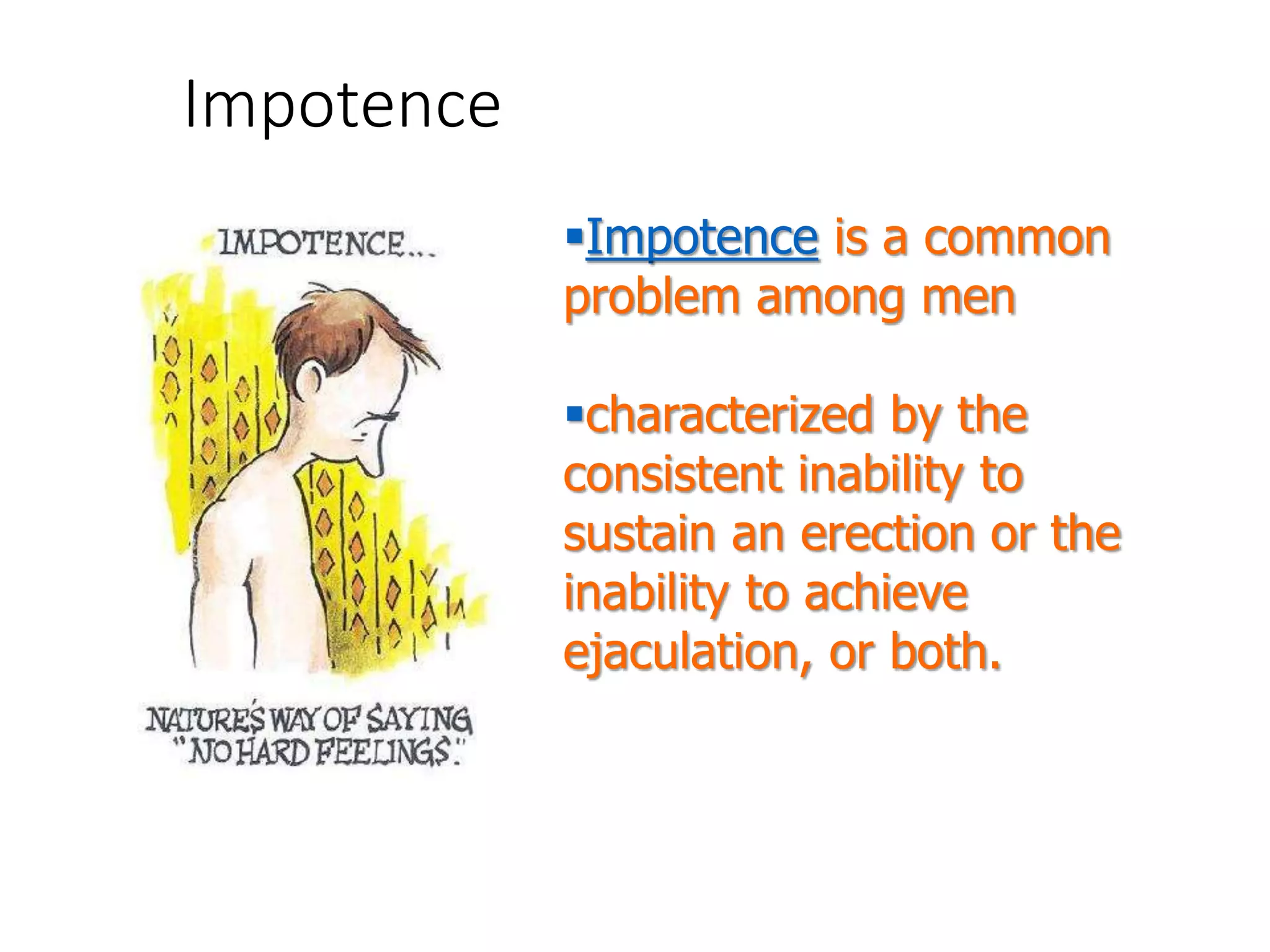
Impotence
Impotence is a common
problem among men
characterized by the
consistent inability to
sustain an erection or the
inability to achieve
ejaculation, or both.
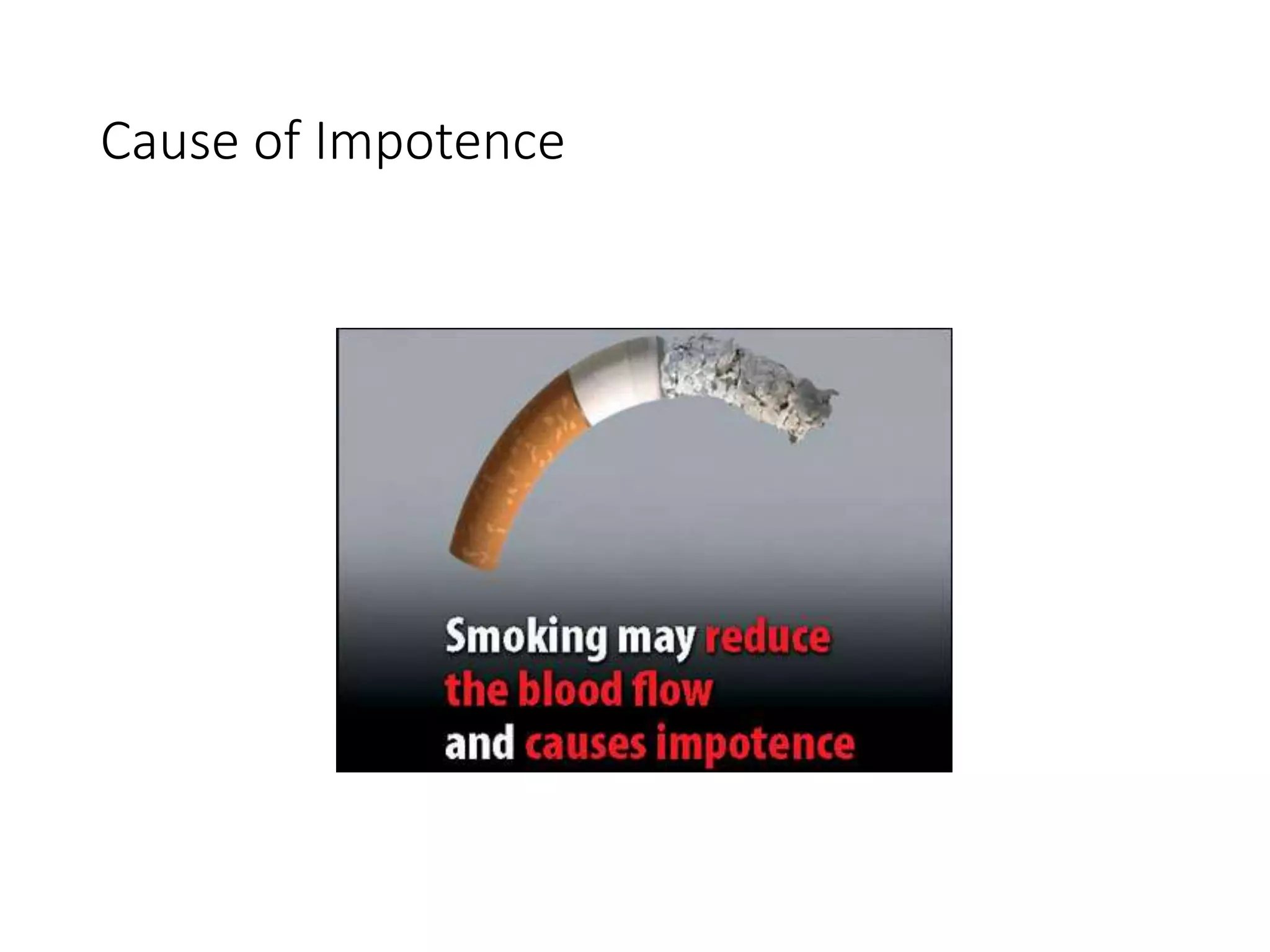
Cause of Impotence
Female Reproductive system
Female Reproductive System
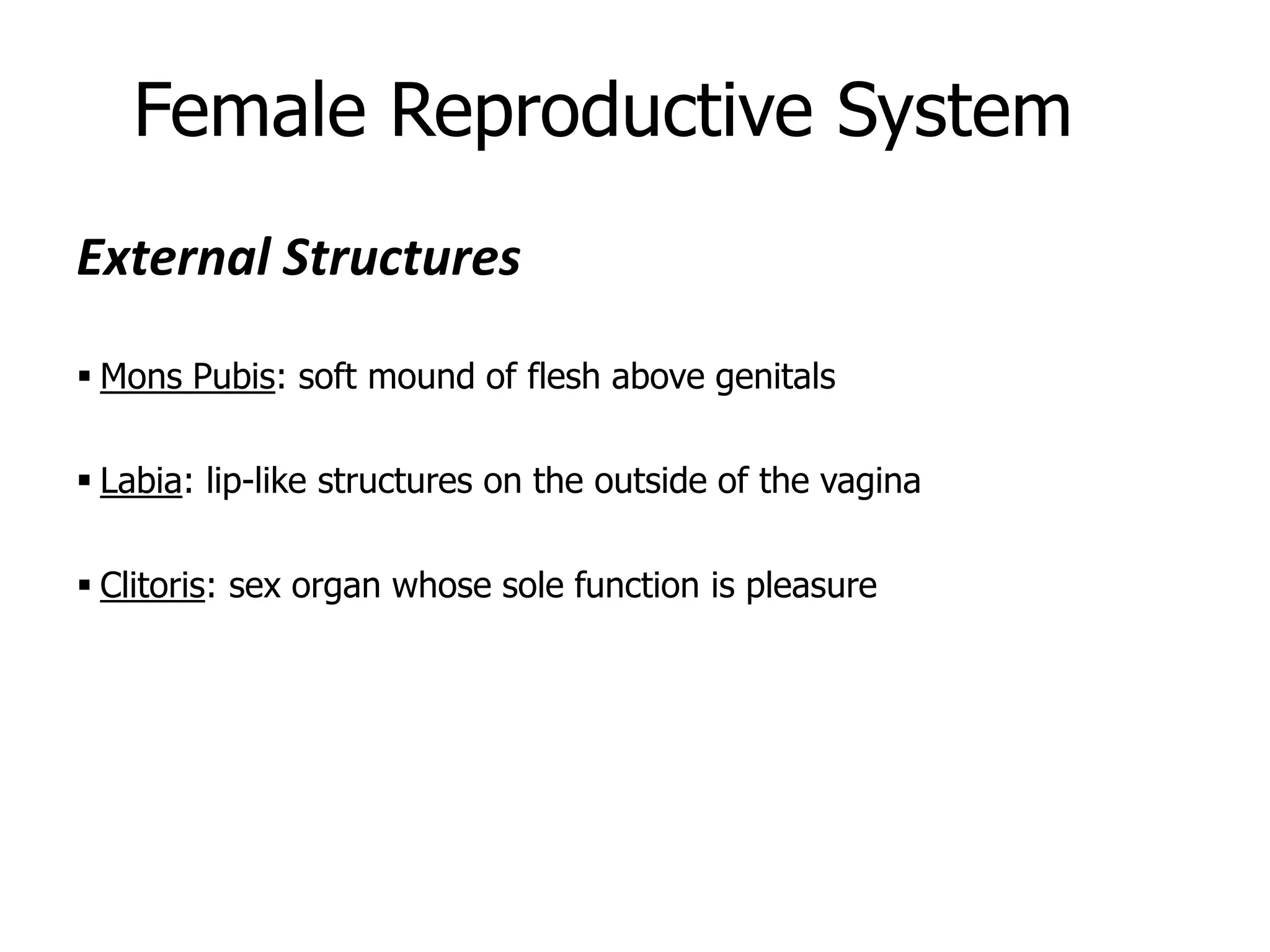
External Structures
 Mons Pubis: soft mound of flesh above genitals
 Labia: lip-like structures on the outside of the vagina
 Clitoris: sex organ whose sole function is pleasure
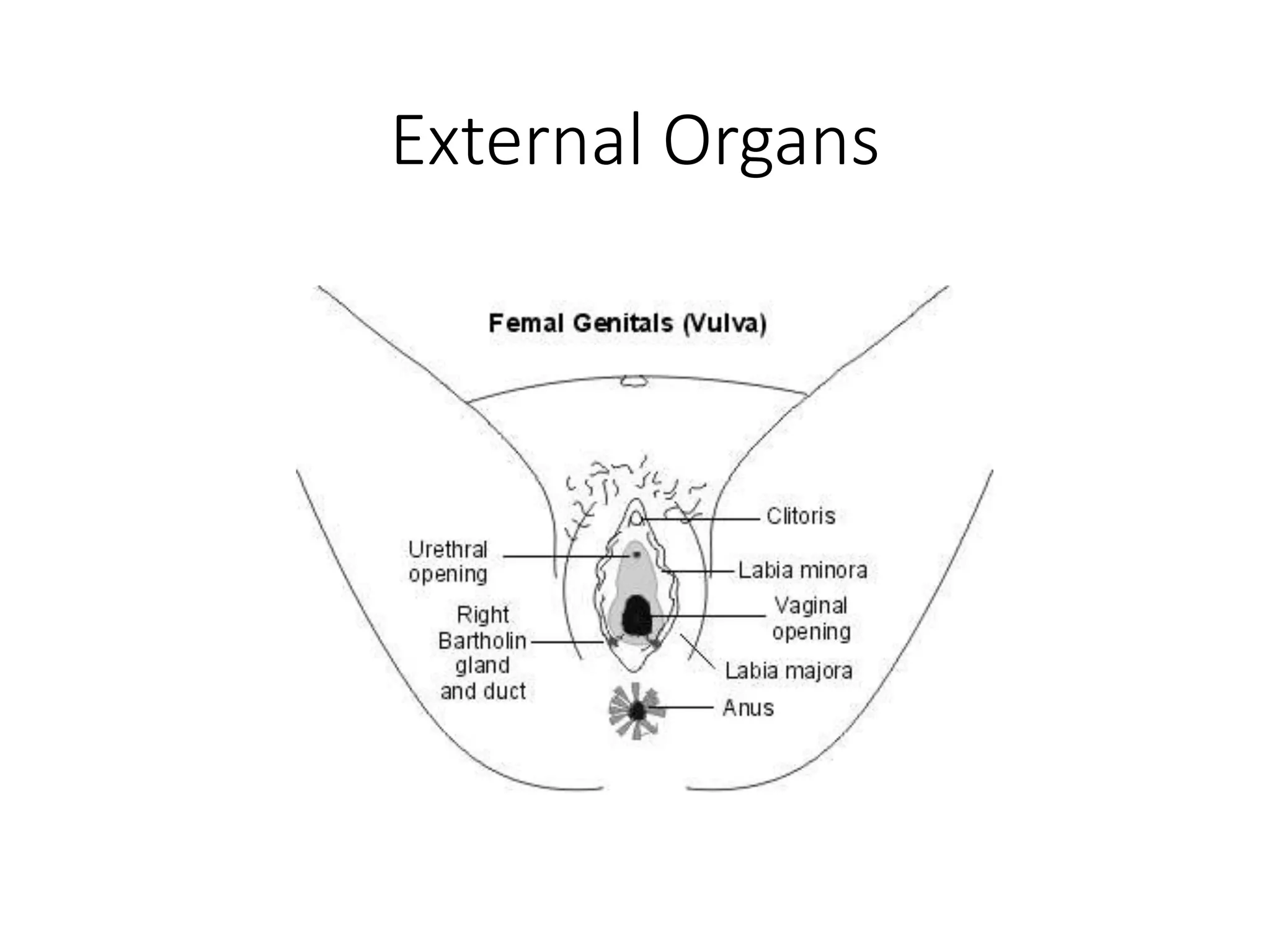
External Organs
Female Reproductive System
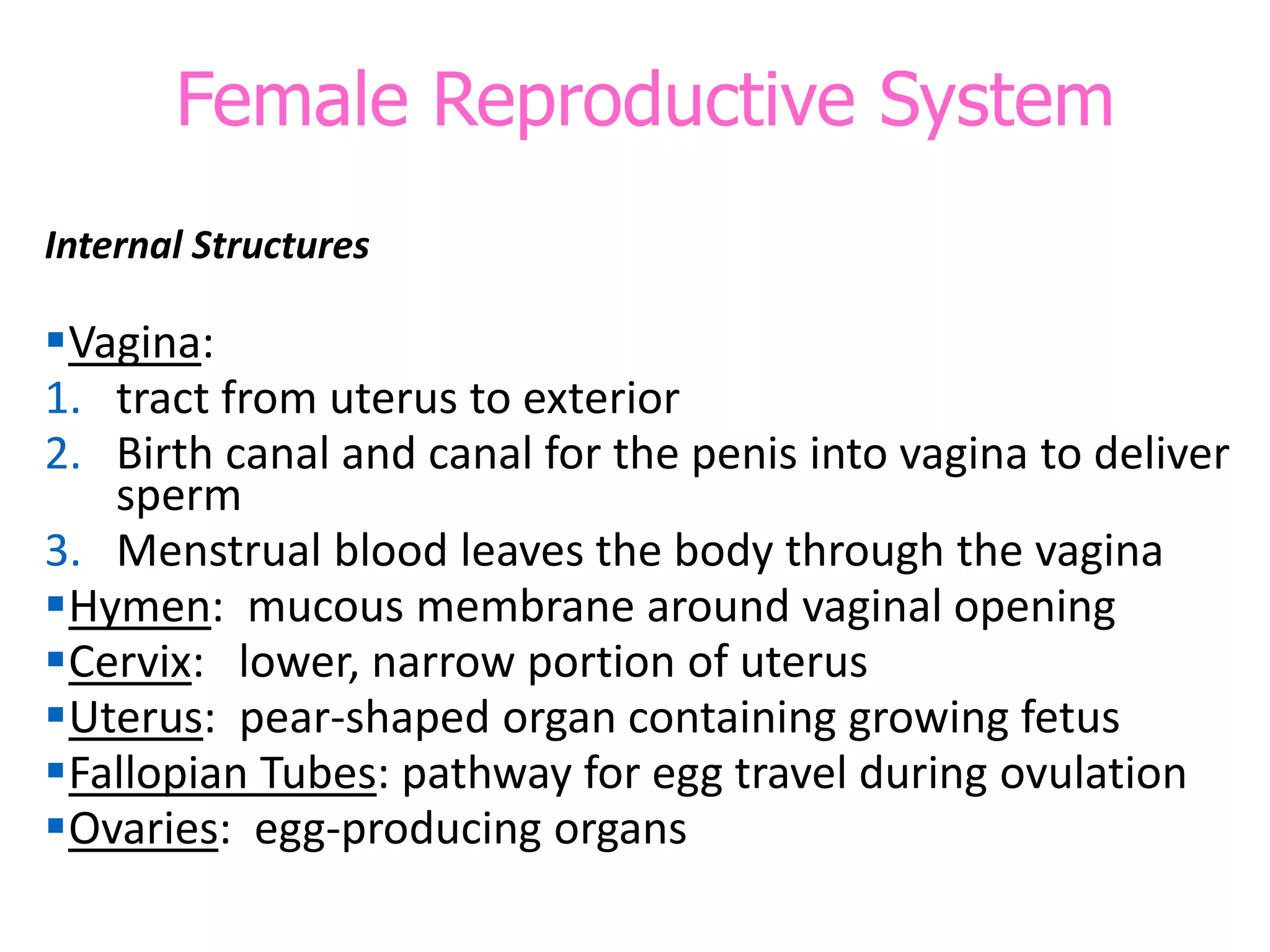
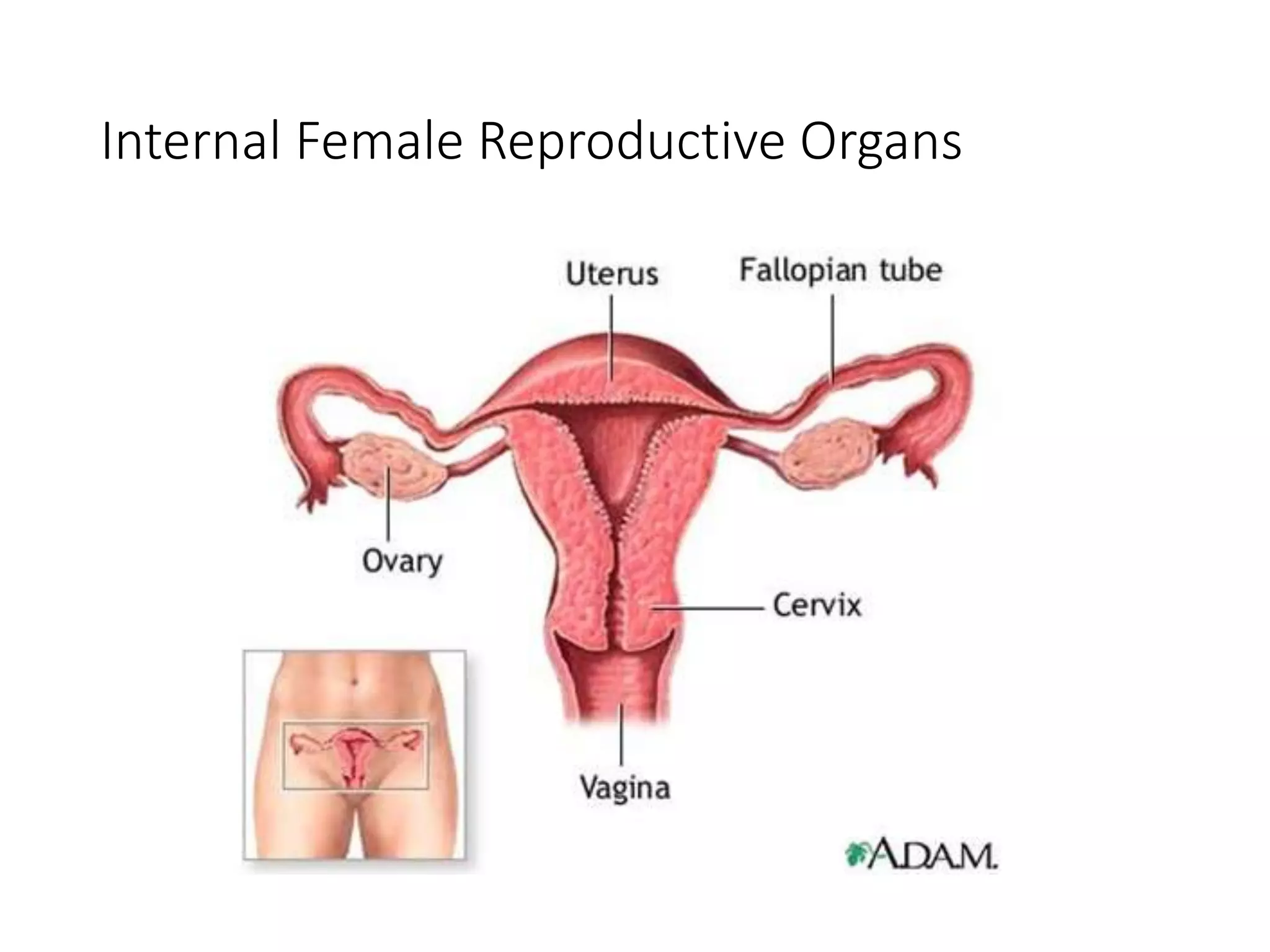
Internal Structures
Vagina:
1. tract from uterus to exterior
2. Birth canal and canal for the penis into vagina to deliver
sperm
3. Menstrual blood leaves the body through the vagina
Hymen: mucous membrane around vaginal opening
Cervix: lower, narrow portion of uterus
Uterus: pear-shaped organ containing growing fetus
Fallopian Tubes: pathway for egg travel during ovulation
Ovaries: egg-producing organs
Internal Female Reproductive Organs
Female Reproductive
Systems Disorders
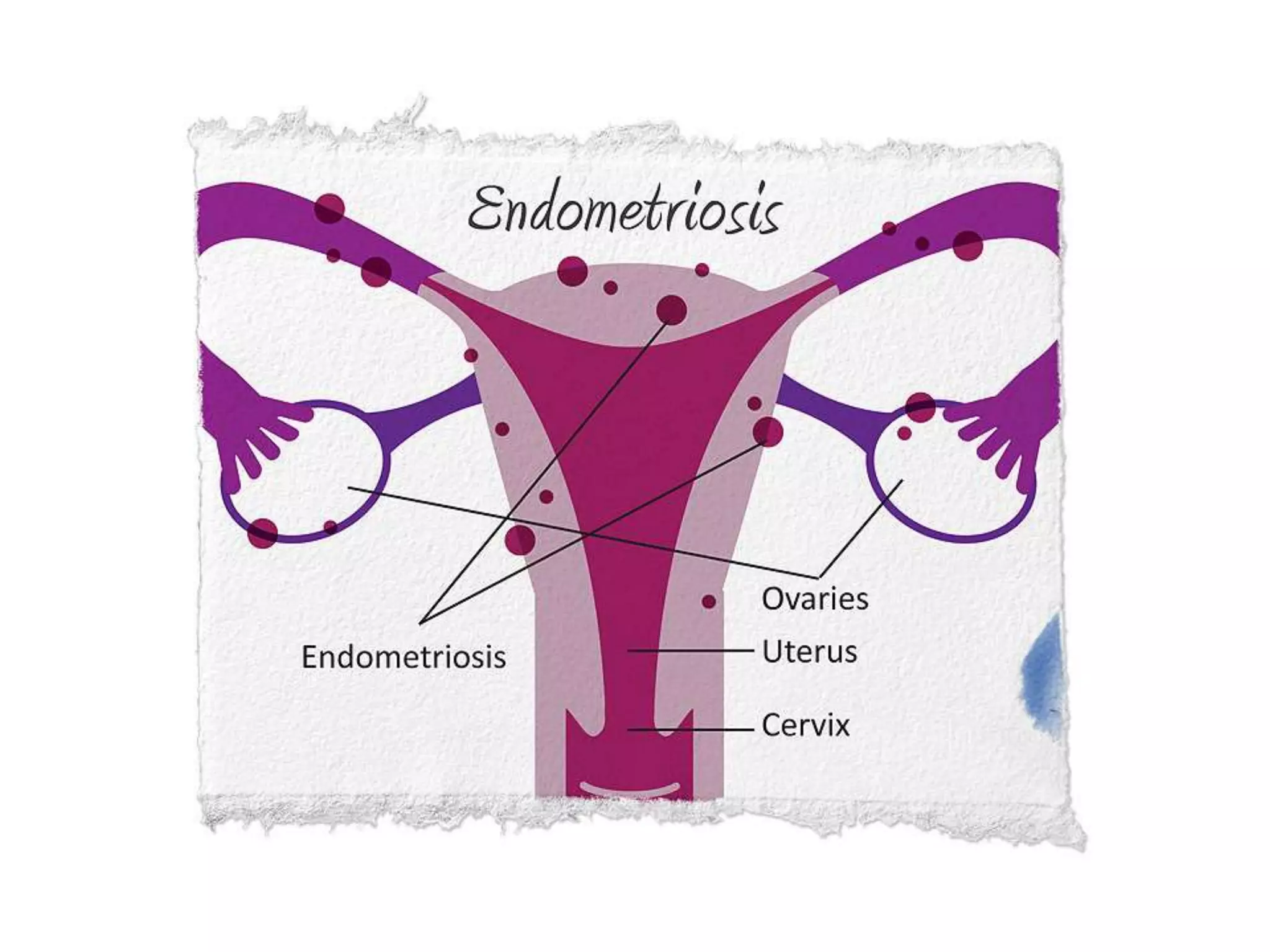
• In Endometriosis, the tissue begins to grow on the outside of the uterus
• Causes: menstrual blood containing endometrial cells flows back
through the fallopian tubes and into the pelvic cavity instead of out
of the body. These displaced endometrial cells stick to the pelvic
walls and surfaces of pelvic organs, where they grow
• Symptoms include: severe pelvic pain, constipation, diarrhea
Pain when having intercourse, can cause infertility
Reproductive-System.ppt

Reproductive-System.ppt

  • 1.
  • 2.
    Male Reproductive System ExternalStructures • Penis: external male sex organ - Circumcised: removes some or all of foreskin - Uncircumcised: foreskin not removed • Scrotum: sac of skin and muscle containing testicles Uncircumcised Circumcised
  • 3.
  • 6.
    Male Reproductive System InternalStructures • Prostate: (20-30% from semen) 1. produce nutrision fluid to keep sperm stay healthy 2. Make a semen thinner for sperm swim easier 3. exocrine gland of male reproductive system • Vas Deferens: tubes connecting epididymis to ejaculatory ducts • Epididymis: organ where sperm matures • Testicles: organ where sperm is created • Urethra: tube that connects bladder to outside of body • Cowper’s Gland: secretes lubricating fluid • Seminal Vesicle: 1. make semen (seminal fluid) (70%) 2. Produce alkaline : neutralises the acidity of urethra and vagina 3. Provide the fructose: energy for spermatozoa 4. Provide hormone for saving semen from female immune system
  • 8.
    The Sperm Pathway Vasdeferens Expulsion from the body Testes Sperm Epididymis Seminal vesicles Ejaculatory duct Prostate gland Urethra
  • 9.
    MITOSIS MEIOSIS TERJADI PADASEL TUBUH (SOMATIS) TERJADI PADA SEL KELAMIN (GAMET) MENGHASILKAN KROMOSOM YANG LENGKAP (DIPLOID/2n) MENGHASILKAN KROMOSOM SETENGAH DARI INDUK (HAPLOID/ n) TERJADI 1 X PEMBELAHAN TERJADI 2 X PEMBELAHAN MENGHASILKAN 2 SEL ANAK BARU MENGHASILKAN 4 SEL ANAK BARU
  • 12.
  • 13.
    Prostate Cancer  Cancerof the Prostate  Most Common in African American men over the age of 50
  • 14.
    Testicular Cancer  mostcommon cancer in males between the ages of 15 and 34  highly treatable when diagnosed early Signs include…  collection of fluid in the scrotum  lump or enlargement in either testicle  Unexplained fatigue
  • 15.
    Impotence Impotence is acommon problem among men characterized by the consistent inability to sustain an erection or the inability to achieve ejaculation, or both.
  • 16.
  • 17.
  • 18.
    Female Reproductive System ExternalStructures  Mons Pubis: soft mound of flesh above genitals  Labia: lip-like structures on the outside of the vagina  Clitoris: sex organ whose sole function is pleasure
  • 19.
  • 20.
    Female Reproductive System InternalStructures Vagina: 1. tract from uterus to exterior 2. Birth canal and canal for the penis into vagina to deliver sperm 3. Menstrual blood leaves the body through the vagina Hymen: mucous membrane around vaginal opening Cervix: lower, narrow portion of uterus Uterus: pear-shaped organ containing growing fetus Fallopian Tubes: pathway for egg travel during ovulation Ovaries: egg-producing organs
  • 21.
  • 22.
  • 23.
    • In Endometriosis,the tissue begins to grow on the outside of the uterus • Causes: menstrual blood containing endometrial cells flows back through the fallopian tubes and into the pelvic cavity instead of out of the body. These displaced endometrial cells stick to the pelvic walls and surfaces of pelvic organs, where they grow • Symptoms include: severe pelvic pain, constipation, diarrhea Pain when having intercourse, can cause infertility