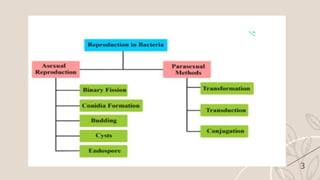
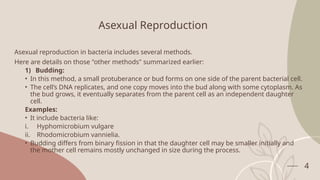
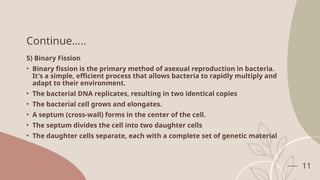
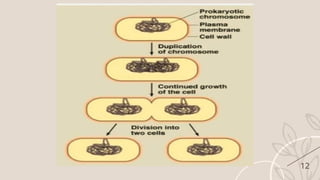
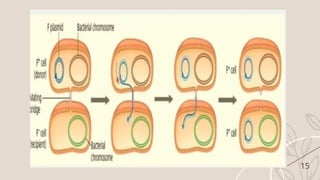
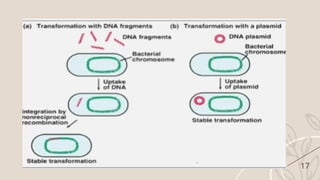
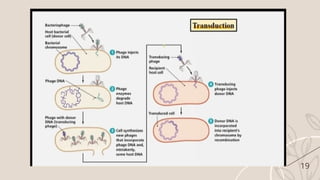
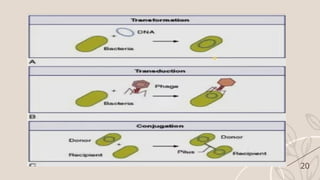
Reproduction in bacteria occurs primarily through asexual binary fission, a simple and rapid process that allows bacterial populations to grow quickly. In this method, a single bacterial cell replicates its DNA, elongates, and then divides into two genetically identical daughter cells. Because binary fission does not involve the fusion of gametes, it is efficient and can occur in favorable conditions within minutes to hours. Although bacteria reproduce asexually, they can increase genetic diversity through processes such as conjugation (transfer of DNA between cells), transformation (uptake of DNA from the environment), and transduction (DNA transfer via bacteriophages). These mechanisms do not constitute true reproduction but play an important role in adaptation and evolution.