Science
Reproduction in Animals
Rajashri Bhairamadgi
Let’s recall…
—  Animals can live happily all their lives growing,
eating and moving around. But if they don’t
produce more of their own kind, they will have
nobody to represent them in the future
—  Therefore, in order to continue their race, animals
produce young ones. The process by which living
things produce their offspring is known as
reproduction. Life would not have existed on the
earth if living beings did not reproduce.
Let’s recall….
—  Animals can be grouped into those that give birth
to their offspring and those that lay egg that
eventually hatch into offspring.
—  For example,
Human beings, cows, buffaloes, cat, etc. give birth to
their young ones.
Birds, fish, frogs, hens, etc. lay eggs out of which the
young ones hatch.
Animals That Give Birth to
Offspring
—  Definition:
Animals that give birth to their young ones are called
mammals.
—  Examples:
Human beings,
Cows,
Sheep,
Bat and Aquatic: whale, dolphin, seal
Cow and Calf
Lioness and cub
Horse and its foal
Sheep and its lamb
Features of the mammals
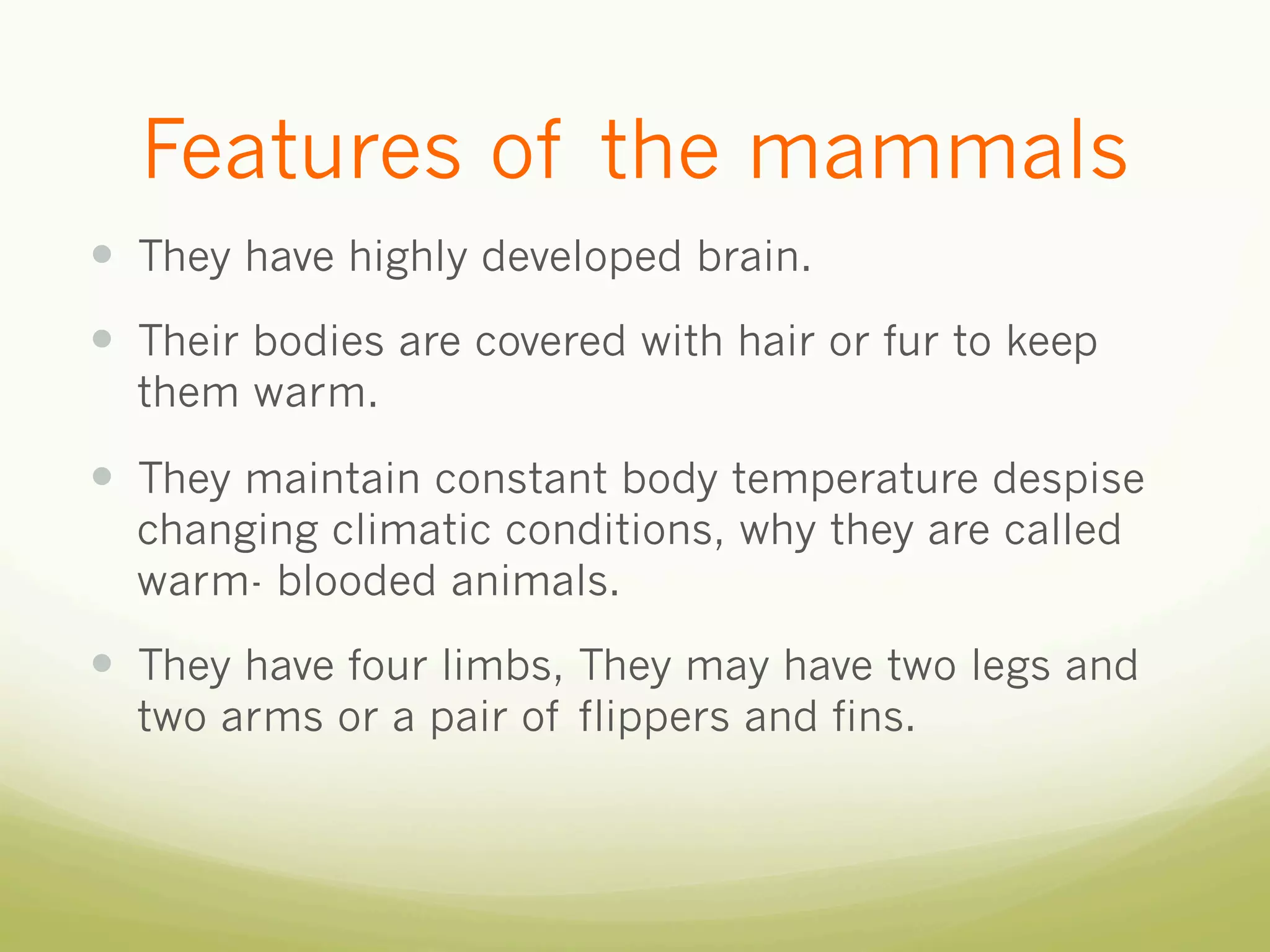
—  They have highly developed brain.
—  Their bodies are covered with hair or fur to keep
them warm.
—  They maintain constant body temperature despise
changing climatic conditions, why they are called
warm- blooded animals.
—  They have four limbs, They may have two legs and
two arms or a pair of flippers and fins.
Features of the mammals
—  Mammals look after their young ones properly.
—  They feed them with warm milk.
—  They keep them clean them, keeps them warm and
protect them from enemies and climatic
conditions.
Animals that lay eggs
—  The egg-laying animals include birds, amphibians,
aquatic animals, insects and reptiles.
—  These animals lay eggs and keep them in a warm
place or sit on them to keep them warm.
—  The eggs hatch after maturing and the babies come
out of them.
—  Examples: Birds Fish Turtle
Bee Frog
Birds
Fish
Turtle
Structure of an egg
—  The outermost part of an egg is the egg shell. It
protects the young one developing inside
—  The middle part consists of the yolk. It is yellow in
colour and rich in fats, proteins, vitamins and
minerals. The yolk provides nutrition to the
developing embryo.
—  Inside the yolk lies an embryo which later develops
into a chick.
—  A white jelly-like substance called the albumen is
present outside the yolk. It is rich in protein and
protects the yolk and the embryo.
Structure of an egg
Let’s Revise
Birds
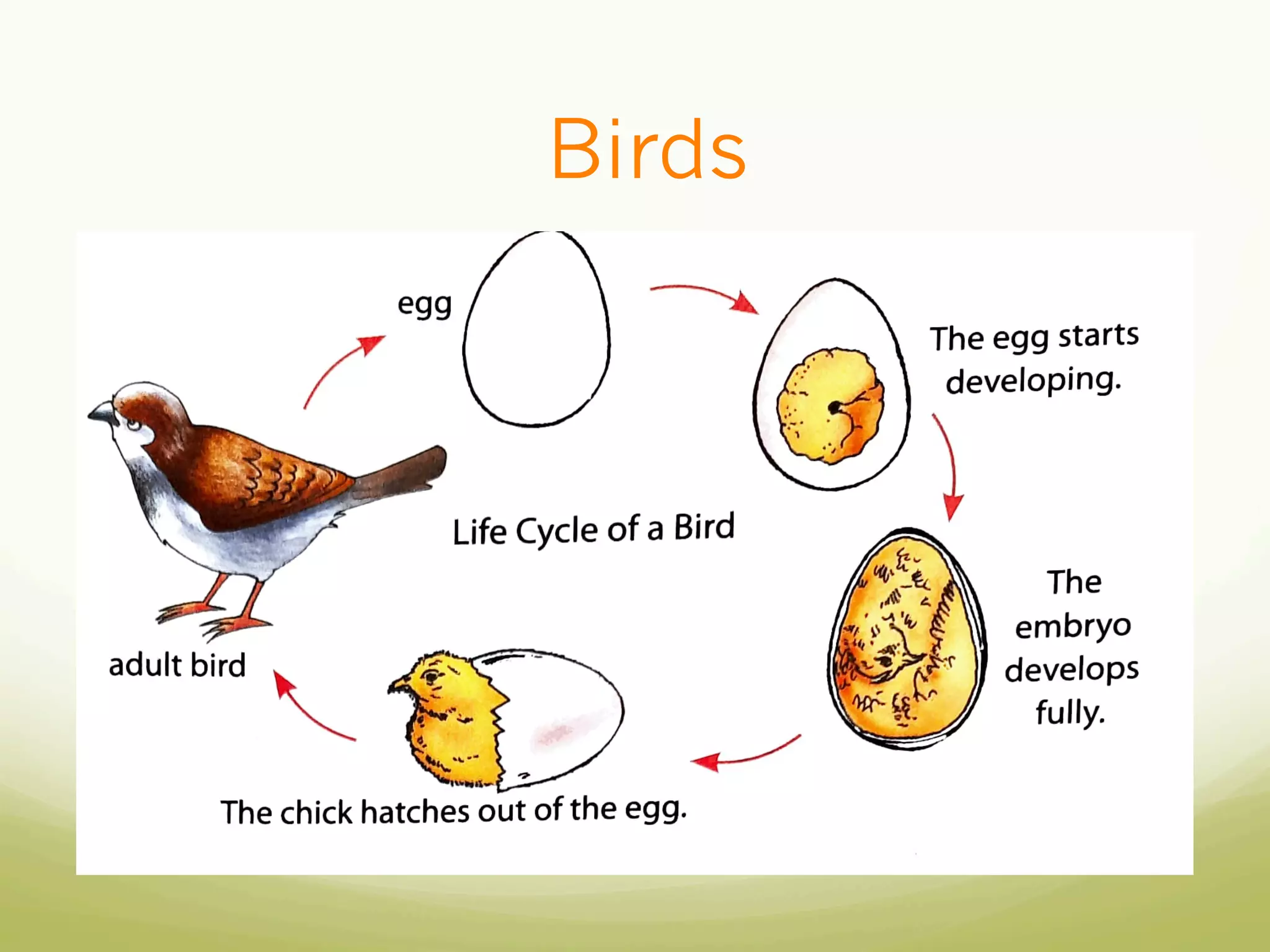
—  A bird lays eggs in a nest and sits on them to keep
them warm.
—  After some time the eggs hatch and the baby bird
comes out.
—  But within the egg, the embryo goes through
different stages of development before it is ready to
hatch out
Birds
t a
and
hem
the
aby
thin adult bird
goes
s of
t is
egg
The egg starts
developing.
Life Cycle of a Bird
The
embryo
develops
fully.
The chick hatches out of the egg.
Accept Challenge!
Challenge
—  Find out a bird which doesn’t lay egg
Amphibians
—  Amphibians like frogs lay their eggs in large cluster
called spawns in water.
—  An egg develops into fish-like tadpole or larva. A
tadpole has a tail like a fish growing and changing
into a mature frog.
—  In the process, it develops lings for breathing.
Finally it becomes an adult frog.
—  The process of change of a tadpole into an adult is
called metamorphosis.
Amphibians
Accept Challenge!
Find out about a bird
which doesn't layeggs.
eir eggs in
n water. An
tadpole or
a fish and it
growing and
the process,
loses its gills
hing. Finally,
e process of
dult is called
early tadpole
spawn
Life Cycle of
a Frog
late tadpole
adult frog
Amphibian
bout thousands of | Itis an animal which is capable ofliving
Aquatic animals
—  Aquatic animals like fish lay about thousands of
eggs at a time.
—  But only a few hundred survive while most of them
are eaten up by other big fish.
—  The eggs grow into baby fish.
—  A baby fish is called fry.
Insects
—  Insects like housefly and butterfly also lay eggs.
—  They have four stages of development
—  While insects like cockroach have only three stages
of development.
—  The larva of a cockroach is known as nymph.
Lifecycle of Cockroach
Amphibian
ds of | Itis an animal which is capable ofliving
rvive both on land and in water.
fish.
alled
Life Cycle of a
Cockroachegg nymph
. They
ts like
nt. The adult
cockroach
Insects
—  An egg of a butterfly or housefly develops into a
worm-like larva. A larva is called a caterpillar in
case of a butterfly and a maggot in case of a
housefly.
—  The caterpillar feeds on leaves and grows. After me
time, it spins a cocoon around itself.
—  In this stage, it is called pupa. Later when the pupa
opens, an adult butterfly comes out of it. The
maggot feeds on garbage and then crawls to a cool
place. There it transforms into a pupa. The adult
housefly comes out of it.
Lifecycle of Housefly
adult housefly An egg
worm-lik
of a butte
caterpill
time, it
Life Cycle of a
Housefly
it is call
adult bu
on garb
it transfo
pupa
eggs
out of th
maggot
Reptiles
—  Reptiles like lizards, snakes, turtles and crocodiles
lay their eggs in holes in the ground.
—  These eggs have a hard shell and do not break
easily.
—  Some mothers go away after laying their eggs and
never come back to take care of their young ones.
—  Therefore, many of these eggs are eaten up by
other animals. The remaining eggs may get some
warmth from the sun's heat and hatch.
Reptiles
New Concepts
—  Flipper:
It is a wide flat limb which s adapted for swimming in
whale, seal and other aquatic mammals.
—  Embryo:
It is an organism at any time before hatching or birth
—  Amphibian:
It is an animals, which is capable of living both on
land and in water.
Thank you …. Happy
Learning

Reproduction in animals- Science

  • 1.
  • 2.
    Let’s recall… —  Animalscan live happily all their lives growing, eating and moving around. But if they don’t produce more of their own kind, they will have nobody to represent them in the future —  Therefore, in order to continue their race, animals produce young ones. The process by which living things produce their offspring is known as reproduction. Life would not have existed on the earth if living beings did not reproduce.
  • 3.
    Let’s recall…. —  Animalscan be grouped into those that give birth to their offspring and those that lay egg that eventually hatch into offspring. —  For example, Human beings, cows, buffaloes, cat, etc. give birth to their young ones. Birds, fish, frogs, hens, etc. lay eggs out of which the young ones hatch.
  • 4.
    Animals That GiveBirth to Offspring —  Definition: Animals that give birth to their young ones are called mammals. —  Examples: Human beings, Cows, Sheep, Bat and Aquatic: whale, dolphin, seal
  • 5.
  • 6.
  • 7.
  • 8.
  • 9.
    Features of themammals —  They have highly developed brain. —  Their bodies are covered with hair or fur to keep them warm. —  They maintain constant body temperature despise changing climatic conditions, why they are called warm- blooded animals. —  They have four limbs, They may have two legs and two arms or a pair of flippers and fins.
  • 10.
    Features of themammals —  Mammals look after their young ones properly. —  They feed them with warm milk. —  They keep them clean them, keeps them warm and protect them from enemies and climatic conditions.
  • 11.
    Animals that layeggs —  The egg-laying animals include birds, amphibians, aquatic animals, insects and reptiles. —  These animals lay eggs and keep them in a warm place or sit on them to keep them warm. —  The eggs hatch after maturing and the babies come out of them. —  Examples: Birds Fish Turtle Bee Frog
  • 12.
  • 13.
  • 14.
  • 15.
    Structure of anegg —  The outermost part of an egg is the egg shell. It protects the young one developing inside —  The middle part consists of the yolk. It is yellow in colour and rich in fats, proteins, vitamins and minerals. The yolk provides nutrition to the developing embryo. —  Inside the yolk lies an embryo which later develops into a chick. —  A white jelly-like substance called the albumen is present outside the yolk. It is rich in protein and protects the yolk and the embryo.
  • 16.
  • 17.
  • 18.
    Birds —  A birdlays eggs in a nest and sits on them to keep them warm. —  After some time the eggs hatch and the baby bird comes out. —  But within the egg, the embryo goes through different stages of development before it is ready to hatch out
  • 19.
    Birds t a and hem the aby thin adultbird goes s of t is egg The egg starts developing. Life Cycle of a Bird The embryo develops fully. The chick hatches out of the egg. Accept Challenge!
  • 20.
    Challenge —  Find outa bird which doesn’t lay egg
  • 21.
    Amphibians —  Amphibians likefrogs lay their eggs in large cluster called spawns in water. —  An egg develops into fish-like tadpole or larva. A tadpole has a tail like a fish growing and changing into a mature frog. —  In the process, it develops lings for breathing. Finally it becomes an adult frog. —  The process of change of a tadpole into an adult is called metamorphosis.
  • 22.
    Amphibians Accept Challenge! Find outabout a bird which doesn't layeggs. eir eggs in n water. An tadpole or a fish and it growing and the process, loses its gills hing. Finally, e process of dult is called early tadpole spawn Life Cycle of a Frog late tadpole adult frog Amphibian bout thousands of | Itis an animal which is capable ofliving
  • 23.
    Aquatic animals —  Aquaticanimals like fish lay about thousands of eggs at a time. —  But only a few hundred survive while most of them are eaten up by other big fish. —  The eggs grow into baby fish. —  A baby fish is called fry.
  • 24.
    Insects —  Insects likehousefly and butterfly also lay eggs. —  They have four stages of development —  While insects like cockroach have only three stages of development. —  The larva of a cockroach is known as nymph.
  • 25.
    Lifecycle of Cockroach Amphibian dsof | Itis an animal which is capable ofliving rvive both on land and in water. fish. alled Life Cycle of a Cockroachegg nymph . They ts like nt. The adult cockroach
  • 26.
    Insects —  An eggof a butterfly or housefly develops into a worm-like larva. A larva is called a caterpillar in case of a butterfly and a maggot in case of a housefly. —  The caterpillar feeds on leaves and grows. After me time, it spins a cocoon around itself. —  In this stage, it is called pupa. Later when the pupa opens, an adult butterfly comes out of it. The maggot feeds on garbage and then crawls to a cool place. There it transforms into a pupa. The adult housefly comes out of it.
  • 27.
    Lifecycle of Housefly adulthousefly An egg worm-lik of a butte caterpill time, it Life Cycle of a Housefly it is call adult bu on garb it transfo pupa eggs out of th maggot
  • 28.
    Reptiles —  Reptiles likelizards, snakes, turtles and crocodiles lay their eggs in holes in the ground. —  These eggs have a hard shell and do not break easily. —  Some mothers go away after laying their eggs and never come back to take care of their young ones. —  Therefore, many of these eggs are eaten up by other animals. The remaining eggs may get some warmth from the sun's heat and hatch.
  • 29.
  • 30.
    New Concepts —  Flipper: Itis a wide flat limb which s adapted for swimming in whale, seal and other aquatic mammals. —  Embryo: It is an organism at any time before hatching or birth —  Amphibian: It is an animals, which is capable of living both on land and in water.
  • 31.
    Thank you ….Happy Learning