REPORTED SPEECH
 SHE SAID , “ I AM EATINGCHOCOLATE”.
 SAID: Is reported verb.
 I AM EATING CHOCOLATE: reported speech
RULES
 When the reporting verb of direct speech is in
past tense then all the present tenses are
changed to corresponding past tense in indirect
speech.
 If direct speech sentences is already in past tense
it will be converted into past perfect in indirect
speech.
 E.g. Direct : She said, ‘i am happy’
 Indirect : She said (that) she was happy
 E.g She said, “she took a bath”
 She said that she had taken a bath.
 2. In indirect speech, tenses do not change if
the words used within the quotes (‘’) talk of a
habitual action or universal truth.
 Direct to indirect speech example:
 Direct: He said, ‘we cannot live without air’.
 Indirect: He said that we cannot live without
air.
 3.The tenses of direct speech do not
change if the reporting verb is in the future
tense or present tense.
 If reporting verb is in present or future tense
then the sentence in inverted commas will
remain in present or future tense only. It
wont change into past tense
 Direct to indirect speech example:
 Direct: She says/will say, ‘she is going’
 Indirect: She says/will say she is going.
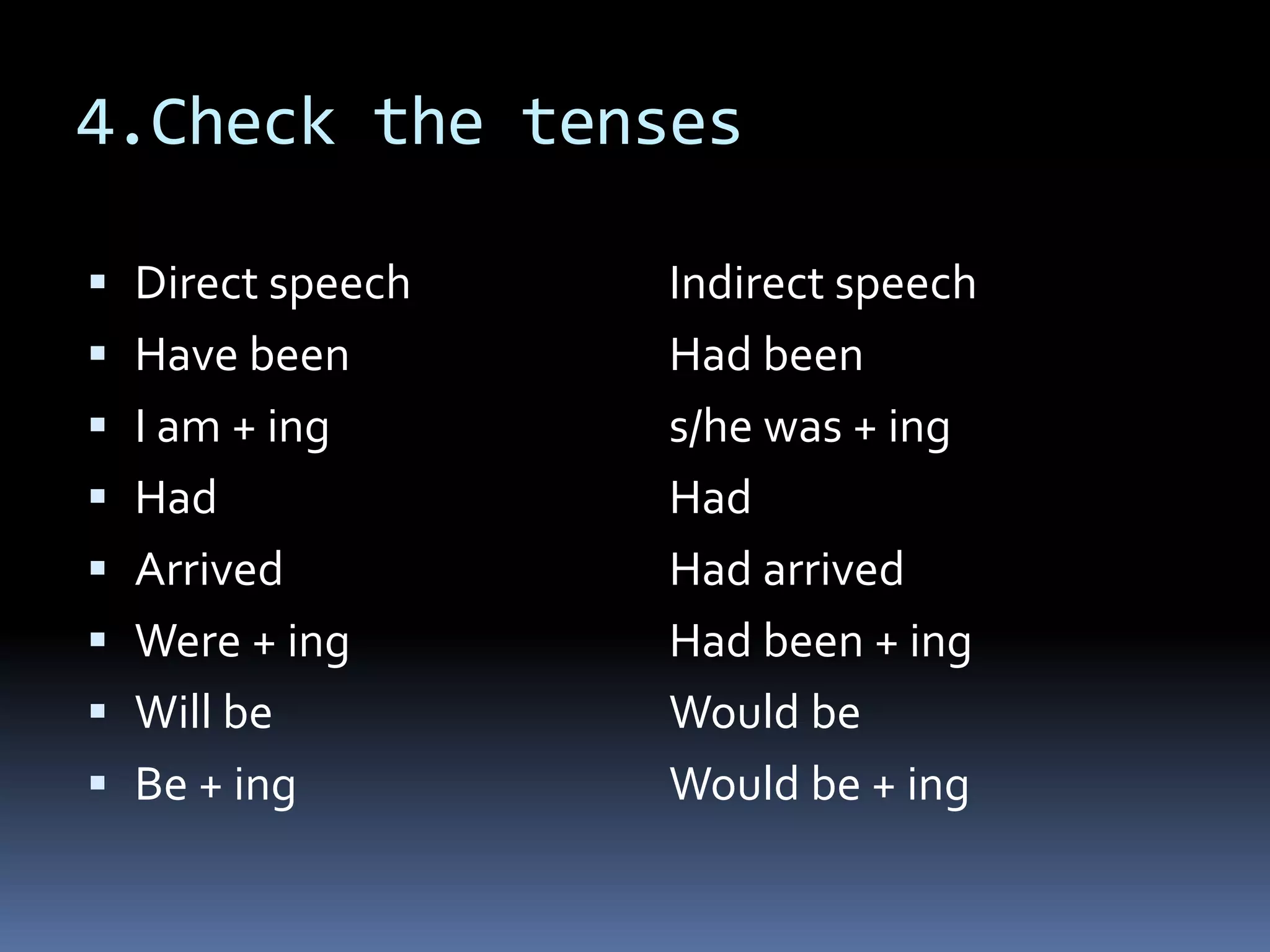
4.Check the tenses
 Direct speech
 Have been
 I am + ing
 Had
 Arrived
 Were + ing
 Will be
 Be + ing
Indirect speech
Had been
s/he was + ing
Had
Had arrived
Had been + ing
Would be
Would be + ing
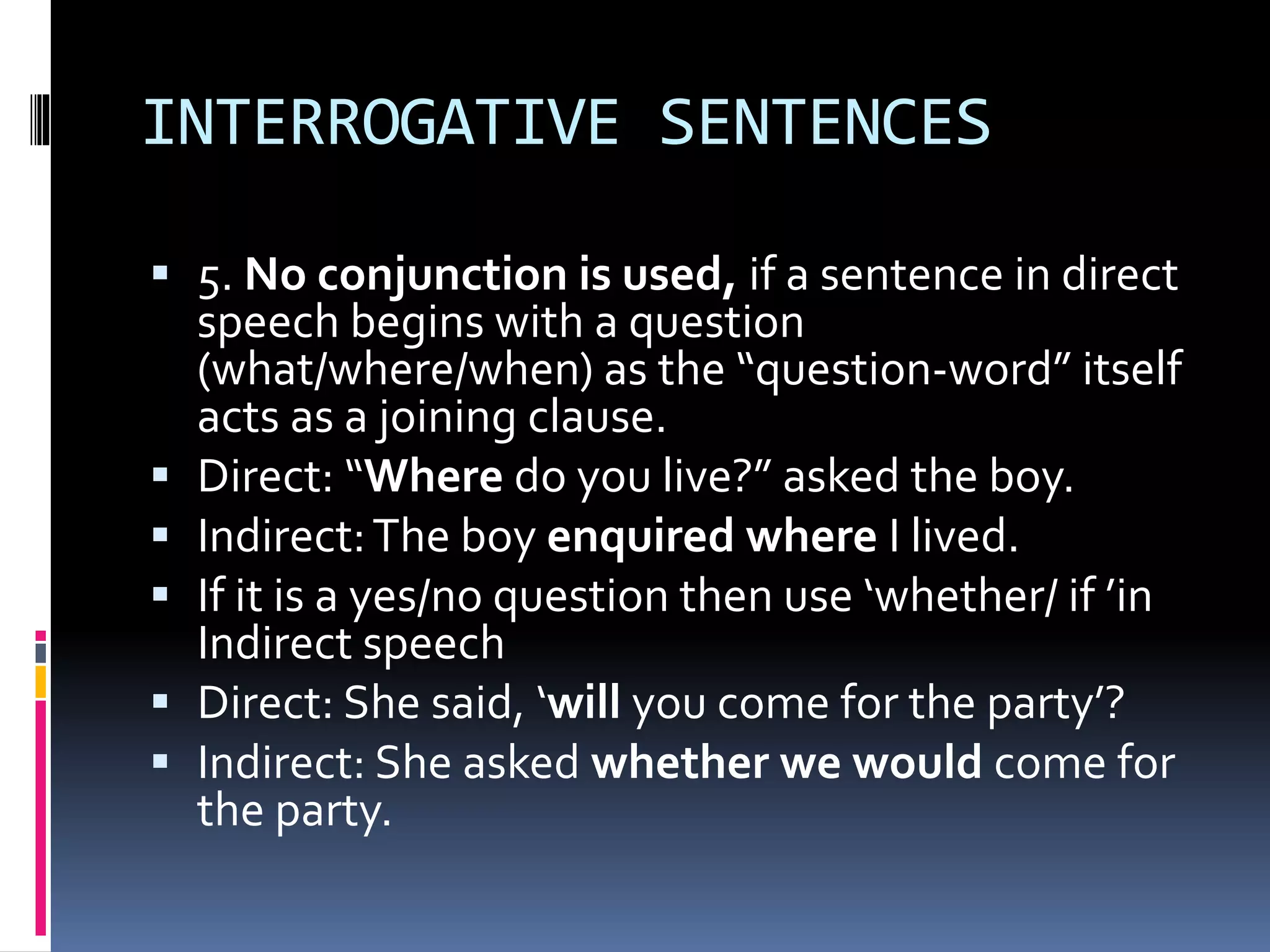
INTERROGATIVE SENTENCES
 5. No conjunction is used, if a sentence in direct
speech begins with a question
(what/where/when) as the “question-word” itself
acts as a joining clause.
 Direct: “Where do you live?” asked the boy.
 Indirect:The boy enquired where I lived.
 If it is a yes/no question then use ‘whether/ if ’in
Indirect speech
 Direct: She said, ‘will you come for the party’?
 Indirect: She asked whether we would come for
the party.
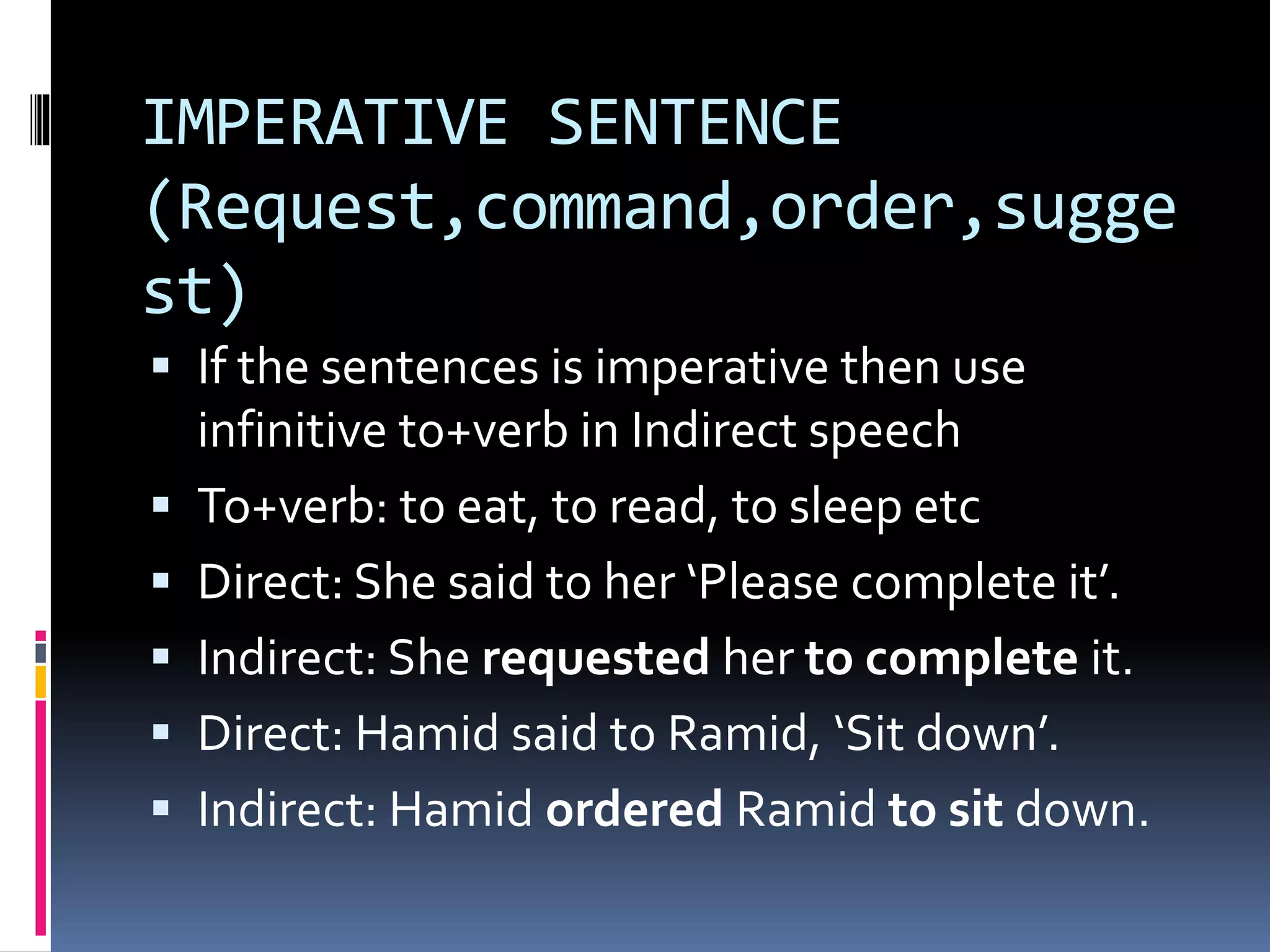
IMPERATIVE SENTENCE
(Request,command,order,sugge
st)
 If the sentences is imperative then use
infinitive to+verb in Indirect speech
 To+verb: to eat, to read, to sleep etc
 Direct: She said to her ‘Please complete it’.
 Indirect: She requested her to complete it.
 Direct: Hamid said to Ramid, ‘Sit down’.
 Indirect: Hamid ordered Ramid to sit down.
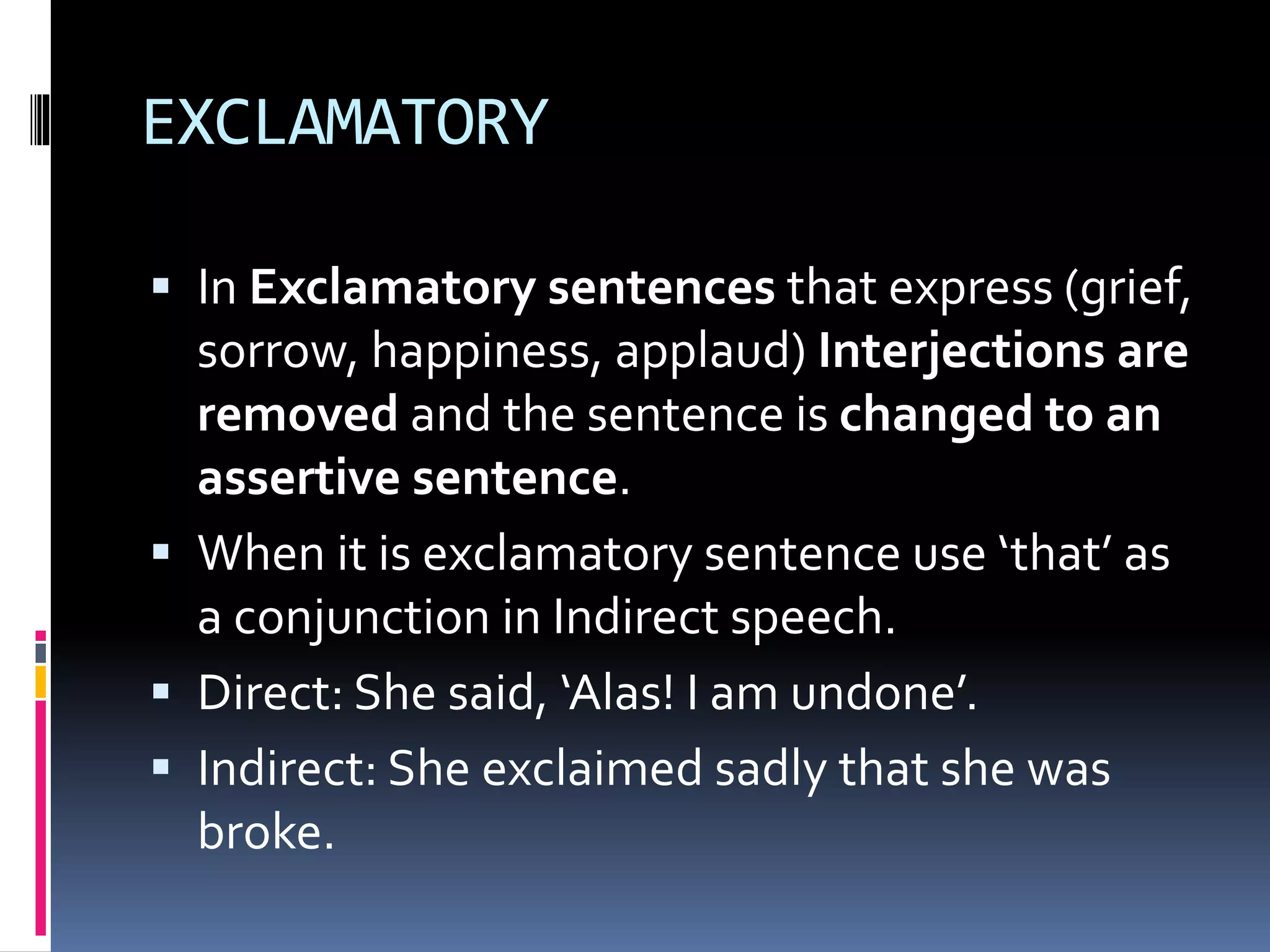
EXCLAMATORY
 In Exclamatory sentences that express (grief,
sorrow, happiness, applaud) Interjections are
removed and the sentence is changed to an
assertive sentence.
 When it is exclamatory sentence use ‘that’ as
a conjunction in Indirect speech.
 Direct: She said, ‘Alas! I am undone’.
 Indirect: She exclaimed sadly that she was
broke.
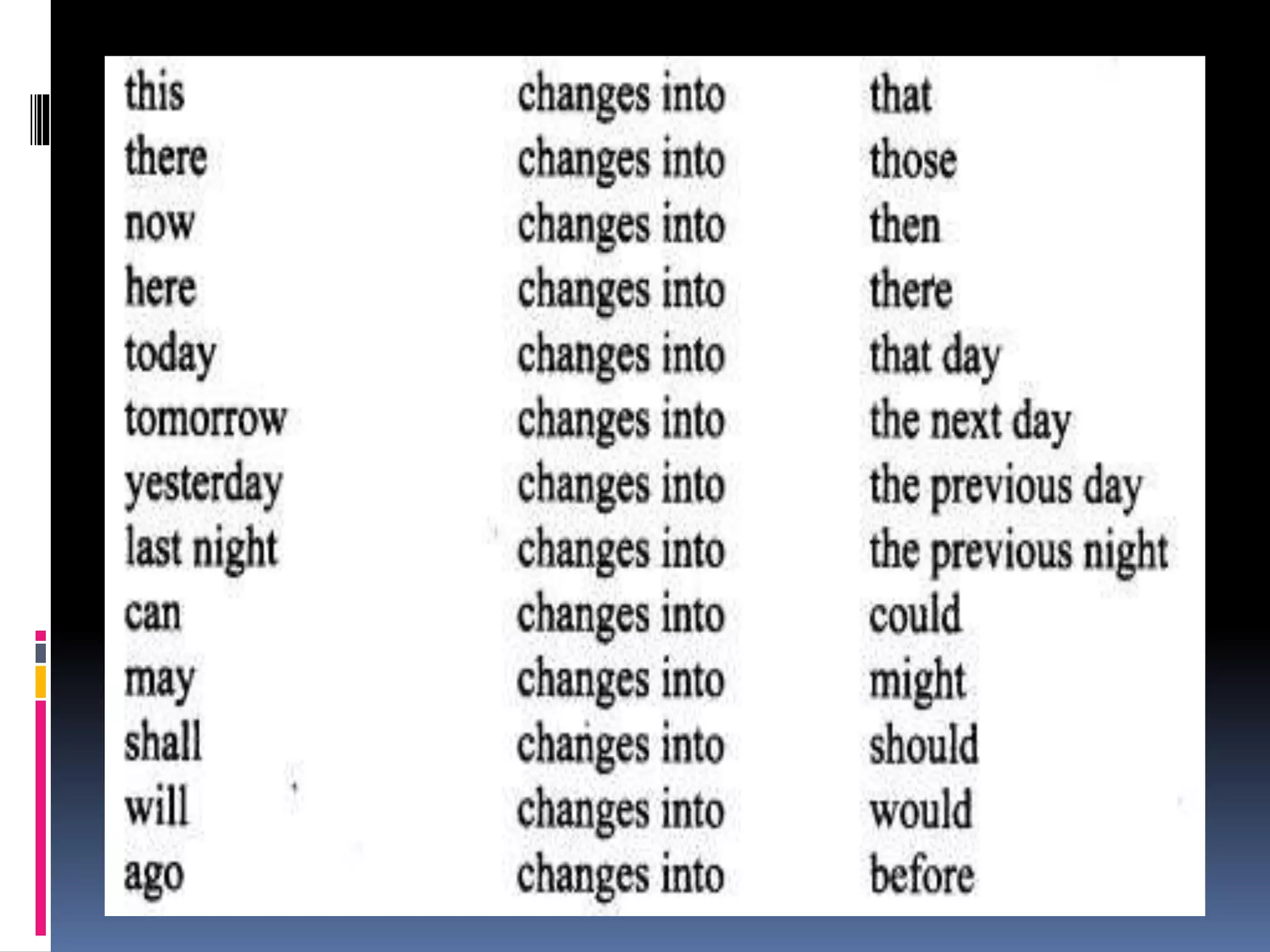
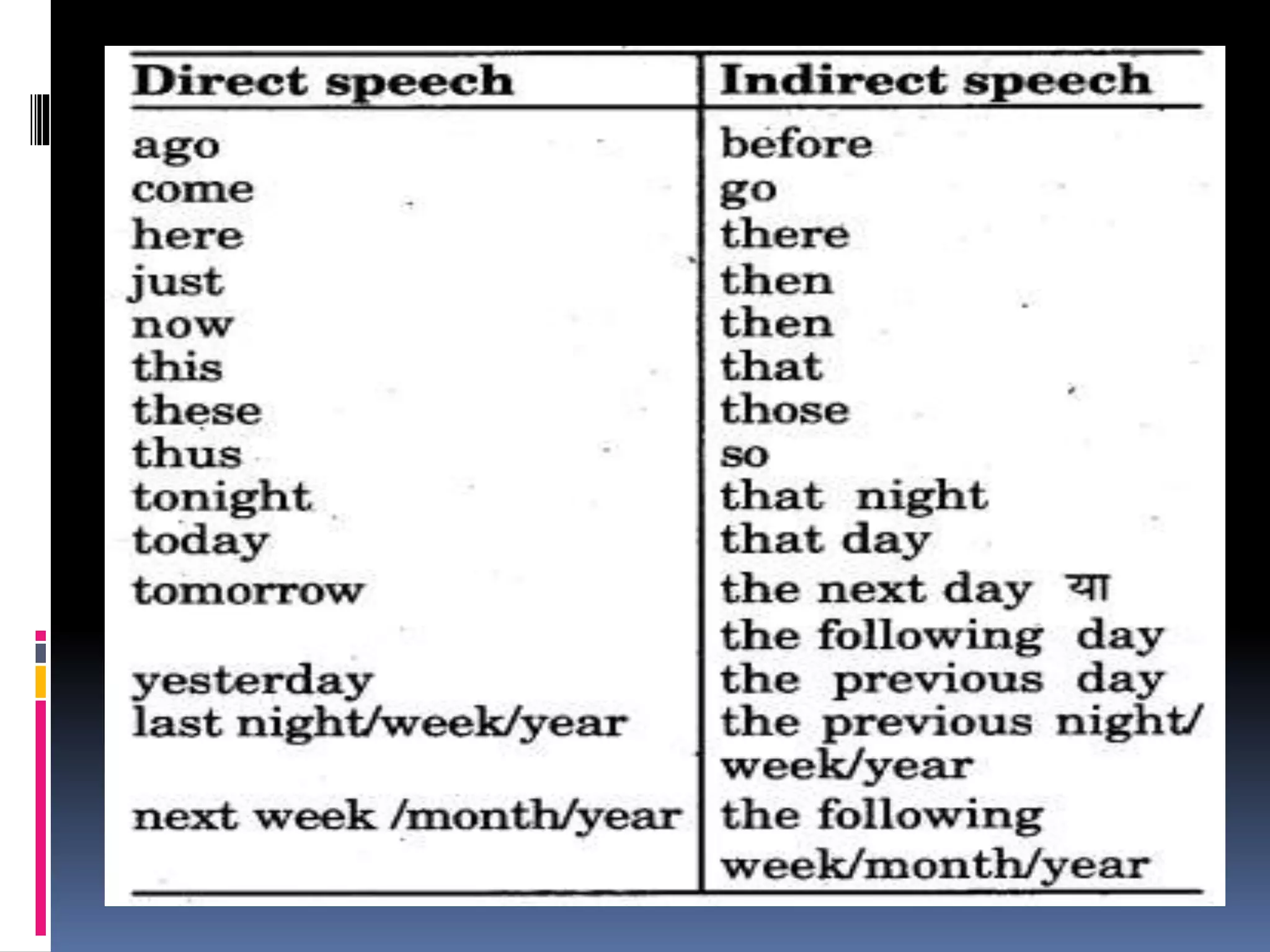
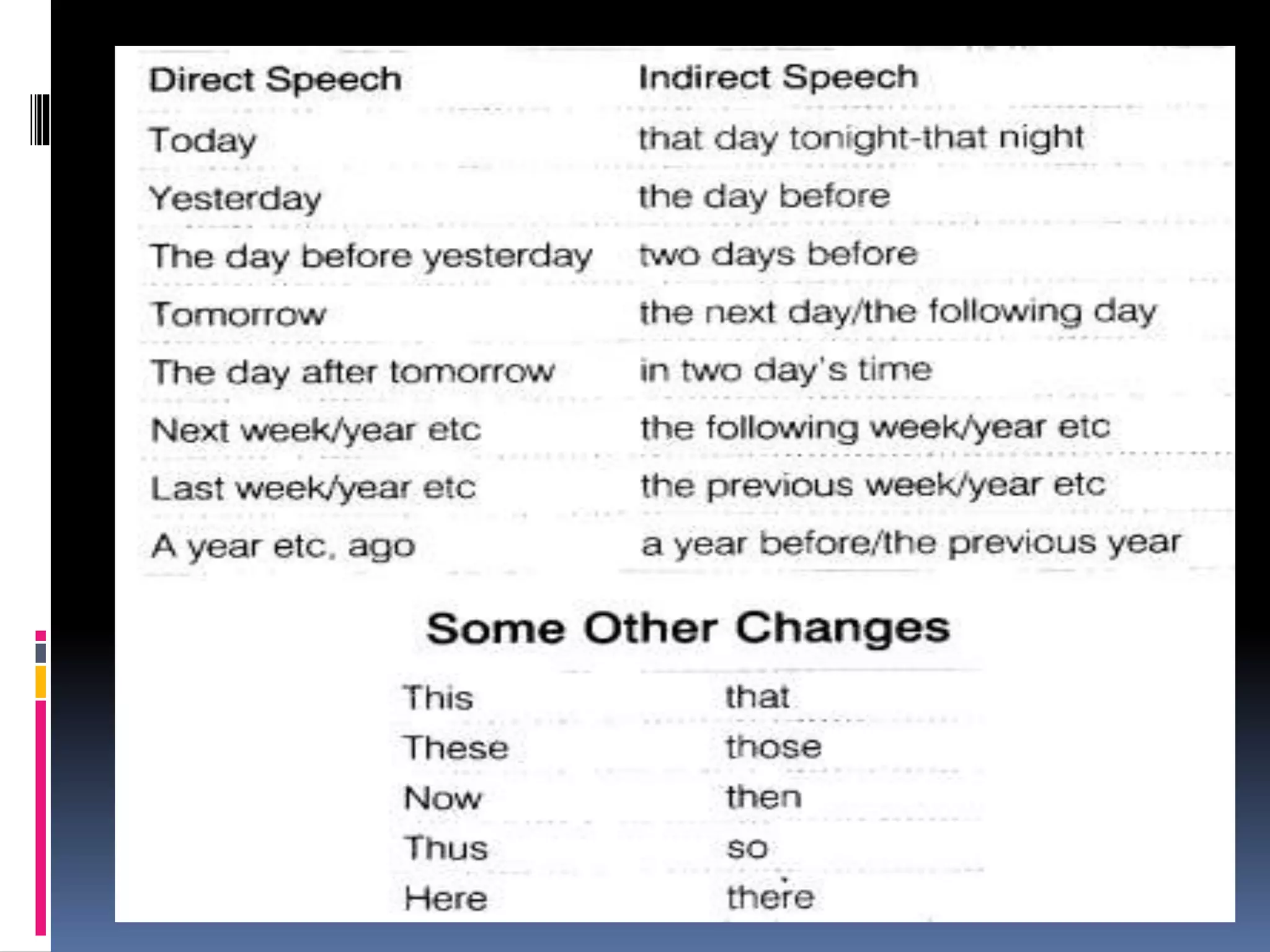
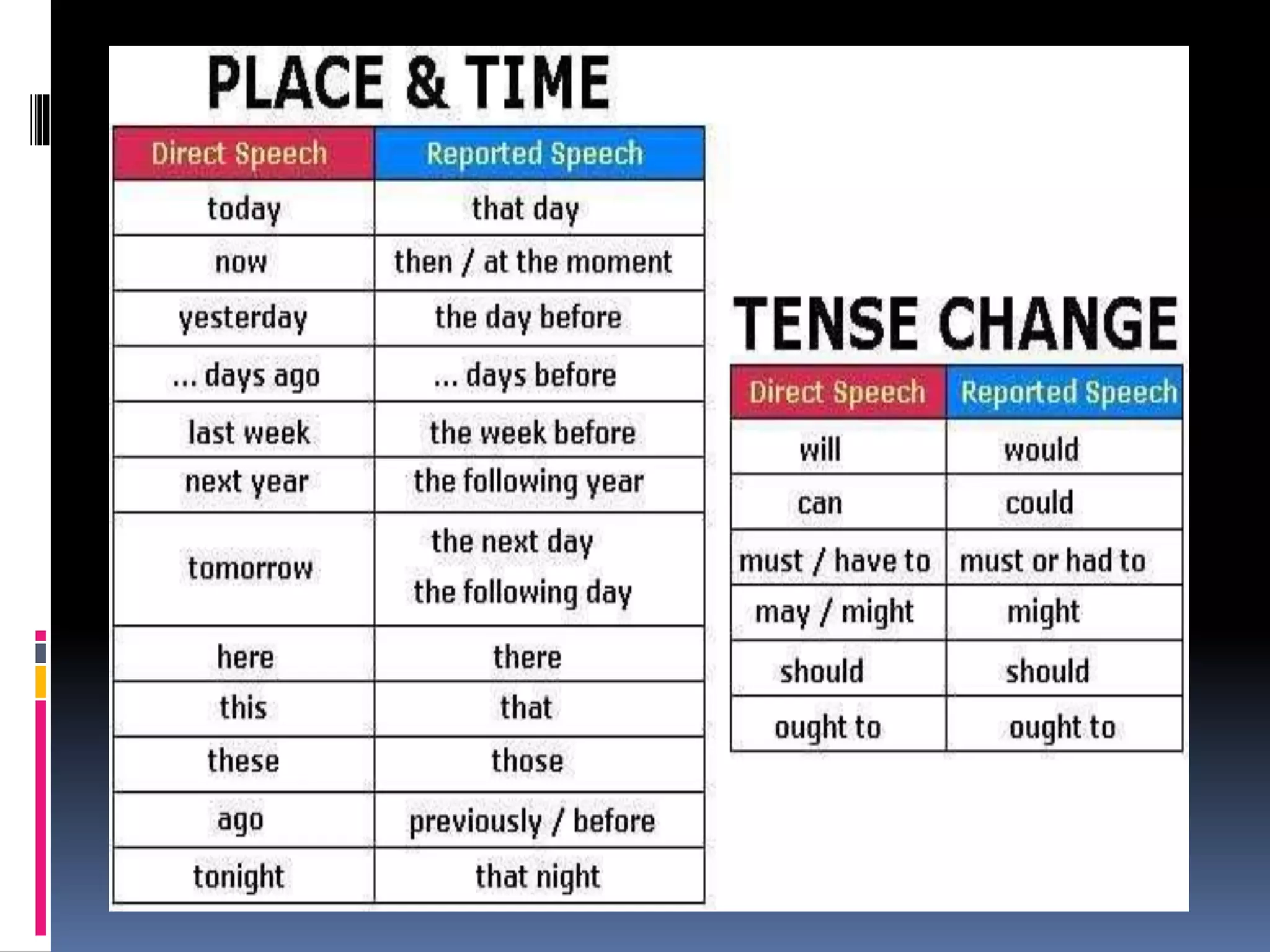
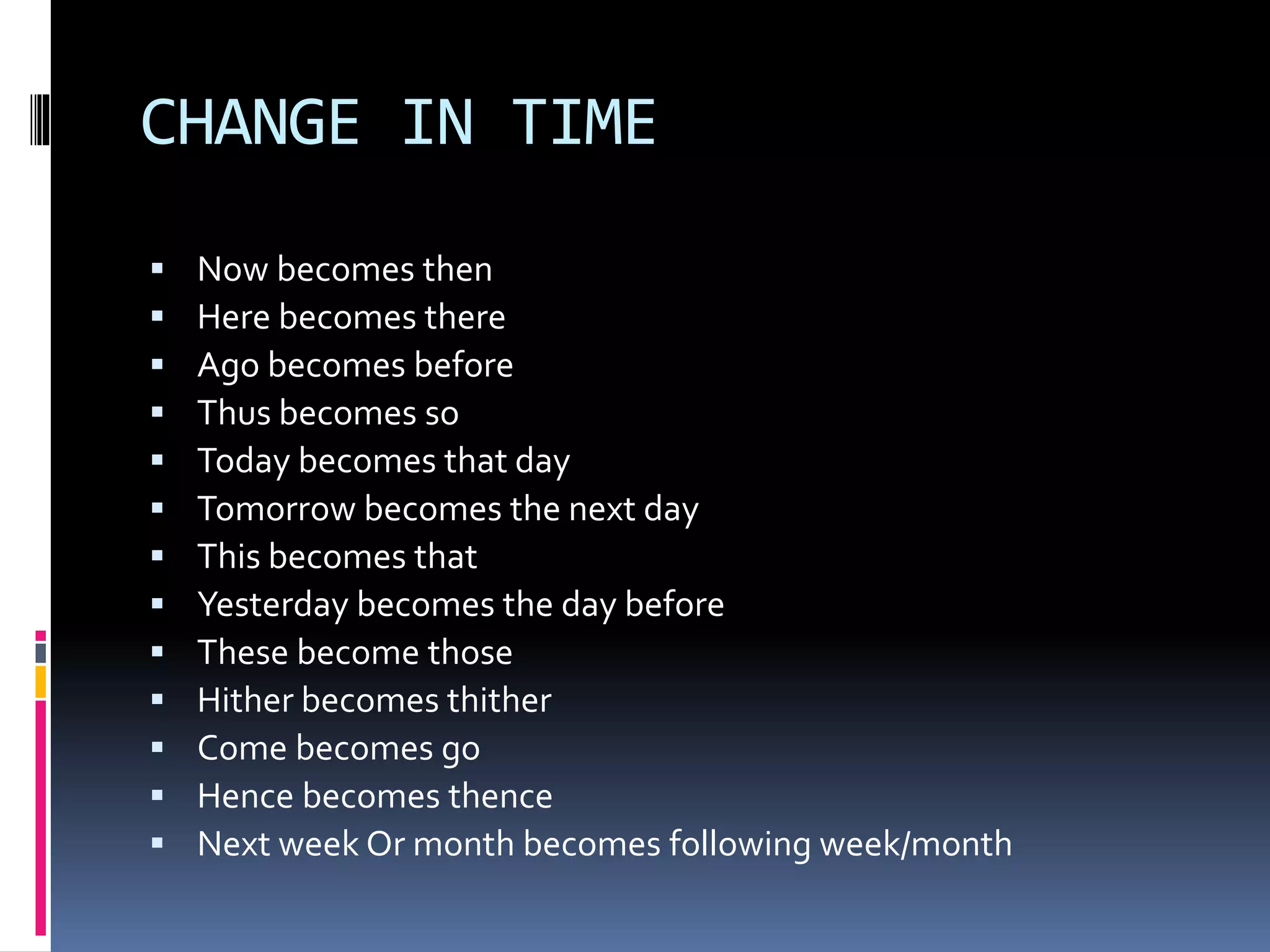
CHANGE IN TIME
 Now becomes then
 Here becomes there
 Ago becomes before
 Thus becomes so
 Today becomes that day
 Tomorrow becomes the next day
 This becomes that
 Yesterday becomes the day before
 These become those
 Hither becomes thither
 Come becomes go
 Hence becomes thence
 Next week Or month becomes following week/month

Reported speech

  • 1.
  • 2.
     SHE SAID, “ I AM EATINGCHOCOLATE”.  SAID: Is reported verb.  I AM EATING CHOCOLATE: reported speech
  • 3.
    RULES  When thereporting verb of direct speech is in past tense then all the present tenses are changed to corresponding past tense in indirect speech.  If direct speech sentences is already in past tense it will be converted into past perfect in indirect speech.  E.g. Direct : She said, ‘i am happy’  Indirect : She said (that) she was happy  E.g She said, “she took a bath”  She said that she had taken a bath.
  • 4.
     2. Inindirect speech, tenses do not change if the words used within the quotes (‘’) talk of a habitual action or universal truth.  Direct to indirect speech example:  Direct: He said, ‘we cannot live without air’.  Indirect: He said that we cannot live without air.
  • 5.
     3.The tensesof direct speech do not change if the reporting verb is in the future tense or present tense.  If reporting verb is in present or future tense then the sentence in inverted commas will remain in present or future tense only. It wont change into past tense  Direct to indirect speech example:  Direct: She says/will say, ‘she is going’  Indirect: She says/will say she is going.
  • 6.
    4.Check the tenses Direct speech  Have been  I am + ing  Had  Arrived  Were + ing  Will be  Be + ing Indirect speech Had been s/he was + ing Had Had arrived Had been + ing Would be Would be + ing
  • 12.
    INTERROGATIVE SENTENCES  5.No conjunction is used, if a sentence in direct speech begins with a question (what/where/when) as the “question-word” itself acts as a joining clause.  Direct: “Where do you live?” asked the boy.  Indirect:The boy enquired where I lived.  If it is a yes/no question then use ‘whether/ if ’in Indirect speech  Direct: She said, ‘will you come for the party’?  Indirect: She asked whether we would come for the party.
  • 13.
    IMPERATIVE SENTENCE (Request,command,order,sugge st)  Ifthe sentences is imperative then use infinitive to+verb in Indirect speech  To+verb: to eat, to read, to sleep etc  Direct: She said to her ‘Please complete it’.  Indirect: She requested her to complete it.  Direct: Hamid said to Ramid, ‘Sit down’.  Indirect: Hamid ordered Ramid to sit down.
  • 14.
    EXCLAMATORY  In Exclamatorysentences that express (grief, sorrow, happiness, applaud) Interjections are removed and the sentence is changed to an assertive sentence.  When it is exclamatory sentence use ‘that’ as a conjunction in Indirect speech.  Direct: She said, ‘Alas! I am undone’.  Indirect: She exclaimed sadly that she was broke.
  • 15.
    CHANGE IN TIME Now becomes then  Here becomes there  Ago becomes before  Thus becomes so  Today becomes that day  Tomorrow becomes the next day  This becomes that  Yesterday becomes the day before  These become those  Hither becomes thither  Come becomes go  Hence becomes thence  Next week Or month becomes following week/month