• If we report what another person has said, we usually do
  not use the speaker’s exact words (direct speech), but
  reported (indirect) speech.
• Therefore, we need to learn how to transform direct
  speech into reported speech. The structure is a little
  different depending on whether you want to transform a
  statement, question or request.
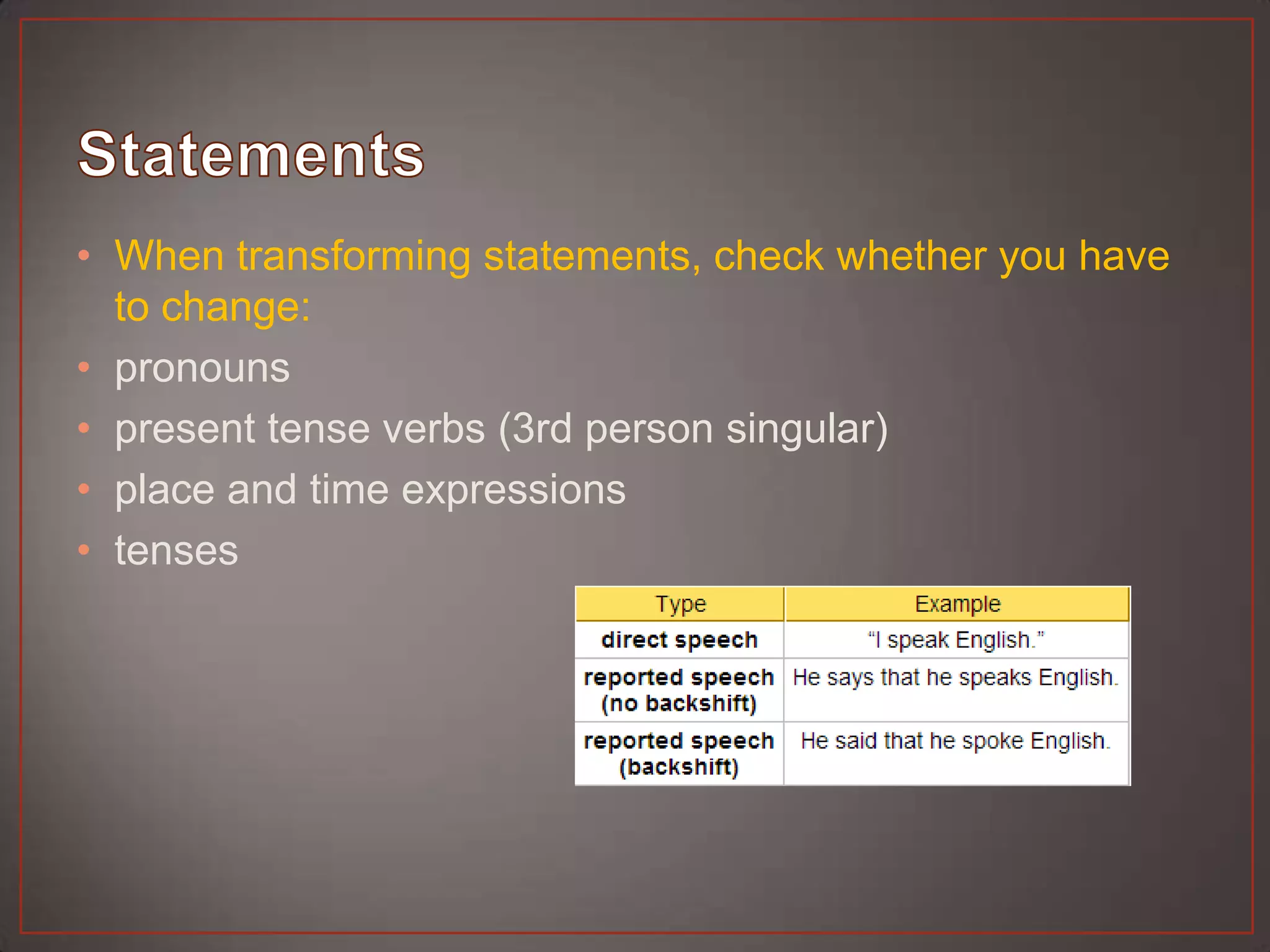
• When transforming statements, check whether you have
  to change:
• pronouns
• present tense verbs (3rd person singular)
• place and time expressions
• tenses
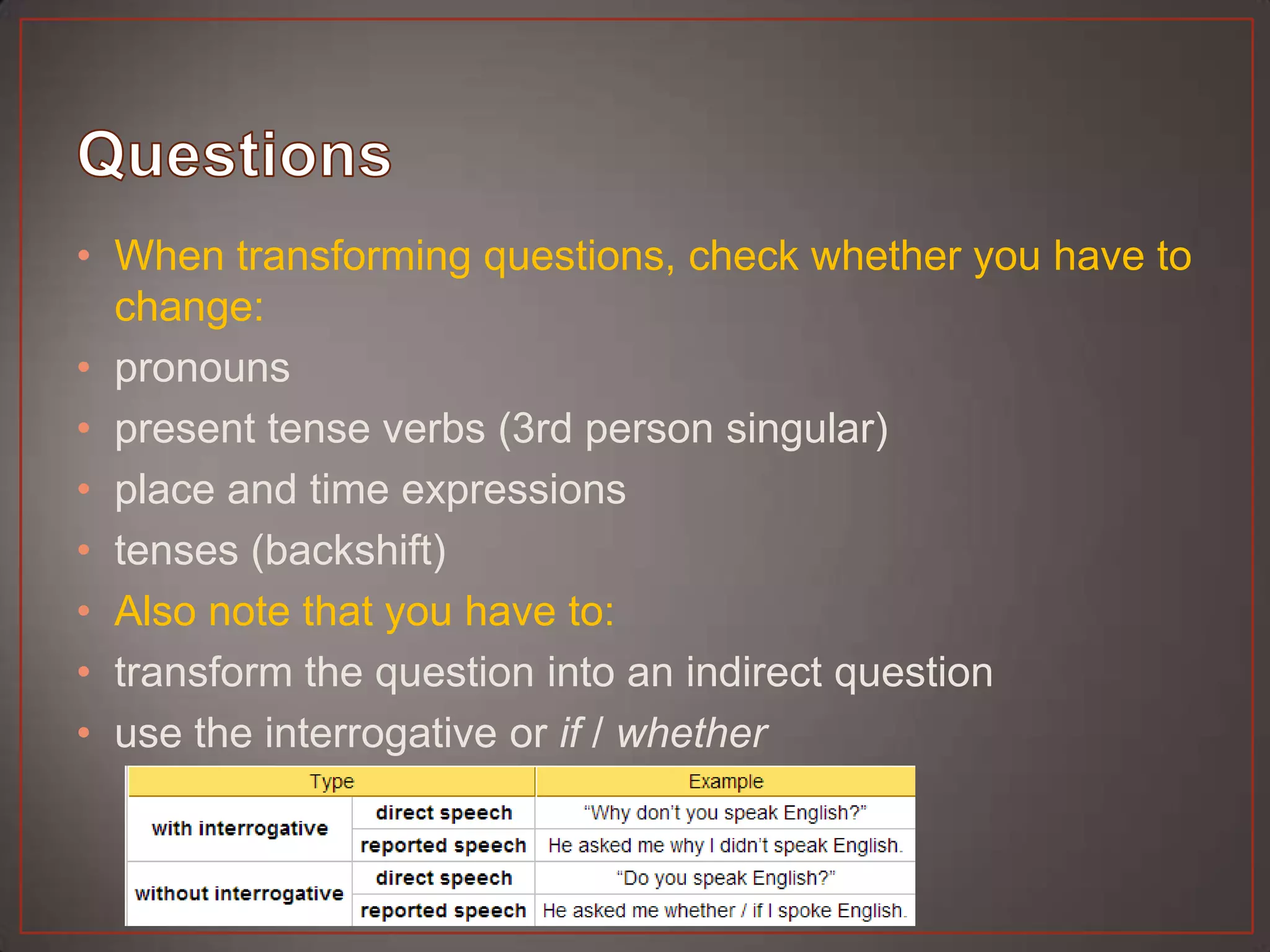
• When transforming questions, check whether you have to
  change:
• pronouns
• present tense verbs (3rd person singular)
• place and time expressions
• tenses (backshift)
• Also note that you have to:
• transform the question into an indirect question
• use the interrogative or if / whether
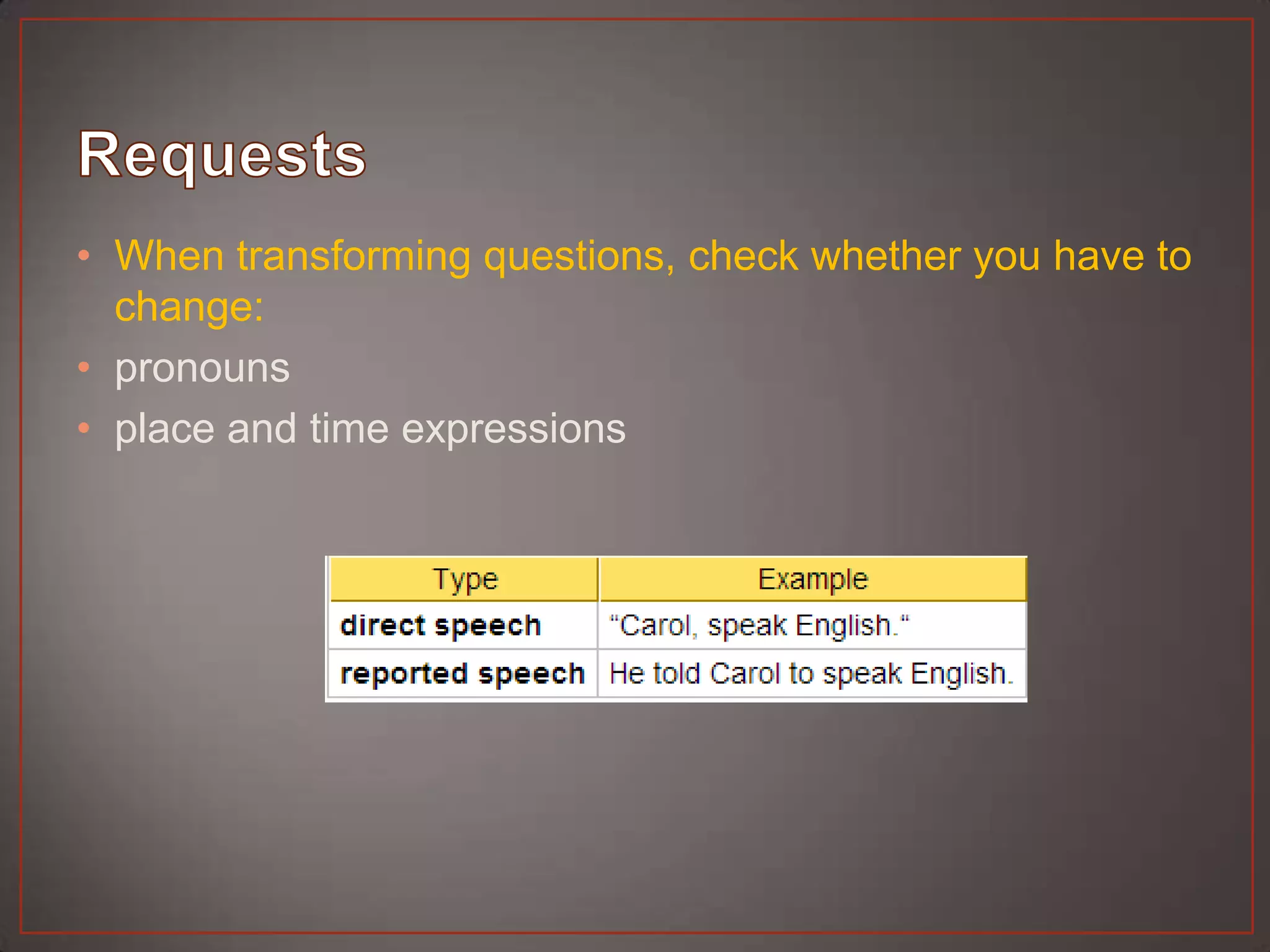
• When transforming questions, check whether you have to
  change:
• pronouns
• place and time expressions
• Apart from the above mentioned basic rules, there are
  further aspects that you should keep in mind, for
  example:
• main clauses connected with and / but
• tense of the introductory clause
• reported speech for difficult tenses
• exceptions for backshift tense
• requests with must, should, ought to and let’s
• http://www.ego4u.com/en/cram-up/grammar/reported-
  speech/exercises?05
• http://www.ego4u.com/en/cram-up/grammar/reported-
  speech/exercises?09
• http://www.ego4u.com/en/cram-up/grammar/reported-
  speech/exercises
• http://www.ego4u.com/en/cram-up/grammar/reported-
  speech/exercises?10

Reported Speech

  • 2.
    • If wereport what another person has said, we usually do not use the speaker’s exact words (direct speech), but reported (indirect) speech. • Therefore, we need to learn how to transform direct speech into reported speech. The structure is a little different depending on whether you want to transform a statement, question or request.
  • 3.
    • When transformingstatements, check whether you have to change: • pronouns • present tense verbs (3rd person singular) • place and time expressions • tenses
  • 4.
    • When transformingquestions, check whether you have to change: • pronouns • present tense verbs (3rd person singular) • place and time expressions • tenses (backshift) • Also note that you have to: • transform the question into an indirect question • use the interrogative or if / whether
  • 5.
    • When transformingquestions, check whether you have to change: • pronouns • place and time expressions
  • 6.
    • Apart fromthe above mentioned basic rules, there are further aspects that you should keep in mind, for example: • main clauses connected with and / but • tense of the introductory clause • reported speech for difficult tenses • exceptions for backshift tense • requests with must, should, ought to and let’s
  • 7.
    • http://www.ego4u.com/en/cram-up/grammar/reported- speech/exercises?05 • http://www.ego4u.com/en/cram-up/grammar/reported- speech/exercises?09 • http://www.ego4u.com/en/cram-up/grammar/reported- speech/exercises • http://www.ego4u.com/en/cram-up/grammar/reported- speech/exercises?10