






The Global Information        Soumitra Dutta
                              Irene Mia
Technology Report 2010–2011
Transformations 2.0
10th Anniversary Edition
Part 1_r2_PART 1 3/29/11 6:44 AM Page i


                 The Global Information
                 Technology Report 2010–2011
                 Transformations 2.0


                 10th Anniversary Edition


                 Soumitra Dutta, INSEAD
                 Irene Mia, World Economic Forum
                 Editors


                                  The Global Information Technology Report 2010–2011 © 2011 World Economic Forum
Part 1_r2_PART 1 3/29/11 6:44 AM Page ii


            The Global Information Technology Report 2010–2011              World Economic Forum
            is a special project within the framework of World              Geneva
            Economic Forum’s Centre for Global Competitiveness
            and Performance and the Industry Partnership                    Copyright © 2011
            Programme for Information Technology and                        by the World Economic Forum and INSEAD.
            Telecommunications Industries. It is the result of
            a collaboration between the World Economic Forum                All rights reserved. No part of this publication
            and INSEAD.                                                     can be reproduced, stored in a retrieval sys-
                                                                            tem, or transmitted, in any form or by any
                                                                            means, electronic, mechanical, photocopying,
            Professor Klaus Schwab,                                         or otherwise without the prior permission of
            Executive Chairman, World Economic Forum                        the World Economic Forum.

            Robert Greenhill,
                                                                            ISBN-10: 92-95044-95-9
            Chief Business Officer, World Economic Forum
                                                                            ISBN-13: 978-92-95044-95-1

                                                                            This book is printed on paper suitable for
            EDITORS                                                         recycling and made from fully managed and
            Soumitra Dutta, Roland Berger Professor of Business             sustained forest sources.
               and Technology, INSEAD
            Irene Mia, Director, Senior Economist,                          Printed and bound in Switzerland by
               World Economic Forum                                         SRO-Kundig, Geneva.


            CENTRE FOR GLOBAL COMPETITIVENESS AND PERFORMANCE
            Jennifer Blanke, Head of the Centre for Global
              Competitiveness and Performance, Lead Economist
                                                                            The terms country and nation as used in this
            Ciara Browne, Associate Director
                                                                            report do not in all cases refer to a territorial
            Roberto Crotti, Junior Quantitative Economist
                                                                            entity that is a state as understood by inter-
            Margareta Drzeniek Hanouz, Director, Senior Economist
                                                                            national law and practice. The terms cover
            Thierry Geiger, Associate Director, Economist
                                                                            well-defined, geographically self-contained
            Satu Kauhanen, Team Coordinator
                                                                            economic areas that may not be states but
            Pearl Samandari, Community Manager
                                                                            for which statistical data are maintained on a
                                                                            separate and independent basis.

            INFORMATION TECHNOLOGY AND
            TELECOMMUNICATIONS INDUSTRIES TEAM
            Alan Marcus, Head of Information Technology
              and Telecommunications Industries Team,
              Senior Director
            Michelle Barrett, Senior Community Associate,
              Information Technology Industry
            Marc Boxser, Head of Partnerships,
              Information Technology Industry,
              Global Leadership Fellow
            Joanna Gordon, Associate Director,
              Head of Information Technology Industry,
            Qin He, Partnership Development Manager,
              Telecommunications Industry
            William Hoffman, Associate Director,
              Head of Telecommunications Industry
            Jessica Lewis, Team Coordinator,
              Telecommunications Industry
            Derek O’Halloran, Community Manager,
              Information Technology Industry,
              Global Leadership Fellow
            Justin Rico Oyola, Community Manager,
              Telecommunications Industry,
              Global Leadership Fellow
            Alexandra Shaw, Team Coordinator,
              Information Technology Industry


            A special thank you to Hope Steele for her
            superb editing work and Neil Weinberg for
            his excellent graphic design and layout.


                                      The Global Information Technology Report 2010–2011 © 2011 World Economic Forum
Part 1_r2_PART 1 3/29/11 6:44 AM Page iii


                 Contents


                 Preface ....................................................................................................v   1.10 The Emerging World’s Five Most Crucial Words:
                 Robert Greenhill (World Economic Forum)                                                                              “To Move Money, Press Pound” .........................................109
                                                                                                                                        Ram Menon (TIBCO Software Inc.)
                 Foreword ..............................................................................................vii
                 Shumeet Banerji (Booz & Company)

                                                                                                                                 Part 2: Best Practices in Networked Readiness:
                 Executive Summary............................................................................ix
                                                                                                                                 Selected Case Studies
                 Soumitra Dutta (INSEAD) and Irene Mia (World Economic Forum)

                                                                                                                                 2.1 Costa Rica s Efforts Toward an Innovation-
                 The Networked Readiness Index Rankings ..............................xix
                                                                                                                                     Driven Economy: The Role of the ICT Sector ...................119
                                                                                                                                        Vilma Villalobos (Microsoft) and Ricardo
                                                                                                                                        Monge-González (Presidential Council on
                                                                                                                                        Competitiveness and Innovation of Costa Rica)
                 Part 1: The Current Networked Readiness of the
                 World and ICT-Enabled Transformations 2.0
                                                                                                                                 2.2 Growing Talent for the Knowledge Economy:
                                                                                                                                     The Experience of Saudi Arabia .........................................127
                 1.1 The Networked Readiness Index 2010–2011:
                                                                                                                                        Mark O. Badger and Mustafa M. Kahn (YESSER)
                     Celebrating 10 Years of Assessing Networked                                                                        and Bruno Lanvin (INSEAD, eLab)
                     Readiness......................................................................................3                                                                                                                iii
                         Soumitra Dutta (INSEAD) and Irene Mia and
                                                                                                                                 2.3 A National Plan for Broadband in the
                         Thierry Geiger (World Economic Forum)
                                                                                                                                     United States............................................................................137
                                                                                                                                        Jonathan B. Baker and Paul de Sa
                 1.2 The Emerging Internet Economy: Looking a                                                                           (Federal Communications Commission)
                     Decade Ahead ...........................................................................33
                         Enrique Rueda-Sabater and John Garrity
                                                                                                                                 2.4 Broadband Developments in Europe:
                         (Cisco Systems, Inc.)
                                                                                                                                     The Challenge of High Speed ..............................................145
                                                                                                                                        Lucilla Sioli (European Commission)
                 1.3 Building Communities around Digital Highways .............47
                         Karim Sabbagh, Roman Friedrich, Bahjat El-Darwiche,
                         and Milind Singh (Booz & Company)
                                                                                                                                 Part 3: Country/Economy Profiles
                 1.4 The Promise of Technology ....................................................61
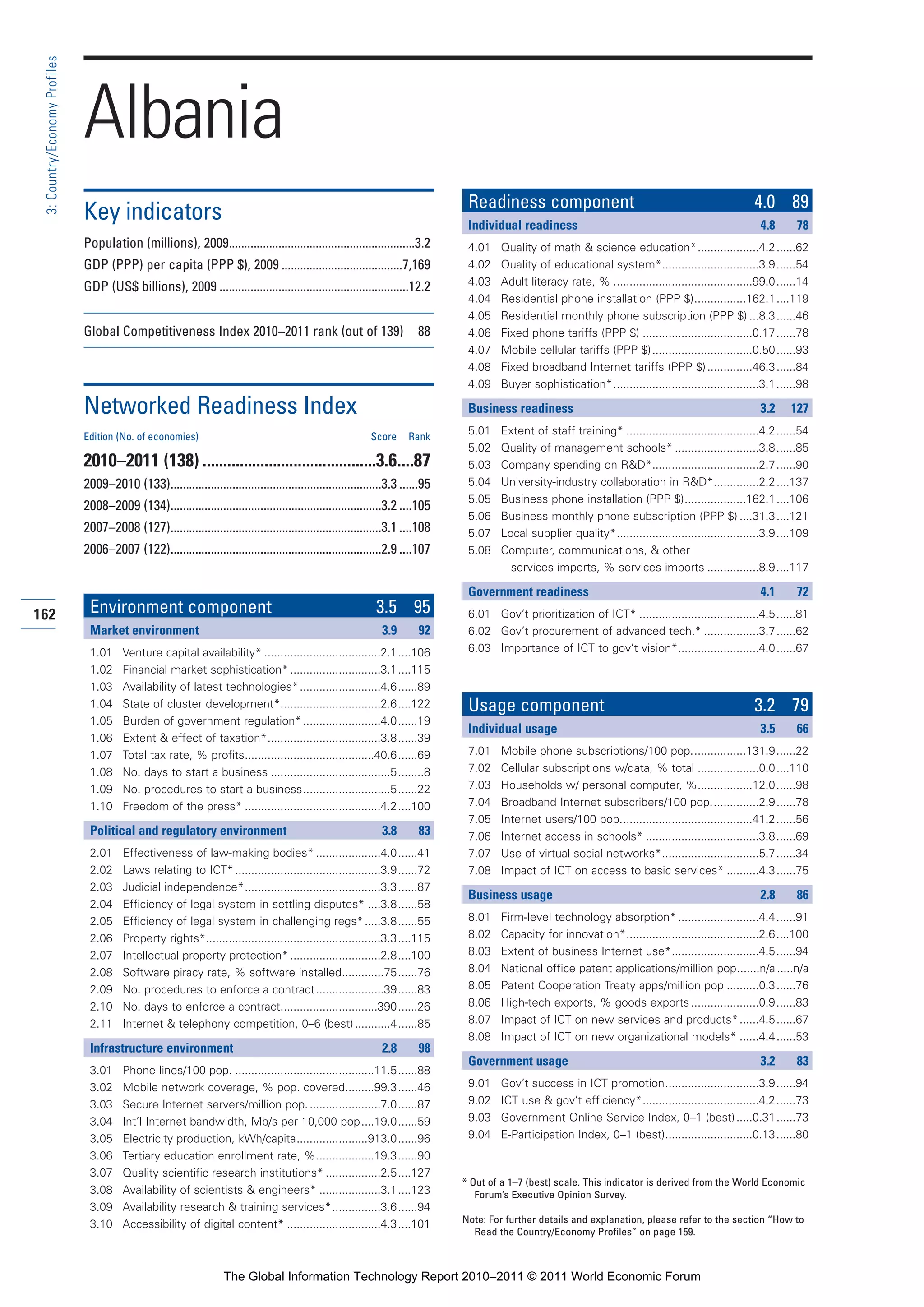
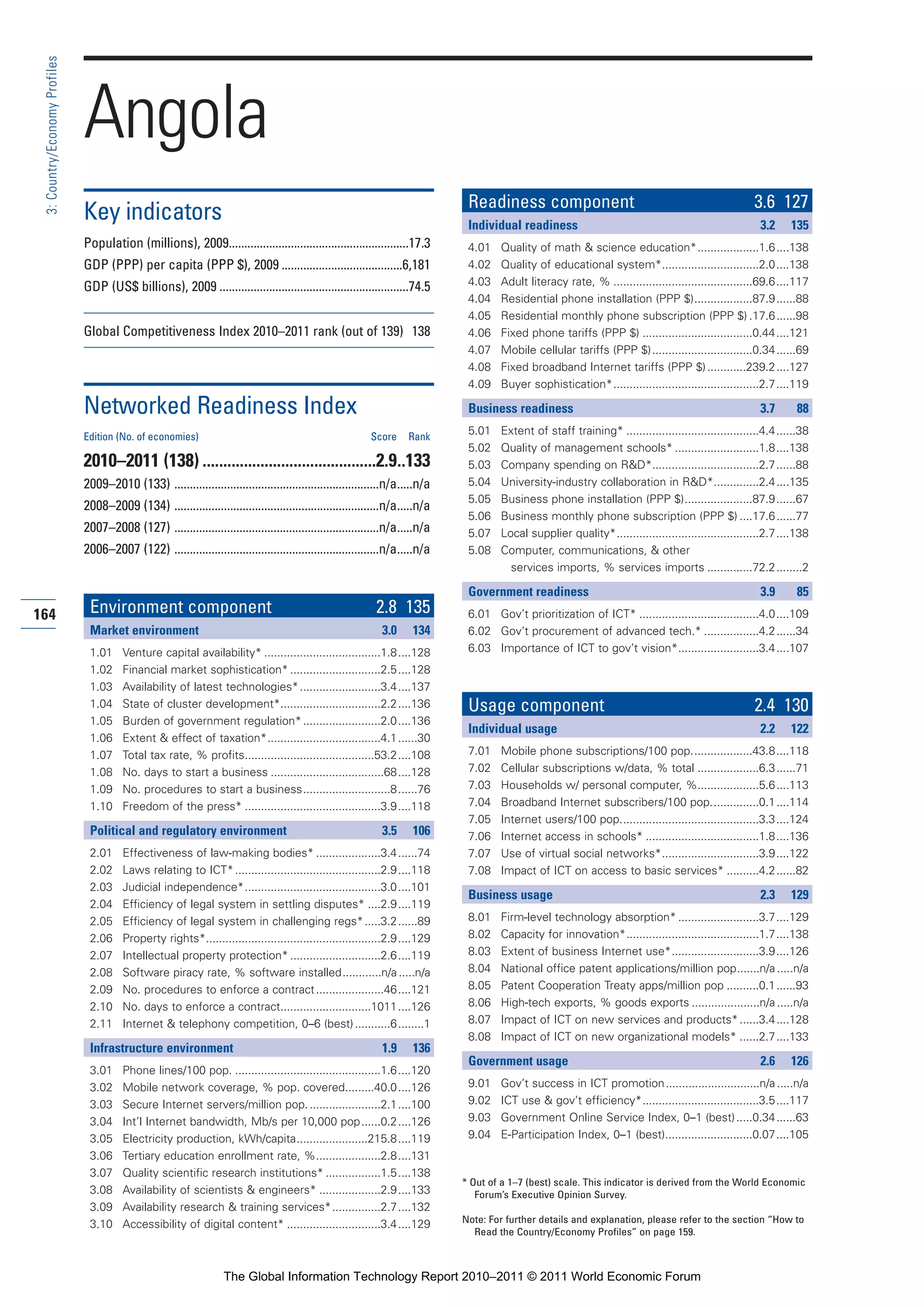
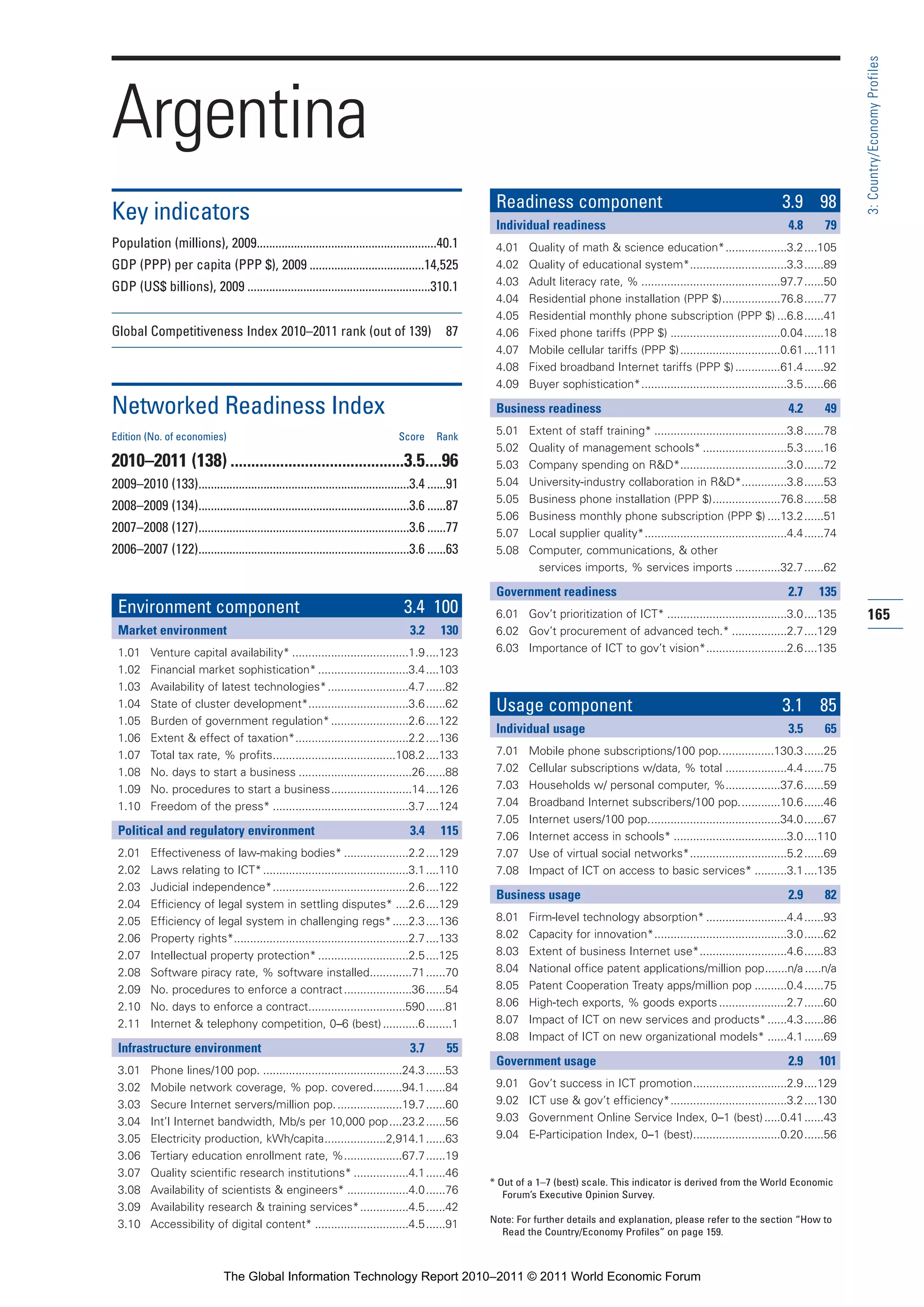
                         César Alierta (Telefónica)                                                                              How to Read the Country/Economy Profiles .............................159
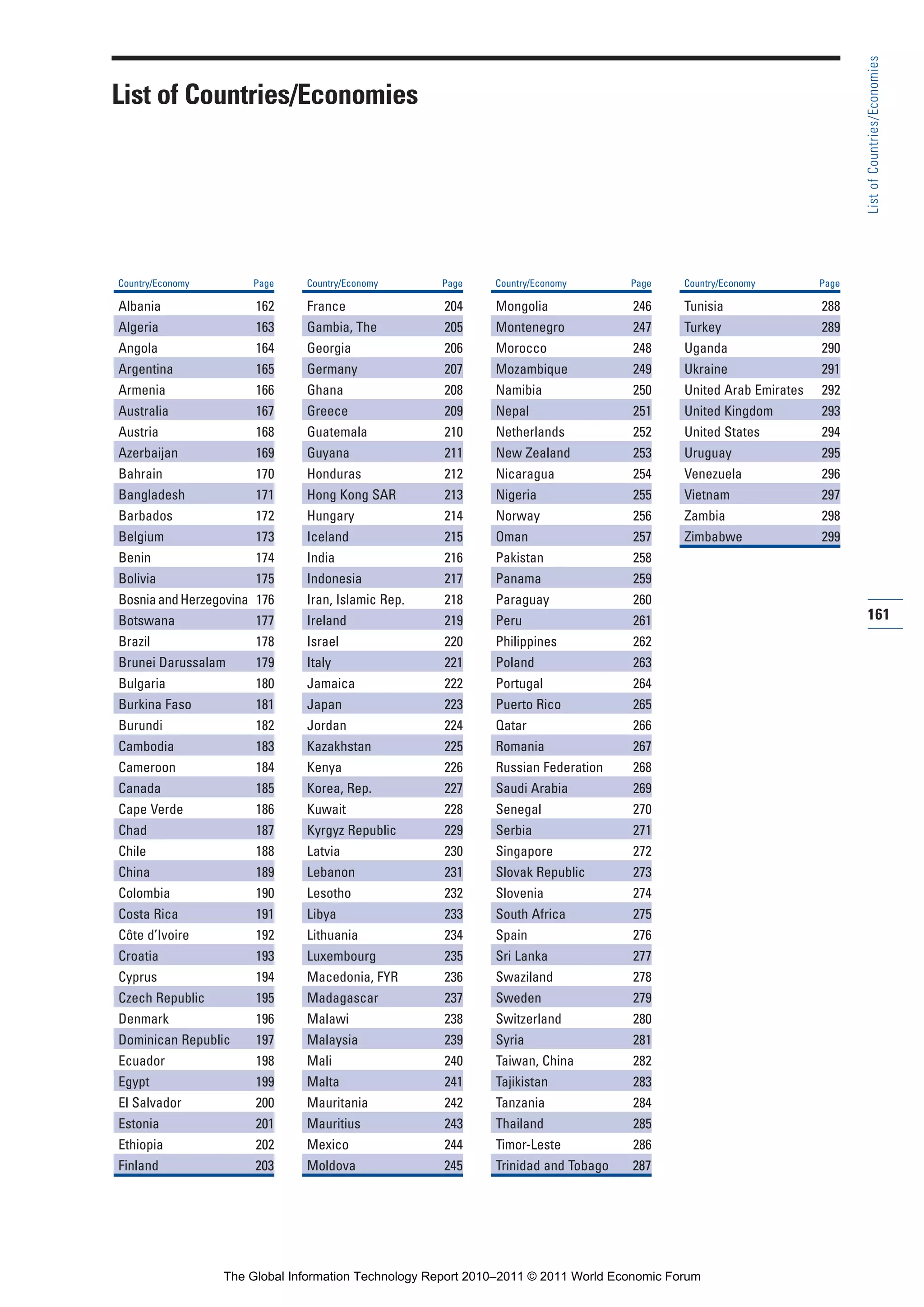
                                                                                                                                 List of Countries/Economies ......................................................161
                                                                                                                                 Country/Economy Profiles..........................................................162
                 1.5 The Growing Possibilities of Information and
                     Communication Technologies for Reducing Poverty.......69
                         Torbjörn Fredriksson (UNCTAD)
                                                                                                                                 Part 4: Data Presentation
                 1.6 Meeting the Decade’s Challenges:
                                                                                                                                 How to Read the Data Tables ....................................................303
                     Technology (Alone) Is Not the Answer................................79                                      Index of Data Tables...................................................................305
                         Vineet Nayar (HCL Technologies)                                                                         Data Tables.................................................................................307


                 1.7 Localization 2.0..........................................................................85
                         Jeff Kelly and Neil Blakesley (BT plc)                                                                  Technical Notes and Sources .......................................................393

                 1.8 Transformation 2.0 for an Effective Social Strategy.........91                                              About the Authors.............................................................................397
                         Mikael Hagström (SAS)
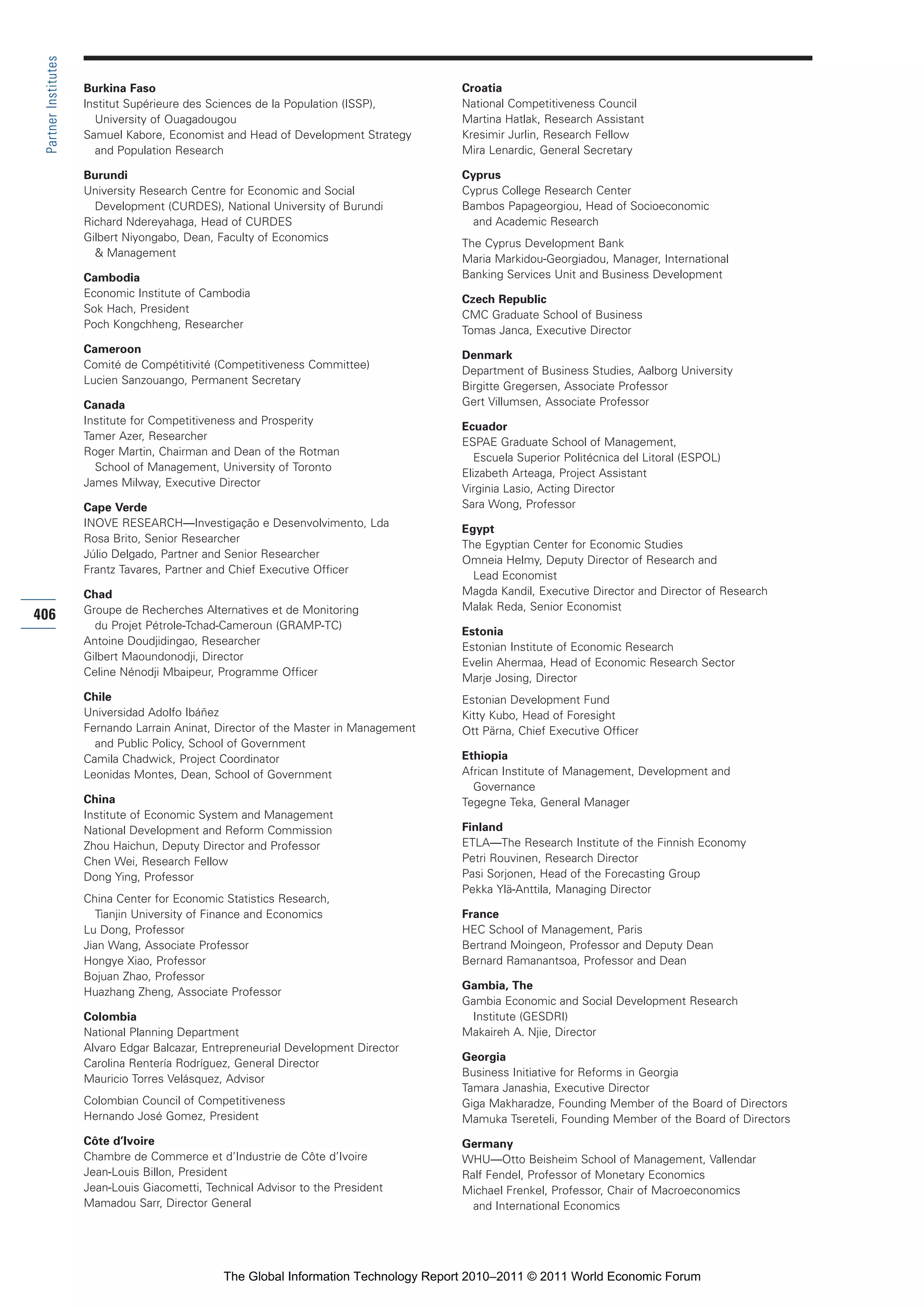
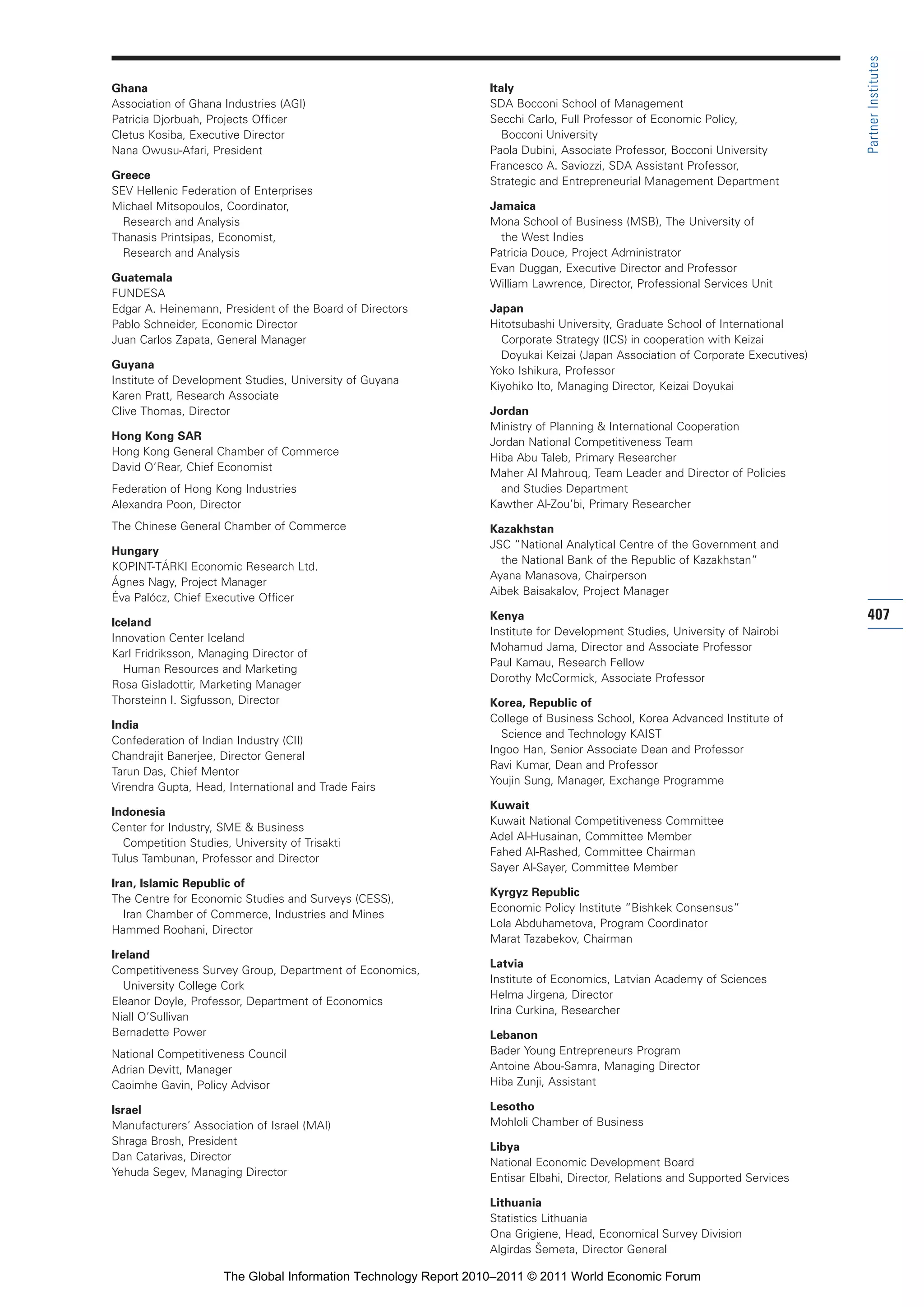
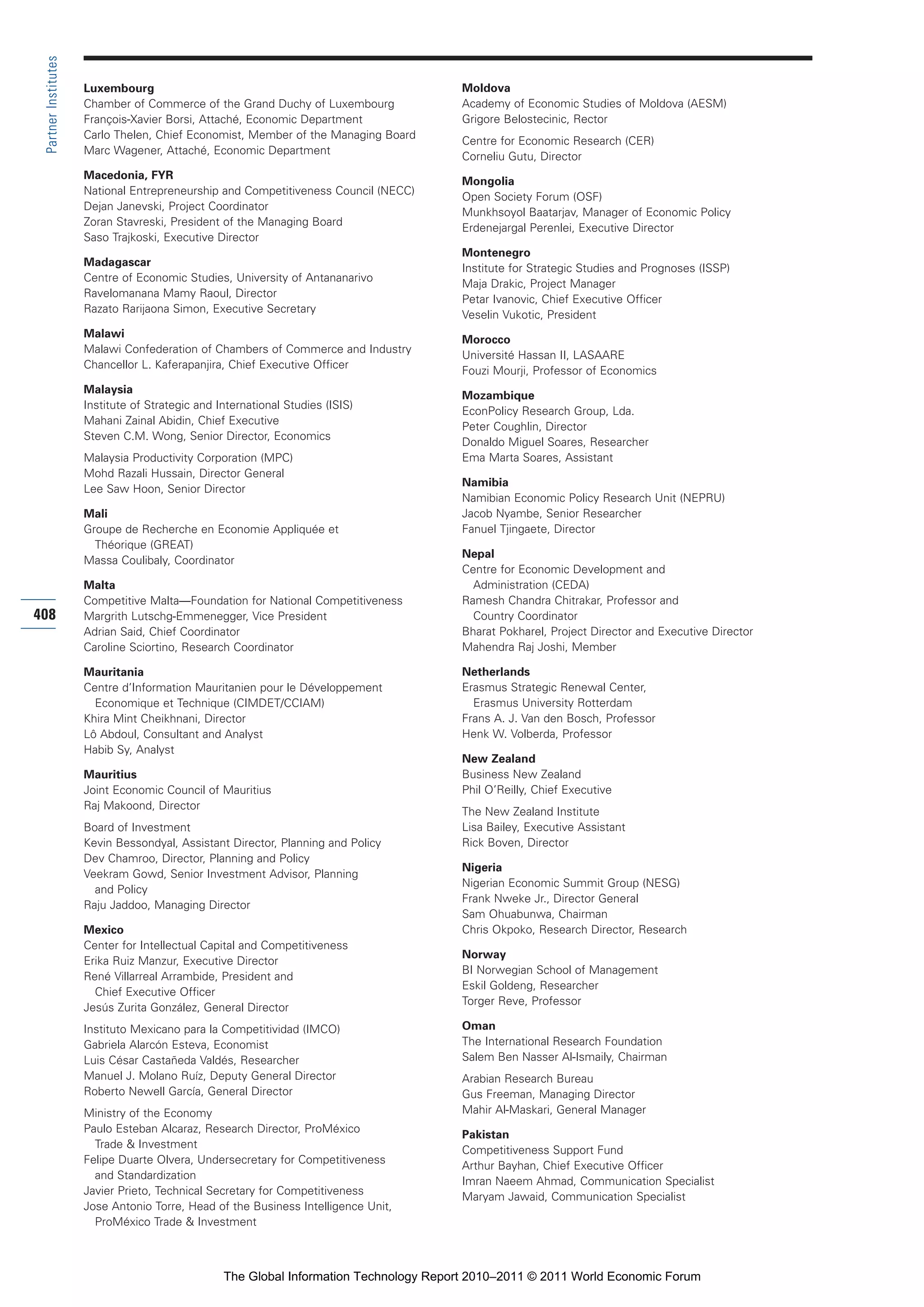
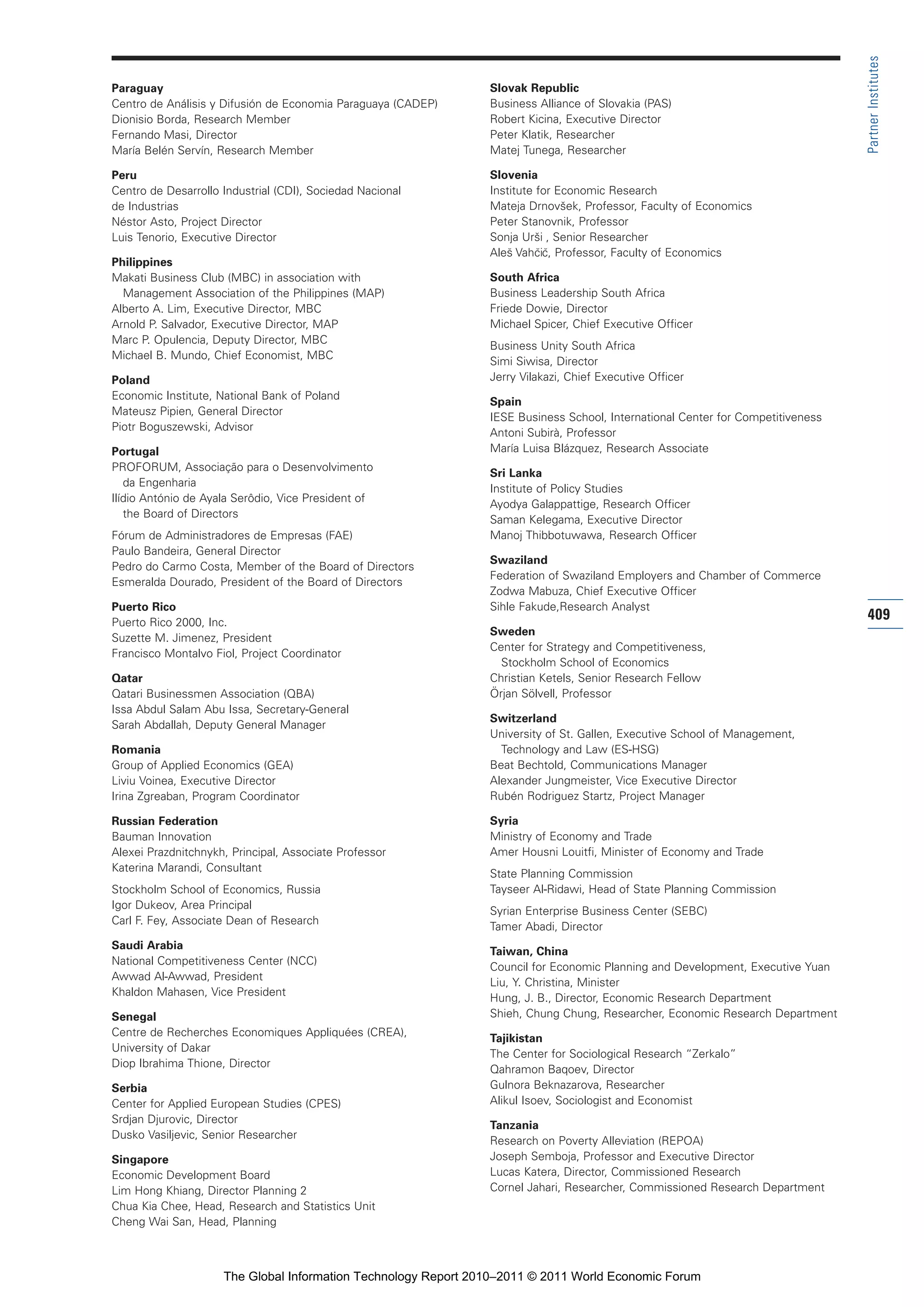
                                                                                                                                 List of Partner Institutes..................................................................405

                 1.9 Creating a Fiber Future: The Regulatory Challenge .........99                                               Acknowledgment .............................................................................411
                         Scott Beardsley, Luis Enriquez, Mehmet Güvendi,
                         and Sergio Sandoval (McKinsey & Company, Inc.)


                                                    The Global Information Technology Report 2010–2011 © 2011 World Economic Forum
Part 1_r2_PART 1 3/29/11 6:44 AM Page iv


                                  The Global Information Technology Report 2010–2011 © 2011 World Economic Forum
Part 1_r2_PART 1 3/29/11 6:44 AM Page v


                                                                                                                                           Preface
                Preface
                ROBERT GREENHILL
                Chief Business Officer, World Economic Forum


                The last decade has seen information and communica-            number of essays and case studies on transformations 2.0
                tion technologies (ICT) dramatically transforming the          and best practices in networked readiness are featured in
                world, enabling innovation and productivity increases,         the Report, together with a comprehensive data section—
                connecting people and communities, and improving               including detailed profiles for each economy covered
                standards of living and opportunities across the globe.        and data tables with global rankings for the NRI’s 71
                While changing the way individuals live, interact, and         indicators.
                work, ICT has also proven to be a key precondition for              We would like to convey our sincere gratitude
                enhanced competitiveness and economic and societal             to the industry experts who contributed outstanding
                modernization, as well as an important instrument for          chapters to this Report, exploring the next ICT-enabled
                bridging economic and social divides and reducing              transformations and highlighting best policies and
                poverty.                                                       practices in ICT diffusion and usage. We especially
                     As we celebrate the 10th anniversary of the               wish to thank the editors of the Report, Soumitra Dutta
                Global Information Technology Report (GITR) series and         at INSEAD and Irene Mia at the World Economic
                the extraordinary achievements ICT has already made            Forum, for their leadership and long-lasting dedication
                possible over the past 10 years, we also want to take the      to the project, together with the other members of the
                opportunity to look forward and imagine the next               GITR team: Roberto Crotti, Thierry Geiger, Joanna
                transformations enabled by ICT—transformations 2.0.            Gordon, and Derek O’Halloran. Appreciation also goes        v
                The pace of technological advance is accelerating and          to Alan Marcus, Head of Information Technology and
                ICT is increasingly becoming a ubiquitous and intrinsic        Telecommunications Industries and Jennifer Blanke,
                part of people’s behaviors and social networks as well as      Head of the Centre for Global Competitiveness and
                of business practices and government activities and serv-      Performance, as well as her team: Ciara Browne,
                ice provision. We expect transformations 2.0 to continue       Margareta Drzeniek Hanouz, Pearl Samandari, and Satu
                to move human progress forward by further leveraging           Kauhanen. Last but not least, we would like to express
                ICT’s positive social, political, and economic impact on       our gratitude to our network of 150 Partner Institutes
                governments, enterprise, and civil society alike.              around the world and to all the business executives who
                     The GITR series has been published by the World           participated in our Executive Opinion Survey. Without
                Economic Forum in partnership with INSEAD since                their valuable input, the production of this Report,
                2001, accompanying and monitoring ICT advances                 would not have been possible.
                over the last decade as well as raising awareness of the
                importance of ICT diffusion and usage for long-term
                competitiveness and societal well-being. Through the lens
                of the Networked Readiness Index (NRI), the driving
                factors of networked readiness and ICT leveraging
                have been identified, highlighting the joint responsibility
                of all social actors, namely individuals, businesses, and
                governments, in this respect. The series has become
                over time one of the most respected studies of its kind.
                It has been extensively used by policymakers and rele-
                vant stakeholders as a unique tool to identify strengths on
                which to build and weaknesses that need to be addressed
                in national strategies for enhanced networked readiness.
                     The Global Information Technology Report 2010–2011
                features the latest results of the NRI, offering an overview
                of the current state of ICT readiness in the world. This
                year’s coverage includes a record number of 138
                economies from both the developing and developed
                world, accounting for over 98 percent of global GDP. A


                                    The Global Information Technology Report 2010–2011 © 2011 World Economic Forum
Part 1_r2_PART 1 3/29/11 6:44 AM Page vi


                                  The Global Information Technology Report 2010–2011 © 2011 World Economic Forum
Part 1_FINAL_PART 1 3/30/11 4:24 PM Page vii


                                                                                                                                              Foreword
                Foreword
                SHUMEET BANERJI
                Chief Executive Officer, Booz & Company


                In the years that Booz & Company has been involved              like-minded peers—and work together to clean up the
                with the World Economic Forum and the Global                    planet. Talented entrepreneurs can launch their ideas in
                Information Technology Report (GITR) series, we have            a global marketplace and tap into capital from halfway
                seen information and communication technologies                 around the world.
                (ICT) offer the foundation for major leaps forward                   Some might say that this sense of optimism, about
                in almost every area of human activity. Governments,            the potential that can be created by an interconnected
                businesses, and consumers have a fundamentally different        world, is misplaced. The theme for the World Economic
                understanding of technology and its potential than they         Forum Annual Meeting 2011, “Shared Norms for the
                did 10 years ago, when the GITR was first published.            New Reality,” acknowledged the pervasive challenges
                      For each of these groups, the purpose of tech-            facing leaders and institutions—the aftermath of several
                nology and the way they interact with it has changed.           demanding years in the global economy.
                Governments, which once focused on the concrete issues               We choose to be relentlessly positive in the face of
                of building infrastructure and providing access to citi-        these challenges. Around the world, technology can help
                zens, are beginning to recognize that technology itself         nations and individuals to level the playing field, to turn
                is not as important as the socioeconomic achievements           ideas into reality, to overcome generations of stagnant
                it can engender—via e-health programs, e-government             development. No nation and no region has a monopoly
                services, and smart grids for utilities, for example. Busi-     on innovation and new thinking. There is no area on           vii
                nesses have recognized that ICT is not just an avenue           the globe that has an inherent advantage in asking new
                to cost-cutting and more efficient operations, but a crit-      questions, or exploring new areas. Digital economies,
                ical way to open a dialogue with consumers and other            unlike the industrial economies of the past, do not rely
                stakeholders via all kinds of digital communications:           on natural resources but on smart, ambitious individuals.
                mobile advertising, digital marketing, social networks,         There are many places on earth that can aspire to be the
                e-commerce. And consumers inhabit a new, always-                next Silicon Valley, the next Nanjing-Beijing corridor,
                connected digital world—particularly Generation C,              the next Singapore.
                those connected, communicating, content-centric,                     It is based on this assumption that Booz & Company
                computerized, community-oriented, always-clicking               creates our vision for a world with seamless connected-
                consumers born after 1990.                                      ness, always-on access to knowledge, and unrestricted
                      As digital economies steadily become the norm,            openness to innovation. We are honored to contribute
                our goal at Booz & Company is to continue exploring             to The Global Information Technology Report 2010–2011
                the economic and social benefits that ICT can bring—            and to continue shaping this vision for the future.
                and the ways in which they are increasingly intercon-
                nected. An e-health system built upon electronic med-
                ical records can improve bottom lines for hospitals, but
                it also offers social benefits by allowing for better patient
                care. Smart grids allow utilities to deliver a new range
                of smart home services, many of which also offer a
                greater environmental good.
                      More and more, various groups of stakeholders will
                need to collaborate on ICT projects in order to ensure
                that they are designed in ways that allow all of them to
                reap the potential advantages.
                      Furthermore, ICT’s socioeconomic benefits are
                not limited by national borders. Technology allows the
                best and brightest minds in every nation to have access
                to each other in a way that was never before possible.
                Young people who may once have tried to clean up
                their cities can now form global communities of


                                    The Global Information Technology Report 2010–2011 © 2011 World Economic Forum
Part 1_r2_PART 1 3/29/11 6:44 AM Page viii


                                   The Global Information Technology Report 2010–2011 © 2011 World Economic Forum
Part 1_r2_PART 1 3/29/11 6:44 AM Page ix


                                                                                                                                             Executive Summary
                 Executive Summary
                 SOUMITRA DUTTA, INSEAD
                 IRENE MIA, World Economic Forum


                 The Global Information Technology Report series celebrates    Report is composed of four thematic parts. Part 1 relates
                 its 10th anniversary this year. The series has followed       the findings of the Networked Readiness Index
                 and tried to cast light on the evolution of information       2010–2011 (NRI) and features selected expert contribu-
                 and communication technologies (ICT) over the last            tions on the general theme of transformations 2.0. Part
                 decade, as well as raising awareness about the importance     2 includes a number of case studies showcasing best
                 of ICT diffusion and leveraging for increased develop-        practices in networked readiness in Costa Rica, Saudi
                 ment, growth, and better living conditions. The method-       Arabia, the United States, and the European Union. Part
                 ological framework of the Networked Readiness Index           3 comprises detailed profiles for the 138 economies
                 (NRI) has mapped out the enabling factors driving             covered in this year’s Report, providing a thorough pic-
                 networked readiness, which is the capacity of countries       ture of each economy’s current networked readiness
                 to fully benefit from new technologies in their competi-      landscape and allowing for international and historical
                 tiveness strategies and their citizens’ daily lives. The      comparisons on specific variables or components of the
                 Index has allowed private and public stakeholders to          NRI. Part 4 includes data tables for each of the 71 vari-
                 monitor progress for an ever-increasing number of             ables composing the NRI this year, with rankings for
                 economies                                                     the economies covered as well as technical notes and
                 all over the globe, as well as to identify competitive        sources for the quantitative variables used.
                 strengths and weaknesses in national networked readi-                                                                       ix
                 ness landscapes. In doing so, the NRI and the series
                 have grown into a unique policy tool in the discussion        Part 1: The Current Networked Readiness of the World
                 and design of national strategies to increase networked       and ICT-Enabled Transformations 2.0
                 readiness and overall competitiveness.                        Part 1 presents the latest findings of the NRI, offering a
                      As ICT continues to drive innovation, productivity,      comprehensive assessment of the present state of net-
                 and efficiency gains across industries as well as to          worked readiness in the world. Moreover, a number of
                 improve citizens’ daily lives, The Global Information         expert contributions focusing on the coming transfor-
                 Technology Report 2010–2011 takes a forward look on           mations, enabled and driven by ICT, are included. These
                 occasion of the 10th anniversary of its publication.          relate to (1) the emerging Internet economy, (2) com-
                 Rather than focusing on the major economic, political,        munities to be built around digital highways, (3) the
                 and social transformations enabled by ICT over recent         promise of technology, (4) ICT’s growing impact on
                 years, the Report tries to imagine the new wave of trans-     poverty reduction, (5) ICT’s contribution to meeting
                 formations—transformations 2.0. Collecting the insights       the decade’s challenges, (6) localization 2.0, (7) ICT for
                 of practitioners, academics, and industry experts, the        an effective social strategy, (8) the creation of a fiber
                 Report explores the ways in which ICT will further rev-       future and its regulatory challenge, and (9) mobile bank-
                 olutionize the way social stakeholders work, interact,        ing in the emerging world.
                 and conduct their lives, businesses, and transactions. ICT
                 has shown its revolutionary power as a key catalyst for       Insight from the NRI 2010–2011 on the world’s networked
                 change, modernization, and innovation and one can             readiness
                 safely predict this trend will only accelerate going for-     Chapter 1.1, “The Networked Readiness Index
                 ward. As in past editions, the Report highlights a number     2010–2011: Celebrating 10 Years of Assessing Networked
                 of best practices in ICT readiness and usage in order to      Readiness,” presents the latest findings of the Index, put-
                 showcase strategies and policies that have proven partic-     ting them into a regional and income-group context
                 ularly successful in some specific country or region, and     while also looking at the across-years trends in net-
                 that could be a source of inspiration for relevant stake-     worked readiness.
                 holders around the world.                                          The current networked readiness framework and
                      The Report series is the result of a long-standing       resulting NRI were developed by INSEAD in 2002 as
                 partnership between the World Economic Forum (the             part of an ongoing joint research project with the Forum,
                 Forum) and INSEAD, aimed at identifying the drivers           and is the main methodological tool used in the Report
                 of national capacity to leverage ICT advances. The            to assess the extent to which a record number of 138


                                    The Global Information Technology Report 2010–2011 © 2011 World Economic Forum
Part 1_r2_PART 1 3/29/11 6:44 AM Page x


      Executive Summary

                          economies around the world leverage ICT advances for           six economies besides Singapore feature among the top
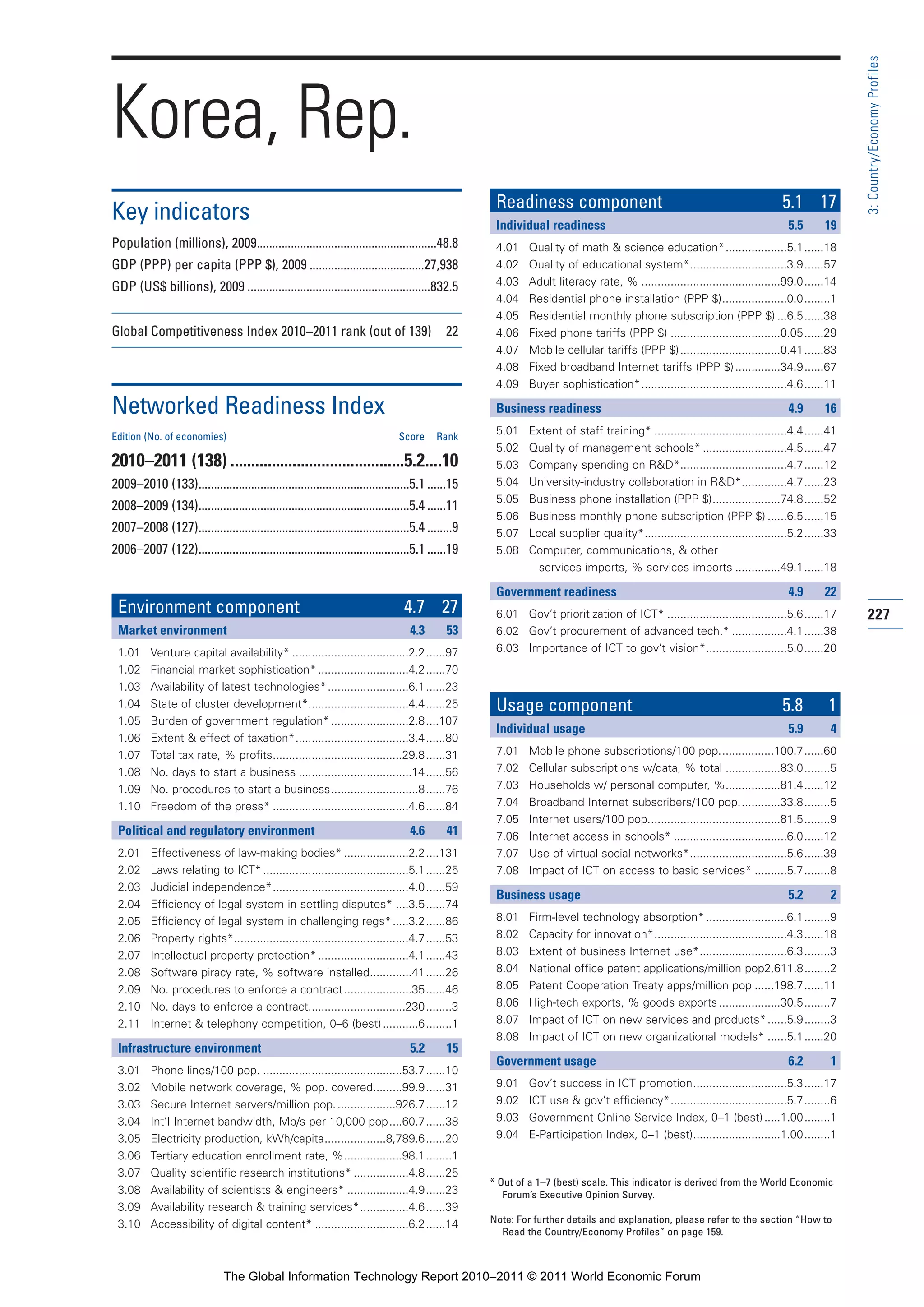
                          increased competitiveness and development. The frame-          20, namely Taiwan (6th), Korea (10th), Hong Kong (12th),
                          work gauges:                                                   Australia (17th), New Zealand (18th), and Japan (19th).
                                                                                         With regard to the largest Asian emerging markets,
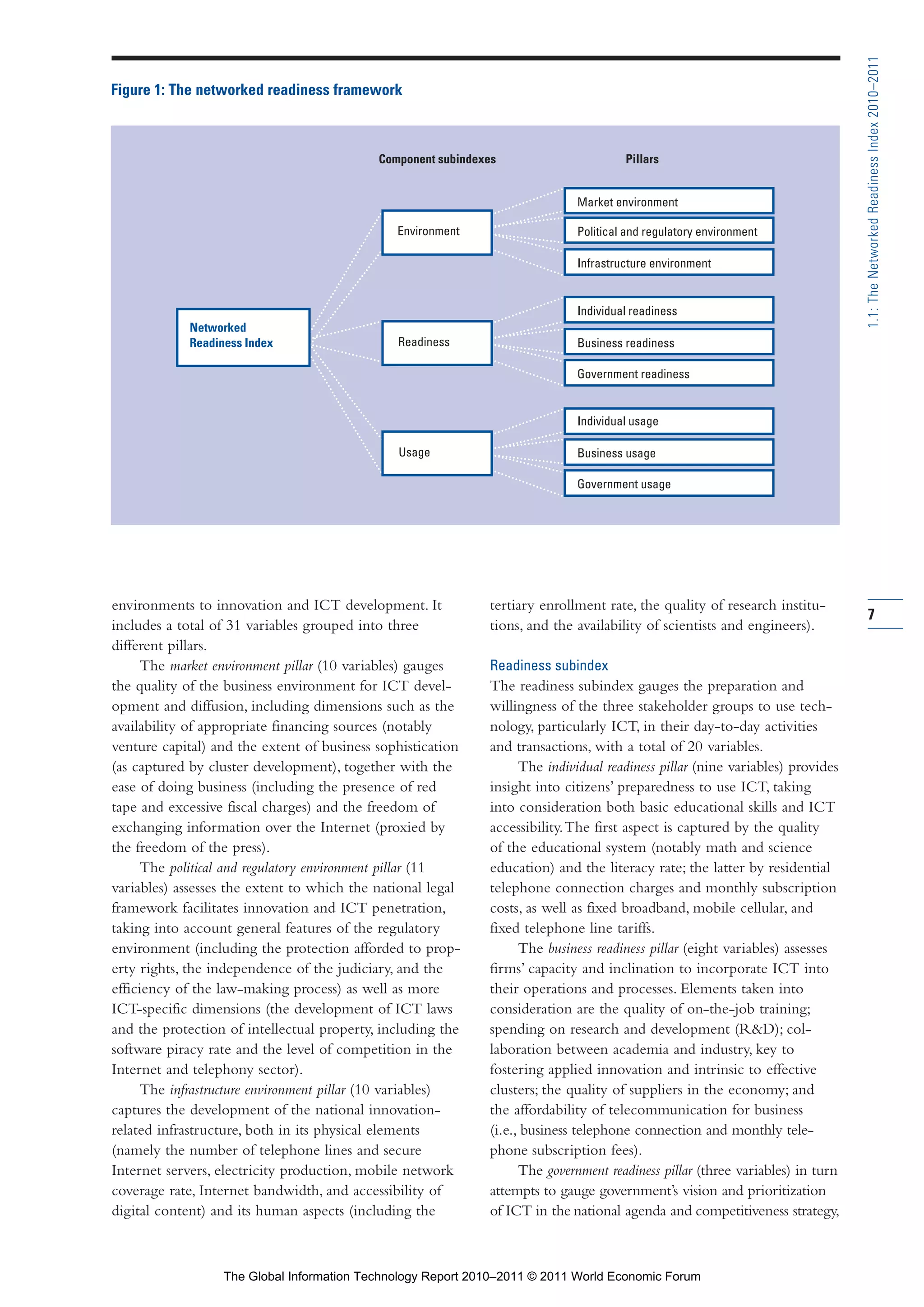
                            • the conduciveness of national environments for             China consolidates its position at 36th after years of
                              ICT development and diffusion, including the               impressive progression in the rankings, while India loses
                              broad business climate, some regulatory aspects, and       some ground and is down five places at 48th.
                              the human and hard infrastructure needed for ICT;               Although a number of countries in Latin America
                                                                                         and the Caribbean region post notable improvements
                            • the degree of preparation for and interest in using        or consolidate their achievements in networked readi-
                              ICT by the three main national stakeholders in a           ness, the region as a whole continues to trail behind
                              society (i.e., individuals, the business sector, and the   international best practices in leveraging ICT advances.
                              government) in their daily activities and operations;      No Latin American or Caribbean economy appears in
                              and                                                        the top 20 and only a handful feature in the top 50:
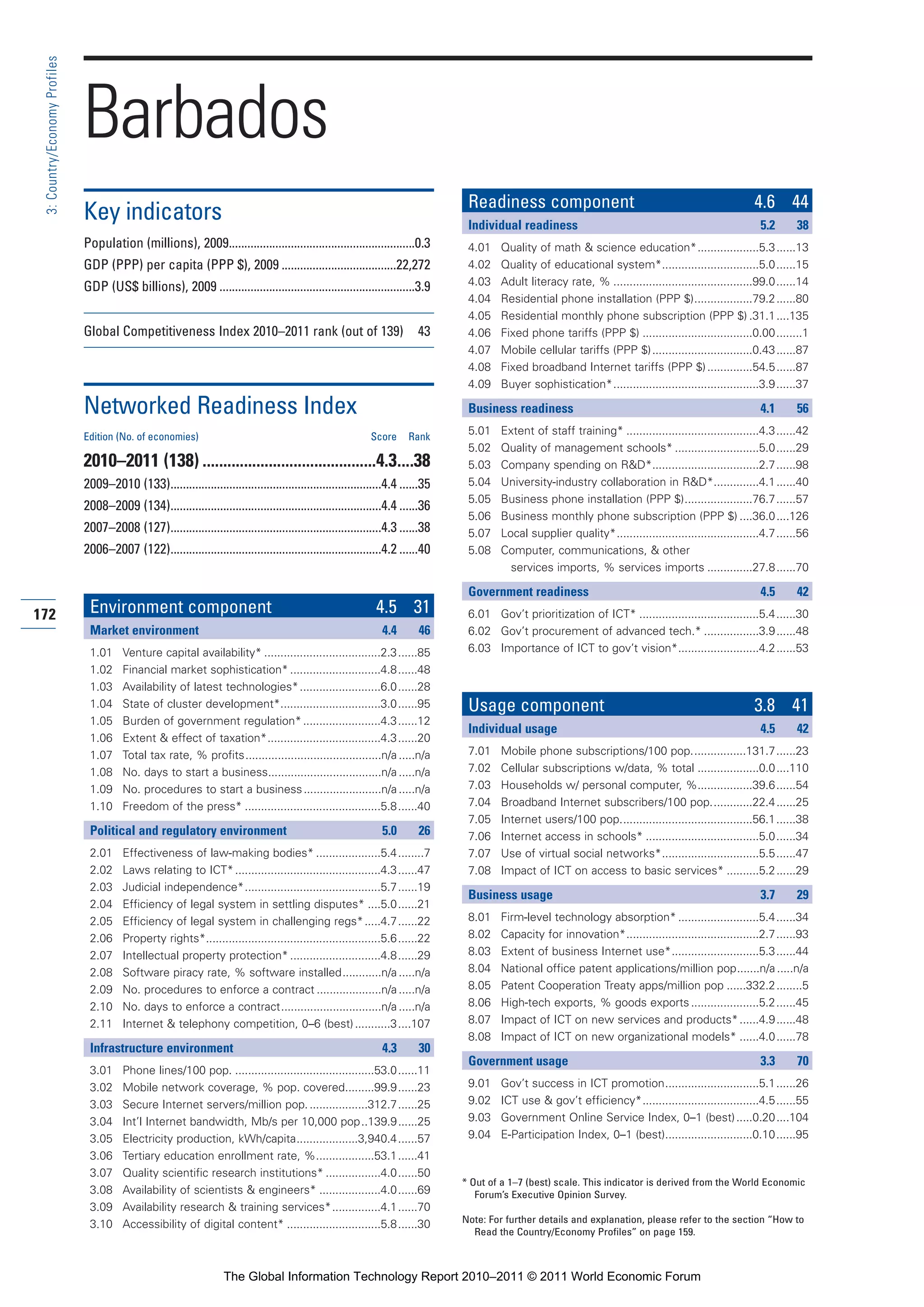
                                                                                         Barbados (38th), Chile (39th), Puerto Rico (43rd),
                            • the actual use of ICT by the above three stakeholders.     Uruguay (45th), and Costa Rica (46th). While Brazil
                                                                                         climbs five places to 56th, Mexico is stable at 78th, and
                               Although the networked readiness framework has            Argentina drops five places to 96th.
                          been kept stable since 2002, with some modification in              The assessment of sub-Saharan Africa’s networked
                          the nature and number of variables, a process of revision      readiness continues to be disappointing, with the major-
                          was begun last year to better capture recent trends and        ity of the region lagging in the bottom half of the NRI
                          evolutions in the ICT sector. The chapter provides some        rankings, bar Mauritius (45th) and South Africa (61st).
                          information on recent and expected future develop-             Tunisia consolidates its leadership in North Africa at
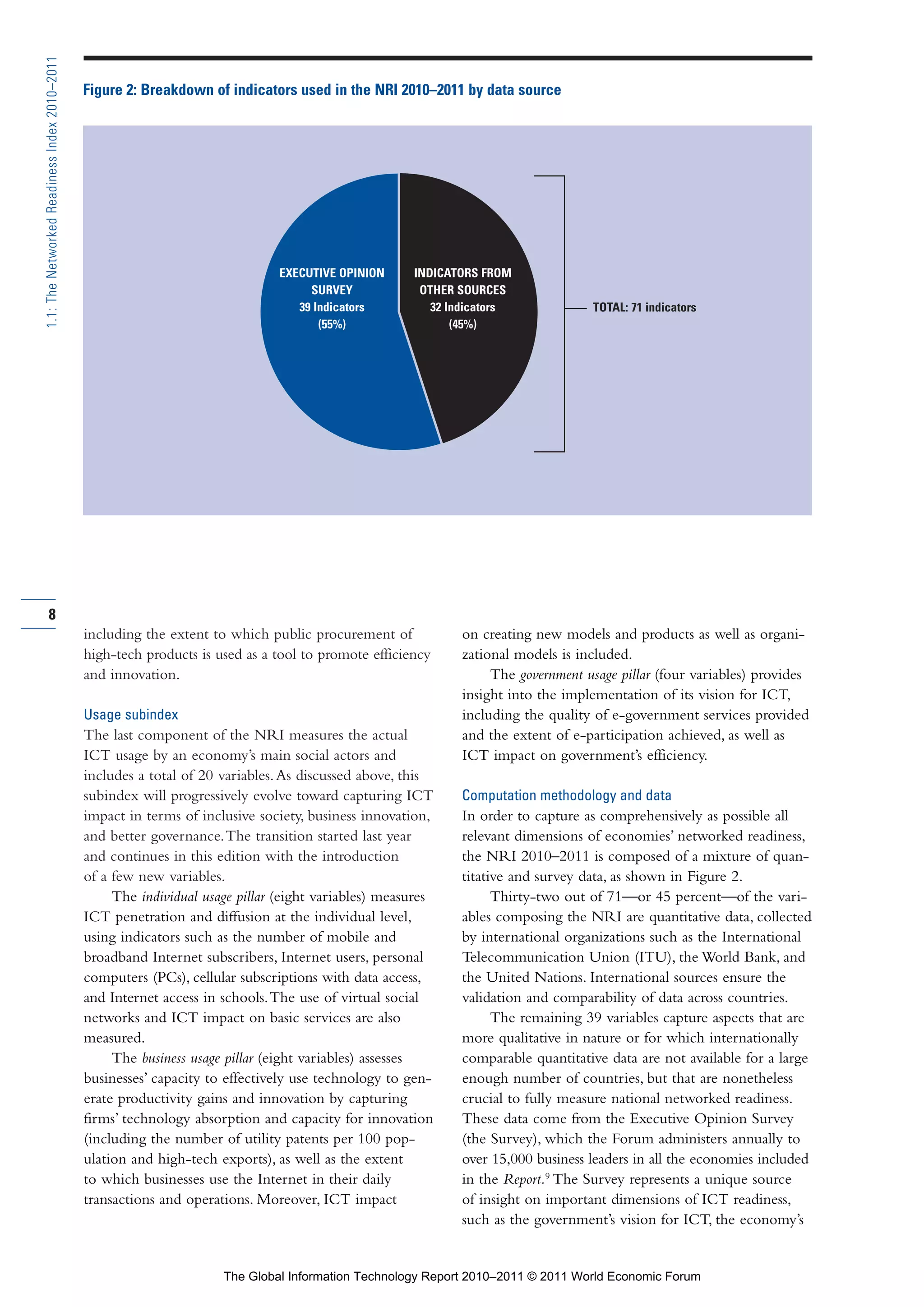
                          ments. As in previous years, the NRI is composed of a          35th place, while all other countries in the region,
                          mixture of quantitative data collected by international        with the exception of Morocco (83rd, 5 places up),
                          organizations—such as the International Telecom-               follow a downward trend. The biggest decline is that
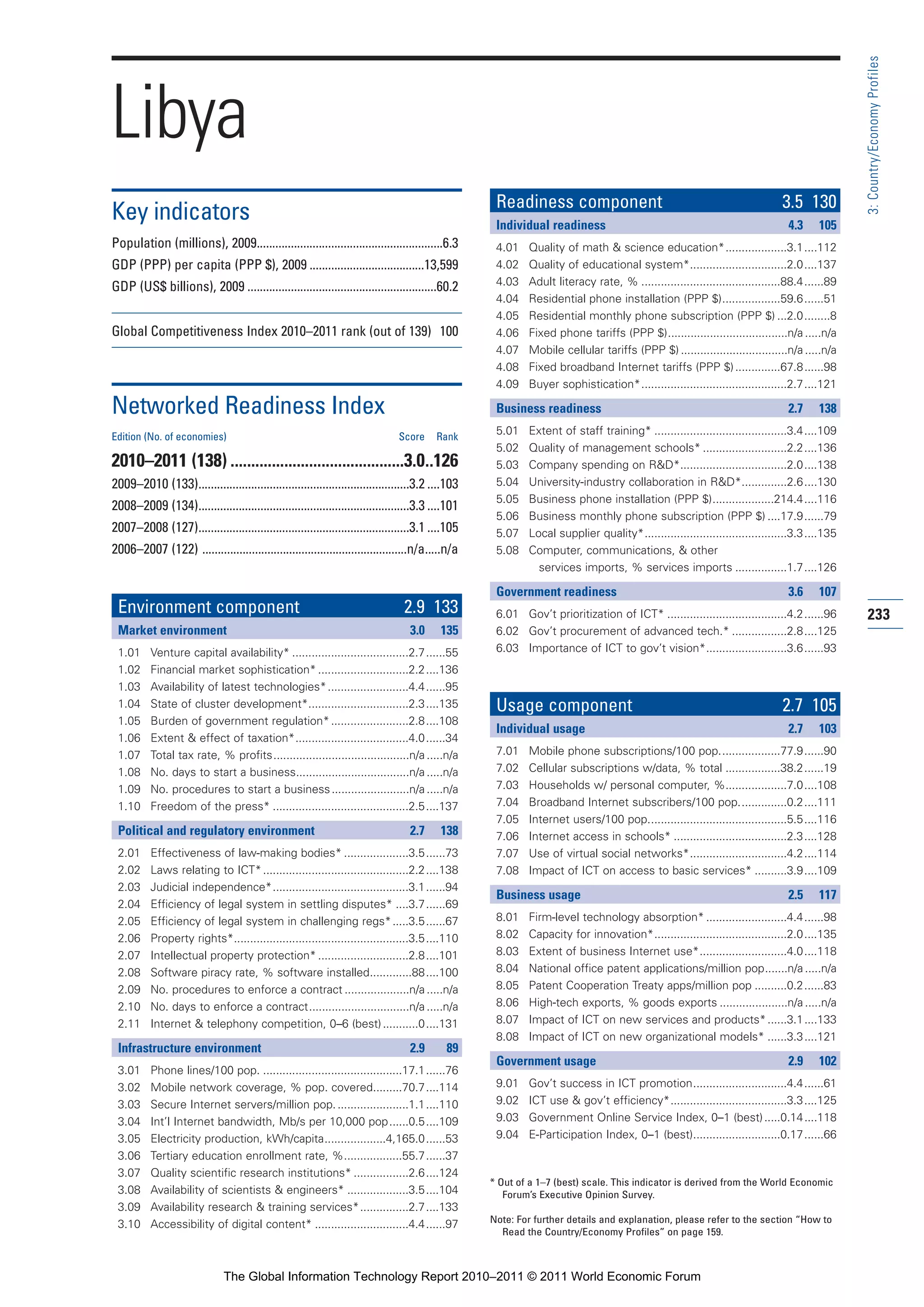
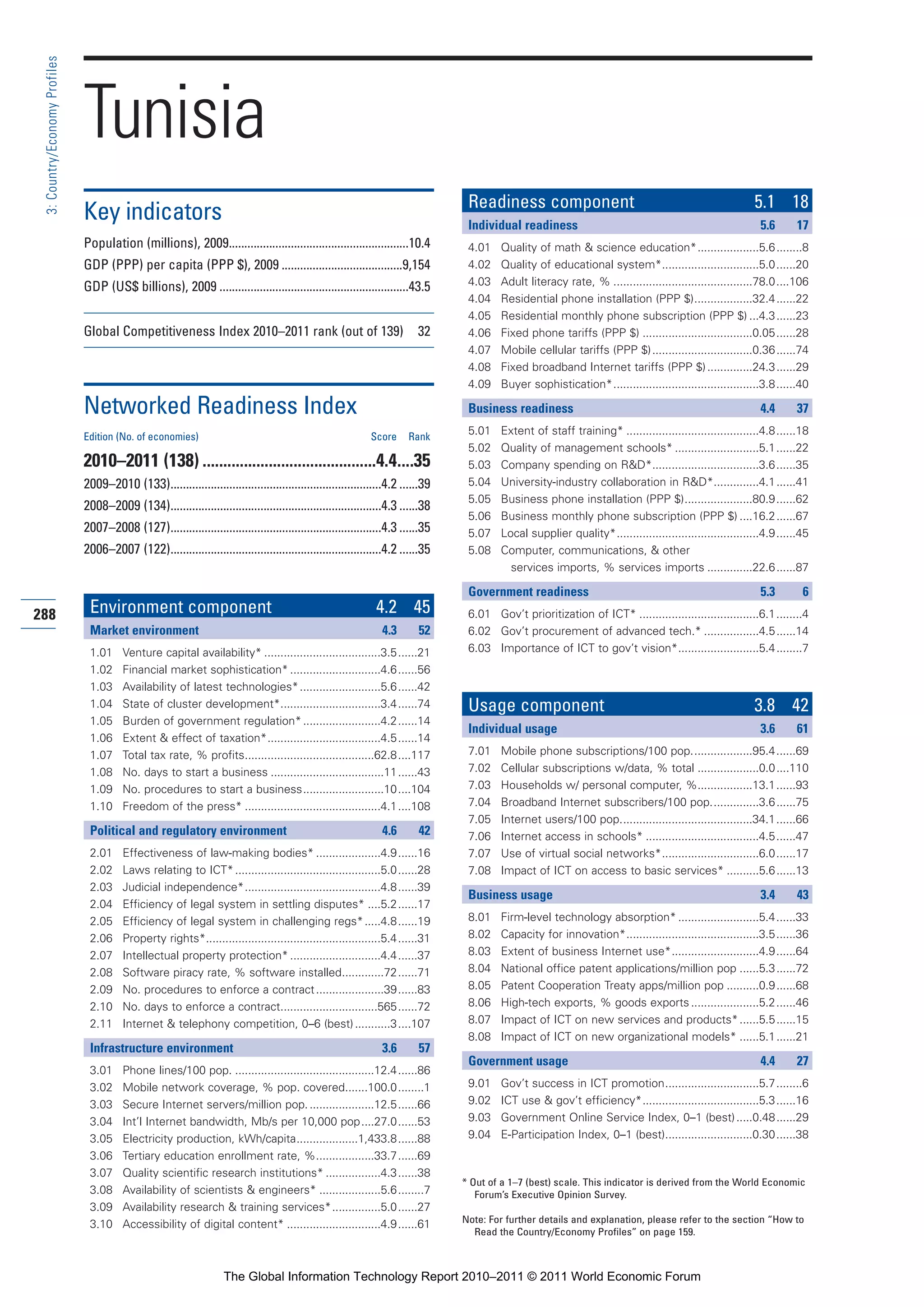
        x                 munication Union (ITU), the United Nations, and the            of Libya, which drops a staggering 23 places to 126th.
                          World Bank—and survey data from the Executive                  Egypt (75th) and Algeria (117th) lose 4 places each,
                          Opinion Survey (Survey), conducted annually by the             although both improve in score. On a more positive
                          Forum in each of the economies covered by the Report.          note, the Middle East continues to feature prominently
                          The NRI 2010–2011 covers a record number of 138                in the rankings, with four countries in the top 30,
                          economies from both the developed and developing               namely Israel (22nd), the United Arab Emirates (24th),
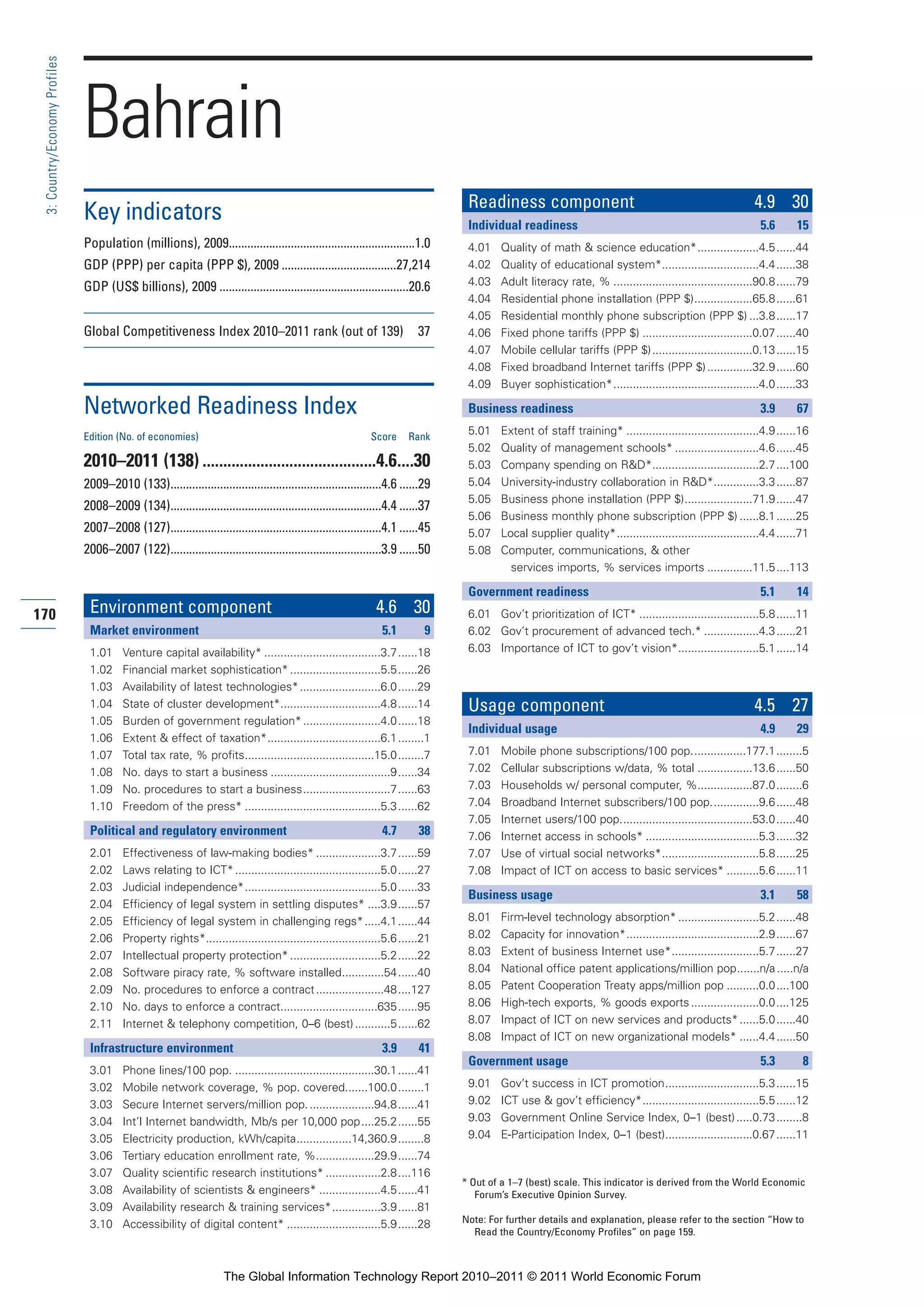
                          world, accounting for over 98 percent of world GDP.            Qatar (25th), and Bahrain (30th).
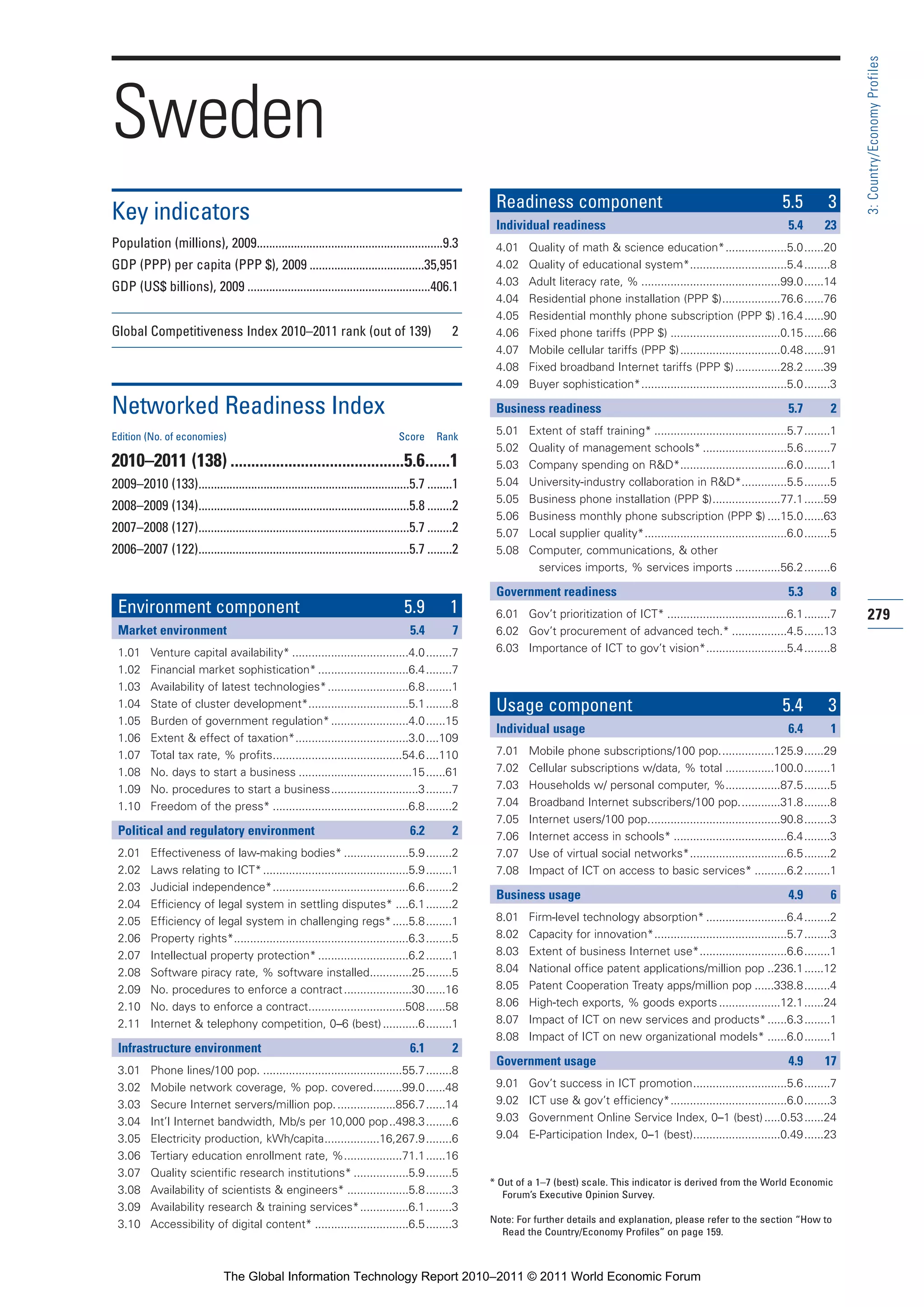
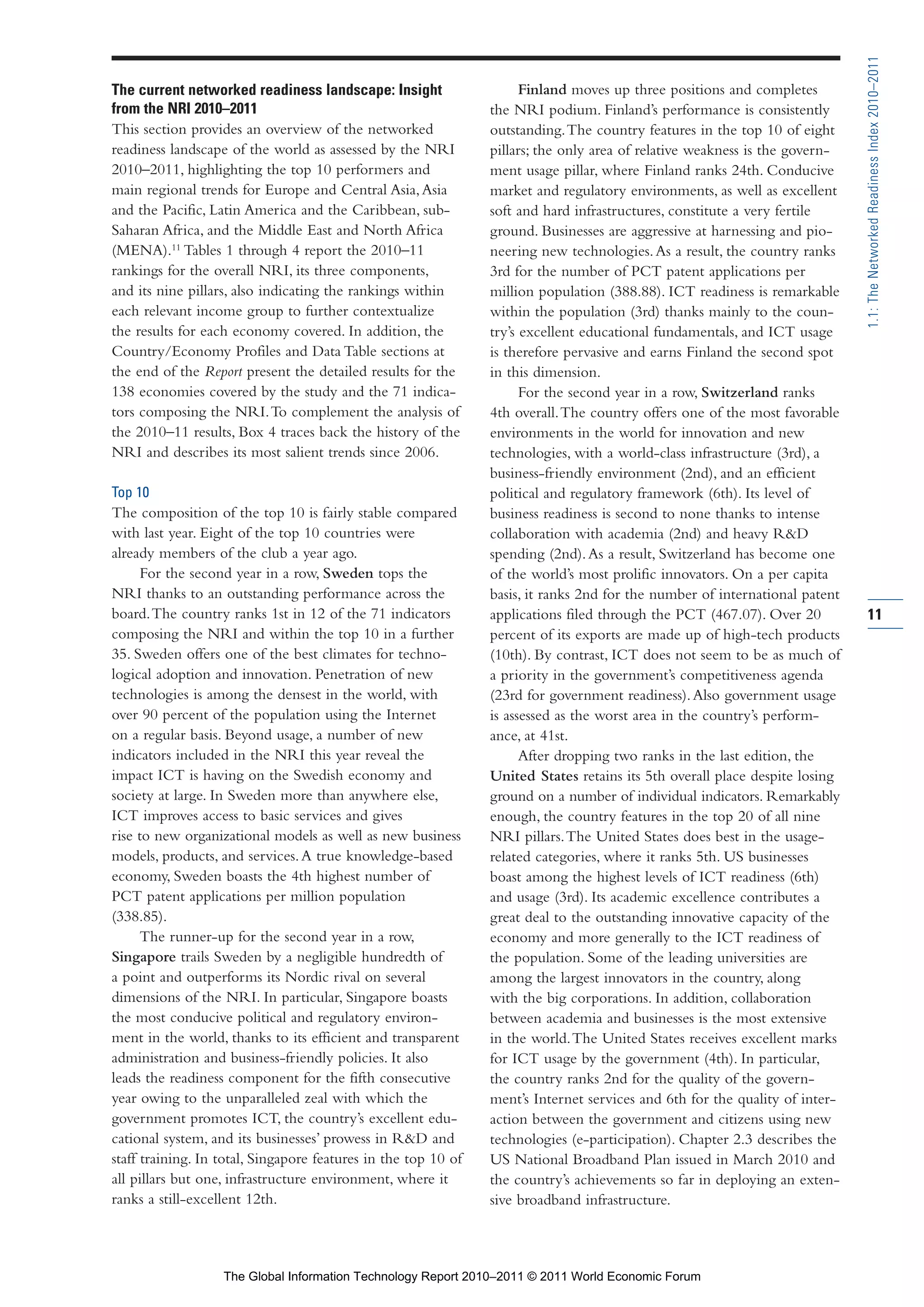
                               Sweden tops the 2010–11 rankings for the second                An analysis of country and regional trends in net-
                          time in a row, with an outstanding performance across          worked readiness using a five-year time series and an
                          the board. Although some Nordic countries lost some            overview on future dissemination efforts and the impact
                          ground with respect to last year, the others are still         of the Report are also included in the chapter.
                          among the most successful countries in the world at
                          fully integrating new technologies in their competitive-       The emerging Internet economy going into the future
                          ness strategies and using them as a crucial lever for          The next decade will see the global Internet transformed
                          long-term growth. Finland, Denmark, Norway, and                from an arena dominated by advanced countries, their
                          Iceland rank among the top 20, at 3rd, 7th, 9th, and           businesses, and citizens to one where emerging
                          16th, respectively.                                            economies will become predominant. As more citizens
                               Singapore is stable at 2nd, leading Asia and the          in these economies go online and connectivity levels
                          world in networked readiness, followed by Finland              approach those of advanced markets, the global shares of
                          (up three places from last year), Switzerland, and the         Internet activity and transactions will increasingly shift
                          United States.                                                 toward the former. In addition, with the improvement
                               Europe continues to display remarkable levels of          in the speed and quality of broadband and with Web
                          ICT readiness, with 11 regional economies featuring            2.0 technologies and applications, economic and social
                          among the top 20 of the world’s best performers.               dynamics across the world will change dramatically, with
                          Besides the Nordics and Switzerland, the Netherlands           massive implications in terms of productivity gains and
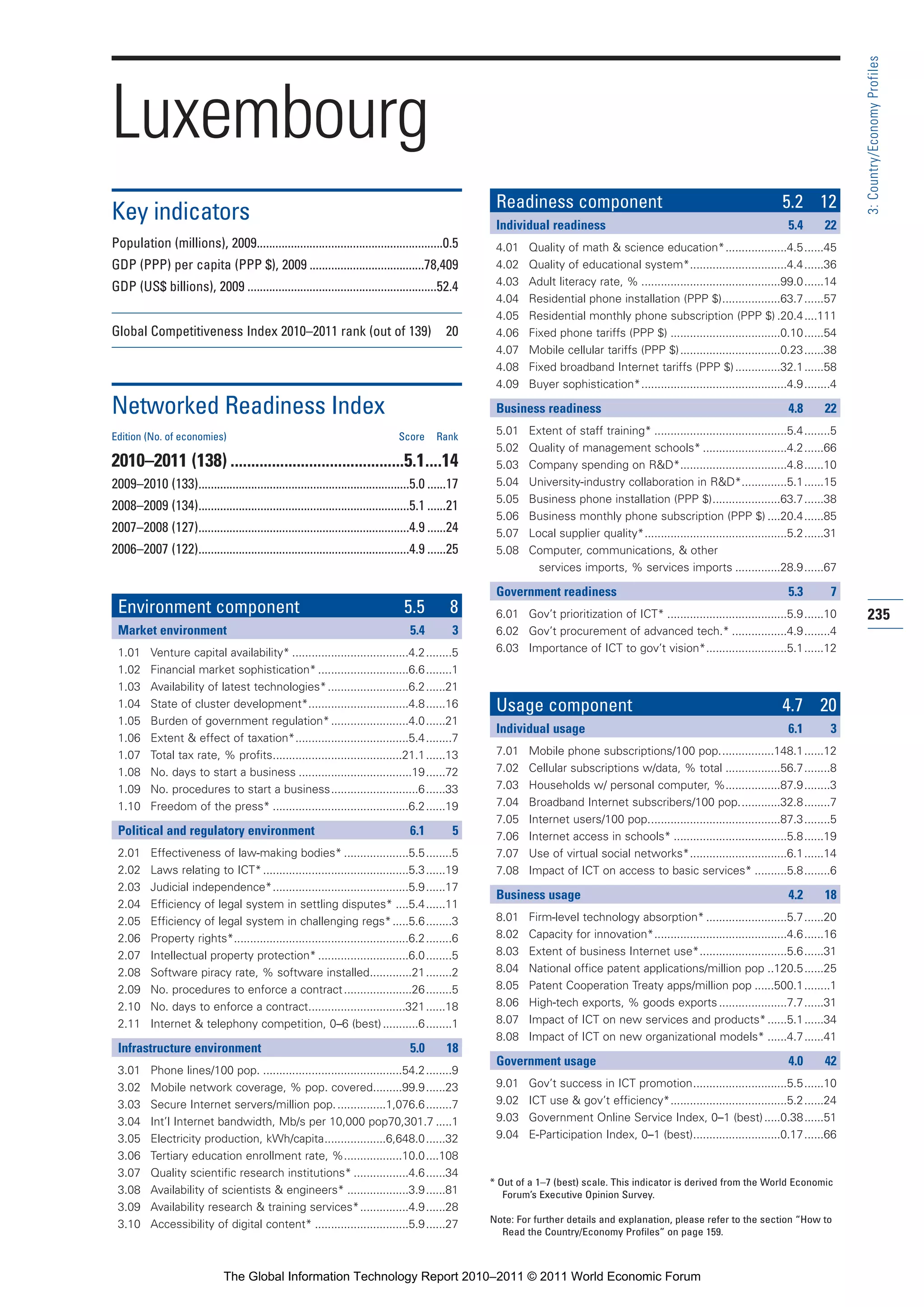
                          (11th), Germany (13th), Luxembourg (14th), the United          new opportunities for individuals. This inflection point
                          Kingdom (15th), and France (20th) rank among the               presents an opportunity for economies—and cities—all
                          most networked economies worldwide.                            over the globe to take decisive steps to gain the compet-
                               Asia is home to some of the best performers in the        itive advantage that can be derived from widespread use
                          world in the NRI rankings and to the countries that            of broadband networks.
                          have proven the most dynamic over time. In particular,


                                                 The Global Information Technology Report 2010–2011 © 2011 World Economic Forum
Part 1_r2_PART 1 3/29/11 6:44 AM Page xi


                                                                                                                                               Executive Summary
                       In their chapter “The Emerging Internet Economy:        deployment of digital highways and deriving full benefits
                 Looking a Decade Ahead,” authors Enrique Rueda-               from this is not a simple task. It requires fundamental
                 Sabater and John Garrity (both at Cisco Systems) illus-       changes in vision and action throughout the entire
                 trate this transformation through the dynamics of the         broadband ecosystem. They believe policymakers and
                 global Internet economy—the factors behind which              network operators first must look beyond broadband
                 are faster growth in emerging countries, rapid expansion      networks alone and facilitate the development of a
                 of their consumer class, and developments in wireless         host of related services and applications, then actively
                 technology—and take a look at the paths of Internet           encourage citizens to use them. The authors also claim
                 connectivity that different countries have followed. They     there is a strong need for collaboration among other
                 found that two major factors especially impact the            sector participants such as device manufacturers, applica-
                 spread of Internet: the availability of personal computers    tions developers, and counterparts in adjoining sectors.
                 (PCs), and the density of preexisting fixed telephone         Finally, the members of the broadband ecosystem must
                 lines and cable. On this basis, a country classification      work with their counterparts in adjacent industries—
                 from a connectivity perspective is proposed, as follows:      such as health, energy, education, and transportation—to
                 first adopters, converging adopters, and belated adopters.    develop the applications that will help those sectors to reap
                 Through this analysis and classification, the authors seek    broadband’s benefits. Only when all of these stakeholders
                 to gain insights into the likely dynamics—and the             are fully engaged can digital highways reach their full
                 options countries face—as Internet use becomes more           potential and facilitate efficiency, competitiveness, and
                 intensive (through faster and higher-quality broadband)       prosperity in the communities they serve. The future of
                 and more widespread (as networks, both fixed and wire-        digital highways rests on a collaborative, committed, and
                 less, connect more and more people around the world).         capable ecosystem, which not only delivers high-speed
                 For converging adopters, the challenge appears to be          broadband but also builds vibrant communities around it.
                 accelerating the speed of adoption and reducing the           The authors strongly believe that communities facilitat-
                 lag between widespread Internet penetration and broad-        ing stakeholders’ innovation, adoption, and collaboration
                 band penetration. For belated adopters, it is shifting        will realize the extraordinary potential of broadband.
                 gears to leapfrog to faster Internet and broadband adop-
                 tion. The authors believe the answer in both cases points     The promise of technology                                       xi
                 toward the implementation of a comprehensive strategy         The pace of change and technological evolution has
                 combining investments in broadband infrastructure and         accelerated greatly over the last decades, with unequivo-
                 skills concomitantly with improving the policy and reg-       cally positive transformations for societies, companies,
                 ulatory frameworks that affect the adoption of network        and individuals. It is remarkable not only how dramati-
                 technology.                                                   cally the technologies in everyday use have changed,
                                                                               but also how easily society as a whole has adopted
                 Building communities around digital highways                  these innovations. ICT has provided the foundation for
                 Recognizing the crucial role played by digital highways       the huge leaps that we have witnessed in the last few
                 (defined as nationwide high-speed broadband enabled           decades. Its impact can be grouped into at least three
                 by a combination of fixed as well as wireless networks)       distinct categories: economic, business, and social. The
                 in fostering socioeconomic development, governments           three are interrelated, in the sense that what happens in
                 around the world are spending billions and setting            each is both cause and consequence of what happens in
                 ambitious targets to foster their growth. Just as actual      the others.
                 highways connect people and foster social and commer-               In his chapter “The Promise of Technology,” César
                 cial activity, digital highways can facilitate the creation   Alierta from Telefónica provides a thoughtful overview
                 of virtual communities in vital areas. When policymakers      of the most recent technological advances, notably those
                 and telecommunications operators collaborate with             enabled by ICT, and points to some of the possibilities
                 leaders in other sectors, such as health and education,       for future evolution. Areas addressed in the chapter
                 they are laying the groundwork for profound improve-          include ICT’s impact on productivity and competitive-
                 ments—boosting national competitiveness, innovation,          ness, business management, companies’ size, knowledge
                 economic productivity, and social inclusion.                  of the market and networks, and relations between
                      In Chapter 1.3, “Building Communities around             governments and citizens, among others. The chapter’s
                 Digital Highways,” Karim Sabbagh, Roman Friedrich,            review leads to the inescapable conclusion that we
                 Bahjat El-Darwiche, and Milind Singh (all at Booz &           almost certainly have much yet to discover. In light
                 Company) delve into the rationale for digital highways        of the transformations we have already experienced,
                 and assess their current development status in order          the author concludes it is improbable that the next
                 to determine the actions required from policymakers,          decades will not see further significant discoveries or,
                 networked operators, and other relevant stakeholders          for that matter, that the innovation dynamic in ICT
                 to facilitate broadband deployment and the opportu-           will substantially diminish. Indeed, the current pipeline
                 nities ahead. The authors remark that accelerating the        is already full and promising, and constantly being


                                   The Global Information Technology Report 2010–2011 © 2011 World Economic Forum
Part 1_r2_PART 1 3/29/11 6:44 AM Page xii


      Executive Summary

                          refilled. The idea, however—Alierta says—is not to seek        telephony as well as ways of addressing the lack of elec-
                          innovation for innovation’s sake. Technology has pro-          tricity, for example. At the same time, the author calls
                          foundly and positively reshaped the world in which we          for governments and development partners to work
                          live—for individuals and for whole societies, changing         with the private sector—the primary source of infra-
                          our lives for the better.                                      structure investment and service innovation—if they
                                                                                         want to fully realize the promise of ICT for poverty
                          ICT’s growing impact on poverty reduction                      reduction. Successful projects aimed at enhancing the
                          During the past few years, a growing number of poor            productive use of ICT by enterprises have often seen
                          people have benefited from improved access to inter-           the involvement of multiple stakeholders acting in
                          active communication. The rapid uptake of mobile               partnerships.
                          telephones even in remote locations of low-income
                          countries, together with the emergence of many inno-           Meeting the decade’s challenges
                          vative mobile applications and services, has radically         No one would argue that both business and society at
                          increased the potential for ICT to play a constructive         large face daunting challenges over the next decade. To
                          role in the fight against poverty. At the same time, the       take just one example from business, many companies
                          role of the poor in this context is transforming, increas-     are counting on emerging markets as the primary source
                          ingly shifting from one of passive consumption of ICT          of their revenue growth in coming years—forgetting
                          toward one of active use and participation in the pro-         that for the foreseeable future, products in those markets
                          duction of ICT goods and services, thus giving greater         will sell at a fraction of their developed-economy prices.
                          importance to ICT in development and poverty reduc-            Such business challenges will play out against the back-
                          tion strategies. Enterprises have a crucial role in this       drop of monumental societal issues, including how to
                          endeavor, especially small and micro ones, which see           deliver basic education and healthcare to billions of
                          the greatest involvement of the poor. They can help            people who lack them today. Transformational ICT
                          reduce poverty in two main ways: through direct                will play a central role in solving many of the challenges
                          income generation, and through diversified and more            we face. For starters, the spread of ICT throughout the
                          secure employment opportunities.                               developing world—continuing the trend documented in
     xii                        Chapter 1.5, “The Growing Possibilities of               this and previous Global Information Technology Reports—
                          Information and Communication Technologies for                 will make it easier to distribute fundamental services,
                          Reducing Poverty” by Torbjörn Fredriksson (UNCTAD),            such as education and healthcare, more broadly. At the
                          highlights some innovative applications that can make a        same time, technology innovations in areas such as
                          tangible difference and improve living standards of the        mobile and cloud computing will spawn solutions to
                          urban and rural poor, with a particular focus on the role      specific business problems.
                          of enterprises. Two ways in which ICT in enterprises                But in Chapter 1.6, “Meeting the Decade’s
                          can benefit the poor are considered: the first by using        Challenges: Technology (Alone) Is Not the Answer,”
                          ICT in enterprises of direct relevance to farmers, fisher-     Vineet Nayar (at HCL Technologies) points out that
                          men, and other micro enterprises in low-income coun-           even the most transformational technology offers little
                          tries; the second occurs when the poor are directly            value on its own. Sparking ICT innovation and enabling
                          involved in the sector and are employed producing ICT          the implementation of new technologies require the
                          goods and services. The author advocates for a holistic        human catalyst of an engaged and empowered team of
                          poverty-focused approach to ICT and enterprise in              people. The author argues that because ICT innovation
                          order to seize the many opportunities that are appearing       and implementation typically involve people in organi-
                          as well as to address potential pitfalls. He believes a        zations—whether business, nonprofit, or governmen-
                          poverty-focused approach to ICT and enterprise must            tal—we need to reinvent the traditional hierarchical
                          aim to identify and facilitate economic growth in ways         organization if we are to realize ICT’s tremendous
                          that are socially inclusive. Policymakers need to support      potential. Drawing on HCL’s experience of organiza-
                          ICT adoption and use at lower levels of economic               tional reinvention, the chapter presents a number of les-
                          activity and sophistication, including subsistence-based       sons for organizations aiming to foster transformational
                          enterprises. To this end, a first step should be for govern-   ICT by transforming themselves, as follows:
                          ments and development partners to ensure the further
                          expansion of mobile coverage to those areas not yet                1. Recognize one’s “value zone,” the place where
                          covered by a mobile signal and adequate levels of com-                frontline employees interact with the people of
                          petition, as well as to enhance access to broadband tech-             one’s customers or other stakeholders and where
                          nologies. In addition, mobile and other ICT services                  innovation, and implementation of innovations,
                          need to be made affordable to the poor through an                     typically occurs.
                          array of measures, including a long period of prepaid
                          validity, per-second charging, nationwide tariffs, and
                          commercialization of used handsets for mobile


                                                 The Global Information Technology Report 2010–2011 © 2011 World Economic Forum
Part 1_r2_PART 1 3/29/11 6:44 AM Page xiii


                                                                                                                                             Executive Summary
                      2. Create trust through transparency, so that people     dimensions of the localization challenges that lie ahead
                         care enough about their organization to seek          and considers what can be done to address them.
                         and seize opportunities to generate innovative
                         and value-creating solutions.                         ICT for an effective social strategy
                                                                               In his chapter “Transformation 2.0 for an Effective
                      3. Invert the organizational pyramid, as an acknowl-
                                                                               Social Strategy,” Mikael Hagström (at SAS) notes that the
                         edgment that frontline employees are the ones
                                                                               global economic crisis has undermined our confidence
                         typically creating value for their organization
                                                                               in many of the organizations to which we traditionally
                         and stakeholders—and to empower those
                                                                               turn for leadership, support, and assistance, notably gov-
                         employees to do that.
                                                                               ernments. Pulled in several directions at once, these are
                      4. Nurture new leaders and new kinds of leaders,         hard pressed to mount effective responses to their many
                         often younger employees who eschew hierarchy          urgent challenges—including high levels of unemploy-
                         and thrive in the collaborative environment           ment, increased need for public services, aging popula-
                         required to solve today’s problems.                   tions, rising budget deficits, falling tax revenues, and
                                                                               political divisiveness. Visionary leaders and thinkers are
                      Only if one is able to reinvent one’s organizations      required to actively promote innovation and transforma-
                 in this fashion, the author argues, will ICT be effectively   tion as essential components of comprehensive solutions.
                 put to work meeting tomorrow’s challenges.                    The author provides a review of the many government
                                                                               and public-sector agencies around the world that fall
                 Localization 2.0                                              into this forward-looking category, together with some
                 When it comes to adapting their products and services         inspirational examples of ICT usage in this sense. He
                 to the needs of customers in different countries, compa-      also touches on the history of analytic decision making
                 nies that supply ICT products and services have so far        and discusses its evolution in the public sector. Last
                 focused on the basics—changing the languages their            but not least, the author envisages a future where data-
                 products and services work in, the character sets they        driven decision making can play a role in transforming
                 use, and so on. It is an approach that worked well in the     governments and societies, with the goal of inspiring
                 past. Developed countries dominated the consumption           readers and proactively working to leverage analytics as      xiii
                 of ICT products and services, the lingua franca of multi-     the doorstep to the digital age. Going forward, there is
                 national corporations was predominantly English, and          an opportunity to reinvent government by intensifying
                 the business practices organizations used tended to be        its interaction with civil society, but government leaders
                 those that had evolved in the West. But the world is          need to ask themselves some fundamental questions
                 changing fast. Changes in the balance of global trade         about how they collect, analyze, and exploit data in this
                 have been underway for some time, but have gathered           new world. We are only just beginning to realize the
                 pace since the recession hit the United States, Europe,       transformative potential of analytics in enabling social
                 and other developed economies in 2008. While the bal-         and economic innovation. Although analytics is not a
                 ance has shifted, Chinese manufacturers, Indian software      panacea, the author strongly believes it is part of the
                 companies, and the other powerhouses of developing            solution. At a time of diminished resources, heightened
                 economies have expanded globally, either by establishing      expectations, and a seemingly inexhaustible supply of
                 operations of their own in other countries or by buying       data, analytics can help us make the best of the informa-
                 established businesses. The language of global commerce       tion we have.
                 may still be English and the business practices used still
                 those of the West, but for how long? In parallel, ICT         The creation of a fiber future and the regulatory challenge
                 products and services have penetrated much more               Policymakers want a regulatory framework that stimu-
                 deeply and extensively through populations all over the       lates competition in the telecommunications industry
                 world. In particular, they have now spread beyond early       while maintaining individual players’ incentives to
                 adopters and others prepared to adapt their ways to the       invest in network and service improvements. Industry
                 technologies on offer to a mass market of users that          regulators aim for a regulatory balance between com-
                 (not unreasonably) expects technologies to adapt to           petition and investment that maximizes consumer and
                 them, not the other way around. Together, these trends        social benefits. But as technologies and investment
                 create the need for much greater levels of localization       costs change, that point of balance moves. Chapter 1.9,
                 than have been acceptable in the past. While localization     “Creating a Fiber Future: The Regulatory Challenge”
                 1.0 focused on adapting ICT products and services to          by Scott Beardsley, Luis Enriquez, Mehmet Güvendi,
                 operate in different languages and use different character    and Sergio Sandoval (all at McKinsey & Company Inc.),
                 sets, localization 2.0 will align them more broadly           examines the case of fiber networks and investment
                 with the laws, cultures, and customs of the countries in      costs. Fiber networks provide higher broadband speeds
                 which they are sold. Chapter 1.7, “Localization 2.0” by       and potentially broadband services with far greater
                 Jeff Kelly and Neil Blakesley (both at BT), explores the      economic, consumer, and social benefits, yet they are


                                    The Global Information Technology Report 2010–2011 © 2011 World Economic Forum
Part 1_r2_PART 1 3/29/11 6:44 AM Page xiv


      Executive Summary

                          hugely expensive to build and will be difficult to afford      all new subscriptions worldwide. The mobile phone has
                          on a nationwide scale without some kind of regulatory          become the Trojan horse for change in the emerging
                          concessions or subsidies from government. The chapter          world: it is inexpensive, personal, connected, and ubiqui-
                          explores the pressures on operators to build fiber net-        tous. Here, a handset offers more than voice and text and
                          works and the related economic and regulatory obstacles        music and gaming. It offers sustenance: mobile agricul-
                          standing in their way. It also shares best practices from      tural advice, healthcare support, and money transfer. The
                          the regulatory strategies and measures to overcome             latter is especially compelling. Mobile telephony has
                          those obstacles put in place by those countries/regions        spawned mobile money, turning small, local merchants
                          with widespread fiber networks (namely the United              into the equivalent of bank branches. In bringing bank-
                          States, Japan, and the European Union). The authors            ing services to those who have never seen the inside
                          conclude that it is too soon to say whether the new reg-       of a bank, it creates a stepping stone to formal financial
                          ulatory approaches offer sufficient incentives and certainty   services for billions of people with no accounts, credit,
                          to operators to stimulate the large-scale investments in       or insurance. The author argues that mobile telephony
                          fiber networks needed, but it is certainly a start in that     is generating a financial sea change across the emerging
                          direction. They think that “business as usual” will not        world and explores its first waves in this chapter.
                          work and that more innovative ways of collaborating
                          among local and national governments, operators, and
                          regulators will be required. Broadly, governments can          Part 2: Best Practices in Networked Readiness:
                          act to spur demand for high-speed broadband among              Selected Case Studies
                          citizens, provide investment support for industry players,     Part 2 presents deep-dive studies on selected national or
                          and—perhaps most important of all—put forth a com-             regional experiences in leveraging ICT or developing
                          pelling vision of the economic benefits of a “high fiber”      the sector, showcasing best practices and policies imple-
                          future. Regulators need to find the right ways, within         mented in Costa Rica, Saudi Arabia, the United States,
                          their economies, to balance the need for competition           and the European Union.
                          against the creation of an investment-friendly environ-
                          ment. This may require a re-examination of their current       Costa Rica’s development story and the ICT sector
    xiv                   approach to regulation.                                        Costa Rica represents an interesting case study for coun-
                                                                                         tries looking to design national strategies to develop the
                          Mobile banking in the emerging world                           ICT sector as a driver for long-term growth and com-
                          When residents of the Maldives lost their savings in           petitiveness. Indeed, the country is notable among the
                          the tsunami of 1994, it was not because they had sunk          economies of its kind for the success obtained in this
                          them into assets later destroyed in the flood. Instead, the    respect, as also evidenced by the country’s good per-
                          losses involved cash: funds Maldivians had stuffed into        formance in a number of different international assess-
                          mattresses because they lacked access to banks. When the       ments of aspects related to ICT. Three major public
                          tsunami hit, people‘s life savings were literally washed       policies have fostered the rapid and sustainable growth
                          away. In his chapter “The Emerging World’s Five Most           of the ICT sector in the country, including continuous
                          Crucial Words: ‘To Move Money, Press Pound’,” Ram              public investment in education, the reduction of internal
                          Menon (at TIBCO Software Inc.) makes the case for              taxes and trade barriers to technological products, and
                          extending the reach of financial services worldwide,           solid foreign trade and foreign direct investment (FDI)
                          considering that some 2.7 billion people lack access to        platforms.
                          banking according to the World Bank’s estimates. He                  Chapter 2.1, “Costa Rica’s Efforts Toward an
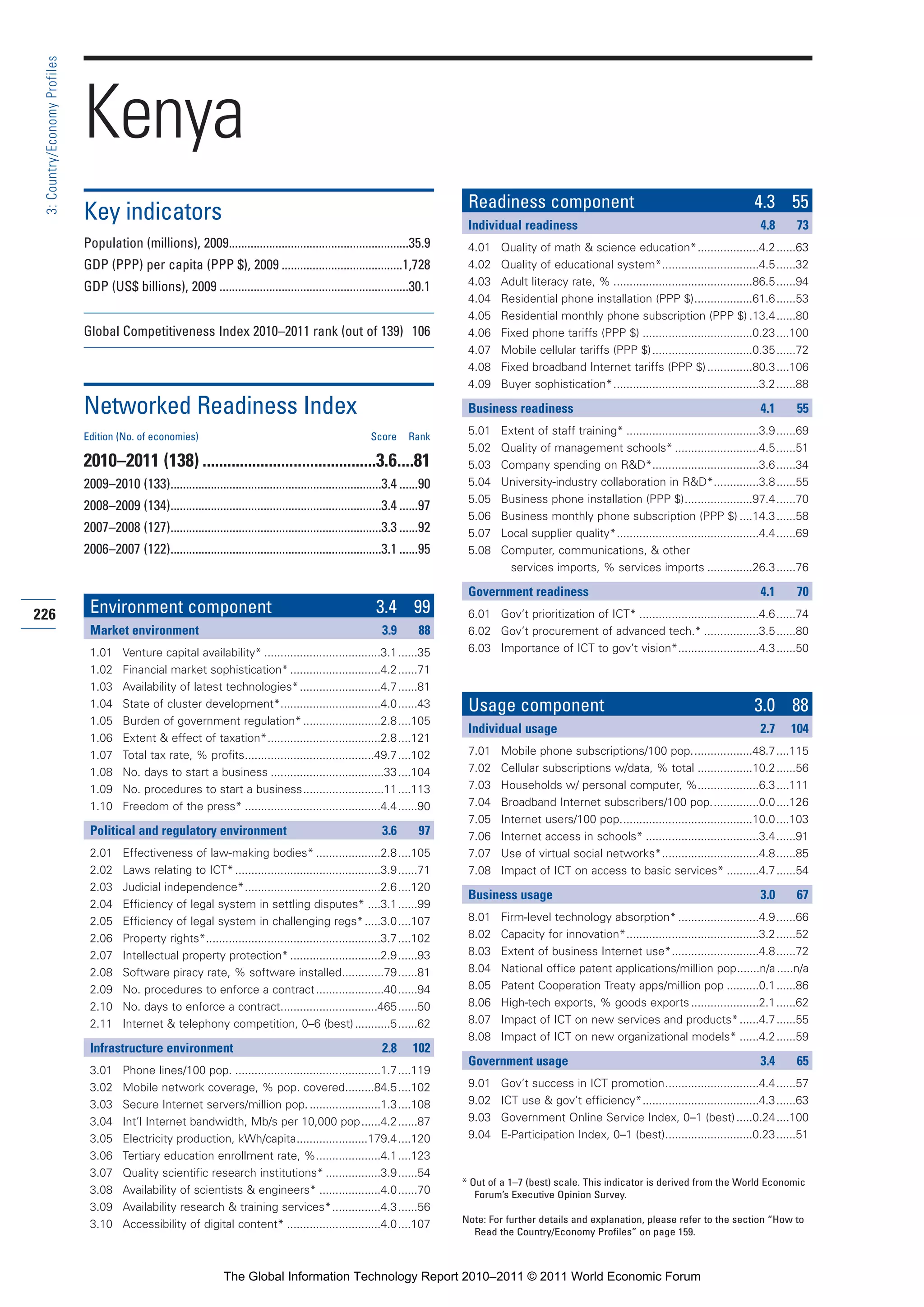
                          analyzes the cases of Kenya and South Africa: although         Innovation-Driven Economy: The Role of the ICT
                          Kenya is the financial hub of East and Central Africa, at      Sector” by Vilma Villalobos (Microsoft) and Ricardo
                          least a third of its population remains beyond banking’s       Monge-González (Presidential Council on
                          reach. Some do not qualify for accounts. Others—the            Competitiveness and Innovation of Costa Rica), pro-
                          literacy-challenged, for example—rarely want them.             vides an overview of the ICT sector in Costa Rica, its
                          Even in South Africa—a middle-income nation with               progress over time, and its contribution to the national
                          a strong financial system—only 60 percent of adults use        economy. It also explores ICT’s role in the national
                          a bank. But a mobile phone is a different story. Nearly        strategy to transform the country into an innovation-
                          95 percent of all South African adults own a mobile            driven economy, the success factors for its rapid and
                          phone, a group that includes many who are unbanked.            sustainable growth, the current challenges, and the
                          The author believes mobile phones have the potential           agenda addressed by the Presidential Council on
                          to democratize access to financial services. In the devel-     Competitiveness and Innovation. Instrumental to the
                          oping world, no instrument is of greater value. Over           sector’s development were ICT-friendly public policies
                          1.5 billion mobile phones are currently in use across the      implemented since the 1980s, including investment in
                          emerging world—a number likely to reach 2.5 billion            human capital to create a pool of healthy and qualified
                          by 2015, as developing nations drive over 80 percent of        laborers, foreign trade liberalization, export promotion


                                                 The Global Information Technology Report 2010–2011 © 2011 World Economic Forum
Part 1_r2_PART 1 3/29/11 6:44 AM Page xv


                                                                                                                                              Executive Summary
                and FDI attraction, and early pioneer measures to facili-      more public services online, but as a transformation tool
                tate the population’s access to informatics (including the     to improve the relationship among government, business,
                creation of the National Program of Educational                and citizens—it had to develop specific human resources
                Informatics and reduction of internal taxes and trade          policies and design innovative ways to attract and retain
                barriers on technological products). All these, together       talent within its own team. Today, the experience gath-
                with the country’s political stability, favorable business     ered by Saudi Arabia in this area can be a source of inspi-
                climate, and central geographical location, were crucial       ration not only for other parts of the government, but
                elements in attracting FDI, with consequent important          also for other countries around the world. Combining
                knowledge spillovers and technology transfer to the            this experience with the latest advances made in other
                domestic sector. Going forward, the challenge is to            contexts (in the areas of curricula, global knowledge
                adopt a structured and coordinated strategy across             economy skills, and skills for innovation, for example)
                government bodies to address pending shortcomings.             represents yet another potential source for huge benefits
                The chapter concludes by examining the key role of the         to Saudi economy and society.
                newly created Presidential Council on Competitiveness
                and Innovation in this regard, together with its strategy      The broadband strategy in the United States
                and the progress it has realized since its creation in 2010.   In early 2009, the US Congress directed the US Federal
                                                                               Communications Commission (FCC) to develop a plan
                YESSER and effective e-government in Saudi Arabia              to ensure that every American has “access to broadband
                In Chapter 2.2, “Growing Talent for the Knowledge              capability.” That planning exercise resulted in Connecting
                Economy: The Experience of Saudi Arabia,” authors              America: The National Broadband Plan (NBP) issued in
                Mustafa M. Khan and Mark O. Badger (both at YESSER)            March 2010. The NBP highlighted in particular the
                and Bruno Lanvin (INSEAD, eLab) relate Saudi Arabia’s          idea that broadband is not an end, but rather a tool
                journey into the e-government race and toward the cre-         for furthering national objectives, including improving
                ation of an information and knowledge-based society.           education, healthcare, energy efficiency, public safety, and
                This journey involved building advanced infrastructures,       the delivery of public services. As such, four main ways
                deploying effective governance mechanisms, and incor-          are identified by which the government can influence
                porating the practices of continuous improvement by            the development of broadband, as follows: (1) ensuring         xv
                addressing the human factor—often the most challeng-           robust competition; (2) efficiently allocating assets that
                ing part of any e-government transformation—into its           the public sector controls or influences (such as spectrum
                actions and future direction. The authors focus notably        and public infrastructure); (3) encouraging the deploy-
                on YESSER, the National e-Government Program,                  ment, adoption, and use of broadband in areas where
                launched to provide better government services and             the market alone is not enough (such as those where
                enhance efficiency and effectiveness in the public sec-        the cost of deployment is too high to earn a return on
                tor, as well as to build the basis for a Saudi information     private capital or where households cannot afford to
                and knowledge-based society. Simultaneously, a large           connect); and (4) providing firms and consumers with
                number of regulatory and policy actions aimed at foster-       incentives to extract value from the use of broadband,
                ing competitiveness and establishing a business environ-       particularly in sectors such as education and healthcare,
                ment supportive to ICT were adopted. In its first five         among others.
                years of operation, YESSER achieved progress on two                 In Chapter 2.3, “A National Plan for Broadband in
                important fronts: implementing robust shared services          the United States,” authors Jonathan B. Baker and Paul
                that ensure secure government information flows and            de Sa (both at the FCC) provide a comprehensive
                the delivery of secure online services, and providing          overview of some of the NBP’s most important themes.
                organizational infrastructure to help government               Among these are the need to ensure robust competition
                agencies successfully develop and implement their e-           and an efficient allocation of spectrum and infrastructure
                Government Transformation Plans—the transformation             controlled by the public sector, as well as the need to
                of traditional services to online ones, with the conse-        encourage broadband deployment, adoption, and usage
                quent benefits in terms of convenience, timeliness, and        and to use broadband to further national purposes (i.e.,
                lower costs. The Saudi National e-Government                   consumer welfare, civic participation, public safety and
                Program is entering its second five-year phase this year,      homeland security, community development, healthcare
                with a renewed focus on creating a skilled workforce.          delivery, energy independence and efficiency, education,
                The development of Saudi human capital is at the               worker training, private-sector investment, entrepreneur-
                center of the next five-year plan as the country contin-       ial activity, job creation, and economic growth, among
                ues to advance toward the next generation of a technol-        other areas). The authors highlight that, one year after
                ogy-enabled government and knowledge society. The              the NBP’s release, most of its recommendations are in
                authors believe that the role and experience of YESSER         the process of being implemented, although it is evolv-
                has been remarkable. By considering and promoting              ing continuously and so reflecting new realities and
                e-government—not just as a set of measures to bring            leveraging unforeseen opportunities. They, together with


                                   The Global Information Technology Report 2010–2011 © 2011 World Economic Forum
Part 1_r2_PART 1 3/29/11 6:44 AM Page xvi


      Executive Summary

                          the authors of the NBP, believe full implementation           Parts 3 and 4: Country/Economy Profiles and Data
                          will need a long-term commitment to measure progress          Presentation
                          and adjust programs and policies in order to improve          Parts 3 and 4 feature comprehensive profiles for each
                          performance.                                                  of the 138 economies covered this year in the Report
                                                                                        and data tables for each of the 71 variables composing
                          The challenge of high speed in the European Union             the NRI, with global rankings. Each part begins with
                          In Chapter 2.4, “Broadband Developments in Europe:            a description of how to interpret the data provided.
                          The Challenge of High Speed,” Lucilla Sioli (European              Technical notes and sources, included at the end of
                          Commission) describes broadband developments under-           Part 4, provide additional insight and information on the
                          gone by the European Union over the recent years.             definitions and sources of the specific quantitative non-
                          Indeed, the region has experienced extraordinary              Survey data variables included in the NRI computation
                          growth in broadband roll-out and uptake in the last           this year.
                          decade. More than 60 percent of households and 90
                          percent of enterprises are connected to broadband,
                          enjoying the Internet experience. The European broad-
                          band market has developed into the largest in the world,
                          with 128.3 million lines. Some European Member States
                          also currently top the ranks in terms of penetration rates
                          worldwide. The fixed broadband penetration rate in the
                          European Union as a whole was 25.6 percent in July
                          2010 and continued to grow. Despite these good results,
                          fostered also by a favorable regulatory environment,
                          recently up-take has been slow and deployment of next-
                          generation access is only beginning. The Digital Agenda
                          for Europe (the European strategy for a flourishing digital
                          economy) as well as Europe 2020 (the European growth
    xvi                   strategy for the next decade) set ambitious high-speed
                          targets to make a quantum leap to equip the European
                          Union with the 21st-century infrastructure it needs,
                          calling for the development of a comprehensive policy
                          based on a mix of technologies, focusing on two things:
                          the achievement of universal broadband coverage (with
                          Internet speeds gradually increasing to 30 Mb/s and
                          above) and fostering the deployment and up-take of
                          next-generation access networks, allowing connections
                          above 100 Mb/s by 2020. This chapter intends to frame
                          the current political debate and broadband policy in
                          the European Union in its own context, which is often
                          different from those of other economies. In doing so,
                          the author highlights the challenges going forward, such
                          as migrating toward higher speeds; the uncertainty of
                          business models, which is currently keeping investment
                          back; and some new practices that are being tested in
                          a number of countries. The author also analyzes the
                          ongoing political debate and notes that in 2010 the EU
                          Commission published a broadband Communication
                          that laid out a common framework for actions at EU
                          and Member State levels. These included the strengthen-
                          ing of the regulatory framework through a Next
                          Generation Access recommendation, the proposal of
                          a European Spectrum Policy Programme, the rationali-
                          zation of the funding instruments, and the definition
                          of national targets through comprehensive broadband
                          plans. Developments will be monitored through the
                          Digital Agenda Scoreboard, to be published in June 2011.


                                                 The Global Information Technology Report 2010–2011 © 2011 World Economic Forum
Part 1_r2_PART 1 3/29/11 6:44 AM Page xvii


                 The Networked Readiness
                 Index Rankings


                                   The Global Information Technology Report 2010–2011 © 2011 World Economic Forum
Part 1_r2_PART 1 3/29/11 6:44 AM Page xviii


                                   The Global Information Technology Report 2010–2011 © 2011 World Economic Forum
Part 1_r2_PART 1 3/29/11 6:44 AM Page xix


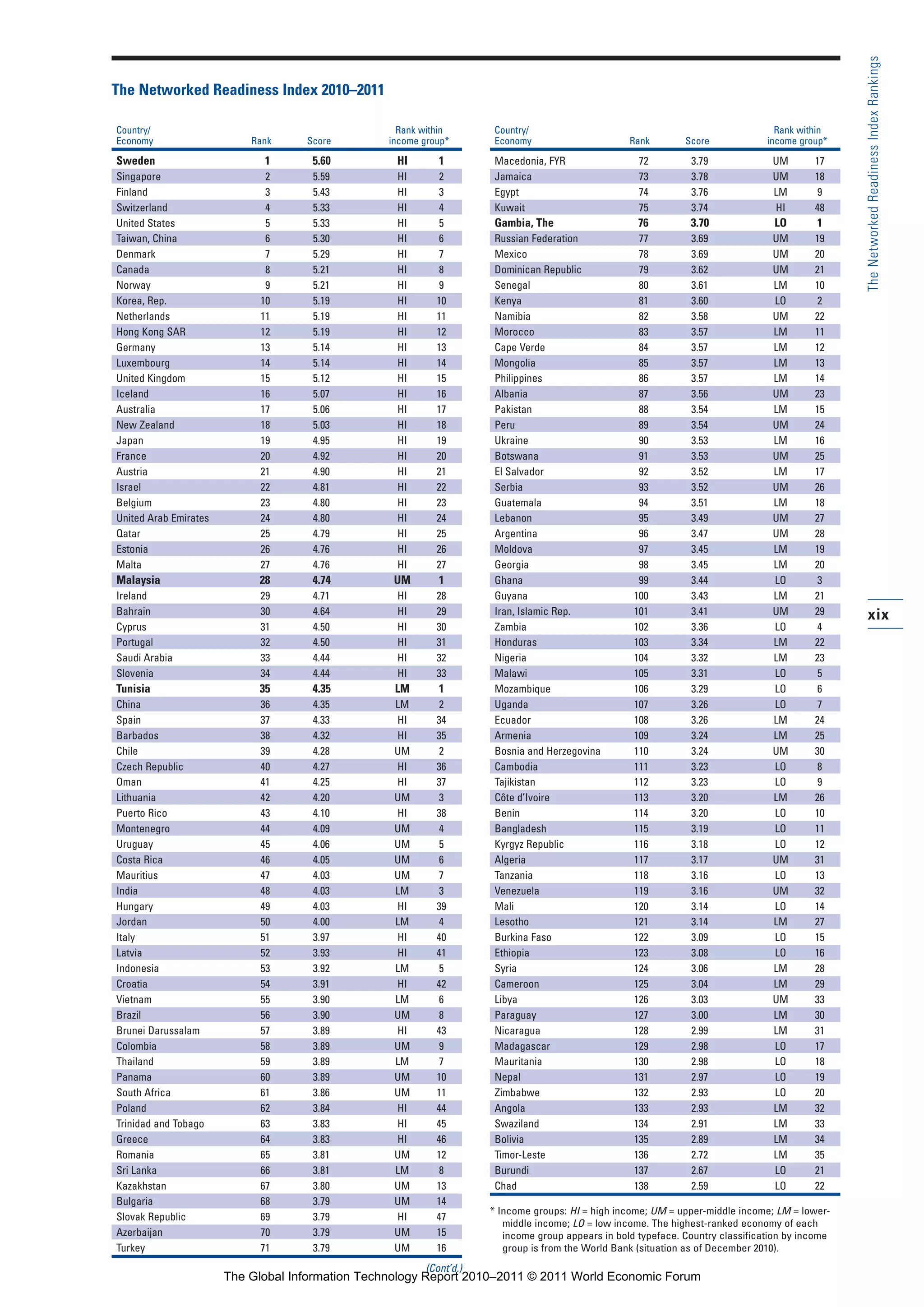
                                                                                                                                                                   The Networked Readiness Index Rankings
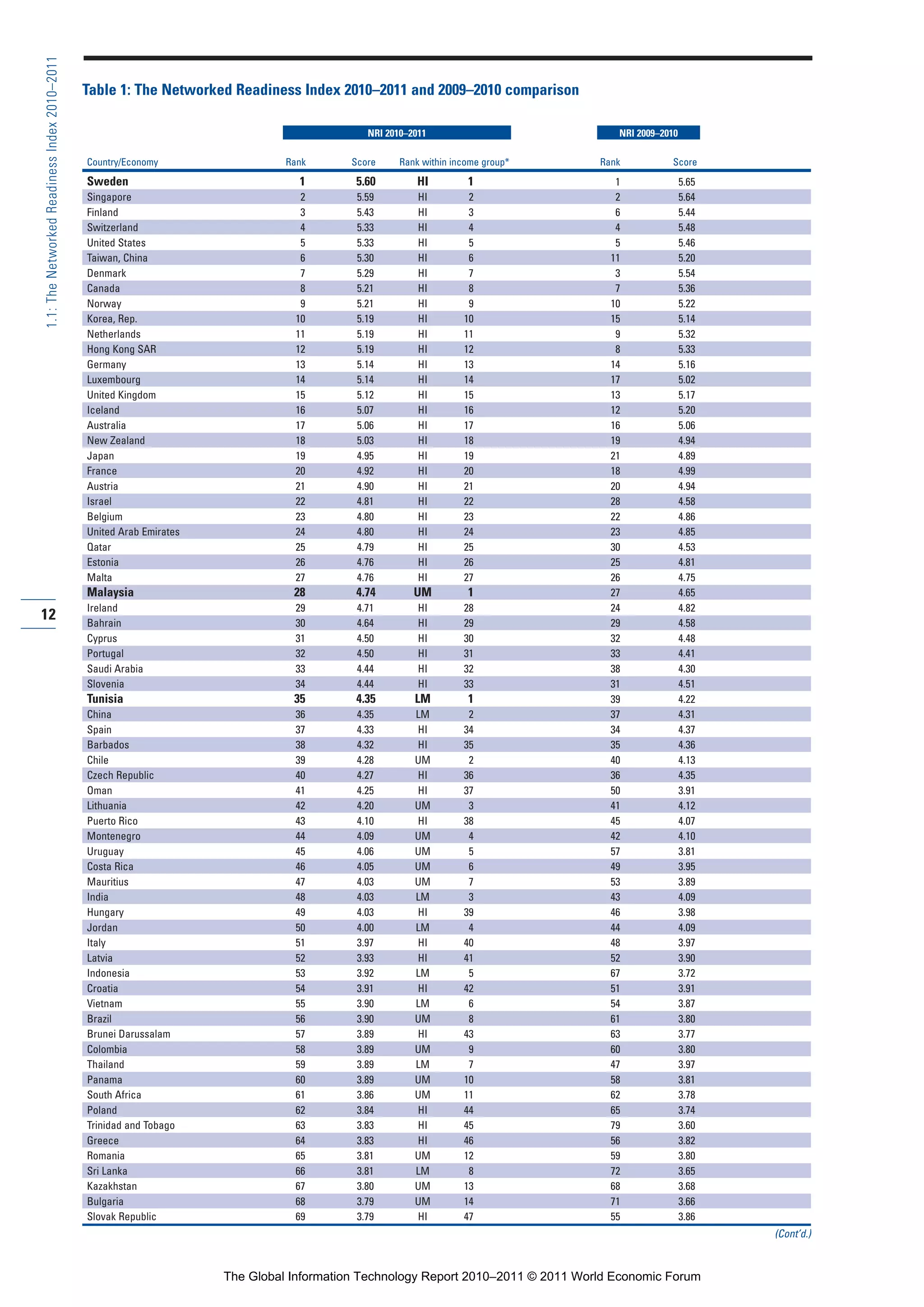
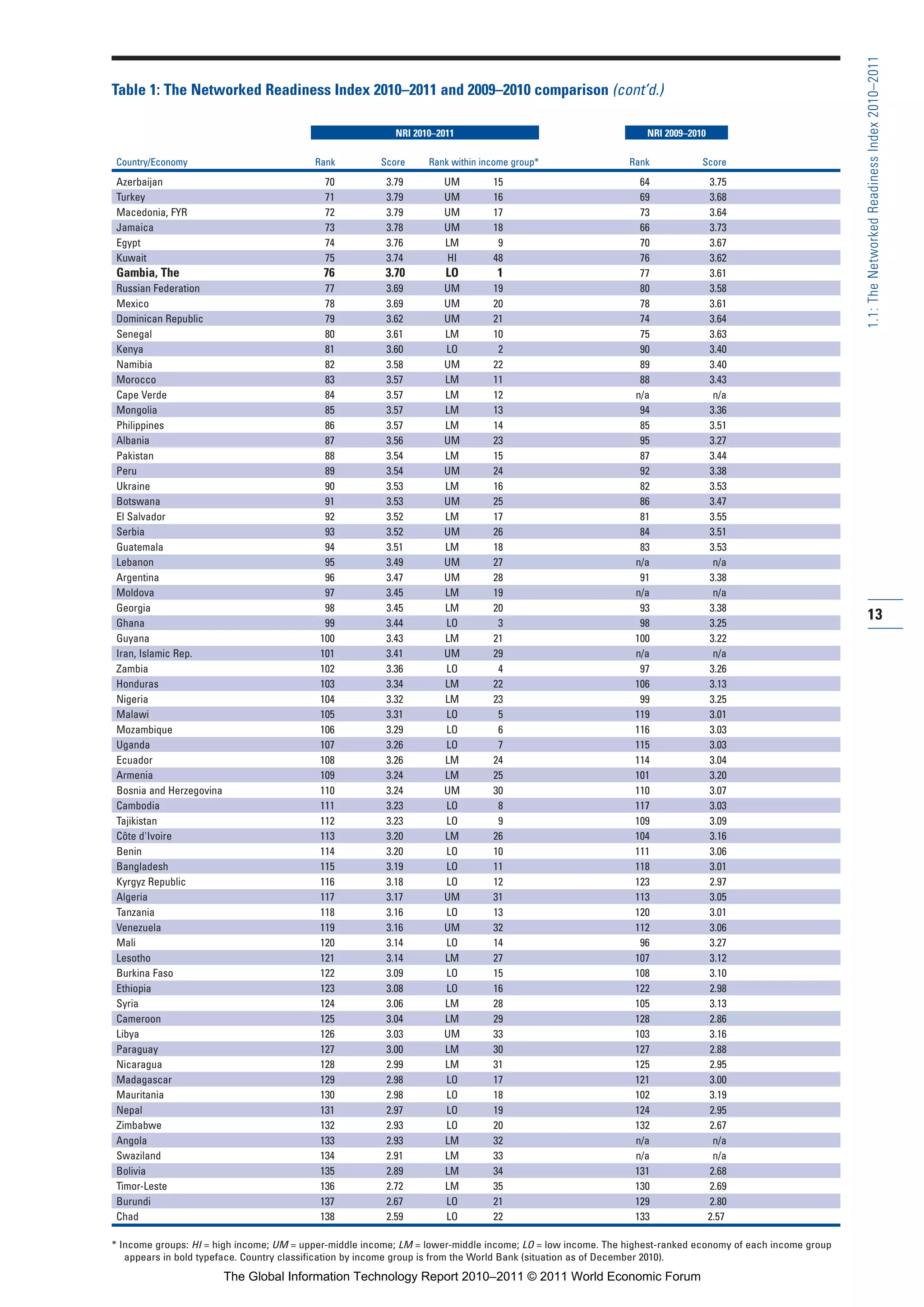
                 The Networked Readiness Index 2010–2011

                 Country/                                            Rank within       Country/                                                     Rank within
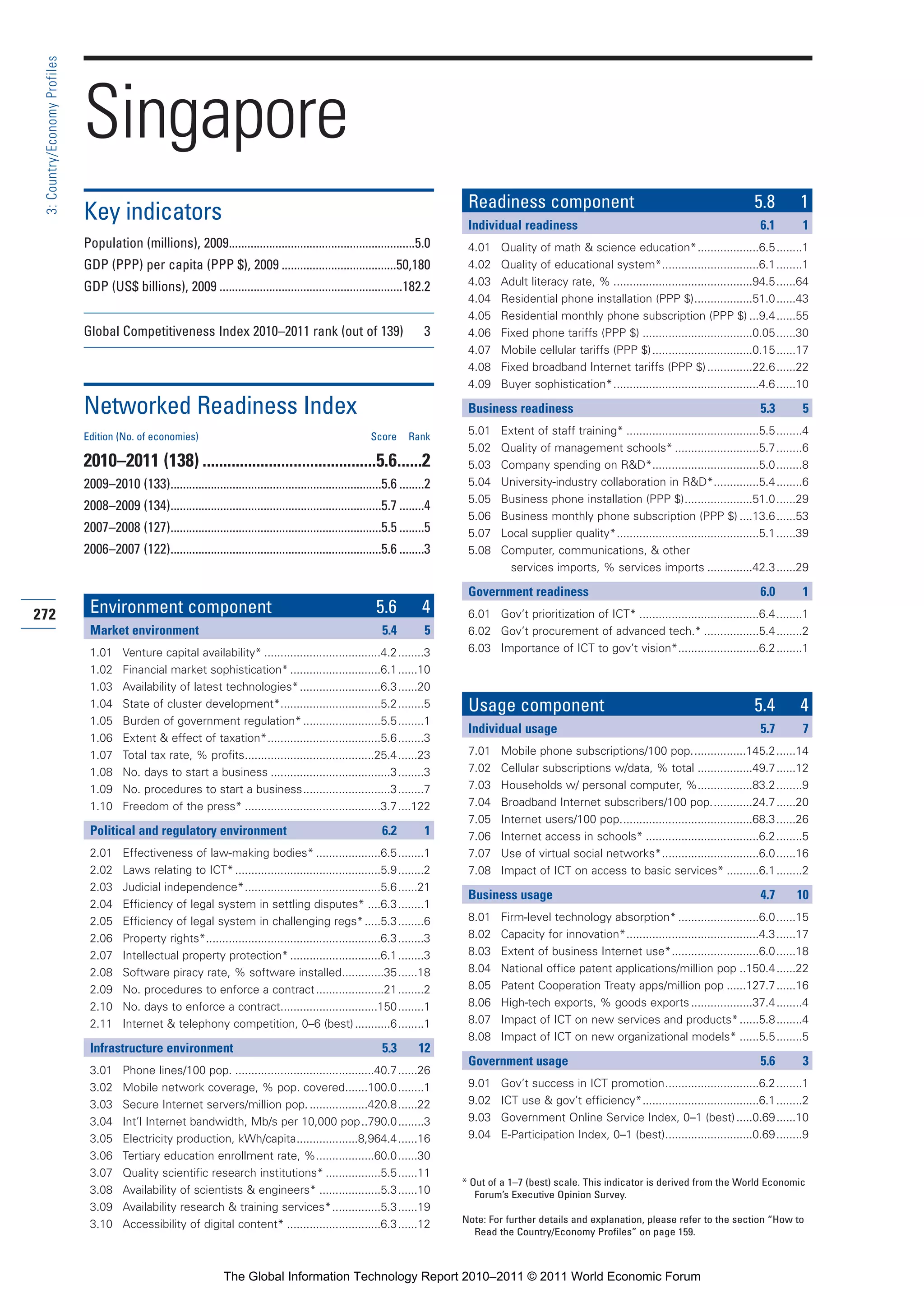
                 Economy                    Rank     Score         income group*       Economy                      Rank        Score             income group*

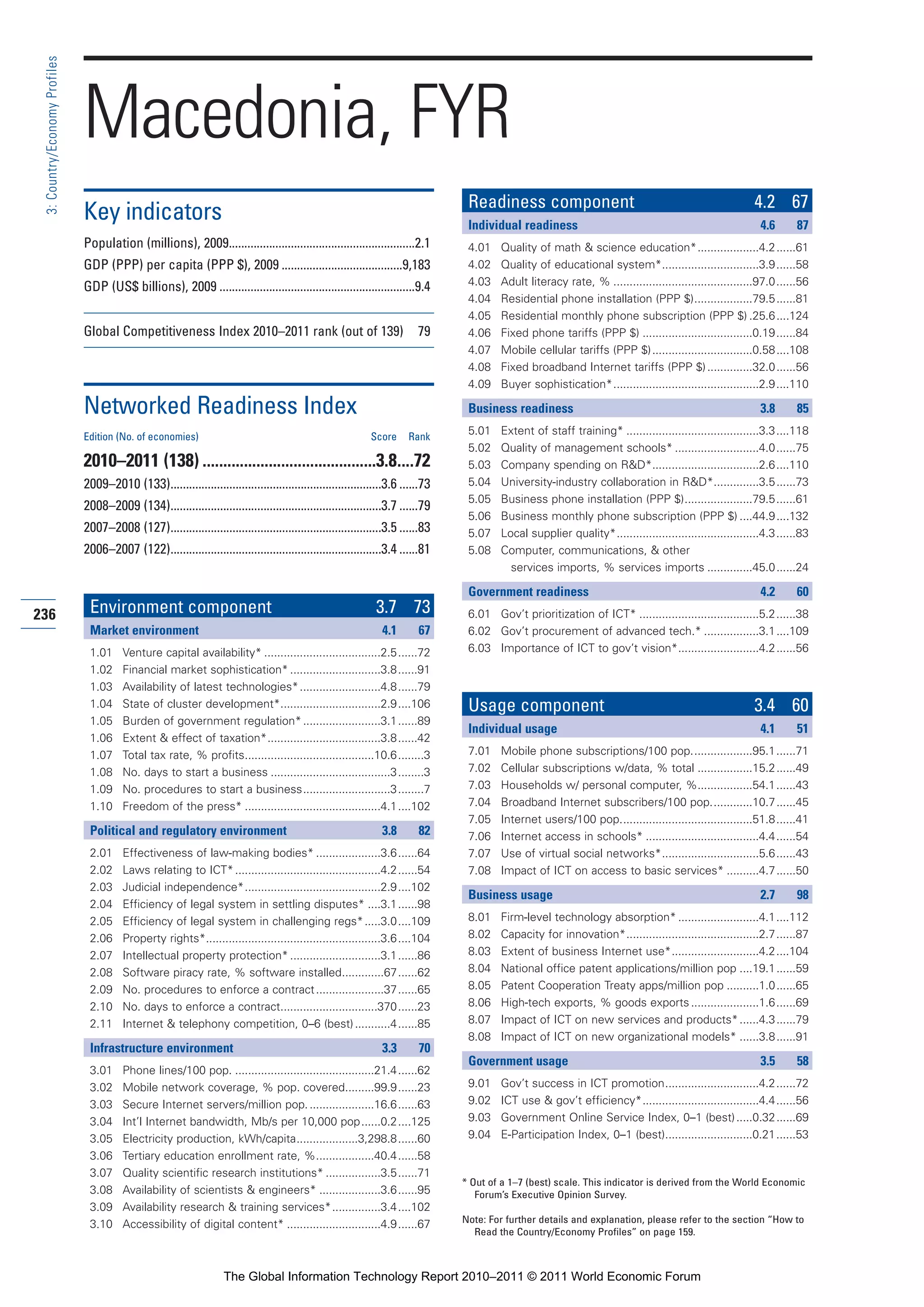
                 Sweden                       1       5.60          HI       1         Macedonia, FYR                 72         3.79              UM       17
                 Singapore                     2      5.59          HI        2        Jamaica                        73         3.78              UM       18
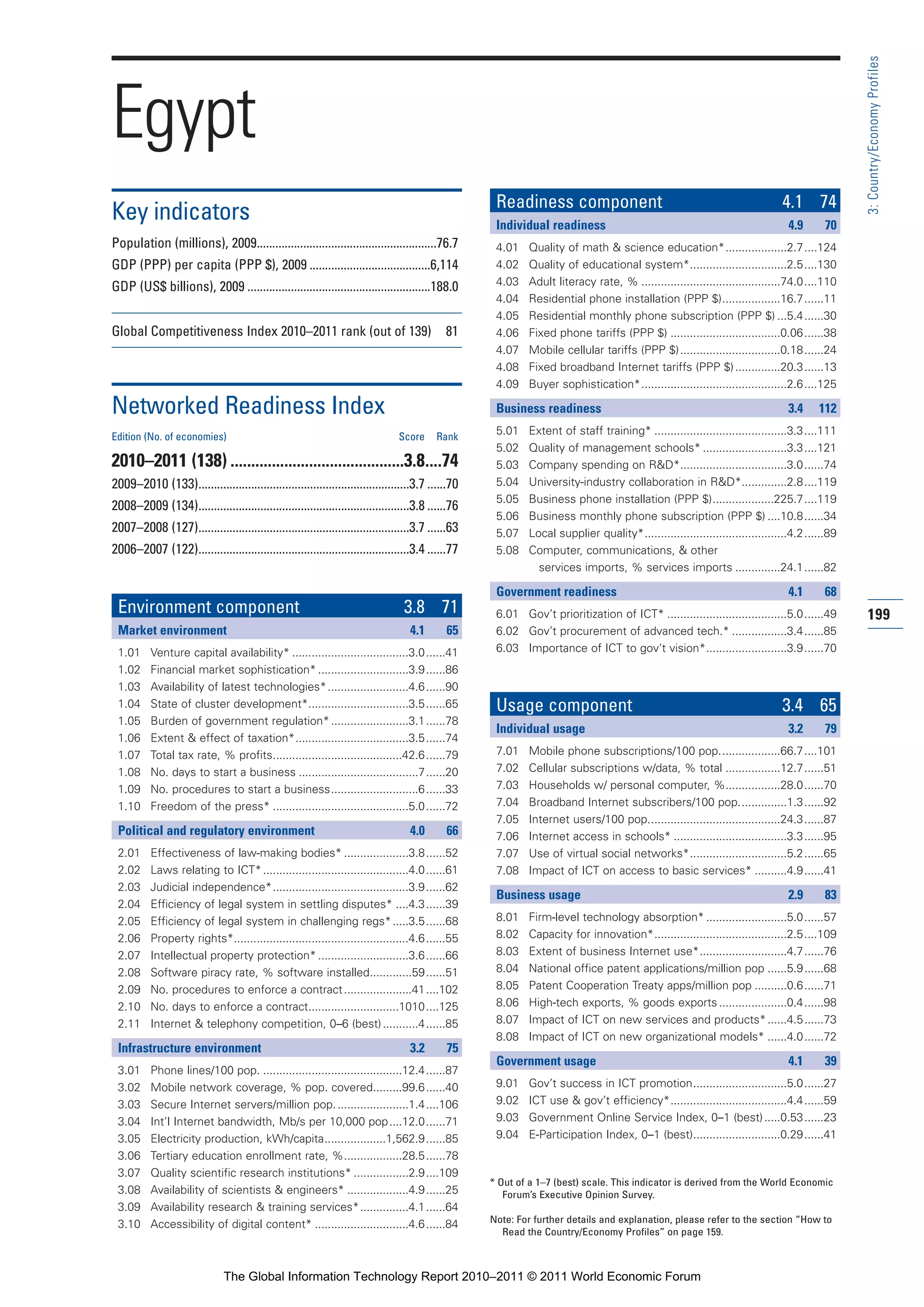
                 Finland                       3      5.43          HI        3        Egypt                          74         3.76              LM       9
                 Switzerland                   4      5.33          HI        4        Kuwait                         75         3.74              HI       48
                 United States                 5      5.33          HI        5        Gambia, The                    76         3.70              LO        1
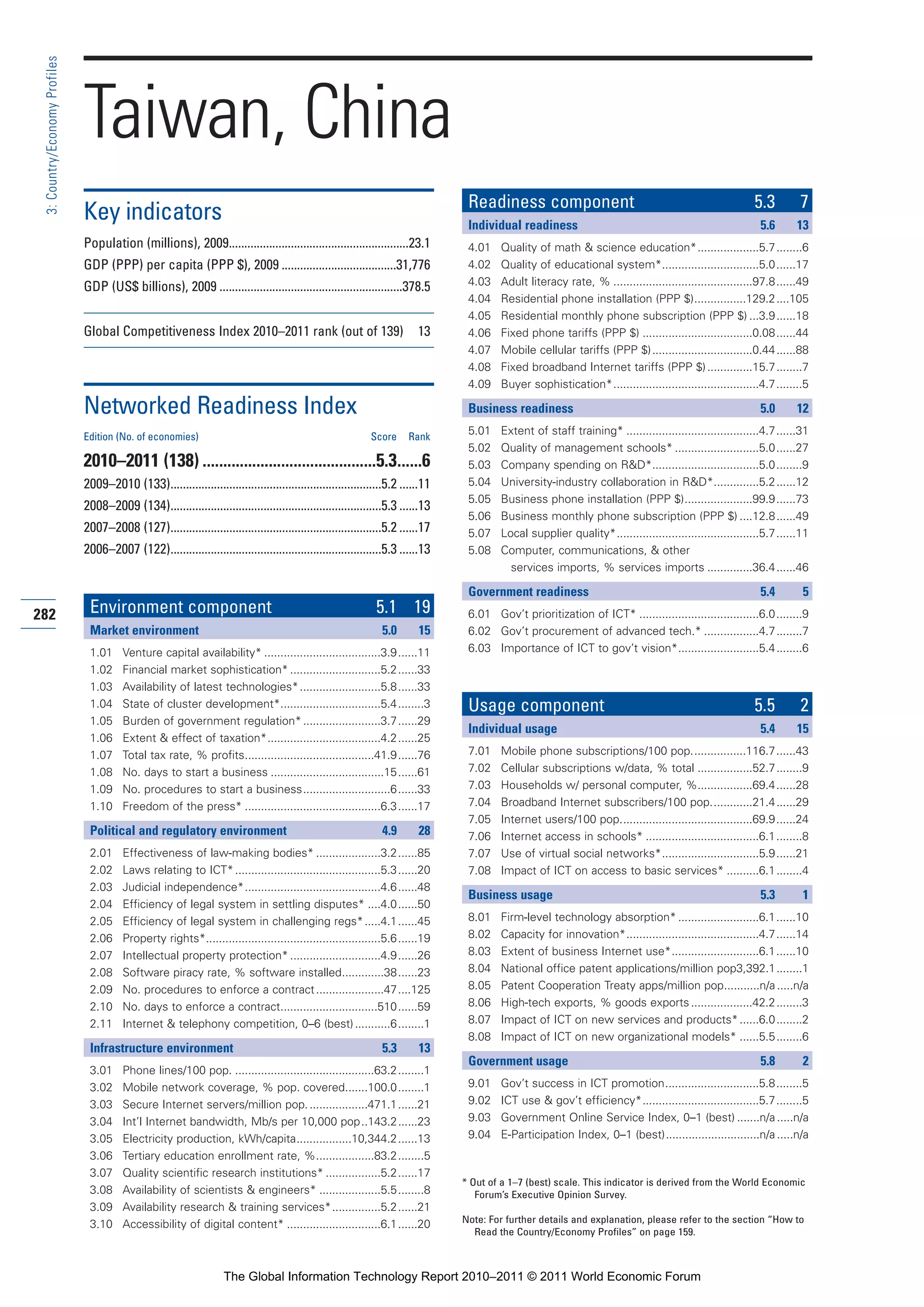
                 Taiwan, China                 6      5.30          HI        6        Russian Federation             77         3.69              UM       19
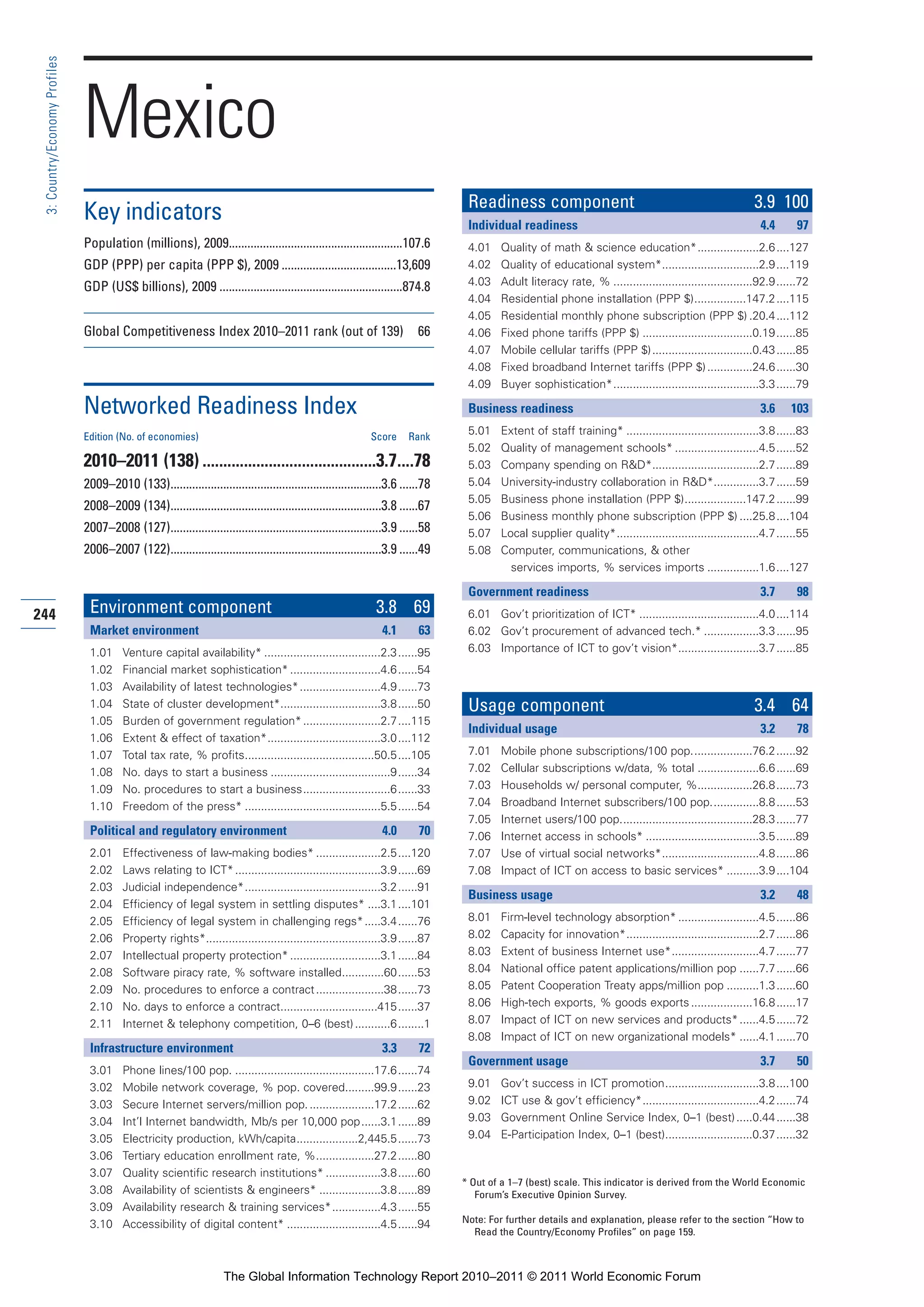
                 Denmark                       7      5.29          HI        7        Mexico                         78         3.69              UM       20
                 Canada                        8      5.21          HI        8        Dominican Republic             79         3.62              UM       21
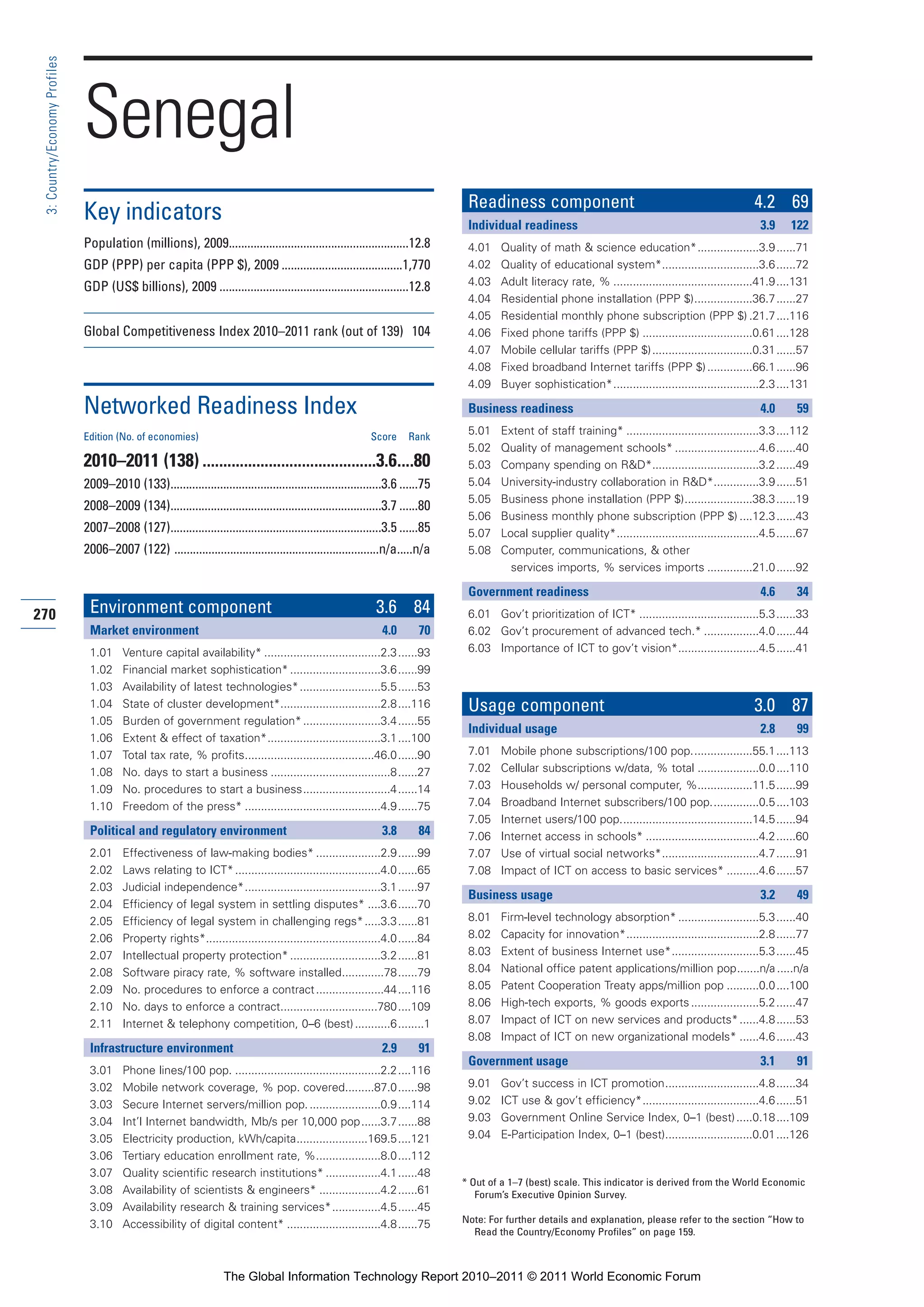
                 Norway                        9      5.21          HI        9        Senegal                        80         3.61              LM       10
                 Korea, Rep.                  10      5.19          HI       10        Kenya                          81         3.60              LO        2
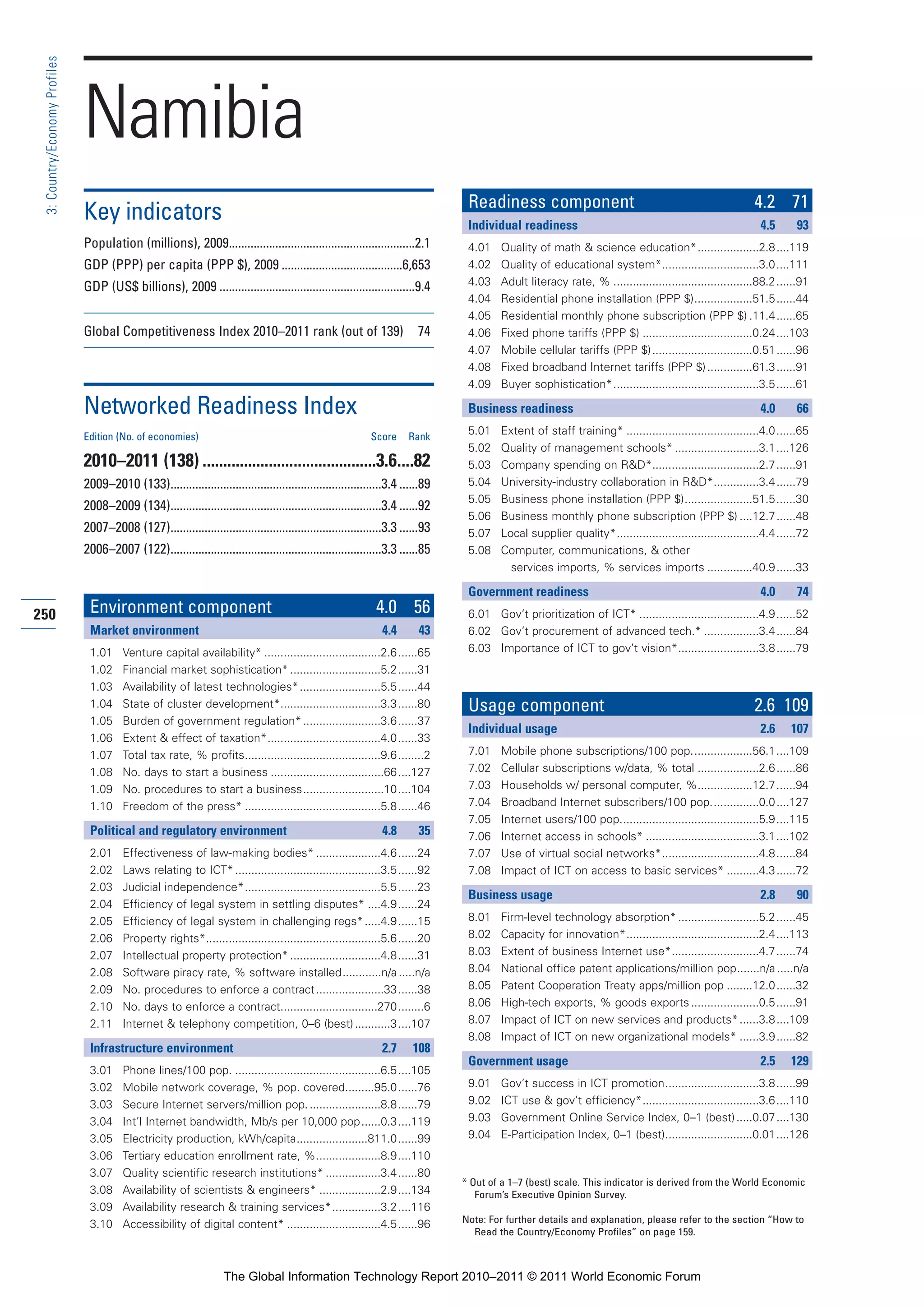
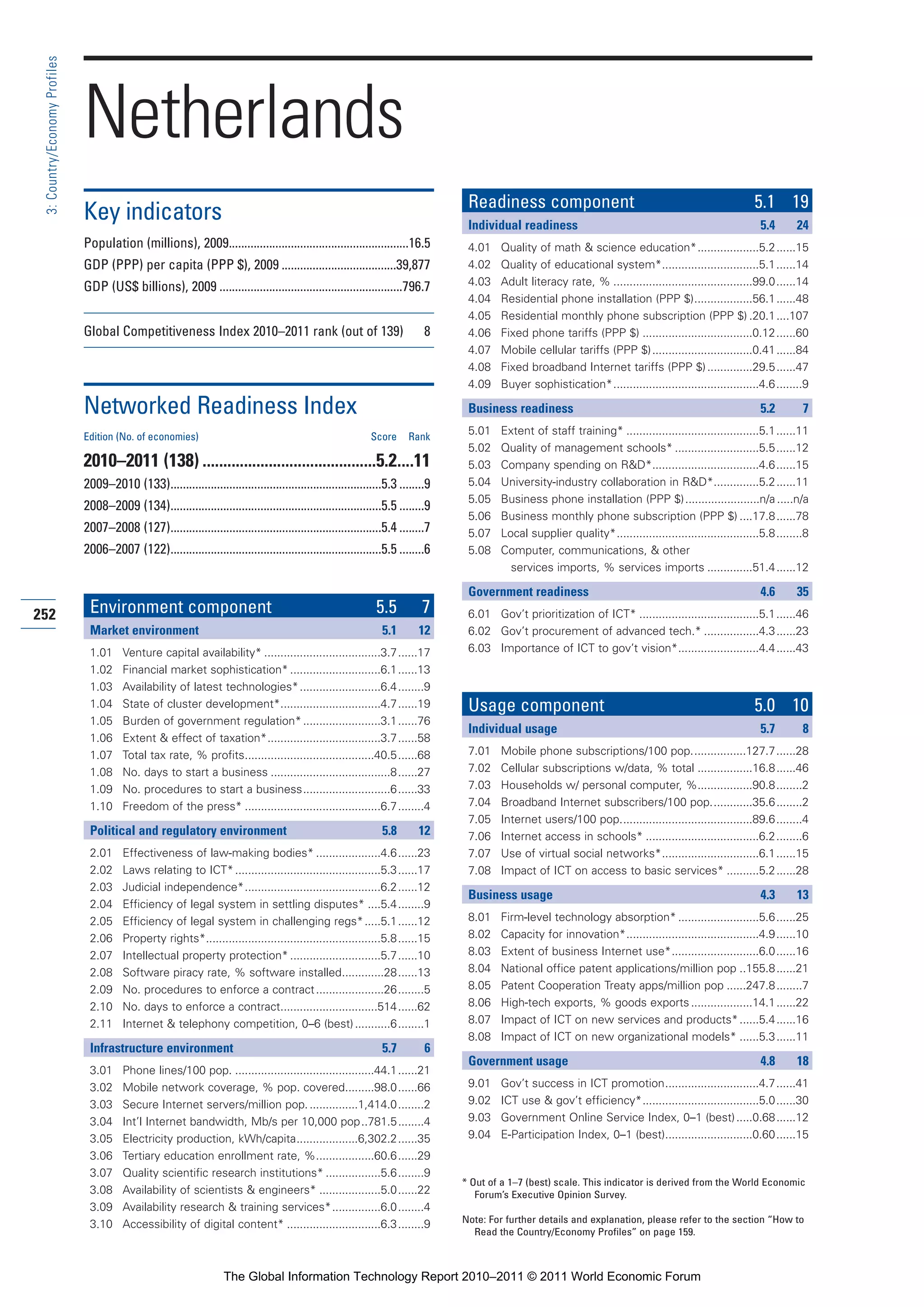
                 Netherlands                  11      5.19          HI       11        Namibia                        82         3.58              UM       22
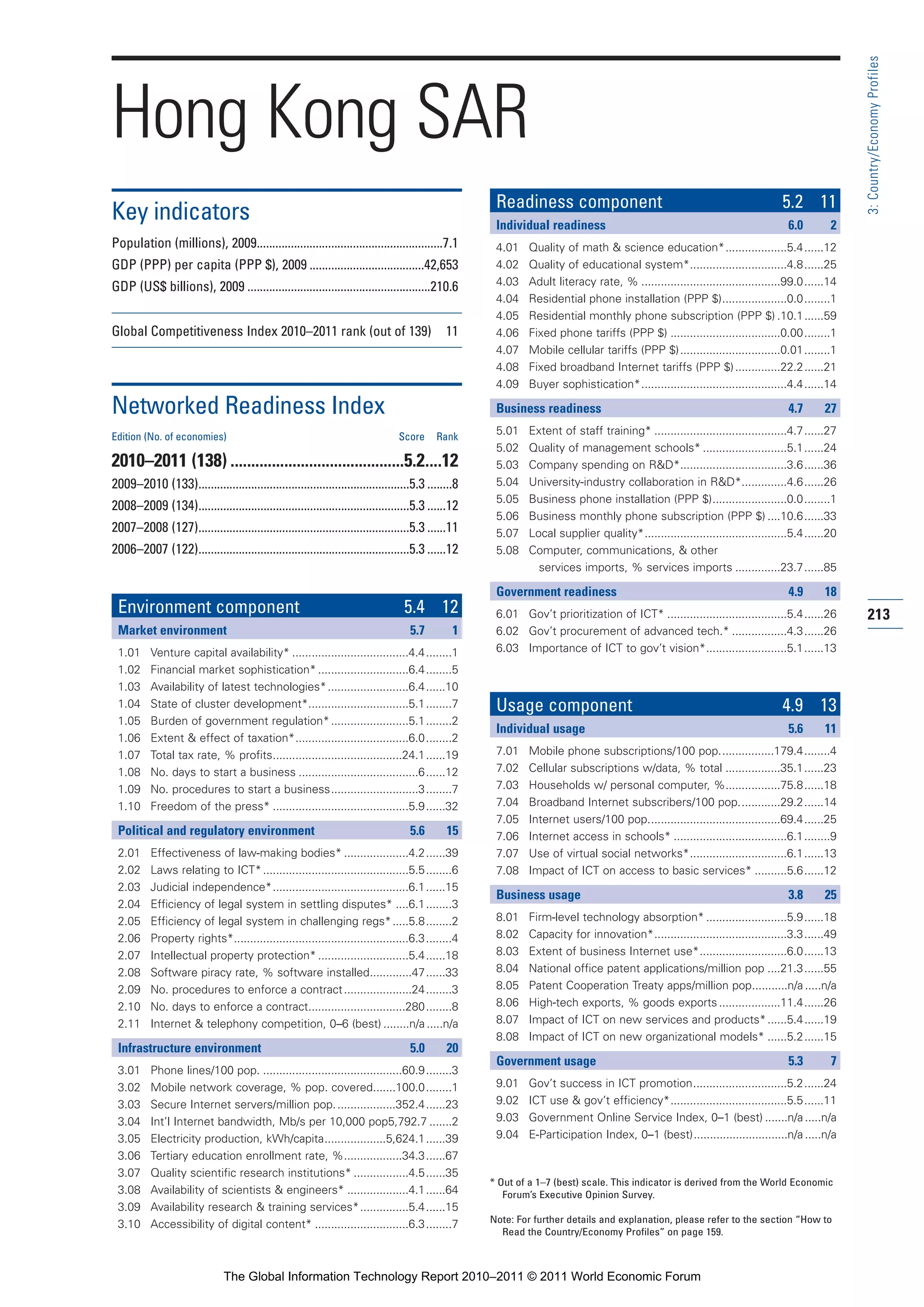
                 Hong Kong SAR                12      5.19          HI       12        Morocco                        83         3.57              LM       11
                 Germany                      13      5.14          HI       13        Cape Verde                     84         3.57              LM       12
                 Luxembourg                   14      5.14          HI       14        Mongolia                       85         3.57              LM       13
                 United Kingdom               15      5.12          HI       15        Philippines                    86         3.57              LM       14
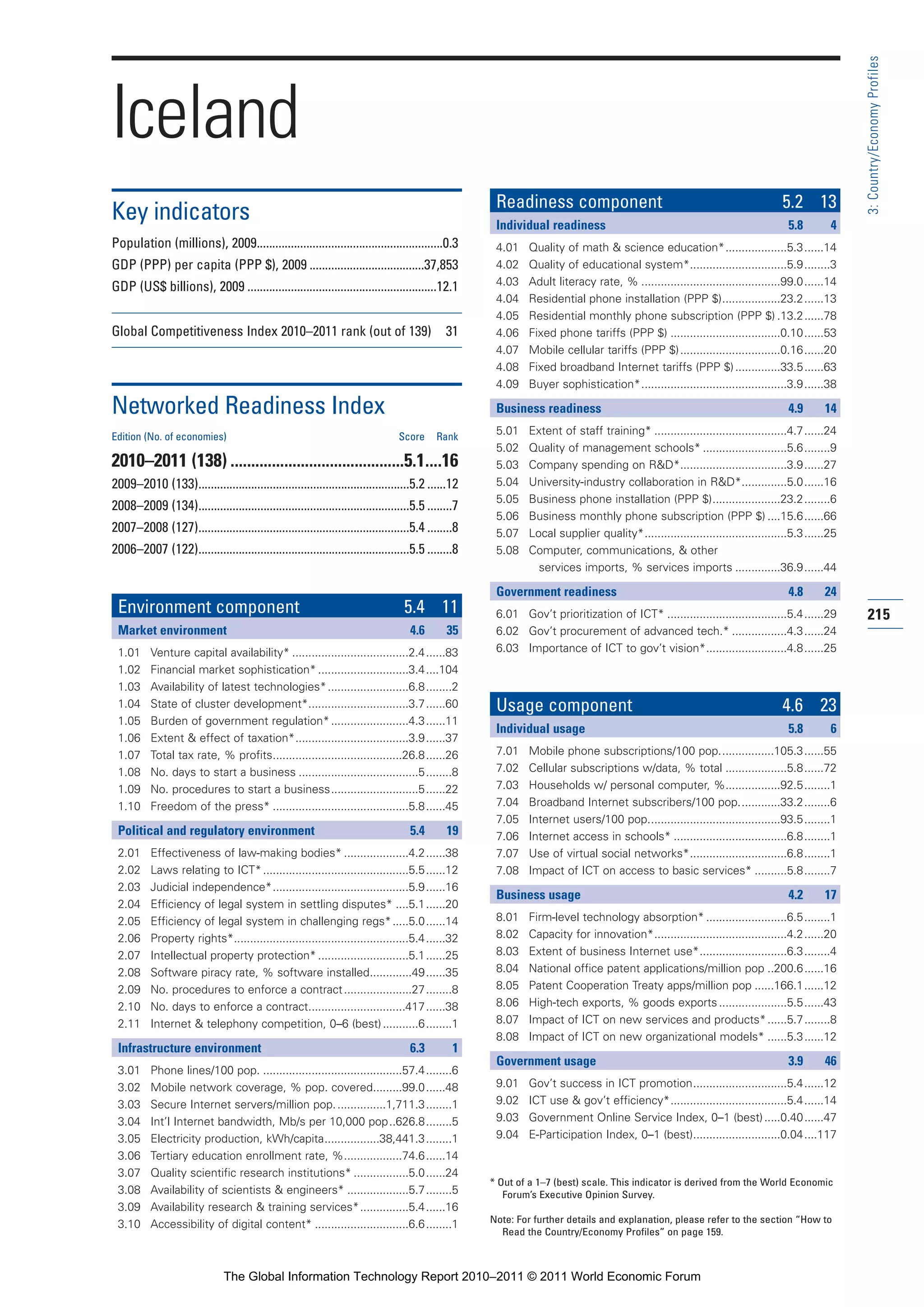
                 Iceland                      16      5.07          HI       16        Albania                        87         3.56              UM       23
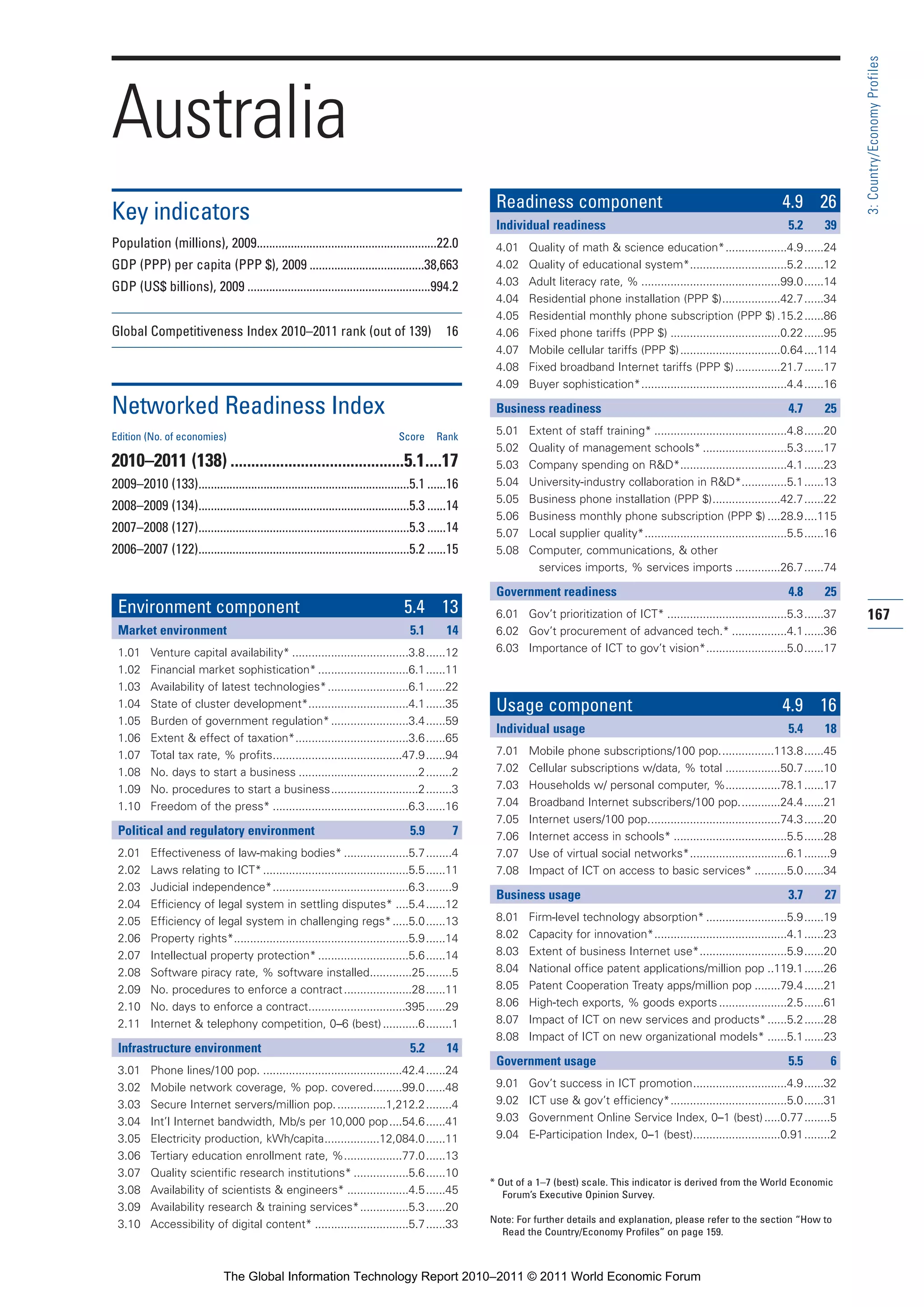
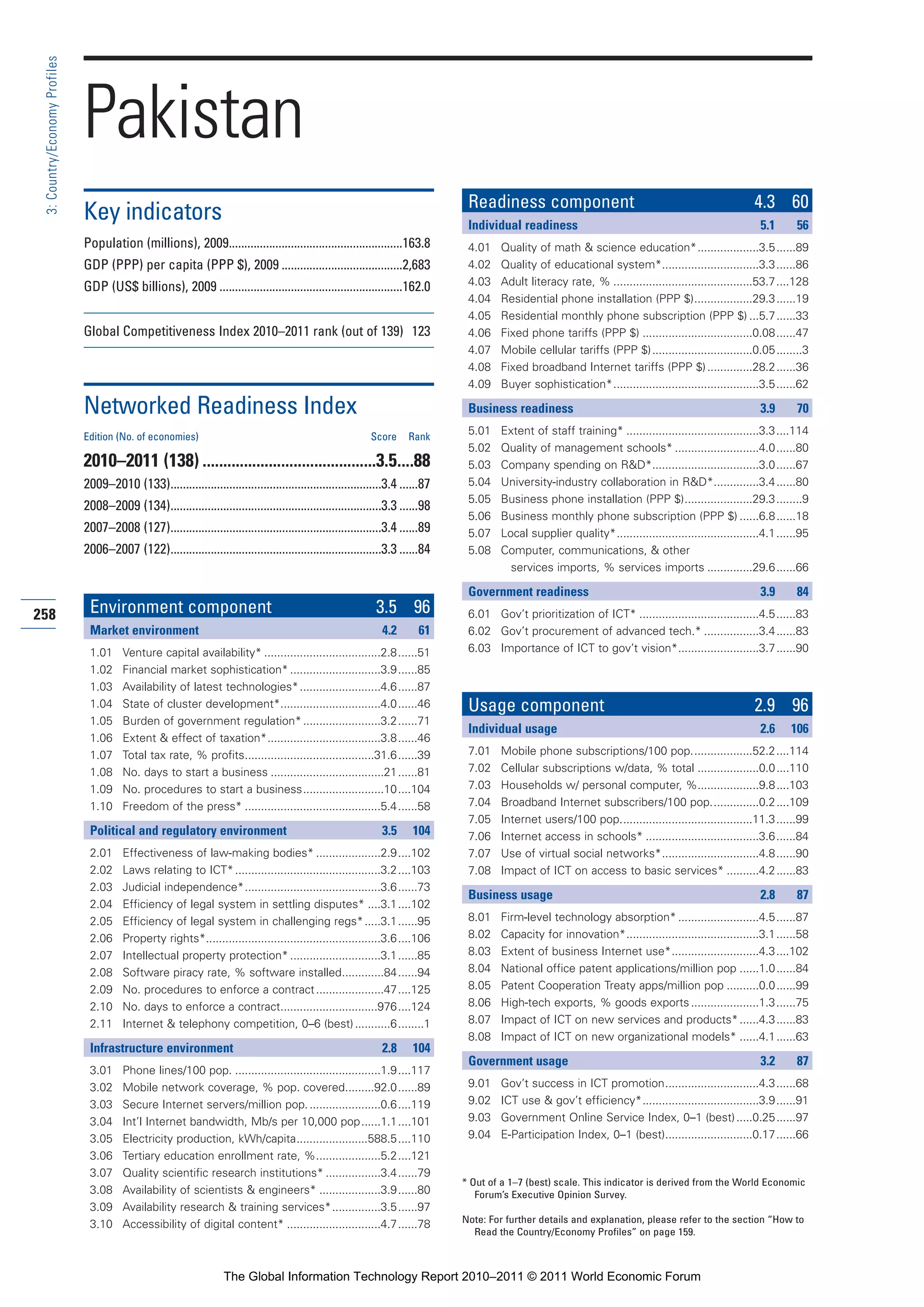
                 Australia                    17      5.06          HI       17        Pakistan                       88         3.54              LM       15
                 New Zealand                  18      5.03          HI       18        Peru                           89         3.54              UM       24
                 Japan                        19      4.95          HI       19        Ukraine                        90         3.53              LM       16
                 France                       20      4.92          HI       20        Botswana                       91         3.53              UM       25
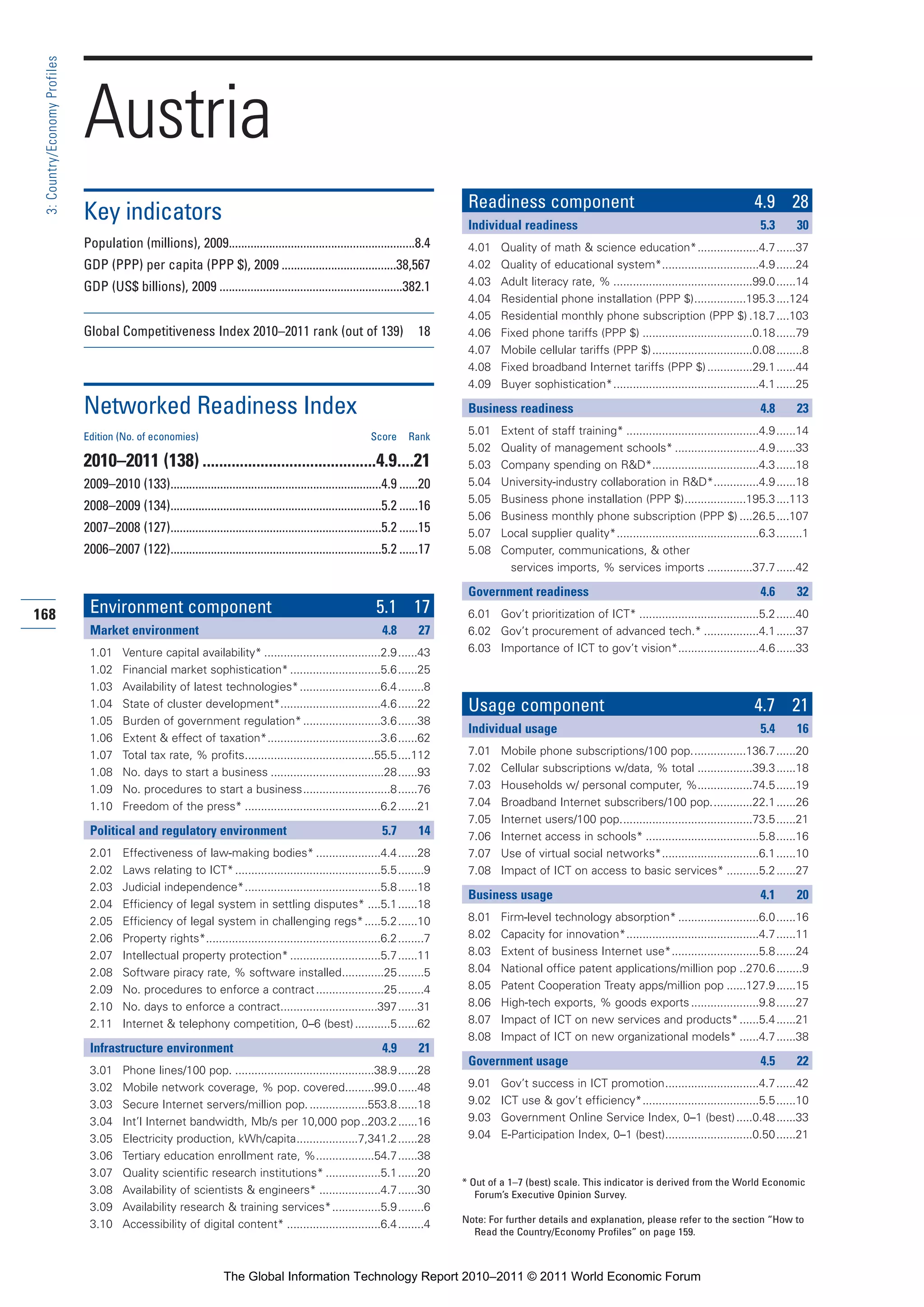
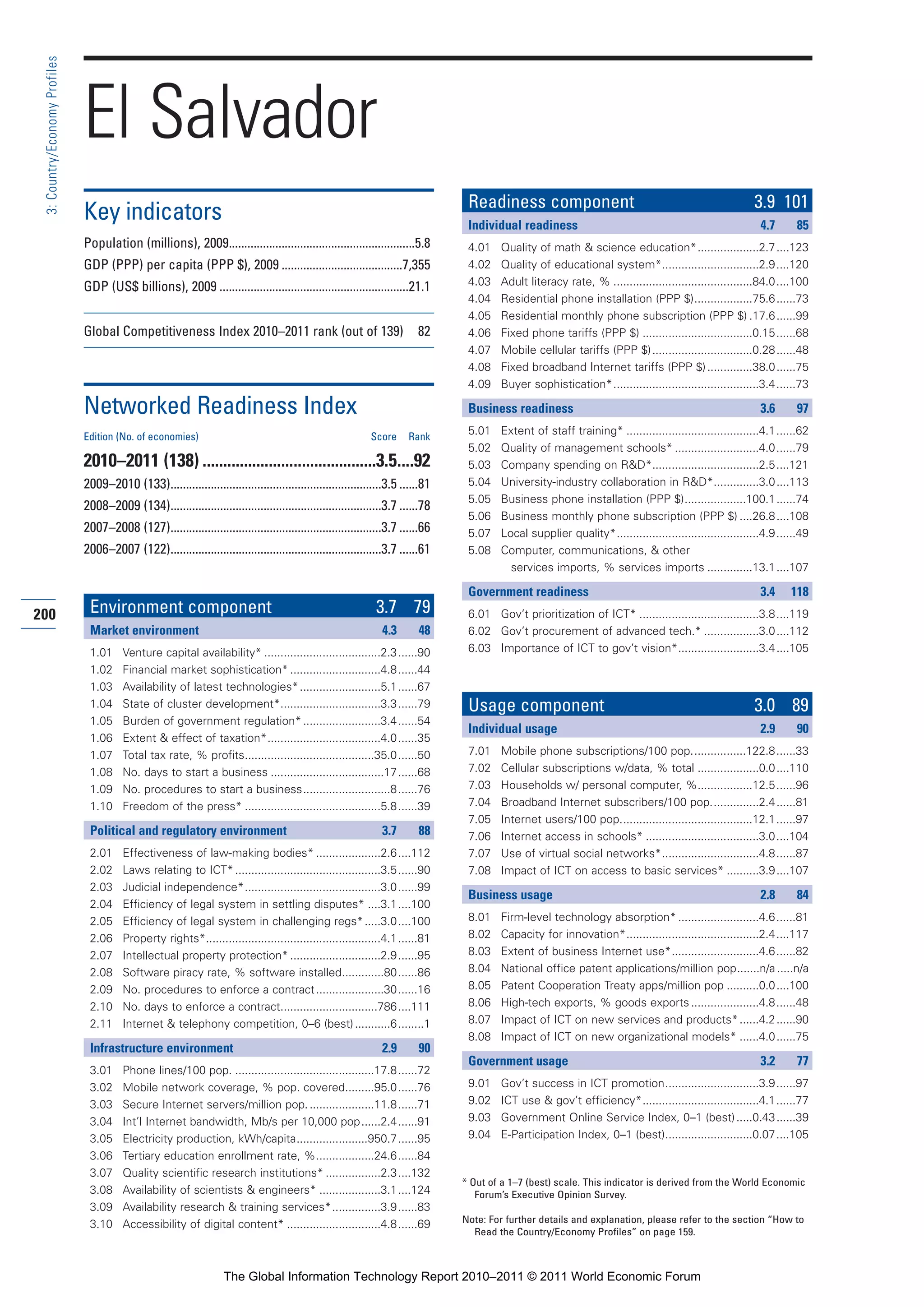
                 Austria                      21      4.90          HI       21        El Salvador                    92         3.52              LM       17
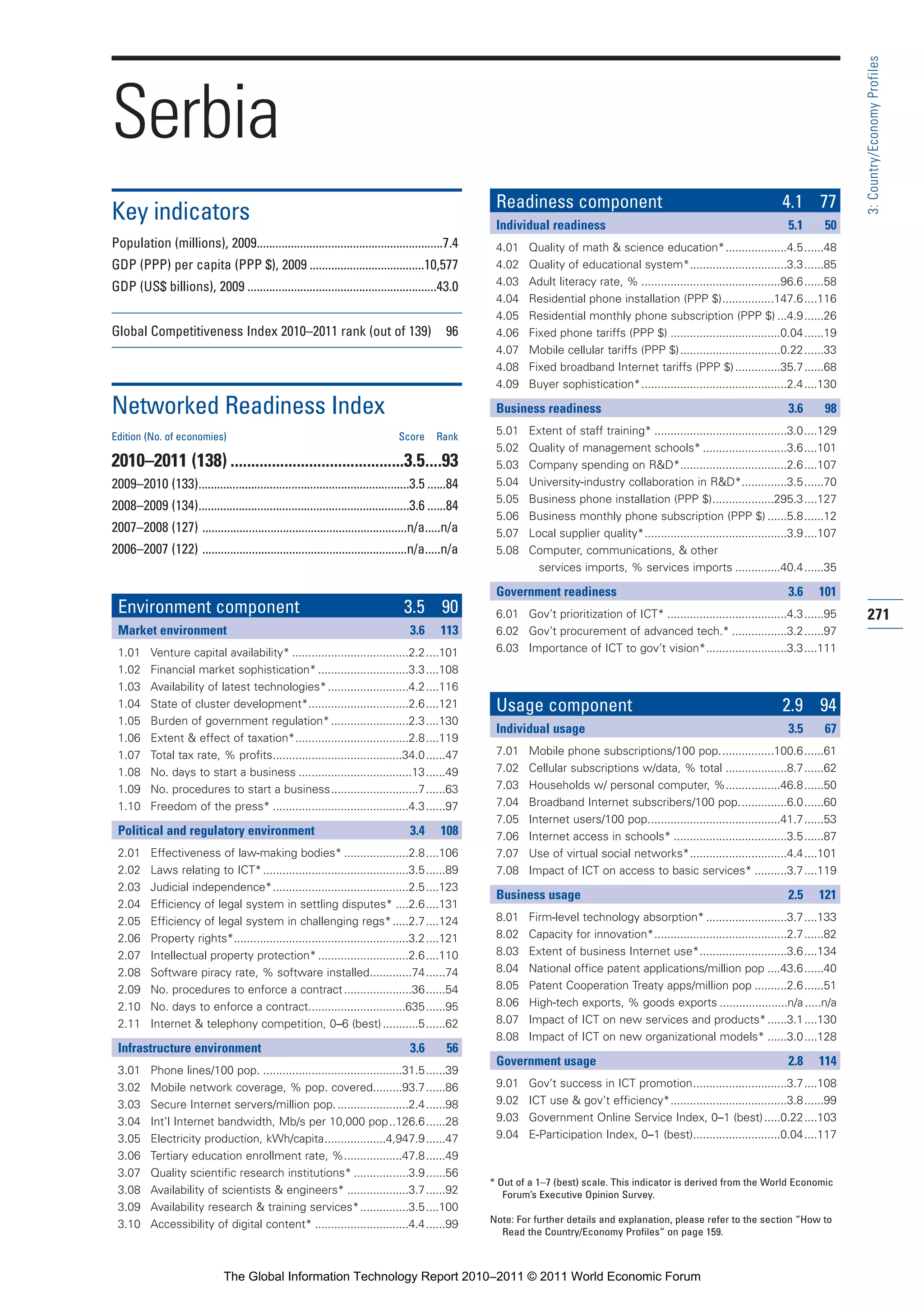
                 Israel                       22      4.81          HI       22        Serbia                         93         3.52              UM       26
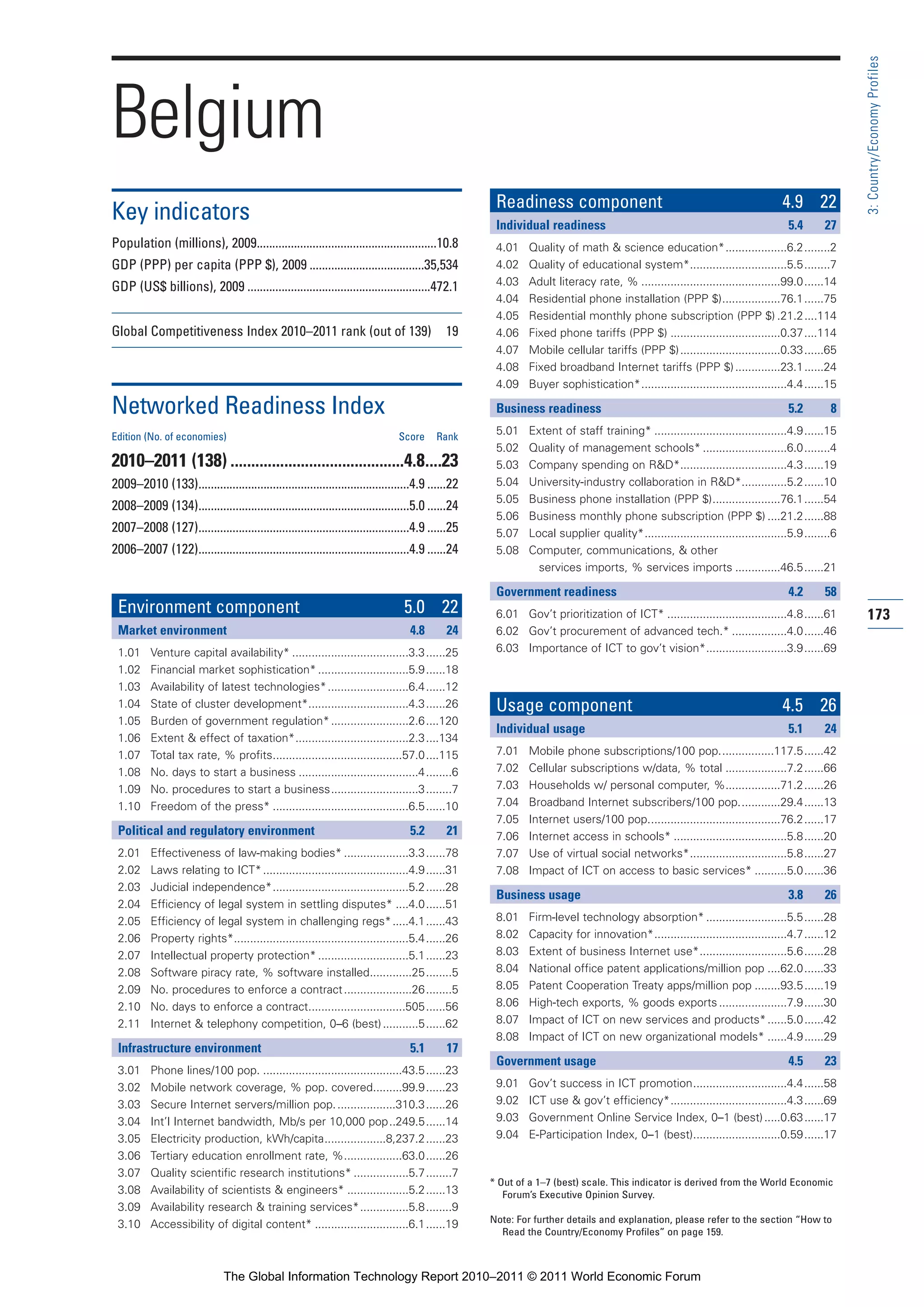
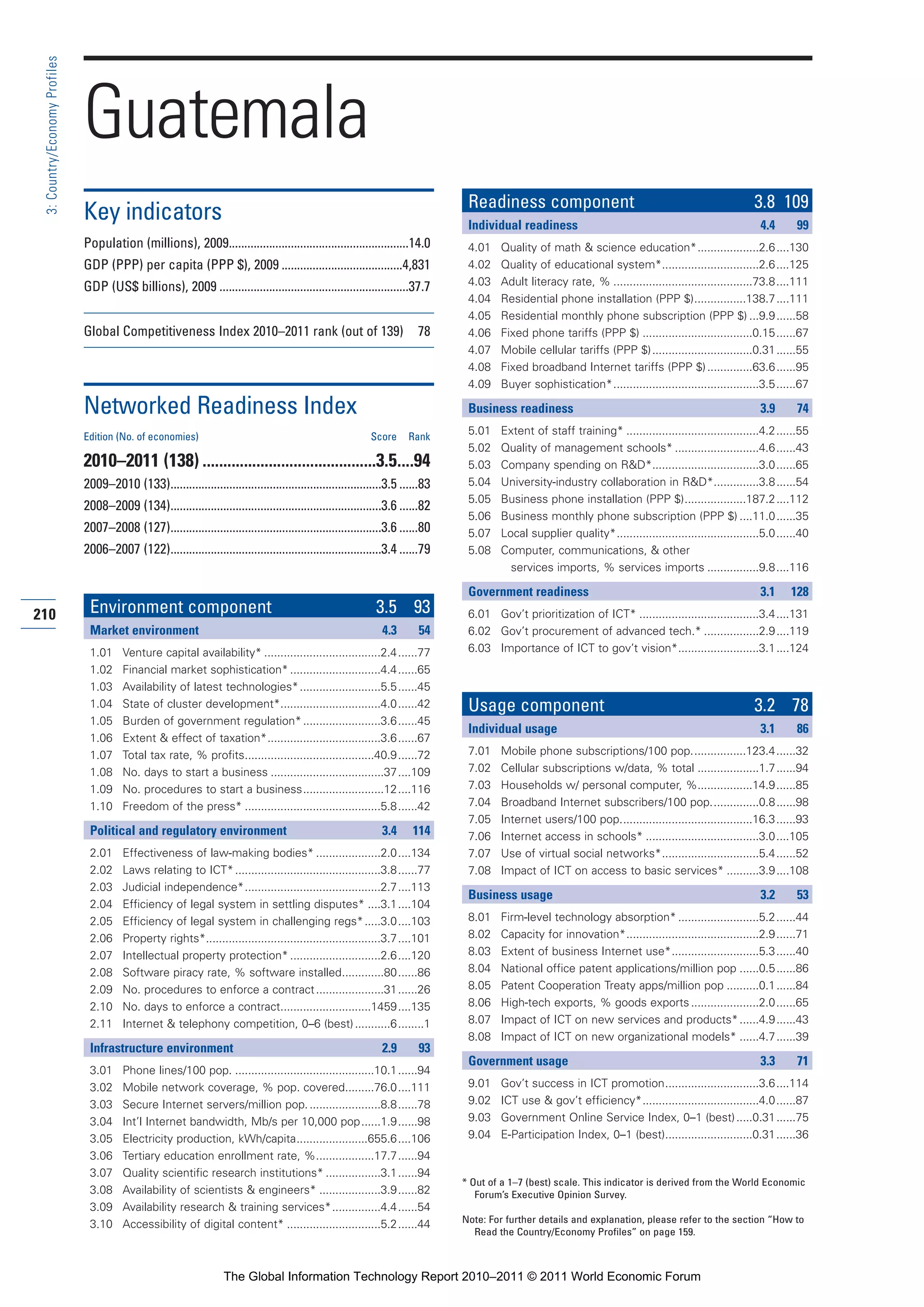
                 Belgium                      23      4.80          HI       23        Guatemala                      94         3.51              LM       18
                 United Arab Emirates         24      4.80          HI       24        Lebanon                        95         3.49              UM       27
                 Qatar                        25      4.79          HI       25        Argentina                      96         3.47              UM       28
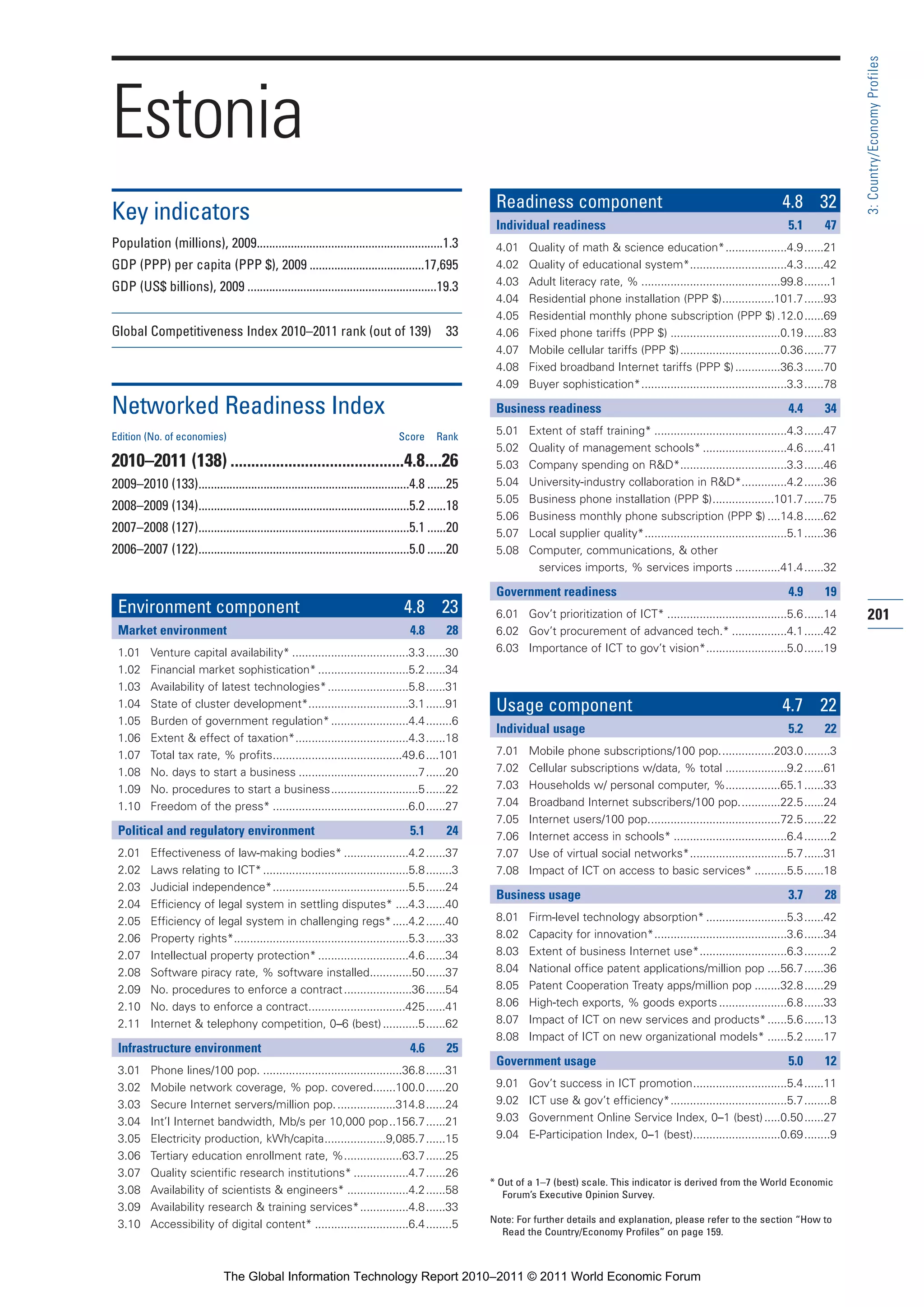
                 Estonia                      26      4.76          HI       26        Moldova                        97         3.45              LM       19
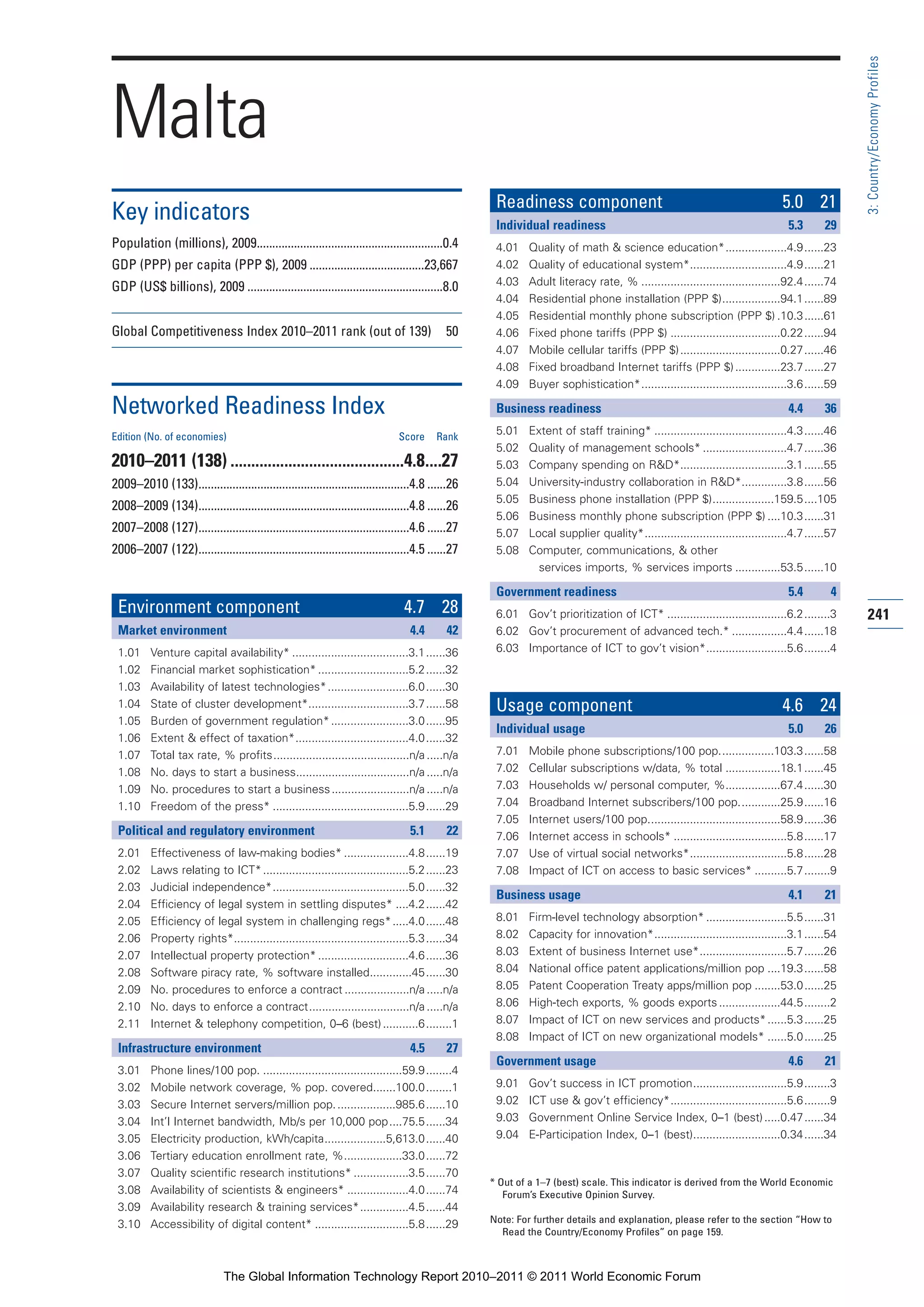
                 Malta                        27      4.76          HI       27        Georgia                        98         3.45              LM       20
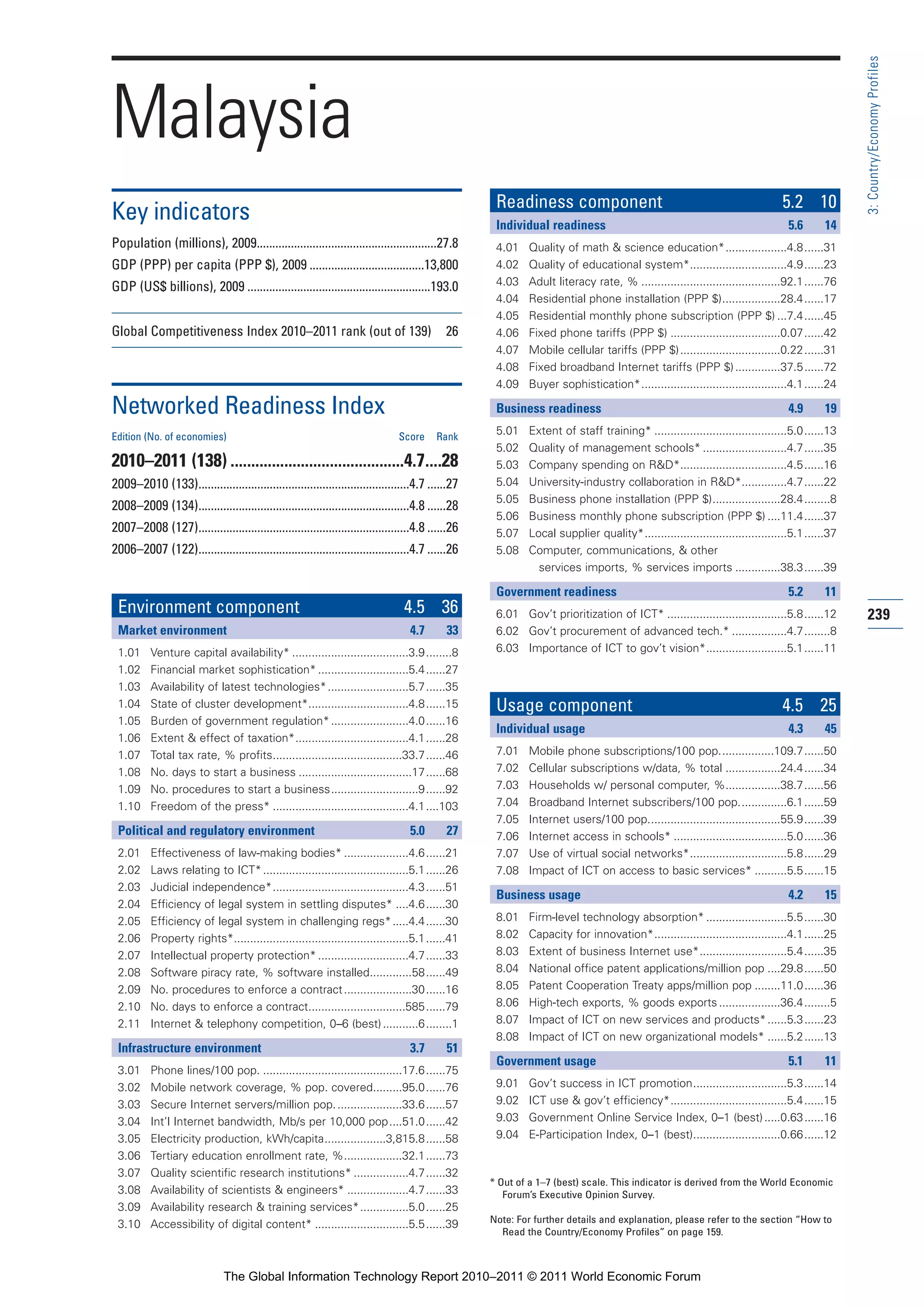
                 Malaysia                    28       4.74          UM       1         Ghana                          99         3.44              LO        3
                 Ireland                      29      4.71          HI       28        Guyana                        100         3.43              LM       21
                 Bahrain                      30      4.64          HI       29        Iran, Islamic Rep.            101         3.41              UM       29     xix
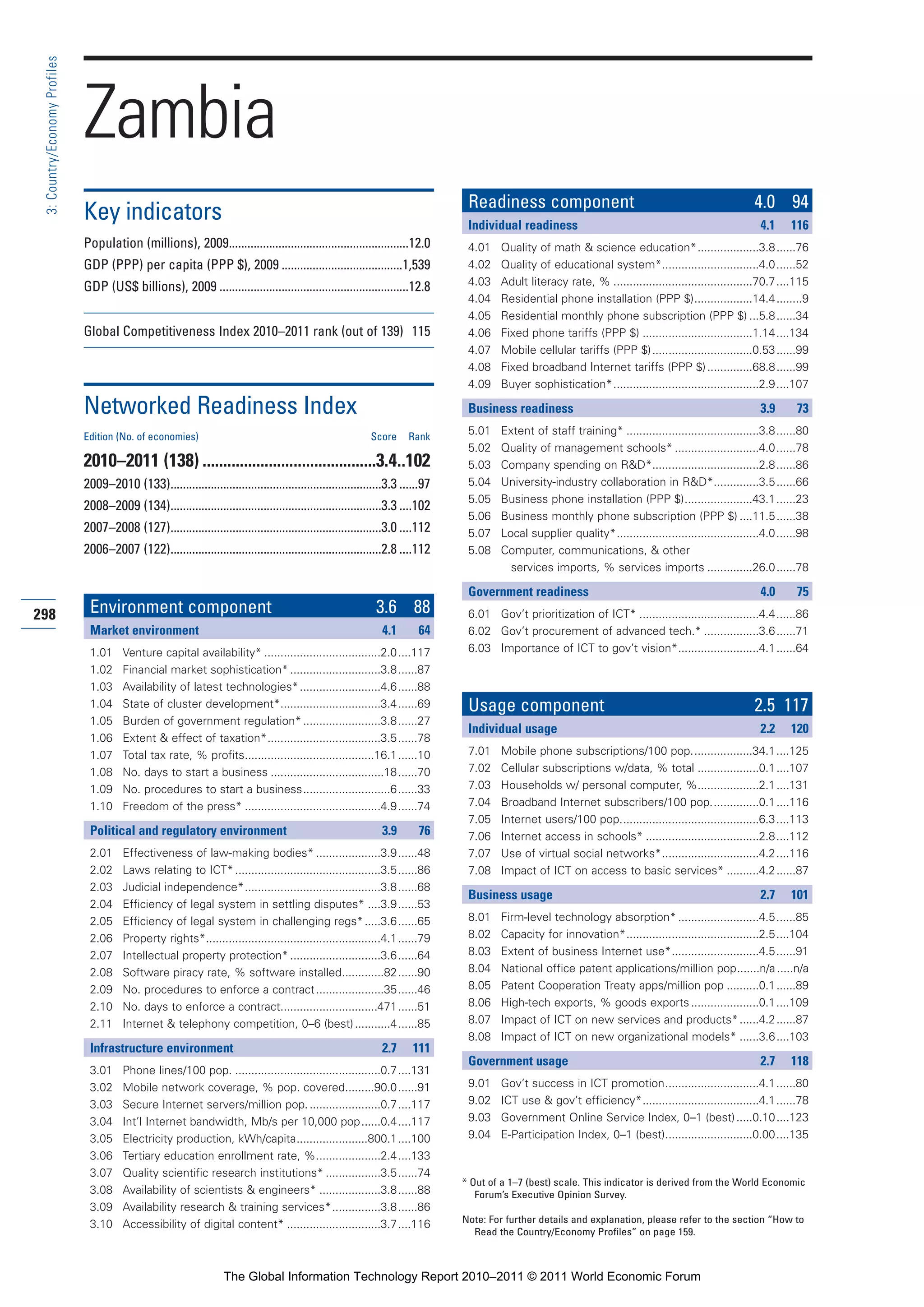
                 Cyprus                       31      4.50          HI       30        Zambia                        102         3.36              LO        4
                 Portugal                     32      4.50          HI       31        Honduras                      103         3.34              LM       22
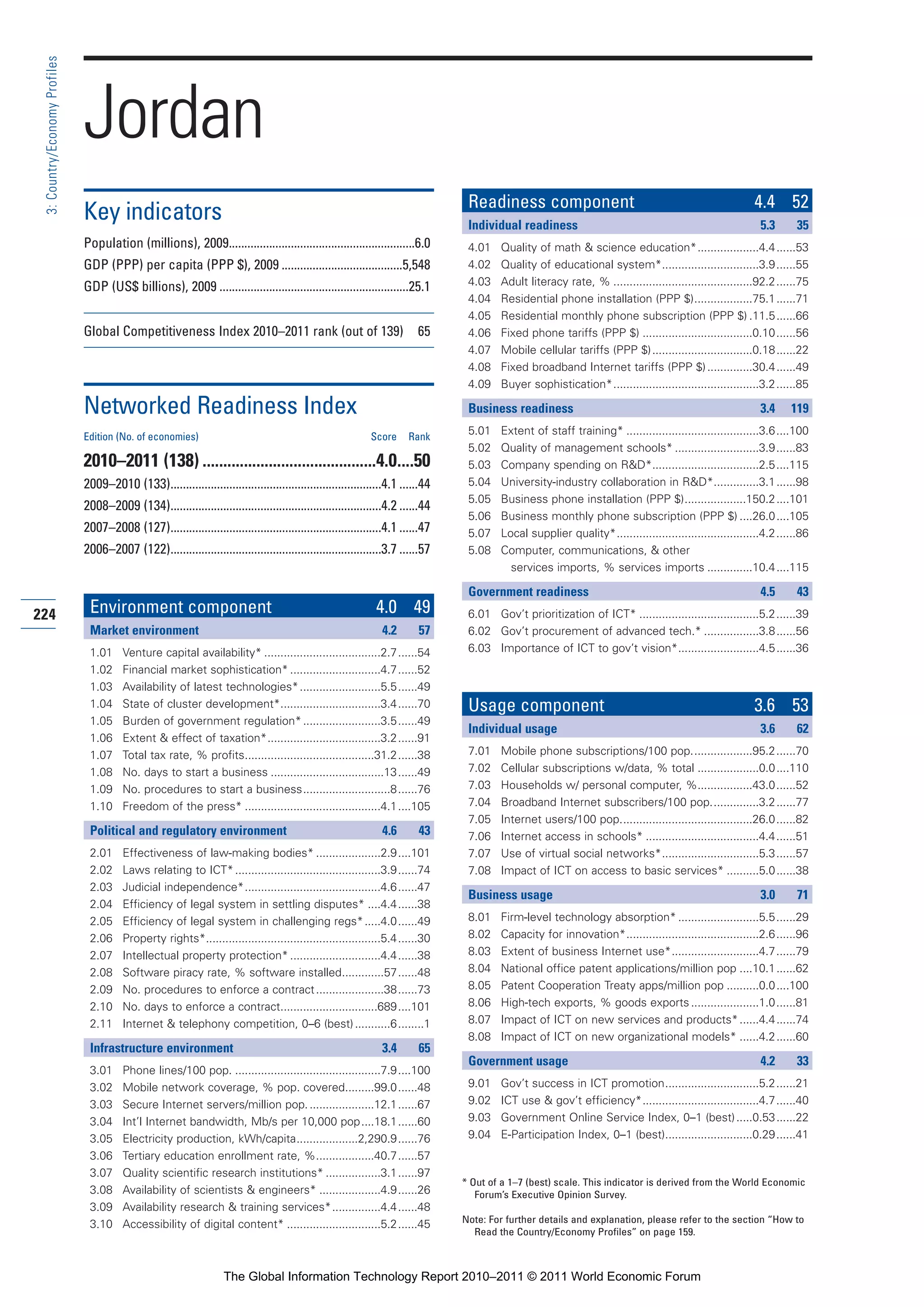
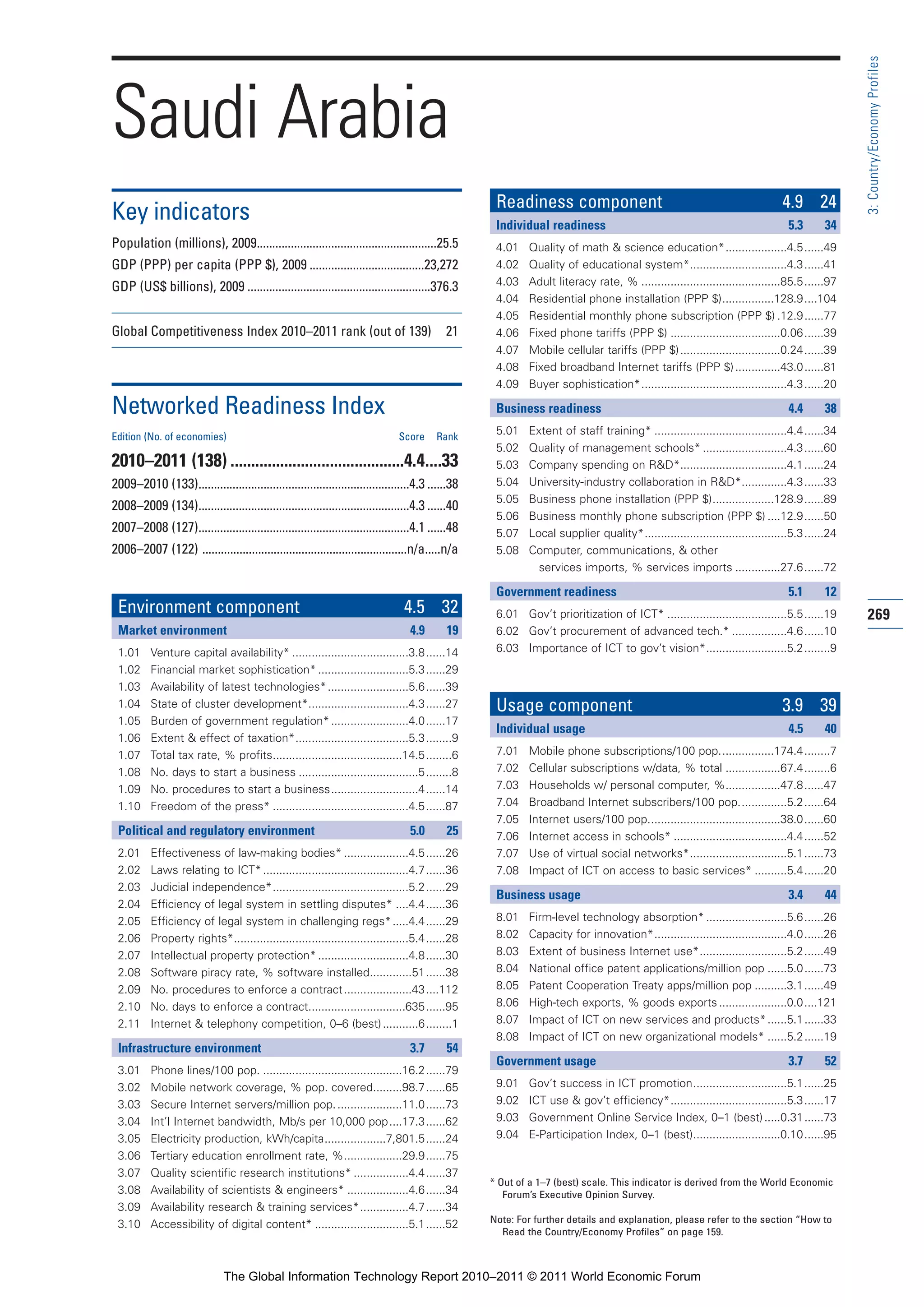
                 Saudi Arabia                 33      4.44          HI       32        Nigeria                       104         3.32              LM       23
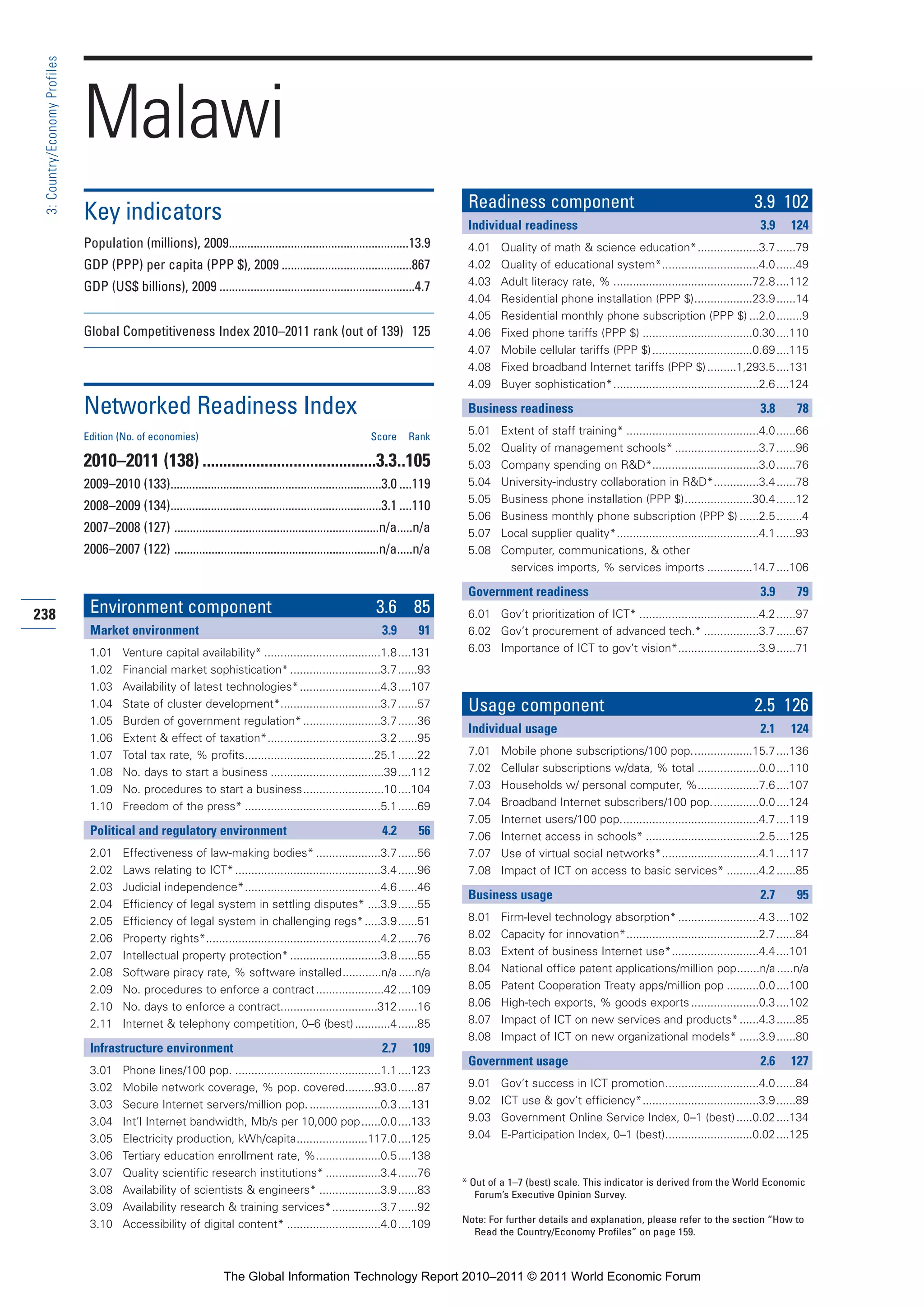
                 Slovenia                     34      4.44          HI       33        Malawi                        105         3.31              LO        5
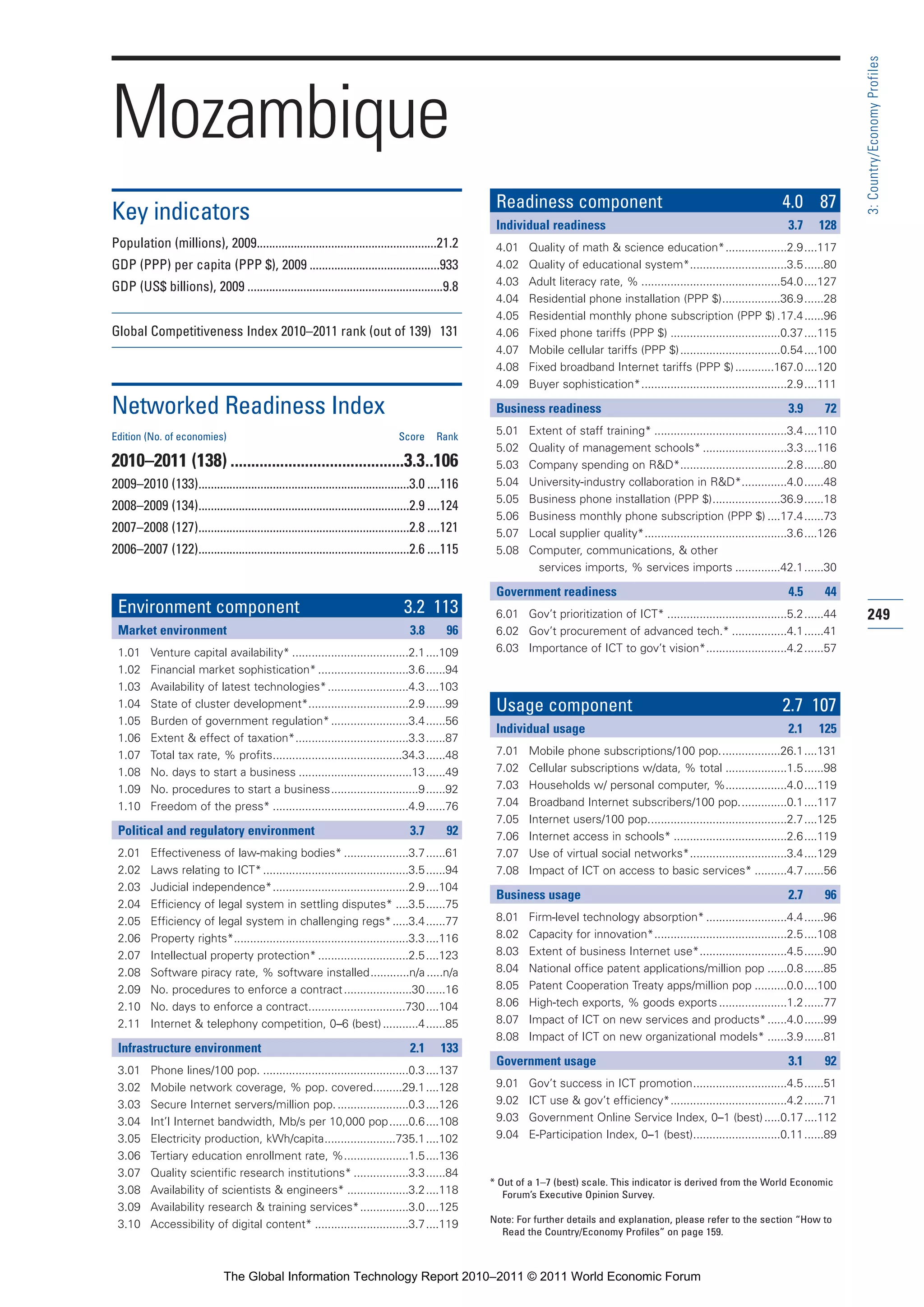
                 Tunisia                     35       4.35          LM       1         Mozambique                    106         3.29              LO        6
                 China                        36      4.35          LM        2        Uganda                        107         3.26              LO        7
                 Spain                        37      4.33          HI       34        Ecuador                       108         3.26              LM       24
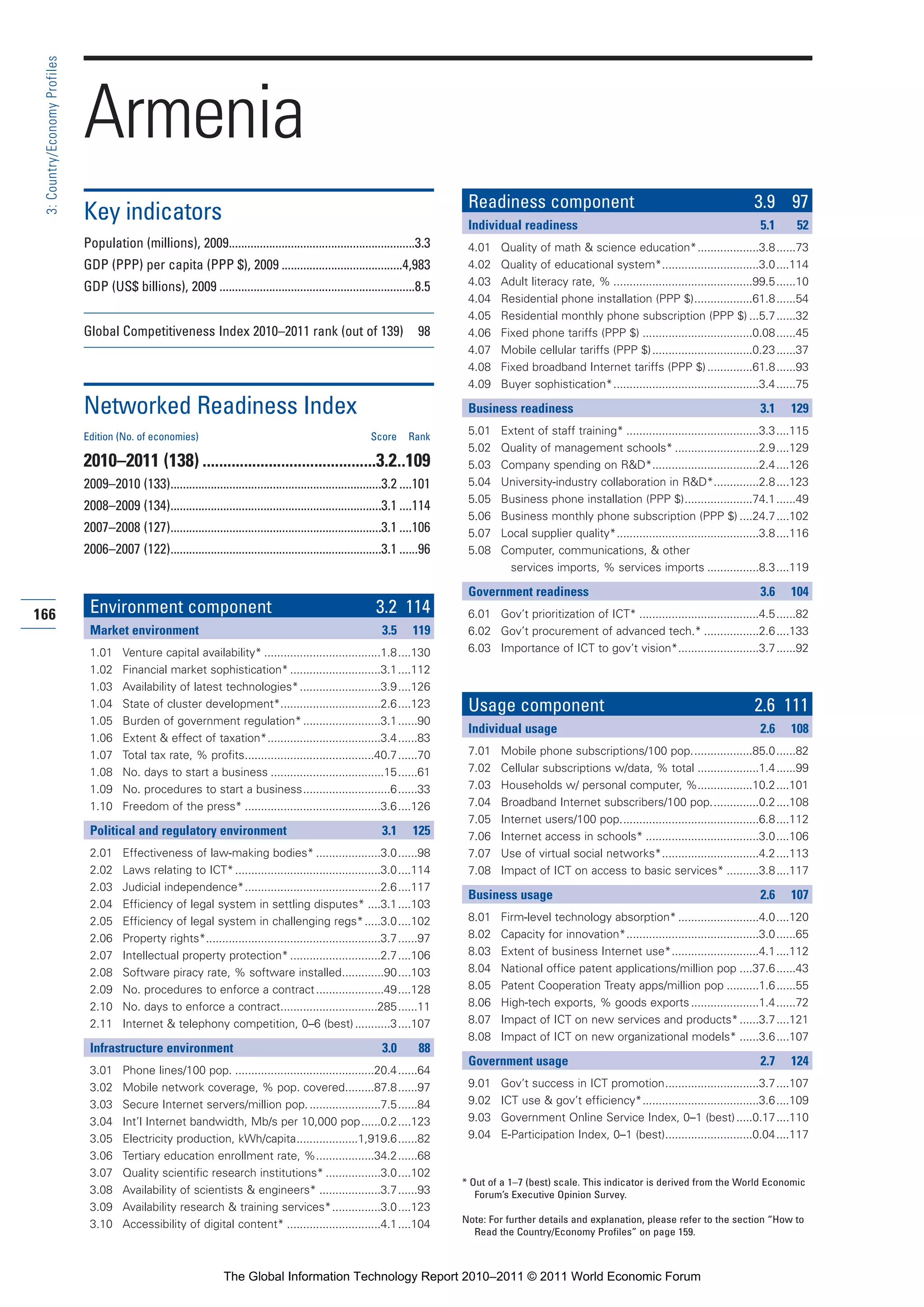
                 Barbados                     38      4.32          HI       35        Armenia                       109         3.24              LM       25
                 Chile                        39      4.28          UM        2        Bosnia and Herzegovina        110         3.24              UM       30
                 Czech Republic               40      4.27          HI       36        Cambodia                      111         3.23              LO        8
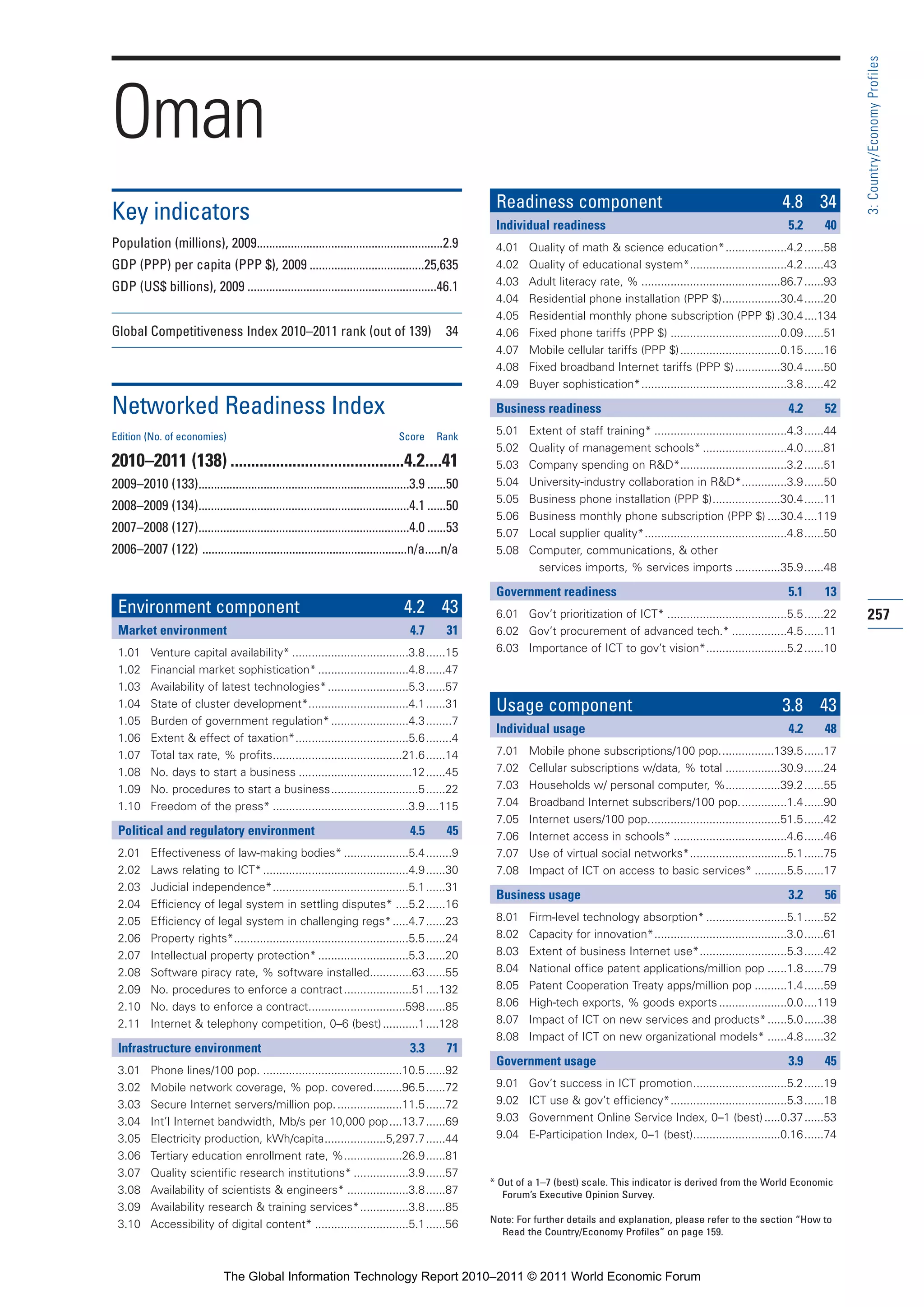
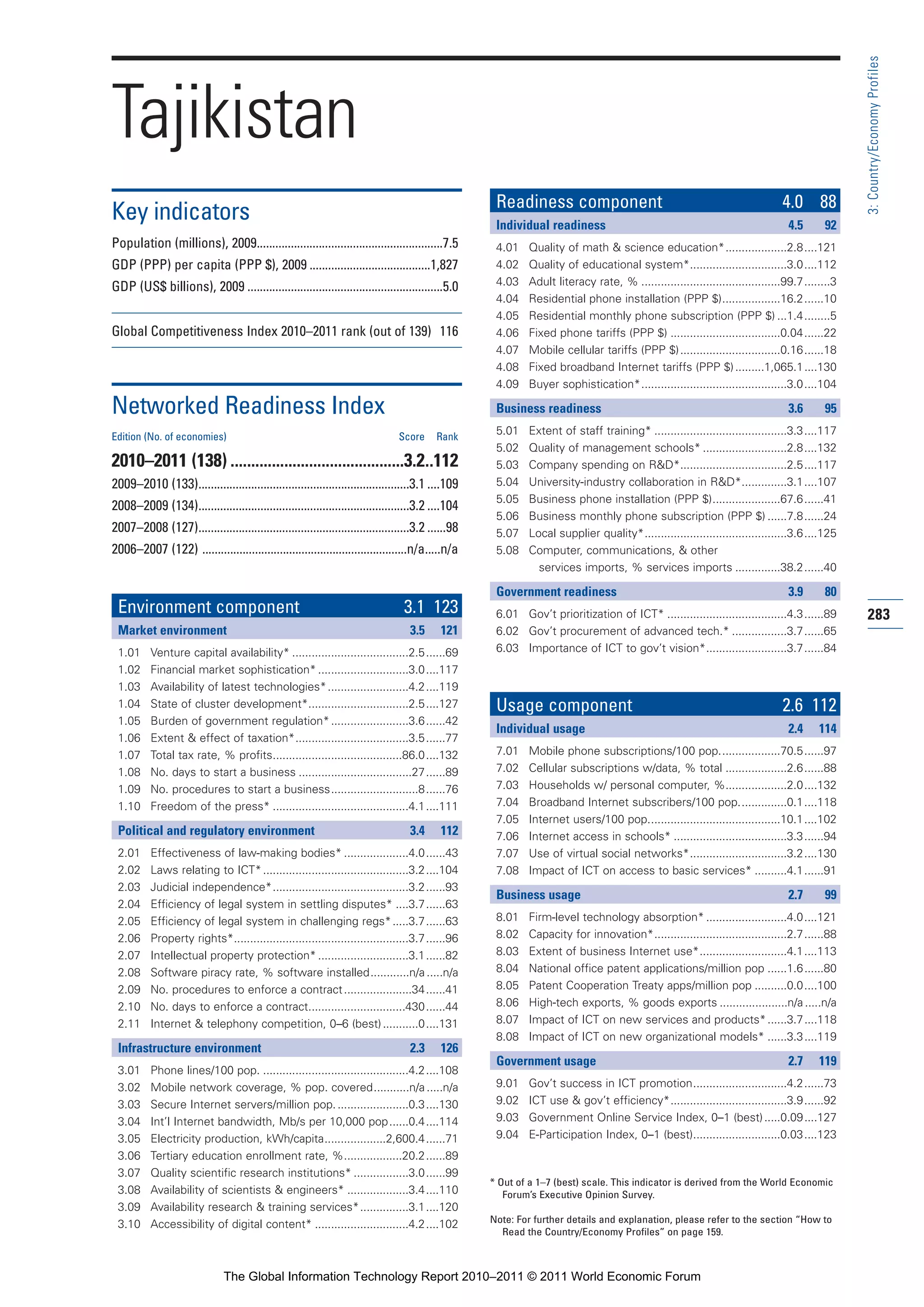
                 Oman                         41      4.25          HI       37        Tajikistan                    112         3.23              LO        9
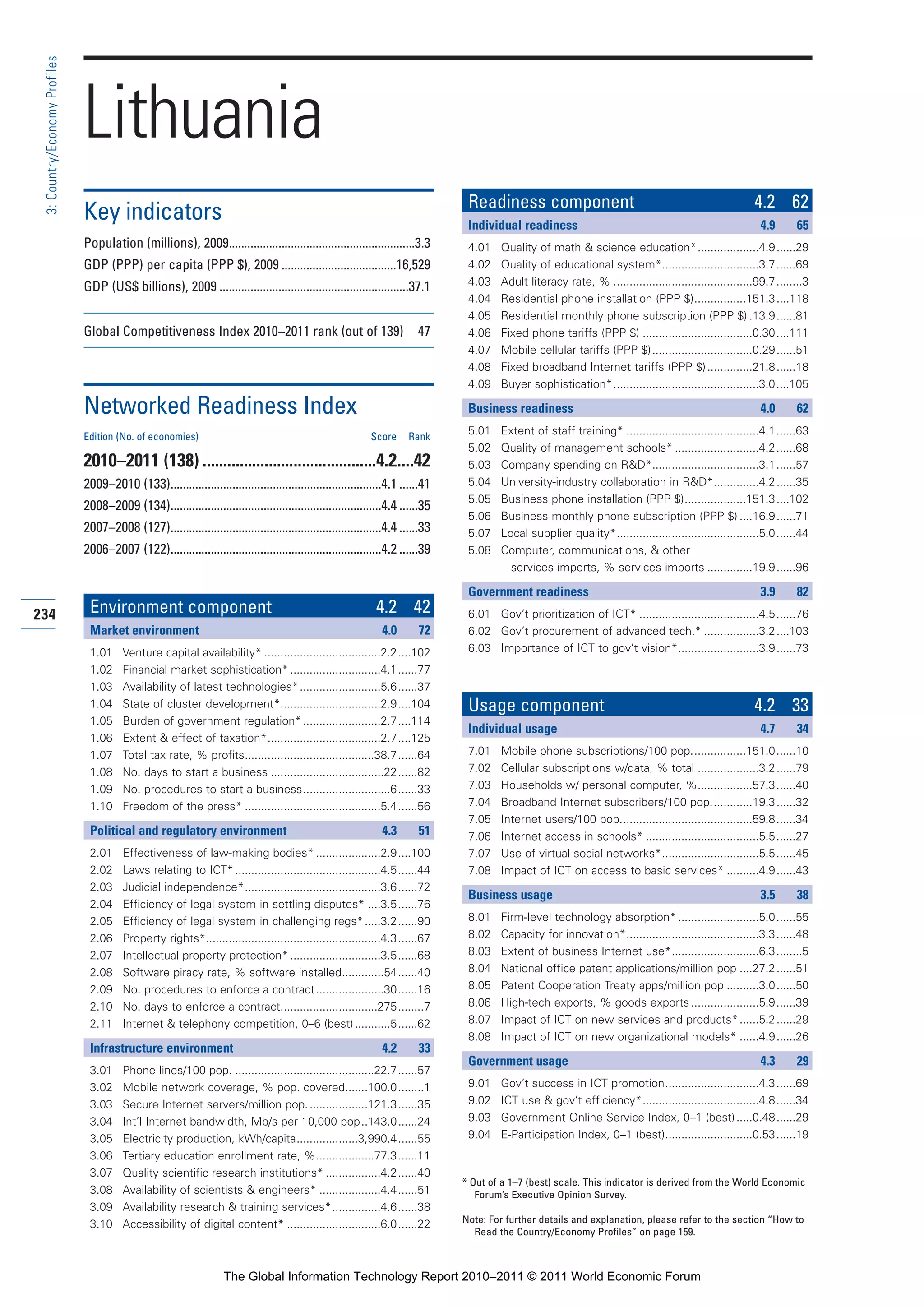
                 Lithuania                    42      4.20          UM        3        Côte d’Ivoire                 113         3.20              LM       26
                 Puerto Rico                  43      4.10          HI       38        Benin                         114         3.20              LO       10
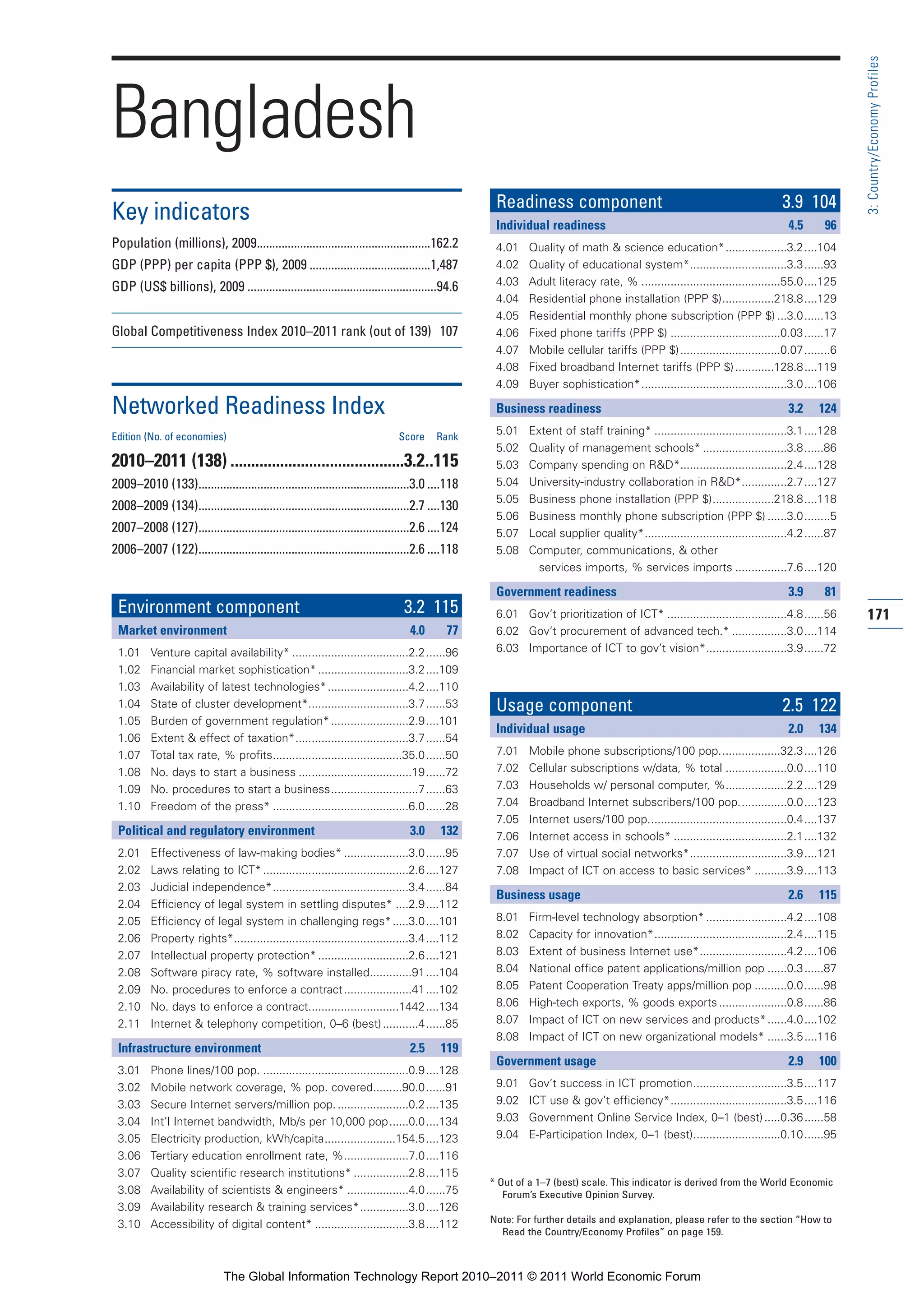
                 Montenegro                   44      4.09          UM        4        Bangladesh                    115         3.19              LO       11
                 Uruguay                      45      4.06          UM        5        Kyrgyz Republic               116         3.18              LO       12
                 Costa Rica                   46      4.05          UM        6        Algeria                       117         3.17              UM       31
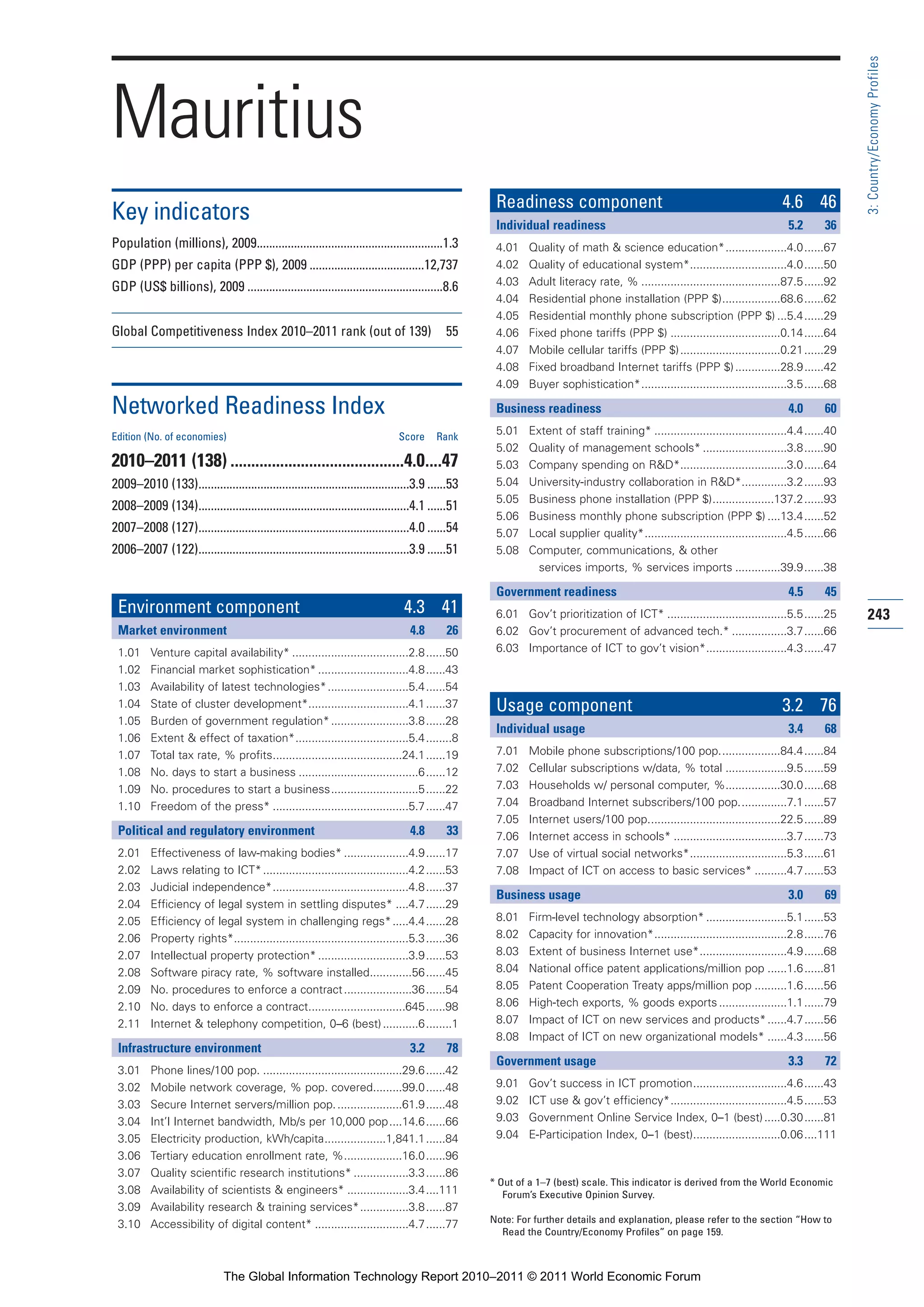
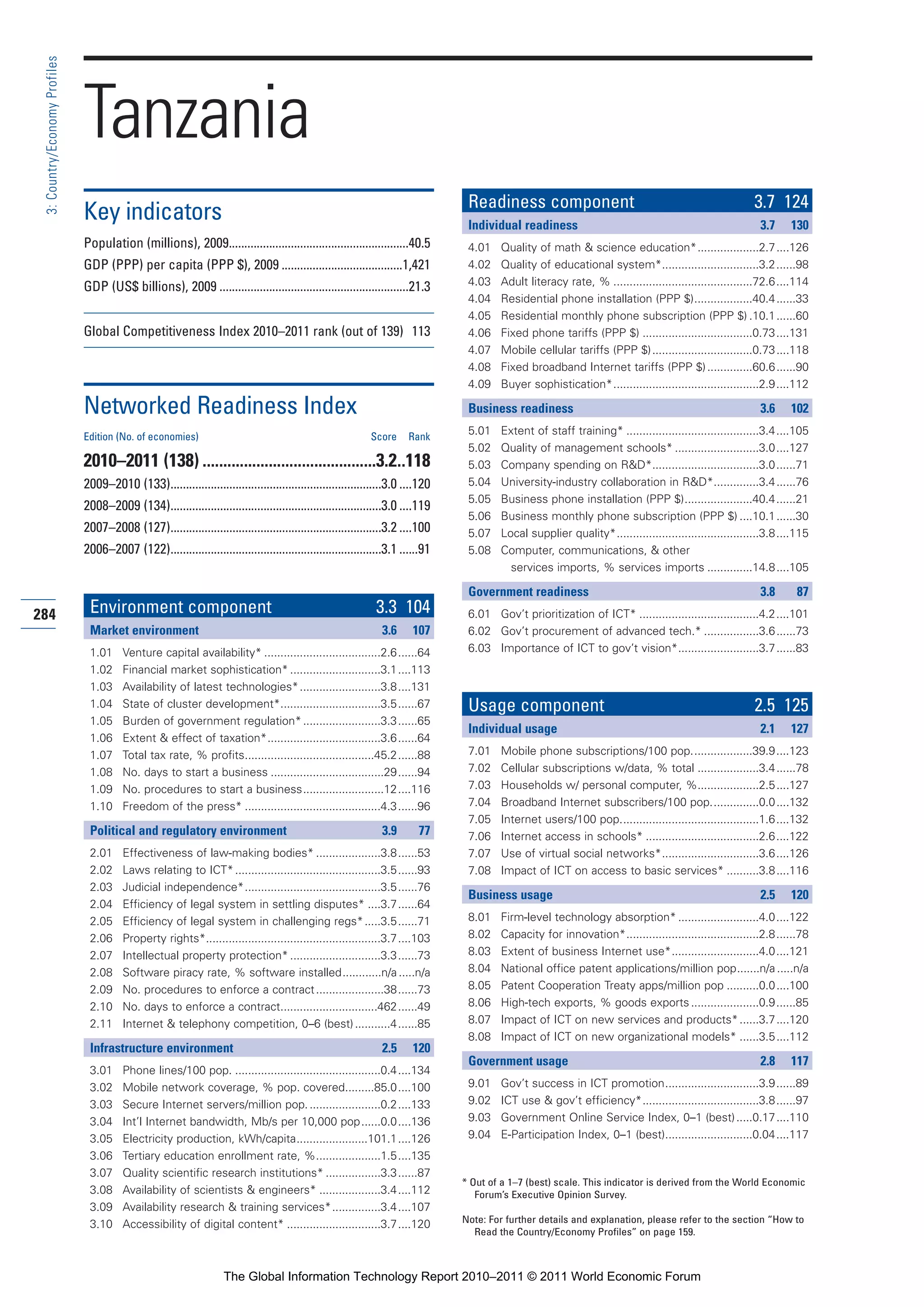
                 Mauritius                    47      4.03          UM        7        Tanzania                      118         3.16              LO       13
                 India                        48      4.03          LM        3        Venezuela                     119         3.16              UM       32
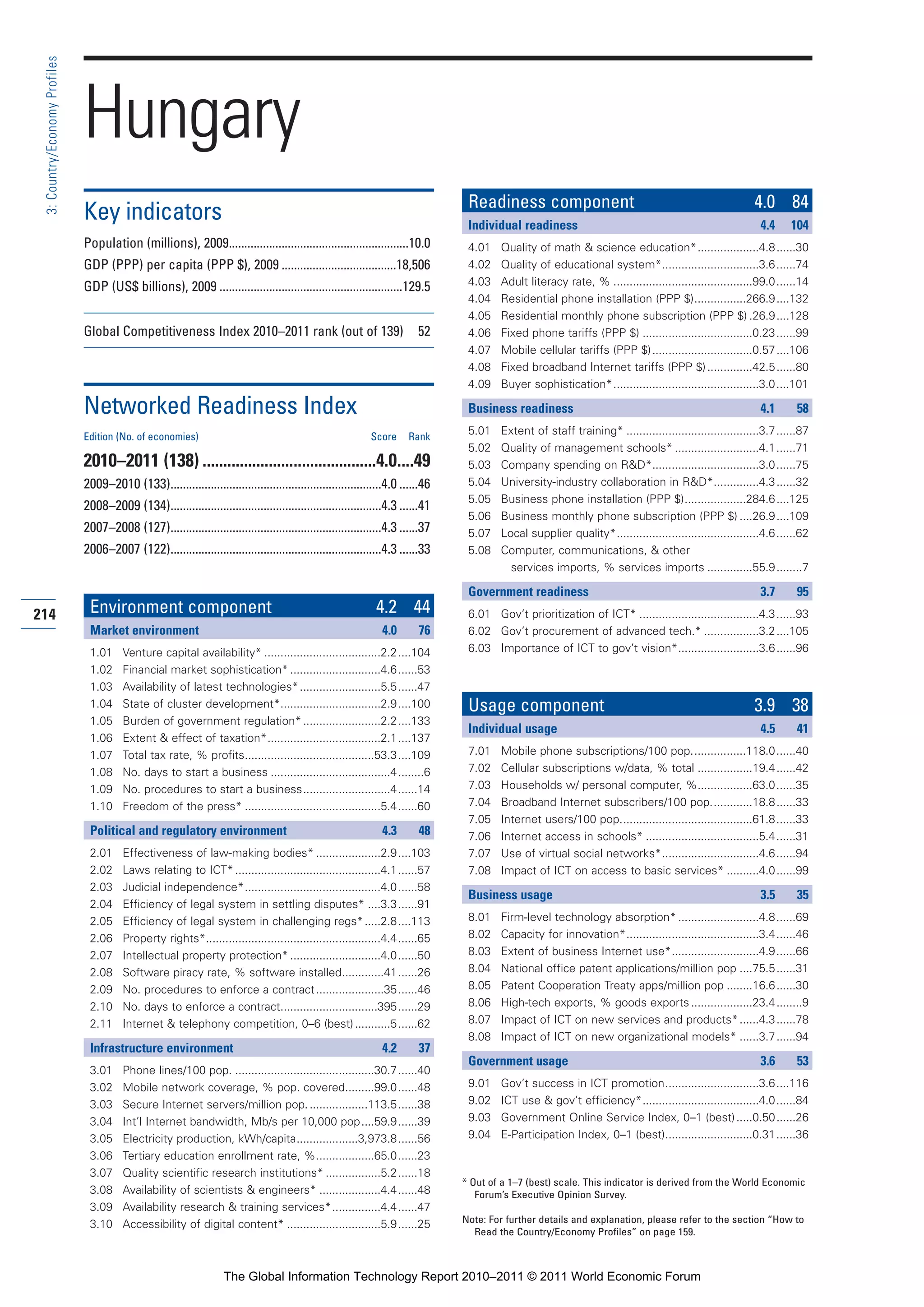
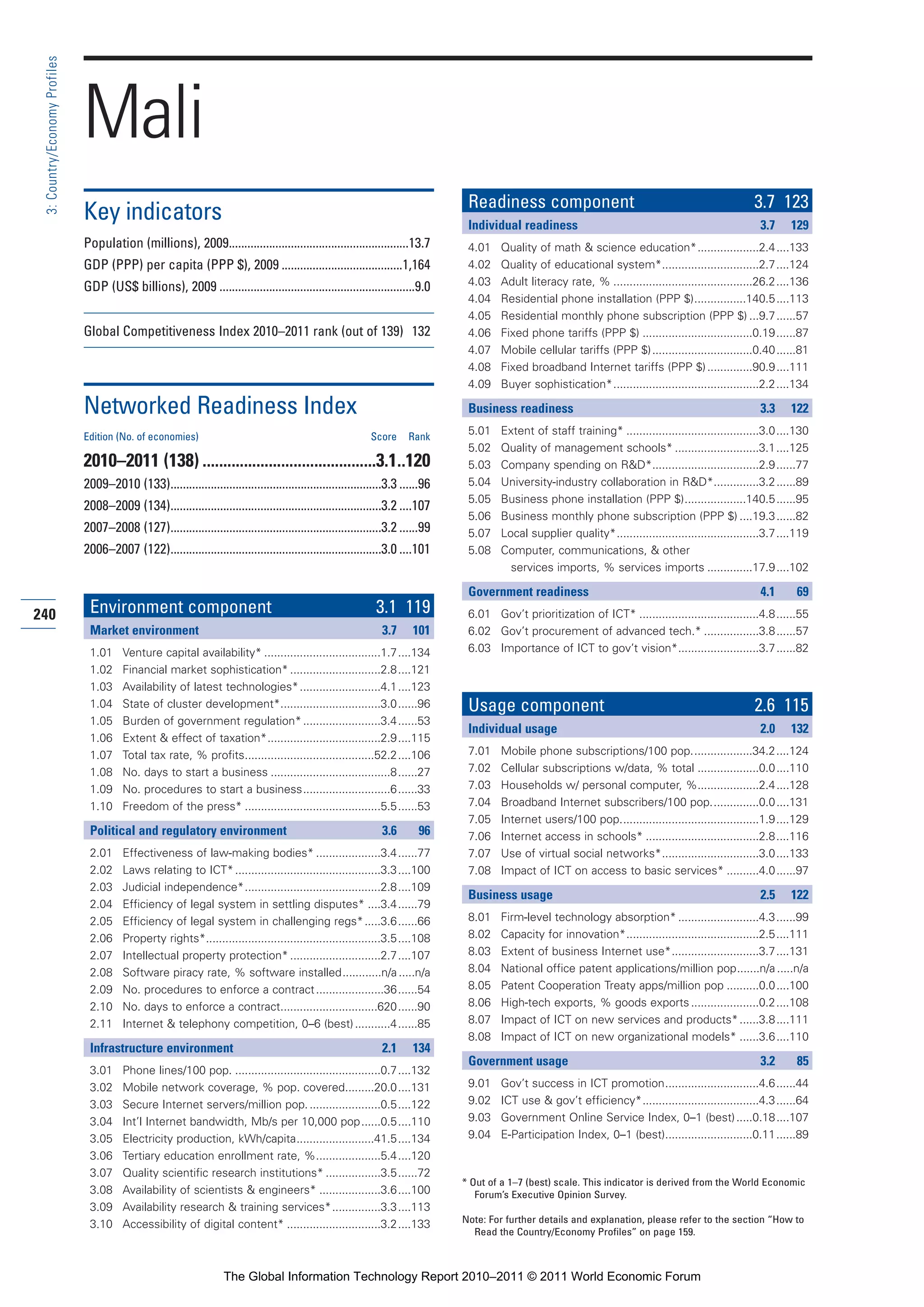
                 Hungary                      49      4.03          HI       39        Mali                          120         3.14              LO       14
                 Jordan                       50      4.00          LM        4        Lesotho                       121         3.14              LM       27
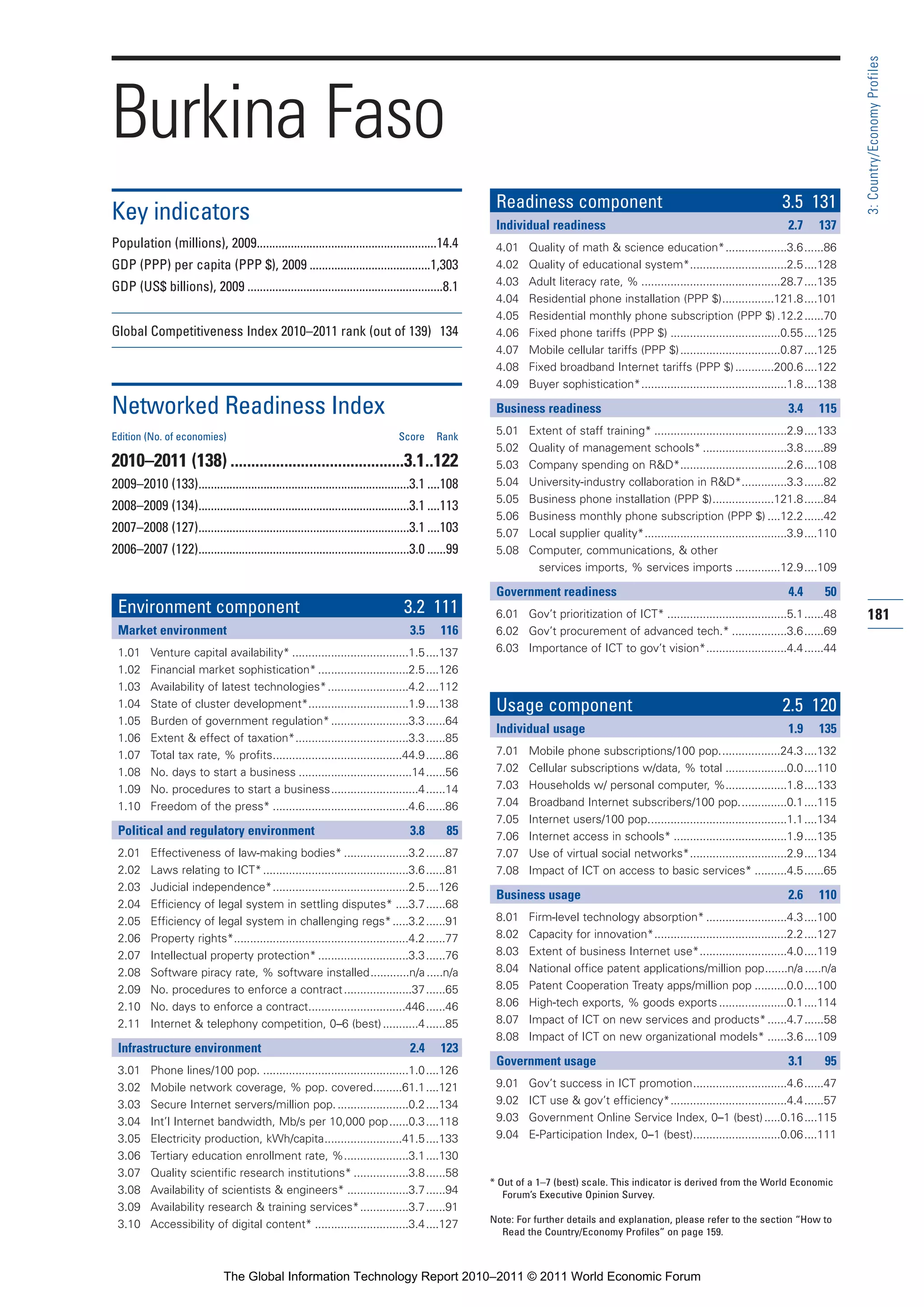
                 Italy                        51      3.97          HI       40        Burkina Faso                  122         3.09              LO       15
                 Latvia                       52      3.93          HI       41        Ethiopia                      123         3.08              LO       16
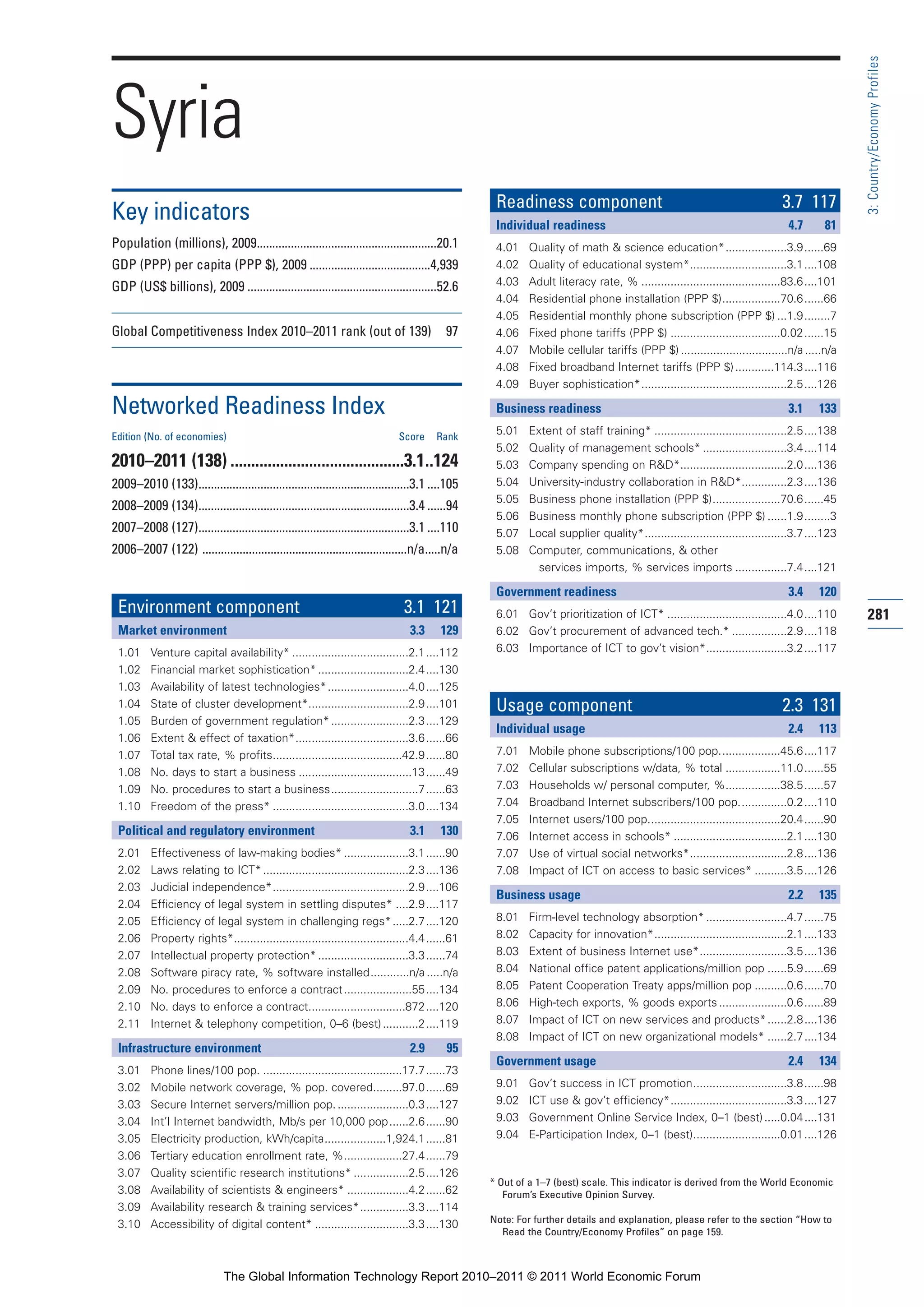
                 Indonesia                    53      3.92          LM       5         Syria                         124         3.06              LM       28
                 Croatia                      54      3.91          HI       42        Cameroon                      125         3.04              LM       29
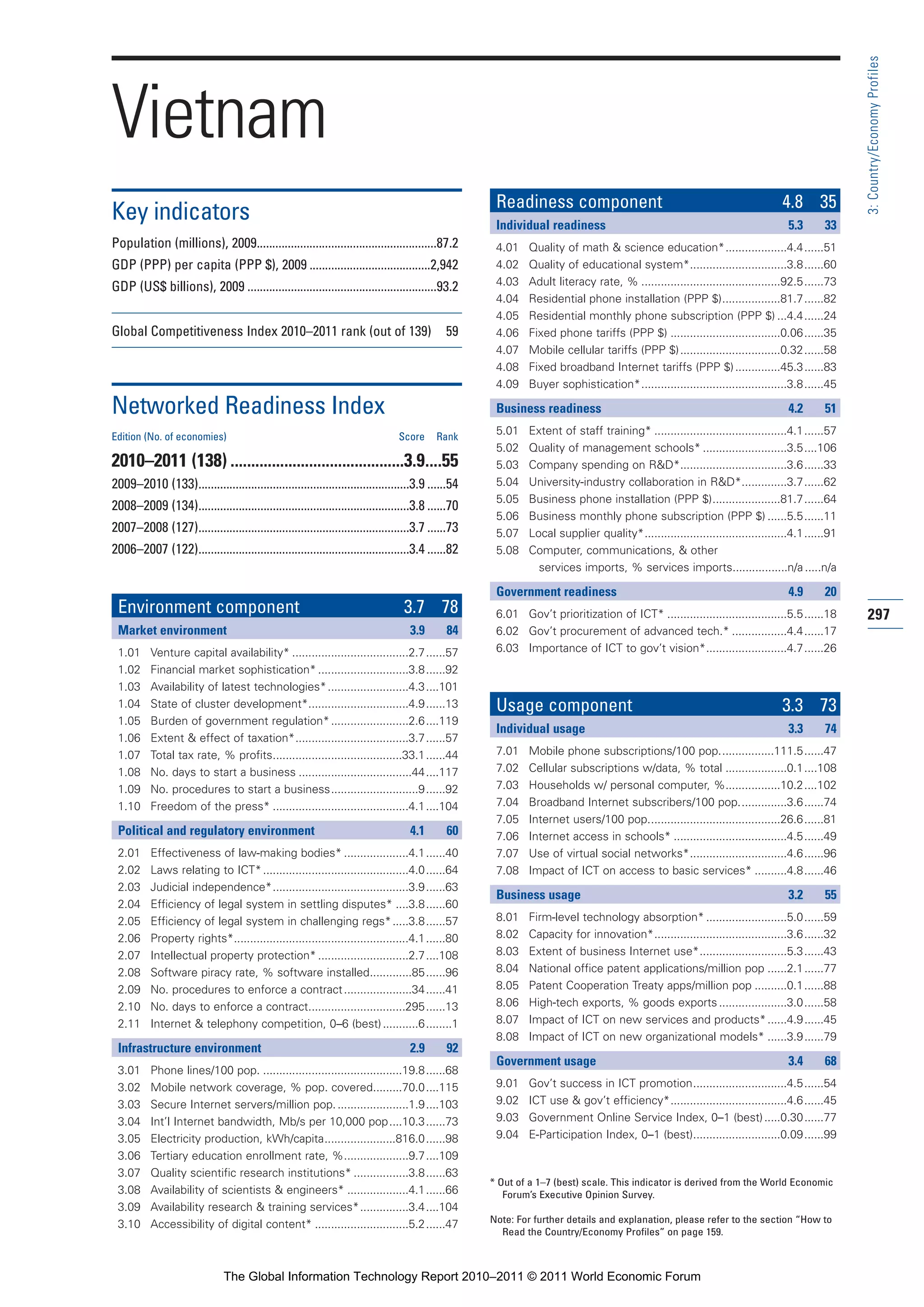
                 Vietnam                      55      3.90          LM       6         Libya                         126         3.03              UM       33
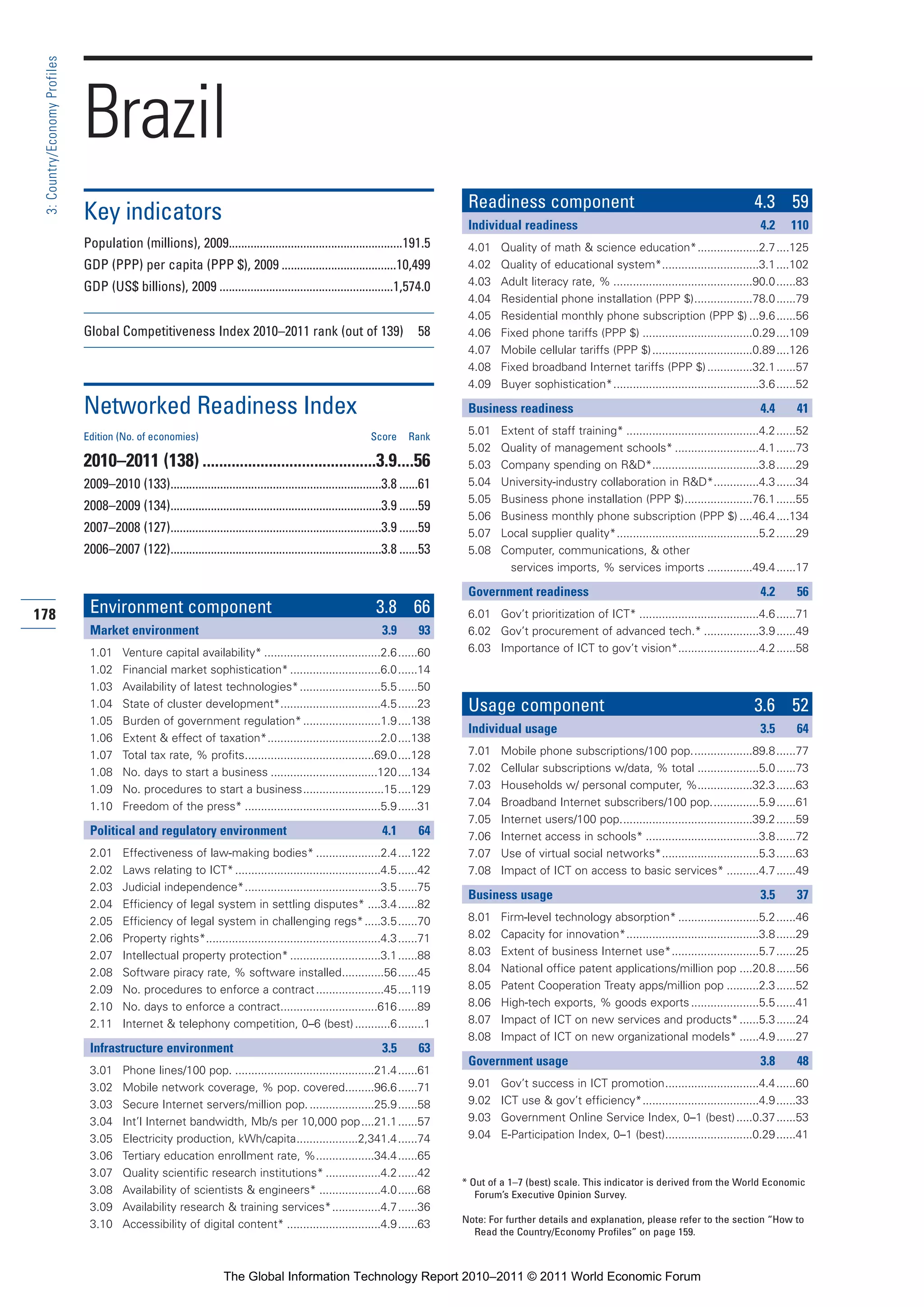
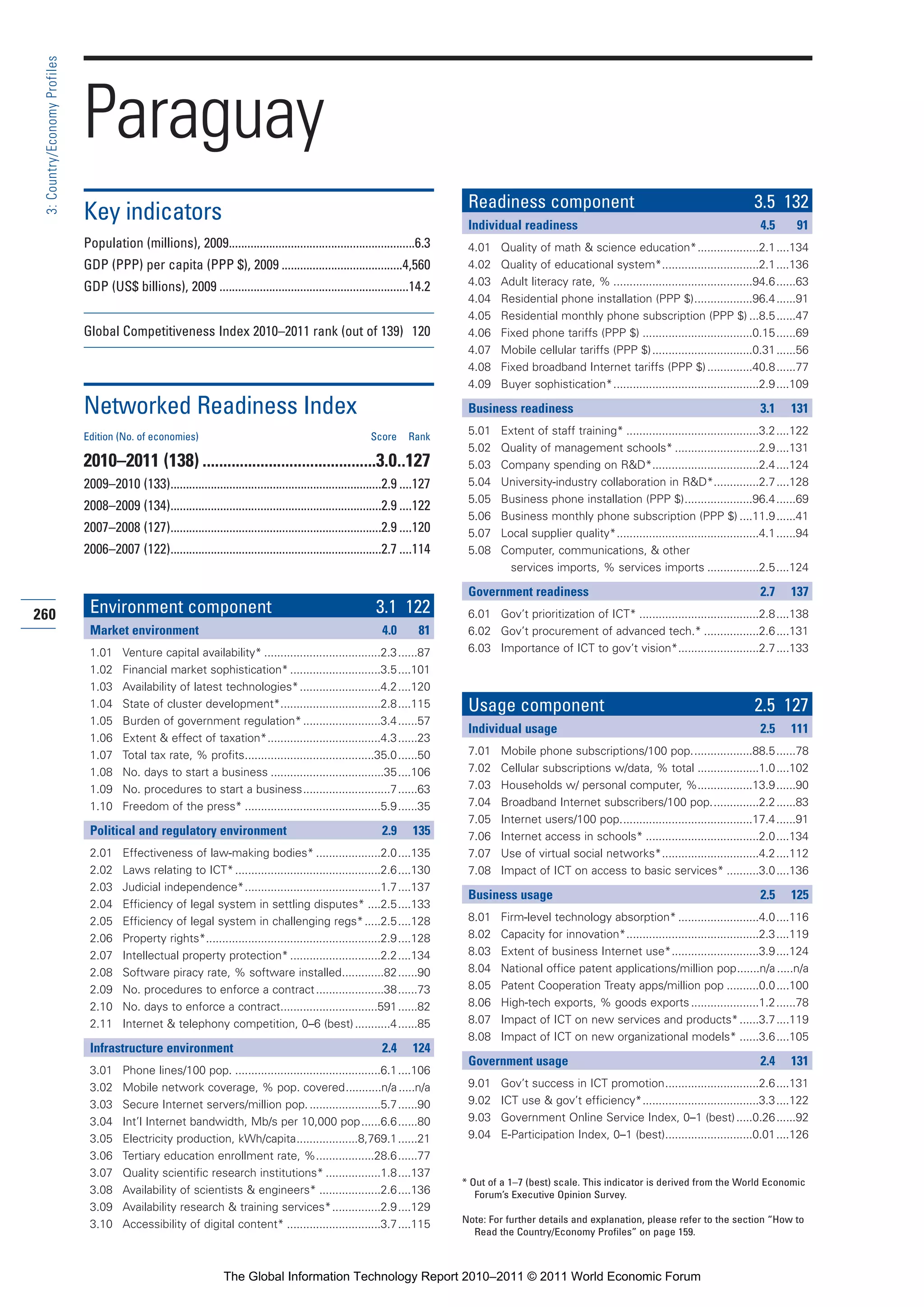
                 Brazil                       56      3.90          UM        8        Paraguay                      127         3.00              LM       30
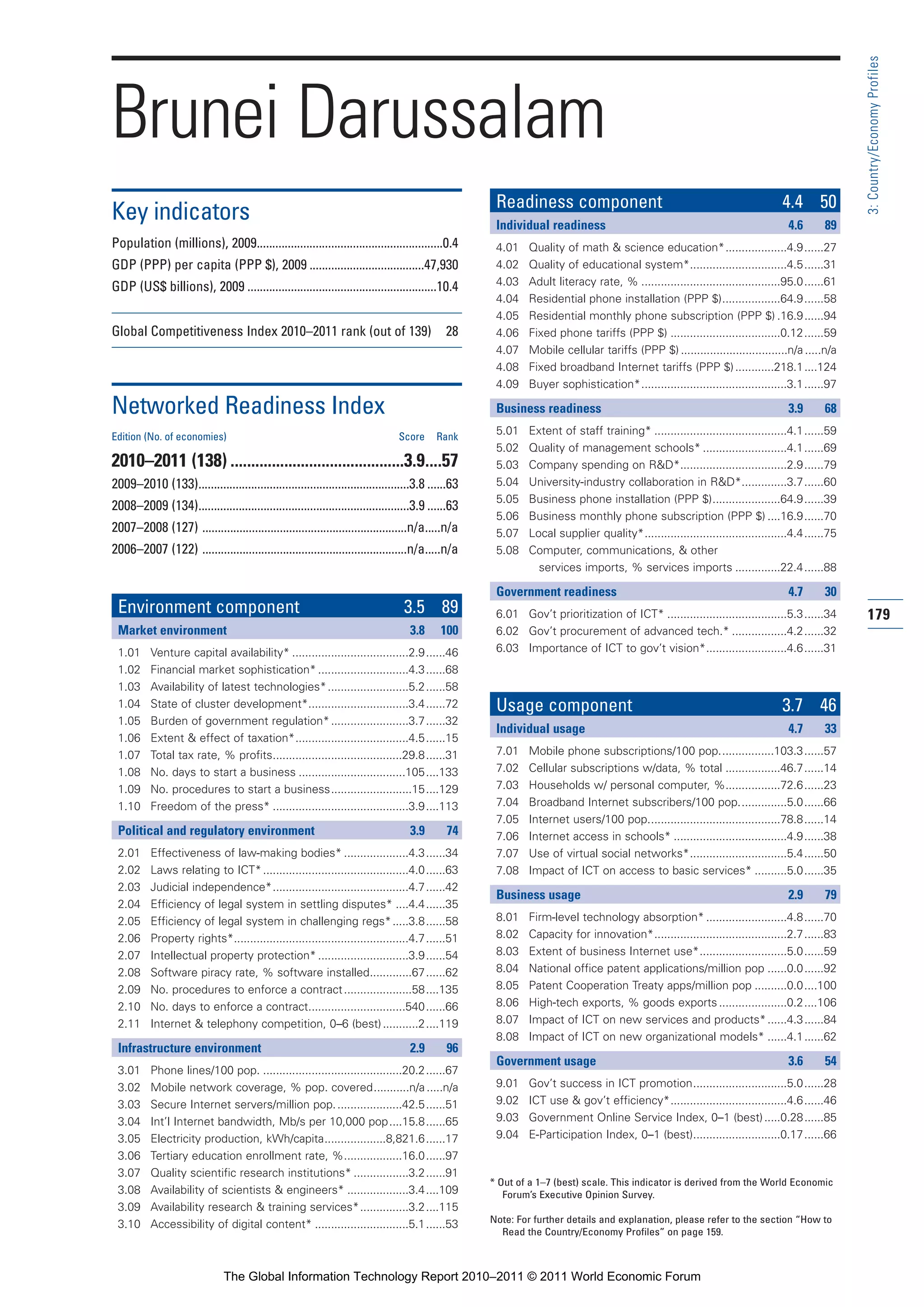
                 Brunei Darussalam            57      3.89          HI       43        Nicaragua                     128         2.99              LM       31
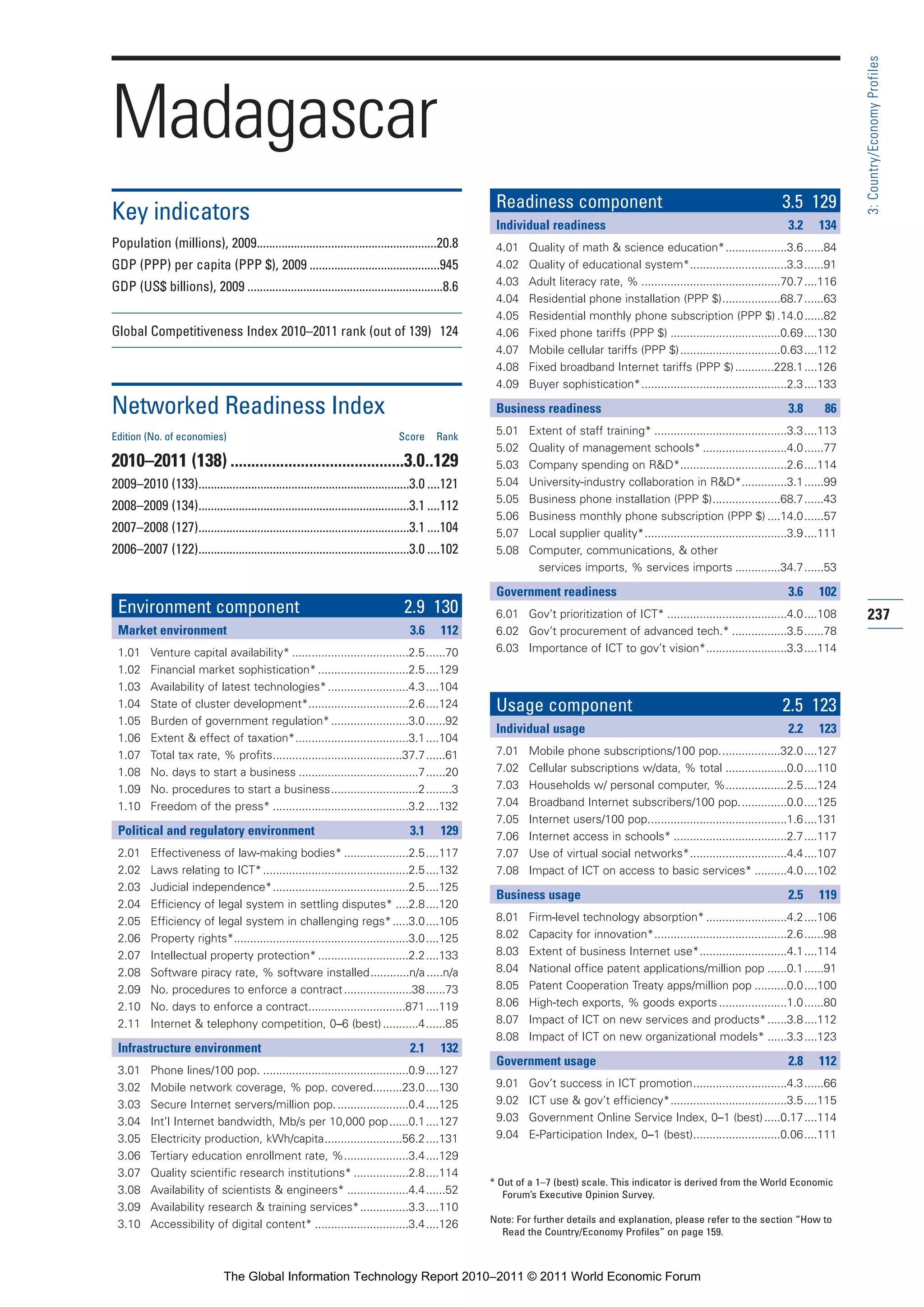
                 Colombia                     58      3.89          UM        9        Madagascar                    129         2.98              LO       17
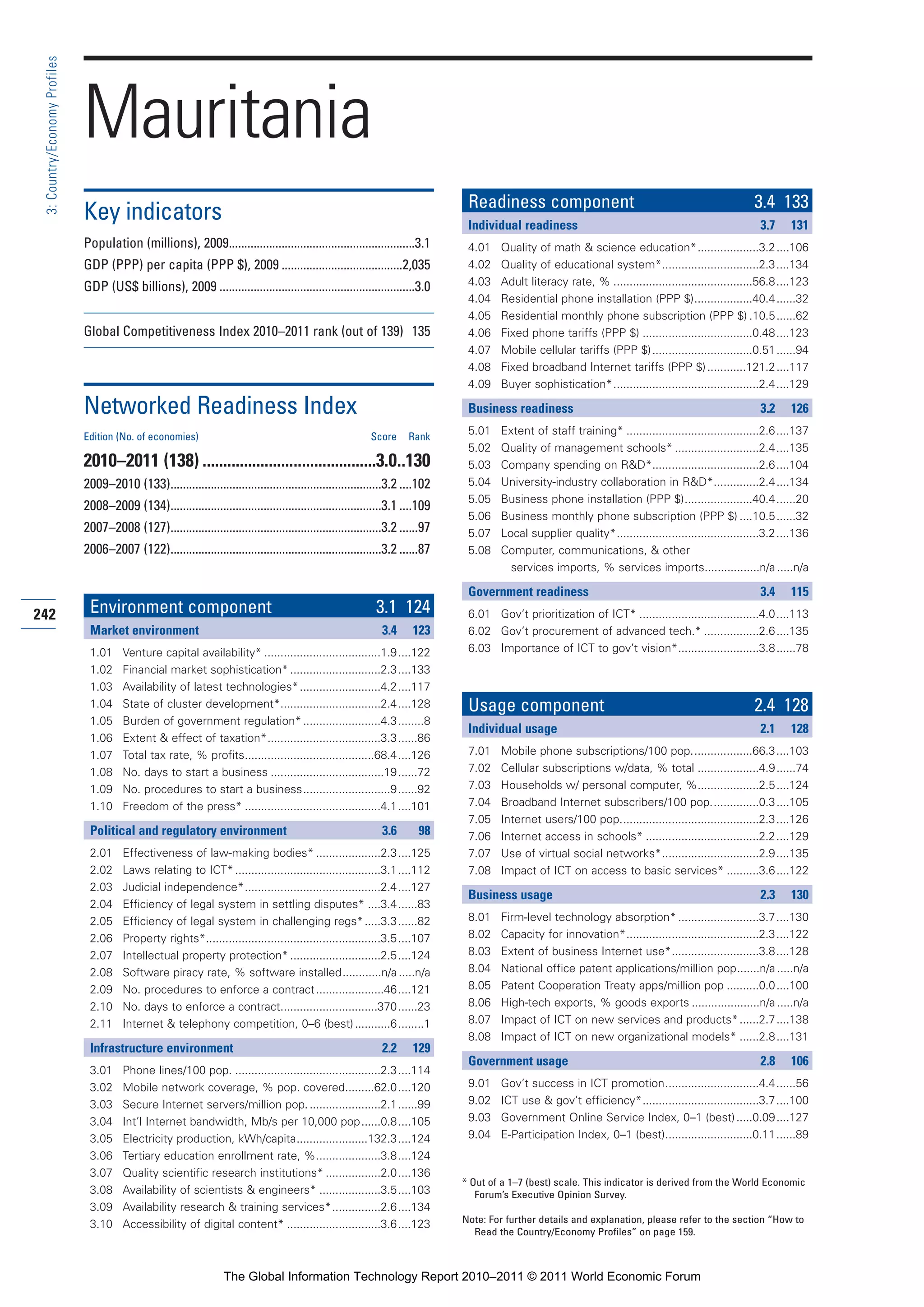
                 Thailand                     59      3.89          LM        7        Mauritania                    130         2.98              LO       18
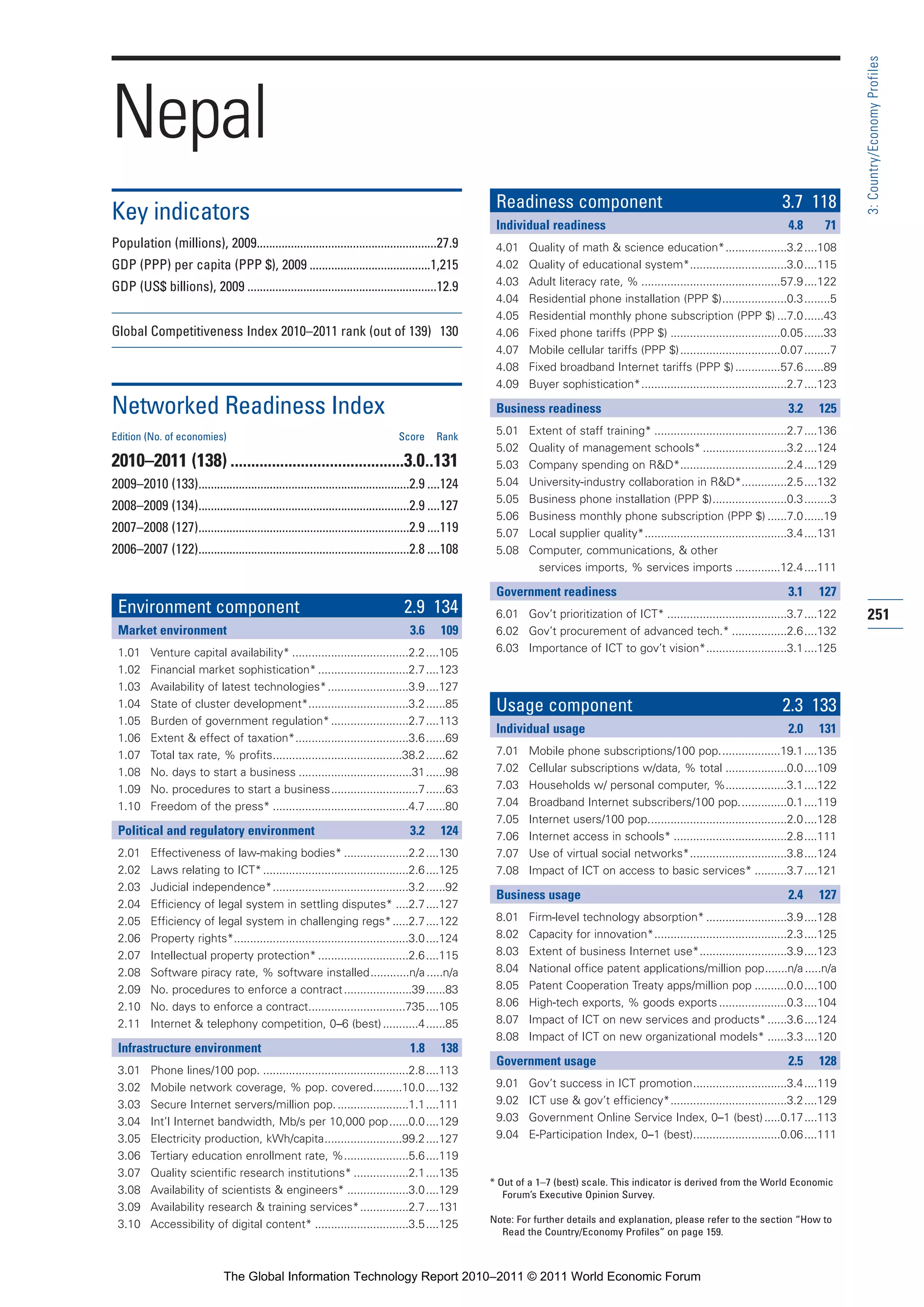
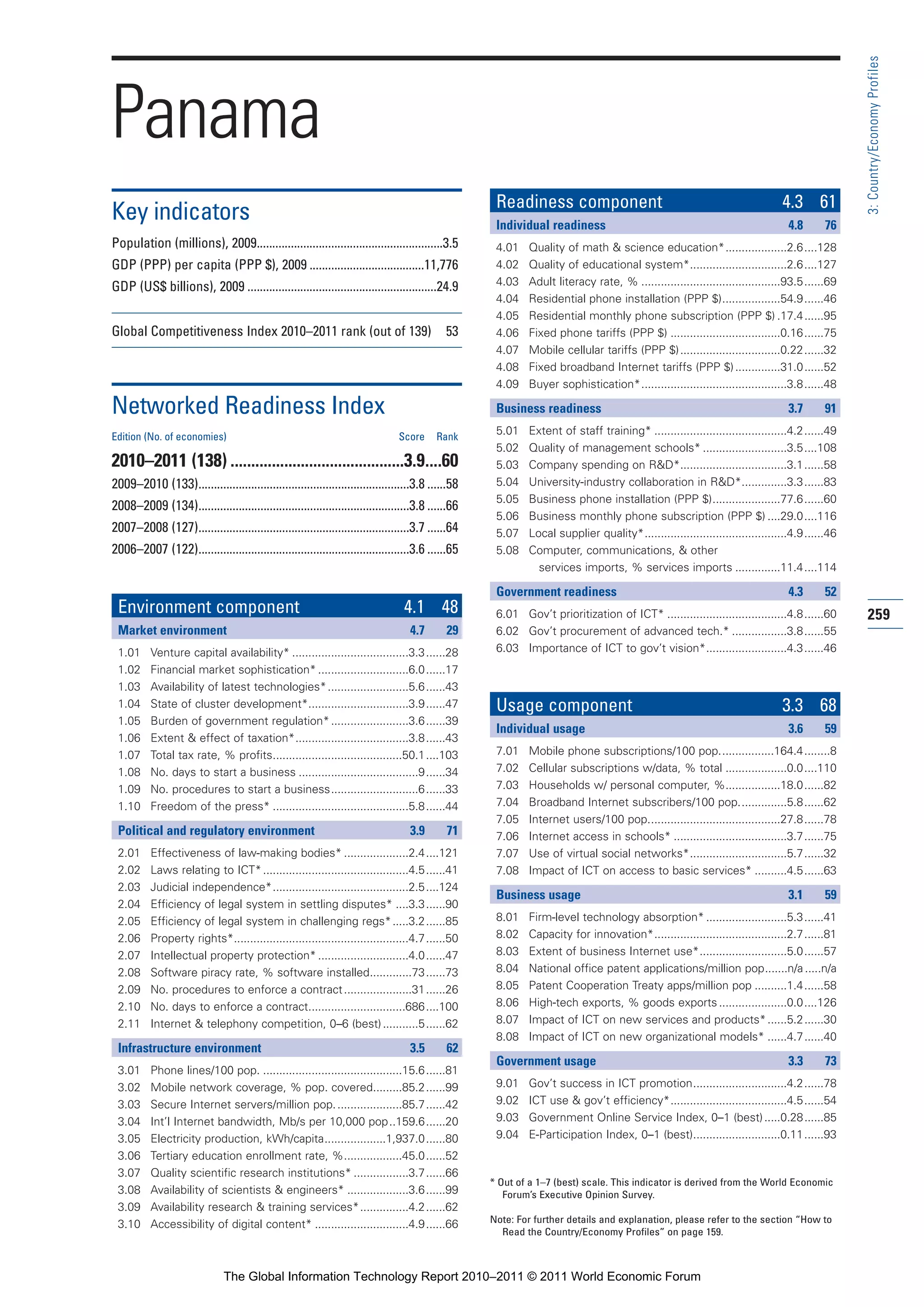
                 Panama                       60      3.89          UM       10        Nepal                         131         2.97              LO       19
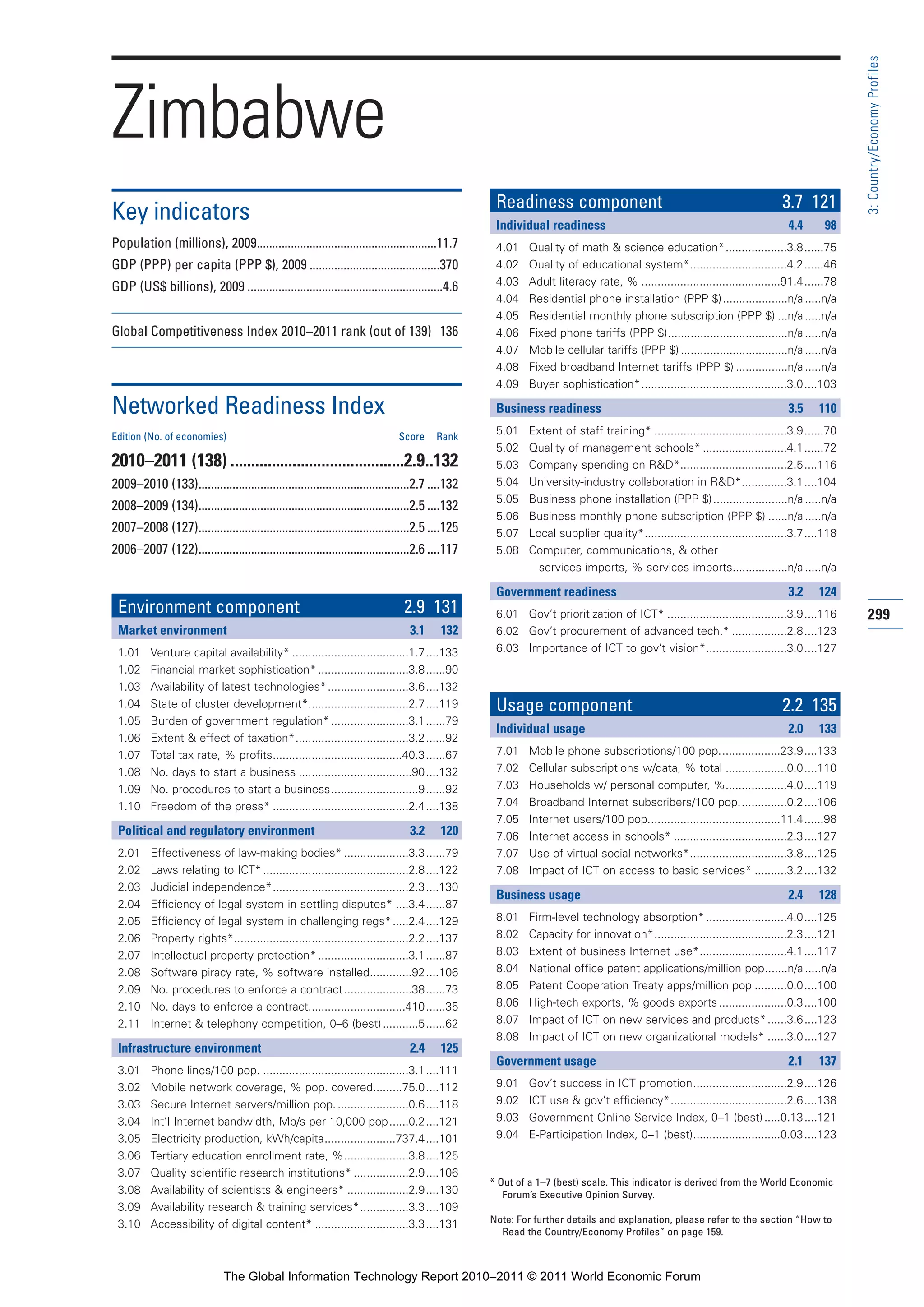
                 South Africa                 61      3.86          UM       11        Zimbabwe                      132         2.93              LO       20
                 Poland                       62      3.84          HI       44        Angola                        133         2.93              LM       32
                 Trinidad and Tobago          63      3.83          HI       45        Swaziland                     134         2.91              LM       33
                 Greece                       64      3.83          HI       46        Bolivia                       135         2.89              LM       34
                 Romania                      65      3.81          UM       12        Timor-Leste                   136         2.72              LM       35
                 Sri Lanka                    66      3.81          LM        8        Burundi                       137         2.67              LO       21
                 Kazakhstan                   67      3.80          UM       13        Chad                          138         2.59              LO       22
                 Bulgaria                     68      3.79          UM       14
                                                                                      * Income groups: HI = high income; UM = upper-middle income; LM = lower-
                 Slovak Republic              69      3.79          HI       47
                                                                                         middle income; LO = low income. The highest-ranked economy of each
                 Azerbaijan                   70      3.79          UM       15          income group appears in bold typeface. Country classification by income
                 Turkey                       71      3.79          UM       16          group is from the World Bank (situation as of December 2010).
                                                                          (Cont’d.)
                                        The Global Information Technology Report 2010–2011 © 2011 World Economic Forum
Part 1_r2_PART 1 3/29/11 6:44 AM Page xx


                                  The Global Information Technology Report 2010–2011 © 2011 World Economic Forum
Part 1_r2_PART 1 3/29/11 6:44 AM Page 1


                Part 1
                The Current Networked Readiness
                of the World and ICT-Enabled
                Transformations 2.0


                                  The Global Information Technology Report 2010–2011 © 2011 World Economic Forum
Part 1_r2_PART 1 3/29/11 6:44 AM Page 2


                                  The Global Information Technology Report 2010–2011 © 2011 World Economic Forum
Part 1_r2_PART 1 3/29/11 6:44 AM Page 3


                                                                                                                                              1.1: The Networked Readiness Index 2010–2011
                CHAPTER 1.1                                                   This year marks the 10th anniversary of the Global
                                                                              Information Technology Report (GITR) series produced by
                                                                              the World Economic Forum (Forum) in collaboration
                The Networked Readiness                                       with INSEAD. The initial idea with this project was to
                                                                              explore the impact of innovation and new technologies
                Index 2010–2011: Celebrating                                  on productivity and development, as a component of
                                                                              the Forum’s research on competitiveness. To this end,
                10 Years of Assessing                                         over the past decade the Networked Readiness Index
                Networked Readiness                                           (NRI), featured in the series, has been measuring the
                                                                              degree to which developed and developing countries
                                                                              across the world leverage information and communica-
                SOUMITRA DUTTA, INSEAD
                                                                              tion technologies (ICT) for enhanced competitiveness.
                IRENE MIA, World Economic Forum
                                                                              It has been helping policymakers and relevant societal
                THIERRY GEIGER, World Economic Forum                          stakeholders to track their economies’ strengths and
                                                                              weaknesses as well as their progress over time, to identify
                                                                              best practices in networked readiness worldwide, and to
                                                                              design roadmaps and strategies toward optimal ICT
                                                                              diffusion. The Report series and the NRI are among
                                                                              the most comprehensive and internationally respected
                                                                              assessments of countries’ preparedness to effectively
                                                                              benefit from ICT advances.
                                                                                    While the NRI has accompanied and measured
                                                                              ICT evolution in the last 10 years, every edition of
                                                                              the Report has gathered the insights of industry experts
                                                                              and academics around a theme of networked readiness
                                                                              of particular relevance for the industry together with
                                                                              a number of case studies exploring and showcasing               3
                                                                              best practices in ICT usage around the world. This
                                                                              year, to celebrate its first 10 years, the Report will take a
                                                                              look at the coming transformations enabled by ICT—
                                                                              transformations 2.0—with a focus on the impact they
                                                                              will have over the next few years on the key societal
                                                                              actors: individuals, businesses, and governments.
                                                                                    Over the last decade, ICT in its many manifestations
                                                                              has become truly ubiquitous. The mobile phone is now
                                                                              for many the omnipresent symbol of ICT in our lives.
                                                                              Today we live in a world where more people have access
                                                                              to ICT (usually a mobile phone) than to toilets or clean
                                                                              water or the electric grid. Although researchers and
                                                                              industry observers have documented the positive impact
                                                                              of ICT diffusion on an economy’s GDP—estimates show
                                                                              that a 10 percent increase in mobile phone penetration
                                                                              is associated with a 1 percent growth in GDP1—we
                                                                              continue to be challenged by questions that were raised
                                                                              by John Gage of Sun Microsystems in the first edition
                                                                              of the GITR: “Can we apply ICT to improve the con-
                                                                              dition of each individual? Can ICT, designed for one-
                                                                              to-one links in telephone networks, or for one-to-many
                                                                              links in radio and television networks, serve to bond us
                                                                              all? And how can new forms of ICT—peer-to-peer,
                                                                              edge-to-edge, many-to-many networks—change the
                                                                              relationship between each one of us and all of us?”2
                                                                                    These questions become particularly relevant given
                                                                              the important role played by ICT (in particular social
                                                                              media) during the recent political upheavals in countries
                                                                              such as Tunisia and Egypt. Governments and public
                                                                              organizations are slowly realizing the power of ICT for


                                   The Global Information Technology Report 2010–2011 © 2011 World Economic Forum
Part 1_r2_PART 1 3/29/11 6:44 AM Page 4


      1.1: The Networked Readiness Index 2010–2011

                                                     redefining governance and providing new modes of              networks, as well as ICT impact on business innovation
                                                     engagement with citizens. However, institutional change       and delivery of basic services to citizens, as detailed
                                                     remains slow and hard. For ICT to be used effectively,        later in this chapter. Fully incorporating ICT impact
                                                     technology needs to be matched to the local context           into the networked readiness framework will take more
                                                     and be sensitive to people’s needs. Doing all this is not     time, which is needed to define appropriate metrics
                                                     easy. The first law of technological change mentioned by      and put in place rigorous processes to collect these data
                                                     John Gage in the first edition of the GITR remains true       on an international basis. However, the GITR team is
                                                     today: “Technology is easy. People are hard.”3                committed to stepping up its efforts in this area and to
                                                           This chapter presents the methodology and frame-        working together with the relevant data organizations,
                                                     work underpinning the NRI and the highlights of its           experts, and practitioners on this matter. The Report’s
                                                     2010–11 rankings for a record 138 economies. An               10th anniversary will also see the launch of a new plat-
                                                     analysis of country and regional trends in networked          form to share data, collect feedback, and foster dialogue
                                                     readiness using a five-year time series, along with an        around the societal impact of ICT (see Box 1).
                                                     overview of future dissemination efforts, is also included.         The Report also provides a context for diving deeper
                                                                                                                   into specialized topics. For instance, as part of the 10th
                                                                                                                   anniversary celebration and in response to issues raised
                                                     The networked readiness framework: Preparing for the          in discussions with the members of the Forum’s infor-
                                                     next decade                                                   mation technology and telecommunications community,
                                                     When the networked readiness framework was created,           a special study was undertaken—as a collaboration among
                                                     it represented one of the first attempts to make concep-      the Forum, Comscore, the Oxford Internet Institute,
                                                     tual sense of the complex ICT reality, identifying the        and INSEAD—on the impact of the Internet on global
                                                     common factors enabling countries to effectively use          attitudes toward privacy, trust, security, and freedom of
                                                     technology. The framework was intended to provide             expression (see Box 2). It is expected that similar in-
                                                     guidance to policymakers and civil society on the fac-        depth research on topical issues will accompany future
                                                     tors that they needed to take into account to fully lever-    editions of the Report.
                                                     age ICT in their competitiveness and growth strategies.
              4                                            Based on the latest academic research, management
                                                     literature, and ongoing work by other institutions and        The networked readiness framework 2010–11 and its
                                                     multilateral organizations on the subject,4 the networked     methodology
                                                     readiness framework has been kept stable since 2002.          As discussed, the theoretical framework underlying the
                                                     There have been some minor adjustments at the variable        NRI 2010–2011 was introduced for the first time in
                                                     level to better reflect the dynamic trends in the technol-    2002, and has remained stable ever since with some
                                                     ogy landscape and in the methodology employed to              adjustments (see Box 4 for details). It assesses the extent
                                                     compute the rankings.5 This has allowed for meaningful        to which different economies across the world leverage
                                                     comparisons across time with the creation of a valuable       ICT advances on the basis of the following three under-
                                                     database of technology metrics, providing unique              lying principles:
                                                     insights for researchers as well as for decision makers in
                                                     the adoption of concrete policy decisions.                        1. An ICT-conducive environment is a key precondition
                                                           However, a comprehensive review process of the                 of networked readiness. The successful use of ICT
                                                     framework has been undertaken in the last two years to               is enabled by the country’s overall environment
                                                     make sure it continues to effectively capture the main               for innovation and ICT, including market con-
                                                     drivers of ICT readiness almost a decade after its cre-              ditions, regulatory framework, and infrastructure
                                                     ation.6 In particular, considering how ICT has become                (both physical and human).
                                                     increasingly omnipresent and almost universal in today’s
                                                                                                                       2. Networked readiness requires a society-wide effort.
                                                     world,7 the issue seems to have moved from one of
                                                                                                                          While the government has a natural leadership
                                                     access to the question of how to make the best use of
                                                                                                                          role to play in establishing an innovation-friendly
                                                     ICT in order to improve business innovation, gover-
                                                                                                                          environment and in setting the ICT vision for
                                                     nance, citizens’ political participation, and social cohe-
                                                                                                                          the future, all national stakeholders should be
                                                     sion. The original framework does capture usage but
                                                                                                                          involved in the definition and implementation
                                                     falls short in looking at the impact of ICT usage on the
                                                                                                                          of the vision: a joint effort of the government,
                                                     elements above.
                                                                                                                          the business sector, and individuals is required
                                                           At the same time, rigorous and quantitative meas-
                                                                                                                          to achieve optimal networked readiness. The
                                                     urement of ICT impact is still in its early days. Data def-
                                                                                                                          combination of an ICT-savvy government with
                                                     inition and availability remain a challenge, especially
                                                                                                                          a clear ICT vision and an actively engaged pri-
                                                     when the ambition is to cover nearly 140 economies.
                                                                                                                          vate sector has been at the core of networked
                                                           As a first step, the 2010–11 framework includes
                                                                                                                          readiness success stories such as Israel, Estonia,
                                                     some new indicators gauging the extent of virtual social
                                                                                                                          Korea, and Singapore. These economies have


                                                                            The Global Information Technology Report 2010–2011 © 2011 World Economic Forum
Part 1_r2_PART 1 3/29/11 6:44 AM Page 5


                                                                                                                                                                                                      1.1: The Networked Readiness Index 2010–2011
                  Box 1: Capturing and shaping the digital transformation: Leveraging the GITR

                  DEREK O’HALLORAN and JOANNA GORDON, World Economic Forum

                  Digitization is changing our world on an almost daily basis, with                                               2. New web platform
                  profound yet unknown significance for all aspects of our lives—                                                 A new interactive web platform will be launched to make the
                  from warfare to global poverty, banking to governance, media to                                                 GITR data more user-friendly, serve as a focal point for develop-
                  health. These rapid changes bring exceptional challenges.                                                       ment and innovation data from other organizations, and foster
                         The GITR series has provided a unique platform for public-                                               dialogue on issues of networked readiness among different
                  private dialogue on innovation and networked readiness and                                                      stakeholders. The platform will provide tools that allow users to
                  has contributed to raising awareness of the importance of new                                                   share insights, discuss findings or best practices,
                  technologies for overall competitiveness with governments and                                                   and contribute to a shared pool of knowledge. Notably, it will
                  civil society alike. Moreover, the series has acted as a focal                                                  include data visualization and analysis tools, a discussion
                  point for collaborative, evidence-based generation of knowl-                                                    forum, and a wiki. Materials from the dialogue series sessions
                  edge, leveraging the Forum’s competitiveness expertise and                                                      will be shared on the website forum to allow broader and con-
                  the insights of its unique member community. Through a combi-                                                   tinued dialogue on specific topics. The platform is being devel-
                  nation of new web-based tools, deeper engagement with its                                                       oped in collaboration with DevInfo and Ruderfinn.
                  members and constituents, and the creation of a repository
                  for ICT and development data, the Forum hopes to further the                                                    3. Data repository
                  understanding of networked readiness enablers and capture                                                       As the focus of networked readiness moves beyond questions
                  ICT impact. In this spirit, on the occasion of the 10th anniversary                                             of access, investment decisions, policymaking, and research
                  of the series, the Forum is launching a number of important                                                     agendas are pushed beyond baseline metrics and need more
                  initiatives, explained below.                                                                                   nuanced evidence. What sorts of technology inputs have the
                                                                                                                                  biggest impact? And conversely, on what sorts of outputs
                  1. Dialogue series                                                                                              does technology have the biggest impact? Health? Education?
                  The GITR dialogue series consists of multi-stakeholder discus-                                                  Financial inclusion? What are the critical environmental factors
                  sions and workshops aimed at improving private and public                                                       that ensure such success? The Forum is working with internal
                                                                                                                                                                                                      5
                  capacity to fully use and leverage global ICT benchmarks to                                                     and external partners to allow new datasets to be hosted
                  inform national strategies, provide a space for dialogue about                                                  alongside the NRI data on the new website referenced above.
                  the implications of the digital transformations, and collect feed-                                              By exposing networked readiness data alongside others’ key
                  back on the networked readiness framework to keep it pertinent.                                                 indicators, with tools that allow for simple graphical analysis
                  The Forum will host keystone workshops across regions, and                                                      and supported by focused real-world and virtual engagements,
                  offer relevant stakeholders thought leadership opportunities to                                                 new insights, hypotheses, discussion points, and knowledge
                  lead real-world or virtual sessions on more focused topics.                                                     can be generated (see Figure A).


                     Figure A: The collaborative knowledge creation cycle


                                                                                                                                         Mul
                                                                                                                                            tise
                                                                                ls                                                              cto
                                                                              oo                                                                   r
                                                                            nt                                                                                    da
                                                                                                                                                                    ta
                                                                         tio                                                           Ana                            ,
                                                                   za


                                                                                               tion                                       lys
                                                                                                                                                                         da


                                                                                                                                             is:
                                                                ali


                                                                                             ma
                                                                                                                                                                           ta


                                                                                                                                                 Da
                                                                                          for
                                                             isu


                                                                                                                                                   ta
                                                                                      sis
                                                                                                                                                                              an


                                                                                                                                                      c
                                                           av


                                                                                                                                                                                aly
                                                                                  e


                                                                                                                                                             oll
                                                                               oth
                                                        Dat


                                                                                                                                                                ec


                                                                                                                                                                                   sis
                                                                             yp


                                                                                                                                                                  tio
                                                                           :H


                                                                                                                                                                     n


                                                                                                                                                                                       tool
                                                                        ght


                                                                                                                                                                      an
                                                                    Insi


                                                                                                                                                                                          d te


                                                                                                                                                                                            s
                                                                                                                                                                                              sting


                                                                                                                       Collaboration
                                                     Dialo


                                                                                                                                                                      tio n
                                                                     Deb


                                                                                                                                                                    era
                                                                         at e


                                                                                                                                                                  en
                                                       gue


                                                                          :E


                                                                                                                                                                 eg
                                                                              vi d


                                                                                                                                                             dg


                                                                                                                                                                                       a
                                                                                 en
                                                         ser


                                                                                      e-
                                                                                                                                                                                    for
                                                                                                                                                            le
                                                                                     c


                                                                                           ba                                                               ow
                                                                                                                                                       Kn
                                                             ies


                                                                                                se
                                                                                                                                                                                  ne


                                                                                                     dd
                                                                                                          is c                               su   s:
                                                              ,w


                                                                                                                                         sen
                                                                                                                                                                              n li


                                                                                                                 uss
                                                                                                                       ion         Con
                                                                   iki


                                                                                                                                                                         ,o


                                                                     ne                                                                                                       s
                                                                    ,


                                                                          w                                                                                              ie
                                                                                sta                                                                             s   er
                                                                                      nd                                                                     ue
                                                                                           ard                                                         log
                                                                                                     s                                      Dia


                                     The Global Information Technology Report 2010–2011 © 2011 World Economic Forum
Part 1_r2_PART 1 3/29/11 6:44 AM Page 6


      1.1: The Networked Readiness Index 2010–2011

                                                                                                                               been able to effectively use ICT as a tool for
                                                     Box 2: A global perspective on freedom of                                 the structural transformation of their economies
                                                     expression, privacy, trust, and security online                           and societies, leapfrogging to higher stages of
                                                                                                                               development.
                                                     SOUMITRA DUTTA, INSEAD; BILL DUTTON, Oxford University;
                                                                                                                           3. ICT readiness leads to ICT usage and increased
                                                     and GINETTE LAW, INSEAD
                                                                                                                              impact. National actors that are more prepared
                                                                                                                              and show a greater interest toward ICT advances
                                                     Global diffusion of the Internet is centering debate on values
                                                                                                                              will be likely to use it more effectively in their
                                                     and attitudes that often vary across cultures, especially
                                                     around issues of online freedom of expression, privacy, trust,
                                                                                                                              daily activities. This link between enablers and
                                                     and security. Leading Internet stakeholders—such as pri-                 usage/impact comes from prior research in the
                                                     vate- and public-sector members, governments, policymak-                 management literature, where all models of total
                                                     ers, and the media—have concentrated their attention on                  quality management made an explicit distinction
                                                     these particular concerns. Yet relatively little is known about          between enablers and results.8 Figure 1 provides a
                                                     the opinion of users on the subject or about the different               graphic representation of the networked readiness
                                                     ways—determined to some extent by which part of the world                framework in its three dimensions: environment,
                                                     they inhabit—they may experience the impact of the                       readiness, and usage/impact. The environment
                                                     Internet.                                                                component is composed of the market, regula-
                                                           In order to better understand cross-cultural differences
                                                                                                                              tory, and infrastructure pillars, while the readiness
                                                     in user behaviors and attitudes, the Oxford Internet Institute
                                                                                                                              and usage/impact components are composed
                                                     and INSEAD, in collaboration with Comscore and the Forum,
                                                                                                                              of three pillars respectively broken down along
                                                     conducted a survey on global user outlook on freedom of
                                                     expression, privacy, trust, and security online. Over 5,400
                                                                                                                              the lines of individuals, businesses, and the gov-
                                                     adult Internet users from 13 different countries participated            ernment.
                                                     in the study.
                                                           Findings point to the rise of a new global Internet cul-         The networked readiness framework translates into
                                                     ture, where users across countries generally share similar        the NRI, comprising three subindexes that measure
                                                     opinions and habits related to these vital matters pertaining     the environment for ICT, together with the main stake-
              6                                      to the Internet. By and large there is support and desire for     holders’ readiness and usage, with a total of nine pillars
                                                     freedom of expression, privacy, trust, and security online        and 71 variables as follows:
                                                     from users worldwide, without any willingness for trade-offs
                                                     among these potentially conflicting values and priorities.            1. Environment subindex
                                                     Users in the newly adopting countries, which are becoming                • Market environment
                                                     the dominant online population, are however expressing                   • Political and regulatory environment
                                                     even greater support for the most basic value underpinning               • Infrastructure environment
                                                     the Internet—freedom of expression. In addition, users in
                                                     nations that are more recently embracing the Internet are
                                                                                                                           2. Readiness subindex
                                                     also outpacing users in older adopting nations in their inno-            • Individual readiness
                                                     vative uses of the Internet, manifesting more liberal attitudes          • Business readiness
                                                     and behaviors than their counterparts. In conclusion, a new              • Government readiness
                                                     Internet world is emerging today—one that may lead to
                                                                                                                           3. Usage subindex
                                                     many changes and consequences for the future of the
                                                                                                                              • Individual usage
                                                     Internet.
                                                           The full study by the same authors will be released
                                                                                                                              • Business usage
                                                     in April 2011 as a part of the celebration of the Global                 • Government usage
                                                     Information Technology Report series’ 10th anniversary.
                                                                                                                             The final NRI score is a simple average of the three
                                                                                                                       composing subindex scores, while each subindex’s score
                                                                                                                       is a simple average of those of the composing pillars. In
                                                                                                                       doing this, we assume that all Index components give a
                                                                                                                       similar contribution to national networked readiness. The
                                                                                                                       Technical Appendix at the end of this chapter includes
                                                                                                                       detailed information on the composition and computa-
                                                                                                                       tion of the NRI 2010–2011.
                                                                                                                             A brief description of the different composing
                                                                                                                       elements (at the subindex and pillar level) follows.

                                                                                                                       Environment subindex
                                                                                                                       The environment subindex gauges the friendliness of
                                                                                                                       a country’s market, regulatory, and infrastructure


                                                                             The Global Information Technology Report 2010–2011 © 2011 World Economic Forum
Part 1_r2_PART 1 3/29/11 6:44 AM Page 7


                                                                                                                                                1.1: The Networked Readiness Index 2010–2011
                Figure 1: The networked readiness framework


                                                            Component subindexes                      Pillars


                                                                                             Market environment

                                                               Environment                   Political and regulatory environment

                                                                                             Infrastructure environment


                                                                                             Individual readiness
                            Networked
                            Readiness Index                    Readiness                     Business readiness

                                                                                             Government readiness


                                                                                             Individual usage

                                                               Usage                         Business usage

                                                                                             Government usage


                environments to innovation and ICT development. It            tertiary enrollment rate, the quality of research institu-
                                                                                                                                                7
                includes a total of 31 variables grouped into three           tions, and the availability of scientists and engineers).
                different pillars.
                      The market environment pillar (10 variables) gauges     Readiness subindex
                the quality of the business environment for ICT devel-        The readiness subindex gauges the preparation and
                opment and diffusion, including dimensions such as the        willingness of the three stakeholder groups to use tech-
                availability of appropriate financing sources (notably        nology, particularly ICT, in their day-to-day activities
                venture capital) and the extent of business sophistication    and transactions, with a total of 20 variables.
                (as captured by cluster development), together with the             The individual readiness pillar (nine variables) provides
                ease of doing business (including the presence of red         insight into citizens’ preparedness to use ICT, taking
                tape and excessive fiscal charges) and the freedom of         into consideration both basic educational skills and ICT
                exchanging information over the Internet (proxied by          accessibility. The first aspect is captured by the quality
                the freedom of the press).                                    of the educational system (notably math and science
                      The political and regulatory environment pillar (11     education) and the literacy rate; the latter by residential
                variables) assesses the extent to which the national legal    telephone connection charges and monthly subscription
                framework facilitates innovation and ICT penetration,         costs, as well as fixed broadband, mobile cellular, and
                taking into account general features of the regulatory        fixed telephone line tariffs.
                environment (including the protection afforded to prop-             The business readiness pillar (eight variables) assesses
                erty rights, the independence of the judiciary, and the       firms’ capacity and inclination to incorporate ICT into
                efficiency of the law-making process) as well as more         their operations and processes. Elements taken into
                ICT-specific dimensions (the development of ICT laws          consideration are the quality of on-the-job training;
                and the protection of intellectual property, including the    spending on research and development (R&D); col-
                software piracy rate and the level of competition in the      laboration between academia and industry, key to
                Internet and telephony sector).                               fostering applied innovation and intrinsic to effective
                      The infrastructure environment pillar (10 variables)    clusters; the quality of suppliers in the economy; and
                captures the development of the national innovation-          the affordability of telecommunication for business
                related infrastructure, both in its physical elements         (i.e., business telephone connection and monthly tele-
                (namely the number of telephone lines and secure              phone subscription fees).
                Internet servers, electricity production, mobile network            The government readiness pillar (three variables) in turn
                coverage rate, Internet bandwidth, and accessibility of       attempts to gauge government’s vision and prioritization
                digital content) and its human aspects (including the         of ICT in the national agenda and competitiveness strategy,


                                  The Global Information Technology Report 2010–2011 © 2011 World Economic Forum
Part 1_r2_PART 1 3/29/11 6:44 AM Page 8


      1.1: The Networked Readiness Index 2010–2011

                                                     Figure 2: Breakdown of indicators used in the NRI 2010–2011 by data source


                                                                                      EXECUTIVE OPINION     INDICATORS FROM
                                                                                           SURVEY            OTHER SOURCES
                                                                                         39 Indicators         32 Indicators            TOTAL: 71 indicators
                                                                                             (55%)                 (45%)


              8
                                                     including the extent to which public procurement of           on creating new models and products as well as organi-
                                                     high-tech products is used as a tool to promote efficiency    zational models is included.
                                                     and innovation.                                                    The government usage pillar (four variables) provides
                                                                                                                   insight into the implementation of its vision for ICT,
                                                     Usage subindex                                                including the quality of e-government services provided
                                                     The last component of the NRI measures the actual             and the extent of e-participation achieved, as well as
                                                     ICT usage by an economy’s main social actors and              ICT impact on government’s efficiency.
                                                     includes a total of 20 variables. As discussed above, this
                                                     subindex will progressively evolve toward capturing ICT       Computation methodology and data
                                                     impact in terms of inclusive society, business innovation,    In order to capture as comprehensively as possible all
                                                     and better governance. The transition started last year       relevant dimensions of economies’ networked readiness,
                                                     and continues in this edition with the introduction           the NRI 2010–2011 is composed of a mixture of quan-
                                                     of a few new variables.                                       titative and survey data, as shown in Figure 2.
                                                          The individual usage pillar (eight variables) measures         Thirty-two out of 71—or 45 percent—of the vari-
                                                     ICT penetration and diffusion at the individual level,        ables composing the NRI are quantitative data, collected
                                                     using indicators such as the number of mobile and             by international organizations such as the International
                                                     broadband Internet subscribers, Internet users, personal      Telecommunication Union (ITU), the World Bank, and
                                                     computers (PCs), cellular subscriptions with data access,     the United Nations. International sources ensure the
                                                     and Internet access in schools. The use of virtual social     validation and comparability of data across countries.
                                                     networks and ICT impact on basic services are also                  The remaining 39 variables capture aspects that are
                                                     measured.                                                     more qualitative in nature or for which internationally
                                                          The business usage pillar (eight variables) assesses     comparable quantitative data are not available for a large
                                                     businesses’ capacity to effectively use technology to gen-    enough number of countries, but that are nonetheless
                                                     erate productivity gains and innovation by capturing          crucial to fully measure national networked readiness.
                                                     firms’ technology absorption and capacity for innovation      These data come from the Executive Opinion Survey
                                                     (including the number of utility patents per 100 pop-         (the Survey), which the Forum administers annually to
                                                     ulation and high-tech exports), as well as the extent         over 15,000 business leaders in all the economies included
                                                     to which businesses use the Internet in their daily           in the Report.9 The Survey represents a unique source
                                                     transactions and operations. Moreover, ICT impact             of insight on important dimensions of ICT readiness,
                                                                                                                   such as the government’s vision for ICT, the economy’s


                                                                            The Global Information Technology Report 2010–2011 © 2011 World Economic Forum
Part 1_r2_PART 1 3/29/11 6:44 AM Page 9


                                                                                                                                             1.1: The Networked Readiness Index 2010–2011
                quality of education, and ICT impact on access to basic                pertains more to the soft infrastructure of a
                services or on the development of new products and                     country.
                services, among others.
                                                                                    4. Individual readiness. Variable 4.03, Adult liter-
                     The NRI’s coverage every year is determined by
                                                                                       acy rate, was added as an important indicator of
                the Survey coverage and quantitative data availability.
                                                                                       citizens’ preparedness to use ICT.
                This year the Report includes 138 economies, five more
                than in the 2009–10 edition. Five new countries are                 5. Business readiness. As mentioned, the variable
                included for the first time (Angola, Cape Verde, Lebanon,              Local availability of specialized research and
                Iran, and Swaziland) and Moldova was re-instated,10                    training services was moved to pillar 3, while
                while Suriname had to be dropped for lack of Survey                    the variable Availability of new telephone lines
                data.                                                                  for businesses was dropped.
                     In terms of NRI composition, albeit (as previously             6. Government readiness. No change was made
                mentioned) the networked readiness framework has                       to this pillar.
                remained stable since 2002, the actual variables included
                in the Index each year have experienced some variation              7. Individual usage. Mirroring the changes in
                over time. This has kept the Index current with the                    ITU’s methodology of collecting ICT penetra-
                rapid changes happening in the dynamic ICT sector                      tion data, the variable gauging the number of
                so that it continues to be an ever-relevant and cutting-               PCs per 100 population was replaced by the
                edge explanatory tool. For example, a larger number of                 number of Households with a PC. Also Cellular
                variables related to mobile telephony has been included                subscriptions with data access (as a percentage
                over the last few years to reflect the increased impor-                of total subscriptions) was added to better assess
                tance of this element in the technology landscape. On                  the degree of sophistication of mobile devices
                a similar note, a new variable on the use of virtual                   in a country. Last but not least, two new Survey
                social networks is included this year to capture one of                variables capturing aspects related to the impact
                the most interesting trends observed in recent times.                  of ICT on social cohesion have been included:
                Moreover, time-sensitive variables that have not been                  Use of virtual social networks (7.07) and Impact
                recently updated by relevant international institutions                of ICT on access to basic services, including         9
                may need to be dropped in any given year. As detailed                  health and education (7.08).
                below, there have been some modifications to the num-               8. Business usage. The variable on the prevalence
                ber and nature of variables included in the NRI this                   of foreign technology was dropped since this
                year in preparation of the evolution envisaged for the                 aspect is captured by the variable Capacity for
                networked readiness framework over the next decade.                    innovation. An important improvement was also
                The changes made this year are detailed below, by pillar:              made in the patent application measurement: US
                                                                                       Patent and Trademark Office (USPTO) data
                     1. Market environment. The variable on intensity                  used for granted utility patents have been replaced
                        of competition has been dropped because the                    by World Intellectual Property Organization
                        competition aspect is now covered by the                       (WIPO) data on utility patent applications. As
                        Internet and telephony sectors competition                     discussed in more detail in Box 3, PCT applica-
                        index indicator included in the political and                  tions (variable 8.05) is combined with National
                        regulatory environment pillar.                                 office patent applications (variable 8.04) in a
                     2. Political and regulatory environment. The                      composite indicator that better captures national
                        variable Software piracy rate (as a percentage                 innovation potential. Moreover, two new Survey
                        of software installed) has been added to give a                variables have been added to capture the Impact
                        better sense of the intellectual property protec-              of ICT on services and products (8.07) and the
                        tion in a country, complementing the related                   Impact of ICT on new organizational models
                        Survey indicators (variables 2.06 and 2.07).                   (8.08).

                     3. Infrastructure environment. Variable 3.02,                  9. Government usage. The variable on the
                        Mobile network coverage rate, is included for                  presence of ICT in government agencies was
                        the first time to better capture hard infrastructure.          removed since it has been dropped in the latest
                        With respect to human resources infrastructure,                Survey.
                        the variable on education expenditure (as a per-
                        centage of GCI) had to be dropped because it                More details on the variables included in the Index
                        was discontinued by the World Bank. Also the            and their computation can be found in the Technical
                        variable Local availability of specialized research     Appendix at the end of this chapter and in the Technical
                        and training services (3.09) was moved to this          Notes and Sources section at the end of the Report.
                        pillar from pillar 5 (business readiness) because it


                                   The Global Information Technology Report 2010–2011 © 2011 World Economic Forum
Part 1_r2_PART 1 3/29/11 6:44 AM Page 10


      1.1: The Networked Readiness Index 2010–2011


                                                     Box 3: Capturing innovation: The patent system

                                                     MOSHAID KHAN and SACHA WUNSCH-VINCENT, World Intellectual Property Organization

                                                     The patent system is designed to encourage innovation by                   are also likely to reflect the trade patterns of that particular
                                                     providing innovators with time-limited exclusive legal rights,             country. Moreover, data of one single office will capture only
                                                     enabling inventors to appropriate the returns of their innovative          a fraction of world innovation.
                                                     activities.                                                                      In addition, the use of statistics on patent applica-
                                                            To achieve this objective, a patent confers a set of                tions—instead of data on patents granted—ensures that
                                                     exclusive rights to applicants by law for inventions that meet             innovative performance is captured in a more timely and
                                                     standards of novelty, non-obviousness, and industrial applica-             comprehensive manner. In contrast, data on patents granted
                                                     bility. It is valid for a limited period of time (generally 20 years),     reflect inventions that obtain patent protection and that are
                                                     during which patent holders can commercially exploit their                 most likely several years old. This is because of lengthy (and
                                                     inventions on an exclusive basis. In return, applicants disclose           increasing) processing and examination periods, which are
                                                     their inventions to the public so that others, skilled in the art,         part of the patenting process.
                                                     may replicate the invention.
                                                                                                                              2. The number of patents filed under the WIPO-administered
                                                     Patents as statistical indicators of innovative activity                    Patent Cooperation Treaty
                                                     Patent indicators, along with other science and technology                 To complement national data, the second metric used in the
                                                     indicators (e.g., R&D expenditures), are a good and detailed               Report is the number of Patent Cooperation Treaty (PCT)
                                                     source of information on the inventive activity of countries,              international applications data by residents of a given coun-
                                                     regions, and firms, as well as other innovators. Among the                 try in 2010.3
                                                     available innovation indicators, patent indicators are probably                  National patent office data are frequently criticized on
                                                     the most frequently used. Griliches (1990) calls patents “a                the grounds that there is a lack of international comparability.
                                                     good index of inventive activity” and Eaton and Kortum (1996)              The use of PCT data to some extent alleviates those criti-
                                                     approve of patent data as a widely accepted measure of inno-               cisms.
                                                     vation.1 As opposed to many other related indicators, patent                     An inventor of a promising technology with international
     10                                                                                                                         market potential will wish to protect his or her invention in
                                                     data are also available for most countries in a timely manner.
                                                           The Global Information Technology Report series has                  more than one country. In addition to filing patents directly in
                                                     included patent data for a number of years. Previous editions              other jurisdictions, inventors can file an “international appli-
                                                     used the number of patents granted by the United States Patent             cation” through the PCT, which facilitates the acquisition of
                                                     and Trademark Office (USPTO) as a proxy for innovative activity.           patent rights in a large number of jurisdictions (142 contract-
                                                           This edition of the Report relies on a new composite indi-           ing states) by reducing the requirement to file a separate
                                                     cator based on two patent measures drawn from the World                    application in each jurisdiction.
                                                     Intellectual Property Organization (WIPO)’s Statistics Database                  The use of PCT data sheds light on patents that might
                                                     (www.wipo.int/ipstats/en), as explained below.                             be the most economically valuable, as these are the ones
                                                                                                                                that inventors are likely to patent abroad and for which
                                                                                                                                inventors are willing to incur the extra costs that the process
                                                     1. The number of patent applications filed by residents at
                                                        their national patent office (resident applications)                    of patenting abroad requires. It usefully complements data on
                                                       When an inventor decides to protect an invention through                 national patents filed that—depending on the country in
                                                       the patent system, the first step is to file an application with         question—might have a more limited commercial and global
                                                       a patent office.                                                         appeal.
                                                              In most cases, applicants tend to file at their national
                                                       patent office. Data on resident patent applications (2009 or                 In conclusion, this combination of data on national patent
                                                       latest available year) capture this patenting activity of resi-        office filings and filings under the PCT system makes for a
                                                       dents in a given country. An application is filed with a patent        strong and timely indicator of inventive activity and innovation
                                                       office by an applicant residing in the country in which that           with very good country coverage. It also better achieves the
                                                       office has jurisdiction. For example, a patent application filed       goal of capturing worldwide innovative activity, in particular
                                                       with the Japan Patent Office (JPO) by a resident of Japan is           inventions in medium- or lower-income economies and inven-
                                                       considered a resident application for the JPO.                         tions with a possibly strong international appeal.
                                                              In contrast, patent indicators based on a specific office
                                                       will introduce a home bias between resident (domestic) and             Notes
                                                       non-resident (foreign) applications, because the propensity            1 See Griliches 1990; Easton and Kortum 1996; and the OECD
                                                       to patent at the national patent office is considerably higher           Patent Statistics Manual.
                                                       than the propensity to patent abroad. For example, only 4.4            2 WIPO 2010.
                                                       percent of total Chinese patent applications in 2008 were
                                                                                                                              3 See www.wipo.int/pct/en/ for more information on the PCT.
                                                       filed abroad.2 Patents submitted to one single patent office


                                                                               The Global Information Technology Report 2010–2011 © 2011 World Economic Forum
Part 1_r2_PART 1 3/29/11 6:44 AM Page 11


                                                                                                                                             1.1: The Networked Readiness Index 2010–2011
                The current networked readiness landscape: Insight                    Finland moves up three positions and completes
                from the NRI 2010–2011                                          the NRI podium. Finland’s performance is consistently
                This section provides an overview of the networked              outstanding. The country features in the top 10 of eight
                readiness landscape of the world as assessed by the NRI         pillars; the only area of relative weakness is the govern-
                2010–2011, highlighting the top 10 performers and               ment usage pillar, where Finland ranks 24th. Conducive
                main regional trends for Europe and Central Asia, Asia          market and regulatory environments, as well as excellent
                and the Pacific, Latin America and the Caribbean, sub-          soft and hard infrastructures, constitute a very fertile
                Saharan Africa, and the Middle East and North Africa            ground. Businesses are aggressive at harnessing and pio-
                (MENA).11 Tables 1 through 4 report the 2010–11                 neering new technologies. As a result, the country ranks
                rankings for the overall NRI, its three components,             3rd for the number of PCT patent applications per
                and its nine pillars, also indicating the rankings within       million population (388.88). ICT readiness is remarkable
                each relevant income group to further contextualize             within the population (3rd) thanks mainly to the coun-
                the results for each economy covered. In addition, the          try’s excellent educational fundamentals, and ICT usage
                Country/Economy Profiles and Data Table sections at             is therefore pervasive and earns Finland the second spot
                the end of the Report present the detailed results for the      in this dimension.
                138 economies covered by the study and the 71 indica-                 For the second year in a row, Switzerland ranks
                tors composing the NRI. To complement the analysis of           4th overall. The country offers one of the most favorable
                the 2010–11 results, Box 4 traces back the history of the       environments in the world for innovation and new
                NRI and describes its most salient trends since 2006.           technologies, with a world-class infrastructure (3rd), a
                                                                                business-friendly environment (2nd), and an efficient
                Top 10                                                          political and regulatory framework (6th). Its level of
                The composition of the top 10 is fairly stable compared         business readiness is second to none thanks to intense
                with last year. Eight of the top 10 countries were              collaboration with academia (2nd) and heavy R&D
                already members of the club a year ago.                         spending (2nd). As a result, Switzerland has become one
                      For the second year in a row, Sweden tops the             of the world’s most prolific innovators. On a per capita
                NRI thanks to an outstanding performance across the             basis, it ranks 2nd for the number of international patent
                board. The country ranks 1st in 12 of the 71 indicators         applications filed through the PCT (467.07). Over 20         11
                composing the NRI and within the top 10 in a further            percent of its exports are made up of high-tech products
                35. Sweden offers one of the best climates for techno-          (10th). By contrast, ICT does not seem to be as much of
                logical adoption and innovation. Penetration of new             a priority in the government’s competitiveness agenda
                technologies is among the densest in the world, with            (23rd for government readiness). Also government usage
                over 90 percent of the population using the Internet            is assessed as the worst area in the country’s perform-
                on a regular basis. Beyond usage, a number of new               ance, at 41st.
                indicators included in the NRI this year reveal the                   After dropping two ranks in the last edition, the
                impact ICT is having on the Swedish economy and                 United States retains its 5th overall place despite losing
                society at large. In Sweden more than anywhere else,            ground on a number of individual indicators. Remarkably
                ICT improves access to basic services and gives                 enough, the country features in the top 20 of all nine
                rise to new organizational models as well as new business       NRI pillars. The United States does best in the usage-
                models, products, and services. A true knowledge-based          related categories, where it ranks 5th. US businesses
                economy, Sweden boasts the 4th highest number of                boast among the highest levels of ICT readiness (6th)
                PCT patent applications per million population                  and usage (3rd). Its academic excellence contributes a
                (338.85).                                                       great deal to the outstanding innovative capacity of the
                      The runner-up for the second year in a row,               economy and more generally to the ICT readiness of
                Singapore trails Sweden by a negligible hundredth of            the population. Some of the leading universities are
                a point and outperforms its Nordic rival on several             among the largest innovators in the country, along
                dimensions of the NRI. In particular, Singapore boasts          with the big corporations. In addition, collaboration
                the most conducive political and regulatory environ-            between academia and businesses is the most extensive
                ment in the world, thanks to its efficient and transparent      in the world. The United States receives excellent marks
                administration and business-friendly policies. It also          for ICT usage by the government (4th). In particular,
                leads the readiness component for the fifth consecutive         the country ranks 2nd for the quality of the govern-
                year owing to the unparalleled zeal with which the              ment’s Internet services and 6th for the quality of inter-
                government promotes ICT, the country’s excellent edu-           action between the government and citizens using new
                cational system, and its businesses’ prowess in R&D and         technologies (e-participation). Chapter 2.3 describes the
                staff training. In total, Singapore features in the top 10 of   US National Broadband Plan issued in March 2010 and
                all pillars but one, infrastructure environment, where it       the country’s achievements so far in deploying an exten-
                ranks a still-excellent 12th.                                   sive broadband infrastructure.


                                   The Global Information Technology Report 2010–2011 © 2011 World Economic Forum
Part 1_r2_PART 1 3/29/11 6:44 AM Page 12


      1.1: The Networked Readiness Index 2010–2011

                                                     Table 1: The Networked Readiness Index 2010–2011 and 2009–2010 comparison

                                                                                                   NRI 2010–2011                            NRI 2009–2010

                                                     Country/Economy                  Rank      Score     Rank within income group*      Rank          Score
                                                     Sweden                             1        5.60         HI         1                  1               5.65
                                                     Singapore                          2        5.59         HI         2                  2               5.64
                                                     Finland                            3        5.43         HI         3                  6               5.44
                                                     Switzerland                        4        5.33         HI         4                  4               5.48
                                                     United States                      5        5.33         HI         5                  5               5.46
                                                     Taiwan, China                      6        5.30         HI         6                 11               5.20
                                                     Denmark                            7        5.29         HI         7                  3               5.54
                                                     Canada                             8        5.21         HI         8                  7               5.36
                                                     Norway                             9        5.21         HI         9                 10               5.22
                                                     Korea, Rep.                       10        5.19         HI        10                 15               5.14
                                                     Netherlands                       11        5.19         HI        11                  9               5.32
                                                     Hong Kong SAR                     12        5.19         HI        12                  8               5.33
                                                     Germany                           13        5.14         HI        13                 14               5.16
                                                     Luxembourg                        14        5.14         HI        14                 17               5.02
                                                     United Kingdom                    15        5.12         HI        15                 13               5.17
                                                     Iceland                           16        5.07         HI        16                 12               5.20
                                                     Australia                         17        5.06         HI        17                 16               5.06
                                                     New Zealand                       18        5.03         HI        18                 19               4.94
                                                     Japan                             19        4.95         HI        19                 21               4.89
                                                     France                            20        4.92         HI        20                 18               4.99
                                                     Austria                           21        4.90         HI        21                 20               4.94
                                                     Israel                            22        4.81         HI        22                 28               4.58
                                                     Belgium                           23        4.80         HI        23                 22               4.86
                                                     United Arab Emirates              24        4.80         HI        24                 23               4.85
                                                     Qatar                             25        4.79         HI        25                 30               4.53
                                                     Estonia                           26        4.76         HI        26                 25               4.81
                                                     Malta                             27        4.76         HI        27                 26               4.75
                                                     Malaysia                          28        4.74        UM          1                 27               4.65
                                                     Ireland                           29        4.71         HI        28                 24               4.82
     12                                              Bahrain                           30        4.64         HI        29                 29               4.58
                                                     Cyprus                            31        4.50         HI        30                 32               4.48
                                                     Portugal                          32        4.50         HI        31                 33               4.41
                                                     Saudi Arabia                      33        4.44         HI        32                 38               4.30
                                                     Slovenia                          34        4.44         HI        33                 31               4.51
                                                     Tunisia                           35        4.35        LM          1                 39               4.22
                                                     China                             36        4.35        LM          2                 37               4.31
                                                     Spain                             37        4.33        HI         34                 34               4.37
                                                     Barbados                          38        4.32        HI         35                 35               4.36
                                                     Chile                             39        4.28        UM          2                 40               4.13
                                                     Czech Republic                    40        4.27        HI         36                 36               4.35
                                                     Oman                              41        4.25        HI         37                 50               3.91
                                                     Lithuania                         42        4.20        UM          3                 41               4.12
                                                     Puerto Rico                       43        4.10        HI         38                 45               4.07
                                                     Montenegro                        44        4.09        UM          4                 42               4.10
                                                     Uruguay                           45        4.06        UM          5                 57               3.81
                                                     Costa Rica                        46        4.05        UM          6                 49               3.95
                                                     Mauritius                         47        4.03        UM          7                 53               3.89
                                                     India                             48        4.03        LM          3                 43               4.09
                                                     Hungary                           49        4.03        HI         39                 46               3.98
                                                     Jordan                            50        4.00        LM          4                 44               4.09
                                                     Italy                             51        3.97        HI         40                 48               3.97
                                                     Latvia                            52        3.93        HI         41                 52               3.90
                                                     Indonesia                         53        3.92        LM          5                 67               3.72
                                                     Croatia                           54        3.91        HI         42                 51               3.91
                                                     Vietnam                           55        3.90        LM          6                 54               3.87
                                                     Brazil                            56        3.90        UM          8                 61               3.80
                                                     Brunei Darussalam                 57        3.89        HI         43                 63               3.77
                                                     Colombia                          58        3.89        UM          9                 60               3.80
                                                     Thailand                          59        3.89        LM          7                 47               3.97
                                                     Panama                            60        3.89        UM         10                 58               3.81
                                                     South Africa                      61        3.86        UM         11                 62               3.78
                                                     Poland                            62        3.84        HI         44                 65               3.74
                                                     Trinidad and Tobago               63        3.83        HI         45                 79               3.60
                                                     Greece                            64        3.83        HI         46                 56               3.82
                                                     Romania                           65        3.81        UM         12                 59               3.80
                                                     Sri Lanka                         66        3.81        LM          8                 72               3.65
                                                     Kazakhstan                        67        3.80        UM         13                 68               3.68
                                                     Bulgaria                          68        3.79        UM         14                 71               3.66
                                                     Slovak Republic                   69        3.79        HI         47                 55               3.86
                                                                                                                                                                   (Cont’d.)


                                                                            The Global Information Technology Report 2010–2011 © 2011 World Economic Forum
Part 1_r2_PART 1 3/29/11 6:44 AM Page 13


                                                                                                                                                                          1.1: The Networked Readiness Index 2010–2011
                Table 1: The Networked Readiness Index 2010–2011 and 2009–2010 comparison (cont’d.)

                                                                           NRI 2010–2011                                        NRI 2009–2010

                 Country/Economy                          Rank          Score     Rank within income group*                 Rank            Score
                 Azerbaijan                                 70           3.79        UM         15                            64                3.75
                 Turkey                                     71           3.79        UM         16                            69                3.68
                 Macedonia, FYR                             72           3.79        UM         17                            73                3.64
                 Jamaica                                    73           3.78        UM         18                            66                3.73
                 Egypt                                      74           3.76        LM          9                            70                3.67
                 Kuwait                                     75           3.74        HI         48                            76                3.62
                 Gambia, The                                76           3.70         LO         1                            77                3.61
                 Russian Federation                         77           3.69        UM         19                            80                3.58
                 Mexico                                     78           3.69        UM         20                            78                3.61
                 Dominican Republic                         79           3.62        UM         21                            74                3.64
                 Senegal                                    80           3.61        LM         10                            75                3.63
                 Kenya                                      81           3.60        LO          2                            90                3.40
                 Namibia                                    82           3.58        UM         22                            89                3.40
                 Morocco                                    83           3.57        LM         11                            88                3.43
                 Cape Verde                                 84           3.57        LM         12                           n/a                 n/a
                 Mongolia                                   85           3.57        LM         13                            94                3.36
                 Philippines                                86           3.57        LM         14                            85                3.51
                 Albania                                    87           3.56        UM         23                            95                3.27
                 Pakistan                                   88           3.54        LM         15                            87                3.44
                 Peru                                       89           3.54        UM         24                            92                3.38
                 Ukraine                                    90           3.53        LM         16                            82                3.53
                 Botswana                                   91           3.53        UM         25                            86                3.47
                 El Salvador                                92           3.52        LM         17                            81                3.55
                 Serbia                                     93           3.52        UM         26                            84                3.51
                 Guatemala                                  94           3.51        LM         18                            83                3.53
                 Lebanon                                    95           3.49        UM         27                           n/a                 n/a
                 Argentina                                  96           3.47        UM         28                            91                3.38
                 Moldova                                    97           3.45        LM         19                           n/a                 n/a
                 Georgia                                    98           3.45        LM         20                            93                3.38
                 Ghana                                      99           3.44        LO          3                            98                3.25
                                                                                                                                                                          13
                 Guyana                                    100           3.43        LM         21                           100                3.22
                 Iran, Islamic Rep.                        101           3.41        UM         29                           n/a                 n/a
                 Zambia                                    102           3.36        LO          4                            97                3.26
                 Honduras                                  103           3.34        LM         22                           106                3.13
                 Nigeria                                   104           3.32        LM         23                            99                3.25
                 Malawi                                    105           3.31        LO          5                           119                3.01
                 Mozambique                                106           3.29        LO          6                           116                3.03
                 Uganda                                    107           3.26        LO          7                           115                3.03
                 Ecuador                                   108           3.26        LM         24                           114                3.04
                 Armenia                                   109           3.24        LM         25                           101                3.20
                 Bosnia and Herzegovina                    110           3.24        UM         30                           110                3.07
                 Cambodia                                  111           3.23        LO          8                           117                3.03
                 Tajikistan                                112           3.23        LO          9                           109                3.09
                 Côte d'Ivoire                             113           3.20        LM         26                           104                3.16
                 Benin                                     114           3.20        LO         10                           111                3.06
                 Bangladesh                                115           3.19        LO         11                           118                3.01
                 Kyrgyz Republic                           116           3.18        LO         12                           123                2.97
                 Algeria                                   117           3.17        UM         31                           113                3.05
                 Tanzania                                  118           3.16        LO         13                           120                3.01
                 Venezuela                                 119           3.16        UM         32                           112                3.06
                 Mali                                      120           3.14        LO         14                            96                3.27
                 Lesotho                                   121           3.14        LM         27                           107                3.12
                 Burkina Faso                              122           3.09        LO         15                           108                3.10
                 Ethiopia                                  123           3.08        LO         16                           122                2.98
                 Syria                                     124           3.06        LM         28                           105                3.13
                 Cameroon                                  125           3.04        LM         29                           128                2.86
                 Libya                                     126           3.03        UM         33                           103                3.16
                 Paraguay                                  127           3.00        LM         30                           127                2.88
                 Nicaragua                                 128           2.99        LM         31                           125                2.95
                 Madagascar                                129           2.98        LO         17                           121                3.00
                 Mauritania                                130           2.98        LO         18                           102                3.19
                 Nepal                                     131           2.97        LO         19                           124                2.95
                 Zimbabwe                                  132           2.93        LO         20                           132                2.67
                 Angola                                    133           2.93        LM         32                           n/a                 n/a
                 Swaziland                                 134           2.91        LM         33                           n/a                 n/a
                 Bolivia                                   135           2.89        LM         34                           131                2.68
                 Timor-Leste                               136           2.72        LM         35                           130                2.69
                 Burundi                                   137           2.67        LO         21                           129                2.80
                 Chad                                      138           2.59        LO         22                           133                2.57

                * Income groups: HI = high income; UM = upper-middle income; LM = lower-middle income; LO = low income. The highest-ranked economy of each income group
                   appears in bold typeface. Country classification by income group is from the World Bank (situation as of December 2010).
                                          The Global Information Technology Report 2010–2011 © 2011 World Economic Forum
Part 1_r2_PART 1 3/29/11 6:44 AM Page 14


      1.1: The Networked Readiness Index 2010–2011

                                                     Table 2: Environment subindex
                                                                                                        Political and                                                                    Political and
                                                                                            Market        regulatory Infrastructure                                            Market     regulatory Infrastructure
                                                     ENVIRONMENT SUBINDEX                 environment    framework environment        ENVIRONMENT SUBINDEX                   environment environment environment
                                                     Rank Country/Economy         Score   Rank Score    Rank Score     Rank Score     Rank Country/Economy           Score   Rank Score    Rank Score    Rank Score

                                                       1   Sweden                  5.89     7   5.36       2    6.20      2   6.11     70   Bulgaria                  3.79     99   3.82    103   3.52     40   4.04
                                                       2   Switzerland             5.74     2   5.44       6    5.97      3   5.80     71   Egypt                     3.79     65   4.13     66   4.03     75   3.20
                                                       3   Finland                 5.64     6   5.37       4    6.06      9   5.49     72   Morocco                   3.79     59   4.17     59   4.16     84   3.04
                                                       4   Singapore               5.63     5   5.40       1    6.23     12   5.27     73   Macedonia, FYR            3.73     67   4.10     82   3.79     70   3.31
                                                       5   Canada                  5.62     4   5.40      13    5.75      4   5.71     74   Botswana                  3.73     69   4.09     47   4.35    106   2.75
                                                       6   Norway                  5.58     8   5.29       8    5.91      8   5.55     75   Sri Lanka                 3.68     62   4.15     90   3.69     76   3.20
                                                       7   Netherlands             5.52    12   5.11      12    5.79      6   5.66     76   Peru                      3.68     47   4.34     94   3.63     82   3.07
                                                       8   Luxembourg              5.50     3   5.41       5    6.06     18   5.02     77   Azerbaijan                3.67     78   4.00     79   3.82     79   3.18
                                                       9   United Kingdom          5.47    17   5.02      10    5.83      7   5.56     78   Vietnam                   3.66     84   3.92     60   4.14     92   2.93
                                                      10   Denmark                 5.47    11   5.13      11    5.80     10   5.47     79   El Salvador               3.66     48   4.32     88   3.71     90   2.94
                                                      11   Iceland                 5.44    35   4.64      19    5.41      1   6.25     80   Colombia                  3.65     86   3.91     75   3.92     80   3.13
                                                      12   Hong Kong SAR           5.43     1   5.73      15    5.60     20   4.97     81   Lebanon                   3.62     45   4.37    126   3.12     66   3.37
                                                      13   Australia               5.41    14   5.07       7    5.95     14   5.21     82   Ghana                     3.60     60   4.17     62   4.07    118   2.55
                                                      14   United States           5.39    13   5.08      20    5.41      5   5.70     83   Russian Federation        3.60    118   3.48    111   3.41     42   3.90
                                                      15   New Zealand             5.38    16   5.02       3    6.12     19   4.99     84   Senegal                   3.59     70   4.05     84   3.77     91   2.94
                                                      16   Germany                 5.33    23   4.83       9    5.87     11   5.28     85   Malawi                    3.58     91   3.88     56   4.20    109   2.66
                                                      17   Austria                 5.13    27   4.77      14    5.71     21   4.92     86   Georgia                   3.58     66   4.13     93   3.64     87   2.96
                                                      18   France                  5.12    32   4.72      17    5.56     16   5.08     87   Kazakhstan                3.57     97   3.84    100   3.54     68   3.34
                                                      19   Taiwan, China           5.09    15   5.05      28    4.94     13   5.27     88   Zambia                    3.56     64   4.14     76   3.91    111   2.65
                                                      20   Ireland                 5.03    34   4.70      16    5.56     22   4.84     89   Brunei Darussalam         3.54    100   3.82     74   3.92     96   2.89
                                                      21   Japan                   5.02    30   4.74      18    5.54     23   4.79     90   Serbia                    3.54    113   3.55    108   3.43     56   3.63
                                                      22   Belgium                 5.01    24   4.83      21    5.15     17   5.07     91   Iran, Islamic Rep.        3.53    122   3.46     89   3.70     64   3.44
                                                      23   Estonia                 4.81    28   4.76      24    5.06     25   4.62     92   Dominican Republic        3.53     73   4.03     80   3.81    107   2.73
                                                      24   Israel                  4.79    21   4.90      36    4.81     24   4.65     93   Guatemala                 3.53     54   4.26    114   3.38     93   2.93
                                                      25   United Arab Emirates    4.77    18   4.98      34    4.82     28   4.51     94   Philippines               3.52     83   3.97     95   3.62     86   2.98
                                                      26   Qatar                   4.73    10   5.14      30    4.89     35   4.15     95   Albania                   3.49     92   3.87     83   3.78     98   2.82
                                                      27   Korea, Rep.             4.69    53   4.27      41    4.61     15   5.18     96   Pakistan                  3.48     61   4.16    104   3.51    104   2.77
                                                      28   Malta                   4.69    42   4.41      22    5.14     27   4.52     97   Moldova                   3.47    117   3.51     99   3.56     69   3.33
                                                      29   Cyprus                  4.67    22   4.87      29    4.90     32   4.24     98   Ukraine                   3.44    128   3.36    122   3.20     48   3.76
     14
                                                      30   Bahrain                 4.59     9   5.15      38    4.73     41   3.90     99   Kenya                     3.42     88   3.90     97   3.58    102   2.77
                                                      31   Barbados                4.55    46   4.37      26    4.97     30   4.31    100   Argentina                 3.41    130   3.21    115   3.37     55   3.65
                                                      32   Saudi Arabia            4.53    19   4.95      25    4.97     54   3.68    101   Cape Verde                3.40     87   3.91     87   3.72    117   2.57
                                                      33   Chile                   4.52    20   4.93      32    4.85     46   3.80    102   Uganda                    3.38    114   3.55     67   4.01    116   2.58
                                                      34   Slovenia                4.52    40   4.46      44    4.54     26   4.56    103   Mongolia                  3.35    111   3.60    102   3.53     94   2.91
                                                      35   Portugal                4.50    36   4.53      37    4.80     34   4.18    104   Tanzania                  3.33    107   3.62     77   3.90    120   2.48
                                                      36   Malaysia                4.47    33   4.72      27    4.97     51   3.72    105   Nigeria                   3.31     94   3.86    107   3.44    112   2.65
                                                      37   Spain                   4.46    49   4.31      40    4.63     29   4.44    106   Bosnia and Herzegovina    3.31    125   3.41    118   3.32     77   3.20
                                                      38   South Africa            4.40    25   4.80      23    5.14     73   3.25    107   Guyana                    3.30    103   3.72    109   3.43    105   2.75
                                                      39   Puerto Rico             4.36    38   4.49      39    4.70     44   3.89    108   Honduras                  3.29     75   4.02    131   3.02     99   2.82
                                                      40   Czech Republic          4.33    56   4.23      46    4.48     31   4.29    109   Cambodia                  3.28    102   3.72    101   3.53    115   2.59
                                                      41   Mauritius               4.28    26   4.79      33    4.85     78   3.20    110   Benin                     3.28    104   3.70    105   3.48    113   2.65
                                                      42   Lithuania               4.18    72   4.04      51    4.29     33   4.21    111   Burkina Faso              3.24    116   3.52     85   3.76    123   2.43
                                                      43   Oman                    4.17    31   4.73      45    4.50     71   3.28    112   Kyrgyz Republic           3.20    126   3.38    113   3.39     97   2.84
                                                      44   Hungary                 4.17    76   4.02      48    4.34     37   4.15    113   Mozambique                3.19     96   3.85     92   3.65    133   2.08
                                                      45   Tunisia                 4.15    52   4.29      42    4.58     57   3.59    114   Armenia                   3.19    119   3.48    125   3.13     88   2.96
                                                      46   Slovak Republic         4.10    50   4.30      55    4.20     47   3.79    115   Bangladesh                3.19     77   4.02    132   3.01    119   2.54
                                                      47   Montenegro              4.07    51   4.29      54    4.22     52   3.71    116   Nicaragua                 3.18    108   3.61    117   3.32    114   2.62
                                                      48   Panama                  4.07    29   4.75      71    3.94     62   3.50    117   Ecuador                   3.18    127   3.38    116   3.36    100   2.81
                                                      49   Jordan                  4.04    57   4.20      43    4.55     65   3.37    118   Lesotho                   3.18    105   3.68     91   3.69    130   2.16
                                                      50   Greece                  4.03    90   3.89      63    4.06     36   4.15    119   Mali                      3.14    101   3.74     96   3.62    134   2.07
                                                      51   Italy                   4.02    82   3.98      69    3.98     38   4.09    120   Côte d’Ivoire             3.12    120   3.47    127   3.11    103   2.77
                                                      52   Kuwait                  3.99    44   4.40      78    3.83     49   3.75    121   Syria                     3.09    129   3.31    130   3.06     95   2.90
                                                      53   Latvia                  3.99    79   3.99      53    4.23     50   3.75    122   Paraguay                  3.07     81   3.99    135   2.88    124   2.36
                                                      54   Croatia                 3.99    98   3.84      65    4.05     39   4.08    123   Tajikistan                3.07    121   3.46    112   3.40    126   2.34
                                                      55   Uruguay                 3.98    85   3.92      49    4.32     53   3.71    124   Mauritania                3.06    123   3.45     98   3.58    129   2.17
                                                      56   Namibia                 3.97    43   4.40      35    4.82    108   2.70    125   Algeria                   3.05    131   3.15    123   3.20    101   2.78
                                                      57   China                   3.97    71   4.04      50    4.31     58   3.54    126   Cameroon                  3.02    124   3.43    121   3.21    122   2.43
                                                      58   India                   3.93    41   4.43      52    4.28     81   3.09    127   Swaziland                 3.01    115   3.52    119   3.24    127   2.26
                                                      59   Romania                 3.91    89   3.89      68    4.00     45   3.84    128   Venezuela                 3.00    138   2.74    133   2.89     67   3.36
                                                      60   Poland                  3.91    74   4.03      81    3.80     43   3.90    129   Ethiopia                  2.96    106   3.62    110   3.42    137   1.84
                                                      61   Trinidad and Tobago     3.89    55   4.25      73    3.93     61   3.51    130   Madagascar                2.92    112   3.58    129   3.08    132   2.11
                                                      62   Indonesia               3.89    37   4.49      72    3.94     74   3.22    131   Zimbabwe                  2.90    132   3.12    120   3.23    125   2.35
                                                      63   Turkey                  3.87    80   3.99      61    4.08     60   3.53    132   Timor-Leste               2.90    110   3.61    134   2.89    128   2.19
                                                      64   Thailand                3.87    39   4.46      58    4.16     85   2.98    133   Libya                     2.88    135   2.98    138   2.70     89   2.95
                                                      65   Jamaica                 3.81    58   4.19      57    4.18     83   3.06    134   Nepal                     2.86    109   3.61    124   3.20    138   1.79
                                                      66   Brazil                  3.80    93   3.86      64    4.06     63   3.49    135   Angola                    2.79    134   3.01    106   3.47    136   1.88
                                                      67   Costa Rica              3.80    68   4.10      86    3.76     59   3.54    136   Bolivia                   2.78    133   3.07    137   2.81    121   2.46
                                                      68   Gambia, The             3.80    95   3.85      31    4.88    110   2.66    137   Burundi                   2.70    137   2.87    128   3.09    131   2.16
                                                      69   Mexico                  3.80    63   4.15      70    3.98     72   3.26    138   Chad                      2.58    136   2.90    136   2.86    135   1.97
                                                                                                                          (Cont’d.)


                                                                                    The Global Information Technology Report 2010–2011 © 2011 World Economic Forum
Part 1_r2_PART 1 3/29/11 6:44 AM Page 15


                                                                                                                                                                                  1.1: The Networked Readiness Index 2010–2011
                Table 3: Readiness subindex

                                                       Individual   Business      Government                                             Individual   Business      Government
                 READINESS SUBINDEX                    readiness    readiness      readiness     READINESS SUBINDEX                      readiness    readiness      readiness
                 Rank Country/Economy         Score   Rank Score    Rank Score    Rank Score     Rank Country/Economy           Score   Rank Score    Rank Score    Rank Score

                   1   Singapore               5.79      1   6.13      5   5.26      1   5.98     70   Spain                     4.17    109   4.24     31   4.56     93   3.71
                   2   Finland                 5.52      3   5.80      3   5.52     10   5.24     71   Namibia                   4.16     93   4.49     66   3.96     74   4.02
                   3   Sweden                  5.48     23   5.44      2   5.69      8   5.32     72   Latvia                    4.15     49   5.10     75   3.85    110   3.49
                   4   Qatar                   5.47     10   5.70     21   4.84      2   5.88     73   Poland                    4.14     83   4.69     54   4.13    103   3.59
                   5   Switzerland             5.39     12   5.65      1   5.70     23   4.83     74   Egypt                     4.13     70   4.85    112   3.43     68   4.12
                   6   United Arab Emirates    5.37      5   5.77     24   4.75      3   5.57     75   Mongolia                  4.12     60   5.02    117   3.38     78   3.95
                   7   Taiwan, China           5.32     13   5.64     12   4.97      5   5.36     76   Romania                   4.10     63   4.93     63   3.98    119   3.40
                   8   United States           5.30     11   5.66      6   5.23     17   5.02     77   Serbia                    4.09     50   5.10     98   3.58    101   3.60
                   9   Denmark                 5.30      9   5.72      9   5.14     16   5.05     78   Iran, Islamic Rep.        4.09     55   5.07    118   3.37     88   3.83
                  10   Malaysia                5.23     14   5.63     19   4.88     11   5.18     79   South Africa              4.09    113   4.16     40   4.37     92   3.72
                  11   Hong Kong SAR           5.21      2   6.04     27   4.67     18   4.92     80   Ghana                     4.08     90   4.56     80   3.83     83   3.86
                  12   Luxembourg              5.17     22   5.44     22   4.76      7   5.32     81   Turkey                    4.07     94   4.45     93   3.64     64   4.12
                  13   Iceland                 5.17      4   5.77     14   4.91     24   4.82     82   Ukraine                   4.06     28   5.38    106   3.52    122   3.27
                  14   Germany                 5.14     25   5.40      4   5.27     29   4.75     83   Dominican Republic        4.05    102   4.40    108   3.50     57   4.24
                  15   Canada                  5.13      6   5.73     20   4.88     27   4.78     84   Hungary                   4.03    104   4.36     58   4.05     95   3.68
                  16   China                   5.11      8   5.72     30   4.56     15   5.06     85   Lebanon                   4.03     32   5.29     44   4.32    138   2.48
                  17   Korea, Rep.             5.11     19   5.54     16   4.91     22   4.87     86   Algeria                   4.03     72   4.83     82   3.81    116   3.44
                  18   Tunisia                 5.10     17   5.56     37   4.40      6   5.33     87   Mozambique                4.02    128   3.69     72   3.89     44   4.49
                  19   Netherlands             5.08     24   5.43      7   5.20     35   4.61     88   Tajikistan                4.02     92   4.53     95   3.62     80   3.92
                  20   Norway                  5.08     20   5.52     13   4.94     26   4.78     89   Albania                   4.02     78   4.77    127   3.22     72   4.07
                  21   Malta                   5.03     29   5.32     36   4.41      4   5.37     90   Croatia                   4.02     88   4.60     71   3.90    106   3.56
                  22   Belgium                 4.93     27   5.38      8   5.17     58   4.24     91   Greece                    4.01     69   4.86     94   3.63    108   3.54
                  23   New Zealand             4.93     26   5.39     29   4.64     28   4.75     92   Moldova                   4.01     46   5.14    111   3.44    112   3.45
                  24   Saudi Arabia            4.91     34   5.26     38   4.39     12   5.09     93   Botswana                  4.01    114   4.11     92   3.66     55   4.26
                  25   Costa Rica              4.91      7   5.72     26   4.71     53   4.30     94   Zambia                    3.99    116   4.07     73   3.88     75   4.00
                  26   Australia               4.91     39   5.21     25   4.73     25   4.79     95   Kuwait                    3.95     45   5.15    128   3.13    105   3.57
                  27   Israel                  4.90     43   5.17     11   5.02     41   4.51     96   Ethiopia                  3.95    112   4.16     99   3.57     67   4.12
                  28   Austria                 4.90     30   5.31     23   4.76     32   4.63     97   Armenia                   3.93     52   5.08    129   3.13    104   3.58
                  29   France                  4.87     48   5.12     18   4.89     38   4.59     98   Argentina                 3.91     79   4.75     49   4.21    135   2.75
                  30   Bahrain                 4.86     15   5.59     67   3.94     14   5.07     99   Philippines               3.89     74   4.83    109   3.49    121   3.37   15
                  31   United Kingdom          4.85     54   5.08     17   4.91     39   4.57    100   Mexico                    3.89     97   4.45    103   3.55     98   3.66
                  32   Estonia                 4.82     47   5.12     34   4.45     19   4.89    101   El Salvador               3.89     85   4.66     97   3.59    118   3.41
                  33   India                   4.82     21   5.50     33   4.47     47   4.48    102   Malawi                    3.88    124   3.86     78   3.84     79   3.94
                  34   Oman                    4.81     40   5.19     52   4.16     13   5.08    103   Bulgaria                  3.88     95   4.45    107   3.52     96   3.66
                  35   Vietnam                 4.78     33   5.28     51   4.18     20   4.88    104   Bangladesh                3.87     96   4.45    124   3.24     81   3.90
                  36   Ireland                 4.76     51   5.09     10   5.08     63   4.13    105   Uganda                    3.86    121   3.91    101   3.57     65   4.12
                  37   Portugal                4.75     84   4.68     45   4.30      9   5.27    106   Morocco                   3.83    125   3.85     96   3.60     73   4.05
                  38   Japan                   4.75     80   4.75     15   4.91     37   4.59    107   Georgia                   3.82     86   4.65    132   3.11     94   3.70
                  39   Indonesia               4.74     18   5.55     42   4.34     51   4.32    108   Nigeria                   3.81    119   3.94     77   3.84     97   3.66
                  40   Cyprus                  4.71     16   5.59     53   4.15     48   4.39    109   Guatemala                 3.81     99   4.43     74   3.88    128   3.13
                  41   Montenegro              4.67     37   5.21     43   4.33     46   4.48    110   Honduras                  3.81    106   4.32    100   3.57    109   3.53
                  42   Sri Lanka               4.62     31   5.29     64   3.97     36   4.60    111   Cambodia                  3.80    118   4.01    113   3.42     76   3.98
                  43   Slovenia                4.60     41   5.18     35   4.45     61   4.18    112   Peru                      3.80    108   4.26    104   3.54    100   3.61
                  44   Barbados                4.60     38   5.21     56   4.07     42   4.51    113   Ecuador                   3.76     82   4.72    123   3.30    123   3.27
                  45   Czech Republic          4.58     66   4.89     28   4.65     59   4.21    114   Benin                     3.76    133   3.48    105   3.53     54   4.27
                  46   Mauritius               4.58     36   5.23     60   4.02     45   4.48    115   Slovak Republic           3.76    111   4.18     69   3.92    126   3.17
                  47   Chile                   4.45    100   4.42     39   4.37     40   4.55    116   Côte d’Ivoire             3.75    126   3.85     84   3.76     99   3.65
                  48   Uruguay                 4.45     61   5.00     65   3.96     49   4.38    117   Syria                     3.74     81   4.73    133   3.10    120   3.39
                  49   Azerbaijan              4.44     67   4.89     83   3.81     33   4.62    118   Nepal                     3.74     71   4.84    125   3.24    127   3.13
                  50   Brunei Darussalam       4.41     89   4.59     68   3.93     30   4.71    119   Lesotho                   3.73    103   4.37    116   3.39    117   3.41
                  51   Colombia                4.41     68   4.88     50   4.19     62   4.15    120   Venezuela                 3.72    101   4.41     76   3.85    132   2.90
                  52   Jordan                  4.37     35   5.25    119   3.37     43   4.50    121   Zimbabwe                  3.72     98   4.45    110   3.48    124   3.22
                  53   Thailand                4.36     75   4.81     48   4.22     71   4.07    122   Bosnia and Herzegovina    3.71     64   4.92    114   3.42    134   2.78
                  54   Cape Verde              4.35     58   5.03    120   3.33     31   4.70    123   Mali                      3.70    129   3.69    122   3.31     69   4.11
                  55   Kenya                   4.35     73   4.83     55   4.11     70   4.11    124   Tanzania                  3.69    130   3.68    102   3.56     87   3.83
                  56   Kazakhstan              4.34     53   5.08     81   3.83     66   4.12    125   Kyrgyz Republic           3.68     42   5.18    130   3.13    136   2.73
                  57   Jamaica                 4.34     57   5.06     61   3.98     77   3.97    126   Swaziland                 3.61    115   4.08     87   3.73    130   3.02
                  58   Gambia, The             4.34    123   3.87     47   4.26     21   4.88    127   Angola                    3.61    135   3.24     88   3.73     85   3.85
                  59   Brazil                  4.28    110   4.24     41   4.36     56   4.24    128   Cameroon                  3.60    132   3.49     79   3.83    111   3.48
                  60   Pakistan                4.28     56   5.07     70   3.92     84   3.86    129   Madagascar                3.53    134   3.25     86   3.75    102   3.60
                  61   Panama                  4.26     76   4.80     91   3.68     52   4.31    130   Libya                     3.52    105   4.34    138   2.68    107   3.55
                  62   Lithuania               4.25     65   4.89     62   3.98     82   3.87    131   Burkina Faso              3.50    137   2.74    115   3.39     50   4.37
                  63   Trinidad and Tobago     4.24     44   5.16     89   3.71     86   3.85    132   Paraguay                  3.46     91   4.54    131   3.13    137   2.71
                  64   Italy                   4.22     62   4.95     46   4.27    113   3.44    133   Mauritania                3.45    131   3.67    126   3.23    115   3.44
                  65   Guyana                  4.20     77   4.79     57   4.05     91   3.76    134   Bolivia                   3.33    117   4.01    134   3.05    131   2.92
                  66   Puerto Rico             4.20    107   4.27     32   4.52     90   3.80    135   Burundi                   3.31    127   3.81    136   3.03    129   3.10
                  67   Macedonia, FYR          4.20     87   4.63     85   3.76     60   4.20    136   Nicaragua                 3.26    120   3.92    135   3.04    133   2.83
                  68   Russian Federation      4.18     59   5.02     90   3.70     89   3.82    137   Chad                      3.13    136   2.87    121   3.32    125   3.19
                  69   Senegal                 4.18    122   3.89     59   4.03     34   4.61    138   Timor-Leste               3.04    138   2.68    137   3.01    114   3.44
                                                                                     (Cont’d.)


                                         The Global Information Technology Report 2010–2011 © 2011 World Economic Forum
Part 1_r2_PART 1 3/29/11 6:44 AM Page 16


      1.1: The Networked Readiness Index 2010–2011

                                                     Table 4: Usage subindex

                                                                                           Individual    Business     Government                                             Individual    Business     Government
                                                     USAGE SUBINDEX                          usage        usage         usage        USAGE SUBINDEX                            usage        usage         usage
                                                     Rank Country/Economy         Score   Rank Score    Rank Score    Rank Score     Rank Country/Economy           Score   Rank Score    Rank Score    Rank Score

                                                       1   Korea, Rep.             5.78     4    5.90      2   5.20      1   6.25     70   Dominican Republic        3.29     82   3.14     68   3.01     51   3.72
                                                       2   Taiwan, China           5.49    15    5.40      1   5.29      2   5.76     71   Philippines               3.28     85   3.07     32   3.57     81   3.20
                                                       3   Sweden                  5.42     1    6.45      6   4.91     17   4.91     72   Kuwait                    3.27     57   3.71     94   2.75     69   3.35
                                                       4   Singapore               5.35     7    5.73     10   4.68      3   5.65     73   Vietnam                   3.27     74   3.28     55   3.17     68   3.36
                                                       5   United States           5.28    19    5.28      3   4.97      4   5.61     74   Azerbaijan                3.26     69   3.37     76   2.90     56   3.51
                                                       6   Finland                 5.12     2    6.17      8   4.74     24   4.45     75   Mongolia                  3.24     97   2.83     92   2.78     38   4.11
                                                       7   Denmark                 5.10     5    5.84     14   4.32      9   5.14     76   Mauritius                 3.23     68   3.39     69   3.00     72   3.32
                                                       8   Japan                   5.07    14    5.43      4   4.96     19   4.83     77   Jamaica                   3.19     60   3.57     85   2.84     88   3.17
                                                       9   United Kingdom          5.04    12    5.55     12   4.43     10   5.13     78   Guatemala                 3.19     86   3.06     53   3.19     71   3.32
                                                      10   Netherlands             4.97     8    5.73     13   4.33     18   4.84     79   Albania                   3.17     66   3.49     86   2.83     83   3.19
                                                      11   Norway                  4.95    10    5.66     16   4.21     14   4.98     80   Indonesia                 3.14     87   3.01     50   3.21     82   3.20
                                                      12   Germany                 4.95    17    5.37      7   4.80     20   4.67     81   Peru                      3.14     80   3.15     78   2.90     67   3.37
                                                      13   Hong Kong SAR           4.92    11    5.61     25   3.80      7   5.35     82   Sri Lanka                 3.13    100   2.76     57   3.15     57   3.48
                                                      14   Canada                  4.89    23    5.12     22   4.07      5   5.48     83   South Africa              3.10     95   2.88     52   3.19     76   3.24
                                                      15   Switzerland             4.87     9    5.69      5   4.94     41   4.00     84   Morocco                   3.10     71   3.35     89   2.80     89   3.14
                                                      16   Australia               4.86    18    5.36     27   3.75      6   5.48     85   Argentina                 3.10     65   3.50     82   2.86    101   2.94
                                                      17   France                  4.79    25    5.01     11   4.43     16   4.92     86   Ukraine                   3.10     84   3.11     74   2.93     75   3.25
                                                      18   New Zealand             4.78    13    5.45     24   3.87     13   5.01     87   Senegal                   3.05     99   2.79     49   3.22     91   3.14
                                                      19   Israel                  4.75    20    5.23      9   4.68     28   4.35     88   Kenya                     3.03    104   2.66     67   3.02     65   3.40
                                                      20   Luxembourg              4.74     3    6.05     18   4.16     42   4.00     89   El Salvador               3.01     90   2.94     84   2.85     77   3.24
                                                      21   Austria                 4.68    16    5.38     20   4.14     22   4.52     90   Gambia, The               2.97     96   2.87     80   2.88     86   3.17
                                                      22   Estonia                 4.66    22    5.20     28   3.74     12   5.04     91   Cape Verde                2.96     94   2.89     93   2.77     78   3.22
                                                      23   Iceland                 4.60     6    5.76     17   4.19     46   3.86     92   Georgia                   2.96     81   3.15    103   2.64     94   3.08
                                                      24   Malta                   4.56    26    4.95     21   4.14     21   4.59     93   Honduras                  2.94     93   2.90     77   2.90     98   3.02
                                                      25   Malaysia                4.53    45    4.26     15   4.24     11   5.10     94   Serbia                    2.92     67   3.48    121   2.50    114   2.78
                                                      26   Belgium                 4.46    24    5.10     26   3.79     23   4.49     95   Moldova                   2.89     76   3.25    116   2.56    105   2.86
                                                      27   Bahrain                 4.45    29    4.90     58   3.15      8   5.31     96   Pakistan                  2.87    106   2.61     87   2.83     87   3.17
                                                      28   Spain                   4.35    32    4.78     46   3.33     15   4.95     97   Botswana                  2.85    101   2.76    112   2.59     84   3.19
                                                      29   Ireland                 4.33    31    4.78     23   4.05     35   4.17     98   Ecuador                   2.83     89   2.94    109   2.61     99   2.94
     16                                               30   United Arab Emirates    4.27    21    5.22     39   3.50     40   4.08     99   Nigeria                   2.83     92   2.93     81   2.87    123   2.67
                                                      31   Portugal                4.24    27    4.95     40   3.49     30   4.29    100   Lebanon                   2.82     88   3.01     91   2.79    125   2.65
                                                      32   Slovenia                4.20    30    4.88     41   3.48     32   4.23    101   Guyana                    2.78     91   2.94    105   2.63    113   2.78
                                                      33   Lithuania               4.17    34    4.71     38   3.51     29   4.29    102   Venezuela                 2.76     83   3.11    124   2.49    122   2.68
                                                      34   Qatar                   4.16    28    4.91     42   3.47     37   4.11    103   Côte d’Ivoire             2.73    116   2.35    100   2.69     90   3.14
                                                      35   Cyprus                  4.12    35    4.71     36   3.52     36   4.14    104   Bosnia and Herzegovina    2.71     75   3.26    118   2.53    133   2.36
                                                      36   China                   3.96    63    3.54     19   4.16     34   4.18    105   Libya                     2.70    103   2.68    117   2.54    102   2.89
                                                      37   Czech Republic          3.91    39    4.57     30   3.69     60   3.46    106   Kyrgyz Republic           2.65    105   2.65    134   2.25     97   3.05
                                                      38   Hungary                 3.88    41    4.48     35   3.54     53   3.62    107   Mozambique                2.65    125   2.13     96   2.70     92   3.12
                                                      39   Saudi Arabia            3.88    40    4.54     44   3.38     52   3.71    108   Ghana                     2.63    112   2.46    102   2.65    116   2.77
                                                      40   Chile                   3.87    54    3.91     47   3.29     26   4.42    109   Namibia                   2.62    107   2.59     90   2.80    129   2.47
                                                      41   Barbados                3.83    42    4.45     29   3.70     70   3.33    110   Cambodia                  2.62    115   2.35    104   2.63    104   2.86
                                                      42   Tunisia                 3.81    61    3.56     43   3.44     27   4.42    111   Armenia                   2.61    108   2.56    107   2.61    124   2.66
                                                      43   Oman                    3.76    48    4.20     56   3.16     45   3.91    112   Tajikistan                2.60    114   2.40     99   2.70    119   2.70
                                                      44   Uruguay                 3.75    47    4.22     63   3.08     43   3.97    113   Iran, Islamic Rep.        2.60    110   2.54    114   2.56    120   2.70
                                                      45   Puerto Rico             3.73    56    3.71     33   3.55     44   3.93    114   Bolivia                   2.57    109   2.54    123   2.49    121   2.69
                                                      46   Brunei Darussalam       3.73    33    4.73     79   2.88     54   3.59    115   Mali                      2.57    132   2.02    122   2.50     85   3.18
                                                      47   Croatia                 3.73    44    4.36     66   3.03     49   3.79    116   Benin                     2.55    119   2.28    108   2.61    115   2.77
                                                      48   Bulgaria                3.70    36    4.67     73   2.96     59   3.46    117   Zambia                    2.54    120   2.24    101   2.69    118   2.71
                                                      49   Italy                   3.67    38    4.58     51   3.21     80   3.22    118   Uganda                    2.54    121   2.19    111   2.60    109   2.83
                                                      50   Latvia                  3.65    43    4.45     62   3.09     64   3.41    119   Nicaragua                 2.53    117   2.31    126   2.46    108   2.83
                                                      51   Colombia                3.61    70    3.36     65   3.04     25   4.43    120   Burkina Faso              2.53    135   1.92    110   2.61     95   3.07
                                                      52   Brazil                  3.61    64    3.51     37   3.52     48   3.80    121   Lesotho                   2.51    126   2.12    106   2.62    110   2.80
                                                      53   Jordan                  3.57    62    3.55     71   2.96     33   4.20    122   Bangladesh                2.50    134   2.01    115   2.56    100   2.94
                                                      54   Slovak Republic         3.51    37    4.64     64   3.07    107   2.84    123   Madagascar                2.50    123   2.18    119   2.53    112   2.79
                                                      55   Montenegro              3.51    53    3.97     54   3.18     66   3.38    124   Cameroon                  2.49    129   2.09    113   2.59    111   2.79
                                                      56   Kazakhstan              3.49    73    3.28     75   2.91     31   4.28    125   Tanzania                  2.47    127   2.11    120   2.52    117   2.77
                                                      57   Poland                  3.48    46    4.23     60   3.11     93   3.11    126   Malawi                    2.46    124   2.13     95   2.71    127   2.55
                                                      58   Costa Rica              3.45    77    3.25     31   3.68     61   3.43    127   Paraguay                  2.46    111   2.51    125   2.48    131   2.40
                                                      59   Greece                  3.45    50    4.11     88   2.81     62   3.42    128   Mauritania                2.43    128   2.11    130   2.33    106   2.85
                                                      60   Macedonia, FYR          3.42    51    4.11     98   2.70     58   3.47    129   Algeria                   2.42    102   2.74    138   2.11    130   2.42
                                                      61   Thailand                3.42    72    3.31     34   3.55     63   3.41    130   Angola                    2.39    122   2.18    129   2.35    126   2.64
                                                      62   Turkey                  3.42    58    3.62     61   3.10     55   3.54    131   Syria                     2.35    113   2.45    135   2.24    134   2.36
                                                      63   Romania                 3.42    52    4.02     70   2.98     74   3.25    132   Ethiopia                  2.34    136   1.83    131   2.31    103   2.87
                                                      64   Mexico                  3.38    78    3.18     48   3.23     50   3.72    133   Nepal                     2.30    131   2.03    127   2.38    128   2.49
                                                      65   Egypt                   3.37    79    3.16     83   2.85     39   4.09    134   Timor-Leste               2.22    130   2.03    133   2.26    132   2.37
                                                      66   Trinidad and Tobago     3.36    49    4.15     97   2.70     79   3.22    135   Zimbabwe                  2.17    133   2.01    128   2.38    137   2.12
                                                      67   India                   3.34    98    2.83     45   3.38     47   3.82    136   Swaziland                 2.10    118   2.31    137   2.16    138   1.84
                                                      68   Panama                  3.33    59    3.60     59   3.12     73   3.26    137   Chad                      2.07    137   1.66    132   2.30    135   2.25
                                                      69   Russian Federation      3.31    55    3.91     72   2.96     96   3.05    138   Burundi                   1.99    138   1.56    136   2.17    136   2.24
                                                                                                                         (Cont’d.)


                                                                                    The Global Information Technology Report 2010–2011 © 2011 World Economic Forum
Part 1_r2_PART 1 3/29/11 6:44 AM Page 17


                                                                                                                                                1.1: The Networked Readiness Index 2010–2011
                      In 6th position, Taiwan makes a remarkable entry           9th. Korea’s performance exhibits a peculiar pattern. It
                into the top 10.12 Taiwan is an international innovation         tops the ICT usage component, but trails behind other
                powerhouse. Its patent office is one of the world’s              members of the top 10 by a wide margin for the quality
                busiest—in 2009 alone, it processed over 78,000 patent           of its market environment (53rd). The regulatory frame-
                applications. That represents a record 3,392 applications        work is also problematic (41st), with very low marks for
                per million population, far more than 2nd- and 3rd-              the effectiveness of law-making bodies (131st) and the
                ranked Korea (2,611) and Japan (2,315). As with most of          efficiency of the legal system to challenge regulations
                the top-ranked countries in the Index, the government            (86th), among other dimensions. These results stand at
                has placed ICT at the heart of its competitiveness agen-         odds with the country’s outstanding performance in
                da. Through incentive programs and massive investment            terms of usage, which earns Korea the top spot in this
                in ICT infrastructure, the government has been a cata-           category. In this pillar, the country leads both the
                lyst of these positive developments. Taiwan ranks 5th in         Government Online Services and E-Participation
                the government readiness pillar and 2nd in the govern-           Indexes.
                ment usage pillar, and represents an inspiring success                 Before delving into the regional analysis of the
                story of a resource-poor economy turned into a major             NRI results, we highlight a number of general trends in
                high-tech global player in the space of a few decades.           this year’s findings, looking at the most successful coun-
                      Former long-standing best-performer Denmark                tries, the relationship between networked readiness and
                drops to 7th position as a result of slightly lower scores       income, and a size and consistency of performance
                across the board. Yet its performance remains consistently       across pillars.
                strong. Indeed, Denmark’s lowest rank among the nine                   As a group, the five Nordics continue to impress by
                NRI pillars is a still very positive 16th in the government      their capacity to leverage ICT. Four of them appear in
                readiness pillar. Among all countries, only Singapore            the top 10, with Iceland positioning at a still-satisfactory
                does better in this regard, 12th being its lowest pillar rank.   16th position. The overall performance of the Asian
                The country’s showing rests on outstanding levels of             Tigers is just as impressive (see Figure 3). Behind
                preparation and use of ICT by all national stakeholders          Singapore, Taiwan and Korea, both gaining five ranks,
                (9th and 7th for readiness and usage, respectively), espe-       re-enter the top 10, while Hong Kong follows closely at
                cially individuals (9th and 5th for individual readiness         12th. One remarkable result is the performance of the          17
                and usage, respectively). Environmental factors are also         Tigers in terms of government usage. Korea, Taiwan, and
                very favorable at 11th overall, with an even contribution        Singapore occupy the first three positions and Hong
                of market, regulatory, and infrastructure environments.          Kong places 6th in this pillar. More generally, these four
                      Canada (8th) slips one position, essentially because       economies do significantly better than the Nordics in
                of its lower marks in the usage component of the Index           the usage-related categories but, on the other hand, they
                (14th, down six places). Nevertheless it displays a strong       present an environment that is slightly less conducive for
                showing, mainly driven by a very ICT-conducive envi-             ICT.
                ronment (5th) and high levels of individual readiness                  Unsurprisingly, rich countries leverage ICT better
                (6th) and government usage (5th). Individual and busi-           on average than least-developed countries (see Figure
                ness usage are weaker at 23rd and 22nd, respectively:            4). Indeed, the top two deciles are exclusively populated
                comparatively low penetration rates for mobile tele-             by high-income economies.13 At 28th, Malaysia is the
                phony remains a notable problem for the country (70.9            only non-high-income country to feature in the top 30.
                per 100 population, corresponding to 95th place). On             By contrast, Kuwait (75th) stands out as the only high-
                a similar note, Canadian businesses appear less prompt           income economy outside the first half of the rankings.
                than their southern neighbors to harness new technolo-           On the other hand, all low-income economies rank
                gies or to produce and export innovative products in             beyond the 97th rank (i.e., 3rd decile and lower) with
                the international markets—the country ranks 20th for             the two notable exceptions of Gambia (76th) and Kenya
                PCT patent applications per million population (80.2)            (81st). The correlation, however, is not perfect. Sweden
                and only 9.2 percent of its goods exports are high-tech          and Kuwait boast the same GDP per capita, yet when it
                products (28th).                                                 comes to their NRI performance the gap is huge—
                      At 9th, Norway is the fourth Nordic in the top 10.         almost 2 points. Another case in point is Malaysia and
                Up one place, the country’s performance is virtually             Libya, which are similarly rich but very much apart in
                unchanged since last year, with small movements in the           terms of networked readiness (1.7 points). Although the
                rankings attributable to variations in the performance of        relationship between wealth and networked readiness is
                other countries. Norway continues to boast one of the            clearly positive, country size has little influence on NRI
                most conducive environments for innovation and ICT               performance, as shown by Figure 5. This finding sup-
                development (6th). The area presenting the most room             ports the fact that factors driving networked readiness
                for improvement is the readiness component (20th).               are similar for all countries, independent from their size,
                      Up five positions, Korea re-enters the top 10 for          which contradicts the intuitive thinking that small
                the first time since the 2007–08 edition when it was             economies have a clear advantage when it comes to


                                   The Global Information Technology Report 2010–2011 © 2011 World Economic Forum
Part 1_r2_PART 1 3/29/11 6:44 AM Page 18


      1.1: The Networked Readiness Index 2010–2011

                                                     Figure 3: Average NRI score for selected country groups


                                                                               Nordics               5.6                               5.3                      5.0            5.3


                                                                         Asian Tigers               5.2                          5.4                            5.4            5.3
                                                                                                                                                                                          I Environment
                                                                                                                                                                                          I Readiness
                                                                                                                                                                                          I Usage
                                                                  EU (excl. Nordics)               4.6                     4.6                        4.2                      4.5


                                                                                Others       3.7                     4.2                     3.2                               3.7


                                                                                                                                              Component score


                                                     Note: The contribution of each component to the overall NRI is depicted by the length of each respective solid bar. The number at the end of each bar is
                                                       the overall NRI score. Nordics comprise Denmark, Finland, Iceland, Norway, and Sweden; Asian Tigers refers to Hong Kong, Korea, Singapore, and Taiwan.
                                                       EU (excl. Nordics) corresponds to the EU27 less Denmark, Finland, and Sweden. Others refers to all other economies covered by the study.


     18


                                                     Figure 4: NRI 2010–2011 decile rank distribution by income group


                                                                          15                                                                                           I High income
                                                                                                                                                                       I Upper-middle income
                                                                                                                                                                       I Lower-middle income
                                                                          12
                                                                                                                                                                       I Low income

                                                                           9
                                                             Frequency


                                                                           6


                                                                           3


                                                                           0

                                                                                     Top       9th           8th       7th                6th        5th       4th        3rd      2nd     Bottom
                                                                                    [1–13]   [14–27]       [28–41]   [42–55]            [56–69]    [70–82]   [83–96]   [97–110] [111–124] [125–138]

                                                                                                                                   Decile rank [range]


                                                     Note: See text for details.


                                                                                         The Global Information Technology Report 2010–2011 © 2011 World Economic Forum
Part 1_r2_PART 1 3/29/11 6:44 AM Page 19


                                                                                                                                                                                                            1.1: The Networked Readiness Index 2010–2011
                Figure 5: NRI 2010–2011 and population


                                                                                                                                                                                 R2 = 0.0036
                                                                                  G Top 10
                                                                    7
                                                                                  G Bottom 10
                        Networked Readiness Index 2010–2011 score


                                                                    6
                                                                                                                      SGP         DNK
                                                                                                                                               SWE   TWN                        USA
                                                                                                                                  FIN                      CAN
                                                                                   ISL          LUX
                                                                                                                            NOR           CHE
                                                                    5                                                                                          KOR
                                                                                               MLT
                                                                                 BRB                                                                                                           CHN
                                                                                               BRN
                                                                    4
                                                                                                                                                                                               IND
                                                                                         CPV


                                                                    3                                                                    BOL
                                                                                                      SWZ                                                NPL
                                                                                                                       MRT
                                                                                                                TLS                BDI
                                                                                                                                           TCD          MDG
                                                                                                                                                 ZWE AGO
                                                                    2


                                                                    1
                                                                        0.1                                 1                              10                        100                       1000

                                                                                                                            Population (millions, log scale)


                Source: Population data from IMF, 2010.
                Note: AGO = Angola, BRB = Barbados, BOL = Bolivia, BDI = Burundi, CAN = Canada, TCD = Chad, CHN = China, DNK = Denmark, FIN = Finland, ISL = Iceland,
                  IND = India, KOR = Korea, Rep., MDG = Madagascar, MRT = Mauritania, NPL = Nepal, NOR = Norway, SGP = Singapore, SWZ = Swaziland, SWE = Sweden,
                  CHE = Switzerland, TWN = Taiwan, China, TLS = Timor-Leste, USA = United States, ZWE = Zimbabwe.


                                                                                                                                                                                                            19
                connecting their territories and implementing a digital                                                                         pillar is the other area where the developing world is
                agenda. Indeed, if it may be easier to do the above in                                                                          clearly lagging behind.
                small countries, large market size surely grants other
                advantages for networked readiness, including                                                                                   Europe and Central Asia
                economies of scale and increased ease for developing                                                                            Europe continues to display remarkable levels of ICT
                innovation.                                                                                                                     readiness, with Sweden leading the rankings for the
                      Finally, Tables 5 and 6 give an indication of the                                                                         second year in a row and 10 other economies featuring
                consistency of a country’s performance in the NRI. As                                                                           among the top 20 world’s best performers, namely
                Table 5 shows, the 10 best-performing countries do well                                                                         Finland (3rd), Switzerland (4th), Denmark (7th),
                in most pillars. In seven pillars, the top spot goes to one                                                                     Norway (9th), the Netherlands (11th), Germany
                of them. The two remaining pillars, market environment                                                                          (13th), Luxembourg (14th), the United Kingdom
                and infrastructure environment, are led by Hong Kong                                                                            (15th), Iceland (16th), and France (20th).
                (12th overall) and Iceland (16th), respectively. Table 6                                                                             Although some of these countries lose ground with
                provides further insight into the factors driving the                                                                           respect to last year,15 the Nordic countries are still
                overall performance of the top 10 countries and selected                                                                        among the most successful in the world in fully inte-
                country groups. On this heat map, lighter shadings indi-                                                                        grating new technologies in their competitiveness strate-
                cate a better score performance. The last two pillars,                                                                          gies and using them as a crucial lever for long-term
                namely business usage and government usage, constitute                                                                          growth, as noted above. Their prowess is based
                the weakest aspects in a majority of countries’ perform-                                                                        on some common enabling features. In particular, they
                ance, as reflected by the darker shadings on the heat                                                                           all display a very innovation-friendly environment,
                map. The pattern for the individual usage pillar shows                                                                          with transparent and conducive regulations and top-class
                much more contrast and reveals a marked divide                                                                                  educational and research systems working closely with
                between developed and developing economies.14 While                                                                             the industry, together with a strong innovation culture
                most of the developing world is experiencing exponen-                                                                           society-wise. Moreover, a consistent focus on innovation
                tial growth in mobile telephony adoption, computeriza-                                                                          and ICT diffusion in the government agenda over the
                tion rate and Internet use remain very low and con-                                                                             years has resulted in remarkably high ICT penetration
                tribute to lowering the score for overall ICT usage. The                                                                        rates and in the emergence of global players in high-
                digital divide between developed and developing                                                                                 tech and innovative products. These features represent
                economies is still fairly deep and will take many more                                                                          important competitive strengths going forward, notably
                years to bridge fully. The infrastructure environment


                                                                              The Global Information Technology Report 2010–2011 © 2011 World Economic Forum
Part 1_r2_PART 1 3/29/11 6:44 AM Page 20


      1.1: The Networked Readiness Index 2010–2011

                                                     Table 5: Composition of the top 3 by pillar and presence in the top 10
                                                                                                     Political and                                                                                           No. of             No. of
                                                                              Overall      Market     regulatory       Infrastructure   Individual   Business     Government Individual Business Government times in           times in
                                                       Country/Economy         NRI       environment environment        environment     readiness    readiness     readiness   usage     usage     usage     top 10              top 3

                                                      Sweden                     1             7              2                 2          —             2             8         1         6             —              7        4
                                                      Singapore                  2             5              1             —                  1         5            1          7        10             3              8        4
                                                      Finland                    3             6              4                 9              3         3            10         2         8             —              8        3
                                                      Switzerland                4             2              6                 3          —             1           —           9         5             —              6        3
                                                      United States              5            —             —                   5          —             6           —          —          3             4              4        1
                                                      Taiwan, China              6            —             —               —              —            —              5        —          1             2              3        2
                                                      Denmark                    7            —             —               10                 9         9           —           5       —               9              5       —
                                                      Canada                     8             4            —                   4              6        —            —          —        —               5              4       —
                                                      Norway                     9             8              8                 8          —            —            —          10       —               —              4       —
                                                      Korea, Rep.               10            —             —               —              —            —            —           4         2             1              3        2
                                                      Hong Kong SAR             12             1            —               —                  2        —            —          —        —               7              3        2
                                                      Luxembourg                14             3              5             —              —            —              7         3       —               —              4        2
                                                      Iceland                   16            —             —                   1              4        —            —           6       —               —              3        1
                                                      New Zealand               18            —               3             —              —            —            —          —        —               —              1        1
                                                      United Arab Emirates      24            —             —               —                  5        —             3         —        —               —              2        1
                                                      Qatar                     25            10            —               —              10           —             2         —        —               —              3        1


                                                      Notes: The pillar rank is reported only if it is10th or better. The top three ranks are highlighted in blue typeface.


                                                     Table 6: The NRI 2010–2011 heat map for selected economies and country groups
     20
                                                                                                                   Political and   Infra-
                                                                                   Networked             Market     regulatory   structure           Individual    Business Government      Individual       Business       Government
                                                                                 Readiness Index       environment environment environment           readiness     readiness readiness        usage           usage           usage
                                                       Country/Economy          Rank         Score        Score         Score           Score         Score         Score        Score         Score          Score           Score

                                                      Top 10
                                                       Sweden                     1           5.6           5.4           6.2            6.1            5.4           5.7         5.3           6.4            4.9             4.9
                                                       Singapore                  2           5.6           5.4           6.2            5.3            6.1           5.3         6.0           5.7            4.7             5.6
                                                       Finland                    3           5.4           5.4           6.1            5.5            5.8           5.5         5.2           6.2            4.7             4.5
                                                       Switzerland                4           5.3           5.4           6.0            5.8            5.6           5.7         4.8           5.7            4.9             4.0
                                                       United States              5           5.3           5.1           5.4            5.7            5.7           5.2         5.0           5.3            5.0             5.6
                                                       Taiwan, China              6           5.3           5.0           4.9            5.3            5.6           5.0         5.4           5.4            5.3             5.8
                                                       Denmark                    7           5.3           5.1           5.8            5.5            5.7           5.1         5.0           5.8            4.3             5.1
                                                       Canada                     8           5.2           5.4           5.7            5.7            5.7           4.9         4.8           5.1            4.1             5.5
                                                       Norway                     9           5.2           5.3           5.9            5.5            5.5           4.9         4.8           5.7            4.2             5.0
                                                       Korea, Rep.               10           5.2           4.3           4.6            5.2            5.5           4.9         4.9           5.9            5.2             6.2


                                                      Income groups
                                                       High income                —           4.7           4.7           5.1            4.7            5.2           4.6         4.6           5.1            3.9             4.4
                                                       Upper middle income        —           3.7           4.0           3.9            3.4            4.8           3.9         3.9           3.5            3.0             3.4
                                                       Lower middle income        —           3.5           3.8           3.6            2.9            4.6           3.7         3.8           2.8            2.9             3.1
                                                       Low income                 —           3.2           3.6           3.6            2.4            4.0           3.6         3.8           2.2            2.5             2.8

                                                      Regions (low- and middle-income economies only)
                                                       East Asia & Pacific        —           3.8           4.1           3.9            3.0            4.8           3.9         4.3           3.1            3.3             3.5
                                                       Europe & Central Asia      —           3.6           3.8           3.6            3.4            4.9           3.6         3.7           3.5            2.8             3.2
                                                       MENA                       —           3.5           3.8           3.7            3.2            4.9           3.6         3.9           3.0            2.7             3.2
                                                       South Asia                 —           3.5           4.1           3.5            2.7            5.0           3.8         4.0           2.4            2.9             3.2
                                                       Sub-Saharan Africa         —           3.3           3.7           3.8            2.5            3.9           3.7         3.9           2.3            2.6             2.8
                                                       Average (138 econ.)        —           3.9           4.2           4.2            3.5            4.8           4.0         4.1           3.7            3.2             3.6


                                                     Note: Lighter shadings indicate better performance.


                                                                                        The Global Information Technology Report 2010–2011 © 2011 World Economic Forum
Part 1_r2_PART 1 3/29/11 6:44 AM Page 21


                                                                                                                                                                1.1: The Networked Readiness Index 2010–2011
                  Box 4: The NRI in a historical context and main trends in networked readiness

                  The 2010–11 edition of the GITR marks the 10th anniversary of                  The top 20 group is characterized by a similar stability.
                  the series. Designed as a tool for policymakers, ever since its         Seventeen countries of the current top 20 were already
                  inception the Report has featured the Networked Readiness               members of the club back in 2006. Luxembourg (now 14th),
                  Index (NRI) as the analytical framework for assessing countries’        New Zealand (18th), and France (20th) have joined this year,
                  levels of networked readiness. Following the inaugural 2001–02          replacing then-members Austria (now 21st), Israel (22nd),
                  edition, the structure of the NRI was significantly revised.1           and Estonia (26th).
                  Developed by INSEAD, the current NRI framework described in                    Looking beyond the top 20, the rankings have proven
                  Figure 1 was introduced in 2002 and has been kept constant              more unstable. The analysis points to many stories of economies
                  ever since.                                                             dramatically improving their networked readiness over time,
                          However, within the NRI framework, the methodology for          while others have been losing considerable ground.
                  computing the rankings has evolved. While the computation of                   Extending the historical analysis to the entire sample
                  the Index has always been based on successive aggregations              requires taking into account the fact that the number of coun-
                  of scores using an arithmetic mean, from the variables level            tries studied has increased. The 72-country sample of the first
                  (i.e., the most disaggregated level) to the overall NRI score, the      edition has expanded to a record 138 economies in the current
                  method of selecting indicators included in the NRI has changed.         one. In order to deal with this ever-increasing country coverage,
                  In earlier editions, the selection was based on a principal com-        we resort to percentile ranking. A percentile is the value of a
                  ponent analysis. Since the 2006–07 edition, it has been based on        variable below which a certain percent of observations fall.
                  expert opinion, obviously with the benefit of previous experi-          Through this approach, we recognize that it is not exactly the
                  ence.2                                                                  same for a country to rank 90th among 122 economies—the
                          In light of these methodological changes and to ensure          2006–07 sample—as it is to rank 90th among 138. That the
                  strict comparability, for the following analysis on inter-temporal      second case is more flattering is not reflected in the country’s
                  trends in the NRI we consider only the last five editions of the        absolute rank—90th in both cases. Yet it shows in the country’s
                  NRI. As shown in Table A, the composition of the top 10 has             percentile rank—35th against 26th.
                  remained fairly stable, with 7 of the current 10 best-performing               Based on this approach, we identified the most dynamic
                  countries already present in the 2006–07 edition. Denmark               countries by looking at the difference between the latest
                  topped the rankings at the time, a position it held until the           percentile rank (2010–11) and the 2006–07 percentile rank (or         21
                  2008–09 edition. Sweden was 2nd, followed by Singapore,                 earliest edition of inclusion): the larger the difference, the big-
                  Finland, and Switzerland. The United States (then 7th) and              ger the improvement. Figure A.1 plots the trajectories of the
                  Norway (10th) also ranked within the top 10. So did the                 10 countries that have progressed the most over the period
                  Netherlands (6th), Iceland (8th), and the United Kingdom (9th).         under consideration. These are (in descending order of
                  But these three countries were then replaced by Taiwan,                 improvement) Vietnam, Albania, Gambia, China, Sri Lanka,
                  Canada, and Korea. Over the five-year period, the top three             Montenegro, Bahrain, Kenya, Zambia, and Mozambique.
                  spots have been shared among six countries only, namely                 Vietnam’s spectacular progression spans an impressive three
                  Sweden, Singapore, Finland, Switzerland, the United States,             deciles. This group of 10 is geographically very diverse, with
                  and Denmark. Sweden is the only country to have featured                four representatives from sub-Saharan Africa, three from
                  on the podium of each edition.                                          Developing Asia, two from Eastern Europe, and one from the
                                                                                          Middle East. Although most of the countries started from a low
                                                                                          base, China and Bahrain were already in the first half of the
                  Table A: Performance of the top 10 countries since 2006                 rankings but still managed to make remarkable strides. All these
                                                            NRI EDITION                   economies have generally upped their game across the board,
                                                                                          but the readiness component of the NRI clearly stands out as
                                          2010–     2009–     2008–       2007–   2006–
                   Country/Economy          11        10        09          08      07    the main driving force behind their improvements.
                   Coverage                 138      133       134         127    122            On the other hand, the analysis reveals several cases of
                   Sweden                   1         1         2          2       2      countries that have failed to keep up with their peers. Figure A.2
                   Singapore                2         2         4           5      3      illustrates the rank evolution of the 10 countries having fallen
                   Finland                  3         6         6           6       4     the most since the 2006–07 edition, namely Mauritania, Algeria,
                   Switzerland              4         4         5          3        5     Venezuela, Argentina, El Salvador, the Slovak Republic, Mexico,
                   United States            5         5         3           4       7     Jamaica, Thailand, and Bolivia. Latin America and the Carribean
                   Taiwan, China            6        11        13          17      13     hosts six of these laggards.
                   Denmark                  7         3         1          1       1             Figure A.3 depicts the evolution in ranking of selected
                   Canada                   8         7        10          13      11
                                                                                          countries that were at similar levels of networked readiness
                   Norway                   9        10         8          10      10
                                                                                          in the 2006–07 edition, revealing striking differences in trajecto-
                   Korea, Rep.             10        15        11           9      19
                                                                                          ries. For instance, three neighboring countries that were in the
                  Note: The top three ranks in each edition are in blue bold typeface.    bottom decile then have embarked on very distinct paths:

                                                                                                                                                    (Cont’d.)


                                        The Global Information Technology Report 2010–2011 © 2011 World Economic Forum
Part 1_r2_PART 1 3/29/11 6:44 AM Page 22


      1.1: The Networked Readiness Index 2010–2011


                                                     Box 4: The NRI in a historical context and main trends in networked readiness (cont’d.)

                                                       Figure A: Evolution in the NRI rankings of selected countries since 2006

                                                       A.1: Ten most improved countries in the NRI


                                                                             Top

                                                                            90th                                                                               Bahrain
                                                                                                                                                               China
                                                                            80th                                                                               Montenegro

                                                                            70th                                                                               Vietnam
                                                             Percentile


                                                                                                                                                               Sri Lanka
                                                                          Median
                                                                                                                                                               Gambia
                                                                            40th                                                                               Kenya
                                                                                                                                                               Albania
                                                                            30th
                                                                                                                                                               Zambia
                                                                                                                                                               Mozambique
                                                                            20th

                                                                            10th

                                                                          Bottom
                                                                                   2006–07       2007–08               2008–09            2009–10    2010–11

                                                                                                            Networked Readiness Index edition


                                                       A.2: Ten most declining countries in the NRI


                                                                             Top

                                                                            90th
     22                                                                     80th

                                                                            70th
                                                             Percentile


                                                                                                                                                                Thailand
                                                                          Median
                                                                                                                                                                Slovak Republic
                                                                            40th                                                                                Jamaica
                                                                                                                                                                Mexico
                                                                            30th                                                                                El Salvador
                                                                                                                                                                Argentina
                                                                            20th
                                                                                                                                                                Algeria
                                                                            10th                                                                                Venezuela
                                                                                                                                                                Mauritania
                                                                          Bottom                                                                                Bolivia
                                                                                   2006–07        2007–08               2008–09            2009–10   2010–11

                                                                                                            Networked Readiness Index edition


                                                       A.3: Evolution in the NRI for countries with similar starting points


                                                                             Top

                                                                            90th

                                                                            80th                                                                                Cyprus
                                                                                                                                                                China
                                                                            70th
                                                             Percentile


                                                                                                                                                                Vietnam
                                                                          Median
                                                                                                                                                                Jamaica
                                                                            40th

                                                                            30th                                                                                El Salvador
                                                                                                                                                                Zambia
                                                                            20th                                                                                Mozambique
                                                                                                                                                                Venezuela
                                                                            10th
                                                                                                                                                                Zimbabwe
                                                                          Bottom
                                                                                   2006–07        2007–08               2008–09            2009–10   2010–11

                                                                                                            Networked Readiness Index edition


                                                                                                                                                                                  (Cont’d.)


                                                                                   The Global Information Technology Report 2010–2011 © 2011 World Economic Forum
Part 1_r2_PART 1 3/29/11 6:44 AM Page 23


                                                                                                                                                     1.1: The Networked Readiness Index 2010–2011
                                                                                             Among the EU accession 12,17 Estonia (26th) con-
                  Box 4: The NRI in a historical context and main                      tinues to display a solid ICT performance, in line with
                  trends in networked readiness (cont’d.)                              European and international best practices. ICT has been
                                                                                       used by Estonian leadership as a key lever for societal
                                                                                       and economic structural transformation since the coun-
                  Zambia and Mozambique have significantly improved their
                                                                                       try regained independence in the early 1990s. ICT dif-
                  showings, though each at its own pace, whereas Zimbabwe
                                                                                       fusion and access have ranked high on the national agen-
                  has remained among the worst performers throughout the
                  period. Vietnam and Venezuela were initially both ranked in
                                                                                       da, with the development of first-class and widespread
                  the second-lowest decile, and now Vietnam ranks almost five          e-government services and high e-participation.18
                  deciles higher. The gap is almost as wide between China and                Slovenia (34th), the Czech Republic (40th), and
                  El Salvador, which once belonged to the same decile. Higher          Lithuania (42nd) follow, with fairly high levels of net-
                  in the rankings, Cyprus and Jamaica provide another remark-          worked readiness. Poland (62nd), Romania (65th), and
                  able example. Three deciles now part Cyprus from Jamaica,            Bulgaria (68th) close the rankings for the region. While
                  which has dropped below the median rank.                             Romania has lost six places since last year, Poland and
                                                                                       Bulgaria each post a three-place improvement. This
                  Notes                                                                upward trend is particularly marked for Poland, since
                  1 For more information on the 2001–02 theoretical framework,         the country had already climbed four positions from
                    see Kirkman et al. 2002.                                           2008 to 2009.
                  2 The treatment of missing variables has also changed:                     While the three countries display similar strengths
                    whereas until 2005 they were estimated using analytical tech-
                    niques such as regression and clustering, beginning in 2006
                                                                                       in their individual usage (46th, 52nd, and 36th for
                    they are indicated with “n/a” and not taken in consideration in    Poland, Romania, and Bulgaria, respectively) and infra-
                    the calculation of the specific pillar to which they belong.
                                                                                       structure quality (43rd, 45th, and 40th, respectively),
                    Moreover, the scale used to compute the NRI and the variables
                    that compose it have been aligned to the Forum’s (increasing)      their market and regulatory environments remain, to
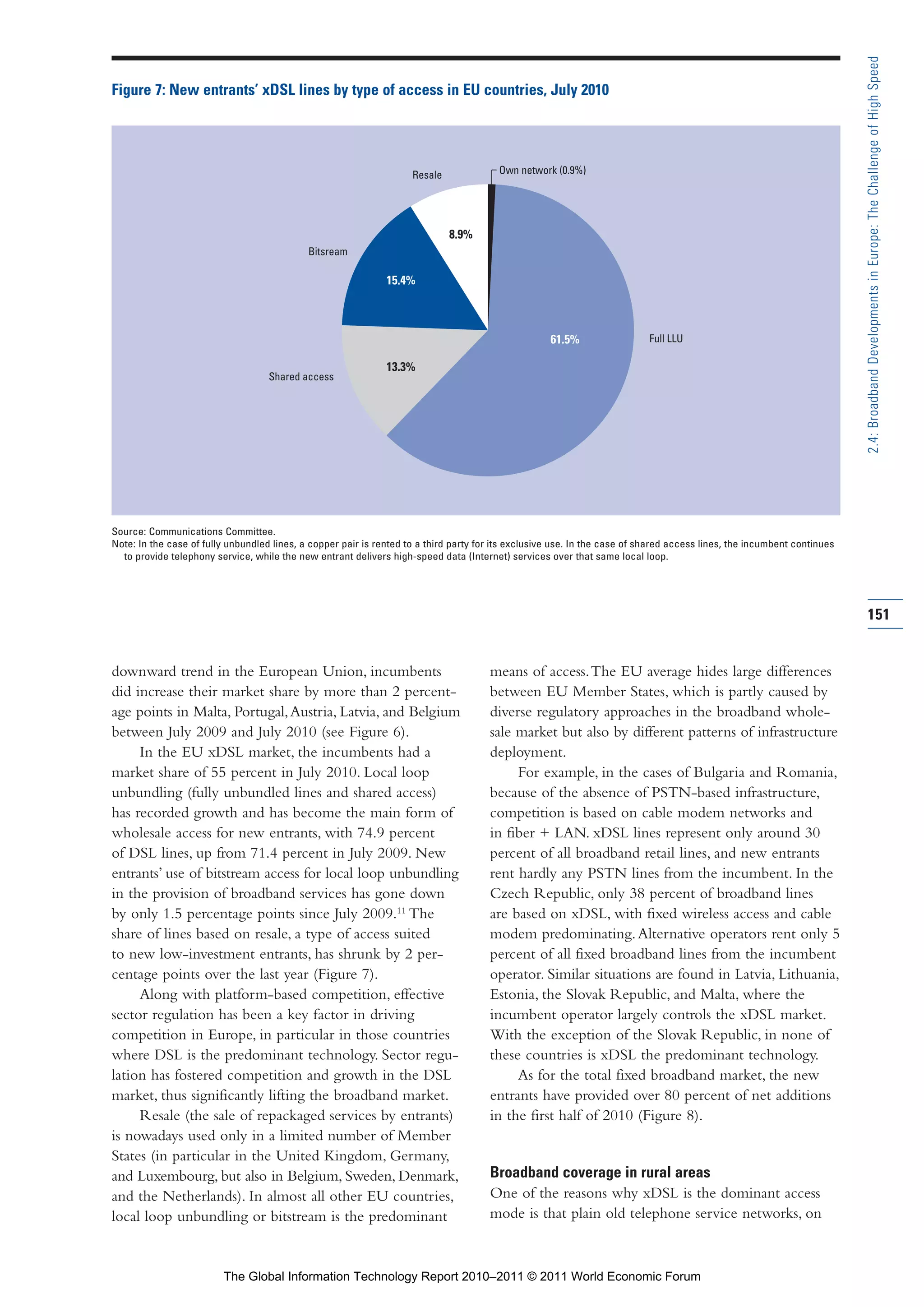
                    1–7 scale, changing with respect to the scale used previously      different extents, elements of weakness. So too is the lack
                    for a couple of years (i.e., positive and negative scores around
                    a standardized mean of 0). For more information, see Dutta         of a coherent government vision on ICT development
                    and Jain 2006 and Mia and Dutta 2007. For more information         and diffusion (103rd, 119th, and 96th, respectively).
                    regarding the computation of the Index, refer to the Appendix
                    of this chapter.                                                         Turkey does not manage to reverse the downward          23
                                                                                       trend observed in recent years, and drops another two
                                                                                       places to 71st. The country’s competitive advantages,
                                                                                       including its fairly ICT-conducive environment (63rd)
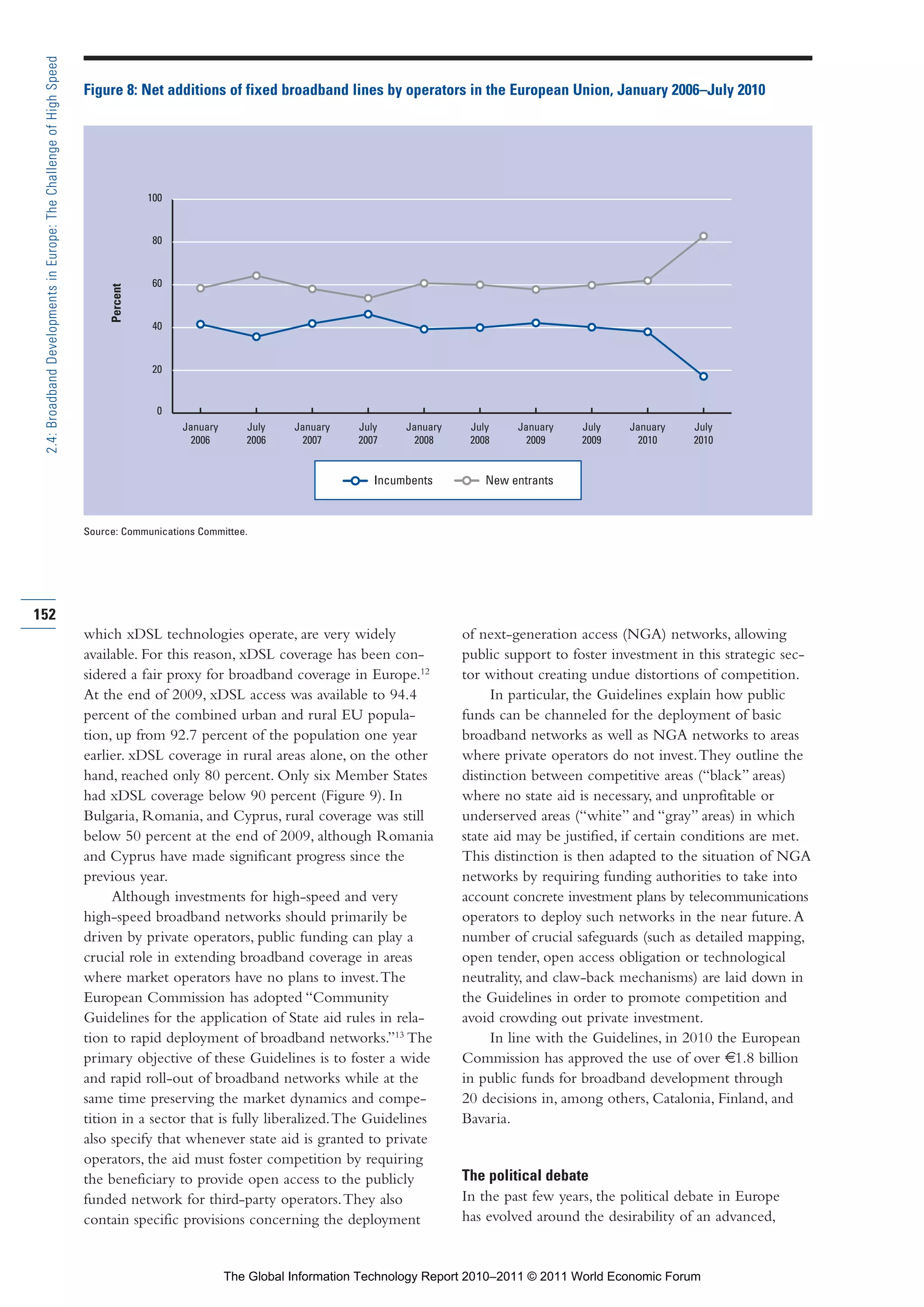
                                                                                       and high usage levels (62nd), do not seem to fully
                                                                                       compensate for important hindrances in individual and
                                                                                       business readiness (94th and 93rd, respectively). On a
                                                                                       more positive note, the government readiness and usage
                                                                                       pillars have improved 19 and 2 places, respectively, high-
                                                                                       lighting a stronger government vision and leadership in
                for countries such as Iceland, which are still recovering              ICT diffusion for increased competitiveness.
                from the recent global economic crisis.                                      Kazakhstan overtakes Azerbaijan as the best per-
                     The picture for the EU15 group is more nuanced,16                 former of the Commonwealth of Independent States
                with different degrees of success in leveraging ICT                    (CIS), as the former climbs to 67th position and the
                across the region. Sweden, Finland, Denmark, Norway,                   latter drops six places to 70th. Kazakhstan is now the
                the Netherlands, Germany (13th), the United Kingdom                    only CIS representative in the upper part of the rank-
                (15th), France (20th), Austria (21st), and Belgium                     ings. The country continues to deliver a convincing
                (22nd), among other countries, feature once again                      performance in its government usage pillar, progressing
                among the best performers worldwide, fully exploiting                  a further eight places to 31st. The quality of the govern-
                the latest technologies in their national strategies and               ment’s online presence (24th) and its degree of interaction
                daily activities. At the other extreme, countries such as              with its citizens (18th) are remarkable.
                Greece (64th) and, to a lesser extent, Italy (51st) remain                   Russia moves up three positions and places 77th
                less networked, even losing some ground from last year                 this year, with improvements across the board. The
                (down three and eight places, respectively). Both coun-                country can count on a fairly ICT-conducive infra-
                tries need to reinforce their market environment (90th                 structure (42nd), built on the country’s satisfactory
                and 82nd, respectively) and improve their stakeholders’                educational and research base together with rather high
                overall readiness to use new technologies (91st and 64th,              levels of individual readiness and usage (59th and 55th).
                respectively), while increasingly moving ICT usage and                 At the same time, a number of problematic features
                diffusion to the center of the national agenda (108th                  continue to prevent Russia from better leveraging ICT
                and 113th for government readiness and 62nd and 89th                   in its competitiveness landscape. Among these are its
                for government usage for Greece and Italy, respectively).              extremely poor market (118th) and regulatory (111th)


                                      The Global Information Technology Report 2010–2011 © 2011 World Economic Forum
Part 1_r2_PART 1 3/29/11 6:44 AM Page 24


      1.1: The Networked Readiness Index 2010–2011

                                                     environments and low levels of ICT readiness (90th)            regulatory framework (7th). New Zealand follows
                                                     and use (72nd) by the business sector. Moreover, the           closely at 18th.
                                                     lack of prioritization of the sector in the government               Japan gains two places from last year and positions
                                                     agenda remains a reason for concern, with little govern-       itself at 19th, with an overall performance very much in
                                                     ment readiness (89th) and usage (96th).                        line with previous years. The readiness dimension of the
                                                          Ukraine ranks 90th. Despite maintaining its score,        Index (38th) remains its weakest aspect, partly because
                                                     the country has lost 15 places in the course of the last       of the high access costs to ICT even when taking into
                                                     two editions, as others have actually improved. Ukraine        account purchasing power differences (for example, Japan
                                                     offers a particularly unattractive market environment          ranks 128th for its mobile cellular tariffs), the relatively
                                                     (128th) and challenging regulatory framework (122nd)           poor quality of its educational system, and the limited
                                                     for ICT uptake.                                                success of the government in promoting ICT. On a
                                                          Armenia falls to 109th rank, while the Kyrgyz             more positive note, Japan posts a steady improvement in
                                                     Republic recovers some of the ground it lost last year         its ICT usage (from 14th to 8th). The sophisticated busi-
                                                     and ranks 116th, a gain of seven places.                       ness sector appears to be using ICT particularly effec-
                                                                                                                    tively (4th) in its operations and transactions, as reflected
                                                     Asia and the Pacific                                           by the impressive number of PCT patent applications
                                                     The networked readiness snapshot sketched by the               per million population (252.09, 6th) and high percent-
                                                     NRI this year for Asia and the Pacific is by and large         age of high-tech products exported to international
                                                     positive. The region is home to some of the best per-          markets (19.15 percent of total goods exports, 14th).
                                                     formers in the world and to the economies that have                  Malaysia is ranked 28th, with a slight improvement
                                                     proven the most dynamic over time. In particular, seven        in its overall score this year, and it places 10th for ICT
                                                     of them feature among the top 20, namely Singapore             readiness of the society as a whole. Among the main
                                                     (2nd), Taiwan (6th), Korea (10th), Hong Kong (12th),           stakeholders, the government is showing the way. ICT
                                                     Australia (17th), New Zealand (18th), and Japan (19th).19      plays a critical role in its Wawasan 2020 (Vision 2020)
                                                     Moreover, as discussed in Box 4, China, Indonesia, Sri         plan for Malaysia to become a high-income economy
                                                     Lanka, and Vietnam have been among the fastest-                by 2020.
     24                                              improving economies since 2006. Malaysia is the only                 China consolidates its position in the rankings at
                                                     upper-middle-income country within the top 30 over-            36th, after years of vibrant progression. It is by far the
                                                     all. No doubt all these success stories are a source of        country that leverages ICT the most among the four
                                                     inspiration for a number of underperformers in the             BRICs, leading India, Brazil, and Russia by 12, 22,
                                                     region, including Timor-Leste (136), Nepal (131),              and 31 positions, respectively. Since 2006, China has
                                                     Bangladesh (115th), and Pakistan (88th).                       leapfrogged 23 positions and features among the 10
                                                           After a brief stint in the top 10, and in spite of its   most dynamic countries worldwide. Yet, over the years,
                                                     consistent and very strong performance, Hong Kong              the country has failed to improve significantly in its
                                                     falls back to 12th place. The territory obtains the top        environment component (57th), most notably its market
                                                     mark in the market environment pillar. In particular,          environment (71st). Starting a business remains time-
                                                     it boasts one of the world’s most developed financial          consuming and burdensome; corporate taxation is among
                                                     systems (5th) and doing business is made easy by its           the highest in the world (120th); and freedom of the
                                                     notably moderate level of taxation and low burden of           press, though improving, is still limited (99th). Also, while
                                                     government regulation. In addition, it ranks second only       Chinese businesses are relatively quick at adopting new
                                                     to Singapore in the individual readiness pillar, thanks        technologies and have developed a taste for innovation
                                                     to the quality of its education and the affordability of       (21st), the latest technologies are not generally available
                                                     ICT usage costs. As in Singapore, the government of            in the country (93rd). On a more positive note, the
                                                     Hong Kong is actively promoting and using ICT in its           country ranks 16th for its overall readiness. In particular,
                                                     daily activities (6th) and in providing basic services to      it places 8th and 15th for individual and government
                                                     its citizens (12th for the impact of ICT on access to          readiness, respectively. Usage of ICT is widespread
                                                     basic services). On a more negative note, Hong Kong            among businesses (19th), but individual usage is also
                                                     is not as successful as other economies in the region at       increasing (63rd, up seven), albeit from a low level.
                                                     generating innovation. Although extremely sophisticated        Internet and mobile telephony are growing at break-
                                                     and quick at adopting cutting-edge technology, businesses      neck pace. China added about a hundred million mobile
                                                     rank a comparatively low 49 for their capacity to inno-        subscribers between 2008 and 2009. Roughly half of its
                                                     vate and produce only 21.27 local patent applications          1.4 billion population are now equipped with a mobile
                                                     per million population (55th).                                 phone.
                                                           Australia’s performance is fairly stable at 17th over-         Losing ground on most indicators and delivering
                                                     all, with a score unchanged from last year. The country’s      an uneven performance, India is down five positions at
                                                     notable competitive advantage is the quality of the gen-       8th. India’s placement is dragged down by its poor
                                                     eral environment (13th), in particular the political and       marks in most education-related variables included in


                                                                            The Global Information Technology Report 2010–2011 © 2011 World Economic Forum
Part 1_r2_PART 1 3/29/11 6:44 AM Page 25


                                                                                                                                              1.1: The Networked Readiness Index 2010–2011
                the NRI, and more generally by the poor quality of its        respect to 2009, the country’s performance sees a deteri-
                soft and hard infrastructures (81st). On the other hand,      oration in all NRI components, particularly marked in
                notwithstanding widespread red tape and distortive taxes,     the environment (64th, down 14 places) and usage (61st,
                the market environment is assessed rather positively at       11 places down).
                41st, thanks to a sophisticated financial market, well-            After last year’s remarkable 11-place improvement,
                developed clusters, and widespread availability of new        Pakistan is fairly stable at 88th. Its performance exhibits
                technologies. Also competition and low telephony costs        the same pattern as most emerging economies in the
                are a boost to India’s readiness (33rd). The country ranks    region: the country does much better in terms of readi-
                an impressive 21st for its level of individual readiness      ness (60th) than in the environment and usage compo-
                and 33rd for that of businesses. Government readiness         nents (both ranked 96th), where considerable room for
                is still high (47th), but ICT seems to have become less       improvement remains.
                of a priority since last year. Also individual usage is
                improving, although from a very low base (98th, 11            Latin America and the Caribbean
                places up from last year). While Internet access remains      Although a number of countries in Latin America and
                limited (0.65 and 5.12 per 100 population broadband           the Caribbean region post important improvements or
                Internet subscribers and Internet users, respectively,        consolidate their achievements in networked readiness,
                corresponding to a 100th and 118th position in the            the region as a whole continues to trail behind interna-
                sample), mobile telephony has been growing exponen-           tional best practices in leveraging ICT advances. No
                tially as a result of strong demand, increased purchasing     Latin American or Caribbean economy appears in the
                power, and also fierce competition and innovation that        top 20 and only a handful feature in the top 50, namely
                helped to improve network coverage and drive prices           Barbados (38th), Chile (39th), Puerto Rico (43rd),
                down.20                                                       Uruguay (45th), and Costa Rica (46th).
                      Indonesia leaps 14 places forward to 53rd, with              Although losing some ground since last year, the
                improvements across the three NRI components, boost-          Caribbean island of Barbados continues to lead the
                ing the country’s overall score from 3.7 to 3.9 in an area    region for the third consecutive year. The country boasts
                of the NRI rankings that is very densely populated, thus      a very conducive regulatory environment (26th) and high-
                explaining the big rank variation. ICT readiness remains      quality infrastructure (30th), together with remarkable         25
                Indonesia’s notable relative strength, at 39th. Individual    levels of business (29th) and, to a lesser extent, individual
                readiness is particularly high (18th), owing to fairly good   (42nd) usage. Moreover, citizens and the government
                educational standards and affordable ICT. Going forward,      display a high degree of interest and preparedness in
                this will certainly help in increasing ICT penetration and    using new technologies (38th and 42nd for individual
                usage, which remain rather low (80th). Also encouraging       and government readiness, respectively). At the same
                is the fact that the government is giving more impor-         time, a number of problematic elements remain in the
                tance to ICT in its development agenda, as reflected in       market environment (46th), especially in terms of
                the 41-rank improvement in the government readiness           financing availability (85th for venture capital availability
                pillar (51st) since 2006.                                     and 48th for financial market sophistication) and busi-
                      Ranked 55th, Vietnam has made impressive strides.       ness sophistication (95th for cluster development).
                This year and for the first time in five editions, the        Government usage also remains poor at 70th, with
                country drops in the rankings by one place despite            inadequate e-government services (104th) and little
                improving its score slightly. Yet, as explained in Box 4,     e-participation (95th).
                Vietnam remains the country that has progressed the                Chile is up one place this year at 39th, with a
                most since 2006. Like many of the emerging economies          notable 0.15 score improvement. The country has con-
                in the region, Vietnam’s main comparative advantage is        sistently led the region in the last 10 years, albeit losing
                its level of preparedness to use ICT (35th, up two posi-      its primacy to Barbados in 2008. ICT diffusion and usage
                tions). Yet, unlike most countries at a similar stage of      have been continuously prioritized by the government
                development, government readiness (20th, up four) is          over the last two decades or so, with the adoption of one
                the highest among the three main actors. ICT develop-         of the first digital agendas in the region and the estab-
                ment is one of the top priorities for the government          lishment of a very conducive regulatory environment
                (18th), which sees the sector as a key driver for national    (32nd). This is reflected in the good marks the country
                competitiveness (26th).                                       gets for its government readiness (40th) and usage
                      Against this backdrop, Thailand offers a striking       (26th): notably the world-class Chilean e-government
                contrast. The country is among the 10 economies that          services are assessed very positively at 18th. However,
                have declined the most since 2006. It has fallen from         the country’s individual readiness remains extremely
                37th to 59th place in the rankings since then (with a         low at 100th, mainly due to its poor educational system,
                steep 12-place drop just since last year) and been over-      which is assessed as especially inadequate for math and
                taken by much-less-advanced economies in the region,          science education (122nd), and to high tariffs for fixed
                including China, India, Indonesia, and Vietnam. With          lines (127th) and fixed broadband Internet (100th).


                                  The Global Information Technology Report 2010–2011 © 2011 World Economic Forum
Part 1_r2_PART 1 3/29/11 6:44 AM Page 26


      1.1: The Networked Readiness Index 2010–2011

                                                           Puerto Rico is up two places at 43rd, and contin-         innovative and sophisticated business sector leads the
                                                     ues to display competitive strengths in the quality of its      country in ICT usage (41st and 37th for business readi-
                                                     environment (39th) for ICT as well as in its prepared-          ness and usage, respectively), followed by the govern-
                                                     ness to use, and its actual usage of new technologies by        ment (56th and 48th for government readiness and
                                                     its sophisticated and innovative business sector (32nd          usage). In particular, the business sector is extensively
                                                     and 33rd for business readiness and usage, respectively)—       leveraging ICT in its operations and transactions (25th
                                                     no doubt the most networked social actor on the island.         for extent of business usage) to increase its efficiency
                                                     On a less positive note, its citizens and government do         and innovation capacity (24th and 27th, respectively,
                                                     not seem to be as inclined to use ICT (107th and 90th           for ICT impact on new products and services and on
                                                     for individual and government readiness, respectively).         new organizational models). Likewise, ICT is an impor-
                                                     Also, although their usage has improved since last year         tant component of the government’s vision for the
                                                     (six and seven places up, at 56th and 44th, respectively),      future (58th) and is widely used by the government
                                                     the government and citizens in general lag behind the           to increase access to basic services (49th). On a related
                                                     business sector when it comes to ICT use.                       note, Brazil is also home to fairly efficient and advanced
                                                           Uruguay continues its impressive upward trend             e-government services (53rd for the development of
                                                     started last year (when it climbed eight ranks from the         government online services).22 However, Brazil’s bur-
                                                     2008–09 edition) with an additional 12-place improve-           densome market environment (93rd) and dismal levels
                                                     ment this year, soaring to 45th position. The country           of individual readiness (110th) are important hindrances
                                                     advances in all three NRI components: up 9 places in            to a better ICT leveraging. While the market environ-
                                                     environment and usage (to 55th and 44th, respectively)          ment could be improved by reducing red tape and
                                                     and 10 in readiness (to 48th). Although the market envi-        inefficiency, the low educational standards—especially
                                                     ronment remains a problematic area at 85th place and            in science and math (125th)—coupled with high fixed
                                                     the business sector does not leverage as much ICT as it         telephone and mobile cellular tariffs (109th and 126th,
                                                     could (65th and 63rd for business readiness and usage),         respectively) prevent more widespread ICT usage by
                                                     the country benefits from a government with a coherent          citizens (the country ranks 64th for individual usage).
                                                     vision for ICT going forward as a key element for                     Colombia consolidates its networked readiness
     26                                              increased competitiveness. Government readiness and             achievements of last year with another two-place step
                                                     usage rank 49th and 43rd, respectively, improving 13            up to 58th overall, while Panama loses two positions
                                                     and 4 positions since 2009. Uruguayan authorities have          to 60th (albeit improving in score). In the Caribbean,
                                                     been increasingly using ICT as a tool for better and            Trinidad and Tobago posts one of the largest improve-
                                                     more widespread provision of basic services to their            ments in the whole sample (16 places) and climbs to
                                                     citizens in recent years: indeed, together with Peru, the       63rd, with across-the-board advancement. Especially
                                                     country achieved one of the world’s largest One Laptop          striking is a 19-place progression in ICT usage, led by
                                                     per Child deployment.21                                         major advances in the individual (up 16 places to 49th)
                                                           Similar to Uruguay, Costa Rica has kept climbing          and government (up 14 places to 79th) components.
                                                     in the rankings since 2006, with an additional three-                 Mexico is stable at 78th place overall, with a slight
                                                     place improvement since last year and notable advances          improvement in score. The country displays fairly high
                                                     in all three subindexes, particularly in readiness (seven       levels of business (48th) and government (50th) usage. In
                                                     places, up to 25th). The country’s solid showing rests          particular, the government provides extensive and well-
                                                     on outstanding levels of readiness to use ICT by all            functioning e-government services to its citizens (38th)
                                                     national stakeholders, most notably individuals (7th) and       and plenty of opportunities for e-participation (32nd). At
                                                     businesses (26th). Also the sophisticated business sector       the same time, a number of long-standing deficiencies
                                                     effectively incorporates ICT in its production systems,         affect Mexico’s networked readiness landscape, prevent-
                                                     processes, and activities (31st for business usage), success-   ing the country from fully exploiting ICT potential for
                                                     fully exporting high-value-added goods in international         increased growth. Individual and business readiness—at
                                                     markets—10.54 percent of Costa Rica’s goods exports             97th and 103rd, respectively—are extremely low, which
                                                     are high-tech goods, corresponding to 13th place in the         is attributable mainly to a combination of poor educa-
                                                     world. Chapter 2.1 provides a compelling overview of            tional standards and training and high ICT access costs.
                                                     Costa Rica’s high-tech success story in recent years. On        In particular, telephone installation costs and monthly
                                                     the other hand, the environment (68th)—notably in its           telephone subscriptions, both for residential and business
                                                     regulatory component (86th) and individual ICT usage            users—are high, ranked 115th and 112th for residential
                                                     (77th)—are worrisome features that will need to be              telephone installation and monthly telephone subscrip-
                                                     reinforced for all Costa Ricans to fully leverage ICT’s         tions, and 99th and 127th for business telephone instal-
                                                     many and diverse economic, social, and political benefits.      lation and monthly telephone subscriptions, respectively.
                                                           Brazil climbs five places this year to 56th, with an      Similarly, the government appears not to adequately pri-
                                                     important improvement in its ICT environment (eight             oritize ICT or to have a coherent vision of its importance
                                                     places up, to reach 66th). As in previous years, Brazil’s       for the country’s long-term competitiveness (98th for


                                                                             The Global Information Technology Report 2010–2011 © 2011 World Economic Forum
Part 1_r2_PART 1 3/29/11 6:44 AM Page 27


                                                                                                                                              1.1: The Networked Readiness Index 2010–2011
                government readiness). However, it does use ICT in its         conducive market (26th) and regulatory (33rd) environ-
                daily activities (50th for government usage), with well-       ments, with little red tape, non-distortive tax rates, good
                developed e-government services (38th) and satisfactory        standards of intellectual property protection (53rd for
                levels of e-participation (32nd). An enhanced govern-          this variable and 45th for software piracy rate), and a
                ment focus on the sector should go hand in hand with           high level of competition in Internet and telephony,
                an improvement of the market environment (69th),               among other elements.
                particularly in its regulatory (70th) and infrastructure             This is coupled with the country’s high level of
                (72nd) dimensions, which at the moment are not totally         interest and preparedness in using ICT by all national
                conducive to innovation and ICT development.                   stakeholders (36th, 60th, and 45th for individual, business,
                      Notwithstanding a slight improvement in score,           and government readiness, respectively). In particular,
                Argentina drops five places to 96th, with enduring             there is the perception that the government places a
                shortcomings in its market (130th) and regulatory (115th)      high priority on ICT diffusion in its development
                environments and a worrisome, almost nonexistent               strategy (25th), notably using these technologies to
                government prioritization of ICT diffusion and usage           provide better access and quality of basic services for
                (135th and 101st, respectively, for government readiness       its citizens (53rd). On a more negative note, infrastruc-
                and usage). On the other hand, the country boasts a            ture, especially in its human resources dimension, shows
                fairly developed infrastructure for ICT (55th), thanks         a margin for improvement at 78th place, and ICT usage
                especially to a solid human resource base. Moreover,           is still far below international best practices, especially
                business readiness remains high at 49th. Likewise, ICT         for the business sector (69th) and the government
                penetration at the individual level (65th) is satisfactory,    (72nd).
                pointing to the possibility of increasingly leveraging               South Africa follows, fairly stable at 61st place
                ICT in citizen-government relations, especially for the        overall, with notable strengths in the first-class quality
                provision of basic services, for which at the moment           of its market (25th) and regulatory (23rd) environments,
                Argentina ranks a dismal 135th.                                characterized by a well-developed financial market (6th)
                      As in previous years, Honduras (103rd), Ecuador          and venture capital (39th), favorable laws relating to ICT
                (108th), Venezuela (119th), Paraguay (127th),                  (32nd), strong intellectual property standards (27th), and
                Nicaragua (128th), and Bolivia (135th) trail behind            low software piracy rate (18th), among other advantages.       27
                the rest of the region and most of the global sample.          Moreover, the sophisticated business sector is at the fore-
                These economies share a number of worrisome features           front of ICT leveraging (40th and 52nd for business
                that stand in the way of increased networked readiness,        readiness and usage, respectively), using it extensively
                including overregulated markets and inefficient political      in its activities (52nd for extent of business usage) and
                frameworks; poor educational and research systems;             to produce innovative products (35th for firm-level
                scarce penetration rates that are also the result of           technology absorption and 47th for capacity for innova-
                unaffordable ICT access for most of their populations;         tion). On a less positive note, individual preparation and
                and, last but not least, little priority given to ICT in the   uptake of ICT remain very weak, at 113th and 95th,
                governments’ agendas and competitiveness strategies.           respectively. This is attributable to its poor educational
                                                                               standards, notably in science and math (136th), as well
                Sub-Saharan Africa                                             as to the very high access costs to ICT prevailing in
                The assessment of sub-Saharan Africa’s networked readi-        the country—South Africa ranks 129th for residential
                ness continues to be disappointing, with the majority          monthly telephone subscriptions, and 107th, 102nd,
                of the region lagging in the bottom half of the NRI            and 79th for fixed telephone, mobile cellular, and fixed
                rankings, bar Mauritius (47th) and South Africa (61st).        broadband Internet tariffs, respectively. Also government
                Even though ICT penetration rates have soared in the           readiness remains poor at 92nd, with little success in
                region over recent years, boosted by mobile telephony,         promoting ICT (92nd). The government is not using
                and many countries have started to leverage more and           ICT to improve the efficiency of its operations either
                more ICT to improve efficiency and reach out more              (80th), providing inadequate e-services to its citizens
                and more to citizens, sub-Saharan Africa does not seem         (62nd) that have little impact on access to or the quality
                to have progressed as much and as fast as other areas of       of basic services (95th).
                the world. Underdeveloped infrastructure, inefficient                A second tier of countries includes Gambia,
                markets, opaque regulatory environments, inadequate            Senegal, Kenya, Namibia, and new entrant Cape
                educational standards, and widespread poverty are pow-         Verde, placed at 76th, 80th, 81st, 82nd, and 84th, respec-
                erful obstacles against a more extensive and efficient use     tively. Kenya and Namibia, in particular, strengthen their
                of new technologies for increased development and              positions by nine and seven places since last year, with
                prosperity in the region.                                      impressive 26- and 33-rank improvements in their ICT
                     Mauritius consolidates its predominance in the            readiness (ranked 55th and 71st, respectively). Both
                region, with a six-place improvement to 47th. The              countries appear to be on a promising upward trend,
                country’s remarkable showing rests on its extremely


                                   The Global Information Technology Report 2010–2011 © 2011 World Economic Forum
Part 1_r2_PART 1 3/29/11 6:44 AM Page 28


      1.1: The Networked Readiness Index 2010–2011

                                                     as they had already climbed seven and three positions           for using the latest technologies by individuals (5th and
                                                     from 2008 to 2009.                                              21st for individual readiness and usage, respectively),
                                                           The remaining countries are once again confined           with a stellar increase in ICT penetration rates over the
                                                     among the laggards of the world in effectively using            last few years. Other competitive advantages are to be
                                                     ICT. Moreover, although economies such as Malawi                found in the very ICT-friendly market environment
                                                     (105th), Mozambique (106th), and Uganda (107th)                 (18th) and infrastructure for ICT (28th).
                                                     post important improvements in their overall networked                Qatar is up five places to 25th rank overall, with
                                                     readiness since last year (up 14, 10, and 8 positions,          improvements across the board, particularly in the readi-
                                                     respectively), many more remain stable or lose further          ness (4th, up eight places) and usage (34th, up six places)
                                                     ground vis-à-vis other parts of the world. Mauritania           components. Similar to the United Arab Emirates, the
                                                     (130th, 28 places down), Mali (120, 24 places down),            government has consistently prioritized ICT diffusion
                                                     Lesotho (121st, 14 places down), and Burkina Faso               and usage in recent years (2nd for government readiness),
                                                     (122, 14 places down) are the most notable examples             which has prompted an intense ICT uptake from the
                                                     of this latter category.                                        citizens (10th and 28th for individual readiness and
                                                           Angola and Swaziland enter the rankings for the           usage, respectively).24
                                                     first time at a disappointing 133rd and 134th position,               Bahrain consolidates its position at 30th, displaying
                                                     respectively.                                                   notable competitive strengths in the quality of its market
                                                                                                                     environment (9th) and the high degree of preparedness
                                                     Middle East and North Africa (MENA)                             of its citizens to use ICT (15th), an aspect that has
                                                     Israel is up six places to 22nd overall, regaining its pri-     already converted to high penetration rates (29th for
                                                     macy in the region with an especially impressive 23-            individual usage). The strong government vision and
                                                     place improvement in its readiness component (ranked            leadership in ICT diffusion (ranked 14th) has also
                                                     27th), and also thanks to the inclusion of previously           resulted in first-class e-services (8th), significantly
                                                     missing data. The country’s remarkable ICT prowess              expanding outreach of basic services to citizens (11th),
                                                     rests on a very conducive environment (24th), especially        high e-participation (11th), and increased government
                                                     in its market (21st) and infrastructure (24th) components,      efficiency (12th).
     28                                              coupled with high levels of readiness and usage of ICT                Saudi Arabia continues to climb in the rankings,
                                                     by all social stakeholders (27th and 19th, respectively). In    with another five-position improvement to 33rd place
                                                     particular, the country’s ICT uptake and leveraging is          overall. The country posts advances notably in its envi-
                                                     led by an extremely dynamic and sophisticated business          ronment (32nd) and readiness (24th) components (both
                                                     sector (11th and 9th for business readiness and usage),         up six places). Its solid showing is driven by very ICT-
                                                     which actively uses new technologies to create new              conducive market (19th) and regulatory (25th) environ-
                                                     products, services, and organizational models (the coun-        ments, as well as by a coherent ICT prioritization in
                                                     try is ranked 22nd and 10th for ICT impact on new               the government’s competitiveness agenda (ranked 12th
                                                     products and services and on new organizational mod-            for government readiness). Chapter 2.2 provides an
                                                     els, respectively). Israel firmly maintains its status as one   exhaustive account of the Saudi government’s vision for
                                                     of the innovation powerhouses of the world, as suggest-         ICT and the e-government program, YESSER. Oman
                                                     ed by its numbers of PCT patent applications (199.01            also realizes an impressive nine-place jump to 41st, with
                                                     per million population, 10th) as well as by the high per-       remarkable improvements in all three components: the
                                                     centage of high-tech products exported in international         country is up 14, 12, and 9 positions, respectively, for its
                                                     markets (at 23.63 percent of total goods exports, ranked        environment (43rd), readiness (34th), and usage (43rd).
                                                     8th). Israel’s successful recent development story of the       Jordan follows at 50th, losing some ground from last
                                                     last three decades or so has been very much based on            year (down six places).
                                                     innovation and ICT. The government played an instru-                  On a more negative note, Kuwait remains the
                                                     mental role in setting the vision for ICT and in estab-         laggard among the Gulf countries at 75th overall while
                                                     lishing an innovation-enabling environment, simultane-          Syria loses another 19 places and positions itself at a
                                                     ously involving the private sector in the implementation        dismal 124th place.
                                                     of the vision and intervening in a market-friendly way                New entrants Lebanon and Iran position them-
                                                     to compensate for market failures whenever needed.23            selves in the bottom part of the rankings, at 95th and
                                                           The United Arab Emirates follows closely, fairly          101st, respectively.
                                                     stable at 24th overall. The country has risen in the rank-             Tunisia consolidates its leadership in North Africa
                                                     ings in recent years, reflecting the increasingly central       with a four-place improvement to 35th rank overall. The
                                                     role ICT occupies in the government’s agenda as an              country’s main competitive advantage when it comes
                                                     enabling infrastructure for economic diversification and        to leveraging ICT advancements is to be found in the
                                                     a target sector in itself (ranked a high 3rd for govern-        notable levels of readiness and preparedness for using
                                                     ment readiness). The government’s focus in the sector           ICT of all national stakeholders (18th), led by a public
                                                     has been matched by an equal interest in and capacity           sector that has strongly focused on ICT as a key com-


                                                                             The Global Information Technology Report 2010–2011 © 2011 World Economic Forum
Part 1_r2_PART 1 3/29/11 6:44 AM Page 29


                                                                                                                                                        1.1: The Networked Readiness Index 2010–2011
                petitiveness tool over the last 20 years (ranked 6th for       • S for social: ICT is becoming more intricately
                government readiness). Individual readiness is also very         linked to people’s behaviors and social networks.
                high, at 17th, resting on good educational standards and         The horizons of ICT are expanding from traditional
                low residential telephone installation and monthly sub-          processes and automation themes to include a human
                scriptions (22nd and 23rd, respectively) and low fixed           and social focus.
                telephone and fixed broadband Internet tariffs (28th
                and 29th, respectively). Government usage is satisfactory      • L for local: Geography and local context are
                at 27th, pointing to a successful implementation of its          becoming important. ICT provides an effective
                vision of ICT, notably through well-developed e-services         medium for linking people and objects (and
                (29th), extensively improving access to basic services for       processes) with local environments. This will allow
                citizens (13th). Tunisia’s success story in using ICT as a       differentiation across local contexts and the provi-
                developmental tool and the achievements made so far              sion of tailored services.
                are important strengths that will no doubt help the
                country in its transition to democracy after the recent        • I for intelligent: ICT will become even more intelli-
                political turmoil.                                               gent. People’s behaviors, individual preferences,
                      All countries in the region, with the exception            and object interactions among other elements will
                of Morocco (ranked 83rd, five places up), follow a               be more easily stored, analyzed, and used to provide
                downward trend, with Libya dropping a staggering 23              intelligent insights for action.
                places to 126th. Also Egypt (74th) and Algeria (117th)
                lose four places each, although both improve in score. In      • M for mobile: The wide adoption of the mobile
                particular, in the case of Egypt, important improvements         phone has already brought ICT to the masses.
                in the country’s individual usage (79th, 21 places up),          Advances in hardware (screens, batteries, and so on),
                regulatory environment (66th, five places up), and gov-          software (e.g., natural language interfaces), and
                ernment usage (39th, up three places) do not manage to           communications (e.g., broadband wireless) will con-
                compensate for a weakening showing, notably in business          tinue to make computing more mobile and more
                usage (where the country is ranked 83rd, a drop of 31            accessible.
                places) and government readiness (68th, 15 places down).                                                                                29
                The important progress realized by the past administra-           In this context of continuous technological evolu-
                tion in promoting ICT (27th) and in improving and            tion, we hope that the GITR series will continue to
                expanding the outreach of basic services to citizens         serve as a useful reference and guide for policymakers
                (41st)—also through well-designed e-services (ranked         and decision leaders from both the public and private
                23rd)—should be continued and reinforced by the new          sectors over the next years, as it has done in its first
                government going forward.                                    decade. The impact of ICT is widespread and will affect
                      The Middle East continues to feature prominently       all key stakeholders of the GITR framework: individuals,
                in the rankings, with four countries in the top 30,          businesses, and governments. We will continue to moni-
                namely Israel (22nd), the United Arab Emirates (24th),       tor these impacts and include them through appropriate
                Qatar (25th), and Bahrain (30th). This reflects the espe-    measures within the networked readiness framework.
                cially dynamic ICT uptake in most parts of the region
                in the context of the sector’s increasing prioritization
                in national agendas as a crucial instrument for economic     Notes
                diversification, enhanced efficiency, and modernization.       1 http://devgateway.blogspot.com/2009/07/world-bank-report-
                                                                                 highlights-importance.html.

                                                                               2 Gage 2002, p. 4.

                Conclusion                                                     3 Gage 2002, p. 5.
                Few today would go back willingly to a world without           4 For a detailed review of the literature and thinking behind the net-
                the Internet and its many associated developments. For           worked readiness framework developed by INSEAD in the
                                                                                 2002–03 edition, see Dutta and Jain 2003.
                many young adults, conceiving of such a world may
                                                                               5 To be more precise, the framework used in the first 2001–02
                even be impossible. ICT, and the Internet in particular,         edition is not strictly comparable with the one developed by
                have already changed the world dramatically, and all             INSEAD and used since then as the main methodological frame-
                                                                                 work for the Report series. For more information on the 2001–02
                indications point to an even higher rate of transforma-
                                                                                 theoretical framework, see Kirkman et al. 2002.
                tion of our lives over the next decade. While the precise
                                                                               6 See Box 1 in Dutta et al. 2010.
                nature of these transformations 2.0 are difficult to accu-
                                                                               7 The almost universal presence of ICT is thanks mainly to recent
                rately envisage, evolving technology trends are pointing
                                                                                 trends such as the stellar diffusion of mobile telephony across the
                to the most likely directions they will take over the next       world, the decreasing cost of Internet access via residential and
                few years—what we term as the move toward SLIM                   public connections, and the emergence of lower-cost access
                                                                                 devices such as mobile telephones and cheap PCs.
                ICT:
                                                                               8 See EFQM at http://www.efqm.org/en/tabid/132/default.aspx.


                                  The Global Information Technology Report 2010–2011 © 2011 World Economic Forum
Part 1_r2_PART 1 3/29/11 6:44 AM Page 30


      1.1: The Networked Readiness Index 2010–2011

                                                       9 The NRI 2009–2010 includes the results of the 2009 and 2010            ———. 2006. “Networked Readiness and the Benchmarking of ICT
                                                         Surveys. For more details on the Survey methodology, see                  Competitiveness.” The Global Information Technology Report
                                                         Browne and Geiger 2010.                                                   2005–2006. Hampshire: Palgrave Macmillan. 3–24.

                                                      10 Moldova re-entered the Index in 2010 after being excluded in           Dutta, S., I. Mia, T. Geiger, and E. Trujillo Herrera. 2010. “How
                                                         2009 for lack of Survey data.                                               Networked Is the World? Insights from the Networked Readiness
                                                                                                                                     Index 2009–2010.” The Global Information Technology Report
                                                      11 North America as a region is not covered as such in this chapter,           2009–2010. Geneva: World Economic Forum. 3–30.
                                                         since the United States and Canada’s performances are examined
                                                         in the top-10 section. Mexico is covered in the Latin America and      Eaton, J. and S. Kortum. 1996. “Trade in Ideas: Patenting and
                                                         the Caribbean section.                                                      Productivity in the OECD.” Journal of International Economics 40
                                                                                                                                     (3-4): 251–78;
                                                      12 Note that several indicators, including data on ICT tariffs, were
                                                         previously not available for Taiwan. Their inclusion this year bene-   Gage, J. 2002. “Some Thoughts on How ICTs Could Really Change the
                                                         fits the economy and explains in part the progression in the over-          World.” The Global Information Technology Report 2001–2002.
                                                         all rankings.                                                               New York: Oxford University Press. 4–9.

                                                      13 A decile is any of the nine values that divide a sorted sample of      Griliches, Z. 1990. “Patent Statistics as Economic Indicators: A Survey.”
                                                         observations into ten equal parts. That is, the 1st decile corre-             Journal of Economic Literature 28 (4): 1661–707.
                                                         sponds to the 10th percentile, the 9th decile corresponds to the
                                                         90th percentile. The World Bank considers high-income countries        IMF (International Monetary Fund). 2010. World Economic Outlook.
                                                         to be those that in 2009 had a GNI per capita of US$12,196 or                October 2010 Edition. Washington, DC: IMF.
                                                         more. The rest of the income groups are defined as follows: low        Kirkman, G. S., C. A. Osorio, and J. D. Sachs. 2002. “The Networked
                                                         income, US$995 or less; lower middle income, US$996–US$3,945;               Readiness Index: Measuring the Preparedness of Nations for the
                                                         and upper middle income, US$3,946–US$12,195.                                Networked World”. The Global Information Technolgy Report
                                                      14 All economies that do not belong to the high-income group are               2001–2002. New York: Oxford University Press. 10–29.
                                                         considered developing.                                                 Lopez-Claros, A. and I. Mia. 2006. “Israel: Factors in the Emergence of
                                                      15 Including former top performer Denmark and Iceland (both down               an ICT Powerhouse.” The Global Information Technology Report
                                                         four places).                                                               2005–2006. Hampshire: Palgrave Macmillan. 89–105.

                                                      16 The EU15 comprises the countries that joined the European              Magalhães, D., P. Knight, and E. Moreira da Costa. 2009. “Will the 2014
                                                         Union before the last two accession rounds in 2004 and 2007:               Soccer World Cup Help Bridge the Social Gap through the
                                                         Austria, Belgium, Denmark, Finland, France, Germany, Greece,               Promotion of ICT and E-government in Brazil?” The Global
                                                         Ireland, Italy, Luxembourg, the Netherlands, Portugal, Spain,              Information Technology Report 2008–2009. Geneva: World
                                                         Sweden, and the United Kingdom.                                            Economic Forum. 133–43.

                                                      17 The EU accession countries include Bulgaria, the Czech Republic,       Mia, I. 2010. Using Information and Communication Technologies to
                                                         Cyprus, Estonia, Hungary, Latvia, Lithuania, Malta, Poland,                  Boost India’s Competitiveness. Geneva: World Economic Forum.
                                                         Romania, the Slovak Republic, and Slovenia.
     30                                                                                                                         Mia, I. and S. Dutta. 2007. “Connecting the World to the Networked
                                                      18 For more details on Estonia’s recent development story and the               Economy: A Progress Report Based on the Findings of the
                                                         role of ICT, see Dutta 2007.                                                 Networked Readiness Index 2006–2007”. The Global Information
                                                                                                                                      Technology Report 2006–2007. Hampshire: Palgrave McMillan.
                                                      19 See the top 10 paragraph above for highlights on the performance             3–21.
                                                         of Singapore, Taiwan, and Korea.
                                                                                                                                OECD (Organisation for Economic Co-operation and Development).
                                                      20 For a full account of India’s networked readiness and progress             2005. Good Practice Paper on ICTs for Economic Growth and
                                                         over the last few years, see Mia 2010.                                     Poverty Reduction. Paris: OECD.

                                                      21 See http://www.olpcnews.com/countries/peru/olpc_peru_                  WIPO (World Intellectual Property Organization). 2010. World
                                                         passes_uruguay_for_w.html.                                                 Intellectual Property Indicators 2010. Geneva: WIPO.

                                                      22 For more details on Brazil’s recent achievements in terms of           World Economic Forum. 2003. The Global Information Technology
                                                         e-government services and strategy going forward in that area,              Report 2002–2003. New York: Oxford University Press.
                                                         see Magalhães et al. 2009.
                                                                                                                                ———. 2010. The Global Information Technology Report 2009–2010.
                                                      23 For an overview of Israel’s recent development story, which               Geneva: World Economic Forum.
                                                         turned the country from a citrus exporter to a major ICT player
                                                         in the space of 30 years, see Lopez-Claros and Mia 2006.

                                                      24 For an account of Qatar’s digital strategy in recent times, see
                                                         Al-Jaber and Dutta 2008.


                                                     References
                                                     Al-Jaber, H. and S. Dutta. 2008. “Qatar: Leveraging Technology to
                                                           Create a Knowledge-Based Economy in the Middle East.” The
                                                           Global Information Technology Report 2007–2008. Hampshire:
                                                           Palgrave McMillan. 133–44.

                                                     Browne, C. and T. Geiger. 2010. “The Executive Opinion Survey: The
                                                         Business Executives’ Insight into their Operating Environment.”
                                                         The Global Competitiveness Report 2010–2011. Geneva: World
                                                         Economic Forum. 57–65.

                                                     Dutta, S. 2007. “Estonia: A Sustainable Success in Networked
                                                          Readiness?” The Global Information Technology Report
                                                          2006–2007. Hampshire: Palgrave Macmillan. 81–90.

                                                     Dutta, S., A. de Meyer, A. Jain, and G. Richter. 2006. The Information
                                                          Society in an Enlarged Europe. Berlin: Springer-Verlag.

                                                     Dutta, S. and A. Jain. 2003. “The Networked Readiness of Nations.”
                                                          The Global Information Technology Report 2002–2003. New York:
                                                          Oxford University Press. 3–22.


                                                                                  The Global Information Technology Report 2010–2011 © 2011 World Economic Forum
Part 1_r2_PART 1 3/29/11 6:44 AM Page 31


                                                                                                                                                             1.1: The Networked Readiness Index 2010–2011
                 Technical Appendix: Structure and computation of the Network Readiness Index 2010–2011


                This appendix presents the structure of the Networked
                Readiness Index 2010–2011 (NRI).The NRI separates              NETWORKED READINESS INDEX
                environmental factors from ICT readiness and usage,               Networked Readiness
                and is composed of three subindexes. Each subindex is                           Index = 1/3 Environment subindex
                divided into three pillars. The variables (or indicators)                               + 1/3 Readiness subindex
                                                                                                        + 1/3 Usage subindex
                used in the computation of the NRI are then distrib-
                uted among the nine pillars. The number preceding the
                period indicates to which pillar the variable belongs          Environment subindex
                (e.g., variable 1.01 belongs to the first pillar; variable
                                                                                  Environment subindex = 1/3 Market environment
                9.02 belongs to the ninth pillar). The numbering of the                                  + 1/3 Political and regulatory environment
                variables matches that of the Data Tables                                                + 1/3 Infrastructure environment
                at the end of the Report. Note that the numbering of
                                                                                  1st pillar: Market environment
                variables in the 2nd, 3rd, 4th, 7th, and 8th pillars has
                                                                                              1.01   Venture capital availability*
                changed to reflect the adjustments made to the struc-                         1.02   Financial market sophistication*
                ture of the NRI, as discussed in the text.                                    1.03   Availability of latest technologies*
                      The computation of the NRI is based on successive                       1.04   State of cluster development*
                aggregations of scores, from the variables level (i.e., the                   1.05   Burden of government regulation*
                most disaggregated level) to the overall NRI score (i.e.,                     1.06   Extent and effect of taxation*c
                                                                                              1.07   Total tax ratec
                the highest level). For each level, we use an arithmetic
                                                                                              1.08   Time required to start a businessd
                mean to aggregate the components of each category.a As                        1.09   Number of procedures required to start a
                a result, each level’s components bear the same weight.                              businessd
                For example, the score a country achieves in the 3rd                          1.10   Freedom of the press*
                pillar, Infrastructure environment, accounts for one-third
                                                                               2nd pillar: Political and regulatory environment
                of the Environment subindex which in turn accounts
                                                                                               2.01     Effectiveness of law-making bodies*                  31
                for one-third of the overall NRI score.                                        2.02     Laws relating to ICT*
                      Variables that are derived from the World Economic                       2.03     Judicial independence*
                Forum’s Executive Opinion Survey (the Survey) are                              2.04     Efficiency of legal framework in settling
                identified here by an asterisk (*). All the other indicators                            disputes*e
                come from external sources, as described in the Technical                      2.05     Efficiency of legal framework in challenging
                                                                                                        regulations*e
                Notes and Sources section at the end of the Report.
                                                                                               2.06     Property rights*
                These variables are transformed onto a 1-to-7 scale in                         2.07     Intellectual property protection*
                order to align them with the Survey’s results. We apply a                      2.08     Software piracy rate
                min-max transformation, which preserves the order of,                          2.09     Number of procedures to enforce a contractf
                and the relative distance between, country scores.b                            2.10     Time to enforce a contractf
                                                                                               2.11     Internet and telephony sectors competition
                                                                                                        index

                                                                               3rd pillar: Infrastructure environment
                                                                                                3.01    Number of telephone lines
                                                                                                3.02    Mobile network coverage rate
                                                                                                3.03    Secure Internet servers
                                                                                                3.04    International Internet bandwidth*
                                                                                                3.05    Electricity production
                                                                                                3.06    Tertiary education enrollment rate
                                                                                                3.07    Quality of scientific research institutions*
                                                                                                3.08    Availability of scientists and engineers*
                                                                                                3.09    Local availability of specialized research and
                                                                                                        training services*
                                                                                                3.10    Accessibility of digital content*


                                                                                                                                                 (cont’d.)


                                   The Global Information Technology Report 2010–2011 © 2011 World Economic Forum
Part 1_r2_PART 1 3/29/11 6:44 AM Page 32


      1.1: The Networked Readiness Index 2010–2011

                                                     Technical Appendix: Structure and computation of the Network Readiness Index 2010–2011 (cont’d.)


                                                     Readiness subindex                                                     9th pillar: Government usage
                                                                                                                                           9.01    Government success in ICT promotion*
                                                          Readiness subindex = 1/3 Individual readiness
                                                                               + 1/3 Business readiness                                    9.02    ICT use and government efficiency*
                                                                               + 1/3 Government readiness                                  9.03    Government Online Service Index
                                                                                                                                           9.04    E-Participation Index
                                                     4th pillar: Individual readiness
                                                                     4.01     Quality of math and science education*
                                                                     4.02     Quality of the educational system*            Notes
                                                                     4.03     Adult literacy rate                             a Formally, for a category i composed of K indicators, we have:
                                                                     4.04     Residential telephone connection feeg
                                                                                                                                                     K
                                                                     4.05     Residential monthly telephone subscriptiong                            ⌺ indicatork
                                                                                                                                                     k=1
                                                                     4.06     Fixed telephone lines tariffs                         categoryi    ϭ
                                                                     4.07     Mobile cellular tariffs                                                      K

                                                                     4.08     Fixed broadband internet tariffs
                                                                                                                              b Formally, we have:
                                                                     4.09     Buyer sophistication*
                                                                                                                                                country score – sample minimum
                                                     5th pillar: Business readiness
                                                                                                                                    6 x
                                                                                                                                          (   sample maximum – sample minimum    )   + 1

                                                                     5.01    Extent of staff training*
                                                                                                                                 where sample minimum and sample maximum are, respectively,
                                                                     5.02    Quality of management schools*
                                                                                                                                 the lowest and highest country scores in the sample of
                                                                     5.03    Company spending on R&D*                            economies covered by the NRI. In some instances, adjustments
                                                                     5.04    University-industry collaboration in R&D*           were made to account for extreme outliers. For those variables
                                                                     5.05    Business telephone connection feeh                  for which a higher value indicates a worse outcome (e.g., total
                                                                                                                                 tax rate, time to enforce a contract), we apply a normalization
                                                                     5.06    Business monthly telephone subscriptionh
                                                                                                                                 formula that, in addition to converting the series onto a 1-to-7
                                                                     5.07    Local supplier quality*                             scale, reverses it, so that 1 and 7 still correspond to the worst
                                                                     5.08    Computer, communications, and other                 and best possible outcomes:
                                                                             services imports
                                                                                                                                                country score – sample minimum

                                                     6th pillar: Government readiness
                                                                                                                                  –6 x
                                                                                                                                          (   sample maximum – sample minimum    )   + 7

     32                                                             6.01    Government prioritization of ICT*                 c Variables 1.06 and 1.07 combine to form one single variable.
                                                                    6.02    Government procurement of advanced
                                                                                                                              d Variables 1.08 and 1.09 combine to form one single variable.
                                                                            technology products*
                                                                    6.03    Importance of ICT to government vision of         e Variables 2.04 and 2.05 combine to form one single variable.
                                                                            the future*                                       f Variables 2.09 and 2.10 combine to form one single variable.

                                                                                                                              g Variables 4.04 and 4.05 combine to form one single variable.

                                                     Usage subindex                                                           h Variables 5.05 and 5.06 combine to form one single variable.

                                                              Usage subindex = 1/3 Individual usage                            i Variables 8.04 and 8.05 combine to form one single variable.
                                                                               + 1/3 Business usage                              Wherever PCT data were not available, a 0 is assumed.
                                                                               + 1/3 Government usage

                                                     7th pillar: Individual usage
                                                                     7.01     Mobile telephone subscriptions
                                                                     7.02     Cellular subscriptions with data access
                                                                     7.03     Households with a personal computer
                                                                     7.04     Broadband Internet subscribers
                                                                     7.05     Internet users
                                                                     7.06     Internet access in schools*
                                                                     7.07     Use of virtual social networks*
                                                                     7.08     Impact of ICT on access to basic services*

                                                     8th pillar: Business usage
                                                                     8.01   Firm-level technology absorption*
                                                                     8.02   Capacity for innovation*
                                                                     8.03   Extent of business Internet use*
                                                                     8.04   Local office patent applicationsi
                                                                     8.05   Patent Cooperation Treaty applicationsi
                                                                     8.06   High-tech exports
                                                                     8.07   Impact of ICT on new services and
                                                                            products*
                                                                     8.08   Impact of ICT on new organizational models*


                                                                                 The Global Information Technology Report 2010–2011 © 2011 World Economic Forum
Part 1_r2_PART 1 3/29/11 6:44 AM Page 33


                                                                                                                                                       1.2: The Emerging Internet Economy
                CHAPTER 1.2                                                    Coming out of the recent economic crisis, it is clear
                                                                               that rapid growth in many emerging countries—large
                                                                               and small—is accelerating the transformation of the
                The Emerging Internet                                          global economic landscape. Technology, together with
                                                                               the compounding effects of economic and demographic
                Economy: Looking a Decade                                      factors, is adding fuel to that fire. The result will be
                                                                               felt particularly strongly in Internet usage and in the
                Ahead                                                          markets that revolve around it.
                                                                                     The next decade will see the transformation of
                ENRIQUE RUEDA-SABATER and JOHN GARRITY,
                                                                               the global Internet from an arena dominated by the
                  Cisco Systems, Inc.                                          advanced-market economies and their businesses and
                                                                               citizens to one where emerging-market economies
                                                                               are predominant. The Internet has already generated
                                                                               major economic and social benefits, but most of its
                                                                               global impact is undoubtedly still ahead. It will charac-
                                                                               terize the decade of the 2010s and, as broadband net-
                                                                               works become widespread, it will profoundly change
                                                                               economic and social dynamics across the world.
                                                                                     Although technically nearly 50 years old (since the
                                                                               launch of ARPANET), for all practical purposes, the
                                                                               Internet as a widespread phenomenon is only about a
                                                                               decade and a half old—and this is in the high-income
                                                                               economies that were its first adopters. Over the past 15
                                                                               years these advanced markets went through a series of
                                                                               critical-mass thresholds leading to the current intensive
                                                                               phase of broadband Internet. Most citizens in advanced
                                                                               economies connect daily to learn, work, and play, as do                 33
                                                                               an increasing number in emerging countries.
                                                                                     As more citizens in emerging economies go online
                                                                               and connectivity levels approach those of advanced
                                                                               economies, the global shares of Internet activity and
                                                                               transactions will increasingly shift toward these
                                                                               economies. In addition, with improvements in the speed
                                                                               and quality of broadband and with Web 2.0 technolo-
                                                                               gies and applications, more economic and social benefit
                                                                               will be generated.
                                                                                     The Internet and the applications riding on high-
                                                                               speed IP networks provide a unique and cost-effective
                                                                               way for economies to enhance national competitiveness
                                                                               and to rise above physical and geographic constraints.
                                                                               Countries and cities that effectively harness the power
                                                                               of broadband networks are treating them as basic
                                                                               infrastructure—key to competitiveness in the knowledge
                                                                               economy.
                                                                                     After exploring the economic aspects of this triple
                                                                               economic/demographic/technological transformation,
                                                                               this chapter will look at the path of Internet connec-
                                                                               tivity that different economies have followed. Two major
                                                                               factors are noteworthy for their impact on the spread
                                                                               of the Internet: the availability of personal computers


                                                                               The authors would like to thank Cisco executives Julian Lighton, Paul
                                                                               Mountford, and Robert Pepper for their support.


                                    The Global Information Technology Report 2010–2011 © 2011 World Economic Forum
Part 1_r2_PART 1 3/29/11 6:44 AM Page 34


      1.2: The Emerging Internet Economy

                                           (PCs) and the density of pre-existing fixed telephone          probably is not quite as meaningful as more recent data.
                                           lines and cable. We propose classifying economies, from        In 2000, with the Internet already in full swing, emerging
                                           a connectivity perspective, into one of three categories:      economies accounted for less than 6 percent of the total
                                           first adopters, converging adopters, or belated adopters.      global Internet economy. This share increased to almost
                                           Through this analysis and classification we seek to            15 percent by 2005 and to an estimated 30 percent today
                                           gain insights into the likely dynamics—and the options         (Figure 1).
                                           economies face—as Internet use becomes more inten-                    Looking ahead, we estimate that emerging markets
                                           sive, through faster and higher-quality broadband,             will represent about half of the world’s Internet economy
                                           and more widespread, as fixed and wireless networks            by 2020. This dramatic pace of change indicates the
                                           connect more and more people around the world.                 powerful trends underway that will have a major impact
                                                                                                          on the global composition of many information and
                                                                                                          communication technologies (ICT) markets. However,
                                           The Internet economy                                           while the direction is clear, we also recognize considerable
                                           Major socioeconomic shifts underway will affect the            uncertainties around the actual speed and geographical
                                           markets that revolve around the Internet in the coming         distribution—hence the work on scenarios described in
                                           decade. As a metric to illustrate and track these shifts, we   Box 1.
                                           propose an indicator we call the Internet economy. The                There are two main reasons why we can confidently
                                           concept is essentially a proxy for the purchasing power        project a major shift in the composition of the Internet
                                           in the hands of people using the Internet. It is meant         economy. First, the impressive economic growth per-
                                           to complement analyses already available on the shifting       formance of emerging economies compared with that
                                           composition of the global GDP that are helpful as              of the advanced ones and its impact, together with
                                           broad indicators but of more limited value when con-           demographic trends, on the expansion of global demand
                                           sidering more specific market or socioeconomic                 for non-basic items are likely to be an important catalyst
                                           dynamics.                                                      in this respect. The recent global economic crisis has
                                                 The Internet economy metric combines three               further exacerbated the differential in growth rates
                                           factors at the economy level (although the same could          between emerging and advanced economies—now
     34                                    be applied to cities or regions): the number of Internet       expected to be on the order of 4 percentage points
                                           users, the average per capita income, and an adjustment        (Figure 2). The cumulative effect of such growth differ-
                                           factor reflecting the economy’s income disparities. The        ential if this trend continues over this decade, along
                                           combination of these three factors takes into account          with the fact that emerging economies account for
                                           the fact that Internet users will have higher-than-average     virtually all the increase in the world’s population, will
                                           per capita incomes (this adjustment factor fades as            be significant on consumption patterns. On one hand,
                                           Internet use becomes more widespread in a economy              it will lead to a rise in the share of GDP represented by
                                           and, hence, the income of Internet users approaches the        consumer expenditures. On the other, it will result in
                                           average).1                                                     the rapid expansion of what we call the global consumer
                                                 Internet usage penetration rates indicate only the       class.
                                           proportion of people who have experienced the Internet                As an approximation of the size and dynamics
                                           rather than households with their own connection.              of this consumer class, we look at individuals with
                                           However, these data can provide a good basis on which          annual income above US$6,000 (in real 2007 terms)—
                                           to construct a leading indicator with very significant         an arbitrary boundary but one that is roughly indicative
                                           implications for market trends. We know from the               of the income threshold above which consumption
                                           trajectory of the more advanced economies and cities           for non-basic items begins to grow rapidly in many
                                           that the time lag between initial experience of the            economies.2 This is different from analyses that revolve
                                           Internet and more intensive usage is not long, and,            around the concept of “middle class,” which identifies
                                           in fact, is getting shorter and shorter.                       groups falling in between upper- and lower-income
                                                 The Internet economy metric has considerable             thresholds. For our purpose—related to consumption
                                           value as relative measure of market size and of the            of ICT goods and services—we find it best to rely
                                           Internet-related maturity of different economies. It           simply on an income “floor” without considering the
                                           is, therefore, complementary to broader indicators such        income “ceiling” implicit in middle-class estimates.
                                           as GDP, which do not factor in how connected an econ-                 Based on the above definition, the size of the
                                           omy is. In addition, a time-series comparison of Internet      consumer class is currently about 2.5 billion (up from
                                           economy estimates provides a valuable perspective on           1.6 billion in 2000). Growth is expected to accelerate
                                           market trends.                                                 over the next decade, so that the global consumers will
                                                 The speed of the change revealed by such trend           number close to 4 billion by 2020. Virtually all of the
                                           analysis is impressive. Only 15 years ago, virtually all       2000–20 increase is taking place in emerging countries.
                                           the global Internet economy was in advanced market             These countries will have thus gone from representing
                                           economies. This was the infancy of the Internet, so it


                                                                   The Global Information Technology Report 2010–2011 © 2011 World Economic Forum
Part 1_r2_PART 1 3/29/11 6:44 AM Page 35


                                                                                                                                                                                 1.2: The Emerging Internet Economy
                Figure 1: Shares of the emerging Internet economy, 2000–20


                                                                       100
                            Share of the global Internet economy (%)


                                                                        75


                                                                        50


                                                                                       I Advanced economies
                                                                        25
                                                                                       I Emerging economies


                                                                           0
                                                                                       2000                2005            2010              2015                  2020


                Sources: ITU, 2010; IMF, 2010; United Nations, 2010; authors’ calculations.


                                                                                                                                                                                 35
                Figure 2: GDP growth, 1995–2015


                                                                       10
                                                                                               Advanced economies
                                                                                               Emerging economies
                                                                        8
                            GDP growth, year on year (%)


                                                                       6


                                                                       4


                                                                       2


                                                                        0
                                                                               1995     1997       1999     2001    2003   2005    2007     2009     2011    2013         2015

                                                                       –2


                                                                       –4


                Source: IMF, 2010.


                                                                                  The Global Information Technology Report 2010–2011 © 2011 World Economic Forum
Part 1_r2_PART 1 3/29/11 6:44 AM Page 36


      1.2: The Emerging Internet Economy


                                           Box 1: Scenarios to explore uncertainties on the Internet of the future path

                                           As noted in the main text, the rapid pace of change in the global        • User behavior: This axis concerns the choices that
                                           composition of the Internet economy is expected to continue.               users—both individuals and businesses—will make and
                                           Figure A—indicating that about half of the global Internet                 that will, in turn, shape overall demand for Internet access,
                                           economy would be attributable to emerging economies by                     devices, applications, and content. How will trade-offs
                                           2020—shows what could be considered a “base case” for                      between ubiquitous connectivity and security, confiden-
                                           that evolution. Cisco recently conducted a scenario exercise               tiality and privacy be resolved across geographies and
                                           looking at different possible shapes the Internet of the future            generations? How will economic factors and demand elas-
                                           could take. With 2025 as the time horizon, Cisco explored                  ticity to evolving pricing models affect usage?
                                           the implications of each of the four scenarios for the global
                                           composition of the Internet economy by that time.                          Using these axes of uncertainty as a framework, four
                                                 The scenarios were constructed after considering                 scenarios were developed:
                                           the possible—and plausible—interactions of three axes of
                                           uncertainty:                                                             • Fluid Frontiers: The Internet has become pervasive and
                                                                                                                      centrifugal. Technology has continued to make connec-
                                             • Network buildout: This axis refers to the key character-               tivity and devices more and more affordable (in spite of
                                               istics of the global network, including reach, carrying                limited investment in network buildout) while global entre-
                                               capacity, speed, and other quality factors. How these                  preneurship—and fierce competition—have ensured
                                               characteristics differ around the world will significantly             that the wide range of needs and demands from across
                                               influence what the Internet will look like in 2025—and how             the world are met quickly and from equally diverse setups
                                               much of its promise of productivity increases, economic                and locations.
                                               growth, and social inclusion will have been realized.
                                                                                                                    • Insecure Growth: Users—individuals and business alike—
                                             • Technological progress: While failing to invest in research            have been scared away from intensive reliance on the
                                               and development (R&D) guarantees that there will be no                 Internet. Relentless cyber attacks driven by wide-ranging
                                               technological progress, R&D investment per se does not                 motivations have defied the preventive capabilities of
     36                                        ensure technological breakthroughs. This axis reflects the             governments and international bodies. A range of secure
                                               large element of unpredictability associated with efforts to           alternatives has emerged, but they are expensive.
                                               develop new technologies—and with the rate of adoption
                                               of newly available technologies.


                                           Figure A: Emerging Internet economy


                                                                  G Advanced economies
                                                                  G Emerging economies


                                                                                                                                       Insecure
                                                                                                                                        Growth          Fluid
                                                                                                                                                      Frontiers

                                                                                              Short of the
                                                      Depth


                                                                                                Promise                Bursting
                                                                                                                    at the Seams


                                                                     2010


                                                                                                               Breadth


                                                                   The Global Information Technology Report 2010–2011 © 2011 World Economic Forum
Part 1_r2_PART 1 3/29/11 6:44 AM Page 37


                                                                                                                                                         1.2: The Emerging Internet Economy
                  Box 1: Scenarios to explore uncertainties on the Internet of the future path (cont’d.)

                    • Short of the Promise: Prolonged economic stagnation           figure shows the different shares implied by each scenario and
                      in many economies has taken its toll on Internet diffusion.   it also positions each scenario in terms of the breadth (reach,
                      Technology did not offer any compensating surprises and       or global penetration) and depth (intensity, or median traffic per
                      protectionist policy responses to economic weakness           user) of Internet usage. Fluid Frontiers is the scenario in which
                      made matters worse—both in economic terms and with            emerging economies dominate the Internet economy by 2025.
                      regard to network technology adoption.                        At the other end of the spectrum, in the Short of the Promise
                                                                                    scenario, their share has barely reached 50 percent in 2025
                    • Bursting at the Seams: The Internet has become a victim       (lagging significantly behind the expectations of our base case).
                      of its own success. Demand for IP-based services is
                      boundless but capacity constraints and occasional bottle-     Source: Cisco & Global Business Network 2010.
                      necks create a gap between the expectations and reality
                      of Internet use. Meanwhile, international agreements on
                      technology standards become elusive as geopolitical
                      factors become important influences on national tech-
                      nology policies.

                        These scenarios have many implications but we will limit
                  focus here on what they tell us about the global composition of
                  the Internet economy (in terms of its share of emerging
                  economies, which we estimate to be 30 percent in 2010). The


                                                                                                                                                         37
                44 percent of the consumer class in 2000 to 74 percent              users live in emerging economies and their numbers are
                in 2020 (Figure 3).3                                                growing very rapidly (Figure 4).
                      As household incomes rise, the share of consump-                   An additional factor is that most emerging economies
                tion expenditure (as a share of income) for basic items             have yet to reach the thresholds, in terms of Internet
                decreases rapidly, freeing up disposable income for other           and broadband penetration, that generate critical mass or
                types of expenditure.4 Above that level, healthcare (which          network effects; the related dynamics will accelerate as
                is turning into an increasingly technology-intensive                they start crossing those thresholds (these are generally
                service) becomes an expenditure priority, followed                  considered to be around a 20–30 percent penetration
                closely by telecommunications services and equipment.               rate). The urbanization taking place in many emerging
                Hence, this emerging consumer class can be expected                 economies will act as an accelerator and further con-
                to use its increased purchasing power, among other                  tribute to increasing consumption of telecommunications
                things, to gain or improve Internet connectivity.                   services, because cities act as “beachheads” for the adop-
                     This will not be a homogeneous phenomenon. The                 tion of communications technology.
                expansion of the consumer class is explosive first in the                Emerging economies are not homogeneous, of
                more dynamic emerging markets that already have large               course, and there is wide diversity in this regard. In The
                populations near the non-basic consumption threshold                Global Information Technology Report 2008–2009, we pro-
                (notably Brazil, China, Mexico, Russia, and Turkey); it             posed a classification of all economies across five stages
                will then spread to rapidly growing countries where                 of Internet connectivity.5 The classification in stages—
                current income levels are still relatively low (such as             based on snapshots reflecting the situation of individual
                Egypt, India, Indonesia, and Vietnam).                              economy with respect to key thresholds of connectivity at
                     A second driver behind the shift in the composi-               given points in time—continues to be a useful method-
                tion of the Internet economy is the large “room for                 ological framework to place an economy’s situation in
                growth” for Internet penetration in emerging countries.             perspective. Appendix A summarizes the stages and
                In advanced economies, over 70 percent of the popula-               highlights recent changes. As we look ahead at likely
                tion are using the Internet, while in emerging ones an              paths of Internet adoption, we find it useful to group
                average 20 percent do so. The point is simply that as               emerging economies in two categories and look for
                advanced economies are approaching saturation in                    insights that can be derived from differences with the
                Internet penetration, emerging ones are just beginning              path followed by more advanced economies.
                to get connected. Recent growth in Internet usage                        We find two important differences between the
                worldwide already means that a majority of Internet                 connectivity path followed by advanced economies


                                    The Global Information Technology Report 2010–2011 © 2011 World Economic Forum
Part 1_r2_PART 1 3/29/11 6:44 AM Page 38


      1.2: The Emerging Internet Economy

                                           Figure 3: The consumer class, 1960–2020


                                                                           4,000


                                                                           3,500
                                                                                             I Emerging economies
                                                                                             I Advanced economies
                                                                           3,000
                                                     MIllions of people


                                                                           2,500


                                                                           2,000


                                                                           1,500


                                                                           1,000


                                                                            500


                                                                                 0
                                                                                     1960            1970             1980          1990          2000            2010           2020


                                           Sources: Goldman Sachs Research, 2010; authors’ calculations.


     38
                                           Figure 4: Internet users, 1995–2010


                                                                          1,500


                                                                                                 Advanced economies
                                                                          1,200
                                                                                                 Emerging economies
                                                     Millions of users


                                                                           900


                                                                           600


                                                                           300


                                                                             0
                                                                                      1995                  1998             2001          2004            2007               2010


                                           Sources: ITU, 2010; authors’ calculations.


                                                                                             The Global Information Technology Report 2010–2011 © 2011 World Economic Forum
Part 1_r2_PART 1 3/29/11 6:44 AM Page 39


                                                                                                                                                                     1.2: The Emerging Internet Economy
                Figure 5: First adopters, 1995–2010


                                             80


                                             70
                                                                    PCs
                                             60
                                                                    Internet users
                        Per 100 population


                                             50


                                             40


                                             30


                                             20


                                             10

                                             0
                                                  1995                 1998             2001             2004              2007               2010


                Sources: ITU, 2010; authors’ calculations.


                                                                                                                                                                     39
                and the one on which most emerging economies have                                   detail the characteristics of the three groups and the
                embarked, with a few exceptions, related mainly to                                  economies by each of them).
                economies in Central and Eastern Europe. These are still
                generally counted as “emerging” but share many charac-                              First adopters
                teristics—including EU membership—with advanced                                     First-adopter economies are those with populations
                economies. The first difference is the fact that in most                            that are already very connected today, with widespread
                advanced economies many people were using PCs                                       Internet use mainly via broadband. From a historical
                before they became connected to the Internet, while in                              perspective, these economies are first adopters of the
                many emerging economies PC availability has lagged                                  Internet because they led the way in Internet access
                behind and most Internet users’ first experience was                                and usage. Internet growth in these economies increased
                through shared facilities. The second is that the high                              dramatically between 1995 and 2005 (Figure 5). The 30
                density of fixed telephone lines in advanced economies,                             economies that have already crossed the critical mass
                as compared with emerging ones, had made it possible                                threshold for broadband connectivity have on average
                for a relatively quick switch from dial-up connections                              75 percent of their population using the Internet, and
                to broadband as high-speed digital subscriber line (DSL)                            a majority of their households have a broadband con-
                technology became widespread in response to demand                                  nection. Internet penetration is probably approaching
                for high-speed connections.                                                         saturation level, and now the intensity of Internet traffic is
                                                                                                    growing exponentially. One factor setting these higher-
                                                                                                    income economies apart from the other two groups is
                The first wave of Internet connectivity (1995–2010):                                that there was a critical mass of PCs already in use by
                PC-enabled                                                                          the time the Internet came around, hence it was easy
                The snapshot of current connectivity identifies the                                 for people to get connected. In 1995, the average PC-
                relative differences between economies’ current ICT                                 installed base in first adopters was approximately 17.4
                adoption. However, to understand the recent paths of                                per 100 population, compared with 2.1 per 100 popula-
                connectivity and future prospects for specific economies,                           tion in converging adopters (and 0.5 PCs per 100
                it is useful to review the dynamics of Internet adoption                            population in belated adopters). In the early years of the
                by country group since 1995. For this purpose we char-                              commercial Internet, there were significant cost barriers
                acterized economies as being first adopters, converging                             to accessibility (PC price and Internet service rates) and
                adopters, or belated adopters (Appendixes A and B                                   citizens in the first-adopter economies were best posi-
                                                                                                    tioned to “log on.” It is also worth noting, however, that


                                                         The Global Information Technology Report 2010–2011 © 2011 World Economic Forum
Part 1_r2_PART 1 3/29/11 6:44 AM Page 40


      1.2: The Emerging Internet Economy

                                           Figure 6: Converging adopters, 1995–2010


                                                                         50


                                                                                         PCs
                                                                         40
                                                                                         Internet users
                                                    Per 100 population


                                                                         30


                                                                         20


                                                                         10


                                                                         0
                                                                              1995             1998             2001             2004             2007                2010


                                           Sources: ITU, 2010; authors’ calculations.


     40
                                           a number of economies (Estonia and Korea, Rep. are                              Internet. Currently they have very low rates of Internet
                                           prime examples) managed to accelerate Internet adop-                            use and PC adoption (Figure 7). Although the pattern
                                           tion beyond what their income levels would have sug-                            appears to be similar to that of converging adopters—
                                           gested, a development that was clearly the result of                            with Internet usage outpacing PC penetration—the levels
                                           deliberate policies to promote connectivity.                                    are significantly lower and the hurdles to connectivity
                                                                                                                           much higher. If/when technology advances lower the
                                           Converging adopters                                                             costs of devices and increase connectivity options
                                           In the next group of economies, Internet connectivity                           (especially wireless ones), and as their purchasing power
                                           levels are not yet at the intensive use level, but Internet                     increases, these belated adopters will emerge as the
                                           and broadband adoption are quickly accelerating                                 growth areas of Internet adoption, just as the converging
                                           (Figure 6). These economies are adding to the stock                             adopters are now. Because of the multiplier effect that
                                           of Internet users at a rapid rate—on average, they added                        occurs with rising income (a greater proportion is
                                           11 new Internet users per 100 population in just the                            spent on ICT), and as new methods of access become
                                           two years between 2007 and 2009. Here Internet use                              established (such as the move beyond PCs, as shown by
                                           is still outpacing PC adoption, resulting in connectivity                       the converging adopters), Internet use will eventually
                                           methods that are markedly different from those used in                          reach a critical mass in these belated adopters and begin
                                           the first adopters. Citizens of the converging adopters                         to accelerate, as we have seen in the Internet use paths
                                           are using shared facilities to connect (at Internet cafés,                      followed by the first and converging adopters.
                                           community centers, schools, workplaces, and so on).
                                           Internet use and broadband adoption is expected to
                                           reach first-adopter levels, but the pace at which this                          Internet connectivity of the future: The wireless
                                           takes place will depend on affordability and availability                       Internet revolution
                                           of devices and connections.                                                     Internet use is forecasted to continue rising rapidly, now
                                                                                                                           particularly in the converging adopters and later in the
                                           Belated adopters                                                                belated adopters, as Figure 8 illustrates. But though
                                           At the other end of the spectrum from first adopters are                        Internet adoption is common to most of the economies
                                           the 61 emerging countries where only about 5 percent of                         across these groupings, the nature of connectivity will
                                           the population uses the Internet and less than 1 percent of                     be markedly different for economies where Internet use
                                           households have broadband connections. Belated adopters’                        is outpacing PC installation. As technology evolves fur-
                                           populations will take longer to fully participate in the                        ther, lowering connectivity and device costs, we expect


                                                                                     The Global Information Technology Report 2010–2011 © 2011 World Economic Forum
Part 1_r2_PART 1 3/29/11 6:44 AM Page 41


                                                                                                                                                              1.2: The Emerging Internet Economy
                Figure 7: Belated adopters, 1995–2010


                                                              8


                                                              7
                                                                            PCs
                                                              6             Internet users
                         Per 100 population


                                                              5


                                                              4


                                                              3


                                                              2


                                                              1


                                                              0
                                                                   1995              1998            2001             2004             2007            2010


                Sources: ITU, 2010; authors’ calculations.


                                                                                                                                                              41
                Figure 8: Internet penetration for the three groups, 1995–2010


                                                             100


                                                                               Belated adopters
                                                              80               Converging adopters
                         Internet users per 100 population


                                                                               First adopters

                                                              60


                                                              40


                                                             20


                                                              0
                                                                   1995              1998            2001             2004             2007            2010


                Sources: ITU, 2010; authors’ calculations.


                                                                      The Global Information Technology Report 2010–2011 © 2011 World Economic Forum
Part 1_r2_PART 1 3/29/11 6:44 AM Page 42


      1.2: The Emerging Internet Economy

                                           Figure 9: Ceiling for fixed broadband


                                           9a: First adopters, 2002                                           9b: Converging adopters, 2009                                        9c: Belated adopters, 2009


                                                                                   60                                                                60                                                                    60
                                                                                               54

                                                                                   50                                                                50                                                                    50
                                                Subscriptions per 100 population


                                                                                                                  Subscriptions per 100 population


                                                                                                                                                                                        Subscriptions per 100 population
                                                                                   40                                                                40                                                                    40


                                                                                   30                                                                30                                                                    30


                                                                                                                                                                   21
                                                                                   20                                                                20                                                                    20


                                                                                   10                                                                10                                                                    10
                                                                                        6                                                                 7
                                                                                                                                                                                                                                    4
                                                                                                                                                                                                                                1
                                                                                   0                                                                 0                                                                     0


                                                                                                         I Fixed broadband subscriptions                            I Fixed telephone lines


                                           Sources: ITU, 2010; authors’ calculations.


     42
                                           new modes of access to emerge (e.g., wireless device                                                               density. The installed base of fixed telephone lines can
                                           access).                                                                                                           be seen as a “ceiling” for the low-cost switch to fixed
                                                 Simple Internet use, however, is a stepping stone                                                            broadband connectivity, hence the appeal of wireless
                                           to high-speed broadband access, where the largest gains                                                            options—including, but not limited to, mobile telephony
                                           from ICT adoption occur.6 And it is the economies in                                                               (Figure 9).
                                           the first-adopter grouping that are reaping the benefits                                                                 One wireless technology, the mobile phone, demon-
                                           from high-speed broadband Internet use. On average,                                                                strates the exponential growth possibility of wireless
                                           there are nearly 28 broadband subscribers per 100 pop-                                                             communication. In 1999, there were twice as many
                                           ulation in the first-adopter economies. By comparison,                                                             fixed telephone lines as mobile telephone subscriptions.
                                           in converging adopters the figure is seven subscribers                                                             Ten years later, in 2009, the number of fixed telephone
                                           and near zero in belated adopters.                                                                                 lines has remained flat at 18 percent of the world pop-
                                                 The rapid spread of broadband in first adopters was                                                          ulation, whereas mobile phone subscriptions have risen
                                           facilitated by high densities of fixed telephone lines. This                                                       to 67 percent of world population—an estimated 4.6
                                           dense installed base of fixed line subscriptions facilitated                                                       billion mobile phone subscriptions. Improvements in
                                           the adoption of DSL Internet access as Internet subscribers                                                        wireless technology in the future that will increase data
                                           transitioned from dial-up to high-speed connectivity.7                                                             transmission speed, lower cost (for both devices and
                                           By contrast, fixed telephone subscriptions in converging                                                           services), and expand geographic access, in addition to
                                           adopters is on average half of what it was in first adopters                                                       policies and regulations that provide radio spectrum for
                                           back in 2000. Other economies cannot count on this                                                                 wireless Internet, will facilitate increasing high-speed
                                           easy passage, and increasing their broadband penetration                                                           Internet use in the converging and belated adopters.
                                           will be related to the spread of a wide range of wireless                                                                Growth in Internet use, and more importantly in
                                           technologies and infrastructure.                                                                                   high-speed broadband, will need to emerge from access
                                                 The picture is clear when comparing the situation                                                            via methods beyond fixed telephone subscriptions to
                                           of first adopters in 2002 (when their broadband pene-                                                              facilitate the rise in Internet use across converging and
                                           tration was only 6 percent but that of fixed telephone                                                             belated adopters. Wireless Internet access (mobile data
                                           lines was 54 percent) with that of converging adopters                                                             connectivity, satellite access, and fixed terrestrial wireless
                                           in 2009 (with a similar broadband penetration but only                                                             such as WiMax) is already proving to be an alternative,
                                           21 percent fixed line density). Even more striking is                                                              with mobile in the lead but other wireless options poised
                                           the situation of belated adopters, with currently very                                                             for rapid growth as well.8
                                           low broadband penetration and only 4 percent fixed line


                                                                                            The Global Information Technology Report 2010–2011 © 2011 World Economic Forum
Part 1_r2_PART 1 3/29/11 6:44 AM Page 43


                                                                                                                                                         1.2: The Emerging Internet Economy
                Conclusion                                                    Notes
                Much of the world has yet to tap to a significant extent        1 The adjustment factor we use is based on the Gini coefficient
                                                                                  for income distribution. However, we dampen the effect of
                the Internet’s huge potential for generating economic             the income distribution adjustment as Internet use becomes
                and social benefits. As more people get connected, it             more universal, because income distribution matters less (in the
                                                                                  context of our Internet economy measure) as more of a country’s
                will trigger massive implications for productivity and
                                                                                  population becomes connected. Internet economy = (GDPpc
                will open all kinds of new opportunities for individuals.         PPP × total Internet users) × {1 + [Gini coefficient × (1 – Internet
                We have illustrated this through the dynamics of the              penetration ratio)]} .

                global Internet economy—the factors behind which                2 Nomura International, among others, has identified the US$6,000
                                                                                  per capita income level that results in “burst of GDP & credit;
                are faster growth in emerging countries, rapid expansion          higher spending and lower savings” across many economies over
                of their consumer class, and developments in wireless             the past 50 years (Nomura International 2009, p. 17). Kharas 2010
                                                                                  has used the term consumer class, applied to per capita income
                technology.
                                                                                  levels above US$10 per day.
                     All those factors suggest that we are at an inflection
                                                                                3 Goldman Sachs Global Investment Research 2010.
                point. Internet adoption and intensity of use through
                                                                                4 Food accounts for well over half of total expenditures for national
                broadband connections will accelerate, and the global
                                                                                  incomes below US$1,500 per capita, but drops to one quarter
                composition of the Internet community and markets will            for those above US$3,000 and drops further at higher income
                change markedly over the next decade. This inflection             levels. See Goldman Sachs Global Investment Research 2010.

                point presents an opportunity for countries—and cities—         5 Chapter 1.3 of The Global Information Technology Report
                                                                                  2008–2009 details the stages of Internet connectivity and the key
                to take decisive steps to gain the competitive advantage          Internet adoption thresholds.
                that can be derived from widespread use of broadband
                                                                                6 Qiang et al. 2009 showed that among ICT, including Internet
                networks.                                                         access, broadband connectivity leads to the largest gains in GDP.
                     For countries that appear today to be converging           7 Coaxial cable Internet access also facilitated the transition to
                adopters, the challenge is to accelerate the speed of             high-speed broadband in first adopters, but the cost of installation
                                                                                  makes individual transition to cable Internet more costly unless
                adoption and reduce the lag between widespread
                                                                                  users already subscribe to cable television service.
                Internet penetration and broadband penetration. For
                                                                                8 Comprehensive data on wireless access (at the country level)
                countries that are belated adopters, the urgent challenge         are not yet available, but the latest figures from the International
                is to shift gears and leapfrog to faster adoption of              Telecommunication Union (ITU) indicate that at the end of 2010,
                                                                                  there were 940 million 3G mobile subscriptions with the possibil-
                Internet and broadband.                                           ity of data transmission at broadband speeds, compared with 555
                                                                                                                                                         43
                     The answer in both cases points toward the imple-            million wired broadband subscriptions.
                mentation of a comprehensive strategy combining
                investments in broadband infrastructure and skills with
                improvements in the policy and regulatory frameworks          References
                that affect the adoption of network technology. Key           Cisco & Global Business Network. 2010. The Evolving Internet: Driving
                                                                                   Forces, Uncertainties and Four Scenarios to 2025. Available at
                considerations to that effect should include the treat-            http://www.monitor.com/Portals/0/MonitorContent/imported/
                ment of broadband networks, from the perspective of                MonitorUnitedStates/Articles/PDFs/Monitor_GBN_Evolving_
                public policy, as basic infrastructure; the recognition            Internet_Cisco_2010_August.pdf.

                that competition is one of the best drivers of technology     Goldman Sachs Global Investment Research. 2010. Demographic
                                                                                   Dynamics: A Case Study for Equity Investors. August 4. Available
                adoption; and imaginative policies that facilitate access          at http://www2.goldmansachs.com/ideas/
                to spectrum and to existing infrastructure that can be             demographic-change/demographic-dynamics-doc.pdf.
                shared by networks—thus reducing the costs of deploy-         IMF (International Monetary Fund). 2010. World Economic Outlook.
                ment and encouraging private investment.                            October 2010. Available at http://www.imf.org/external/pubs/ft/
                                                                                    weo/2010/02/weodata/index.aspx.
                     When we look back from 2020 or 2025, we will see
                                                                              ITU (International Telecommunication Union). 2010. ICT Indicators
                major differences between the emerging countries that
                                                                                    Database December 2010. Available at http://www.itu.int/publ/
                took advantage of the opportunity of broadband networks             D-IND-WTID.OL-2010/en.
                to escalate their competitiveness and prosperity and those    Kharas, H. 2010. The Emerging Middle Class in Developing Countries.
                that failed to do so. Those differences will not be related        Paris: OECD Development Center.
                primarily to starting positions or relative wealth—they       Nomura International. 2009. “China: A Secular Shift.” Asian Bank
                will be due instead to decisive implementation of strategic       Reflections 3 (August): 17.

                plans and to inspired public-private partnerships that        Qiang, C. Z.-W. and C. Rosotto, with K. Kimura. 2009. “Economic
                                                                                   Impacts of Broadband.” Information and Communications for
                promote the widespread adoption of network technology.             Development 2009: Extending Reach and Increasing Impact.
                                                                                   Washington DC: World Bank. 45.

                                                                              United Nations. 2010. International Human Development Indicators.
                                                                                   Available at http://hdr.undp.org/en/statistics/.

                                                                              World Economic Forum. 2009. The Global Information Technology
                                                                                   Report 2008–2009. Geneva: World Economic Forum.


                                  The Global Information Technology Report 2010–2011 © 2011 World Economic Forum
Part 1_r2_PART 1 3/29/11 6:44 AM Page 44


      1.2: The Emerging Internet Economy

                                           Appendix A: Stages of Internet connectivity


                                           First introduced in The Global Information Technology          Table 1: Number of economies by stage of
                                           Report 2008–2009, the stages of connectivity revolve           connectivity
                                           around key adoption thresholds that show the progres-
                                                                                                           Stage of connectivity                      2007   2008   2009
                                           sion from occasional or rare access to familiarization
                                                                                                           Intensive use                              22     28     30
                                           with the Internet, to widespread connectivity, and, final-
                                                                                                           Extensive use                              20     16     16
                                           ly to more regular, intensive use of Internet-based serv-       Familiarization                            41     46     50
                                           ices. Chapter 1.3 of that Report detailed the stages of         Early days                                 34     33     33
                                           Internet connectivity and the key Internet adoption             Proto-Internet                             40     34     28
                                           thresholds. In summary, the five stages are:
                                                                                                          Source: ITU, 2010; authors’ calculations.
                                             • Proto-Internet: In this stage are economies in
                                               which the vast majority of citizens have not come
                                               in contact with the Internet.

                                             • Early days: This stage includes economies that             significantly, demonstrating the progress being made in
                                               have higher Internet usage rates but where the large       expanding access and upgrading the quality of connec-
                                               majority of the population has yet to experience           tivity in many economies.
                                               the Internet directly.                                           We use these stages to describe the historic trend in
                                                                                                          connectivity since 1995. Economies in the proto-Internet
                                             • Familiarization: Economies in this stage are fast          and early days stages are the belated adopters. Those in the
                                               becoming familiar with the Internet, but Internet          snapshots of familiarization and extensive use comprise
                                               subscription is still not widespread.                      the converging adopters, and the economies in the intensive
                                                                                                          use stage are those that are the first adopters.
                                             • Extensive use: This is a transitional stage, compris-
     44
                                               ing economies whose populations are familiar with
                                               the Internet and are subscribing to Internet service
                                               on a wide scale, but have not yet shifted to broad-
                                               band.

                                             • Intensive use: Economies in the 5th stage are
                                               those in which broadband subscription is prevalent
                                               and Internet connections are predominantly high-
                                               speed.

                                                 Since the introduction of the stages of Internet
                                           connectivity two years ago, most economies across
                                           the world have progressed toward greater Internet adop-
                                           tion. The table illustrates how the number of economies
                                           concentrated in the least-connected stages (proto-Internet
                                           and early days) has fallen, with many of those economies
                                           moving to an Internet environment where citizens are
                                           logging in but have yet to establish subscription services.
                                           The growth of the number of economies in this middle
                                           stage, familiarization, highlights the rise in connectivity,
                                           but also emphasizes the challenge remaining for
                                           economies as they move beyond simple Internet famil-
                                           iarity to Internet subscriptions. The extensive use stage
                                           remains a transition point, as the high level of Internet
                                           subscriptions in these economies move to broadband.
                                           The number of economies in this stage has fallen and,
                                           as the average Internet speed per unit cost continues to
                                           rise, we expect this trend to continue as citizens across
                                           the world move directly into Internet subscriptions
                                           with broadband speeds. And since 2007, the number
                                           of economies in the intensive use stage has increased


                                                                  The Global Information Technology Report 2010–2011 © 2011 World Economic Forum
Part 1_r2_PART 1 3/29/11 7:23 AM Page 45


                                                                                                                                                                                 1.2: The Emerging Internet Economy
                 Appendix B: Economies in each stage of Internet connectivity and descriptive statistics

                  Belated adopters                                          Converging adopters                                         First adopters

                  Afghanistan                Indonesia                      Albania                         Macedonia FYR               Australia
                  Algeria                    Kenya                          Argentina                       Malaysia                    Austria
                  Angola                     Laos                           Azerbaijan                      Maldives                    Belgium
                  Armenia                    Lesotho                        Bahrain                         Mauritius                   Canada
                  Bangladesh                 Liberia                        Belarus                         Mexico                      Cyprus
                  Belize                     Libya                          Bosnia and Herzegovina          Moldova                     Denmark
                  Benin                      Madagascar                     Brazil                          Morocco                     Estonia
                  Bhutan                     Malawi                         Brunei Darussalam               Nigeria                     Finland
                  Bolivia                    Mali                           Bulgaria                        Oman                        France
                  Botswana                   Mauritania                     Cape Verde                      Panama                      Germany
                  Burkina Faso               Mozambique                     Chile                           Paraguay                    Hong Kong SAR
                  Cambodia                   Myanmar                        China                           Peru                        Iceland
                  Cameroon                   Namibia                        Colombia                        Poland                      Ireland
                  Central African Rep.       Nepal                          Costa Rica                      Portugal                    Israel
                  Chad                       Nicaragua                      Croatia                         Qatar                       Italy
                  Comoros                    Niger                          Czech Republic                  Romania                     Japan
                  Congo (Brazzaville)        Pakistan                       Dominican Rep.                  Russia                      Luxembourg
                  Congo, D.R.                Philippines                    Ecuador                         Saudi Arabia                Malta
                  Côte d'Ivoire              Rwanda                         Egypt                           Serbia                      Netherlands
                  Djibouti                   Senegal                        Eritrea                         Slovakia                    New Zealand
                  Timor-Leste                Solomon Islands                Georgia                         Suriname                    Norway
                  El Salvador                South Africa                   Greece                          Syria                       Singapore
                  Equatorial Guinea          Sri Lanka                      Guatemala                       Thailand                    Slovenia
                  Ethiopia                   Swaziland                      Guyana                          The Bahamas                 Korea, Rep.
                  Fiji                       Tajikistan                     Hungary                         Trinidad & Tobago           Spain
                  Gabon                      Tanzania                       Jamaica                         Tunisia                     Sweden
                  Ghana                      Togo                           Jordan                          Turkey                      Switzerland
                  Guinea                     Uganda                         Kazakhstan                      Ukraine                     Taiwan, China
                  Haiti                      Zambia                         Kuwait                          United Arab Emirates        United Kingdom
                  Honduras                   Zimbabwe                       Kyrgyz Republic                 Uruguay                     United States
                                                                                                                                                                                 45
                  India                                                     Latvia                          Uzbekistan
                                                                            Lebanon                         Venezuela
                                                                            Lithuania                       Vietnam


                                                                        Internet               Internet            Broadband                Personal           GDP
                                               Number of                   users          subscriptions          subscriptions            computers      per capita     Urban
                 Averages                       countries   (per 100 population)   (per 100 population)   (per 100 population)   (per 100 population)         (US$)   Pop. (%)

                 First adopters                        30                    75                     31                     28                     70        40,514         80
                 Converging adopters                   66                    39                      9                      7                     20         9,317         63
                 Belated adopters                      61                     5                      1                      1                      4         1,806         41

                Sources: ITU, 2010; IMF, 2010; United Nations, 2010.
                Note: These are illustrative classifications based on the latest available data, mostly reflecting the situation at the end of 2009.


                                          The Global Information Technology Report 2010–2011 © 2011 World Economic Forum
Part 1_r2_PART 1 3/29/11 6:44 AM Page 46


                                  The Global Information Technology Report 2010–2011 © 2011 World Economic Forum
Part 1_r2_PART 1 3/29/11 6:44 AM Page 47


                                                                                                                                                     1.3: Building Communities around Digital Highways
                CHAPTER 1.3                                                  In March 2009, the US Federal Communications
                                                                             Commission (FCC) published Connecting America: The
                                                                             National Broadband Plan, an effort to address the fact
                Building Communities around                                  that only seven of ten households in the United States
                                                                             use the Internet. Beyond examining infrastructure
                Digital Highways                                             requirements, the FCC plan recognized that ubiquitous,
                                                                             affordable high-speed broadband is essential in driving
                KARIM SABBAGH, ROMAN FRIEDRICH, BAHJAT EL-DARWICHE,          national competitiveness: broadband, as noted in the
                  and MILIND SINGH, Booz & Company                           plan, enables advances in seven priority areas, including
                                                                             education, healthcare, energy and the environment, and
                                                                             civic engagement.1
                                                                                  The United States is far from alone in its aspirations.
                                                                             Governments around the world are spending billions
                                                                             and setting ambitious targets as they recognize that a
                                                                             crucial foundation for many areas of socioeconomic
                                                                             development are digital highways—defined as nation-
                                                                             wide high-speed broadband enabled by a combination
                                                                             of fixed as well as wireless networks. Just as actual high-
                                                                             ways connect people and foster social and commercial
                                                                             activity, digital highways can facilitate the creation of
                                                                             virtual communities in vital areas. When policymakers
                                                                             and telecommunications operators collaborate with
                                                                             leaders in other sectors, such as health and education,
                                                                             they are laying the groundwork for profound improve-
                                                                             ments—boosting national competitiveness, innovation,
                                                                             economic productivity, and social inclusion.
                                                                                  Accelerating the deployment of digital highways                    47
                                                                             and deriving their full benefits is not a simple task. It
                                                                             requires fundamental changes in vision and action
                                                                             throughout the entire broadband ecosystem. Policymakers
                                                                             and network operators first must look beyond broad-
                                                                             band networks alone and facilitate the development of
                                                                             a host of related services and applications, then actively
                                                                             encourage citizens to use them. There is also a strong
                                                                             need for collaboration among other sector participants
                                                                             such as device manufacturers, application developers,
                                                                             and counterparts in adjoining sectors. Finally, the mem-
                                                                             bers of the broadband ecosystem must work with their
                                                                             counterparts in adjacent industries—such as health,
                                                                             energy, education, and transportation—to develop the
                                                                             applications that will help those sectors to reap broad-
                                                                             band’s benefits. Only when all of these stakeholders
                                                                             are fully engaged can digital highways reach their full
                                                                             potential and facilitate efficiency, competitiveness, and
                                                                             prosperity in the communities they serve.
                                                                                  After making the case for the need for digital high-
                                                                             ways and assessing their current development status, this
                                                                             chapter will explore the actions required from policy-
                                                                             makers, networked operators, and other relevant stake-
                                                                             holders to facilitate broadband deployment as well as the
                                                                             opportunities ahead.


                                                                             The authors wish to thank Christos Mastoras and Roshni Goel for their
                                                                             research assistance in the preparation of this chapter.


                                  The Global Information Technology Report 2010–2011 © 2011 World Economic Forum
Part 1_r2_PART 1 3/29/11 6:44 AM Page 48


      1.3: Building Communities around Digital Highways

                                                          Figure 1: The role of ICT in innovation by industry, 2006–09

                                                          1a: Product and service innovation                                                 1b: Process innovation


                                                                         Energy supply
                                                                          Energy supply                                                                       Energy supply
                                                                                                                                                               Energy supply

                                                                    Telecommunication
                                                                     Telecommunication                                                                   Telecommunication
                                                                                                                                                          Telecommunication

                                                                     Transport services
                                                                       Transport services                                                                             Retail
                                                                                                                                                                       Retail

                                                                                 Retail
                                                                                  Retail                                                                  Hospital activities
                                                                                                                                                           Hospital activities

                                                                     Hospital activities
                                                                      Hospital activities                                                                           Tourism
                                                                                                                                                                     Tourism

                                                                     ICT manufacturing
                                                                       ICT manufacturing                                                                 Transport services
                                                                                                                                                           Transport services

                                                                               Tourism
                                                                                Tourism                                                             Glass, cement, ceramics
                                                                                                                                                     Glass, cement, ceramics

                                                                          Construction
                                                                           Construction                                                                   ICT manufacturing
                                                                                                                                                            ICT manufacturing
                                                                 Consumer electronics
                                                                  Consumer electronics                                                                         Construction
                                                                                                                                                                Construction
                                                                           Steel && iron
                                                                            Steel iron                                                                             Furniture
                                                                                                                                                                    Furniture
                                                                              Furniture
                                                                               Furniture                                                                        Steel && iron
                                                                                                                                                                 Steel iron
                                                               Glass, cement, ceramics
                                                                Glass, cement, ceramics                                                               Consumer electronics
                                                                                                                                                       Consumer electronics

                                                                                        00      20
                                                                                                 20   40
                                                                                                       40    60
                                                                                                              60    80
                                                                                                                     80    100
                                                                                                                            100                                              00    20
                                                                                                                                                                                    20    40
                                                                                                                                                                                           40     60
                                                                                                                                                                                                   60    80
                                                                                                                                                                                                          80    100
                                                                                                                                                                                                                 100
                                                                                                        Percent                                                                             Percent


                                                          Source: e-Business W@tch, 2010.
                                                          Note: The percentage is of the product and process innovation that is enabled by ICT in each sector. The methodology and metrics to assess both innovation and
                                                            ICT contribution are defined by the e-Business W@tch study.


                                                          The need for digital highways                                                      increasing digitization of enterprise and government
     48
                                                          Widely accessible, high-speed broadband infrastructure is                          services, has led to an explosion of digital content. A
                                                          the foundation underlying all of these possibilities, and                          recent International Data Corporation (IDC) study
                                                          several trends are converging to underscore the need for                           estimates that the total digital content created in 2010
                                                          these digital highways.                                                            reached 1.2 zettabytes—that is 1.2 with 21 zeros, the
                                                               First, the proliferation of information and commu-                            equivalent of 75 billion fully loaded 16-gigabyte Apple
                                                          nications technologies (ICT) continues to have a strong                            iPads.2 By 2020, IDC estimates digital content will
                                                          impact on socioeconomic growth. Since the term entered                             have grown another 30-fold, to 35 zettabytes. Facing
                                                          the vernacular in 1997, consumers and businesses have                              steep costs, enterprises are turning increasingly to cloud
                                                          recognized ICT as a source of productivity enhance-                                computing. IDC forecasts that the amount of data on
                                                          ment. As a result, enterprises have invested in the sector,                        the cloud will reach 15 percent of the digital data uni-
                                                          particularly in developed markets, and ICT adoption has                            verse, or 5 zettabytes by the same date. Already major
                                                          increased dramatically. There were 100 million personal                            technology companies such as Microsoft, Google, and
                                                          computers in 1990 and 1.4 billion in 2010. The number                              Amazon offer cloud services. The transmission of so much
                                                          of mobile phone users increased from 10 million to more                            data will put additional strain on broadband networks.
                                                          than 5 billion over the same period, and the number of                                  Indeed, this proliferation of data has had a profound
                                                          Internet users surged from 3 million to 2 billion. As                              impact on the industry: a recent study by Ericsson high-
                                                          adoption of ICT has made exponential gains, so has its                             lighted the landmark moment in December 2009 when
                                                          role in fostering both product and process innovation                              total mobile data surpassed voice traffic.3 Data use will
                                                          across industry sectors (see Figure 1). All of these tech-                         only continue to rise as smartphones become more
                                                          nologies rely, in one way or another, on broadband.                                common, and because smartphone users consume as
                                                          Therefore, countries seeking to better their standard                              much as 15 times more bandwidth than users of regular
                                                          of living and competitiveness look to digital highways                             phones. Although successive generations of wireless
                                                          as a national imperative.                                                          technologies have improved the efficiency of the wireless
                                                               Another critical need for digital highways stems                              spectrum, it is not sufficient to handle the data explosion:
                                                          from changing consumer behavior. Around the globe,                                 mobile operators will need to turn to fixed broadband
                                                          people are coming to expect constant immersion in                                  networks to support their operations as the popularity
                                                          the digital world to be able to fulfill their need for com-                        of smartphones continues to surge.
                                                          munication, information, and entertainment anywhere,                                    Governments represent another source of network
                                                          at any time. What is more, they are not just consuming                             demand as they increasingly move toward e-government
                                                          content but also creating it. This change, plus the                                solutions to serve their citizens. The United Nations’


                                                                                            The Global Information Technology Report 2010–2011 © 2011 World Economic Forum
Part 1_r2_PART 1 3/29/11 6:44 AM Page 49


                                                                                                                                                                             1.3: Building Communities around Digital Highways
                Figure 2: Changes in ICT consumption patterns in emerging markets, 2007

                2a: ICT consumption by GDP buckets                                                             2b: Effect of urbanization: Indian ICT spending


                                                           2.5                                                                  100
                        Percent of household consumption


                                                                                                                                            22%
                                                           2.0                                                                   80
                                                                                                                                                              51%

                                                           1.5                                                                   60


                                                                                                                      Percent
                                                           1.0                                                                   40         78%

                                                                                                                                                              49%
                                                           0.5                                                                   20


                                                           0.0                                                                   0
                                                                 100–     1,001–    2,001–    4,001–                                  Total population      Total ICT
                                                                 1,000     2,000     4,000     8,000                                                        spending

                                                                 GDP per capita bucket (US dollars)
                                                                                                                                               I Urban   I Rural


                Sources: World Bank, 2010; World Resources Institute, 2007; Booz & Company analysis.


                E-Government Survey estimates that only 2 percent of                                           The state of digital highways
                                                                                                                                                                             49
                countries today do not have a government website.4                                             Despite digital highways’ socioeconomic impact and their
                     Emerging economies are also spawning demand                                               importance as the foundation for digital communities,
                for digital highways. In many growing economies,                                               more than 83 percent of the world’s population lacks
                consumers are increasing their expenditures on ICT,                                            connection to a broadband network (see Figure 4). High-
                creating demand for high-speed networks to handle                                              speed broadband is available to just 6 percent of the
                surges in data traffic (see Figure 2). Emerging econo-                                         global population. Notwithstanding the best efforts of
                mies also see rapid growth in their urban centers: urban                                       governments and the private sector, the broadband digital
                populations in emerging markets grew 3.4 percent                                               divide persists as a significant challenge to inclusive and
                between 1975 and 2005, compared with growth of 0.8                                             sustainable development, especially in emerging economies.
                percent in developed countries over that same period.                                               These gloomy statistics, however, fail to show the
                Such urbanization is usually accompanied by a host                                             progress that countries have made in recent years (see
                of challenges—traffic congestion and pollution, for                                            Figure 5). Policymakers and network operators are taking
                example—that require ICT solutions, such as intelligent                                        major strides to accelerate the availability of national
                public transport systems. Further, emerging economies                                          broadband networks.
                are investing in e-government platforms that require
                universal and affordable accessibility to be successful.                                       Policymakers
                     The proliferation of content and data usage from                                          Both in developed and developing markets, policymakers
                governments, businesses, and consumers, as well as the                                         are considering the establishment of digital highways
                growing needs of both emerging and mature markets,                                             to be a national imperative, and they are introducing
                underscore how crucial it is for countries to keep build-                                      regulations and policy to ensure their rapid deployment.
                ing their digital highways. The countries that embrace                                              In July 2010, for example, the Finnish government
                the need for affordable and ubiquitous national networks                                       formally declared broadband to be a legal right and
                have proven to be more competitive in the global arena,                                        vowed to deliver high-speed access (100 MB/s) to every
                as suggested by the high correlation existing between                                          household in Finland by 2015.5 The French assembly
                broadband penetration and the World Economic Forum’s                                           declared broadband to be a basic human right in 2009,6
                Global Competitiveness Index (see Figure 3). The take-                                         and Spain is proposing to give the same designation to
                away is clear: digital highways are an imperative for all                                      broadband starting in 2011.7
                nations, developed or emerging.                                                                     In some countries, policymakers are establishing
                                                                                                               comprehensive broadband policies. In the United States,
                                                                                                               the FCC’s Connecting America plan outlines initiatives to


                                                                    The Global Information Technology Report 2010–2011 © 2011 World Economic Forum
Part 1_r2_PART 1 3/29/11 6:44 AM Page 50


      1.3: Building Communities around Digital Highways

                                                          Figure 3: Competitiveness vs. broadband penetration, 2010


                                                                                                              6.0
                                                                                                                                                                              Canada
                                                                 Global Competitiveness Index Score (1–7)


                                                                                                                                                                                                Switzerland
                                                                                                                                                                           Sweden                        United States       Singapore
                                                                                                              5.5
                                                                                                                                                                            Finland
                                                                                                                                                                                                                   Denmark
                                                                                                                                                                          Germany Japan
                                                                                                                                                                                                                               Netherlands
                                                                                                                                           United Kingdom
                                                                                                                                                                                                                     Norway
                                                                                                                                                                  Austria                  Australia                                          Qatar
                                                                                                                                                                                                                   France
                                                                                                              5.0
                                                                                                                                                                                                 New                                          Korea, Rep.
                                                                                                                                                                                                 Zealand             United Arab Emirates
                                                                                                                                                                                      Ireland
                                                                                                                                                                                                                         Iceland
                                                                                                                                                                      Czech
                                                                                                                                                                      Republic                             Belgium
                                                                                                                        Slovak Republic                                                                                                                               Bahrain
                                                                                                              4.5
                                                                                                                                                                                           Spain
                                                                                                                                               Portugal           Italy

                                                                                                                                      Turkey            Mexico

                                                                                                              4.0
                                                                                                                    0   20       30             40               50              60                 70             80              90         100           110        120
                                                                                                                                                                       Household broadband penetration (%)


                                                          Sources: World Economic Forum, 2010; ITU, 2010; Booz & Company analysis.
                                                          Note: Competitiveness is defined by the World Economic Forum as the set of institutions, policies, and factors that determine the level of productivity of a country.


     50
                                                          Figure 4: Global access to broadband, 2010


                                                                                                                                                                                                                                                                   Broadband
                                                                                                                                                                                                                             Population share                        speeds


                                                                                                             No access                               4.8                                                                                71%                           n/a


                                                                                                            Narrowband
                                                                                                                                                                                       0.8                                              12%                         < 2Mb/s
                                                                                                                 access


                                                                                                             Broadband
                                                                                                                                                                                                   0.7                                  11%                       2Mb/s–5Mb/s
                                                                                                                access


                                                                                                            High-speed
                                                                                                                                                                                                         0.4                            6%                          >5Mb/s
                                                                                                                access


                                                                                                                    TOTAL                                         6.7                                                               100%


                                                                                                                             0         1          2          3            4            5            6          7


                                                                                                                                                      Population (in billions)


                                                          Sources: Akamai , 2010 Q1; Booz & Company analysis.


                                                                                                                                 The Global Information Technology Report 2010–2011 © 2011 World Economic Forum
Part 1_r2_PART 1 3/29/11 6:44 AM Page 51


                                                                                                                                                                                                                                                    1.3: Building Communities around Digital Highways
                Figure 5: Broadband connections faster than 5 Mb/s


                                   80

                                   70              75
                                                                                                                                                                                                  I 2008                 I 2010
                                   60   64
                                                             60
                                   50                   52
                         Percent


                                                                               49
                                                                                                     46
                                   40
                                   30                                               37                           37
                                                                                                                                   31
                                   20                                                                                 26
                                                                   22
                                                                                                          18                                            17
                                   10
                                                                                                                                                                    1        2           3    1          1   1       1              1   1
                                   0                                                                                                    5                                        0                                          0                  0
                                         Korea, Rep.


                                                         Japan


                                                                     Netherlands


                                                                                     Hong Kong SAR


                                                                                                           Denmark


                                                                                                                       United States


                                                                                                                                            United Kingdom


                                                                                                                                                                        Brazil


                                                                                                                                                                                     Chile


                                                                                                                                                                                                  Malaysia


                                                                                                                                                                                                                 India


                                                                                                                                                                                                                                Egypt


                                                                                                                                                                                                                                            China
                                                                  Developed economies                                                                                                        Emerging economies


                Sources: Akamai, 2010; Booz & Company analysis.


                improve high-speed broadband adoption across sectors                                                                                         their focus, investment, and dependency on traditional
                                                                                                                                                                                                                                                    51
                and industries, proposing a US$9 billion fund to accel-                                                                                      revenue streams and instead position themselves to scale
                erate broadband deployment.8 The UK government has                                                                                           next-generation networks and related applications and
                committed £850 million to its broadband plan,9 and                                                                                           services. Often policymakers and network operators
                Brazil has committed US$7.3 billion over the next five                                                                                       work together to forge solutions beneficial to them both.
                years.10 Other emerging economies are also stepping up                                                                                            For example, Telstra, the incumbent operator in
                their plans: Estonia said it will spend US$500 million for                                                                                   Australia, recently followed operators in Singapore and
                a national broadband network,11 and India has begun                                                                                          New Zealand in adopting a multi-layer network. Telstra
                setting its National Broadband Plan.12                                                                                                       will separate its wholesale business and its retail business
                      Policy initiatives have not been limited to infra-                                                                                     and progressively decommission its copper network as the
                structure; some policymakers are investing in demand                                                                                         government-backed national broadband network rolls
                stimulation. Korea, Rep. (Korea) has put US$65 million                                                                                       out. This was a difficult deal, as it upends the operator’s
                into a smart grid pilot on Jeju Island, operating a fully                                                                                    entire approach to doing business; it required protracted
                integrated smart grid for 600 households.13 In the United                                                                                    negotiations, including, at one point, the position that
                States, the government has committed as much as US$11                                                                                        the government would build an A$43 billion network
                billion as part of its Recovery and Reinvestment Act to                                                                                      without Telstra. Ultimately, the operator agreed to accept
                develop smart grids.14                                                                                                                       A$11 billion from the Australian government as an
                      Additionally, regulators are becoming more involved,                                                                                   incentive to de-layer its services.
                encouraging rules to foster cooperation that would facil-                                                                                         In 2007, Italy’s telecommunications regulator,
                itate the buildout of national networks. The European                                                                                        AGCOM, began seeking ways to boost the country’s low
                Commission, for example, recently articulated regulatory                                                                                     broadband penetration rates. After lengthy negotiations,
                recommendations to encourage partnerships among                                                                                              Italy’s incumbent operator—Telecom Italia—agreed to
                operators that will use next-generation fiber networks.15                                                                                    delayer its networks by undergoing a functional separa-
                                                                                                                                                             tion to establish a new open-access entity, from which all
                Network operators                                                                                                                            operators would acquire wholesale services. Investment
                Along with policymakers, network operators are the                                                                                           in fiber networks in the country still remained limited,
                dominant stakeholders in the sector, and they are                                                                                            however, until the Italian government announced a
                increasingly playing an active role in the development                                                                                       €1.5 billion injection into a fiber company in early
                of digital highways by adopting new business models                                                                                          2009 to accelerate the deployment of next-generation
                that separate their network assets from services. These                                                                                      infrastructure. That plan stalled until November 2010,
                multi-layer business models allow operators to reduce                                                                                        when the Italian government worked with operators to


                                             The Global Information Technology Report 2010–2011 © 2011 World Economic Forum
Part 1_r2_PART 1 3/29/11 6:44 AM Page 52


      1.3: Building Communities around Digital Highways

                                                          Figure 6: Italy’s national broadband network history


                                                                   AGCOM examines                            Government delays                   TI announces its own            Operators sign fiber
                                                                 functional separation                          investment                          broadband plan               infrastructure MOU*
                                                                • Regulator AGCOM                          • Government announces              • In response to              • All operators including
                                                                  recommends structural                      postponement of broad-              competitors, TI plans         TI agree to establish a
                                                                  separation                                 band project investment             its own network               network infrastructure
                                                                                                             because of the financial                                          company
                                                                • Because of Telecom                         crisis                            • TI aims to provide
                                                                  Italia (TI)’s resistance,                                                      high-speed access           • Company will oversee
                                                                  AGCOM agrees to                          • Public opinion strongly             to 50 percent of the          fiber deployment and
                                                                  functional separation                      criticizes delay and                population by 2018 at         coordinate efforts to
                                                                                                             urges deployment                    a cost of €7 billion          eliminate duplication


                                                               2007             2008                               2009                                                   2010

                                                                TI creates open access                Government announces                   Fastweb, Wind &                     Government appeals
                                                                                                      broadband investment                 Vodafone Form Project                  for common plan
                                                                • TI reorganizes network
                                                                  infrastructure under a              • Italian government                • TI resists sharing network       • AGCOM called for a
                                                                  separate unit “Open                   announces broadband                 control; competitors form          common, nationwide
                                                                  Access”                               investment of €1.5                  their own joint project            project to avoid
                                                                                                        billion                                                                duplication of civil
                                                                • Reorganization aims                                                     • Competitors aim to deploy          infrastructure
                                                                  to create more                      • Government examines                 broadband in 15 cities over
                                                                  transparency in the                   options for public-                 5 years at a cost of €2.5
                                                                  incumbent’s activities                private partnerships                billion


     52
                                                          Note: MOU means Memorandum of Understanding.


                                                          forge a plan that creates an infrastructure company run                       • Enabling smart governments: ICT today is playing a
                                                          by representatives from major operators and the ministry                        key role in helping governments maintain public
                                                          of telecommunications (see Figure 6). Italy’s model                             service standards while they struggle with budget
                                                          reflects similar evolutions in Australia and Singapore,                         deficits and attempt to curb national spending. A
                                                          where the incumbent was reluctant at first to be a part                         study by the European Union revealed that European
                                                          of the broadband company, but eventually joined in a                            taxpayers could save more than €15 billion (US$20
                                                          national effort.                                                                billion) if their governments were to switch to
                                                                                                                                          electronic invoicing systems.16

                                                          Building communities around digital highways                                  • Enabling healthcare: The number of citizens over
                                                          With national broadband networks around the world                               the age of 60 is likely to double in developed coun-
                                                          on track for continued deployment, participants in the                          tries over the next three decades. ICT is playing a
                                                          broadband sector are recognizing that the true value                            vital role in enhancing the quality and reducing
                                                          of digital highways does not reside in their construction                       the cost of healthcare in these economies through
                                                          alone. If broadband represents a digital highway, then                          applications such as electronic health records and
                                                          the applications that are enabled by broadband are the                          e-health services. iData Research forecasts that the
                                                          communities that will grow alongside it—and they                                US patient monitoring market, including home tele-
                                                          are critical to realizing the maximum socioeconomic                             health and hospital wireless telemetry monitoring
                                                          benefits from broadband. Policymakers, operators,                               segments, will reach nearly US$4 billion by 2017.17
                                                          device manufacturers, and application developers are
                                                          unlocking the true potential of digital highways by                           • Enabling sustainability: The adoption of green ICT
                                                          facilitating the creation of applications that deliver better                   applications could result in a 15 percent reduction
                                                          services and boost national competitiveness. The possi-                         of global CO2 emissions, or 7.8 gigatons by 2020,
                                                          bilities enabled by broadband include, but are not                              according to a Smart 2020 study.18 These applica-
                                                          limited to:                                                                     tions include elements such as smart grids, which
                                                                                                                                          received US$3.4 billion in stimulus funding in 2009
                                                                                                                                          in the United States.

                                                                                           The Global Information Technology Report 2010–2011 © 2011 World Economic Forum
Part 1_r2_PART 1 3/29/11 6:44 AM Page 53


                                                                                                                                                                                                               1.3: Building Communities around Digital Highways
                Figure 7: Korea: A digital highway champion


                                                             140
                                                                                Bahrain
                                                             120
                       Broadband household penetration (%)


                                                                                 Qatar
                                                             100
                                                                                                                                          Hong Kong SAR
                                                                                Singapore                                                                                     Korea, Rep.
                                                                                                                            Netherlands
                                                                                         Israel
                                                             80
                                                                                     France
                                                                                                            United States
                                                                                 Australia
                                                             60
                                                                                                                                       United Kingdom
                                                                       India China
                                                                                                                                          Germany
                                                             40                                                                                                  G Developed countries
                                                                                                                                                                 G Developing countries
                                                              20
                                                                                                                               Russian Federation
                                                                                                  Nigeria
                                                              0
                                                                   0                 2              4              6               8             10        12         14         16         18
                                                                                                                    Average broadband speeds (MB/s)


                Sources: Akamai, 2010; Booz & Company analysis.
                Note: World Bank’s classification is used for defining developed and developing countries; high-income countries (GNI per capita > US$12,196) are classified as
                  developed; the rest are classified as developing (situation as of December 2010).


                                                                                                                                                                                                               53
                    In developing countries, in particular, national                                                                                At this stage, most countries are still focusing on the
                broadband networks offer a helping hand up the socio-                                                                         deployment of broadband itself and are just beginning to
                economic ladder by enabling a few critical areas:                                                                             explore the possibilities that arise when it becomes ubiq-
                                                                                                                                              uitous and affordable. For example, only 1.5 percent of
                   • Enabling basic services: Access to primary services                                                                      facilities belonging to the American Hospital Association
                     such as healthcare and education is a challenge                                                                          have comprehensive e-health systems, while smart meter
                     for most rural citizens in developing markets; ICT                                                                       penetration in the United States was estimated at 6 per-
                     enables governments and nongovernmental organi-                                                                          cent in 2009. Even in the public sector, with its wide
                     zations (NGOs) to broaden their provision of these                                                                       range of e-government initiatives, adoption has been
                     vital services. A number of nonprofit organizations                                                                      slow: indicatively, only 30 percent of individuals age
                     are using mobile networks to deliver m-health                                                                            16–74 were using the Internet to interact with public
                     services, such as patient data collection and the                                                                        authorities in the European Union in 2009.
                     dissemination of health information, to poor, rural                                                                            But a few countries have already begun to envision
                     populations throughout Africa. Similarly, in educa-                                                                      the communities that can spring up around the digital
                     tion, nonprofits and operators can collaborate to                                                                        highway; some have even begun to reap the benefits
                     offer lessons, study tips, and quizzes via mobiles.                                                                      of building such communities. These countries show
                                                                                                                                              what is possible when members of the broadband
                   • Enabling livelihoods: Almost one-fourth of the                                                                           ecosystem collaborate both with each other and with
                     world’s population lives below the poverty line,                                                                         adjacent sectors to develop the applications that catalyze
                     on less than US$1.25 per day. ICT can help gov-                                                                          broadband’s potential.
                     ernments and international nonprofit organizations                                                                             Korea, for example, is the global leader in both
                     improve the purchasing power of low-income                                                                               access speeds and the adoption of high-speed broadband
                     groups. In the agriculture sector, for example,                                                                          services (see Figure 7). It has achieved this status through
                     farmers can obtain instant weather information                                                                           a series of sustained efforts over the last 15 years, starting
                     and market prices for their crops on their mobile                                                                        with the Korea Information Infrastructure plan in 1995—
                     phones—which could help them harvest at the                                                                              the plan aimed to connect all households to a broad-
                     right time and sell products for an appropriate                                                                          band network by 2005. Since then, Korea has continued
                     price. This service also reduces reliance on middle                                                                      periodically to reassess the availability and quality of its
                     men and overall market information asymmetry.                                                                            broadband network and set higher aims for itself. In
                                                                                                                                              2009, Korea announced a government-backed initiative


                                                                          The Global Information Technology Report 2010–2011 © 2011 World Economic Forum
Part 1_r2_PART 1 3/29/11 6:44 AM Page 54


      1.3: Building Communities around Digital Highways

                                                          Figure 8: FCC’s broadband goals and performance dashboard sample


                                                                                                       2020 GOAL                                         SELECTED METRIC

                                                                                             • 100 million US homes have       • Average actual upload speeds: Nationwide and by provider
                                                                                               affordable access to actual     • Average actual download speeds: Nationwide and by provider
                                                                                               download speeds of at least     • Number of households with access to broadband networks with
                                                                                               100 Mb/s, and actual upload       sufficient speed
                                                                                               speeds of at least 50 Mb/s      • Minimum price for a broadband subscription: Nationwide and by
                                                                                                                                 provider
                                                                     Focused on
                                                                                  ACCESS


                                                                                             • Every American should have      • Percentage of Americans who subscribe to broadband services
                                                                                               affordable access to robust       — Total
                                                                                               broadband service and the         — Socioeconomic segments
                                                                                               means and skills to subscribe     — Demographic groups
                                                                                               if they so choose               • Percentage of Americans with sufficient digital literacy skills


                                                                                             • To ensure the safety of the     • Percentage of first responders using the nationwide public safety
                                                                                               American people, every first      networks
                                                                                               responder should have access
                                                                                               to a nationwide, wireless,
                                                                                               interoperable broadband
                                                                                               public safety network
                                                                                  ADOPTION
                                                                     Focused on


                                                                                             • To ensure that America leads    • Percentage of American homes that have smart electric meters
     54                                                                                        in the clean energy economy,      capable of communicating real-time energy information to
                                                                                               every American should be          consumers
                                                                                               able to use broadband to
                                                                                               track and manage their real-
                                                                                               time energy consumption


                                                          Source: FCC, 2010.


                                                          to boost average broadband access speeds to 1 Gb/s for                           gives users vital information about products before pur-
                                                          all of its citizens by 2009.                                                     chase. Korea is also the global leader in online gaming
                                                               In addition to access, policies have focused on                             services, with more than 30 percent of the population
                                                          applications: As early as 1999, Korea outlined plans to                          registered on online multi-player games.
                                                          boost information technology (IT) applications and lit-                               Device manufacturers such as LG and Samsung
                                                          eracy under its Cyber Korea 21 plan; it took further                             have emerged as global market leaders in electronics,
                                                          steps in its 2006 E-Korea vision plan, which focused on                          partially enabled by successful partnerships with local
                                                          the promotion of information applications.19 Recently,                           telecommunications players in which they built devices
                                                          the country announced a commitment of more than                                  that allow for RFID solutions and micropayment tools.
                                                          US$500 million for cloud computing initiatives, with                             None of these manufacturers could have created these
                                                          the objective of encouraging local businesses to export                          devices on their own; their development required
                                                          cloud services.                                                                  extensive collaboration with ICT policymakers; policy-
                                                               Operators, device manufacturers, and application                            makers in relevant industry sectors, such as finance; sector
                                                          developers in Korea have been instrumental in develop-                           stakeholders, such as banks and retailers; application
                                                          ing the country’s digital highway, creating the next-                            developers; and operators, which charge customers to
                                                          generation applications that boost broadband adoption.                           use the applications made possible by these devices.
                                                          For instance, SK Telecom—the leading mobile services                                  In combination, these initiatives have resulted in a
                                                          provider—offers a “digital home” application that allows                         number of competitive advantages for Korea. Between
                                                          users to control and monitor home appliances, and a                              2000 and 2007, the country more than tripled the number
                                                          mobile radio-frequency identification (RFID) one that                            of patents filed in science and technology. ICT adds


                                                                                                   The Global Information Technology Report 2010–2011 © 2011 World Economic Forum
Part 1_r2_PART 1 3/29/11 6:44 AM Page 55


                                                                                                                                                                                     1.3: Building Communities around Digital Highways
                Figure 9: Ecosystem approach


                                                                                 Ecosystem engagements

                                                                                                           Policymakers
                                                                                                           Government agency bodies
                                                                                               Public      Nonprofit public-service providers
                                                                                              services
                                                                                             ecosystem


                                       Policymakers                                                                                                 Policymakers
                                           Hospitals                             Broadband ecosystem                                                Schools
                       Medical device manufacturers                                                                                                 Universities
                                Insurance providers                                                                                                 Research institutes
                                                        Healthcare                                                                  Education
                                                                                                                                                    Educational content developers
                                                        ecosystem                                                                   ecosystem
                                                                                             Network


                                                                                              Policy
                                                                                   Devices                App-
                                                                                                       lications


                                                Policymakers                                                                          Policymakers
                                            Power companies                                                                           Transport service providers
                                                      Utilities        Energy                                      Transportation     Vehicle manufacturers
                                Consumer appliance companies         ecosystem                                       ecosystem


                Source: Booz & Company.                                                                                                                                              55


                more value to enterprise performance in Korea than in                                   Thus far, however, attempts at quantifying the impact
                almost any other OECD country; and in public services,                             of broadband and the applications it enables have been
                Korea has surpassed the United States and the European                             isolated and limited. A standard global approach to
                Union (EU) countries to rank highest on the UN’s E-                                understanding and measuring how broadband affects
                Government Development Index since 2008. Thanks                                    socioeconomic progress will be critical to unlocking its
                also to the above, Korea has enjoyed one of the highest                            potential.
                rates of GDP growth rates in the last 10 years among                                    In the meantime, each member of the broadband
                OECD countries.                                                                    ecosystem has a clear role in building communities
                       These achievements are not out of reach for other                           around digital highways. Policymakers will need to adopt
                countries—but they will require similar levels of dedi-                            a holistic approach that encourages the development
                cated effort. One way to boost the use of broadband                                and use of applications. Operators will need to focus on
                applications is to generate a better understanding of their                        the opportunities generated by this shift in direction and
                effectiveness. Some entities have taken early steps to do                          seek out new revenue streams accordingly. And device
                so. A study commissioned by the Internet Innovation                                manufacturers and application developers will need to
                Alliance shows that broadband is estimated to have                                 collaborate with each other as well as with operators on
                generated net consumer benefits of US$32 billion in                                the propositions that will most appeal to users.
                2008 in the United States, and higher speeds could
                continue providing consumers there with greater bene-                              Policymakers: Adopting an ecosystem perspective
                fits, adding at least US$6 billion in consumer benefits                            The widespread adoption of broadband applications
                per year.20 Additionally, new technologies such as smart                           depends on whether ICT policymakers can take an inclu-
                grids could result in energy consumption savings in the                            sive, collaborative view of the broadband ecosystem.Three
                United States of 5 percent in the residential sector and                           initiatives for ICT policymakers are clearly necessary.
                2.5 percent in the industrial sector. Policymakers, such                                 First, they must collaborate with policymakers
                as the FCC, are also establishing tools to measure the                             in adjacent industries—such as healthcare, education,
                impact of broadband: in a sample dashboard, the FCC                                energy, and transportation—to develop sector-specific
                has laid out a number of metrics focused on broadband                              ICT policies (see Figure 9). Second, policymakers must
                access and adoption to track progress against its 2020                             stimulate development of digital highway applications,
                goals (see Figure 8).                                                              such as cloud computing, including selectively investing


                                       The Global Information Technology Report 2010–2011 © 2011 World Economic Forum
Part 1_r2_PART 1 3/29/11 6:44 AM Page 56


      1.3: Building Communities around Digital Highways

                                                          Figure 10: Projected opportunities enabled by digital highways, 2015


                                                                                                                      Enabled by
                                                                                                                 traditional networks                 Enabled by digital highways


                                                                                                                                        Ά
                                                                                                         2,000

                                                                                                                                                                                       143
                                                                 Opportunity size (billions of people)


                                                                                                                                                                 223
                                                                                                         1,500


                                                                                                                                          628

                                                                                                         1,000                                                                                         1,898


                                                                                                          500            904


                                                                                                            0
                                                                                                                       Voice              Data            Cloud computing              M2M        Total opportunity

                                                                                                                                           Opportunity size (billions of US dollars)

                                                          Sources: ABI Research, 2010; ZTE, 2010; Booz & Company analysis.


                                                          in initiatives needed to drive their use. Finally, ICT                                                  building a digital content ecosystem for Qatar and
     56
                                                          policymakers need to move beyond simply tracking                                                        driving innovation and entrepreneurship.21
                                                          the availability and adoption of broadband services and
                                                          establish tools for a holistic assessment of broadband’s                                                Operators: Building new capabilities for new opportunities
                                                          impact. Measuring the contribution of broadband appli-                                                  In the next five years, revenue opportunities for operators
                                                          cations to economic and societal progress can make                                                      worldwide will continue to shift from those generated
                                                          their benefits more tangible, thereby driving more                                                      on traditional networks (mainly voice-driven) to services
                                                          demand and stimulating the creation of even more                                                        enabled by digital highways, such as data services and
                                                          applications. To do so, policymakers must identify the                                                  cloud computing. In 2015, such services could amount
                                                          key metrics that allow for impact assessment, develop                                                   to a US$994 billion opportunity for operators (see Figure
                                                          methods and tools for monitoring impact, and publish                                                    10). Operators that have been slow to invest in broad-
                                                          these results. Such metrics could include broadband’s                                                   band, hoping to first get the full return on their invest-
                                                          contribution to sector growth, effectiveness, cost savings                                              ments in traditional services, will need to adapt to this
                                                          and affordability, job creation, and overall quality of life.                                           shift to recognize the opportunities afforded by digital
                                                                The Infocomm Development Authority of Singapore                                                   highways.
                                                          (IDA) is an example of a policymaker that has taken                                                           Operators around the world are already shifting
                                                          such a broad view of ICT development. The IDA has                                                       their strategies accordingly; many have forged partner-
                                                          developed an array of programs in health, education,                                                    ships with application developers or other ecosystem
                                                          financial services, enterprise, and government to support                                               stakeholders. For example, Vodafone Spain has collabo-
                                                          its master plan iN2015, which aims to grow the ICT                                                      rated with Microsoft to offer a suite of enterprise cloud
                                                          sector as well as key economic sectors via ICT. Public-                                                 services;22 Vivo in Brazil has built partnerships with
                                                          service initiatives are already reaping results: within a                                               Ericsson and NGO Saúde e Alegria to provide isolated
                                                          span of two years, Singapore climbed 12 places to rank                                                  communities in the Amazon with access to a range of
                                                          11th on the UN’s E-Government Development Index.                                                        health and educational services.23 Other operators, such
                                                          Similarly, in the Middle East, policymaker and sector                                                   as Orange, are developing capabilities in-house. Orange
                                                          developer ictQATAR has launched ICT2015, a five-                                                        offers “M2M Connect” solutions for healthcare, trans-
                                                          year national ICT plan, which aims to develop ICT                                                       portation, and security businesses that want to monitor
                                                          for government and society through four programs                                                        their assets in real time.24
                                                          (e-education, e-health, e-government, and e-inclusion).                                                       Operators are also targeting opportunities in mobile
                                                          It also fosters economic development through ICT by                                                     application stores. Some, such as Airtel, are building their
                                                                                                                                                                  own;25 some are collaborating with others to build


                                                                                                                       The Global Information Technology Report 2010–2011 © 2011 World Economic Forum
Part 1_r2_PART 1 3/29/11 6:44 AM Page 57


                                                                                                                                                                                    1.3: Building Communities around Digital Highways
                Figure 11: Smartphone ownership, Q1 2008–Q3 2010


                                                                                                                                                                  80

                            Global smartphone sales (million units)
                                                                      80


                                                                      60
                                                                                                                                        54       54
                                                                                                                                                            62
                                                                                                                                                                        Ά   +150%


                                                                                                                       41       41
                                                                      40                       37      38      37
                                                                              32      32


                                                                      20


                                                                      0
                                                                              Q1      Q2       Q3      Q4      Q1       Q2      Q3      Q4       Q1       Q2      Q3
                                                                             2008    2008     2008    2008    2009     2009    2009    2009     2010     2010    2010
                      Share of total
                    mobile sales (%)                                          11      11      12       12      13      14       13      16       17      19       19


                Sources: Gartner, 2009; Booz & Company analysis.


                application stores with a global scale. A group of 24                                                      Selling specialist solutions such as smart metering,
                                                                                                                                                                                    57
                operators and three device manufacturers recently                                                     cloud computing, or machine-to-machine (M2M)
                announced that they are planning to build a wholesale                                                 communication requires operators to have access to
                application community.26                                                                              hardware, software, and operational capabilities that may
                     However, delivering these solutions and serving                                                  not be available in-house. Establishing partnerships with
                these markets requires operators to build a different set                                             companies that are familiar with the relevant sectors
                of capabilities than those required in providing traditional                                          and have relationships with sector stakeholders, such as
                telecommunication services. Many of these capabilities                                                power companies, is critical for operators to target these
                revolve around working with partners: a recent study                                                  opportunities. Operators are already partnering with
                from Harvard Business School and Esade Business                                                       large IT and Internet firms such as Microsoft, Google,
                School found that, although partnering on very simple                                                 and Amazon to resell their cloud services to their cur-
                products is overkill, and partnering on extremely                                                     rent customers; they need to enhance their partnerships
                complex products is likely to involve too many trade-                                                 in other sectors to capitalize on digital opportunities.
                offs as partners try to reach agreement, projects of some                                                  Finally, although applications and services present
                complexity—such as applications—benefit from the                                                      attractive long-term opportunities for operators, they
                innovation boost that other companies can provide.27                                                  are unlikely to yield significant revenues immediately.
                     First and foremost, therefore, operators need to                                                 Operators must ensure that short-term thinking does
                enhance their ability to engage and incentivize large                                                 not cloud their vision. Although they will need to con-
                developer communities. Second, they need to build                                                     tinue investing in traditional revenues opportunities, they
                go-to-market partnerships that offer access to special-                                               must be sure that management focus and capital are
                ized skills. Finally, they need to move away from their                                               being directed toward new sources of revenues as well.
                traditional focus on network deployment to emphasize
                services and applications. Operators have traditionally                                               Device manufacturers and application developers:
                operated closed networks and allowed new applications                                                 Collaborating to appeal to users
                on a system only after intensive testing. Moving to an                                                Like operators, device manufacturers and application
                approach that allows for frequent new services requires                                               developers should collaborate with other ecosystem
                operators to significantly scale up their service provi-                                              players to capitalize on the digital highways opportunity.
                sioning and delivery platforms. In addition, operators                                                     In light of consumers’ and application providers’
                need to establish open platforms, which allow small                                                   growing demand for data services, manufacturers are
                developers to profitably develop applications for operators.                                          responding with smartphone devices that capitalize on
                                                                                                                      upcoming digital highways. The number of smartphone


                                                                           The Global Information Technology Report 2010–2011 © 2011 World Economic Forum
Part 1_r2_PART 1 3/29/11 6:44 AM Page 58


      1.3: Building Communities around Digital Highways

                                                          models has increased considerably, as have smartphone       there is a clear and increasing need to develop tools
                                                          sales (see Figure 11). Markets such as the United States    for search capabilities, information management and
                                                          are already seeing smartphones capture 47 percent of        prioritized storage, and security and privacy protection.
                                                          market share in new handset sales.28 Accordingly, the       Targeting this opportunity requires application developers
                                                          number of players in the market is set to grow rapidly      to effectively collaborate with both operators and device
                                                          over the coming five years, with electronics players such   manufacturers.
                                                          as Dell, Acer, and Huawei joining the fray.                      M2M is the second key priority area for application
                                                               In terms of contributing to socioeconomic develop-     development: it is one of the fastest-growing technology
                                                          ment, device manufacturers can forge partnerships with      areas, and offers strong revenue opportunity for network
                                                          public- and private-sector players to drive adoption of     operators and technology suppliers thanks to the emer-
                                                          applications in key sectors and underpenetrated segments.   gence of end-user devices with M2M features. According
                                                          For example, Nokia has partnered with Vodafone Group        to recent studies, the M2M market is estimated to
                                                          Foundation, the Pan-American Health Organization,           increase to US$19 billion in the coming years, with
                                                          and the Brazilian Department of Indigenous People’s         impressive growth from 75 million devices in 2009 to
                                                          Health to develop MobiSUS, a mobile phone–based             about 225 million devices in 2014.33 The M2M market
                                                          program that allows Brazilian healthcare workers operat-    growth is being fueled in part by the arrival of end-user
                                                          ing in remote, challenging environments to collect          devices with M2M features, such as Amazon’s Kindle.
                                                          health data more efficiently, thus improving the delivery        M2M devices offer socioeconomic benefits as
                                                          of care. The project is being implemented in 18 of 34       well. IBM Smart Cities and Cisco Intelligent Cities, for
                                                          Special Indigenous Health Districts, where the use of       example, are using M2M technologies to deliver intelli-
                                                          mobile technologies is replacing the current paper          gent energy management for smart cities. In doing so,
                                                          form–based system. Nokia has provided the handsets,         IBM and Cisco have had to collaborate with smart
                                                          software, and data-gathering platform for the program,      meter manufacturers, energy companies, and operators
                                                          which will be implemented on a national scale in coop-      to build and deliver holistic platforms to end users.
                                                          eration with the Brazilian Ministry of Health.29
                                                               Device manufacturers can also play a central role
     58                                                   in nurturing developer communities, which can drive         Conclusion
                                                          the development and adoption of new broadband appli-        UN Secretary-General Ban Ki-moon recently said in
                                                          cations. Device manufacturers should team up with tele-     an address to the Broadband Commission for Digital
                                                          communications operators, operating system providers,       Development that broadband has extraordinary potential
                                                          and application developers to enable open platforms         for human progress.34 A campaign from that commission,
                                                          and profitably bring new propositions to market.            a global NGO, calls for universal broadband with the
                                                               Application developers too are playing a key role      slogan “B more.”35
                                                          in broadband adoption. Many are teaming up with                  However, to deliver on the promise of broadband
                                                          operators to push applications such as cloud computing;     and to “B more,” stakeholders across the ICT ecosystem
                                                          the global cloud computing market is estimated to be        need to take a holistic approach to its role in society.
                                                          sized at US$68 billion in 2009 and set to grow to           The future of digital highways rests on a collaborative,
                                                          US$223 billion by 2015.30 Application developers are        committed, and capable ecosystem, which not only
                                                          also getting involved in developing infrastructure; for     delivers high-speed broadband but also builds vibrant
                                                          instance, Google is rolling out trial fiber networks in     communities around it. Communities that facilitate
                                                          an initiative called “Think Big with a Gig.”31 Other        stakeholders’ innovation, adoption, and collaboration
                                                          ecosystem players, such as Apple, are encouraging the       will realize the extraordinary potential of broadband.
                                                          growth of a broadband application developer commu-
                                                          nity; Apple offers software, technical support, and other
                                                          resources for application development. Building on the      Notes
                                                                                                                         1 FCC 2010.
                                                          success of its iPhone applications store, it has recently
                                                          launched a Mac application store to offer desktop              2 IDC 2010.

                                                          applications.32                                                3 Ericsson 2010b.

                                                               Application developers should encourage the               4 UN Public Administration Programme 2010.
                                                          broader use of successful next-generation services such        5 BBC 2010a.
                                                          as cloud computing by scaling them across multiple             6 BBC 2010a.
                                                          platforms. In 2009, global spending on ICT services
                                                                                                                         7 Reuters 2009.
                                                          was close to US$4 trillion across hardware, software,
                                                                                                                         8 Schatz 2010. US$9 billion refers to a fund for accelerating deploy-
                                                          services, networks, and human resources; as part of this         ment in rural areas.
                                                          spending moves to the cloud, application developers
                                                                                                                         9 BBC 2010b.
                                                          can target a market currently dominated by large multi-
                                                                                                                        10 Total Telecom 2010.
                                                          national firms such as Microsoft and IBM. Specifically,


                                                                                The Global Information Technology Report 2010–2011 © 2011 World Economic Forum
Part 1_r2_PART 1 3/29/11 6:44 AM Page 59


                                                                                                                                                                          1.3: Building Communities around Digital Highways
                 11 Broadband Prime 2009.                                                      Davidson, P. 2009. “Buzz Grows for Modernizing Energy Grid.” USA
                                                                                                    Today. Available at http://www.usatoday.com/money/industries/
                 12 Telecom Regulatory Authority of India 2010.                                     energy/2009-01-29-smart-grid-energy_N.htm (accessed on
                 13 IEC 2010.                                                                       December 22, 2010).

                 14 Davidson 2009.                                                             e-Business W@tch. 2010. ICT and e-Business for an Innovative and
                                                                                                    Sustainable Economy. Brussels: European Communities. Available
                 15 European Commission 2009.                                                       at http://www.ebusiness-watch.org/key_reports/documents/
                                                                                                    EBR09-10.pdf.
                 16 European Commission 2005.
                                                                                               Ericsson. 2010a. “Broadband Boost for Health and Education.”
                 17 iData Research 2010.                                                             Available at http://www1.ericsson.com/nz/news/100421_broad-
                 18 Smart 2020 2008.                                                                 band_boost_244218601_c (accessed January 4, 2011).

                 19 Atkinson et al. 2008.                                                      Ericsson, 2010b. “Mobile Data Traffic Surpasses Voice.” Available at
                                                                                                     http://www.ericsson.com/thecompany/press/releas-
                 20 Compass Lexecon 2009.                                                            es/2010/03/1396928 (accessed November 30, 2010).

                 21 ictQATAR 2010.                                                             European Commission. 2005. “Innovative Public Services: European
                                                                                                    Award Winners from Poland, Denmark, the Netherlands and
                 22 Microsoft 2009.                                                                 Ireland.” Brussels: Europa Press Releases. Available at
                 23 Ericsson 2010a.                                                                 http://europa.eu/rapid/pressReleasesAction.do?reference=IP/05/14
                                                                                                    76&format=HTML&aged=0&language=EN&guiLanguage=en
                 24 Orange 2010.                                                                    (accessed November 30, 2010).

                 25 Airtel 2009.                                                               ———. 2009. Broadband Network Guidelines. Available at
                                                                                                  http://europa.eu/rapid/pressReleasesAction.do?reference=IP/09/13
                 26 WAC 2010.                                                                     32.
                 27 Harvard Business Review 2010.                                              FCC (US Federal Communications Commission). 2010. Connecting
                 28 Gigaom Network 2010.                                                            America: The National Broadband Plan. Available at
                                                                                                    http://www.broadband.gov/download-plan.
                 29 Vital Wave Consulting 2009.
                                                                                               Gartner. 2009. “Market Share: Mobile Devices and Smartphones by
                 30 Global Industry Analysts Inc. 2010.                                             Region and Country, 3Q09.” Available at http://www.gartner.com/
                                                                                                    DisplayDocument?id=1224636&ref=%27g_fromdoc%27.
                 31 Google 2010.
                                                                                               Gigaom Network. 2010. Available at http://gigaom.com/2010/11/07/
                 32 Apple 2010.                                                                     in-2010-us-mobile-data-traffic-to-top-1-exabyte/ (accessed
                 33 M2M Evolution 2010.                                                             December 22, 2010).

                 34 Broadband Commission for Digital Development 2010.                         Global Industry Analysts Inc. 2010. Cloud Computing Services: A Global     59
                                                                                                    Strategic Business Report. Available at http://www.strategyr.com/
                 35 Broadband Commission for Digital Development 2010.                              Cloud_Computing_Services_Market_Report.asp.

                                                                                               Google. 2010. “Think Big with a Gig: Our Experimental Fiber Network.”
                                                                                                    Available at http://googleblog.blogspot.com/2010/02/think-big-with-
                                                                                                    gig-our-experimental.html.
                References
                                                                                               Harvard Business Review. 2010. “When to Co-Create, When to Go It
                ABI Research. 2010. “Cellular M2M Connectivity Services: The Market
                                                                                                    Alone.” Available at http://hbr.org/2010/04/when-to-co-create-
                     Opportunity for Mobile Operators, MVNOs, and Other
                                                                                                    when-to-go-it-alone/sb1.
                     Connectivity Service Providers.” Available at http://www.
                     abiresearch.com/research/1003047-Cellular+M2M+                            ictQATAR. 2010. ICT2015 Program. Available at http://www.rasgas.com/
                     Connectivity+Services (accessed December 22, 2010).                            files/articles/RG28_p12_15%20Vision%20vF.pdf
                Airtel. 2009. Airtel Application Central. Available at http://www.airtel.in/   iData Research. 2010. “Home Telehealth Drives U.S. Patient Monitoring
                       applications/genericlead/applications/index.jsp                               Market.” Available at http://www.idataresearch.net/idata/blog/
                                                                                                     ?p=755 (accessed on November 30, 2010).
                Akamai. 2010. State of the Internet. Available at http://www.akamai.com/
                    stateoftheinternet/.                                                       IDC (International Data Corporation). 2010. “The Digital Universe
                                                                                                     Decade: Are You Ready?” Available at http://www.emc.com/
                Apple. 2010. Mac Application Store. Available at http://www.apple.com/
                                                                                                     collateral/demos/microsites/idc-digital-universe/iview.htm.
                     mac/application-store/.
                                                                                               IEC (International Electrotechnical Commission). 2010. “International
                Atkinson, R. D., D. K. Correa, and J. A. Hedlund. 2008. “Explaining
                                                                                                     Standardization Body in High Profile Call for Interconnected Smart
                      International Broadband Leadership.” Washington DC: The
                                                                                                     Grids at G20 Summit in Korea.” Available at http://www.iec.ch/
                      Information Technology and Innovation Foundation (ITIF). Available
                                                                                                     news_centre/release/nr2010/nr1310.htm (accessed on December
                      at http://www.itif.org/files/ExplainingBBLeadership.pdf.
                                                                                                     22, 2010)
                BBC. 2010a. “Finland Makes Broadband a ‘Legal Right’.” Available at
                                                                                               ITU (International Telecommunication Union). 2010a. “ITU Sees 5 Billion
                     http://www.bbc.co.uk/news/10461048 (accessed December 22,
                                                                                                     Mobile Subscriptions Globally in 2010.” ICT Statistics Newslog,
                     2010).
                                                                                                     February 15. Available at http://www.itu.int/ITU-D/ict/newslog/
                ———. 2010b. “Government Reveals Super-Fast Broadband Plans.”                         ITU+Sees+5+Billion+Mobile+Subscriptions+Globally+In+2010.as
                   Available at http://www.bbc.co.uk/news/technology-11922424                        px (accessed December 6, 2010).
                   (accessed December 22, 2010).
                                                                                               ———. 2010b. World Telecommunication/ICT Indicators Database.
                Broadband Commission for Digital Development. 2010. Available at                  Available at http://www.itu.int/ITU-
                     http://www.broadbandcommission.org.                                          D/ict/publications/world/world.html.

                Broadband.Prime. 2009. “Estonia Jumps on the FTTH Bandwagon.”                  Jha, A. K., C. M. DesRoches, E. G. Campbell, K. Donelan, S. R. Rao, T.
                     April 27. Available at http://www.broadbandprime.com/2009/04/                   G. Ferris, A. Shields, S. Rosenbaum, and D. Blumenthal. 2009.
                     estonia-jumps-on-ftth-bandwagon.html (accessed December 22,                     “Use of Electronic Health Records in U.S. Hospitals.” The New
                     2010).                                                                          England Journal of Medicine 360: 1628–38. Available at
                                                                                                     www.nejm.org/doi/pdf/10.1056/NEJMsa0900592.
                Compass Lexecon. 2009. The Substantial Consumer Benefits of
                    Broadband Connectivity for U.S. Households. Available at
                    http://internetinnovation.org/files/special-reports/
                    CONSUMER_BENEFITS_OF_BROADBAND.pdf.


                                        The Global Information Technology Report 2010–2011 © 2011 World Economic Forum
Part 1_r2_PART 1 3/29/11 6:44 AM Page 60


      1.3: Building Communities around Digital Highways

                                                          M2M Evolution. 2010. “Machine-to-Machine Market to Grow $19               ZTE. 2010. “Opportunities, Challenges and Practices of the Internet
                                                             Billion Over the Next Five Years: Report Says.” Available at                of Things.” Available at http://wwwen.zte.com.cn/endata/
                                                             http://m2m.tmcnet.com/topics/m2mevolution/articles/91259-                   magazine/ztetechnologies/2010/no5/articles/201005/t20100510_
                                                             machine-to-machine-market-grow-19-billion-over.htm (accessed on             184418.html (accessed on December 22,2010).
                                                             December 22, 2010).

                                                          Microsoft. 2009. “Vodafone to Offer Microsoft Online Services
                                                               with Voice and Data.” Available at http://www.microsoft.com/
                                                               presspass/press/2009/feb09/02-26vodafoneonlineservicespr.mspx
                                                               (accessed January 4, 2011).

                                                          OECD (Organisation for Economic Co-operation and Development),
                                                              Working Party on Communication Infrastructures and Services
                                                              Policy. 2009. “Network Development in Support of Innovation
                                                              and User Needs.” Unclassified Document. Available at
                                                              http://www.oecd.org/officialdocuments/displaydocument/?
                                                              doclanguage=en&cote=dsti/iccp/cisp(2009)2/final.

                                                          Orange. 2010. “Orange M2M Connect.” Available at
                                                               http://business.orange.co.uk/home/corporate/products-and-
                                                               services/applications-and-solutions/machine-to-machine/
                                                               orange-m2m-connect.

                                                          Reuters. 2009. “Spain Government to Guarantee Legal Right to
                                                               Broadband.” November 17. Available at http://www.reuters.com/
                                                               article/idUSLH61554320091117.

                                                          Schatz, A. 2010. “Broadband Plan Calls for Up to $25 Billion in New
                                                               Spending.” The Wall Street Journal, March 3. Available at
                                                               http://online.wsj.com/article/SB1000142405274870448650457509
                                                               7870614616164.html (accessed on December 22, 2010).

                                                          Smart 2020. 2008. “SMART 2020: Enabling the Low Carbon Economy
                                                               in the Information Age.” A report by The Climate Group on behalf
                                                               of the Global eSustainability Initiative (GeSI). Creative Commons.
                                                               Available at http://www.smart2020.org/_assets/files/
                                                               02_Smart2020Report.pdf.

                                                          Stevenson, D. 1997. “Information and Communications Technology in
                                                               UK Schools: An Independent Study.” United Kingdom: The
     60                                                        Independent ICT in Schools Commission.

                                                          Telecom Regulatory Authority of India. 2010. India National Broadband
                                                               Plan. Available at http://www.trai.gov.in/WriteReadData/trai/
                                                               upload/Recommendations/124/Rcommendation8dec10cndiv.pdf.

                                                          Total Telecom. 2010. “Brazilian Broadband Investment Seen at $7bn-
                                                                plus over 5 Years.” May 6. Available at http://www.totaltele.com/
                                                                view.aspx?ID=455258 (accessed on December 22, 2010).

                                                          UN Broadband Commission. 2010. A 2010 Leadership Imperative: The
                                                              Future Built on Broadband: A Report by the Broadband
                                                              Commission. Available at http://www.broadbandcommission.org/
                                                              report1.pdf.

                                                          UN Public Administration Programme. 2010. United Nations
                                                              E-Government Survey 2010. New York. UN Publishing Section.
                                                              Available at http://www2.unpan.org/egovkb/global_reports/
                                                              10report.htm.

                                                          Vital Wave Consulting. 2009. mHealth for Development: The
                                                                Opportunity of Mobile Technology for Healthcare in the
                                                                Developing World. Washington DC and Berkshire, UK:
                                                                UN Foundation – Vodaphone Partnership. Available at
                                                                http://www.unfoundation.org/press-center/publications/
                                                                mhealth-for-development-1.html.

                                                          WAC (Wholesale Application Community). 2010. Available at
                                                              http://www.gsmworld.com/wac/.

                                                          World Bank. 2010. World Bank International Comparison Program.
                                                               Available at www.worldbank.org/data/icp.

                                                          World Economic Forum. 2010. The Global Competitiveness Report
                                                               2010–2011. Geneva: World Economic Forum.

                                                          World Resources Institute. 2007. “The Next Four Billion: Market Size
                                                               and Business Strategy at the Base of the Pyramid.” Washington
                                                               DC: World Resources Institute. Available at http://pdf.wri.org/
                                                               n4b_fulltext_hi.pdf.

                                                          Worldmapper. “Internet Users 1990.” Available at
                                                               http://www.worldmapper.org/display.php?selected=335 (accessed
                                                               December 6, 2010).

                                                          ———. “Cellular Subscribers 1990.” Available at http://www.worldmap-
                                                             per.org/display.php?selected=333 (accessed December 6, 2010).


                                                                                      The Global Information Technology Report 2010–2011 © 2011 World Economic Forum
Part 1_r2_PART 1 3/29/11 6:44 AM Page 61


                                                                                                                                            1.4: The Promise of Technology
                CHAPTER 1.4                                                   The pace of change and technological evolution has
                                                                              accelerated greatly over the last decades. It is remarkable
                                                                              not only how dramatically the technologies in everyday
                The Promise of Technology                                     use have changed, but also how easily society as a whole
                                                                              has adopted these innovations. For example, until just a
                CÉSAR ALIERTA, Telefónica                                     few years ago, only the earliest adopters had access to
                                                                              mobile phones; most people relied on landlines for tele-
                                                                              phone communication. Now digital mobile telephones
                                                                              are ubiquitous: nearly everyone has ready access to local,
                                                                              national, and global connections. And this seems to have
                                                                              happened in the blink of an eye.
                                                                                    The transformation above has been unequivocally
                                                                              positive—for societies, for companies, and for individu-
                                                                              als. This optimistic view rests on the broad platform of
                                                                              the liberation and democratization of information and
                                                                              of technology.
                                                                                    Not too long ago, having information—data—in
                                                                              an organization conferred power. Particular individuals
                                                                              were thought of as the “owners” of critical bits of infor-
                                                                              mation, ensuring them the attention of, proximity to,
                                                                              and influence over top decision makers. Today, however,
                                                                              even medium-sized enterprises have well-organized
                                                                              information systems characterized by affordable and
                                                                              powerful applications capable of processing, analyzing,
                                                                              and interpreting data without quantitative limitations of
                                                                              time, space, or place. Data have been liberated from the
                                                                              control of the few and are now accessible to the many.        61
                                                                                    Essentially, it is this transformation—embodied in
                                                                              information and communication technologies (ICT)—
                                                                              that has provided the foundation for the huge leaps that
                                                                              we have witnessed in the last few decades.
                                                                                    The impact of ICT can be grouped into at least
                                                                              three distinct categories: economic, business, and social.
                                                                              The three are interrelated, in the sense that what hap-
                                                                              pens in each of them is both cause and consequence of
                                                                              what happens in the others. Nonetheless, it is useful to
                                                                              discuss them separately.
                                                                                    This chapter will provide an overview of these
                                                                              recent technological advances, and will also point to
                                                                              some of the possibilities for future evolution.


                                                                              The fifth revolution
                                                                              Since the late 18th century, Western society has experi-
                                                                              enced five distinct eras or revolutions: the Industrial
                                                                              Revolution (beginning roughly in 1771), steam power
                                                                              (beginning in 1829), electricity (in 1875), oil (in 1908),
                                                                              and ICT (in progress).
                                                                                    Each of these eras has entailed a paradigm shift,
                                                                              more or less abrupt or disruptive, which has led to
                                                                              profound changes in the organization of the economy,
                                                                              starting with individual businesses and, eventually, trans-
                                                                              forming society as a whole. Each era has experienced
                                                                              three major phases: installation, re-accommodation, and
                                                                              deployment.
                                                                                    During the first phase, new learning spreads and
                                                                              past conventions are dislodged, with the clear result


                                   The Global Information Technology Report 2010–2011 © 2011 World Economic Forum
Part 1_r2_PART 1 3/29/11 6:44 AM Page 62


      1.4: The Promise of Technology

                                       that certain companies, sectors, and territories lose         on productivity, whether these effects occur in the pro-
                                       importance and new ones begin to emerge. The second           duction system as a whole or in one or in another of its
                                       phase is characterized by an abundance of examples of         sectors. At least part of the controversy lies in disagree-
                                       transition, although often there are doubts about the         ments over how best to measure productivity gains. But,
                                       sustainability of change. In the third phase, the new         even while these quantitative differences persist, they
                                       paradigm becomes dominant and unleashes widespread            do not undermine the fundamental point: ICT con-
                                       opportunities for generating wealth. Of course all this       tributes decisively to the evolution of productivity. This
                                       results in significant changes in the relative position       is as true at the micro level of an enterprise or business
                                       of businesses, industries, and whole countries.               as it is for the entire economy that benefits from the
                                            This is exactly what we see now, with one crucial        competitiveness of individual companies.1
                                       difference: today the velocity of change is spectacularly           This contribution is reinforced by accelerating
                                       accelerating.                                                 globalization, which has changed—and changed a lot—
                                                                                                     many of the paradigms that once determined competi-
                                                                                                     tiveness. Put another way, the ingredients or the profile
                                       A rapid change                                                of the comparative advantages that, centuries ago,
                                       Each of the first four periods of capitalist restructuring    conferred greater capacity for progress and welfare on
                                       took half a century, with one, two, or more decades for       some than on others are not the same today. The effect
                                       each phase. For example, the widespread use of steam          of technological advances on this change has not been
                                       and then of electricity in the processes of production        studied sufficiently, but technological innovation is clearly
                                       and transportation in the early and late 19th century,        one of the most important factors driving change.
                                       respectively, entailed a conversion over several decades            No less important is the extent to which the
                                       in each phase before the transformation was complete.         impact of new technologies in the social sphere benefits
                                       The more recent contributions to domestic life, such as       the entire economy. For example, it is common sense
                                       the telephone, radio, and television, are other examples.     that a better-educated population and healthier citizens
                                            However, this is changing in our current experi-         with longer life expectancies contribute to the way an
                                       ence. A mere decade elapsed between the start of the          economy optimizes its global position. The contribution
     62                                commercial availability of both mobile phones and             of ICT to both social fields—education and health—is
                                       the Internet and their widespread adoption. Something         not only obvious, but is also one of the areas where the
                                       similar is happening with the spread of broadband.            implementation of technology has enormous potential,
                                            This increased velocity of adoption, while               even if that technology is only partially applied.
                                       distinctive, does not alter the essence of the similarities
                                       with earlier transformations and, consequently, of the
                                       lessons that can be drawn from them. The main lesson          Contributions to business management
                                       is that any change of paradigm—or, if you prefer, the         Overall, ICT implementation in any organization makes
                                       technological breakthrough that it creates—opens a            possible the access to resources that contribute to
                                       wide range of opportunities, but also risks becoming          improved efficiency. In the specific case of companies,
                                       a serious threat to all those who shun its adoption.          this provides essential elements for improving their
                                            The point is simple, but critical. Globalization is      competitive position. One result is that sheer size has
                                       here to stay, with the resultant increasing interdepend-      become less important to success. Conversely, any lag or
                                       ence among economies, industries, and markets, charac-        gap in incorporating new technologies into the produc-
                                       terized by intensified and ever-changing competition.         tion process has become a serious impediment to
                                       Success in this world will increasingly be defined by the     strengthening one’s market presence. Of course, choos-
                                       extent and pace at which an organization (or a society)       ing the right technologies is critical: anything else
                                       innovates and becomes more productive. In turn, inno-         imposes costs and loss of opportunities.
                                       vation and productivity are related to the adoption and            In general, appropriate use of technology reflects
                                       appropriate adaptation of new technological applications.     two of the essential elements of improvement: efficiency
                                                                                                     and efficacy. With regard to efficiency, technology pro-
                                                                                                     motes improved dissemination and processing of infor-
                                       Challenges for productivity and competitiveness               mation at all levels of an organization and, moreover,
                                       Assessing the impact of new technologies in general,          significantly reduces the risk of making a mistake. With
                                       and ICT in particular, in the evolution of economic           regard to efficacy, technology allows for the application
                                       productivity has been controversial, both in academic         of company resources in a more appropriate manner,
                                       circles and among practitioners.                              increasing the effectiveness of the tasks or processes
                                            One source of the controversy is the so-called           being undertaken.
                                       Solow paradox. Stripped of its scientific garb, this para-         Students of management methods like to talk about
                                       dox asserts that there is a lag between investing in or       the reciprocal role of business strategy versus the tactics
                                       deploying ICT and the generation of positive effects          of choosing specific management tools. However, the


                                                              The Global Information Technology Report 2010–2011 © 2011 World Economic Forum
Part 1_r2_PART 1 3/29/11 6:44 AM Page 63


                                                                                                                                                 1.4: The Promise of Technology
                two are inseparable and must be addressed in parallel              only global company in the sector integrating design,
                because they depend on each other.                                 production, distribution, and sales with its own retail
                     The traditional approach argued that ICT should               network.
                be subordinated to the strategic business focus. That is,                Amazon has been a pioneer at leveraging the huge
                essential components—such as applications—should be                possibilities of electronic commerce in the digital age.
                designed to optimize already-established processes, while          ICT plays a crucial role in Amazon’s strategy, not only
                infrastructure would be built out to enable the best and           in its web catalog of products, but also in its purchasing
                most efficient use of the selected applications. However,          process and delivery logistics. Also, and very importantly,
                the constant evolution of available technology has                 ICT is key to creating an interactive relationship with
                changed this conceptual sequence.                                  its customers, with the resulting customer loyalty and
                     In fact, the tools and equipment available today              cross-selling it obtains by taking advantage of the new
                allow for the introduction of processes that otherwise             generation of Web 2.0 technologies.
                would be unaffordable, often because of simple economies                 These are only two examples of companies, in
                of scale or other factors related to size or the availability of   traditional sectors, that understood very early the impor-
                financial, human, and other resources. To put it another           tance of putting intensive ICT use as the foundation of
                way, the availability of technology, in its broadest sense,        innovation. It should be pointed out that many other
                is now an added element in setting the strategic posi-             companies have chosen a similar path and become leaders
                tioning of any company.                                            in their sector: banking, tourism, distribution, and so on.
                     Thus, two formerly subordinate and to some extent             In every case, they highlight the relevance of basing the
                disconnected processes must be thought about as being              innovation of their business models in the strategic use
                interactive. Technology strategy has become a significant          of ICT.
                part of business strategy. This is so because, among other
                reasons, technology configuration has become a potential
                competitive advantage—or disadvantage—in the global                Technology and size
                market.                                                            Although technology tends to minimize the crucial
                     Moving from theory to practice: today there are               importance of business size, it is an empirical fact that
                many globally successful companies that have based their           large organizations continue to use technology more           63
                business models on technological tools that allow them             intensely than smaller ones.
                to identify market trends and customer preferences and                  This matters not only because small- and medium-
                to manage their products in nearly real time. Companies            sized enterprises (SMEs) comprise the majority of the
                such as the fashion distributor Inditex and the online             productive activity in almost all countries, but also
                shopping enterprise Amazon have changed the para-                  because their preponderance is often inversely
                meters of their businesses, creating new ways of selling           proportional to their relative economic potential and
                and producing that, in turn, have created new ways for             performance. An exception has been the United States,
                consumers to buy. And the key to these market successes            with its historically dynamic growth, which has many
                has been innovation.                                               SMEs but also a cast of big corporations. However,
                     Inditex is a great example of how the strategic use           other countries with economies that are dominated
                of ICT can provide a competitive advantage in a sector             by small-scale businesses but lack significant numbers
                that, to a certain extent, was very standardized, as was           of larger ones have experienced much slower growth
                the case for fashion production and retail sales. Their key        and development. This situation is starting to change, in
                has been to incorporate the customer into the produc-              significant part because of the spread of technology.
                tion and distribution process by obtaining, processing,                 This is true, for example, in Latin America. The
                and applying information on sales and market trends in             region is evolving from a chronic developmental lag-
                real time. The daily knowledge of the evolution of sales,          gard to a strong grower, becoming one of the most
                as well as the unmet demand of consumers, allows                   dynamic areas for the implementation and use of new
                Inditex to organize not only the production, but even              technologies. In Latin America, the expansion of mobile
                the design of new clothing and accessories. Moreover,              technology has been particularly relevant. It is important
                Inditex can renew the product range in its stores with             also to highlight how this technology reaches remote
                more frequency than the sector average: at least twice a           areas, underprivileged populations, and, in general, areas
                week with a maximum of two or three weeks between                  and social groups that otherwise would be excluded
                the store request and the supply. This advantage would             from new technologies. Therefore ICT has become
                not have been possible without the integration of ICT              instrumental in strengthening the links within commu-
                as a key strategic element, using information in real time         nities and giving access to business and employment
                in an intelligent manner and incorporating it in all               opportunities to large segments of the population. Mobile
                aspects of design, production, and distribution—the                phone technology has contributed to narrowing the
                logistics—of the company. It is worth mentioning,                  digital divide, reaching a penetration rate of more than
                notwithstanding, that Inditex is, within its industry, the         80 percent of the population.


                                    The Global Information Technology Report 2010–2011 © 2011 World Economic Forum
Part 1_r2_PART 1 3/29/11 6:44 AM Page 64


      1.4: The Promise of Technology

                                            Latin America’s great leap forward is also character-    retain investment than those without such infrastructure.
                                       ized by the development of corporations with a global         As a result, areas with broadband tend to host more
                                       dimension that are beginning to assume leadership             competitive companies, producing greater employment,
                                       positions in different sectors. The extent to which this      creating more value-added, and generating greater
                                       is the cause or the effect of the shift in economic per-      wealth for the benefit of the whole community.
                                       formance is open to debate, but it clearly reflects the            In light of these findings, it is surprising that there
                                       rapid adoption of new technologies in the region,             is not greater urgency in rolling out NGNs. The reasons
                                       with everything that entails. The fast development            for this undoubtedly depend on different factors in
                                       of telecommunications in the region during the past           different places. Sometimes the obstacle is regulations;
                                       20 years would not have been possible without the             sometimes it is the considerable investment required
                                       contribution of sound public policies that pushed for         without an adequate framework for its recovery by the
                                       the opening of markets, created competition, and              operators. However, it is clear that markets or countries
                                       attracted the large capital investments required to create    that fail to build advanced networks are likely to be left
                                       and renovate the necessary infrastructures. The current       further and further behind.
                                       positive scenario is, to a great extent, a consequence
                                       of a private investment effort in telecommunications
                                       infrastructure. This effort has contributed to making         Crisis as opportunity
                                       Latin America the region with the highest rate of foreign     The challenge is even more relevant now because many
                                       direct investment in the world. Latin America’s leap is       countries are rethinking their growth and development
                                       something where, without diminishing the importance           models after the global economic crisis of the past few
                                       of other elements, a decisive factor is the contribution      years. This is an area in which technology—and particu-
                                       of telecommunications, essential for undertaking or par-      larly ICT—can play a crucial role, even if there are no
                                       ticipating in innovative processes. To put it simply, to be   solutions that guarantee success.
                                       without access to global intercommunication today is                The irony is that the budgetary constraints that are
                                       not an option.                                                pressing on almost all countries are often presented as
                                                                                                     an insurmountable obstacle to the provision of public
     64                                                                                              policies that could foster increasing innovation and
                                       Necessary networks                                            access to technology. This view is shortsighted and
                                       Another point worth highlighting is that of the emerg-        reflects the idea that innovation requires government
                                       ing risks from bottlenecks to innovation-based growth:        incentive programs, grants, and direct participation. In
                                       the increasingly urgent need for advanced communica-          fact, the more important role on which governments
                                       tion networks capable of providing sufficient speed,          should focus is that of developing an overall framework,
                                       quality, and security. In industry jargon, these are called   including appropriate regulation, that effectively promotes
                                       next generation networks (NGNs). Such networks make           innovation.
                                       the difference between having access to a wide array of             In addition, governments could provide education
                                       tools, applications, and services and being confined to       in those areas where barriers to the implementation of
                                       the limitations of the immediate surroundings.                new technologies still exist, especially since such barriers
                                            To put it bluntly, progress does not really exist for    are often psychological. Oddly enough, access to tech-
                                       those who are unable to access a telecommunications           nology does not override the mental block of seeing it
                                       network. However, not just any network will do: it must       as something elusive, whether because of its cost, the
                                       have sufficient—and probably growing—bandwidth to             ability to use it, or even fears of loss of control of the
                                       provide suitable quality and reliability. This will allow     production process of the company. Governments could
                                       the full potential of the phenomenon of convergence           help address this factor.
                                       (networks, equipment, applications, services, and so on),           All corporate leaders, regardless of the sector in
                                       in turn permitting yet new options to be developed.           which they operate, the scale of the companies they
                                            Some studies have analyzed the effects of broad-         lead, or the size of the markets they serve, must sooner
                                       band deployment. For example, last year the World Bank        or later make decisions in at least three broad areas:
                                       published research demonstrating that every 10 percent        determining what applications are best suited or most
                                       increase in broadband penetration produces a 1.4 and 1.2      appropriate for improving the performance of processes;
                                       percent rise in GDP growth in middle-income and               what equipment, infrastructure, and tools are needed to
                                       developed countries, respectively.2 Another study showed      optimize the contribution of ICT to the business; and
                                       that increased broadband penetration significantly            what management model for the available technology is
                                       increases productivity growth in countries with high          best suited for distinct characteristics of the organizations
                                       and medium ICT intensity—potentially by as much as            they lead.
                                       15 percent.3                                                        Although these are seemingly simple issues, they are
                                            This and other research make clear that places with      difficult to define and implement. In practice, finding
                                       broadband connections are better able to attract and          the right answers often challenges not only leaders’


                                                              The Global Information Technology Report 2010–2011 © 2011 World Economic Forum
Part 1_r2_PART 1 3/29/11 6:44 AM Page 65


                                                                                                                                             1.4: The Promise of Technology
                management capabilities, but also the internal dynamics      forms of interaction—among individuals, groups, and
                of many organizations. The right answers, however, are       companies—creating a new kind of cooperative that
                critical to success.                                         overcomes limitations of space, time, and place. The
                                                                             implications extend to many fields, but for society as
                                                                             a whole, three areas are particularly important: educa-
                “Knowledge” of the market                                    tion, health, and relationships between government and
                One of the most sensitive—and decisive—strategic             governed.
                responsibilities for any management team is the ability
                to accurately anticipate the future. Of course it is not     Lifelong learning
                easy, and in some turbulent periods it may not even be       No one doubts the determining role that education
                possible. But in any environment, access to sound infor-     holds for the welfare and prosperity of any country.
                mation, in the right form and on a timely basis, is nec-     Going back to the Middle Ages, knowledge and infor-
                essary for an executive team to have even the possibility    mation were reserved for the small circle of the upper
                of developing effective and actionable visions of future     classes and the monastic orders: the former because of
                trends.                                                      their dominant power, and the latter because of their
                     Understanding markets has always provided a com-        tasks of copying, translating, and preserving learning. For
                petitive advantage. Today, however, accurate data about      centuries, manuscripts, papers, and documents were mainly
                market behavior, trends, and preferences are critical for    located in palaces and monasteries, putting them out of
                business success, especially as the availability of such     reach of the majority of the population.
                information approaches “real time.” To put it another              Gutenberg’s invention of the printing press and
                way, business strategy is becoming increasingly depend-      its slow and costly universalization brought about a
                ent on the consumer, who is demanding to be treated          transcendental break in terms of the availability, dissemi-
                more as an individual, even by the world’s largest           nation, and access to knowledge. At first this collided
                corporations. This is the unstoppable advance toward         with the obstacle of a barely literate population, leaving
                increasing segmentation that is driven by technological      a fairly narrow band of readers and narrators to control
                progress in the broadest sense: equipment, tools, applica-   access to knowledge through their subjective interpreta-
                tions, and so on, which provide an ever-greater capacity     tions. Eventually, however, the flow of printed material        65
                to capture, process, analyze, store, and transmit data.      overwhelmed even those constraints and produced one
                Again, telecommunications is a key factor in this            of the most significant qualitative leaps in the history of
                process.                                                     social organization.
                     Managers have available an extensive catalog of               Some observers ascribe the same potential transfor-
                applications, equipment, tools, and services, but optimiz-   mative power to the Internet. The similarity is that the
                ing their use inevitably requires the right kind of train-   network has overcome a series of persistent barriers—
                ing and education within the organization. Even when         access, geography, time, and space—to the diffusion of
                ICT services are outsourced, selecting service providers     knowledge. The significant difference is the speed with
                requires sufficient technology management capacity to        which Internet use has become widespread, thanks
                identify what kind of contributions are appropriate to       mainly to ICT advances in areas such as connectivity
                meet the specific needs of a given company.                  (which produces widespread access) and usability (which
                                                                             allows for a user-friendly environment). The result is
                                                                             that the Internet today is accessible to virtually all strata
                The networked society                                        of society.
                We are not always fully aware of the changes in social             While the ultimate potential of the Internet has
                dynamics that ICT, in particular in the telecommunica-       yet to be defined, the transformative contributions to
                tions arena, have encouraged. This is true not only at       education are already quite substantial. These include
                the level of the individual and the household, but also      free and instant access to sources of knowledge as well
                at the level of societal welfare. For example, technology    as opportunities to improve teaching methods, both in
                is making important contributions to reducing long-          the classroom and at a distance. Taken together, these
                existing gaps in education and connectivity, to society’s    developments offer the possibility of true lifelong learn-
                overall betterment.                                          ing, allowing individuals to maintain and renew the
                     The recent explosion in social networking and the       knowledge needed to cope with a rapidly changing
                related evolution of new forms of business, operational,     context.
                scientific, and other relationships point in even more             No less important has been the way new technolo-
                promising directions. Contrary to many predictions—          gies have enabled the overcoming of socioeconomic
                including those made by some of the more inventive           gaps and even centuries-old isolation, opening up
                science fiction writers—technological change has             underdeveloped regions to modernity. For example, in
                not led to a progressive isolation of the individual.        Latin America, mobile telephony, in its various forms,
                Instead, technology is facilitating the emergence of new     has enabled vast territories and communities to join an


                                  The Global Information Technology Report 2010–2011 © 2011 World Economic Forum
Part 1_r2_PART 1 3/29/11 6:44 AM Page 66


      1.4: The Promise of Technology

                                       interconnected world, effectively bypassing the massive          administrative proceedings, with enormous consequent
                                       investments that fixed line networks would have                  savings of time, effort, and cost. There are many examples
                                       required.                                                        of implementation of e-government programs that have
                                                                                                        quickly led to greater efficiency and effectiveness.
                                       Living longer . . . and better                                         Moreover, just as in education and health, techno-
                                       Decades of sustained economic growth and technological           logical innovation is constantly generating new options
                                       and scientific progress are transforming the demography          and opportunities for the provision of governmental serv-
                                       of the planet. People are living longer and healthier            ices. Even forms are changing: in many cases technology
                                       lives, and most countries are witnessing steady—in some          allows for a new kind of public-private collaboration,
                                       cases spectacular—increases in the level and standards           or even the full privatization of certain kinds of services.
                                       of living. Ironically, the healthier people get, the more              But, although all this is important, the progressive
                                       concerned they become about everything related to                adoption of e-government acts as an incentive for the
                                       health. In fact, recent surveys identify healthcare as the       adoption of ICT in society as a whole. This provides
                                       issue that arouses the greatest concern among citizens           clear benefits for a country’s competitive position and,
                                       in many countries.                                               consequently, for its welfare and prosperity.
                                             Constant advances in the treatment of diseases,
                                       surgical procedures, and pharmaceuticals have much to
                                       do with the improvements. But new information tech-              Conclusion: The road to travel
                                       nologies play an important role as well. These include           Most people are not fully aware of how a wide range
                                       the introduction into the healthcare system of tools such        of technological equipment, tools, services, and applica-
                                       as the generation of medical records in real time from           tions has been incorporated into and changed their daily
                                       any location, remote diagnostics and telemedicine appli-         lives. Indeed, it is hard to remember how we coped
                                       cations, and processes that generate electronic prescrip-        before these technologies became part of our reality.
                                       tions that increase the efficiency of prescribing and help             For example, only a few decades ago, our ability to
                                       reduce pharmaceutical expenditures.                              communicate depended on where we were. When we
                                             The aging of societies, in the West as well as the East,   moved away from home or office, we were—literally—
     66                                is forcing a new focus on continuous improvement of              out of touch in ways that are almost unimaginable today.
                                       efficiency in spending and the quality of patient services.      While some might feel nostalgic about the benefits of
                                       Although this is primarily a budget imperative, it also          not being located, the reality is that technology has
                                       meets the needs of citizens for the most advanced care           provided the option, not the obligation, to be always
                                       possible for their health and personal welfare.                  connected. What we do with our connections is up to
                                             ICT holds great potential for continued progress           us, which is why technology needs to be understood as
                                       in both the cost and quality of healthcare. Networks             fundamentally a liberating force, not a determining one.
                                       encourage the proliferation of new techniques; imme-                   This cursory review of the technological advances
                                       diate access to the results of clinical trials and innovative    of the past several decades leads to an inescapable con-
                                       therapies; and the interchange of experiences, both in           clusion: we almost certainly have much yet to discover.
                                       diagnosis and in treatment. This constitutes one more            In light of the transformation we have already experi-
                                       field where technology enables the availability and              enced, it is improbable that the next decades will not
                                       access to sources of knowledge, in contrast to the old           see further significant discoveries or, for that matter,
                                       situation where knowledge—and in this case, superior             that the innovation dynamic in ICT will substantially
                                       healthcare—was exclusively available to a few or, at             diminish. Indeed, the known pipeline is already full and
                                       best, a particular country.                                      promising, and constantly being refilled.
                                             In other words, in healthcare, as in other issues,               The idea, however, is not to seek innovation
                                       technology and communications networks allow a global            for innovation’s sake. Technology has profoundly and
                                       system to replace a regional or local one—with profound          positively reshaped the world in which we live—for
                                       benefits for society.                                            individuals and for whole societies. To put it colloquially:
                                                                                                        technology has been changing our lives . . . and it has
                                       The hour for e-government                                        been for the better.
                                       A third area where information technology has trans-
                                       formative implications is in relations between the
                                       government and the governed. Here the field is very
                                       broad, with many different scenarios and possibilities.
                                       But overall, there are enormous opportunities for
                                       improving the quality and lowering the costs of services
                                       provided by government.
                                            The majority of countries are on track to banish
                                       to the archives of history the need for face-to-face


                                                                 The Global Information Technology Report 2010–2011 © 2011 World Economic Forum
Part 1_r2_PART 1 3/29/11 6:44 AM Page 67


                                                                                                                        1.4: The Promise of Technology
                Notes
                  1 See, for example, Katz 2009—a paper that largely focused on the
                    situation and prospects of major Latin American countries.

                  2 World Bank 2009.

                  3 Nokia 2008.


                References
                Katz, R. 2009. El papel de las TIC en el desarrollo. Propuesta de
                      América Latina a los retos económicos actuales. Report.
                      Fundación Telefónica-Ariel.

                Nokia. 2008. Broadband Impact Study. Connectivity Scorecard.
                     Nokia Siemens Networks. Available at http://www.
                     connectivityscorecard.org/broadband/.

                World Bank. 2009. Information and Communications for Development
                     2009: Extending Reach and Increasing Impact. Washington DC:
                     The World Bank.


                                                                                                                        67


                                       The Global Information Technology Report 2010–2011 © 2011 World Economic Forum
Part 1_r2_PART 1 3/29/11 6:44 AM Page 68


                                  The Global Information Technology Report 2010–2011 © 2011 World Economic Forum
Part 1_r2_PART 1 3/29/11 6:44 AM Page 69


                                                                                                                                          1.5: The Growing Possibilities of Information and Communication Technologies
                CHAPTER 1.5                                                  During the past few years, a growing number of poor
                                                                             people have benefited from improved access to interactive
                                                                             communication. The rapid uptake of mobile telephones,
                The Growing Possibilities                                    even in remote locations of low-income countries, has
                                                                             radically increased the potential for information and
                of Information and                                           communication technologies (ICT) to play a construc-
                                                                             tive role in the fight against poverty. At the same time,
                Communication Technologies                                   the role of the poor in this context is also transforming,
                for Reducing Poverty                                         increasingly shifting from one of passive consumption
                                                                             of ICT toward one of active use and participation in
                                                                             the production if ICT goods and services, thus giving
                TORBJÖRN FREDRIKSSON, UNCTAD
                                                                             greater importance to ICT in development and poverty
                                                                             reduction strategies.1 This chapter highlights some inno-
                                                                             vative applications that can make a tangible difference
                                                                             and improve the livelihoods of rural and urban poor.


                                                                             The mobile revolution and the poor
                                                                             From the perspective of the poor, the most relevant
                                                                             development during the past decade has been the
                                                                             rapid diffusion of mobile telephony. The International
                                                                             Telecommunication Union (ITU) estimates that the
                                                                             total number of mobile subscriptions will reach 5 billion
                                                                             in the course of 2010.2 Average global mobile subscrip-
                                                                             tion penetration at the end of 2009 was estimated to be
                                                                             68 percent (see Figure 1).
                                                                                  Among the 49 least developed countries (LDCs),3         69
                                                                             average mobile penetration rose from 2 subscriptions
                                                                             per 100 population in 2005 to 25 subscriptions per 100
                                                                             population in 2009 (Figure 1). In some of these countries,
                                                                             the growth rate has been truly remarkable. In the
                                                                             Democratic Republic of Congo, for example, penetra-
                                                                             tion surged from 5 to 59 percent, and in Guinea it shot
                                                                             up from 2 to 56 percent.
                                                                                  The penetration level of mobile devices in the LDCs
                                                                             is much higher than it is for other technologies, such as
                                                                             fixed telephony, Internet, and broadband (Figure 2). For
                                                                             example, a person living in a developed country is, on
                                                                             average, 600 times more likely to have access to fixed
                                                                             broadband than one living in an LDC.4
                                                                                  In rural areas, although mobile penetration is
                                                                             improving, it is not keeping pace with the increase of
                                                                             penetration in urban areas. In Rwanda, for example,
                                                                             almost half of all urban households have a mobile phone
                                                                             but less than one in ten rural households have one. At
                                                                             the end of 2008, just over half of the rural population
                                                                             in the LDCs was covered by a mobile signal—suggest-
                                                                             ing that there is still some unfinished business. In rural
                                                                             areas, increased access to mobile phones and associated
                                                                             applications and services can have a particularly impor-
                                                                             tant effect because fixed telephony is typically lacking.
                                                                                  The scope for ICT to improve the lives of the poor
                                                                             has expanded thanks to the emergence of many new
                                                                             and innovative applications and services, especially those
                                                                             linked to mobile telephones. Mobiles are already widely
                                                                             used for voice communication and short message serv-
                                                                             ice (SMS); increasingly they are also used to access the


                                  The Global Information Technology Report 2010–2011 © 2011 World Economic Forum
Part 1_r2_PART 1 3/29/11 6:44 AM Page 70


      1.5: The Growing Possibilities of Information and Communication Technologies

                                                                                     Figure 1: Mobile penetration in selected LDCs, 2005 and 2009


                                                                                                                                  G Total Infrastructure and Power loan                                              I 2009
                                                                                                            Samoa
                                                                                                                                  G Total Infrastructure and Power bonds                                             I 2005
                                                                                                     The Gambia

                                                                                           Congo, Dem. Rep.
                                                                                                            Guinea

                                                                                                             Benin

                                                                                                           Vanuatu

                                                                                                           Lao PDR
                                                                                                            Bhutan

                                                                                                            Angola

                                                                                                     Afghanistan

                                                                                                           Tanzania

                                                                                                     LDC average

                                                                                                                      0                          20                         40               60          80                   100

                                                                                                                                                                                 Percent


                                                                                     Source: UNCTAD, based on data from ITU World Telecommunication/ICT Indicators database.


     70
                                                                                     Figure 2: Penetration of selected ICT in LDCs per 100 population, 2000–09


                                                                                                       30                            Mobile subscriptions
                                                                                                                                     Internet users
                                                                                                                                     Fixed telephone subscriptions
                                                                                                       25
                                                                                                                                     Fixed broadband subscriptions

                                                                                                       20
                                                                                           Percent


                                                                                                       15


                                                                                                       10


                                                                                                       5


                                                                                                       0
                                                                                                                          1980                1985                   1990             1995        2000        2004


                                                                                     Source: UNCTAD, based on data from ITU World Telecommunication/ICT Indicators database.


                                                                                                                                 The Global Information Technology Report 2010–2011 © 2011 World Economic Forum
Part 1_r2_PART 1 3/29/11 6:44 AM Page 71


                                                                                                                                                       1.5: The Growing Possibilities of Information and Communication Technologies
                  Box 1: Kilimo Salama: Insuring small farmers with mobile phones in Kenya

                  This product was developed from the partnership between sev-            As of September 2010, 11,000 farmers were covered by
                  eral enterprises and one public institution: Syngenta (a Swiss   the program. The first payouts were triggered when weather
                  agri-business enterprise), Safaricom (a mobile phone operator    stations in one district observed rainfall totals for the current
                  in Kenya), UAP Insurance, and the Kenyan Meteorological          season that were below average.
                  Department. When farmers buy seeds, fertilizers, or other               A major advantage with this system is that it avoids
                  agro-chemicals—even in small quantities—they can also buy        lengthy claims processes. By using M-PESA, the program can
                  insurance against weather unfavorable to their crops. In case    disburse payments to farmers without them lodging any claim
                  of drought or excessive rain, insured farmers are entitled to    at all. The information obtained from the weather stations is
                  compensatory payments made effective through M-PESA, the         objective and therefore reduces the moral hazard problem that
                  mobile-money transfer service run by Safaricom. To acquire an    is otherwise present in many insurance situations. In addition,
                  insurance policy, farmers must be registered with one of the     the ability to transfer compensation payments directly over
                  weather stations and pay an additional 5 percent of the cost     the phones to the farmers concerned has made it possible to
                  of inputs purchased. Mobile phones are used to send confirma-    make very small payouts, which otherwise would have been
                  tions of the insurance contract, to collect contract coverage    prohibitively expensive.
                  details, and to send out compensatory payments when due.
                                                                                   Source: UNCTAD, based on information provided by Kilimo Salama.


                Internet. In Kenya, for example, 99 percent of all                 money. The partnership became a viable business option
                                                                                                                                                       71
                Internet subscribers accessed the Internet from mobile             thanks to a change in the policy of the Kenyan Central
                phones in June 2009. Mobile-money services are anoth-              Bank. In late April 2010, it issued new agent banking
                er important application with major implications for the           regulations that permit local banks to engage in han-
                poor. Many low-income economies are under-banked.                  dling money transfers and product promotion, such as
                For almost all, existing data show a higher rate of pene-          receiving account applications through mobiles,
                tration for mobile telephony than for commercial bank              although these applications must be approved by a bank
                accounts. According to the Consultative Group to Assist            staff member. These new regulations paved the way for
                the Poor (CGAP), about 1.7 billion of people without a             banks to begin utilizing platforms such as M-Kesho.
                bank account will have a mobile phone by the end of                      Extending mobile-money services to the illiterate
                2010.5                                                             remains a challenge because transfers are transmitted and
                     In more and more developing countries, people                 confirmed through SMS. In Afghanistan in 2010, the
                without bank accounts can use their phones to make                 mobile operator Roshan started testing interactive voice
                person-to-person payments, transfer money, and make                recognition technology to guide users through transac-
                pre-paid purchases. As of early 2010, there were 61                tions in English, Dari, or Pashto. Meanwhile, another
                known mobile-money services in 35 countries, 13 of                 Afghan mobile phone operator, MTN, has approached
                them LDCs. These services allow for lower transaction              the gap in mobile phone use differently by focusing on
                costs and easier, cheaper, and safer money transfers to            expanding mobile use among women through setting
                remote locations. CGAP studies show that mobile-                   up women-only retail stores. This solution responds to
                money services are, on average, 19 percent cheaper than            the needs of local customers where tradition prohibits
                similar services offered by formal banks. Of particular            women from interacting with men who are not rela-
                relevance to the poor is that this difference is even larger       tives. Women currently constitute 18 percent of Afghan
                for small transactions.                                            mobile phone subscribers.7
                     With the appearance of M-Kesho in Kenya, another                    Another novel application is the provision of
                landmark in mobile-money was achieved. M-Kesho                     mobile micro-insurance. Take the Kilimo Salama scheme
                (kesho means “tomorrow” in Swahili) allows people not              (this means “safe farming” in Swahili), which was
                only to place money in electronic wallets, but also to             launched in March 2010 and grants weather-indexed
                earn interest on savings and to receive a loan.6 The part-         insurance to small-scale farmers in the Kenyan Rift
                nership between Safaricom and Equity Bank has                      Valley (Box 1).8 Similar schemes are also reportedly
                enabled customers to access true bank accounts through             emerging in other parts of Africa, such as Mali and
                their mobile application for depositing and transferring           Burkina Faso.


                                    The Global Information Technology Report 2010–2011 © 2011 World Economic Forum
Part 1_r2_PART 1 3/29/11 6:44 AM Page 72


      1.5: The Growing Possibilities of Information and Communication Technologies

                                                                                     ICT in enterprises and the poor                                 farmers can sell their output for higher prices and ship
                                                                                     Sustained and equitable growth is necessary for making          only sufficient milk to meet demand. Mobile phones have
                                                                                     substantial progress in reducing poverty. Consequently,         also led to reduced travel and waiting times, enabling
                                                                                     enterprises play a crucial role in this endeavor. They          the farmers to organize their work more efficiently.
                                                                                     can help reduce poverty in two main ways: through               The government of Bhutan recognizes the business
                                                                                     direct income generation, and through diversified and           potential of the phones and has launched a mobile-
                                                                                     more secure employment opportunities. From a poverty-           based information service for the farmers.
                                                                                     reduction perspective, it is important to focus attention            The Bhutan example is far from isolated. There are
                                                                                     on enterprises that provide for the greatest involvement        an increasing number of similar observations, ranging
                                                                                     of the poor—typically, these are small and micro-               from grain traders in Niger, who have benefited from
                                                                                     enterprises. Subsistence-based enterprises support              lower transaction and information search costs as a result
                                                                                     those pushed into economic activity by the lack of              of mobile phone use, to women-led farming cooperatives
                                                                                     other income-generating opportunities. They form the            in Lesotho.9 In Ghana and India, mobile phones have
                                                                                     majority of enterprises in low-income countries, and            become critical equipment for fishermen and fishmongers,
                                                                                     most are in rural areas making use of natural resource          helping to make markets more efficient and improving
                                                                                     inputs (e.g., farming and fishing). There are also growth-      the livelihoods of the fishermen. Similarly, for women’s
                                                                                     oriented enterprises in poor communities. Earnings              weaving micro-enterprises in Nigeria, mobile phone use
                                                                                     from such activities are an important source of income,         reduced transaction costs and saved time and money for
                                                                                     especially for those who have climbed above the poverty         the weavers by eliminating travel that previously had
                                                                                     line.                                                           been needed to locate buyers and negotiate prices.
                                                                                           Poverty has an important informational dimension.              Many micro-enterprises also gain from new mobile-
                                                                                     Poor people often lack access to information that is vital      money services. In Afghanistan, for example, within one
                                                                                     to their lives and livelihoods, including weather reports,      year from its launch, M-Paisa—a mobile-based system
                                                                                     market prices, and income-earning opportunities. Such           providing micro-finance to small enterprises—had
                                                                                     lack of information adds to the vulnerability of the            acquired 120,000 registered subscribers and 2,500 micro-
                                                                                     people concerned. In terms of livelihood strategies,            finance clients. Benefits of mobile-money transfers are
     72                                                                              information plays a dual role: informing and strengthen-        particularly relevant in this country because moving
                                                                                     ing the short-term decision-making capacity of the              cash through the country is risky, expensive, and time
                                                                                     poor themselves, and informing and strengthening the            consuming.
                                                                                     longer-term decision-making capacity of intermediaries               It is too soon to assess the impact of mobile micro-
                                                                                     that facilitate, assist, or represent the poor. The contribu-   insurance applications on poverty. However, the potential
                                                                                     tion of ICT to poverty reduction through enterprise lies        is considerable. Micro-insurance can contribute in
                                                                                     in its power to give poor women and men access to               important ways to poverty reduction since farming
                                                                                     improved information and better communications to               activities are highly susceptible to weather, price vari-
                                                                                     help them build assets for better living conditions. The        ability, and health risks. When not insured against
                                                                                     introduction of ICT to the enterprise sector can con-           adverse weather conditions, farmers tend to use as few
                                                                                     tribute to productivity growth, innovation, economic            inputs as possible to minimize the risk of losses.10 This
                                                                                     transformation, and, ultimately, improved standards of          practice inevitably results in less-productive yields. In
                                                                                     living.                                                         addition, it is difficult for uninsured farmers to obtain
                                                                                           In UNCTAD’s Information Economy Report 2010,              credit for buying fertilizers and seeds. It is important to
                                                                                     two ways in which ICT in enterprises can benefit the            explore in greater detail the scope that mobile solutions
                                                                                     poor were considered. The first is through use of ICT           to micro-insurance have to transform farm activities in
                                                                                     in enterprises of direct relevance to the poor, notably         low-income countries.
                                                                                     farmers, fishermen, and other micro-enterprises in                   ICT is most valued by entrepreneurs when tangible
                                                                                     low-income countries. The second occurs when the                benefits accrue from greater efficiencies—particularly
                                                                                     poor are directly involved in the sector, producing ICT         those that relate to supporting two-way information
                                                                                     goods and services.                                             flows with key customers or suppliers. Given that most
                                                                                                                                                     enterprises in developing countries serve local and
                                                                                     ICT use in enterprises                                          regional markets, such efficiencies are gained primarily
                                                                                     Micro-enterprises in low-income countries are rapidly           through a better use of basic business communications.
                                                                                     adopting mobile phones as key tools for advancing their         Mobile phones are the most frequently cited business
                                                                                     commercial activities. Take mountainous Bhutan as an            tool used by micro-enterprises for several reasons. First,
                                                                                     example. In this country, one of the world’s poorest,           they are most accessible and relatively inexpensive.
                                                                                     mobile phone use has transformed the everyday lives of          Second, they allow for two-way communication. Third,
                                                                                     dairy farmers. The phones help them obtain information          their use does not require the ability to read and write.
                                                                                     about market prices and stay in direct contact with cus-        Finally, they are sufficient to meet the basic needs of the
                                                                                     tomers. The result is increased income and less waste, as       users: to obtain vital information and to communicate


                                                                                                              The Global Information Technology Report 2010–2011 © 2011 World Economic Forum
Part 1_r2_PART 1 3/29/11 6:44 AM Page 73


                                                                                                                                             1.5: The Growing Possibilities of Information and Communication Technologies
                along the supply chain. New mobile applications, such        Involvement of the poor in the production of ICT
                as mobile-money and mobile micro-insurance, are              An aspect that has hitherto received little attention is the
                added advantages.                                            role of the poor in the production of ICT goods and
                      But the spread of mobile phones has also opened        services. Nonetheless, ICT can contribute to poverty
                new opportunities to serve the needs of rural enterprises    reduction through various channels. The ICT sector can
                through combinations of different technologies. The          offer jobs and income-generating opportunities and, in
                above can be effective because it has the potential          some cases, create entirely new livelihoods. There is
                to leverage the benefits of several technologies. One        growing anecdotal evidence that the mobile revolution,
                study has identified 63 such initiatives currently under-    in particular, has opened new opportunities for the poor
                way on the African continent.11 A specific example           to create new income-generating jobs.
                of the potential for different technologies to support             The part of the ICT sector with arguably the
                information gathering for farmers is the Collecting          greatest direct involvement of poor people, which is
                and Exchange of Local Agricultural Content (CELAC)           spreading rapidly in many low-income countries, is
                project, which serves seven districts of rural Uganda. It    related to ICT micro-enterprises. Throughout the devel-
                seeks to share crop and animal farming good practices        oping world, there is a proliferation of shops and
                that have worked for farmers. The project makes use          market stalls selling used and new mobile phones; kiosks
                of mobile SMS as well as other multi-media communi-          that offer mobile phone applications and content; and
                cations, including online and hard copy newsletters          activities such as installation, setup, and various repair
                written in both English and Luganda, the most widely         services. Selling airtime or mobile-money services on
                spoken local language. The project has a database of         the streets or in shops engages millions of people in
                phone numbers of farmers, community development              low-income countries.
                workers, and agricultural extension workers to whom                There are relatively low barriers to entry for some
                agro-related information is sent every Monday. The use       of the activities conducted in this field, making it possible
                of community radio call-in programs is also integrated       for people with limited skills to participate. The simplest
                into the service, as is the use of drama on video and DVD    mobile card selling or vending jobs can typically be
                to portray the farming practices and their challenges.       conducted by people with few formal skills and capabil-
                Besides farmers, CELAC engages former agricultural           ities. In Gambia, for example, disabled street beggars were     73
                extension workers as knowledge brokers to help in the        offered the opportunity to work part-time for Gamcel,
                collection and dissemination of traditional methods that     one of the mobile telecommunications operators.12 As
                work, including sharing information with other affiliates    authorized dealers, rising in economic stature and
                (e.g., the Women of Uganda Network) that are able to         earning above-average wages, they felt empowered to
                translate the material into other local languages to help    participate in society. The simple activity of selling
                farming micro-enterprises based in other districts.          mobile subscriptions in this case helped to reduce
                      Another example is Warana Unwired in India,            poverty and improve the living conditions of the people
                which is a scaled initiative to address market access        involved.
                constraints for sugarcane farmers. Initially, sugar mill           ICT micro-enterprises in the informal sector
                cooperatives made use of computer databases and an           often complement enterprises in the formal sector by
                Internet-based system for disseminating information          selling goods and services that are better adapted to
                on pricing, payment schedules, and quantity of sugar         low-income consumers. In Ghana, for example, ICT
                demanded. Information was accessible to the farmers          micro-enterprises have played an important role in
                through village kiosks. However, the portal fell into        extending connectivity to remote areas not well
                disuse and has recently been replaced with a new             covered by the established operators. However, ICT
                mobile-based system for disseminating information            micro-enterprises are exposed to volatility and risk,
                that is less vulnerable to power cuts, more accessible       and returns on investment are often low, forcing entre-
                to farmers, and more cost-effective. The “unwired” sys-      preneurs to draw on other sources of income as well.
                tem generated both financial gains and more intangible             When considering ICT micro-enterprises as a
                livelihood assets. Farmers saw savings in transportation     new source of livelihood, the sustainability of different
                costs (to and from the centers); an increased transparency   business models should be kept in mind. By the time a
                of information in the supply chain, which contributed        particular technology, intervention, or business model
                to improved trust between farmers and purchasers; and        has proved successful in one context, its relevance else-
                an enhanced ability to use ICT. The re-launched project      where may have been overtaken by events. The “village
                was based on the reality of existing ICT use patterns:       phone” service developed by Grameen Phone in
                in India, on average only 5 in 100 population use the        Bangladesh (and replicated in other countries) illustrates
                Internet but there are 44 mobile subscriptions per 100       this point. While it initially allowed rural women to
                population, a common situation for low-income                establish micro-enterprises reselling capacity on mobile
                countries.                                                   phones, the business model became less sustainable as
                                                                             more and more people had phones of their own.


                                  The Global Information Technology Report 2010–2011 © 2011 World Economic Forum
Part 1_r2_PART 1 3/29/11 6:44 AM Page 74


      1.5: The Growing Possibilities of Information and Communication Technologies

                                                                                     Figure 3: Global exports of ICT goods by market share of top exporters, 2008


                                                                                                                    Rest of the world (24%)                                         China (22.6%)


                                                                                                                  Mexico (3.2%)
                                                                                                                                                                                               United States (9.2%)

                                                                                                                 Netherlands (3.9)


                                                                                                                 Taiwan, China (4.3%)
                                                                                                                                                                                        Hong Kong SAR (8.3%)
                                                                                                                             Germany (5.9%)

                                                                                                                                        Japan (6.0%)                        Singapore (6.4%)
                                                                                                                                                       Korea, Rep. (6.1%)


                                                                                     Source: UNCTAD, based on Comtrade data.


     74
                                                                                           Thus, coping with changing business environments                         icant funds from urban to rural areas. At the end of June
                                                                                     requires the ability of entrepreneurs to adapt and identify                    2009, there were about 150 million migrant workers
                                                                                     other, sometimes related, opportunities. Thanks to the                         within China, of whom 97 percent had reportedly found
                                                                                     importance of networks and close interaction with other                        a job. It has been estimated that 17 percent of these jobs
                                                                                     informal and formal enterprises, the opportunities for                         are in electronics and other ICT manufacturing.14 In
                                                                                     ICT micro-enterprises to develop are greater in urban                          absolute numbers, this would correspond to some 25.5
                                                                                     settings. In rural areas, the scope for creating livelihoods                   million ICT manufacturing jobs for migrant workers.
                                                                                     around such activities appears to be more limited. A
                                                                                     detailed study of village payphone micro-entrepreneurs
                                                                                     in Ghana led the author to conclude that the involve-                          ICT and poverty reduction: Some policy
                                                                                     ment of the poor in the mobile industry may best be                            recommendations
                                                                                     considered as a livelihood diversification strategy.13 This is                 Although evidence of positive effects from the spread
                                                                                     because micro-entrepreneurs, particularly in a fast chang-                     of mobile phones is growing, improved ICT access does
                                                                                     ing telecommunications environment, are particularly                           not guarantee a reduction in poverty. As with other
                                                                                     susceptible to industry shocks.                                                goods and services, increased ICT ownership is likely
                                                                                           Other parts of the ICT sector also hold opportunities                    to be associated with higher levels of income as well
                                                                                     for the poor, but these are typically unevenly distributed.                    as other resources and capabilities required for their
                                                                                     For most low-income countries, telecommunications                              effective use. There is always a risk that ICT adoption
                                                                                     services may be the part of the ICT sector offering the                        increases disparities between more established and
                                                                                     greatest opportunities for employment creation. In con-                        better resourced enterprises and those that are less well
                                                                                     trast, ICT manufacturing is characterized by high con-                         endowed. Against this background, UNCTAD advocates
                                                                                     centration of global production and exports, significant                       for a holistic poverty-focused approach to ICT and
                                                                                     economies of scale, and high barriers to market entry                          enterprise in order to seize the many new opportunities
                                                                                     for new countries and companies. Its contributions to                          that are appearing, as well as to address potential pitfalls.
                                                                                     poverty alleviation are mainly confined to those coun-                              A poverty-focused approach to ICT and enterprise
                                                                                     tries—mainly in Asia—that have successfully managed                            must seek to identify and facilitate economic growth
                                                                                     to develop an internationally competitive ICT industry.                        in ways that are socially inclusive. Policymakers need
                                                                                           In China, the world’s largest exporter of ICT goods                      to support ICT adoption and use at lower levels of eco-
                                                                                     (Figure 3), ICT manufacturing has now expanded to                              nomic activity and sophistication if they wish to address
                                                                                     employ millions of migrant workers, who transfer signif-                       the enterprise requirements of the poorest social groups.


                                                                                                                 The Global Information Technology Report 2010–2011 © 2011 World Economic Forum
Part 1_r2_PART 1 3/29/11 6:44 AM Page 75


                                                                                                                                              1.5: The Growing Possibilities of Information and Communication Technologies
                This means that adequate attention should be paid to               Where markets are competitive, operating companies
                subsistence-based enterprises. Where market-based              can seek to facilitate usage at low-income levels through
                solutions can be found, interventions are more likely to       an array of mechanisms. Regulators can encourage
                prove sustainable. In addition, long-term public support       operators to address low-income users in a variety of
                is likely to be required to address market failures in the     ways, including the following:
                delivery of information or services to subsistence-based
                enterprises with very low purchasing power.                      • Long period for inactivity. Prepaid validity should be
                      An important lesson emerging from research is that           for the longest possible period of time since many
                policies need to reflect the diversity of ICT, enterprises,        of the poor have fluctuating incomes and may not
                and the poor. ICT varies in terms of its accessibility to          be able to make calls on a regular basis.
                the poor, its functionality, and its user requirements. Many
                people who run micro-enterprises in low-income                   • Per-second charging. The standard method of pricing
                economies cannot read or write, and they may have                  calls is a per-minute basis. A number of operators
                only restricted access to electricity. Therefore, support          have adopted per-second charging, which benefits
                programs need to make innovative use of voice-based                poorer users since they can make shorter calls with-
                telecommunications interfaces and of proxies such as               out paying a full minute’s tariff.
                infomediaries. Moreover, the need for information and
                other inputs varies depending on the size, industry, and         • Nationwide tariff. Many countries have a single tariff
                market-orientation of enterprises. As a result, so does the        for mobile calls that applies to all domestic locations.
                extent to which different enterprises may benefit from             This eliminates domestic long distance and roaming
                improved access to specific technologies. In the same              surcharges, benefitting consumers.
                way, the poor differ in the degree and nature of their
                poverty: they may live in urban or rural areas and they          • Low denomination recharge. Offering low denomina-
                may vary with regard to literacy and other capabilities.           tion recharges ensures that the poorest do not have
                The poor are also distinguished from one another by                to tie up funds in unused prepaid credit.
                gender and by their surrounding natural and political
                environments. All these factors mean that—to be effective        • Friends and family. Offering the option of free or         75
                and reach intended beneficiaries—policy interventions              lower cost calls to a few selected numbers benefits
                must be demand-driven and context-specific.                        poor users.
                      A first step should be for governments and develop-
                ment agencies to ensure the further expansion of mobile             The commercialization of used handsets also con-
                coverage to those areas that are not yet covered by a          tributes to lowering the barrier to mobile communica-
                mobile signal. In countries where monopoly or duopoly          tions services. A study of five Asian countries found that
                are holding back further investment in mobile networks,        some 30 percent of low-income subscribers were using
                there may also be a need to take steps to inject greater       second-hand mobile phones.16
                competition in the market. In nine LDCs, mobile pene-               Improved mobile access at increasingly affordable
                tration is still only 10 percent or less. A lack of competi-   rates—partly the result of cheaper imports of technology—
                tion generally tends to result in higher prices and less       and new service models are facilitating access for people
                widespread coverage, in turn inhibiting demand. In the         without large or predictable incomes. This has furthermore
                medium term, enhancing access to broadband technolo-           allowed for greater involvement of enterprises in devel-
                gies is also important.                                        oping countries in ICT-related innovation processes.17
                      A second consideration is to make mobile as well as      Such involvement is likely to enable the adaptation of
                other ICT services affordable to the poor. High costs can      ICT systems (which were first developed outside these
                be a significant barrier to take-up and usage, especially      communities) to the specific situation prevailing in
                among those who have very little or almost no income.          low-income economies. It is already giving rise to
                The relative burden is often higher for low-income             innovations such as the development of “simpler” ver-
                users because the services are offered at the same price       sions of mobile phones and computers, the use of dual
                to everyone. There is a strong correlation between             SIM cards, new ways of communicating with a phone
                affordability and penetration. The most affordable             without having to pay for the call (“missed call”), and
                mobile user charges have been observed in South Asia,          the use of airtime as currency.
                where Indian operators, for example, have some of the               The lack of electricity is a significant barrier to
                lowest “prepaid” prices. Operator revenues are generated       ICT take-up for the poor in developing countries,
                using low tariffs but high volume. For example, while          particularly in rural areas. This is less of a problem for
                operators in India in 2009 reported about US$4 in              technologies that use batteries (such as radio) or mobile
                average revenue per user, it was about US$12 in Benin          handsets that can be recharged using car batteries.
                and US$25 in Angola.15 Unsurprisingly, Indian sub-             However, it poses a challenge for computers. A lack of
                scribers spend much more time talking on their mobiles.        electrical power also raises costs since infrastructure such


                                   The Global Information Technology Report 2010–2011 © 2011 World Economic Forum
Part 1_r2_PART 1 3/29/11 6:44 AM Page 76


      1.5: The Growing Possibilities of Information and Communication Technologies

                                                                                                                                                            and their communications preferences to ensure that
                                                                                       Box 2: Jigyasha 7676: The mobile helpline for                        services are tailored most effectively to meet demand.
                                                                                       farmers in Bangladesh                                                      It is high time for the development community to
                                                                                                                                                            revisit the scope for ICT in enterprises to bring benefits
                                                                                       Jigyasha 7676 of Banglalink—the second largest mobile                to the poor. Interventions need to be rooted in today’s
                                                                                       operator in Bangladesh and a subsidiary of the Egyptian              realities—including the needs and circumstances of
                                                                                       company, Orascom Telecom—is a helpline that provides                 micro-enterprises and the actual communications envi-
                                                                                       information and advisory services to small famers in                 ronment available to them—and in realistic assessment
                                                                                       Bangladesh. The service is offered in collaboration with             of future prospects. Unfortunately, only a few bilateral
                                                                                       Katalyst.1
                                                                                                                                                            donors (including Finland) have retained specialist units
                                                                                             Before the helpline was launched, several actions
                                                                                                                                                            with expert personnel devoted to ICT for Development
                                                                                       were taken, including a careful market assessment to
                                                                                       determine the feasibility of the service. Extensive promotion
                                                                                                                                                            (ICT4D). There is therefore a risk that the potential of
                                                                                       was also carried out to raise awareness of its availability.         ICT—particularly as a cross-cutting development tool—
                                                                                       Since its launch in December 2008, anybody having a Bangla-          will be undervalued within development agencies, and
                                                                                       link connection can call Jigyasha 7676 and seek responses            that knowledge and experience will be poorly collated
                                                                                       to queries from a database that has content related to 67            and diffused. Against this background, development
                                                                                       agricultural subsectors. The database is regularly updated           agencies need to consider how they can stay abreast of
                                                                                       with validated content. This material is integrated in a con-        rapid developments taking place within ICT4D and
                                                                                       tent management system, which is delivered through a call            ensure that the potential of ICT is given adequate atten-
                                                                                       center.                                                              tion within their programs.
                                                                                             The response has been very positive. At the end of                   The United Nations Secretary-General has clearly
                                                                                       2009, some 100,000 calls were received on average every
                                                                                                                                                            indicated the need to better harness new technologies if
                                                                                       month, with a high rate of stated customer satisfaction.
                                                                                                                                                            we are to accelerate progress toward meeting the
                                                                                       About half of total callers said that they would call again
                                                                                       to obtain information to help with livelihood problems.
                                                                                                                                                            Millennium Development Goals:

                                                                                                                                                                New technology-based solutions that did not exist
                                                                                       Source: UNCTAD, based on information provided by Katalyst.
     76                                                                                                                                                         when the Goals were endorsed can and should be
                                                                                                                                                                leveraged to allow for rapid scaling up. The most
                                                                                       Note                                                                     important of these technologies involve use of mobile
                                                                                       1 The purpose of the Katalyst project is to improve the competi-
                                                                                                                                                                telephones, broadband Internet, and other informa-
                                                                                         tiveness of business in Bangladesh by developing more effec-           tion and communications technologies.20
                                                                                         tive markets for business services. For further information, see
                                                                                         http://www.katalyst.com.bd/.
                                                                                                                                                                 One way to take up this challenge is to ensure
                                                                                                                                                            that ICT and enterprise policies are better reflected in
                                                                                                                                                            national development and poverty reduction strategies
                                                                                                                                                            (PRSs). In recent years, governments and development
                                                                                                                                                            agencies have improved the quality of dialogue concern-
                                                                                                                                                            ing allocation of multilateral and bilateral resources. The
                                                                                                                                                            coordination of development assistance among develop-
                                                                                                                                                            ment agencies themselves has also improved. Greater
                                                                                     as wireless base stations must be powered by more                      coherence among national development strategies,
                                                                                     expensive diesel generators. ICT access will inevitably                including PRSs, and development partner support—for
                                                                                     be restricted, particularly among the poor and small and               example, through the United Nations Development
                                                                                     micro-enterprises in rural areas, until solutions are found            Assistance Frameworks (UNDAFs)—should improve
                                                                                     for providing stable and affordable electricity.                       the likelihood that resources will be focused on agreed
                                                                                          Government services should make better use of                     priorities.
                                                                                     mobile phones in supporting enterprise growth. In                           Regrettably, ICT does not feature prominently in
                                                                                     Bangladesh, a helpline set up to offer information and                 many of the PRSs that act as frameworks for bilateral
                                                                                     advisory services to small farmers with mobile phones                  and multilateral assistance. The potential of ICT and
                                                                                     now receives 100,000 calls every month (Box 2). In                     enterprise has been insufficiently explored both in
                                                                                     Africa, there are few examples of such services to date,18             national development programs and in country programs
                                                                                     but the rapid growth of mobile access suggests that it                 negotiated by governments with donors such as the
                                                                                     would be sensible for governments to take a fresh look                 European Union and international financial institutions
                                                                                     both at how business support services of this kind can                 such as the African Development Bank. As noted, there
                                                                                     be delivered and at specific requirements for assistance.19            is no requirement at present to consider the information
                                                                                     In doing so, governments should consult both subsistence-              and communications sector or ICT4D in the UNDAF
                                                                                     based and growth-oriented enterprises about their needs                preparation process.21 As a result, in a 2009 review by


                                                                                                                 The Global Information Technology Report 2010–2011 © 2011 World Economic Forum
Part 1_r2_PART 1 3/29/11 6:44 AM Page 77


                                                                                                                                                                 1.5: The Growing Possibilities of Information and Communication Technologies
                the United Nations Economic Commission for Africa                   References
                of 20 UNDAFs in that continent, it was found that only              Ahonen, R. 2009. “Mobile Stories from Developing World Pt 1:
                                                                                        Disabled in the Gambia.” posted at the Communities Dominate
                two included ICT-related projects.                                      blog. Available at http://communities-dominate.blogs.com/.
                     At the same time, governments and development
                                                                                    Ban, K. 2010. “Keeping the Promise: A Forward-Looking Review to
                agencies alone cannot deliver on the promise of ICT                      Promote an Agreed Action Agenda to Achieve the Millennium
                for poverty reduction. The private sector is crucially                   Development Goals by 2015.” Report of United Nations
                                                                                         Secretary-General Ban Ki-moon, February 12, 2010, A/64/665.
                important as the primary source of infrastructure invest-
                ment and service innovation. Citizens and enterprises               Donner, J. 2009. “Mobile-Based Livelihood Services in Africa: Pilots
                                                                                        and Early Deployments.” In Communication Technologies in
                have shown themselves to be innovative in appropriating                 Latin America and Africa: A Multidisciplinary Perspective, ed. M.
                technologies and services to meet their needs. Govern-                  Fernández-Ardèvol and A. Ros. Barcelona: IN3. 37–58.

                ments and development actors need to learn from this                Duan, X. and L. Zhang.”Involuntary Unemployment of Migrant Workers
                                                                                         in Electronic Manufacturing Industry under the Background of
                example and provide interventions that help the private                  the World Financial Crisis.” Economic Research Guide 2009 (9).
                sector and civil society to seize opportunities created                  Available at http://d.wanfangdata.com.cn/Periodical_
                by recent technology developments. Successful projects                   jjyjdk200909067.aspx.

                aimed at enhancing the productive use of ICT by enter-              Gakuru, M., K. Winters, and F. Stepman. 2009. “Inventory of Innovative
                                                                                         Farmer Advisory Services Using ICTs.” FARA (Forum for
                prises have often seen the involvement of multiple                       Agricultural Research in Africa): February. Available at
                stakeholders acting in partnerships.                                     http://www.fara-africa.org/media/uploads/File/NSF2/RAILS/
                                                                                         Innovative_Farmer_Advisory_Systems.pdf.
                     With access increasingly reaching poor producers
                in low-income countries, the possibilities for ensuring             GSMA Development Fund and Cherie Blair Foundation for Women.
                                                                                       2010. Women & Mobile: A Global Opportunity: A Study on the
                that ICT contributes to poverty reduction are much                     Mobile Phone Gender Gap in Low and Middle-Income Countries.
                greater than before. We need to seek to make the most                  February 2010. Available at http://mobileactive.org/files/
                                                                                       file_uploads/women_and_mobile_a_global_opportunity.pdf.
                of the many new opportunities that are emerging.
                                                                                    Heeks, R. B. 2009. “The ICT4D 2.0 Manifesto: Where Next for ICTs and
                                                                                        International Development?” Development Informatics Working
                                                                                        Paper No. 42. Manchester, United Kingdom: Centre for
                Notes                                                                   Development Informatics, University of Manchester.
                  1 UNCTAD 2010.                                                    Hellström, J. 2010. The Innovative Use of Mobile Applications in East
                                                                                          Africa: Sida Review 2010: 12. Stockholm, Sweden: Swedish
                  2 ITU 2010.
                                                                                          International Development Cooperation Agency: Edita 2010.
                                                                                                                                                                 77
                  3 The least developed countries (LDCs) are a group of countries
                    that have been identified by the United Nations as “least       IFPRI (International Food Policy Research Institute). 2009. Innovations in
                    developed” in terms of their low gross national income (GNI),         Insuring the Poor. Focus 17: 2020 Vision for Food, Agriculture and
                    their weak human assets and their high degree of economic             the Environment. IFPRI.
                    vulnerability. See http://www.nationsonline.org/oneworld/       ITU (International Telecommunication Union). 2010. Measuring the
                    least_developed_countries.htm for further information.                Information Society. Geneva: ITU.
                  4 UNCTAD 2010.                                                    Mas, I. 2010. “M-KESHO in Kenya: A New Step for M-PESA and
                  5 Morawczynski and Pickens 2009.                                       Mobile Banking.” Financial Access Initiative: May 27. Available
                                                                                         at http://financialaccess.org/node/2968.
                  6 Mas 2010.
                                                                                    Morawczynski, O. and M. Pickens. 2009. “Poor People Using Mobile
                  7 GSMA Development Fund and Cherie Blair Foundation for               Financial Services: Observations on Customer Usage and Impact
                    Women 2010.                                                         from M-PESA.” CGAP (Consultative Group to Assist the Poor).
                                                                                        CGAP Brief, August. Available at http://www.cgap.org/p/site/c/
                  8 See Ogodo 2010.                                                     template.rc/1.9.36723/.
                  9 Vincent and Cull 2010.                                          Ogodo, O. 2010. Kenyan Farmers Get Micro-Insurance. SciDev.Net:
                 10 IFPRI 2009.                                                         March 22. Available at http://www.scidev.net/en/news/
                                                                                        kenyan-farmers-get-micro-insurance.html.
                 11 Gakuru et al. 2009.
                                                                                    Sey, A. 2008. “Mobile Communication and Development: A Study of
                 12 Ahonen 2009.                                                          Mobile Phone Appropriation in Ghana.” Dissertation presented
                                                                                          to the Faculty of the Graduate School, University of Southern
                 13 Sey 2008.                                                             California (mimeo).
                 14 Duan and Zhang 2009.                                            UNCTAD (United Nations Conference on Trade and Development).
                 15 UNCTAD 2010.                                                        2010. Information Economy Report 2010: ICTs, Enterprises and
                                                                                        Poverty Alleviation. New York and Geneva: United Nations.
                 16 Zainudeen et al. 2007.
                                                                                    United Nations. 1999. UNDAF Guidelines. Available at
                 17 Heeks 2009.                                                          http://www.reliefweb.int/unpm/documents/
                                                                                         509UNDAFGuidelinesEnglish.pdf.
                 18 Donner 2009.
                                                                                    Vincent, K. and T. Cull. 2010. “Tens Seed: How Mobiles Have
                 19 See Hellström 2010 for examples of innovative use of mobile          Contributed to Growth and Development of Women-Led Farming
                    applications in East Africa.                                         Cooperatives in Lesotho.” Paper presented at the M4D
                 20 Ban 2010.                                                            Conference in Kampala, Uganda, November 10–11.

                 21 United Nations 1999.                                            Zainudeen A., N. Sivapragasam, H. de Silva, T. Iqbal, and D.
                                                                                         Ratnadiwakara. 2007. “Teleuse at the Bottom of the Pyramid:
                                                                                         Findings from a Five-Country Study.” LIRNEasia, November.
                                                                                         Available at http://lirneasia.net/projects/2006-07/bop-teleuse/.


                                     The Global Information Technology Report 2010–2011 © 2011 World Economic Forum
Part 1_r2_PART 1 3/29/11 6:44 AM Page 78


                                  The Global Information Technology Report 2010–2011 © 2011 World Economic Forum
Part 1_r2_PART 1 3/29/11 6:44 AM Page 79


                                                                                                                                            1.6: Meeting the Decade’s Challenges
                CHAPTER 1.6                                                   As we look ahead to the next 10 years, it is clear that
                                                                              both business and society at large face some pretty
                                                                              daunting challenges. For example, many businesses will
                Meeting the Decade’s                                          be banking on revenue growth fueled primarily by
                                                                              emerging markets, where products sell at a fraction of
                Challenges: Technology (Alone)                                their developed-economy prices. Companies in coun-
                                                                              tries with aging workforces will struggle to leverage the
                Is Not the Answer                                             entrepreneurial energy of younger labor pools in places
                                                                              such as China and India. If successful, that leverage will
                VINEET NAYAR, HCL Technologies
                                                                              complicate efforts to get beyond the mixed blessing of
                                                                              today’s nascent but jobless economic recovery in Europe
                                                                              and the United States.
                                                                                    Challenges such as these will play out against a
                                                                              backdrop of problems that bedevil not just business but
                                                                              society as a whole: environmentally unsustainable growth,
                                                                              inadequate education and healthcare, and political insta-
                                                                              bility. Just as we begin to get a handle on some of these
                                                                              problems, they will be overtaken by new ones, as yet
                                                                              unimagined.
                                                                                    Information and communication technologies
                                                                              (ICT) can help us meet these cascading challenges.
                                                                                    For starters, the spread of ICT throughout the
                                                                              developing world—continuing the trend documented in
                                                                              this and previous editions of The Global Information
                                                                              Technology Report—will distribute more broadly funda-
                                                                              mental services such as education and healthcare.
                                                                              Transformational technologies such as mobile and cloud        79
                                                                              computing—along with other technologies that are,
                                                                              again, as yet unimagined—will spawn solutions to spe-
                                                                              cific business problems. But ICT in isolation will offer
                                                                              little value. In order to spark the innovation and enable
                                                                              the implementation of new technologies to solve big
                                                                              problems, we need to transform all of today’s organiza-
                                                                              tions: business, nonprofit, and governmental.
                                                                                    We need to realize that most of the value that an
                                                                              organization creates for itself and its stakeholders origi-
                                                                              nates not at headquarters but on the front lines, in the
                                                                              “value zone” where individual employees interact with
                                                                              individual stakeholders. In order to energize those
                                                                              value-creating employees, we need to create a culture of
                                                                              transparency that engenders their trust. We need to
                                                                              rethink the traditional organizational hierarchy, making
                                                                              managers as accountable to employees as those employ-
                                                                              ees are to their bosses. In short, we need to activate and
                                                                              enable the catalysts for creating and delivering innovative
                                                                              technology-based solutions—our people.
                                                                                    This chapter will briefly review the potential of
                                                                              transformational ICT and then explore how organiza-
                                                                              tions can unlock that potential by empowering and
                                                                              encouraging their employees.


                                                                              The potential of transformational ICT
                                                                              The past decade offers abundant evidence of the beneficial
                                                                              impact that technology can have, in ways both big and
                                                                              small. As described in last year’s Report, for example, the
                                                                              Spanish government has used ICT as a tool for creating


                                   The Global Information Technology Report 2010–2011 © 2011 World Economic Forum
Part 1_r2_PART 1 3/29/11 6:44 AM Page 80


      1.6: Meeting the Decade’s Challenges

                                             greater cohesion in a society of significant social and      as aircraft. Across the board, technology—and ICT in
                                             cultural diversity and with highly autonomous local          particular—will continue to enhance productivity, bene-
                                             governments. Among the successes are accessible,             fitting both shareholders and customers of countless
                                             citizen-centric healthcare and public administration         businesses.
                                             services.1
                                                   Other benefits of technology are on a much smaller
                                             scale. In India, nearly 20 million new mobile phone          The catalyst for transformational ICT
                                             subscribers sign up every month, nearly one-third of         Transformational technologies on their own will not be
                                             them in rural areas, including remote villages with no       sufficient to meet the challenges of the coming years.
                                             electric services.2 The spread of this technology changes    We cannot rely only on the “what” of ICT to solve
                                             people’s lives for the better in a variety of ways.          problems. We need also to focus on the “how” of
                                                   Fishermen in the southwestern state of Kerala, for     inventing and implementing those technologies. We
                                             example, once had to rely on local brokers and hope          need to activate the human catalysts that will unlock
                                             their catch would sell at a decent price. If all the local   technology’s potential.
                                             fishermen had a good day, they were likely to find low            The innovation that creates transformational ICT,
                                             prices in their home market—or even end up dumping           and the innovative ways of applying it, typically take
                                             their catch into the sea if demand for the perishable        place in the context of an organization. So if we want to
                                             product had been met before they arrived. With the           realize the full business and societal benefits of new
                                             advent of mobile phones, they could compare bids from        technologies, we need to transform our organizations so
                                             local brokers while still at sea—or check the situation at   that the people in them become engaged in the difficult
                                             nearby ports, where the day’s catch may not have been        and creative work required to tackle a major challenge.
                                             so bountiful and brokers might be offering higher                 HCL Technologies has experimented over the past
                                             prices.3                                                     five years with just this kind of organizational reinven-
                                                   Mobile phones are also enabling social networks,       tion, learning that success is not based so much on what
                                             including some quite different from the vast system of,      technology services a company provides but on how it
                                             say, a Facebook. Along the tense border between India        delivers them. This experiment has yielded some lessons
     80                                      and Pakistan, someone will climb a tower and call out        about creating a structure and environment for fostering
                                             the name of a favorite Bollywood song. Then someone          innovation and using its output to solve problems and
                                             on the other side who hears the request will use his         create value.7 The key takeaways from HCL’s experiment
                                             mobile phone to call in the request to the local radio       include:
                                             station, which broadcasts the song for listeners on both
                                             sides of the border.                                         Recognize your “value zone”
                                                   ICT has also been a source of major value creation     In the industrial economy of the past, the locus of value
                                             in the business world over the years, completely trans-      creation in most companies was manufacturing or dis-
                                             forming many industries by revolutionizing their busi-       tribution or, in some cases, research and development.
                                             ness models and removing obstacles to growth. FedEx          But in a knowledge economy characterized by services,
                                             used mainframe technology and centralized processing         or by commodity products differentiated by the service
                                             to create a next-day delivery service in the United          package and customer experience that surrounds them,
                                             States and globally.4 Ebay’s auction system changed the      the value zone has shifted.
                                             way individuals buy and sell from one another and                 In most cases, significant value is now created at the
                                             created thousands of independent online businesses.5         interface between a company’s employees and its cus-
                                             Apple used technology to turn an industry liability—         tomers, whether these are individual consumers or the
                                             music piracy and unauthorized file sharing—into the          employees of the customer companies. This is also true
                                             iTunes music store, radically changing the face of the       for most social and governmental agencies: the value
                                             company and the industry.6                                   zone is where the organization’s people directly interact
                                                   In the coming years, transformative technology         with their individual beneficiaries or constituents.
                                             developments will continue to remove barriers to progress         Why is it important to identify the location of the
                                             and generate tremendous and often non-monetary value         value zone? Because this is where mutually beneficial
                                             for businesses, nongovernmental organizations, govern-       innovations emerge, through the give-and-take of
                                             mental agencies, and society as a whole. For example,        conversation and interactions between an organization’s
                                             the continuing integration of networking, processing,        employees and the people that organization serves. This
                                             and sensor technologies will enable wireless systems that    is where problems are solved—problems that might
                                             link the physical world to digital data networks in fields   be specific to the situation but that typically are repre-
                                             ranging from medicine to security. Other technology          sentative of larger issues. Those problems are typically
                                             breakthroughs will further the automated delivery of         not solved unilaterally by the company or the social
                                             healthcare, the efficient management of electric grids,      or governmental agency. Increasingly, they are solved
                                             and the global development of complex products such          collaboratively.


                                                                    The Global Information Technology Report 2010–2011 © 2011 World Economic Forum
Part 1_r2_PART 1 3/29/11 6:44 AM Page 81


                                                                                                                                           1.6: Meeting the Decade’s Challenges
                     Recall the well-known case of Lego and the launch       company improve its performance even during the eco-
                of its Mindstorms programmable toy robot. Within             nomic downturn. HCL was one of the few information
                weeks of the product hitting the market, customers basi-     technology (IT) service providers to grow during this
                cally hijacked it, reverse-engineering the firmware and      period, with revenues increasing more than 20 percent
                developing additional software to program the robot.         year over year during the depths of the recession.9
                Instead of resisting hackers’ alterations to its product,         As the economy started to decline, many global
                Lego encouraged customer extensions of the                   corporations assumed that management had all the
                Mindstorms line and ultimately worked with users to          answers—and those corporations certainly were not
                create the second-generation product.8                       going to share them until absolutely necessary. By
                     Such collaborative innovation takes place, on a         contrast, HCL Technologies turned to its employees and
                smaller scale, thousands of times a day among individuals    asked, “What can we do to get through this? How can
                working in the value zone. It is here that potentially       we reduce costs, increase revenues, retain customers?”
                transformational technology can be put to innovative              The thousands of responses the company received
                use in countless ways, activated by individuals working      led to initiatives that were shared with employees and
                across organizational boundaries. But that will happen       then carried out. Though some underperforming
                only if organizations recognize the tremendous impor-        employees were laid off, HCL Technologies increased its
                tance of the individuals working in the value zone and       overall headcount, including in the United States and
                are structured to not only permit but to encourage           Europe. And as economic conditions improved, the
                innovation there.                                            company found itself not with a dispirited and fearful
                                                                             workforce but instead with one that was engaged and
                Create trust through transparency                            ready to pursue new growth opportunities.
                Individuals in the value zone will not seek and then
                seize value-creating opportunities if they do not care       Invert the organizational pyramid
                about the organization they work for. They will not          The traditional organization, with its hierarchical pyra-
                care about the organization they work for if they do         mid and well-oiled but inflexible systems, is simply
                not trust it or its leaders. And they are unlikely to feel   not equipped to creatively tackle tomorrow’s formidable
                much trust if the organization is a place of secrets.        array of challenges. It is not set up, for example, to spot   81
                      If organizations want their employees to commit        an opportunistic, even serendipitous, use of a new tech-
                themselves to constant innovation and value creation,        nology that fully capitalizes on that technology’s trans-
                they need to look for ways to increase transparency—         formational potential.
                whether it involves throwing open the financial books              One way to increase the chance of identifying
                or posting executives’ 360-degree reviews on the com-        unusual value opportunities is to turn the standard
                pany intranet.                                               organizational hierarchy, or at least aspects of it, upside
                      An open and transparent organization is particularly   down. The aim is to formally acknowledge and then
                important as younger employees—those of the so-called        provide support for those individuals working in the
                Gen Y or Millennial Generation—enter the workforce.          value zone, the people who grapple with problems in
                Used to the open book of their friends’ lives on social      collaboration with customers or other stakeholders.
                networking sites, people in this generation find the lack          In this approach, managers who in the traditional
                of transparency in most organizations unnatural if not       hierarchy were “superior” to the frontline employees
                completely demotivating.                                     now are charged with ensuring that their subordinates
                      The trust fostered by transparency is crucial during   have the support needed to generate value, both for the
                the adoption of a transformational ICT. No matter how        organization and for the customers or other stakeholders
                many business or societal problems a technology solves,      it serves. Functional managers in areas such as human
                it is likely to face resistance within an organization       resources and IT, who often answered only to senior
                because of the wrenching changes it will impose on the       managers, now also are accountable to the value-creating
                way people do their jobs. Getting buy-in for implemen-       frontline employees. Although this “value pyramid” is
                tation of the technology will be particularly difficult if   turned upside down, the traditional “control pyramid”
                people mistrust their own leaders and organization.          remains in place for formal governance purposes; the two
                      The acute need for transparency is a sign of the       pyramids together create a star-shaped organizational
                times. The breakdown of trust between employees              structure.
                and their organization’s management is one of the most             Besides formalizing the importance to the organiza-
                distressing consequences of the economic downturn. It        tion of employees in the value zone, this topsy-turvy
                prevents organizations from tapping an immediately           system accomplishes several goals, as detailed below.
                available resource—their own people—that could re-                 For one thing, it aims to ensure that maximum
                vitalize business and society.                               value is created for the customers. HCL Technologies’
                      In the case of HCL, it was found that candor           approach is dubbed “employees first, customers second”
                fostered employee trust, which in turn helped the            only because, by giving top priority to frontline


                                  The Global Information Technology Report 2010–2011 © 2011 World Economic Forum
Part 1_r2_PART 1 3/29/11 6:44 AM Page 82


      1.6: Meeting the Decade’s Challenges

                                             employees and ensuring they have the resources needed         identify and develop leaders who were globally aware,
                                             to solve customers’ problems, customers fare better than      passionate about a value-driven project, and able to work
                                             they would otherwise.                                         collaboratively. Such people might not have been identi-
                                                   The structure also is designed to increase employees’   fied by the typical “high-potentials” training program,
                                             engagement by giving them both the opportunity and            but as volunteers, they effectively self-selected themselves
                                             the responsibility to take action on behalf of a customer     as potential leaders.11
                                             without requiring layers of bureaucratic approval and              Such an initiative leaves the traditional leader at the
                                             second-guessing by those higher ups in a chain of com-        top of the organization with the crucial job of enabling
                                             mand. Employees have to seize this opportunity, though;       and encouraging these new leaders at every level.
                                             it will not be handed to them by their managers.
                                                   Sometimes their enthusiasm puts them in direct
                                             conflict with company practices—to the ultimate benefit       Conclusion
                                             of all. Not long after the US consumer electronics            The reinvention of traditional organizational structures
                                             retailer Best Buy acquired Geek Squad, a small firm that      described here is likely to become increasingly important
                                             offered technical support to home computer users, the         over the next decade. These new configurations will
                                             company built an elaborate wiki to make it easy for the       allow people in these organizations to serve as the cata-
                                             rapidly growing ranks of technicians to swap service          lysts that allow future technologies to transform business
                                             tips. It was an innovative tool seemingly well suited to      and the world. More broadly, these new organizational
                                             the temperament of the geeky technicians—except that          structures will unleash individuals’ innovative drive and
                                             no one used it. Why? The technicians were ignoring the        leadership talents to meet the challenges—technology
                                             company-endorsed wiki in favor of another collabora-          related or not—of the next and subsequent decades.
                                             tive technology: massively multiplayer online games such
                                             as Battlefield 2. As they roamed through virtual worlds
                                             trying to destroy their enemies, team members would           Notes
                                                                                                             1 See Lanvin et al. 2010.
                                             exchange bits of advice or discuss new ways to tackle
                                             customer problems. Some of these resulted in new Best           2 Telecom Regulatory Authority of India 2010.

     82                                      Buy service or product offerings.10                             3 Jensen 2007.

                                                   Responsibility for initiating organizational change,      4 FedEx, “FedEx Timeline.”
                                             as well as for innovation, is also pushed down the ranks        5 Walker 2005.
                                             (or, in the hierarchy of the inverted “value pyramid,”          6 Apple Inc. 2008.
                                             up the ranks). As in a democracy, those at the grassroots
                                                                                                             7 This story is recounted in Nayar 2010.
                                             level are as much the harbingers of change as the leaders
                                                                                                             8 Seybold 2006.
                                             at the top. Everyone is not always in complete agreement
                                             about the need for change or how to carry it out. But,          9 HCL Technologies 2010. Revenues in the quarter ending June
                                                                                                               2010 were up 21.5 percent compared with the quarter ending
                                             again as in a democracy, they are charged with being              June 2009, as measured in US dollars. They were up 17.8 percent
                                             active participants in the process.                               as measured in Indian rupees. The difference in percentage
                                                                                                               results from the different dollar-rupee exchange rates at the
                                                                                                               beginning and the end of the period.
                                             Nurture new leaders
                                                                                                            10 Tapscott and Williams 2008.
                                             The upending of the traditional hierarchy also frees up
                                                                                                            11 Hill 2008.
                                             possibilities for collaborative thinking and action,
                                             the kind needed to find solutions to problems made
                                             increasingly complex by the accelerating explosion of
                                             information. Instead of a few individuals with all the        References
                                                                                                           Apple Inc. 2008. “iTunes Store Top Music Retailer in the US,” April 3.
                                             answers holding leadership positions, different people—            Available at http://www.apple.com/pr/library/2008/04/
                                             which ones depends on the situation and individual                 03itunes.html (accessed 27 January 2011).
                                             talents—step forward to lead efforts to solve problems.       FedEx. “FedEx Timeline.” Available at http://fedex.com/us/about/today/
                                             Though not always in a leadership role, everyone is                history/timeline.html (accessed January 27, 2011).

                                             always prepared to lead. And that includes younger            HCL Technologies. 2010. “Fourth Quarter and Annual Results FY 2009-
                                                                                                                10.” Available at http://www.hcltech.com/investors/Downloads/
                                             employees or those who might not fit the traditional               FR/IR_july’10_s.pdf (accessed January 27, 2011).
                                             leadership profile.
                                                                                                           Hill, L. 2008. “Where Will We Find Tomorrow’s Leaders? A Conversation
                                                  Consider an initiative at IBM, in which young                   with Linda Hill.” Harvard Business Review January: 123–291.
                                             employees volunteered to work—in addition to their            Jensen, R. 2007. “The Digital Provide: Information (Technology), Market
                                             regular jobs—on developing services for people at                  Performance, and Welfare in the South Indian Fisheries Sector.”
                                             the bottom of the economic pyramid in developing                   Quarterly Journal of Economics, August 2007, as reported in The
                                                                                                                Economist, May 10, 2007. Available at http://www.economist.com/
                                             countries. The program started out as a business devel-            node/9149142?story_id=9149142 (accessed January 27, 2011).
                                             opment initiative, but it became a de facto leadership
                                             development initiative—one with the potential to


                                                                    The Global Information Technology Report 2010–2011 © 2011 World Economic Forum
Part 1_r2_PART 1 3/29/11 6:44 AM Page 83


                                                                                                                        1.6: Meeting the Decade’s Challenges
                Lanvin, B., D. T. Mancera, and J. Busquets. 2010. “Promoting
                     Information Societies in Complex Environments: An In-Depth
                     Look at Spain’s Plan Avanza.” The Global Information Technology
                     Report 2009–2010. Geneva: World Economic Forum. 127–40.

                Nayar, V. 2010. Employees First, Customers Second. Boston: Harvard
                     Business Press.

                Seybold, P. B. 2006. Outside Innovation: How Your Customers Will
                     Co-Design Your Company’s Future. New York: Collins. Chapter 2.
                     Available at http://www.psgroup.com/detail.aspx?id=695.

                Tapscott, D. and A. D. Williams. 2008. Wikinomics: How Mass
                     Collaboration Changes Everything. New York: Portfolio. Chapter 9.

                Telecom Regulatory Authority of India. 2010. The Indian Telecom
                     Services Performance Indicator Report, issues for the four
                     quarters ending June 2010. Available at http://www.trai.gov.in/
                     Reports_list_year.asp (accessed January 27, 2011).

                Walker, L. 2005. “EBay Sellers Fell Into Careers That Fill Their Lives.”
                     The Washington Post June 30, 2005. Available at
                     http://www.washingtonpost.com/wp-dyn/content/article/2005/
                     06/29/AR2005062902935_pf.html (accessed January 27, 2011).


                                                                                                                        83


                                       The Global Information Technology Report 2010–2011 © 2011 World Economic Forum
Part 1_r2_PART 1 3/29/11 6:44 AM Page 84


                                  The Global Information Technology Report 2010–2011 © 2011 World Economic Forum
Part 1_r2_PART 1 3/29/11 6:44 AM Page 85


                                                                                                                                           1.7: Localization 2.0
                CHAPTER 1.7                                                   Transformation 1.0—the convergence of information
                                                                              and communication technologies (ICT) that gathered
                                                                              momentum through the 1990s—has had a dramatic and
                Localization 2.0                                              well-documented impact on the way the world lives,
                                                                              works, and does business.
                JEFF KELLY and NEIL BLAKESLEY, BT plc                              But while it may be tempting to think that the
                                                                              world has become a global village where everyone is
                                                                              free to express his or her views on an equal footing and
                                                                              organizations are free to trade with one another as they
                                                                              wish, the reality not only remains rather different, it is
                                                                              perhaps becoming ever more different as our under-
                                                                              standing and use of the new technologies at our disposal
                                                                              extend and mature.
                                                                                   Rightly, people expect ICT and global networks
                                                                              to enrich their cultures and their senses of identity, not
                                                                              obliterate them. Organizations and governments feel
                                                                              much the same when it comes to ways of doing business,
                                                                              legislation, and so on.
                                                                                   The next wave of transformation—Transformation
                                                                              2.0—must address such expectations head on, going
                                                                              beyond “localization 1.0”—the adaptation of ICT prod-
                                                                              ucts and services to different languages, character sets,
                                                                              and so on—to “localization 2.0”—a new level
                                                                              of adaptation that fits them to local laws, customs, and
                                                                              cultures.
                                                                                   This chapter expands on the issues that need to
                                                                              be addressed as the ICT industry moves forward, and          85
                                                                              provides examples of how forward thinkers are begin-
                                                                              ning to tackle them. In particular, it focuses on how the
                                                                              new era of localization will allow organizations to have
                                                                              the best of both worlds—to be both local and global at
                                                                              the same time.


                                                                              Le plus ça change
                                                                              Back in the 1980s, some 25 years ago, there was
                                                                              relatively little need for communication or information
                                                                              technology (IT) products and services to be localized.
                                                                              There were notable exceptions—BT among them—
                                                                              but communication service providers generally operated
                                                                              as state-owned monopolies. Naturally, they designed
                                                                              everything—their products and services, as well as the
                                                                              associated delivery and support systems—in ways that
                                                                              appealed to the populations they served and that worked
                                                                              as their customers would expect. Much the same was
                                                                              true of IT, a great deal of which was supplied by nation-
                                                                              al champions. Again, the result was that products and
                                                                              services were inherently localized—designed to meet the
                                                                              specific needs of the communities and countries in
                                                                              which they were sold.
                                                                                    The ICT industry has changed dramatically since
                                                                              then. The commercial landscape has been transformed.
                                                                              Monopolies have been lost, IT businesses have merged,
                                                                              and global footprints have become the order of the
                                                                              day. The technologies involved are radically different
                                                                              as well. They linger on in some organizations, but the
                                                                              proprietary operating systems and divergent networking


                                   The Global Information Technology Report 2010–2011 © 2011 World Economic Forum
Part 1_r2_PART 1 3/29/11 6:44 AM Page 86


      1.7: Localization 2.0

                              technologies of the past are rapidly being swept away.        ways of doing business to meet local needs. That is, there
                              To all intents and purposes, they have been replaced          is the need to localize one’s offer.
                              by industry-standard operating systems Windows and                 Thus far, localization has focused on the basics—
                              UNIX, the Internet Protocol (IP), and so on.                  on adapting user interfaces, translating documentation,
                                   These changes have made the world both simpler           providing help lines in different languages, and so on.
                              and more complex, as follows:                                 This is a start, but it does not get over the fact that the
                                                                                            underlying product or service does the same thing in
                                • simpler because “everything” is now based on              the same ways.
                                  standard platforms and IP; and                                 Think of this as localization 1.0—a first-generation
                                                                                            approach to the adaptation of ICT products and services.
                                • more complex because this standardization has
                                                                                            It has tended to happen in three phases:
                                  enabled an explosion of new devices, new software
                                  applications, new ways of doing things, and new
                                                                                              • First, products were internationalized: designed to
                                  things to do.
                                                                                                meet the requirements of all the markets in which
                                                                                                they would have been sold.
                                   Compounding the complexity is the fact that the
                              world is far from a homogenous place. There are big             • Then they were localized: for example, by enabling
                              differences not only in the languages people speak and            and disabling options, plugging in alternative mod-
                              the alphabets in which they write, but also in cultures,          ules (dictionaries, for example), and so on.
                              thought processes, ways of doing business, legislation,
                                                                                              • Finally, local infrastructure was put into place to sell
                              and much more besides. To operate effectively, multi-
                                                                                                and support them, in the form of sales material,
                              national corporations have had to overcome such differ-
                                                                                                product documentation, contact centers, and so on.
                              ences. Even when their headquarters are not in the
                              United States, the United Kingdom, or another English-
                                                                                            The world moves on
                              speaking country, many have established English as their
                                                                                            At this stage, it is important to note that the very mean-
                              lingua franca and adopted Western norms when it comes
                                                                                            ing of “local” is changing. In the past, the relationships
                              to business practice.
     86                                                                                     between countries and cultures were clear. Things were
                                   When it comes to lower tiers of business—to
                                                                                            fuzzy at the edges but, by and large, both were defined
                              national champions and small- and medium-sized enter-
                                                                                            by geographic borders. Germans lived in Germany,
                              prises (SMEs)—and consumers, the situation remains
                                                                                            Chinese in China, and so on.
                              very different. Thanks to the Internet, smaller businesses
                                                                                                 The relationship today is much looser. Countries
                              have become as much a part of the global economy as
                                                                                            have become home not just to their indigenous popula-
                              multinational corporations. Many now have customers
                                                                                            tions, but also to significant communities from other
                              spread all over the world. Others are key components of
                                                                                            parts of the world that are fiercely protective of their
                              supply chains that stretch from their home countries to
                                                                                            own languages and cultures. This complicates matters for
                              factories and retail outlets on the far side of the planet.
                                                                                            the ICT industry quite considerably.
                              At their heart, however, they remain very much part of
                                                                                                 Simple assumptions—that people in England speak
                              the countries in which they are based, operating from
                                                                                            English, for example—can no longer be made. The
                              boardroom to shop floor according to local cultures and
                                                                                            number of people who may want to buy products or
                              traditions.
                                                                                            use services that are linguistically and culturally localized
                                   It has become common to talk about world citizens
                                                                                            to countries other than that in which they are based is
                              and the global village, but consumers are even more
                                                                                            increasing all the time. Nor can the industry assume
                              the “children” of the cultures in which they grew up.
                                                                                            that people who buy products that are linguistically
                              Tech-savvy early adopters may be prepared to adapt
                                                                                            and culturally localized to, say, the Japanese market, are
                              their ways to accommodate the vagaries of the net-
                                                                                            bound by data protection and other laws that apply in
                              worked information applications currently on the mar-
                                                                                            Japan. Users can be culturally Japanese but legally
                              ket, but those who follow them will expect the devices
                                                                                            American, for example.
                              they are offered to fit more smoothly into the fabric of
                                                                                                 Other, equally significant, changes are afoot in the
                              their everyday lives. There may be an application for
                                                                                            world of business. As the BRICS economies mature and
                              that, but is there an application for me?
                                                                                            the costs of doing business in them rise,1 work is moving
                                                                                            to other locations—Africa and South America, for exam-
                              Going local
                                                                                            ple—and new trade routes are opening up as a result.
                              The conclusion of the above for the ICT industry
                                                                                                 Technically, global networks can now make any
                              seems clear: to operate successfully all over the world,
                                                                                            application available anywhere anyone chooses.
                              one has to be aware of the differences between coun-
                                                                                            Organizations are keen to exploit the opportunities this
                              tries and cultures, to be understanding of them and
                                                                                            has created. In particular, many are replacing the separate
                              ready and willing to adapt one’s products, services, and
                                                                                            ICT infrastructures that have historically served their


                                                     The Global Information Technology Report 2010–2011 © 2011 World Economic Forum
Part 1_r2_PART 1 3/29/11 6:44 AM Page 87


                                                                                                                                             1.7: Localization 2.0
                operations in different countries or territories with com-    of more than 100 strategic partners and distributors to
                mon platforms that deliver a standard set of applications     meet customers’ needs worldwide. The strategy has
                and services worldwide. The advent of cloud computing         proved to be highly successful. Organizations such as
                and the “as-a-service” model, which makes it easier and       the Spanish Ministry of Foreign Affairs, Caixa Galicia,
                cheaper for organizations to equip their employees with       Commerzbank, Deutsche Post DHL, Munich Re,
                the tools they need, is accelerating this trend.              PaperlinX Europe, Sasol, and Syngenta come to BT
                      Such changes bring the higher-level differences         specifically because it combines a strong locally adapted
                mentioned earlier—those in cultures, thought processes,       presence in their home countries with the global reach
                ways of doing business, legislation, and so on—to the         they need to connect operations worldwide.
                fore. There is no one-size-fits-all solution when it comes
                to information security, for example, as recent disputes
                between Arab and Asian governments and Research in            Localization 1.0
                Motion,2 the Chinese government and Google,3 among            Technically, the level of localization required to match
                others, have made abundantly clear.                           products and services to countries and cultures varies
                      The “great rebalancing” (as McKinsey called it)         quite considerably. Until quite recently, the task was rel-
                of the global economy that is occurring as emerging           atively simple and straightforward.
                economies contribute more growth than developed                     Consider basic phone services, for example. The
                ones will doubtless exacerbate the situation.4 Perhaps it     tones used to indicate conditions on lines—whether
                will be Chinese or Indian languages and business prac-        the number called is ringing, engaged, or unavailable—
                tices that become the standards for global corporations       might need to be changed to localize services to partic-
                in years to come. We will have to wait and see but, in        ular countries, as might any recorded announcements.
                the meantime, it seems that there is an obvious conclu-       Otherwise, people expect phones to work in the same
                sion that needs to be drawn from recent experience and        way all over the world. The user interface needs to be
                acted on: just because technology can deliver the same        different, but the functionality behind it remains the
                service everywhere does not mean that it should.              same. Much the same has been the case for computer
                      So what is the answer? The age-old axiom, “when         hardware and software applications. There are occasions
                in Rome, do as the Romans do,” should apply not just          when modifications are needed to meet the require-             87
                to people or organizations, but also to the technologies      ments of different cultures and regulatory regimes.
                they use. This implies a new level of localization—call it    When Apple devotees attempted to import iPads com-
                localization 2.0—that adapts ICT products and services        pliant to US standards into Israel, they were confiscated
                more fully to local market expectations and needs,            by customs officials concerned that, because the signals
                accommodating variations in attitudes, approaches, laws,      they transmitted were stronger than permitted by Israeli
                and regulations in a way that values differences and          regulators, they would “trample the wireless connections
                respects them rather than attempting to sweep them            of other users.”7 By and large, however, the approach up
                away.                                                         to now has been focused on basics such as languages
                      This view is quite widespread. CSOFT Inter-             and character sets.
                national Limited, a US company that helps businesses                Online, the search engine company Google has
                localize their products, points out that “the global market   taken a similar approach as it has extended its services
                is not an extension of the US and must not be treated         around the world. It has created sites in 190 domains,
                as such. Beyond basic language translation, products          covering a complete alphabet of countries from
                must be considered in terms of cultural differences.          Ascension Island to Zimbabwe.8 And its user interface
                Failing to take notice of such differences can result in      has been translated into a total of 130 different languages,
                embarrassing, albeit humorous, miscommunications at           from Afrikaans to Zulu.9
                best; or insults and loss of business at worst.”5 And the           Overall, the company has clearly made a significant
                recently retired Chief Executive Officer of British           commitment to meeting the needs of different commu-
                supermarket chain Tesco, Sir Terry Leahy, put the com-        nities around the world, but some commentators have
                pany’s success in Asian markets down to the fact that it      questioned whether it has gone far enough. They point
                had sought to build businesses there, not an empire. “We      to the fact that Google is not the dominant search
                didn’t want to export what made us strong in our home         engine in every country it serves, and that this might be
                market,” he said. “From the outset we didn’t have an          because its minimalist interface does not appeal as much
                imperial outlook. You have to be comfortable adapting         to, say, Indian audiences as it does elsewhere. Rediff—a
                to fit in.”6                                                  Mumbai-based provider of online news, information,
                      Commercially, BT’s thinking and approach are            communication, entertainment, and shopping services—
                similar to that of Tesco. The company has strong local        appears to have been more successful at meeting the
                operations not just in the United Kingdom, but in other       needs of such audiences, both at home and elsewhere,
                European countries and, more recently, in Brazil as well.     largely as a result of having tailored its services to meet
                Complementing these, BT works with a global network           its home country’s particular needs. This highlights the


                                  The Global Information Technology Report 2010–2011 © 2011 World Economic Forum
Part 1_r2_PART 1 3/29/11 6:44 AM Page 88


      1.7: Localization 2.0

                              need for companies in the ICT industry to take a more              Conducted by Norwegian web browser developer
                              sophisticated approach to localization—one that, as sug-      Opera Software, a 2010 survey of mobile phone users world-
                              gested earlier, goes beyond the basics to look at cultural,   wide found that more than 90 percent of Generation Y
                              legal, regulatory, and other aspects of adapting products     users in Nigeria, South Africa, and Indonesia used
                              and services for use by diverse communities in different      mobile phones more often than desktop or laptop com-
                              parts of the world.                                           puters to access the Internet. In the United States, the
                                                                                            figure was much lower—51 percent.13
                                                                                                 Given the significant differences between the two
                              Localization 2.0                                              classes of device—most obviously, the size of the screens
                              The following examples illustrate the multi-dimensional       with which they are equipped and the availability or not
                              challenge suppliers of ICT products and services face         of keyboards—such variations in the ways in which
                              today as they extend their reach around the world.            users interact with online services will clearly have a big
                                                                                            impact when it comes to deciding what is best practice
                              Alternative desktops                                          for their design in different countries.
                              It is tempting to think that, translated into the right
                              language, the desktop user interface found on most            Regulatory considerations
                              computers these days would meet everyone’s needs.             The global reach of today’s digital networks makes it
                                    However, as those working on the One Laptop             possible for applications to be delivered from large-scale
                              Per Child (OLPC) project pointed out when their first         data centers to desktops, notebooks, and mobile devices
                              product was about to be launched in 2007, an interface        all over the world.
                              based on a desktop metaphor does not necessarily                    Multinational corporations were quick to take
                              make sense in places such as African classrooms, where        advantage of the opportunity to replace the regional
                              students frequently do not have desks to begin with.10        provision of applications and services with global solu-
                                    To meet the needs of its target “customers”—            tions delivered from central locations. More recently,
                              disadvantaged children in developing countries—the            others—both business and consumers—have followed
                              OLPC team decided it needed to take a fresh approach.         suit, switching from applications they either run in-
     88                       It developed Sugar, an interface that is more about rela-     house or install on individual PCs to services delivered
                              tionships between people and applications than filing sys-    online from data centers in the cloud.
                              tems and trash cans. The first thing children see when they         Technically, there are few limits. Provided sufficient
                              turn on their low-cost PC is a map showing who else is        network capacity exists and its use is appropriately
                              online in their neighborhood, clustered around icons          controlled, the response times users experience will dif-
                              representing the things they are doing or working on.11       fer little regardless of their location or that of the data
                                    The Taiwanese computer company, ASUS, reached           center that “generates” the services they use. On this
                              a similar conclusion when it launched an entry-level          basis, one could argue that localization is simply a matter
                              netbook PC it thought (mistakenly as it worked out)           of matching the language “spoken” by the user interface
                              would be used more by schoolchildren than adults. It          to that of the user, much as Google adapts its search
                              equipped them with an alternative “desktop” interface         service to suit the different communities it serves.
                              designed with younger and less-experienced users in                 However, there are legal and regulatory considera-
                              mind.                                                         tions that both users and providers of cloud services
                                    The interesting thing here is that, while the inter-    (and their in-house equivalents) must take into account.
                              faces were very different, the applications to which they     Prominent among these are the data protection regula-
                              provided access were in many cases the same. This meant       tions that apply in different parts of the world, many of
                              that, in principle at least, children using OLPC machines     which place strict limits on the movement of personal
                              in, say, Africa could interact with others using standard     data about customers and citizens collected by compa-
                              PCs, ASUS netbooks, and other platforms in developed          nies and government organizations. For example, such
                              countries such as Europe and the United States. Equally,      data can be transferred outside the European Economic
                              they were just as able to explore the Internet as peers       Area only if the country to which they are destined
                              using computers equipped with other, more conven-             has laws and regulations in place to ensure they will be
                              tional user interfaces.12                                     adequately protected.
                                                                                                  To comply with such regulations, organizations
                              Alternative devices                                           that want to use cloud services must know not just
                              It would be wrong to single out children as requiring         what measures providers have taken to keep any data
                              different interfaces to online services, of course. There     transmitted to them safe and secure, but where their
                              are also significant differences in the methods adults use    data centers are located. In addition, organizations
                              to access them, some of which are the result of differ-       must obtain adequate assurances that providers will not
                              ences in the ways in which telecommunications services        arbitrarily move the applications they are using from
                              have evolved in different markets.


                                                     The Global Information Technology Report 2010–2011 © 2011 World Economic Forum
Part 1_r2_PART 1 3/29/11 6:44 AM Page 89


                                                                                                                                              1.7: Localization 2.0
                data centers that are “in region” as far as data protection        People in different parts of the world use gestures
                legislation is concerned to others elsewhere.                 of the head to mean different things, for example. In
                     Providers must similarly adapt their services to the     India and other South Asian countries, people tilt their
                requirements of regulatory regimes. Take Microsoft, for       heads from side to side in arcs to indicate they are in
                example—technically, it could deliver its online services     broad agreement with what a speaker is saying. Elsewhere,
                from a single global data center, but to make its services    they might nod their heads or throw them back. Facial
                available to customers within the European Union it           expressions, eye movements, the way one holds one’s
                opened a facility in Dublin in 2009.14                        arms, and other aspects of body language differ from
                     Even within Europe, the regulatory situation is          culture to culture.
                complex. In November 2010, Microsoft CEO Steve
                Ballmer highlighted the problem, calling on the European
                Union to provide clearer rules on privacy and data            Conclusion
                retention. To emphasize why rules needed to be clear, he      As we have discussed in the course of this chapter, there
                used the fictitious example of a Swedish company that         are different ways of going global.
                delivers a healthcare application from data centers in              One way seeks to impose one-size-fits-all solutions
                Finland to consumers in the United Kingdom. “There            everywhere it goes, sees differences in customs and leg-
                needs to be a single framework,” said Ballmer. “We need       islation as inconveniences that should be swept away in
                to know what the responsibilities and obligations are.”15     the interests of free trade, level playing fields, and so on.
                                                                              This is the approach Sir Terry Leahy, the recently retired
                Customer support                                              CEO of British supermarket chain Tesco, described as
                Another area of ICT in which global organizations             “imperial.”
                need to think carefully before adopting one-size-fits-all           The other way to go global is to become “multi-
                solutions is customer contact.                                local”—to fit in wherever you go, but at the same time
                     No matter how conversations take place—and today         be present everywhere around the world that your cus-
                the customer has a wide range of media from which to          tomers need your products and/or services. To adopt
                choose—there are situations that can be resolved only         this approach itself and enable its customers to do the
                by talking to someone. That someone needs to have in-         same, the ICT industry needs to take a far broader view         89
                depth knowledge of a country’s geographies, business          of the localization task, extending it to address the laws,
                practices, customs, and prevalent ICT.                        customs, and cultures of the countries its businesses
                     Factors such as the way customers are greeted, as        serve.
                well as if and how attempts to up-sell can be made, may             Amply supported by localization 1.0—the business
                need to be changed from region to region. It might be         of adapting ICT products and services simply by chang-
                acceptable in the United States to greet customers by         ing the languages they work in, the character sets they
                using their first names, for example, but this will not be    use, and so on—the former approach may have been
                the case all over the world.                                  appropriate when developed countries dominated con-
                     Local laws and regulations may also have an impact.      sumption of ICT products and services, the lingua franca
                In some jurisdictions, people may have to opt in to           of multinational corporations was predominantly
                receive mailings; in others, they may have to be given        English, and the business practices they used were those
                the option to opt out. Likewise, it might be legal to         that have evolved in the West.
                offer certain services—for example, the sale of alcohol—            But the balance of global trade is changing fast,
                to people aged 18 in some countries, but only to people       accelerated by the recession that hit the United States,
                aged 21 or more in others.                                    Europe, and other developed economies hard in 2008.
                     Data protection laws must also be taken into             As a result, it is inevitable that the language of global
                account—especially with regard to where data about            commerce will change over time, most likely to become
                customers may be held—and it is important to remem-           more diverse. ICT providers looking to protect and/or
                ber that the remit of such laws can extend well beyond        grow their businesses would be well advised to adopt a
                the countries in which they are set. State of California      broader view of localization than many do today. The
                law SB1386, for example, requires any organization that       other reason why a more sophisticated approach to
                believes unencrypted data it holds about someone living in    localization is becoming essential is that the use of ICT
                the state might have been acquired by an unauthorized         products and services is spreading much further through
                person to notify the individual concerned, regardless of      populations than it did in the past, moving beyond early
                where the organization is based.                              adopters prepared to adapt their ways to the technologies
                                                                              available to a mass market of users that expect technolo-
                Avatars                                                       gies to adapt to them, not the other way around.
                Looking ahead, the need for localization may soon                   Not long ago the perceived wisdom, and the out-
                need to extend to the body language of avatars used in        put of many futurologists both scientific and creative,
                customer service and other applications.                      was that IT would accelerate global homogeneity—


                                   The Global Information Technology Report 2010–2011 © 2011 World Economic Forum
Part 1_r2_PART 1 3/29/11 6:44 AM Page 90


      1.7: Localization 2.0

                              particularly when it came to consumer behavior. The                       Gokhale, K. and S. Kumar. 2010. “RIM Averts BlackBerry Ban in
                                                                                                            India With 60-Day Security Test.” Bloomberg, August 30.
                              paradox is that as IT services have become more stan-                         Available at http://www.bloomberg.com/news/2010-08-30/
                              dardized and ubiquitous, so has the belief that IT should                     rim-averts-india-blackberry-ban-as-government-tests-security-
                                                                                                            modification.html.
                              and can adapt to the way we live and work. Indeed,
                              products and services that fail to adapt to the situations                Kirk, J. 2010. “Ballmer Calls for Clearer European Privacy, Data
                                                                                                               Rules.” ComputerWorld, November 4. Available at
                              in which they are used have increasingly short life spans.                       http://www.computerworld.com/s/article/9194899/Ballmer_calls_
                              The reason? Users decide it is easier to live without                            for_clearer_European_privacy_data_rules.

                              them.                                                                     Microsoft. 2009. “Microsoft Expands Cloud Computing Capabilities &
                                                                                                             Services in Europe.”Microsoft Press Release, September 24.
                                   The empires of the past waxed and waned based
                                                                                                             Available at http://www.microsoft.com/emea/presscentre/
                              on their ability to impose themselves on or adapt to the                       pressreleases/DublinDataCentrePR_240909.mspx%5C.
                              many cultures over which they held sway. This chapter                     Opera Software. 2010. “Generation Y Chooses the Mobile Web.”
                              concludes that the longevity of the Internet-fueled                            Opera Press Release, November 24. Available at
                                                                                                             http://www.opera.com/press/releases/2010/11/24_2/.
                              consumer empires of the 21st century will similarly
                              depend on their ability to adapt to different cultures, and               Perry, T. S. 2007. “The Laptop Crusade.” IEEE Spectrum, April.
                                                                                                              Available at http://www.spectrum.ieee.org/apr07/4985.
                              that this will in turn be dictated by their willingness to
                                                                                                        Sagani, K. 2010. “Secrets of the Data Stream.” Engineering &
                              adopt localization 2.0—a broader localization strategy                         Technology 5 (15): 28–9.
                              than is the norm in the ICT industry today.
                                                                                                        Stevenson, A. 2010. “Tesco’s Leahy: Build Businesses in Emerging
                                                                                                             Markets, Not Empires.” The Financial Times, November 22.
                                                                                                             Available at http://blogs.ft.com/beyond-brics/2010/11/22/
                                                                                                             tescos-leahy-imperialistic-approach-doesnt-work-in-em/.
                              Notes
                                1 The BRICS are Brazil, Russia, India, China, and South Africa.         Wagborn, D. 2010. “Not App-y: Israelis Irate Over iPad Ban.” Sky
                                                                                                            News, April 16. Available at http://news.sky.com/skynews/Home/
                                2 Sagani 2010; Gokhale and Kumar 2010.                                      Business/Anger-In-Israel-As-Authorities-Ban-Apple-iPad-And-
                                                                                                            Confiscate-It-At-Borders-Because-Wifi-Disruptive/Article/
                                3 BBC News 2010.
                                                                                                            201004315604864.
                                4 Bisson et al. 2010.
                                                                                                        Wikipedia: Google Search: Languages. Available at http://en.wikipedia.org/
                                5 CSOFT no date.                                                             wiki/Google_Search#Languages (accessed December 1, 2010).

                                6 Stevenson 2010.                                                       Wikipedia: Template: Google.com. Available at http://en.wikipedia.org/
     90                                                                                                      wiki/Template:Google.com (accessed December 1, 2010).
                                7 Wagborn 2010.

                                8 Wikipedia Template: Google.com.

                                9 Wikipedia: Google Search.

                               10 Perry 2007.

                               11 DeKoenigsbert 2007.

                               12 There are limits when it comes to who can connect to whom and
                                  who can access what, of course, not all of which are the result of
                                  the availability of restricted connectivity or other technical con-
                                  straints. According to the OpenNet Initiative, in September 2010,
                                  more than a dozen countries were blocking access to certain
                                  Internet sites for political, social, or security reasons.

                               13 Opera Software 2010.

                               14 Microsoft 2009.

                               15 Kirk 2010.


                              References
                              BBC News. 2010. “China Condemns Decision by Google to Lift
                                  Censorship.” BBC News, March 23. Available at
                                  http://news.bbc.co.uk/1/hi/8582233.stm.

                              Bisson, P., R. Kirkland, and E. Stephenson. 2010. “The Great
                                   Rebalancing.” McKinsey Quarterly, June. Available at
                                   https://www.mckinseyquarterly.com/The_great_rebalancing_2627.

                              CSOFT. No date. “Localization: A Guide to Weathering the Economic
                                  Storm.” CSOFT International Limited, Corporate, News and
                                  Events. Available at http://www.csoftintl.com/shownews.php?
                                  id=157 (accessed December 1, 2010).

                              DeKoenigsbert, G. 2007. “Building the XO: Introducing Sugar.” Red Hat
                                  Magazine, February 23. Available at http://magazine.redhat.com/
                                  2007/02/23/building-the-xo-introducing-sugar/.


                                                          The Global Information Technology Report 2010–2011 © 2011 World Economic Forum
Part 1_r2_PART 1 3/29/11 6:44 AM Page 91


                                                                                                                                           1.8: Transformation 2.0 for an Effective Social Strategy
                CHAPTER 1.8                                                  In addition to its impact on our pocketbooks and wal-
                                                                             lets, the global economic crisis has undermined our
                                                                             confidence in many of the organizations to which we
                Transformation 2.0 for an                                    traditionally turn for leadership, support, and assistance
                                                                             in troubled times.
                Effective Social Strategy                                          We are all familiar with the problems: high levels of
                                                                             unemployment, increased need for public services, aging
                MIKAEL HAGSTRÖM, SAS                                         populations, rising budget deficits, falling tax revenues,
                                                                             and political divisiveness. Pulled in several directions at
                                                                             once, governments and organizations are hard pressed to
                                                                             mount effective responses to the many urgent challenges
                                                                             facing them. These issues, while largely confined to
                                                                             Western economies, are also affecting many developing
                                                                             countries and hampering the growth-centered policies
                                                                             of a number of nations aspiring to play a larger role in
                                                                             the global economy.
                                                                                   Government agencies, departments, and ministries
                                                                             tend to respond to volatility and uncertainty in three
                                                                             general ways.
                                                                                   First, there are those with knee-jerk reactions, who
                                                                             respond by halting programs or instituting cutbacks to
                                                                             alleviate anxiety, even when those actions adversely
                                                                             affect service levels for citizens, increase unemployment,
                                                                             and negatively impact the country’s competitiveness.
                                                                                   Second, there are those who take a wait-and-see
                                                                             approach and operate as though it is “business as usual,”
                                                                             waiting for a return to “normal.” What they are not           91
                                                                             acknowledging is that the current times are the new
                                                                             normal, and that the old times will not come back.
                                                                                   Third, there are leaders and organizations who view
                                                                             this moment in history as providing a prime opportuni-
                                                                             ty for building a stronger future and preparing better
                                                                             systems for supporting the needs of citizens in a rapidly
                                                                             evolving global economy.
                                                                                   It is in this third group that we place our hope.
                                                                             Among the members of this group are the visionary
                                                                             leaders and thinkers who actively promote innovation
                                                                             and transformation as essential components of compre-
                                                                             hensive solutions. They see the potential of leveraging
                                                                             newer technologies to improve the lives of citizens and
                                                                             strengthen the bonds of society. In a way, they are the
                                                                             true natural supporters of the information and commu-
                                                                             nication technologies (ICT) Transformation 2.0 agenda.
                                                                                   In this chapter, we will refer to many government
                                                                             and public-sector agencies from around the world that
                                                                             fall into this third, forward-looking category. But first
                                                                             we will touch on the history of analytic decision mak-
                                                                             ing and discuss its evolution in the public sector. After
                                                                             providing an inspirational list of examples, we will con-
                                                                             clude by helping envisage a future where data-driven
                                                                             decision making can play an importnat role in trans-
                                                                             forming governments and societies. Our goal is to
                                                                             inspire readers with these ideas and proactively work
                                                                             to leverage analytics as the doorstep to the digital age.


                                  The Global Information Technology Report 2010–2011 © 2011 World Economic Forum
Part 1_r2_PART 1 3/29/11 6:44 AM Page 92


      1.8: Transformation 2.0 for an Effective Social Strategy

                                                                                                                                          Not every organization embraces change at the same
                                                                   Box 1: Understanding where to improve                             pace. The reasons for resisting change are myriad, and
                                                                                                                                     many are deeply rooted in the human psyche. However,
                                                                   For governments to tackle the monumental changes they             we are clearly at a point in history where newer tech-
                                                                   face, one must gather, identify, and get insight into different   nologies can help us fulfill our responsibilities as leaders
                                                                   roads to improvement. Looking at static reports and doing         in an increasingly complex world.
                                                                   things the way they were done before is moving backward.               There is a clear consensus that one of the most
                                                                   Improvements should result from the following approaches:         significant traits of the Transformation 2.0 age is the
                                                                                                                                     exponential use of billions of sensors, computers, mobile
                                                                     1. Reduce non-core tasks. Outsource where you can:
                                                                                                                                     phones, and other tools by private individuals, associa-
                                                                        examples include road building, facilities improvements,
                                                                                                                                     tions, corporations, and governments all over the world.
                                                                        communications, and computer hardware.
                                                                                                                                     These smart devices cover every possible aspect of our
                                                                     2. Improve tasks that cannot (or will not) be outsourced.       everyday lives. In turn they are producing a staggering
                                                                        Such tasks include managing inspection agencies and          quantity of data, largely exceeding the current storage
                                                                        introducing new, horizontal tax-collection principles.       capacity. Interestingly, a fair number of these data are
                                                                                                                                     the result of individual uses of ICT, which represents
                                                                     3. Invest in business case-like opportunities that generate     a clear break from the past. No geographies are spared
                                                                        new (indirect) income. Examples include new areas of         by this trend. As shown by a recent study produced
                                                                        foreign investments as well as soft infrastructure           by TNS, “When looking at behavior online, rapid
                                                                        improvements in labor laws or educational reform.            growth markets such as Egypt (56 percent) and China
                                                                                                                                     (54 percent) have much higher levels of digital engage-
                                                                     4. Invest in business case-like opportunities that generate
                                                                                                                                     ment than mature markets such as Japan (20 percent),
                                                                        innovative new services. One example is a 360-degree
                                                                                                                                     Denmark (25 percent) or Finland (26 percent).”1
                                                                        service for citizens with the local government as the
                                                                        front office.
                                                                                                                                          One of the key issues increasingly looming for the
                                                                                                                                     ICT community is the need to make sense of this data
                                                                        These approaches can be used to improve healthcare,          explosion, and, in particular, the need for governments
     92                                                            public safety, and quality of life—and many of the other          and public institutions to rethink their policies and pro-
                                                                   areas discussed in the main text.                                 grams based on hard and undisputable data. Success in
                                                                                                                                     that field will ensure that the Transformation 2.0 agenda
                                                                                                                                     is a winning one.


                                                                                                                                     The role of analytics in Transformation 2.0
                                                                 The evolution of data-driven decision making                        For many years now, the science of data management
                                                                 Since the inception of the ICT age, data management                 has provided us with numerous tools for improving the
                                                                 has been one of its cornerstones. However, its place,               way we make decisions, allocate resources, and monitor
                                                                 role, and usage have evolved quite dramatically. The                the progress of the projects and programs we undertake.
                                                                 recent evolution of data management can be broken                        In the past, the major challenges of data manage-
                                                                 into three distinct periods. During the first period, the           ment often centered on collection, storage, retrieval, and
                                                                 private sector largely drove the adoption of new tech-              reporting. Now that these challenges have been largely
                                                                 nologies and processes for quantitative analysis. During            overcome, the next logical step is extracting value from
                                                                 the second period, the public sector began using analytic           the data themselves. Or, putting it more bluntly, having
                                                                 technologies and applied many of the lessons learned in             data is nice, but using data is better.
                                                                 the private sector. At the same time, the private sector                 Analytics—software and processes that effectively
                                                                 intensified its efforts to leverage the increasing amounts          convert data into actionable insights—is poised to play
                                                                 of data being generated, captured, and stored.                      an increasingly valuable role in the Transformation 2.0
                                                                      Today, we are just embarking on the third period, in           era. Analytics enables us to transform mountains of data
                                                                 which both the private and the public sectors are invest-           from meaningless bits and bytes into valuable informa-
                                                                 ing heavily in analytic capabilities and driving the devel-         tion that we can put to work in a variety of ways.
                                                                 opment of newer techniques and technologies, includ-                     Most important, we can use analytics to spot patterns
                                                                 ing high-performance computing, data integration, and               and predict future trends with far greater accuracy than
                                                                 complex event processing. In many areas, governments                ever before. For many years, data management has been
                                                                 are realizing that, with the help of these technologies,            a backward-looking process. Thanks to analytics, data
                                                                 they too can be a source of innovation and change—                  management is now a forward-looking process. To use
                                                                 and they can partner with private organizations and                 a trivial analogy, data management has been like trying
                                                                 their own citizens to transform society together.                   to drive your car while peering in the rearview mirror.


                                                                                            The Global Information Technology Report 2010–2011 © 2011 World Economic Forum
Part 1_r2_PART 1 3/29/11 6:44 AM Page 93


                                                                                                                                                1.8: Transformation 2.0 for an Effective Social Strategy
                Now, with analytics, you can imagine driving your car            from monitoring tools that assist informed decision mak-
                while looking ahead through the windshield.                      ing. The changes will also require county councils and
                     Analytics gives you the ability to see forward, peek        purchasing offices to forecast healthcare needs, visualize
                into the future and make meaningful judgments that               the supply capabilities, compare outcomes at multiple
                result in better outcomes. In times of constrained public        medical facilities, and simulate that on new payment
                spending and increased public pressures, we believe that         models. Healthcare providers will need tools for bench-
                analytics has a crucial role to play in that regard, notably     marking and for visualizing where to establish new cen-
                for governments (see Box 1).                                     ters to meet unfulfilled healthcare needs. Politicians will
                                                                                 need reporting solutions to review the overall effects of
                                                                                 reform on areas such as patient satisfaction, financial
                Data-driven strategies for a better world                        effects, patient pathways throughout the system, care
                Smart, sustainable societies need strategies that enable         quality, and access to care. Ultimately, the success of a
                governments, nonprofits, and businesses to work cooper-          free-choice program hinges on the ability
                atively and productively. When these strategies are in           of patients to make informed choices about their
                place, the results are impressive: increased safety, a greater   healthcare and healthcare providers—and those choices
                sense of well-being, and an improved quality of life for         will be enabled by analytics.
                all citizens.
                      In the past, many of these results were achieved           Transformation 2.0 for fighting drug abuse
                through various combinations of ad hoc programs and              As any public servant knows, the best efforts to help
                initiatives. The general belief was that even the most           people in need often require cooperation from multiple
                intractable problems could be resolved with the proper           agencies and organizations. When those agencies can
                mixture of good intentions and adequate funding. But             share data in their efforts to solve problems, they can
                intuition, instinct, and gut feelings have proved insuffi-       often make improvements more quickly and provide
                cient for coping effectively with the challenges and             help to even more constituents.
                complexities of modern societies. Globalization—                      One successful example is the London Borough of
                together with economic, social, and political tensions—          Croydon’s Drug and Alcohol Action Team (DAAT), a
                has placed intense pressures on governments, agencies,           multiagency effort that uses analytic software to achieve      93
                and nonprofits to accomplish more with fewer resources.          better results in its efforts to:
                      In a world whose needs are increasingly measured in
                gigabytes, terabytes, and exabytes, the ability to achieve         • get more people into drug treatment,
                results requires rational, logical strategies that are built       • reduce drug-related crime, and
                on firm foundations of science and fact. Sorting fact              • empower the local community to resist drug
                from fiction is the natural role of the data scientist, a            misuse.
                new breed of knowledge worker who uses sophisticated
                analytic techniques to crunch through mountains of data               In particular, analytics enables DAAT to deliver
                in search of the truth. We believe the data scientist will       services more effectively and to target the borough’s
                play an increasingly important role in the Transformation        resources where they can have the biggest impact.
                2.0 age, mirroring the role of the programmer in the             As a multiagency public-sector partnership, Croydon’s
                Transformation 1.0 period.                                       DAAT unites representatives from the local council,
                      We look now at some specific examples of how               health service, police and criminal justice system, and
                advanced data analytics is helping organizations improve         volunteers. Analytics helps DAAT plan treatment mod-
                healthcare, reduce crime, improve public safety, and             ernization services that deliver effective treatment struc-
                increase transparency into government services, among            tures for substance misuse and ensure that the efforts of
                its other achievements.                                          local agencies and cross-agency projects are integrated
                                                                                 successfully.
                Transformation 2.0 for healthcare                                     Analytic software also helps DAAT to automate
                The Swedish healthcare system is often held up as a              statutory “Green Reports” for the National Drug
                successful example of universal care. Today, continued           Treatment Monitoring System as well as key perfor-
                healthcare reforms in Sweden focus on giving patients            mance indicator reporting against national Home Office
                full authority to choose healthcare providers. Referred          targets. As a result, operational effectiveness at the local
                to as free-choice reforms, goals for these programs include      level is improved by cutting administration time from
                improving access to care and providing better services           over a week down to half a day.
                for the amount of money spent.
                      To succeed, the reforms require new analytic               Transformation 2.0 for tax collection
                systems for multiple stakeholders, including providers,          In its role as a tax collection agency, the Bureau of
                politicians and officials, healthcare and social service         Internal Revenue (BIR) in the Philippines is an essential
                payers, and patients. Each of these groups will benefit          pillar of the nation’s economy—it generates 70 percent


                                   The Global Information Technology Report 2010–2011 © 2011 World Economic Forum
Part 1_r2_PART 1 3/29/11 6:44 AM Page 94


      1.8: Transformation 2.0 for an Effective Social Strategy

                                                                 of the government’s income. In the late 1990s, tax col-        the necessary government, public, private, and nonbusiness
                                                                 lection was in freefall, resulting in lower governmental       organizations.
                                                                 revenues and higher budget deficits. To successfully fulfill        Five countries—Eritrea, Uganda, Albania, Malawi,
                                                                 its mission and to effectively turn around the tax revenue     and Moldova—have currently received analytics and are
                                                                 collection process, the BIR turned to analytics. The use       working with on-site Statistics Norway staffers.
                                                                 of analytics helped the BIR improve tax administration
                                                                 by analyzing and processing a large number of transac-         Transformation 2.0 for energy management
                                                                 tions across sales and purchases of the entire taxpayer        In Eastern Denmark, the Elkraft System has the overall
                                                                 base. This project was called RELIEF (Reconciliation of        responsibility for the electricity supply. Electricity must
                                                                 Listing for Enforcement). During the initial implemen-         be used at the same moment it is produced, or the sur-
                                                                 tation of the RELIEF project, the BIR experienced an           plus product goes up in smoke. Any imbalance can be
                                                                 amazing turnaround, achieving what amounted to a 400           expensive and, in the worst case, the reliability of supply
                                                                 percent return on its investment.2                             is threatened.
                                                                      The BIR also established the Revenue Watch                     Elkraft has 16 partners responsible for making sure
                                                                 Dashboard (RWD) program and the Local Government               that the consumption and production of energy remains in
                                                                 Unit Revenue Assurance System (LGU RAS). The                   balance. Every day of the year, the partners must report
                                                                 RWD allows key officials at the BIR to continuously            planned consumption and production of electricity—
                                                                 monitor the progress of collection, identifying any            including wind turbine power—to Elkraft. This forms
                                                                 unusual pattern of tax declarations, long-running              the plan for anticipating power consumption and pro-
                                                                 and unresolved notices, and audits. The LGU RAS                ducing the right amount of electricity, hour by hour
                                                                 is a web-based revenue-monitoring tool that provides           over a 24-hour period.
                                                                 data matching capability and uncovers intelligence                  Several years ago, Copenhagen Energy was approved
                                                                 through local government data. The system uncovers             by Elkraft as a balance partner. Annually, Copenhagen
                                                                 non-registrations, mis-declarations, under-declarations,       Energy handles up to 3 terawatts per hour, correspon-
                                                                 non-filers/stop-filers, and fictitious identities. Both pro-   ding to 3 billion kWh, or approximately 10 percent of
                                                                 grams have received praise for increasing transparency         Denmark’s annual electricity consumption. The com-
     94                                                          into government activities while at the same time              pany relies on sophisticated data analytics to predict
                                                                 improving effectiveness.                                       the next day’s consumption of electricity hour by hour.
                                                                                                                                Copenhagen Energy quickly recouped their investment
                                                                 Transformation 2.0 for international development               because its newer analytics-based forecasting solution is
                                                                 Powerful analytic software might seem a low priority for       faster, better, and less expensive than its previous system,
                                                                 deeply impoverished nations, where safe water is scarce        which involved external forecasting services. In fact, the
                                                                 and electricity for computers is unreliable at best. But it    solution was up and running in just two months and
                                                                 could make all the difference in the world.                    forecasting accuracy has doubled.
                                                                       Under an innovative program managed by Statistics
                                                                 Norway, the country’s central agency for official statis-      Transformation 2.0 for disaster response
                                                                 tics, a growing list of underdeveloped nations receive         When disaster strikes, anything governments can do to
                                                                 analytics software for building and supporting statistical     provide aid quickly is a huge relief to citizens. Currently,
                                                                 capacity, enabling governments to support the funda-           the International Organization for Migration (IOM) is
                                                                 mental needs of their populations.3 Through its interna-       applying analytics to enhance efforts to help millions left
                                                                 tional development division, Statistics Norway has coop-       homeless by the worst floods in Pakistan’s history. The
                                                                 erated with sister organizations in developing countries       floodwaters, likened by the UN Secretary General to “a
                                                                 for more than a decade and contributed to the develop-         slow-moving tsunami,”4 started in the north of the
                                                                 ment of their statistical systems and capacity building.       country in early August 2010, and swept southward
                                                                 This contribution involves strengthening the skills of         toward the Arabian Sea in a wave of destruction. The
                                                                 individuals as well as developing the national statistical     IOM provides displaced flood victims with tents, plastic
                                                                 offices as institutions.                                       sheets, blankets, and household items lost to the floods.
                                                                       High-quality statistics contribute to economic           It handles incoming flights of aid donations, receives
                                                                 growth, poverty reduction, good governance, democracy          relief items and ensures they clear customs. It also works
                                                                 building, and international comparability. The partner-        with the government’s National Disaster Management
                                                                 ship program offers low-income or low-middle-income            Authority alongside more than 40 local and internation-
                                                                 analytics software, and Statistics Norway provides staff       al agencies to distribute aid to people most in need. The
                                                                 members to travel to the recipient country and remain          IOM is using analytics to better manage and share data
                                                                 on-site to provide the necessary installation and knowl-       with partner agencies providing emergency shelter. For
                                                                 edge transfer so the statistics offices can identify their     example, the agency is developing a structured data
                                                                 populations’ needs and disseminate the information to          repository that can handle such analyses as behavioral
                                                                                                                                trends, forecasting, and creating multidimensional views


                                                                                         The Global Information Technology Report 2010–2011 © 2011 World Economic Forum
Part 1_r2_PART 1 3/29/11 6:44 AM Page 95


                                                                                                                                                1.8: Transformation 2.0 for an Effective Social Strategy
                of data that can be shared with humanitarian and other
                UN agencies.                                                    Box 2: Four ways to improve government
                     The innovative public-private partnership will             transparency
                explore additional uses of analytics and develop tools to
                aid in humanitarian disaster response worldwide. These          Governments are under more pressure than ever to become
                tools could become the foundation of a valuable and             more transparent, collaborative, and participatory—all traits
                freely accessible institutional archive of coordinated          seen as best practices for sound public finances, good gov-
                activities.                                                     ernance, and overall fiscal integrity. The public, too, is
                                                                                demanding increased visibility into government decision
                                                                                making, particularly regarding where and how taxpayer
                Transformation 2.0 for managing citizens’ needs
                                                                                money is spent—and with what results. If one can access
                Analytics will open the door to a new age in which
                                                                                timely, accurate, and relevant data, one can:
                governments and organizations function more efficiently,
                more openly, and more effectively to serve the needs of           1. Create a single version of the truth by consolidating
                all citizens (see Box 2). Analytics can empower individ-             data from all relevant sources, cleansing the data and
                uals, increase transparency, and create new opportunities            transforming them so that they are ready for analysis.
                in a rapidly changing world.
                      When we talk about that modern theme of                     2. Gain insight into the long-term economic impact of
                improving citizen insight, we are not just talking about             expenditures and make better, more reliable decisions
                reports and figures. We are talking about using analytics            with large-scale forecasting and optimization.
                to reveal true insight into the needs of citizens, with a
                                                                                  3. Clearly communicate the value and results of programs
                focus on increasing efficiency without compromising
                                                                                     by developing a performance management system that
                effectiveness. Areas that can have the most impact on
                                                                                     has meaningful, targeted outcome measures.
                citizen insight include creating a single view of the
                citizen, providing the citizen with a coherent window             4. Provide valuable insights and essential decision-
                into government functions and enabling individual, real-             support information to stakeholders and policymakers
                time interaction. For example, the People’s Association              by delivering accurate and timely reports on spending
                plays an important part in Singapore’s nation-building               and program effectiveness.                                 95
                efforts. It creates opportunities for people from all walks
                of life to meet and form friendships essential to mutual
                trust and cooperation. By encouraging people to take
                ownership of their community, the People’s Association
                brings people together to create a more cohesive and
                resilient Singapore. Because the People’s Association
                offers such a wide range of community activities through
                a network of more than 1,800 grassroots organizations,        Inspectorate of Constabulary assessed all 43 police forces
                the agency collects a huge amount of information about        in 2010, it highlighted the way Gloucestershire has
                participants, such as the sorts of activities each of them    reduced overall crime in the last two years, with not-
                enjoys as well as demographic information.5                   able success against violence and robbery, and achieved
                      Working with an enterprise-wide intelligence            excellent detection rates.7 It also indicated that public
                platform, the People’s Association puts those valuable        confidence is improving, a finding backed by the British
                data to use for analyses that help the agency hone its        Crime Survey that showed an increase from 45.8 to
                community-outreach efforts.                                   51.5 percent in the number of Gloucestershire people
                                                                              confident that their police and council were effectively
                Transformation 2.0 for public safety                          dealing with anti-social behavior and crime.8
                Data integration is a key to public safety in the current
                world. Governments that can combine multiple data-            Transformation 2.0 for social network analysis
                bases to better understand crime are seeing real and fast     One especially exciting emerging area in analytics is
                impact on citizens’ stability and safety, improving the       that of social network analysis. By looking at historical
                trust that citizens have for them. The Gloucestershire        data (contact information, addresses, telephone numbers,
                Constabulary, one of 43 police forces in the United           acquaintances, and referrals) associated with various
                Kingdom, has used this approach to reduce crime and           types of transactions, investigators are able to recognize
                improve citizen trust.6                                       behaviors that might indicate fraud or other kinds of
                     The data integration solution helps Gloucestershire      criminal activities.
                to ensure the quality and accuracy of data; the insights           Banks, for example, can use social network analysis
                gained inform the police force’s management, gover-           to undercover patterns of fraud. They accomplish this by
                nance, and performance. Recent results have borne             linking transactional data with demographic information—
                out Gloucestershire’s approach. When Her Majesty’s            as well as the times at which the transactions


                                   The Global Information Technology Report 2010–2011 © 2011 World Economic Forum
Part 1_r2_PART 1 3/29/11 6:44 AM Page 96


      1.8: Transformation 2.0 for an Effective Social Strategy

                                                                 occurred—and creating a social graph that identifies           relevant factors such as gender, age, geography, and diag-
                                                                 communities or groups of connected people within               noses, among others. The website is also very user-friendly,
                                                                 the network. These communities could be friends or             and the objective is to make health data available to
                                                                 family groups who live in separate homes—or groups             everyone, and not just specialists.
                                                                 of individuals organized to commit fraud or money
                                                                 laundering.                                                    Transformation 2.0 for managing and mitigating climate
                                                                       In California, Los Angeles County is using social        change
                                                                 network analysis to identify fraudulent activities,            The Hague in the Netherlands is using analytics to cal-
                                                                 enhance investigations, and prevent improper payments          culate the CO2 emissions in the city and set strategies
                                                                 to those who would take advantage of the public assis-         for reducing them. This is not as easy as it sounds. The
                                                                 tance system. The solution detects suspicious activity         Hague’s council organization—in other words, city
                                                                 and then prioritizes and routes the resulting alerts to        government operations—became CO2-neutral effective
                                                                 the appropriate decision makers. The county uses social        as of January 1, 2010. As a town, The Hague wants to
                                                                 network analysis to uncover previously hidden linkages         be climate-neutral by 2050. The interim objective is for
                                                                 among participants and providers engaged in fraud to           emissions across the city to be reduced by 30 percent
                                                                 facilitate the investigation, capture, and display of key      by 2020. These ambitions have been included in a
                                                                 information pertinent to a case. The technology can            strategic plan.
                                                                 actually detect and prevent fraud before it occurs by               According to The Hague’s Climate Policy Advisor,
                                                                 using patterns and characteristics associated with fraud       climate-neutral means the municipality will be generating
                                                                 to create models that score individuals on the likelihood      70 percent of its energy requirements in a CO2-neutral
                                                                 they will commit fraud in the future.                          way; the remaining 30 percent will be compensated
                                                                                                                                for in The Hague Climate Fund. The council organiza-
                                                                 Transformation 2.0 for improving quality of life               tion’s emissions have been established using an energy
                                                                 Organizations such as the Danish National Board of             and emissions management tool that is part of a larger
                                                                 Health use analytics to provide better patient care at a       sustainability management solution. Initial analysis of
                                                                 lower overall cost—and to dispel potentially harmful           current energy usage amounted to 41,000 tonnes of
     96                                                          myths quickly. The board uses an active information            CO2 equivalents. This is an amount that cannot easily
                                                                 technology (IT) strategy in order to, among other              be eliminated or compensated for, and it was in fact an
                                                                 things, give Danes access to statistical information on        impossible task before the implementation of the analyt-
                                                                 health and illness. The latest access point is a website       ics solution.
                                                                 where Danes can find statistical information relating to            In some cases, the information for this solution
                                                                 such subjects as hospital treatments, incidences of cancer,    was not exactly easy to come by. The fuel information
                                                                 number of births, and causes of death.9                        relating to The Hague’s 550 city vehicles was largely
                                                                       The board develops and uses a wide range of regis-       available via the lease companies, but these companies
                                                                 ters within the health sector that are used for health         each used various different systems. The energy usage
                                                                 monitoring and planning, as well as research and admin-        within the buildings was harder to map. Managers could
                                                                 istration. On the basis of the extensive data contained        supply only outdated, fragmented details in many cases,
                                                                 in the registers, the board compiles comprehensive             or the data were applicable to different years. What
                                                                 health statistics that are now available online. Statistical   remained was a very rough estimate. Although the esti-
                                                                 information previously only appeared one or more times         mate was sufficient as a starting point, officials believe
                                                                 a year in publications on the Internet or in book form;        that unequivocal and reliable information was needed to
                                                                 now there is access to dynamic data around the clock.          effectively safeguard the project’s progress. Robust data
                                                                 The information is developed and updated continuously.         analytics is essential to this goal.
                                                                 The users themselves are, to a large extent, able to define
                                                                 tables and determine the graphic presentation, or trans-
                                                                 fer the data to Excel spreadsheets and process it further.     Acting on the data
                                                                       Politicians and administrators are able to make use      Of course, the real objective of all these programs and
                                                                 of the website as a tool for submitting important ques-        initiatives is to improve the lives of citizens. Leaders
                                                                 tions regarding the healthcare sector. They are able to        strive to provide higher levels of safety, security, and
                                                                 screen local information in order to investigate why a         well-being for the people who have placed their trust
                                                                 particular illness pattern looks the way it does in their      in them.
                                                                 own part of the country. This can provide the inspiration            Analytics cannot replace judgment. Nor can it
                                                                 for a particular effort locally if, for example, there is an   replace an innate sense of right and wrong. But analytics
                                                                 over-representation of specific illnesses. Or one can view     can help leaders and policymakers make better decisions
                                                                 things from a financial angle and look at the connections      that lead to better results for more people. The most
                                                                 between the hospitals’ staffing and activity levels. The       important thing is not only to capture information
                                                                 website makes it possible to create tables with regard to      and knowledge about citizens but also act on it.


                                                                                         The Global Information Technology Report 2010–2011 © 2011 World Economic Forum
Part 1_r2_PART 1 3/29/11 6:44 AM Page 97


                                                                                                                                            1.8: Transformation 2.0 for an Effective Social Strategy
                Governments everywhere harness analytics to propel                  The exponential rise of social networking brings
                themselves forward into the digital age, and it is very        another dimension to this issue. Hundreds of millions
                encouraging to see more leaders becoming advocates             of people worldwide use social networking sites on a
                for analytics and using this tool now to start building        daily basis, and the amount of information they post
                a better future.                                               has largely contributed to the current explosion of data.
                      There are also practical political reasons for using     The proliferation of mobile devices, from smartphones
                analytics: without the transparent view of effectiveness       to netbooks, is adding to this situation as an increased
                that data analysis provides, social projects are not under-    number of these devices can be used as data points to
                stood as contributing to national and international            support a number of applications, ranging from geo-
                progress. Without data that verifies program results, social   location or determining an address to evaluating pollu-
                projects can inspire internal competition for limited          tion levels.
                resources, and—in some cases—the projects themselves                New ways of using the existing global ICT infra-
                are seen as the proximate cause of social unrest and dis-      structure is reinforcing this trend. Cloud computing,
                agreement. Intelligent analysis can support civil stability    for instance, is a powerful example of a service that
                by transparently showing progress toward mutual goals.         allows data to be exploited seamlessly by organizations,
                When properly planned, tracked, and measured using             independent of their size, their geographical location,
                advanced data analysis, projects can yield a much higher       or their reliance on a huge infrastructure. The role cloud
                probability for success at significantly reduced costs.        computing can play to help emerging economies leap-
                Advanced data analysis can help to remove the specula-         frog to higher levels of technological and economic
                tion, the assumptions, and the hidden reality in order         development is among the positive examples of cloud
                to accurately evaluate the feasibility of a project and        computing potential.
                understand the critical role of human performance in                In this context of rapid technological evolution,
                its successful implementation.                                 which is such a crucial element for supporting global
                                                                               growth, the debate around data privacy is very much
                                                                               topping the agenda of policymakers and business leaders
                Governing data in a Transformation 2.0 world                   worldwide. In Europe, in the United States, and in
                The rise of data science coincides with another phenom-        organizations at the global level—such as the Organisation   97
                enon: the rapid convergence of cloud, mobile, and social       for Economic Co-operation and Development, the
                computing. As more and more people use technology              International Organization for Standardization, and so
                to interact with each other and with organizations, the        on—privacy principles, guidelines, and regulations are
                data created by these myriad interactions will continue        debated, or will soon be.
                growing. Adding grid computing and super computers                  While there are no doubts that regulations and
                to the mix will only accelerate the arrival of a globally      global guidelines governing data privacy must be in
                networked society that lives—virtually, at least—in the        accordance with fundamental rights and civil liberties
                cloud.                                                         and reflect the current technological state of play, they
                     Thanks to the growing ICT use over the past 30            also must foster the digital economy and its positive
                years, data have become an intrinsic part of our lives. Web-   impacts for citizens, consumers, and society as a whole.
                based services for consumers, corporations, and citizens       Protecting privacy and encouraging the flow of global
                are growing extremely rapidly. Reports show that the           data are not exclusive objectives. On the contrary, they
                global amount of data created, collected, and shared in        need to go hand in hand, so the maximum number of
                2009 grew by 62 percent. In 2010, it is estimated that         people can harness the possibilities offered by digital
                1.2 zettabytes have been created and shared.10 In 2020,        technology to make their personal and professional lives
                this number should reach 35 zettabytes.11                      better.
                     These vast quantities of data have different origins:          Without adequate policies, strategies, and tools to
                commercial, personal, and governmental—but they                manage increased flows of information through govern-
                represent only one of the catalysts for innovation. More       ment, there is a risk of compromising the privacy and
                than machines, data are at the core of many of today’s         safety of its intended beneficiaries. The balance must
                business and personal real-time interactions. Entire busi-     involve citizen empowerment and engagement in the
                ness strategies are established around data to better run      information life cycle.
                supply chain processes, fine-tune their pricing strategies,
                improve relationships with customers, calculate risks and
                fight fraud rings, or optimize maintenance cycles, to name     Conclusion: Looking ahead
                but a few of their uses. The development of the so-called      As we move forward into the era of transforming gov-
                Internet of Things—the trend toward connecting objects         ernments and societies, the possibilities afforded by new
                to the web by tracking and sensor devices that log and         information technologies for collaboration, personaliza-
                transmit data in real time—will also contribute to the         tion, and productivity gains will continue to influence
                preeminence of data in the business world.                     government thinking. Wikipedia, Facebook, and Google


                                   The Global Information Technology Report 2010–2011 © 2011 World Economic Forum
Part 1_r2_PART 1 3/29/11 6:44 AM Page 98


      1.8: Transformation 2.0 for an Effective Social Strategy

                                                                 are only a few of the many platforms now enabling many-             8 Ipsos MORI 2007.

                                                                 to-many, bottom-up engagement, co-production, and                   9 SAS 2010a. See www.sst.dk.
                                                                 innovation. These platforms are rich with information              10 A zettabyte equals 1 trillion gigabytes or 1,000 exabytes. To use a
                                                                 about citizens’ needs, and ideal for working together to              metaphor most consumers would understand, it would take 250
                                                                                                                                       billion DVDs to store 1 zettabyte of data.
                                                                 develop short- and long-term solutions to society’s
                                                                                                                                    11 IDC 2010.
                                                                 problems.
                                                                      The Internet is increasingly becoming the central
                                                                 nervous system of our economies and societies. In this
                                                                 new world, the roles of citizens, businesses, and govern-        References
                                                                                                                                  Cisco. 2010a. “Cisco VNI: Forecast and Methodology, 2009–2014.”
                                                                 ments are shifting and the boundaries between state
                                                                                                                                       Cisco Visual Networking Index, June 2. Available at
                                                                 and society, government departments, and even citizen                 http://www.cisco.com/en/US/solutions/collateral/ns341/ns525/
                                                                 collectives and businesses are becoming increasingly                  ns537/ns705/ns827/white_paper_c11-481360_ns827_
                                                                                                                                       Networking_Solutions_White_Paper.html.
                                                                 blurred. Mobile Internet increases access and accelerates
                                                                                                                                  ———. 2010b. “Hyperconnectivity and the Approaching Zettabyte Era.”
                                                                 the pace of change. In such circumstances, perhaps the              Cisco Visual Networking Index, June 2. Available at
                                                                 government is just a node in a network of actors who                http://www.cisco.com/en/US/solutions/collateral/ns341/ns525/
                                                                                                                                     ns537/ns705/ns827/VNI_Hyperconnectivity_WP.html.
                                                                 cooperate and collectively gather, provide, and exploit
                                                                 necessary information for these services.                        FutureGov Asia Pacific. 2009. “How the Philippines Grew Tax ROI by
                                                                                                                                       400 Percent.” December 22. Available at http://www.futuregov.
                                                                      There is an opportunity to reinvent government                   asia/articles/2009/dec/22/philippines-bureau-internal-revenue-
                                                                 by intensifying its interaction with civil society, but               reduces-federa/.
                                                                 government leaders need to ask themselves some funda-            guardian.co.uk. 2010. “Pakistan Floods Are a ‘Slow-Motion Tsunami’ —
                                                                 mental questions about how they collect, analyze, and                 Ban Ki-moon.” August 19. Available at http://www.guardian.co.uk/
                                                                                                                                       world/2010/aug/19/pakistan-flood-ban-ki-moon.
                                                                 exploit data in this new world. We are only just begin-
                                                                                                                                  HMIC (Her Majesty’s Inspectorate of Constabulary). 2010. Police Report
                                                                 ning to realize the transformative potential of analytics            Card: Gloucestershire. Available at http://www.hmic.gov.uk/
                                                                 in enabling social and economic innovation.                          PoliceReportCard/Gloucestershire/Pages/ReportCard.aspx?BCUID
                                                                                                                                      =0&ForceID=14.
                                                                      Analytics is not a panacea, but it is part of the
                                                                 solution. At a time of diminished resources, heightened          IDC. 2010. “A Digital Universe Decade – Are You Ready?” 2010 Digital
                                                                                                                                        Universe Study. Available at http://gigaom.files.wordpress.com/
     98                                                          expectations, and a seemingly inexhaustible supply of                  2010/05/2010-digital-universe-iview_5-4-10.pdf.
                                                                 data, analytics can help us make the best of what we have.
                                                                                                                                  Ipsos MORI. 2007. Anti-Social Behaviour: People, Places and
                                                                      The timing seems especially propitious for emerg-                 Perceptions. June. Available at http://www.ipsos.com/
                                                                 ing and developing economies. Unlike their more devel-                 public-affairs/sites/www.ipsos.com.public-affairs/files/documents/
                                                                                                                                        anti-social_behaviour.pdf.
                                                                 oped cousins, these are not burdened by cumbersome
                                                                                                                                  SAS. 2009. Transforming the Public Sector. Intelligence Quarterly
                                                                 legacy systems and aging infrastructures. Newer tech-                 Journal of Advanced Analytics, Fourth Quarter 2009 issue.
                                                                 nologies (such as cloud, mobile, and social computing)                Available at http://www.sas.com/news/intelligence_quarterly/
                                                                                                                                       q409.pdf.
                                                                 can enable these emerging economies to leapfrog over
                                                                 older economies and leverage the potential of analytics          ———. 2010a. “Danish National Board of Health Uses SAS® Activity-
                                                                                                                                     Based Management to Provide Citizens with Improved Health
                                                                 to accelerate the pace of projects and programs in both             Care Services without Increasing Costs,” March. Available at
                                                                 the public and private sectors. As seen in the examples             http://www.sas.com/success/dnbh2.html.
                                                                 cited above, analytics can do more than just crunch              ———. 2010b. ”People First Policing: Constabulary Cleans Up Its
                                                                 numerical data—analytics can be used to plan, predict,              Data and Gains New Intelligence,” June. Available at
                                                                                                                                     http://www.sas.com/offices/europe/uk/solutions/
                                                                 model, monitor, evaluate, and optimize the multitude                customer_successes/GloucestershireConstabulary.html.
                                                                 of processes and operations required to develop, launch,         ———. 2011a. “Social Innovation in the Public Sector.” Intelligence
                                                                 and manage large-scale projects successfully.                       Quarterly Journal of Advanced Analytics, First Quarter 2011 issue.
                                                                                                                                     Available at http://www.sas.com/news/intelligence_quarterly/
                                                                      Some have said that what oil was to the 20th century,
                                                                                                                                     q111.pdf.
                                                                 data will be to the 21st century. If that comparison is
                                                                                                                                  ———. 2011b. “People’s Association: Singapore Agency Strengthens
                                                                 valid, then analytics is the refinery that transforms the           Communities with SAS®.” Available at http://www.sas.com/
                                                                 raw material of data into something of tangible value.              success/peoplesassociation.html.

                                                                                                                                  TNS. 2010. “Global ‘Digital Life’ Research Project Reveals Major
                                                                                                                                       Changes in Online Behavior.” Press Release. Available at
                                                                                                                                       http://discoverdigitallife.com/downloads/pdf/press-release/
                                                                 Notes                                                                 Global_Digital_Life_Press_Release.pdf.
                                                                   1 TNS 2010.

                                                                   2 FutureGov Asia Pacific 2009.

                                                                   3 SAS 2009.

                                                                   4 guardian.co.uk 2010.

                                                                   5 SAS 2011b.

                                                                   6 SAS 2010b.

                                                                   7 HMIC 2010.


                                                                                            The Global Information Technology Report 2010–2011 © 2011 World Economic Forum
Part 1_r2_PART 1 3/29/11 6:44 AM Page 99


                                                                                                                                            1.9: Creating a Fiber Future: The Regulatory Challenge
                CHAPTER 1.9                                                   Policymakers across the telecommunications industry want
                                                                              a regulatory framework that will stimulate competition
                                                                              in the industry while maintaining individual players’
                Creating a Fiber Future:                                      incentives to invest in network and service improve-
                                                                              ments. Industry regulators aim for a regulatory balance
                The Regulatory Challenge                                      between competition and investment that maximizes
                                                                              consumer and social benefits. But as technologies and
                SCOTT BEARDSLEY, McKinsey & Company Inc., Belgium             investment costs change, that point of balance moves.
                LUIS ENRIQUEZ, McKinsey & Company Inc., Belgium                    Broadband technologies and investment costs are
                MEHMET GÜVENDI, McKinsey & Company Inc., Turkey               a case in point. For as long as broadband services have
                SERGIO SANDOVAL, McKinsey & Company Inc., Belgium             run largely on existing copper-based networks, regula-
                                                                              tors have focused on encouraging competition to
                                                                              spread those benefits as widely as possible by requiring
                                                                              incumbent operators to share their networks with new
                                                                              service providers. Now, however, fiber technologies
                                                                              with higher bandwidth speeds can potentially offer
                                                                              broadband services with far greater economic, con-
                                                                              sumer, and social benefits. Governments want fiber
                                                                              networks with national coverage so that all their citizens
                                                                              can enjoy high-speed broadband services. Operators
                                                                              want to build fiber networks, too, because revenues
                                                                              and profits from their existing networks are declining
                                                                              and fiber networks could potentially be a source of new
                                                                              income streams and lower costs. Yet fiber networks are
                                                                              hugely expensive to build and will be difficult to afford
                                                                              on a nationwide scale without some kind of regulatory
                                                                              concessions or subsidies from government. So, in order        99
                                                                              to maximize consumer and social benefits from high-
                                                                              speed broadband services, telecommunications policy-
                                                                              makers may need, temporarily, to shift their focus from
                                                                              stimulating competition to facilitating the massive
                                                                              investment required to roll out fiber networks with
                                                                              national coverage.
                                                                                   This chapter explains the pressures on operators to
                                                                              build fiber networks, the related economic and regulatory
                                                                              obstacles standing in their way, and what those countries
                                                                              with widespread fiber networks have done to overcome
                                                                              those obstacles.


                                                                              Reasons to build fiber networks
                                                                              Incumbent operators have powerful reasons to build fiber
                                                                              networks. These vary from country to country, but in
                                                                              general fall into three categories: first, governments want
                                                                              fiber networks for their potential to accelerate economic
                                                                              development and improve productivity. Second, compet-
                                                                              itive pressures from cable operators, niche fixed players,
                                                                              and mobile operators are mounting on fixed operators
                                                                              in voice and high-speed broadband markets. Third, fixed
                                                                              operators need to reduce costs if they are to continue to
                                                                              compete successfully against leaner and more efficient
                                                                              operators. The three categories of reasons are explored
                                                                              in greater details below.

                                                                              Governments and the economic benefits of fiber
                                                                              Governments are keen to have nationwide high-speed
                                                                              broadband networks for their potential economic


                                   The Global Information Technology Report 2010–2011 © 2011 World Economic Forum
Part 1_r2_PART 1 3/29/11 6:44 AM Page 100


      1.9: Creating a Fiber Future: The Regulatory Challenge

                                                               Table 1: The role of fiber networks in national agendas
                                                               Role                             Description                                                                   Examples
                                                               Improve country’s             Governments want to position their countries as technology leaders to:           Singapore
                                                               image                         • look better/faster and differentiate themselves from other competing nations   Hong Kong SAR
                                                                                             • be seen as technologically advanced in order to attract FDI                    Qatar
                                                                                                                                                                              United Arab Emirates
                                                                                                                                                                              Malaysia

                                                               Remedy market                 Governments want to directly invest and supply fiber networks when               Australia
                                                               failures                      the private sector fails to do so                                                Singapore

                                                               Increase                      Building fiber networks will help governments spend money in infrastructure      United Kingdom
                                                               spending                      while at the same time incentivizing consumer demand, especially in times of     United States
                                                                                             economic crisis

                                                               Source: McKinsey analysis.


                                                               benefits: recent research shows an annual GDP increase                     Europe lost around €20 billion in revenues from 2004
                                                               of 0.6 to 0.7 percent for every 10 percent increase in                     to 2008 and €5 billion in profits over the same period.
                                                               broadband penetration.1 As well as promoting economic                      The same trend is apparent in most other countries
                                                               growth, fiber networks help governments address other                      around the world, as increasing numbers of users close
                                                               points high on their national agendas (Table 1). For                       their fixed voice accounts for the greater flexibility and
    100                                                        instance, having a fiber network improves a country’s                      ubiquity of mobile phone services.
                                                               image, making it appear quicker to adopt new techno-                             The competitive pressure on fixed operators is
                                                               logies than competing nations and so more attractive                       even greater in countries that have cable infrastructure
                                                               to foreign investors. This has been the experience of                      because cable companies can offer broadband speeds
                                                               countries including the United Arab Emirates,                              of up to 100 Mb/s if they have the latest DOCSIS 3.0
                                                               Singapore, Malaysia, and Qatar. According to the                           technology. In some countries, including Portugal and the
                                                               European Commission, fast and ultra-fast broadband                         United States, traditional fixed operators have responded
                                                               access could have a similar revolutionary impact on                        by investing in fiber access technologies and are seeing
                                                               people’s lives as railways did more than 100 years ago,                    their revenues increase as a result.
                                                               enabling digital innovation across businesses, health,                           The range and attractiveness of services that high-
                                                               and education. Second, it helps governments—as it has                      speed broadband networks can deliver mean they repre-
                                                               done in Australia and New Zealand—address market                           sent potentially significant new revenue streams for
                                                               failures by investing directly in the fiber networks and                   operators that can afford to roll them out. In Western
                                                               taking care of the supply of high-speed Internet when                      Europe, for example, although operator revenues from
                                                               the private sector has not done so. Third, investing in                    fixed voice services are forecasted to fall from US$132
                                                               fiber networks meets the macroeconomic policy objec-                       billion in 2006 to US$115 billion in 2015, revenues
                                                               tive of governments in some countries that are emerging                    from fiber based revenues will increase from US$2 bil-
                                                               from the recent economic crisis to invest in useful infra-                 lion to 26 billion for the same period (Figure 2).
                                                               structure as a means of stimulating overall demand in                            However, fixed incumbents must invest in fiber
                                                               the economy, as in the United Kingdom and the United                       access technologies soon if they are to invest in them at
                                                               States.                                                                    all, because of the continuing decline in their revenues
                                                                                                                                          and profits. If fixed operators continue to lose access lines
                                                               Competitive pressure from mobile and cable operators                       and revenues at the same rate as they have for the past
                                                               The fixed industry is facing growing economic pressure                     five years, industry cash flows could be too weak to sup-
                                                               to find new income streams as consumers use compet-                        port any major investment in fiber access technologies.
                                                               ing mobile and cable connections to access more and
                                                               more services. Wireline operators across Europe saw                        Need to reduce costs
                                                               their access line accounts fall from 192 million in 2004                   Fixed operators are also under increasing pressure to
                                                               to 146 million in 2008, an average yearly decline of                       reduce their costs in order to compete with younger,
                                                               7 percent (Figure 1). This trend is having a strong knock-                 nimbler competitors. Deploying fiber could transform
                                                               on effect on revenues and profitability: the industry in                   their cost structures, potentially saving up to 80 percent


                                                                                            The Global Information Technology Report 2010–2011 © 2011 World Economic Forum
Part 1_r2_PART 1 3/29/11 6:44 AM Page 101


                                                                                                                                                                                 1.9: Creating a Fiber Future: The Regulatory Challenge
                Figure 1: Number of access lines, revenues and EBIDTA margins for fixed-line industry incumbents in the EU12,
                2004–08


                                               Fixed switched access                          Fixed-line revenue trend                     Fixed-line EBIDTA trend
                                               line trend of 12 Western                       of 10 Western European                       of 10 Western European
                                               European incumbents1                           incumbents2                                  incumbents


                                        200                                          120                                            35
                                                              –7.0% p.a.                                     –4.9% p.a.                                    –3.6% p.a.

                                                                                                                                    30
                                                                                     100

                                        150
                                                                                                                                    25
                                                                                      80
                     Euros (billions)
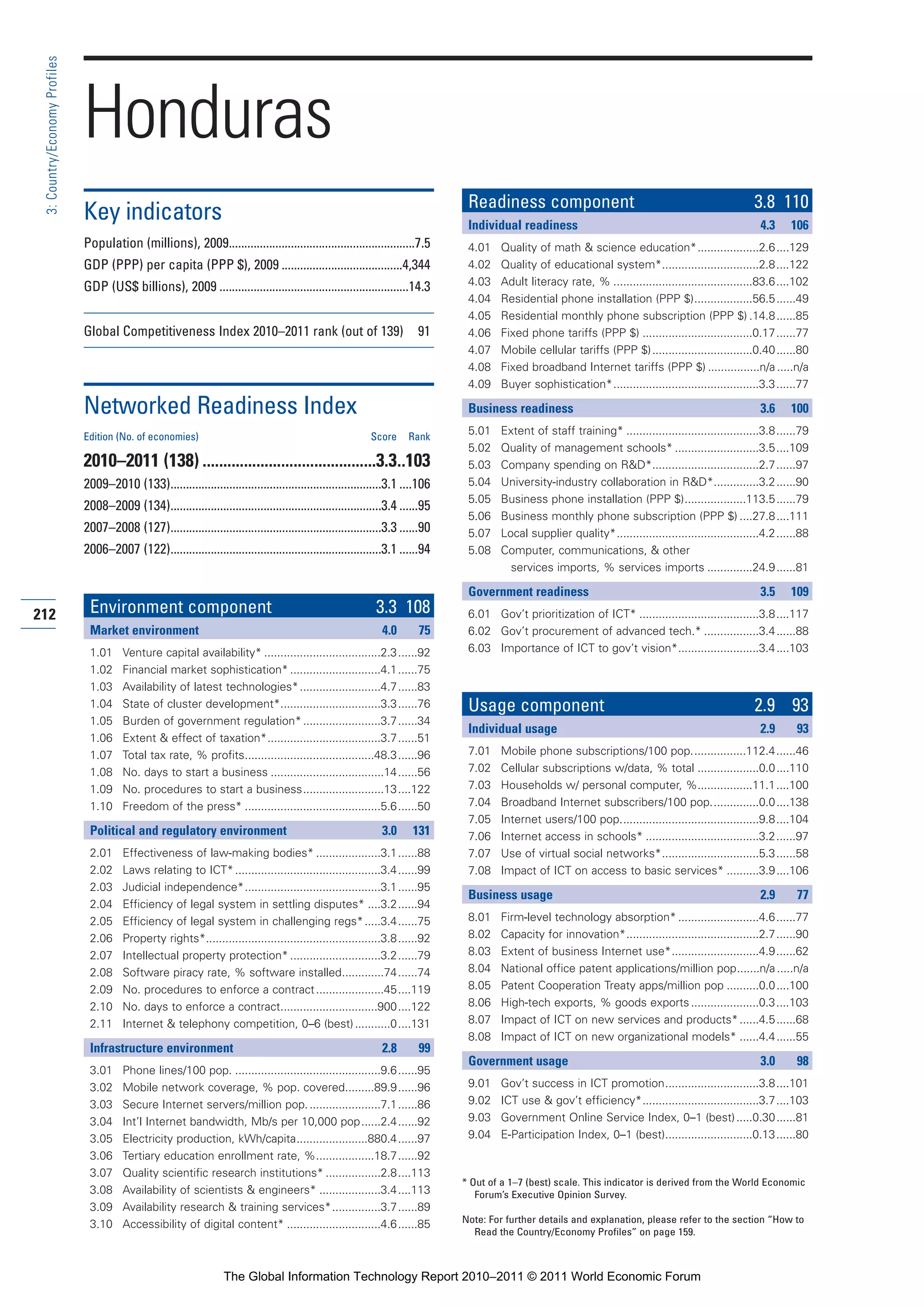


                                                                                                                                    20
                                        100                                           60
                                                                                                                                    15

                                                                                      40
                                                                                                                                    10
                                        50

                                                                                      20
                                                                                                                                     5


                                         0                                             0                                            0
                                              2004   2005    2006      2007   2008           2004   2005    2006      2007   2008         2004   2005     2006     2007   2008


                Source: McKinsey analysis.
                Notes: EBIDTA refers to earnings before interest, depreciation, taxes, and amortization. The compound annual growth rate (CAGR) is the shown above the black
                   arrows; CAGR figures are the average yearly decrease for this trend. The EU12 countries are Bulgaria, Cyprus, the Czech Republic, Estonia, Hungary, Latvia,   101
                   Lithuania, Malta, Poland, Romania, the Slovak Republic, and Slovenia.
                1 Domestic fixed lines for major European incumbents.
                2 Domestic fixed business of major European incumbents.


                Figure 2: The impact of fiber networks on the revenue model of the industry: Industry revenues in fixed voice and
                data, EU countries (US$ billions)


                                              150


                                              135
                         US$ billions


                                              120


                                              105                   I Copper-based network revenues1
                                                                    I Fiber-based network revenues2


                                               90
                                                      2006          2007      2008         2009      2010          2011      2012        2013      2014          2015


                Source: Pyramid Research, 2010.
                1 These are revenues based on copper access networks (metered voice, voice access, and broadband); they include fixed PSTN telephony.
                2 These are revenues based on fiber networks, which include fiber broadband and IPTV.


                                                     The Global Information Technology Report 2010–2011 © 2011 World Economic Forum
Part 1_r2_PART 1 3/29/11 6:44 AM Page 102


      1.9: Creating a Fiber Future: The Regulatory Challenge

                                                               Figure 3: Fiber investments and returns, by area type (US dollars per household)


                                                                                          New developments                       High-income, high-density areas             Medium-income, low-density areas


                                                                          Investment                1,250                                             1,950                                            3,250
                                                                        per household


                                                                             Customer                                                                                                                   1,000–
                                                                                                     1,500–2,000                              1,500–2,000                                               1,500
                                                                        lifetime value


                                                                          Net present
                                                                                          250        750                         –450    50                                      –2,250   –1,750
                                                                                 value


                                                                                                                        I Lower estimate        I Upper estimate


                                                               Source: McKinsey analysis.
                                                               Notes: Margin for voice services is 70 percent, for ADSL is 45 percent, for IPTV is 30 percent, and for WACC is 15 percent. The figure assumes a 30 percent
                                                                 household penetration. The gap between the investments required and the customer value is large in an HSBB investment and hence will require a long pay-
                                                                 back time of around 20–25 years. The bars are not to scale.

    102
                                                               of their operating costs, mainly at the core and access                           uncertainty. Each operator’s business case for a fiber
                                                               levels of the network. However, operators are unlikely to                         network depends on securing a stable income stream
                                                               realize most of these potential cost reductions until after                       from the network to justify the massive investment. A
                                                               their copper networks have been shut down completely.                             stable income in turn depends on a certain regulatory
                                                                     Operational savings at the network core will come                           regime giving operators rights to a predictable income
                                                               from eliminating legacy equipment and introducing                                 flow from the network. But in many countries, regula-
                                                               soft switches, reducing floor space, simplifying network                          tory frameworks governing the deployment of fiber net-
                                                               management processes and cutting maintenance costs.                               works are not yet stable. The main challenges involved
                                                               The remaining 30-40 percent of the potential reduction                            in rolling out fiber networks are covered below.
                                                               in operating costs will come from savings at the access
                                                               level. Networks will need fewer, smaller exchanges,                               The challenge of the economics of fiber
                                                               reducing their real estate costs. Installing modern and                           Fiber networks are expensive to build. The European
                                                               efficient equipment will also enable them to reduce                               Union estimated recently that the cost of building fiber
                                                               their power consumption.                                                          networks with a connection speed of at least 30 Mb/s
                                                                                                                                                 to all households in its territory and connection speeds
                                                                                                                                                 of 100 Mb/s to at least half of all households could
                                                               Obstacles to a widespread fiber rollout by fixed                                  require investment of between €180 and €270 billion.2
                                                               operators                                                                         In Australia, the government expects to invest $A43
                                                               Given these reasons, operators should be looking for-                             billion in deploying a national broadband network.3
                                                               ward to rolling out fiber networks. However this is not                                 For network operators, the high costs of rolling out
                                                               always the case, as two linked challenges are limiting                            fiber networks present a particularly complex economic
                                                               their ambitions. First, the scale of investments required                         challenge. Fiber networks built in heavily populated,
                                                               to upgrade copper networks to fiber-to-the-home                                   high-income areas could yield modest positive returns
                                                               (FTTH) is enormous, making the investment side of                                 for the network operator, although even in these areas
                                                               the business case for fiber, especially for nationwide                            there are the risks concerning the speed and extent of
                                                               rollouts, very challenging. Second, the returns are also                          consumer take-up. In lower-density, lower-income areas,
                                                               uncertain. As with any new technology, operators face                             however, there is rarely any financial rationale for a pri-
                                                               some risk that consumers may not immediately take                                 vate investor to roll out new fiber infrastructure.
                                                               up their high-speed broadband offers. More important                                    Figure 3 shows that market forces on their own
                                                               for the uncertainty of returns, however, is regulatory                            will stimulate investment in fiber network coverage only


                                                                                                The Global Information Technology Report 2010–2011 © 2011 World Economic Forum
Part 1_r2_PART 1 3/29/11 6:44 AM Page 103


                                                                                                                                                                 1.9: Creating a Fiber Future: The Regulatory Challenge
                Figure 4: Investment (euros per household, CAPEX equivalent)


                                                  Fiber benefit case estimation for an average household (30% household penetration)


                      Additional willingness to pay1         300            600


                                                                                                                   regulatory regime
                                                                                                                                       40–50% of the


                                                                                                                     Dependent on
                     Market share gain/protection2                                          350                                        business case

                                                                                                                                       can depend on
                         Wholesale value addition3                                                          250
                                                                                                                                       the regulatory
                              Lower OPEX in fiber4                                                                      350
                                                                                                                                       regime

                       Total enabled business case                                                                 1,550


                                                                   I Directly influenced by regulation


                Source: McKinsey analysis.
                Notes: This analysis considers incumbent operators with both fixed and mobile business.
                1 Based on premium on retail price of €12/month (average over time, including inflation).
                2 Based on increased/protected market share and defended wholesale charges.
                3 Change from passive to active wholesale products.
                4 Forced migration to new fiber network (shut down PSTN).

                                                                                                                                                                 103
                in the few areas where this makes economic sense for                                clear regulations enabling a robust calculation of the
                private operators, notably greenfield, upmarket building                            payoff, their approaches to investors for capital to build
                developments where fiber deployment costs are relatively                            fiber networks will fail.
                low. Private operators in emerging markets such as China,                                 Figure 4 shows how heavily an operator’s business
                India, or the Middle East are therefore likely to roll out                          case for deploying fiber depends on the regulatory
                fiber networks of substantial size because of the natural                           regime. Regulation influences an operator’s return on
                expected expansion and upgrading of housing stock in                                its fiber investments because it may affect consumers’
                these markets.                                                                      willingness to pay for connection, control prices on new
                     In more developed markets, however, where green-                               services, or delay savings from improved operational
                field housing developments are now rare, with market                                costs by delaying the transition from copper to fiber
                forces alone it will take decades to upgrade the infra-                             networks. As a result, 40 to 50 percent of a European
                structure to FTTH. Only in high-income, high-density                                incumbent operator’s potential average return per
                areas or in areas where several infrastructure players                              household on investing in a fiber network depends on
                compete will FTTH be deployed. Operators will likely                                regulatory decisions.
                roll out to most other areas a variety of lower-speed                                     Operators fear that regulators will apply to new
                broadband options in the short term, such as broadband                              fiber networks the old approach to broadband regula-
                delivered via fiber-to-the-curb (FTTC).                                             tion, enforcing a wholesale regime that allows competi-
                                                                                                    tors to use an incumbent’s network infrastructure. This
                Regulatory uncertainty                                                              kind of approach is likely to cap prices that incumbent
                Regulations governing fiber access networks need to                                 operators can charge for wholesale fiber, significantly
                take into account the economic challenges for operators                             limiting the value of their investment in the network.
                of deploying such networks, especially the enormous                                 Indeed, in those countries that have adopted such an
                investment costs and demand risks. Consistent regula-                               approach, there has been less investment in new fiber
                tion is a necessary condition for investment in such                                infrastructures than governments have desired because
                an uncertain market context. But operators in many                                  of uncertainty about the future income streams that
                regions face continuing uncertainty about whether and                               incumbents will earn from their investment. On the
                how regulators will grant competitors access to newly                               other hand, if regulators make rules to protect incum-
                built fiber networks, making returns from investment in                             bents from competition on their new fiber networks
                fiber networks difficult to calculate. Telecommunications                           for a given period, they can risk creating another
                executives around the world are concerned that, absent                              monopoly.


                                         The Global Information Technology Report 2010–2011 © 2011 World Economic Forum
Part 1_r2_PART 1 3/29/11 6:44 AM Page 104


      1.9: Creating a Fiber Future: The Regulatory Challenge

                                                               Figure 5: Distribution of US telecommunications companies capital expenditures, 2005–09


                                                                                       $US 33.4 billion         $US 40.1 billion         $US 48.3 billion         $US 48.0 billlion        $US 41.5 billion

                                                                                                                                               11                       11                       12
                                                                                             18                       14
                                                                     Percent


                                                                                             82                       86                       89                       89                       88


                                                                                                                                                I Integrated incumbents1
                                                                                                                                                I Rest of the telecommunications industry


                                                                                            2005                     2006                     2007                     2008                     2009


                                                               Source: Bloomberg online database, October 2010.
                                                               Notes: The “market” for investments is driven by the incentives given to a few. Approximately 90% of these investments in the telecommunications industry in the
                                                                  United States are made by its 4 largest companies
                                                               1 Verizon, AT&T, Sprint, and Qwest.


    104                                                             Regulators’ respect for a framework that promotes                                offering tailored incentives to a very few, large industry
                                                               broadband competition is understandable. Over the                                     players. Adapting regulatory frameworks to the new
                                                               past 15 years, the competition focus has worked well,                                 market situation may mean increased revenues for some
                                                               reducing prices for most services, opening up networks,                               operators in some areas, at least for a while, to stimulate
                                                               reducing cross subsidies, and increasing real consumer                                investment in the fiber networks.
                                                               choice. But such an approach—combined with increas-                                        Regulators are already beginning to shift their focus.
                                                               ingly intense competition from mobile services and cable                              In the European Union, for example, Viviane Reding,
                                                               operators and the massive investment required to build                                former European Commissioner for Information Society
                                                               fiber infrastructure—has made investment in fixed net-                                and Media, stated “It is very important that the conditions
                                                               works less attractive to incumbents just when govern-                                 to invest exist and regulatory certainty is one of those
                                                               ments want to have national fiber networks to boost                                   conditions. Today, the regulatory landscape in Europe is
                                                               economic performance.                                                                 unfortunately heavily fragmented in this respect.”4 This
                                                                    The scale of investments required for fiber networks                             fragmentation may be one of the reasons that European
                                                               introduces an additional complication to fiber regulation,                            countries lag behind their peers in investments in fiber.
                                                               namely that very few industry players are of a scale that                             In countries with an investment-friendly regulatory
                                                               can make these investments. To illustrate, from 2005 to                               approach to fiber, such as Japan, Hong Kong and Korea,
                                                               2009, around 90 percent of total investments in network                               Rep. (Korea), fiber rollouts are more advanced (Figure 6).
                                                               infrastructure in the United States were made by the four
                                                               largest integrated operators in the country (Figure 5).
                                                               Even operators of this size may need some additional                                  Regulatory conditions for investment in fiber
                                                               incentive from government, in the form of a subsidy or                                Operators and policymakers everywhere are trying to
                                                               regulatory advantage, to make the business case for                                   find new regulatory compromises with the industry.
                                                               building a fiber network stack up.                                                    Among the regulatory approaches so far devised to
                                                                    These changes in the broadband market context call                               stimulate implementation of next-generation fiber net-
                                                               for a regulatory approach that balances the need for                                  works, only two have resulted in widescale success: the
                                                               investment more carefully against the need to support                                 first is to underpin returns by giving the investing oper-
                                                               competition. Such an approach would recognize that                                    ators exclusive rights to use their completed network,
                                                               new technologies are providing consumers with multi-                                  as in the United States; the second is to reduce the
                                                               ple means of access to voice and data services, changing                              investment cost to incumbent operators by subsidizing
                                                               competitive intensity in the industry and altering net-                               investment in network construction, and then enforcing
                                                               work economics. Policymakers may need to consider                                     shared wholesale access to the completed network, as in


                                                                                              The Global Information Technology Report 2010–2011 © 2011 World Economic Forum
Part 1_r2_PART 1 3/29/11 6:44 AM Page 105


                                                                                                                                                        1.9: Creating a Fiber Future: The Regulatory Challenge
                Figure 6: Deployment of fiber networks in advanced telecommunications markets


                                                                         FTTH/B availability, December 20091
                                     Japan
                           Hong Kong SAR
                               Korea, Rep.
                                  Slovenia
                                 Lithuania
                                  Portugal
                          Slovak Republic
                                 Denmark
                                  Sweden
                                    France
                                   Estonia
                                   Finland
                             United States
                                   Norway
                        Russian Federation
                                     Latvia
                                       Italy
                              Netherlands
                           Czech Republic
                                  Hungary
                               Switzerland
                                   Austria
                                 Germany

                                               0                 20                  40                   60              80               100
                                                                                  Percent of households covered


                Source: FTTH Council, 2009.
                Notes: FTTH/B is fiber-to-the-home/building.
                1 Or latest available date.


                several Asian countries. A third scenario of open access                     to deliver comparable performance over an ever shorter     105
                with subsidies may be emerging in the European                               copper “last mile.” The latest generation of cable tech-
                Union, though it is so recent that its success cannot yet                    nologies, DOCSIS 3.0, delivers speeds that have pushed
                be gauged. This section outlines these three regulatory                      the telecommunications companies to start connecting
                approaches (Figure 7).                                                       fiber all the way to the customer premises, doing away
                                                                                             entirely with copper and enabling much faster speeds.
                Exclusive rights to exploit new network assets: United                            Where separately owned networks already exist,
                States                                                                       governments have tried to encourage their owners to
                In parts of the United States and a few other countries,                     invest in building new high-speed networks by granting
                the rollout of new high-speed networks has been encour-                      them exclusive rights to exploit their newly deployed
                aged by infrastructure competition. If two competing                         assets. In 2004, the Federal Communications Commission
                networks exist in the same area and one operator invests                     (FCC), the US regulatory authority, proposed that new
                in an upgrade to increase the speeds it can deliver to                       fiber networks servicing the mass market would not be
                customers, this places pressure on the other operator to                     required to provide unbundled access to competitors.
                invest in an upgrade to offer comparable speeds or risk                      This contrasts with the much stronger unbundling
                losing customers.                                                            requirements placed on copper networks under the US
                     Infrastructure-based competition has emerged in                         Telecommunications Act of 1996. The FCC felt that
                countries such as the United States where legacy cable                       the strength of existing competition between cable
                television networks operate alongside the copper tele-                       and copper infrastructure allowed for a weaker access
                phone network. When these cable or hybrid fiber coaxial                      regime, and thus would stimulate the construction of
                (HFC) networks were first built, they were dedicated to                      new parallel network infrastructure without harming
                providing television services and did not compete with                       competition.
                telephone networks. Then cable technology developed                               This form of exclusivity, along with competitive
                so it could deliver not only television but voice and                        pressure from cable operators rolling out DOCSIS 3.0,
                Internet services at the same time. Cable and telecom-                       provided the impetus for the construction of fiber-to-
                munications operators found themselves with competing                        the-premises (FTTP) networks by Verizon and fiber-
                infrastructures, and have subsequently sought to match                       to-the-node (FTTN) networks by AT&T. In 2004
                each other’s performance. As the speeds available over                       Verizon began deploying a US$23 billion FTTP net-
                cable have outstripped those that copper can deliver,                        work capable of delivering up to 50 Mb/s download
                telecommunications companies have rolled out optical                         speeds and 20 Mb/s upload speeds. The network had
                fiber closer and closer to homes of customers in order                       passed 10 million premises by September 2009. In total,


                                               The Global Information Technology Report 2010–2011 © 2011 World Economic Forum
Part 1_r2_PART 1 3/29/11 7:25 AM Page 106


      1.9: Creating a Fiber Future: The Regulatory Challenge

                                                               Figure 7: Approaches to widescale fiber access deployment


                                                                                                           Only regulatory exclusivity seems to encourage investments without significant government subsidy


                                                                                                                                             To incumbent
                                                                                         Subsidy


                                                                                                                                             • Japan (90%)                              • New Zealand (75%)
                                                                                                                                             • Taiwan, China (50%)                      • Australia (98%)


                                                                                                                                             To third party
                                                                    Government intervention


                                                                                                                                             • Singapore (>50%)


                                                                                                      • United States (40%)                  • European Union today                     • United Kingdom (<1%)
                                                                                                      • Hong Kong SAR (75%)
                                                                                         No subsidy


                                                                                                      • Korea, Rep. (80%)


                                                                                                            Regulatory “exclusivity”                   Regulated access               Separation (functional/structural)
                                                                                                                                                    Regulatory end-state


                                                               Source: McKinsey analysis.
    106                                                        Note: Countries highlighted in blue reflect actual coverage; countries in black reflect planned coverage.


                                                               17.2 million households, or 15 percent of the United                                            to encourage operators to extend high-speed broadband
                                                               States, had been covered by FTTP deployments in                                                 coverage to areas that will still be uneconomic to serve
                                                               September 2009, compared with only 180,000 homes                                                even for a monopoly provider: even with this benefit,
                                                               at the time the access holiday was granted. Some 5.3                                            both AT&T’s and Verizon’s high-speed networks have
                                                               million US homes have now been connected to FTTP;                                               targeted high-income households. The United States
                                                               1.5 million homes were connected in 2009. Since 2004,                                           has tried to address this challenge by investing US$7.2
                                                               AT&T has been rolling out an FTTN network capable                                               billion of government money in rolling out high-speed
                                                               of delivering download speeds of 18 Mb/s and upload                                             broadband infrastructure to areas that are essentially
                                                               speeds of 1.5 Mb/s. By the start of 2009, the network                                           uneconomic for private operators to serve.
                                                               had passed 17 million households, and had plans to pass
                                                               30 million by the end of 2011.                                                                  Government-sponsored upgrade with open access: Japan
                                                                     Exclusivity guaranteed by regulation stimulates                                           Japan has the second-fastest average broadband speeds in
                                                               the expansion of high-speed broadband coverage                                                  the world, after Hong Kong, and the second highest
                                                               because a guaranteed monopoly of services offered                                               penetration rate of FTTH, after Korea, at 34 percent of
                                                               over the infrastructure means the investing operator is                                         households. Most of this fiber network has been built by
                                                               able to recoup its investment more easily. This advantage                                       the incumbent Nippon Telephone and Telegraph (NTT),
                                                               is likely to stimulate coverage in areas where building a                                       taking advantage of a package of tax incentives from the
                                                               network would have been uneconomic for operators if                                             government that includes such elements as accelerated
                                                               they had to allow competing service providers to use                                            depreciation and deductions for business users, as well as
                                                               the network they had built on its completion, as is the                                         low-cost loans.
                                                               rule under open-access regimes.                                                                      The regulator mandated open access on copper
                                                                     Achieving greater network coverage in this way                                            in 1999, with wholesale prices set low to reflect the low
                                                               entails a trade-off with some of the other benefits of                                          costs of operating and maintaining a fully depreciated
                                                               competition. Markets that have infrastructure-based                                             network. These measures encouraged strong competitors
                                                               competition with no open-access regime tend to have                                             to develop in the DSL market, and broadband penetra-
                                                               higher prices for lower broadband service speeds than                                           tion grew from below 1 percent in 1999 to 66 percent
                                                               similar markets that do mandate open access. Furthermore,                                       in 2009. Competitive pressures from DSL, cable opera-
                                                               a regulatory “exclusivity” regime by itself is not enough                                       tors, and new smaller fiber players eventually compelled


                                                                                                                   The Global Information Technology Report 2010–2011 © 2011 World Economic Forum
Part 1_r2_PART 1 3/29/11 6:44 AM Page 107


                                                                                                                                                        1.9: Creating a Fiber Future: The Regulatory Challenge
                Figure 8: Evolution of the EU copper regulatory approach


                           From limited incentives in Europe in 2004                                . . . to more incentives in 2010


                                                                                                        • Mandated access to ducts where possible
                                                                                                        • Mandate subloop unbundling
                                                                                        Access
                                                                                                        • Encourage facility sharing in new areas
                                                                                                        • Access to in-house wiring and dark fiber


                                             • Open access for fiber                                   • Separation of wholesale/retail is “archived”
                              Access         • No regulatory holidays                 Separation         and seen only as a remedy of last resort


                                             • Network separation                                      • Subsidies allowed for rural and
                            Separation                                                Government
                                               is seen as a very viable                                  nonprofitable areas to build fiber networks
                                                                                       subsidies
                                               regulatory remedy


                                                                                                       • Extra 15% “risk premium” surcharge
                                             • Government subsidies                      Risk
                                                                                                         allowed on wholesale costs to recoup
                                               are not allowed                         premium           investment costs
                            Incentives
                                             • Wholesale prices set
                                               based on costs
                                                                                                       • Regulatory needs to take into account
                                                                                      Geographic
                                                                                                         market situation in different geographical
                                                                                     segmentation        areas


                                                                                                       • Cost based + acceptable risk premium
                                                                                        Pricing        • Retail minus allowed when deemed
                                                                                                         appropriate
                                                                                                                                                        107


                Source: McKinsey analysis; European Union, 2009.


                NTT to develop an FTTP network; today, fiber is the                 Evolution of the European regulatory framework
                dominant broadband access technology in Japan, having               The European Union’s experience illustrates the
                overtaken cable in mid 2008. However, the government                challenges regulators face in deciding how to regulate
                clarified the regulatory framework that would govern                competitor access to fiber networks in a way that
                the network before NTT started to raise the investment              does not discourage investment in their development.
                required.                                                                In 2004, there were limited incentives for operators
                     NTT is required to grant access to the fiber net-              in the European Union to build fiber networks. The “old
                work, but prices set by the regulator are high enough to            copper” regulatory framework was applied to fiber: no
                guarantee adequate returns to NTT on its investment                 regulatory reliefs for fiber networks were granted; whole-
                and prevent competitors from undercutting NTT’s                     sale access to fiber networks was widely mandated;
                retail price. Regulated wholesale fiber access prices at            enforced separation of wholesale and retail networks
                approximately US$55 per user per month are four to                  was seen as a powerful remedy against the dominance
                five times higher than copper local loop, reflecting the            of incumbent operators in fixed networks, which were
                fact that the network is not yet fully depreciated. This            allowed no kind of subsidies or price flexibility on their
                leads to retail prices of US$63 per month for an uncapped           wholesale access products.
                100 Mb/s connection. The Japanese regulatory agencies                    Six years later, the European Commission has
                take an active, adaptive approach and were reassessing              exchanged the old regulatory framework for one that
                the access regime and prices in 2010.                               recognizes the need to stimulate large-scale fiber invest-
                     Through subsidies and incentives, Japan’s govern-              ments differently (Figure 8). Changes to the old regula-
                ment aimed to make FTTH available to over 90 percent                tory framework are aimed at increasing incentives for
                of Japanese premises by 2010 as part of its Ubiquitous-             network operators to invest in fiber networks. The
                Japan Internet policy launched in 2006.5 By December                requirement for operators to separate their wholesale
                2008, 87 percent of premises had been reached.                      and retail businesses has been relegated to a remedy
                                                                                    of last resort against dominance. Operators are allowed


                                         The Global Information Technology Report 2010–2011 © 2011 World Economic Forum
Part 1_r2_PART 1 3/29/11 6:44 AM Page 108


      1.9: Creating a Fiber Future: The Regulatory Challenge

                                                               to charge a 15 percent premium over copper wholesale               References
                                                               access prices for fiber wholesale access, reflecting their         Australian Government, Department of Broadband, Communications
                                                                                                                                       and the Digital Economy. 2010. National Broadband Network
                                                               higher investment risk. Governments are allowed to                      Implementation Study, May 6. Avalailable at http://
                                                               subsidize the roll-out of fiber networks to rural and                   www.dbcde.gov.au/broadband/national_broadband_network/
                                                                                                                                       national_broadband_network_implementation_study.
                                                               unprofitable areas, and operators can adapt pricing
                                                               regimes to different market contexts in different geo-             Beardsley, S. C., L. Enriquez, S. Bonini, S. Sandoval, and N. Brun. 2010.
                                                                                                                                       “Fostering the Economic and Social Benefits of ICT.” In The
                                                               graphical areas. Last, the new regulations allow more                   Global Information Technology Report 2009–2010. Geneva: World
                                                               flexibility on pricing on wholesale products.                           Economic Forum. 61–70.

                                                                                                                                  The Berkman Center for Internet and Society at Harvard University.
                                                                                                                                       2010. Next Generation Connectivity: A Review of Broadband
                                                                                                                                       Internet Transitions and Policy from Around the World.
                                                               Conclusion                                                              Cambridge, MA: Harvard. Available at http://cyber.law.harvard.edu/
                                                               It is too soon to say whether the new regulatory                        pubrelease/broadband/.
                                                               approaches, such as the EU one, offer sufficient incen-            Buttkereit, S., L. Enriquez, F. Grijpink, S. Moraje, W. Torfs, and
                                                               tives and certainty to operators to stimulate the large-                T. Vaheri-Delmulle. 2009. “Mobile Broadband for the Masses:
                                                                                                                                       Regulatory Levers to Make it Happen.” February. McKinsey
                                                               scale investments in fiber networks needed, but it is                   & Company.
                                                               certainly a start in that direction.
                                                                                                                                  Enck, J. and T. Reynolds. 2009. “Network Developments in Support of
                                                                     It is clear that business as usual will not work. More            Innovation and Users Needs.” OECD Digital Economy Papers 63,
                                                               innovative ways of collaborating among local and                        OECD Publishing.

                                                               national governments, operators, and regulators will be            Enriquez, L., F. Grijpink; S. Moraje, S. Sandoval, and W. Torfs. 2011.
                                                                                                                                        “Broadband for the People: Policies that Support Greater
                                                               required. Broadly, governments can act to spur demand                    Access.” Recall 15 (January): 39–43.
                                                               for high-speed broadband among citizens, provide
                                                                                                                                  European Commission. 2010. “Digital Agenda: Commission Spells
                                                               investment support for industry players, and—perhaps                    Out Plan to Boost Investment in Broadband.” Press Release,
                                                               most important of all—put forth a compelling vision of                  September 20. Available at http://ec.europa.eu/information_
                                                                                                                                       society/newsroom/cf/itemdetail.cfm?item_id=6128&language=
                                                               the economic benefits of a “high fiber” future. Regulators              default.
                                                               need to find the right ways, within their economies, to
                                                                                                                                  European Union. 2009. L337. Official Journal of the European Union
                                                               balance the need for competition against the creation of                52 (December 18, 2009). Available at http://eur-lex.europa.eu/
                                                               an investment-friendly environment.                                     JOHtml.do?uri=OJ:L:2009:337:SOM:EN:HTML.
    108
                                                                     Fixed-line operators can recover falling revenues            FTTH Council. 2009. “Global Fiber to the Home Expansion Defies
                                                                                                                                       the Economic Downturn.” September 3. Available at http://
                                                               and improve their operating costs by deploying fiber                    www.ftthcouncil.org/en/newsroom/2009/09/30/global-fiber-to-
                                                               networks. But the investments that such networks require                the-home-expansion-defies-the-economic-downturn.
                                                               are so large that regulatory support of some kind is               Heavy Reading. 2009. FTTH Review & Five-Year Forecast: The Road to
                                                               essential to guarantee that they are able to make a posi-               Next-Gen PON. New York: Heavy Reading.

                                                               tive business case. Regulators need to manage carefully            Izumi, H. 2006. “Driving Fiber to the Home.” Speech given at the 7th
                                                               any shift in their regulatory focus from competition                     European Competitive Telecommunications Association (ECTA)
                                                                                                                                        Regulator Conference 2006, November 15–17. Brussels.
                                                               to investment incentives, in order to get the balance
                                                                                                                                  Kohli, S., L. Enriquez, S. Sandoval, and W. Torfs. 2010. “Invest now:
                                                               right. But they must also avoid continuing regulatory                    Deploying Fiber to Achieve Government and Company
                                                               uncertainty, which is delaying the investment in fiber                   Objectives.” Recall 12 (March): 31–35.
                                                               networks that all sides of the industry want. Incumbent            OECD (Organisation for Economic Co-operation and Development).
                                                               fixed operators are mindful of their duty to work with                 2009. OECD Communications Outlook 2009. Paris: OECD.
                                                                                                                                      Available at http://www.oecd.org/sti/telecom/outlook.
                                                               other stakeholders in the industry—government, policy-
                                                                                                                                  Pyramid Research. 2010. “Fixed Communications Demand—Total: June
                                                               makers, and competitors—to achieve national aspira-                     2010, Western Europe.” Spreadsheet.
                                                               tions. But to achieve national fiber network coverage,
                                                                                                                                  Reding, V. 2008. “Europe’s Way to the High Speed Internet: Why
                                                               governments and policymakers may need to re-examine                     Effective Network Competition is the Freeway to the Future.”
                                                               their current approach to regulation.                                   Speech given by Viviane Reding at the ECTA Annual Conference,
                                                                                                                                       Brussels, June 25. Available at http://ec.europa.eu/information_
                                                                                                                                       society/newsroom/cf/itemdetail.cfm?item_id=4204.

                                                               Notes
                                                                 1 Beardsley et al. 2010.

                                                                 2 European Commission 2010.

                                                                 3 Australian Government 2010.

                                                                 4 Reding 2008.

                                                                 5 Izumi 2006.


                                                                                            The Global Information Technology Report 2010–2011 © 2011 World Economic Forum
Part 1_r2_PART 1 3/29/11 6:44 AM Page 109


                                                                                                                                           1.10: The Emerging World’s Five Most Crucial Words
                CHAPTER 1.10                                                 Perched 4,000 feet above sea level—up in thin air, where
                                                                             marathoners like to train—Embu is a town nestled in
                                                                             the foothills of Mount Kenya. Each September, much of
                The Emerging World’s                                         this land blazes with colors of the Jacaranda—a tree that
                                                                             blooms in clusters of lush blue corollas. But not every
                Five Most Crucial Words:                                     square mile is so blessed. In 2010, a shortfall of rain
                                                                             northeast of Nairobi left farmers with fields of young
                “To Move Money, Press Pound”                                 crops destroyed. Fortunately, their balance sheets escaped
                                                                             a similar fate. Although the drought wrecked invest-
                RAM MENON, TIBCO Software Inc.
                                                                             ments in quality seeds, costly fertilizers, and other high-
                                                                             grade inputs, insurance payouts came faster than “fast.”
                                                                             They came in real time, on an as-needed basis, through a
                                                                             remarkable initiative called M-PESA.
                                                                                   A joint venture between Vodafone and Kenyan
                                                                             mobile-operator Safaricom, M-PESA is one of many
                                                                             mobile-money programs surfacing in Africa and Asia to
                                                                             cure the root of financial hardship across the emerging
                                                                             world: the challenge of moving money from sender to
                                                                             receiver.1 With mobile money—funds transferred with a
                                                                             touch on a keypad—rising supplies of cash are now
                                                                             reaching these financially starved areas, where they are
                                                                             fueling consumption, sustaining businesses, and strength-
                                                                             ening nations by tightening their weakest links: fragile
                                                                             rural economies.
                                                                                   It is no stretch to say that sending cash to the
                                                                             countryside can lift the fortunes of an entire nation—
                                                                             a cause and effect embodied by the Kenyan town of             109
                                                                             Embu. It works like this: reimburse rural farmers for
                                                                             lost investments in farm inputs and you demonstrate a
                                                                             capacity to provide swift financial protection, the kind
                                                                             that will encourage farmers across Kenya to make bold
                                                                             investments of their own. As for “swift financial protec-
                                                                             tion,” Safaricom defines it well: “The efficiency of any
                                                                             economy relies on how quickly resources can move
                                                                             from ‘point A’ to where they are needed most and
                                                                             will be put to best use. It continues: “Since money is
                                                                             the engine that powers trade, its efficient movement is
                                                                             vital to supporting evolving economies. This is especially
                                                                             true in emerging nations where formal money-move-
                                                                             ment infrastructures like banking are just beginning to
                                                                             take shape.”2
                                                                                   Just beginning, indeed. Consider this: when residents
                                                                             of the Maldives lost their savings in the tsunami of 1994—
                                                                             a storm that ravaged the island nation—it was not because
                                                                             they had sunk them into assets later destroyed in the
                                                                             flood. Instead, the losses involved cash: funds Maldivians
                                                                             had stuffed into mattresses because they lacked access
                                                                             to banks. When the tsunami hit, a people’s life savings
                                                                             were literally washed away.
                                                                                   There is an urgent need to extend the reach of
                                                                             financial services worldwide, where, by the World Bank’s
                                                                             count, some 2.7 billion people lack access to banking.
                                                                             Take Kenya’s case: although it is the financial hub of
                                                                             eastern and central Africa, at least a third of its popula-
                                                                             tion remains beyond banking’s reach.3 Some do not
                                                                             qualify for accounts. Others—the literacy-challenged,
                                                                             for example—rarely want them. Even in South Africa—


                                  The Global Information Technology Report 2010–2011 © 2011 World Economic Forum
Part 1_r2_PART 1 3/29/11 6:44 AM Page 110


      1.10: The Emerging World’s Five Most Crucial Words

                                                           a middle-income nation with a strong financial system—       real-time money management and encourage the growth
                                                           only 60 percent of adults use banking services.4 But a       of savings.
                                                           mobile phone is a different story. Nearly 100 percent of          What follows is a brief but vivid look at mobile
                                                           all South African adults own a mobile phone, a group         money across the emerging world, with particular
                                                           that includes many who are unbanked.5 Could mobile           emphasis on its transformative power, the key challenges
                                                           phones hold the key to democratizing access to financial     that must be tackled to fully leverage its potential, and
                                                           services?                                                    the next transformational waves of this undeniable sea
                                                                 Here is a strong clue: in the developing world, no     change.
                                                           instrument is of greater value. Over 2.2 billion mobile
                                                           phones are now in use across the emerging world 6—a
                                                           number that will skyrocket as developing nations drive       Mobile money: Big potential from a small handset
                                                           over 80 percent of all new subscriptions worldwide.7         By all measures—financial, social, and even cultural—the
                                                           The economic effect is dramatic. Waverman et al. show        mobile phone has become the Trojan horse for change
                                                           that in a typical emerging nation, adding an additional      in the emerging world: it is inexpensive, personal, con-
                                                           10 mobile phones per 100 population boosts per capita        nected, and ubiquitous. Here, a handset offers more than
                                                           GDP growth by 0.59 percent.8                                 voice and text and music and gaming. It offers sustenance:
                                                                 Little wonder, then, that home-grown mobile            mobile agricultural advice, healthcare support, and money
                                                           operators in China, India, Africa, and the Middle East       transfer. The latter is especially compelling. Mobile
                                                           now meet or exceed their Western counterparts in size.       telephony has spawned mobile money, turning small,
                                                           Their influence will only grow; led by India, they will      local retailers into the equivalent of bank branches. In
                                                           accelerate their push to turn developing nations into        bringing banking services to those who have never seen
                                                           hotbeds of mobile telecommunications. Indeed, they are       the inside of a bank, it creates a stepping stone to formal
                                                           paradigms of disruptive innovation, delivering robust        financial services for billions of people with no
                                                           service to low-spending customers eschewed by Western        accounts, credit, or insurance.
                                                           carriers.                                                         M-PESA (pesa is Swahili for money) is mobile
                                                                 All of which begs the question: what makes             money’s gold standard: a Kenyan service enabling those
    110                                                    emerging markets so ripe for mobile penetration? The         with no bank account to move money, receive cash,
                                                           Nielsen Company sheds light on this question by              and pay bills (utilities and others) through a mobile
                                                           accounting for the difference between Internet adoption      phone. By making it possible for Nairobi’s migrant
                                                           and mobile phone adoption. “Internet penetration for         laborers to send money back home, for instance, it
                                                           established economies follows a fairly typical pattern,”     serves technology’s new imperative to reach beyond
                                                           claims a posting to nielsenwire, “rising with income lev-    original intent; in this case, creating banking for the
                                                           els, and requiring a threshold of around $20,000 of per      unbanked—an application of mobile telephony more
                                                           capita GDP to achieve 50% penetration. Not so for            tectonic than first imagined. There is a name for the
                                                           mobile communication. First, mobile penetration often        financial, commercial, and societal sea changes spawned
                                                           exceeds 100% because people own multiple mobile              by audacious new applications of information techno-
                                                           phones. Second, while mobile phone penetration also          logies: Transformation 2.0. Its champions know that in
                                                           rises with per capita GDP, it happens earlier, and faster,   operating enterprises large and small, in nations fully
                                                           than Internet adoption. Instead of a $20,000 threshold,      developed and newly emerging, success means managing
                                                           in many countries mobile phone penetration exceeds           a new reality; one limned by three tenets:
                                                           50% percent with a per capita GDP as low as $5,000.”9
                                                                 Nielsen estimates that over the next five to ten            1. In the 21st century, opportunities and threats
                                                           years, mobile penetration will rise to some 140 phones               come with exponentially more data and must be
                                                           per 100 inhabitants—even in nations of very low per                  managed in exponentially less time than ever
                                                           capita GDP—and then rise gradually with income.                      before.
                                                           “At that point,” anticipates Nielsen, “the gap in mobile          2. Seizing the opportunities and dismantling the
                                                           communication between developed and emerging                         threats is best done pre-emptively, in the most
                                                           economies will have largely disappeared, although some               malleable moments before they emerge.
                                                           differences in technological sophistication will remain.
                                                           In fact, within emerging markets, mobile communica-               3. The capacity to strike pre-emptively requires a
                                                           tion may actually foster greater business and GDP                    21st century data infrastructure—one that is
                                                           growth, creating a feedback loop which will further                  agile and operates in real time, and thus is capa-
                                                           boost mobile penetration.”10 The upshot is clear: in                 ble of operating in context.
                                                           emerging markets, mobile technology is a means of
                                                           disruptive growth by which mobile banking will                    Context is at the heart of Transformation 2.0, and
                                                           leapfrog online financial activity. Moreover, by             for good reason: if raw data show what is, contextual
                                                           bringing the unbanked into banking, it will enable           data show what is next. When the right information


                                                                                  The Global Information Technology Report 2010–2011 © 2011 World Economic Forum
Part 1_r2_PART 1 3/29/11 6:44 AM Page 111


                                                                                                                                              1.10: The Emerging World’s Five Most Crucial Words
                finds the right place at the right time, managers can act      mobile technology can deliver financial services quickly,
                pre-emptively to solve the toughest problems across the        securely, and at low cost.
                board—from operating a complex business to advancing                 Safaricom says it this way: “Traditionally, most money
                global security or enabling the sustainability of Kenyan       never reached its destination with the same level of
                farmers. This would account for what happened in               frequency and efficiency as it does now with M-PESA.
                Kenya’s Embu on September 21, 2010. Armed with                 Given the high costs and risks involved in money-
                contextual data in the form of real-time rainfall reports      transfer methods used before—like bus couriers or
                from local weather stations, local microinsurer Kilimo         informal messenger systems—one had to lump the cash,
                Salama approved compensation for struggling farmers            often by month, before it could be sent home. With the
                the moment precipitation levels dropped below average.         advent of M-PESA, this money can be remitted in real-
                It did not wait for the crops to die because it knew what      time on an as-needed basis. Also, it is much cheaper and
                was coming. The result: with instant financial protection,     less risky compared to bus couriers prone to pilferage.
                Kilimo Salama did more than pre-empt crippling losses          The end result is that more money is getting into rural
                for many Kenyan farmers. It enabled them—and                   economies, fueling consumption and giving a new lease
                emboldened them—to invest moving forward.                      of life to small businesses in these areas. The sum total
                      By every measure, M-PESA is a transformative             of these gains fuels the national economy.”11
                wave. Launched in 2007, it is the world’s first commer-              As M-PESA grows, and its counterparts emerge
                cial mobile money transfer system, developed to                elsewhere in the developing world, their success will
                meet the banking needs of people outside the formal            be assured only to the extent that their operations are
                financial system. The technology consists of a service         transparent and protected from abuse. Entrenched bank-
                platform that integrates a mobile wallet with Safaricom’s      ing interests, often loathe to see their physical branches
                rating, billing, and provisioning systems. Subscribers         and ATMs rendered moot by mobile money, will likely
                of Safaricom register for the service by completing a          do all they can to slow the march of this initiative. To
                simple form and showing identification. Once regis-            remain viable, mobile-money systems must stay suffi-
                tered, the carrier replaces the mobile customer’s SIM          ciently liquid and demonstrably transparent. This is no
                card with an M-PESA-enabled SIM and links the                  easy feat.
                phone number to an electronic account—the e-wallet.                                                                           111
                To load money on the wallet, the user visits the nearest
                M-PESA agent—17,652 small retailers fill the role—and          Liquidity: The core challenge
                deposits cash there, which is stored as “e-float.” Backed      “De-materializing” cash into mobile e-float offers a
                100 percent by liquid deposits held by Safaricom in            life-changing benefit—money that moves in real time
                fully regulated commercial banks, e-float is the virtual       at reduced risk—but not without steep challenges. The
                currency used to move money to other people, pay bills,        first of these challenges involves the economics of
                or purchase airtime, via an encrypted SMS. A deposit, or       liquidity: keeping agents stocked with cash and e-float
                cash-in transaction, entails a real-time transfer of e-float   so that they can meet customers’ needs for deposits and
                from the M-PESA agent to the customer in exchange              withdrawals. Cash-in transactions cause agents to pay
                for cash given to the agent. A withdrawal, or cash-out         out e-float, while cash-out transactions cause them to
                transaction, requires that the customer transfer e-float to    accumulate e-float. The trick is to maintain balance: if
                the agent and receive cash in exchange. Those on the           agents perform too many cash-in transactions (deposits)
                receiving end of a mobile-money transfer do not need           they will eventually run out of e-float. If they perform
                to own a mobile phone to cash out. As an alternative to        too many cash-out transactions (redemptions of e-float)
                cashing out, they may use e-float to pay bills, purchase       they will run out of cash. In either case, the agent must
                healthcare, buy groceries, and more.                           rebalance liquidity: convert the excess e-float into cash
                      This bears repeating: M-PESA and platforms like          or vice versa. To buy or sell e-float, agents must deposit
                it attack the root cause of economic hardship across           or collect the appropriate amount of money in (or from)
                much of the developing world. It is not a shortage of          the telecommunications network’s account at any of the
                funds that limits emerging populations from buying             custodial banks supporting the mobile-money system. It
                goods, paying bills, and receiving government or               normally takes one or two days for such transactions to
                employer payments. Rather, it is the inability to move         settle. This imposes a high working-capital cost on agents,
                money promptly and reliably from sender to receiver,           who must maintain a sufficient balance of e-float to
                especially when receivers inhabit remote areas, as             accommodate their potential liquidity needs for up to
                many do. In markets where infrastructures are poorly           two days.
                developed—where moving cash by couriers is risky,                    For poor people operating in a cash economy,
                expensive, and inefficient—the problem is more the             whose income comes in the form of small lumps of cash,
                “velocity” of money than its supply. Enter telecom-            being able to cash in and out easily is a precondition
                munications network operators, whose adaptations of            for participating in a mobile-money system. A keen
                                                                               perspective on this challenge comes from the Bill &


                                   The Global Information Technology Report 2010–2011 © 2011 World Economic Forum
Part 1_r2_PART 1 3/29/11 6:44 AM Page 112


      1.10: The Emerging World’s Five Most Crucial Words

                                                           Melinda Gates Foundation, which supports mobile-               Mobile Money in Ghana works with nine bank part-
                                                           money programs through its initiative called Financial         ners, each of which leverages its knowledge of existing
                                                           Services for the Poor. It says, “[Mobile money] retail         clients to help identify suitable agent candidates.”14
                                                           [agent] outlets are bridges between the entrenched cash-             How does Safaricom help M-PESA agents strike
                                                           based exchange system and the new electronic payments          the crucial balance of cash and e-float? To safeguard
                                                           cloud. This network of bridges needs to be sufficiently        liquidity, the mobile carrier has appointed a number of
                                                           dense geographically to offer the necessary convenience        super-agent banks with branch networks throughout
                                                           to all customers, and sufficiently resilient [liquid] to       Kenya, so that agents can get consistent access to e-float.
                                                           meet whatever cash or e-float needs customers may              These include the Commercial Bank of Africa (Kenya’s
                                                           have at any time.”12                                           largest privately owned bank) and Kenya Commercial
                                                                 The International Finance Corporation agrees. This       Bank (one of the three largest commercial banks in
                                                           investment advisory, a member of the World Bank                Kenya). And to ensure transparency—to safeguard against
                                                           Group, explores mobile-money liquidity in its report,          money laundering and other risks—all transactions are
                                                           Bridges to Cash: The Retail End of M-PESA. It asserts:         recorded, customers are required to produce original
                                                           “Proper liquidity management of the retail [agent]             forms of personal ID, and transactions are executed only
                                                           network goes to the heart of the usefulness and trust-         with the agreement of both parties. Says Safaricom of
                                                           worthiness of the [mobile-money] proposition. For              its dedication to transparency: “Working with regulators
                                                           the retailers, keeping customers supplied with e-float         like the Central Bank of Kenya and the Communications
                                                           and cash is central to their business.”13                      Commission of Kenya, we ensure that M-PESA operates
                                                                 What headway is being made to meet this critical         at the highest levels; that we are in synch with global best
                                                           challenge of balancing liquidity? In Tanzania, where           practices in Anti-Money-Laundering and Know-Your-
                                                           Vodacom Tanzania, a joint venture between Vodafone             Customer banking regulations. Our first priority is to
                                                           and Telkom South Africa, launched mobile money                 operate at the highest level of integrity and efficiency.”15
                                                           in 2008, the system taps aggregators (which they call                Efficiency will be key as Safaricom strives to meet
                                                           master-agents) to recruit agents and manage their floats,      soaring demand—demand that has exceeded even the
                                                           transporting cash for the agent if necessary. The master-      company’s own expectations. And for good reason: in
    112                                                    agent receives a flat fee for each new agent and a per-        a nation of 38 million people, only 4 million of whom
                                                           centage of each agent’s commissions, giving him or her         have a bank account, over 13 million Kenyans now
                                                           an incentive to sign up high-quality agents who will           belong to M-PESA, and their collective cash transfers
                                                           actively transact. To overcome the time lag in settling        equal 11 percent of the nation’s GDP.16 Even more
                                                           account-to-account transfers at Tanzanian banks—lag            impressive is this: M-PESA’s reach down Kenya’s socio-
                                                           that undermines the prompt replenishment of electronic         economic ladder is extensive and growing; in short, the
                                                           value—Vodacom Tanzania has accelerated the process by          program is getting better at reaching those who need it
                                                           establishing a line of credit for master-agents. Under this    most. Evidence comes from a recent study: “While the
                                                           system, master-agents can draw on a pool of interest-free      representation of all segments of the income distribution
                                                           electronic value to refill the e-float of an agent once        in profile of users has grown, the proportional growth has
                                                           they are satisfied that the agent has transferred value        been highest among those at the bottom. For example,
                                                           back to the master-agent’s account. Master-agents repay        the bottom quartile of the income distribution account-
                                                           the loan once they have converted the agent’s cash into        ed for just 10 percent of users in 2008, but 14 percent
                                                           electronic value.                                              in 2009. [At the same time] the share of users from the
                                                                 In nearly every mobile-money market, operators           richest 25 percent of households accounted for 34 per-
                                                           stipulate minimum values of cash and e-float that agents       cent of users in 2009, down from 37 percent in 2008.”
                                                           must maintain. Mobile Money Exchange, GSMA’s                   Also significant is the fact that M-PESA is reaching
                                                           online community for those interested in mobile                women. “While only 38 percent of users were female
                                                           money, asks the requisite question: How can operators          in 2008,” report Jack and Suri, “that number grew to
                                                           assess whether a potential agent has the means to main-        44 percent by 2009.”17 But what of the ultimate litmus
                                                           tain the required amount of e-float? Discovery often           test: is there evidence that M-PESA is actually boosting
                                                           begins with the mobile carrier: do the agent’s airtime         the financial health of Kenyan households? The answer
                                                           sales reflect a retail operation that is healthy and liquid?   is “Yes,” says their study. “It appears that households with
                                                           In turn, carriers offering mobile-money services in part-      access to M-PESA are better able to protect themselves
                                                           nership with banks can leverage their banking partner’s        against the downside risks associated with job loss, harvest
                                                           skills in evaluating merchants who are seeking to become       or business failure and poor health.”18
                                                           mobile-money agents. “And in cases where the retailer                Other markets and mobile carriers have taken notice.
                                                           [agent] is a current client of the bank,” says GSMA in         MTN, Africa’s largest mobile operator, has launched a
                                                           its 2010 Annual Report, “operators can make use of             mobile-money service in Uganda in conjunction with
                                                           the data gathered over the course of the relationship          Standard Bank. It is fine-tuning the service before
                                                           between the bank and the retailer. For instance, MTN           rolling it out across the continent. And in South Africa,


                                                                                  The Global Information Technology Report 2010–2011 © 2011 World Economic Forum
Part 1_r2_PART 1 3/29/11 6:44 AM Page 113


                                                                                                                                           1.10: The Emerging World’s Five Most Crucial Words
                after having launched the initiative in Tanzania and         with Qatar’s Doha Bank, it gave thousands of Filipinos
                Afghanistan, Vodacom has teamed up with a local finan-       living in Qatar the capacity to send money to remote
                cial institution to target the 26 million people with no     areas of their country of origin.23 Over 200,000 Filipinos
                access to banking.                                           now live and work in Qatar. By the close of 2009, their
                                                                             remittances home exceeded US$185 million.24
                                                                                  In Haiti, a collaborative effort by Scotiabank and
                To India and beyond                                          Digicel—the Caribbean’s largest mobile telecommuni-
                Perhaps no one has captured the ethos of mobile              cations operator—has spawned Tcho Tcho Mobile, a
                money better than Arun Sarin, former CEO of Britain’s        mobile-money program launched in November 2010
                Vodafone Group Plc. “When [people] have access to            to an initial market of 20,000 users. After a three-month
                money to do basic things,” he said of Vodafone’s work        pilot, the service will be expanded nationwide.25
                to enfranchise the unbanked, “they become economic                In Cambodia, WING Cambodia is taking flight as
                engines in their own right.”19 Perhaps no market             among the newest mobile-money services in the world.
                demonstrates this ideal more dramatically than Sarin’s       Of the nation’s 15 million people, only half a million have
                native India, where in less than five years the market       bank accounts while three million own mobile phones.
                for value-added mobile services has skyrocketed from         Turning this device into a fiscal pipeline to Cambodia’s
                Rs 2,850 crore to Rs 11,860 crore, approximately             rural economy is what WING looks to achieve through
                US$2.6 billion.20 It is no wonder, then, that India should   mobile money. “Urban to rural corridors are essential
                find itself in the mix where the mobile phone has            to us,” said WING Cambodia Managing Director Brad
                become a medium for financial transactions.                  Jones. “We started out targeting Cambodia’s 350,000 gar-
                     Actually, it might be more apt to say that India        ment industry workers in 300 or so factories, focusing
                leads the mix where the mobile phone has become a            on a simple payroll product.” 26 Customers are mainly
                medium for financial transactions. Consider this: in         blue-collar urban workers who send money to rural
                India alone, there were 670 million mobile customers         family members.
                by August 2010; a number that is growing rapidly by               And back in Kenya, Safaricom is making more
                10 million a month.21 Much of the growth in Indian           news, expanding M-PESA to work as a savings account
                mobile money will come from the Interbank Mobile             as well. Over 20 percent of M-PESA users now employ           113
                Payment Service, which was launched in November              the service simply to store money and earn interest.27
                2010 by the National Payment Corporation of India            The savings service—named M-KESHO and established
                along with seven banks that comprise some of the             in partnership with Kenya’s Equity Bank—has effectively
                nation’s largest: the State Bank of India, the ICICI Bank,   opened 750,000 new bank accounts in Kenya since
                the Union Bank of India, the Bank of India, the Yes          launching in May, 2010, with deposits totaling nearly
                Bank, the Axis Bank, and the HDFC Bank.                      US$11 million.28
                     Beyond India, mobile money programs are also
                expanding rapidly. In June 2010, Vodafone announced
                the launch in Fiji of M-PAiSA Mobile Money Transfer          The next waves of this sea change
                service. Initially, M-PAiSA will serve mainly as a vehicle   Micro-savings, micro-payments, micro-credit, and
                for loan disbursements and repayments from microfi-          micro-insurance: these are the next transformational
                nance institutions, with customers being able to receive     waves of mobile money. They are washing ashore
                loans and make payments through their mobile phones.         nowhere more forcefully than in India and Brazil. In
                “But in time,” says Vodafone spokesman Shalendra             India—a cash economy where credit cards are confined
                Prasad, “people will be able to pay for utilities such       to a fraction of the population, debit cards are used to
                as electricity, water or television using the M-PAiSA        withdraw cash from ATMs, and Internet payments have
                service.” Fiji’s Prime Minister, Commodore Voreqe            yet to gain traction—mobile-based micro-payments
                Bainimarama, offers an endorsement of this own: “With        have transformative value. Micro-payments are mobile-
                the use of mobile-phone technology, M-PAiSA will             to-mobile transactions: payments for anything from a
                enable unbanked, non-saving and geographically isolated      trip to the cinema to the remuneration of school fees.
                Fijians to participate in the mainstream financial sector    All one needs is the mobile number and the Mobile
                of the country.” 22                                          Money Identifier (MMID) of the payee, and sums as
                     More than a trend, mobile money is a juggernaut.        small as US$1.00 can be transferred in an instant from
                In November 2010, both Vodafone and the Norwegian            the payer’s account to that of the payee. “In the not too
                telecommunication company Telenor announced plans to         distant future, one could envisage that a taxi would
                expand their mobile-money menus in emerging markets          have its mobile number and MMID painted on the
                to include new services such as savings accounts, micro-     vehicle and a customer could pay the fare through a
                credit lending, insurance, and international remittances.    mobile phone, avoiding any cash”; this from Dr. Ashok
                Vodafone has been enabling international mobile-             Jhunjhunwala, a Professor in the Department of
                money remittances since 2009, when, in conjunction           Electrical Engineering at the Indian Institute of


                                  The Global Information Technology Report 2010–2011 © 2011 World Economic Forum
Part 1_r2_PART 1 3/29/11 6:44 AM Page 114


      1.10: The Emerging World’s Five Most Crucial Words

                                                           Technology. “Similarly,” he writes, “small and large shops    loan-worthy. In the process, it serves the 21st century’s
                                                           would have their mobile numbers and MMIDs displayed           greatest imperative for business and technology: to seize
                                                           and a customer could make mobile payment. It will be          opportunities and address threats in context. In the case
                                                           great to see the day when vegetable vendors can be paid       of mobile money, the context is clear: it is about insuring
                                                           in this manner.”29                                            farmers before droughts cripple them, sending money to
                                                                The same may be said of Brazil, where shoppers do        villages before cupboards go bare, and extending credit so
                                                           not yet have the capacity to “press pound” for a pound        that emerging entrepreneurs can strike while the iron is
                                                           of onions. The use of mobile money remains relatively         hot. Across developing nations, this mobile message
                                                           low in Brazil, where only 5 percent of users make pay-        beckons: press pound to move money and change the
                                                           ments via a mobile phone. Still, there is a reason that the   world.
                                                           annual Mobile Money Summit took place in Rio de
                                                           Janeiro in May 2010: Brazil is a very promising market
                                                           for mobile money. Revenues from value-added mobile            Notes
                                                           services tallied R$8 billion (US$3.6 billion) there in          1 It is widely acknowledged that the leading pathology of develop-
                                                                                                                             ing economies is money’s impaired velocity: the inability to move
                                                           2009, reports Acision—a world leader in mobile data—              it quickly and safely into areas where financial institutions typically
                                                           producing a growth rate of 40 percent for the year.               do not exist.

                                                           Only one Latin American market came in higher:                  2 Emailed comments from Washington Onyango Akumu, Public
                                                                                                                             Relations Manager, Safaricom; November 17, 2010.
                                                           Venezuela, at 52 percent.30
                                                                Latin America is ripe for mobile money. While 80           3 CGAP 2009.

                                                           percent of Latin Americans carry a mobile phone, only           4 FinScope South Africa 2009 consumer survey; underwritten by
                                                                                                                             FinMark Trust, South Africa.
                                                           30 percent have access to basic financial services.31 In
                                                           Brazil, interest in mobile services is particularly high:       5 Smith 2009.

                                                           71 percent of those interviewed in a recent survey say          6 Terry Kramer, Strategy Director, Vodafone Group Plc, speaking at
                                                                                                                             the Mobile World Congress, Barcelona, Spain, September 2009.
                                                           they would use their mobile phone as a credit or debit
                                                           card.32 The services that intrigue them include making          7 In 2000, developing nations accounted for a quarter of the world’s
                                                                                                                             700 million mobile phones. By the start of 2009, their share had
                                                           payments via mobile, mobile ticketing, mobile banking,            exploded to three-quarters of a world total that, by then, exceeded
    114                                                    and transferring money through mobile telephony. The              4 billion handsets. Juniper Research 2010.
                                                           following driver of usage is also acknowledged by indus-        8 Waverman et al. 2005.
                                                           try resource Mobile Money for the Unbanked: “Latin              9 Bala 2010.
                                                           American migration to the United States has been the
                                                                                                                          10 Bala 2010.
                                                           most dynamic migration pattern in the world. As the
                                                                                                                          11 Emailed comments from Washington Onyango Akumu, Public
                                                           largest recipients of cross-border remittances, unbanked          Relations Manager, Safaricom; November 17, 2010.
                                                           customers in nations such as Mexico and Brazil are in a
                                                                                                                          12 Eijkman et al. 2009.
                                                           strategic position to take advantage of mobile-money
                                                                                                                          13 Eijkman et al. 2009.
                                                           services combined with branchless banking.”33
                                                                                                                          14 GSMA 2010.

                                                                                                                          15 Emailed comments from Washington Onyango Akumu, Public
                                                                                                                             Relations Manager, Safaricom; November 17, 2010.
                                                           Conclusion
                                                           “We keep our promises and pay out fast.” These are             16 Microfinance Africa 2010.

                                                           the words of James Wambugu of African micro-insurer            17 Jack and Suri 2010.
                                                           UAP, whose M-PESA payments covered Embu’s farmers              18 Jack and Suri 2010.
                                                           when drought struck their fields in October 2010.34            19 Sarin 2008.
                                                           “Fast” is the operative word, one that not only charac-
                                                                                                                          20 Kohli 2010.
                                                           terizes the relative speed of payment, but also describes
                                                                                                                          21 Pahwa 2010.
                                                           the rate at which transformative technologies such as
                                                           mobile money will revolutionize the emerging world.            22 See http://www.microcapital.org/microcapital-brief-vodafone-
                                                                                                                             launches-m-paisa-mobile-money-transfer-service-in-fiji/.
                                                           Indeed, the pace of transformation is expected to be
                                                                                                                          23 mobithinking.com, December 2010.
                                                           so quick that Safaricom discounts the luxury of time.
                                                           Safaricom puts it this way: “The developing world has          24 mobithinking.com, December 2010.

                                                           emerged as a major consumer of high-tech solutions.            25 TeleGeography 2010.
                                                           Demand is so great that these nations may not have             26 See http://www.mobile-money-transfer.com/mmt_global/
                                                           the luxury of experiencing what the developed world               mmtex12?phpMyAdmin=513c4b9414a6t38cff6f1

                                                           has enjoyed: a phased approach to massive technological        27 Mas and Radcliffe 2010.
                                                           change.”35 Their learning curve will clearly be steep.         28 Mas 2010.
                                                                Mobile money is transformative technology that            29 Jhunjhunwala 2010.
                                                           turns the unbanked into the bankable, the uninsured
                                                                                                                          30 See http://www.acision.com.
                                                           into the insurable, and the unlendable into the
                                                                                                                          31 Mobile Industry Review 2010.


                                                                                  The Global Information Technology Report 2010–2011 © 2011 World Economic Forum
Part 1_r2_PART 1 3/29/11 6:44 AM Page 115


                                                                                                                                                                      1.10: The Emerging World’s Five Most Crucial Words
                 32 TelecomPaper 2010.                                                      Pahwa, N. 2010. “August 2010: India Crosses 10M Broadband Mark;
                                                                                                Has 670M Mobile Connections.” MediaNama, October 6.
                 33 See http://mmublog.org/?s=Mobile+Money+Spotlight+on+                        Available at http://www.medianama.com/2010/10/223-august-
                    Latin+America.                                                              2010-india-crosses-10m-broadband-mark-has-670m-mobile-
                 34 Omondi 2010.                                                                connections/.

                 35 Emailed comments from Washington Onyango Akumu, Public                  Sarin. A. 2008. Vodafone video. May 9. Available at
                    Relations Manager, Safaricom; November 17, 2010.                              http://www.youtube.com/watch?v=TNrDv4PQdCc.

                                                                                            Smith, D. 2009. “Africa Calling: Mobile Phone Usage Sees Record Rise
                                                                                                 after Huge Investment.” guardian.co.uk, October 22. Available at
                                                                                                 http://www.guardian.co.uk/technology/2009/oct/22/africa-mobile-
                References                                                                       phones-usage-rise.
                Bala, V. 2010. “Going Global Means Going Mobile in Emerging                 TelecomPaper. 2010. “Brazilian Operators Gain BRL 8 Billion from VAS
                      Markets.” nielsenwire, August 17. Available at                             in 2009.” March 31. Available at http://www.telecompaper.com/
                      http://blog.nielsen.com/nielsenwire/global/going-global-                   news/brazilian-operators-gain-brl-8-billion-from-vas-in-2009.
                      means-going-mobile-in-emerging-markets/.
                                                                                            TeleGeography. 2010. “Digicel Launches Mobile Money in Haiti.”
                CGAP. 2009. Financial Access 2009: Measuring Access to Financial                 TeleGeography’s CommsUpdate, November 23. Available at
                    Services around the World. Washington DC: CGAP and World                     http://www.telegeography.com/cu/article.php?article_id=35304.
                    Bank Group.
                                                                                            Waverman, L., M. Meschi, and M. Fuss. 2005. “The Impact of
                Davidson, N. and P. Leishman. 2009. Mobile Money for the Unbanked:              Telecoms on Economic Growth in Developing Countries.” In
                     Building, Incentivising and Managing a Network of Mobile Money             Africa: The Impact of Mobile Phones. The Vodafone Policy Paper
                     Agents: A Handbook for Mobile Network Operators. London:                   Series, 3, 10-23. Available at http://www.ictregulationtoolkit.org/
                     GSMA. Available at http://www.gsmworld.com/documents/                      en/Publication.3532.html.
                     Agent-Networks-full.pdf.

                Eijkman, F., J. Kendall, and I. Mas. 2009. Bridges to Cash: The Retail
                     End of M-PESA: The Challenge of Maintaining Liquidity for
                     M-PESA Agent Networks. Washington DC: International Finance
                     Corporation, World Bank Group.

                GSMA. 2010. “Focus on Agent Networks: Building, Incentivising and
                   Managing a Network of Mobile Money Agents.” Mobile Money
                   for the Unbanked Programme, Annual Report 2010. 27–66.
                   Available at http://www.scribd.com/doc/32383681/
                   Mobile-Money-for-the-Unbanked.

                GSMA. MME (Mobile Money Exchange). Online community. Available
                   at http://www.mobilemoneyexchange.org/.                                                                                                            115
                Jack, W. and D. Suri. 2010. The Economics of M-PESA. Boston: MIT.
                      Available at http://www.mit.edu/~tavneet/M-PESA.pdf.

                Jhunjhunwala, A. 2010. Enabling Micropayments Using Cell. October
                     26th. The Times of India. Available at http://timesofindia.india-
                     times.com/business/india-business/Enabling-micropayments-
                     using-cell-/articleshow/6812539.cms.

                Juniper Research. 2010. “Mobile Payments for Digital & Physical
                     Goods.” April 20. Available at http://juniperresearch.com/reports/
                     mobile_payments_for_digital_&_physical_goods.

                Kohli, P. 2010. “The Wireless (R)evolution in India.” SiliconIndia, March
                      3. Available at http://www.siliconindia.com/magazine_articles/
                      The_Wireless_Revolution_in_India_-NTHC790208639.html.

                Mas, I. 2010. “M-KESHO in Kenya: A New Step for M-PESA and
                     Mobile Banking.” Financial Access Initiative, Bill & Melinda Gates
                     Foundation, May 27. Available at http://financialaccess.org/node/
                     2968.

                Mas, I. and D. Radcliffe. 2010. “Mobile Payments go Viral: M-PESA
                     in Kenya.” Financial Services for the Poor, Bill & Melinda
                     Gates Foundation, March 10. Available at http://siteresources.
                     worldbank.org/AFRICAEXT/Resources/258643-1271798012256/
                     M-PESA_Kenya.pdf.

                Microfinance Africa. 2010. “Grameen Foundation to Release Mifos®
                     2.0,” December 17. Available at http://microfinanceafrica.net/
                     index.php?s=M-PESA.

                Mobile Industry Review. 2010. Emerging Markets & the Connected
                     World: A Report. October 12. Available at http://www.mobile
                     industryreview.com/2010/10/emerging-markets-the-connected-
                     world-a-report.html.

                mobithinking. 2010, December. Available at http://mobithinking.com/.

                Omondi, P. 2010. “Farmers in Embu Receive First Drought Insurance
                    Payouts.” newsfromafrica.org, September 22. Available at
                    http://www.newsfromafrica.org/newsfromafrica/articles/
                    art_11958.html.


                                       The Global Information Technology Report 2010–2011 © 2011 World Economic Forum
Part 1_r2_PART 1 3/29/11 6:44 AM Page 116


                                  The Global Information Technology Report 2010–2011 © 2011 World Economic Forum
Part 2_r4_Document 7 3/29/11 12:11 AM Page 117
Reporte 2011
Reporte 2011
Reporte 2011
Reporte 2011
Reporte 2011
Reporte 2011
Reporte 2011
Reporte 2011
Reporte 2011
Reporte 2011
Reporte 2011
Reporte 2011
Reporte 2011
Reporte 2011
Reporte 2011
Reporte 2011
Reporte 2011
Reporte 2011
Reporte 2011
Reporte 2011
Reporte 2011
Reporte 2011
Reporte 2011
Reporte 2011
Reporte 2011
Reporte 2011
Reporte 2011
Reporte 2011
Reporte 2011
Reporte 2011
Reporte 2011
Reporte 2011
Reporte 2011
Reporte 2011
Reporte 2011
Reporte 2011
Reporte 2011
Reporte 2011
Reporte 2011
Reporte 2011
Reporte 2011
Reporte 2011
Reporte 2011
Reporte 2011
Reporte 2011
Reporte 2011
Reporte 2011
Reporte 2011
Reporte 2011
Reporte 2011
Reporte 2011
Reporte 2011
Reporte 2011
Reporte 2011
Reporte 2011
Reporte 2011
Reporte 2011
Reporte 2011
Reporte 2011
Reporte 2011
Reporte 2011
Reporte 2011
Reporte 2011
Reporte 2011
Reporte 2011
Reporte 2011
Reporte 2011
Reporte 2011
Reporte 2011
Reporte 2011
Reporte 2011
Reporte 2011
Reporte 2011
Reporte 2011
Reporte 2011
Reporte 2011
Reporte 2011
Reporte 2011
Reporte 2011
Reporte 2011
Reporte 2011
Reporte 2011
Reporte 2011
Reporte 2011
Reporte 2011
Reporte 2011
Reporte 2011
Reporte 2011
Reporte 2011
Reporte 2011
Reporte 2011
Reporte 2011
Reporte 2011
Reporte 2011
Reporte 2011
Reporte 2011
Reporte 2011
Reporte 2011
Reporte 2011
Reporte 2011
Reporte 2011
Reporte 2011
Reporte 2011
Reporte 2011
Reporte 2011
Reporte 2011
Reporte 2011
Reporte 2011
Reporte 2011
Reporte 2011
Reporte 2011
Reporte 2011
Reporte 2011
Reporte 2011
Reporte 2011
Reporte 2011
Reporte 2011
Reporte 2011
Reporte 2011
Reporte 2011
Reporte 2011
Reporte 2011
Reporte 2011
Reporte 2011
Reporte 2011
Reporte 2011
Reporte 2011
Reporte 2011
Reporte 2011
Reporte 2011
Reporte 2011
Reporte 2011
Reporte 2011
Reporte 2011
Reporte 2011
Reporte 2011
Reporte 2011
Reporte 2011
Reporte 2011
Reporte 2011
Reporte 2011
Reporte 2011
Reporte 2011
Reporte 2011
Reporte 2011
Reporte 2011
Reporte 2011
Reporte 2011
Reporte 2011
Reporte 2011
Reporte 2011
Reporte 2011
Reporte 2011
Reporte 2011
Reporte 2011
Reporte 2011
Reporte 2011
Reporte 2011
Reporte 2011
Reporte 2011
Reporte 2011
Reporte 2011
Reporte 2011
Reporte 2011
Reporte 2011
Reporte 2011
Reporte 2011
Reporte 2011
Reporte 2011
Reporte 2011
Reporte 2011
Reporte 2011
Reporte 2011
Reporte 2011
Reporte 2011
Reporte 2011
Reporte 2011
Reporte 2011
Reporte 2011
Reporte 2011
Reporte 2011
Reporte 2011
Reporte 2011
Reporte 2011
Reporte 2011
Reporte 2011
Reporte 2011
Reporte 2011
Reporte 2011
Reporte 2011
Reporte 2011
Reporte 2011
Reporte 2011
Reporte 2011
Reporte 2011
Reporte 2011
Reporte 2011
Reporte 2011
Reporte 2011
Reporte 2011
Reporte 2011
Reporte 2011
Reporte 2011
Reporte 2011
Reporte 2011
Reporte 2011
Reporte 2011
Reporte 2011
Reporte 2011
Reporte 2011
Reporte 2011
Reporte 2011
Reporte 2011
Reporte 2011
Reporte 2011
Reporte 2011
Reporte 2011
Reporte 2011
Reporte 2011
Reporte 2011
Reporte 2011
Reporte 2011
Reporte 2011
Reporte 2011
Reporte 2011
Reporte 2011
Reporte 2011
Reporte 2011
Reporte 2011
Reporte 2011
Reporte 2011
Reporte 2011
Reporte 2011
Reporte 2011
Reporte 2011
Reporte 2011
Reporte 2011
Reporte 2011
Reporte 2011
Reporte 2011
Reporte 2011
Reporte 2011
Reporte 2011
Reporte 2011
Reporte 2011
Reporte 2011
Reporte 2011
Reporte 2011
Reporte 2011
Reporte 2011
Reporte 2011
Reporte 2011
Reporte 2011
Reporte 2011
Reporte 2011
Reporte 2011
Reporte 2011
Reporte 2011
Reporte 2011
Reporte 2011
Reporte 2011
Reporte 2011
Reporte 2011
Reporte 2011
Reporte 2011
Reporte 2011
Reporte 2011
Reporte 2011
Reporte 2011
Reporte 2011
Reporte 2011
Reporte 2011
Reporte 2011
Reporte 2011
Reporte 2011
Reporte 2011
Reporte 2011
Reporte 2011
Reporte 2011
Reporte 2011
Reporte 2011
Reporte 2011
Reporte 2011
Reporte 2011
Reporte 2011
Reporte 2011
Reporte 2011
Reporte 2011
Reporte 2011
Reporte 2011
Reporte 2011
Reporte 2011
Reporte 2011
Reporte 2011
Reporte 2011
Reporte 2011

Reporte 2011

  • 1.
    The Global Information Soumitra Dutta Irene Mia Technology Report 2010–2011 Transformations 2.0 10th Anniversary Edition
  • 3.
    Part 1_r2_PART 13/29/11 6:44 AM Page i The Global Information Technology Report 2010–2011 Transformations 2.0 10th Anniversary Edition Soumitra Dutta, INSEAD Irene Mia, World Economic Forum Editors The Global Information Technology Report 2010–2011 © 2011 World Economic Forum
  • 4.
    Part 1_r2_PART 13/29/11 6:44 AM Page ii The Global Information Technology Report 2010–2011 World Economic Forum is a special project within the framework of World Geneva Economic Forum’s Centre for Global Competitiveness and Performance and the Industry Partnership Copyright © 2011 Programme for Information Technology and by the World Economic Forum and INSEAD. Telecommunications Industries. It is the result of a collaboration between the World Economic Forum All rights reserved. No part of this publication and INSEAD. can be reproduced, stored in a retrieval sys- tem, or transmitted, in any form or by any means, electronic, mechanical, photocopying, Professor Klaus Schwab, or otherwise without the prior permission of Executive Chairman, World Economic Forum the World Economic Forum. Robert Greenhill, ISBN-10: 92-95044-95-9 Chief Business Officer, World Economic Forum ISBN-13: 978-92-95044-95-1 This book is printed on paper suitable for EDITORS recycling and made from fully managed and Soumitra Dutta, Roland Berger Professor of Business sustained forest sources. and Technology, INSEAD Irene Mia, Director, Senior Economist, Printed and bound in Switzerland by World Economic Forum SRO-Kundig, Geneva. CENTRE FOR GLOBAL COMPETITIVENESS AND PERFORMANCE Jennifer Blanke, Head of the Centre for Global Competitiveness and Performance, Lead Economist The terms country and nation as used in this Ciara Browne, Associate Director report do not in all cases refer to a territorial Roberto Crotti, Junior Quantitative Economist entity that is a state as understood by inter- Margareta Drzeniek Hanouz, Director, Senior Economist national law and practice. The terms cover Thierry Geiger, Associate Director, Economist well-defined, geographically self-contained Satu Kauhanen, Team Coordinator economic areas that may not be states but Pearl Samandari, Community Manager for which statistical data are maintained on a separate and independent basis. INFORMATION TECHNOLOGY AND TELECOMMUNICATIONS INDUSTRIES TEAM Alan Marcus, Head of Information Technology and Telecommunications Industries Team, Senior Director Michelle Barrett, Senior Community Associate, Information Technology Industry Marc Boxser, Head of Partnerships, Information Technology Industry, Global Leadership Fellow Joanna Gordon, Associate Director, Head of Information Technology Industry, Qin He, Partnership Development Manager, Telecommunications Industry William Hoffman, Associate Director, Head of Telecommunications Industry Jessica Lewis, Team Coordinator, Telecommunications Industry Derek O’Halloran, Community Manager, Information Technology Industry, Global Leadership Fellow Justin Rico Oyola, Community Manager, Telecommunications Industry, Global Leadership Fellow Alexandra Shaw, Team Coordinator, Information Technology Industry A special thank you to Hope Steele for her superb editing work and Neil Weinberg for his excellent graphic design and layout. The Global Information Technology Report 2010–2011 © 2011 World Economic Forum
  • 5.
    Part 1_r2_PART 13/29/11 6:44 AM Page iii Contents Preface ....................................................................................................v 1.10 The Emerging World’s Five Most Crucial Words: Robert Greenhill (World Economic Forum) “To Move Money, Press Pound” .........................................109 Ram Menon (TIBCO Software Inc.) Foreword ..............................................................................................vii Shumeet Banerji (Booz & Company) Part 2: Best Practices in Networked Readiness: Executive Summary............................................................................ix Selected Case Studies Soumitra Dutta (INSEAD) and Irene Mia (World Economic Forum) 2.1 Costa Rica s Efforts Toward an Innovation- The Networked Readiness Index Rankings ..............................xix Driven Economy: The Role of the ICT Sector ...................119 Vilma Villalobos (Microsoft) and Ricardo Monge-González (Presidential Council on Competitiveness and Innovation of Costa Rica) Part 1: The Current Networked Readiness of the World and ICT-Enabled Transformations 2.0 2.2 Growing Talent for the Knowledge Economy: The Experience of Saudi Arabia .........................................127 1.1 The Networked Readiness Index 2010–2011: Mark O. Badger and Mustafa M. Kahn (YESSER) Celebrating 10 Years of Assessing Networked and Bruno Lanvin (INSEAD, eLab) Readiness......................................................................................3 iii Soumitra Dutta (INSEAD) and Irene Mia and 2.3 A National Plan for Broadband in the Thierry Geiger (World Economic Forum) United States............................................................................137 Jonathan B. Baker and Paul de Sa 1.2 The Emerging Internet Economy: Looking a (Federal Communications Commission) Decade Ahead ...........................................................................33 Enrique Rueda-Sabater and John Garrity 2.4 Broadband Developments in Europe: (Cisco Systems, Inc.) The Challenge of High Speed ..............................................145 Lucilla Sioli (European Commission) 1.3 Building Communities around Digital Highways .............47 Karim Sabbagh, Roman Friedrich, Bahjat El-Darwiche, and Milind Singh (Booz & Company) Part 3: Country/Economy Profiles 1.4 The Promise of Technology ....................................................61 César Alierta (Telefónica) How to Read the Country/Economy Profiles .............................159 List of Countries/Economies ......................................................161 Country/Economy Profiles..........................................................162 1.5 The Growing Possibilities of Information and Communication Technologies for Reducing Poverty.......69 Torbjörn Fredriksson (UNCTAD) Part 4: Data Presentation 1.6 Meeting the Decade’s Challenges: How to Read the Data Tables ....................................................303 Technology (Alone) Is Not the Answer................................79 Index of Data Tables...................................................................305 Vineet Nayar (HCL Technologies) Data Tables.................................................................................307 1.7 Localization 2.0..........................................................................85 Jeff Kelly and Neil Blakesley (BT plc) Technical Notes and Sources .......................................................393 1.8 Transformation 2.0 for an Effective Social Strategy.........91 About the Authors.............................................................................397 Mikael Hagström (SAS) List of Partner Institutes..................................................................405 1.9 Creating a Fiber Future: The Regulatory Challenge .........99 Acknowledgment .............................................................................411 Scott Beardsley, Luis Enriquez, Mehmet Güvendi, and Sergio Sandoval (McKinsey & Company, Inc.) The Global Information Technology Report 2010–2011 © 2011 World Economic Forum
  • 6.
    Part 1_r2_PART 13/29/11 6:44 AM Page iv The Global Information Technology Report 2010–2011 © 2011 World Economic Forum
  • 7.
    Part 1_r2_PART 13/29/11 6:44 AM Page v Preface Preface ROBERT GREENHILL Chief Business Officer, World Economic Forum The last decade has seen information and communica- number of essays and case studies on transformations 2.0 tion technologies (ICT) dramatically transforming the and best practices in networked readiness are featured in world, enabling innovation and productivity increases, the Report, together with a comprehensive data section— connecting people and communities, and improving including detailed profiles for each economy covered standards of living and opportunities across the globe. and data tables with global rankings for the NRI’s 71 While changing the way individuals live, interact, and indicators. work, ICT has also proven to be a key precondition for We would like to convey our sincere gratitude enhanced competitiveness and economic and societal to the industry experts who contributed outstanding modernization, as well as an important instrument for chapters to this Report, exploring the next ICT-enabled bridging economic and social divides and reducing transformations and highlighting best policies and poverty. practices in ICT diffusion and usage. We especially As we celebrate the 10th anniversary of the wish to thank the editors of the Report, Soumitra Dutta Global Information Technology Report (GITR) series and at INSEAD and Irene Mia at the World Economic the extraordinary achievements ICT has already made Forum, for their leadership and long-lasting dedication possible over the past 10 years, we also want to take the to the project, together with the other members of the opportunity to look forward and imagine the next GITR team: Roberto Crotti, Thierry Geiger, Joanna transformations enabled by ICT—transformations 2.0. Gordon, and Derek O’Halloran. Appreciation also goes v The pace of technological advance is accelerating and to Alan Marcus, Head of Information Technology and ICT is increasingly becoming a ubiquitous and intrinsic Telecommunications Industries and Jennifer Blanke, part of people’s behaviors and social networks as well as Head of the Centre for Global Competitiveness and of business practices and government activities and serv- Performance, as well as her team: Ciara Browne, ice provision. We expect transformations 2.0 to continue Margareta Drzeniek Hanouz, Pearl Samandari, and Satu to move human progress forward by further leveraging Kauhanen. Last but not least, we would like to express ICT’s positive social, political, and economic impact on our gratitude to our network of 150 Partner Institutes governments, enterprise, and civil society alike. around the world and to all the business executives who The GITR series has been published by the World participated in our Executive Opinion Survey. Without Economic Forum in partnership with INSEAD since their valuable input, the production of this Report, 2001, accompanying and monitoring ICT advances would not have been possible. over the last decade as well as raising awareness of the importance of ICT diffusion and usage for long-term competitiveness and societal well-being. Through the lens of the Networked Readiness Index (NRI), the driving factors of networked readiness and ICT leveraging have been identified, highlighting the joint responsibility of all social actors, namely individuals, businesses, and governments, in this respect. The series has become over time one of the most respected studies of its kind. It has been extensively used by policymakers and rele- vant stakeholders as a unique tool to identify strengths on which to build and weaknesses that need to be addressed in national strategies for enhanced networked readiness. The Global Information Technology Report 2010–2011 features the latest results of the NRI, offering an overview of the current state of ICT readiness in the world. This year’s coverage includes a record number of 138 economies from both the developing and developed world, accounting for over 98 percent of global GDP. A The Global Information Technology Report 2010–2011 © 2011 World Economic Forum
  • 8.
    Part 1_r2_PART 13/29/11 6:44 AM Page vi The Global Information Technology Report 2010–2011 © 2011 World Economic Forum
  • 9.
    Part 1_FINAL_PART 13/30/11 4:24 PM Page vii Foreword Foreword SHUMEET BANERJI Chief Executive Officer, Booz & Company In the years that Booz & Company has been involved like-minded peers—and work together to clean up the with the World Economic Forum and the Global planet. Talented entrepreneurs can launch their ideas in Information Technology Report (GITR) series, we have a global marketplace and tap into capital from halfway seen information and communication technologies around the world. (ICT) offer the foundation for major leaps forward Some might say that this sense of optimism, about in almost every area of human activity. Governments, the potential that can be created by an interconnected businesses, and consumers have a fundamentally different world, is misplaced. The theme for the World Economic understanding of technology and its potential than they Forum Annual Meeting 2011, “Shared Norms for the did 10 years ago, when the GITR was first published. New Reality,” acknowledged the pervasive challenges For each of these groups, the purpose of tech- facing leaders and institutions—the aftermath of several nology and the way they interact with it has changed. demanding years in the global economy. Governments, which once focused on the concrete issues We choose to be relentlessly positive in the face of of building infrastructure and providing access to citi- these challenges. Around the world, technology can help zens, are beginning to recognize that technology itself nations and individuals to level the playing field, to turn is not as important as the socioeconomic achievements ideas into reality, to overcome generations of stagnant it can engender—via e-health programs, e-government development. No nation and no region has a monopoly services, and smart grids for utilities, for example. Busi- on innovation and new thinking. There is no area on vii nesses have recognized that ICT is not just an avenue the globe that has an inherent advantage in asking new to cost-cutting and more efficient operations, but a crit- questions, or exploring new areas. Digital economies, ical way to open a dialogue with consumers and other unlike the industrial economies of the past, do not rely stakeholders via all kinds of digital communications: on natural resources but on smart, ambitious individuals. mobile advertising, digital marketing, social networks, There are many places on earth that can aspire to be the e-commerce. And consumers inhabit a new, always- next Silicon Valley, the next Nanjing-Beijing corridor, connected digital world—particularly Generation C, the next Singapore. those connected, communicating, content-centric, It is based on this assumption that Booz & Company computerized, community-oriented, always-clicking creates our vision for a world with seamless connected- consumers born after 1990. ness, always-on access to knowledge, and unrestricted As digital economies steadily become the norm, openness to innovation. We are honored to contribute our goal at Booz & Company is to continue exploring to The Global Information Technology Report 2010–2011 the economic and social benefits that ICT can bring— and to continue shaping this vision for the future. and the ways in which they are increasingly intercon- nected. An e-health system built upon electronic med- ical records can improve bottom lines for hospitals, but it also offers social benefits by allowing for better patient care. Smart grids allow utilities to deliver a new range of smart home services, many of which also offer a greater environmental good. More and more, various groups of stakeholders will need to collaborate on ICT projects in order to ensure that they are designed in ways that allow all of them to reap the potential advantages. Furthermore, ICT’s socioeconomic benefits are not limited by national borders. Technology allows the best and brightest minds in every nation to have access to each other in a way that was never before possible. Young people who may once have tried to clean up their cities can now form global communities of The Global Information Technology Report 2010–2011 © 2011 World Economic Forum
  • 10.
    Part 1_r2_PART 13/29/11 6:44 AM Page viii The Global Information Technology Report 2010–2011 © 2011 World Economic Forum
  • 11.
    Part 1_r2_PART 13/29/11 6:44 AM Page ix Executive Summary Executive Summary SOUMITRA DUTTA, INSEAD IRENE MIA, World Economic Forum The Global Information Technology Report series celebrates Report is composed of four thematic parts. Part 1 relates its 10th anniversary this year. The series has followed the findings of the Networked Readiness Index and tried to cast light on the evolution of information 2010–2011 (NRI) and features selected expert contribu- and communication technologies (ICT) over the last tions on the general theme of transformations 2.0. Part decade, as well as raising awareness about the importance 2 includes a number of case studies showcasing best of ICT diffusion and leveraging for increased develop- practices in networked readiness in Costa Rica, Saudi ment, growth, and better living conditions. The method- Arabia, the United States, and the European Union. Part ological framework of the Networked Readiness Index 3 comprises detailed profiles for the 138 economies (NRI) has mapped out the enabling factors driving covered in this year’s Report, providing a thorough pic- networked readiness, which is the capacity of countries ture of each economy’s current networked readiness to fully benefit from new technologies in their competi- landscape and allowing for international and historical tiveness strategies and their citizens’ daily lives. The comparisons on specific variables or components of the Index has allowed private and public stakeholders to NRI. Part 4 includes data tables for each of the 71 vari- monitor progress for an ever-increasing number of ables composing the NRI this year, with rankings for economies the economies covered as well as technical notes and all over the globe, as well as to identify competitive sources for the quantitative variables used. strengths and weaknesses in national networked readi- ix ness landscapes. In doing so, the NRI and the series have grown into a unique policy tool in the discussion Part 1: The Current Networked Readiness of the World and design of national strategies to increase networked and ICT-Enabled Transformations 2.0 readiness and overall competitiveness. Part 1 presents the latest findings of the NRI, offering a As ICT continues to drive innovation, productivity, comprehensive assessment of the present state of net- and efficiency gains across industries as well as to worked readiness in the world. Moreover, a number of improve citizens’ daily lives, The Global Information expert contributions focusing on the coming transfor- Technology Report 2010–2011 takes a forward look on mations, enabled and driven by ICT, are included. These occasion of the 10th anniversary of its publication. relate to (1) the emerging Internet economy, (2) com- Rather than focusing on the major economic, political, munities to be built around digital highways, (3) the and social transformations enabled by ICT over recent promise of technology, (4) ICT’s growing impact on years, the Report tries to imagine the new wave of trans- poverty reduction, (5) ICT’s contribution to meeting formations—transformations 2.0. Collecting the insights the decade’s challenges, (6) localization 2.0, (7) ICT for of practitioners, academics, and industry experts, the an effective social strategy, (8) the creation of a fiber Report explores the ways in which ICT will further rev- future and its regulatory challenge, and (9) mobile bank- olutionize the way social stakeholders work, interact, ing in the emerging world. and conduct their lives, businesses, and transactions. ICT has shown its revolutionary power as a key catalyst for Insight from the NRI 2010–2011 on the world’s networked change, modernization, and innovation and one can readiness safely predict this trend will only accelerate going for- Chapter 1.1, “The Networked Readiness Index ward. As in past editions, the Report highlights a number 2010–2011: Celebrating 10 Years of Assessing Networked of best practices in ICT readiness and usage in order to Readiness,” presents the latest findings of the Index, put- showcase strategies and policies that have proven partic- ting them into a regional and income-group context ularly successful in some specific country or region, and while also looking at the across-years trends in net- that could be a source of inspiration for relevant stake- worked readiness. holders around the world. The current networked readiness framework and The Report series is the result of a long-standing resulting NRI were developed by INSEAD in 2002 as partnership between the World Economic Forum (the part of an ongoing joint research project with the Forum, Forum) and INSEAD, aimed at identifying the drivers and is the main methodological tool used in the Report of national capacity to leverage ICT advances. The to assess the extent to which a record number of 138 The Global Information Technology Report 2010–2011 © 2011 World Economic Forum
  • 12.
    Part 1_r2_PART 13/29/11 6:44 AM Page x Executive Summary economies around the world leverage ICT advances for six economies besides Singapore feature among the top increased competitiveness and development. The frame- 20, namely Taiwan (6th), Korea (10th), Hong Kong (12th), work gauges: Australia (17th), New Zealand (18th), and Japan (19th). With regard to the largest Asian emerging markets, • the conduciveness of national environments for China consolidates its position at 36th after years of ICT development and diffusion, including the impressive progression in the rankings, while India loses broad business climate, some regulatory aspects, and some ground and is down five places at 48th. the human and hard infrastructure needed for ICT; Although a number of countries in Latin America and the Caribbean region post notable improvements • the degree of preparation for and interest in using or consolidate their achievements in networked readi- ICT by the three main national stakeholders in a ness, the region as a whole continues to trail behind society (i.e., individuals, the business sector, and the international best practices in leveraging ICT advances. government) in their daily activities and operations; No Latin American or Caribbean economy appears in and the top 20 and only a handful feature in the top 50: Barbados (38th), Chile (39th), Puerto Rico (43rd), • the actual use of ICT by the above three stakeholders. Uruguay (45th), and Costa Rica (46th). While Brazil climbs five places to 56th, Mexico is stable at 78th, and Although the networked readiness framework has Argentina drops five places to 96th. been kept stable since 2002, with some modification in The assessment of sub-Saharan Africa’s networked the nature and number of variables, a process of revision readiness continues to be disappointing, with the major- was begun last year to better capture recent trends and ity of the region lagging in the bottom half of the NRI evolutions in the ICT sector. The chapter provides some rankings, bar Mauritius (45th) and South Africa (61st). information on recent and expected future develop- Tunisia consolidates its leadership in North Africa at ments. As in previous years, the NRI is composed of a 35th place, while all other countries in the region, mixture of quantitative data collected by international with the exception of Morocco (83rd, 5 places up), organizations—such as the International Telecom- follow a downward trend. The biggest decline is that x munication Union (ITU), the United Nations, and the of Libya, which drops a staggering 23 places to 126th. World Bank—and survey data from the Executive Egypt (75th) and Algeria (117th) lose 4 places each, Opinion Survey (Survey), conducted annually by the although both improve in score. On a more positive Forum in each of the economies covered by the Report. note, the Middle East continues to feature prominently The NRI 2010–2011 covers a record number of 138 in the rankings, with four countries in the top 30, economies from both the developed and developing namely Israel (22nd), the United Arab Emirates (24th), world, accounting for over 98 percent of world GDP. Qatar (25th), and Bahrain (30th). Sweden tops the 2010–11 rankings for the second An analysis of country and regional trends in net- time in a row, with an outstanding performance across worked readiness using a five-year time series and an the board. Although some Nordic countries lost some overview on future dissemination efforts and the impact ground with respect to last year, the others are still of the Report are also included in the chapter. among the most successful countries in the world at fully integrating new technologies in their competitive- The emerging Internet economy going into the future ness strategies and using them as a crucial lever for The next decade will see the global Internet transformed long-term growth. Finland, Denmark, Norway, and from an arena dominated by advanced countries, their Iceland rank among the top 20, at 3rd, 7th, 9th, and businesses, and citizens to one where emerging 16th, respectively. economies will become predominant. As more citizens Singapore is stable at 2nd, leading Asia and the in these economies go online and connectivity levels world in networked readiness, followed by Finland approach those of advanced markets, the global shares of (up three places from last year), Switzerland, and the Internet activity and transactions will increasingly shift United States. toward the former. In addition, with the improvement Europe continues to display remarkable levels of in the speed and quality of broadband and with Web ICT readiness, with 11 regional economies featuring 2.0 technologies and applications, economic and social among the top 20 of the world’s best performers. dynamics across the world will change dramatically, with Besides the Nordics and Switzerland, the Netherlands massive implications in terms of productivity gains and (11th), Germany (13th), Luxembourg (14th), the United new opportunities for individuals. This inflection point Kingdom (15th), and France (20th) rank among the presents an opportunity for economies—and cities—all most networked economies worldwide. over the globe to take decisive steps to gain the compet- Asia is home to some of the best performers in the itive advantage that can be derived from widespread use world in the NRI rankings and to the countries that of broadband networks. have proven the most dynamic over time. In particular, The Global Information Technology Report 2010–2011 © 2011 World Economic Forum
  • 13.
    Part 1_r2_PART 13/29/11 6:44 AM Page xi Executive Summary In their chapter “The Emerging Internet Economy: deployment of digital highways and deriving full benefits Looking a Decade Ahead,” authors Enrique Rueda- from this is not a simple task. It requires fundamental Sabater and John Garrity (both at Cisco Systems) illus- changes in vision and action throughout the entire trate this transformation through the dynamics of the broadband ecosystem. They believe policymakers and global Internet economy—the factors behind which network operators first must look beyond broadband are faster growth in emerging countries, rapid expansion networks alone and facilitate the development of a of their consumer class, and developments in wireless host of related services and applications, then actively technology—and take a look at the paths of Internet encourage citizens to use them. The authors also claim connectivity that different countries have followed. They there is a strong need for collaboration among other found that two major factors especially impact the sector participants such as device manufacturers, applica- spread of Internet: the availability of personal computers tions developers, and counterparts in adjoining sectors. (PCs), and the density of preexisting fixed telephone Finally, the members of the broadband ecosystem must lines and cable. On this basis, a country classification work with their counterparts in adjacent industries— from a connectivity perspective is proposed, as follows: such as health, energy, education, and transportation—to first adopters, converging adopters, and belated adopters. develop the applications that will help those sectors to reap Through this analysis and classification, the authors seek broadband’s benefits. Only when all of these stakeholders to gain insights into the likely dynamics—and the are fully engaged can digital highways reach their full options countries face—as Internet use becomes more potential and facilitate efficiency, competitiveness, and intensive (through faster and higher-quality broadband) prosperity in the communities they serve. The future of and more widespread (as networks, both fixed and wire- digital highways rests on a collaborative, committed, and less, connect more and more people around the world). capable ecosystem, which not only delivers high-speed For converging adopters, the challenge appears to be broadband but also builds vibrant communities around it. accelerating the speed of adoption and reducing the The authors strongly believe that communities facilitat- lag between widespread Internet penetration and broad- ing stakeholders’ innovation, adoption, and collaboration band penetration. For belated adopters, it is shifting will realize the extraordinary potential of broadband. gears to leapfrog to faster Internet and broadband adop- tion. The authors believe the answer in both cases points The promise of technology xi toward the implementation of a comprehensive strategy The pace of change and technological evolution has combining investments in broadband infrastructure and accelerated greatly over the last decades, with unequivo- skills concomitantly with improving the policy and reg- cally positive transformations for societies, companies, ulatory frameworks that affect the adoption of network and individuals. It is remarkable not only how dramati- technology. cally the technologies in everyday use have changed, but also how easily society as a whole has adopted Building communities around digital highways these innovations. ICT has provided the foundation for Recognizing the crucial role played by digital highways the huge leaps that we have witnessed in the last few (defined as nationwide high-speed broadband enabled decades. Its impact can be grouped into at least three by a combination of fixed as well as wireless networks) distinct categories: economic, business, and social. The in fostering socioeconomic development, governments three are interrelated, in the sense that what happens in around the world are spending billions and setting each is both cause and consequence of what happens in ambitious targets to foster their growth. Just as actual the others. highways connect people and foster social and commer- In his chapter “The Promise of Technology,” César cial activity, digital highways can facilitate the creation Alierta from Telefónica provides a thoughtful overview of virtual communities in vital areas. When policymakers of the most recent technological advances, notably those and telecommunications operators collaborate with enabled by ICT, and points to some of the possibilities leaders in other sectors, such as health and education, for future evolution. Areas addressed in the chapter they are laying the groundwork for profound improve- include ICT’s impact on productivity and competitive- ments—boosting national competitiveness, innovation, ness, business management, companies’ size, knowledge economic productivity, and social inclusion. of the market and networks, and relations between In Chapter 1.3, “Building Communities around governments and citizens, among others. The chapter’s Digital Highways,” Karim Sabbagh, Roman Friedrich, review leads to the inescapable conclusion that we Bahjat El-Darwiche, and Milind Singh (all at Booz & almost certainly have much yet to discover. In light Company) delve into the rationale for digital highways of the transformations we have already experienced, and assess their current development status in order the author concludes it is improbable that the next to determine the actions required from policymakers, decades will not see further significant discoveries or, networked operators, and other relevant stakeholders for that matter, that the innovation dynamic in ICT to facilitate broadband deployment and the opportu- will substantially diminish. Indeed, the current pipeline nities ahead. The authors remark that accelerating the is already full and promising, and constantly being The Global Information Technology Report 2010–2011 © 2011 World Economic Forum
  • 14.
    Part 1_r2_PART 13/29/11 6:44 AM Page xii Executive Summary refilled. The idea, however—Alierta says—is not to seek telephony as well as ways of addressing the lack of elec- innovation for innovation’s sake. Technology has pro- tricity, for example. At the same time, the author calls foundly and positively reshaped the world in which we for governments and development partners to work live—for individuals and for whole societies, changing with the private sector—the primary source of infra- our lives for the better. structure investment and service innovation—if they want to fully realize the promise of ICT for poverty ICT’s growing impact on poverty reduction reduction. Successful projects aimed at enhancing the During the past few years, a growing number of poor productive use of ICT by enterprises have often seen people have benefited from improved access to inter- the involvement of multiple stakeholders acting in active communication. The rapid uptake of mobile partnerships. telephones even in remote locations of low-income countries, together with the emergence of many inno- Meeting the decade’s challenges vative mobile applications and services, has radically No one would argue that both business and society at increased the potential for ICT to play a constructive large face daunting challenges over the next decade. To role in the fight against poverty. At the same time, the take just one example from business, many companies role of the poor in this context is transforming, increas- are counting on emerging markets as the primary source ingly shifting from one of passive consumption of ICT of their revenue growth in coming years—forgetting toward one of active use and participation in the pro- that for the foreseeable future, products in those markets duction of ICT goods and services, thus giving greater will sell at a fraction of their developed-economy prices. importance to ICT in development and poverty reduc- Such business challenges will play out against the back- tion strategies. Enterprises have a crucial role in this drop of monumental societal issues, including how to endeavor, especially small and micro ones, which see deliver basic education and healthcare to billions of the greatest involvement of the poor. They can help people who lack them today. Transformational ICT reduce poverty in two main ways: through direct will play a central role in solving many of the challenges income generation, and through diversified and more we face. For starters, the spread of ICT throughout the secure employment opportunities. developing world—continuing the trend documented in xii Chapter 1.5, “The Growing Possibilities of this and previous Global Information Technology Reports— Information and Communication Technologies for will make it easier to distribute fundamental services, Reducing Poverty” by Torbjörn Fredriksson (UNCTAD), such as education and healthcare, more broadly. At the highlights some innovative applications that can make a same time, technology innovations in areas such as tangible difference and improve living standards of the mobile and cloud computing will spawn solutions to urban and rural poor, with a particular focus on the role specific business problems. of enterprises. Two ways in which ICT in enterprises But in Chapter 1.6, “Meeting the Decade’s can benefit the poor are considered: the first by using Challenges: Technology (Alone) Is Not the Answer,” ICT in enterprises of direct relevance to farmers, fisher- Vineet Nayar (at HCL Technologies) points out that men, and other micro enterprises in low-income coun- even the most transformational technology offers little tries; the second occurs when the poor are directly value on its own. Sparking ICT innovation and enabling involved in the sector and are employed producing ICT the implementation of new technologies require the goods and services. The author advocates for a holistic human catalyst of an engaged and empowered team of poverty-focused approach to ICT and enterprise in people. The author argues that because ICT innovation order to seize the many opportunities that are appearing and implementation typically involve people in organi- as well as to address potential pitfalls. He believes a zations—whether business, nonprofit, or governmen- poverty-focused approach to ICT and enterprise must tal—we need to reinvent the traditional hierarchical aim to identify and facilitate economic growth in ways organization if we are to realize ICT’s tremendous that are socially inclusive. Policymakers need to support potential. Drawing on HCL’s experience of organiza- ICT adoption and use at lower levels of economic tional reinvention, the chapter presents a number of les- activity and sophistication, including subsistence-based sons for organizations aiming to foster transformational enterprises. To this end, a first step should be for govern- ICT by transforming themselves, as follows: ments and development partners to ensure the further expansion of mobile coverage to those areas not yet 1. Recognize one’s “value zone,” the place where covered by a mobile signal and adequate levels of com- frontline employees interact with the people of petition, as well as to enhance access to broadband tech- one’s customers or other stakeholders and where nologies. In addition, mobile and other ICT services innovation, and implementation of innovations, need to be made affordable to the poor through an typically occurs. array of measures, including a long period of prepaid validity, per-second charging, nationwide tariffs, and commercialization of used handsets for mobile The Global Information Technology Report 2010–2011 © 2011 World Economic Forum
  • 15.
    Part 1_r2_PART 13/29/11 6:44 AM Page xiii Executive Summary 2. Create trust through transparency, so that people dimensions of the localization challenges that lie ahead care enough about their organization to seek and considers what can be done to address them. and seize opportunities to generate innovative and value-creating solutions. ICT for an effective social strategy In his chapter “Transformation 2.0 for an Effective 3. Invert the organizational pyramid, as an acknowl- Social Strategy,” Mikael Hagström (at SAS) notes that the edgment that frontline employees are the ones global economic crisis has undermined our confidence typically creating value for their organization in many of the organizations to which we traditionally and stakeholders—and to empower those turn for leadership, support, and assistance, notably gov- employees to do that. ernments. Pulled in several directions at once, these are 4. Nurture new leaders and new kinds of leaders, hard pressed to mount effective responses to their many often younger employees who eschew hierarchy urgent challenges—including high levels of unemploy- and thrive in the collaborative environment ment, increased need for public services, aging popula- required to solve today’s problems. tions, rising budget deficits, falling tax revenues, and political divisiveness. Visionary leaders and thinkers are Only if one is able to reinvent one’s organizations required to actively promote innovation and transforma- in this fashion, the author argues, will ICT be effectively tion as essential components of comprehensive solutions. put to work meeting tomorrow’s challenges. The author provides a review of the many government and public-sector agencies around the world that fall Localization 2.0 into this forward-looking category, together with some When it comes to adapting their products and services inspirational examples of ICT usage in this sense. He to the needs of customers in different countries, compa- also touches on the history of analytic decision making nies that supply ICT products and services have so far and discusses its evolution in the public sector. Last focused on the basics—changing the languages their but not least, the author envisages a future where data- products and services work in, the character sets they driven decision making can play a role in transforming use, and so on. It is an approach that worked well in the governments and societies, with the goal of inspiring past. Developed countries dominated the consumption readers and proactively working to leverage analytics as xiii of ICT products and services, the lingua franca of multi- the doorstep to the digital age. Going forward, there is national corporations was predominantly English, and an opportunity to reinvent government by intensifying the business practices organizations used tended to be its interaction with civil society, but government leaders those that had evolved in the West. But the world is need to ask themselves some fundamental questions changing fast. Changes in the balance of global trade about how they collect, analyze, and exploit data in this have been underway for some time, but have gathered new world. We are only just beginning to realize the pace since the recession hit the United States, Europe, transformative potential of analytics in enabling social and other developed economies in 2008. While the bal- and economic innovation. Although analytics is not a ance has shifted, Chinese manufacturers, Indian software panacea, the author strongly believes it is part of the companies, and the other powerhouses of developing solution. At a time of diminished resources, heightened economies have expanded globally, either by establishing expectations, and a seemingly inexhaustible supply of operations of their own in other countries or by buying data, analytics can help us make the best of the informa- established businesses. The language of global commerce tion we have. may still be English and the business practices used still those of the West, but for how long? In parallel, ICT The creation of a fiber future and the regulatory challenge products and services have penetrated much more Policymakers want a regulatory framework that stimu- deeply and extensively through populations all over the lates competition in the telecommunications industry world. In particular, they have now spread beyond early while maintaining individual players’ incentives to adopters and others prepared to adapt their ways to the invest in network and service improvements. Industry technologies on offer to a mass market of users that regulators aim for a regulatory balance between com- (not unreasonably) expects technologies to adapt to petition and investment that maximizes consumer and them, not the other way around. Together, these trends social benefits. But as technologies and investment create the need for much greater levels of localization costs change, that point of balance moves. Chapter 1.9, than have been acceptable in the past. While localization “Creating a Fiber Future: The Regulatory Challenge” 1.0 focused on adapting ICT products and services to by Scott Beardsley, Luis Enriquez, Mehmet Güvendi, operate in different languages and use different character and Sergio Sandoval (all at McKinsey & Company Inc.), sets, localization 2.0 will align them more broadly examines the case of fiber networks and investment with the laws, cultures, and customs of the countries in costs. Fiber networks provide higher broadband speeds which they are sold. Chapter 1.7, “Localization 2.0” by and potentially broadband services with far greater Jeff Kelly and Neil Blakesley (both at BT), explores the economic, consumer, and social benefits, yet they are The Global Information Technology Report 2010–2011 © 2011 World Economic Forum
  • 16.
    Part 1_r2_PART 13/29/11 6:44 AM Page xiv Executive Summary hugely expensive to build and will be difficult to afford all new subscriptions worldwide. The mobile phone has on a nationwide scale without some kind of regulatory become the Trojan horse for change in the emerging concessions or subsidies from government. The chapter world: it is inexpensive, personal, connected, and ubiqui- explores the pressures on operators to build fiber net- tous. Here, a handset offers more than voice and text and works and the related economic and regulatory obstacles music and gaming. It offers sustenance: mobile agricul- standing in their way. It also shares best practices from tural advice, healthcare support, and money transfer. The the regulatory strategies and measures to overcome latter is especially compelling. Mobile telephony has those obstacles put in place by those countries/regions spawned mobile money, turning small, local merchants with widespread fiber networks (namely the United into the equivalent of bank branches. In bringing bank- States, Japan, and the European Union). The authors ing services to those who have never seen the inside conclude that it is too soon to say whether the new reg- of a bank, it creates a stepping stone to formal financial ulatory approaches offer sufficient incentives and certainty services for billions of people with no accounts, credit, to operators to stimulate the large-scale investments in or insurance. The author argues that mobile telephony fiber networks needed, but it is certainly a start in that is generating a financial sea change across the emerging direction. They think that “business as usual” will not world and explores its first waves in this chapter. work and that more innovative ways of collaborating among local and national governments, operators, and regulators will be required. Broadly, governments can Part 2: Best Practices in Networked Readiness: act to spur demand for high-speed broadband among Selected Case Studies citizens, provide investment support for industry players, Part 2 presents deep-dive studies on selected national or and—perhaps most important of all—put forth a com- regional experiences in leveraging ICT or developing pelling vision of the economic benefits of a “high fiber” the sector, showcasing best practices and policies imple- future. Regulators need to find the right ways, within mented in Costa Rica, Saudi Arabia, the United States, their economies, to balance the need for competition and the European Union. against the creation of an investment-friendly environ- ment. This may require a re-examination of their current Costa Rica’s development story and the ICT sector xiv approach to regulation. Costa Rica represents an interesting case study for coun- tries looking to design national strategies to develop the Mobile banking in the emerging world ICT sector as a driver for long-term growth and com- When residents of the Maldives lost their savings in petitiveness. Indeed, the country is notable among the the tsunami of 1994, it was not because they had sunk economies of its kind for the success obtained in this them into assets later destroyed in the flood. Instead, the respect, as also evidenced by the country’s good per- losses involved cash: funds Maldivians had stuffed into formance in a number of different international assess- mattresses because they lacked access to banks. When the ments of aspects related to ICT. Three major public tsunami hit, people‘s life savings were literally washed policies have fostered the rapid and sustainable growth away. In his chapter “The Emerging World’s Five Most of the ICT sector in the country, including continuous Crucial Words: ‘To Move Money, Press Pound’,” Ram public investment in education, the reduction of internal Menon (at TIBCO Software Inc.) makes the case for taxes and trade barriers to technological products, and extending the reach of financial services worldwide, solid foreign trade and foreign direct investment (FDI) considering that some 2.7 billion people lack access to platforms. banking according to the World Bank’s estimates. He Chapter 2.1, “Costa Rica’s Efforts Toward an analyzes the cases of Kenya and South Africa: although Innovation-Driven Economy: The Role of the ICT Kenya is the financial hub of East and Central Africa, at Sector” by Vilma Villalobos (Microsoft) and Ricardo least a third of its population remains beyond banking’s Monge-González (Presidential Council on reach. Some do not qualify for accounts. Others—the Competitiveness and Innovation of Costa Rica), pro- literacy-challenged, for example—rarely want them. vides an overview of the ICT sector in Costa Rica, its Even in South Africa—a middle-income nation with progress over time, and its contribution to the national a strong financial system—only 60 percent of adults use economy. It also explores ICT’s role in the national a bank. But a mobile phone is a different story. Nearly strategy to transform the country into an innovation- 95 percent of all South African adults own a mobile driven economy, the success factors for its rapid and phone, a group that includes many who are unbanked. sustainable growth, the current challenges, and the The author believes mobile phones have the potential agenda addressed by the Presidential Council on to democratize access to financial services. In the devel- Competitiveness and Innovation. Instrumental to the oping world, no instrument is of greater value. Over sector’s development were ICT-friendly public policies 1.5 billion mobile phones are currently in use across the implemented since the 1980s, including investment in emerging world—a number likely to reach 2.5 billion human capital to create a pool of healthy and qualified by 2015, as developing nations drive over 80 percent of laborers, foreign trade liberalization, export promotion The Global Information Technology Report 2010–2011 © 2011 World Economic Forum
  • 17.
    Part 1_r2_PART 13/29/11 6:44 AM Page xv Executive Summary and FDI attraction, and early pioneer measures to facili- more public services online, but as a transformation tool tate the population’s access to informatics (including the to improve the relationship among government, business, creation of the National Program of Educational and citizens—it had to develop specific human resources Informatics and reduction of internal taxes and trade policies and design innovative ways to attract and retain barriers on technological products). All these, together talent within its own team. Today, the experience gath- with the country’s political stability, favorable business ered by Saudi Arabia in this area can be a source of inspi- climate, and central geographical location, were crucial ration not only for other parts of the government, but elements in attracting FDI, with consequent important also for other countries around the world. Combining knowledge spillovers and technology transfer to the this experience with the latest advances made in other domestic sector. Going forward, the challenge is to contexts (in the areas of curricula, global knowledge adopt a structured and coordinated strategy across economy skills, and skills for innovation, for example) government bodies to address pending shortcomings. represents yet another potential source for huge benefits The chapter concludes by examining the key role of the to Saudi economy and society. newly created Presidential Council on Competitiveness and Innovation in this regard, together with its strategy The broadband strategy in the United States and the progress it has realized since its creation in 2010. In early 2009, the US Congress directed the US Federal Communications Commission (FCC) to develop a plan YESSER and effective e-government in Saudi Arabia to ensure that every American has “access to broadband In Chapter 2.2, “Growing Talent for the Knowledge capability.” That planning exercise resulted in Connecting Economy: The Experience of Saudi Arabia,” authors America: The National Broadband Plan (NBP) issued in Mustafa M. Khan and Mark O. Badger (both at YESSER) March 2010. The NBP highlighted in particular the and Bruno Lanvin (INSEAD, eLab) relate Saudi Arabia’s idea that broadband is not an end, but rather a tool journey into the e-government race and toward the cre- for furthering national objectives, including improving ation of an information and knowledge-based society. education, healthcare, energy efficiency, public safety, and This journey involved building advanced infrastructures, the delivery of public services. As such, four main ways deploying effective governance mechanisms, and incor- are identified by which the government can influence porating the practices of continuous improvement by the development of broadband, as follows: (1) ensuring xv addressing the human factor—often the most challeng- robust competition; (2) efficiently allocating assets that ing part of any e-government transformation—into its the public sector controls or influences (such as spectrum actions and future direction. The authors focus notably and public infrastructure); (3) encouraging the deploy- on YESSER, the National e-Government Program, ment, adoption, and use of broadband in areas where launched to provide better government services and the market alone is not enough (such as those where enhance efficiency and effectiveness in the public sec- the cost of deployment is too high to earn a return on tor, as well as to build the basis for a Saudi information private capital or where households cannot afford to and knowledge-based society. Simultaneously, a large connect); and (4) providing firms and consumers with number of regulatory and policy actions aimed at foster- incentives to extract value from the use of broadband, ing competitiveness and establishing a business environ- particularly in sectors such as education and healthcare, ment supportive to ICT were adopted. In its first five among others. years of operation, YESSER achieved progress on two In Chapter 2.3, “A National Plan for Broadband in important fronts: implementing robust shared services the United States,” authors Jonathan B. Baker and Paul that ensure secure government information flows and de Sa (both at the FCC) provide a comprehensive the delivery of secure online services, and providing overview of some of the NBP’s most important themes. organizational infrastructure to help government Among these are the need to ensure robust competition agencies successfully develop and implement their e- and an efficient allocation of spectrum and infrastructure Government Transformation Plans—the transformation controlled by the public sector, as well as the need to of traditional services to online ones, with the conse- encourage broadband deployment, adoption, and usage quent benefits in terms of convenience, timeliness, and and to use broadband to further national purposes (i.e., lower costs. The Saudi National e-Government consumer welfare, civic participation, public safety and Program is entering its second five-year phase this year, homeland security, community development, healthcare with a renewed focus on creating a skilled workforce. delivery, energy independence and efficiency, education, The development of Saudi human capital is at the worker training, private-sector investment, entrepreneur- center of the next five-year plan as the country contin- ial activity, job creation, and economic growth, among ues to advance toward the next generation of a technol- other areas). The authors highlight that, one year after ogy-enabled government and knowledge society. The the NBP’s release, most of its recommendations are in authors believe that the role and experience of YESSER the process of being implemented, although it is evolv- has been remarkable. By considering and promoting ing continuously and so reflecting new realities and e-government—not just as a set of measures to bring leveraging unforeseen opportunities. They, together with The Global Information Technology Report 2010–2011 © 2011 World Economic Forum
  • 18.
    Part 1_r2_PART 13/29/11 6:44 AM Page xvi Executive Summary the authors of the NBP, believe full implementation Parts 3 and 4: Country/Economy Profiles and Data will need a long-term commitment to measure progress Presentation and adjust programs and policies in order to improve Parts 3 and 4 feature comprehensive profiles for each performance. of the 138 economies covered this year in the Report and data tables for each of the 71 variables composing The challenge of high speed in the European Union the NRI, with global rankings. Each part begins with In Chapter 2.4, “Broadband Developments in Europe: a description of how to interpret the data provided. The Challenge of High Speed,” Lucilla Sioli (European Technical notes and sources, included at the end of Commission) describes broadband developments under- Part 4, provide additional insight and information on the gone by the European Union over the recent years. definitions and sources of the specific quantitative non- Indeed, the region has experienced extraordinary Survey data variables included in the NRI computation growth in broadband roll-out and uptake in the last this year. decade. More than 60 percent of households and 90 percent of enterprises are connected to broadband, enjoying the Internet experience. The European broad- band market has developed into the largest in the world, with 128.3 million lines. Some European Member States also currently top the ranks in terms of penetration rates worldwide. The fixed broadband penetration rate in the European Union as a whole was 25.6 percent in July 2010 and continued to grow. Despite these good results, fostered also by a favorable regulatory environment, recently up-take has been slow and deployment of next- generation access is only beginning. The Digital Agenda for Europe (the European strategy for a flourishing digital economy) as well as Europe 2020 (the European growth xvi strategy for the next decade) set ambitious high-speed targets to make a quantum leap to equip the European Union with the 21st-century infrastructure it needs, calling for the development of a comprehensive policy based on a mix of technologies, focusing on two things: the achievement of universal broadband coverage (with Internet speeds gradually increasing to 30 Mb/s and above) and fostering the deployment and up-take of next-generation access networks, allowing connections above 100 Mb/s by 2020. This chapter intends to frame the current political debate and broadband policy in the European Union in its own context, which is often different from those of other economies. In doing so, the author highlights the challenges going forward, such as migrating toward higher speeds; the uncertainty of business models, which is currently keeping investment back; and some new practices that are being tested in a number of countries. The author also analyzes the ongoing political debate and notes that in 2010 the EU Commission published a broadband Communication that laid out a common framework for actions at EU and Member State levels. These included the strengthen- ing of the regulatory framework through a Next Generation Access recommendation, the proposal of a European Spectrum Policy Programme, the rationali- zation of the funding instruments, and the definition of national targets through comprehensive broadband plans. Developments will be monitored through the Digital Agenda Scoreboard, to be published in June 2011. The Global Information Technology Report 2010–2011 © 2011 World Economic Forum
  • 19.
    Part 1_r2_PART 13/29/11 6:44 AM Page xvii The Networked Readiness Index Rankings The Global Information Technology Report 2010–2011 © 2011 World Economic Forum
  • 20.
    Part 1_r2_PART 13/29/11 6:44 AM Page xviii The Global Information Technology Report 2010–2011 © 2011 World Economic Forum
  • 21.
    Part 1_r2_PART 13/29/11 6:44 AM Page xix The Networked Readiness Index Rankings The Networked Readiness Index 2010–2011 Country/ Rank within Country/ Rank within Economy Rank Score income group* Economy Rank Score income group* Sweden 1 5.60 HI 1 Macedonia, FYR 72 3.79 UM 17 Singapore 2 5.59 HI 2 Jamaica 73 3.78 UM 18 Finland 3 5.43 HI 3 Egypt 74 3.76 LM 9 Switzerland 4 5.33 HI 4 Kuwait 75 3.74 HI 48 United States 5 5.33 HI 5 Gambia, The 76 3.70 LO 1 Taiwan, China 6 5.30 HI 6 Russian Federation 77 3.69 UM 19 Denmark 7 5.29 HI 7 Mexico 78 3.69 UM 20 Canada 8 5.21 HI 8 Dominican Republic 79 3.62 UM 21 Norway 9 5.21 HI 9 Senegal 80 3.61 LM 10 Korea, Rep. 10 5.19 HI 10 Kenya 81 3.60 LO 2 Netherlands 11 5.19 HI 11 Namibia 82 3.58 UM 22 Hong Kong SAR 12 5.19 HI 12 Morocco 83 3.57 LM 11 Germany 13 5.14 HI 13 Cape Verde 84 3.57 LM 12 Luxembourg 14 5.14 HI 14 Mongolia 85 3.57 LM 13 United Kingdom 15 5.12 HI 15 Philippines 86 3.57 LM 14 Iceland 16 5.07 HI 16 Albania 87 3.56 UM 23 Australia 17 5.06 HI 17 Pakistan 88 3.54 LM 15 New Zealand 18 5.03 HI 18 Peru 89 3.54 UM 24 Japan 19 4.95 HI 19 Ukraine 90 3.53 LM 16 France 20 4.92 HI 20 Botswana 91 3.53 UM 25 Austria 21 4.90 HI 21 El Salvador 92 3.52 LM 17 Israel 22 4.81 HI 22 Serbia 93 3.52 UM 26 Belgium 23 4.80 HI 23 Guatemala 94 3.51 LM 18 United Arab Emirates 24 4.80 HI 24 Lebanon 95 3.49 UM 27 Qatar 25 4.79 HI 25 Argentina 96 3.47 UM 28 Estonia 26 4.76 HI 26 Moldova 97 3.45 LM 19 Malta 27 4.76 HI 27 Georgia 98 3.45 LM 20 Malaysia 28 4.74 UM 1 Ghana 99 3.44 LO 3 Ireland 29 4.71 HI 28 Guyana 100 3.43 LM 21 Bahrain 30 4.64 HI 29 Iran, Islamic Rep. 101 3.41 UM 29 xix Cyprus 31 4.50 HI 30 Zambia 102 3.36 LO 4 Portugal 32 4.50 HI 31 Honduras 103 3.34 LM 22 Saudi Arabia 33 4.44 HI 32 Nigeria 104 3.32 LM 23 Slovenia 34 4.44 HI 33 Malawi 105 3.31 LO 5 Tunisia 35 4.35 LM 1 Mozambique 106 3.29 LO 6 China 36 4.35 LM 2 Uganda 107 3.26 LO 7 Spain 37 4.33 HI 34 Ecuador 108 3.26 LM 24 Barbados 38 4.32 HI 35 Armenia 109 3.24 LM 25 Chile 39 4.28 UM 2 Bosnia and Herzegovina 110 3.24 UM 30 Czech Republic 40 4.27 HI 36 Cambodia 111 3.23 LO 8 Oman 41 4.25 HI 37 Tajikistan 112 3.23 LO 9 Lithuania 42 4.20 UM 3 Côte d’Ivoire 113 3.20 LM 26 Puerto Rico 43 4.10 HI 38 Benin 114 3.20 LO 10 Montenegro 44 4.09 UM 4 Bangladesh 115 3.19 LO 11 Uruguay 45 4.06 UM 5 Kyrgyz Republic 116 3.18 LO 12 Costa Rica 46 4.05 UM 6 Algeria 117 3.17 UM 31 Mauritius 47 4.03 UM 7 Tanzania 118 3.16 LO 13 India 48 4.03 LM 3 Venezuela 119 3.16 UM 32 Hungary 49 4.03 HI 39 Mali 120 3.14 LO 14 Jordan 50 4.00 LM 4 Lesotho 121 3.14 LM 27 Italy 51 3.97 HI 40 Burkina Faso 122 3.09 LO 15 Latvia 52 3.93 HI 41 Ethiopia 123 3.08 LO 16 Indonesia 53 3.92 LM 5 Syria 124 3.06 LM 28 Croatia 54 3.91 HI 42 Cameroon 125 3.04 LM 29 Vietnam 55 3.90 LM 6 Libya 126 3.03 UM 33 Brazil 56 3.90 UM 8 Paraguay 127 3.00 LM 30 Brunei Darussalam 57 3.89 HI 43 Nicaragua 128 2.99 LM 31 Colombia 58 3.89 UM 9 Madagascar 129 2.98 LO 17 Thailand 59 3.89 LM 7 Mauritania 130 2.98 LO 18 Panama 60 3.89 UM 10 Nepal 131 2.97 LO 19 South Africa 61 3.86 UM 11 Zimbabwe 132 2.93 LO 20 Poland 62 3.84 HI 44 Angola 133 2.93 LM 32 Trinidad and Tobago 63 3.83 HI 45 Swaziland 134 2.91 LM 33 Greece 64 3.83 HI 46 Bolivia 135 2.89 LM 34 Romania 65 3.81 UM 12 Timor-Leste 136 2.72 LM 35 Sri Lanka 66 3.81 LM 8 Burundi 137 2.67 LO 21 Kazakhstan 67 3.80 UM 13 Chad 138 2.59 LO 22 Bulgaria 68 3.79 UM 14 * Income groups: HI = high income; UM = upper-middle income; LM = lower- Slovak Republic 69 3.79 HI 47 middle income; LO = low income. The highest-ranked economy of each Azerbaijan 70 3.79 UM 15 income group appears in bold typeface. Country classification by income Turkey 71 3.79 UM 16 group is from the World Bank (situation as of December 2010). (Cont’d.) The Global Information Technology Report 2010–2011 © 2011 World Economic Forum
  • 22.
    Part 1_r2_PART 13/29/11 6:44 AM Page xx The Global Information Technology Report 2010–2011 © 2011 World Economic Forum
  • 23.
    Part 1_r2_PART 13/29/11 6:44 AM Page 1 Part 1 The Current Networked Readiness of the World and ICT-Enabled Transformations 2.0 The Global Information Technology Report 2010–2011 © 2011 World Economic Forum
  • 24.
    Part 1_r2_PART 13/29/11 6:44 AM Page 2 The Global Information Technology Report 2010–2011 © 2011 World Economic Forum
  • 25.
    Part 1_r2_PART 13/29/11 6:44 AM Page 3 1.1: The Networked Readiness Index 2010–2011 CHAPTER 1.1 This year marks the 10th anniversary of the Global Information Technology Report (GITR) series produced by the World Economic Forum (Forum) in collaboration The Networked Readiness with INSEAD. The initial idea with this project was to explore the impact of innovation and new technologies Index 2010–2011: Celebrating on productivity and development, as a component of the Forum’s research on competitiveness. To this end, 10 Years of Assessing over the past decade the Networked Readiness Index Networked Readiness (NRI), featured in the series, has been measuring the degree to which developed and developing countries across the world leverage information and communica- SOUMITRA DUTTA, INSEAD tion technologies (ICT) for enhanced competitiveness. IRENE MIA, World Economic Forum It has been helping policymakers and relevant societal THIERRY GEIGER, World Economic Forum stakeholders to track their economies’ strengths and weaknesses as well as their progress over time, to identify best practices in networked readiness worldwide, and to design roadmaps and strategies toward optimal ICT diffusion. The Report series and the NRI are among the most comprehensive and internationally respected assessments of countries’ preparedness to effectively benefit from ICT advances. While the NRI has accompanied and measured ICT evolution in the last 10 years, every edition of the Report has gathered the insights of industry experts and academics around a theme of networked readiness of particular relevance for the industry together with a number of case studies exploring and showcasing 3 best practices in ICT usage around the world. This year, to celebrate its first 10 years, the Report will take a look at the coming transformations enabled by ICT— transformations 2.0—with a focus on the impact they will have over the next few years on the key societal actors: individuals, businesses, and governments. Over the last decade, ICT in its many manifestations has become truly ubiquitous. The mobile phone is now for many the omnipresent symbol of ICT in our lives. Today we live in a world where more people have access to ICT (usually a mobile phone) than to toilets or clean water or the electric grid. Although researchers and industry observers have documented the positive impact of ICT diffusion on an economy’s GDP—estimates show that a 10 percent increase in mobile phone penetration is associated with a 1 percent growth in GDP1—we continue to be challenged by questions that were raised by John Gage of Sun Microsystems in the first edition of the GITR: “Can we apply ICT to improve the con- dition of each individual? Can ICT, designed for one- to-one links in telephone networks, or for one-to-many links in radio and television networks, serve to bond us all? And how can new forms of ICT—peer-to-peer, edge-to-edge, many-to-many networks—change the relationship between each one of us and all of us?”2 These questions become particularly relevant given the important role played by ICT (in particular social media) during the recent political upheavals in countries such as Tunisia and Egypt. Governments and public organizations are slowly realizing the power of ICT for The Global Information Technology Report 2010–2011 © 2011 World Economic Forum
  • 26.
    Part 1_r2_PART 13/29/11 6:44 AM Page 4 1.1: The Networked Readiness Index 2010–2011 redefining governance and providing new modes of networks, as well as ICT impact on business innovation engagement with citizens. However, institutional change and delivery of basic services to citizens, as detailed remains slow and hard. For ICT to be used effectively, later in this chapter. Fully incorporating ICT impact technology needs to be matched to the local context into the networked readiness framework will take more and be sensitive to people’s needs. Doing all this is not time, which is needed to define appropriate metrics easy. The first law of technological change mentioned by and put in place rigorous processes to collect these data John Gage in the first edition of the GITR remains true on an international basis. However, the GITR team is today: “Technology is easy. People are hard.”3 committed to stepping up its efforts in this area and to This chapter presents the methodology and frame- working together with the relevant data organizations, work underpinning the NRI and the highlights of its experts, and practitioners on this matter. The Report’s 2010–11 rankings for a record 138 economies. An 10th anniversary will also see the launch of a new plat- analysis of country and regional trends in networked form to share data, collect feedback, and foster dialogue readiness using a five-year time series, along with an around the societal impact of ICT (see Box 1). overview of future dissemination efforts, is also included. The Report also provides a context for diving deeper into specialized topics. For instance, as part of the 10th anniversary celebration and in response to issues raised The networked readiness framework: Preparing for the in discussions with the members of the Forum’s infor- next decade mation technology and telecommunications community, When the networked readiness framework was created, a special study was undertaken—as a collaboration among it represented one of the first attempts to make concep- the Forum, Comscore, the Oxford Internet Institute, tual sense of the complex ICT reality, identifying the and INSEAD—on the impact of the Internet on global common factors enabling countries to effectively use attitudes toward privacy, trust, security, and freedom of technology. The framework was intended to provide expression (see Box 2). It is expected that similar in- guidance to policymakers and civil society on the fac- depth research on topical issues will accompany future tors that they needed to take into account to fully lever- editions of the Report. age ICT in their competitiveness and growth strategies. 4 Based on the latest academic research, management literature, and ongoing work by other institutions and The networked readiness framework 2010–11 and its multilateral organizations on the subject,4 the networked methodology readiness framework has been kept stable since 2002. As discussed, the theoretical framework underlying the There have been some minor adjustments at the variable NRI 2010–2011 was introduced for the first time in level to better reflect the dynamic trends in the technol- 2002, and has remained stable ever since with some ogy landscape and in the methodology employed to adjustments (see Box 4 for details). It assesses the extent compute the rankings.5 This has allowed for meaningful to which different economies across the world leverage comparisons across time with the creation of a valuable ICT advances on the basis of the following three under- database of technology metrics, providing unique lying principles: insights for researchers as well as for decision makers in the adoption of concrete policy decisions. 1. An ICT-conducive environment is a key precondition However, a comprehensive review process of the of networked readiness. The successful use of ICT framework has been undertaken in the last two years to is enabled by the country’s overall environment make sure it continues to effectively capture the main for innovation and ICT, including market con- drivers of ICT readiness almost a decade after its cre- ditions, regulatory framework, and infrastructure ation.6 In particular, considering how ICT has become (both physical and human). increasingly omnipresent and almost universal in today’s 2. Networked readiness requires a society-wide effort. world,7 the issue seems to have moved from one of While the government has a natural leadership access to the question of how to make the best use of role to play in establishing an innovation-friendly ICT in order to improve business innovation, gover- environment and in setting the ICT vision for nance, citizens’ political participation, and social cohe- the future, all national stakeholders should be sion. The original framework does capture usage but involved in the definition and implementation falls short in looking at the impact of ICT usage on the of the vision: a joint effort of the government, elements above. the business sector, and individuals is required At the same time, rigorous and quantitative meas- to achieve optimal networked readiness. The urement of ICT impact is still in its early days. Data def- combination of an ICT-savvy government with inition and availability remain a challenge, especially a clear ICT vision and an actively engaged pri- when the ambition is to cover nearly 140 economies. vate sector has been at the core of networked As a first step, the 2010–11 framework includes readiness success stories such as Israel, Estonia, some new indicators gauging the extent of virtual social Korea, and Singapore. These economies have The Global Information Technology Report 2010–2011 © 2011 World Economic Forum
  • 27.
    Part 1_r2_PART 13/29/11 6:44 AM Page 5 1.1: The Networked Readiness Index 2010–2011 Box 1: Capturing and shaping the digital transformation: Leveraging the GITR DEREK O’HALLORAN and JOANNA GORDON, World Economic Forum Digitization is changing our world on an almost daily basis, with 2. New web platform profound yet unknown significance for all aspects of our lives— A new interactive web platform will be launched to make the from warfare to global poverty, banking to governance, media to GITR data more user-friendly, serve as a focal point for develop- health. These rapid changes bring exceptional challenges. ment and innovation data from other organizations, and foster The GITR series has provided a unique platform for public- dialogue on issues of networked readiness among different private dialogue on innovation and networked readiness and stakeholders. The platform will provide tools that allow users to has contributed to raising awareness of the importance of new share insights, discuss findings or best practices, technologies for overall competitiveness with governments and and contribute to a shared pool of knowledge. Notably, it will civil society alike. Moreover, the series has acted as a focal include data visualization and analysis tools, a discussion point for collaborative, evidence-based generation of knowl- forum, and a wiki. Materials from the dialogue series sessions edge, leveraging the Forum’s competitiveness expertise and will be shared on the website forum to allow broader and con- the insights of its unique member community. Through a combi- tinued dialogue on specific topics. The platform is being devel- nation of new web-based tools, deeper engagement with its oped in collaboration with DevInfo and Ruderfinn. members and constituents, and the creation of a repository for ICT and development data, the Forum hopes to further the 3. Data repository understanding of networked readiness enablers and capture As the focus of networked readiness moves beyond questions ICT impact. In this spirit, on the occasion of the 10th anniversary of access, investment decisions, policymaking, and research of the series, the Forum is launching a number of important agendas are pushed beyond baseline metrics and need more initiatives, explained below. nuanced evidence. What sorts of technology inputs have the biggest impact? And conversely, on what sorts of outputs 1. Dialogue series does technology have the biggest impact? Health? Education? The GITR dialogue series consists of multi-stakeholder discus- Financial inclusion? What are the critical environmental factors sions and workshops aimed at improving private and public that ensure such success? The Forum is working with internal 5 capacity to fully use and leverage global ICT benchmarks to and external partners to allow new datasets to be hosted inform national strategies, provide a space for dialogue about alongside the NRI data on the new website referenced above. the implications of the digital transformations, and collect feed- By exposing networked readiness data alongside others’ key back on the networked readiness framework to keep it pertinent. indicators, with tools that allow for simple graphical analysis The Forum will host keystone workshops across regions, and and supported by focused real-world and virtual engagements, offer relevant stakeholders thought leadership opportunities to new insights, hypotheses, discussion points, and knowledge lead real-world or virtual sessions on more focused topics. can be generated (see Figure A). Figure A: The collaborative knowledge creation cycle Mul tise ls cto oo r nt da ta tio Ana , za tion lys da is: ali ma ta Da for isu ta sis an c av aly e oll oth Dat ec sis yp tio :H n tool ght an Insi d te s sting Collaboration Dialo tio n Deb era at e en gue :E eg vi d dg a en ser e- for le c ba ow Kn ies se ne dd is c su s: ,w sen n li uss ion Con iki ,o ne s , w ie sta s er nd ue ard log s Dia The Global Information Technology Report 2010–2011 © 2011 World Economic Forum
  • 28.
    Part 1_r2_PART 13/29/11 6:44 AM Page 6 1.1: The Networked Readiness Index 2010–2011 been able to effectively use ICT as a tool for Box 2: A global perspective on freedom of the structural transformation of their economies expression, privacy, trust, and security online and societies, leapfrogging to higher stages of development. SOUMITRA DUTTA, INSEAD; BILL DUTTON, Oxford University; 3. ICT readiness leads to ICT usage and increased and GINETTE LAW, INSEAD impact. National actors that are more prepared and show a greater interest toward ICT advances Global diffusion of the Internet is centering debate on values will be likely to use it more effectively in their and attitudes that often vary across cultures, especially around issues of online freedom of expression, privacy, trust, daily activities. This link between enablers and and security. Leading Internet stakeholders—such as pri- usage/impact comes from prior research in the vate- and public-sector members, governments, policymak- management literature, where all models of total ers, and the media—have concentrated their attention on quality management made an explicit distinction these particular concerns. Yet relatively little is known about between enablers and results.8 Figure 1 provides a the opinion of users on the subject or about the different graphic representation of the networked readiness ways—determined to some extent by which part of the world framework in its three dimensions: environment, they inhabit—they may experience the impact of the readiness, and usage/impact. The environment Internet. component is composed of the market, regula- In order to better understand cross-cultural differences tory, and infrastructure pillars, while the readiness in user behaviors and attitudes, the Oxford Internet Institute and usage/impact components are composed and INSEAD, in collaboration with Comscore and the Forum, of three pillars respectively broken down along conducted a survey on global user outlook on freedom of expression, privacy, trust, and security online. Over 5,400 the lines of individuals, businesses, and the gov- adult Internet users from 13 different countries participated ernment. in the study. Findings point to the rise of a new global Internet cul- The networked readiness framework translates into ture, where users across countries generally share similar the NRI, comprising three subindexes that measure opinions and habits related to these vital matters pertaining the environment for ICT, together with the main stake- 6 to the Internet. By and large there is support and desire for holders’ readiness and usage, with a total of nine pillars freedom of expression, privacy, trust, and security online and 71 variables as follows: from users worldwide, without any willingness for trade-offs among these potentially conflicting values and priorities. 1. Environment subindex Users in the newly adopting countries, which are becoming • Market environment the dominant online population, are however expressing • Political and regulatory environment even greater support for the most basic value underpinning • Infrastructure environment the Internet—freedom of expression. In addition, users in nations that are more recently embracing the Internet are 2. Readiness subindex also outpacing users in older adopting nations in their inno- • Individual readiness vative uses of the Internet, manifesting more liberal attitudes • Business readiness and behaviors than their counterparts. In conclusion, a new • Government readiness Internet world is emerging today—one that may lead to 3. Usage subindex many changes and consequences for the future of the • Individual usage Internet. The full study by the same authors will be released • Business usage in April 2011 as a part of the celebration of the Global • Government usage Information Technology Report series’ 10th anniversary. The final NRI score is a simple average of the three composing subindex scores, while each subindex’s score is a simple average of those of the composing pillars. In doing this, we assume that all Index components give a similar contribution to national networked readiness. The Technical Appendix at the end of this chapter includes detailed information on the composition and computa- tion of the NRI 2010–2011. A brief description of the different composing elements (at the subindex and pillar level) follows. Environment subindex The environment subindex gauges the friendliness of a country’s market, regulatory, and infrastructure The Global Information Technology Report 2010–2011 © 2011 World Economic Forum
  • 29.
    Part 1_r2_PART 13/29/11 6:44 AM Page 7 1.1: The Networked Readiness Index 2010–2011 Figure 1: The networked readiness framework Component subindexes Pillars Market environment Environment Political and regulatory environment Infrastructure environment Individual readiness Networked Readiness Index Readiness Business readiness Government readiness Individual usage Usage Business usage Government usage environments to innovation and ICT development. It tertiary enrollment rate, the quality of research institu- 7 includes a total of 31 variables grouped into three tions, and the availability of scientists and engineers). different pillars. The market environment pillar (10 variables) gauges Readiness subindex the quality of the business environment for ICT devel- The readiness subindex gauges the preparation and opment and diffusion, including dimensions such as the willingness of the three stakeholder groups to use tech- availability of appropriate financing sources (notably nology, particularly ICT, in their day-to-day activities venture capital) and the extent of business sophistication and transactions, with a total of 20 variables. (as captured by cluster development), together with the The individual readiness pillar (nine variables) provides ease of doing business (including the presence of red insight into citizens’ preparedness to use ICT, taking tape and excessive fiscal charges) and the freedom of into consideration both basic educational skills and ICT exchanging information over the Internet (proxied by accessibility. The first aspect is captured by the quality the freedom of the press). of the educational system (notably math and science The political and regulatory environment pillar (11 education) and the literacy rate; the latter by residential variables) assesses the extent to which the national legal telephone connection charges and monthly subscription framework facilitates innovation and ICT penetration, costs, as well as fixed broadband, mobile cellular, and taking into account general features of the regulatory fixed telephone line tariffs. environment (including the protection afforded to prop- The business readiness pillar (eight variables) assesses erty rights, the independence of the judiciary, and the firms’ capacity and inclination to incorporate ICT into efficiency of the law-making process) as well as more their operations and processes. Elements taken into ICT-specific dimensions (the development of ICT laws consideration are the quality of on-the-job training; and the protection of intellectual property, including the spending on research and development (R&D); col- software piracy rate and the level of competition in the laboration between academia and industry, key to Internet and telephony sector). fostering applied innovation and intrinsic to effective The infrastructure environment pillar (10 variables) clusters; the quality of suppliers in the economy; and captures the development of the national innovation- the affordability of telecommunication for business related infrastructure, both in its physical elements (i.e., business telephone connection and monthly tele- (namely the number of telephone lines and secure phone subscription fees). Internet servers, electricity production, mobile network The government readiness pillar (three variables) in turn coverage rate, Internet bandwidth, and accessibility of attempts to gauge government’s vision and prioritization digital content) and its human aspects (including the of ICT in the national agenda and competitiveness strategy, The Global Information Technology Report 2010–2011 © 2011 World Economic Forum
  • 30.
    Part 1_r2_PART 13/29/11 6:44 AM Page 8 1.1: The Networked Readiness Index 2010–2011 Figure 2: Breakdown of indicators used in the NRI 2010–2011 by data source EXECUTIVE OPINION INDICATORS FROM SURVEY OTHER SOURCES 39 Indicators 32 Indicators TOTAL: 71 indicators (55%) (45%) 8 including the extent to which public procurement of on creating new models and products as well as organi- high-tech products is used as a tool to promote efficiency zational models is included. and innovation. The government usage pillar (four variables) provides insight into the implementation of its vision for ICT, Usage subindex including the quality of e-government services provided The last component of the NRI measures the actual and the extent of e-participation achieved, as well as ICT usage by an economy’s main social actors and ICT impact on government’s efficiency. includes a total of 20 variables. As discussed above, this subindex will progressively evolve toward capturing ICT Computation methodology and data impact in terms of inclusive society, business innovation, In order to capture as comprehensively as possible all and better governance. The transition started last year relevant dimensions of economies’ networked readiness, and continues in this edition with the introduction the NRI 2010–2011 is composed of a mixture of quan- of a few new variables. titative and survey data, as shown in Figure 2. The individual usage pillar (eight variables) measures Thirty-two out of 71—or 45 percent—of the vari- ICT penetration and diffusion at the individual level, ables composing the NRI are quantitative data, collected using indicators such as the number of mobile and by international organizations such as the International broadband Internet subscribers, Internet users, personal Telecommunication Union (ITU), the World Bank, and computers (PCs), cellular subscriptions with data access, the United Nations. International sources ensure the and Internet access in schools. The use of virtual social validation and comparability of data across countries. networks and ICT impact on basic services are also The remaining 39 variables capture aspects that are measured. more qualitative in nature or for which internationally The business usage pillar (eight variables) assesses comparable quantitative data are not available for a large businesses’ capacity to effectively use technology to gen- enough number of countries, but that are nonetheless erate productivity gains and innovation by capturing crucial to fully measure national networked readiness. firms’ technology absorption and capacity for innovation These data come from the Executive Opinion Survey (including the number of utility patents per 100 pop- (the Survey), which the Forum administers annually to ulation and high-tech exports), as well as the extent over 15,000 business leaders in all the economies included to which businesses use the Internet in their daily in the Report.9 The Survey represents a unique source transactions and operations. Moreover, ICT impact of insight on important dimensions of ICT readiness, such as the government’s vision for ICT, the economy’s The Global Information Technology Report 2010–2011 © 2011 World Economic Forum
  • 31.
    Part 1_r2_PART 13/29/11 6:44 AM Page 9 1.1: The Networked Readiness Index 2010–2011 quality of education, and ICT impact on access to basic pertains more to the soft infrastructure of a services or on the development of new products and country. services, among others. 4. Individual readiness. Variable 4.03, Adult liter- The NRI’s coverage every year is determined by acy rate, was added as an important indicator of the Survey coverage and quantitative data availability. citizens’ preparedness to use ICT. This year the Report includes 138 economies, five more than in the 2009–10 edition. Five new countries are 5. Business readiness. As mentioned, the variable included for the first time (Angola, Cape Verde, Lebanon, Local availability of specialized research and Iran, and Swaziland) and Moldova was re-instated,10 training services was moved to pillar 3, while while Suriname had to be dropped for lack of Survey the variable Availability of new telephone lines data. for businesses was dropped. In terms of NRI composition, albeit (as previously 6. Government readiness. No change was made mentioned) the networked readiness framework has to this pillar. remained stable since 2002, the actual variables included in the Index each year have experienced some variation 7. Individual usage. Mirroring the changes in over time. This has kept the Index current with the ITU’s methodology of collecting ICT penetra- rapid changes happening in the dynamic ICT sector tion data, the variable gauging the number of so that it continues to be an ever-relevant and cutting- PCs per 100 population was replaced by the edge explanatory tool. For example, a larger number of number of Households with a PC. Also Cellular variables related to mobile telephony has been included subscriptions with data access (as a percentage over the last few years to reflect the increased impor- of total subscriptions) was added to better assess tance of this element in the technology landscape. On the degree of sophistication of mobile devices a similar note, a new variable on the use of virtual in a country. Last but not least, two new Survey social networks is included this year to capture one of variables capturing aspects related to the impact the most interesting trends observed in recent times. of ICT on social cohesion have been included: Moreover, time-sensitive variables that have not been Use of virtual social networks (7.07) and Impact recently updated by relevant international institutions of ICT on access to basic services, including 9 may need to be dropped in any given year. As detailed health and education (7.08). below, there have been some modifications to the num- 8. Business usage. The variable on the prevalence ber and nature of variables included in the NRI this of foreign technology was dropped since this year in preparation of the evolution envisaged for the aspect is captured by the variable Capacity for networked readiness framework over the next decade. innovation. An important improvement was also The changes made this year are detailed below, by pillar: made in the patent application measurement: US Patent and Trademark Office (USPTO) data 1. Market environment. The variable on intensity used for granted utility patents have been replaced of competition has been dropped because the by World Intellectual Property Organization competition aspect is now covered by the (WIPO) data on utility patent applications. As Internet and telephony sectors competition discussed in more detail in Box 3, PCT applica- index indicator included in the political and tions (variable 8.05) is combined with National regulatory environment pillar. office patent applications (variable 8.04) in a 2. Political and regulatory environment. The composite indicator that better captures national variable Software piracy rate (as a percentage innovation potential. Moreover, two new Survey of software installed) has been added to give a variables have been added to capture the Impact better sense of the intellectual property protec- of ICT on services and products (8.07) and the tion in a country, complementing the related Impact of ICT on new organizational models Survey indicators (variables 2.06 and 2.07). (8.08). 3. Infrastructure environment. Variable 3.02, 9. Government usage. The variable on the Mobile network coverage rate, is included for presence of ICT in government agencies was the first time to better capture hard infrastructure. removed since it has been dropped in the latest With respect to human resources infrastructure, Survey. the variable on education expenditure (as a per- centage of GCI) had to be dropped because it More details on the variables included in the Index was discontinued by the World Bank. Also the and their computation can be found in the Technical variable Local availability of specialized research Appendix at the end of this chapter and in the Technical and training services (3.09) was moved to this Notes and Sources section at the end of the Report. pillar from pillar 5 (business readiness) because it The Global Information Technology Report 2010–2011 © 2011 World Economic Forum
  • 32.
    Part 1_r2_PART 13/29/11 6:44 AM Page 10 1.1: The Networked Readiness Index 2010–2011 Box 3: Capturing innovation: The patent system MOSHAID KHAN and SACHA WUNSCH-VINCENT, World Intellectual Property Organization The patent system is designed to encourage innovation by are also likely to reflect the trade patterns of that particular providing innovators with time-limited exclusive legal rights, country. Moreover, data of one single office will capture only enabling inventors to appropriate the returns of their innovative a fraction of world innovation. activities. In addition, the use of statistics on patent applica- To achieve this objective, a patent confers a set of tions—instead of data on patents granted—ensures that exclusive rights to applicants by law for inventions that meet innovative performance is captured in a more timely and standards of novelty, non-obviousness, and industrial applica- comprehensive manner. In contrast, data on patents granted bility. It is valid for a limited period of time (generally 20 years), reflect inventions that obtain patent protection and that are during which patent holders can commercially exploit their most likely several years old. This is because of lengthy (and inventions on an exclusive basis. In return, applicants disclose increasing) processing and examination periods, which are their inventions to the public so that others, skilled in the art, part of the patenting process. may replicate the invention. 2. The number of patents filed under the WIPO-administered Patents as statistical indicators of innovative activity Patent Cooperation Treaty Patent indicators, along with other science and technology To complement national data, the second metric used in the indicators (e.g., R&D expenditures), are a good and detailed Report is the number of Patent Cooperation Treaty (PCT) source of information on the inventive activity of countries, international applications data by residents of a given coun- regions, and firms, as well as other innovators. Among the try in 2010.3 available innovation indicators, patent indicators are probably National patent office data are frequently criticized on the most frequently used. Griliches (1990) calls patents “a the grounds that there is a lack of international comparability. good index of inventive activity” and Eaton and Kortum (1996) The use of PCT data to some extent alleviates those criti- approve of patent data as a widely accepted measure of inno- cisms. vation.1 As opposed to many other related indicators, patent An inventor of a promising technology with international 10 market potential will wish to protect his or her invention in data are also available for most countries in a timely manner. The Global Information Technology Report series has more than one country. In addition to filing patents directly in included patent data for a number of years. Previous editions other jurisdictions, inventors can file an “international appli- used the number of patents granted by the United States Patent cation” through the PCT, which facilitates the acquisition of and Trademark Office (USPTO) as a proxy for innovative activity. patent rights in a large number of jurisdictions (142 contract- This edition of the Report relies on a new composite indi- ing states) by reducing the requirement to file a separate cator based on two patent measures drawn from the World application in each jurisdiction. Intellectual Property Organization (WIPO)’s Statistics Database The use of PCT data sheds light on patents that might (www.wipo.int/ipstats/en), as explained below. be the most economically valuable, as these are the ones that inventors are likely to patent abroad and for which inventors are willing to incur the extra costs that the process 1. The number of patent applications filed by residents at their national patent office (resident applications) of patenting abroad requires. It usefully complements data on When an inventor decides to protect an invention through national patents filed that—depending on the country in the patent system, the first step is to file an application with question—might have a more limited commercial and global a patent office. appeal. In most cases, applicants tend to file at their national patent office. Data on resident patent applications (2009 or In conclusion, this combination of data on national patent latest available year) capture this patenting activity of resi- office filings and filings under the PCT system makes for a dents in a given country. An application is filed with a patent strong and timely indicator of inventive activity and innovation office by an applicant residing in the country in which that with very good country coverage. It also better achieves the office has jurisdiction. For example, a patent application filed goal of capturing worldwide innovative activity, in particular with the Japan Patent Office (JPO) by a resident of Japan is inventions in medium- or lower-income economies and inven- considered a resident application for the JPO. tions with a possibly strong international appeal. In contrast, patent indicators based on a specific office will introduce a home bias between resident (domestic) and Notes non-resident (foreign) applications, because the propensity 1 See Griliches 1990; Easton and Kortum 1996; and the OECD to patent at the national patent office is considerably higher Patent Statistics Manual. than the propensity to patent abroad. For example, only 4.4 2 WIPO 2010. percent of total Chinese patent applications in 2008 were 3 See www.wipo.int/pct/en/ for more information on the PCT. filed abroad.2 Patents submitted to one single patent office The Global Information Technology Report 2010–2011 © 2011 World Economic Forum
  • 33.
    Part 1_r2_PART 13/29/11 6:44 AM Page 11 1.1: The Networked Readiness Index 2010–2011 The current networked readiness landscape: Insight Finland moves up three positions and completes from the NRI 2010–2011 the NRI podium. Finland’s performance is consistently This section provides an overview of the networked outstanding. The country features in the top 10 of eight readiness landscape of the world as assessed by the NRI pillars; the only area of relative weakness is the govern- 2010–2011, highlighting the top 10 performers and ment usage pillar, where Finland ranks 24th. Conducive main regional trends for Europe and Central Asia, Asia market and regulatory environments, as well as excellent and the Pacific, Latin America and the Caribbean, sub- soft and hard infrastructures, constitute a very fertile Saharan Africa, and the Middle East and North Africa ground. Businesses are aggressive at harnessing and pio- (MENA).11 Tables 1 through 4 report the 2010–11 neering new technologies. As a result, the country ranks rankings for the overall NRI, its three components, 3rd for the number of PCT patent applications per and its nine pillars, also indicating the rankings within million population (388.88). ICT readiness is remarkable each relevant income group to further contextualize within the population (3rd) thanks mainly to the coun- the results for each economy covered. In addition, the try’s excellent educational fundamentals, and ICT usage Country/Economy Profiles and Data Table sections at is therefore pervasive and earns Finland the second spot the end of the Report present the detailed results for the in this dimension. 138 economies covered by the study and the 71 indica- For the second year in a row, Switzerland ranks tors composing the NRI. To complement the analysis of 4th overall. The country offers one of the most favorable the 2010–11 results, Box 4 traces back the history of the environments in the world for innovation and new NRI and describes its most salient trends since 2006. technologies, with a world-class infrastructure (3rd), a business-friendly environment (2nd), and an efficient Top 10 political and regulatory framework (6th). Its level of The composition of the top 10 is fairly stable compared business readiness is second to none thanks to intense with last year. Eight of the top 10 countries were collaboration with academia (2nd) and heavy R&D already members of the club a year ago. spending (2nd). As a result, Switzerland has become one For the second year in a row, Sweden tops the of the world’s most prolific innovators. On a per capita NRI thanks to an outstanding performance across the basis, it ranks 2nd for the number of international patent board. The country ranks 1st in 12 of the 71 indicators applications filed through the PCT (467.07). Over 20 11 composing the NRI and within the top 10 in a further percent of its exports are made up of high-tech products 35. Sweden offers one of the best climates for techno- (10th). By contrast, ICT does not seem to be as much of logical adoption and innovation. Penetration of new a priority in the government’s competitiveness agenda technologies is among the densest in the world, with (23rd for government readiness). Also government usage over 90 percent of the population using the Internet is assessed as the worst area in the country’s perform- on a regular basis. Beyond usage, a number of new ance, at 41st. indicators included in the NRI this year reveal the After dropping two ranks in the last edition, the impact ICT is having on the Swedish economy and United States retains its 5th overall place despite losing society at large. In Sweden more than anywhere else, ground on a number of individual indicators. Remarkably ICT improves access to basic services and gives enough, the country features in the top 20 of all nine rise to new organizational models as well as new business NRI pillars. The United States does best in the usage- models, products, and services. A true knowledge-based related categories, where it ranks 5th. US businesses economy, Sweden boasts the 4th highest number of boast among the highest levels of ICT readiness (6th) PCT patent applications per million population and usage (3rd). Its academic excellence contributes a (338.85). great deal to the outstanding innovative capacity of the The runner-up for the second year in a row, economy and more generally to the ICT readiness of Singapore trails Sweden by a negligible hundredth of the population. Some of the leading universities are a point and outperforms its Nordic rival on several among the largest innovators in the country, along dimensions of the NRI. In particular, Singapore boasts with the big corporations. In addition, collaboration the most conducive political and regulatory environ- between academia and businesses is the most extensive ment in the world, thanks to its efficient and transparent in the world. The United States receives excellent marks administration and business-friendly policies. It also for ICT usage by the government (4th). In particular, leads the readiness component for the fifth consecutive the country ranks 2nd for the quality of the govern- year owing to the unparalleled zeal with which the ment’s Internet services and 6th for the quality of inter- government promotes ICT, the country’s excellent edu- action between the government and citizens using new cational system, and its businesses’ prowess in R&D and technologies (e-participation). Chapter 2.3 describes the staff training. In total, Singapore features in the top 10 of US National Broadband Plan issued in March 2010 and all pillars but one, infrastructure environment, where it the country’s achievements so far in deploying an exten- ranks a still-excellent 12th. sive broadband infrastructure. The Global Information Technology Report 2010–2011 © 2011 World Economic Forum
  • 34.
    Part 1_r2_PART 13/29/11 6:44 AM Page 12 1.1: The Networked Readiness Index 2010–2011 Table 1: The Networked Readiness Index 2010–2011 and 2009–2010 comparison NRI 2010–2011 NRI 2009–2010 Country/Economy Rank Score Rank within income group* Rank Score Sweden 1 5.60 HI 1 1 5.65 Singapore 2 5.59 HI 2 2 5.64 Finland 3 5.43 HI 3 6 5.44 Switzerland 4 5.33 HI 4 4 5.48 United States 5 5.33 HI 5 5 5.46 Taiwan, China 6 5.30 HI 6 11 5.20 Denmark 7 5.29 HI 7 3 5.54 Canada 8 5.21 HI 8 7 5.36 Norway 9 5.21 HI 9 10 5.22 Korea, Rep. 10 5.19 HI 10 15 5.14 Netherlands 11 5.19 HI 11 9 5.32 Hong Kong SAR 12 5.19 HI 12 8 5.33 Germany 13 5.14 HI 13 14 5.16 Luxembourg 14 5.14 HI 14 17 5.02 United Kingdom 15 5.12 HI 15 13 5.17 Iceland 16 5.07 HI 16 12 5.20 Australia 17 5.06 HI 17 16 5.06 New Zealand 18 5.03 HI 18 19 4.94 Japan 19 4.95 HI 19 21 4.89 France 20 4.92 HI 20 18 4.99 Austria 21 4.90 HI 21 20 4.94 Israel 22 4.81 HI 22 28 4.58 Belgium 23 4.80 HI 23 22 4.86 United Arab Emirates 24 4.80 HI 24 23 4.85 Qatar 25 4.79 HI 25 30 4.53 Estonia 26 4.76 HI 26 25 4.81 Malta 27 4.76 HI 27 26 4.75 Malaysia 28 4.74 UM 1 27 4.65 Ireland 29 4.71 HI 28 24 4.82 12 Bahrain 30 4.64 HI 29 29 4.58 Cyprus 31 4.50 HI 30 32 4.48 Portugal 32 4.50 HI 31 33 4.41 Saudi Arabia 33 4.44 HI 32 38 4.30 Slovenia 34 4.44 HI 33 31 4.51 Tunisia 35 4.35 LM 1 39 4.22 China 36 4.35 LM 2 37 4.31 Spain 37 4.33 HI 34 34 4.37 Barbados 38 4.32 HI 35 35 4.36 Chile 39 4.28 UM 2 40 4.13 Czech Republic 40 4.27 HI 36 36 4.35 Oman 41 4.25 HI 37 50 3.91 Lithuania 42 4.20 UM 3 41 4.12 Puerto Rico 43 4.10 HI 38 45 4.07 Montenegro 44 4.09 UM 4 42 4.10 Uruguay 45 4.06 UM 5 57 3.81 Costa Rica 46 4.05 UM 6 49 3.95 Mauritius 47 4.03 UM 7 53 3.89 India 48 4.03 LM 3 43 4.09 Hungary 49 4.03 HI 39 46 3.98 Jordan 50 4.00 LM 4 44 4.09 Italy 51 3.97 HI 40 48 3.97 Latvia 52 3.93 HI 41 52 3.90 Indonesia 53 3.92 LM 5 67 3.72 Croatia 54 3.91 HI 42 51 3.91 Vietnam 55 3.90 LM 6 54 3.87 Brazil 56 3.90 UM 8 61 3.80 Brunei Darussalam 57 3.89 HI 43 63 3.77 Colombia 58 3.89 UM 9 60 3.80 Thailand 59 3.89 LM 7 47 3.97 Panama 60 3.89 UM 10 58 3.81 South Africa 61 3.86 UM 11 62 3.78 Poland 62 3.84 HI 44 65 3.74 Trinidad and Tobago 63 3.83 HI 45 79 3.60 Greece 64 3.83 HI 46 56 3.82 Romania 65 3.81 UM 12 59 3.80 Sri Lanka 66 3.81 LM 8 72 3.65 Kazakhstan 67 3.80 UM 13 68 3.68 Bulgaria 68 3.79 UM 14 71 3.66 Slovak Republic 69 3.79 HI 47 55 3.86 (Cont’d.) The Global Information Technology Report 2010–2011 © 2011 World Economic Forum
  • 35.
    Part 1_r2_PART 13/29/11 6:44 AM Page 13 1.1: The Networked Readiness Index 2010–2011 Table 1: The Networked Readiness Index 2010–2011 and 2009–2010 comparison (cont’d.) NRI 2010–2011 NRI 2009–2010 Country/Economy Rank Score Rank within income group* Rank Score Azerbaijan 70 3.79 UM 15 64 3.75 Turkey 71 3.79 UM 16 69 3.68 Macedonia, FYR 72 3.79 UM 17 73 3.64 Jamaica 73 3.78 UM 18 66 3.73 Egypt 74 3.76 LM 9 70 3.67 Kuwait 75 3.74 HI 48 76 3.62 Gambia, The 76 3.70 LO 1 77 3.61 Russian Federation 77 3.69 UM 19 80 3.58 Mexico 78 3.69 UM 20 78 3.61 Dominican Republic 79 3.62 UM 21 74 3.64 Senegal 80 3.61 LM 10 75 3.63 Kenya 81 3.60 LO 2 90 3.40 Namibia 82 3.58 UM 22 89 3.40 Morocco 83 3.57 LM 11 88 3.43 Cape Verde 84 3.57 LM 12 n/a n/a Mongolia 85 3.57 LM 13 94 3.36 Philippines 86 3.57 LM 14 85 3.51 Albania 87 3.56 UM 23 95 3.27 Pakistan 88 3.54 LM 15 87 3.44 Peru 89 3.54 UM 24 92 3.38 Ukraine 90 3.53 LM 16 82 3.53 Botswana 91 3.53 UM 25 86 3.47 El Salvador 92 3.52 LM 17 81 3.55 Serbia 93 3.52 UM 26 84 3.51 Guatemala 94 3.51 LM 18 83 3.53 Lebanon 95 3.49 UM 27 n/a n/a Argentina 96 3.47 UM 28 91 3.38 Moldova 97 3.45 LM 19 n/a n/a Georgia 98 3.45 LM 20 93 3.38 Ghana 99 3.44 LO 3 98 3.25 13 Guyana 100 3.43 LM 21 100 3.22 Iran, Islamic Rep. 101 3.41 UM 29 n/a n/a Zambia 102 3.36 LO 4 97 3.26 Honduras 103 3.34 LM 22 106 3.13 Nigeria 104 3.32 LM 23 99 3.25 Malawi 105 3.31 LO 5 119 3.01 Mozambique 106 3.29 LO 6 116 3.03 Uganda 107 3.26 LO 7 115 3.03 Ecuador 108 3.26 LM 24 114 3.04 Armenia 109 3.24 LM 25 101 3.20 Bosnia and Herzegovina 110 3.24 UM 30 110 3.07 Cambodia 111 3.23 LO 8 117 3.03 Tajikistan 112 3.23 LO 9 109 3.09 Côte d'Ivoire 113 3.20 LM 26 104 3.16 Benin 114 3.20 LO 10 111 3.06 Bangladesh 115 3.19 LO 11 118 3.01 Kyrgyz Republic 116 3.18 LO 12 123 2.97 Algeria 117 3.17 UM 31 113 3.05 Tanzania 118 3.16 LO 13 120 3.01 Venezuela 119 3.16 UM 32 112 3.06 Mali 120 3.14 LO 14 96 3.27 Lesotho 121 3.14 LM 27 107 3.12 Burkina Faso 122 3.09 LO 15 108 3.10 Ethiopia 123 3.08 LO 16 122 2.98 Syria 124 3.06 LM 28 105 3.13 Cameroon 125 3.04 LM 29 128 2.86 Libya 126 3.03 UM 33 103 3.16 Paraguay 127 3.00 LM 30 127 2.88 Nicaragua 128 2.99 LM 31 125 2.95 Madagascar 129 2.98 LO 17 121 3.00 Mauritania 130 2.98 LO 18 102 3.19 Nepal 131 2.97 LO 19 124 2.95 Zimbabwe 132 2.93 LO 20 132 2.67 Angola 133 2.93 LM 32 n/a n/a Swaziland 134 2.91 LM 33 n/a n/a Bolivia 135 2.89 LM 34 131 2.68 Timor-Leste 136 2.72 LM 35 130 2.69 Burundi 137 2.67 LO 21 129 2.80 Chad 138 2.59 LO 22 133 2.57 * Income groups: HI = high income; UM = upper-middle income; LM = lower-middle income; LO = low income. The highest-ranked economy of each income group appears in bold typeface. Country classification by income group is from the World Bank (situation as of December 2010). The Global Information Technology Report 2010–2011 © 2011 World Economic Forum
  • 36.
    Part 1_r2_PART 13/29/11 6:44 AM Page 14 1.1: The Networked Readiness Index 2010–2011 Table 2: Environment subindex Political and Political and Market regulatory Infrastructure Market regulatory Infrastructure ENVIRONMENT SUBINDEX environment framework environment ENVIRONMENT SUBINDEX environment environment environment Rank Country/Economy Score Rank Score Rank Score Rank Score Rank Country/Economy Score Rank Score Rank Score Rank Score 1 Sweden 5.89 7 5.36 2 6.20 2 6.11 70 Bulgaria 3.79 99 3.82 103 3.52 40 4.04 2 Switzerland 5.74 2 5.44 6 5.97 3 5.80 71 Egypt 3.79 65 4.13 66 4.03 75 3.20 3 Finland 5.64 6 5.37 4 6.06 9 5.49 72 Morocco 3.79 59 4.17 59 4.16 84 3.04 4 Singapore 5.63 5 5.40 1 6.23 12 5.27 73 Macedonia, FYR 3.73 67 4.10 82 3.79 70 3.31 5 Canada 5.62 4 5.40 13 5.75 4 5.71 74 Botswana 3.73 69 4.09 47 4.35 106 2.75 6 Norway 5.58 8 5.29 8 5.91 8 5.55 75 Sri Lanka 3.68 62 4.15 90 3.69 76 3.20 7 Netherlands 5.52 12 5.11 12 5.79 6 5.66 76 Peru 3.68 47 4.34 94 3.63 82 3.07 8 Luxembourg 5.50 3 5.41 5 6.06 18 5.02 77 Azerbaijan 3.67 78 4.00 79 3.82 79 3.18 9 United Kingdom 5.47 17 5.02 10 5.83 7 5.56 78 Vietnam 3.66 84 3.92 60 4.14 92 2.93 10 Denmark 5.47 11 5.13 11 5.80 10 5.47 79 El Salvador 3.66 48 4.32 88 3.71 90 2.94 11 Iceland 5.44 35 4.64 19 5.41 1 6.25 80 Colombia 3.65 86 3.91 75 3.92 80 3.13 12 Hong Kong SAR 5.43 1 5.73 15 5.60 20 4.97 81 Lebanon 3.62 45 4.37 126 3.12 66 3.37 13 Australia 5.41 14 5.07 7 5.95 14 5.21 82 Ghana 3.60 60 4.17 62 4.07 118 2.55 14 United States 5.39 13 5.08 20 5.41 5 5.70 83 Russian Federation 3.60 118 3.48 111 3.41 42 3.90 15 New Zealand 5.38 16 5.02 3 6.12 19 4.99 84 Senegal 3.59 70 4.05 84 3.77 91 2.94 16 Germany 5.33 23 4.83 9 5.87 11 5.28 85 Malawi 3.58 91 3.88 56 4.20 109 2.66 17 Austria 5.13 27 4.77 14 5.71 21 4.92 86 Georgia 3.58 66 4.13 93 3.64 87 2.96 18 France 5.12 32 4.72 17 5.56 16 5.08 87 Kazakhstan 3.57 97 3.84 100 3.54 68 3.34 19 Taiwan, China 5.09 15 5.05 28 4.94 13 5.27 88 Zambia 3.56 64 4.14 76 3.91 111 2.65 20 Ireland 5.03 34 4.70 16 5.56 22 4.84 89 Brunei Darussalam 3.54 100 3.82 74 3.92 96 2.89 21 Japan 5.02 30 4.74 18 5.54 23 4.79 90 Serbia 3.54 113 3.55 108 3.43 56 3.63 22 Belgium 5.01 24 4.83 21 5.15 17 5.07 91 Iran, Islamic Rep. 3.53 122 3.46 89 3.70 64 3.44 23 Estonia 4.81 28 4.76 24 5.06 25 4.62 92 Dominican Republic 3.53 73 4.03 80 3.81 107 2.73 24 Israel 4.79 21 4.90 36 4.81 24 4.65 93 Guatemala 3.53 54 4.26 114 3.38 93 2.93 25 United Arab Emirates 4.77 18 4.98 34 4.82 28 4.51 94 Philippines 3.52 83 3.97 95 3.62 86 2.98 26 Qatar 4.73 10 5.14 30 4.89 35 4.15 95 Albania 3.49 92 3.87 83 3.78 98 2.82 27 Korea, Rep. 4.69 53 4.27 41 4.61 15 5.18 96 Pakistan 3.48 61 4.16 104 3.51 104 2.77 28 Malta 4.69 42 4.41 22 5.14 27 4.52 97 Moldova 3.47 117 3.51 99 3.56 69 3.33 29 Cyprus 4.67 22 4.87 29 4.90 32 4.24 98 Ukraine 3.44 128 3.36 122 3.20 48 3.76 14 30 Bahrain 4.59 9 5.15 38 4.73 41 3.90 99 Kenya 3.42 88 3.90 97 3.58 102 2.77 31 Barbados 4.55 46 4.37 26 4.97 30 4.31 100 Argentina 3.41 130 3.21 115 3.37 55 3.65 32 Saudi Arabia 4.53 19 4.95 25 4.97 54 3.68 101 Cape Verde 3.40 87 3.91 87 3.72 117 2.57 33 Chile 4.52 20 4.93 32 4.85 46 3.80 102 Uganda 3.38 114 3.55 67 4.01 116 2.58 34 Slovenia 4.52 40 4.46 44 4.54 26 4.56 103 Mongolia 3.35 111 3.60 102 3.53 94 2.91 35 Portugal 4.50 36 4.53 37 4.80 34 4.18 104 Tanzania 3.33 107 3.62 77 3.90 120 2.48 36 Malaysia 4.47 33 4.72 27 4.97 51 3.72 105 Nigeria 3.31 94 3.86 107 3.44 112 2.65 37 Spain 4.46 49 4.31 40 4.63 29 4.44 106 Bosnia and Herzegovina 3.31 125 3.41 118 3.32 77 3.20 38 South Africa 4.40 25 4.80 23 5.14 73 3.25 107 Guyana 3.30 103 3.72 109 3.43 105 2.75 39 Puerto Rico 4.36 38 4.49 39 4.70 44 3.89 108 Honduras 3.29 75 4.02 131 3.02 99 2.82 40 Czech Republic 4.33 56 4.23 46 4.48 31 4.29 109 Cambodia 3.28 102 3.72 101 3.53 115 2.59 41 Mauritius 4.28 26 4.79 33 4.85 78 3.20 110 Benin 3.28 104 3.70 105 3.48 113 2.65 42 Lithuania 4.18 72 4.04 51 4.29 33 4.21 111 Burkina Faso 3.24 116 3.52 85 3.76 123 2.43 43 Oman 4.17 31 4.73 45 4.50 71 3.28 112 Kyrgyz Republic 3.20 126 3.38 113 3.39 97 2.84 44 Hungary 4.17 76 4.02 48 4.34 37 4.15 113 Mozambique 3.19 96 3.85 92 3.65 133 2.08 45 Tunisia 4.15 52 4.29 42 4.58 57 3.59 114 Armenia 3.19 119 3.48 125 3.13 88 2.96 46 Slovak Republic 4.10 50 4.30 55 4.20 47 3.79 115 Bangladesh 3.19 77 4.02 132 3.01 119 2.54 47 Montenegro 4.07 51 4.29 54 4.22 52 3.71 116 Nicaragua 3.18 108 3.61 117 3.32 114 2.62 48 Panama 4.07 29 4.75 71 3.94 62 3.50 117 Ecuador 3.18 127 3.38 116 3.36 100 2.81 49 Jordan 4.04 57 4.20 43 4.55 65 3.37 118 Lesotho 3.18 105 3.68 91 3.69 130 2.16 50 Greece 4.03 90 3.89 63 4.06 36 4.15 119 Mali 3.14 101 3.74 96 3.62 134 2.07 51 Italy 4.02 82 3.98 69 3.98 38 4.09 120 Côte d’Ivoire 3.12 120 3.47 127 3.11 103 2.77 52 Kuwait 3.99 44 4.40 78 3.83 49 3.75 121 Syria 3.09 129 3.31 130 3.06 95 2.90 53 Latvia 3.99 79 3.99 53 4.23 50 3.75 122 Paraguay 3.07 81 3.99 135 2.88 124 2.36 54 Croatia 3.99 98 3.84 65 4.05 39 4.08 123 Tajikistan 3.07 121 3.46 112 3.40 126 2.34 55 Uruguay 3.98 85 3.92 49 4.32 53 3.71 124 Mauritania 3.06 123 3.45 98 3.58 129 2.17 56 Namibia 3.97 43 4.40 35 4.82 108 2.70 125 Algeria 3.05 131 3.15 123 3.20 101 2.78 57 China 3.97 71 4.04 50 4.31 58 3.54 126 Cameroon 3.02 124 3.43 121 3.21 122 2.43 58 India 3.93 41 4.43 52 4.28 81 3.09 127 Swaziland 3.01 115 3.52 119 3.24 127 2.26 59 Romania 3.91 89 3.89 68 4.00 45 3.84 128 Venezuela 3.00 138 2.74 133 2.89 67 3.36 60 Poland 3.91 74 4.03 81 3.80 43 3.90 129 Ethiopia 2.96 106 3.62 110 3.42 137 1.84 61 Trinidad and Tobago 3.89 55 4.25 73 3.93 61 3.51 130 Madagascar 2.92 112 3.58 129 3.08 132 2.11 62 Indonesia 3.89 37 4.49 72 3.94 74 3.22 131 Zimbabwe 2.90 132 3.12 120 3.23 125 2.35 63 Turkey 3.87 80 3.99 61 4.08 60 3.53 132 Timor-Leste 2.90 110 3.61 134 2.89 128 2.19 64 Thailand 3.87 39 4.46 58 4.16 85 2.98 133 Libya 2.88 135 2.98 138 2.70 89 2.95 65 Jamaica 3.81 58 4.19 57 4.18 83 3.06 134 Nepal 2.86 109 3.61 124 3.20 138 1.79 66 Brazil 3.80 93 3.86 64 4.06 63 3.49 135 Angola 2.79 134 3.01 106 3.47 136 1.88 67 Costa Rica 3.80 68 4.10 86 3.76 59 3.54 136 Bolivia 2.78 133 3.07 137 2.81 121 2.46 68 Gambia, The 3.80 95 3.85 31 4.88 110 2.66 137 Burundi 2.70 137 2.87 128 3.09 131 2.16 69 Mexico 3.80 63 4.15 70 3.98 72 3.26 138 Chad 2.58 136 2.90 136 2.86 135 1.97 (Cont’d.) The Global Information Technology Report 2010–2011 © 2011 World Economic Forum
  • 37.
    Part 1_r2_PART 13/29/11 6:44 AM Page 15 1.1: The Networked Readiness Index 2010–2011 Table 3: Readiness subindex Individual Business Government Individual Business Government READINESS SUBINDEX readiness readiness readiness READINESS SUBINDEX readiness readiness readiness Rank Country/Economy Score Rank Score Rank Score Rank Score Rank Country/Economy Score Rank Score Rank Score Rank Score 1 Singapore 5.79 1 6.13 5 5.26 1 5.98 70 Spain 4.17 109 4.24 31 4.56 93 3.71 2 Finland 5.52 3 5.80 3 5.52 10 5.24 71 Namibia 4.16 93 4.49 66 3.96 74 4.02 3 Sweden 5.48 23 5.44 2 5.69 8 5.32 72 Latvia 4.15 49 5.10 75 3.85 110 3.49 4 Qatar 5.47 10 5.70 21 4.84 2 5.88 73 Poland 4.14 83 4.69 54 4.13 103 3.59 5 Switzerland 5.39 12 5.65 1 5.70 23 4.83 74 Egypt 4.13 70 4.85 112 3.43 68 4.12 6 United Arab Emirates 5.37 5 5.77 24 4.75 3 5.57 75 Mongolia 4.12 60 5.02 117 3.38 78 3.95 7 Taiwan, China 5.32 13 5.64 12 4.97 5 5.36 76 Romania 4.10 63 4.93 63 3.98 119 3.40 8 United States 5.30 11 5.66 6 5.23 17 5.02 77 Serbia 4.09 50 5.10 98 3.58 101 3.60 9 Denmark 5.30 9 5.72 9 5.14 16 5.05 78 Iran, Islamic Rep. 4.09 55 5.07 118 3.37 88 3.83 10 Malaysia 5.23 14 5.63 19 4.88 11 5.18 79 South Africa 4.09 113 4.16 40 4.37 92 3.72 11 Hong Kong SAR 5.21 2 6.04 27 4.67 18 4.92 80 Ghana 4.08 90 4.56 80 3.83 83 3.86 12 Luxembourg 5.17 22 5.44 22 4.76 7 5.32 81 Turkey 4.07 94 4.45 93 3.64 64 4.12 13 Iceland 5.17 4 5.77 14 4.91 24 4.82 82 Ukraine 4.06 28 5.38 106 3.52 122 3.27 14 Germany 5.14 25 5.40 4 5.27 29 4.75 83 Dominican Republic 4.05 102 4.40 108 3.50 57 4.24 15 Canada 5.13 6 5.73 20 4.88 27 4.78 84 Hungary 4.03 104 4.36 58 4.05 95 3.68 16 China 5.11 8 5.72 30 4.56 15 5.06 85 Lebanon 4.03 32 5.29 44 4.32 138 2.48 17 Korea, Rep. 5.11 19 5.54 16 4.91 22 4.87 86 Algeria 4.03 72 4.83 82 3.81 116 3.44 18 Tunisia 5.10 17 5.56 37 4.40 6 5.33 87 Mozambique 4.02 128 3.69 72 3.89 44 4.49 19 Netherlands 5.08 24 5.43 7 5.20 35 4.61 88 Tajikistan 4.02 92 4.53 95 3.62 80 3.92 20 Norway 5.08 20 5.52 13 4.94 26 4.78 89 Albania 4.02 78 4.77 127 3.22 72 4.07 21 Malta 5.03 29 5.32 36 4.41 4 5.37 90 Croatia 4.02 88 4.60 71 3.90 106 3.56 22 Belgium 4.93 27 5.38 8 5.17 58 4.24 91 Greece 4.01 69 4.86 94 3.63 108 3.54 23 New Zealand 4.93 26 5.39 29 4.64 28 4.75 92 Moldova 4.01 46 5.14 111 3.44 112 3.45 24 Saudi Arabia 4.91 34 5.26 38 4.39 12 5.09 93 Botswana 4.01 114 4.11 92 3.66 55 4.26 25 Costa Rica 4.91 7 5.72 26 4.71 53 4.30 94 Zambia 3.99 116 4.07 73 3.88 75 4.00 26 Australia 4.91 39 5.21 25 4.73 25 4.79 95 Kuwait 3.95 45 5.15 128 3.13 105 3.57 27 Israel 4.90 43 5.17 11 5.02 41 4.51 96 Ethiopia 3.95 112 4.16 99 3.57 67 4.12 28 Austria 4.90 30 5.31 23 4.76 32 4.63 97 Armenia 3.93 52 5.08 129 3.13 104 3.58 29 France 4.87 48 5.12 18 4.89 38 4.59 98 Argentina 3.91 79 4.75 49 4.21 135 2.75 30 Bahrain 4.86 15 5.59 67 3.94 14 5.07 99 Philippines 3.89 74 4.83 109 3.49 121 3.37 15 31 United Kingdom 4.85 54 5.08 17 4.91 39 4.57 100 Mexico 3.89 97 4.45 103 3.55 98 3.66 32 Estonia 4.82 47 5.12 34 4.45 19 4.89 101 El Salvador 3.89 85 4.66 97 3.59 118 3.41 33 India 4.82 21 5.50 33 4.47 47 4.48 102 Malawi 3.88 124 3.86 78 3.84 79 3.94 34 Oman 4.81 40 5.19 52 4.16 13 5.08 103 Bulgaria 3.88 95 4.45 107 3.52 96 3.66 35 Vietnam 4.78 33 5.28 51 4.18 20 4.88 104 Bangladesh 3.87 96 4.45 124 3.24 81 3.90 36 Ireland 4.76 51 5.09 10 5.08 63 4.13 105 Uganda 3.86 121 3.91 101 3.57 65 4.12 37 Portugal 4.75 84 4.68 45 4.30 9 5.27 106 Morocco 3.83 125 3.85 96 3.60 73 4.05 38 Japan 4.75 80 4.75 15 4.91 37 4.59 107 Georgia 3.82 86 4.65 132 3.11 94 3.70 39 Indonesia 4.74 18 5.55 42 4.34 51 4.32 108 Nigeria 3.81 119 3.94 77 3.84 97 3.66 40 Cyprus 4.71 16 5.59 53 4.15 48 4.39 109 Guatemala 3.81 99 4.43 74 3.88 128 3.13 41 Montenegro 4.67 37 5.21 43 4.33 46 4.48 110 Honduras 3.81 106 4.32 100 3.57 109 3.53 42 Sri Lanka 4.62 31 5.29 64 3.97 36 4.60 111 Cambodia 3.80 118 4.01 113 3.42 76 3.98 43 Slovenia 4.60 41 5.18 35 4.45 61 4.18 112 Peru 3.80 108 4.26 104 3.54 100 3.61 44 Barbados 4.60 38 5.21 56 4.07 42 4.51 113 Ecuador 3.76 82 4.72 123 3.30 123 3.27 45 Czech Republic 4.58 66 4.89 28 4.65 59 4.21 114 Benin 3.76 133 3.48 105 3.53 54 4.27 46 Mauritius 4.58 36 5.23 60 4.02 45 4.48 115 Slovak Republic 3.76 111 4.18 69 3.92 126 3.17 47 Chile 4.45 100 4.42 39 4.37 40 4.55 116 Côte d’Ivoire 3.75 126 3.85 84 3.76 99 3.65 48 Uruguay 4.45 61 5.00 65 3.96 49 4.38 117 Syria 3.74 81 4.73 133 3.10 120 3.39 49 Azerbaijan 4.44 67 4.89 83 3.81 33 4.62 118 Nepal 3.74 71 4.84 125 3.24 127 3.13 50 Brunei Darussalam 4.41 89 4.59 68 3.93 30 4.71 119 Lesotho 3.73 103 4.37 116 3.39 117 3.41 51 Colombia 4.41 68 4.88 50 4.19 62 4.15 120 Venezuela 3.72 101 4.41 76 3.85 132 2.90 52 Jordan 4.37 35 5.25 119 3.37 43 4.50 121 Zimbabwe 3.72 98 4.45 110 3.48 124 3.22 53 Thailand 4.36 75 4.81 48 4.22 71 4.07 122 Bosnia and Herzegovina 3.71 64 4.92 114 3.42 134 2.78 54 Cape Verde 4.35 58 5.03 120 3.33 31 4.70 123 Mali 3.70 129 3.69 122 3.31 69 4.11 55 Kenya 4.35 73 4.83 55 4.11 70 4.11 124 Tanzania 3.69 130 3.68 102 3.56 87 3.83 56 Kazakhstan 4.34 53 5.08 81 3.83 66 4.12 125 Kyrgyz Republic 3.68 42 5.18 130 3.13 136 2.73 57 Jamaica 4.34 57 5.06 61 3.98 77 3.97 126 Swaziland 3.61 115 4.08 87 3.73 130 3.02 58 Gambia, The 4.34 123 3.87 47 4.26 21 4.88 127 Angola 3.61 135 3.24 88 3.73 85 3.85 59 Brazil 4.28 110 4.24 41 4.36 56 4.24 128 Cameroon 3.60 132 3.49 79 3.83 111 3.48 60 Pakistan 4.28 56 5.07 70 3.92 84 3.86 129 Madagascar 3.53 134 3.25 86 3.75 102 3.60 61 Panama 4.26 76 4.80 91 3.68 52 4.31 130 Libya 3.52 105 4.34 138 2.68 107 3.55 62 Lithuania 4.25 65 4.89 62 3.98 82 3.87 131 Burkina Faso 3.50 137 2.74 115 3.39 50 4.37 63 Trinidad and Tobago 4.24 44 5.16 89 3.71 86 3.85 132 Paraguay 3.46 91 4.54 131 3.13 137 2.71 64 Italy 4.22 62 4.95 46 4.27 113 3.44 133 Mauritania 3.45 131 3.67 126 3.23 115 3.44 65 Guyana 4.20 77 4.79 57 4.05 91 3.76 134 Bolivia 3.33 117 4.01 134 3.05 131 2.92 66 Puerto Rico 4.20 107 4.27 32 4.52 90 3.80 135 Burundi 3.31 127 3.81 136 3.03 129 3.10 67 Macedonia, FYR 4.20 87 4.63 85 3.76 60 4.20 136 Nicaragua 3.26 120 3.92 135 3.04 133 2.83 68 Russian Federation 4.18 59 5.02 90 3.70 89 3.82 137 Chad 3.13 136 2.87 121 3.32 125 3.19 69 Senegal 4.18 122 3.89 59 4.03 34 4.61 138 Timor-Leste 3.04 138 2.68 137 3.01 114 3.44 (Cont’d.) The Global Information Technology Report 2010–2011 © 2011 World Economic Forum
  • 38.
    Part 1_r2_PART 13/29/11 6:44 AM Page 16 1.1: The Networked Readiness Index 2010–2011 Table 4: Usage subindex Individual Business Government Individual Business Government USAGE SUBINDEX usage usage usage USAGE SUBINDEX usage usage usage Rank Country/Economy Score Rank Score Rank Score Rank Score Rank Country/Economy Score Rank Score Rank Score Rank Score 1 Korea, Rep. 5.78 4 5.90 2 5.20 1 6.25 70 Dominican Republic 3.29 82 3.14 68 3.01 51 3.72 2 Taiwan, China 5.49 15 5.40 1 5.29 2 5.76 71 Philippines 3.28 85 3.07 32 3.57 81 3.20 3 Sweden 5.42 1 6.45 6 4.91 17 4.91 72 Kuwait 3.27 57 3.71 94 2.75 69 3.35 4 Singapore 5.35 7 5.73 10 4.68 3 5.65 73 Vietnam 3.27 74 3.28 55 3.17 68 3.36 5 United States 5.28 19 5.28 3 4.97 4 5.61 74 Azerbaijan 3.26 69 3.37 76 2.90 56 3.51 6 Finland 5.12 2 6.17 8 4.74 24 4.45 75 Mongolia 3.24 97 2.83 92 2.78 38 4.11 7 Denmark 5.10 5 5.84 14 4.32 9 5.14 76 Mauritius 3.23 68 3.39 69 3.00 72 3.32 8 Japan 5.07 14 5.43 4 4.96 19 4.83 77 Jamaica 3.19 60 3.57 85 2.84 88 3.17 9 United Kingdom 5.04 12 5.55 12 4.43 10 5.13 78 Guatemala 3.19 86 3.06 53 3.19 71 3.32 10 Netherlands 4.97 8 5.73 13 4.33 18 4.84 79 Albania 3.17 66 3.49 86 2.83 83 3.19 11 Norway 4.95 10 5.66 16 4.21 14 4.98 80 Indonesia 3.14 87 3.01 50 3.21 82 3.20 12 Germany 4.95 17 5.37 7 4.80 20 4.67 81 Peru 3.14 80 3.15 78 2.90 67 3.37 13 Hong Kong SAR 4.92 11 5.61 25 3.80 7 5.35 82 Sri Lanka 3.13 100 2.76 57 3.15 57 3.48 14 Canada 4.89 23 5.12 22 4.07 5 5.48 83 South Africa 3.10 95 2.88 52 3.19 76 3.24 15 Switzerland 4.87 9 5.69 5 4.94 41 4.00 84 Morocco 3.10 71 3.35 89 2.80 89 3.14 16 Australia 4.86 18 5.36 27 3.75 6 5.48 85 Argentina 3.10 65 3.50 82 2.86 101 2.94 17 France 4.79 25 5.01 11 4.43 16 4.92 86 Ukraine 3.10 84 3.11 74 2.93 75 3.25 18 New Zealand 4.78 13 5.45 24 3.87 13 5.01 87 Senegal 3.05 99 2.79 49 3.22 91 3.14 19 Israel 4.75 20 5.23 9 4.68 28 4.35 88 Kenya 3.03 104 2.66 67 3.02 65 3.40 20 Luxembourg 4.74 3 6.05 18 4.16 42 4.00 89 El Salvador 3.01 90 2.94 84 2.85 77 3.24 21 Austria 4.68 16 5.38 20 4.14 22 4.52 90 Gambia, The 2.97 96 2.87 80 2.88 86 3.17 22 Estonia 4.66 22 5.20 28 3.74 12 5.04 91 Cape Verde 2.96 94 2.89 93 2.77 78 3.22 23 Iceland 4.60 6 5.76 17 4.19 46 3.86 92 Georgia 2.96 81 3.15 103 2.64 94 3.08 24 Malta 4.56 26 4.95 21 4.14 21 4.59 93 Honduras 2.94 93 2.90 77 2.90 98 3.02 25 Malaysia 4.53 45 4.26 15 4.24 11 5.10 94 Serbia 2.92 67 3.48 121 2.50 114 2.78 26 Belgium 4.46 24 5.10 26 3.79 23 4.49 95 Moldova 2.89 76 3.25 116 2.56 105 2.86 27 Bahrain 4.45 29 4.90 58 3.15 8 5.31 96 Pakistan 2.87 106 2.61 87 2.83 87 3.17 28 Spain 4.35 32 4.78 46 3.33 15 4.95 97 Botswana 2.85 101 2.76 112 2.59 84 3.19 29 Ireland 4.33 31 4.78 23 4.05 35 4.17 98 Ecuador 2.83 89 2.94 109 2.61 99 2.94 16 30 United Arab Emirates 4.27 21 5.22 39 3.50 40 4.08 99 Nigeria 2.83 92 2.93 81 2.87 123 2.67 31 Portugal 4.24 27 4.95 40 3.49 30 4.29 100 Lebanon 2.82 88 3.01 91 2.79 125 2.65 32 Slovenia 4.20 30 4.88 41 3.48 32 4.23 101 Guyana 2.78 91 2.94 105 2.63 113 2.78 33 Lithuania 4.17 34 4.71 38 3.51 29 4.29 102 Venezuela 2.76 83 3.11 124 2.49 122 2.68 34 Qatar 4.16 28 4.91 42 3.47 37 4.11 103 Côte d’Ivoire 2.73 116 2.35 100 2.69 90 3.14 35 Cyprus 4.12 35 4.71 36 3.52 36 4.14 104 Bosnia and Herzegovina 2.71 75 3.26 118 2.53 133 2.36 36 China 3.96 63 3.54 19 4.16 34 4.18 105 Libya 2.70 103 2.68 117 2.54 102 2.89 37 Czech Republic 3.91 39 4.57 30 3.69 60 3.46 106 Kyrgyz Republic 2.65 105 2.65 134 2.25 97 3.05 38 Hungary 3.88 41 4.48 35 3.54 53 3.62 107 Mozambique 2.65 125 2.13 96 2.70 92 3.12 39 Saudi Arabia 3.88 40 4.54 44 3.38 52 3.71 108 Ghana 2.63 112 2.46 102 2.65 116 2.77 40 Chile 3.87 54 3.91 47 3.29 26 4.42 109 Namibia 2.62 107 2.59 90 2.80 129 2.47 41 Barbados 3.83 42 4.45 29 3.70 70 3.33 110 Cambodia 2.62 115 2.35 104 2.63 104 2.86 42 Tunisia 3.81 61 3.56 43 3.44 27 4.42 111 Armenia 2.61 108 2.56 107 2.61 124 2.66 43 Oman 3.76 48 4.20 56 3.16 45 3.91 112 Tajikistan 2.60 114 2.40 99 2.70 119 2.70 44 Uruguay 3.75 47 4.22 63 3.08 43 3.97 113 Iran, Islamic Rep. 2.60 110 2.54 114 2.56 120 2.70 45 Puerto Rico 3.73 56 3.71 33 3.55 44 3.93 114 Bolivia 2.57 109 2.54 123 2.49 121 2.69 46 Brunei Darussalam 3.73 33 4.73 79 2.88 54 3.59 115 Mali 2.57 132 2.02 122 2.50 85 3.18 47 Croatia 3.73 44 4.36 66 3.03 49 3.79 116 Benin 2.55 119 2.28 108 2.61 115 2.77 48 Bulgaria 3.70 36 4.67 73 2.96 59 3.46 117 Zambia 2.54 120 2.24 101 2.69 118 2.71 49 Italy 3.67 38 4.58 51 3.21 80 3.22 118 Uganda 2.54 121 2.19 111 2.60 109 2.83 50 Latvia 3.65 43 4.45 62 3.09 64 3.41 119 Nicaragua 2.53 117 2.31 126 2.46 108 2.83 51 Colombia 3.61 70 3.36 65 3.04 25 4.43 120 Burkina Faso 2.53 135 1.92 110 2.61 95 3.07 52 Brazil 3.61 64 3.51 37 3.52 48 3.80 121 Lesotho 2.51 126 2.12 106 2.62 110 2.80 53 Jordan 3.57 62 3.55 71 2.96 33 4.20 122 Bangladesh 2.50 134 2.01 115 2.56 100 2.94 54 Slovak Republic 3.51 37 4.64 64 3.07 107 2.84 123 Madagascar 2.50 123 2.18 119 2.53 112 2.79 55 Montenegro 3.51 53 3.97 54 3.18 66 3.38 124 Cameroon 2.49 129 2.09 113 2.59 111 2.79 56 Kazakhstan 3.49 73 3.28 75 2.91 31 4.28 125 Tanzania 2.47 127 2.11 120 2.52 117 2.77 57 Poland 3.48 46 4.23 60 3.11 93 3.11 126 Malawi 2.46 124 2.13 95 2.71 127 2.55 58 Costa Rica 3.45 77 3.25 31 3.68 61 3.43 127 Paraguay 2.46 111 2.51 125 2.48 131 2.40 59 Greece 3.45 50 4.11 88 2.81 62 3.42 128 Mauritania 2.43 128 2.11 130 2.33 106 2.85 60 Macedonia, FYR 3.42 51 4.11 98 2.70 58 3.47 129 Algeria 2.42 102 2.74 138 2.11 130 2.42 61 Thailand 3.42 72 3.31 34 3.55 63 3.41 130 Angola 2.39 122 2.18 129 2.35 126 2.64 62 Turkey 3.42 58 3.62 61 3.10 55 3.54 131 Syria 2.35 113 2.45 135 2.24 134 2.36 63 Romania 3.42 52 4.02 70 2.98 74 3.25 132 Ethiopia 2.34 136 1.83 131 2.31 103 2.87 64 Mexico 3.38 78 3.18 48 3.23 50 3.72 133 Nepal 2.30 131 2.03 127 2.38 128 2.49 65 Egypt 3.37 79 3.16 83 2.85 39 4.09 134 Timor-Leste 2.22 130 2.03 133 2.26 132 2.37 66 Trinidad and Tobago 3.36 49 4.15 97 2.70 79 3.22 135 Zimbabwe 2.17 133 2.01 128 2.38 137 2.12 67 India 3.34 98 2.83 45 3.38 47 3.82 136 Swaziland 2.10 118 2.31 137 2.16 138 1.84 68 Panama 3.33 59 3.60 59 3.12 73 3.26 137 Chad 2.07 137 1.66 132 2.30 135 2.25 69 Russian Federation 3.31 55 3.91 72 2.96 96 3.05 138 Burundi 1.99 138 1.56 136 2.17 136 2.24 (Cont’d.) The Global Information Technology Report 2010–2011 © 2011 World Economic Forum
  • 39.
    Part 1_r2_PART 13/29/11 6:44 AM Page 17 1.1: The Networked Readiness Index 2010–2011 In 6th position, Taiwan makes a remarkable entry 9th. Korea’s performance exhibits a peculiar pattern. It into the top 10.12 Taiwan is an international innovation tops the ICT usage component, but trails behind other powerhouse. Its patent office is one of the world’s members of the top 10 by a wide margin for the quality busiest—in 2009 alone, it processed over 78,000 patent of its market environment (53rd). The regulatory frame- applications. That represents a record 3,392 applications work is also problematic (41st), with very low marks for per million population, far more than 2nd- and 3rd- the effectiveness of law-making bodies (131st) and the ranked Korea (2,611) and Japan (2,315). As with most of efficiency of the legal system to challenge regulations the top-ranked countries in the Index, the government (86th), among other dimensions. These results stand at has placed ICT at the heart of its competitiveness agen- odds with the country’s outstanding performance in da. Through incentive programs and massive investment terms of usage, which earns Korea the top spot in this in ICT infrastructure, the government has been a cata- category. In this pillar, the country leads both the lyst of these positive developments. Taiwan ranks 5th in Government Online Services and E-Participation the government readiness pillar and 2nd in the govern- Indexes. ment usage pillar, and represents an inspiring success Before delving into the regional analysis of the story of a resource-poor economy turned into a major NRI results, we highlight a number of general trends in high-tech global player in the space of a few decades. this year’s findings, looking at the most successful coun- Former long-standing best-performer Denmark tries, the relationship between networked readiness and drops to 7th position as a result of slightly lower scores income, and a size and consistency of performance across the board. Yet its performance remains consistently across pillars. strong. Indeed, Denmark’s lowest rank among the nine As a group, the five Nordics continue to impress by NRI pillars is a still very positive 16th in the government their capacity to leverage ICT. Four of them appear in readiness pillar. Among all countries, only Singapore the top 10, with Iceland positioning at a still-satisfactory does better in this regard, 12th being its lowest pillar rank. 16th position. The overall performance of the Asian The country’s showing rests on outstanding levels of Tigers is just as impressive (see Figure 3). Behind preparation and use of ICT by all national stakeholders Singapore, Taiwan and Korea, both gaining five ranks, (9th and 7th for readiness and usage, respectively), espe- re-enter the top 10, while Hong Kong follows closely at cially individuals (9th and 5th for individual readiness 12th. One remarkable result is the performance of the 17 and usage, respectively). Environmental factors are also Tigers in terms of government usage. Korea, Taiwan, and very favorable at 11th overall, with an even contribution Singapore occupy the first three positions and Hong of market, regulatory, and infrastructure environments. Kong places 6th in this pillar. More generally, these four Canada (8th) slips one position, essentially because economies do significantly better than the Nordics in of its lower marks in the usage component of the Index the usage-related categories but, on the other hand, they (14th, down six places). Nevertheless it displays a strong present an environment that is slightly less conducive for showing, mainly driven by a very ICT-conducive envi- ICT. ronment (5th) and high levels of individual readiness Unsurprisingly, rich countries leverage ICT better (6th) and government usage (5th). Individual and busi- on average than least-developed countries (see Figure ness usage are weaker at 23rd and 22nd, respectively: 4). Indeed, the top two deciles are exclusively populated comparatively low penetration rates for mobile tele- by high-income economies.13 At 28th, Malaysia is the phony remains a notable problem for the country (70.9 only non-high-income country to feature in the top 30. per 100 population, corresponding to 95th place). On By contrast, Kuwait (75th) stands out as the only high- a similar note, Canadian businesses appear less prompt income economy outside the first half of the rankings. than their southern neighbors to harness new technolo- On the other hand, all low-income economies rank gies or to produce and export innovative products in beyond the 97th rank (i.e., 3rd decile and lower) with the international markets—the country ranks 20th for the two notable exceptions of Gambia (76th) and Kenya PCT patent applications per million population (80.2) (81st). The correlation, however, is not perfect. Sweden and only 9.2 percent of its goods exports are high-tech and Kuwait boast the same GDP per capita, yet when it products (28th). comes to their NRI performance the gap is huge— At 9th, Norway is the fourth Nordic in the top 10. almost 2 points. Another case in point is Malaysia and Up one place, the country’s performance is virtually Libya, which are similarly rich but very much apart in unchanged since last year, with small movements in the terms of networked readiness (1.7 points). Although the rankings attributable to variations in the performance of relationship between wealth and networked readiness is other countries. Norway continues to boast one of the clearly positive, country size has little influence on NRI most conducive environments for innovation and ICT performance, as shown by Figure 5. This finding sup- development (6th). The area presenting the most room ports the fact that factors driving networked readiness for improvement is the readiness component (20th). are similar for all countries, independent from their size, Up five positions, Korea re-enters the top 10 for which contradicts the intuitive thinking that small the first time since the 2007–08 edition when it was economies have a clear advantage when it comes to The Global Information Technology Report 2010–2011 © 2011 World Economic Forum
  • 40.
    Part 1_r2_PART 13/29/11 6:44 AM Page 18 1.1: The Networked Readiness Index 2010–2011 Figure 3: Average NRI score for selected country groups Nordics 5.6 5.3 5.0 5.3 Asian Tigers 5.2 5.4 5.4 5.3 I Environment I Readiness I Usage EU (excl. Nordics) 4.6 4.6 4.2 4.5 Others 3.7 4.2 3.2 3.7 Component score Note: The contribution of each component to the overall NRI is depicted by the length of each respective solid bar. The number at the end of each bar is the overall NRI score. Nordics comprise Denmark, Finland, Iceland, Norway, and Sweden; Asian Tigers refers to Hong Kong, Korea, Singapore, and Taiwan. EU (excl. Nordics) corresponds to the EU27 less Denmark, Finland, and Sweden. Others refers to all other economies covered by the study. 18 Figure 4: NRI 2010–2011 decile rank distribution by income group 15 I High income I Upper-middle income I Lower-middle income 12 I Low income 9 Frequency 6 3 0 Top 9th 8th 7th 6th 5th 4th 3rd 2nd Bottom [1–13] [14–27] [28–41] [42–55] [56–69] [70–82] [83–96] [97–110] [111–124] [125–138] Decile rank [range] Note: See text for details. The Global Information Technology Report 2010–2011 © 2011 World Economic Forum
  • 41.
    Part 1_r2_PART 13/29/11 6:44 AM Page 19 1.1: The Networked Readiness Index 2010–2011 Figure 5: NRI 2010–2011 and population R2 = 0.0036 G Top 10 7 G Bottom 10 Networked Readiness Index 2010–2011 score 6 SGP DNK SWE TWN USA FIN CAN ISL LUX NOR CHE 5 KOR MLT BRB CHN BRN 4 IND CPV 3 BOL SWZ NPL MRT TLS BDI TCD MDG ZWE AGO 2 1 0.1 1 10 100 1000 Population (millions, log scale) Source: Population data from IMF, 2010. Note: AGO = Angola, BRB = Barbados, BOL = Bolivia, BDI = Burundi, CAN = Canada, TCD = Chad, CHN = China, DNK = Denmark, FIN = Finland, ISL = Iceland, IND = India, KOR = Korea, Rep., MDG = Madagascar, MRT = Mauritania, NPL = Nepal, NOR = Norway, SGP = Singapore, SWZ = Swaziland, SWE = Sweden, CHE = Switzerland, TWN = Taiwan, China, TLS = Timor-Leste, USA = United States, ZWE = Zimbabwe. 19 connecting their territories and implementing a digital pillar is the other area where the developing world is agenda. Indeed, if it may be easier to do the above in clearly lagging behind. small countries, large market size surely grants other advantages for networked readiness, including Europe and Central Asia economies of scale and increased ease for developing Europe continues to display remarkable levels of ICT innovation. readiness, with Sweden leading the rankings for the Finally, Tables 5 and 6 give an indication of the second year in a row and 10 other economies featuring consistency of a country’s performance in the NRI. As among the top 20 world’s best performers, namely Table 5 shows, the 10 best-performing countries do well Finland (3rd), Switzerland (4th), Denmark (7th), in most pillars. In seven pillars, the top spot goes to one Norway (9th), the Netherlands (11th), Germany of them. The two remaining pillars, market environment (13th), Luxembourg (14th), the United Kingdom and infrastructure environment, are led by Hong Kong (15th), Iceland (16th), and France (20th). (12th overall) and Iceland (16th), respectively. Table 6 Although some of these countries lose ground with provides further insight into the factors driving the respect to last year,15 the Nordic countries are still overall performance of the top 10 countries and selected among the most successful in the world in fully inte- country groups. On this heat map, lighter shadings indi- grating new technologies in their competitiveness strate- cate a better score performance. The last two pillars, gies and using them as a crucial lever for long-term namely business usage and government usage, constitute growth, as noted above. Their prowess is based the weakest aspects in a majority of countries’ perform- on some common enabling features. In particular, they ance, as reflected by the darker shadings on the heat all display a very innovation-friendly environment, map. The pattern for the individual usage pillar shows with transparent and conducive regulations and top-class much more contrast and reveals a marked divide educational and research systems working closely with between developed and developing economies.14 While the industry, together with a strong innovation culture most of the developing world is experiencing exponen- society-wise. Moreover, a consistent focus on innovation tial growth in mobile telephony adoption, computeriza- and ICT diffusion in the government agenda over the tion rate and Internet use remain very low and con- years has resulted in remarkably high ICT penetration tribute to lowering the score for overall ICT usage. The rates and in the emergence of global players in high- digital divide between developed and developing tech and innovative products. These features represent economies is still fairly deep and will take many more important competitive strengths going forward, notably years to bridge fully. The infrastructure environment The Global Information Technology Report 2010–2011 © 2011 World Economic Forum
  • 42.
    Part 1_r2_PART 13/29/11 6:44 AM Page 20 1.1: The Networked Readiness Index 2010–2011 Table 5: Composition of the top 3 by pillar and presence in the top 10 Political and No. of No. of Overall Market regulatory Infrastructure Individual Business Government Individual Business Government times in times in Country/Economy NRI environment environment environment readiness readiness readiness usage usage usage top 10 top 3 Sweden 1 7 2 2 — 2 8 1 6 — 7 4 Singapore 2 5 1 — 1 5 1 7 10 3 8 4 Finland 3 6 4 9 3 3 10 2 8 — 8 3 Switzerland 4 2 6 3 — 1 — 9 5 — 6 3 United States 5 — — 5 — 6 — — 3 4 4 1 Taiwan, China 6 — — — — — 5 — 1 2 3 2 Denmark 7 — — 10 9 9 — 5 — 9 5 — Canada 8 4 — 4 6 — — — — 5 4 — Norway 9 8 8 8 — — — 10 — — 4 — Korea, Rep. 10 — — — — — — 4 2 1 3 2 Hong Kong SAR 12 1 — — 2 — — — — 7 3 2 Luxembourg 14 3 5 — — — 7 3 — — 4 2 Iceland 16 — — 1 4 — — 6 — — 3 1 New Zealand 18 — 3 — — — — — — — 1 1 United Arab Emirates 24 — — — 5 — 3 — — — 2 1 Qatar 25 10 — — 10 — 2 — — — 3 1 Notes: The pillar rank is reported only if it is10th or better. The top three ranks are highlighted in blue typeface. Table 6: The NRI 2010–2011 heat map for selected economies and country groups 20 Political and Infra- Networked Market regulatory structure Individual Business Government Individual Business Government Readiness Index environment environment environment readiness readiness readiness usage usage usage Country/Economy Rank Score Score Score Score Score Score Score Score Score Score Top 10 Sweden 1 5.6 5.4 6.2 6.1 5.4 5.7 5.3 6.4 4.9 4.9 Singapore 2 5.6 5.4 6.2 5.3 6.1 5.3 6.0 5.7 4.7 5.6 Finland 3 5.4 5.4 6.1 5.5 5.8 5.5 5.2 6.2 4.7 4.5 Switzerland 4 5.3 5.4 6.0 5.8 5.6 5.7 4.8 5.7 4.9 4.0 United States 5 5.3 5.1 5.4 5.7 5.7 5.2 5.0 5.3 5.0 5.6 Taiwan, China 6 5.3 5.0 4.9 5.3 5.6 5.0 5.4 5.4 5.3 5.8 Denmark 7 5.3 5.1 5.8 5.5 5.7 5.1 5.0 5.8 4.3 5.1 Canada 8 5.2 5.4 5.7 5.7 5.7 4.9 4.8 5.1 4.1 5.5 Norway 9 5.2 5.3 5.9 5.5 5.5 4.9 4.8 5.7 4.2 5.0 Korea, Rep. 10 5.2 4.3 4.6 5.2 5.5 4.9 4.9 5.9 5.2 6.2 Income groups High income — 4.7 4.7 5.1 4.7 5.2 4.6 4.6 5.1 3.9 4.4 Upper middle income — 3.7 4.0 3.9 3.4 4.8 3.9 3.9 3.5 3.0 3.4 Lower middle income — 3.5 3.8 3.6 2.9 4.6 3.7 3.8 2.8 2.9 3.1 Low income — 3.2 3.6 3.6 2.4 4.0 3.6 3.8 2.2 2.5 2.8 Regions (low- and middle-income economies only) East Asia & Pacific — 3.8 4.1 3.9 3.0 4.8 3.9 4.3 3.1 3.3 3.5 Europe & Central Asia — 3.6 3.8 3.6 3.4 4.9 3.6 3.7 3.5 2.8 3.2 MENA — 3.5 3.8 3.7 3.2 4.9 3.6 3.9 3.0 2.7 3.2 South Asia — 3.5 4.1 3.5 2.7 5.0 3.8 4.0 2.4 2.9 3.2 Sub-Saharan Africa — 3.3 3.7 3.8 2.5 3.9 3.7 3.9 2.3 2.6 2.8 Average (138 econ.) — 3.9 4.2 4.2 3.5 4.8 4.0 4.1 3.7 3.2 3.6 Note: Lighter shadings indicate better performance. The Global Information Technology Report 2010–2011 © 2011 World Economic Forum
  • 43.
    Part 1_r2_PART 13/29/11 6:44 AM Page 21 1.1: The Networked Readiness Index 2010–2011 Box 4: The NRI in a historical context and main trends in networked readiness The 2010–11 edition of the GITR marks the 10th anniversary of The top 20 group is characterized by a similar stability. the series. Designed as a tool for policymakers, ever since its Seventeen countries of the current top 20 were already inception the Report has featured the Networked Readiness members of the club back in 2006. Luxembourg (now 14th), Index (NRI) as the analytical framework for assessing countries’ New Zealand (18th), and France (20th) have joined this year, levels of networked readiness. Following the inaugural 2001–02 replacing then-members Austria (now 21st), Israel (22nd), edition, the structure of the NRI was significantly revised.1 and Estonia (26th). Developed by INSEAD, the current NRI framework described in Looking beyond the top 20, the rankings have proven Figure 1 was introduced in 2002 and has been kept constant more unstable. The analysis points to many stories of economies ever since. dramatically improving their networked readiness over time, However, within the NRI framework, the methodology for while others have been losing considerable ground. computing the rankings has evolved. While the computation of Extending the historical analysis to the entire sample the Index has always been based on successive aggregations requires taking into account the fact that the number of coun- of scores using an arithmetic mean, from the variables level tries studied has increased. The 72-country sample of the first (i.e., the most disaggregated level) to the overall NRI score, the edition has expanded to a record 138 economies in the current method of selecting indicators included in the NRI has changed. one. In order to deal with this ever-increasing country coverage, In earlier editions, the selection was based on a principal com- we resort to percentile ranking. A percentile is the value of a ponent analysis. Since the 2006–07 edition, it has been based on variable below which a certain percent of observations fall. expert opinion, obviously with the benefit of previous experi- Through this approach, we recognize that it is not exactly the ence.2 same for a country to rank 90th among 122 economies—the In light of these methodological changes and to ensure 2006–07 sample—as it is to rank 90th among 138. That the strict comparability, for the following analysis on inter-temporal second case is more flattering is not reflected in the country’s trends in the NRI we consider only the last five editions of the absolute rank—90th in both cases. Yet it shows in the country’s NRI. As shown in Table A, the composition of the top 10 has percentile rank—35th against 26th. remained fairly stable, with 7 of the current 10 best-performing Based on this approach, we identified the most dynamic countries already present in the 2006–07 edition. Denmark countries by looking at the difference between the latest topped the rankings at the time, a position it held until the percentile rank (2010–11) and the 2006–07 percentile rank (or 21 2008–09 edition. Sweden was 2nd, followed by Singapore, earliest edition of inclusion): the larger the difference, the big- Finland, and Switzerland. The United States (then 7th) and ger the improvement. Figure A.1 plots the trajectories of the Norway (10th) also ranked within the top 10. So did the 10 countries that have progressed the most over the period Netherlands (6th), Iceland (8th), and the United Kingdom (9th). under consideration. These are (in descending order of But these three countries were then replaced by Taiwan, improvement) Vietnam, Albania, Gambia, China, Sri Lanka, Canada, and Korea. Over the five-year period, the top three Montenegro, Bahrain, Kenya, Zambia, and Mozambique. spots have been shared among six countries only, namely Vietnam’s spectacular progression spans an impressive three Sweden, Singapore, Finland, Switzerland, the United States, deciles. This group of 10 is geographically very diverse, with and Denmark. Sweden is the only country to have featured four representatives from sub-Saharan Africa, three from on the podium of each edition. Developing Asia, two from Eastern Europe, and one from the Middle East. Although most of the countries started from a low base, China and Bahrain were already in the first half of the Table A: Performance of the top 10 countries since 2006 rankings but still managed to make remarkable strides. All these NRI EDITION economies have generally upped their game across the board, but the readiness component of the NRI clearly stands out as 2010– 2009– 2008– 2007– 2006– Country/Economy 11 10 09 08 07 the main driving force behind their improvements. Coverage 138 133 134 127 122 On the other hand, the analysis reveals several cases of Sweden 1 1 2 2 2 countries that have failed to keep up with their peers. Figure A.2 Singapore 2 2 4 5 3 illustrates the rank evolution of the 10 countries having fallen Finland 3 6 6 6 4 the most since the 2006–07 edition, namely Mauritania, Algeria, Switzerland 4 4 5 3 5 Venezuela, Argentina, El Salvador, the Slovak Republic, Mexico, United States 5 5 3 4 7 Jamaica, Thailand, and Bolivia. Latin America and the Carribean Taiwan, China 6 11 13 17 13 hosts six of these laggards. Denmark 7 3 1 1 1 Figure A.3 depicts the evolution in ranking of selected Canada 8 7 10 13 11 countries that were at similar levels of networked readiness Norway 9 10 8 10 10 in the 2006–07 edition, revealing striking differences in trajecto- Korea, Rep. 10 15 11 9 19 ries. For instance, three neighboring countries that were in the Note: The top three ranks in each edition are in blue bold typeface. bottom decile then have embarked on very distinct paths: (Cont’d.) The Global Information Technology Report 2010–2011 © 2011 World Economic Forum
  • 44.
    Part 1_r2_PART 13/29/11 6:44 AM Page 22 1.1: The Networked Readiness Index 2010–2011 Box 4: The NRI in a historical context and main trends in networked readiness (cont’d.) Figure A: Evolution in the NRI rankings of selected countries since 2006 A.1: Ten most improved countries in the NRI Top 90th Bahrain China 80th Montenegro 70th Vietnam Percentile Sri Lanka Median Gambia 40th Kenya Albania 30th Zambia Mozambique 20th 10th Bottom 2006–07 2007–08 2008–09 2009–10 2010–11 Networked Readiness Index edition A.2: Ten most declining countries in the NRI Top 90th 22 80th 70th Percentile Thailand Median Slovak Republic 40th Jamaica Mexico 30th El Salvador Argentina 20th Algeria 10th Venezuela Mauritania Bottom Bolivia 2006–07 2007–08 2008–09 2009–10 2010–11 Networked Readiness Index edition A.3: Evolution in the NRI for countries with similar starting points Top 90th 80th Cyprus China 70th Percentile Vietnam Median Jamaica 40th 30th El Salvador Zambia 20th Mozambique Venezuela 10th Zimbabwe Bottom 2006–07 2007–08 2008–09 2009–10 2010–11 Networked Readiness Index edition (Cont’d.) The Global Information Technology Report 2010–2011 © 2011 World Economic Forum
  • 45.
    Part 1_r2_PART 13/29/11 6:44 AM Page 23 1.1: The Networked Readiness Index 2010–2011 Among the EU accession 12,17 Estonia (26th) con- Box 4: The NRI in a historical context and main tinues to display a solid ICT performance, in line with trends in networked readiness (cont’d.) European and international best practices. ICT has been used by Estonian leadership as a key lever for societal and economic structural transformation since the coun- Zambia and Mozambique have significantly improved their try regained independence in the early 1990s. ICT dif- showings, though each at its own pace, whereas Zimbabwe fusion and access have ranked high on the national agen- has remained among the worst performers throughout the period. Vietnam and Venezuela were initially both ranked in da, with the development of first-class and widespread the second-lowest decile, and now Vietnam ranks almost five e-government services and high e-participation.18 deciles higher. The gap is almost as wide between China and Slovenia (34th), the Czech Republic (40th), and El Salvador, which once belonged to the same decile. Higher Lithuania (42nd) follow, with fairly high levels of net- in the rankings, Cyprus and Jamaica provide another remark- worked readiness. Poland (62nd), Romania (65th), and able example. Three deciles now part Cyprus from Jamaica, Bulgaria (68th) close the rankings for the region. While which has dropped below the median rank. Romania has lost six places since last year, Poland and Bulgaria each post a three-place improvement. This Notes upward trend is particularly marked for Poland, since 1 For more information on the 2001–02 theoretical framework, the country had already climbed four positions from see Kirkman et al. 2002. 2008 to 2009. 2 The treatment of missing variables has also changed: While the three countries display similar strengths whereas until 2005 they were estimated using analytical tech- niques such as regression and clustering, beginning in 2006 in their individual usage (46th, 52nd, and 36th for they are indicated with “n/a” and not taken in consideration in Poland, Romania, and Bulgaria, respectively) and infra- the calculation of the specific pillar to which they belong. structure quality (43rd, 45th, and 40th, respectively), Moreover, the scale used to compute the NRI and the variables that compose it have been aligned to the Forum’s (increasing) their market and regulatory environments remain, to 1–7 scale, changing with respect to the scale used previously different extents, elements of weakness. So too is the lack for a couple of years (i.e., positive and negative scores around a standardized mean of 0). For more information, see Dutta of a coherent government vision on ICT development and Jain 2006 and Mia and Dutta 2007. For more information and diffusion (103rd, 119th, and 96th, respectively). regarding the computation of the Index, refer to the Appendix of this chapter. Turkey does not manage to reverse the downward 23 trend observed in recent years, and drops another two places to 71st. The country’s competitive advantages, including its fairly ICT-conducive environment (63rd) and high usage levels (62nd), do not seem to fully compensate for important hindrances in individual and business readiness (94th and 93rd, respectively). On a more positive note, the government readiness and usage pillars have improved 19 and 2 places, respectively, high- lighting a stronger government vision and leadership in for countries such as Iceland, which are still recovering ICT diffusion for increased competitiveness. from the recent global economic crisis. Kazakhstan overtakes Azerbaijan as the best per- The picture for the EU15 group is more nuanced,16 former of the Commonwealth of Independent States with different degrees of success in leveraging ICT (CIS), as the former climbs to 67th position and the across the region. Sweden, Finland, Denmark, Norway, latter drops six places to 70th. Kazakhstan is now the the Netherlands, Germany (13th), the United Kingdom only CIS representative in the upper part of the rank- (15th), France (20th), Austria (21st), and Belgium ings. The country continues to deliver a convincing (22nd), among other countries, feature once again performance in its government usage pillar, progressing among the best performers worldwide, fully exploiting a further eight places to 31st. The quality of the govern- the latest technologies in their national strategies and ment’s online presence (24th) and its degree of interaction daily activities. At the other extreme, countries such as with its citizens (18th) are remarkable. Greece (64th) and, to a lesser extent, Italy (51st) remain Russia moves up three positions and places 77th less networked, even losing some ground from last year this year, with improvements across the board. The (down three and eight places, respectively). Both coun- country can count on a fairly ICT-conducive infra- tries need to reinforce their market environment (90th structure (42nd), built on the country’s satisfactory and 82nd, respectively) and improve their stakeholders’ educational and research base together with rather high overall readiness to use new technologies (91st and 64th, levels of individual readiness and usage (59th and 55th). respectively), while increasingly moving ICT usage and At the same time, a number of problematic features diffusion to the center of the national agenda (108th continue to prevent Russia from better leveraging ICT and 113th for government readiness and 62nd and 89th in its competitiveness landscape. Among these are its for government usage for Greece and Italy, respectively). extremely poor market (118th) and regulatory (111th) The Global Information Technology Report 2010–2011 © 2011 World Economic Forum
  • 46.
    Part 1_r2_PART 13/29/11 6:44 AM Page 24 1.1: The Networked Readiness Index 2010–2011 environments and low levels of ICT readiness (90th) regulatory framework (7th). New Zealand follows and use (72nd) by the business sector. Moreover, the closely at 18th. lack of prioritization of the sector in the government Japan gains two places from last year and positions agenda remains a reason for concern, with little govern- itself at 19th, with an overall performance very much in ment readiness (89th) and usage (96th). line with previous years. The readiness dimension of the Ukraine ranks 90th. Despite maintaining its score, Index (38th) remains its weakest aspect, partly because the country has lost 15 places in the course of the last of the high access costs to ICT even when taking into two editions, as others have actually improved. Ukraine account purchasing power differences (for example, Japan offers a particularly unattractive market environment ranks 128th for its mobile cellular tariffs), the relatively (128th) and challenging regulatory framework (122nd) poor quality of its educational system, and the limited for ICT uptake. success of the government in promoting ICT. On a Armenia falls to 109th rank, while the Kyrgyz more positive note, Japan posts a steady improvement in Republic recovers some of the ground it lost last year its ICT usage (from 14th to 8th). The sophisticated busi- and ranks 116th, a gain of seven places. ness sector appears to be using ICT particularly effec- tively (4th) in its operations and transactions, as reflected Asia and the Pacific by the impressive number of PCT patent applications The networked readiness snapshot sketched by the per million population (252.09, 6th) and high percent- NRI this year for Asia and the Pacific is by and large age of high-tech products exported to international positive. The region is home to some of the best per- markets (19.15 percent of total goods exports, 14th). formers in the world and to the economies that have Malaysia is ranked 28th, with a slight improvement proven the most dynamic over time. In particular, seven in its overall score this year, and it places 10th for ICT of them feature among the top 20, namely Singapore readiness of the society as a whole. Among the main (2nd), Taiwan (6th), Korea (10th), Hong Kong (12th), stakeholders, the government is showing the way. ICT Australia (17th), New Zealand (18th), and Japan (19th).19 plays a critical role in its Wawasan 2020 (Vision 2020) Moreover, as discussed in Box 4, China, Indonesia, Sri plan for Malaysia to become a high-income economy Lanka, and Vietnam have been among the fastest- by 2020. 24 improving economies since 2006. Malaysia is the only China consolidates its position in the rankings at upper-middle-income country within the top 30 over- 36th, after years of vibrant progression. It is by far the all. No doubt all these success stories are a source of country that leverages ICT the most among the four inspiration for a number of underperformers in the BRICs, leading India, Brazil, and Russia by 12, 22, region, including Timor-Leste (136), Nepal (131), and 31 positions, respectively. Since 2006, China has Bangladesh (115th), and Pakistan (88th). leapfrogged 23 positions and features among the 10 After a brief stint in the top 10, and in spite of its most dynamic countries worldwide. Yet, over the years, consistent and very strong performance, Hong Kong the country has failed to improve significantly in its falls back to 12th place. The territory obtains the top environment component (57th), most notably its market mark in the market environment pillar. In particular, environment (71st). Starting a business remains time- it boasts one of the world’s most developed financial consuming and burdensome; corporate taxation is among systems (5th) and doing business is made easy by its the highest in the world (120th); and freedom of the notably moderate level of taxation and low burden of press, though improving, is still limited (99th). Also, while government regulation. In addition, it ranks second only Chinese businesses are relatively quick at adopting new to Singapore in the individual readiness pillar, thanks technologies and have developed a taste for innovation to the quality of its education and the affordability of (21st), the latest technologies are not generally available ICT usage costs. As in Singapore, the government of in the country (93rd). On a more positive note, the Hong Kong is actively promoting and using ICT in its country ranks 16th for its overall readiness. In particular, daily activities (6th) and in providing basic services to it places 8th and 15th for individual and government its citizens (12th for the impact of ICT on access to readiness, respectively. Usage of ICT is widespread basic services). On a more negative note, Hong Kong among businesses (19th), but individual usage is also is not as successful as other economies in the region at increasing (63rd, up seven), albeit from a low level. generating innovation. Although extremely sophisticated Internet and mobile telephony are growing at break- and quick at adopting cutting-edge technology, businesses neck pace. China added about a hundred million mobile rank a comparatively low 49 for their capacity to inno- subscribers between 2008 and 2009. Roughly half of its vate and produce only 21.27 local patent applications 1.4 billion population are now equipped with a mobile per million population (55th). phone. Australia’s performance is fairly stable at 17th over- Losing ground on most indicators and delivering all, with a score unchanged from last year. The country’s an uneven performance, India is down five positions at notable competitive advantage is the quality of the gen- 8th. India’s placement is dragged down by its poor eral environment (13th), in particular the political and marks in most education-related variables included in The Global Information Technology Report 2010–2011 © 2011 World Economic Forum
  • 47.
    Part 1_r2_PART 13/29/11 6:44 AM Page 25 1.1: The Networked Readiness Index 2010–2011 the NRI, and more generally by the poor quality of its respect to 2009, the country’s performance sees a deteri- soft and hard infrastructures (81st). On the other hand, oration in all NRI components, particularly marked in notwithstanding widespread red tape and distortive taxes, the environment (64th, down 14 places) and usage (61st, the market environment is assessed rather positively at 11 places down). 41st, thanks to a sophisticated financial market, well- After last year’s remarkable 11-place improvement, developed clusters, and widespread availability of new Pakistan is fairly stable at 88th. Its performance exhibits technologies. Also competition and low telephony costs the same pattern as most emerging economies in the are a boost to India’s readiness (33rd). The country ranks region: the country does much better in terms of readi- an impressive 21st for its level of individual readiness ness (60th) than in the environment and usage compo- and 33rd for that of businesses. Government readiness nents (both ranked 96th), where considerable room for is still high (47th), but ICT seems to have become less improvement remains. of a priority since last year. Also individual usage is improving, although from a very low base (98th, 11 Latin America and the Caribbean places up from last year). While Internet access remains Although a number of countries in Latin America and limited (0.65 and 5.12 per 100 population broadband the Caribbean region post important improvements or Internet subscribers and Internet users, respectively, consolidate their achievements in networked readiness, corresponding to a 100th and 118th position in the the region as a whole continues to trail behind interna- sample), mobile telephony has been growing exponen- tional best practices in leveraging ICT advances. No tially as a result of strong demand, increased purchasing Latin American or Caribbean economy appears in the power, and also fierce competition and innovation that top 20 and only a handful feature in the top 50, namely helped to improve network coverage and drive prices Barbados (38th), Chile (39th), Puerto Rico (43rd), down.20 Uruguay (45th), and Costa Rica (46th). Indonesia leaps 14 places forward to 53rd, with Although losing some ground since last year, the improvements across the three NRI components, boost- Caribbean island of Barbados continues to lead the ing the country’s overall score from 3.7 to 3.9 in an area region for the third consecutive year. The country boasts of the NRI rankings that is very densely populated, thus a very conducive regulatory environment (26th) and high- explaining the big rank variation. ICT readiness remains quality infrastructure (30th), together with remarkable 25 Indonesia’s notable relative strength, at 39th. Individual levels of business (29th) and, to a lesser extent, individual readiness is particularly high (18th), owing to fairly good (42nd) usage. Moreover, citizens and the government educational standards and affordable ICT. Going forward, display a high degree of interest and preparedness in this will certainly help in increasing ICT penetration and using new technologies (38th and 42nd for individual usage, which remain rather low (80th). Also encouraging and government readiness, respectively). At the same is the fact that the government is giving more impor- time, a number of problematic elements remain in the tance to ICT in its development agenda, as reflected in market environment (46th), especially in terms of the 41-rank improvement in the government readiness financing availability (85th for venture capital availability pillar (51st) since 2006. and 48th for financial market sophistication) and busi- Ranked 55th, Vietnam has made impressive strides. ness sophistication (95th for cluster development). This year and for the first time in five editions, the Government usage also remains poor at 70th, with country drops in the rankings by one place despite inadequate e-government services (104th) and little improving its score slightly. Yet, as explained in Box 4, e-participation (95th). Vietnam remains the country that has progressed the Chile is up one place this year at 39th, with a most since 2006. Like many of the emerging economies notable 0.15 score improvement. The country has con- in the region, Vietnam’s main comparative advantage is sistently led the region in the last 10 years, albeit losing its level of preparedness to use ICT (35th, up two posi- its primacy to Barbados in 2008. ICT diffusion and usage tions). Yet, unlike most countries at a similar stage of have been continuously prioritized by the government development, government readiness (20th, up four) is over the last two decades or so, with the adoption of one the highest among the three main actors. ICT develop- of the first digital agendas in the region and the estab- ment is one of the top priorities for the government lishment of a very conducive regulatory environment (18th), which sees the sector as a key driver for national (32nd). This is reflected in the good marks the country competitiveness (26th). gets for its government readiness (40th) and usage Against this backdrop, Thailand offers a striking (26th): notably the world-class Chilean e-government contrast. The country is among the 10 economies that services are assessed very positively at 18th. However, have declined the most since 2006. It has fallen from the country’s individual readiness remains extremely 37th to 59th place in the rankings since then (with a low at 100th, mainly due to its poor educational system, steep 12-place drop just since last year) and been over- which is assessed as especially inadequate for math and taken by much-less-advanced economies in the region, science education (122nd), and to high tariffs for fixed including China, India, Indonesia, and Vietnam. With lines (127th) and fixed broadband Internet (100th). The Global Information Technology Report 2010–2011 © 2011 World Economic Forum
  • 48.
    Part 1_r2_PART 13/29/11 6:44 AM Page 26 1.1: The Networked Readiness Index 2010–2011 Puerto Rico is up two places at 43rd, and contin- innovative and sophisticated business sector leads the ues to display competitive strengths in the quality of its country in ICT usage (41st and 37th for business readi- environment (39th) for ICT as well as in its prepared- ness and usage, respectively), followed by the govern- ness to use, and its actual usage of new technologies by ment (56th and 48th for government readiness and its sophisticated and innovative business sector (32nd usage). In particular, the business sector is extensively and 33rd for business readiness and usage, respectively)— leveraging ICT in its operations and transactions (25th no doubt the most networked social actor on the island. for extent of business usage) to increase its efficiency On a less positive note, its citizens and government do and innovation capacity (24th and 27th, respectively, not seem to be as inclined to use ICT (107th and 90th for ICT impact on new products and services and on for individual and government readiness, respectively). new organizational models). Likewise, ICT is an impor- Also, although their usage has improved since last year tant component of the government’s vision for the (six and seven places up, at 56th and 44th, respectively), future (58th) and is widely used by the government the government and citizens in general lag behind the to increase access to basic services (49th). On a related business sector when it comes to ICT use. note, Brazil is also home to fairly efficient and advanced Uruguay continues its impressive upward trend e-government services (53rd for the development of started last year (when it climbed eight ranks from the government online services).22 However, Brazil’s bur- 2008–09 edition) with an additional 12-place improve- densome market environment (93rd) and dismal levels ment this year, soaring to 45th position. The country of individual readiness (110th) are important hindrances advances in all three NRI components: up 9 places in to a better ICT leveraging. While the market environ- environment and usage (to 55th and 44th, respectively) ment could be improved by reducing red tape and and 10 in readiness (to 48th). Although the market envi- inefficiency, the low educational standards—especially ronment remains a problematic area at 85th place and in science and math (125th)—coupled with high fixed the business sector does not leverage as much ICT as it telephone and mobile cellular tariffs (109th and 126th, could (65th and 63rd for business readiness and usage), respectively) prevent more widespread ICT usage by the country benefits from a government with a coherent citizens (the country ranks 64th for individual usage). vision for ICT going forward as a key element for Colombia consolidates its networked readiness 26 increased competitiveness. Government readiness and achievements of last year with another two-place step usage rank 49th and 43rd, respectively, improving 13 up to 58th overall, while Panama loses two positions and 4 positions since 2009. Uruguayan authorities have to 60th (albeit improving in score). In the Caribbean, been increasingly using ICT as a tool for better and Trinidad and Tobago posts one of the largest improve- more widespread provision of basic services to their ments in the whole sample (16 places) and climbs to citizens in recent years: indeed, together with Peru, the 63rd, with across-the-board advancement. Especially country achieved one of the world’s largest One Laptop striking is a 19-place progression in ICT usage, led by per Child deployment.21 major advances in the individual (up 16 places to 49th) Similar to Uruguay, Costa Rica has kept climbing and government (up 14 places to 79th) components. in the rankings since 2006, with an additional three- Mexico is stable at 78th place overall, with a slight place improvement since last year and notable advances improvement in score. The country displays fairly high in all three subindexes, particularly in readiness (seven levels of business (48th) and government (50th) usage. In places, up to 25th). The country’s solid showing rests particular, the government provides extensive and well- on outstanding levels of readiness to use ICT by all functioning e-government services to its citizens (38th) national stakeholders, most notably individuals (7th) and and plenty of opportunities for e-participation (32nd). At businesses (26th). Also the sophisticated business sector the same time, a number of long-standing deficiencies effectively incorporates ICT in its production systems, affect Mexico’s networked readiness landscape, prevent- processes, and activities (31st for business usage), success- ing the country from fully exploiting ICT potential for fully exporting high-value-added goods in international increased growth. Individual and business readiness—at markets—10.54 percent of Costa Rica’s goods exports 97th and 103rd, respectively—are extremely low, which are high-tech goods, corresponding to 13th place in the is attributable mainly to a combination of poor educa- world. Chapter 2.1 provides a compelling overview of tional standards and training and high ICT access costs. Costa Rica’s high-tech success story in recent years. On In particular, telephone installation costs and monthly the other hand, the environment (68th)—notably in its telephone subscriptions, both for residential and business regulatory component (86th) and individual ICT usage users—are high, ranked 115th and 112th for residential (77th)—are worrisome features that will need to be telephone installation and monthly telephone subscrip- reinforced for all Costa Ricans to fully leverage ICT’s tions, and 99th and 127th for business telephone instal- many and diverse economic, social, and political benefits. lation and monthly telephone subscriptions, respectively. Brazil climbs five places this year to 56th, with an Similarly, the government appears not to adequately pri- important improvement in its ICT environment (eight oritize ICT or to have a coherent vision of its importance places up, to reach 66th). As in previous years, Brazil’s for the country’s long-term competitiveness (98th for The Global Information Technology Report 2010–2011 © 2011 World Economic Forum
  • 49.
    Part 1_r2_PART 13/29/11 6:44 AM Page 27 1.1: The Networked Readiness Index 2010–2011 government readiness). However, it does use ICT in its conducive market (26th) and regulatory (33rd) environ- daily activities (50th for government usage), with well- ments, with little red tape, non-distortive tax rates, good developed e-government services (38th) and satisfactory standards of intellectual property protection (53rd for levels of e-participation (32nd). An enhanced govern- this variable and 45th for software piracy rate), and a ment focus on the sector should go hand in hand with high level of competition in Internet and telephony, an improvement of the market environment (69th), among other elements. particularly in its regulatory (70th) and infrastructure This is coupled with the country’s high level of (72nd) dimensions, which at the moment are not totally interest and preparedness in using ICT by all national conducive to innovation and ICT development. stakeholders (36th, 60th, and 45th for individual, business, Notwithstanding a slight improvement in score, and government readiness, respectively). In particular, Argentina drops five places to 96th, with enduring there is the perception that the government places a shortcomings in its market (130th) and regulatory (115th) high priority on ICT diffusion in its development environments and a worrisome, almost nonexistent strategy (25th), notably using these technologies to government prioritization of ICT diffusion and usage provide better access and quality of basic services for (135th and 101st, respectively, for government readiness its citizens (53rd). On a more negative note, infrastruc- and usage). On the other hand, the country boasts a ture, especially in its human resources dimension, shows fairly developed infrastructure for ICT (55th), thanks a margin for improvement at 78th place, and ICT usage especially to a solid human resource base. Moreover, is still far below international best practices, especially business readiness remains high at 49th. Likewise, ICT for the business sector (69th) and the government penetration at the individual level (65th) is satisfactory, (72nd). pointing to the possibility of increasingly leveraging South Africa follows, fairly stable at 61st place ICT in citizen-government relations, especially for the overall, with notable strengths in the first-class quality provision of basic services, for which at the moment of its market (25th) and regulatory (23rd) environments, Argentina ranks a dismal 135th. characterized by a well-developed financial market (6th) As in previous years, Honduras (103rd), Ecuador and venture capital (39th), favorable laws relating to ICT (108th), Venezuela (119th), Paraguay (127th), (32nd), strong intellectual property standards (27th), and Nicaragua (128th), and Bolivia (135th) trail behind low software piracy rate (18th), among other advantages. 27 the rest of the region and most of the global sample. Moreover, the sophisticated business sector is at the fore- These economies share a number of worrisome features front of ICT leveraging (40th and 52nd for business that stand in the way of increased networked readiness, readiness and usage, respectively), using it extensively including overregulated markets and inefficient political in its activities (52nd for extent of business usage) and frameworks; poor educational and research systems; to produce innovative products (35th for firm-level scarce penetration rates that are also the result of technology absorption and 47th for capacity for innova- unaffordable ICT access for most of their populations; tion). On a less positive note, individual preparation and and, last but not least, little priority given to ICT in the uptake of ICT remain very weak, at 113th and 95th, governments’ agendas and competitiveness strategies. respectively. This is attributable to its poor educational standards, notably in science and math (136th), as well Sub-Saharan Africa as to the very high access costs to ICT prevailing in The assessment of sub-Saharan Africa’s networked readi- the country—South Africa ranks 129th for residential ness continues to be disappointing, with the majority monthly telephone subscriptions, and 107th, 102nd, of the region lagging in the bottom half of the NRI and 79th for fixed telephone, mobile cellular, and fixed rankings, bar Mauritius (47th) and South Africa (61st). broadband Internet tariffs, respectively. Also government Even though ICT penetration rates have soared in the readiness remains poor at 92nd, with little success in region over recent years, boosted by mobile telephony, promoting ICT (92nd). The government is not using and many countries have started to leverage more and ICT to improve the efficiency of its operations either more ICT to improve efficiency and reach out more (80th), providing inadequate e-services to its citizens and more to citizens, sub-Saharan Africa does not seem (62nd) that have little impact on access to or the quality to have progressed as much and as fast as other areas of of basic services (95th). the world. Underdeveloped infrastructure, inefficient A second tier of countries includes Gambia, markets, opaque regulatory environments, inadequate Senegal, Kenya, Namibia, and new entrant Cape educational standards, and widespread poverty are pow- Verde, placed at 76th, 80th, 81st, 82nd, and 84th, respec- erful obstacles against a more extensive and efficient use tively. Kenya and Namibia, in particular, strengthen their of new technologies for increased development and positions by nine and seven places since last year, with prosperity in the region. impressive 26- and 33-rank improvements in their ICT Mauritius consolidates its predominance in the readiness (ranked 55th and 71st, respectively). Both region, with a six-place improvement to 47th. The countries appear to be on a promising upward trend, country’s remarkable showing rests on its extremely The Global Information Technology Report 2010–2011 © 2011 World Economic Forum
  • 50.
    Part 1_r2_PART 13/29/11 6:44 AM Page 28 1.1: The Networked Readiness Index 2010–2011 as they had already climbed seven and three positions for using the latest technologies by individuals (5th and from 2008 to 2009. 21st for individual readiness and usage, respectively), The remaining countries are once again confined with a stellar increase in ICT penetration rates over the among the laggards of the world in effectively using last few years. Other competitive advantages are to be ICT. Moreover, although economies such as Malawi found in the very ICT-friendly market environment (105th), Mozambique (106th), and Uganda (107th) (18th) and infrastructure for ICT (28th). post important improvements in their overall networked Qatar is up five places to 25th rank overall, with readiness since last year (up 14, 10, and 8 positions, improvements across the board, particularly in the readi- respectively), many more remain stable or lose further ness (4th, up eight places) and usage (34th, up six places) ground vis-à-vis other parts of the world. Mauritania components. Similar to the United Arab Emirates, the (130th, 28 places down), Mali (120, 24 places down), government has consistently prioritized ICT diffusion Lesotho (121st, 14 places down), and Burkina Faso and usage in recent years (2nd for government readiness), (122, 14 places down) are the most notable examples which has prompted an intense ICT uptake from the of this latter category. citizens (10th and 28th for individual readiness and Angola and Swaziland enter the rankings for the usage, respectively).24 first time at a disappointing 133rd and 134th position, Bahrain consolidates its position at 30th, displaying respectively. notable competitive strengths in the quality of its market environment (9th) and the high degree of preparedness Middle East and North Africa (MENA) of its citizens to use ICT (15th), an aspect that has Israel is up six places to 22nd overall, regaining its pri- already converted to high penetration rates (29th for macy in the region with an especially impressive 23- individual usage). The strong government vision and place improvement in its readiness component (ranked leadership in ICT diffusion (ranked 14th) has also 27th), and also thanks to the inclusion of previously resulted in first-class e-services (8th), significantly missing data. The country’s remarkable ICT prowess expanding outreach of basic services to citizens (11th), rests on a very conducive environment (24th), especially high e-participation (11th), and increased government in its market (21st) and infrastructure (24th) components, efficiency (12th). 28 coupled with high levels of readiness and usage of ICT Saudi Arabia continues to climb in the rankings, by all social stakeholders (27th and 19th, respectively). In with another five-position improvement to 33rd place particular, the country’s ICT uptake and leveraging is overall. The country posts advances notably in its envi- led by an extremely dynamic and sophisticated business ronment (32nd) and readiness (24th) components (both sector (11th and 9th for business readiness and usage), up six places). Its solid showing is driven by very ICT- which actively uses new technologies to create new conducive market (19th) and regulatory (25th) environ- products, services, and organizational models (the coun- ments, as well as by a coherent ICT prioritization in try is ranked 22nd and 10th for ICT impact on new the government’s competitiveness agenda (ranked 12th products and services and on new organizational mod- for government readiness). Chapter 2.2 provides an els, respectively). Israel firmly maintains its status as one exhaustive account of the Saudi government’s vision for of the innovation powerhouses of the world, as suggest- ICT and the e-government program, YESSER. Oman ed by its numbers of PCT patent applications (199.01 also realizes an impressive nine-place jump to 41st, with per million population, 10th) as well as by the high per- remarkable improvements in all three components: the centage of high-tech products exported in international country is up 14, 12, and 9 positions, respectively, for its markets (at 23.63 percent of total goods exports, ranked environment (43rd), readiness (34th), and usage (43rd). 8th). Israel’s successful recent development story of the Jordan follows at 50th, losing some ground from last last three decades or so has been very much based on year (down six places). innovation and ICT. The government played an instru- On a more negative note, Kuwait remains the mental role in setting the vision for ICT and in estab- laggard among the Gulf countries at 75th overall while lishing an innovation-enabling environment, simultane- Syria loses another 19 places and positions itself at a ously involving the private sector in the implementation dismal 124th place. of the vision and intervening in a market-friendly way New entrants Lebanon and Iran position them- to compensate for market failures whenever needed.23 selves in the bottom part of the rankings, at 95th and The United Arab Emirates follows closely, fairly 101st, respectively. stable at 24th overall. The country has risen in the rank- Tunisia consolidates its leadership in North Africa ings in recent years, reflecting the increasingly central with a four-place improvement to 35th rank overall. The role ICT occupies in the government’s agenda as an country’s main competitive advantage when it comes enabling infrastructure for economic diversification and to leveraging ICT advancements is to be found in the a target sector in itself (ranked a high 3rd for govern- notable levels of readiness and preparedness for using ment readiness). The government’s focus in the sector ICT of all national stakeholders (18th), led by a public has been matched by an equal interest in and capacity sector that has strongly focused on ICT as a key com- The Global Information Technology Report 2010–2011 © 2011 World Economic Forum
  • 51.
    Part 1_r2_PART 13/29/11 6:44 AM Page 29 1.1: The Networked Readiness Index 2010–2011 petitiveness tool over the last 20 years (ranked 6th for • S for social: ICT is becoming more intricately government readiness). Individual readiness is also very linked to people’s behaviors and social networks. high, at 17th, resting on good educational standards and The horizons of ICT are expanding from traditional low residential telephone installation and monthly sub- processes and automation themes to include a human scriptions (22nd and 23rd, respectively) and low fixed and social focus. telephone and fixed broadband Internet tariffs (28th and 29th, respectively). Government usage is satisfactory • L for local: Geography and local context are at 27th, pointing to a successful implementation of its becoming important. ICT provides an effective vision of ICT, notably through well-developed e-services medium for linking people and objects (and (29th), extensively improving access to basic services for processes) with local environments. This will allow citizens (13th). Tunisia’s success story in using ICT as a differentiation across local contexts and the provi- developmental tool and the achievements made so far sion of tailored services. are important strengths that will no doubt help the country in its transition to democracy after the recent • I for intelligent: ICT will become even more intelli- political turmoil. gent. People’s behaviors, individual preferences, All countries in the region, with the exception and object interactions among other elements will of Morocco (ranked 83rd, five places up), follow a be more easily stored, analyzed, and used to provide downward trend, with Libya dropping a staggering 23 intelligent insights for action. places to 126th. Also Egypt (74th) and Algeria (117th) lose four places each, although both improve in score. In • M for mobile: The wide adoption of the mobile particular, in the case of Egypt, important improvements phone has already brought ICT to the masses. in the country’s individual usage (79th, 21 places up), Advances in hardware (screens, batteries, and so on), regulatory environment (66th, five places up), and gov- software (e.g., natural language interfaces), and ernment usage (39th, up three places) do not manage to communications (e.g., broadband wireless) will con- compensate for a weakening showing, notably in business tinue to make computing more mobile and more usage (where the country is ranked 83rd, a drop of 31 accessible. places) and government readiness (68th, 15 places down). 29 The important progress realized by the past administra- In this context of continuous technological evolu- tion in promoting ICT (27th) and in improving and tion, we hope that the GITR series will continue to expanding the outreach of basic services to citizens serve as a useful reference and guide for policymakers (41st)—also through well-designed e-services (ranked and decision leaders from both the public and private 23rd)—should be continued and reinforced by the new sectors over the next years, as it has done in its first government going forward. decade. The impact of ICT is widespread and will affect The Middle East continues to feature prominently all key stakeholders of the GITR framework: individuals, in the rankings, with four countries in the top 30, businesses, and governments. We will continue to moni- namely Israel (22nd), the United Arab Emirates (24th), tor these impacts and include them through appropriate Qatar (25th), and Bahrain (30th). This reflects the espe- measures within the networked readiness framework. cially dynamic ICT uptake in most parts of the region in the context of the sector’s increasing prioritization in national agendas as a crucial instrument for economic Notes diversification, enhanced efficiency, and modernization. 1 http://devgateway.blogspot.com/2009/07/world-bank-report- highlights-importance.html. 2 Gage 2002, p. 4. Conclusion 3 Gage 2002, p. 5. Few today would go back willingly to a world without 4 For a detailed review of the literature and thinking behind the net- the Internet and its many associated developments. For worked readiness framework developed by INSEAD in the 2002–03 edition, see Dutta and Jain 2003. many young adults, conceiving of such a world may 5 To be more precise, the framework used in the first 2001–02 even be impossible. ICT, and the Internet in particular, edition is not strictly comparable with the one developed by have already changed the world dramatically, and all INSEAD and used since then as the main methodological frame- work for the Report series. For more information on the 2001–02 indications point to an even higher rate of transforma- theoretical framework, see Kirkman et al. 2002. tion of our lives over the next decade. While the precise 6 See Box 1 in Dutta et al. 2010. nature of these transformations 2.0 are difficult to accu- 7 The almost universal presence of ICT is thanks mainly to recent rately envisage, evolving technology trends are pointing trends such as the stellar diffusion of mobile telephony across the to the most likely directions they will take over the next world, the decreasing cost of Internet access via residential and few years—what we term as the move toward SLIM public connections, and the emergence of lower-cost access devices such as mobile telephones and cheap PCs. ICT: 8 See EFQM at http://www.efqm.org/en/tabid/132/default.aspx. The Global Information Technology Report 2010–2011 © 2011 World Economic Forum
  • 52.
    Part 1_r2_PART 13/29/11 6:44 AM Page 30 1.1: The Networked Readiness Index 2010–2011 9 The NRI 2009–2010 includes the results of the 2009 and 2010 ———. 2006. “Networked Readiness and the Benchmarking of ICT Surveys. For more details on the Survey methodology, see Competitiveness.” The Global Information Technology Report Browne and Geiger 2010. 2005–2006. Hampshire: Palgrave Macmillan. 3–24. 10 Moldova re-entered the Index in 2010 after being excluded in Dutta, S., I. Mia, T. Geiger, and E. Trujillo Herrera. 2010. “How 2009 for lack of Survey data. Networked Is the World? Insights from the Networked Readiness Index 2009–2010.” The Global Information Technology Report 11 North America as a region is not covered as such in this chapter, 2009–2010. Geneva: World Economic Forum. 3–30. since the United States and Canada’s performances are examined in the top-10 section. Mexico is covered in the Latin America and Eaton, J. and S. Kortum. 1996. “Trade in Ideas: Patenting and the Caribbean section. Productivity in the OECD.” Journal of International Economics 40 (3-4): 251–78; 12 Note that several indicators, including data on ICT tariffs, were previously not available for Taiwan. Their inclusion this year bene- Gage, J. 2002. “Some Thoughts on How ICTs Could Really Change the fits the economy and explains in part the progression in the over- World.” The Global Information Technology Report 2001–2002. all rankings. New York: Oxford University Press. 4–9. 13 A decile is any of the nine values that divide a sorted sample of Griliches, Z. 1990. “Patent Statistics as Economic Indicators: A Survey.” observations into ten equal parts. That is, the 1st decile corre- Journal of Economic Literature 28 (4): 1661–707. sponds to the 10th percentile, the 9th decile corresponds to the 90th percentile. The World Bank considers high-income countries IMF (International Monetary Fund). 2010. World Economic Outlook. to be those that in 2009 had a GNI per capita of US$12,196 or October 2010 Edition. Washington, DC: IMF. more. The rest of the income groups are defined as follows: low Kirkman, G. S., C. A. Osorio, and J. D. Sachs. 2002. “The Networked income, US$995 or less; lower middle income, US$996–US$3,945; Readiness Index: Measuring the Preparedness of Nations for the and upper middle income, US$3,946–US$12,195. Networked World”. The Global Information Technolgy Report 14 All economies that do not belong to the high-income group are 2001–2002. New York: Oxford University Press. 10–29. considered developing. Lopez-Claros, A. and I. Mia. 2006. “Israel: Factors in the Emergence of 15 Including former top performer Denmark and Iceland (both down an ICT Powerhouse.” The Global Information Technology Report four places). 2005–2006. Hampshire: Palgrave Macmillan. 89–105. 16 The EU15 comprises the countries that joined the European Magalhães, D., P. Knight, and E. Moreira da Costa. 2009. “Will the 2014 Union before the last two accession rounds in 2004 and 2007: Soccer World Cup Help Bridge the Social Gap through the Austria, Belgium, Denmark, Finland, France, Germany, Greece, Promotion of ICT and E-government in Brazil?” The Global Ireland, Italy, Luxembourg, the Netherlands, Portugal, Spain, Information Technology Report 2008–2009. Geneva: World Sweden, and the United Kingdom. Economic Forum. 133–43. 17 The EU accession countries include Bulgaria, the Czech Republic, Mia, I. 2010. Using Information and Communication Technologies to Cyprus, Estonia, Hungary, Latvia, Lithuania, Malta, Poland, Boost India’s Competitiveness. Geneva: World Economic Forum. Romania, the Slovak Republic, and Slovenia. 30 Mia, I. and S. Dutta. 2007. “Connecting the World to the Networked 18 For more details on Estonia’s recent development story and the Economy: A Progress Report Based on the Findings of the role of ICT, see Dutta 2007. Networked Readiness Index 2006–2007”. The Global Information Technology Report 2006–2007. Hampshire: Palgrave McMillan. 19 See the top 10 paragraph above for highlights on the performance 3–21. of Singapore, Taiwan, and Korea. OECD (Organisation for Economic Co-operation and Development). 20 For a full account of India’s networked readiness and progress 2005. Good Practice Paper on ICTs for Economic Growth and over the last few years, see Mia 2010. Poverty Reduction. Paris: OECD. 21 See http://www.olpcnews.com/countries/peru/olpc_peru_ WIPO (World Intellectual Property Organization). 2010. World passes_uruguay_for_w.html. Intellectual Property Indicators 2010. Geneva: WIPO. 22 For more details on Brazil’s recent achievements in terms of World Economic Forum. 2003. The Global Information Technology e-government services and strategy going forward in that area, Report 2002–2003. New York: Oxford University Press. see Magalhães et al. 2009. ———. 2010. The Global Information Technology Report 2009–2010. 23 For an overview of Israel’s recent development story, which Geneva: World Economic Forum. turned the country from a citrus exporter to a major ICT player in the space of 30 years, see Lopez-Claros and Mia 2006. 24 For an account of Qatar’s digital strategy in recent times, see Al-Jaber and Dutta 2008. References Al-Jaber, H. and S. Dutta. 2008. “Qatar: Leveraging Technology to Create a Knowledge-Based Economy in the Middle East.” The Global Information Technology Report 2007–2008. Hampshire: Palgrave McMillan. 133–44. Browne, C. and T. Geiger. 2010. “The Executive Opinion Survey: The Business Executives’ Insight into their Operating Environment.” The Global Competitiveness Report 2010–2011. Geneva: World Economic Forum. 57–65. Dutta, S. 2007. “Estonia: A Sustainable Success in Networked Readiness?” The Global Information Technology Report 2006–2007. Hampshire: Palgrave Macmillan. 81–90. Dutta, S., A. de Meyer, A. Jain, and G. Richter. 2006. The Information Society in an Enlarged Europe. Berlin: Springer-Verlag. Dutta, S. and A. Jain. 2003. “The Networked Readiness of Nations.” The Global Information Technology Report 2002–2003. New York: Oxford University Press. 3–22. The Global Information Technology Report 2010–2011 © 2011 World Economic Forum
  • 53.
    Part 1_r2_PART 13/29/11 6:44 AM Page 31 1.1: The Networked Readiness Index 2010–2011 Technical Appendix: Structure and computation of the Network Readiness Index 2010–2011 This appendix presents the structure of the Networked Readiness Index 2010–2011 (NRI).The NRI separates NETWORKED READINESS INDEX environmental factors from ICT readiness and usage, Networked Readiness and is composed of three subindexes. Each subindex is Index = 1/3 Environment subindex divided into three pillars. The variables (or indicators) + 1/3 Readiness subindex + 1/3 Usage subindex used in the computation of the NRI are then distrib- uted among the nine pillars. The number preceding the period indicates to which pillar the variable belongs Environment subindex (e.g., variable 1.01 belongs to the first pillar; variable Environment subindex = 1/3 Market environment 9.02 belongs to the ninth pillar). The numbering of the + 1/3 Political and regulatory environment variables matches that of the Data Tables + 1/3 Infrastructure environment at the end of the Report. Note that the numbering of 1st pillar: Market environment variables in the 2nd, 3rd, 4th, 7th, and 8th pillars has 1.01 Venture capital availability* changed to reflect the adjustments made to the struc- 1.02 Financial market sophistication* ture of the NRI, as discussed in the text. 1.03 Availability of latest technologies* The computation of the NRI is based on successive 1.04 State of cluster development* aggregations of scores, from the variables level (i.e., the 1.05 Burden of government regulation* most disaggregated level) to the overall NRI score (i.e., 1.06 Extent and effect of taxation*c 1.07 Total tax ratec the highest level). For each level, we use an arithmetic 1.08 Time required to start a businessd mean to aggregate the components of each category.a As 1.09 Number of procedures required to start a a result, each level’s components bear the same weight. businessd For example, the score a country achieves in the 3rd 1.10 Freedom of the press* pillar, Infrastructure environment, accounts for one-third 2nd pillar: Political and regulatory environment of the Environment subindex which in turn accounts 2.01 Effectiveness of law-making bodies* 31 for one-third of the overall NRI score. 2.02 Laws relating to ICT* Variables that are derived from the World Economic 2.03 Judicial independence* Forum’s Executive Opinion Survey (the Survey) are 2.04 Efficiency of legal framework in settling identified here by an asterisk (*). All the other indicators disputes*e come from external sources, as described in the Technical 2.05 Efficiency of legal framework in challenging regulations*e Notes and Sources section at the end of the Report. 2.06 Property rights* These variables are transformed onto a 1-to-7 scale in 2.07 Intellectual property protection* order to align them with the Survey’s results. We apply a 2.08 Software piracy rate min-max transformation, which preserves the order of, 2.09 Number of procedures to enforce a contractf and the relative distance between, country scores.b 2.10 Time to enforce a contractf 2.11 Internet and telephony sectors competition index 3rd pillar: Infrastructure environment 3.01 Number of telephone lines 3.02 Mobile network coverage rate 3.03 Secure Internet servers 3.04 International Internet bandwidth* 3.05 Electricity production 3.06 Tertiary education enrollment rate 3.07 Quality of scientific research institutions* 3.08 Availability of scientists and engineers* 3.09 Local availability of specialized research and training services* 3.10 Accessibility of digital content* (cont’d.) The Global Information Technology Report 2010–2011 © 2011 World Economic Forum
  • 54.
    Part 1_r2_PART 13/29/11 6:44 AM Page 32 1.1: The Networked Readiness Index 2010–2011 Technical Appendix: Structure and computation of the Network Readiness Index 2010–2011 (cont’d.) Readiness subindex 9th pillar: Government usage 9.01 Government success in ICT promotion* Readiness subindex = 1/3 Individual readiness + 1/3 Business readiness 9.02 ICT use and government efficiency* + 1/3 Government readiness 9.03 Government Online Service Index 9.04 E-Participation Index 4th pillar: Individual readiness 4.01 Quality of math and science education* 4.02 Quality of the educational system* Notes 4.03 Adult literacy rate a Formally, for a category i composed of K indicators, we have: 4.04 Residential telephone connection feeg K 4.05 Residential monthly telephone subscriptiong ⌺ indicatork k=1 4.06 Fixed telephone lines tariffs categoryi ϭ 4.07 Mobile cellular tariffs K 4.08 Fixed broadband internet tariffs b Formally, we have: 4.09 Buyer sophistication* country score – sample minimum 5th pillar: Business readiness 6 x ( sample maximum – sample minimum ) + 1 5.01 Extent of staff training* where sample minimum and sample maximum are, respectively, 5.02 Quality of management schools* the lowest and highest country scores in the sample of 5.03 Company spending on R&D* economies covered by the NRI. In some instances, adjustments 5.04 University-industry collaboration in R&D* were made to account for extreme outliers. For those variables 5.05 Business telephone connection feeh for which a higher value indicates a worse outcome (e.g., total tax rate, time to enforce a contract), we apply a normalization 5.06 Business monthly telephone subscriptionh formula that, in addition to converting the series onto a 1-to-7 5.07 Local supplier quality* scale, reverses it, so that 1 and 7 still correspond to the worst 5.08 Computer, communications, and other and best possible outcomes: services imports country score – sample minimum 6th pillar: Government readiness –6 x ( sample maximum – sample minimum ) + 7 32 6.01 Government prioritization of ICT* c Variables 1.06 and 1.07 combine to form one single variable. 6.02 Government procurement of advanced d Variables 1.08 and 1.09 combine to form one single variable. technology products* 6.03 Importance of ICT to government vision of e Variables 2.04 and 2.05 combine to form one single variable. the future* f Variables 2.09 and 2.10 combine to form one single variable. g Variables 4.04 and 4.05 combine to form one single variable. Usage subindex h Variables 5.05 and 5.06 combine to form one single variable. Usage subindex = 1/3 Individual usage i Variables 8.04 and 8.05 combine to form one single variable. + 1/3 Business usage Wherever PCT data were not available, a 0 is assumed. + 1/3 Government usage 7th pillar: Individual usage 7.01 Mobile telephone subscriptions 7.02 Cellular subscriptions with data access 7.03 Households with a personal computer 7.04 Broadband Internet subscribers 7.05 Internet users 7.06 Internet access in schools* 7.07 Use of virtual social networks* 7.08 Impact of ICT on access to basic services* 8th pillar: Business usage 8.01 Firm-level technology absorption* 8.02 Capacity for innovation* 8.03 Extent of business Internet use* 8.04 Local office patent applicationsi 8.05 Patent Cooperation Treaty applicationsi 8.06 High-tech exports 8.07 Impact of ICT on new services and products* 8.08 Impact of ICT on new organizational models* The Global Information Technology Report 2010–2011 © 2011 World Economic Forum
  • 55.
    Part 1_r2_PART 13/29/11 6:44 AM Page 33 1.2: The Emerging Internet Economy CHAPTER 1.2 Coming out of the recent economic crisis, it is clear that rapid growth in many emerging countries—large and small—is accelerating the transformation of the The Emerging Internet global economic landscape. Technology, together with the compounding effects of economic and demographic Economy: Looking a Decade factors, is adding fuel to that fire. The result will be felt particularly strongly in Internet usage and in the Ahead markets that revolve around it. The next decade will see the transformation of ENRIQUE RUEDA-SABATER and JOHN GARRITY, the global Internet from an arena dominated by the Cisco Systems, Inc. advanced-market economies and their businesses and citizens to one where emerging-market economies are predominant. The Internet has already generated major economic and social benefits, but most of its global impact is undoubtedly still ahead. It will charac- terize the decade of the 2010s and, as broadband net- works become widespread, it will profoundly change economic and social dynamics across the world. Although technically nearly 50 years old (since the launch of ARPANET), for all practical purposes, the Internet as a widespread phenomenon is only about a decade and a half old—and this is in the high-income economies that were its first adopters. Over the past 15 years these advanced markets went through a series of critical-mass thresholds leading to the current intensive phase of broadband Internet. Most citizens in advanced economies connect daily to learn, work, and play, as do 33 an increasing number in emerging countries. As more citizens in emerging economies go online and connectivity levels approach those of advanced economies, the global shares of Internet activity and transactions will increasingly shift toward these economies. In addition, with improvements in the speed and quality of broadband and with Web 2.0 technolo- gies and applications, more economic and social benefit will be generated. The Internet and the applications riding on high- speed IP networks provide a unique and cost-effective way for economies to enhance national competitiveness and to rise above physical and geographic constraints. Countries and cities that effectively harness the power of broadband networks are treating them as basic infrastructure—key to competitiveness in the knowledge economy. After exploring the economic aspects of this triple economic/demographic/technological transformation, this chapter will look at the path of Internet connec- tivity that different economies have followed. Two major factors are noteworthy for their impact on the spread of the Internet: the availability of personal computers The authors would like to thank Cisco executives Julian Lighton, Paul Mountford, and Robert Pepper for their support. The Global Information Technology Report 2010–2011 © 2011 World Economic Forum
  • 56.
    Part 1_r2_PART 13/29/11 6:44 AM Page 34 1.2: The Emerging Internet Economy (PCs) and the density of pre-existing fixed telephone probably is not quite as meaningful as more recent data. lines and cable. We propose classifying economies, from In 2000, with the Internet already in full swing, emerging a connectivity perspective, into one of three categories: economies accounted for less than 6 percent of the total first adopters, converging adopters, or belated adopters. global Internet economy. This share increased to almost Through this analysis and classification we seek to 15 percent by 2005 and to an estimated 30 percent today gain insights into the likely dynamics—and the options (Figure 1). economies face—as Internet use becomes more inten- Looking ahead, we estimate that emerging markets sive, through faster and higher-quality broadband, will represent about half of the world’s Internet economy and more widespread, as fixed and wireless networks by 2020. This dramatic pace of change indicates the connect more and more people around the world. powerful trends underway that will have a major impact on the global composition of many information and communication technologies (ICT) markets. However, The Internet economy while the direction is clear, we also recognize considerable Major socioeconomic shifts underway will affect the uncertainties around the actual speed and geographical markets that revolve around the Internet in the coming distribution—hence the work on scenarios described in decade. As a metric to illustrate and track these shifts, we Box 1. propose an indicator we call the Internet economy. The There are two main reasons why we can confidently concept is essentially a proxy for the purchasing power project a major shift in the composition of the Internet in the hands of people using the Internet. It is meant economy. First, the impressive economic growth per- to complement analyses already available on the shifting formance of emerging economies compared with that composition of the global GDP that are helpful as of the advanced ones and its impact, together with broad indicators but of more limited value when con- demographic trends, on the expansion of global demand sidering more specific market or socioeconomic for non-basic items are likely to be an important catalyst dynamics. in this respect. The recent global economic crisis has The Internet economy metric combines three further exacerbated the differential in growth rates factors at the economy level (although the same could between emerging and advanced economies—now 34 be applied to cities or regions): the number of Internet expected to be on the order of 4 percentage points users, the average per capita income, and an adjustment (Figure 2). The cumulative effect of such growth differ- factor reflecting the economy’s income disparities. The ential if this trend continues over this decade, along combination of these three factors takes into account with the fact that emerging economies account for the fact that Internet users will have higher-than-average virtually all the increase in the world’s population, will per capita incomes (this adjustment factor fades as be significant on consumption patterns. On one hand, Internet use becomes more widespread in a economy it will lead to a rise in the share of GDP represented by and, hence, the income of Internet users approaches the consumer expenditures. On the other, it will result in average).1 the rapid expansion of what we call the global consumer Internet usage penetration rates indicate only the class. proportion of people who have experienced the Internet As an approximation of the size and dynamics rather than households with their own connection. of this consumer class, we look at individuals with However, these data can provide a good basis on which annual income above US$6,000 (in real 2007 terms)— to construct a leading indicator with very significant an arbitrary boundary but one that is roughly indicative implications for market trends. We know from the of the income threshold above which consumption trajectory of the more advanced economies and cities for non-basic items begins to grow rapidly in many that the time lag between initial experience of the economies.2 This is different from analyses that revolve Internet and more intensive usage is not long, and, around the concept of “middle class,” which identifies in fact, is getting shorter and shorter. groups falling in between upper- and lower-income The Internet economy metric has considerable thresholds. For our purpose—related to consumption value as relative measure of market size and of the of ICT goods and services—we find it best to rely Internet-related maturity of different economies. It simply on an income “floor” without considering the is, therefore, complementary to broader indicators such income “ceiling” implicit in middle-class estimates. as GDP, which do not factor in how connected an econ- Based on the above definition, the size of the omy is. In addition, a time-series comparison of Internet consumer class is currently about 2.5 billion (up from economy estimates provides a valuable perspective on 1.6 billion in 2000). Growth is expected to accelerate market trends. over the next decade, so that the global consumers will The speed of the change revealed by such trend number close to 4 billion by 2020. Virtually all of the analysis is impressive. Only 15 years ago, virtually all 2000–20 increase is taking place in emerging countries. the global Internet economy was in advanced market These countries will have thus gone from representing economies. This was the infancy of the Internet, so it The Global Information Technology Report 2010–2011 © 2011 World Economic Forum
  • 57.
    Part 1_r2_PART 13/29/11 6:44 AM Page 35 1.2: The Emerging Internet Economy Figure 1: Shares of the emerging Internet economy, 2000–20 100 Share of the global Internet economy (%) 75 50 I Advanced economies 25 I Emerging economies 0 2000 2005 2010 2015 2020 Sources: ITU, 2010; IMF, 2010; United Nations, 2010; authors’ calculations. 35 Figure 2: GDP growth, 1995–2015 10 Advanced economies Emerging economies 8 GDP growth, year on year (%) 6 4 2 0 1995 1997 1999 2001 2003 2005 2007 2009 2011 2013 2015 –2 –4 Source: IMF, 2010. The Global Information Technology Report 2010–2011 © 2011 World Economic Forum
  • 58.
    Part 1_r2_PART 13/29/11 6:44 AM Page 36 1.2: The Emerging Internet Economy Box 1: Scenarios to explore uncertainties on the Internet of the future path As noted in the main text, the rapid pace of change in the global • User behavior: This axis concerns the choices that composition of the Internet economy is expected to continue. users—both individuals and businesses—will make and Figure A—indicating that about half of the global Internet that will, in turn, shape overall demand for Internet access, economy would be attributable to emerging economies by devices, applications, and content. How will trade-offs 2020—shows what could be considered a “base case” for between ubiquitous connectivity and security, confiden- that evolution. Cisco recently conducted a scenario exercise tiality and privacy be resolved across geographies and looking at different possible shapes the Internet of the future generations? How will economic factors and demand elas- could take. With 2025 as the time horizon, Cisco explored ticity to evolving pricing models affect usage? the implications of each of the four scenarios for the global composition of the Internet economy by that time. Using these axes of uncertainty as a framework, four The scenarios were constructed after considering scenarios were developed: the possible—and plausible—interactions of three axes of uncertainty: • Fluid Frontiers: The Internet has become pervasive and centrifugal. Technology has continued to make connec- • Network buildout: This axis refers to the key character- tivity and devices more and more affordable (in spite of istics of the global network, including reach, carrying limited investment in network buildout) while global entre- capacity, speed, and other quality factors. How these preneurship—and fierce competition—have ensured characteristics differ around the world will significantly that the wide range of needs and demands from across influence what the Internet will look like in 2025—and how the world are met quickly and from equally diverse setups much of its promise of productivity increases, economic and locations. growth, and social inclusion will have been realized. • Insecure Growth: Users—individuals and business alike— • Technological progress: While failing to invest in research have been scared away from intensive reliance on the and development (R&D) guarantees that there will be no Internet. Relentless cyber attacks driven by wide-ranging technological progress, R&D investment per se does not motivations have defied the preventive capabilities of 36 ensure technological breakthroughs. This axis reflects the governments and international bodies. A range of secure large element of unpredictability associated with efforts to alternatives has emerged, but they are expensive. develop new technologies—and with the rate of adoption of newly available technologies. Figure A: Emerging Internet economy G Advanced economies G Emerging economies Insecure Growth Fluid Frontiers Short of the Depth Promise Bursting at the Seams 2010 Breadth The Global Information Technology Report 2010–2011 © 2011 World Economic Forum
  • 59.
    Part 1_r2_PART 13/29/11 6:44 AM Page 37 1.2: The Emerging Internet Economy Box 1: Scenarios to explore uncertainties on the Internet of the future path (cont’d.) • Short of the Promise: Prolonged economic stagnation figure shows the different shares implied by each scenario and in many economies has taken its toll on Internet diffusion. it also positions each scenario in terms of the breadth (reach, Technology did not offer any compensating surprises and or global penetration) and depth (intensity, or median traffic per protectionist policy responses to economic weakness user) of Internet usage. Fluid Frontiers is the scenario in which made matters worse—both in economic terms and with emerging economies dominate the Internet economy by 2025. regard to network technology adoption. At the other end of the spectrum, in the Short of the Promise scenario, their share has barely reached 50 percent in 2025 • Bursting at the Seams: The Internet has become a victim (lagging significantly behind the expectations of our base case). of its own success. Demand for IP-based services is boundless but capacity constraints and occasional bottle- Source: Cisco & Global Business Network 2010. necks create a gap between the expectations and reality of Internet use. Meanwhile, international agreements on technology standards become elusive as geopolitical factors become important influences on national tech- nology policies. These scenarios have many implications but we will limit focus here on what they tell us about the global composition of the Internet economy (in terms of its share of emerging economies, which we estimate to be 30 percent in 2010). The 37 44 percent of the consumer class in 2000 to 74 percent users live in emerging economies and their numbers are in 2020 (Figure 3).3 growing very rapidly (Figure 4). As household incomes rise, the share of consump- An additional factor is that most emerging economies tion expenditure (as a share of income) for basic items have yet to reach the thresholds, in terms of Internet decreases rapidly, freeing up disposable income for other and broadband penetration, that generate critical mass or types of expenditure.4 Above that level, healthcare (which network effects; the related dynamics will accelerate as is turning into an increasingly technology-intensive they start crossing those thresholds (these are generally service) becomes an expenditure priority, followed considered to be around a 20–30 percent penetration closely by telecommunications services and equipment. rate). The urbanization taking place in many emerging Hence, this emerging consumer class can be expected economies will act as an accelerator and further con- to use its increased purchasing power, among other tribute to increasing consumption of telecommunications things, to gain or improve Internet connectivity. services, because cities act as “beachheads” for the adop- This will not be a homogeneous phenomenon. The tion of communications technology. expansion of the consumer class is explosive first in the Emerging economies are not homogeneous, of more dynamic emerging markets that already have large course, and there is wide diversity in this regard. In The populations near the non-basic consumption threshold Global Information Technology Report 2008–2009, we pro- (notably Brazil, China, Mexico, Russia, and Turkey); it posed a classification of all economies across five stages will then spread to rapidly growing countries where of Internet connectivity.5 The classification in stages— current income levels are still relatively low (such as based on snapshots reflecting the situation of individual Egypt, India, Indonesia, and Vietnam). economy with respect to key thresholds of connectivity at A second driver behind the shift in the composi- given points in time—continues to be a useful method- tion of the Internet economy is the large “room for ological framework to place an economy’s situation in growth” for Internet penetration in emerging countries. perspective. Appendix A summarizes the stages and In advanced economies, over 70 percent of the popula- highlights recent changes. As we look ahead at likely tion are using the Internet, while in emerging ones an paths of Internet adoption, we find it useful to group average 20 percent do so. The point is simply that as emerging economies in two categories and look for advanced economies are approaching saturation in insights that can be derived from differences with the Internet penetration, emerging ones are just beginning path followed by more advanced economies. to get connected. Recent growth in Internet usage We find two important differences between the worldwide already means that a majority of Internet connectivity path followed by advanced economies The Global Information Technology Report 2010–2011 © 2011 World Economic Forum
  • 60.
    Part 1_r2_PART 13/29/11 6:44 AM Page 38 1.2: The Emerging Internet Economy Figure 3: The consumer class, 1960–2020 4,000 3,500 I Emerging economies I Advanced economies 3,000 MIllions of people 2,500 2,000 1,500 1,000 500 0 1960 1970 1980 1990 2000 2010 2020 Sources: Goldman Sachs Research, 2010; authors’ calculations. 38 Figure 4: Internet users, 1995–2010 1,500 Advanced economies 1,200 Emerging economies Millions of users 900 600 300 0 1995 1998 2001 2004 2007 2010 Sources: ITU, 2010; authors’ calculations. The Global Information Technology Report 2010–2011 © 2011 World Economic Forum
  • 61.
    Part 1_r2_PART 13/29/11 6:44 AM Page 39 1.2: The Emerging Internet Economy Figure 5: First adopters, 1995–2010 80 70 PCs 60 Internet users Per 100 population 50 40 30 20 10 0 1995 1998 2001 2004 2007 2010 Sources: ITU, 2010; authors’ calculations. 39 and the one on which most emerging economies have detail the characteristics of the three groups and the embarked, with a few exceptions, related mainly to economies by each of them). economies in Central and Eastern Europe. These are still generally counted as “emerging” but share many charac- First adopters teristics—including EU membership—with advanced First-adopter economies are those with populations economies. The first difference is the fact that in most that are already very connected today, with widespread advanced economies many people were using PCs Internet use mainly via broadband. From a historical before they became connected to the Internet, while in perspective, these economies are first adopters of the many emerging economies PC availability has lagged Internet because they led the way in Internet access behind and most Internet users’ first experience was and usage. Internet growth in these economies increased through shared facilities. The second is that the high dramatically between 1995 and 2005 (Figure 5). The 30 density of fixed telephone lines in advanced economies, economies that have already crossed the critical mass as compared with emerging ones, had made it possible threshold for broadband connectivity have on average for a relatively quick switch from dial-up connections 75 percent of their population using the Internet, and to broadband as high-speed digital subscriber line (DSL) a majority of their households have a broadband con- technology became widespread in response to demand nection. Internet penetration is probably approaching for high-speed connections. saturation level, and now the intensity of Internet traffic is growing exponentially. One factor setting these higher- income economies apart from the other two groups is The first wave of Internet connectivity (1995–2010): that there was a critical mass of PCs already in use by PC-enabled the time the Internet came around, hence it was easy The snapshot of current connectivity identifies the for people to get connected. In 1995, the average PC- relative differences between economies’ current ICT installed base in first adopters was approximately 17.4 adoption. However, to understand the recent paths of per 100 population, compared with 2.1 per 100 popula- connectivity and future prospects for specific economies, tion in converging adopters (and 0.5 PCs per 100 it is useful to review the dynamics of Internet adoption population in belated adopters). In the early years of the by country group since 1995. For this purpose we char- commercial Internet, there were significant cost barriers acterized economies as being first adopters, converging to accessibility (PC price and Internet service rates) and adopters, or belated adopters (Appendixes A and B citizens in the first-adopter economies were best posi- tioned to “log on.” It is also worth noting, however, that The Global Information Technology Report 2010–2011 © 2011 World Economic Forum
  • 62.
    Part 1_r2_PART 13/29/11 6:44 AM Page 40 1.2: The Emerging Internet Economy Figure 6: Converging adopters, 1995–2010 50 PCs 40 Internet users Per 100 population 30 20 10 0 1995 1998 2001 2004 2007 2010 Sources: ITU, 2010; authors’ calculations. 40 a number of economies (Estonia and Korea, Rep. are Internet. Currently they have very low rates of Internet prime examples) managed to accelerate Internet adop- use and PC adoption (Figure 7). Although the pattern tion beyond what their income levels would have sug- appears to be similar to that of converging adopters— gested, a development that was clearly the result of with Internet usage outpacing PC penetration—the levels deliberate policies to promote connectivity. are significantly lower and the hurdles to connectivity much higher. If/when technology advances lower the Converging adopters costs of devices and increase connectivity options In the next group of economies, Internet connectivity (especially wireless ones), and as their purchasing power levels are not yet at the intensive use level, but Internet increases, these belated adopters will emerge as the and broadband adoption are quickly accelerating growth areas of Internet adoption, just as the converging (Figure 6). These economies are adding to the stock adopters are now. Because of the multiplier effect that of Internet users at a rapid rate—on average, they added occurs with rising income (a greater proportion is 11 new Internet users per 100 population in just the spent on ICT), and as new methods of access become two years between 2007 and 2009. Here Internet use established (such as the move beyond PCs, as shown by is still outpacing PC adoption, resulting in connectivity the converging adopters), Internet use will eventually methods that are markedly different from those used in reach a critical mass in these belated adopters and begin the first adopters. Citizens of the converging adopters to accelerate, as we have seen in the Internet use paths are using shared facilities to connect (at Internet cafés, followed by the first and converging adopters. community centers, schools, workplaces, and so on). Internet use and broadband adoption is expected to reach first-adopter levels, but the pace at which this Internet connectivity of the future: The wireless takes place will depend on affordability and availability Internet revolution of devices and connections. Internet use is forecasted to continue rising rapidly, now particularly in the converging adopters and later in the Belated adopters belated adopters, as Figure 8 illustrates. But though At the other end of the spectrum from first adopters are Internet adoption is common to most of the economies the 61 emerging countries where only about 5 percent of across these groupings, the nature of connectivity will the population uses the Internet and less than 1 percent of be markedly different for economies where Internet use households have broadband connections. Belated adopters’ is outpacing PC installation. As technology evolves fur- populations will take longer to fully participate in the ther, lowering connectivity and device costs, we expect The Global Information Technology Report 2010–2011 © 2011 World Economic Forum
  • 63.
    Part 1_r2_PART 13/29/11 6:44 AM Page 41 1.2: The Emerging Internet Economy Figure 7: Belated adopters, 1995–2010 8 7 PCs 6 Internet users Per 100 population 5 4 3 2 1 0 1995 1998 2001 2004 2007 2010 Sources: ITU, 2010; authors’ calculations. 41 Figure 8: Internet penetration for the three groups, 1995–2010 100 Belated adopters 80 Converging adopters Internet users per 100 population First adopters 60 40 20 0 1995 1998 2001 2004 2007 2010 Sources: ITU, 2010; authors’ calculations. The Global Information Technology Report 2010–2011 © 2011 World Economic Forum
  • 64.
    Part 1_r2_PART 13/29/11 6:44 AM Page 42 1.2: The Emerging Internet Economy Figure 9: Ceiling for fixed broadband 9a: First adopters, 2002 9b: Converging adopters, 2009 9c: Belated adopters, 2009 60 60 60 54 50 50 50 Subscriptions per 100 population Subscriptions per 100 population Subscriptions per 100 population 40 40 40 30 30 30 21 20 20 20 10 10 10 6 7 4 1 0 0 0 I Fixed broadband subscriptions I Fixed telephone lines Sources: ITU, 2010; authors’ calculations. 42 new modes of access to emerge (e.g., wireless device density. The installed base of fixed telephone lines can access). be seen as a “ceiling” for the low-cost switch to fixed Simple Internet use, however, is a stepping stone broadband connectivity, hence the appeal of wireless to high-speed broadband access, where the largest gains options—including, but not limited to, mobile telephony from ICT adoption occur.6 And it is the economies in (Figure 9). the first-adopter grouping that are reaping the benefits One wireless technology, the mobile phone, demon- from high-speed broadband Internet use. On average, strates the exponential growth possibility of wireless there are nearly 28 broadband subscribers per 100 pop- communication. In 1999, there were twice as many ulation in the first-adopter economies. By comparison, fixed telephone lines as mobile telephone subscriptions. in converging adopters the figure is seven subscribers Ten years later, in 2009, the number of fixed telephone and near zero in belated adopters. lines has remained flat at 18 percent of the world pop- The rapid spread of broadband in first adopters was ulation, whereas mobile phone subscriptions have risen facilitated by high densities of fixed telephone lines. This to 67 percent of world population—an estimated 4.6 dense installed base of fixed line subscriptions facilitated billion mobile phone subscriptions. Improvements in the adoption of DSL Internet access as Internet subscribers wireless technology in the future that will increase data transitioned from dial-up to high-speed connectivity.7 transmission speed, lower cost (for both devices and By contrast, fixed telephone subscriptions in converging services), and expand geographic access, in addition to adopters is on average half of what it was in first adopters policies and regulations that provide radio spectrum for back in 2000. Other economies cannot count on this wireless Internet, will facilitate increasing high-speed easy passage, and increasing their broadband penetration Internet use in the converging and belated adopters. will be related to the spread of a wide range of wireless Growth in Internet use, and more importantly in technologies and infrastructure. high-speed broadband, will need to emerge from access The picture is clear when comparing the situation via methods beyond fixed telephone subscriptions to of first adopters in 2002 (when their broadband pene- facilitate the rise in Internet use across converging and tration was only 6 percent but that of fixed telephone belated adopters. Wireless Internet access (mobile data lines was 54 percent) with that of converging adopters connectivity, satellite access, and fixed terrestrial wireless in 2009 (with a similar broadband penetration but only such as WiMax) is already proving to be an alternative, 21 percent fixed line density). Even more striking is with mobile in the lead but other wireless options poised the situation of belated adopters, with currently very for rapid growth as well.8 low broadband penetration and only 4 percent fixed line The Global Information Technology Report 2010–2011 © 2011 World Economic Forum
  • 65.
    Part 1_r2_PART 13/29/11 6:44 AM Page 43 1.2: The Emerging Internet Economy Conclusion Notes Much of the world has yet to tap to a significant extent 1 The adjustment factor we use is based on the Gini coefficient for income distribution. However, we dampen the effect of the Internet’s huge potential for generating economic the income distribution adjustment as Internet use becomes and social benefits. As more people get connected, it more universal, because income distribution matters less (in the context of our Internet economy measure) as more of a country’s will trigger massive implications for productivity and population becomes connected. Internet economy = (GDPpc will open all kinds of new opportunities for individuals. PPP × total Internet users) × {1 + [Gini coefficient × (1 – Internet We have illustrated this through the dynamics of the penetration ratio)]} . global Internet economy—the factors behind which 2 Nomura International, among others, has identified the US$6,000 per capita income level that results in “burst of GDP & credit; are faster growth in emerging countries, rapid expansion higher spending and lower savings” across many economies over of their consumer class, and developments in wireless the past 50 years (Nomura International 2009, p. 17). Kharas 2010 has used the term consumer class, applied to per capita income technology. levels above US$10 per day. All those factors suggest that we are at an inflection 3 Goldman Sachs Global Investment Research 2010. point. Internet adoption and intensity of use through 4 Food accounts for well over half of total expenditures for national broadband connections will accelerate, and the global incomes below US$1,500 per capita, but drops to one quarter composition of the Internet community and markets will for those above US$3,000 and drops further at higher income change markedly over the next decade. This inflection levels. See Goldman Sachs Global Investment Research 2010. point presents an opportunity for countries—and cities— 5 Chapter 1.3 of The Global Information Technology Report 2008–2009 details the stages of Internet connectivity and the key to take decisive steps to gain the competitive advantage Internet adoption thresholds. that can be derived from widespread use of broadband 6 Qiang et al. 2009 showed that among ICT, including Internet networks. access, broadband connectivity leads to the largest gains in GDP. For countries that appear today to be converging 7 Coaxial cable Internet access also facilitated the transition to adopters, the challenge is to accelerate the speed of high-speed broadband in first adopters, but the cost of installation makes individual transition to cable Internet more costly unless adoption and reduce the lag between widespread users already subscribe to cable television service. Internet penetration and broadband penetration. For 8 Comprehensive data on wireless access (at the country level) countries that are belated adopters, the urgent challenge are not yet available, but the latest figures from the International is to shift gears and leapfrog to faster adoption of Telecommunication Union (ITU) indicate that at the end of 2010, there were 940 million 3G mobile subscriptions with the possibil- Internet and broadband. ity of data transmission at broadband speeds, compared with 555 43 The answer in both cases points toward the imple- million wired broadband subscriptions. mentation of a comprehensive strategy combining investments in broadband infrastructure and skills with improvements in the policy and regulatory frameworks References that affect the adoption of network technology. Key Cisco & Global Business Network. 2010. The Evolving Internet: Driving Forces, Uncertainties and Four Scenarios to 2025. Available at considerations to that effect should include the treat- http://www.monitor.com/Portals/0/MonitorContent/imported/ ment of broadband networks, from the perspective of MonitorUnitedStates/Articles/PDFs/Monitor_GBN_Evolving_ public policy, as basic infrastructure; the recognition Internet_Cisco_2010_August.pdf. that competition is one of the best drivers of technology Goldman Sachs Global Investment Research. 2010. Demographic Dynamics: A Case Study for Equity Investors. August 4. Available adoption; and imaginative policies that facilitate access at http://www2.goldmansachs.com/ideas/ to spectrum and to existing infrastructure that can be demographic-change/demographic-dynamics-doc.pdf. shared by networks—thus reducing the costs of deploy- IMF (International Monetary Fund). 2010. World Economic Outlook. ment and encouraging private investment. October 2010. Available at http://www.imf.org/external/pubs/ft/ weo/2010/02/weodata/index.aspx. When we look back from 2020 or 2025, we will see ITU (International Telecommunication Union). 2010. ICT Indicators major differences between the emerging countries that Database December 2010. Available at http://www.itu.int/publ/ took advantage of the opportunity of broadband networks D-IND-WTID.OL-2010/en. to escalate their competitiveness and prosperity and those Kharas, H. 2010. The Emerging Middle Class in Developing Countries. that failed to do so. Those differences will not be related Paris: OECD Development Center. primarily to starting positions or relative wealth—they Nomura International. 2009. “China: A Secular Shift.” Asian Bank will be due instead to decisive implementation of strategic Reflections 3 (August): 17. plans and to inspired public-private partnerships that Qiang, C. Z.-W. and C. Rosotto, with K. Kimura. 2009. “Economic Impacts of Broadband.” Information and Communications for promote the widespread adoption of network technology. Development 2009: Extending Reach and Increasing Impact. Washington DC: World Bank. 45. United Nations. 2010. International Human Development Indicators. Available at http://hdr.undp.org/en/statistics/. World Economic Forum. 2009. The Global Information Technology Report 2008–2009. Geneva: World Economic Forum. The Global Information Technology Report 2010–2011 © 2011 World Economic Forum
  • 66.
    Part 1_r2_PART 13/29/11 6:44 AM Page 44 1.2: The Emerging Internet Economy Appendix A: Stages of Internet connectivity First introduced in The Global Information Technology Table 1: Number of economies by stage of Report 2008–2009, the stages of connectivity revolve connectivity around key adoption thresholds that show the progres- Stage of connectivity 2007 2008 2009 sion from occasional or rare access to familiarization Intensive use 22 28 30 with the Internet, to widespread connectivity, and, final- Extensive use 20 16 16 ly to more regular, intensive use of Internet-based serv- Familiarization 41 46 50 ices. Chapter 1.3 of that Report detailed the stages of Early days 34 33 33 Internet connectivity and the key Internet adoption Proto-Internet 40 34 28 thresholds. In summary, the five stages are: Source: ITU, 2010; authors’ calculations. • Proto-Internet: In this stage are economies in which the vast majority of citizens have not come in contact with the Internet. • Early days: This stage includes economies that significantly, demonstrating the progress being made in have higher Internet usage rates but where the large expanding access and upgrading the quality of connec- majority of the population has yet to experience tivity in many economies. the Internet directly. We use these stages to describe the historic trend in connectivity since 1995. Economies in the proto-Internet • Familiarization: Economies in this stage are fast and early days stages are the belated adopters. Those in the becoming familiar with the Internet, but Internet snapshots of familiarization and extensive use comprise subscription is still not widespread. the converging adopters, and the economies in the intensive use stage are those that are the first adopters. • Extensive use: This is a transitional stage, compris- 44 ing economies whose populations are familiar with the Internet and are subscribing to Internet service on a wide scale, but have not yet shifted to broad- band. • Intensive use: Economies in the 5th stage are those in which broadband subscription is prevalent and Internet connections are predominantly high- speed. Since the introduction of the stages of Internet connectivity two years ago, most economies across the world have progressed toward greater Internet adop- tion. The table illustrates how the number of economies concentrated in the least-connected stages (proto-Internet and early days) has fallen, with many of those economies moving to an Internet environment where citizens are logging in but have yet to establish subscription services. The growth of the number of economies in this middle stage, familiarization, highlights the rise in connectivity, but also emphasizes the challenge remaining for economies as they move beyond simple Internet famil- iarity to Internet subscriptions. The extensive use stage remains a transition point, as the high level of Internet subscriptions in these economies move to broadband. The number of economies in this stage has fallen and, as the average Internet speed per unit cost continues to rise, we expect this trend to continue as citizens across the world move directly into Internet subscriptions with broadband speeds. And since 2007, the number of economies in the intensive use stage has increased The Global Information Technology Report 2010–2011 © 2011 World Economic Forum
  • 67.
    Part 1_r2_PART 13/29/11 7:23 AM Page 45 1.2: The Emerging Internet Economy Appendix B: Economies in each stage of Internet connectivity and descriptive statistics Belated adopters Converging adopters First adopters Afghanistan Indonesia Albania Macedonia FYR Australia Algeria Kenya Argentina Malaysia Austria Angola Laos Azerbaijan Maldives Belgium Armenia Lesotho Bahrain Mauritius Canada Bangladesh Liberia Belarus Mexico Cyprus Belize Libya Bosnia and Herzegovina Moldova Denmark Benin Madagascar Brazil Morocco Estonia Bhutan Malawi Brunei Darussalam Nigeria Finland Bolivia Mali Bulgaria Oman France Botswana Mauritania Cape Verde Panama Germany Burkina Faso Mozambique Chile Paraguay Hong Kong SAR Cambodia Myanmar China Peru Iceland Cameroon Namibia Colombia Poland Ireland Central African Rep. Nepal Costa Rica Portugal Israel Chad Nicaragua Croatia Qatar Italy Comoros Niger Czech Republic Romania Japan Congo (Brazzaville) Pakistan Dominican Rep. Russia Luxembourg Congo, D.R. Philippines Ecuador Saudi Arabia Malta Côte d'Ivoire Rwanda Egypt Serbia Netherlands Djibouti Senegal Eritrea Slovakia New Zealand Timor-Leste Solomon Islands Georgia Suriname Norway El Salvador South Africa Greece Syria Singapore Equatorial Guinea Sri Lanka Guatemala Thailand Slovenia Ethiopia Swaziland Guyana The Bahamas Korea, Rep. Fiji Tajikistan Hungary Trinidad & Tobago Spain Gabon Tanzania Jamaica Tunisia Sweden Ghana Togo Jordan Turkey Switzerland Guinea Uganda Kazakhstan Ukraine Taiwan, China Haiti Zambia Kuwait United Arab Emirates United Kingdom Honduras Zimbabwe Kyrgyz Republic Uruguay United States 45 India Latvia Uzbekistan Lebanon Venezuela Lithuania Vietnam Internet Internet Broadband Personal GDP Number of users subscriptions subscriptions computers per capita Urban Averages countries (per 100 population) (per 100 population) (per 100 population) (per 100 population) (US$) Pop. (%) First adopters 30 75 31 28 70 40,514 80 Converging adopters 66 39 9 7 20 9,317 63 Belated adopters 61 5 1 1 4 1,806 41 Sources: ITU, 2010; IMF, 2010; United Nations, 2010. Note: These are illustrative classifications based on the latest available data, mostly reflecting the situation at the end of 2009. The Global Information Technology Report 2010–2011 © 2011 World Economic Forum
  • 68.
    Part 1_r2_PART 13/29/11 6:44 AM Page 46 The Global Information Technology Report 2010–2011 © 2011 World Economic Forum
  • 69.
    Part 1_r2_PART 13/29/11 6:44 AM Page 47 1.3: Building Communities around Digital Highways CHAPTER 1.3 In March 2009, the US Federal Communications Commission (FCC) published Connecting America: The National Broadband Plan, an effort to address the fact Building Communities around that only seven of ten households in the United States use the Internet. Beyond examining infrastructure Digital Highways requirements, the FCC plan recognized that ubiquitous, affordable high-speed broadband is essential in driving KARIM SABBAGH, ROMAN FRIEDRICH, BAHJAT EL-DARWICHE, national competitiveness: broadband, as noted in the and MILIND SINGH, Booz & Company plan, enables advances in seven priority areas, including education, healthcare, energy and the environment, and civic engagement.1 The United States is far from alone in its aspirations. Governments around the world are spending billions and setting ambitious targets as they recognize that a crucial foundation for many areas of socioeconomic development are digital highways—defined as nation- wide high-speed broadband enabled by a combination of fixed as well as wireless networks. Just as actual high- ways connect people and foster social and commercial activity, digital highways can facilitate the creation of virtual communities in vital areas. When policymakers and telecommunications operators collaborate with leaders in other sectors, such as health and education, they are laying the groundwork for profound improve- ments—boosting national competitiveness, innovation, economic productivity, and social inclusion. Accelerating the deployment of digital highways 47 and deriving their full benefits is not a simple task. It requires fundamental changes in vision and action throughout the entire broadband ecosystem. Policymakers and network operators first must look beyond broad- band networks alone and facilitate the development of a host of related services and applications, then actively encourage citizens to use them. There is also a strong need for collaboration among other sector participants such as device manufacturers, application developers, and counterparts in adjoining sectors. Finally, the mem- bers of the broadband ecosystem must work with their counterparts in adjacent industries—such as health, energy, education, and transportation—to develop the applications that will help those sectors to reap broad- band’s benefits. Only when all of these stakeholders are fully engaged can digital highways reach their full potential and facilitate efficiency, competitiveness, and prosperity in the communities they serve. After making the case for the need for digital high- ways and assessing their current development status, this chapter will explore the actions required from policy- makers, networked operators, and other relevant stake- holders to facilitate broadband deployment as well as the opportunities ahead. The authors wish to thank Christos Mastoras and Roshni Goel for their research assistance in the preparation of this chapter. The Global Information Technology Report 2010–2011 © 2011 World Economic Forum
  • 70.
    Part 1_r2_PART 13/29/11 6:44 AM Page 48 1.3: Building Communities around Digital Highways Figure 1: The role of ICT in innovation by industry, 2006–09 1a: Product and service innovation 1b: Process innovation Energy supply Energy supply Energy supply Energy supply Telecommunication Telecommunication Telecommunication Telecommunication Transport services Transport services Retail Retail Retail Retail Hospital activities Hospital activities Hospital activities Hospital activities Tourism Tourism ICT manufacturing ICT manufacturing Transport services Transport services Tourism Tourism Glass, cement, ceramics Glass, cement, ceramics Construction Construction ICT manufacturing ICT manufacturing Consumer electronics Consumer electronics Construction Construction Steel && iron Steel iron Furniture Furniture Furniture Furniture Steel && iron Steel iron Glass, cement, ceramics Glass, cement, ceramics Consumer electronics Consumer electronics 00 20 20 40 40 60 60 80 80 100 100 00 20 20 40 40 60 60 80 80 100 100 Percent Percent Source: e-Business W@tch, 2010. Note: The percentage is of the product and process innovation that is enabled by ICT in each sector. The methodology and metrics to assess both innovation and ICT contribution are defined by the e-Business W@tch study. The need for digital highways increasing digitization of enterprise and government 48 Widely accessible, high-speed broadband infrastructure is services, has led to an explosion of digital content. A the foundation underlying all of these possibilities, and recent International Data Corporation (IDC) study several trends are converging to underscore the need for estimates that the total digital content created in 2010 these digital highways. reached 1.2 zettabytes—that is 1.2 with 21 zeros, the First, the proliferation of information and commu- equivalent of 75 billion fully loaded 16-gigabyte Apple nications technologies (ICT) continues to have a strong iPads.2 By 2020, IDC estimates digital content will impact on socioeconomic growth. Since the term entered have grown another 30-fold, to 35 zettabytes. Facing the vernacular in 1997, consumers and businesses have steep costs, enterprises are turning increasingly to cloud recognized ICT as a source of productivity enhance- computing. IDC forecasts that the amount of data on ment. As a result, enterprises have invested in the sector, the cloud will reach 15 percent of the digital data uni- particularly in developed markets, and ICT adoption has verse, or 5 zettabytes by the same date. Already major increased dramatically. There were 100 million personal technology companies such as Microsoft, Google, and computers in 1990 and 1.4 billion in 2010. The number Amazon offer cloud services. The transmission of so much of mobile phone users increased from 10 million to more data will put additional strain on broadband networks. than 5 billion over the same period, and the number of Indeed, this proliferation of data has had a profound Internet users surged from 3 million to 2 billion. As impact on the industry: a recent study by Ericsson high- adoption of ICT has made exponential gains, so has its lighted the landmark moment in December 2009 when role in fostering both product and process innovation total mobile data surpassed voice traffic.3 Data use will across industry sectors (see Figure 1). All of these tech- only continue to rise as smartphones become more nologies rely, in one way or another, on broadband. common, and because smartphone users consume as Therefore, countries seeking to better their standard much as 15 times more bandwidth than users of regular of living and competitiveness look to digital highways phones. Although successive generations of wireless as a national imperative. technologies have improved the efficiency of the wireless Another critical need for digital highways stems spectrum, it is not sufficient to handle the data explosion: from changing consumer behavior. Around the globe, mobile operators will need to turn to fixed broadband people are coming to expect constant immersion in networks to support their operations as the popularity the digital world to be able to fulfill their need for com- of smartphones continues to surge. munication, information, and entertainment anywhere, Governments represent another source of network at any time. What is more, they are not just consuming demand as they increasingly move toward e-government content but also creating it. This change, plus the solutions to serve their citizens. The United Nations’ The Global Information Technology Report 2010–2011 © 2011 World Economic Forum
  • 71.
    Part 1_r2_PART 13/29/11 6:44 AM Page 49 1.3: Building Communities around Digital Highways Figure 2: Changes in ICT consumption patterns in emerging markets, 2007 2a: ICT consumption by GDP buckets 2b: Effect of urbanization: Indian ICT spending 2.5 100 Percent of household consumption 22% 2.0 80 51% 1.5 60 Percent 1.0 40 78% 49% 0.5 20 0.0 0 100– 1,001– 2,001– 4,001– Total population Total ICT 1,000 2,000 4,000 8,000 spending GDP per capita bucket (US dollars) I Urban I Rural Sources: World Bank, 2010; World Resources Institute, 2007; Booz & Company analysis. E-Government Survey estimates that only 2 percent of The state of digital highways 49 countries today do not have a government website.4 Despite digital highways’ socioeconomic impact and their Emerging economies are also spawning demand importance as the foundation for digital communities, for digital highways. In many growing economies, more than 83 percent of the world’s population lacks consumers are increasing their expenditures on ICT, connection to a broadband network (see Figure 4). High- creating demand for high-speed networks to handle speed broadband is available to just 6 percent of the surges in data traffic (see Figure 2). Emerging econo- global population. Notwithstanding the best efforts of mies also see rapid growth in their urban centers: urban governments and the private sector, the broadband digital populations in emerging markets grew 3.4 percent divide persists as a significant challenge to inclusive and between 1975 and 2005, compared with growth of 0.8 sustainable development, especially in emerging economies. percent in developed countries over that same period. These gloomy statistics, however, fail to show the Such urbanization is usually accompanied by a host progress that countries have made in recent years (see of challenges—traffic congestion and pollution, for Figure 5). Policymakers and network operators are taking example—that require ICT solutions, such as intelligent major strides to accelerate the availability of national public transport systems. Further, emerging economies broadband networks. are investing in e-government platforms that require universal and affordable accessibility to be successful. Policymakers The proliferation of content and data usage from Both in developed and developing markets, policymakers governments, businesses, and consumers, as well as the are considering the establishment of digital highways growing needs of both emerging and mature markets, to be a national imperative, and they are introducing underscore how crucial it is for countries to keep build- regulations and policy to ensure their rapid deployment. ing their digital highways. The countries that embrace In July 2010, for example, the Finnish government the need for affordable and ubiquitous national networks formally declared broadband to be a legal right and have proven to be more competitive in the global arena, vowed to deliver high-speed access (100 MB/s) to every as suggested by the high correlation existing between household in Finland by 2015.5 The French assembly broadband penetration and the World Economic Forum’s declared broadband to be a basic human right in 2009,6 Global Competitiveness Index (see Figure 3). The take- and Spain is proposing to give the same designation to away is clear: digital highways are an imperative for all broadband starting in 2011.7 nations, developed or emerging. In some countries, policymakers are establishing comprehensive broadband policies. In the United States, the FCC’s Connecting America plan outlines initiatives to The Global Information Technology Report 2010–2011 © 2011 World Economic Forum
  • 72.
    Part 1_r2_PART 13/29/11 6:44 AM Page 50 1.3: Building Communities around Digital Highways Figure 3: Competitiveness vs. broadband penetration, 2010 6.0 Canada Global Competitiveness Index Score (1–7) Switzerland Sweden United States Singapore 5.5 Finland Denmark Germany Japan Netherlands United Kingdom Norway Austria Australia Qatar France 5.0 New Korea, Rep. Zealand United Arab Emirates Ireland Iceland Czech Republic Belgium Slovak Republic Bahrain 4.5 Spain Portugal Italy Turkey Mexico 4.0 0 20 30 40 50 60 70 80 90 100 110 120 Household broadband penetration (%) Sources: World Economic Forum, 2010; ITU, 2010; Booz & Company analysis. Note: Competitiveness is defined by the World Economic Forum as the set of institutions, policies, and factors that determine the level of productivity of a country. 50 Figure 4: Global access to broadband, 2010 Broadband Population share speeds No access 4.8 71% n/a Narrowband 0.8 12% < 2Mb/s access Broadband 0.7 11% 2Mb/s–5Mb/s access High-speed 0.4 6% >5Mb/s access TOTAL 6.7 100% 0 1 2 3 4 5 6 7 Population (in billions) Sources: Akamai , 2010 Q1; Booz & Company analysis. The Global Information Technology Report 2010–2011 © 2011 World Economic Forum
  • 73.
    Part 1_r2_PART 13/29/11 6:44 AM Page 51 1.3: Building Communities around Digital Highways Figure 5: Broadband connections faster than 5 Mb/s 80 70 75 I 2008 I 2010 60 64 60 50 52 Percent 49 46 40 30 37 37 31 20 26 22 18 17 10 1 2 3 1 1 1 1 1 1 0 5 0 0 0 Korea, Rep. Japan Netherlands Hong Kong SAR Denmark United States United Kingdom Brazil Chile Malaysia India Egypt China Developed economies Emerging economies Sources: Akamai, 2010; Booz & Company analysis. improve high-speed broadband adoption across sectors their focus, investment, and dependency on traditional 51 and industries, proposing a US$9 billion fund to accel- revenue streams and instead position themselves to scale erate broadband deployment.8 The UK government has next-generation networks and related applications and committed £850 million to its broadband plan,9 and services. Often policymakers and network operators Brazil has committed US$7.3 billion over the next five work together to forge solutions beneficial to them both. years.10 Other emerging economies are also stepping up For example, Telstra, the incumbent operator in their plans: Estonia said it will spend US$500 million for Australia, recently followed operators in Singapore and a national broadband network,11 and India has begun New Zealand in adopting a multi-layer network. Telstra setting its National Broadband Plan.12 will separate its wholesale business and its retail business Policy initiatives have not been limited to infra- and progressively decommission its copper network as the structure; some policymakers are investing in demand government-backed national broadband network rolls stimulation. Korea, Rep. (Korea) has put US$65 million out. This was a difficult deal, as it upends the operator’s into a smart grid pilot on Jeju Island, operating a fully entire approach to doing business; it required protracted integrated smart grid for 600 households.13 In the United negotiations, including, at one point, the position that States, the government has committed as much as US$11 the government would build an A$43 billion network billion as part of its Recovery and Reinvestment Act to without Telstra. Ultimately, the operator agreed to accept develop smart grids.14 A$11 billion from the Australian government as an Additionally, regulators are becoming more involved, incentive to de-layer its services. encouraging rules to foster cooperation that would facil- In 2007, Italy’s telecommunications regulator, itate the buildout of national networks. The European AGCOM, began seeking ways to boost the country’s low Commission, for example, recently articulated regulatory broadband penetration rates. After lengthy negotiations, recommendations to encourage partnerships among Italy’s incumbent operator—Telecom Italia—agreed to operators that will use next-generation fiber networks.15 delayer its networks by undergoing a functional separa- tion to establish a new open-access entity, from which all Network operators operators would acquire wholesale services. Investment Along with policymakers, network operators are the in fiber networks in the country still remained limited, dominant stakeholders in the sector, and they are however, until the Italian government announced a increasingly playing an active role in the development €1.5 billion injection into a fiber company in early of digital highways by adopting new business models 2009 to accelerate the deployment of next-generation that separate their network assets from services. These infrastructure. That plan stalled until November 2010, multi-layer business models allow operators to reduce when the Italian government worked with operators to The Global Information Technology Report 2010–2011 © 2011 World Economic Forum
  • 74.
    Part 1_r2_PART 13/29/11 6:44 AM Page 52 1.3: Building Communities around Digital Highways Figure 6: Italy’s national broadband network history AGCOM examines Government delays TI announces its own Operators sign fiber functional separation investment broadband plan infrastructure MOU* • Regulator AGCOM • Government announces • In response to • All operators including recommends structural postponement of broad- competitors, TI plans TI agree to establish a separation band project investment its own network network infrastructure because of the financial company • Because of Telecom crisis • TI aims to provide Italia (TI)’s resistance, high-speed access • Company will oversee AGCOM agrees to • Public opinion strongly to 50 percent of the fiber deployment and functional separation criticizes delay and population by 2018 at coordinate efforts to urges deployment a cost of €7 billion eliminate duplication 2007 2008 2009 2010 TI creates open access Government announces Fastweb, Wind & Government appeals broadband investment Vodafone Form Project for common plan • TI reorganizes network infrastructure under a • Italian government • TI resists sharing network • AGCOM called for a separate unit “Open announces broadband control; competitors form common, nationwide Access” investment of €1.5 their own joint project project to avoid billion duplication of civil • Reorganization aims • Competitors aim to deploy infrastructure to create more • Government examines broadband in 15 cities over transparency in the options for public- 5 years at a cost of €2.5 incumbent’s activities private partnerships billion 52 Note: MOU means Memorandum of Understanding. forge a plan that creates an infrastructure company run • Enabling smart governments: ICT today is playing a by representatives from major operators and the ministry key role in helping governments maintain public of telecommunications (see Figure 6). Italy’s model service standards while they struggle with budget reflects similar evolutions in Australia and Singapore, deficits and attempt to curb national spending. A where the incumbent was reluctant at first to be a part study by the European Union revealed that European of the broadband company, but eventually joined in a taxpayers could save more than €15 billion (US$20 national effort. billion) if their governments were to switch to electronic invoicing systems.16 Building communities around digital highways • Enabling healthcare: The number of citizens over With national broadband networks around the world the age of 60 is likely to double in developed coun- on track for continued deployment, participants in the tries over the next three decades. ICT is playing a broadband sector are recognizing that the true value vital role in enhancing the quality and reducing of digital highways does not reside in their construction the cost of healthcare in these economies through alone. If broadband represents a digital highway, then applications such as electronic health records and the applications that are enabled by broadband are the e-health services. iData Research forecasts that the communities that will grow alongside it—and they US patient monitoring market, including home tele- are critical to realizing the maximum socioeconomic health and hospital wireless telemetry monitoring benefits from broadband. Policymakers, operators, segments, will reach nearly US$4 billion by 2017.17 device manufacturers, and application developers are unlocking the true potential of digital highways by • Enabling sustainability: The adoption of green ICT facilitating the creation of applications that deliver better applications could result in a 15 percent reduction services and boost national competitiveness. The possi- of global CO2 emissions, or 7.8 gigatons by 2020, bilities enabled by broadband include, but are not according to a Smart 2020 study.18 These applica- limited to: tions include elements such as smart grids, which received US$3.4 billion in stimulus funding in 2009 in the United States. The Global Information Technology Report 2010–2011 © 2011 World Economic Forum
  • 75.
    Part 1_r2_PART 13/29/11 6:44 AM Page 53 1.3: Building Communities around Digital Highways Figure 7: Korea: A digital highway champion 140 Bahrain 120 Broadband household penetration (%) Qatar 100 Hong Kong SAR Singapore Korea, Rep. Netherlands Israel 80 France United States Australia 60 United Kingdom India China Germany 40 G Developed countries G Developing countries 20 Russian Federation Nigeria 0 0 2 4 6 8 10 12 14 16 18 Average broadband speeds (MB/s) Sources: Akamai, 2010; Booz & Company analysis. Note: World Bank’s classification is used for defining developed and developing countries; high-income countries (GNI per capita > US$12,196) are classified as developed; the rest are classified as developing (situation as of December 2010). 53 In developing countries, in particular, national At this stage, most countries are still focusing on the broadband networks offer a helping hand up the socio- deployment of broadband itself and are just beginning to economic ladder by enabling a few critical areas: explore the possibilities that arise when it becomes ubiq- uitous and affordable. For example, only 1.5 percent of • Enabling basic services: Access to primary services facilities belonging to the American Hospital Association such as healthcare and education is a challenge have comprehensive e-health systems, while smart meter for most rural citizens in developing markets; ICT penetration in the United States was estimated at 6 per- enables governments and nongovernmental organi- cent in 2009. Even in the public sector, with its wide zations (NGOs) to broaden their provision of these range of e-government initiatives, adoption has been vital services. A number of nonprofit organizations slow: indicatively, only 30 percent of individuals age are using mobile networks to deliver m-health 16–74 were using the Internet to interact with public services, such as patient data collection and the authorities in the European Union in 2009. dissemination of health information, to poor, rural But a few countries have already begun to envision populations throughout Africa. Similarly, in educa- the communities that can spring up around the digital tion, nonprofits and operators can collaborate to highway; some have even begun to reap the benefits offer lessons, study tips, and quizzes via mobiles. of building such communities. These countries show what is possible when members of the broadband • Enabling livelihoods: Almost one-fourth of the ecosystem collaborate both with each other and with world’s population lives below the poverty line, adjacent sectors to develop the applications that catalyze on less than US$1.25 per day. ICT can help gov- broadband’s potential. ernments and international nonprofit organizations Korea, for example, is the global leader in both improve the purchasing power of low-income access speeds and the adoption of high-speed broadband groups. In the agriculture sector, for example, services (see Figure 7). It has achieved this status through farmers can obtain instant weather information a series of sustained efforts over the last 15 years, starting and market prices for their crops on their mobile with the Korea Information Infrastructure plan in 1995— phones—which could help them harvest at the the plan aimed to connect all households to a broad- right time and sell products for an appropriate band network by 2005. Since then, Korea has continued price. This service also reduces reliance on middle periodically to reassess the availability and quality of its men and overall market information asymmetry. broadband network and set higher aims for itself. In 2009, Korea announced a government-backed initiative The Global Information Technology Report 2010–2011 © 2011 World Economic Forum
  • 76.
    Part 1_r2_PART 13/29/11 6:44 AM Page 54 1.3: Building Communities around Digital Highways Figure 8: FCC’s broadband goals and performance dashboard sample 2020 GOAL SELECTED METRIC • 100 million US homes have • Average actual upload speeds: Nationwide and by provider affordable access to actual • Average actual download speeds: Nationwide and by provider download speeds of at least • Number of households with access to broadband networks with 100 Mb/s, and actual upload sufficient speed speeds of at least 50 Mb/s • Minimum price for a broadband subscription: Nationwide and by provider Focused on ACCESS • Every American should have • Percentage of Americans who subscribe to broadband services affordable access to robust — Total broadband service and the — Socioeconomic segments means and skills to subscribe — Demographic groups if they so choose • Percentage of Americans with sufficient digital literacy skills • To ensure the safety of the • Percentage of first responders using the nationwide public safety American people, every first networks responder should have access to a nationwide, wireless, interoperable broadband public safety network ADOPTION Focused on • To ensure that America leads • Percentage of American homes that have smart electric meters 54 in the clean energy economy, capable of communicating real-time energy information to every American should be consumers able to use broadband to track and manage their real- time energy consumption Source: FCC, 2010. to boost average broadband access speeds to 1 Gb/s for gives users vital information about products before pur- all of its citizens by 2009. chase. Korea is also the global leader in online gaming In addition to access, policies have focused on services, with more than 30 percent of the population applications: As early as 1999, Korea outlined plans to registered on online multi-player games. boost information technology (IT) applications and lit- Device manufacturers such as LG and Samsung eracy under its Cyber Korea 21 plan; it took further have emerged as global market leaders in electronics, steps in its 2006 E-Korea vision plan, which focused on partially enabled by successful partnerships with local the promotion of information applications.19 Recently, telecommunications players in which they built devices the country announced a commitment of more than that allow for RFID solutions and micropayment tools. US$500 million for cloud computing initiatives, with None of these manufacturers could have created these the objective of encouraging local businesses to export devices on their own; their development required cloud services. extensive collaboration with ICT policymakers; policy- Operators, device manufacturers, and application makers in relevant industry sectors, such as finance; sector developers in Korea have been instrumental in develop- stakeholders, such as banks and retailers; application ing the country’s digital highway, creating the next- developers; and operators, which charge customers to generation applications that boost broadband adoption. use the applications made possible by these devices. For instance, SK Telecom—the leading mobile services In combination, these initiatives have resulted in a provider—offers a “digital home” application that allows number of competitive advantages for Korea. Between users to control and monitor home appliances, and a 2000 and 2007, the country more than tripled the number mobile radio-frequency identification (RFID) one that of patents filed in science and technology. ICT adds The Global Information Technology Report 2010–2011 © 2011 World Economic Forum
  • 77.
    Part 1_r2_PART 13/29/11 6:44 AM Page 55 1.3: Building Communities around Digital Highways Figure 9: Ecosystem approach Ecosystem engagements Policymakers Government agency bodies Public Nonprofit public-service providers services ecosystem Policymakers Policymakers Hospitals Broadband ecosystem Schools Medical device manufacturers Universities Insurance providers Research institutes Healthcare Education Educational content developers ecosystem ecosystem Network Policy Devices App- lications Policymakers Policymakers Power companies Transport service providers Utilities Energy Transportation Vehicle manufacturers Consumer appliance companies ecosystem ecosystem Source: Booz & Company. 55 more value to enterprise performance in Korea than in Thus far, however, attempts at quantifying the impact almost any other OECD country; and in public services, of broadband and the applications it enables have been Korea has surpassed the United States and the European isolated and limited. A standard global approach to Union (EU) countries to rank highest on the UN’s E- understanding and measuring how broadband affects Government Development Index since 2008. Thanks socioeconomic progress will be critical to unlocking its also to the above, Korea has enjoyed one of the highest potential. rates of GDP growth rates in the last 10 years among In the meantime, each member of the broadband OECD countries. ecosystem has a clear role in building communities These achievements are not out of reach for other around digital highways. Policymakers will need to adopt countries—but they will require similar levels of dedi- a holistic approach that encourages the development cated effort. One way to boost the use of broadband and use of applications. Operators will need to focus on applications is to generate a better understanding of their the opportunities generated by this shift in direction and effectiveness. Some entities have taken early steps to do seek out new revenue streams accordingly. And device so. A study commissioned by the Internet Innovation manufacturers and application developers will need to Alliance shows that broadband is estimated to have collaborate with each other as well as with operators on generated net consumer benefits of US$32 billion in the propositions that will most appeal to users. 2008 in the United States, and higher speeds could continue providing consumers there with greater bene- Policymakers: Adopting an ecosystem perspective fits, adding at least US$6 billion in consumer benefits The widespread adoption of broadband applications per year.20 Additionally, new technologies such as smart depends on whether ICT policymakers can take an inclu- grids could result in energy consumption savings in the sive, collaborative view of the broadband ecosystem.Three United States of 5 percent in the residential sector and initiatives for ICT policymakers are clearly necessary. 2.5 percent in the industrial sector. Policymakers, such First, they must collaborate with policymakers as the FCC, are also establishing tools to measure the in adjacent industries—such as healthcare, education, impact of broadband: in a sample dashboard, the FCC energy, and transportation—to develop sector-specific has laid out a number of metrics focused on broadband ICT policies (see Figure 9). Second, policymakers must access and adoption to track progress against its 2020 stimulate development of digital highway applications, goals (see Figure 8). such as cloud computing, including selectively investing The Global Information Technology Report 2010–2011 © 2011 World Economic Forum
  • 78.
    Part 1_r2_PART 13/29/11 6:44 AM Page 56 1.3: Building Communities around Digital Highways Figure 10: Projected opportunities enabled by digital highways, 2015 Enabled by traditional networks Enabled by digital highways Ά 2,000 143 Opportunity size (billions of people) 223 1,500 628 1,000 1,898 500 904 0 Voice Data Cloud computing M2M Total opportunity Opportunity size (billions of US dollars) Sources: ABI Research, 2010; ZTE, 2010; Booz & Company analysis. in initiatives needed to drive their use. Finally, ICT building a digital content ecosystem for Qatar and 56 policymakers need to move beyond simply tracking driving innovation and entrepreneurship.21 the availability and adoption of broadband services and establish tools for a holistic assessment of broadband’s Operators: Building new capabilities for new opportunities impact. Measuring the contribution of broadband appli- In the next five years, revenue opportunities for operators cations to economic and societal progress can make worldwide will continue to shift from those generated their benefits more tangible, thereby driving more on traditional networks (mainly voice-driven) to services demand and stimulating the creation of even more enabled by digital highways, such as data services and applications. To do so, policymakers must identify the cloud computing. In 2015, such services could amount key metrics that allow for impact assessment, develop to a US$994 billion opportunity for operators (see Figure methods and tools for monitoring impact, and publish 10). Operators that have been slow to invest in broad- these results. Such metrics could include broadband’s band, hoping to first get the full return on their invest- contribution to sector growth, effectiveness, cost savings ments in traditional services, will need to adapt to this and affordability, job creation, and overall quality of life. shift to recognize the opportunities afforded by digital The Infocomm Development Authority of Singapore highways. (IDA) is an example of a policymaker that has taken Operators around the world are already shifting such a broad view of ICT development. The IDA has their strategies accordingly; many have forged partner- developed an array of programs in health, education, ships with application developers or other ecosystem financial services, enterprise, and government to support stakeholders. For example, Vodafone Spain has collabo- its master plan iN2015, which aims to grow the ICT rated with Microsoft to offer a suite of enterprise cloud sector as well as key economic sectors via ICT. Public- services;22 Vivo in Brazil has built partnerships with service initiatives are already reaping results: within a Ericsson and NGO Saúde e Alegria to provide isolated span of two years, Singapore climbed 12 places to rank communities in the Amazon with access to a range of 11th on the UN’s E-Government Development Index. health and educational services.23 Other operators, such Similarly, in the Middle East, policymaker and sector as Orange, are developing capabilities in-house. Orange developer ictQATAR has launched ICT2015, a five- offers “M2M Connect” solutions for healthcare, trans- year national ICT plan, which aims to develop ICT portation, and security businesses that want to monitor for government and society through four programs their assets in real time.24 (e-education, e-health, e-government, and e-inclusion). Operators are also targeting opportunities in mobile It also fosters economic development through ICT by application stores. Some, such as Airtel, are building their own;25 some are collaborating with others to build The Global Information Technology Report 2010–2011 © 2011 World Economic Forum
  • 79.
    Part 1_r2_PART 13/29/11 6:44 AM Page 57 1.3: Building Communities around Digital Highways Figure 11: Smartphone ownership, Q1 2008–Q3 2010 80 Global smartphone sales (million units) 80 60 54 54 62 Ά +150% 41 41 40 37 38 37 32 32 20 0 Q1 Q2 Q3 Q4 Q1 Q2 Q3 Q4 Q1 Q2 Q3 2008 2008 2008 2008 2009 2009 2009 2009 2010 2010 2010 Share of total mobile sales (%) 11 11 12 12 13 14 13 16 17 19 19 Sources: Gartner, 2009; Booz & Company analysis. application stores with a global scale. A group of 24 Selling specialist solutions such as smart metering, 57 operators and three device manufacturers recently cloud computing, or machine-to-machine (M2M) announced that they are planning to build a wholesale communication requires operators to have access to application community.26 hardware, software, and operational capabilities that may However, delivering these solutions and serving not be available in-house. Establishing partnerships with these markets requires operators to build a different set companies that are familiar with the relevant sectors of capabilities than those required in providing traditional and have relationships with sector stakeholders, such as telecommunication services. Many of these capabilities power companies, is critical for operators to target these revolve around working with partners: a recent study opportunities. Operators are already partnering with from Harvard Business School and Esade Business large IT and Internet firms such as Microsoft, Google, School found that, although partnering on very simple and Amazon to resell their cloud services to their cur- products is overkill, and partnering on extremely rent customers; they need to enhance their partnerships complex products is likely to involve too many trade- in other sectors to capitalize on digital opportunities. offs as partners try to reach agreement, projects of some Finally, although applications and services present complexity—such as applications—benefit from the attractive long-term opportunities for operators, they innovation boost that other companies can provide.27 are unlikely to yield significant revenues immediately. First and foremost, therefore, operators need to Operators must ensure that short-term thinking does enhance their ability to engage and incentivize large not cloud their vision. Although they will need to con- developer communities. Second, they need to build tinue investing in traditional revenues opportunities, they go-to-market partnerships that offer access to special- must be sure that management focus and capital are ized skills. Finally, they need to move away from their being directed toward new sources of revenues as well. traditional focus on network deployment to emphasize services and applications. Operators have traditionally Device manufacturers and application developers: operated closed networks and allowed new applications Collaborating to appeal to users on a system only after intensive testing. Moving to an Like operators, device manufacturers and application approach that allows for frequent new services requires developers should collaborate with other ecosystem operators to significantly scale up their service provi- players to capitalize on the digital highways opportunity. sioning and delivery platforms. In addition, operators In light of consumers’ and application providers’ need to establish open platforms, which allow small growing demand for data services, manufacturers are developers to profitably develop applications for operators. responding with smartphone devices that capitalize on upcoming digital highways. The number of smartphone The Global Information Technology Report 2010–2011 © 2011 World Economic Forum
  • 80.
    Part 1_r2_PART 13/29/11 6:44 AM Page 58 1.3: Building Communities around Digital Highways models has increased considerably, as have smartphone there is a clear and increasing need to develop tools sales (see Figure 11). Markets such as the United States for search capabilities, information management and are already seeing smartphones capture 47 percent of prioritized storage, and security and privacy protection. market share in new handset sales.28 Accordingly, the Targeting this opportunity requires application developers number of players in the market is set to grow rapidly to effectively collaborate with both operators and device over the coming five years, with electronics players such manufacturers. as Dell, Acer, and Huawei joining the fray. M2M is the second key priority area for application In terms of contributing to socioeconomic develop- development: it is one of the fastest-growing technology ment, device manufacturers can forge partnerships with areas, and offers strong revenue opportunity for network public- and private-sector players to drive adoption of operators and technology suppliers thanks to the emer- applications in key sectors and underpenetrated segments. gence of end-user devices with M2M features. According For example, Nokia has partnered with Vodafone Group to recent studies, the M2M market is estimated to Foundation, the Pan-American Health Organization, increase to US$19 billion in the coming years, with and the Brazilian Department of Indigenous People’s impressive growth from 75 million devices in 2009 to Health to develop MobiSUS, a mobile phone–based about 225 million devices in 2014.33 The M2M market program that allows Brazilian healthcare workers operat- growth is being fueled in part by the arrival of end-user ing in remote, challenging environments to collect devices with M2M features, such as Amazon’s Kindle. health data more efficiently, thus improving the delivery M2M devices offer socioeconomic benefits as of care. The project is being implemented in 18 of 34 well. IBM Smart Cities and Cisco Intelligent Cities, for Special Indigenous Health Districts, where the use of example, are using M2M technologies to deliver intelli- mobile technologies is replacing the current paper gent energy management for smart cities. In doing so, form–based system. Nokia has provided the handsets, IBM and Cisco have had to collaborate with smart software, and data-gathering platform for the program, meter manufacturers, energy companies, and operators which will be implemented on a national scale in coop- to build and deliver holistic platforms to end users. eration with the Brazilian Ministry of Health.29 Device manufacturers can also play a central role 58 in nurturing developer communities, which can drive Conclusion the development and adoption of new broadband appli- UN Secretary-General Ban Ki-moon recently said in cations. Device manufacturers should team up with tele- an address to the Broadband Commission for Digital communications operators, operating system providers, Development that broadband has extraordinary potential and application developers to enable open platforms for human progress.34 A campaign from that commission, and profitably bring new propositions to market. a global NGO, calls for universal broadband with the Application developers too are playing a key role slogan “B more.”35 in broadband adoption. Many are teaming up with However, to deliver on the promise of broadband operators to push applications such as cloud computing; and to “B more,” stakeholders across the ICT ecosystem the global cloud computing market is estimated to be need to take a holistic approach to its role in society. sized at US$68 billion in 2009 and set to grow to The future of digital highways rests on a collaborative, US$223 billion by 2015.30 Application developers are committed, and capable ecosystem, which not only also getting involved in developing infrastructure; for delivers high-speed broadband but also builds vibrant instance, Google is rolling out trial fiber networks in communities around it. Communities that facilitate an initiative called “Think Big with a Gig.”31 Other stakeholders’ innovation, adoption, and collaboration ecosystem players, such as Apple, are encouraging the will realize the extraordinary potential of broadband. growth of a broadband application developer commu- nity; Apple offers software, technical support, and other resources for application development. Building on the Notes 1 FCC 2010. success of its iPhone applications store, it has recently launched a Mac application store to offer desktop 2 IDC 2010. applications.32 3 Ericsson 2010b. Application developers should encourage the 4 UN Public Administration Programme 2010. broader use of successful next-generation services such 5 BBC 2010a. as cloud computing by scaling them across multiple 6 BBC 2010a. platforms. In 2009, global spending on ICT services 7 Reuters 2009. was close to US$4 trillion across hardware, software, 8 Schatz 2010. US$9 billion refers to a fund for accelerating deploy- services, networks, and human resources; as part of this ment in rural areas. spending moves to the cloud, application developers 9 BBC 2010b. can target a market currently dominated by large multi- 10 Total Telecom 2010. national firms such as Microsoft and IBM. Specifically, The Global Information Technology Report 2010–2011 © 2011 World Economic Forum
  • 81.
    Part 1_r2_PART 13/29/11 6:44 AM Page 59 1.3: Building Communities around Digital Highways 11 Broadband Prime 2009. Davidson, P. 2009. “Buzz Grows for Modernizing Energy Grid.” USA Today. Available at http://www.usatoday.com/money/industries/ 12 Telecom Regulatory Authority of India 2010. energy/2009-01-29-smart-grid-energy_N.htm (accessed on 13 IEC 2010. December 22, 2010). 14 Davidson 2009. e-Business W@tch. 2010. ICT and e-Business for an Innovative and Sustainable Economy. Brussels: European Communities. Available 15 European Commission 2009. at http://www.ebusiness-watch.org/key_reports/documents/ EBR09-10.pdf. 16 European Commission 2005. Ericsson. 2010a. “Broadband Boost for Health and Education.” 17 iData Research 2010. Available at http://www1.ericsson.com/nz/news/100421_broad- 18 Smart 2020 2008. band_boost_244218601_c (accessed January 4, 2011). 19 Atkinson et al. 2008. Ericsson, 2010b. “Mobile Data Traffic Surpasses Voice.” Available at http://www.ericsson.com/thecompany/press/releas- 20 Compass Lexecon 2009. es/2010/03/1396928 (accessed November 30, 2010). 21 ictQATAR 2010. European Commission. 2005. “Innovative Public Services: European Award Winners from Poland, Denmark, the Netherlands and 22 Microsoft 2009. Ireland.” Brussels: Europa Press Releases. Available at 23 Ericsson 2010a. http://europa.eu/rapid/pressReleasesAction.do?reference=IP/05/14 76&format=HTML&aged=0&language=EN&guiLanguage=en 24 Orange 2010. (accessed November 30, 2010). 25 Airtel 2009. ———. 2009. Broadband Network Guidelines. Available at http://europa.eu/rapid/pressReleasesAction.do?reference=IP/09/13 26 WAC 2010. 32. 27 Harvard Business Review 2010. FCC (US Federal Communications Commission). 2010. Connecting 28 Gigaom Network 2010. America: The National Broadband Plan. Available at http://www.broadband.gov/download-plan. 29 Vital Wave Consulting 2009. Gartner. 2009. “Market Share: Mobile Devices and Smartphones by 30 Global Industry Analysts Inc. 2010. Region and Country, 3Q09.” Available at http://www.gartner.com/ DisplayDocument?id=1224636&ref=%27g_fromdoc%27. 31 Google 2010. Gigaom Network. 2010. Available at http://gigaom.com/2010/11/07/ 32 Apple 2010. in-2010-us-mobile-data-traffic-to-top-1-exabyte/ (accessed 33 M2M Evolution 2010. December 22, 2010). 34 Broadband Commission for Digital Development 2010. Global Industry Analysts Inc. 2010. Cloud Computing Services: A Global 59 Strategic Business Report. Available at http://www.strategyr.com/ 35 Broadband Commission for Digital Development 2010. Cloud_Computing_Services_Market_Report.asp. Google. 2010. “Think Big with a Gig: Our Experimental Fiber Network.” Available at http://googleblog.blogspot.com/2010/02/think-big-with- gig-our-experimental.html. References Harvard Business Review. 2010. “When to Co-Create, When to Go It ABI Research. 2010. “Cellular M2M Connectivity Services: The Market Alone.” Available at http://hbr.org/2010/04/when-to-co-create- Opportunity for Mobile Operators, MVNOs, and Other when-to-go-it-alone/sb1. Connectivity Service Providers.” Available at http://www. abiresearch.com/research/1003047-Cellular+M2M+ ictQATAR. 2010. ICT2015 Program. Available at http://www.rasgas.com/ Connectivity+Services (accessed December 22, 2010). files/articles/RG28_p12_15%20Vision%20vF.pdf Airtel. 2009. Airtel Application Central. Available at http://www.airtel.in/ iData Research. 2010. “Home Telehealth Drives U.S. Patient Monitoring applications/genericlead/applications/index.jsp Market.” Available at http://www.idataresearch.net/idata/blog/ ?p=755 (accessed on November 30, 2010). Akamai. 2010. State of the Internet. Available at http://www.akamai.com/ stateoftheinternet/. IDC (International Data Corporation). 2010. “The Digital Universe Decade: Are You Ready?” Available at http://www.emc.com/ Apple. 2010. Mac Application Store. Available at http://www.apple.com/ collateral/demos/microsites/idc-digital-universe/iview.htm. mac/application-store/. IEC (International Electrotechnical Commission). 2010. “International Atkinson, R. D., D. K. Correa, and J. A. Hedlund. 2008. “Explaining Standardization Body in High Profile Call for Interconnected Smart International Broadband Leadership.” Washington DC: The Grids at G20 Summit in Korea.” Available at http://www.iec.ch/ Information Technology and Innovation Foundation (ITIF). Available news_centre/release/nr2010/nr1310.htm (accessed on December at http://www.itif.org/files/ExplainingBBLeadership.pdf. 22, 2010) BBC. 2010a. “Finland Makes Broadband a ‘Legal Right’.” Available at ITU (International Telecommunication Union). 2010a. “ITU Sees 5 Billion http://www.bbc.co.uk/news/10461048 (accessed December 22, Mobile Subscriptions Globally in 2010.” ICT Statistics Newslog, 2010). February 15. Available at http://www.itu.int/ITU-D/ict/newslog/ ———. 2010b. “Government Reveals Super-Fast Broadband Plans.” ITU+Sees+5+Billion+Mobile+Subscriptions+Globally+In+2010.as Available at http://www.bbc.co.uk/news/technology-11922424 px (accessed December 6, 2010). (accessed December 22, 2010). ———. 2010b. World Telecommunication/ICT Indicators Database. Broadband Commission for Digital Development. 2010. Available at Available at http://www.itu.int/ITU- http://www.broadbandcommission.org. D/ict/publications/world/world.html. Broadband.Prime. 2009. “Estonia Jumps on the FTTH Bandwagon.” Jha, A. K., C. M. DesRoches, E. G. Campbell, K. Donelan, S. R. Rao, T. April 27. Available at http://www.broadbandprime.com/2009/04/ G. Ferris, A. Shields, S. Rosenbaum, and D. Blumenthal. 2009. estonia-jumps-on-ftth-bandwagon.html (accessed December 22, “Use of Electronic Health Records in U.S. Hospitals.” The New 2010). England Journal of Medicine 360: 1628–38. Available at www.nejm.org/doi/pdf/10.1056/NEJMsa0900592. Compass Lexecon. 2009. The Substantial Consumer Benefits of Broadband Connectivity for U.S. Households. Available at http://internetinnovation.org/files/special-reports/ CONSUMER_BENEFITS_OF_BROADBAND.pdf. The Global Information Technology Report 2010–2011 © 2011 World Economic Forum
  • 82.
    Part 1_r2_PART 13/29/11 6:44 AM Page 60 1.3: Building Communities around Digital Highways M2M Evolution. 2010. “Machine-to-Machine Market to Grow $19 ZTE. 2010. “Opportunities, Challenges and Practices of the Internet Billion Over the Next Five Years: Report Says.” Available at of Things.” Available at http://wwwen.zte.com.cn/endata/ http://m2m.tmcnet.com/topics/m2mevolution/articles/91259- magazine/ztetechnologies/2010/no5/articles/201005/t20100510_ machine-to-machine-market-grow-19-billion-over.htm (accessed on 184418.html (accessed on December 22,2010). December 22, 2010). Microsoft. 2009. “Vodafone to Offer Microsoft Online Services with Voice and Data.” Available at http://www.microsoft.com/ presspass/press/2009/feb09/02-26vodafoneonlineservicespr.mspx (accessed January 4, 2011). OECD (Organisation for Economic Co-operation and Development), Working Party on Communication Infrastructures and Services Policy. 2009. “Network Development in Support of Innovation and User Needs.” Unclassified Document. Available at http://www.oecd.org/officialdocuments/displaydocument/? doclanguage=en&cote=dsti/iccp/cisp(2009)2/final. Orange. 2010. “Orange M2M Connect.” Available at http://business.orange.co.uk/home/corporate/products-and- services/applications-and-solutions/machine-to-machine/ orange-m2m-connect. Reuters. 2009. “Spain Government to Guarantee Legal Right to Broadband.” November 17. Available at http://www.reuters.com/ article/idUSLH61554320091117. Schatz, A. 2010. “Broadband Plan Calls for Up to $25 Billion in New Spending.” The Wall Street Journal, March 3. Available at http://online.wsj.com/article/SB1000142405274870448650457509 7870614616164.html (accessed on December 22, 2010). Smart 2020. 2008. “SMART 2020: Enabling the Low Carbon Economy in the Information Age.” A report by The Climate Group on behalf of the Global eSustainability Initiative (GeSI). Creative Commons. Available at http://www.smart2020.org/_assets/files/ 02_Smart2020Report.pdf. Stevenson, D. 1997. “Information and Communications Technology in UK Schools: An Independent Study.” United Kingdom: The 60 Independent ICT in Schools Commission. Telecom Regulatory Authority of India. 2010. India National Broadband Plan. Available at http://www.trai.gov.in/WriteReadData/trai/ upload/Recommendations/124/Rcommendation8dec10cndiv.pdf. Total Telecom. 2010. “Brazilian Broadband Investment Seen at $7bn- plus over 5 Years.” May 6. Available at http://www.totaltele.com/ view.aspx?ID=455258 (accessed on December 22, 2010). UN Broadband Commission. 2010. A 2010 Leadership Imperative: The Future Built on Broadband: A Report by the Broadband Commission. Available at http://www.broadbandcommission.org/ report1.pdf. UN Public Administration Programme. 2010. United Nations E-Government Survey 2010. New York. UN Publishing Section. Available at http://www2.unpan.org/egovkb/global_reports/ 10report.htm. Vital Wave Consulting. 2009. mHealth for Development: The Opportunity of Mobile Technology for Healthcare in the Developing World. Washington DC and Berkshire, UK: UN Foundation – Vodaphone Partnership. Available at http://www.unfoundation.org/press-center/publications/ mhealth-for-development-1.html. WAC (Wholesale Application Community). 2010. Available at http://www.gsmworld.com/wac/. World Bank. 2010. World Bank International Comparison Program. Available at www.worldbank.org/data/icp. World Economic Forum. 2010. The Global Competitiveness Report 2010–2011. Geneva: World Economic Forum. World Resources Institute. 2007. “The Next Four Billion: Market Size and Business Strategy at the Base of the Pyramid.” Washington DC: World Resources Institute. Available at http://pdf.wri.org/ n4b_fulltext_hi.pdf. Worldmapper. “Internet Users 1990.” Available at http://www.worldmapper.org/display.php?selected=335 (accessed December 6, 2010). ———. “Cellular Subscribers 1990.” Available at http://www.worldmap- per.org/display.php?selected=333 (accessed December 6, 2010). The Global Information Technology Report 2010–2011 © 2011 World Economic Forum
  • 83.
    Part 1_r2_PART 13/29/11 6:44 AM Page 61 1.4: The Promise of Technology CHAPTER 1.4 The pace of change and technological evolution has accelerated greatly over the last decades. It is remarkable not only how dramatically the technologies in everyday The Promise of Technology use have changed, but also how easily society as a whole has adopted these innovations. For example, until just a CÉSAR ALIERTA, Telefónica few years ago, only the earliest adopters had access to mobile phones; most people relied on landlines for tele- phone communication. Now digital mobile telephones are ubiquitous: nearly everyone has ready access to local, national, and global connections. And this seems to have happened in the blink of an eye. The transformation above has been unequivocally positive—for societies, for companies, and for individu- als. This optimistic view rests on the broad platform of the liberation and democratization of information and of technology. Not too long ago, having information—data—in an organization conferred power. Particular individuals were thought of as the “owners” of critical bits of infor- mation, ensuring them the attention of, proximity to, and influence over top decision makers. Today, however, even medium-sized enterprises have well-organized information systems characterized by affordable and powerful applications capable of processing, analyzing, and interpreting data without quantitative limitations of time, space, or place. Data have been liberated from the control of the few and are now accessible to the many. 61 Essentially, it is this transformation—embodied in information and communication technologies (ICT)— that has provided the foundation for the huge leaps that we have witnessed in the last few decades. The impact of ICT can be grouped into at least three distinct categories: economic, business, and social. The three are interrelated, in the sense that what hap- pens in each of them is both cause and consequence of what happens in the others. Nonetheless, it is useful to discuss them separately. This chapter will provide an overview of these recent technological advances, and will also point to some of the possibilities for future evolution. The fifth revolution Since the late 18th century, Western society has experi- enced five distinct eras or revolutions: the Industrial Revolution (beginning roughly in 1771), steam power (beginning in 1829), electricity (in 1875), oil (in 1908), and ICT (in progress). Each of these eras has entailed a paradigm shift, more or less abrupt or disruptive, which has led to profound changes in the organization of the economy, starting with individual businesses and, eventually, trans- forming society as a whole. Each era has experienced three major phases: installation, re-accommodation, and deployment. During the first phase, new learning spreads and past conventions are dislodged, with the clear result The Global Information Technology Report 2010–2011 © 2011 World Economic Forum
  • 84.
    Part 1_r2_PART 13/29/11 6:44 AM Page 62 1.4: The Promise of Technology that certain companies, sectors, and territories lose on productivity, whether these effects occur in the pro- importance and new ones begin to emerge. The second duction system as a whole or in one or in another of its phase is characterized by an abundance of examples of sectors. At least part of the controversy lies in disagree- transition, although often there are doubts about the ments over how best to measure productivity gains. But, sustainability of change. In the third phase, the new even while these quantitative differences persist, they paradigm becomes dominant and unleashes widespread do not undermine the fundamental point: ICT con- opportunities for generating wealth. Of course all this tributes decisively to the evolution of productivity. This results in significant changes in the relative position is as true at the micro level of an enterprise or business of businesses, industries, and whole countries. as it is for the entire economy that benefits from the This is exactly what we see now, with one crucial competitiveness of individual companies.1 difference: today the velocity of change is spectacularly This contribution is reinforced by accelerating accelerating. globalization, which has changed—and changed a lot— many of the paradigms that once determined competi- tiveness. Put another way, the ingredients or the profile A rapid change of the comparative advantages that, centuries ago, Each of the first four periods of capitalist restructuring conferred greater capacity for progress and welfare on took half a century, with one, two, or more decades for some than on others are not the same today. The effect each phase. For example, the widespread use of steam of technological advances on this change has not been and then of electricity in the processes of production studied sufficiently, but technological innovation is clearly and transportation in the early and late 19th century, one of the most important factors driving change. respectively, entailed a conversion over several decades No less important is the extent to which the in each phase before the transformation was complete. impact of new technologies in the social sphere benefits The more recent contributions to domestic life, such as the entire economy. For example, it is common sense the telephone, radio, and television, are other examples. that a better-educated population and healthier citizens However, this is changing in our current experi- with longer life expectancies contribute to the way an ence. A mere decade elapsed between the start of the economy optimizes its global position. The contribution 62 commercial availability of both mobile phones and of ICT to both social fields—education and health—is the Internet and their widespread adoption. Something not only obvious, but is also one of the areas where the similar is happening with the spread of broadband. implementation of technology has enormous potential, This increased velocity of adoption, while even if that technology is only partially applied. distinctive, does not alter the essence of the similarities with earlier transformations and, consequently, of the lessons that can be drawn from them. The main lesson Contributions to business management is that any change of paradigm—or, if you prefer, the Overall, ICT implementation in any organization makes technological breakthrough that it creates—opens a possible the access to resources that contribute to wide range of opportunities, but also risks becoming improved efficiency. In the specific case of companies, a serious threat to all those who shun its adoption. this provides essential elements for improving their The point is simple, but critical. Globalization is competitive position. One result is that sheer size has here to stay, with the resultant increasing interdepend- become less important to success. Conversely, any lag or ence among economies, industries, and markets, charac- gap in incorporating new technologies into the produc- terized by intensified and ever-changing competition. tion process has become a serious impediment to Success in this world will increasingly be defined by the strengthening one’s market presence. Of course, choos- extent and pace at which an organization (or a society) ing the right technologies is critical: anything else innovates and becomes more productive. In turn, inno- imposes costs and loss of opportunities. vation and productivity are related to the adoption and In general, appropriate use of technology reflects appropriate adaptation of new technological applications. two of the essential elements of improvement: efficiency and efficacy. With regard to efficiency, technology pro- motes improved dissemination and processing of infor- Challenges for productivity and competitiveness mation at all levels of an organization and, moreover, Assessing the impact of new technologies in general, significantly reduces the risk of making a mistake. With and ICT in particular, in the evolution of economic regard to efficacy, technology allows for the application productivity has been controversial, both in academic of company resources in a more appropriate manner, circles and among practitioners. increasing the effectiveness of the tasks or processes One source of the controversy is the so-called being undertaken. Solow paradox. Stripped of its scientific garb, this para- Students of management methods like to talk about dox asserts that there is a lag between investing in or the reciprocal role of business strategy versus the tactics deploying ICT and the generation of positive effects of choosing specific management tools. However, the The Global Information Technology Report 2010–2011 © 2011 World Economic Forum
  • 85.
    Part 1_r2_PART 13/29/11 6:44 AM Page 63 1.4: The Promise of Technology two are inseparable and must be addressed in parallel only global company in the sector integrating design, because they depend on each other. production, distribution, and sales with its own retail The traditional approach argued that ICT should network. be subordinated to the strategic business focus. That is, Amazon has been a pioneer at leveraging the huge essential components—such as applications—should be possibilities of electronic commerce in the digital age. designed to optimize already-established processes, while ICT plays a crucial role in Amazon’s strategy, not only infrastructure would be built out to enable the best and in its web catalog of products, but also in its purchasing most efficient use of the selected applications. However, process and delivery logistics. Also, and very importantly, the constant evolution of available technology has ICT is key to creating an interactive relationship with changed this conceptual sequence. its customers, with the resulting customer loyalty and In fact, the tools and equipment available today cross-selling it obtains by taking advantage of the new allow for the introduction of processes that otherwise generation of Web 2.0 technologies. would be unaffordable, often because of simple economies These are only two examples of companies, in of scale or other factors related to size or the availability of traditional sectors, that understood very early the impor- financial, human, and other resources. To put it another tance of putting intensive ICT use as the foundation of way, the availability of technology, in its broadest sense, innovation. It should be pointed out that many other is now an added element in setting the strategic posi- companies have chosen a similar path and become leaders tioning of any company. in their sector: banking, tourism, distribution, and so on. Thus, two formerly subordinate and to some extent In every case, they highlight the relevance of basing the disconnected processes must be thought about as being innovation of their business models in the strategic use interactive. Technology strategy has become a significant of ICT. part of business strategy. This is so because, among other reasons, technology configuration has become a potential competitive advantage—or disadvantage—in the global Technology and size market. Although technology tends to minimize the crucial Moving from theory to practice: today there are importance of business size, it is an empirical fact that many globally successful companies that have based their large organizations continue to use technology more 63 business models on technological tools that allow them intensely than smaller ones. to identify market trends and customer preferences and This matters not only because small- and medium- to manage their products in nearly real time. Companies sized enterprises (SMEs) comprise the majority of the such as the fashion distributor Inditex and the online productive activity in almost all countries, but also shopping enterprise Amazon have changed the para- because their preponderance is often inversely meters of their businesses, creating new ways of selling proportional to their relative economic potential and and producing that, in turn, have created new ways for performance. An exception has been the United States, consumers to buy. And the key to these market successes with its historically dynamic growth, which has many has been innovation. SMEs but also a cast of big corporations. However, Inditex is a great example of how the strategic use other countries with economies that are dominated of ICT can provide a competitive advantage in a sector by small-scale businesses but lack significant numbers that, to a certain extent, was very standardized, as was of larger ones have experienced much slower growth the case for fashion production and retail sales. Their key and development. This situation is starting to change, in has been to incorporate the customer into the produc- significant part because of the spread of technology. tion and distribution process by obtaining, processing, This is true, for example, in Latin America. The and applying information on sales and market trends in region is evolving from a chronic developmental lag- real time. The daily knowledge of the evolution of sales, gard to a strong grower, becoming one of the most as well as the unmet demand of consumers, allows dynamic areas for the implementation and use of new Inditex to organize not only the production, but even technologies. In Latin America, the expansion of mobile the design of new clothing and accessories. Moreover, technology has been particularly relevant. It is important Inditex can renew the product range in its stores with also to highlight how this technology reaches remote more frequency than the sector average: at least twice a areas, underprivileged populations, and, in general, areas week with a maximum of two or three weeks between and social groups that otherwise would be excluded the store request and the supply. This advantage would from new technologies. Therefore ICT has become not have been possible without the integration of ICT instrumental in strengthening the links within commu- as a key strategic element, using information in real time nities and giving access to business and employment in an intelligent manner and incorporating it in all opportunities to large segments of the population. Mobile aspects of design, production, and distribution—the phone technology has contributed to narrowing the logistics—of the company. It is worth mentioning, digital divide, reaching a penetration rate of more than notwithstanding, that Inditex is, within its industry, the 80 percent of the population. The Global Information Technology Report 2010–2011 © 2011 World Economic Forum
  • 86.
    Part 1_r2_PART 13/29/11 6:44 AM Page 64 1.4: The Promise of Technology Latin America’s great leap forward is also character- retain investment than those without such infrastructure. ized by the development of corporations with a global As a result, areas with broadband tend to host more dimension that are beginning to assume leadership competitive companies, producing greater employment, positions in different sectors. The extent to which this creating more value-added, and generating greater is the cause or the effect of the shift in economic per- wealth for the benefit of the whole community. formance is open to debate, but it clearly reflects the In light of these findings, it is surprising that there rapid adoption of new technologies in the region, is not greater urgency in rolling out NGNs. The reasons with everything that entails. The fast development for this undoubtedly depend on different factors in of telecommunications in the region during the past different places. Sometimes the obstacle is regulations; 20 years would not have been possible without the sometimes it is the considerable investment required contribution of sound public policies that pushed for without an adequate framework for its recovery by the the opening of markets, created competition, and operators. However, it is clear that markets or countries attracted the large capital investments required to create that fail to build advanced networks are likely to be left and renovate the necessary infrastructures. The current further and further behind. positive scenario is, to a great extent, a consequence of a private investment effort in telecommunications infrastructure. This effort has contributed to making Crisis as opportunity Latin America the region with the highest rate of foreign The challenge is even more relevant now because many direct investment in the world. Latin America’s leap is countries are rethinking their growth and development something where, without diminishing the importance models after the global economic crisis of the past few of other elements, a decisive factor is the contribution years. This is an area in which technology—and particu- of telecommunications, essential for undertaking or par- larly ICT—can play a crucial role, even if there are no ticipating in innovative processes. To put it simply, to be solutions that guarantee success. without access to global intercommunication today is The irony is that the budgetary constraints that are not an option. pressing on almost all countries are often presented as an insurmountable obstacle to the provision of public 64 policies that could foster increasing innovation and Necessary networks access to technology. This view is shortsighted and Another point worth highlighting is that of the emerg- reflects the idea that innovation requires government ing risks from bottlenecks to innovation-based growth: incentive programs, grants, and direct participation. In the increasingly urgent need for advanced communica- fact, the more important role on which governments tion networks capable of providing sufficient speed, should focus is that of developing an overall framework, quality, and security. In industry jargon, these are called including appropriate regulation, that effectively promotes next generation networks (NGNs). Such networks make innovation. the difference between having access to a wide array of In addition, governments could provide education tools, applications, and services and being confined to in those areas where barriers to the implementation of the limitations of the immediate surroundings. new technologies still exist, especially since such barriers To put it bluntly, progress does not really exist for are often psychological. Oddly enough, access to tech- those who are unable to access a telecommunications nology does not override the mental block of seeing it network. However, not just any network will do: it must as something elusive, whether because of its cost, the have sufficient—and probably growing—bandwidth to ability to use it, or even fears of loss of control of the provide suitable quality and reliability. This will allow production process of the company. Governments could the full potential of the phenomenon of convergence help address this factor. (networks, equipment, applications, services, and so on), All corporate leaders, regardless of the sector in in turn permitting yet new options to be developed. which they operate, the scale of the companies they Some studies have analyzed the effects of broad- lead, or the size of the markets they serve, must sooner band deployment. For example, last year the World Bank or later make decisions in at least three broad areas: published research demonstrating that every 10 percent determining what applications are best suited or most increase in broadband penetration produces a 1.4 and 1.2 appropriate for improving the performance of processes; percent rise in GDP growth in middle-income and what equipment, infrastructure, and tools are needed to developed countries, respectively.2 Another study showed optimize the contribution of ICT to the business; and that increased broadband penetration significantly what management model for the available technology is increases productivity growth in countries with high best suited for distinct characteristics of the organizations and medium ICT intensity—potentially by as much as they lead. 15 percent.3 Although these are seemingly simple issues, they are This and other research make clear that places with difficult to define and implement. In practice, finding broadband connections are better able to attract and the right answers often challenges not only leaders’ The Global Information Technology Report 2010–2011 © 2011 World Economic Forum
  • 87.
    Part 1_r2_PART 13/29/11 6:44 AM Page 65 1.4: The Promise of Technology management capabilities, but also the internal dynamics forms of interaction—among individuals, groups, and of many organizations. The right answers, however, are companies—creating a new kind of cooperative that critical to success. overcomes limitations of space, time, and place. The implications extend to many fields, but for society as a whole, three areas are particularly important: educa- “Knowledge” of the market tion, health, and relationships between government and One of the most sensitive—and decisive—strategic governed. responsibilities for any management team is the ability to accurately anticipate the future. Of course it is not Lifelong learning easy, and in some turbulent periods it may not even be No one doubts the determining role that education possible. But in any environment, access to sound infor- holds for the welfare and prosperity of any country. mation, in the right form and on a timely basis, is nec- Going back to the Middle Ages, knowledge and infor- essary for an executive team to have even the possibility mation were reserved for the small circle of the upper of developing effective and actionable visions of future classes and the monastic orders: the former because of trends. their dominant power, and the latter because of their Understanding markets has always provided a com- tasks of copying, translating, and preserving learning. For petitive advantage. Today, however, accurate data about centuries, manuscripts, papers, and documents were mainly market behavior, trends, and preferences are critical for located in palaces and monasteries, putting them out of business success, especially as the availability of such reach of the majority of the population. information approaches “real time.” To put it another Gutenberg’s invention of the printing press and way, business strategy is becoming increasingly depend- its slow and costly universalization brought about a ent on the consumer, who is demanding to be treated transcendental break in terms of the availability, dissemi- more as an individual, even by the world’s largest nation, and access to knowledge. At first this collided corporations. This is the unstoppable advance toward with the obstacle of a barely literate population, leaving increasing segmentation that is driven by technological a fairly narrow band of readers and narrators to control progress in the broadest sense: equipment, tools, applica- access to knowledge through their subjective interpreta- tions, and so on, which provide an ever-greater capacity tions. Eventually, however, the flow of printed material 65 to capture, process, analyze, store, and transmit data. overwhelmed even those constraints and produced one Again, telecommunications is a key factor in this of the most significant qualitative leaps in the history of process. social organization. Managers have available an extensive catalog of Some observers ascribe the same potential transfor- applications, equipment, tools, and services, but optimiz- mative power to the Internet. The similarity is that the ing their use inevitably requires the right kind of train- network has overcome a series of persistent barriers— ing and education within the organization. Even when access, geography, time, and space—to the diffusion of ICT services are outsourced, selecting service providers knowledge. The significant difference is the speed with requires sufficient technology management capacity to which Internet use has become widespread, thanks identify what kind of contributions are appropriate to mainly to ICT advances in areas such as connectivity meet the specific needs of a given company. (which produces widespread access) and usability (which allows for a user-friendly environment). The result is that the Internet today is accessible to virtually all strata The networked society of society. We are not always fully aware of the changes in social While the ultimate potential of the Internet has dynamics that ICT, in particular in the telecommunica- yet to be defined, the transformative contributions to tions arena, have encouraged. This is true not only at education are already quite substantial. These include the level of the individual and the household, but also free and instant access to sources of knowledge as well at the level of societal welfare. For example, technology as opportunities to improve teaching methods, both in is making important contributions to reducing long- the classroom and at a distance. Taken together, these existing gaps in education and connectivity, to society’s developments offer the possibility of true lifelong learn- overall betterment. ing, allowing individuals to maintain and renew the The recent explosion in social networking and the knowledge needed to cope with a rapidly changing related evolution of new forms of business, operational, context. scientific, and other relationships point in even more No less important has been the way new technolo- promising directions. Contrary to many predictions— gies have enabled the overcoming of socioeconomic including those made by some of the more inventive gaps and even centuries-old isolation, opening up science fiction writers—technological change has underdeveloped regions to modernity. For example, in not led to a progressive isolation of the individual. Latin America, mobile telephony, in its various forms, Instead, technology is facilitating the emergence of new has enabled vast territories and communities to join an The Global Information Technology Report 2010–2011 © 2011 World Economic Forum
  • 88.
    Part 1_r2_PART 13/29/11 6:44 AM Page 66 1.4: The Promise of Technology interconnected world, effectively bypassing the massive administrative proceedings, with enormous consequent investments that fixed line networks would have savings of time, effort, and cost. There are many examples required. of implementation of e-government programs that have quickly led to greater efficiency and effectiveness. Living longer . . . and better Moreover, just as in education and health, techno- Decades of sustained economic growth and technological logical innovation is constantly generating new options and scientific progress are transforming the demography and opportunities for the provision of governmental serv- of the planet. People are living longer and healthier ices. Even forms are changing: in many cases technology lives, and most countries are witnessing steady—in some allows for a new kind of public-private collaboration, cases spectacular—increases in the level and standards or even the full privatization of certain kinds of services. of living. Ironically, the healthier people get, the more But, although all this is important, the progressive concerned they become about everything related to adoption of e-government acts as an incentive for the health. In fact, recent surveys identify healthcare as the adoption of ICT in society as a whole. This provides issue that arouses the greatest concern among citizens clear benefits for a country’s competitive position and, in many countries. consequently, for its welfare and prosperity. Constant advances in the treatment of diseases, surgical procedures, and pharmaceuticals have much to do with the improvements. But new information tech- Conclusion: The road to travel nologies play an important role as well. These include Most people are not fully aware of how a wide range the introduction into the healthcare system of tools such of technological equipment, tools, services, and applica- as the generation of medical records in real time from tions has been incorporated into and changed their daily any location, remote diagnostics and telemedicine appli- lives. Indeed, it is hard to remember how we coped cations, and processes that generate electronic prescrip- before these technologies became part of our reality. tions that increase the efficiency of prescribing and help For example, only a few decades ago, our ability to reduce pharmaceutical expenditures. communicate depended on where we were. When we The aging of societies, in the West as well as the East, moved away from home or office, we were—literally— 66 is forcing a new focus on continuous improvement of out of touch in ways that are almost unimaginable today. efficiency in spending and the quality of patient services. While some might feel nostalgic about the benefits of Although this is primarily a budget imperative, it also not being located, the reality is that technology has meets the needs of citizens for the most advanced care provided the option, not the obligation, to be always possible for their health and personal welfare. connected. What we do with our connections is up to ICT holds great potential for continued progress us, which is why technology needs to be understood as in both the cost and quality of healthcare. Networks fundamentally a liberating force, not a determining one. encourage the proliferation of new techniques; imme- This cursory review of the technological advances diate access to the results of clinical trials and innovative of the past several decades leads to an inescapable con- therapies; and the interchange of experiences, both in clusion: we almost certainly have much yet to discover. diagnosis and in treatment. This constitutes one more In light of the transformation we have already experi- field where technology enables the availability and enced, it is improbable that the next decades will not access to sources of knowledge, in contrast to the old see further significant discoveries or, for that matter, situation where knowledge—and in this case, superior that the innovation dynamic in ICT will substantially healthcare—was exclusively available to a few or, at diminish. Indeed, the known pipeline is already full and best, a particular country. promising, and constantly being refilled. In other words, in healthcare, as in other issues, The idea, however, is not to seek innovation technology and communications networks allow a global for innovation’s sake. Technology has profoundly and system to replace a regional or local one—with profound positively reshaped the world in which we live—for benefits for society. individuals and for whole societies. To put it colloquially: technology has been changing our lives . . . and it has The hour for e-government been for the better. A third area where information technology has trans- formative implications is in relations between the government and the governed. Here the field is very broad, with many different scenarios and possibilities. But overall, there are enormous opportunities for improving the quality and lowering the costs of services provided by government. The majority of countries are on track to banish to the archives of history the need for face-to-face The Global Information Technology Report 2010–2011 © 2011 World Economic Forum
  • 89.
    Part 1_r2_PART 13/29/11 6:44 AM Page 67 1.4: The Promise of Technology Notes 1 See, for example, Katz 2009—a paper that largely focused on the situation and prospects of major Latin American countries. 2 World Bank 2009. 3 Nokia 2008. References Katz, R. 2009. El papel de las TIC en el desarrollo. Propuesta de América Latina a los retos económicos actuales. Report. Fundación Telefónica-Ariel. Nokia. 2008. Broadband Impact Study. Connectivity Scorecard. Nokia Siemens Networks. Available at http://www. connectivityscorecard.org/broadband/. World Bank. 2009. Information and Communications for Development 2009: Extending Reach and Increasing Impact. Washington DC: The World Bank. 67 The Global Information Technology Report 2010–2011 © 2011 World Economic Forum
  • 90.
    Part 1_r2_PART 13/29/11 6:44 AM Page 68 The Global Information Technology Report 2010–2011 © 2011 World Economic Forum
  • 91.
    Part 1_r2_PART 13/29/11 6:44 AM Page 69 1.5: The Growing Possibilities of Information and Communication Technologies CHAPTER 1.5 During the past few years, a growing number of poor people have benefited from improved access to interactive communication. The rapid uptake of mobile telephones, The Growing Possibilities even in remote locations of low-income countries, has radically increased the potential for information and of Information and communication technologies (ICT) to play a construc- tive role in the fight against poverty. At the same time, Communication Technologies the role of the poor in this context is also transforming, for Reducing Poverty increasingly shifting from one of passive consumption of ICT toward one of active use and participation in the production if ICT goods and services, thus giving TORBJÖRN FREDRIKSSON, UNCTAD greater importance to ICT in development and poverty reduction strategies.1 This chapter highlights some inno- vative applications that can make a tangible difference and improve the livelihoods of rural and urban poor. The mobile revolution and the poor From the perspective of the poor, the most relevant development during the past decade has been the rapid diffusion of mobile telephony. The International Telecommunication Union (ITU) estimates that the total number of mobile subscriptions will reach 5 billion in the course of 2010.2 Average global mobile subscrip- tion penetration at the end of 2009 was estimated to be 68 percent (see Figure 1). Among the 49 least developed countries (LDCs),3 69 average mobile penetration rose from 2 subscriptions per 100 population in 2005 to 25 subscriptions per 100 population in 2009 (Figure 1). In some of these countries, the growth rate has been truly remarkable. In the Democratic Republic of Congo, for example, penetra- tion surged from 5 to 59 percent, and in Guinea it shot up from 2 to 56 percent. The penetration level of mobile devices in the LDCs is much higher than it is for other technologies, such as fixed telephony, Internet, and broadband (Figure 2). For example, a person living in a developed country is, on average, 600 times more likely to have access to fixed broadband than one living in an LDC.4 In rural areas, although mobile penetration is improving, it is not keeping pace with the increase of penetration in urban areas. In Rwanda, for example, almost half of all urban households have a mobile phone but less than one in ten rural households have one. At the end of 2008, just over half of the rural population in the LDCs was covered by a mobile signal—suggest- ing that there is still some unfinished business. In rural areas, increased access to mobile phones and associated applications and services can have a particularly impor- tant effect because fixed telephony is typically lacking. The scope for ICT to improve the lives of the poor has expanded thanks to the emergence of many new and innovative applications and services, especially those linked to mobile telephones. Mobiles are already widely used for voice communication and short message serv- ice (SMS); increasingly they are also used to access the The Global Information Technology Report 2010–2011 © 2011 World Economic Forum
  • 92.
    Part 1_r2_PART 13/29/11 6:44 AM Page 70 1.5: The Growing Possibilities of Information and Communication Technologies Figure 1: Mobile penetration in selected LDCs, 2005 and 2009 G Total Infrastructure and Power loan I 2009 Samoa G Total Infrastructure and Power bonds I 2005 The Gambia Congo, Dem. Rep. Guinea Benin Vanuatu Lao PDR Bhutan Angola Afghanistan Tanzania LDC average 0 20 40 60 80 100 Percent Source: UNCTAD, based on data from ITU World Telecommunication/ICT Indicators database. 70 Figure 2: Penetration of selected ICT in LDCs per 100 population, 2000–09 30 Mobile subscriptions Internet users Fixed telephone subscriptions 25 Fixed broadband subscriptions 20 Percent 15 10 5 0 1980 1985 1990 1995 2000 2004 Source: UNCTAD, based on data from ITU World Telecommunication/ICT Indicators database. The Global Information Technology Report 2010–2011 © 2011 World Economic Forum
  • 93.
    Part 1_r2_PART 13/29/11 6:44 AM Page 71 1.5: The Growing Possibilities of Information and Communication Technologies Box 1: Kilimo Salama: Insuring small farmers with mobile phones in Kenya This product was developed from the partnership between sev- As of September 2010, 11,000 farmers were covered by eral enterprises and one public institution: Syngenta (a Swiss the program. The first payouts were triggered when weather agri-business enterprise), Safaricom (a mobile phone operator stations in one district observed rainfall totals for the current in Kenya), UAP Insurance, and the Kenyan Meteorological season that were below average. Department. When farmers buy seeds, fertilizers, or other A major advantage with this system is that it avoids agro-chemicals—even in small quantities—they can also buy lengthy claims processes. By using M-PESA, the program can insurance against weather unfavorable to their crops. In case disburse payments to farmers without them lodging any claim of drought or excessive rain, insured farmers are entitled to at all. The information obtained from the weather stations is compensatory payments made effective through M-PESA, the objective and therefore reduces the moral hazard problem that mobile-money transfer service run by Safaricom. To acquire an is otherwise present in many insurance situations. In addition, insurance policy, farmers must be registered with one of the the ability to transfer compensation payments directly over weather stations and pay an additional 5 percent of the cost the phones to the farmers concerned has made it possible to of inputs purchased. Mobile phones are used to send confirma- make very small payouts, which otherwise would have been tions of the insurance contract, to collect contract coverage prohibitively expensive. details, and to send out compensatory payments when due. Source: UNCTAD, based on information provided by Kilimo Salama. Internet. In Kenya, for example, 99 percent of all money. The partnership became a viable business option 71 Internet subscribers accessed the Internet from mobile thanks to a change in the policy of the Kenyan Central phones in June 2009. Mobile-money services are anoth- Bank. In late April 2010, it issued new agent banking er important application with major implications for the regulations that permit local banks to engage in han- poor. Many low-income economies are under-banked. dling money transfers and product promotion, such as For almost all, existing data show a higher rate of pene- receiving account applications through mobiles, tration for mobile telephony than for commercial bank although these applications must be approved by a bank accounts. According to the Consultative Group to Assist staff member. These new regulations paved the way for the Poor (CGAP), about 1.7 billion of people without a banks to begin utilizing platforms such as M-Kesho. bank account will have a mobile phone by the end of Extending mobile-money services to the illiterate 2010.5 remains a challenge because transfers are transmitted and In more and more developing countries, people confirmed through SMS. In Afghanistan in 2010, the without bank accounts can use their phones to make mobile operator Roshan started testing interactive voice person-to-person payments, transfer money, and make recognition technology to guide users through transac- pre-paid purchases. As of early 2010, there were 61 tions in English, Dari, or Pashto. Meanwhile, another known mobile-money services in 35 countries, 13 of Afghan mobile phone operator, MTN, has approached them LDCs. These services allow for lower transaction the gap in mobile phone use differently by focusing on costs and easier, cheaper, and safer money transfers to expanding mobile use among women through setting remote locations. CGAP studies show that mobile- up women-only retail stores. This solution responds to money services are, on average, 19 percent cheaper than the needs of local customers where tradition prohibits similar services offered by formal banks. Of particular women from interacting with men who are not rela- relevance to the poor is that this difference is even larger tives. Women currently constitute 18 percent of Afghan for small transactions. mobile phone subscribers.7 With the appearance of M-Kesho in Kenya, another Another novel application is the provision of landmark in mobile-money was achieved. M-Kesho mobile micro-insurance. Take the Kilimo Salama scheme (kesho means “tomorrow” in Swahili) allows people not (this means “safe farming” in Swahili), which was only to place money in electronic wallets, but also to launched in March 2010 and grants weather-indexed earn interest on savings and to receive a loan.6 The part- insurance to small-scale farmers in the Kenyan Rift nership between Safaricom and Equity Bank has Valley (Box 1).8 Similar schemes are also reportedly enabled customers to access true bank accounts through emerging in other parts of Africa, such as Mali and their mobile application for depositing and transferring Burkina Faso. The Global Information Technology Report 2010–2011 © 2011 World Economic Forum
  • 94.
    Part 1_r2_PART 13/29/11 6:44 AM Page 72 1.5: The Growing Possibilities of Information and Communication Technologies ICT in enterprises and the poor farmers can sell their output for higher prices and ship Sustained and equitable growth is necessary for making only sufficient milk to meet demand. Mobile phones have substantial progress in reducing poverty. Consequently, also led to reduced travel and waiting times, enabling enterprises play a crucial role in this endeavor. They the farmers to organize their work more efficiently. can help reduce poverty in two main ways: through The government of Bhutan recognizes the business direct income generation, and through diversified and potential of the phones and has launched a mobile- more secure employment opportunities. From a poverty- based information service for the farmers. reduction perspective, it is important to focus attention The Bhutan example is far from isolated. There are on enterprises that provide for the greatest involvement an increasing number of similar observations, ranging of the poor—typically, these are small and micro- from grain traders in Niger, who have benefited from enterprises. Subsistence-based enterprises support lower transaction and information search costs as a result those pushed into economic activity by the lack of of mobile phone use, to women-led farming cooperatives other income-generating opportunities. They form the in Lesotho.9 In Ghana and India, mobile phones have majority of enterprises in low-income countries, and become critical equipment for fishermen and fishmongers, most are in rural areas making use of natural resource helping to make markets more efficient and improving inputs (e.g., farming and fishing). There are also growth- the livelihoods of the fishermen. Similarly, for women’s oriented enterprises in poor communities. Earnings weaving micro-enterprises in Nigeria, mobile phone use from such activities are an important source of income, reduced transaction costs and saved time and money for especially for those who have climbed above the poverty the weavers by eliminating travel that previously had line. been needed to locate buyers and negotiate prices. Poverty has an important informational dimension. Many micro-enterprises also gain from new mobile- Poor people often lack access to information that is vital money services. In Afghanistan, for example, within one to their lives and livelihoods, including weather reports, year from its launch, M-Paisa—a mobile-based system market prices, and income-earning opportunities. Such providing micro-finance to small enterprises—had lack of information adds to the vulnerability of the acquired 120,000 registered subscribers and 2,500 micro- people concerned. In terms of livelihood strategies, finance clients. Benefits of mobile-money transfers are 72 information plays a dual role: informing and strengthen- particularly relevant in this country because moving ing the short-term decision-making capacity of the cash through the country is risky, expensive, and time poor themselves, and informing and strengthening the consuming. longer-term decision-making capacity of intermediaries It is too soon to assess the impact of mobile micro- that facilitate, assist, or represent the poor. The contribu- insurance applications on poverty. However, the potential tion of ICT to poverty reduction through enterprise lies is considerable. Micro-insurance can contribute in in its power to give poor women and men access to important ways to poverty reduction since farming improved information and better communications to activities are highly susceptible to weather, price vari- help them build assets for better living conditions. The ability, and health risks. When not insured against introduction of ICT to the enterprise sector can con- adverse weather conditions, farmers tend to use as few tribute to productivity growth, innovation, economic inputs as possible to minimize the risk of losses.10 This transformation, and, ultimately, improved standards of practice inevitably results in less-productive yields. In living. addition, it is difficult for uninsured farmers to obtain In UNCTAD’s Information Economy Report 2010, credit for buying fertilizers and seeds. It is important to two ways in which ICT in enterprises can benefit the explore in greater detail the scope that mobile solutions poor were considered. The first is through use of ICT to micro-insurance have to transform farm activities in in enterprises of direct relevance to the poor, notably low-income countries. farmers, fishermen, and other micro-enterprises in ICT is most valued by entrepreneurs when tangible low-income countries. The second occurs when the benefits accrue from greater efficiencies—particularly poor are directly involved in the sector, producing ICT those that relate to supporting two-way information goods and services. flows with key customers or suppliers. Given that most enterprises in developing countries serve local and ICT use in enterprises regional markets, such efficiencies are gained primarily Micro-enterprises in low-income countries are rapidly through a better use of basic business communications. adopting mobile phones as key tools for advancing their Mobile phones are the most frequently cited business commercial activities. Take mountainous Bhutan as an tool used by micro-enterprises for several reasons. First, example. In this country, one of the world’s poorest, they are most accessible and relatively inexpensive. mobile phone use has transformed the everyday lives of Second, they allow for two-way communication. Third, dairy farmers. The phones help them obtain information their use does not require the ability to read and write. about market prices and stay in direct contact with cus- Finally, they are sufficient to meet the basic needs of the tomers. The result is increased income and less waste, as users: to obtain vital information and to communicate The Global Information Technology Report 2010–2011 © 2011 World Economic Forum
  • 95.
    Part 1_r2_PART 13/29/11 6:44 AM Page 73 1.5: The Growing Possibilities of Information and Communication Technologies along the supply chain. New mobile applications, such Involvement of the poor in the production of ICT as mobile-money and mobile micro-insurance, are An aspect that has hitherto received little attention is the added advantages. role of the poor in the production of ICT goods and But the spread of mobile phones has also opened services. Nonetheless, ICT can contribute to poverty new opportunities to serve the needs of rural enterprises reduction through various channels. The ICT sector can through combinations of different technologies. The offer jobs and income-generating opportunities and, in above can be effective because it has the potential some cases, create entirely new livelihoods. There is to leverage the benefits of several technologies. One growing anecdotal evidence that the mobile revolution, study has identified 63 such initiatives currently under- in particular, has opened new opportunities for the poor way on the African continent.11 A specific example to create new income-generating jobs. of the potential for different technologies to support The part of the ICT sector with arguably the information gathering for farmers is the Collecting greatest direct involvement of poor people, which is and Exchange of Local Agricultural Content (CELAC) spreading rapidly in many low-income countries, is project, which serves seven districts of rural Uganda. It related to ICT micro-enterprises. Throughout the devel- seeks to share crop and animal farming good practices oping world, there is a proliferation of shops and that have worked for farmers. The project makes use market stalls selling used and new mobile phones; kiosks of mobile SMS as well as other multi-media communi- that offer mobile phone applications and content; and cations, including online and hard copy newsletters activities such as installation, setup, and various repair written in both English and Luganda, the most widely services. Selling airtime or mobile-money services on spoken local language. The project has a database of the streets or in shops engages millions of people in phone numbers of farmers, community development low-income countries. workers, and agricultural extension workers to whom There are relatively low barriers to entry for some agro-related information is sent every Monday. The use of the activities conducted in this field, making it possible of community radio call-in programs is also integrated for people with limited skills to participate. The simplest into the service, as is the use of drama on video and DVD mobile card selling or vending jobs can typically be to portray the farming practices and their challenges. conducted by people with few formal skills and capabil- Besides farmers, CELAC engages former agricultural ities. In Gambia, for example, disabled street beggars were 73 extension workers as knowledge brokers to help in the offered the opportunity to work part-time for Gamcel, collection and dissemination of traditional methods that one of the mobile telecommunications operators.12 As work, including sharing information with other affiliates authorized dealers, rising in economic stature and (e.g., the Women of Uganda Network) that are able to earning above-average wages, they felt empowered to translate the material into other local languages to help participate in society. The simple activity of selling farming micro-enterprises based in other districts. mobile subscriptions in this case helped to reduce Another example is Warana Unwired in India, poverty and improve the living conditions of the people which is a scaled initiative to address market access involved. constraints for sugarcane farmers. Initially, sugar mill ICT micro-enterprises in the informal sector cooperatives made use of computer databases and an often complement enterprises in the formal sector by Internet-based system for disseminating information selling goods and services that are better adapted to on pricing, payment schedules, and quantity of sugar low-income consumers. In Ghana, for example, ICT demanded. Information was accessible to the farmers micro-enterprises have played an important role in through village kiosks. However, the portal fell into extending connectivity to remote areas not well disuse and has recently been replaced with a new covered by the established operators. However, ICT mobile-based system for disseminating information micro-enterprises are exposed to volatility and risk, that is less vulnerable to power cuts, more accessible and returns on investment are often low, forcing entre- to farmers, and more cost-effective. The “unwired” sys- preneurs to draw on other sources of income as well. tem generated both financial gains and more intangible When considering ICT micro-enterprises as a livelihood assets. Farmers saw savings in transportation new source of livelihood, the sustainability of different costs (to and from the centers); an increased transparency business models should be kept in mind. By the time a of information in the supply chain, which contributed particular technology, intervention, or business model to improved trust between farmers and purchasers; and has proved successful in one context, its relevance else- an enhanced ability to use ICT. The re-launched project where may have been overtaken by events. The “village was based on the reality of existing ICT use patterns: phone” service developed by Grameen Phone in in India, on average only 5 in 100 population use the Bangladesh (and replicated in other countries) illustrates Internet but there are 44 mobile subscriptions per 100 this point. While it initially allowed rural women to population, a common situation for low-income establish micro-enterprises reselling capacity on mobile countries. phones, the business model became less sustainable as more and more people had phones of their own. The Global Information Technology Report 2010–2011 © 2011 World Economic Forum
  • 96.
    Part 1_r2_PART 13/29/11 6:44 AM Page 74 1.5: The Growing Possibilities of Information and Communication Technologies Figure 3: Global exports of ICT goods by market share of top exporters, 2008 Rest of the world (24%) China (22.6%) Mexico (3.2%) United States (9.2%) Netherlands (3.9) Taiwan, China (4.3%) Hong Kong SAR (8.3%) Germany (5.9%) Japan (6.0%) Singapore (6.4%) Korea, Rep. (6.1%) Source: UNCTAD, based on Comtrade data. 74 Thus, coping with changing business environments icant funds from urban to rural areas. At the end of June requires the ability of entrepreneurs to adapt and identify 2009, there were about 150 million migrant workers other, sometimes related, opportunities. Thanks to the within China, of whom 97 percent had reportedly found importance of networks and close interaction with other a job. It has been estimated that 17 percent of these jobs informal and formal enterprises, the opportunities for are in electronics and other ICT manufacturing.14 In ICT micro-enterprises to develop are greater in urban absolute numbers, this would correspond to some 25.5 settings. In rural areas, the scope for creating livelihoods million ICT manufacturing jobs for migrant workers. around such activities appears to be more limited. A detailed study of village payphone micro-entrepreneurs in Ghana led the author to conclude that the involve- ICT and poverty reduction: Some policy ment of the poor in the mobile industry may best be recommendations considered as a livelihood diversification strategy.13 This is Although evidence of positive effects from the spread because micro-entrepreneurs, particularly in a fast chang- of mobile phones is growing, improved ICT access does ing telecommunications environment, are particularly not guarantee a reduction in poverty. As with other susceptible to industry shocks. goods and services, increased ICT ownership is likely Other parts of the ICT sector also hold opportunities to be associated with higher levels of income as well for the poor, but these are typically unevenly distributed. as other resources and capabilities required for their For most low-income countries, telecommunications effective use. There is always a risk that ICT adoption services may be the part of the ICT sector offering the increases disparities between more established and greatest opportunities for employment creation. In con- better resourced enterprises and those that are less well trast, ICT manufacturing is characterized by high con- endowed. Against this background, UNCTAD advocates centration of global production and exports, significant for a holistic poverty-focused approach to ICT and economies of scale, and high barriers to market entry enterprise in order to seize the many new opportunities for new countries and companies. Its contributions to that are appearing, as well as to address potential pitfalls. poverty alleviation are mainly confined to those coun- A poverty-focused approach to ICT and enterprise tries—mainly in Asia—that have successfully managed must seek to identify and facilitate economic growth to develop an internationally competitive ICT industry. in ways that are socially inclusive. Policymakers need In China, the world’s largest exporter of ICT goods to support ICT adoption and use at lower levels of eco- (Figure 3), ICT manufacturing has now expanded to nomic activity and sophistication if they wish to address employ millions of migrant workers, who transfer signif- the enterprise requirements of the poorest social groups. The Global Information Technology Report 2010–2011 © 2011 World Economic Forum
  • 97.
    Part 1_r2_PART 13/29/11 6:44 AM Page 75 1.5: The Growing Possibilities of Information and Communication Technologies This means that adequate attention should be paid to Where markets are competitive, operating companies subsistence-based enterprises. Where market-based can seek to facilitate usage at low-income levels through solutions can be found, interventions are more likely to an array of mechanisms. Regulators can encourage prove sustainable. In addition, long-term public support operators to address low-income users in a variety of is likely to be required to address market failures in the ways, including the following: delivery of information or services to subsistence-based enterprises with very low purchasing power. • Long period for inactivity. Prepaid validity should be An important lesson emerging from research is that for the longest possible period of time since many policies need to reflect the diversity of ICT, enterprises, of the poor have fluctuating incomes and may not and the poor. ICT varies in terms of its accessibility to be able to make calls on a regular basis. the poor, its functionality, and its user requirements. Many people who run micro-enterprises in low-income • Per-second charging. The standard method of pricing economies cannot read or write, and they may have calls is a per-minute basis. A number of operators only restricted access to electricity. Therefore, support have adopted per-second charging, which benefits programs need to make innovative use of voice-based poorer users since they can make shorter calls with- telecommunications interfaces and of proxies such as out paying a full minute’s tariff. infomediaries. Moreover, the need for information and other inputs varies depending on the size, industry, and • Nationwide tariff. Many countries have a single tariff market-orientation of enterprises. As a result, so does the for mobile calls that applies to all domestic locations. extent to which different enterprises may benefit from This eliminates domestic long distance and roaming improved access to specific technologies. In the same surcharges, benefitting consumers. way, the poor differ in the degree and nature of their poverty: they may live in urban or rural areas and they • Low denomination recharge. Offering low denomina- may vary with regard to literacy and other capabilities. tion recharges ensures that the poorest do not have The poor are also distinguished from one another by to tie up funds in unused prepaid credit. gender and by their surrounding natural and political environments. All these factors mean that—to be effective • Friends and family. Offering the option of free or 75 and reach intended beneficiaries—policy interventions lower cost calls to a few selected numbers benefits must be demand-driven and context-specific. poor users. A first step should be for governments and develop- ment agencies to ensure the further expansion of mobile The commercialization of used handsets also con- coverage to those areas that are not yet covered by a tributes to lowering the barrier to mobile communica- mobile signal. In countries where monopoly or duopoly tions services. A study of five Asian countries found that are holding back further investment in mobile networks, some 30 percent of low-income subscribers were using there may also be a need to take steps to inject greater second-hand mobile phones.16 competition in the market. In nine LDCs, mobile pene- Improved mobile access at increasingly affordable tration is still only 10 percent or less. A lack of competi- rates—partly the result of cheaper imports of technology— tion generally tends to result in higher prices and less and new service models are facilitating access for people widespread coverage, in turn inhibiting demand. In the without large or predictable incomes. This has furthermore medium term, enhancing access to broadband technolo- allowed for greater involvement of enterprises in devel- gies is also important. oping countries in ICT-related innovation processes.17 A second consideration is to make mobile as well as Such involvement is likely to enable the adaptation of other ICT services affordable to the poor. High costs can ICT systems (which were first developed outside these be a significant barrier to take-up and usage, especially communities) to the specific situation prevailing in among those who have very little or almost no income. low-income economies. It is already giving rise to The relative burden is often higher for low-income innovations such as the development of “simpler” ver- users because the services are offered at the same price sions of mobile phones and computers, the use of dual to everyone. There is a strong correlation between SIM cards, new ways of communicating with a phone affordability and penetration. The most affordable without having to pay for the call (“missed call”), and mobile user charges have been observed in South Asia, the use of airtime as currency. where Indian operators, for example, have some of the The lack of electricity is a significant barrier to lowest “prepaid” prices. Operator revenues are generated ICT take-up for the poor in developing countries, using low tariffs but high volume. For example, while particularly in rural areas. This is less of a problem for operators in India in 2009 reported about US$4 in technologies that use batteries (such as radio) or mobile average revenue per user, it was about US$12 in Benin handsets that can be recharged using car batteries. and US$25 in Angola.15 Unsurprisingly, Indian sub- However, it poses a challenge for computers. A lack of scribers spend much more time talking on their mobiles. electrical power also raises costs since infrastructure such The Global Information Technology Report 2010–2011 © 2011 World Economic Forum
  • 98.
    Part 1_r2_PART 13/29/11 6:44 AM Page 76 1.5: The Growing Possibilities of Information and Communication Technologies and their communications preferences to ensure that Box 2: Jigyasha 7676: The mobile helpline for services are tailored most effectively to meet demand. farmers in Bangladesh It is high time for the development community to revisit the scope for ICT in enterprises to bring benefits Jigyasha 7676 of Banglalink—the second largest mobile to the poor. Interventions need to be rooted in today’s operator in Bangladesh and a subsidiary of the Egyptian realities—including the needs and circumstances of company, Orascom Telecom—is a helpline that provides micro-enterprises and the actual communications envi- information and advisory services to small famers in ronment available to them—and in realistic assessment Bangladesh. The service is offered in collaboration with of future prospects. Unfortunately, only a few bilateral Katalyst.1 donors (including Finland) have retained specialist units Before the helpline was launched, several actions with expert personnel devoted to ICT for Development were taken, including a careful market assessment to determine the feasibility of the service. Extensive promotion (ICT4D). There is therefore a risk that the potential of was also carried out to raise awareness of its availability. ICT—particularly as a cross-cutting development tool— Since its launch in December 2008, anybody having a Bangla- will be undervalued within development agencies, and link connection can call Jigyasha 7676 and seek responses that knowledge and experience will be poorly collated to queries from a database that has content related to 67 and diffused. Against this background, development agricultural subsectors. The database is regularly updated agencies need to consider how they can stay abreast of with validated content. This material is integrated in a con- rapid developments taking place within ICT4D and tent management system, which is delivered through a call ensure that the potential of ICT is given adequate atten- center. tion within their programs. The response has been very positive. At the end of The United Nations Secretary-General has clearly 2009, some 100,000 calls were received on average every indicated the need to better harness new technologies if month, with a high rate of stated customer satisfaction. we are to accelerate progress toward meeting the About half of total callers said that they would call again to obtain information to help with livelihood problems. Millennium Development Goals: New technology-based solutions that did not exist Source: UNCTAD, based on information provided by Katalyst. 76 when the Goals were endorsed can and should be leveraged to allow for rapid scaling up. The most Note important of these technologies involve use of mobile 1 The purpose of the Katalyst project is to improve the competi- telephones, broadband Internet, and other informa- tiveness of business in Bangladesh by developing more effec- tion and communications technologies.20 tive markets for business services. For further information, see http://www.katalyst.com.bd/. One way to take up this challenge is to ensure that ICT and enterprise policies are better reflected in national development and poverty reduction strategies (PRSs). In recent years, governments and development agencies have improved the quality of dialogue concern- ing allocation of multilateral and bilateral resources. The coordination of development assistance among develop- ment agencies themselves has also improved. Greater as wireless base stations must be powered by more coherence among national development strategies, expensive diesel generators. ICT access will inevitably including PRSs, and development partner support—for be restricted, particularly among the poor and small and example, through the United Nations Development micro-enterprises in rural areas, until solutions are found Assistance Frameworks (UNDAFs)—should improve for providing stable and affordable electricity. the likelihood that resources will be focused on agreed Government services should make better use of priorities. mobile phones in supporting enterprise growth. In Regrettably, ICT does not feature prominently in Bangladesh, a helpline set up to offer information and many of the PRSs that act as frameworks for bilateral advisory services to small farmers with mobile phones and multilateral assistance. The potential of ICT and now receives 100,000 calls every month (Box 2). In enterprise has been insufficiently explored both in Africa, there are few examples of such services to date,18 national development programs and in country programs but the rapid growth of mobile access suggests that it negotiated by governments with donors such as the would be sensible for governments to take a fresh look European Union and international financial institutions both at how business support services of this kind can such as the African Development Bank. As noted, there be delivered and at specific requirements for assistance.19 is no requirement at present to consider the information In doing so, governments should consult both subsistence- and communications sector or ICT4D in the UNDAF based and growth-oriented enterprises about their needs preparation process.21 As a result, in a 2009 review by The Global Information Technology Report 2010–2011 © 2011 World Economic Forum
  • 99.
    Part 1_r2_PART 13/29/11 6:44 AM Page 77 1.5: The Growing Possibilities of Information and Communication Technologies the United Nations Economic Commission for Africa References of 20 UNDAFs in that continent, it was found that only Ahonen, R. 2009. “Mobile Stories from Developing World Pt 1: Disabled in the Gambia.” posted at the Communities Dominate two included ICT-related projects. blog. Available at http://communities-dominate.blogs.com/. At the same time, governments and development Ban, K. 2010. “Keeping the Promise: A Forward-Looking Review to agencies alone cannot deliver on the promise of ICT Promote an Agreed Action Agenda to Achieve the Millennium for poverty reduction. The private sector is crucially Development Goals by 2015.” Report of United Nations Secretary-General Ban Ki-moon, February 12, 2010, A/64/665. important as the primary source of infrastructure invest- ment and service innovation. Citizens and enterprises Donner, J. 2009. “Mobile-Based Livelihood Services in Africa: Pilots and Early Deployments.” In Communication Technologies in have shown themselves to be innovative in appropriating Latin America and Africa: A Multidisciplinary Perspective, ed. M. technologies and services to meet their needs. Govern- Fernández-Ardèvol and A. Ros. Barcelona: IN3. 37–58. ments and development actors need to learn from this Duan, X. and L. Zhang.”Involuntary Unemployment of Migrant Workers in Electronic Manufacturing Industry under the Background of example and provide interventions that help the private the World Financial Crisis.” Economic Research Guide 2009 (9). sector and civil society to seize opportunities created Available at http://d.wanfangdata.com.cn/Periodical_ by recent technology developments. Successful projects jjyjdk200909067.aspx. aimed at enhancing the productive use of ICT by enter- Gakuru, M., K. Winters, and F. Stepman. 2009. “Inventory of Innovative Farmer Advisory Services Using ICTs.” FARA (Forum for prises have often seen the involvement of multiple Agricultural Research in Africa): February. Available at stakeholders acting in partnerships. http://www.fara-africa.org/media/uploads/File/NSF2/RAILS/ Innovative_Farmer_Advisory_Systems.pdf. With access increasingly reaching poor producers in low-income countries, the possibilities for ensuring GSMA Development Fund and Cherie Blair Foundation for Women. 2010. Women & Mobile: A Global Opportunity: A Study on the that ICT contributes to poverty reduction are much Mobile Phone Gender Gap in Low and Middle-Income Countries. greater than before. We need to seek to make the most February 2010. Available at http://mobileactive.org/files/ file_uploads/women_and_mobile_a_global_opportunity.pdf. of the many new opportunities that are emerging. Heeks, R. B. 2009. “The ICT4D 2.0 Manifesto: Where Next for ICTs and International Development?” Development Informatics Working Paper No. 42. Manchester, United Kingdom: Centre for Notes Development Informatics, University of Manchester. 1 UNCTAD 2010. Hellström, J. 2010. The Innovative Use of Mobile Applications in East Africa: Sida Review 2010: 12. Stockholm, Sweden: Swedish 2 ITU 2010. International Development Cooperation Agency: Edita 2010. 77 3 The least developed countries (LDCs) are a group of countries that have been identified by the United Nations as “least IFPRI (International Food Policy Research Institute). 2009. Innovations in developed” in terms of their low gross national income (GNI), Insuring the Poor. Focus 17: 2020 Vision for Food, Agriculture and their weak human assets and their high degree of economic the Environment. IFPRI. vulnerability. See http://www.nationsonline.org/oneworld/ ITU (International Telecommunication Union). 2010. Measuring the least_developed_countries.htm for further information. Information Society. Geneva: ITU. 4 UNCTAD 2010. Mas, I. 2010. “M-KESHO in Kenya: A New Step for M-PESA and 5 Morawczynski and Pickens 2009. Mobile Banking.” Financial Access Initiative: May 27. Available at http://financialaccess.org/node/2968. 6 Mas 2010. Morawczynski, O. and M. Pickens. 2009. “Poor People Using Mobile 7 GSMA Development Fund and Cherie Blair Foundation for Financial Services: Observations on Customer Usage and Impact Women 2010. from M-PESA.” CGAP (Consultative Group to Assist the Poor). CGAP Brief, August. Available at http://www.cgap.org/p/site/c/ 8 See Ogodo 2010. template.rc/1.9.36723/. 9 Vincent and Cull 2010. Ogodo, O. 2010. Kenyan Farmers Get Micro-Insurance. SciDev.Net: 10 IFPRI 2009. March 22. Available at http://www.scidev.net/en/news/ kenyan-farmers-get-micro-insurance.html. 11 Gakuru et al. 2009. Sey, A. 2008. “Mobile Communication and Development: A Study of 12 Ahonen 2009. Mobile Phone Appropriation in Ghana.” Dissertation presented to the Faculty of the Graduate School, University of Southern 13 Sey 2008. California (mimeo). 14 Duan and Zhang 2009. UNCTAD (United Nations Conference on Trade and Development). 15 UNCTAD 2010. 2010. Information Economy Report 2010: ICTs, Enterprises and Poverty Alleviation. New York and Geneva: United Nations. 16 Zainudeen et al. 2007. United Nations. 1999. UNDAF Guidelines. Available at 17 Heeks 2009. http://www.reliefweb.int/unpm/documents/ 509UNDAFGuidelinesEnglish.pdf. 18 Donner 2009. Vincent, K. and T. Cull. 2010. “Tens Seed: How Mobiles Have 19 See Hellström 2010 for examples of innovative use of mobile Contributed to Growth and Development of Women-Led Farming applications in East Africa. Cooperatives in Lesotho.” Paper presented at the M4D 20 Ban 2010. Conference in Kampala, Uganda, November 10–11. 21 United Nations 1999. Zainudeen A., N. Sivapragasam, H. de Silva, T. Iqbal, and D. Ratnadiwakara. 2007. “Teleuse at the Bottom of the Pyramid: Findings from a Five-Country Study.” LIRNEasia, November. Available at http://lirneasia.net/projects/2006-07/bop-teleuse/. The Global Information Technology Report 2010–2011 © 2011 World Economic Forum
  • 100.
    Part 1_r2_PART 13/29/11 6:44 AM Page 78 The Global Information Technology Report 2010–2011 © 2011 World Economic Forum
  • 101.
    Part 1_r2_PART 13/29/11 6:44 AM Page 79 1.6: Meeting the Decade’s Challenges CHAPTER 1.6 As we look ahead to the next 10 years, it is clear that both business and society at large face some pretty daunting challenges. For example, many businesses will Meeting the Decade’s be banking on revenue growth fueled primarily by emerging markets, where products sell at a fraction of Challenges: Technology (Alone) their developed-economy prices. Companies in coun- tries with aging workforces will struggle to leverage the Is Not the Answer entrepreneurial energy of younger labor pools in places such as China and India. If successful, that leverage will VINEET NAYAR, HCL Technologies complicate efforts to get beyond the mixed blessing of today’s nascent but jobless economic recovery in Europe and the United States. Challenges such as these will play out against a backdrop of problems that bedevil not just business but society as a whole: environmentally unsustainable growth, inadequate education and healthcare, and political insta- bility. Just as we begin to get a handle on some of these problems, they will be overtaken by new ones, as yet unimagined. Information and communication technologies (ICT) can help us meet these cascading challenges. For starters, the spread of ICT throughout the developing world—continuing the trend documented in this and previous editions of The Global Information Technology Report—will distribute more broadly funda- mental services such as education and healthcare. Transformational technologies such as mobile and cloud 79 computing—along with other technologies that are, again, as yet unimagined—will spawn solutions to spe- cific business problems. But ICT in isolation will offer little value. In order to spark the innovation and enable the implementation of new technologies to solve big problems, we need to transform all of today’s organiza- tions: business, nonprofit, and governmental. We need to realize that most of the value that an organization creates for itself and its stakeholders origi- nates not at headquarters but on the front lines, in the “value zone” where individual employees interact with individual stakeholders. In order to energize those value-creating employees, we need to create a culture of transparency that engenders their trust. We need to rethink the traditional organizational hierarchy, making managers as accountable to employees as those employ- ees are to their bosses. In short, we need to activate and enable the catalysts for creating and delivering innovative technology-based solutions—our people. This chapter will briefly review the potential of transformational ICT and then explore how organiza- tions can unlock that potential by empowering and encouraging their employees. The potential of transformational ICT The past decade offers abundant evidence of the beneficial impact that technology can have, in ways both big and small. As described in last year’s Report, for example, the Spanish government has used ICT as a tool for creating The Global Information Technology Report 2010–2011 © 2011 World Economic Forum
  • 102.
    Part 1_r2_PART 13/29/11 6:44 AM Page 80 1.6: Meeting the Decade’s Challenges greater cohesion in a society of significant social and as aircraft. Across the board, technology—and ICT in cultural diversity and with highly autonomous local particular—will continue to enhance productivity, bene- governments. Among the successes are accessible, fitting both shareholders and customers of countless citizen-centric healthcare and public administration businesses. services.1 Other benefits of technology are on a much smaller scale. In India, nearly 20 million new mobile phone The catalyst for transformational ICT subscribers sign up every month, nearly one-third of Transformational technologies on their own will not be them in rural areas, including remote villages with no sufficient to meet the challenges of the coming years. electric services.2 The spread of this technology changes We cannot rely only on the “what” of ICT to solve people’s lives for the better in a variety of ways. problems. We need also to focus on the “how” of Fishermen in the southwestern state of Kerala, for inventing and implementing those technologies. We example, once had to rely on local brokers and hope need to activate the human catalysts that will unlock their catch would sell at a decent price. If all the local technology’s potential. fishermen had a good day, they were likely to find low The innovation that creates transformational ICT, prices in their home market—or even end up dumping and the innovative ways of applying it, typically take their catch into the sea if demand for the perishable place in the context of an organization. So if we want to product had been met before they arrived. With the realize the full business and societal benefits of new advent of mobile phones, they could compare bids from technologies, we need to transform our organizations so local brokers while still at sea—or check the situation at that the people in them become engaged in the difficult nearby ports, where the day’s catch may not have been and creative work required to tackle a major challenge. so bountiful and brokers might be offering higher HCL Technologies has experimented over the past prices.3 five years with just this kind of organizational reinven- Mobile phones are also enabling social networks, tion, learning that success is not based so much on what including some quite different from the vast system of, technology services a company provides but on how it say, a Facebook. Along the tense border between India delivers them. This experiment has yielded some lessons 80 and Pakistan, someone will climb a tower and call out about creating a structure and environment for fostering the name of a favorite Bollywood song. Then someone innovation and using its output to solve problems and on the other side who hears the request will use his create value.7 The key takeaways from HCL’s experiment mobile phone to call in the request to the local radio include: station, which broadcasts the song for listeners on both sides of the border. Recognize your “value zone” ICT has also been a source of major value creation In the industrial economy of the past, the locus of value in the business world over the years, completely trans- creation in most companies was manufacturing or dis- forming many industries by revolutionizing their busi- tribution or, in some cases, research and development. ness models and removing obstacles to growth. FedEx But in a knowledge economy characterized by services, used mainframe technology and centralized processing or by commodity products differentiated by the service to create a next-day delivery service in the United package and customer experience that surrounds them, States and globally.4 Ebay’s auction system changed the the value zone has shifted. way individuals buy and sell from one another and In most cases, significant value is now created at the created thousands of independent online businesses.5 interface between a company’s employees and its cus- Apple used technology to turn an industry liability— tomers, whether these are individual consumers or the music piracy and unauthorized file sharing—into the employees of the customer companies. This is also true iTunes music store, radically changing the face of the for most social and governmental agencies: the value company and the industry.6 zone is where the organization’s people directly interact In the coming years, transformative technology with their individual beneficiaries or constituents. developments will continue to remove barriers to progress Why is it important to identify the location of the and generate tremendous and often non-monetary value value zone? Because this is where mutually beneficial for businesses, nongovernmental organizations, govern- innovations emerge, through the give-and-take of mental agencies, and society as a whole. For example, conversation and interactions between an organization’s the continuing integration of networking, processing, employees and the people that organization serves. This and sensor technologies will enable wireless systems that is where problems are solved—problems that might link the physical world to digital data networks in fields be specific to the situation but that typically are repre- ranging from medicine to security. Other technology sentative of larger issues. Those problems are typically breakthroughs will further the automated delivery of not solved unilaterally by the company or the social healthcare, the efficient management of electric grids, or governmental agency. Increasingly, they are solved and the global development of complex products such collaboratively. The Global Information Technology Report 2010–2011 © 2011 World Economic Forum
  • 103.
    Part 1_r2_PART 13/29/11 6:44 AM Page 81 1.6: Meeting the Decade’s Challenges Recall the well-known case of Lego and the launch company improve its performance even during the eco- of its Mindstorms programmable toy robot. Within nomic downturn. HCL was one of the few information weeks of the product hitting the market, customers basi- technology (IT) service providers to grow during this cally hijacked it, reverse-engineering the firmware and period, with revenues increasing more than 20 percent developing additional software to program the robot. year over year during the depths of the recession.9 Instead of resisting hackers’ alterations to its product, As the economy started to decline, many global Lego encouraged customer extensions of the corporations assumed that management had all the Mindstorms line and ultimately worked with users to answers—and those corporations certainly were not create the second-generation product.8 going to share them until absolutely necessary. By Such collaborative innovation takes place, on a contrast, HCL Technologies turned to its employees and smaller scale, thousands of times a day among individuals asked, “What can we do to get through this? How can working in the value zone. It is here that potentially we reduce costs, increase revenues, retain customers?” transformational technology can be put to innovative The thousands of responses the company received use in countless ways, activated by individuals working led to initiatives that were shared with employees and across organizational boundaries. But that will happen then carried out. Though some underperforming only if organizations recognize the tremendous impor- employees were laid off, HCL Technologies increased its tance of the individuals working in the value zone and overall headcount, including in the United States and are structured to not only permit but to encourage Europe. And as economic conditions improved, the innovation there. company found itself not with a dispirited and fearful workforce but instead with one that was engaged and Create trust through transparency ready to pursue new growth opportunities. Individuals in the value zone will not seek and then seize value-creating opportunities if they do not care Invert the organizational pyramid about the organization they work for. They will not The traditional organization, with its hierarchical pyra- care about the organization they work for if they do mid and well-oiled but inflexible systems, is simply not trust it or its leaders. And they are unlikely to feel not equipped to creatively tackle tomorrow’s formidable much trust if the organization is a place of secrets. array of challenges. It is not set up, for example, to spot 81 If organizations want their employees to commit an opportunistic, even serendipitous, use of a new tech- themselves to constant innovation and value creation, nology that fully capitalizes on that technology’s trans- they need to look for ways to increase transparency— formational potential. whether it involves throwing open the financial books One way to increase the chance of identifying or posting executives’ 360-degree reviews on the com- unusual value opportunities is to turn the standard pany intranet. organizational hierarchy, or at least aspects of it, upside An open and transparent organization is particularly down. The aim is to formally acknowledge and then important as younger employees—those of the so-called provide support for those individuals working in the Gen Y or Millennial Generation—enter the workforce. value zone, the people who grapple with problems in Used to the open book of their friends’ lives on social collaboration with customers or other stakeholders. networking sites, people in this generation find the lack In this approach, managers who in the traditional of transparency in most organizations unnatural if not hierarchy were “superior” to the frontline employees completely demotivating. now are charged with ensuring that their subordinates The trust fostered by transparency is crucial during have the support needed to generate value, both for the the adoption of a transformational ICT. No matter how organization and for the customers or other stakeholders many business or societal problems a technology solves, it serves. Functional managers in areas such as human it is likely to face resistance within an organization resources and IT, who often answered only to senior because of the wrenching changes it will impose on the managers, now also are accountable to the value-creating way people do their jobs. Getting buy-in for implemen- frontline employees. Although this “value pyramid” is tation of the technology will be particularly difficult if turned upside down, the traditional “control pyramid” people mistrust their own leaders and organization. remains in place for formal governance purposes; the two The acute need for transparency is a sign of the pyramids together create a star-shaped organizational times. The breakdown of trust between employees structure. and their organization’s management is one of the most Besides formalizing the importance to the organiza- distressing consequences of the economic downturn. It tion of employees in the value zone, this topsy-turvy prevents organizations from tapping an immediately system accomplishes several goals, as detailed below. available resource—their own people—that could re- For one thing, it aims to ensure that maximum vitalize business and society. value is created for the customers. HCL Technologies’ In the case of HCL, it was found that candor approach is dubbed “employees first, customers second” fostered employee trust, which in turn helped the only because, by giving top priority to frontline The Global Information Technology Report 2010–2011 © 2011 World Economic Forum
  • 104.
    Part 1_r2_PART 13/29/11 6:44 AM Page 82 1.6: Meeting the Decade’s Challenges employees and ensuring they have the resources needed identify and develop leaders who were globally aware, to solve customers’ problems, customers fare better than passionate about a value-driven project, and able to work they would otherwise. collaboratively. Such people might not have been identi- The structure also is designed to increase employees’ fied by the typical “high-potentials” training program, engagement by giving them both the opportunity and but as volunteers, they effectively self-selected themselves the responsibility to take action on behalf of a customer as potential leaders.11 without requiring layers of bureaucratic approval and Such an initiative leaves the traditional leader at the second-guessing by those higher ups in a chain of com- top of the organization with the crucial job of enabling mand. Employees have to seize this opportunity, though; and encouraging these new leaders at every level. it will not be handed to them by their managers. Sometimes their enthusiasm puts them in direct conflict with company practices—to the ultimate benefit Conclusion of all. Not long after the US consumer electronics The reinvention of traditional organizational structures retailer Best Buy acquired Geek Squad, a small firm that described here is likely to become increasingly important offered technical support to home computer users, the over the next decade. These new configurations will company built an elaborate wiki to make it easy for the allow people in these organizations to serve as the cata- rapidly growing ranks of technicians to swap service lysts that allow future technologies to transform business tips. It was an innovative tool seemingly well suited to and the world. More broadly, these new organizational the temperament of the geeky technicians—except that structures will unleash individuals’ innovative drive and no one used it. Why? The technicians were ignoring the leadership talents to meet the challenges—technology company-endorsed wiki in favor of another collabora- related or not—of the next and subsequent decades. tive technology: massively multiplayer online games such as Battlefield 2. As they roamed through virtual worlds trying to destroy their enemies, team members would Notes 1 See Lanvin et al. 2010. exchange bits of advice or discuss new ways to tackle customer problems. Some of these resulted in new Best 2 Telecom Regulatory Authority of India 2010. 82 Buy service or product offerings.10 3 Jensen 2007. Responsibility for initiating organizational change, 4 FedEx, “FedEx Timeline.” as well as for innovation, is also pushed down the ranks 5 Walker 2005. (or, in the hierarchy of the inverted “value pyramid,” 6 Apple Inc. 2008. up the ranks). As in a democracy, those at the grassroots 7 This story is recounted in Nayar 2010. level are as much the harbingers of change as the leaders 8 Seybold 2006. at the top. Everyone is not always in complete agreement about the need for change or how to carry it out. But, 9 HCL Technologies 2010. Revenues in the quarter ending June 2010 were up 21.5 percent compared with the quarter ending again as in a democracy, they are charged with being June 2009, as measured in US dollars. They were up 17.8 percent active participants in the process. as measured in Indian rupees. The difference in percentage results from the different dollar-rupee exchange rates at the beginning and the end of the period. Nurture new leaders 10 Tapscott and Williams 2008. The upending of the traditional hierarchy also frees up 11 Hill 2008. possibilities for collaborative thinking and action, the kind needed to find solutions to problems made increasingly complex by the accelerating explosion of information. Instead of a few individuals with all the References Apple Inc. 2008. “iTunes Store Top Music Retailer in the US,” April 3. answers holding leadership positions, different people— Available at http://www.apple.com/pr/library/2008/04/ which ones depends on the situation and individual 03itunes.html (accessed 27 January 2011). talents—step forward to lead efforts to solve problems. FedEx. “FedEx Timeline.” Available at http://fedex.com/us/about/today/ Though not always in a leadership role, everyone is history/timeline.html (accessed January 27, 2011). always prepared to lead. And that includes younger HCL Technologies. 2010. “Fourth Quarter and Annual Results FY 2009- 10.” Available at http://www.hcltech.com/investors/Downloads/ employees or those who might not fit the traditional FR/IR_july’10_s.pdf (accessed January 27, 2011). leadership profile. Hill, L. 2008. “Where Will We Find Tomorrow’s Leaders? A Conversation Consider an initiative at IBM, in which young with Linda Hill.” Harvard Business Review January: 123–291. employees volunteered to work—in addition to their Jensen, R. 2007. “The Digital Provide: Information (Technology), Market regular jobs—on developing services for people at Performance, and Welfare in the South Indian Fisheries Sector.” the bottom of the economic pyramid in developing Quarterly Journal of Economics, August 2007, as reported in The Economist, May 10, 2007. Available at http://www.economist.com/ countries. The program started out as a business devel- node/9149142?story_id=9149142 (accessed January 27, 2011). opment initiative, but it became a de facto leadership development initiative—one with the potential to The Global Information Technology Report 2010–2011 © 2011 World Economic Forum
  • 105.
    Part 1_r2_PART 13/29/11 6:44 AM Page 83 1.6: Meeting the Decade’s Challenges Lanvin, B., D. T. Mancera, and J. Busquets. 2010. “Promoting Information Societies in Complex Environments: An In-Depth Look at Spain’s Plan Avanza.” The Global Information Technology Report 2009–2010. Geneva: World Economic Forum. 127–40. Nayar, V. 2010. Employees First, Customers Second. Boston: Harvard Business Press. Seybold, P. B. 2006. Outside Innovation: How Your Customers Will Co-Design Your Company’s Future. New York: Collins. Chapter 2. Available at http://www.psgroup.com/detail.aspx?id=695. Tapscott, D. and A. D. Williams. 2008. Wikinomics: How Mass Collaboration Changes Everything. New York: Portfolio. Chapter 9. Telecom Regulatory Authority of India. 2010. The Indian Telecom Services Performance Indicator Report, issues for the four quarters ending June 2010. Available at http://www.trai.gov.in/ Reports_list_year.asp (accessed January 27, 2011). Walker, L. 2005. “EBay Sellers Fell Into Careers That Fill Their Lives.” The Washington Post June 30, 2005. Available at http://www.washingtonpost.com/wp-dyn/content/article/2005/ 06/29/AR2005062902935_pf.html (accessed January 27, 2011). 83 The Global Information Technology Report 2010–2011 © 2011 World Economic Forum
  • 106.
    Part 1_r2_PART 13/29/11 6:44 AM Page 84 The Global Information Technology Report 2010–2011 © 2011 World Economic Forum
  • 107.
    Part 1_r2_PART 13/29/11 6:44 AM Page 85 1.7: Localization 2.0 CHAPTER 1.7 Transformation 1.0—the convergence of information and communication technologies (ICT) that gathered momentum through the 1990s—has had a dramatic and Localization 2.0 well-documented impact on the way the world lives, works, and does business. JEFF KELLY and NEIL BLAKESLEY, BT plc But while it may be tempting to think that the world has become a global village where everyone is free to express his or her views on an equal footing and organizations are free to trade with one another as they wish, the reality not only remains rather different, it is perhaps becoming ever more different as our under- standing and use of the new technologies at our disposal extend and mature. Rightly, people expect ICT and global networks to enrich their cultures and their senses of identity, not obliterate them. Organizations and governments feel much the same when it comes to ways of doing business, legislation, and so on. The next wave of transformation—Transformation 2.0—must address such expectations head on, going beyond “localization 1.0”—the adaptation of ICT prod- ucts and services to different languages, character sets, and so on—to “localization 2.0”—a new level of adaptation that fits them to local laws, customs, and cultures. This chapter expands on the issues that need to be addressed as the ICT industry moves forward, and 85 provides examples of how forward thinkers are begin- ning to tackle them. In particular, it focuses on how the new era of localization will allow organizations to have the best of both worlds—to be both local and global at the same time. Le plus ça change Back in the 1980s, some 25 years ago, there was relatively little need for communication or information technology (IT) products and services to be localized. There were notable exceptions—BT among them— but communication service providers generally operated as state-owned monopolies. Naturally, they designed everything—their products and services, as well as the associated delivery and support systems—in ways that appealed to the populations they served and that worked as their customers would expect. Much the same was true of IT, a great deal of which was supplied by nation- al champions. Again, the result was that products and services were inherently localized—designed to meet the specific needs of the communities and countries in which they were sold. The ICT industry has changed dramatically since then. The commercial landscape has been transformed. Monopolies have been lost, IT businesses have merged, and global footprints have become the order of the day. The technologies involved are radically different as well. They linger on in some organizations, but the proprietary operating systems and divergent networking The Global Information Technology Report 2010–2011 © 2011 World Economic Forum
  • 108.
    Part 1_r2_PART 13/29/11 6:44 AM Page 86 1.7: Localization 2.0 technologies of the past are rapidly being swept away. ways of doing business to meet local needs. That is, there To all intents and purposes, they have been replaced is the need to localize one’s offer. by industry-standard operating systems Windows and Thus far, localization has focused on the basics— UNIX, the Internet Protocol (IP), and so on. on adapting user interfaces, translating documentation, These changes have made the world both simpler providing help lines in different languages, and so on. and more complex, as follows: This is a start, but it does not get over the fact that the underlying product or service does the same thing in • simpler because “everything” is now based on the same ways. standard platforms and IP; and Think of this as localization 1.0—a first-generation approach to the adaptation of ICT products and services. • more complex because this standardization has It has tended to happen in three phases: enabled an explosion of new devices, new software applications, new ways of doing things, and new • First, products were internationalized: designed to things to do. meet the requirements of all the markets in which they would have been sold. Compounding the complexity is the fact that the world is far from a homogenous place. There are big • Then they were localized: for example, by enabling differences not only in the languages people speak and and disabling options, plugging in alternative mod- the alphabets in which they write, but also in cultures, ules (dictionaries, for example), and so on. thought processes, ways of doing business, legislation, • Finally, local infrastructure was put into place to sell and much more besides. To operate effectively, multi- and support them, in the form of sales material, national corporations have had to overcome such differ- product documentation, contact centers, and so on. ences. Even when their headquarters are not in the United States, the United Kingdom, or another English- The world moves on speaking country, many have established English as their At this stage, it is important to note that the very mean- lingua franca and adopted Western norms when it comes ing of “local” is changing. In the past, the relationships to business practice. 86 between countries and cultures were clear. Things were When it comes to lower tiers of business—to fuzzy at the edges but, by and large, both were defined national champions and small- and medium-sized enter- by geographic borders. Germans lived in Germany, prises (SMEs)—and consumers, the situation remains Chinese in China, and so on. very different. Thanks to the Internet, smaller businesses The relationship today is much looser. Countries have become as much a part of the global economy as have become home not just to their indigenous popula- multinational corporations. Many now have customers tions, but also to significant communities from other spread all over the world. Others are key components of parts of the world that are fiercely protective of their supply chains that stretch from their home countries to own languages and cultures. This complicates matters for factories and retail outlets on the far side of the planet. the ICT industry quite considerably. At their heart, however, they remain very much part of Simple assumptions—that people in England speak the countries in which they are based, operating from English, for example—can no longer be made. The boardroom to shop floor according to local cultures and number of people who may want to buy products or traditions. use services that are linguistically and culturally localized It has become common to talk about world citizens to countries other than that in which they are based is and the global village, but consumers are even more increasing all the time. Nor can the industry assume the “children” of the cultures in which they grew up. that people who buy products that are linguistically Tech-savvy early adopters may be prepared to adapt and culturally localized to, say, the Japanese market, are their ways to accommodate the vagaries of the net- bound by data protection and other laws that apply in worked information applications currently on the mar- Japan. Users can be culturally Japanese but legally ket, but those who follow them will expect the devices American, for example. they are offered to fit more smoothly into the fabric of Other, equally significant, changes are afoot in the their everyday lives. There may be an application for world of business. As the BRICS economies mature and that, but is there an application for me? the costs of doing business in them rise,1 work is moving to other locations—Africa and South America, for exam- Going local ple—and new trade routes are opening up as a result. The conclusion of the above for the ICT industry Technically, global networks can now make any seems clear: to operate successfully all over the world, application available anywhere anyone chooses. one has to be aware of the differences between coun- Organizations are keen to exploit the opportunities this tries and cultures, to be understanding of them and has created. In particular, many are replacing the separate ready and willing to adapt one’s products, services, and ICT infrastructures that have historically served their The Global Information Technology Report 2010–2011 © 2011 World Economic Forum
  • 109.
    Part 1_r2_PART 13/29/11 6:44 AM Page 87 1.7: Localization 2.0 operations in different countries or territories with com- of more than 100 strategic partners and distributors to mon platforms that deliver a standard set of applications meet customers’ needs worldwide. The strategy has and services worldwide. The advent of cloud computing proved to be highly successful. Organizations such as and the “as-a-service” model, which makes it easier and the Spanish Ministry of Foreign Affairs, Caixa Galicia, cheaper for organizations to equip their employees with Commerzbank, Deutsche Post DHL, Munich Re, the tools they need, is accelerating this trend. PaperlinX Europe, Sasol, and Syngenta come to BT Such changes bring the higher-level differences specifically because it combines a strong locally adapted mentioned earlier—those in cultures, thought processes, presence in their home countries with the global reach ways of doing business, legislation, and so on—to the they need to connect operations worldwide. fore. There is no one-size-fits-all solution when it comes to information security, for example, as recent disputes between Arab and Asian governments and Research in Localization 1.0 Motion,2 the Chinese government and Google,3 among Technically, the level of localization required to match others, have made abundantly clear. products and services to countries and cultures varies The “great rebalancing” (as McKinsey called it) quite considerably. Until quite recently, the task was rel- of the global economy that is occurring as emerging atively simple and straightforward. economies contribute more growth than developed Consider basic phone services, for example. The ones will doubtless exacerbate the situation.4 Perhaps it tones used to indicate conditions on lines—whether will be Chinese or Indian languages and business prac- the number called is ringing, engaged, or unavailable— tices that become the standards for global corporations might need to be changed to localize services to partic- in years to come. We will have to wait and see but, in ular countries, as might any recorded announcements. the meantime, it seems that there is an obvious conclu- Otherwise, people expect phones to work in the same sion that needs to be drawn from recent experience and way all over the world. The user interface needs to be acted on: just because technology can deliver the same different, but the functionality behind it remains the service everywhere does not mean that it should. same. Much the same has been the case for computer So what is the answer? The age-old axiom, “when hardware and software applications. There are occasions in Rome, do as the Romans do,” should apply not just when modifications are needed to meet the require- 87 to people or organizations, but also to the technologies ments of different cultures and regulatory regimes. they use. This implies a new level of localization—call it When Apple devotees attempted to import iPads com- localization 2.0—that adapts ICT products and services pliant to US standards into Israel, they were confiscated more fully to local market expectations and needs, by customs officials concerned that, because the signals accommodating variations in attitudes, approaches, laws, they transmitted were stronger than permitted by Israeli and regulations in a way that values differences and regulators, they would “trample the wireless connections respects them rather than attempting to sweep them of other users.”7 By and large, however, the approach up away. to now has been focused on basics such as languages This view is quite widespread. CSOFT Inter- and character sets. national Limited, a US company that helps businesses Online, the search engine company Google has localize their products, points out that “the global market taken a similar approach as it has extended its services is not an extension of the US and must not be treated around the world. It has created sites in 190 domains, as such. Beyond basic language translation, products covering a complete alphabet of countries from must be considered in terms of cultural differences. Ascension Island to Zimbabwe.8 And its user interface Failing to take notice of such differences can result in has been translated into a total of 130 different languages, embarrassing, albeit humorous, miscommunications at from Afrikaans to Zulu.9 best; or insults and loss of business at worst.”5 And the Overall, the company has clearly made a significant recently retired Chief Executive Officer of British commitment to meeting the needs of different commu- supermarket chain Tesco, Sir Terry Leahy, put the com- nities around the world, but some commentators have pany’s success in Asian markets down to the fact that it questioned whether it has gone far enough. They point had sought to build businesses there, not an empire. “We to the fact that Google is not the dominant search didn’t want to export what made us strong in our home engine in every country it serves, and that this might be market,” he said. “From the outset we didn’t have an because its minimalist interface does not appeal as much imperial outlook. You have to be comfortable adapting to, say, Indian audiences as it does elsewhere. Rediff—a to fit in.”6 Mumbai-based provider of online news, information, Commercially, BT’s thinking and approach are communication, entertainment, and shopping services— similar to that of Tesco. The company has strong local appears to have been more successful at meeting the operations not just in the United Kingdom, but in other needs of such audiences, both at home and elsewhere, European countries and, more recently, in Brazil as well. largely as a result of having tailored its services to meet Complementing these, BT works with a global network its home country’s particular needs. This highlights the The Global Information Technology Report 2010–2011 © 2011 World Economic Forum
  • 110.
    Part 1_r2_PART 13/29/11 6:44 AM Page 88 1.7: Localization 2.0 need for companies in the ICT industry to take a more Conducted by Norwegian web browser developer sophisticated approach to localization—one that, as sug- Opera Software, a 2010 survey of mobile phone users world- gested earlier, goes beyond the basics to look at cultural, wide found that more than 90 percent of Generation Y legal, regulatory, and other aspects of adapting products users in Nigeria, South Africa, and Indonesia used and services for use by diverse communities in different mobile phones more often than desktop or laptop com- parts of the world. puters to access the Internet. In the United States, the figure was much lower—51 percent.13 Given the significant differences between the two Localization 2.0 classes of device—most obviously, the size of the screens The following examples illustrate the multi-dimensional with which they are equipped and the availability or not challenge suppliers of ICT products and services face of keyboards—such variations in the ways in which today as they extend their reach around the world. users interact with online services will clearly have a big impact when it comes to deciding what is best practice Alternative desktops for their design in different countries. It is tempting to think that, translated into the right language, the desktop user interface found on most Regulatory considerations computers these days would meet everyone’s needs. The global reach of today’s digital networks makes it However, as those working on the One Laptop possible for applications to be delivered from large-scale Per Child (OLPC) project pointed out when their first data centers to desktops, notebooks, and mobile devices product was about to be launched in 2007, an interface all over the world. based on a desktop metaphor does not necessarily Multinational corporations were quick to take make sense in places such as African classrooms, where advantage of the opportunity to replace the regional students frequently do not have desks to begin with.10 provision of applications and services with global solu- To meet the needs of its target “customers”— tions delivered from central locations. More recently, disadvantaged children in developing countries—the others—both business and consumers—have followed OLPC team decided it needed to take a fresh approach. suit, switching from applications they either run in- 88 It developed Sugar, an interface that is more about rela- house or install on individual PCs to services delivered tionships between people and applications than filing sys- online from data centers in the cloud. tems and trash cans. The first thing children see when they Technically, there are few limits. Provided sufficient turn on their low-cost PC is a map showing who else is network capacity exists and its use is appropriately online in their neighborhood, clustered around icons controlled, the response times users experience will dif- representing the things they are doing or working on.11 fer little regardless of their location or that of the data The Taiwanese computer company, ASUS, reached center that “generates” the services they use. On this a similar conclusion when it launched an entry-level basis, one could argue that localization is simply a matter netbook PC it thought (mistakenly as it worked out) of matching the language “spoken” by the user interface would be used more by schoolchildren than adults. It to that of the user, much as Google adapts its search equipped them with an alternative “desktop” interface service to suit the different communities it serves. designed with younger and less-experienced users in However, there are legal and regulatory considera- mind. tions that both users and providers of cloud services The interesting thing here is that, while the inter- (and their in-house equivalents) must take into account. faces were very different, the applications to which they Prominent among these are the data protection regula- provided access were in many cases the same. This meant tions that apply in different parts of the world, many of that, in principle at least, children using OLPC machines which place strict limits on the movement of personal in, say, Africa could interact with others using standard data about customers and citizens collected by compa- PCs, ASUS netbooks, and other platforms in developed nies and government organizations. For example, such countries such as Europe and the United States. Equally, data can be transferred outside the European Economic they were just as able to explore the Internet as peers Area only if the country to which they are destined using computers equipped with other, more conven- has laws and regulations in place to ensure they will be tional user interfaces.12 adequately protected. To comply with such regulations, organizations Alternative devices that want to use cloud services must know not just It would be wrong to single out children as requiring what measures providers have taken to keep any data different interfaces to online services, of course. There transmitted to them safe and secure, but where their are also significant differences in the methods adults use data centers are located. In addition, organizations to access them, some of which are the result of differ- must obtain adequate assurances that providers will not ences in the ways in which telecommunications services arbitrarily move the applications they are using from have evolved in different markets. The Global Information Technology Report 2010–2011 © 2011 World Economic Forum
  • 111.
    Part 1_r2_PART 13/29/11 6:44 AM Page 89 1.7: Localization 2.0 data centers that are “in region” as far as data protection People in different parts of the world use gestures legislation is concerned to others elsewhere. of the head to mean different things, for example. In Providers must similarly adapt their services to the India and other South Asian countries, people tilt their requirements of regulatory regimes. Take Microsoft, for heads from side to side in arcs to indicate they are in example—technically, it could deliver its online services broad agreement with what a speaker is saying. Elsewhere, from a single global data center, but to make its services they might nod their heads or throw them back. Facial available to customers within the European Union it expressions, eye movements, the way one holds one’s opened a facility in Dublin in 2009.14 arms, and other aspects of body language differ from Even within Europe, the regulatory situation is culture to culture. complex. In November 2010, Microsoft CEO Steve Ballmer highlighted the problem, calling on the European Union to provide clearer rules on privacy and data Conclusion retention. To emphasize why rules needed to be clear, he As we have discussed in the course of this chapter, there used the fictitious example of a Swedish company that are different ways of going global. delivers a healthcare application from data centers in One way seeks to impose one-size-fits-all solutions Finland to consumers in the United Kingdom. “There everywhere it goes, sees differences in customs and leg- needs to be a single framework,” said Ballmer. “We need islation as inconveniences that should be swept away in to know what the responsibilities and obligations are.”15 the interests of free trade, level playing fields, and so on. This is the approach Sir Terry Leahy, the recently retired Customer support CEO of British supermarket chain Tesco, described as Another area of ICT in which global organizations “imperial.” need to think carefully before adopting one-size-fits-all The other way to go global is to become “multi- solutions is customer contact. local”—to fit in wherever you go, but at the same time No matter how conversations take place—and today be present everywhere around the world that your cus- the customer has a wide range of media from which to tomers need your products and/or services. To adopt choose—there are situations that can be resolved only this approach itself and enable its customers to do the by talking to someone. That someone needs to have in- same, the ICT industry needs to take a far broader view 89 depth knowledge of a country’s geographies, business of the localization task, extending it to address the laws, practices, customs, and prevalent ICT. customs, and cultures of the countries its businesses Factors such as the way customers are greeted, as serve. well as if and how attempts to up-sell can be made, may Amply supported by localization 1.0—the business need to be changed from region to region. It might be of adapting ICT products and services simply by chang- acceptable in the United States to greet customers by ing the languages they work in, the character sets they using their first names, for example, but this will not be use, and so on—the former approach may have been the case all over the world. appropriate when developed countries dominated con- Local laws and regulations may also have an impact. sumption of ICT products and services, the lingua franca In some jurisdictions, people may have to opt in to of multinational corporations was predominantly receive mailings; in others, they may have to be given English, and the business practices they used were those the option to opt out. Likewise, it might be legal to that have evolved in the West. offer certain services—for example, the sale of alcohol— But the balance of global trade is changing fast, to people aged 18 in some countries, but only to people accelerated by the recession that hit the United States, aged 21 or more in others. Europe, and other developed economies hard in 2008. Data protection laws must also be taken into As a result, it is inevitable that the language of global account—especially with regard to where data about commerce will change over time, most likely to become customers may be held—and it is important to remem- more diverse. ICT providers looking to protect and/or ber that the remit of such laws can extend well beyond grow their businesses would be well advised to adopt a the countries in which they are set. State of California broader view of localization than many do today. The law SB1386, for example, requires any organization that other reason why a more sophisticated approach to believes unencrypted data it holds about someone living in localization is becoming essential is that the use of ICT the state might have been acquired by an unauthorized products and services is spreading much further through person to notify the individual concerned, regardless of populations than it did in the past, moving beyond early where the organization is based. adopters prepared to adapt their ways to the technologies available to a mass market of users that expect technolo- Avatars gies to adapt to them, not the other way around. Looking ahead, the need for localization may soon Not long ago the perceived wisdom, and the out- need to extend to the body language of avatars used in put of many futurologists both scientific and creative, customer service and other applications. was that IT would accelerate global homogeneity— The Global Information Technology Report 2010–2011 © 2011 World Economic Forum
  • 112.
    Part 1_r2_PART 13/29/11 6:44 AM Page 90 1.7: Localization 2.0 particularly when it came to consumer behavior. The Gokhale, K. and S. Kumar. 2010. “RIM Averts BlackBerry Ban in India With 60-Day Security Test.” Bloomberg, August 30. paradox is that as IT services have become more stan- Available at http://www.bloomberg.com/news/2010-08-30/ dardized and ubiquitous, so has the belief that IT should rim-averts-india-blackberry-ban-as-government-tests-security- modification.html. and can adapt to the way we live and work. Indeed, products and services that fail to adapt to the situations Kirk, J. 2010. “Ballmer Calls for Clearer European Privacy, Data Rules.” ComputerWorld, November 4. Available at in which they are used have increasingly short life spans. http://www.computerworld.com/s/article/9194899/Ballmer_calls_ The reason? Users decide it is easier to live without for_clearer_European_privacy_data_rules. them. Microsoft. 2009. “Microsoft Expands Cloud Computing Capabilities & Services in Europe.”Microsoft Press Release, September 24. The empires of the past waxed and waned based Available at http://www.microsoft.com/emea/presscentre/ on their ability to impose themselves on or adapt to the pressreleases/DublinDataCentrePR_240909.mspx%5C. many cultures over which they held sway. This chapter Opera Software. 2010. “Generation Y Chooses the Mobile Web.” concludes that the longevity of the Internet-fueled Opera Press Release, November 24. Available at http://www.opera.com/press/releases/2010/11/24_2/. consumer empires of the 21st century will similarly depend on their ability to adapt to different cultures, and Perry, T. S. 2007. “The Laptop Crusade.” IEEE Spectrum, April. Available at http://www.spectrum.ieee.org/apr07/4985. that this will in turn be dictated by their willingness to Sagani, K. 2010. “Secrets of the Data Stream.” Engineering & adopt localization 2.0—a broader localization strategy Technology 5 (15): 28–9. than is the norm in the ICT industry today. Stevenson, A. 2010. “Tesco’s Leahy: Build Businesses in Emerging Markets, Not Empires.” The Financial Times, November 22. Available at http://blogs.ft.com/beyond-brics/2010/11/22/ tescos-leahy-imperialistic-approach-doesnt-work-in-em/. Notes 1 The BRICS are Brazil, Russia, India, China, and South Africa. Wagborn, D. 2010. “Not App-y: Israelis Irate Over iPad Ban.” Sky News, April 16. Available at http://news.sky.com/skynews/Home/ 2 Sagani 2010; Gokhale and Kumar 2010. Business/Anger-In-Israel-As-Authorities-Ban-Apple-iPad-And- Confiscate-It-At-Borders-Because-Wifi-Disruptive/Article/ 3 BBC News 2010. 201004315604864. 4 Bisson et al. 2010. Wikipedia: Google Search: Languages. Available at http://en.wikipedia.org/ 5 CSOFT no date. wiki/Google_Search#Languages (accessed December 1, 2010). 6 Stevenson 2010. Wikipedia: Template: Google.com. Available at http://en.wikipedia.org/ 90 wiki/Template:Google.com (accessed December 1, 2010). 7 Wagborn 2010. 8 Wikipedia Template: Google.com. 9 Wikipedia: Google Search. 10 Perry 2007. 11 DeKoenigsbert 2007. 12 There are limits when it comes to who can connect to whom and who can access what, of course, not all of which are the result of the availability of restricted connectivity or other technical con- straints. According to the OpenNet Initiative, in September 2010, more than a dozen countries were blocking access to certain Internet sites for political, social, or security reasons. 13 Opera Software 2010. 14 Microsoft 2009. 15 Kirk 2010. References BBC News. 2010. “China Condemns Decision by Google to Lift Censorship.” BBC News, March 23. Available at http://news.bbc.co.uk/1/hi/8582233.stm. Bisson, P., R. Kirkland, and E. Stephenson. 2010. “The Great Rebalancing.” McKinsey Quarterly, June. Available at https://www.mckinseyquarterly.com/The_great_rebalancing_2627. CSOFT. No date. “Localization: A Guide to Weathering the Economic Storm.” CSOFT International Limited, Corporate, News and Events. Available at http://www.csoftintl.com/shownews.php? id=157 (accessed December 1, 2010). DeKoenigsbert, G. 2007. “Building the XO: Introducing Sugar.” Red Hat Magazine, February 23. Available at http://magazine.redhat.com/ 2007/02/23/building-the-xo-introducing-sugar/. The Global Information Technology Report 2010–2011 © 2011 World Economic Forum
  • 113.
    Part 1_r2_PART 13/29/11 6:44 AM Page 91 1.8: Transformation 2.0 for an Effective Social Strategy CHAPTER 1.8 In addition to its impact on our pocketbooks and wal- lets, the global economic crisis has undermined our confidence in many of the organizations to which we Transformation 2.0 for an traditionally turn for leadership, support, and assistance in troubled times. Effective Social Strategy We are all familiar with the problems: high levels of unemployment, increased need for public services, aging MIKAEL HAGSTRÖM, SAS populations, rising budget deficits, falling tax revenues, and political divisiveness. Pulled in several directions at once, governments and organizations are hard pressed to mount effective responses to the many urgent challenges facing them. These issues, while largely confined to Western economies, are also affecting many developing countries and hampering the growth-centered policies of a number of nations aspiring to play a larger role in the global economy. Government agencies, departments, and ministries tend to respond to volatility and uncertainty in three general ways. First, there are those with knee-jerk reactions, who respond by halting programs or instituting cutbacks to alleviate anxiety, even when those actions adversely affect service levels for citizens, increase unemployment, and negatively impact the country’s competitiveness. Second, there are those who take a wait-and-see approach and operate as though it is “business as usual,” waiting for a return to “normal.” What they are not 91 acknowledging is that the current times are the new normal, and that the old times will not come back. Third, there are leaders and organizations who view this moment in history as providing a prime opportuni- ty for building a stronger future and preparing better systems for supporting the needs of citizens in a rapidly evolving global economy. It is in this third group that we place our hope. Among the members of this group are the visionary leaders and thinkers who actively promote innovation and transformation as essential components of compre- hensive solutions. They see the potential of leveraging newer technologies to improve the lives of citizens and strengthen the bonds of society. In a way, they are the true natural supporters of the information and commu- nication technologies (ICT) Transformation 2.0 agenda. In this chapter, we will refer to many government and public-sector agencies from around the world that fall into this third, forward-looking category. But first we will touch on the history of analytic decision mak- ing and discuss its evolution in the public sector. After providing an inspirational list of examples, we will con- clude by helping envisage a future where data-driven decision making can play an importnat role in trans- forming governments and societies. Our goal is to inspire readers with these ideas and proactively work to leverage analytics as the doorstep to the digital age. The Global Information Technology Report 2010–2011 © 2011 World Economic Forum
  • 114.
    Part 1_r2_PART 13/29/11 6:44 AM Page 92 1.8: Transformation 2.0 for an Effective Social Strategy Not every organization embraces change at the same Box 1: Understanding where to improve pace. The reasons for resisting change are myriad, and many are deeply rooted in the human psyche. However, For governments to tackle the monumental changes they we are clearly at a point in history where newer tech- face, one must gather, identify, and get insight into different nologies can help us fulfill our responsibilities as leaders roads to improvement. Looking at static reports and doing in an increasingly complex world. things the way they were done before is moving backward. There is a clear consensus that one of the most Improvements should result from the following approaches: significant traits of the Transformation 2.0 age is the exponential use of billions of sensors, computers, mobile 1. Reduce non-core tasks. Outsource where you can: phones, and other tools by private individuals, associa- examples include road building, facilities improvements, tions, corporations, and governments all over the world. communications, and computer hardware. These smart devices cover every possible aspect of our 2. Improve tasks that cannot (or will not) be outsourced. everyday lives. In turn they are producing a staggering Such tasks include managing inspection agencies and quantity of data, largely exceeding the current storage introducing new, horizontal tax-collection principles. capacity. Interestingly, a fair number of these data are the result of individual uses of ICT, which represents 3. Invest in business case-like opportunities that generate a clear break from the past. No geographies are spared new (indirect) income. Examples include new areas of by this trend. As shown by a recent study produced foreign investments as well as soft infrastructure by TNS, “When looking at behavior online, rapid improvements in labor laws or educational reform. growth markets such as Egypt (56 percent) and China (54 percent) have much higher levels of digital engage- 4. Invest in business case-like opportunities that generate ment than mature markets such as Japan (20 percent), innovative new services. One example is a 360-degree Denmark (25 percent) or Finland (26 percent).”1 service for citizens with the local government as the front office. One of the key issues increasingly looming for the ICT community is the need to make sense of this data These approaches can be used to improve healthcare, explosion, and, in particular, the need for governments 92 public safety, and quality of life—and many of the other and public institutions to rethink their policies and pro- areas discussed in the main text. grams based on hard and undisputable data. Success in that field will ensure that the Transformation 2.0 agenda is a winning one. The role of analytics in Transformation 2.0 The evolution of data-driven decision making For many years now, the science of data management Since the inception of the ICT age, data management has provided us with numerous tools for improving the has been one of its cornerstones. However, its place, way we make decisions, allocate resources, and monitor role, and usage have evolved quite dramatically. The the progress of the projects and programs we undertake. recent evolution of data management can be broken In the past, the major challenges of data manage- into three distinct periods. During the first period, the ment often centered on collection, storage, retrieval, and private sector largely drove the adoption of new tech- reporting. Now that these challenges have been largely nologies and processes for quantitative analysis. During overcome, the next logical step is extracting value from the second period, the public sector began using analytic the data themselves. Or, putting it more bluntly, having technologies and applied many of the lessons learned in data is nice, but using data is better. the private sector. At the same time, the private sector Analytics—software and processes that effectively intensified its efforts to leverage the increasing amounts convert data into actionable insights—is poised to play of data being generated, captured, and stored. an increasingly valuable role in the Transformation 2.0 Today, we are just embarking on the third period, in era. Analytics enables us to transform mountains of data which both the private and the public sectors are invest- from meaningless bits and bytes into valuable informa- ing heavily in analytic capabilities and driving the devel- tion that we can put to work in a variety of ways. opment of newer techniques and technologies, includ- Most important, we can use analytics to spot patterns ing high-performance computing, data integration, and and predict future trends with far greater accuracy than complex event processing. In many areas, governments ever before. For many years, data management has been are realizing that, with the help of these technologies, a backward-looking process. Thanks to analytics, data they too can be a source of innovation and change— management is now a forward-looking process. To use and they can partner with private organizations and a trivial analogy, data management has been like trying their own citizens to transform society together. to drive your car while peering in the rearview mirror. The Global Information Technology Report 2010–2011 © 2011 World Economic Forum
  • 115.
    Part 1_r2_PART 13/29/11 6:44 AM Page 93 1.8: Transformation 2.0 for an Effective Social Strategy Now, with analytics, you can imagine driving your car from monitoring tools that assist informed decision mak- while looking ahead through the windshield. ing. The changes will also require county councils and Analytics gives you the ability to see forward, peek purchasing offices to forecast healthcare needs, visualize into the future and make meaningful judgments that the supply capabilities, compare outcomes at multiple result in better outcomes. In times of constrained public medical facilities, and simulate that on new payment spending and increased public pressures, we believe that models. Healthcare providers will need tools for bench- analytics has a crucial role to play in that regard, notably marking and for visualizing where to establish new cen- for governments (see Box 1). ters to meet unfulfilled healthcare needs. Politicians will need reporting solutions to review the overall effects of reform on areas such as patient satisfaction, financial Data-driven strategies for a better world effects, patient pathways throughout the system, care Smart, sustainable societies need strategies that enable quality, and access to care. Ultimately, the success of a governments, nonprofits, and businesses to work cooper- free-choice program hinges on the ability atively and productively. When these strategies are in of patients to make informed choices about their place, the results are impressive: increased safety, a greater healthcare and healthcare providers—and those choices sense of well-being, and an improved quality of life for will be enabled by analytics. all citizens. In the past, many of these results were achieved Transformation 2.0 for fighting drug abuse through various combinations of ad hoc programs and As any public servant knows, the best efforts to help initiatives. The general belief was that even the most people in need often require cooperation from multiple intractable problems could be resolved with the proper agencies and organizations. When those agencies can mixture of good intentions and adequate funding. But share data in their efforts to solve problems, they can intuition, instinct, and gut feelings have proved insuffi- often make improvements more quickly and provide cient for coping effectively with the challenges and help to even more constituents. complexities of modern societies. Globalization— One successful example is the London Borough of together with economic, social, and political tensions— Croydon’s Drug and Alcohol Action Team (DAAT), a has placed intense pressures on governments, agencies, multiagency effort that uses analytic software to achieve 93 and nonprofits to accomplish more with fewer resources. better results in its efforts to: In a world whose needs are increasingly measured in gigabytes, terabytes, and exabytes, the ability to achieve • get more people into drug treatment, results requires rational, logical strategies that are built • reduce drug-related crime, and on firm foundations of science and fact. Sorting fact • empower the local community to resist drug from fiction is the natural role of the data scientist, a misuse. new breed of knowledge worker who uses sophisticated analytic techniques to crunch through mountains of data In particular, analytics enables DAAT to deliver in search of the truth. We believe the data scientist will services more effectively and to target the borough’s play an increasingly important role in the Transformation resources where they can have the biggest impact. 2.0 age, mirroring the role of the programmer in the As a multiagency public-sector partnership, Croydon’s Transformation 1.0 period. DAAT unites representatives from the local council, We look now at some specific examples of how health service, police and criminal justice system, and advanced data analytics is helping organizations improve volunteers. Analytics helps DAAT plan treatment mod- healthcare, reduce crime, improve public safety, and ernization services that deliver effective treatment struc- increase transparency into government services, among tures for substance misuse and ensure that the efforts of its other achievements. local agencies and cross-agency projects are integrated successfully. Transformation 2.0 for healthcare Analytic software also helps DAAT to automate The Swedish healthcare system is often held up as a statutory “Green Reports” for the National Drug successful example of universal care. Today, continued Treatment Monitoring System as well as key perfor- healthcare reforms in Sweden focus on giving patients mance indicator reporting against national Home Office full authority to choose healthcare providers. Referred targets. As a result, operational effectiveness at the local to as free-choice reforms, goals for these programs include level is improved by cutting administration time from improving access to care and providing better services over a week down to half a day. for the amount of money spent. To succeed, the reforms require new analytic Transformation 2.0 for tax collection systems for multiple stakeholders, including providers, In its role as a tax collection agency, the Bureau of politicians and officials, healthcare and social service Internal Revenue (BIR) in the Philippines is an essential payers, and patients. Each of these groups will benefit pillar of the nation’s economy—it generates 70 percent The Global Information Technology Report 2010–2011 © 2011 World Economic Forum
  • 116.
    Part 1_r2_PART 13/29/11 6:44 AM Page 94 1.8: Transformation 2.0 for an Effective Social Strategy of the government’s income. In the late 1990s, tax col- the necessary government, public, private, and nonbusiness lection was in freefall, resulting in lower governmental organizations. revenues and higher budget deficits. To successfully fulfill Five countries—Eritrea, Uganda, Albania, Malawi, its mission and to effectively turn around the tax revenue and Moldova—have currently received analytics and are collection process, the BIR turned to analytics. The use working with on-site Statistics Norway staffers. of analytics helped the BIR improve tax administration by analyzing and processing a large number of transac- Transformation 2.0 for energy management tions across sales and purchases of the entire taxpayer In Eastern Denmark, the Elkraft System has the overall base. This project was called RELIEF (Reconciliation of responsibility for the electricity supply. Electricity must Listing for Enforcement). During the initial implemen- be used at the same moment it is produced, or the sur- tation of the RELIEF project, the BIR experienced an plus product goes up in smoke. Any imbalance can be amazing turnaround, achieving what amounted to a 400 expensive and, in the worst case, the reliability of supply percent return on its investment.2 is threatened. The BIR also established the Revenue Watch Elkraft has 16 partners responsible for making sure Dashboard (RWD) program and the Local Government that the consumption and production of energy remains in Unit Revenue Assurance System (LGU RAS). The balance. Every day of the year, the partners must report RWD allows key officials at the BIR to continuously planned consumption and production of electricity— monitor the progress of collection, identifying any including wind turbine power—to Elkraft. This forms unusual pattern of tax declarations, long-running the plan for anticipating power consumption and pro- and unresolved notices, and audits. The LGU RAS ducing the right amount of electricity, hour by hour is a web-based revenue-monitoring tool that provides over a 24-hour period. data matching capability and uncovers intelligence Several years ago, Copenhagen Energy was approved through local government data. The system uncovers by Elkraft as a balance partner. Annually, Copenhagen non-registrations, mis-declarations, under-declarations, Energy handles up to 3 terawatts per hour, correspon- non-filers/stop-filers, and fictitious identities. Both pro- ding to 3 billion kWh, or approximately 10 percent of grams have received praise for increasing transparency Denmark’s annual electricity consumption. The com- 94 into government activities while at the same time pany relies on sophisticated data analytics to predict improving effectiveness. the next day’s consumption of electricity hour by hour. Copenhagen Energy quickly recouped their investment Transformation 2.0 for international development because its newer analytics-based forecasting solution is Powerful analytic software might seem a low priority for faster, better, and less expensive than its previous system, deeply impoverished nations, where safe water is scarce which involved external forecasting services. In fact, the and electricity for computers is unreliable at best. But it solution was up and running in just two months and could make all the difference in the world. forecasting accuracy has doubled. Under an innovative program managed by Statistics Norway, the country’s central agency for official statis- Transformation 2.0 for disaster response tics, a growing list of underdeveloped nations receive When disaster strikes, anything governments can do to analytics software for building and supporting statistical provide aid quickly is a huge relief to citizens. Currently, capacity, enabling governments to support the funda- the International Organization for Migration (IOM) is mental needs of their populations.3 Through its interna- applying analytics to enhance efforts to help millions left tional development division, Statistics Norway has coop- homeless by the worst floods in Pakistan’s history. The erated with sister organizations in developing countries floodwaters, likened by the UN Secretary General to “a for more than a decade and contributed to the develop- slow-moving tsunami,”4 started in the north of the ment of their statistical systems and capacity building. country in early August 2010, and swept southward This contribution involves strengthening the skills of toward the Arabian Sea in a wave of destruction. The individuals as well as developing the national statistical IOM provides displaced flood victims with tents, plastic offices as institutions. sheets, blankets, and household items lost to the floods. High-quality statistics contribute to economic It handles incoming flights of aid donations, receives growth, poverty reduction, good governance, democracy relief items and ensures they clear customs. It also works building, and international comparability. The partner- with the government’s National Disaster Management ship program offers low-income or low-middle-income Authority alongside more than 40 local and internation- analytics software, and Statistics Norway provides staff al agencies to distribute aid to people most in need. The members to travel to the recipient country and remain IOM is using analytics to better manage and share data on-site to provide the necessary installation and knowl- with partner agencies providing emergency shelter. For edge transfer so the statistics offices can identify their example, the agency is developing a structured data populations’ needs and disseminate the information to repository that can handle such analyses as behavioral trends, forecasting, and creating multidimensional views The Global Information Technology Report 2010–2011 © 2011 World Economic Forum
  • 117.
    Part 1_r2_PART 13/29/11 6:44 AM Page 95 1.8: Transformation 2.0 for an Effective Social Strategy of data that can be shared with humanitarian and other UN agencies. Box 2: Four ways to improve government The innovative public-private partnership will transparency explore additional uses of analytics and develop tools to aid in humanitarian disaster response worldwide. These Governments are under more pressure than ever to become tools could become the foundation of a valuable and more transparent, collaborative, and participatory—all traits freely accessible institutional archive of coordinated seen as best practices for sound public finances, good gov- activities. ernance, and overall fiscal integrity. The public, too, is demanding increased visibility into government decision making, particularly regarding where and how taxpayer Transformation 2.0 for managing citizens’ needs money is spent—and with what results. If one can access Analytics will open the door to a new age in which timely, accurate, and relevant data, one can: governments and organizations function more efficiently, more openly, and more effectively to serve the needs of 1. Create a single version of the truth by consolidating all citizens (see Box 2). Analytics can empower individ- data from all relevant sources, cleansing the data and uals, increase transparency, and create new opportunities transforming them so that they are ready for analysis. in a rapidly changing world. When we talk about that modern theme of 2. Gain insight into the long-term economic impact of improving citizen insight, we are not just talking about expenditures and make better, more reliable decisions reports and figures. We are talking about using analytics with large-scale forecasting and optimization. to reveal true insight into the needs of citizens, with a 3. Clearly communicate the value and results of programs focus on increasing efficiency without compromising by developing a performance management system that effectiveness. Areas that can have the most impact on has meaningful, targeted outcome measures. citizen insight include creating a single view of the citizen, providing the citizen with a coherent window 4. Provide valuable insights and essential decision- into government functions and enabling individual, real- support information to stakeholders and policymakers time interaction. For example, the People’s Association by delivering accurate and timely reports on spending plays an important part in Singapore’s nation-building and program effectiveness. 95 efforts. It creates opportunities for people from all walks of life to meet and form friendships essential to mutual trust and cooperation. By encouraging people to take ownership of their community, the People’s Association brings people together to create a more cohesive and resilient Singapore. Because the People’s Association offers such a wide range of community activities through a network of more than 1,800 grassroots organizations, Inspectorate of Constabulary assessed all 43 police forces the agency collects a huge amount of information about in 2010, it highlighted the way Gloucestershire has participants, such as the sorts of activities each of them reduced overall crime in the last two years, with not- enjoys as well as demographic information.5 able success against violence and robbery, and achieved Working with an enterprise-wide intelligence excellent detection rates.7 It also indicated that public platform, the People’s Association puts those valuable confidence is improving, a finding backed by the British data to use for analyses that help the agency hone its Crime Survey that showed an increase from 45.8 to community-outreach efforts. 51.5 percent in the number of Gloucestershire people confident that their police and council were effectively Transformation 2.0 for public safety dealing with anti-social behavior and crime.8 Data integration is a key to public safety in the current world. Governments that can combine multiple data- Transformation 2.0 for social network analysis bases to better understand crime are seeing real and fast One especially exciting emerging area in analytics is impact on citizens’ stability and safety, improving the that of social network analysis. By looking at historical trust that citizens have for them. The Gloucestershire data (contact information, addresses, telephone numbers, Constabulary, one of 43 police forces in the United acquaintances, and referrals) associated with various Kingdom, has used this approach to reduce crime and types of transactions, investigators are able to recognize improve citizen trust.6 behaviors that might indicate fraud or other kinds of The data integration solution helps Gloucestershire criminal activities. to ensure the quality and accuracy of data; the insights Banks, for example, can use social network analysis gained inform the police force’s management, gover- to undercover patterns of fraud. They accomplish this by nance, and performance. Recent results have borne linking transactional data with demographic information— out Gloucestershire’s approach. When Her Majesty’s as well as the times at which the transactions The Global Information Technology Report 2010–2011 © 2011 World Economic Forum
  • 118.
    Part 1_r2_PART 13/29/11 6:44 AM Page 96 1.8: Transformation 2.0 for an Effective Social Strategy occurred—and creating a social graph that identifies relevant factors such as gender, age, geography, and diag- communities or groups of connected people within noses, among others. The website is also very user-friendly, the network. These communities could be friends or and the objective is to make health data available to family groups who live in separate homes—or groups everyone, and not just specialists. of individuals organized to commit fraud or money laundering. Transformation 2.0 for managing and mitigating climate In California, Los Angeles County is using social change network analysis to identify fraudulent activities, The Hague in the Netherlands is using analytics to cal- enhance investigations, and prevent improper payments culate the CO2 emissions in the city and set strategies to those who would take advantage of the public assis- for reducing them. This is not as easy as it sounds. The tance system. The solution detects suspicious activity Hague’s council organization—in other words, city and then prioritizes and routes the resulting alerts to government operations—became CO2-neutral effective the appropriate decision makers. The county uses social as of January 1, 2010. As a town, The Hague wants to network analysis to uncover previously hidden linkages be climate-neutral by 2050. The interim objective is for among participants and providers engaged in fraud to emissions across the city to be reduced by 30 percent facilitate the investigation, capture, and display of key by 2020. These ambitions have been included in a information pertinent to a case. The technology can strategic plan. actually detect and prevent fraud before it occurs by According to The Hague’s Climate Policy Advisor, using patterns and characteristics associated with fraud climate-neutral means the municipality will be generating to create models that score individuals on the likelihood 70 percent of its energy requirements in a CO2-neutral they will commit fraud in the future. way; the remaining 30 percent will be compensated for in The Hague Climate Fund. The council organiza- Transformation 2.0 for improving quality of life tion’s emissions have been established using an energy Organizations such as the Danish National Board of and emissions management tool that is part of a larger Health use analytics to provide better patient care at a sustainability management solution. Initial analysis of lower overall cost—and to dispel potentially harmful current energy usage amounted to 41,000 tonnes of 96 myths quickly. The board uses an active information CO2 equivalents. This is an amount that cannot easily technology (IT) strategy in order to, among other be eliminated or compensated for, and it was in fact an things, give Danes access to statistical information on impossible task before the implementation of the analyt- health and illness. The latest access point is a website ics solution. where Danes can find statistical information relating to In some cases, the information for this solution such subjects as hospital treatments, incidences of cancer, was not exactly easy to come by. The fuel information number of births, and causes of death.9 relating to The Hague’s 550 city vehicles was largely The board develops and uses a wide range of regis- available via the lease companies, but these companies ters within the health sector that are used for health each used various different systems. The energy usage monitoring and planning, as well as research and admin- within the buildings was harder to map. Managers could istration. On the basis of the extensive data contained supply only outdated, fragmented details in many cases, in the registers, the board compiles comprehensive or the data were applicable to different years. What health statistics that are now available online. Statistical remained was a very rough estimate. Although the esti- information previously only appeared one or more times mate was sufficient as a starting point, officials believe a year in publications on the Internet or in book form; that unequivocal and reliable information was needed to now there is access to dynamic data around the clock. effectively safeguard the project’s progress. Robust data The information is developed and updated continuously. analytics is essential to this goal. The users themselves are, to a large extent, able to define tables and determine the graphic presentation, or trans- fer the data to Excel spreadsheets and process it further. Acting on the data Politicians and administrators are able to make use Of course, the real objective of all these programs and of the website as a tool for submitting important ques- initiatives is to improve the lives of citizens. Leaders tions regarding the healthcare sector. They are able to strive to provide higher levels of safety, security, and screen local information in order to investigate why a well-being for the people who have placed their trust particular illness pattern looks the way it does in their in them. own part of the country. This can provide the inspiration Analytics cannot replace judgment. Nor can it for a particular effort locally if, for example, there is an replace an innate sense of right and wrong. But analytics over-representation of specific illnesses. Or one can view can help leaders and policymakers make better decisions things from a financial angle and look at the connections that lead to better results for more people. The most between the hospitals’ staffing and activity levels. The important thing is not only to capture information website makes it possible to create tables with regard to and knowledge about citizens but also act on it. The Global Information Technology Report 2010–2011 © 2011 World Economic Forum
  • 119.
    Part 1_r2_PART 13/29/11 6:44 AM Page 97 1.8: Transformation 2.0 for an Effective Social Strategy Governments everywhere harness analytics to propel The exponential rise of social networking brings themselves forward into the digital age, and it is very another dimension to this issue. Hundreds of millions encouraging to see more leaders becoming advocates of people worldwide use social networking sites on a for analytics and using this tool now to start building daily basis, and the amount of information they post a better future. has largely contributed to the current explosion of data. There are also practical political reasons for using The proliferation of mobile devices, from smartphones analytics: without the transparent view of effectiveness to netbooks, is adding to this situation as an increased that data analysis provides, social projects are not under- number of these devices can be used as data points to stood as contributing to national and international support a number of applications, ranging from geo- progress. Without data that verifies program results, social location or determining an address to evaluating pollu- projects can inspire internal competition for limited tion levels. resources, and—in some cases—the projects themselves New ways of using the existing global ICT infra- are seen as the proximate cause of social unrest and dis- structure is reinforcing this trend. Cloud computing, agreement. Intelligent analysis can support civil stability for instance, is a powerful example of a service that by transparently showing progress toward mutual goals. allows data to be exploited seamlessly by organizations, When properly planned, tracked, and measured using independent of their size, their geographical location, advanced data analysis, projects can yield a much higher or their reliance on a huge infrastructure. The role cloud probability for success at significantly reduced costs. computing can play to help emerging economies leap- Advanced data analysis can help to remove the specula- frog to higher levels of technological and economic tion, the assumptions, and the hidden reality in order development is among the positive examples of cloud to accurately evaluate the feasibility of a project and computing potential. understand the critical role of human performance in In this context of rapid technological evolution, its successful implementation. which is such a crucial element for supporting global growth, the debate around data privacy is very much topping the agenda of policymakers and business leaders Governing data in a Transformation 2.0 world worldwide. In Europe, in the United States, and in The rise of data science coincides with another phenom- organizations at the global level—such as the Organisation 97 enon: the rapid convergence of cloud, mobile, and social for Economic Co-operation and Development, the computing. As more and more people use technology International Organization for Standardization, and so to interact with each other and with organizations, the on—privacy principles, guidelines, and regulations are data created by these myriad interactions will continue debated, or will soon be. growing. Adding grid computing and super computers While there are no doubts that regulations and to the mix will only accelerate the arrival of a globally global guidelines governing data privacy must be in networked society that lives—virtually, at least—in the accordance with fundamental rights and civil liberties cloud. and reflect the current technological state of play, they Thanks to the growing ICT use over the past 30 also must foster the digital economy and its positive years, data have become an intrinsic part of our lives. Web- impacts for citizens, consumers, and society as a whole. based services for consumers, corporations, and citizens Protecting privacy and encouraging the flow of global are growing extremely rapidly. Reports show that the data are not exclusive objectives. On the contrary, they global amount of data created, collected, and shared in need to go hand in hand, so the maximum number of 2009 grew by 62 percent. In 2010, it is estimated that people can harness the possibilities offered by digital 1.2 zettabytes have been created and shared.10 In 2020, technology to make their personal and professional lives this number should reach 35 zettabytes.11 better. These vast quantities of data have different origins: Without adequate policies, strategies, and tools to commercial, personal, and governmental—but they manage increased flows of information through govern- represent only one of the catalysts for innovation. More ment, there is a risk of compromising the privacy and than machines, data are at the core of many of today’s safety of its intended beneficiaries. The balance must business and personal real-time interactions. Entire busi- involve citizen empowerment and engagement in the ness strategies are established around data to better run information life cycle. supply chain processes, fine-tune their pricing strategies, improve relationships with customers, calculate risks and fight fraud rings, or optimize maintenance cycles, to name Conclusion: Looking ahead but a few of their uses. The development of the so-called As we move forward into the era of transforming gov- Internet of Things—the trend toward connecting objects ernments and societies, the possibilities afforded by new to the web by tracking and sensor devices that log and information technologies for collaboration, personaliza- transmit data in real time—will also contribute to the tion, and productivity gains will continue to influence preeminence of data in the business world. government thinking. Wikipedia, Facebook, and Google The Global Information Technology Report 2010–2011 © 2011 World Economic Forum
  • 120.
    Part 1_r2_PART 13/29/11 6:44 AM Page 98 1.8: Transformation 2.0 for an Effective Social Strategy are only a few of the many platforms now enabling many- 8 Ipsos MORI 2007. to-many, bottom-up engagement, co-production, and 9 SAS 2010a. See www.sst.dk. innovation. These platforms are rich with information 10 A zettabyte equals 1 trillion gigabytes or 1,000 exabytes. To use a about citizens’ needs, and ideal for working together to metaphor most consumers would understand, it would take 250 billion DVDs to store 1 zettabyte of data. develop short- and long-term solutions to society’s 11 IDC 2010. problems. The Internet is increasingly becoming the central nervous system of our economies and societies. In this new world, the roles of citizens, businesses, and govern- References Cisco. 2010a. “Cisco VNI: Forecast and Methodology, 2009–2014.” ments are shifting and the boundaries between state Cisco Visual Networking Index, June 2. Available at and society, government departments, and even citizen http://www.cisco.com/en/US/solutions/collateral/ns341/ns525/ collectives and businesses are becoming increasingly ns537/ns705/ns827/white_paper_c11-481360_ns827_ Networking_Solutions_White_Paper.html. blurred. Mobile Internet increases access and accelerates ———. 2010b. “Hyperconnectivity and the Approaching Zettabyte Era.” the pace of change. In such circumstances, perhaps the Cisco Visual Networking Index, June 2. Available at government is just a node in a network of actors who http://www.cisco.com/en/US/solutions/collateral/ns341/ns525/ ns537/ns705/ns827/VNI_Hyperconnectivity_WP.html. cooperate and collectively gather, provide, and exploit necessary information for these services. FutureGov Asia Pacific. 2009. “How the Philippines Grew Tax ROI by 400 Percent.” December 22. Available at http://www.futuregov. There is an opportunity to reinvent government asia/articles/2009/dec/22/philippines-bureau-internal-revenue- by intensifying its interaction with civil society, but reduces-federa/. government leaders need to ask themselves some funda- guardian.co.uk. 2010. “Pakistan Floods Are a ‘Slow-Motion Tsunami’ — mental questions about how they collect, analyze, and Ban Ki-moon.” August 19. Available at http://www.guardian.co.uk/ world/2010/aug/19/pakistan-flood-ban-ki-moon. exploit data in this new world. We are only just begin- HMIC (Her Majesty’s Inspectorate of Constabulary). 2010. Police Report ning to realize the transformative potential of analytics Card: Gloucestershire. Available at http://www.hmic.gov.uk/ in enabling social and economic innovation. PoliceReportCard/Gloucestershire/Pages/ReportCard.aspx?BCUID =0&ForceID=14. Analytics is not a panacea, but it is part of the solution. At a time of diminished resources, heightened IDC. 2010. “A Digital Universe Decade – Are You Ready?” 2010 Digital Universe Study. Available at http://gigaom.files.wordpress.com/ 98 expectations, and a seemingly inexhaustible supply of 2010/05/2010-digital-universe-iview_5-4-10.pdf. data, analytics can help us make the best of what we have. Ipsos MORI. 2007. Anti-Social Behaviour: People, Places and The timing seems especially propitious for emerg- Perceptions. June. Available at http://www.ipsos.com/ ing and developing economies. Unlike their more devel- public-affairs/sites/www.ipsos.com.public-affairs/files/documents/ anti-social_behaviour.pdf. oped cousins, these are not burdened by cumbersome SAS. 2009. Transforming the Public Sector. Intelligence Quarterly legacy systems and aging infrastructures. Newer tech- Journal of Advanced Analytics, Fourth Quarter 2009 issue. nologies (such as cloud, mobile, and social computing) Available at http://www.sas.com/news/intelligence_quarterly/ q409.pdf. can enable these emerging economies to leapfrog over older economies and leverage the potential of analytics ———. 2010a. “Danish National Board of Health Uses SAS® Activity- Based Management to Provide Citizens with Improved Health to accelerate the pace of projects and programs in both Care Services without Increasing Costs,” March. Available at the public and private sectors. As seen in the examples http://www.sas.com/success/dnbh2.html. cited above, analytics can do more than just crunch ———. 2010b. ”People First Policing: Constabulary Cleans Up Its numerical data—analytics can be used to plan, predict, Data and Gains New Intelligence,” June. Available at http://www.sas.com/offices/europe/uk/solutions/ model, monitor, evaluate, and optimize the multitude customer_successes/GloucestershireConstabulary.html. of processes and operations required to develop, launch, ———. 2011a. “Social Innovation in the Public Sector.” Intelligence and manage large-scale projects successfully. Quarterly Journal of Advanced Analytics, First Quarter 2011 issue. Available at http://www.sas.com/news/intelligence_quarterly/ Some have said that what oil was to the 20th century, q111.pdf. data will be to the 21st century. If that comparison is ———. 2011b. “People’s Association: Singapore Agency Strengthens valid, then analytics is the refinery that transforms the Communities with SAS®.” Available at http://www.sas.com/ raw material of data into something of tangible value. success/peoplesassociation.html. TNS. 2010. “Global ‘Digital Life’ Research Project Reveals Major Changes in Online Behavior.” Press Release. Available at http://discoverdigitallife.com/downloads/pdf/press-release/ Notes Global_Digital_Life_Press_Release.pdf. 1 TNS 2010. 2 FutureGov Asia Pacific 2009. 3 SAS 2009. 4 guardian.co.uk 2010. 5 SAS 2011b. 6 SAS 2010b. 7 HMIC 2010. The Global Information Technology Report 2010–2011 © 2011 World Economic Forum
  • 121.
    Part 1_r2_PART 13/29/11 6:44 AM Page 99 1.9: Creating a Fiber Future: The Regulatory Challenge CHAPTER 1.9 Policymakers across the telecommunications industry want a regulatory framework that will stimulate competition in the industry while maintaining individual players’ Creating a Fiber Future: incentives to invest in network and service improve- ments. Industry regulators aim for a regulatory balance The Regulatory Challenge between competition and investment that maximizes consumer and social benefits. But as technologies and SCOTT BEARDSLEY, McKinsey & Company Inc., Belgium investment costs change, that point of balance moves. LUIS ENRIQUEZ, McKinsey & Company Inc., Belgium Broadband technologies and investment costs are MEHMET GÜVENDI, McKinsey & Company Inc., Turkey a case in point. For as long as broadband services have SERGIO SANDOVAL, McKinsey & Company Inc., Belgium run largely on existing copper-based networks, regula- tors have focused on encouraging competition to spread those benefits as widely as possible by requiring incumbent operators to share their networks with new service providers. Now, however, fiber technologies with higher bandwidth speeds can potentially offer broadband services with far greater economic, con- sumer, and social benefits. Governments want fiber networks with national coverage so that all their citizens can enjoy high-speed broadband services. Operators want to build fiber networks, too, because revenues and profits from their existing networks are declining and fiber networks could potentially be a source of new income streams and lower costs. Yet fiber networks are hugely expensive to build and will be difficult to afford on a nationwide scale without some kind of regulatory concessions or subsidies from government. So, in order 99 to maximize consumer and social benefits from high- speed broadband services, telecommunications policy- makers may need, temporarily, to shift their focus from stimulating competition to facilitating the massive investment required to roll out fiber networks with national coverage. This chapter explains the pressures on operators to build fiber networks, the related economic and regulatory obstacles standing in their way, and what those countries with widespread fiber networks have done to overcome those obstacles. Reasons to build fiber networks Incumbent operators have powerful reasons to build fiber networks. These vary from country to country, but in general fall into three categories: first, governments want fiber networks for their potential to accelerate economic development and improve productivity. Second, compet- itive pressures from cable operators, niche fixed players, and mobile operators are mounting on fixed operators in voice and high-speed broadband markets. Third, fixed operators need to reduce costs if they are to continue to compete successfully against leaner and more efficient operators. The three categories of reasons are explored in greater details below. Governments and the economic benefits of fiber Governments are keen to have nationwide high-speed broadband networks for their potential economic The Global Information Technology Report 2010–2011 © 2011 World Economic Forum
  • 122.
    Part 1_r2_PART 13/29/11 6:44 AM Page 100 1.9: Creating a Fiber Future: The Regulatory Challenge Table 1: The role of fiber networks in national agendas Role Description Examples Improve country’s Governments want to position their countries as technology leaders to: Singapore image • look better/faster and differentiate themselves from other competing nations Hong Kong SAR • be seen as technologically advanced in order to attract FDI Qatar United Arab Emirates Malaysia Remedy market Governments want to directly invest and supply fiber networks when Australia failures the private sector fails to do so Singapore Increase Building fiber networks will help governments spend money in infrastructure United Kingdom spending while at the same time incentivizing consumer demand, especially in times of United States economic crisis Source: McKinsey analysis. benefits: recent research shows an annual GDP increase Europe lost around €20 billion in revenues from 2004 of 0.6 to 0.7 percent for every 10 percent increase in to 2008 and €5 billion in profits over the same period. broadband penetration.1 As well as promoting economic The same trend is apparent in most other countries growth, fiber networks help governments address other around the world, as increasing numbers of users close points high on their national agendas (Table 1). For their fixed voice accounts for the greater flexibility and 100 instance, having a fiber network improves a country’s ubiquity of mobile phone services. image, making it appear quicker to adopt new techno- The competitive pressure on fixed operators is logies than competing nations and so more attractive even greater in countries that have cable infrastructure to foreign investors. This has been the experience of because cable companies can offer broadband speeds countries including the United Arab Emirates, of up to 100 Mb/s if they have the latest DOCSIS 3.0 Singapore, Malaysia, and Qatar. According to the technology. In some countries, including Portugal and the European Commission, fast and ultra-fast broadband United States, traditional fixed operators have responded access could have a similar revolutionary impact on by investing in fiber access technologies and are seeing people’s lives as railways did more than 100 years ago, their revenues increase as a result. enabling digital innovation across businesses, health, The range and attractiveness of services that high- and education. Second, it helps governments—as it has speed broadband networks can deliver mean they repre- done in Australia and New Zealand—address market sent potentially significant new revenue streams for failures by investing directly in the fiber networks and operators that can afford to roll them out. In Western taking care of the supply of high-speed Internet when Europe, for example, although operator revenues from the private sector has not done so. Third, investing in fixed voice services are forecasted to fall from US$132 fiber networks meets the macroeconomic policy objec- billion in 2006 to US$115 billion in 2015, revenues tive of governments in some countries that are emerging from fiber based revenues will increase from US$2 bil- from the recent economic crisis to invest in useful infra- lion to 26 billion for the same period (Figure 2). structure as a means of stimulating overall demand in However, fixed incumbents must invest in fiber the economy, as in the United Kingdom and the United access technologies soon if they are to invest in them at States. all, because of the continuing decline in their revenues and profits. If fixed operators continue to lose access lines Competitive pressure from mobile and cable operators and revenues at the same rate as they have for the past The fixed industry is facing growing economic pressure five years, industry cash flows could be too weak to sup- to find new income streams as consumers use compet- port any major investment in fiber access technologies. ing mobile and cable connections to access more and more services. Wireline operators across Europe saw Need to reduce costs their access line accounts fall from 192 million in 2004 Fixed operators are also under increasing pressure to to 146 million in 2008, an average yearly decline of reduce their costs in order to compete with younger, 7 percent (Figure 1). This trend is having a strong knock- nimbler competitors. Deploying fiber could transform on effect on revenues and profitability: the industry in their cost structures, potentially saving up to 80 percent The Global Information Technology Report 2010–2011 © 2011 World Economic Forum
  • 123.
    Part 1_r2_PART 13/29/11 6:44 AM Page 101 1.9: Creating a Fiber Future: The Regulatory Challenge Figure 1: Number of access lines, revenues and EBIDTA margins for fixed-line industry incumbents in the EU12, 2004–08 Fixed switched access Fixed-line revenue trend Fixed-line EBIDTA trend line trend of 12 Western of 10 Western European of 10 Western European European incumbents1 incumbents2 incumbents 200 120 35 –7.0% p.a. –4.9% p.a. –3.6% p.a. 30 100 150 25 80 Euros (billions) 20 100 60 15 40 10 50 20 5 0 0 0 2004 2005 2006 2007 2008 2004 2005 2006 2007 2008 2004 2005 2006 2007 2008 Source: McKinsey analysis. Notes: EBIDTA refers to earnings before interest, depreciation, taxes, and amortization. The compound annual growth rate (CAGR) is the shown above the black arrows; CAGR figures are the average yearly decrease for this trend. The EU12 countries are Bulgaria, Cyprus, the Czech Republic, Estonia, Hungary, Latvia, 101 Lithuania, Malta, Poland, Romania, the Slovak Republic, and Slovenia. 1 Domestic fixed lines for major European incumbents. 2 Domestic fixed business of major European incumbents. Figure 2: The impact of fiber networks on the revenue model of the industry: Industry revenues in fixed voice and data, EU countries (US$ billions) 150 135 US$ billions 120 105 I Copper-based network revenues1 I Fiber-based network revenues2 90 2006 2007 2008 2009 2010 2011 2012 2013 2014 2015 Source: Pyramid Research, 2010. 1 These are revenues based on copper access networks (metered voice, voice access, and broadband); they include fixed PSTN telephony. 2 These are revenues based on fiber networks, which include fiber broadband and IPTV. The Global Information Technology Report 2010–2011 © 2011 World Economic Forum
  • 124.
    Part 1_r2_PART 13/29/11 6:44 AM Page 102 1.9: Creating a Fiber Future: The Regulatory Challenge Figure 3: Fiber investments and returns, by area type (US dollars per household) New developments High-income, high-density areas Medium-income, low-density areas Investment 1,250 1,950 3,250 per household Customer 1,000– 1,500–2,000 1,500–2,000 1,500 lifetime value Net present 250 750 –450 50 –2,250 –1,750 value I Lower estimate I Upper estimate Source: McKinsey analysis. Notes: Margin for voice services is 70 percent, for ADSL is 45 percent, for IPTV is 30 percent, and for WACC is 15 percent. The figure assumes a 30 percent household penetration. The gap between the investments required and the customer value is large in an HSBB investment and hence will require a long pay- back time of around 20–25 years. The bars are not to scale. 102 of their operating costs, mainly at the core and access uncertainty. Each operator’s business case for a fiber levels of the network. However, operators are unlikely to network depends on securing a stable income stream realize most of these potential cost reductions until after from the network to justify the massive investment. A their copper networks have been shut down completely. stable income in turn depends on a certain regulatory Operational savings at the network core will come regime giving operators rights to a predictable income from eliminating legacy equipment and introducing flow from the network. But in many countries, regula- soft switches, reducing floor space, simplifying network tory frameworks governing the deployment of fiber net- management processes and cutting maintenance costs. works are not yet stable. The main challenges involved The remaining 30-40 percent of the potential reduction in rolling out fiber networks are covered below. in operating costs will come from savings at the access level. Networks will need fewer, smaller exchanges, The challenge of the economics of fiber reducing their real estate costs. Installing modern and Fiber networks are expensive to build. The European efficient equipment will also enable them to reduce Union estimated recently that the cost of building fiber their power consumption. networks with a connection speed of at least 30 Mb/s to all households in its territory and connection speeds of 100 Mb/s to at least half of all households could Obstacles to a widespread fiber rollout by fixed require investment of between €180 and €270 billion.2 operators In Australia, the government expects to invest $A43 Given these reasons, operators should be looking for- billion in deploying a national broadband network.3 ward to rolling out fiber networks. However this is not For network operators, the high costs of rolling out always the case, as two linked challenges are limiting fiber networks present a particularly complex economic their ambitions. First, the scale of investments required challenge. Fiber networks built in heavily populated, to upgrade copper networks to fiber-to-the-home high-income areas could yield modest positive returns (FTTH) is enormous, making the investment side of for the network operator, although even in these areas the business case for fiber, especially for nationwide there are the risks concerning the speed and extent of rollouts, very challenging. Second, the returns are also consumer take-up. In lower-density, lower-income areas, uncertain. As with any new technology, operators face however, there is rarely any financial rationale for a pri- some risk that consumers may not immediately take vate investor to roll out new fiber infrastructure. up their high-speed broadband offers. More important Figure 3 shows that market forces on their own for the uncertainty of returns, however, is regulatory will stimulate investment in fiber network coverage only The Global Information Technology Report 2010–2011 © 2011 World Economic Forum
  • 125.
    Part 1_r2_PART 13/29/11 6:44 AM Page 103 1.9: Creating a Fiber Future: The Regulatory Challenge Figure 4: Investment (euros per household, CAPEX equivalent) Fiber benefit case estimation for an average household (30% household penetration) Additional willingness to pay1 300 600 regulatory regime 40–50% of the Dependent on Market share gain/protection2 350 business case can depend on Wholesale value addition3 250 the regulatory Lower OPEX in fiber4 350 regime Total enabled business case 1,550 I Directly influenced by regulation Source: McKinsey analysis. Notes: This analysis considers incumbent operators with both fixed and mobile business. 1 Based on premium on retail price of €12/month (average over time, including inflation). 2 Based on increased/protected market share and defended wholesale charges. 3 Change from passive to active wholesale products. 4 Forced migration to new fiber network (shut down PSTN). 103 in the few areas where this makes economic sense for clear regulations enabling a robust calculation of the private operators, notably greenfield, upmarket building payoff, their approaches to investors for capital to build developments where fiber deployment costs are relatively fiber networks will fail. low. Private operators in emerging markets such as China, Figure 4 shows how heavily an operator’s business India, or the Middle East are therefore likely to roll out case for deploying fiber depends on the regulatory fiber networks of substantial size because of the natural regime. Regulation influences an operator’s return on expected expansion and upgrading of housing stock in its fiber investments because it may affect consumers’ these markets. willingness to pay for connection, control prices on new In more developed markets, however, where green- services, or delay savings from improved operational field housing developments are now rare, with market costs by delaying the transition from copper to fiber forces alone it will take decades to upgrade the infra- networks. As a result, 40 to 50 percent of a European structure to FTTH. Only in high-income, high-density incumbent operator’s potential average return per areas or in areas where several infrastructure players household on investing in a fiber network depends on compete will FTTH be deployed. Operators will likely regulatory decisions. roll out to most other areas a variety of lower-speed Operators fear that regulators will apply to new broadband options in the short term, such as broadband fiber networks the old approach to broadband regula- delivered via fiber-to-the-curb (FTTC). tion, enforcing a wholesale regime that allows competi- tors to use an incumbent’s network infrastructure. This Regulatory uncertainty kind of approach is likely to cap prices that incumbent Regulations governing fiber access networks need to operators can charge for wholesale fiber, significantly take into account the economic challenges for operators limiting the value of their investment in the network. of deploying such networks, especially the enormous Indeed, in those countries that have adopted such an investment costs and demand risks. Consistent regula- approach, there has been less investment in new fiber tion is a necessary condition for investment in such infrastructures than governments have desired because an uncertain market context. But operators in many of uncertainty about the future income streams that regions face continuing uncertainty about whether and incumbents will earn from their investment. On the how regulators will grant competitors access to newly other hand, if regulators make rules to protect incum- built fiber networks, making returns from investment in bents from competition on their new fiber networks fiber networks difficult to calculate. Telecommunications for a given period, they can risk creating another executives around the world are concerned that, absent monopoly. The Global Information Technology Report 2010–2011 © 2011 World Economic Forum
  • 126.
    Part 1_r2_PART 13/29/11 6:44 AM Page 104 1.9: Creating a Fiber Future: The Regulatory Challenge Figure 5: Distribution of US telecommunications companies capital expenditures, 2005–09 $US 33.4 billion $US 40.1 billion $US 48.3 billion $US 48.0 billlion $US 41.5 billion 11 11 12 18 14 Percent 82 86 89 89 88 I Integrated incumbents1 I Rest of the telecommunications industry 2005 2006 2007 2008 2009 Source: Bloomberg online database, October 2010. Notes: The “market” for investments is driven by the incentives given to a few. Approximately 90% of these investments in the telecommunications industry in the United States are made by its 4 largest companies 1 Verizon, AT&T, Sprint, and Qwest. 104 Regulators’ respect for a framework that promotes offering tailored incentives to a very few, large industry broadband competition is understandable. Over the players. Adapting regulatory frameworks to the new past 15 years, the competition focus has worked well, market situation may mean increased revenues for some reducing prices for most services, opening up networks, operators in some areas, at least for a while, to stimulate reducing cross subsidies, and increasing real consumer investment in the fiber networks. choice. But such an approach—combined with increas- Regulators are already beginning to shift their focus. ingly intense competition from mobile services and cable In the European Union, for example, Viviane Reding, operators and the massive investment required to build former European Commissioner for Information Society fiber infrastructure—has made investment in fixed net- and Media, stated “It is very important that the conditions works less attractive to incumbents just when govern- to invest exist and regulatory certainty is one of those ments want to have national fiber networks to boost conditions. Today, the regulatory landscape in Europe is economic performance. unfortunately heavily fragmented in this respect.”4 This The scale of investments required for fiber networks fragmentation may be one of the reasons that European introduces an additional complication to fiber regulation, countries lag behind their peers in investments in fiber. namely that very few industry players are of a scale that In countries with an investment-friendly regulatory can make these investments. To illustrate, from 2005 to approach to fiber, such as Japan, Hong Kong and Korea, 2009, around 90 percent of total investments in network Rep. (Korea), fiber rollouts are more advanced (Figure 6). infrastructure in the United States were made by the four largest integrated operators in the country (Figure 5). Even operators of this size may need some additional Regulatory conditions for investment in fiber incentive from government, in the form of a subsidy or Operators and policymakers everywhere are trying to regulatory advantage, to make the business case for find new regulatory compromises with the industry. building a fiber network stack up. Among the regulatory approaches so far devised to These changes in the broadband market context call stimulate implementation of next-generation fiber net- for a regulatory approach that balances the need for works, only two have resulted in widescale success: the investment more carefully against the need to support first is to underpin returns by giving the investing oper- competition. Such an approach would recognize that ators exclusive rights to use their completed network, new technologies are providing consumers with multi- as in the United States; the second is to reduce the ple means of access to voice and data services, changing investment cost to incumbent operators by subsidizing competitive intensity in the industry and altering net- investment in network construction, and then enforcing work economics. Policymakers may need to consider shared wholesale access to the completed network, as in The Global Information Technology Report 2010–2011 © 2011 World Economic Forum
  • 127.
    Part 1_r2_PART 13/29/11 6:44 AM Page 105 1.9: Creating a Fiber Future: The Regulatory Challenge Figure 6: Deployment of fiber networks in advanced telecommunications markets FTTH/B availability, December 20091 Japan Hong Kong SAR Korea, Rep. Slovenia Lithuania Portugal Slovak Republic Denmark Sweden France Estonia Finland United States Norway Russian Federation Latvia Italy Netherlands Czech Republic Hungary Switzerland Austria Germany 0 20 40 60 80 100 Percent of households covered Source: FTTH Council, 2009. Notes: FTTH/B is fiber-to-the-home/building. 1 Or latest available date. several Asian countries. A third scenario of open access to deliver comparable performance over an ever shorter 105 with subsidies may be emerging in the European copper “last mile.” The latest generation of cable tech- Union, though it is so recent that its success cannot yet nologies, DOCSIS 3.0, delivers speeds that have pushed be gauged. This section outlines these three regulatory the telecommunications companies to start connecting approaches (Figure 7). fiber all the way to the customer premises, doing away entirely with copper and enabling much faster speeds. Exclusive rights to exploit new network assets: United Where separately owned networks already exist, States governments have tried to encourage their owners to In parts of the United States and a few other countries, invest in building new high-speed networks by granting the rollout of new high-speed networks has been encour- them exclusive rights to exploit their newly deployed aged by infrastructure competition. If two competing assets. In 2004, the Federal Communications Commission networks exist in the same area and one operator invests (FCC), the US regulatory authority, proposed that new in an upgrade to increase the speeds it can deliver to fiber networks servicing the mass market would not be customers, this places pressure on the other operator to required to provide unbundled access to competitors. invest in an upgrade to offer comparable speeds or risk This contrasts with the much stronger unbundling losing customers. requirements placed on copper networks under the US Infrastructure-based competition has emerged in Telecommunications Act of 1996. The FCC felt that countries such as the United States where legacy cable the strength of existing competition between cable television networks operate alongside the copper tele- and copper infrastructure allowed for a weaker access phone network. When these cable or hybrid fiber coaxial regime, and thus would stimulate the construction of (HFC) networks were first built, they were dedicated to new parallel network infrastructure without harming providing television services and did not compete with competition. telephone networks. Then cable technology developed This form of exclusivity, along with competitive so it could deliver not only television but voice and pressure from cable operators rolling out DOCSIS 3.0, Internet services at the same time. Cable and telecom- provided the impetus for the construction of fiber-to- munications operators found themselves with competing the-premises (FTTP) networks by Verizon and fiber- infrastructures, and have subsequently sought to match to-the-node (FTTN) networks by AT&T. In 2004 each other’s performance. As the speeds available over Verizon began deploying a US$23 billion FTTP net- cable have outstripped those that copper can deliver, work capable of delivering up to 50 Mb/s download telecommunications companies have rolled out optical speeds and 20 Mb/s upload speeds. The network had fiber closer and closer to homes of customers in order passed 10 million premises by September 2009. In total, The Global Information Technology Report 2010–2011 © 2011 World Economic Forum
  • 128.
    Part 1_r2_PART 13/29/11 7:25 AM Page 106 1.9: Creating a Fiber Future: The Regulatory Challenge Figure 7: Approaches to widescale fiber access deployment Only regulatory exclusivity seems to encourage investments without significant government subsidy To incumbent Subsidy • Japan (90%) • New Zealand (75%) • Taiwan, China (50%) • Australia (98%) To third party Government intervention • Singapore (>50%) • United States (40%) • European Union today • United Kingdom (<1%) • Hong Kong SAR (75%) No subsidy • Korea, Rep. (80%) Regulatory “exclusivity” Regulated access Separation (functional/structural) Regulatory end-state Source: McKinsey analysis. 106 Note: Countries highlighted in blue reflect actual coverage; countries in black reflect planned coverage. 17.2 million households, or 15 percent of the United to encourage operators to extend high-speed broadband States, had been covered by FTTP deployments in coverage to areas that will still be uneconomic to serve September 2009, compared with only 180,000 homes even for a monopoly provider: even with this benefit, at the time the access holiday was granted. Some 5.3 both AT&T’s and Verizon’s high-speed networks have million US homes have now been connected to FTTP; targeted high-income households. The United States 1.5 million homes were connected in 2009. Since 2004, has tried to address this challenge by investing US$7.2 AT&T has been rolling out an FTTN network capable billion of government money in rolling out high-speed of delivering download speeds of 18 Mb/s and upload broadband infrastructure to areas that are essentially speeds of 1.5 Mb/s. By the start of 2009, the network uneconomic for private operators to serve. had passed 17 million households, and had plans to pass 30 million by the end of 2011. Government-sponsored upgrade with open access: Japan Exclusivity guaranteed by regulation stimulates Japan has the second-fastest average broadband speeds in the expansion of high-speed broadband coverage the world, after Hong Kong, and the second highest because a guaranteed monopoly of services offered penetration rate of FTTH, after Korea, at 34 percent of over the infrastructure means the investing operator is households. Most of this fiber network has been built by able to recoup its investment more easily. This advantage the incumbent Nippon Telephone and Telegraph (NTT), is likely to stimulate coverage in areas where building a taking advantage of a package of tax incentives from the network would have been uneconomic for operators if government that includes such elements as accelerated they had to allow competing service providers to use depreciation and deductions for business users, as well as the network they had built on its completion, as is the low-cost loans. rule under open-access regimes. The regulator mandated open access on copper Achieving greater network coverage in this way in 1999, with wholesale prices set low to reflect the low entails a trade-off with some of the other benefits of costs of operating and maintaining a fully depreciated competition. Markets that have infrastructure-based network. These measures encouraged strong competitors competition with no open-access regime tend to have to develop in the DSL market, and broadband penetra- higher prices for lower broadband service speeds than tion grew from below 1 percent in 1999 to 66 percent similar markets that do mandate open access. Furthermore, in 2009. Competitive pressures from DSL, cable opera- a regulatory “exclusivity” regime by itself is not enough tors, and new smaller fiber players eventually compelled The Global Information Technology Report 2010–2011 © 2011 World Economic Forum
  • 129.
    Part 1_r2_PART 13/29/11 6:44 AM Page 107 1.9: Creating a Fiber Future: The Regulatory Challenge Figure 8: Evolution of the EU copper regulatory approach From limited incentives in Europe in 2004 . . . to more incentives in 2010 • Mandated access to ducts where possible • Mandate subloop unbundling Access • Encourage facility sharing in new areas • Access to in-house wiring and dark fiber • Open access for fiber • Separation of wholesale/retail is “archived” Access • No regulatory holidays Separation and seen only as a remedy of last resort • Network separation • Subsidies allowed for rural and Separation Government is seen as a very viable nonprofitable areas to build fiber networks subsidies regulatory remedy • Extra 15% “risk premium” surcharge • Government subsidies Risk allowed on wholesale costs to recoup are not allowed premium investment costs Incentives • Wholesale prices set based on costs • Regulatory needs to take into account Geographic market situation in different geographical segmentation areas • Cost based + acceptable risk premium Pricing • Retail minus allowed when deemed appropriate 107 Source: McKinsey analysis; European Union, 2009. NTT to develop an FTTP network; today, fiber is the Evolution of the European regulatory framework dominant broadband access technology in Japan, having The European Union’s experience illustrates the overtaken cable in mid 2008. However, the government challenges regulators face in deciding how to regulate clarified the regulatory framework that would govern competitor access to fiber networks in a way that the network before NTT started to raise the investment does not discourage investment in their development. required. In 2004, there were limited incentives for operators NTT is required to grant access to the fiber net- in the European Union to build fiber networks. The “old work, but prices set by the regulator are high enough to copper” regulatory framework was applied to fiber: no guarantee adequate returns to NTT on its investment regulatory reliefs for fiber networks were granted; whole- and prevent competitors from undercutting NTT’s sale access to fiber networks was widely mandated; retail price. Regulated wholesale fiber access prices at enforced separation of wholesale and retail networks approximately US$55 per user per month are four to was seen as a powerful remedy against the dominance five times higher than copper local loop, reflecting the of incumbent operators in fixed networks, which were fact that the network is not yet fully depreciated. This allowed no kind of subsidies or price flexibility on their leads to retail prices of US$63 per month for an uncapped wholesale access products. 100 Mb/s connection. The Japanese regulatory agencies Six years later, the European Commission has take an active, adaptive approach and were reassessing exchanged the old regulatory framework for one that the access regime and prices in 2010. recognizes the need to stimulate large-scale fiber invest- Through subsidies and incentives, Japan’s govern- ments differently (Figure 8). Changes to the old regula- ment aimed to make FTTH available to over 90 percent tory framework are aimed at increasing incentives for of Japanese premises by 2010 as part of its Ubiquitous- network operators to invest in fiber networks. The Japan Internet policy launched in 2006.5 By December requirement for operators to separate their wholesale 2008, 87 percent of premises had been reached. and retail businesses has been relegated to a remedy of last resort against dominance. Operators are allowed The Global Information Technology Report 2010–2011 © 2011 World Economic Forum
  • 130.
    Part 1_r2_PART 13/29/11 6:44 AM Page 108 1.9: Creating a Fiber Future: The Regulatory Challenge to charge a 15 percent premium over copper wholesale References access prices for fiber wholesale access, reflecting their Australian Government, Department of Broadband, Communications and the Digital Economy. 2010. National Broadband Network higher investment risk. Governments are allowed to Implementation Study, May 6. Avalailable at http:// subsidize the roll-out of fiber networks to rural and www.dbcde.gov.au/broadband/national_broadband_network/ national_broadband_network_implementation_study. unprofitable areas, and operators can adapt pricing regimes to different market contexts in different geo- Beardsley, S. C., L. Enriquez, S. Bonini, S. Sandoval, and N. Brun. 2010. “Fostering the Economic and Social Benefits of ICT.” In The graphical areas. Last, the new regulations allow more Global Information Technology Report 2009–2010. Geneva: World flexibility on pricing on wholesale products. Economic Forum. 61–70. The Berkman Center for Internet and Society at Harvard University. 2010. Next Generation Connectivity: A Review of Broadband Internet Transitions and Policy from Around the World. Conclusion Cambridge, MA: Harvard. Available at http://cyber.law.harvard.edu/ It is too soon to say whether the new regulatory pubrelease/broadband/. approaches, such as the EU one, offer sufficient incen- Buttkereit, S., L. Enriquez, F. Grijpink, S. Moraje, W. Torfs, and tives and certainty to operators to stimulate the large- T. Vaheri-Delmulle. 2009. “Mobile Broadband for the Masses: Regulatory Levers to Make it Happen.” February. McKinsey scale investments in fiber networks needed, but it is & Company. certainly a start in that direction. Enck, J. and T. Reynolds. 2009. “Network Developments in Support of It is clear that business as usual will not work. More Innovation and Users Needs.” OECD Digital Economy Papers 63, innovative ways of collaborating among local and OECD Publishing. national governments, operators, and regulators will be Enriquez, L., F. Grijpink; S. Moraje, S. Sandoval, and W. Torfs. 2011. “Broadband for the People: Policies that Support Greater required. Broadly, governments can act to spur demand Access.” Recall 15 (January): 39–43. for high-speed broadband among citizens, provide European Commission. 2010. “Digital Agenda: Commission Spells investment support for industry players, and—perhaps Out Plan to Boost Investment in Broadband.” Press Release, most important of all—put forth a compelling vision of September 20. Available at http://ec.europa.eu/information_ society/newsroom/cf/itemdetail.cfm?item_id=6128&language= the economic benefits of a “high fiber” future. Regulators default. need to find the right ways, within their economies, to European Union. 2009. L337. Official Journal of the European Union balance the need for competition against the creation of 52 (December 18, 2009). Available at http://eur-lex.europa.eu/ an investment-friendly environment. JOHtml.do?uri=OJ:L:2009:337:SOM:EN:HTML. 108 Fixed-line operators can recover falling revenues FTTH Council. 2009. “Global Fiber to the Home Expansion Defies the Economic Downturn.” September 3. Available at http:// and improve their operating costs by deploying fiber www.ftthcouncil.org/en/newsroom/2009/09/30/global-fiber-to- networks. But the investments that such networks require the-home-expansion-defies-the-economic-downturn. are so large that regulatory support of some kind is Heavy Reading. 2009. FTTH Review & Five-Year Forecast: The Road to essential to guarantee that they are able to make a posi- Next-Gen PON. New York: Heavy Reading. tive business case. Regulators need to manage carefully Izumi, H. 2006. “Driving Fiber to the Home.” Speech given at the 7th any shift in their regulatory focus from competition European Competitive Telecommunications Association (ECTA) Regulator Conference 2006, November 15–17. Brussels. to investment incentives, in order to get the balance Kohli, S., L. Enriquez, S. Sandoval, and W. Torfs. 2010. “Invest now: right. But they must also avoid continuing regulatory Deploying Fiber to Achieve Government and Company uncertainty, which is delaying the investment in fiber Objectives.” Recall 12 (March): 31–35. networks that all sides of the industry want. Incumbent OECD (Organisation for Economic Co-operation and Development). fixed operators are mindful of their duty to work with 2009. OECD Communications Outlook 2009. Paris: OECD. Available at http://www.oecd.org/sti/telecom/outlook. other stakeholders in the industry—government, policy- Pyramid Research. 2010. “Fixed Communications Demand—Total: June makers, and competitors—to achieve national aspira- 2010, Western Europe.” Spreadsheet. tions. But to achieve national fiber network coverage, Reding, V. 2008. “Europe’s Way to the High Speed Internet: Why governments and policymakers may need to re-examine Effective Network Competition is the Freeway to the Future.” their current approach to regulation. Speech given by Viviane Reding at the ECTA Annual Conference, Brussels, June 25. Available at http://ec.europa.eu/information_ society/newsroom/cf/itemdetail.cfm?item_id=4204. Notes 1 Beardsley et al. 2010. 2 European Commission 2010. 3 Australian Government 2010. 4 Reding 2008. 5 Izumi 2006. The Global Information Technology Report 2010–2011 © 2011 World Economic Forum
  • 131.
    Part 1_r2_PART 13/29/11 6:44 AM Page 109 1.10: The Emerging World’s Five Most Crucial Words CHAPTER 1.10 Perched 4,000 feet above sea level—up in thin air, where marathoners like to train—Embu is a town nestled in the foothills of Mount Kenya. Each September, much of The Emerging World’s this land blazes with colors of the Jacaranda—a tree that blooms in clusters of lush blue corollas. But not every Five Most Crucial Words: square mile is so blessed. In 2010, a shortfall of rain northeast of Nairobi left farmers with fields of young “To Move Money, Press Pound” crops destroyed. Fortunately, their balance sheets escaped a similar fate. Although the drought wrecked invest- RAM MENON, TIBCO Software Inc. ments in quality seeds, costly fertilizers, and other high- grade inputs, insurance payouts came faster than “fast.” They came in real time, on an as-needed basis, through a remarkable initiative called M-PESA. A joint venture between Vodafone and Kenyan mobile-operator Safaricom, M-PESA is one of many mobile-money programs surfacing in Africa and Asia to cure the root of financial hardship across the emerging world: the challenge of moving money from sender to receiver.1 With mobile money—funds transferred with a touch on a keypad—rising supplies of cash are now reaching these financially starved areas, where they are fueling consumption, sustaining businesses, and strength- ening nations by tightening their weakest links: fragile rural economies. It is no stretch to say that sending cash to the countryside can lift the fortunes of an entire nation— a cause and effect embodied by the Kenyan town of 109 Embu. It works like this: reimburse rural farmers for lost investments in farm inputs and you demonstrate a capacity to provide swift financial protection, the kind that will encourage farmers across Kenya to make bold investments of their own. As for “swift financial protec- tion,” Safaricom defines it well: “The efficiency of any economy relies on how quickly resources can move from ‘point A’ to where they are needed most and will be put to best use. It continues: “Since money is the engine that powers trade, its efficient movement is vital to supporting evolving economies. This is especially true in emerging nations where formal money-move- ment infrastructures like banking are just beginning to take shape.”2 Just beginning, indeed. Consider this: when residents of the Maldives lost their savings in the tsunami of 1994— a storm that ravaged the island nation—it was not because they had sunk them into assets later destroyed in the flood. Instead, the losses involved cash: funds Maldivians had stuffed into mattresses because they lacked access to banks. When the tsunami hit, a people’s life savings were literally washed away. There is an urgent need to extend the reach of financial services worldwide, where, by the World Bank’s count, some 2.7 billion people lack access to banking. Take Kenya’s case: although it is the financial hub of eastern and central Africa, at least a third of its popula- tion remains beyond banking’s reach.3 Some do not qualify for accounts. Others—the literacy-challenged, for example—rarely want them. Even in South Africa— The Global Information Technology Report 2010–2011 © 2011 World Economic Forum
  • 132.
    Part 1_r2_PART 13/29/11 6:44 AM Page 110 1.10: The Emerging World’s Five Most Crucial Words a middle-income nation with a strong financial system— real-time money management and encourage the growth only 60 percent of adults use banking services.4 But a of savings. mobile phone is a different story. Nearly 100 percent of What follows is a brief but vivid look at mobile all South African adults own a mobile phone, a group money across the emerging world, with particular that includes many who are unbanked.5 Could mobile emphasis on its transformative power, the key challenges phones hold the key to democratizing access to financial that must be tackled to fully leverage its potential, and services? the next transformational waves of this undeniable sea Here is a strong clue: in the developing world, no change. instrument is of greater value. Over 2.2 billion mobile phones are now in use across the emerging world 6—a number that will skyrocket as developing nations drive Mobile money: Big potential from a small handset over 80 percent of all new subscriptions worldwide.7 By all measures—financial, social, and even cultural—the The economic effect is dramatic. Waverman et al. show mobile phone has become the Trojan horse for change that in a typical emerging nation, adding an additional in the emerging world: it is inexpensive, personal, con- 10 mobile phones per 100 population boosts per capita nected, and ubiquitous. Here, a handset offers more than GDP growth by 0.59 percent.8 voice and text and music and gaming. It offers sustenance: Little wonder, then, that home-grown mobile mobile agricultural advice, healthcare support, and money operators in China, India, Africa, and the Middle East transfer. The latter is especially compelling. Mobile now meet or exceed their Western counterparts in size. telephony has spawned mobile money, turning small, Their influence will only grow; led by India, they will local retailers into the equivalent of bank branches. In accelerate their push to turn developing nations into bringing banking services to those who have never seen hotbeds of mobile telecommunications. Indeed, they are the inside of a bank, it creates a stepping stone to formal paradigms of disruptive innovation, delivering robust financial services for billions of people with no service to low-spending customers eschewed by Western accounts, credit, or insurance. carriers. M-PESA (pesa is Swahili for money) is mobile All of which begs the question: what makes money’s gold standard: a Kenyan service enabling those 110 emerging markets so ripe for mobile penetration? The with no bank account to move money, receive cash, Nielsen Company sheds light on this question by and pay bills (utilities and others) through a mobile accounting for the difference between Internet adoption phone. By making it possible for Nairobi’s migrant and mobile phone adoption. “Internet penetration for laborers to send money back home, for instance, it established economies follows a fairly typical pattern,” serves technology’s new imperative to reach beyond claims a posting to nielsenwire, “rising with income lev- original intent; in this case, creating banking for the els, and requiring a threshold of around $20,000 of per unbanked—an application of mobile telephony more capita GDP to achieve 50% penetration. Not so for tectonic than first imagined. There is a name for the mobile communication. First, mobile penetration often financial, commercial, and societal sea changes spawned exceeds 100% because people own multiple mobile by audacious new applications of information techno- phones. Second, while mobile phone penetration also logies: Transformation 2.0. Its champions know that in rises with per capita GDP, it happens earlier, and faster, operating enterprises large and small, in nations fully than Internet adoption. Instead of a $20,000 threshold, developed and newly emerging, success means managing in many countries mobile phone penetration exceeds a new reality; one limned by three tenets: 50% percent with a per capita GDP as low as $5,000.”9 Nielsen estimates that over the next five to ten 1. In the 21st century, opportunities and threats years, mobile penetration will rise to some 140 phones come with exponentially more data and must be per 100 inhabitants—even in nations of very low per managed in exponentially less time than ever capita GDP—and then rise gradually with income. before. “At that point,” anticipates Nielsen, “the gap in mobile 2. Seizing the opportunities and dismantling the communication between developed and emerging threats is best done pre-emptively, in the most economies will have largely disappeared, although some malleable moments before they emerge. differences in technological sophistication will remain. In fact, within emerging markets, mobile communica- 3. The capacity to strike pre-emptively requires a tion may actually foster greater business and GDP 21st century data infrastructure—one that is growth, creating a feedback loop which will further agile and operates in real time, and thus is capa- boost mobile penetration.”10 The upshot is clear: in ble of operating in context. emerging markets, mobile technology is a means of disruptive growth by which mobile banking will Context is at the heart of Transformation 2.0, and leapfrog online financial activity. Moreover, by for good reason: if raw data show what is, contextual bringing the unbanked into banking, it will enable data show what is next. When the right information The Global Information Technology Report 2010–2011 © 2011 World Economic Forum
  • 133.
    Part 1_r2_PART 13/29/11 6:44 AM Page 111 1.10: The Emerging World’s Five Most Crucial Words finds the right place at the right time, managers can act mobile technology can deliver financial services quickly, pre-emptively to solve the toughest problems across the securely, and at low cost. board—from operating a complex business to advancing Safaricom says it this way: “Traditionally, most money global security or enabling the sustainability of Kenyan never reached its destination with the same level of farmers. This would account for what happened in frequency and efficiency as it does now with M-PESA. Kenya’s Embu on September 21, 2010. Armed with Given the high costs and risks involved in money- contextual data in the form of real-time rainfall reports transfer methods used before—like bus couriers or from local weather stations, local microinsurer Kilimo informal messenger systems—one had to lump the cash, Salama approved compensation for struggling farmers often by month, before it could be sent home. With the the moment precipitation levels dropped below average. advent of M-PESA, this money can be remitted in real- It did not wait for the crops to die because it knew what time on an as-needed basis. Also, it is much cheaper and was coming. The result: with instant financial protection, less risky compared to bus couriers prone to pilferage. Kilimo Salama did more than pre-empt crippling losses The end result is that more money is getting into rural for many Kenyan farmers. It enabled them—and economies, fueling consumption and giving a new lease emboldened them—to invest moving forward. of life to small businesses in these areas. The sum total By every measure, M-PESA is a transformative of these gains fuels the national economy.”11 wave. Launched in 2007, it is the world’s first commer- As M-PESA grows, and its counterparts emerge cial mobile money transfer system, developed to elsewhere in the developing world, their success will meet the banking needs of people outside the formal be assured only to the extent that their operations are financial system. The technology consists of a service transparent and protected from abuse. Entrenched bank- platform that integrates a mobile wallet with Safaricom’s ing interests, often loathe to see their physical branches rating, billing, and provisioning systems. Subscribers and ATMs rendered moot by mobile money, will likely of Safaricom register for the service by completing a do all they can to slow the march of this initiative. To simple form and showing identification. Once regis- remain viable, mobile-money systems must stay suffi- tered, the carrier replaces the mobile customer’s SIM ciently liquid and demonstrably transparent. This is no card with an M-PESA-enabled SIM and links the easy feat. phone number to an electronic account—the e-wallet. 111 To load money on the wallet, the user visits the nearest M-PESA agent—17,652 small retailers fill the role—and Liquidity: The core challenge deposits cash there, which is stored as “e-float.” Backed “De-materializing” cash into mobile e-float offers a 100 percent by liquid deposits held by Safaricom in life-changing benefit—money that moves in real time fully regulated commercial banks, e-float is the virtual at reduced risk—but not without steep challenges. The currency used to move money to other people, pay bills, first of these challenges involves the economics of or purchase airtime, via an encrypted SMS. A deposit, or liquidity: keeping agents stocked with cash and e-float cash-in transaction, entails a real-time transfer of e-float so that they can meet customers’ needs for deposits and from the M-PESA agent to the customer in exchange withdrawals. Cash-in transactions cause agents to pay for cash given to the agent. A withdrawal, or cash-out out e-float, while cash-out transactions cause them to transaction, requires that the customer transfer e-float to accumulate e-float. The trick is to maintain balance: if the agent and receive cash in exchange. Those on the agents perform too many cash-in transactions (deposits) receiving end of a mobile-money transfer do not need they will eventually run out of e-float. If they perform to own a mobile phone to cash out. As an alternative to too many cash-out transactions (redemptions of e-float) cashing out, they may use e-float to pay bills, purchase they will run out of cash. In either case, the agent must healthcare, buy groceries, and more. rebalance liquidity: convert the excess e-float into cash This bears repeating: M-PESA and platforms like or vice versa. To buy or sell e-float, agents must deposit it attack the root cause of economic hardship across or collect the appropriate amount of money in (or from) much of the developing world. It is not a shortage of the telecommunications network’s account at any of the funds that limits emerging populations from buying custodial banks supporting the mobile-money system. It goods, paying bills, and receiving government or normally takes one or two days for such transactions to employer payments. Rather, it is the inability to move settle. This imposes a high working-capital cost on agents, money promptly and reliably from sender to receiver, who must maintain a sufficient balance of e-float to especially when receivers inhabit remote areas, as accommodate their potential liquidity needs for up to many do. In markets where infrastructures are poorly two days. developed—where moving cash by couriers is risky, For poor people operating in a cash economy, expensive, and inefficient—the problem is more the whose income comes in the form of small lumps of cash, “velocity” of money than its supply. Enter telecom- being able to cash in and out easily is a precondition munications network operators, whose adaptations of for participating in a mobile-money system. A keen perspective on this challenge comes from the Bill & The Global Information Technology Report 2010–2011 © 2011 World Economic Forum
  • 134.
    Part 1_r2_PART 13/29/11 6:44 AM Page 112 1.10: The Emerging World’s Five Most Crucial Words Melinda Gates Foundation, which supports mobile- Mobile Money in Ghana works with nine bank part- money programs through its initiative called Financial ners, each of which leverages its knowledge of existing Services for the Poor. It says, “[Mobile money] retail clients to help identify suitable agent candidates.”14 [agent] outlets are bridges between the entrenched cash- How does Safaricom help M-PESA agents strike based exchange system and the new electronic payments the crucial balance of cash and e-float? To safeguard cloud. This network of bridges needs to be sufficiently liquidity, the mobile carrier has appointed a number of dense geographically to offer the necessary convenience super-agent banks with branch networks throughout to all customers, and sufficiently resilient [liquid] to Kenya, so that agents can get consistent access to e-float. meet whatever cash or e-float needs customers may These include the Commercial Bank of Africa (Kenya’s have at any time.”12 largest privately owned bank) and Kenya Commercial The International Finance Corporation agrees. This Bank (one of the three largest commercial banks in investment advisory, a member of the World Bank Kenya). And to ensure transparency—to safeguard against Group, explores mobile-money liquidity in its report, money laundering and other risks—all transactions are Bridges to Cash: The Retail End of M-PESA. It asserts: recorded, customers are required to produce original “Proper liquidity management of the retail [agent] forms of personal ID, and transactions are executed only network goes to the heart of the usefulness and trust- with the agreement of both parties. Says Safaricom of worthiness of the [mobile-money] proposition. For its dedication to transparency: “Working with regulators the retailers, keeping customers supplied with e-float like the Central Bank of Kenya and the Communications and cash is central to their business.”13 Commission of Kenya, we ensure that M-PESA operates What headway is being made to meet this critical at the highest levels; that we are in synch with global best challenge of balancing liquidity? In Tanzania, where practices in Anti-Money-Laundering and Know-Your- Vodacom Tanzania, a joint venture between Vodafone Customer banking regulations. Our first priority is to and Telkom South Africa, launched mobile money operate at the highest level of integrity and efficiency.”15 in 2008, the system taps aggregators (which they call Efficiency will be key as Safaricom strives to meet master-agents) to recruit agents and manage their floats, soaring demand—demand that has exceeded even the transporting cash for the agent if necessary. The master- company’s own expectations. And for good reason: in 112 agent receives a flat fee for each new agent and a per- a nation of 38 million people, only 4 million of whom centage of each agent’s commissions, giving him or her have a bank account, over 13 million Kenyans now an incentive to sign up high-quality agents who will belong to M-PESA, and their collective cash transfers actively transact. To overcome the time lag in settling equal 11 percent of the nation’s GDP.16 Even more account-to-account transfers at Tanzanian banks—lag impressive is this: M-PESA’s reach down Kenya’s socio- that undermines the prompt replenishment of electronic economic ladder is extensive and growing; in short, the value—Vodacom Tanzania has accelerated the process by program is getting better at reaching those who need it establishing a line of credit for master-agents. Under this most. Evidence comes from a recent study: “While the system, master-agents can draw on a pool of interest-free representation of all segments of the income distribution electronic value to refill the e-float of an agent once in profile of users has grown, the proportional growth has they are satisfied that the agent has transferred value been highest among those at the bottom. For example, back to the master-agent’s account. Master-agents repay the bottom quartile of the income distribution account- the loan once they have converted the agent’s cash into ed for just 10 percent of users in 2008, but 14 percent electronic value. in 2009. [At the same time] the share of users from the In nearly every mobile-money market, operators richest 25 percent of households accounted for 34 per- stipulate minimum values of cash and e-float that agents cent of users in 2009, down from 37 percent in 2008.” must maintain. Mobile Money Exchange, GSMA’s Also significant is the fact that M-PESA is reaching online community for those interested in mobile women. “While only 38 percent of users were female money, asks the requisite question: How can operators in 2008,” report Jack and Suri, “that number grew to assess whether a potential agent has the means to main- 44 percent by 2009.”17 But what of the ultimate litmus tain the required amount of e-float? Discovery often test: is there evidence that M-PESA is actually boosting begins with the mobile carrier: do the agent’s airtime the financial health of Kenyan households? The answer sales reflect a retail operation that is healthy and liquid? is “Yes,” says their study. “It appears that households with In turn, carriers offering mobile-money services in part- access to M-PESA are better able to protect themselves nership with banks can leverage their banking partner’s against the downside risks associated with job loss, harvest skills in evaluating merchants who are seeking to become or business failure and poor health.”18 mobile-money agents. “And in cases where the retailer Other markets and mobile carriers have taken notice. [agent] is a current client of the bank,” says GSMA in MTN, Africa’s largest mobile operator, has launched a its 2010 Annual Report, “operators can make use of mobile-money service in Uganda in conjunction with the data gathered over the course of the relationship Standard Bank. It is fine-tuning the service before between the bank and the retailer. For instance, MTN rolling it out across the continent. And in South Africa, The Global Information Technology Report 2010–2011 © 2011 World Economic Forum
  • 135.
    Part 1_r2_PART 13/29/11 6:44 AM Page 113 1.10: The Emerging World’s Five Most Crucial Words after having launched the initiative in Tanzania and with Qatar’s Doha Bank, it gave thousands of Filipinos Afghanistan, Vodacom has teamed up with a local finan- living in Qatar the capacity to send money to remote cial institution to target the 26 million people with no areas of their country of origin.23 Over 200,000 Filipinos access to banking. now live and work in Qatar. By the close of 2009, their remittances home exceeded US$185 million.24 In Haiti, a collaborative effort by Scotiabank and To India and beyond Digicel—the Caribbean’s largest mobile telecommuni- Perhaps no one has captured the ethos of mobile cations operator—has spawned Tcho Tcho Mobile, a money better than Arun Sarin, former CEO of Britain’s mobile-money program launched in November 2010 Vodafone Group Plc. “When [people] have access to to an initial market of 20,000 users. After a three-month money to do basic things,” he said of Vodafone’s work pilot, the service will be expanded nationwide.25 to enfranchise the unbanked, “they become economic In Cambodia, WING Cambodia is taking flight as engines in their own right.”19 Perhaps no market among the newest mobile-money services in the world. demonstrates this ideal more dramatically than Sarin’s Of the nation’s 15 million people, only half a million have native India, where in less than five years the market bank accounts while three million own mobile phones. for value-added mobile services has skyrocketed from Turning this device into a fiscal pipeline to Cambodia’s Rs 2,850 crore to Rs 11,860 crore, approximately rural economy is what WING looks to achieve through US$2.6 billion.20 It is no wonder, then, that India should mobile money. “Urban to rural corridors are essential find itself in the mix where the mobile phone has to us,” said WING Cambodia Managing Director Brad become a medium for financial transactions. Jones. “We started out targeting Cambodia’s 350,000 gar- Actually, it might be more apt to say that India ment industry workers in 300 or so factories, focusing leads the mix where the mobile phone has become a on a simple payroll product.” 26 Customers are mainly medium for financial transactions. Consider this: in blue-collar urban workers who send money to rural India alone, there were 670 million mobile customers family members. by August 2010; a number that is growing rapidly by And back in Kenya, Safaricom is making more 10 million a month.21 Much of the growth in Indian news, expanding M-PESA to work as a savings account mobile money will come from the Interbank Mobile as well. Over 20 percent of M-PESA users now employ 113 Payment Service, which was launched in November the service simply to store money and earn interest.27 2010 by the National Payment Corporation of India The savings service—named M-KESHO and established along with seven banks that comprise some of the in partnership with Kenya’s Equity Bank—has effectively nation’s largest: the State Bank of India, the ICICI Bank, opened 750,000 new bank accounts in Kenya since the Union Bank of India, the Bank of India, the Yes launching in May, 2010, with deposits totaling nearly Bank, the Axis Bank, and the HDFC Bank. US$11 million.28 Beyond India, mobile money programs are also expanding rapidly. In June 2010, Vodafone announced the launch in Fiji of M-PAiSA Mobile Money Transfer The next waves of this sea change service. Initially, M-PAiSA will serve mainly as a vehicle Micro-savings, micro-payments, micro-credit, and for loan disbursements and repayments from microfi- micro-insurance: these are the next transformational nance institutions, with customers being able to receive waves of mobile money. They are washing ashore loans and make payments through their mobile phones. nowhere more forcefully than in India and Brazil. In “But in time,” says Vodafone spokesman Shalendra India—a cash economy where credit cards are confined Prasad, “people will be able to pay for utilities such to a fraction of the population, debit cards are used to as electricity, water or television using the M-PAiSA withdraw cash from ATMs, and Internet payments have service.” Fiji’s Prime Minister, Commodore Voreqe yet to gain traction—mobile-based micro-payments Bainimarama, offers an endorsement of this own: “With have transformative value. Micro-payments are mobile- the use of mobile-phone technology, M-PAiSA will to-mobile transactions: payments for anything from a enable unbanked, non-saving and geographically isolated trip to the cinema to the remuneration of school fees. Fijians to participate in the mainstream financial sector All one needs is the mobile number and the Mobile of the country.” 22 Money Identifier (MMID) of the payee, and sums as More than a trend, mobile money is a juggernaut. small as US$1.00 can be transferred in an instant from In November 2010, both Vodafone and the Norwegian the payer’s account to that of the payee. “In the not too telecommunication company Telenor announced plans to distant future, one could envisage that a taxi would expand their mobile-money menus in emerging markets have its mobile number and MMID painted on the to include new services such as savings accounts, micro- vehicle and a customer could pay the fare through a credit lending, insurance, and international remittances. mobile phone, avoiding any cash”; this from Dr. Ashok Vodafone has been enabling international mobile- Jhunjhunwala, a Professor in the Department of money remittances since 2009, when, in conjunction Electrical Engineering at the Indian Institute of The Global Information Technology Report 2010–2011 © 2011 World Economic Forum
  • 136.
    Part 1_r2_PART 13/29/11 6:44 AM Page 114 1.10: The Emerging World’s Five Most Crucial Words Technology. “Similarly,” he writes, “small and large shops loan-worthy. In the process, it serves the 21st century’s would have their mobile numbers and MMIDs displayed greatest imperative for business and technology: to seize and a customer could make mobile payment. It will be opportunities and address threats in context. In the case great to see the day when vegetable vendors can be paid of mobile money, the context is clear: it is about insuring in this manner.”29 farmers before droughts cripple them, sending money to The same may be said of Brazil, where shoppers do villages before cupboards go bare, and extending credit so not yet have the capacity to “press pound” for a pound that emerging entrepreneurs can strike while the iron is of onions. The use of mobile money remains relatively hot. Across developing nations, this mobile message low in Brazil, where only 5 percent of users make pay- beckons: press pound to move money and change the ments via a mobile phone. Still, there is a reason that the world. annual Mobile Money Summit took place in Rio de Janeiro in May 2010: Brazil is a very promising market for mobile money. Revenues from value-added mobile Notes services tallied R$8 billion (US$3.6 billion) there in 1 It is widely acknowledged that the leading pathology of develop- ing economies is money’s impaired velocity: the inability to move 2009, reports Acision—a world leader in mobile data— it quickly and safely into areas where financial institutions typically producing a growth rate of 40 percent for the year. do not exist. Only one Latin American market came in higher: 2 Emailed comments from Washington Onyango Akumu, Public Relations Manager, Safaricom; November 17, 2010. Venezuela, at 52 percent.30 Latin America is ripe for mobile money. While 80 3 CGAP 2009. percent of Latin Americans carry a mobile phone, only 4 FinScope South Africa 2009 consumer survey; underwritten by FinMark Trust, South Africa. 30 percent have access to basic financial services.31 In Brazil, interest in mobile services is particularly high: 5 Smith 2009. 71 percent of those interviewed in a recent survey say 6 Terry Kramer, Strategy Director, Vodafone Group Plc, speaking at the Mobile World Congress, Barcelona, Spain, September 2009. they would use their mobile phone as a credit or debit card.32 The services that intrigue them include making 7 In 2000, developing nations accounted for a quarter of the world’s 700 million mobile phones. By the start of 2009, their share had payments via mobile, mobile ticketing, mobile banking, exploded to three-quarters of a world total that, by then, exceeded 114 and transferring money through mobile telephony. The 4 billion handsets. Juniper Research 2010. following driver of usage is also acknowledged by indus- 8 Waverman et al. 2005. try resource Mobile Money for the Unbanked: “Latin 9 Bala 2010. American migration to the United States has been the 10 Bala 2010. most dynamic migration pattern in the world. As the 11 Emailed comments from Washington Onyango Akumu, Public largest recipients of cross-border remittances, unbanked Relations Manager, Safaricom; November 17, 2010. customers in nations such as Mexico and Brazil are in a 12 Eijkman et al. 2009. strategic position to take advantage of mobile-money 13 Eijkman et al. 2009. services combined with branchless banking.”33 14 GSMA 2010. 15 Emailed comments from Washington Onyango Akumu, Public Relations Manager, Safaricom; November 17, 2010. Conclusion “We keep our promises and pay out fast.” These are 16 Microfinance Africa 2010. the words of James Wambugu of African micro-insurer 17 Jack and Suri 2010. UAP, whose M-PESA payments covered Embu’s farmers 18 Jack and Suri 2010. when drought struck their fields in October 2010.34 19 Sarin 2008. “Fast” is the operative word, one that not only charac- 20 Kohli 2010. terizes the relative speed of payment, but also describes 21 Pahwa 2010. the rate at which transformative technologies such as mobile money will revolutionize the emerging world. 22 See http://www.microcapital.org/microcapital-brief-vodafone- launches-m-paisa-mobile-money-transfer-service-in-fiji/. Indeed, the pace of transformation is expected to be 23 mobithinking.com, December 2010. so quick that Safaricom discounts the luxury of time. Safaricom puts it this way: “The developing world has 24 mobithinking.com, December 2010. emerged as a major consumer of high-tech solutions. 25 TeleGeography 2010. Demand is so great that these nations may not have 26 See http://www.mobile-money-transfer.com/mmt_global/ the luxury of experiencing what the developed world mmtex12?phpMyAdmin=513c4b9414a6t38cff6f1 has enjoyed: a phased approach to massive technological 27 Mas and Radcliffe 2010. change.”35 Their learning curve will clearly be steep. 28 Mas 2010. Mobile money is transformative technology that 29 Jhunjhunwala 2010. turns the unbanked into the bankable, the uninsured 30 See http://www.acision.com. into the insurable, and the unlendable into the 31 Mobile Industry Review 2010. The Global Information Technology Report 2010–2011 © 2011 World Economic Forum
  • 137.
    Part 1_r2_PART 13/29/11 6:44 AM Page 115 1.10: The Emerging World’s Five Most Crucial Words 32 TelecomPaper 2010. Pahwa, N. 2010. “August 2010: India Crosses 10M Broadband Mark; Has 670M Mobile Connections.” MediaNama, October 6. 33 See http://mmublog.org/?s=Mobile+Money+Spotlight+on+ Available at http://www.medianama.com/2010/10/223-august- Latin+America. 2010-india-crosses-10m-broadband-mark-has-670m-mobile- 34 Omondi 2010. connections/. 35 Emailed comments from Washington Onyango Akumu, Public Sarin. A. 2008. Vodafone video. May 9. Available at Relations Manager, Safaricom; November 17, 2010. http://www.youtube.com/watch?v=TNrDv4PQdCc. Smith, D. 2009. “Africa Calling: Mobile Phone Usage Sees Record Rise after Huge Investment.” guardian.co.uk, October 22. Available at http://www.guardian.co.uk/technology/2009/oct/22/africa-mobile- References phones-usage-rise. Bala, V. 2010. “Going Global Means Going Mobile in Emerging TelecomPaper. 2010. “Brazilian Operators Gain BRL 8 Billion from VAS Markets.” nielsenwire, August 17. Available at in 2009.” March 31. Available at http://www.telecompaper.com/ http://blog.nielsen.com/nielsenwire/global/going-global- news/brazilian-operators-gain-brl-8-billion-from-vas-in-2009. means-going-mobile-in-emerging-markets/. TeleGeography. 2010. “Digicel Launches Mobile Money in Haiti.” CGAP. 2009. Financial Access 2009: Measuring Access to Financial TeleGeography’s CommsUpdate, November 23. Available at Services around the World. Washington DC: CGAP and World http://www.telegeography.com/cu/article.php?article_id=35304. Bank Group. Waverman, L., M. Meschi, and M. Fuss. 2005. “The Impact of Davidson, N. and P. Leishman. 2009. Mobile Money for the Unbanked: Telecoms on Economic Growth in Developing Countries.” In Building, Incentivising and Managing a Network of Mobile Money Africa: The Impact of Mobile Phones. The Vodafone Policy Paper Agents: A Handbook for Mobile Network Operators. London: Series, 3, 10-23. Available at http://www.ictregulationtoolkit.org/ GSMA. Available at http://www.gsmworld.com/documents/ en/Publication.3532.html. Agent-Networks-full.pdf. Eijkman, F., J. Kendall, and I. Mas. 2009. Bridges to Cash: The Retail End of M-PESA: The Challenge of Maintaining Liquidity for M-PESA Agent Networks. Washington DC: International Finance Corporation, World Bank Group. GSMA. 2010. “Focus on Agent Networks: Building, Incentivising and Managing a Network of Mobile Money Agents.” Mobile Money for the Unbanked Programme, Annual Report 2010. 27–66. Available at http://www.scribd.com/doc/32383681/ Mobile-Money-for-the-Unbanked. GSMA. MME (Mobile Money Exchange). Online community. Available at http://www.mobilemoneyexchange.org/. 115 Jack, W. and D. Suri. 2010. The Economics of M-PESA. Boston: MIT. Available at http://www.mit.edu/~tavneet/M-PESA.pdf. Jhunjhunwala, A. 2010. Enabling Micropayments Using Cell. October 26th. The Times of India. Available at http://timesofindia.india- times.com/business/india-business/Enabling-micropayments- using-cell-/articleshow/6812539.cms. Juniper Research. 2010. “Mobile Payments for Digital & Physical Goods.” April 20. Available at http://juniperresearch.com/reports/ mobile_payments_for_digital_&_physical_goods. Kohli, P. 2010. “The Wireless (R)evolution in India.” SiliconIndia, March 3. Available at http://www.siliconindia.com/magazine_articles/ The_Wireless_Revolution_in_India_-NTHC790208639.html. Mas, I. 2010. “M-KESHO in Kenya: A New Step for M-PESA and Mobile Banking.” Financial Access Initiative, Bill & Melinda Gates Foundation, May 27. Available at http://financialaccess.org/node/ 2968. Mas, I. and D. Radcliffe. 2010. “Mobile Payments go Viral: M-PESA in Kenya.” Financial Services for the Poor, Bill & Melinda Gates Foundation, March 10. Available at http://siteresources. worldbank.org/AFRICAEXT/Resources/258643-1271798012256/ M-PESA_Kenya.pdf. Microfinance Africa. 2010. “Grameen Foundation to Release Mifos® 2.0,” December 17. Available at http://microfinanceafrica.net/ index.php?s=M-PESA. Mobile Industry Review. 2010. Emerging Markets & the Connected World: A Report. October 12. Available at http://www.mobile industryreview.com/2010/10/emerging-markets-the-connected- world-a-report.html. mobithinking. 2010, December. Available at http://mobithinking.com/. Omondi, P. 2010. “Farmers in Embu Receive First Drought Insurance Payouts.” newsfromafrica.org, September 22. Available at http://www.newsfromafrica.org/newsfromafrica/articles/ art_11958.html. The Global Information Technology Report 2010–2011 © 2011 World Economic Forum
  • 138.
    Part 1_r2_PART 13/29/11 6:44 AM Page 116 The Global Information Technology Report 2010–2011 © 2011 World Economic Forum
  • 139.
    Part 2_r4_Document 73/29/11 12:11 AM Page 117