RELIGIOUS FUNDAMENTALISM


BY:
      Ali Haider
      Zain-Ul Islam
      Asadullah Ilyas
      Aamer Mehmood
CONTENTS

 Different definitions of fundamentalism
 Roots of the term fundamentalism

 Different types of fundamentalism

 Effects of fundamentalism

 Conclusion
DIFFERENT DEFINITIONS OF
FUNDAMENTALISM


   Webster Dictionary:
        A movement in 20th century stressing strict
    adherence to a set of basic principles

   Oxford Dictionary:
         A movement for the strict maintenance of
    the doctrines of any religion

   After 9/11 term Fundamentalism was written as
    Muslim Fundamentalism
ROOTS OF THE TERM FUNDAMENTALISM

   Nigra Bible conference

   Things that were fundamental to the Christian

   Term fundamentalism is Christian in its origin
FUNDAMENTALISTS

   Members of the movement are known as
    fundamentalists

   The most energetic group but least educated are
    known as fundamentalists. (Wikipedia).
SOURCE OF THE FUNDAMENTALISM

   Religious issue is the source of fundamentalism

   These rules cannot be changed

   People are afraid to oppose the fundamentalists
BELIEFS OF THE FUNDAMENTALIST
GROUPS


   There beliefs are based upon the divine and
    revealed texts,

   These texts are considered to be the perfect and
    cannot be changed.

   Members reject all other beliefs and religion
    except their own.
HISTORY ABOUT THE FUNDAMENTALISM


   Religious fundamentalism becoming the part of
    the government

   Greater potential of harm.
PURPOSE OF RELIGIOUS FUNDAMENTALISM

   Usually occur in all Religions

   Ways of life should be according to the rules as
    prescribed by God

   State should be subservient to God
DIFFERENT TYPES

   Islamic fundamentalism

   Hindu fundamentalism

   Jews fundamentalism

   Christian fundamentalism
ISLAMIC FUNDAMENTALISM
   Links the spiritual world to the temporal world
    and provide guidance regarding religion and life

   Islamist movements like Hamas and Islamic
    Jihad

   Dec 1993 Hamas carried out a brutal kidnapping

   In the same week Hamas carried out the killings
    and brought their terrorist activities to a new
    peak
CHRISTIAN FUNDAMENTALISM

   In late 19th and early 20th century Christian

   Its main purpose was to reaffirm older beliefs of
    protestant Christianity and defend them against
    the challenges of the Darwinism

   Islamic and Christian Fundamentalist don’t like
    to be placed in the same category as Islamists
    saw no difference b/w the fundamentalists and
    non- fundamentalist group
HINDU FUNDAMENTALISM

   Recent phenomena in India was the rise of the
    Hindu Fundamentalism and it lead to the
    political mobilization against Muslims

   Shiv Sena founded in 1996 originally to express
    Hindu Fundamentalism

   Dec 1992 Hindu Fundamentalists destroyed the
    450 year old Babri Mosque
EFFECTS
   Terrorist activities and violence spread
    throughout the Middle East and Asia

   Present a genuine danger to the stability of the
    government

   They are in tireless struggle to subvert the
    government authority by exploiting the
    democratic process through the terrorism
   Some people thinks that there is a mysterious
    and unbelievable genetic revolution that they are
    not afraid of anything.

   Madrassas or religious schools are now teaching
    fundamentalist Islamist view and new meaning
    of Jihad

   Established a new standard for violence and
    terrorism from kidnapping, hijacking and
    bombing
SOME COMMON THINGS
   Fear is common denominator among them

   They fear change, modernization and loss of their
    influence

   They fear that young will be distracted from their
    paths

   Use of Holy Places for material and physical
    gratification
   Especially fear the education if it undermine the
    teaching of the religion

   They also fear the future they cant control

   Fear of media and its abilities.
CONCLUSION
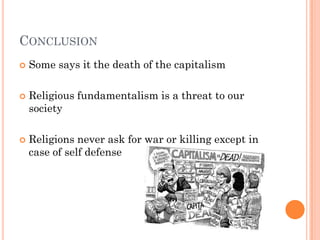
   Some says it the death of the capitalism

   Religious fundamentalism is a threat to our
    society

   Religions never ask for war or killing except in
    case of self defense
Religious fundamentalism

Religious fundamentalism

  • 1.
    RELIGIOUS FUNDAMENTALISM BY: Ali Haider Zain-Ul Islam Asadullah Ilyas Aamer Mehmood
  • 2.
    CONTENTS  Different definitionsof fundamentalism  Roots of the term fundamentalism  Different types of fundamentalism  Effects of fundamentalism  Conclusion
  • 3.
    DIFFERENT DEFINITIONS OF FUNDAMENTALISM  Webster Dictionary: A movement in 20th century stressing strict adherence to a set of basic principles  Oxford Dictionary: A movement for the strict maintenance of the doctrines of any religion  After 9/11 term Fundamentalism was written as Muslim Fundamentalism
  • 4.
    ROOTS OF THETERM FUNDAMENTALISM  Nigra Bible conference  Things that were fundamental to the Christian  Term fundamentalism is Christian in its origin
  • 5.
    FUNDAMENTALISTS  Members of the movement are known as fundamentalists  The most energetic group but least educated are known as fundamentalists. (Wikipedia).
  • 6.
    SOURCE OF THEFUNDAMENTALISM  Religious issue is the source of fundamentalism  These rules cannot be changed  People are afraid to oppose the fundamentalists
  • 7.
    BELIEFS OF THEFUNDAMENTALIST GROUPS  There beliefs are based upon the divine and revealed texts,  These texts are considered to be the perfect and cannot be changed.  Members reject all other beliefs and religion except their own.
  • 8.
    HISTORY ABOUT THEFUNDAMENTALISM  Religious fundamentalism becoming the part of the government  Greater potential of harm.
  • 9.
    PURPOSE OF RELIGIOUSFUNDAMENTALISM  Usually occur in all Religions  Ways of life should be according to the rules as prescribed by God  State should be subservient to God
  • 10.
    DIFFERENT TYPES  Islamic fundamentalism  Hindu fundamentalism  Jews fundamentalism  Christian fundamentalism
  • 11.
    ISLAMIC FUNDAMENTALISM  Links the spiritual world to the temporal world and provide guidance regarding religion and life  Islamist movements like Hamas and Islamic Jihad  Dec 1993 Hamas carried out a brutal kidnapping  In the same week Hamas carried out the killings and brought their terrorist activities to a new peak
  • 12.
    CHRISTIAN FUNDAMENTALISM  In late 19th and early 20th century Christian  Its main purpose was to reaffirm older beliefs of protestant Christianity and defend them against the challenges of the Darwinism  Islamic and Christian Fundamentalist don’t like to be placed in the same category as Islamists saw no difference b/w the fundamentalists and non- fundamentalist group
  • 13.
    HINDU FUNDAMENTALISM  Recent phenomena in India was the rise of the Hindu Fundamentalism and it lead to the political mobilization against Muslims  Shiv Sena founded in 1996 originally to express Hindu Fundamentalism  Dec 1992 Hindu Fundamentalists destroyed the 450 year old Babri Mosque
  • 14.
    EFFECTS  Terrorist activities and violence spread throughout the Middle East and Asia  Present a genuine danger to the stability of the government  They are in tireless struggle to subvert the government authority by exploiting the democratic process through the terrorism
  • 15.
    Some people thinks that there is a mysterious and unbelievable genetic revolution that they are not afraid of anything.  Madrassas or religious schools are now teaching fundamentalist Islamist view and new meaning of Jihad  Established a new standard for violence and terrorism from kidnapping, hijacking and bombing
  • 16.
    SOME COMMON THINGS  Fear is common denominator among them  They fear change, modernization and loss of their influence  They fear that young will be distracted from their paths  Use of Holy Places for material and physical gratification
  • 17.
    Especially fear the education if it undermine the teaching of the religion  They also fear the future they cant control  Fear of media and its abilities.
  • 18.
    CONCLUSION  Some says it the death of the capitalism  Religious fundamentalism is a threat to our society  Religions never ask for war or killing except in case of self defense

Editor's Notes

  • #7 Because people divert from religious path and these movements tries to get them back on the path.