THE RELATIONSHIP OF
ETHICS WITH OTHER
SCIENCES AND OTHER
PHASES OF HUMAN LIFE
P R O F E S S I O N A L E T H I C S
Ethics is a branch of philosophy that studies the nature
and the morality of human conduct. To some extent,
Ethics is related to other sciences because it also deals
with the investigation of the nature of man as a rational
being and a being in relation with other beings.
Ethics is to study man’s nature and his behavior from the
standpoint of morality. The material object of Ethics is
the human conduct and the object is morality.
INTRODUCTION
Ethics is the study of correct action or doing, while Logic studies
the process of correct and organized thinking.
Doing follows thinking. Logic therefore is aimed at the right thinking
and Ethics is aimed at the right acting or right doing and behavior.
ETHICS AND LOGIC
On intellectual qualities,
-Ethics is people oriented while logic is task oriented.
-Ethics is focused on enhancing relationships, modifying
content and forms of speech to match and contradict what
others expect to hear. Logic is focused on not misleading a
person and giving him correct information.
ETHICS AND SOCIOLOGY
-Society depends on Ethics for its underlying principles,
Sociology deals with human relations in a society, but
human relations are based on the proper order and the
proper order comes only with the proper observance of
moral laws and principles which regulate the actions of
men and women in a community.
ETHICS AND PSYCHOLOGY
Psychology is not interested in the morality of human
behavior, while Ethics is concerned with man’s moral
obligation or the result of his behavior.
Ethics is the study of human behavior from the
perspective of morality. Psychology, on the other
hand, is the scientific study of mental and behavioral
characteristics, associated with a particular kind of
behavior.
Both Ethics and Psychology deals with the study of man
and his behavior. However, Psychology studies how man
behaves, while Ethics studies how man ought to behave.
2
3
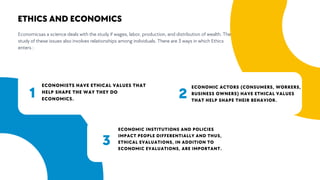
ECONOMISTS HAVE ETHICAL VALUES THAT
HELP SHAPE THE WAY THEY DO
ECONOMICS.
ECONOMIC ACTORS (CONSUMERS, WORKERS,
BUSINESS OWNERS) HAVE ETHICAL VALUES
THAT HELP SHAPE THEIR BEHAVIOR.
ECONOMIC INSTITUTIONS AND POLICIES
IMPACT PEOPLE DIFFERENTIALLY AND THUS,
ETHICAL EVALUATIONS, IN ADDITION TO
ECONOMIC EVALUATIONS, ARE IMPORTANT.
Economicsas a science deals with the study if wages, labor, production, and distribution of wealth. The
study of these issues also involves relationships among individuals. There are 3 ways in which Ethics
enters :
ETHICS AND ECONOMICS
1
3
THE STUDY OF ETHICS CROSSES
RELIGIOUS AND CULTURAL
BOUNDARIES AND IS DIRECTED AT
THE QUESTION OF HOW CRITICAL
DECISIONS ARE TO BE MADE SO THAT
AN ORGANIZATION MAY WORK BEST
TOGETHER, TO BUILD A COMMUNITY
AND SOCIAL RELATIONSHIPS IN A
POSITIVE AND PRODUCTIVE WAY.
RELATIONSHIP OF ETHICS WITH OTHER PHASES OF
HUMAN LIFE
ETHICS AND LAW
-Ethics and law are closely related. Ethics deals with
morality, and when we speak of morality, we mean
primarily the moral law.
-Law may be defined as crystallized ethics. Law and
morality presuppose the concept of right and
wrong, good and bad, and the rules of conduct.
ETHICS AND RELIGION
Ethics is a disciple or set of moral principles and
values governing an individual or institutional
behavior.
Religion generally refers to the service and worship
of God and is typically expressed as a personal or
institutional set of beliefs, attitudes and practices.
Ethics and religion both seeks the absolute truth.
Ethics seeks the absolute truth by using human
reason alone, while religion tries to understand his
same absolute truth by virtue of one’s faith and his
adherence to divine revelation.
ETHICS AND PROFESSIONAL
CODE OF CONDUCT
Professional code of ethics is a set of
behavioral guidelines that members of a
profession are required by their
association to observe in the course of
their professional practice. These
guidelines in general terms, prescribe
responsibilities that members must
adhere to and questionable situations in
which they must be involved.
ETHICS AND EDUCATION
Education is defined as an instruction or
training by which people learn to develop
and use their mental, moral, and physical
powers and abilities. It is also one way of
gaining experience about human life.
Since man however primarily a rational
moral being, the purpose of education is
to protect the moral character in man.
ETHICS AND ART
Art is concerned with the use of
imagination to make things of aesthetics
significance. Ethics is aimed at
conforming to an accepted standard of
good behavior.
Ethics also stands for moral goddess, art,
and beauty. Both true art and true ethics
have the same aim.
THANKS FOR YOUR
ATTENTION

Relationship of Ethics with other sciences

  • 1.
    THE RELATIONSHIP OF ETHICSWITH OTHER SCIENCES AND OTHER PHASES OF HUMAN LIFE P R O F E S S I O N A L E T H I C S
  • 2.
    Ethics is abranch of philosophy that studies the nature and the morality of human conduct. To some extent, Ethics is related to other sciences because it also deals with the investigation of the nature of man as a rational being and a being in relation with other beings. Ethics is to study man’s nature and his behavior from the standpoint of morality. The material object of Ethics is the human conduct and the object is morality. INTRODUCTION
  • 3.
    Ethics is thestudy of correct action or doing, while Logic studies the process of correct and organized thinking. Doing follows thinking. Logic therefore is aimed at the right thinking and Ethics is aimed at the right acting or right doing and behavior. ETHICS AND LOGIC On intellectual qualities, -Ethics is people oriented while logic is task oriented. -Ethics is focused on enhancing relationships, modifying content and forms of speech to match and contradict what others expect to hear. Logic is focused on not misleading a person and giving him correct information.
  • 4.
    ETHICS AND SOCIOLOGY -Societydepends on Ethics for its underlying principles, Sociology deals with human relations in a society, but human relations are based on the proper order and the proper order comes only with the proper observance of moral laws and principles which regulate the actions of men and women in a community. ETHICS AND PSYCHOLOGY Psychology is not interested in the morality of human behavior, while Ethics is concerned with man’s moral obligation or the result of his behavior. Ethics is the study of human behavior from the perspective of morality. Psychology, on the other hand, is the scientific study of mental and behavioral characteristics, associated with a particular kind of behavior. Both Ethics and Psychology deals with the study of man and his behavior. However, Psychology studies how man behaves, while Ethics studies how man ought to behave.
  • 5.
    2 3 ECONOMISTS HAVE ETHICALVALUES THAT HELP SHAPE THE WAY THEY DO ECONOMICS. ECONOMIC ACTORS (CONSUMERS, WORKERS, BUSINESS OWNERS) HAVE ETHICAL VALUES THAT HELP SHAPE THEIR BEHAVIOR. ECONOMIC INSTITUTIONS AND POLICIES IMPACT PEOPLE DIFFERENTIALLY AND THUS, ETHICAL EVALUATIONS, IN ADDITION TO ECONOMIC EVALUATIONS, ARE IMPORTANT. Economicsas a science deals with the study if wages, labor, production, and distribution of wealth. The study of these issues also involves relationships among individuals. There are 3 ways in which Ethics enters : ETHICS AND ECONOMICS 1 3
  • 6.
    THE STUDY OFETHICS CROSSES RELIGIOUS AND CULTURAL BOUNDARIES AND IS DIRECTED AT THE QUESTION OF HOW CRITICAL DECISIONS ARE TO BE MADE SO THAT AN ORGANIZATION MAY WORK BEST TOGETHER, TO BUILD A COMMUNITY AND SOCIAL RELATIONSHIPS IN A POSITIVE AND PRODUCTIVE WAY. RELATIONSHIP OF ETHICS WITH OTHER PHASES OF HUMAN LIFE
  • 7.
    ETHICS AND LAW -Ethicsand law are closely related. Ethics deals with morality, and when we speak of morality, we mean primarily the moral law. -Law may be defined as crystallized ethics. Law and morality presuppose the concept of right and wrong, good and bad, and the rules of conduct. ETHICS AND RELIGION Ethics is a disciple or set of moral principles and values governing an individual or institutional behavior. Religion generally refers to the service and worship of God and is typically expressed as a personal or institutional set of beliefs, attitudes and practices. Ethics and religion both seeks the absolute truth. Ethics seeks the absolute truth by using human reason alone, while religion tries to understand his same absolute truth by virtue of one’s faith and his adherence to divine revelation.
  • 8.
    ETHICS AND PROFESSIONAL CODEOF CONDUCT Professional code of ethics is a set of behavioral guidelines that members of a profession are required by their association to observe in the course of their professional practice. These guidelines in general terms, prescribe responsibilities that members must adhere to and questionable situations in which they must be involved. ETHICS AND EDUCATION Education is defined as an instruction or training by which people learn to develop and use their mental, moral, and physical powers and abilities. It is also one way of gaining experience about human life. Since man however primarily a rational moral being, the purpose of education is to protect the moral character in man. ETHICS AND ART Art is concerned with the use of imagination to make things of aesthetics significance. Ethics is aimed at conforming to an accepted standard of good behavior. Ethics also stands for moral goddess, art, and beauty. Both true art and true ethics have the same aim.
  • 9.