Downloaded 93 times
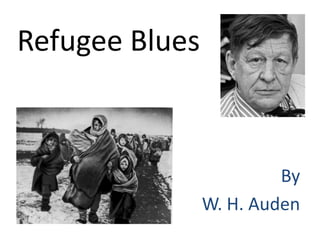


The poem portrays the perspective of refugees struggling to find a place to call home. Through 12 stanzas of rhyming couplets, the speaker describes their loss of country, inability to return, and lack of acceptance in their new surroundings. Imagery of blossoms, passports, and soldiers illustrate the fragility of hope and constant threat of danger faced by refugees. Repeated refrains of "yet there's no place for us" and "looking for you and me" underscore the refugees' sense of being lost and at the mercy of forces beyond their control.


![Catrin[1]](https://cdn.slidesharecdn.com/ss_thumbnails/catrin1-130416033739-phpapp01-thumbnail.jpg?width=640&height=640&fit=bounds)


