Reed Supermarket has operated grocery stores in the Midwest since 1939. It now has 192 stores but faces increased competition that threatens its market share. In the Columbus, Ohio market, where Reed has 25 stores, competitors include large supermarket chains, warehouse clubs, and dollar stores. Dollar stores in particular have grown rapidly and sell a variety of goods at low prices. To respond to these challenges, Reed will focus on increasing its private label healthy products, expanding prepared foods, redesigning its website to provide recipes and advice, and creating membership programs to reward loyal customers. These strategies aim to strengthen Reed's positioning and grab 16% of the Columbus market share by 2011.
CASE STUDY –
REEDSUPERMARKET:
A New wave of Competitors
SUBMITTED BY:
Abdul Haseeb
Sohail
Sheraz
Bilal
Meredith Collins – VP Marketing
Jack Morrissey - CEO
2.
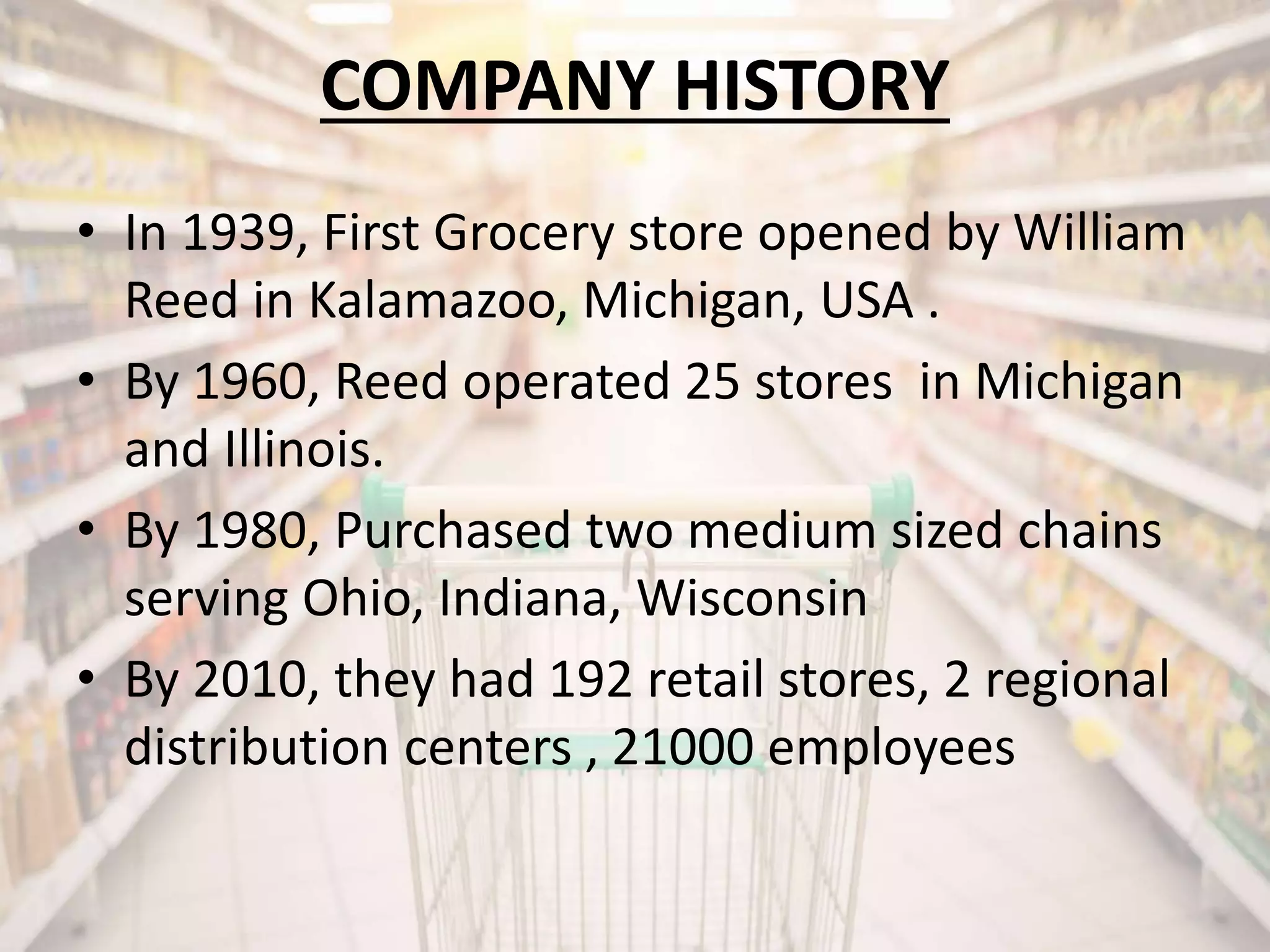
COMPANY HISTORY
• In1939, First Grocery store opened by William
Reed in Kalamazoo, Michigan, USA .
• By 1960, Reed operated 25 stores in Michigan
and Illinois.
• By 1980, Purchased two medium sized chains
serving Ohio, Indiana, Wisconsin
• By 2010, they had 192 retail stores, 2 regional
distribution centers , 21000 employees
3.
COMPANY HISTORY
Reed’s CoreCompetencies
• Attractive stores, long hours, exceptionally
attentive customer service.
• Prepared foods and flowers, mustards,
groceries, baked goods, meats, fresh seafood,
& emphasis on organic produce.
4.
THE COLOMBUS MARKET
COLUMBUS
•Median household income
of $52,000
• Population growth was 11%
• Unemployment was 8.5%
STATE AND NATIONAL
• Higher than state and
national median.
• 9% of national.
• 9.8% of natonal.
Reed had 25 stores with modest share decline
Columbus was 3rd largest in Ohio, with population of 2 million.
5.
THE COLOMBUS MARKET
•Competition for Market share was intense.
Competitors of Reed’s supermarket
Three Supermarkets Chains
Smaller regional chains
Five warehouse-club outlets
Independents
TopVal - Lower priced
Galaxy - Mid ranged
Delfina – Top ranged
6.
The U.S. FoodRetailing Industry
• Each household spends $5200 a year on
groceries with 2.1 trips a week.
• Consumers become more health conscious
• Food retailers margins were low.
• Private labels foods had huge share
• New trends of store was emerging like food
items at drug store, store near gas station.
7.
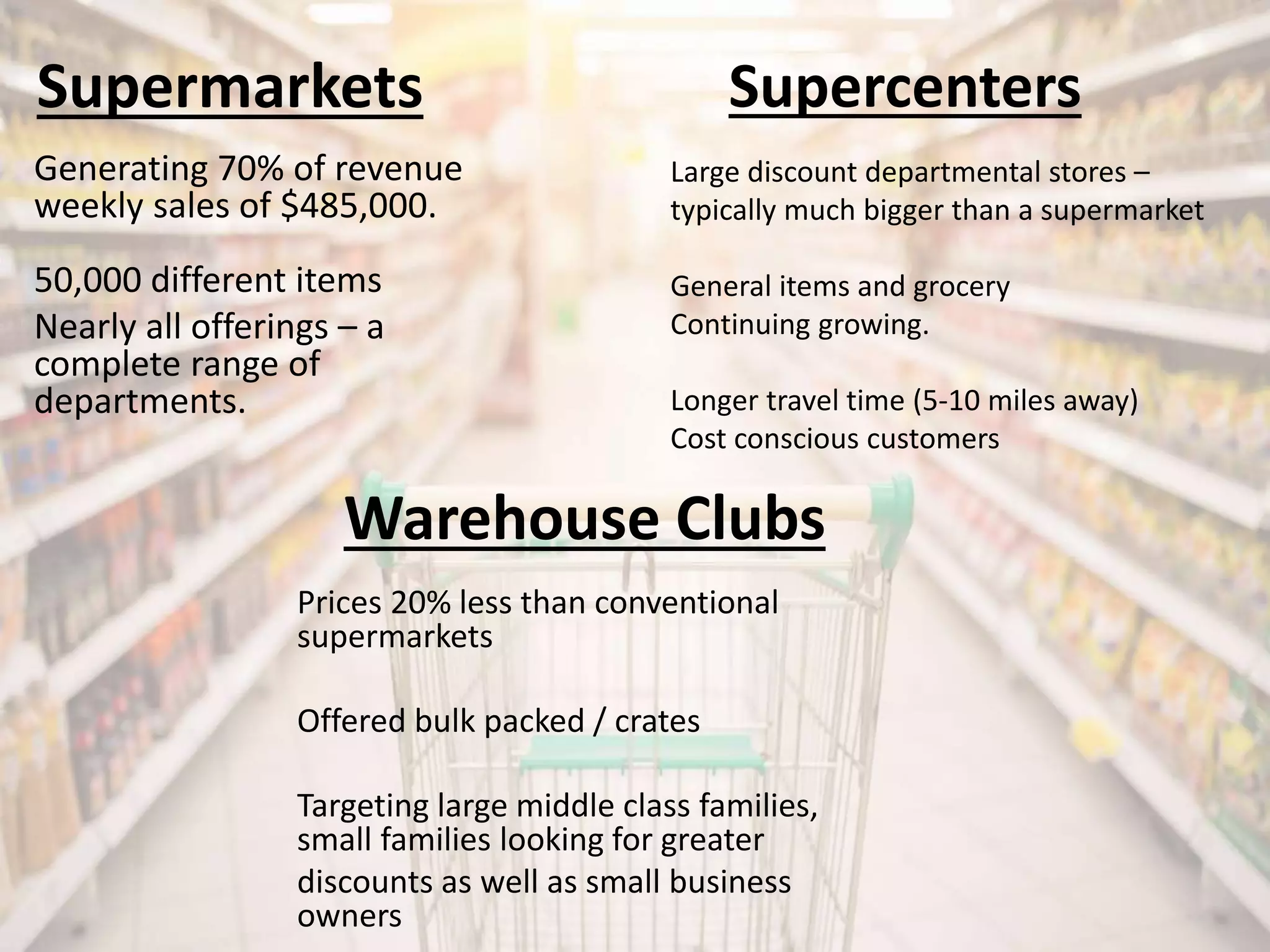
Supermarkets
Generating 70% ofrevenue
weekly sales of $485,000.
50,000 different items
Nearly all offerings – a
complete range of
departments.
Large discount departmental stores –
typically much bigger than a supermarket
General items and grocery
Continuing growing.
Longer travel time (5-10 miles away)
Cost conscious customers
Supercenters
Warehouse Clubs
Prices 20% less than conventional
supermarkets
Offered bulk packed / crates
Targeting large middle class families,
small families looking for greater
discounts as well as small business
owners
8.
• The SecondGeneration Of Competitors:
• Dollar Stores
• Dollar supermarket was dominated by three large
chains. Dollar general, dollar tree, family dollar.
• 33000 dollar stores in the u.s. sold a mix pakaged
food housewares, clothing, seasonal items, and other
general merchandise
• Limited Selection Stores
• Limited selection retailers a rapidly growing category,
• 353 stores.
• 50 items per stores.
• Focus tograb 16% market share by 2011 from
14%.
• Understand customer feedback.
• Evaluate the Impact of Dollar special
campaign.
• Prepare marketing strategy.
• Improve Brand Positioning.
OBJECTIVES
11.
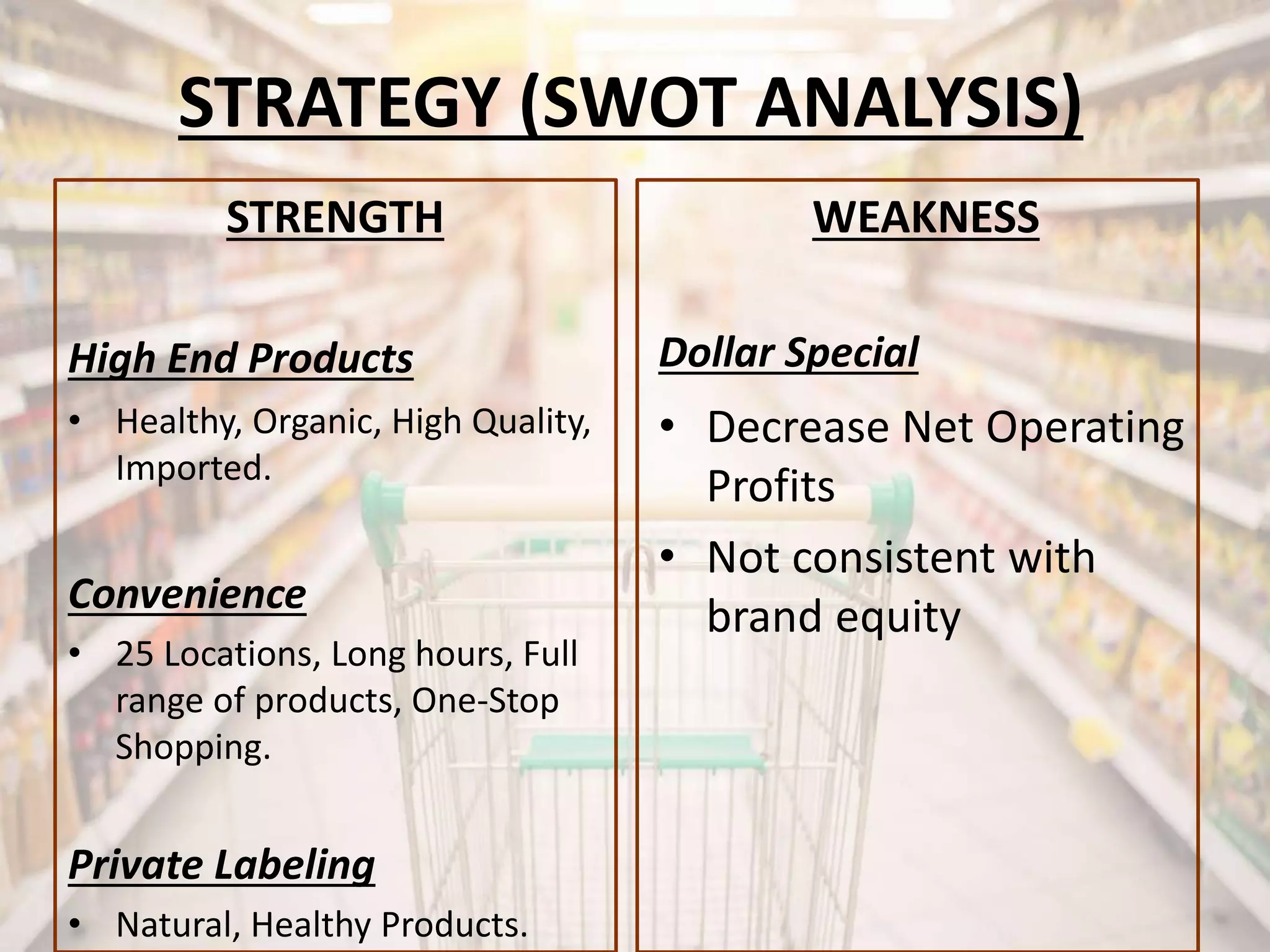
STRATEGY (SWOT ANALYSIS)
STRENGTH
HighEnd Products
• Healthy, Organic, High Quality,
Imported.
Convenience
• 25 Locations, Long hours, Full
range of products, One-Stop
Shopping.
Private Labeling
• Natural, Healthy Products.
WEAKNESS
Dollar Special
• Decrease Net Operating
Profits
• Not consistent with
brand equity
12.
STRATEGY (SWOT ANALYSIS)
OPPORTUNITIES
IncreasePrivate Labels
• Natural Products
• Healthy Products
• Lower Prices at a Lower cost.
Prepared Foods
• Increase variety of Healthy
Foods
= 2-4% Increase Store Traffic
THREATS
Competition
Walmart / Target
• (one-stop shopping
supercenter) ,introduced
groceries, world’s largest
retailer, leader of food
retailing.
Costco/BJ’s
• (wholesale warehouse), most
carry one brand, bulk-packed for
large, middle class families, 20%
discounted price
RECOMMENDATIONS
Short Term MediumTerm
Advertising
• Health and sport
magazines
• Social media
• Smartphone
applications
Website redesign
• Cooking receipts
• Blogs/ forums
• Customize
healthy diet
Long Term
Membership
programs
• Points shopping
rewards
• Gas reward
cards
• Birthday
card/special
occasion gifts for
loyal members
Products
• National
brands
• Private labels
• Prepared food
Service offering
• Seasonal gifts
• Food samples
• Store events