Wicked fast PaaS: Performance tuning of
OpenShift 3.5 and Docker 1.12
Red Hat OpenShift Engineering
Jeremy Eder and Mike Fiedler, 2017-05-03
Awesome titles such as ...
if [ “$containers” = “linux” ];
then
echo “fundamentals don’t change”
fi
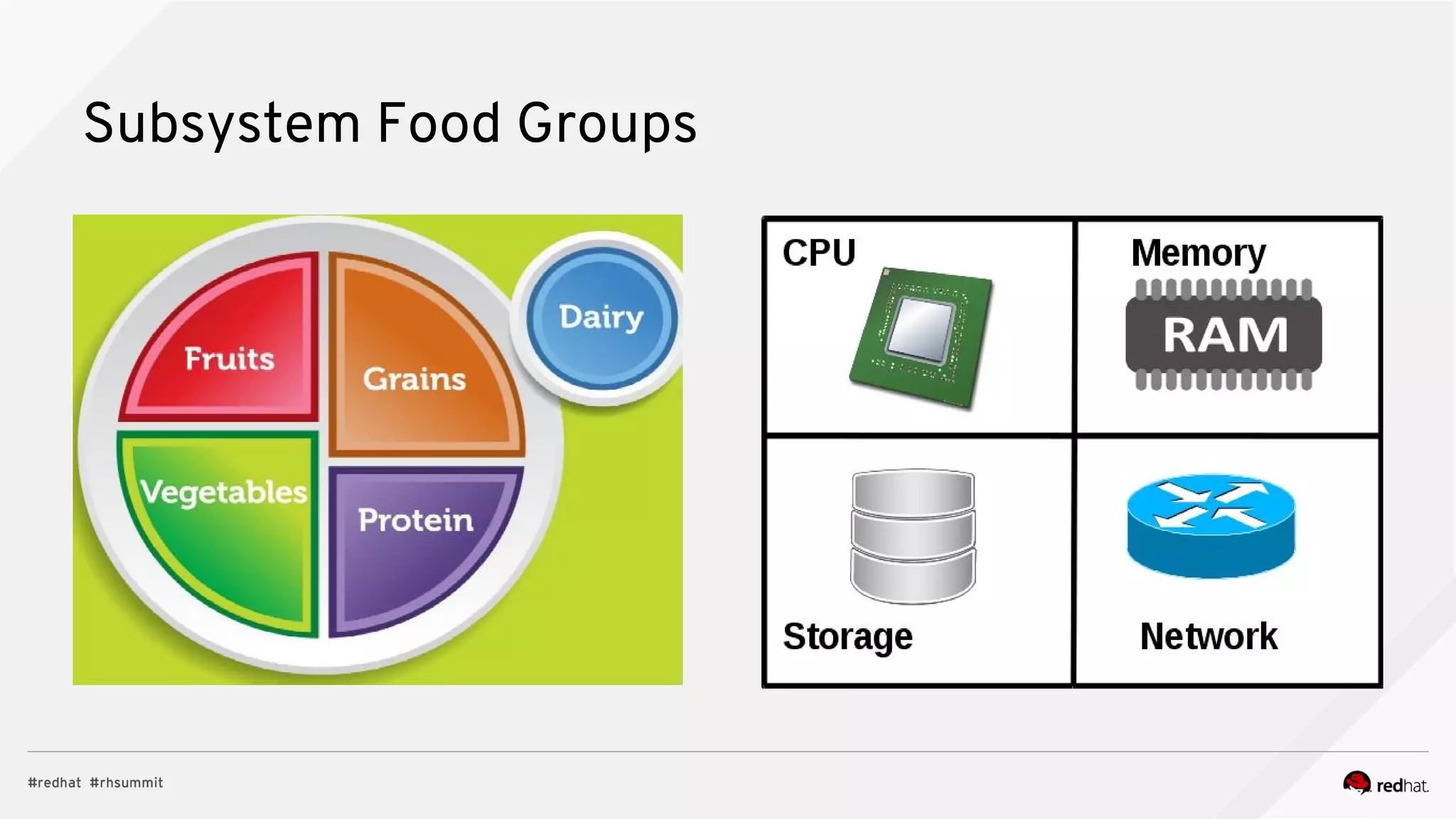
Subsystem Food Groups
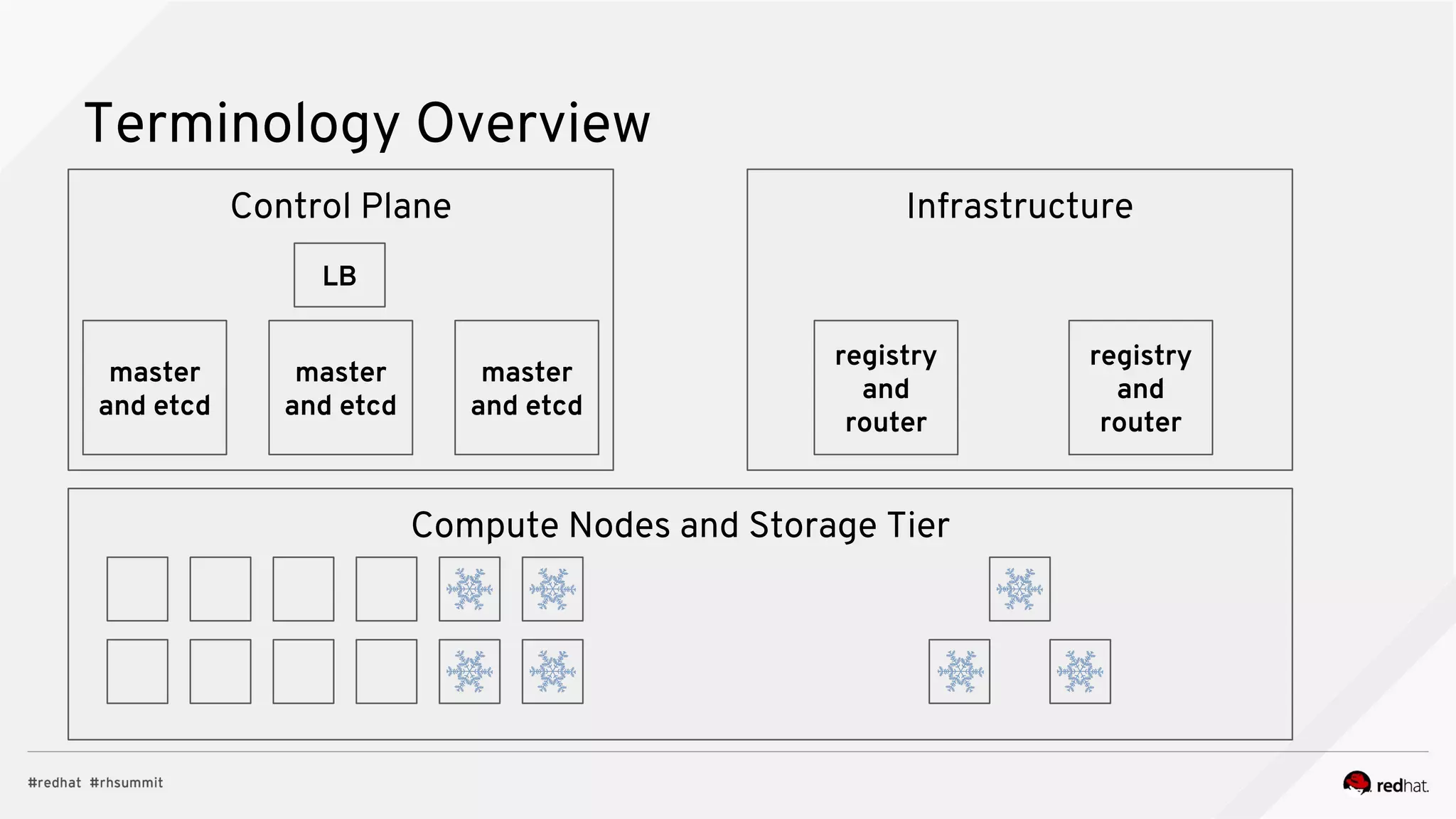
Terminology Overview
Control Plane
Compute Nodes and Storage Tier
Infrastructure
master
and etcd
master
and etcd
master
and etcd
registry
and
router
registry
and
router
LB
Let’s just get this out of the way
● We’re talking about OCP 3.5 or later
● Slides: https://www.slideshare.net/jeremyeder/
● Code: https://github.com/openshift/svt
● There’s no video recording of this.
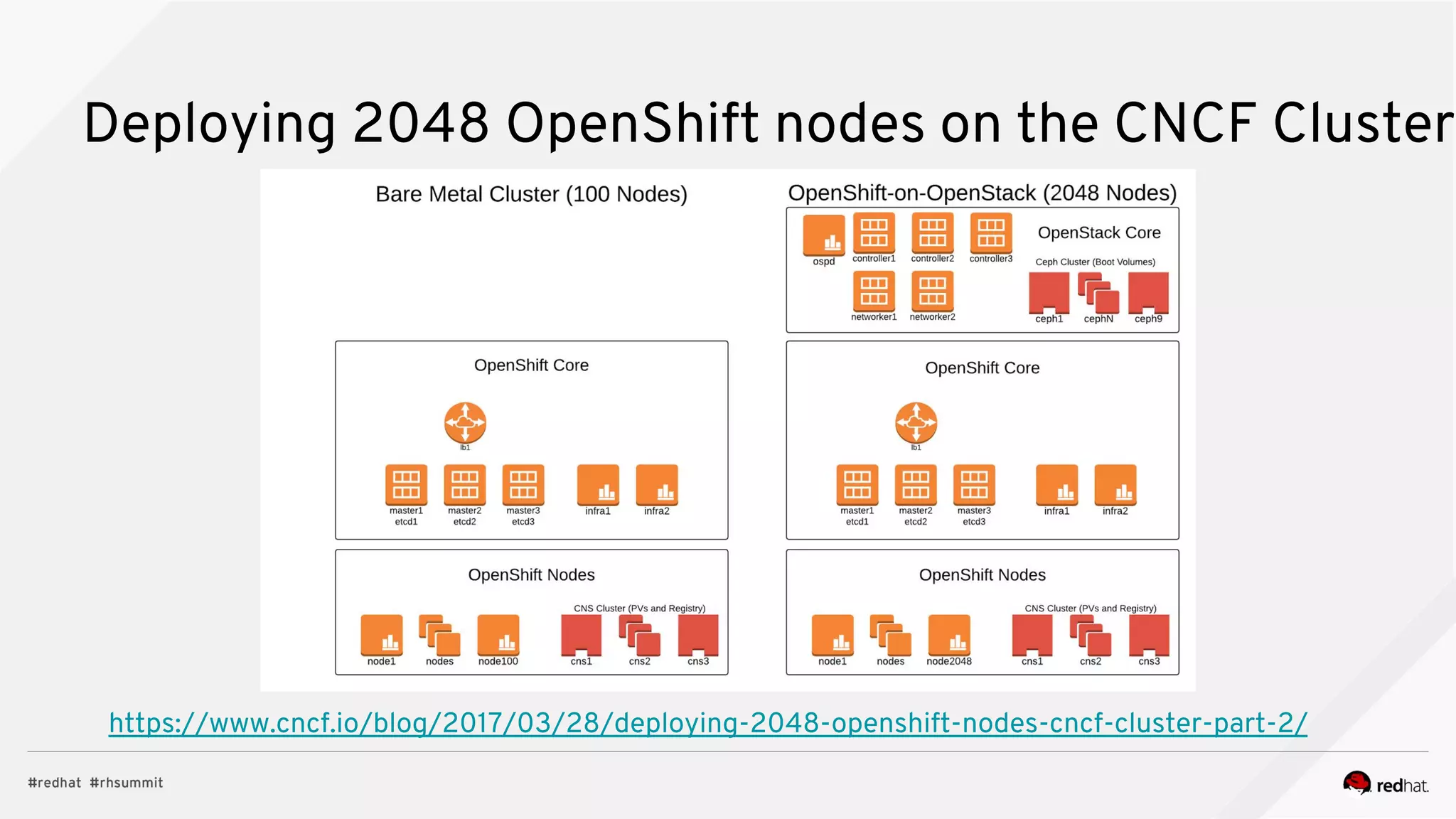
Deploying 2048 OpenShift nodes on the CNCF Cluster
https://www.cncf.io/blog/2017/03/28/deploying-2048-openshift-nodes-cncf-cluster-part-2/
OpenShift 3.5: Installation
https://docs.openshift.org/latest/scaling_performance/install_practices.html
[defaults]
forks = 20
gathering = smart
fact_caching = jsonfile
fact_caching_timeout = 600
callback_whitelist = profile_tasks
[ssh_connection]
ssh_args = -o ControlMaster=auto -o
ControlPersist=600s
control_path = %(directory)s/%%h-%%r
pipelining = True
timeout = 10
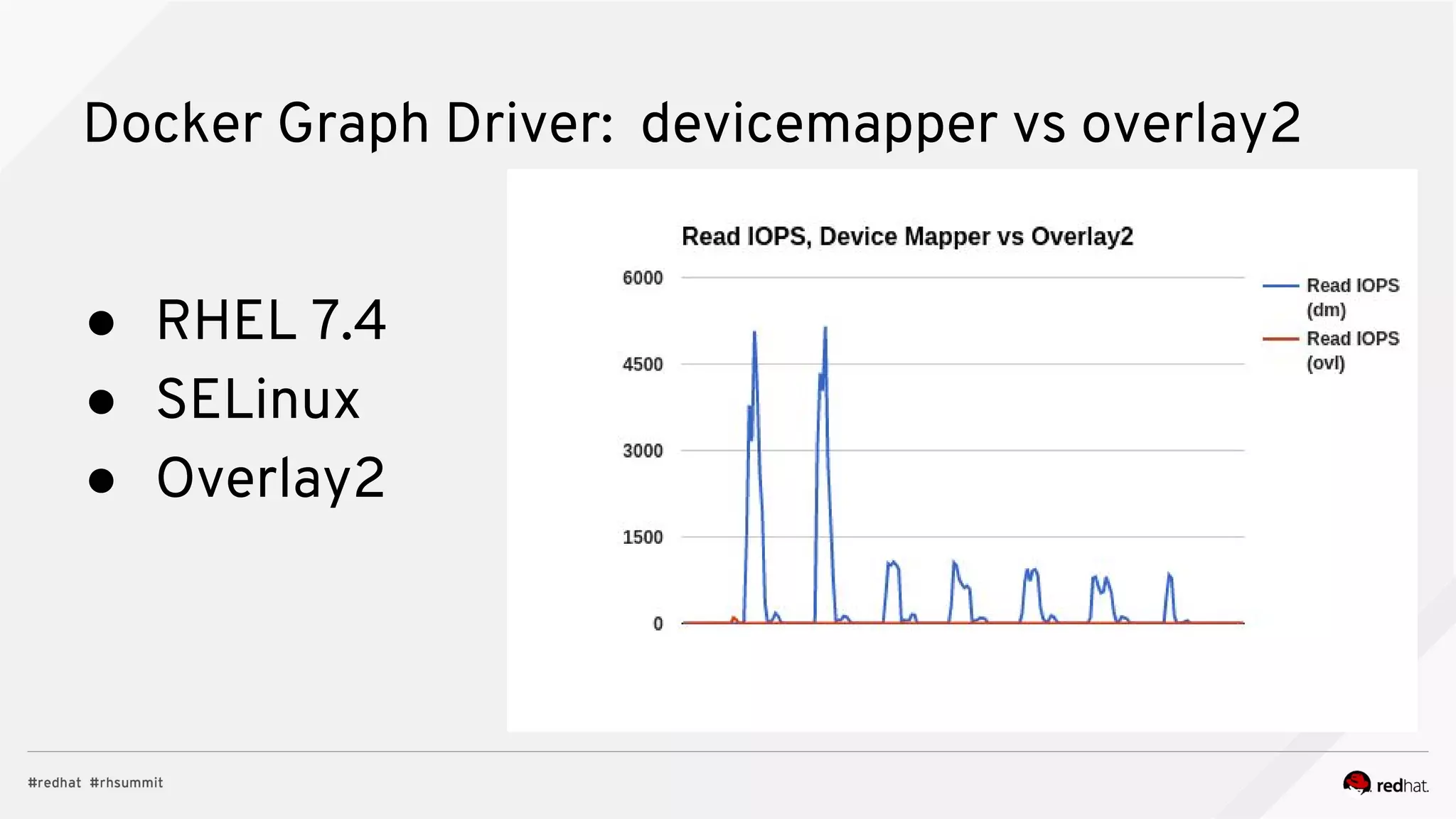
Docker Graph Driver: devicemapper vs overlay2
● RHEL 7.4
● SELinux
● Overlay2
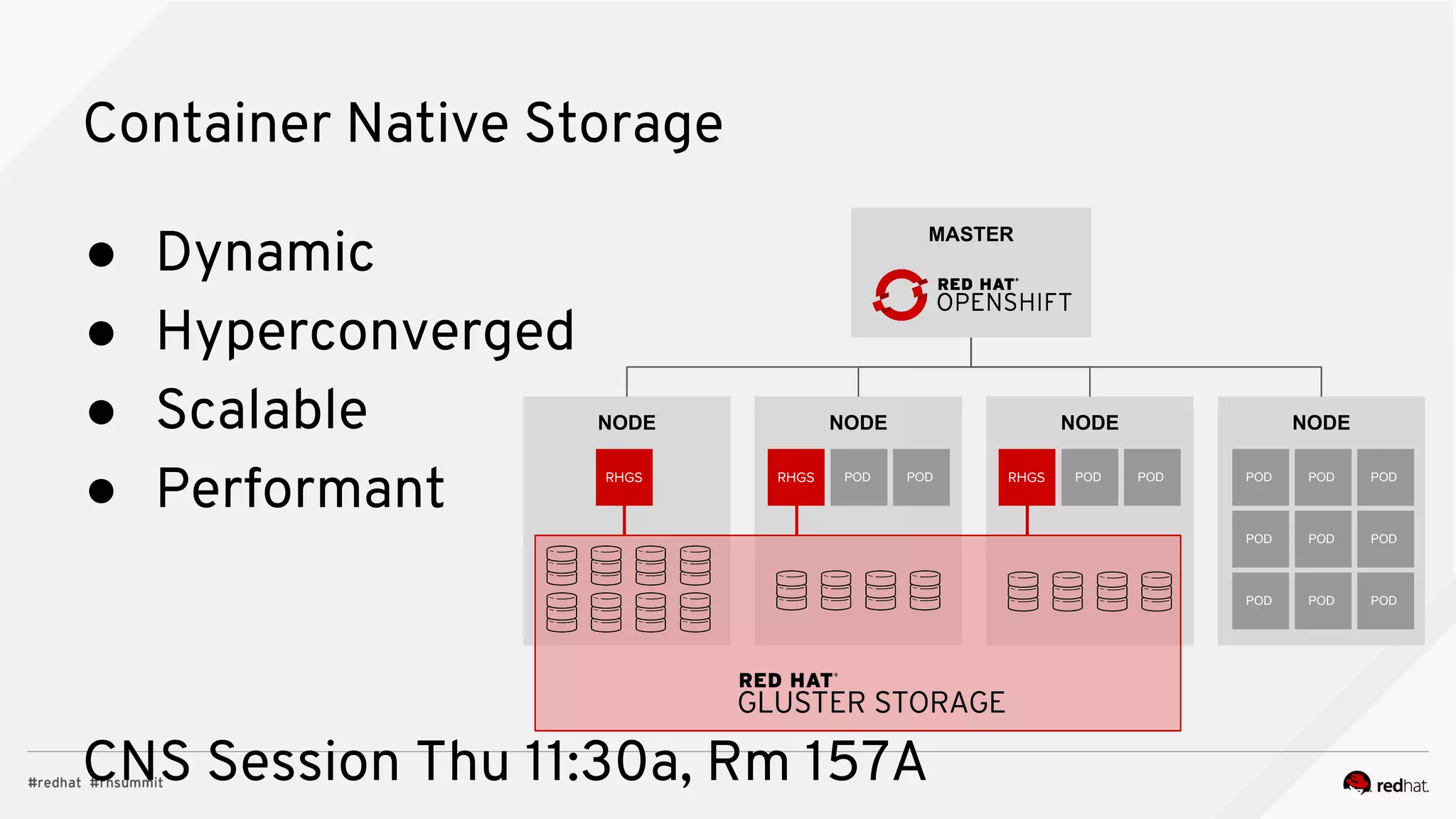
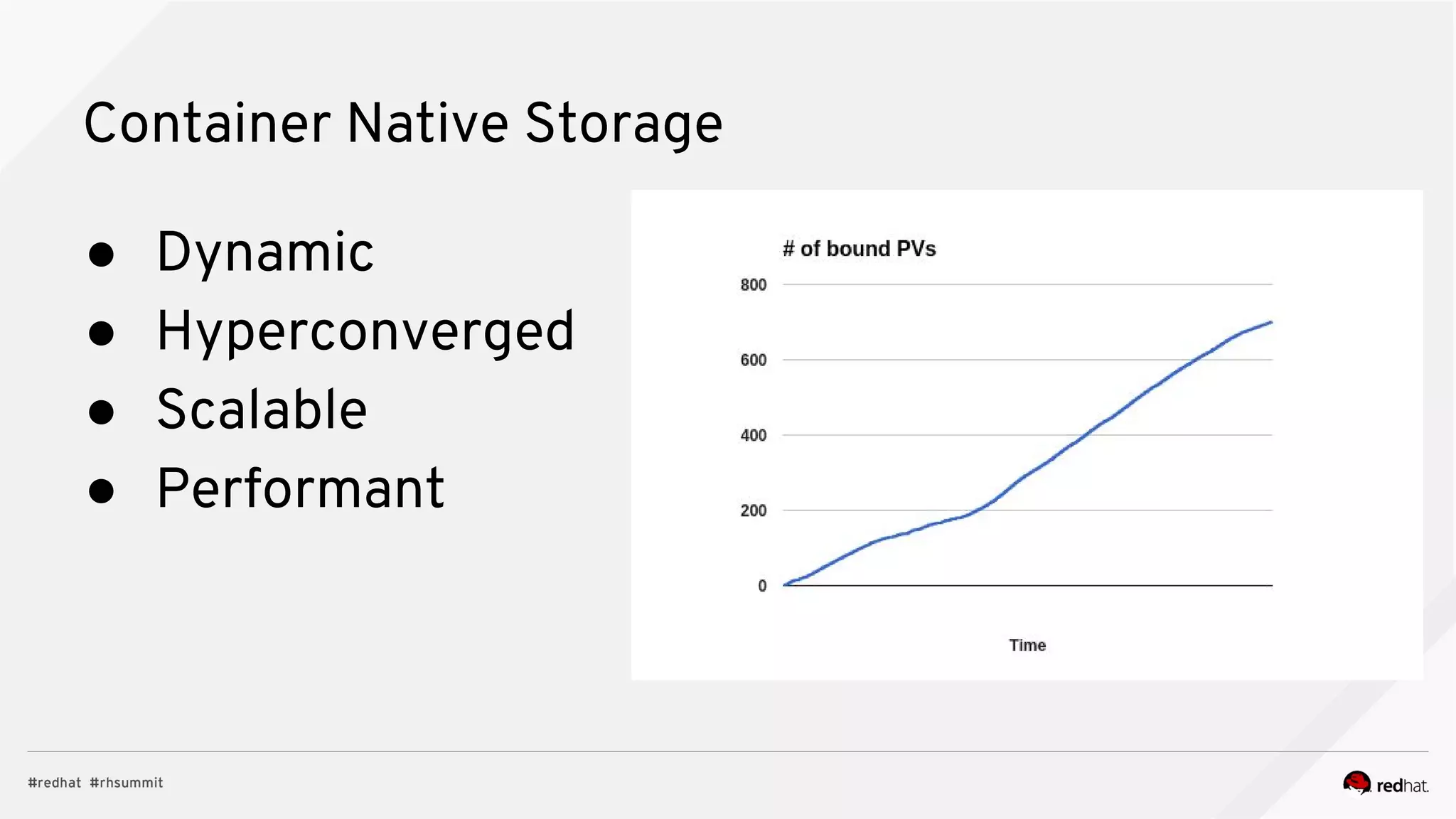
Container Native Storage
● Dynamic
● Hyperconverged
● Scalable
● Performant
CNS Session Thu 11:30a, Rm 157A
NODENODENODE NODE
POD POD POD POD POD POD POD
POD POD POD
RHGS RHGS RHGS
POD POD POD
MASTER
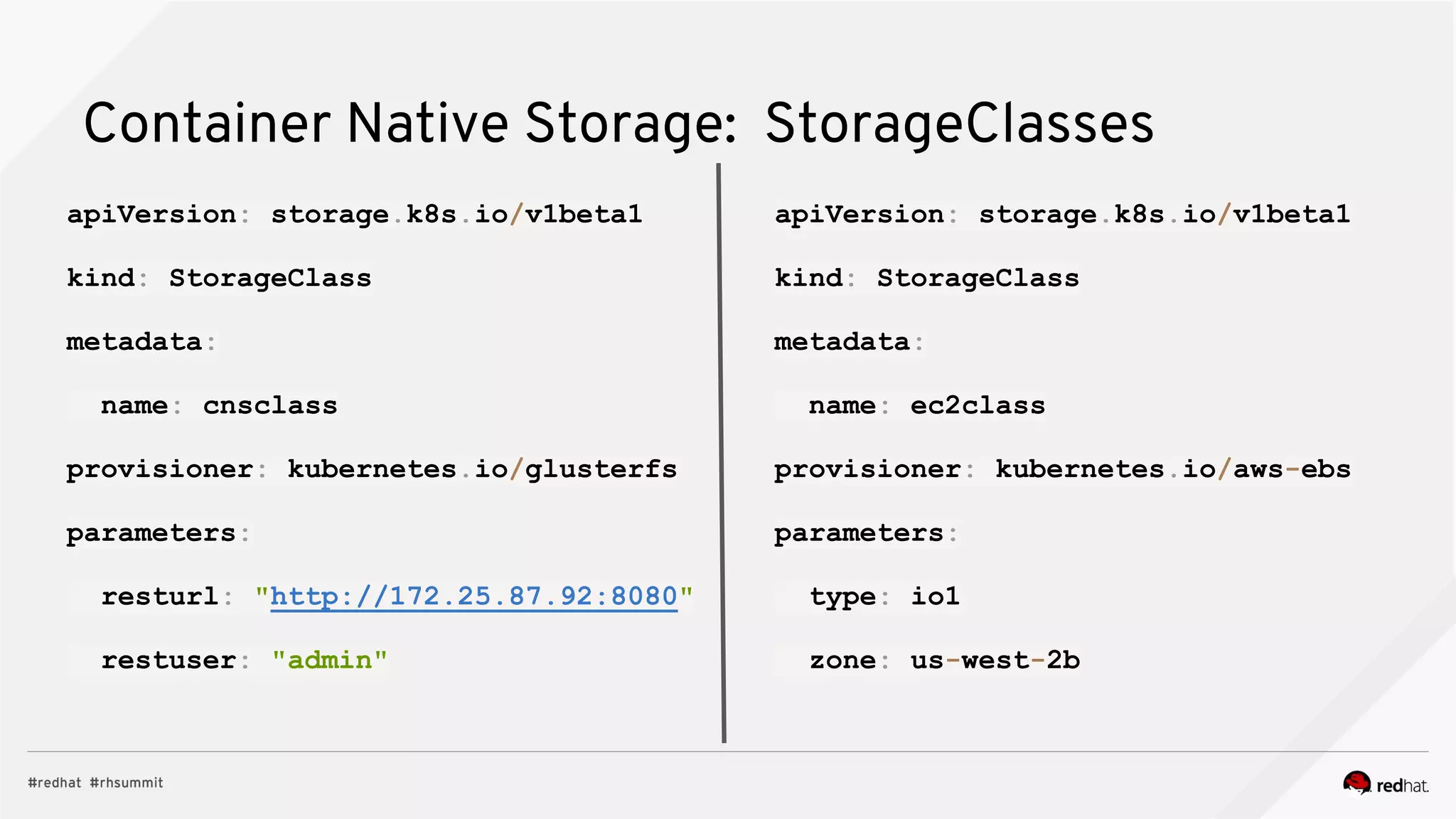
Container Native Storage: StorageClasses
apiVersion: storage.k8s.io/v1beta1
kind: StorageClass
metadata:
name: cnsclass
provisioner: kubernetes.io/glusterfs
parameters:
resturl: "http://172.25.87.92:8080"
restuser: "admin"
apiVersion: storage.k8s.io/v1beta1
kind: StorageClass
metadata:
name: ec2class
provisioner: kubernetes.io/aws-ebs
parameters:
type: io1
zone: us-west-2b
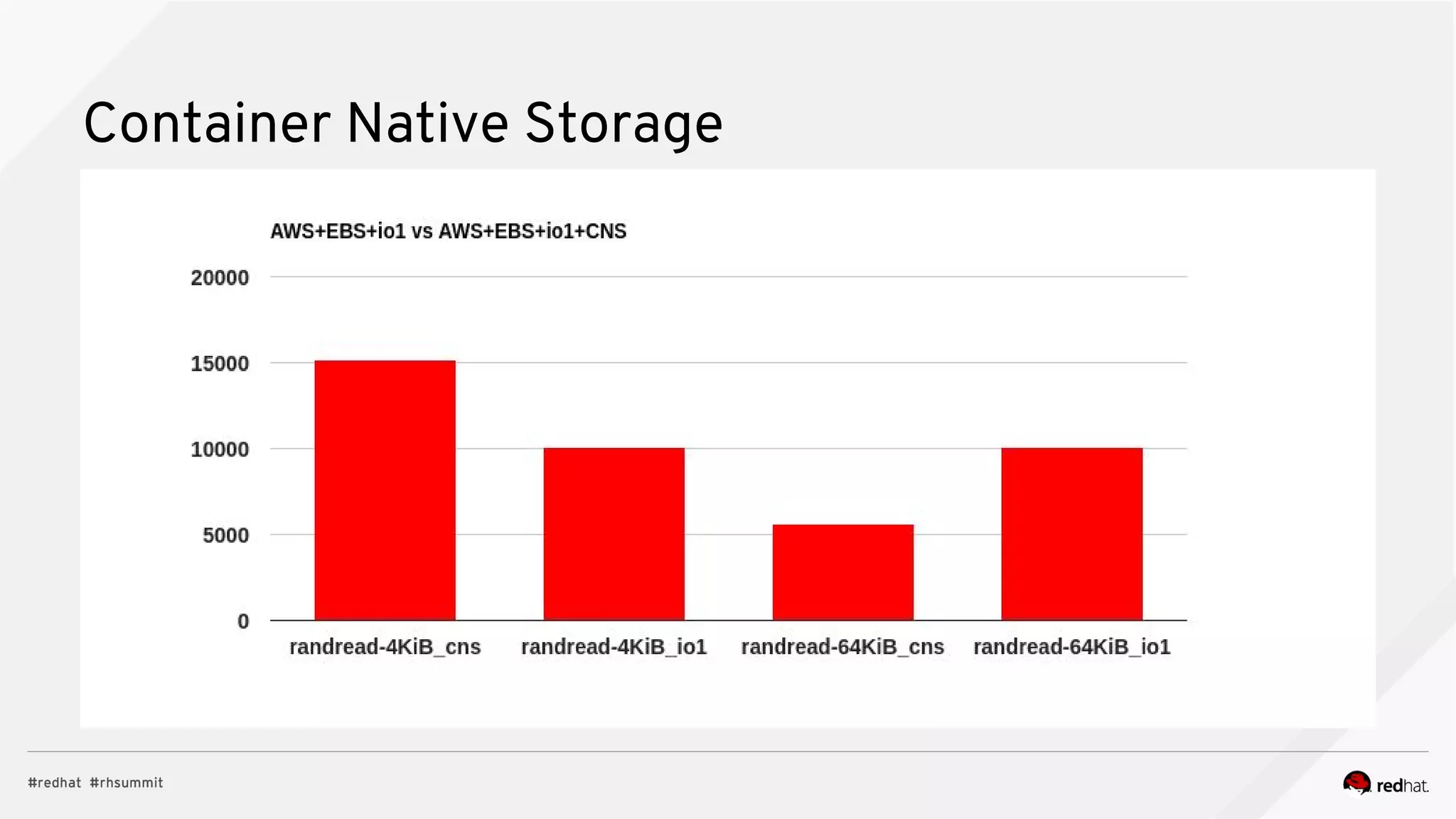
Container Native Storage
● Dynamic
● Hyperconverged
● Scalable
● Performant
Container Native Storage
distributed key value store that provides a
reliable way to store data across a cluster
of machines
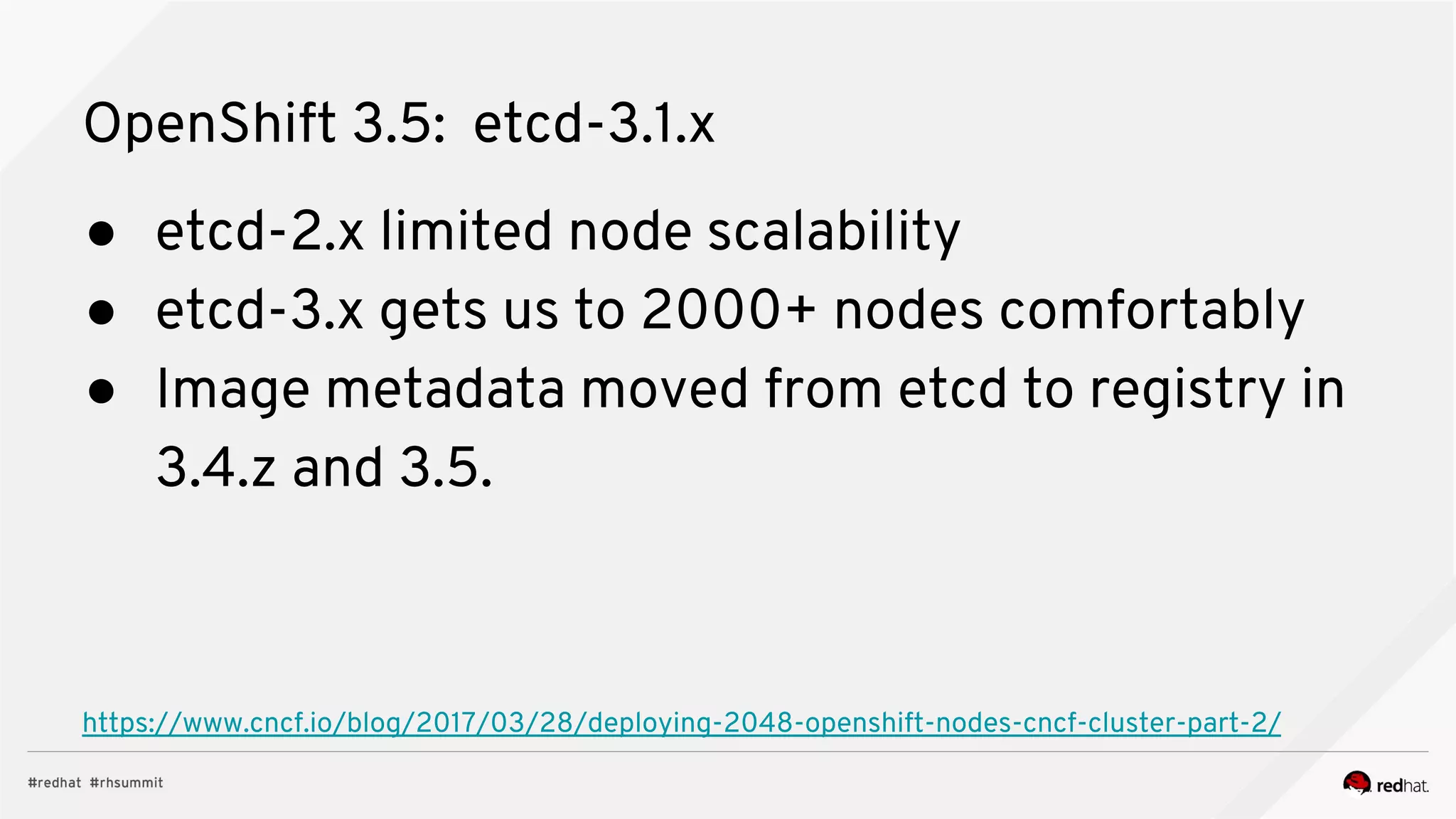
OpenShift 3.5: etcd-3.1.x
● etcd-2.x limited node scalability
● etcd-3.x gets us to 2000+ nodes comfortably
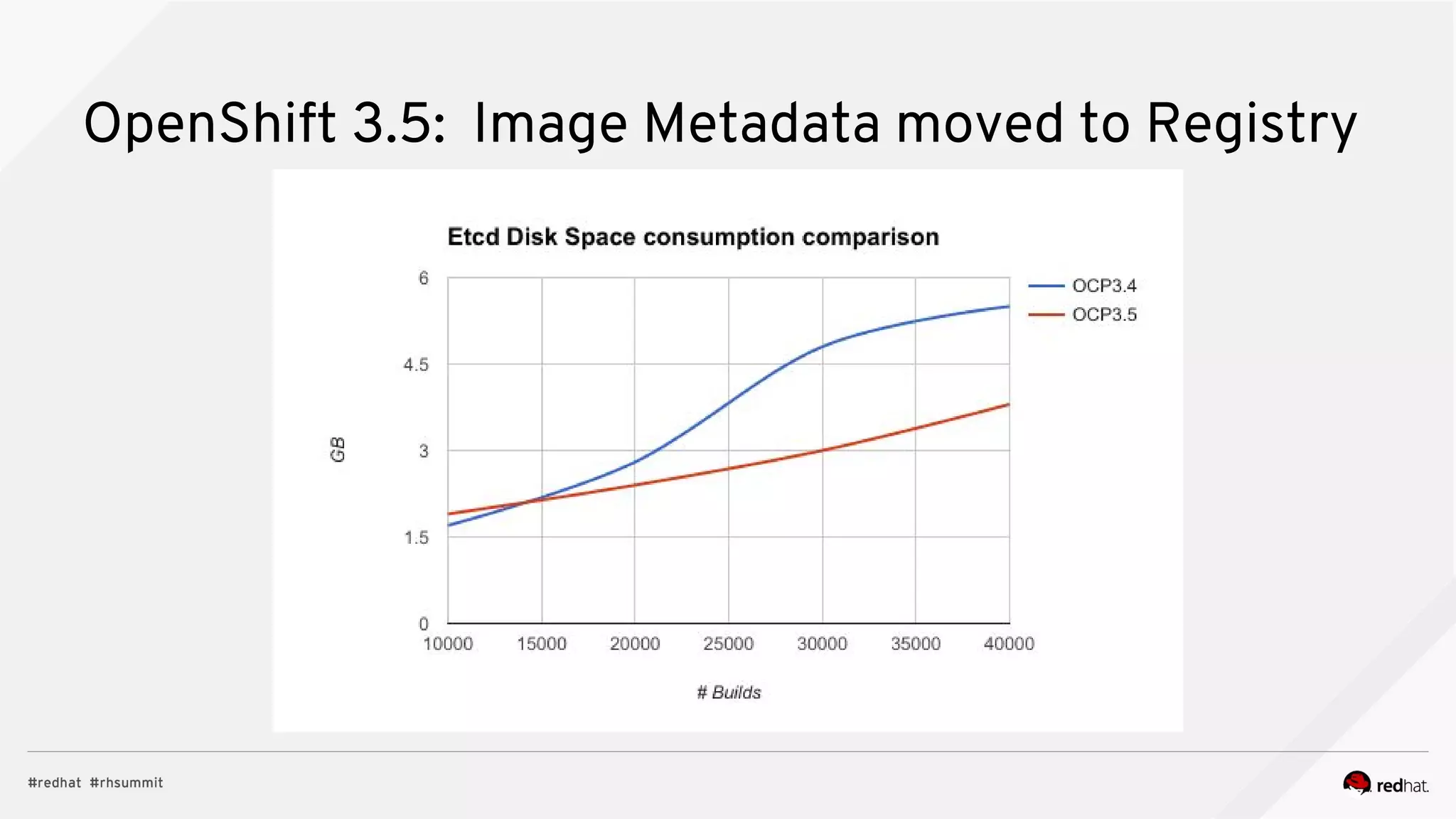
● Image metadata moved from etcd to registry in
3.4.z and 3.5.
https://www.cncf.io/blog/2017/03/28/deploying-2048-openshift-nodes-cncf-cluster-part-2/
OpenShift 3.5: Image Metadata moved to Registry
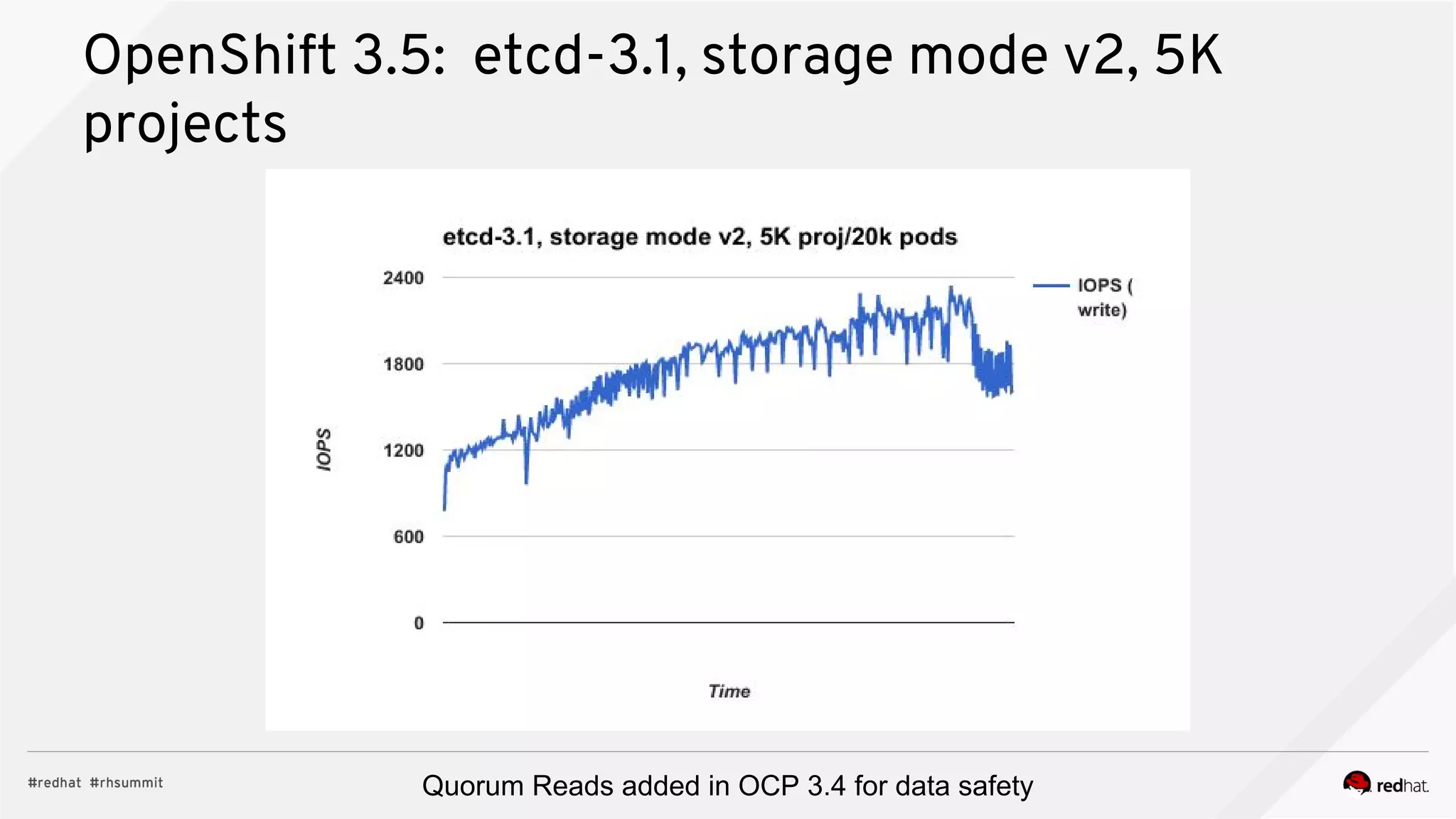
OpenShift 3.5: etcd-3.1, storage mode v2, 5K
projects
Quorum Reads added in OCP 3.4 for data safety
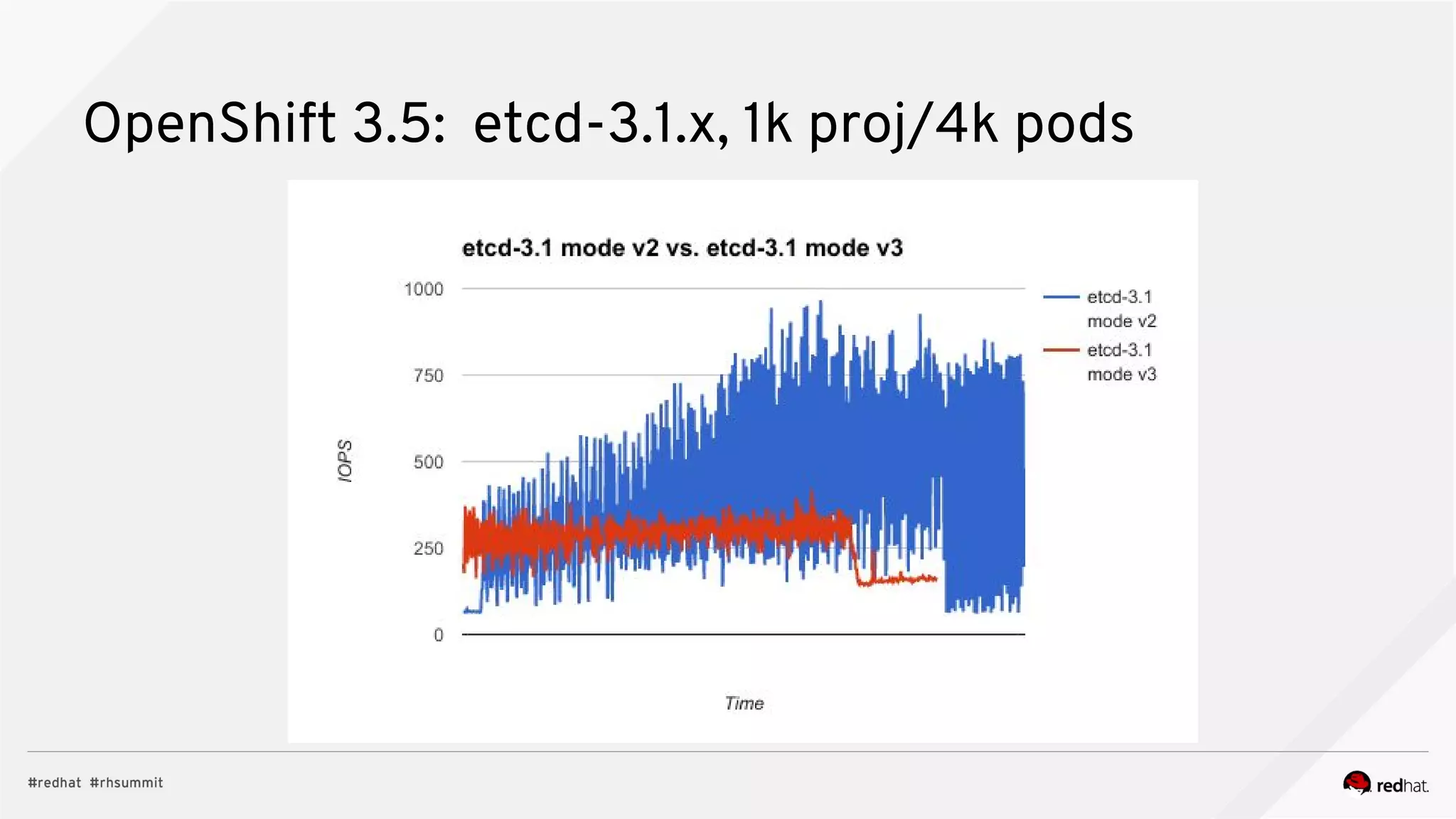
OpenShift 3.5: etcd-3.1.x, 1k proj/4k pods
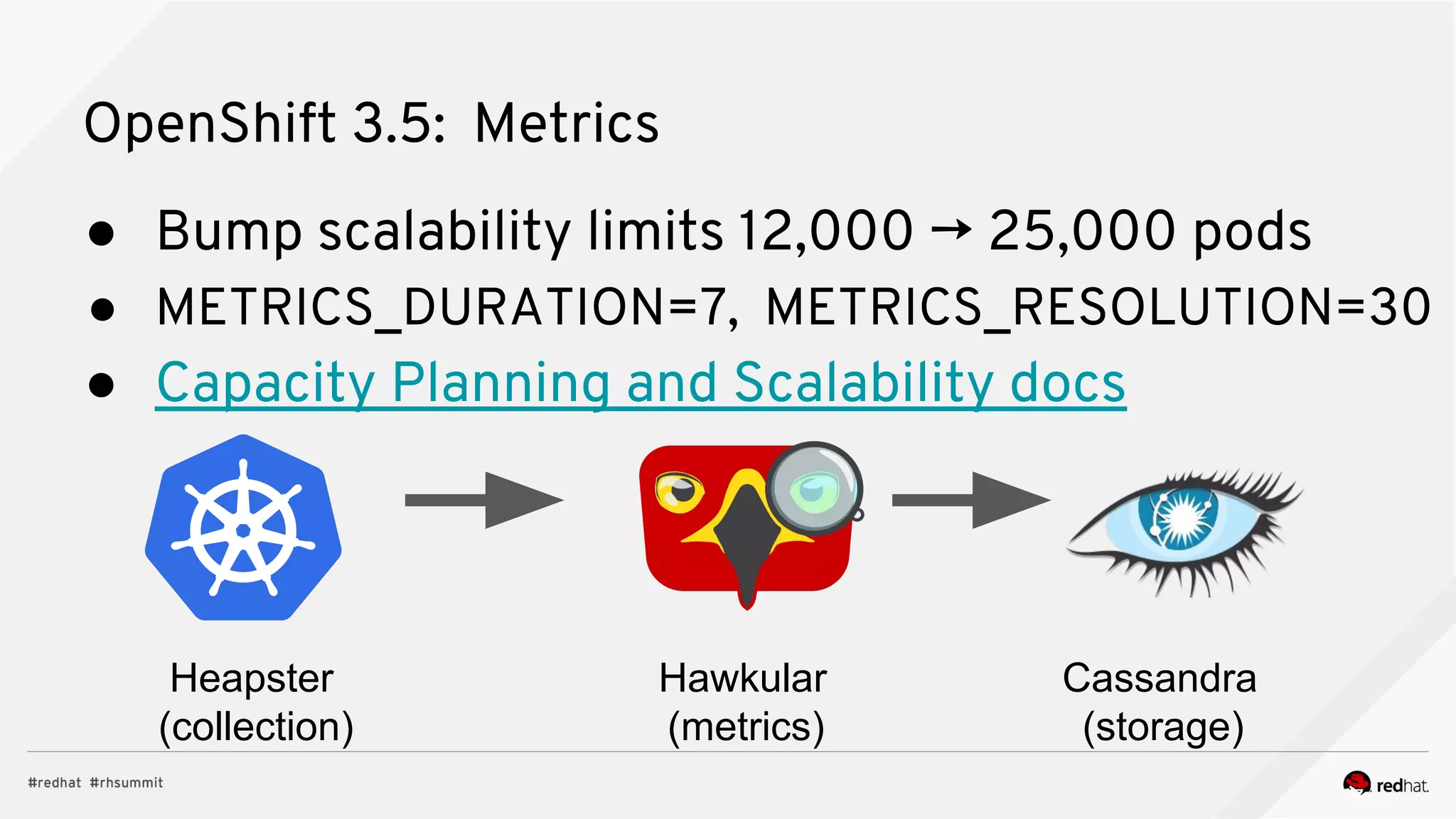
OpenShift 3.5: Metrics
● Bump scalability limits 12,000 → 25,000 pods
● METRICS_DURATION=7, METRICS_RESOLUTION=30
● Capacity Planning and Scalability docs
Heapster Hawkular Cassandra
(collection) (metrics) (storage)
OpenShift 3.5: Logging (EFK)
● Logging Sizing Guidelines
systemd/Fluentd Elasticsearch Kibana
(collection) (storage) (visualization)
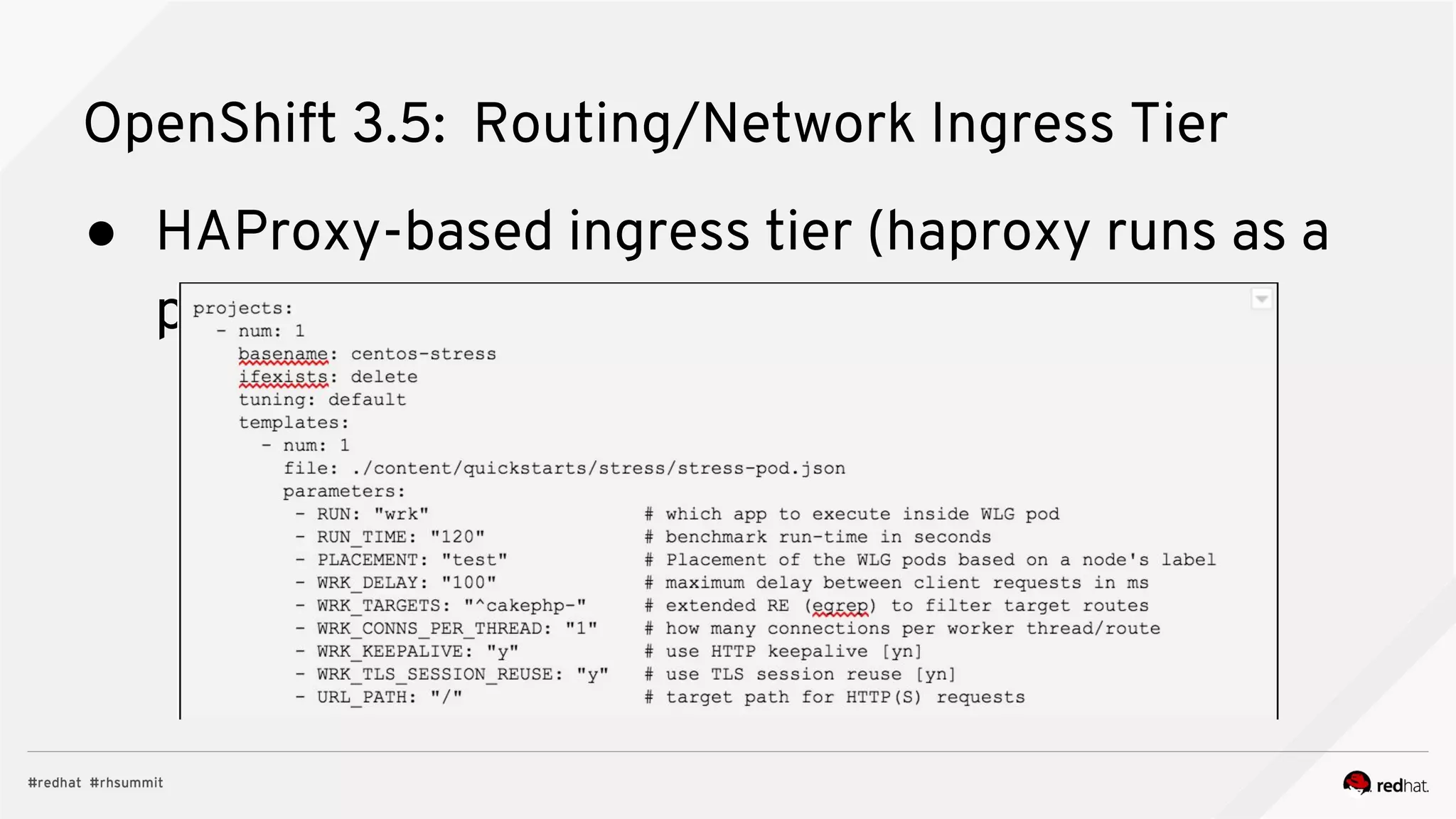
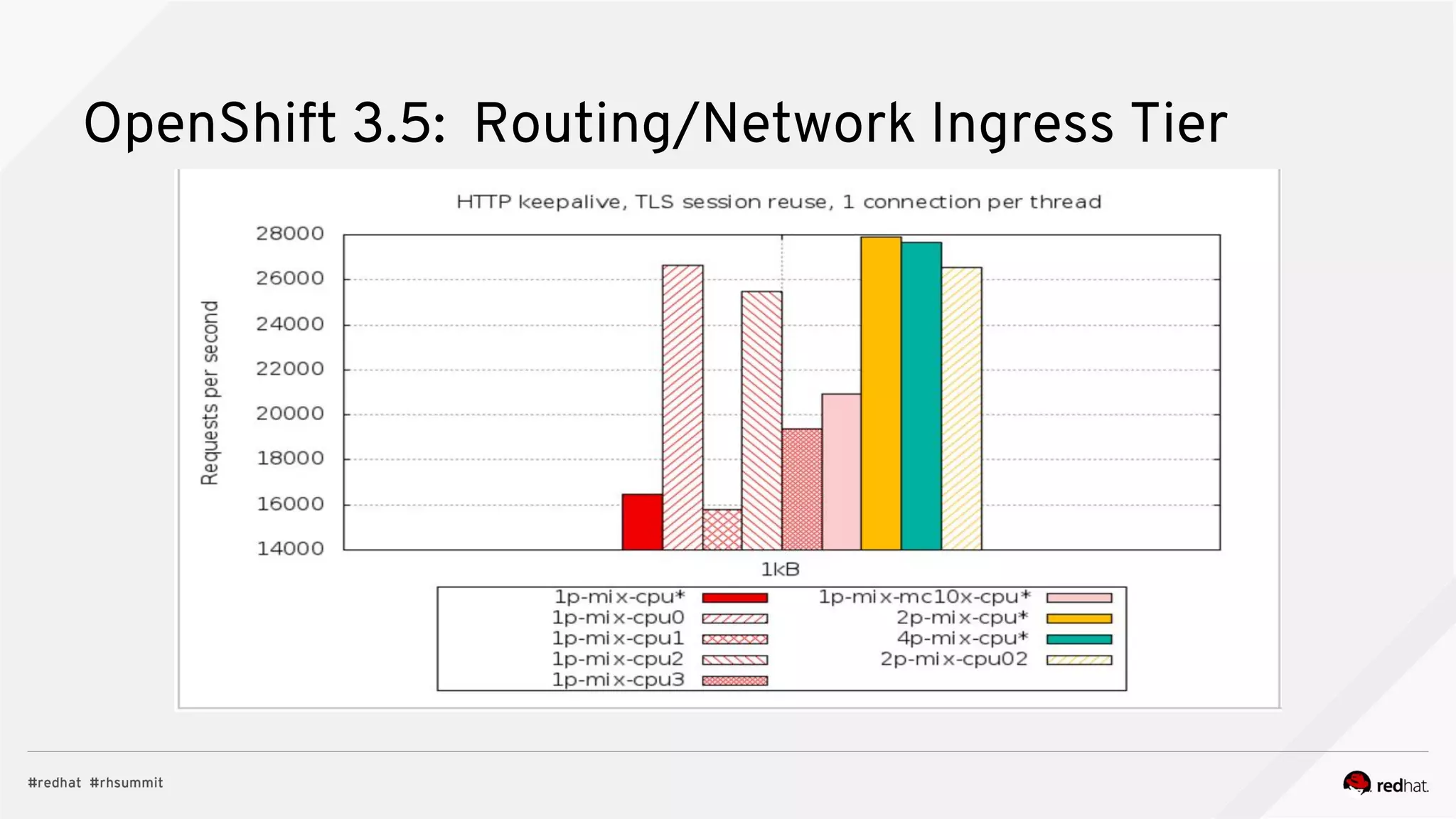
OpenShift 3.5: Routing/Network Ingress Tier
● HAProxy-based ingress tier (haproxy runs as a
pod)
OpenShift 3.5: Routing/Network Ingress Tier
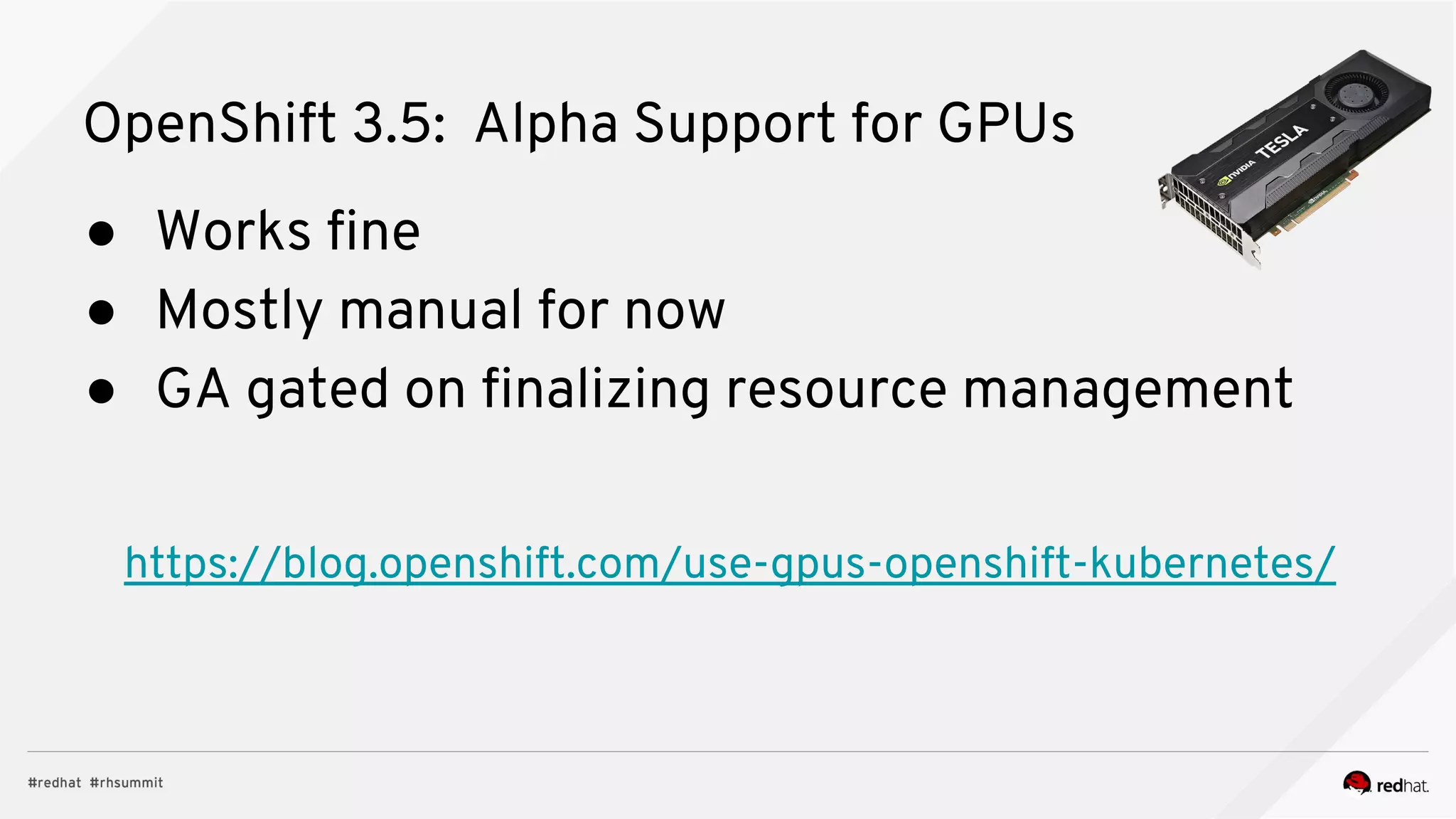
OpenShift 3.5: Alpha Support for GPUs
● Works fine
● Mostly manual for now
● GA gated on finalizing resource management
https://blog.openshift.com/use-gpus-openshift-kubernetes/
Tooling
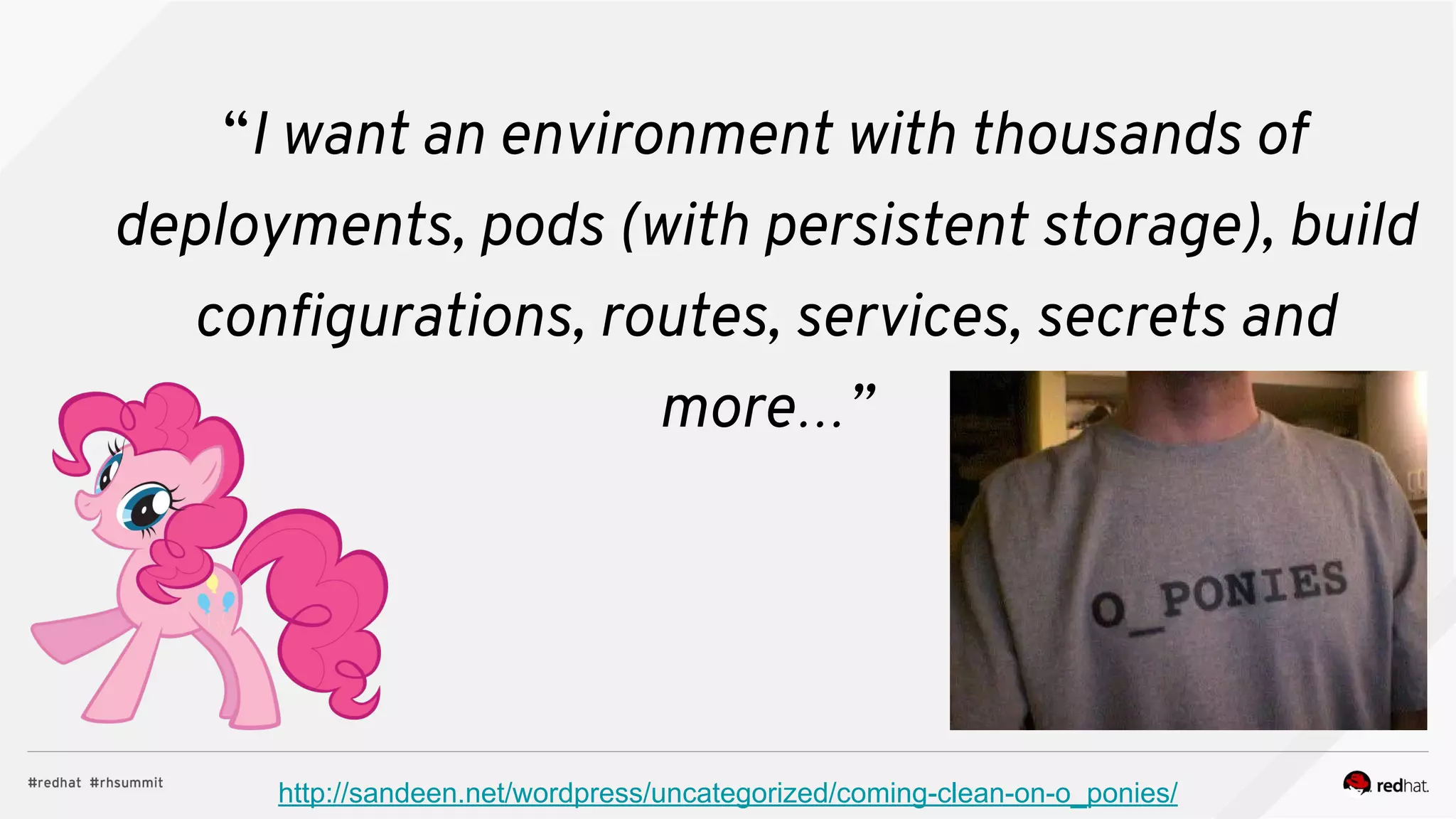
“I want an environment with thousands of
deployments, pods (with persistent storage), build
configurations, routes, services, secrets and
more…”
http://sandeen.net/wordpress/uncategorized/coming-clean-on-o_ponies/
“I want an environment with thousands of
deployments, pods (with persistent storage), build
configurations, routes, services, secrets and
more…”
http://sandeen.net/wordpress/uncategorized/coming-clean-on-o_ponies/
OpenShift Scalability Testing
● Cluster horizontal scale
○ # of nodes, # of running pods across all nodes
○ application traffic
● Node vertical scale
○ # of pods running on a single node
○ work that 1 node can support (applications, builds, storage)
● Application scalability
○ Scale # of application replicas up/down
OpenShift Performance Tests
● Resource usage/response times for scenarios
○ Application workload and access performance
○ Builds (OpenShift)
○ Metrics and Log collection
● OpenShift infrastructure performance
○ Resource usage of processes under load
○ Network (SDN) throughput
○ Routing
○ Storage (EBS, Ceph, Gluster, Cinder, etc)
Tools
● https://github.com/openshift/svt
○ cluster load-up
○ traffic generation
○ concurrent builds, deployments, pod start/stop
○ reliability testing
○ network performance
○ logging and metrics tests
Cluster loader
● cluster-loader - python tool
to quickly load clusters
according to a YAML test
specification.
● Can be used with Kubernetes
or OpenShift
projects:
- num: 1000
basename: nginx-explorer
tuning: default
templates:
- num: 10
file:
cluster-loader/nginx.yaml
- num: 20
file:
cluster-loader/explorer-pod.yaml
Demo
THANK YOU
plus.google.com/+RedHat
linkedin.com/company/red-hat
youtube.com/user/RedHatVideos
facebook.com/redhatinc
twitter.com/RedHatNews

Red Hat Summit 2017: Wicked Fast PaaS: Performance Tuning of OpenShift and Docker

  • 1.
    Wicked fast PaaS:Performance tuning of OpenShift 3.5 and Docker 1.12 Red Hat OpenShift Engineering Jeremy Eder and Mike Fiedler, 2017-05-03
  • 3.
  • 5.
    if [ “$containers”= “linux” ]; then echo “fundamentals don’t change” fi
  • 6.
  • 7.
    Terminology Overview Control Plane ComputeNodes and Storage Tier Infrastructure master and etcd master and etcd master and etcd registry and router registry and router LB
  • 8.
    Let’s just getthis out of the way ● We’re talking about OCP 3.5 or later ● Slides: https://www.slideshare.net/jeremyeder/ ● Code: https://github.com/openshift/svt ● There’s no video recording of this.
  • 9.
    Deploying 2048 OpenShiftnodes on the CNCF Cluster https://www.cncf.io/blog/2017/03/28/deploying-2048-openshift-nodes-cncf-cluster-part-2/
  • 10.
    OpenShift 3.5: Installation https://docs.openshift.org/latest/scaling_performance/install_practices.html [defaults] forks= 20 gathering = smart fact_caching = jsonfile fact_caching_timeout = 600 callback_whitelist = profile_tasks [ssh_connection] ssh_args = -o ControlMaster=auto -o ControlPersist=600s control_path = %(directory)s/%%h-%%r pipelining = True timeout = 10
  • 11.
    Docker Graph Driver:devicemapper vs overlay2 ● RHEL 7.4 ● SELinux ● Overlay2
  • 12.
    Container Native Storage ●Dynamic ● Hyperconverged ● Scalable ● Performant CNS Session Thu 11:30a, Rm 157A NODENODENODE NODE POD POD POD POD POD POD POD POD POD POD RHGS RHGS RHGS POD POD POD MASTER
  • 13.
    Container Native Storage:StorageClasses apiVersion: storage.k8s.io/v1beta1 kind: StorageClass metadata: name: cnsclass provisioner: kubernetes.io/glusterfs parameters: resturl: "http://172.25.87.92:8080" restuser: "admin" apiVersion: storage.k8s.io/v1beta1 kind: StorageClass metadata: name: ec2class provisioner: kubernetes.io/aws-ebs parameters: type: io1 zone: us-west-2b
  • 14.
    Container Native Storage ●Dynamic ● Hyperconverged ● Scalable ● Performant
  • 15.
  • 16.
    distributed key valuestore that provides a reliable way to store data across a cluster of machines
  • 17.
    OpenShift 3.5: etcd-3.1.x ●etcd-2.x limited node scalability ● etcd-3.x gets us to 2000+ nodes comfortably ● Image metadata moved from etcd to registry in 3.4.z and 3.5. https://www.cncf.io/blog/2017/03/28/deploying-2048-openshift-nodes-cncf-cluster-part-2/
  • 18.
    OpenShift 3.5: ImageMetadata moved to Registry
  • 19.
    OpenShift 3.5: etcd-3.1,storage mode v2, 5K projects Quorum Reads added in OCP 3.4 for data safety
  • 20.
  • 21.
    OpenShift 3.5: Metrics ●Bump scalability limits 12,000 → 25,000 pods ● METRICS_DURATION=7, METRICS_RESOLUTION=30 ● Capacity Planning and Scalability docs Heapster Hawkular Cassandra (collection) (metrics) (storage)
  • 22.
    OpenShift 3.5: Logging(EFK) ● Logging Sizing Guidelines systemd/Fluentd Elasticsearch Kibana (collection) (storage) (visualization)
  • 23.
    OpenShift 3.5: Routing/NetworkIngress Tier ● HAProxy-based ingress tier (haproxy runs as a pod)
  • 24.
  • 25.
    OpenShift 3.5: AlphaSupport for GPUs ● Works fine ● Mostly manual for now ● GA gated on finalizing resource management https://blog.openshift.com/use-gpus-openshift-kubernetes/
  • 26.
  • 27.
    “I want anenvironment with thousands of deployments, pods (with persistent storage), build configurations, routes, services, secrets and more…” http://sandeen.net/wordpress/uncategorized/coming-clean-on-o_ponies/
  • 28.
    “I want anenvironment with thousands of deployments, pods (with persistent storage), build configurations, routes, services, secrets and more…” http://sandeen.net/wordpress/uncategorized/coming-clean-on-o_ponies/
  • 29.
    OpenShift Scalability Testing ●Cluster horizontal scale ○ # of nodes, # of running pods across all nodes ○ application traffic ● Node vertical scale ○ # of pods running on a single node ○ work that 1 node can support (applications, builds, storage) ● Application scalability ○ Scale # of application replicas up/down
  • 30.
    OpenShift Performance Tests ●Resource usage/response times for scenarios ○ Application workload and access performance ○ Builds (OpenShift) ○ Metrics and Log collection ● OpenShift infrastructure performance ○ Resource usage of processes under load ○ Network (SDN) throughput ○ Routing ○ Storage (EBS, Ceph, Gluster, Cinder, etc)
  • 31.
    Tools ● https://github.com/openshift/svt ○ clusterload-up ○ traffic generation ○ concurrent builds, deployments, pod start/stop ○ reliability testing ○ network performance ○ logging and metrics tests
  • 32.
    Cluster loader ● cluster-loader- python tool to quickly load clusters according to a YAML test specification. ● Can be used with Kubernetes or OpenShift projects: - num: 1000 basename: nginx-explorer tuning: default templates: - num: 10 file: cluster-loader/nginx.yaml - num: 20 file: cluster-loader/explorer-pod.yaml
  • 33.
  • 34.