RECOVERY NUTRITION The harder you train, the harder you need to recover! Melissa Arkinsall BSc (Hon) SRD, ASD
Why are recovery strategies vital to performance? Training + Recovery = Super-compensation  Training + Inadequate Recovery = Performance reduction, Illness, Injury, Burnout Faster recovery = potential for more frequent, quality training and thus improved race performance!
Adaptation to training occurs during recovery. Key aims of post-exercise nutrition: Rehydration. To replenish electrolytes. To refill carbohydrate stores. To provide protein for muscle repair. To provide antioxidants to reduce cellular damage.
The cost of a hard workout 1000-3500ml water 5g Sodium Chloride (salt) 150-250g muscle glycogen 50g liver glycogen 50-100g Intramuscular triglycerides 50g Adipose tissue. ( Edward F. Coyle, Ph.D.  The University of Texas at Austin ) In 2 hour workout may use 200-300g glycogen, but can only absorb about 60g carbohydrate / hour.  Therefore recovery strategies required to makeup the deficit.
Common mistakes in recovery Drinking plenty during exercise but not enough once you finish. X  Ongoing loses, dehydration impairs glycogen storage, risk of heat illness. Failing to start refuelling / rehydrating soon enough  X  Waiting 2 hours before eating, reduces carbohydrate replenishment by 50%. Reduced eating / drinking in final hour of a long cycle ride. X  Recovery starts on the bike!!!
4.  Drinking large volumes of electrolyte-free fluids during / after a race. x  Dilution of blood = diuretic effect! 5.  Drinking alcohol before rehydrating and refuelling!!! x  Alcohol is a diuretic, interferes with glycogen storage and increases inflammation 5.  Too much fat or protein in recovery meals. x  Displaces carbohydrate, slows delivery of fuel to muscles
Solutions. Pack a kitbag snack / recovery drink containing 75-100g of carbohydrate and at least 1L fluid. Consume this within 15-30 mins. Eat moderate-sized snack every 2 hours for 4-6 hours after exercise. High GI carbohydrates, low in fat (<3g per 100g), small amount of protein. Recovery drinks as effective as food.
Other points to remember: Include electrolytes in a recovery drink or a little salt in a meal. Palatability important - if appetite poor post race. try: Liquids e.g. low fat chocolate milk, meal replacement drinks (commercial or homemade) In hot weather pack a bottle half ice, half orange juice to keep cool. In cold weather a flask of tea / soup  Easy to eat foods e.g. cereal bars, bananas, fruit cubes, sandwiches, pretzels.
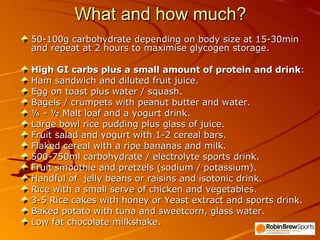
What and how much? 50-100g carbohydrate depending on body size at 15-30min and repeat at 2 hours to maximise glycogen storage. High GI carbs plus a small amount of protein and drink : Ham sandwich and diluted fruit juice.  Egg on toast plus water / squash. Bagels / crumpets with peanut butter and water. ¼ - ½ Malt loaf and a yogurt drink. Large bowl rice pudding plus glass of juice. Fruit salad and yogurt with 1-2 cereal bars. Flaked cereal with a ripe bananas and milk. 500-750ml carbohydrate / electrolyte sports drink. Fruit smoothie and pretzels (sodium / potassium). Handful of  jelly beans or raisins and isotonic drink. Rice with a small serve of chicken and vegetables. 3-5 Rice cakes with honey or Yeast extract and sports drink. Baked potato with tuna and sweetcorn, glass water. Low fat chocolate milkshake.

Recovery Nutrition - Facts

  • 1.
    RECOVERY NUTRITION Theharder you train, the harder you need to recover! Melissa Arkinsall BSc (Hon) SRD, ASD
  • 2.
    Why are recoverystrategies vital to performance? Training + Recovery = Super-compensation Training + Inadequate Recovery = Performance reduction, Illness, Injury, Burnout Faster recovery = potential for more frequent, quality training and thus improved race performance!
  • 3.
    Adaptation to trainingoccurs during recovery. Key aims of post-exercise nutrition: Rehydration. To replenish electrolytes. To refill carbohydrate stores. To provide protein for muscle repair. To provide antioxidants to reduce cellular damage.
  • 4.
    The cost ofa hard workout 1000-3500ml water 5g Sodium Chloride (salt) 150-250g muscle glycogen 50g liver glycogen 50-100g Intramuscular triglycerides 50g Adipose tissue. ( Edward F. Coyle, Ph.D. The University of Texas at Austin ) In 2 hour workout may use 200-300g glycogen, but can only absorb about 60g carbohydrate / hour. Therefore recovery strategies required to makeup the deficit.
  • 5.
    Common mistakes inrecovery Drinking plenty during exercise but not enough once you finish. X Ongoing loses, dehydration impairs glycogen storage, risk of heat illness. Failing to start refuelling / rehydrating soon enough X Waiting 2 hours before eating, reduces carbohydrate replenishment by 50%. Reduced eating / drinking in final hour of a long cycle ride. X Recovery starts on the bike!!!
  • 6.
    4. Drinkinglarge volumes of electrolyte-free fluids during / after a race. x Dilution of blood = diuretic effect! 5. Drinking alcohol before rehydrating and refuelling!!! x Alcohol is a diuretic, interferes with glycogen storage and increases inflammation 5. Too much fat or protein in recovery meals. x Displaces carbohydrate, slows delivery of fuel to muscles
  • 7.
    Solutions. Pack akitbag snack / recovery drink containing 75-100g of carbohydrate and at least 1L fluid. Consume this within 15-30 mins. Eat moderate-sized snack every 2 hours for 4-6 hours after exercise. High GI carbohydrates, low in fat (<3g per 100g), small amount of protein. Recovery drinks as effective as food.
  • 8.
    Other points toremember: Include electrolytes in a recovery drink or a little salt in a meal. Palatability important - if appetite poor post race. try: Liquids e.g. low fat chocolate milk, meal replacement drinks (commercial or homemade) In hot weather pack a bottle half ice, half orange juice to keep cool. In cold weather a flask of tea / soup Easy to eat foods e.g. cereal bars, bananas, fruit cubes, sandwiches, pretzels.
  • 9.
    What and howmuch? 50-100g carbohydrate depending on body size at 15-30min and repeat at 2 hours to maximise glycogen storage. High GI carbs plus a small amount of protein and drink : Ham sandwich and diluted fruit juice. Egg on toast plus water / squash. Bagels / crumpets with peanut butter and water. ¼ - ½ Malt loaf and a yogurt drink. Large bowl rice pudding plus glass of juice. Fruit salad and yogurt with 1-2 cereal bars. Flaked cereal with a ripe bananas and milk. 500-750ml carbohydrate / electrolyte sports drink. Fruit smoothie and pretzels (sodium / potassium). Handful of jelly beans or raisins and isotonic drink. Rice with a small serve of chicken and vegetables. 3-5 Rice cakes with honey or Yeast extract and sports drink. Baked potato with tuna and sweetcorn, glass water. Low fat chocolate milkshake.