The document provides examples and explanations of different types of dialogue punctuation and grammar structures, including:
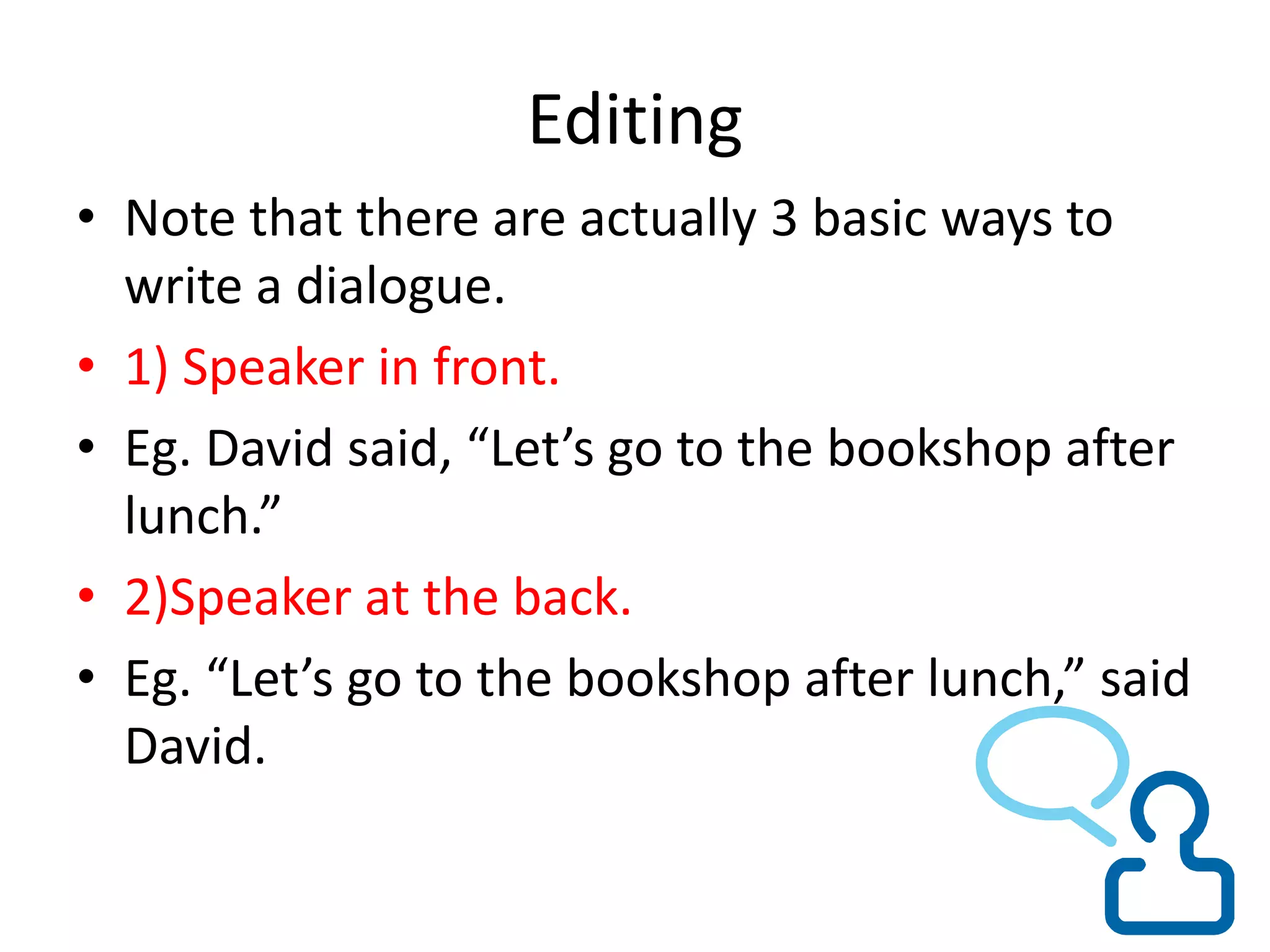
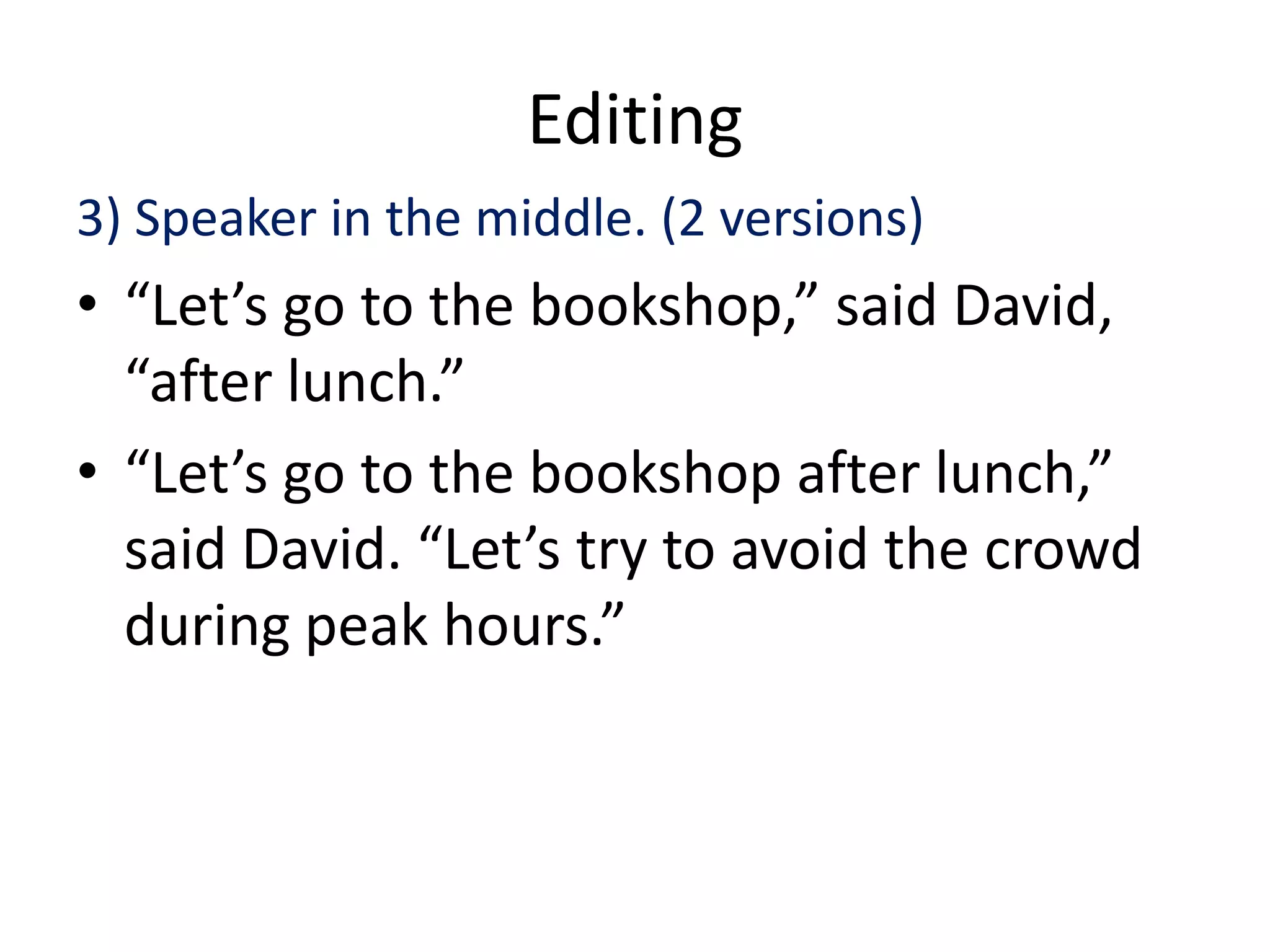
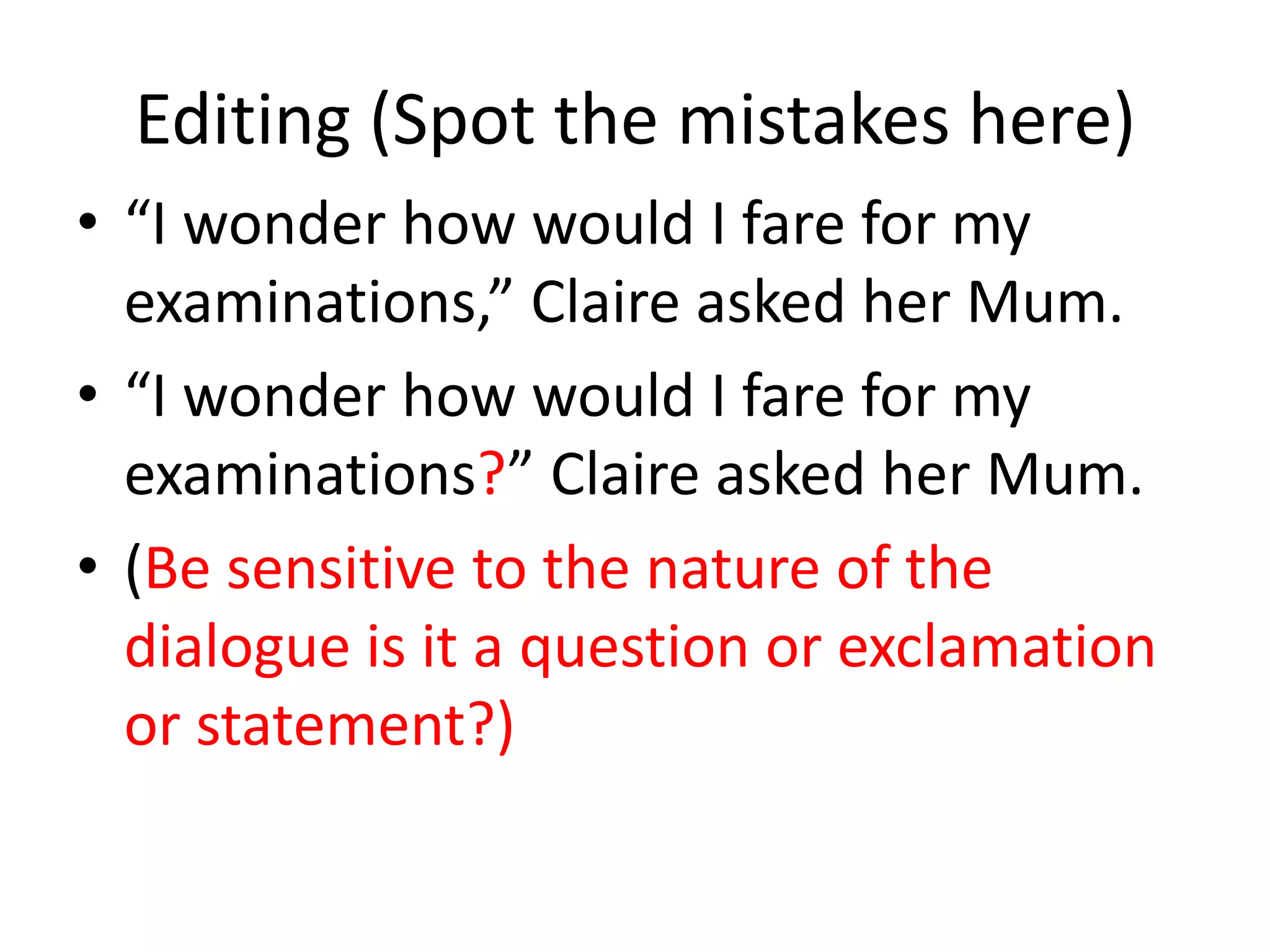
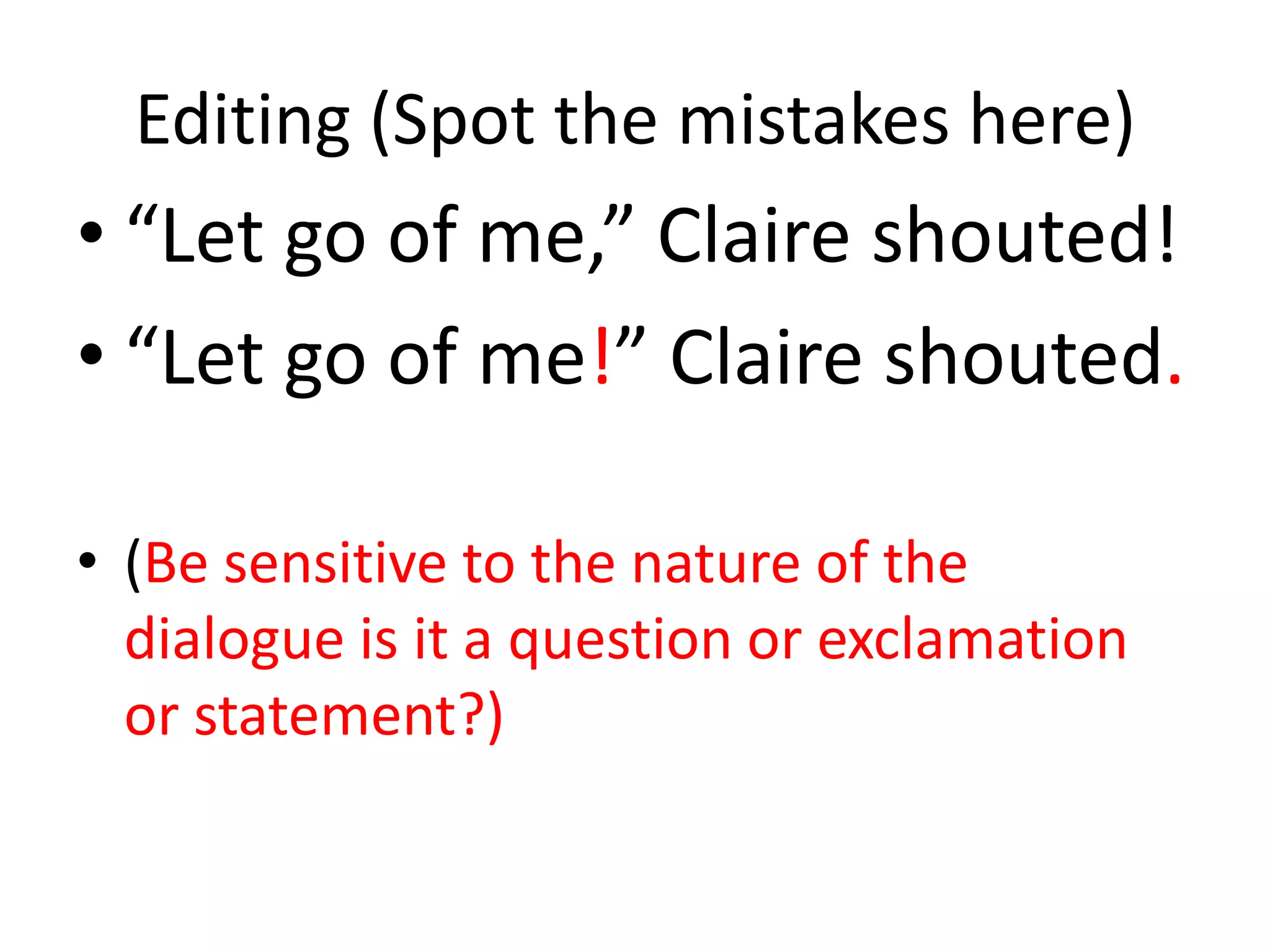
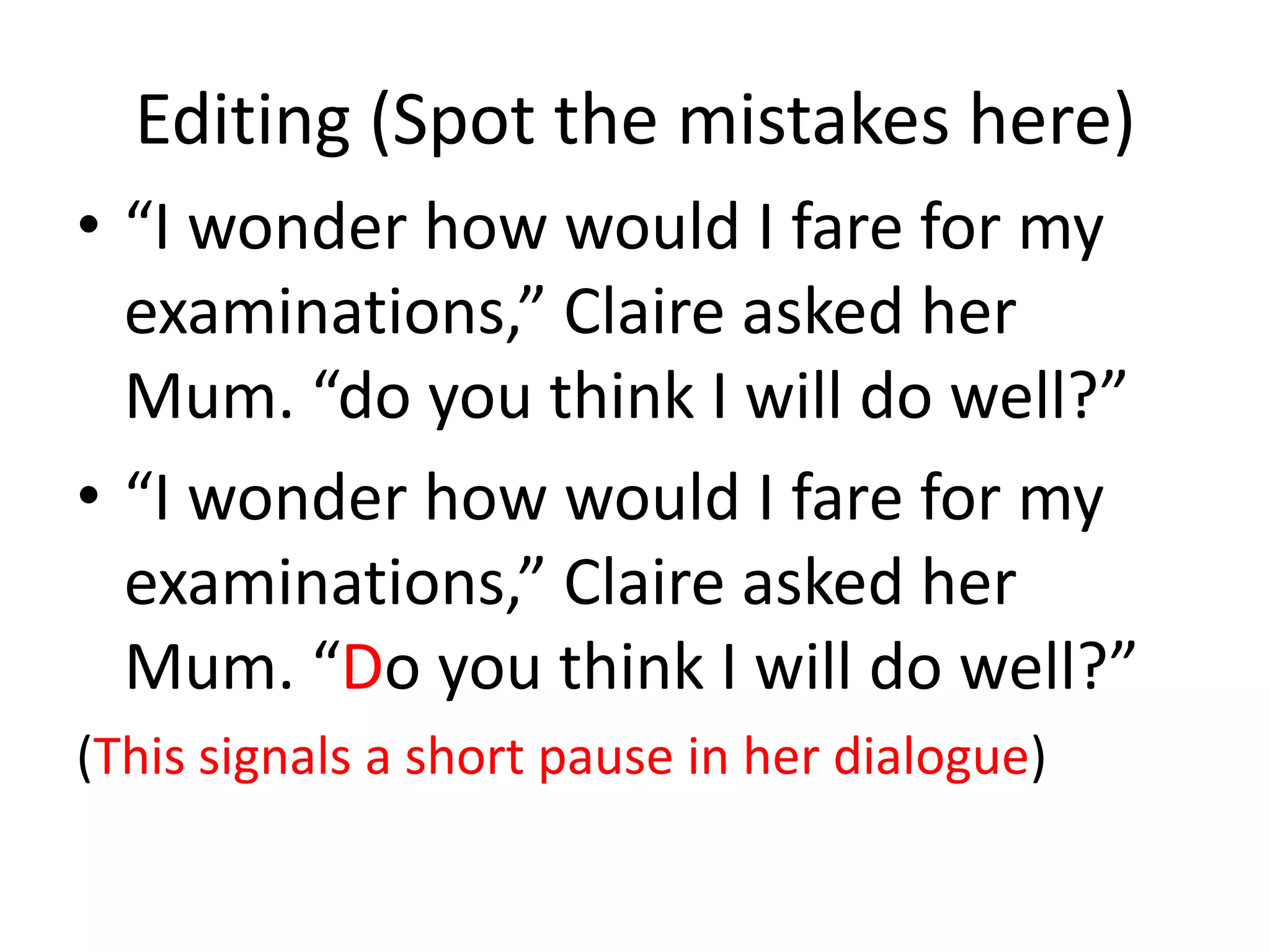
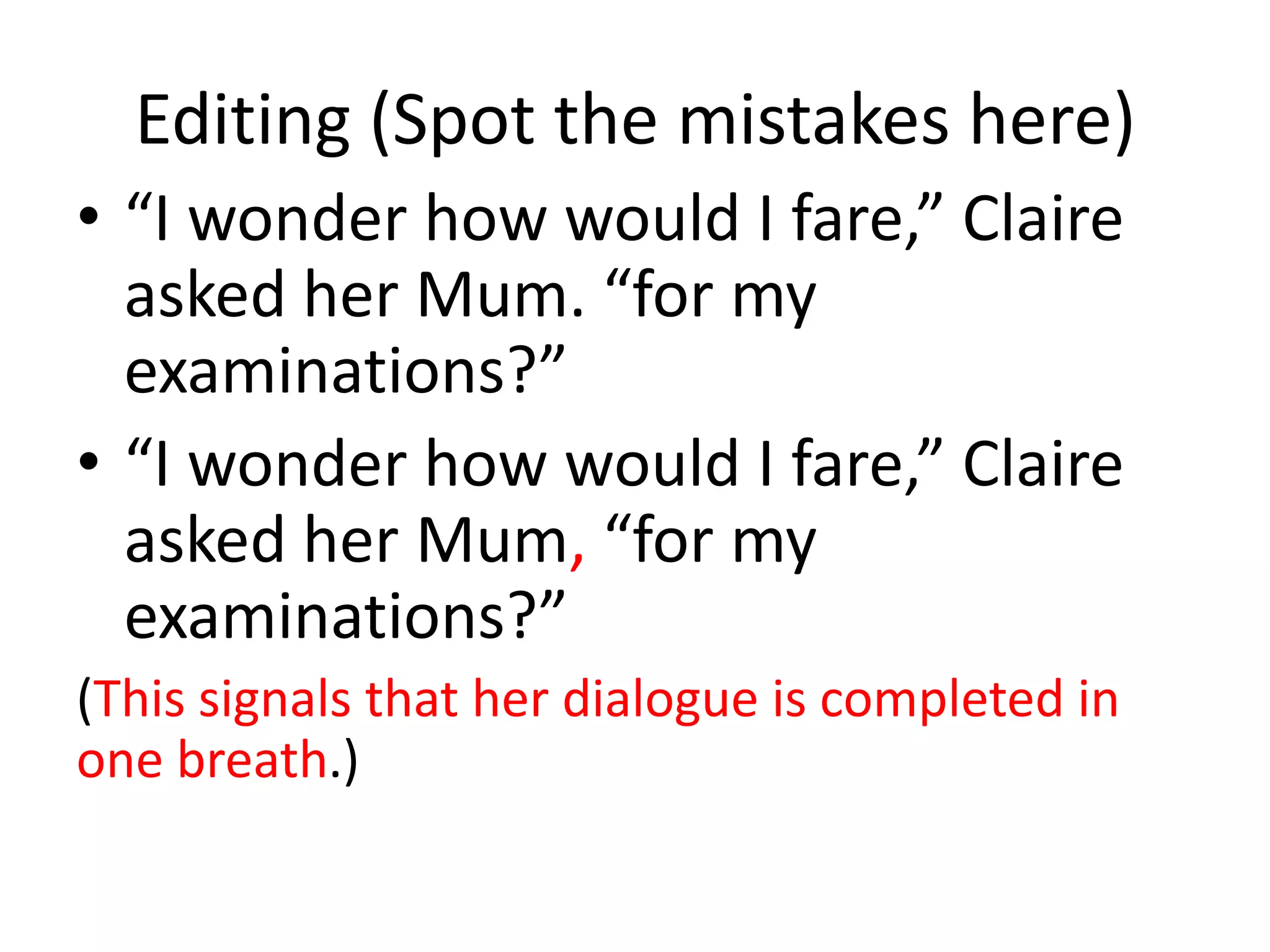
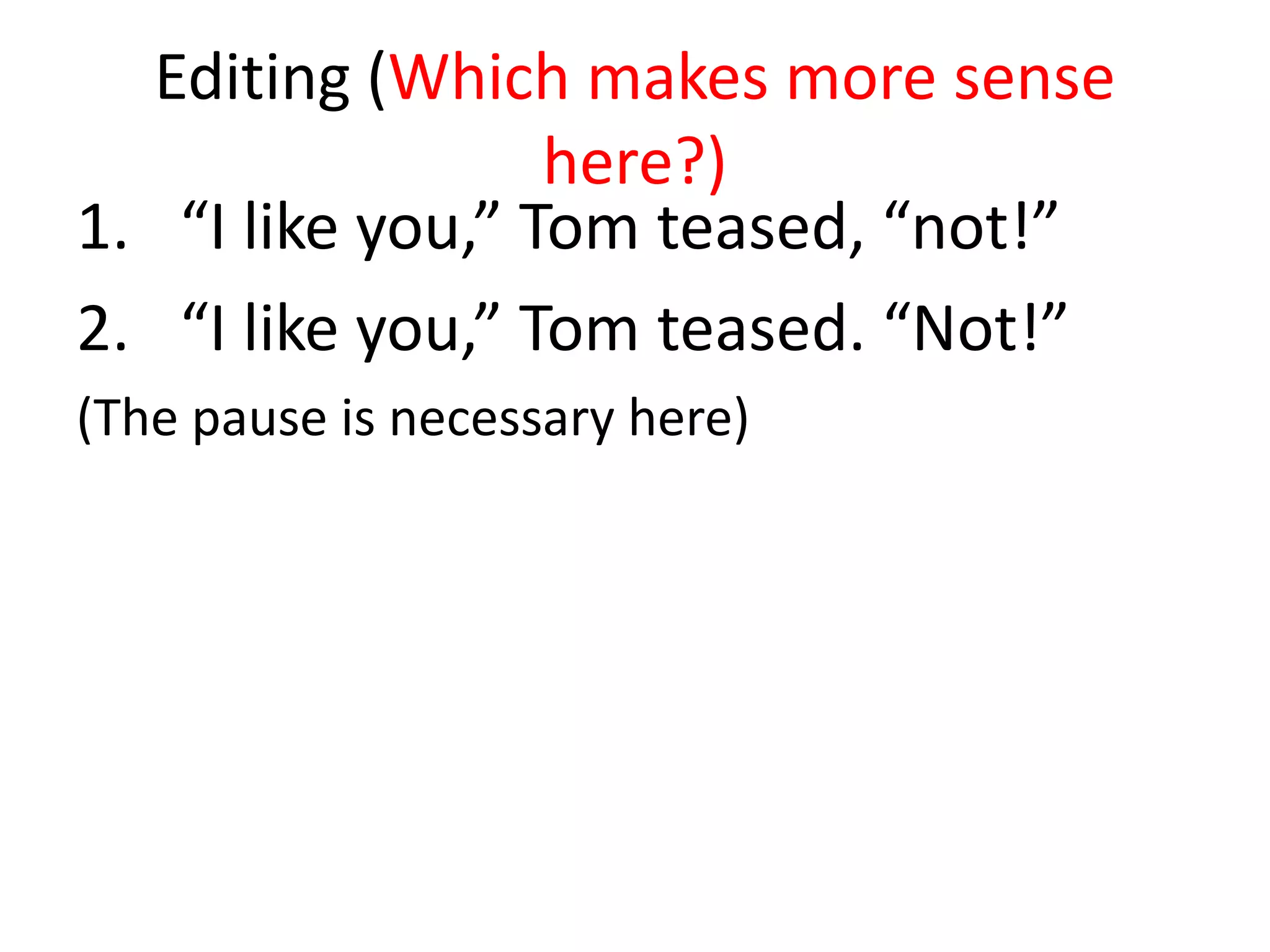
1) Three ways to structure dialogue - with the speaker first, last, or in the middle.
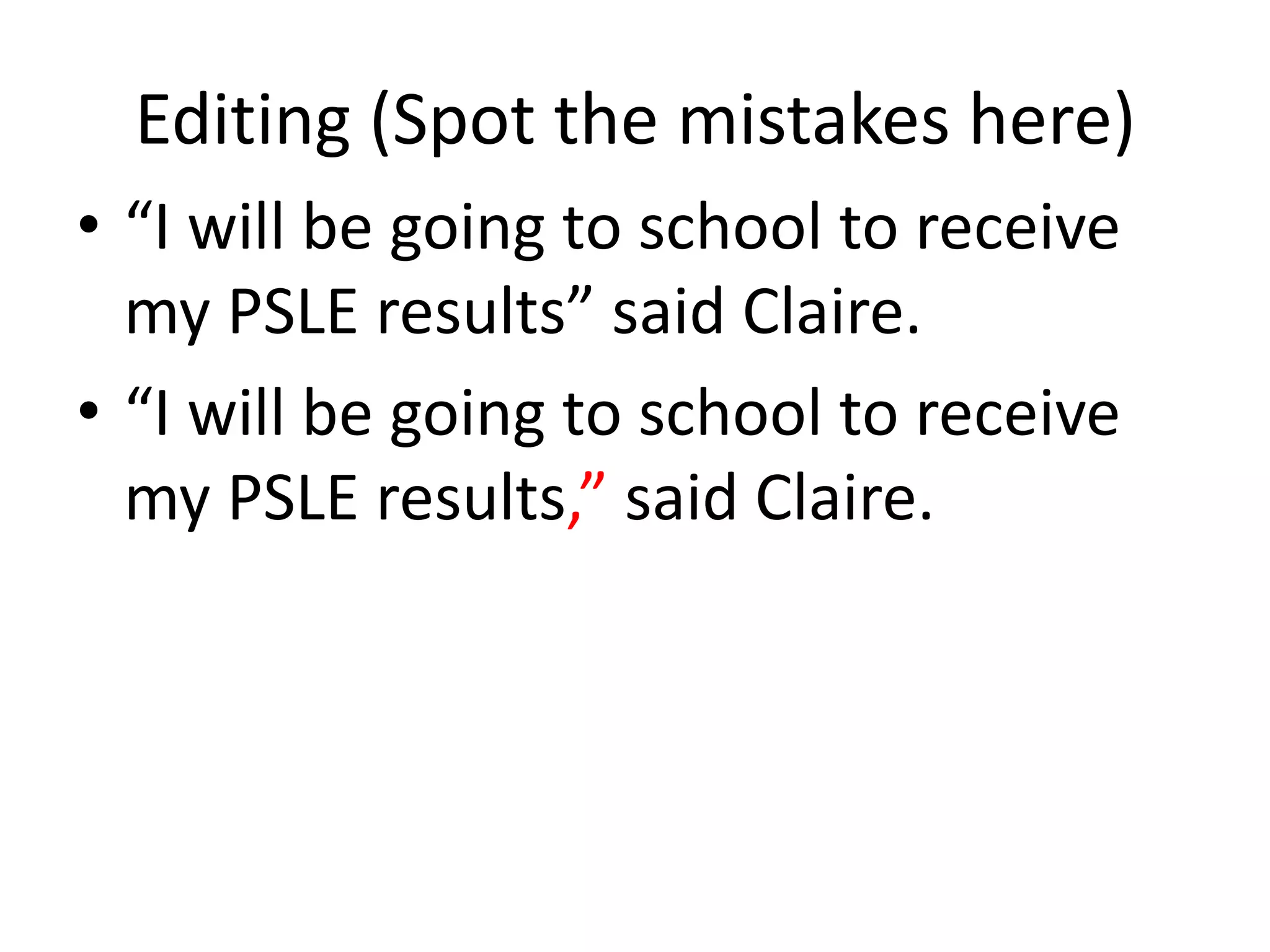
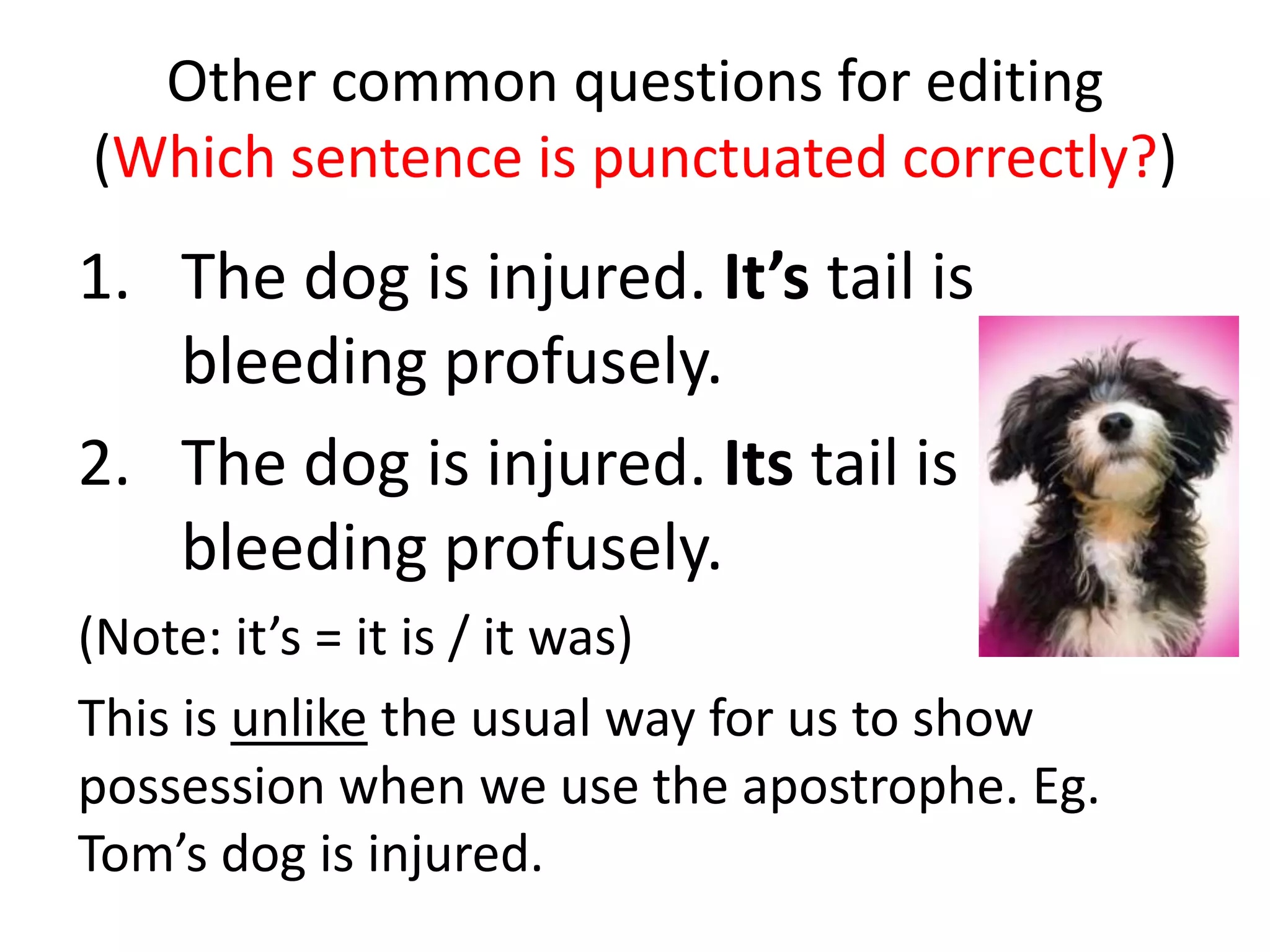
2) Examples of correctly and incorrectly punctuated dialogue.
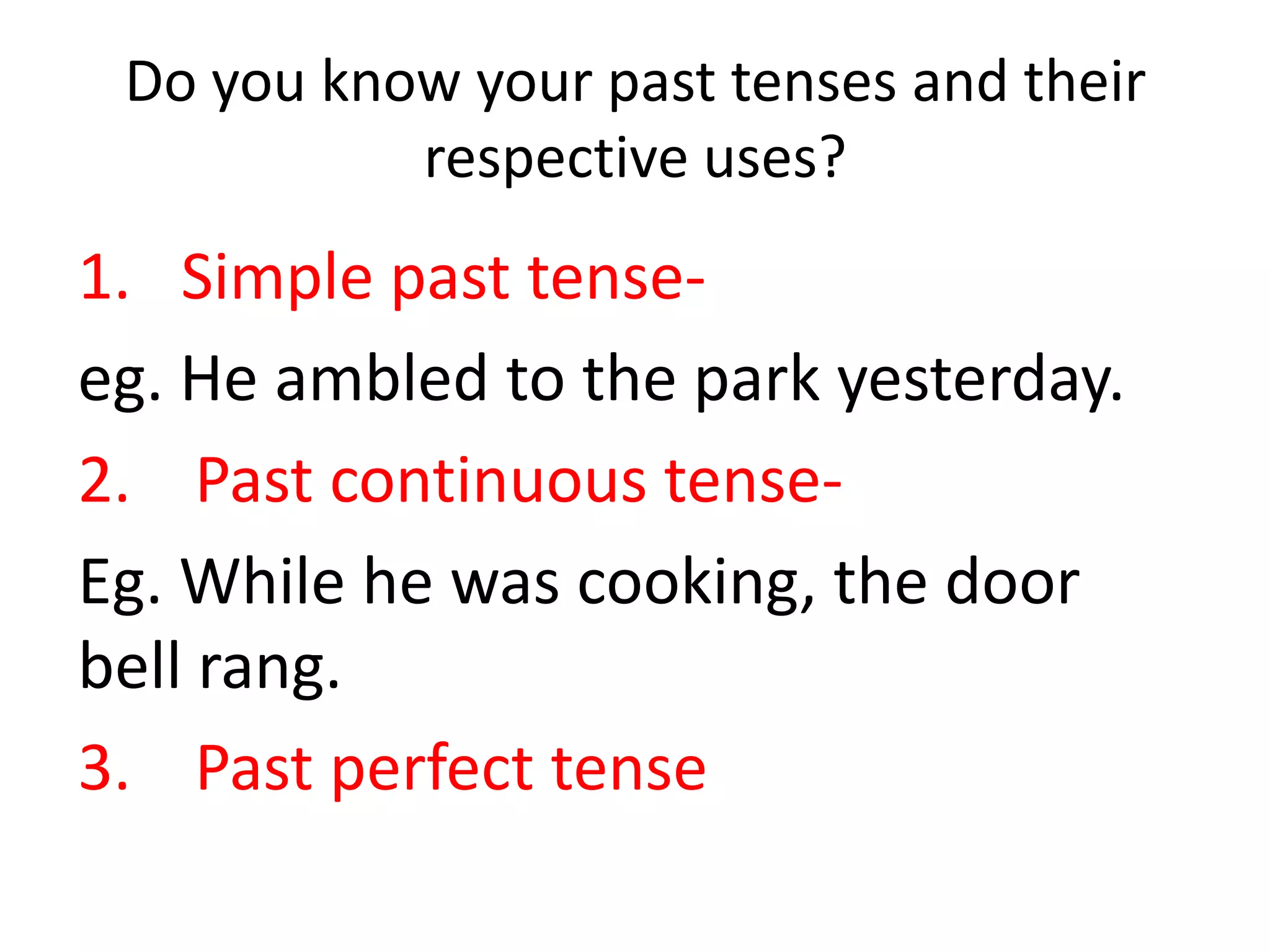
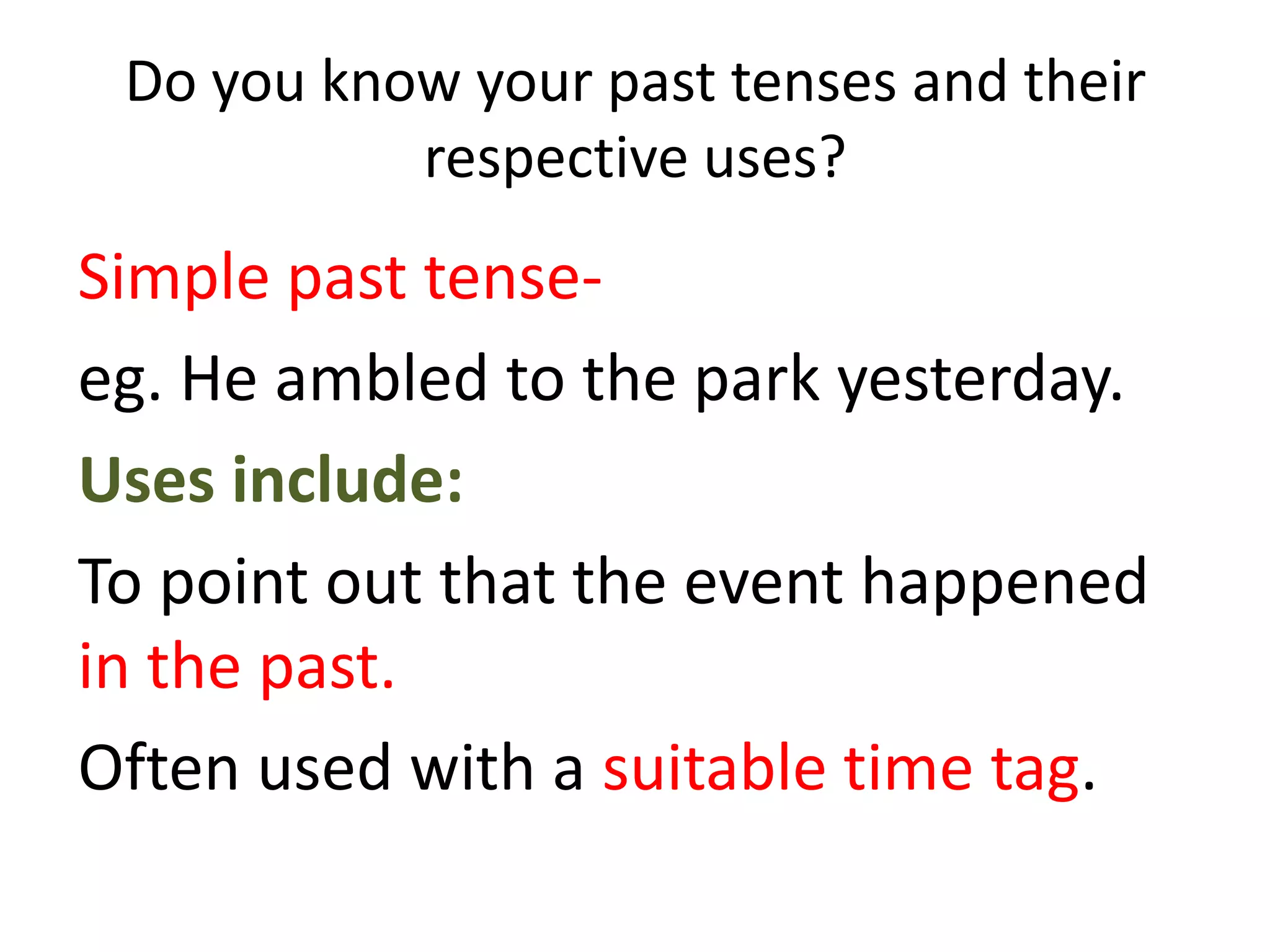
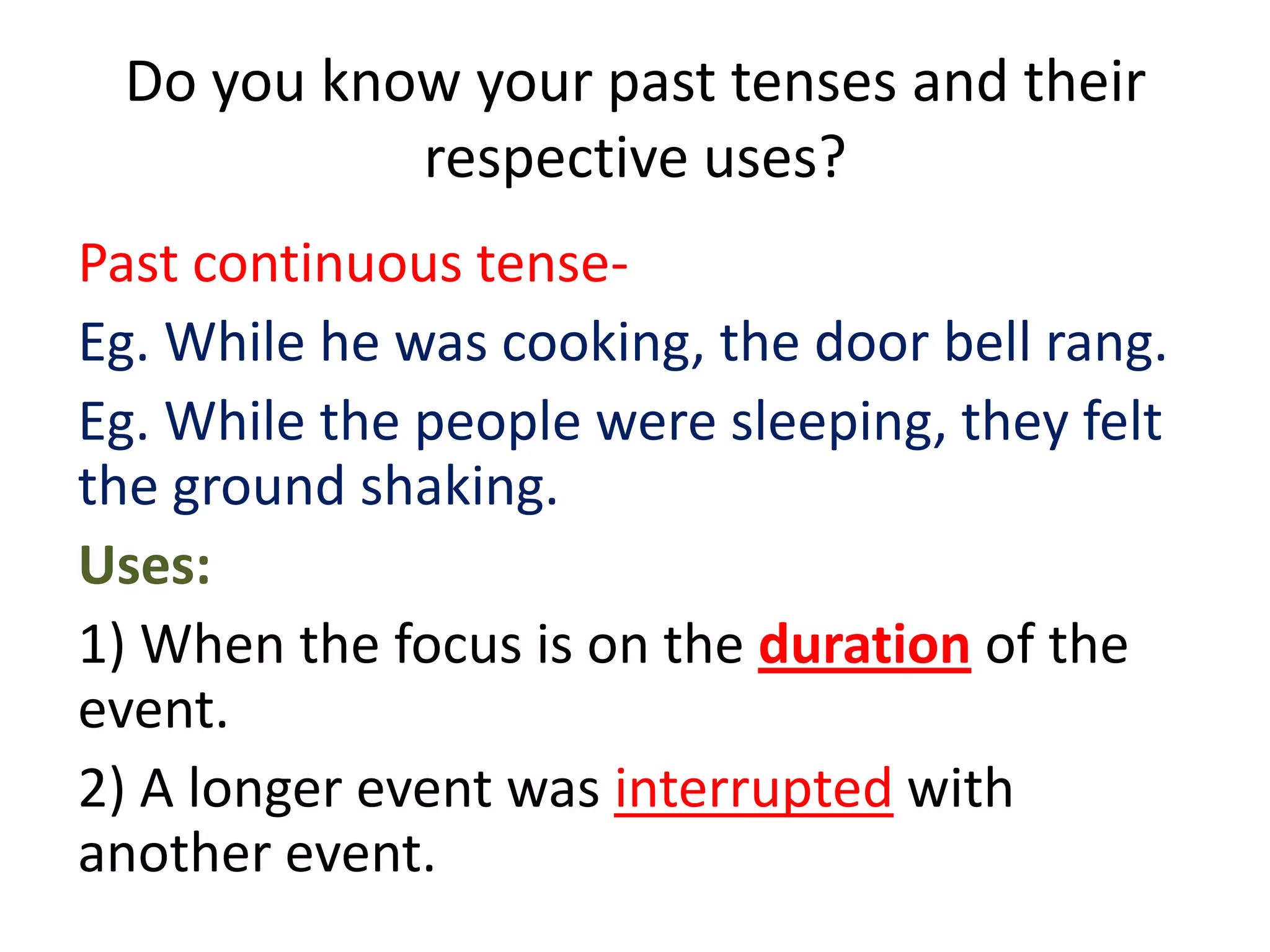
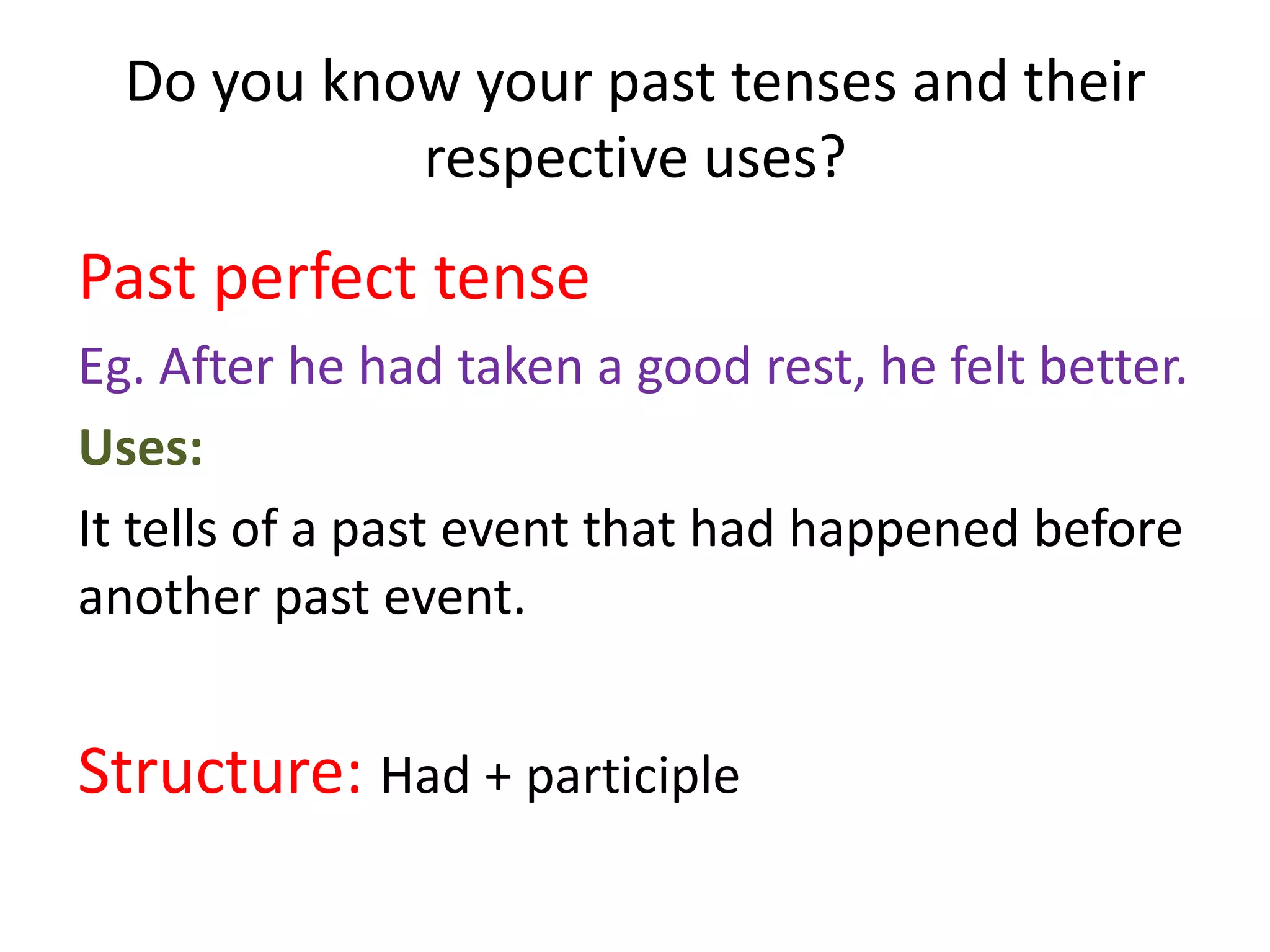
3) Explanations of past tenses like simple past, past continuous, and past perfect and their respective uses.
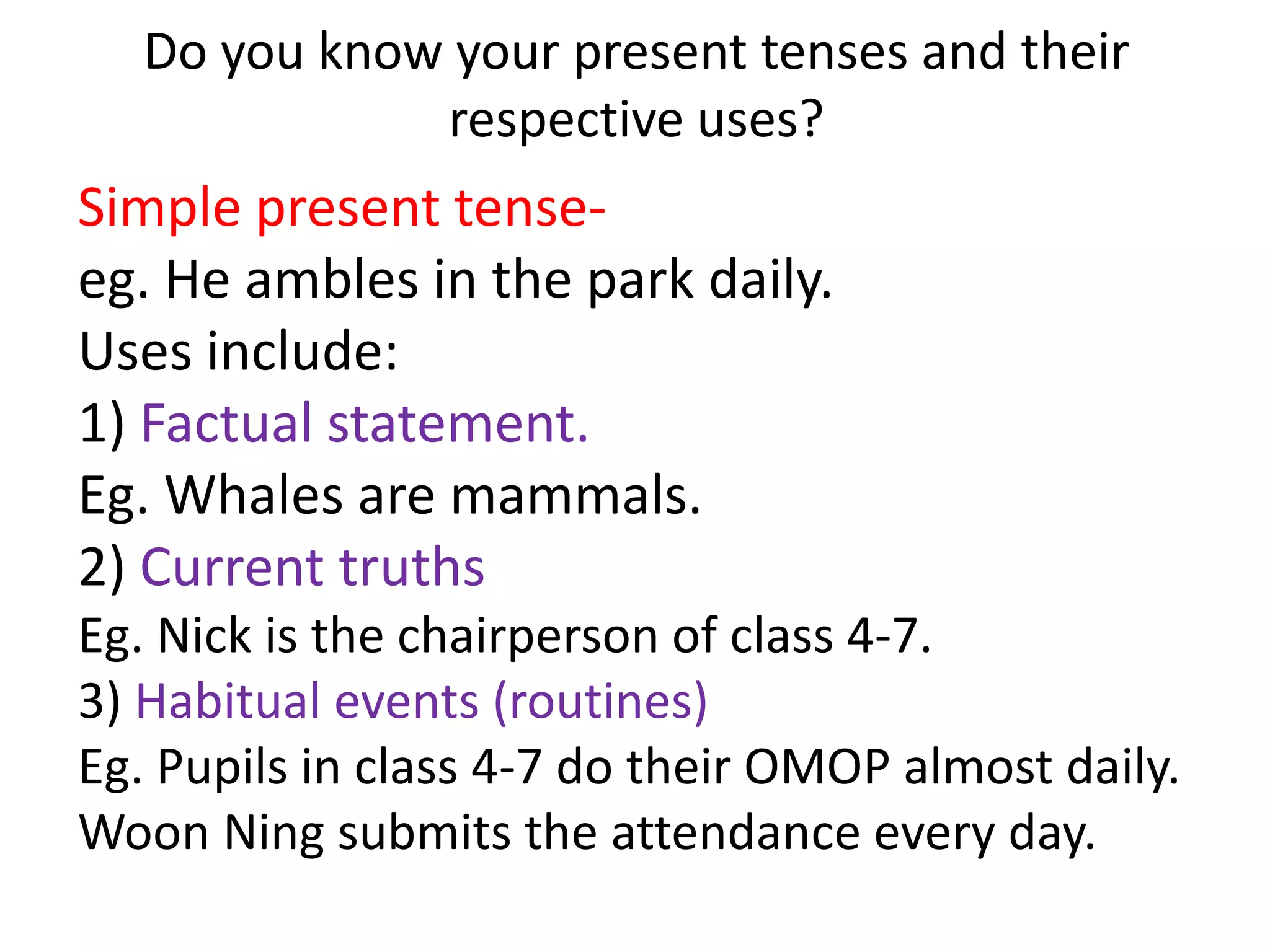
4) Examples of present tenses like simple present and their uses.
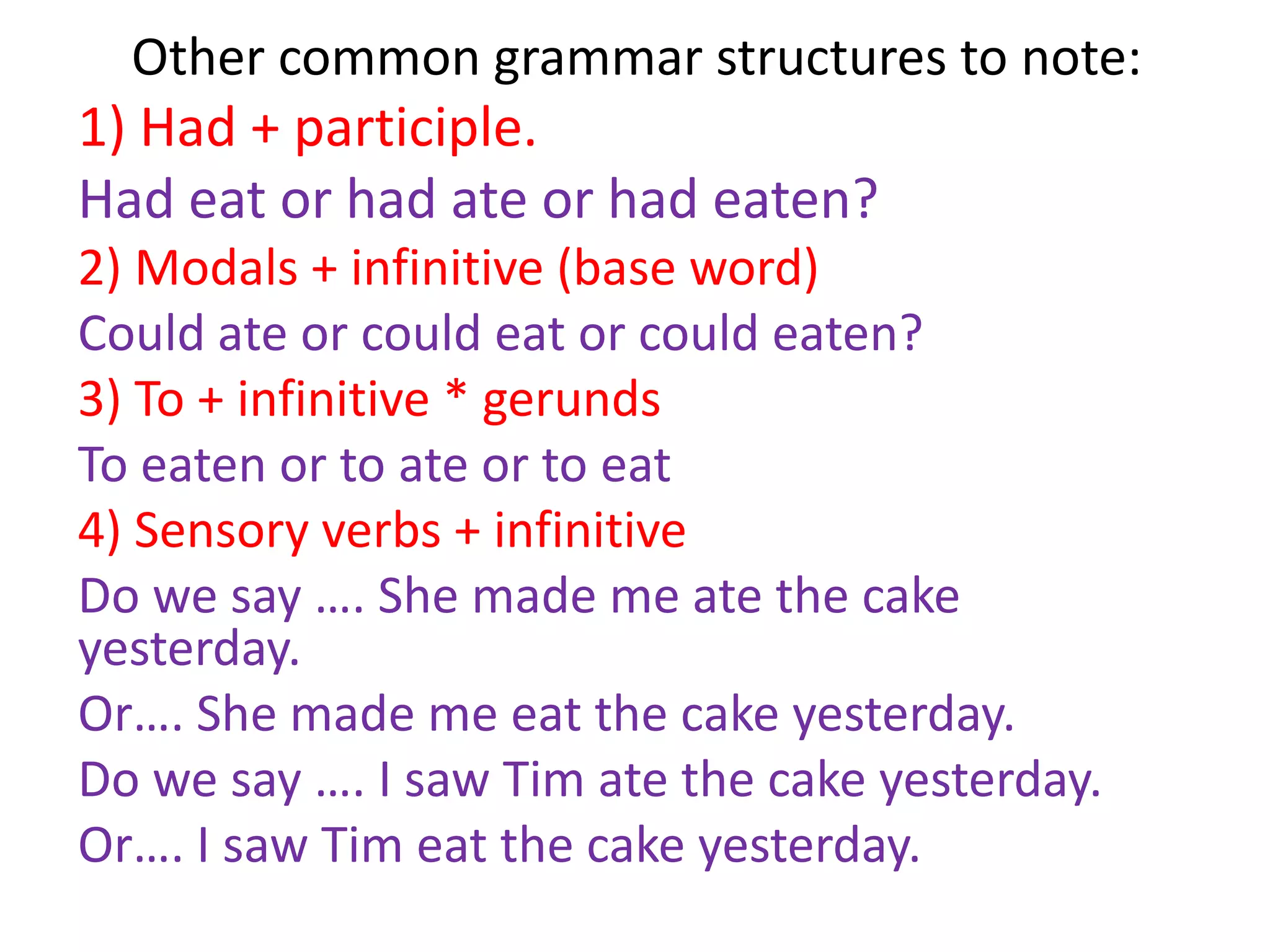
5) Other common grammar structures discussed include had + participle, modals + infinitive, to + infinitive vs gerunds, and sensory verbs + infinitive.


![Prepositions mini lesson_esl502[1]](https://cdn.slidesharecdn.com/ss_thumbnails/prepositionsminilessonesl5021-120324214002-phpapp01-thumbnail.jpg?width=640&height=640&fit=bounds)


