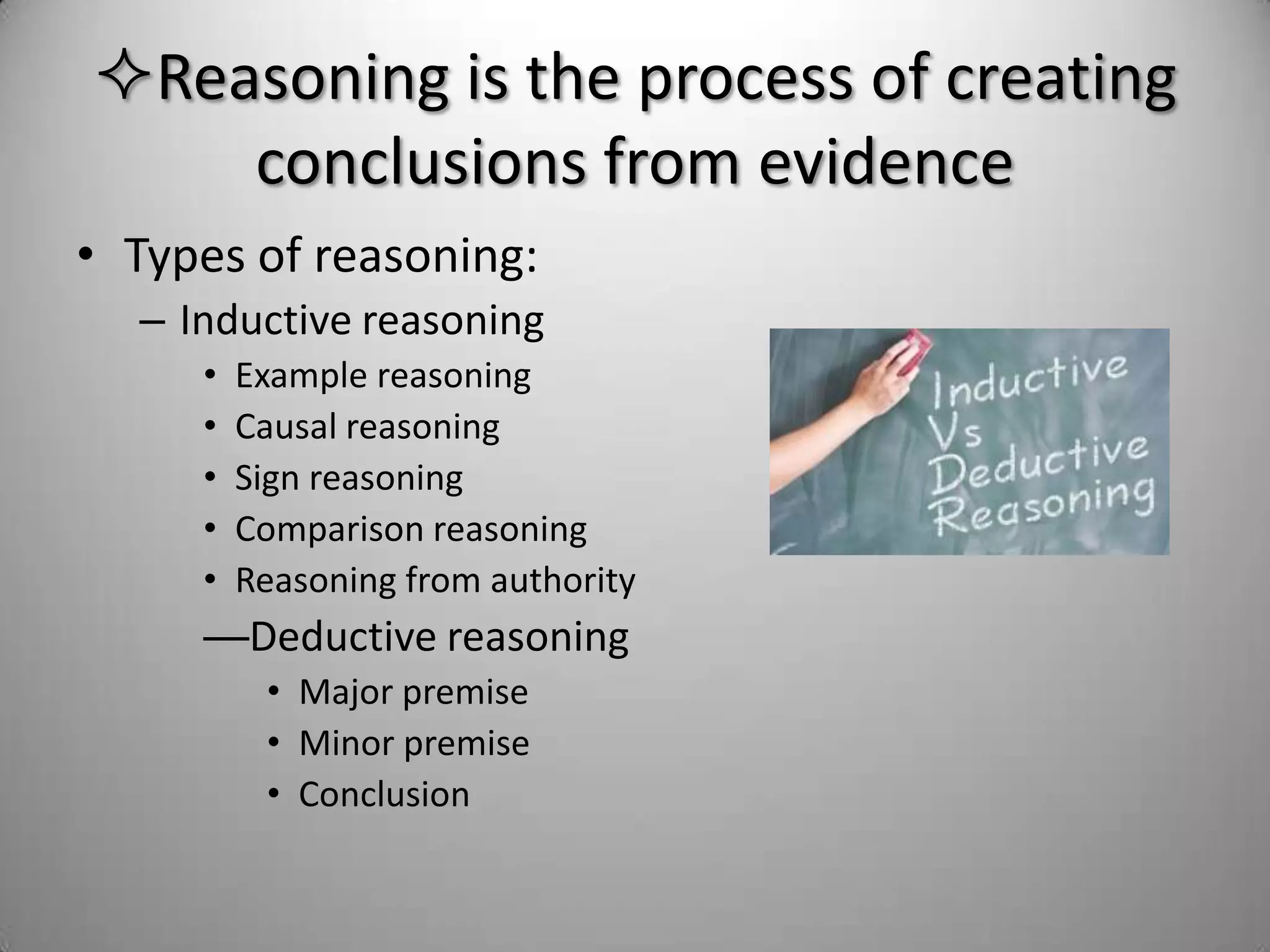
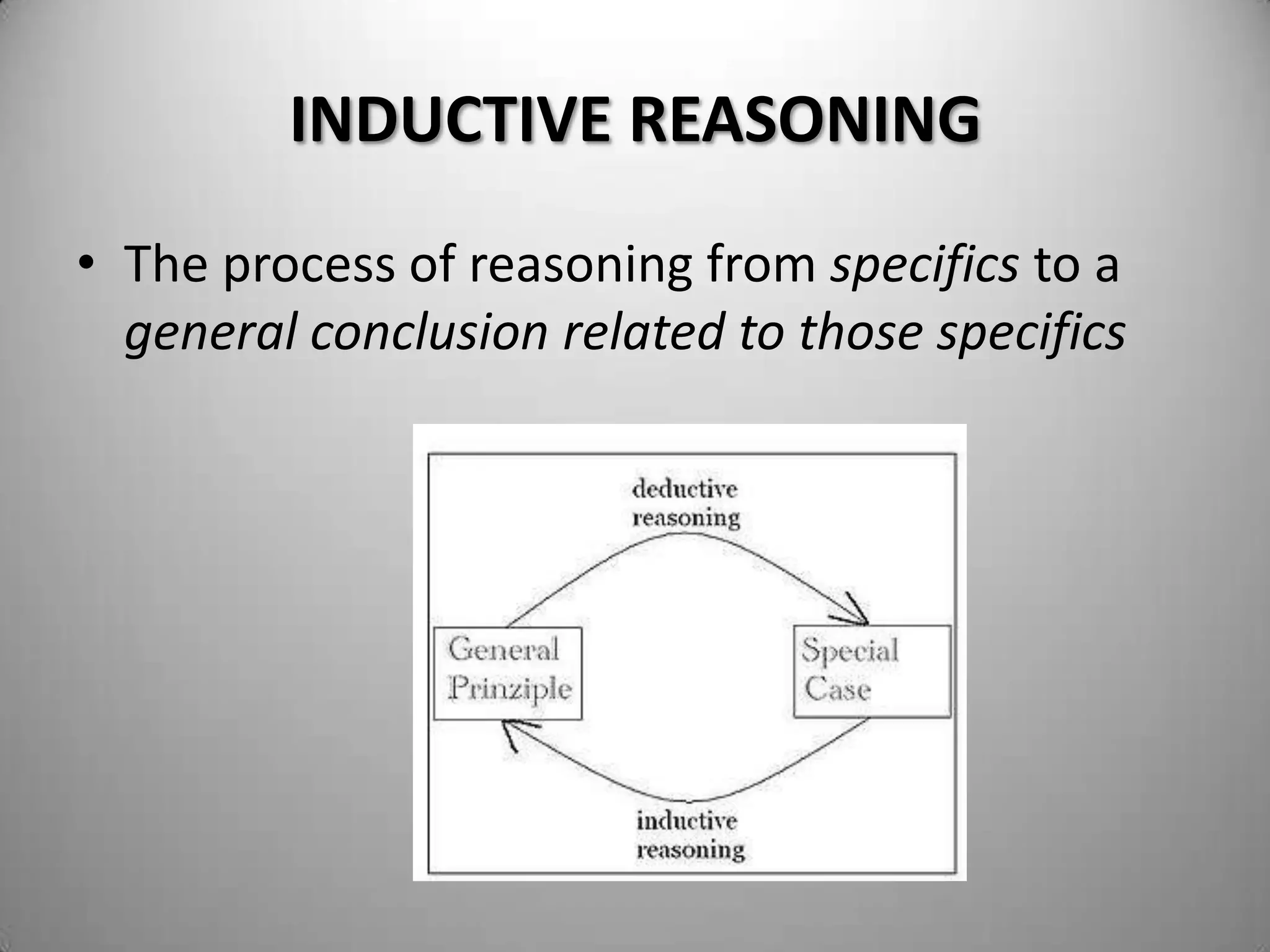
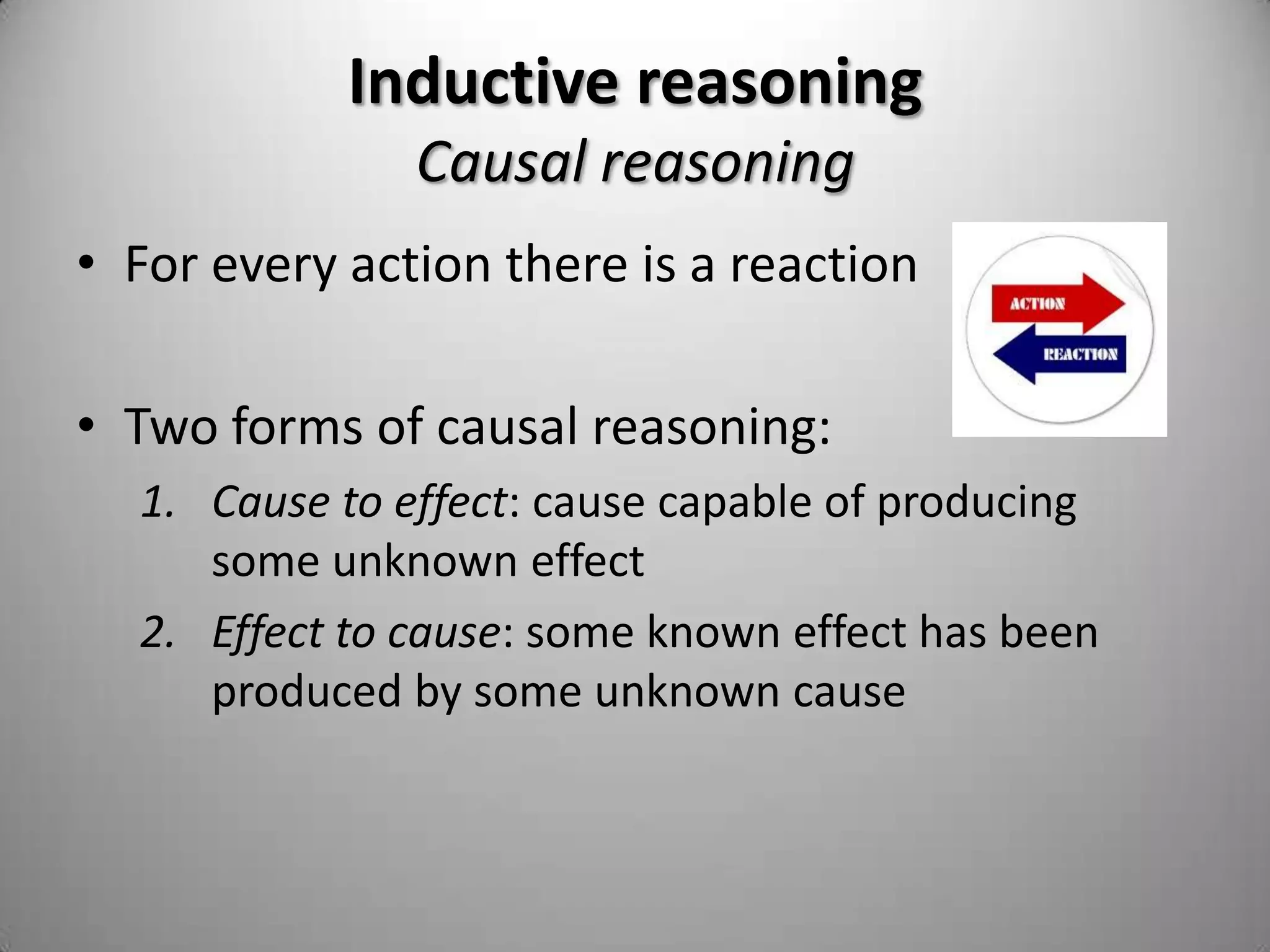
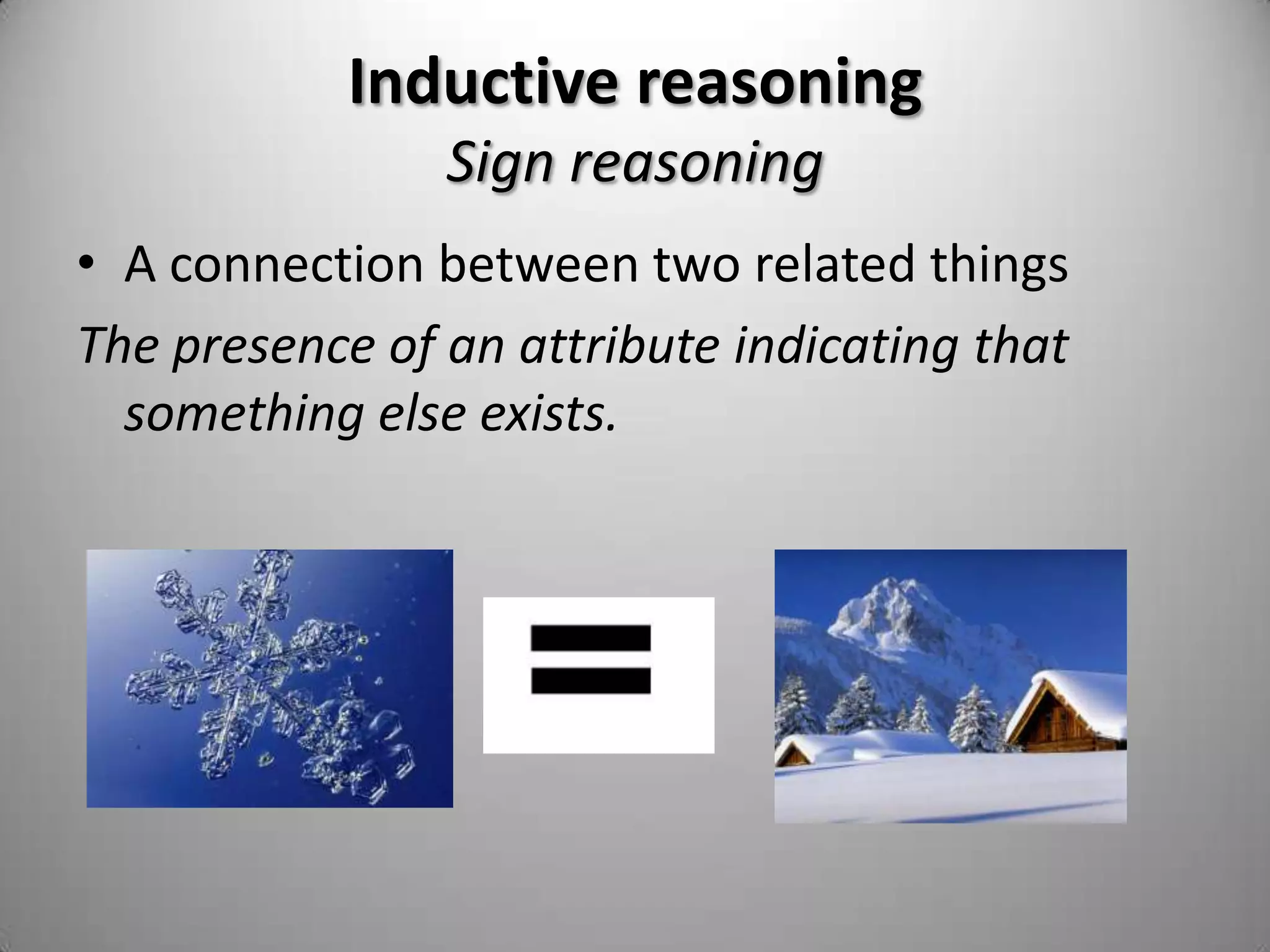
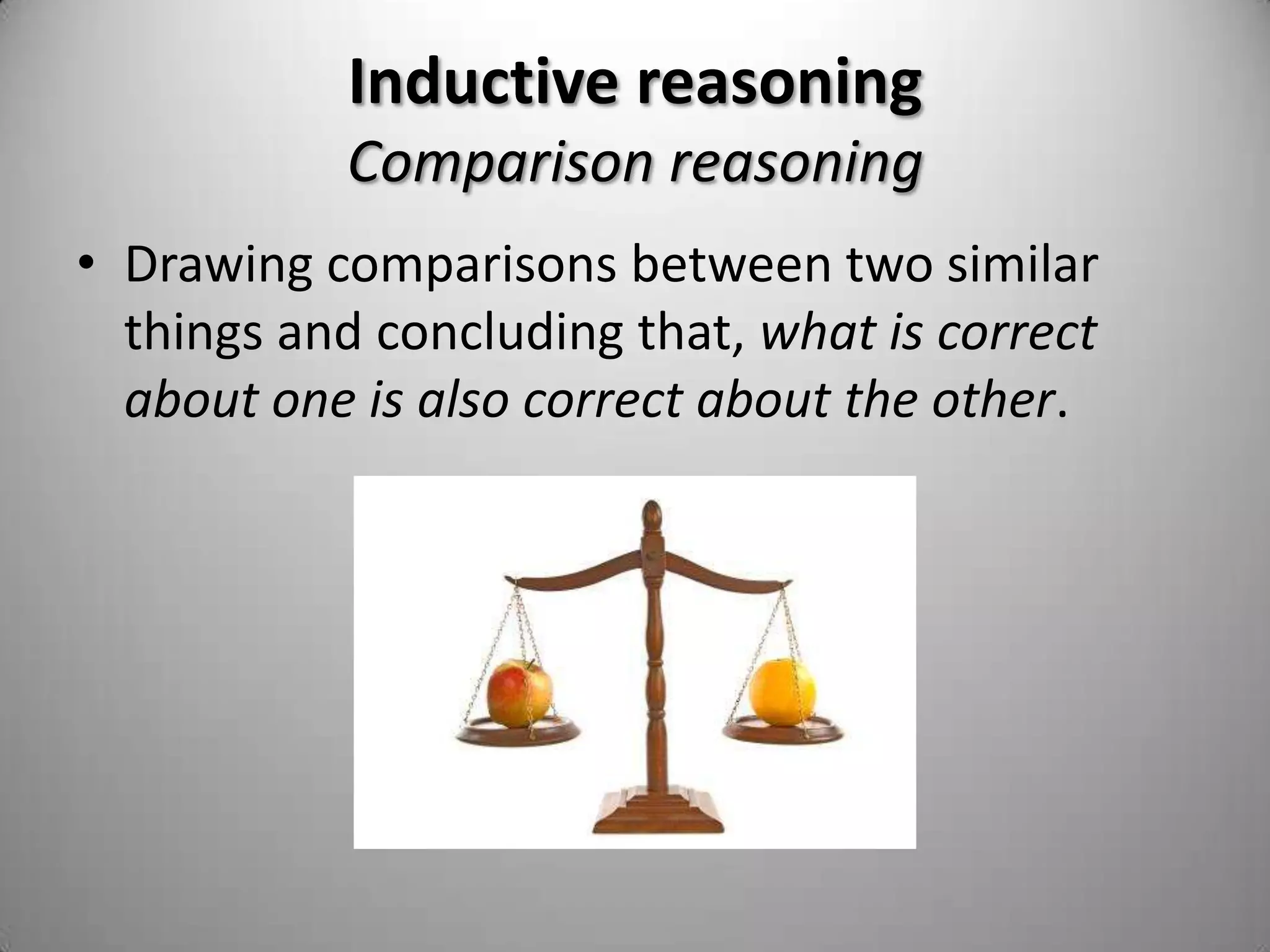
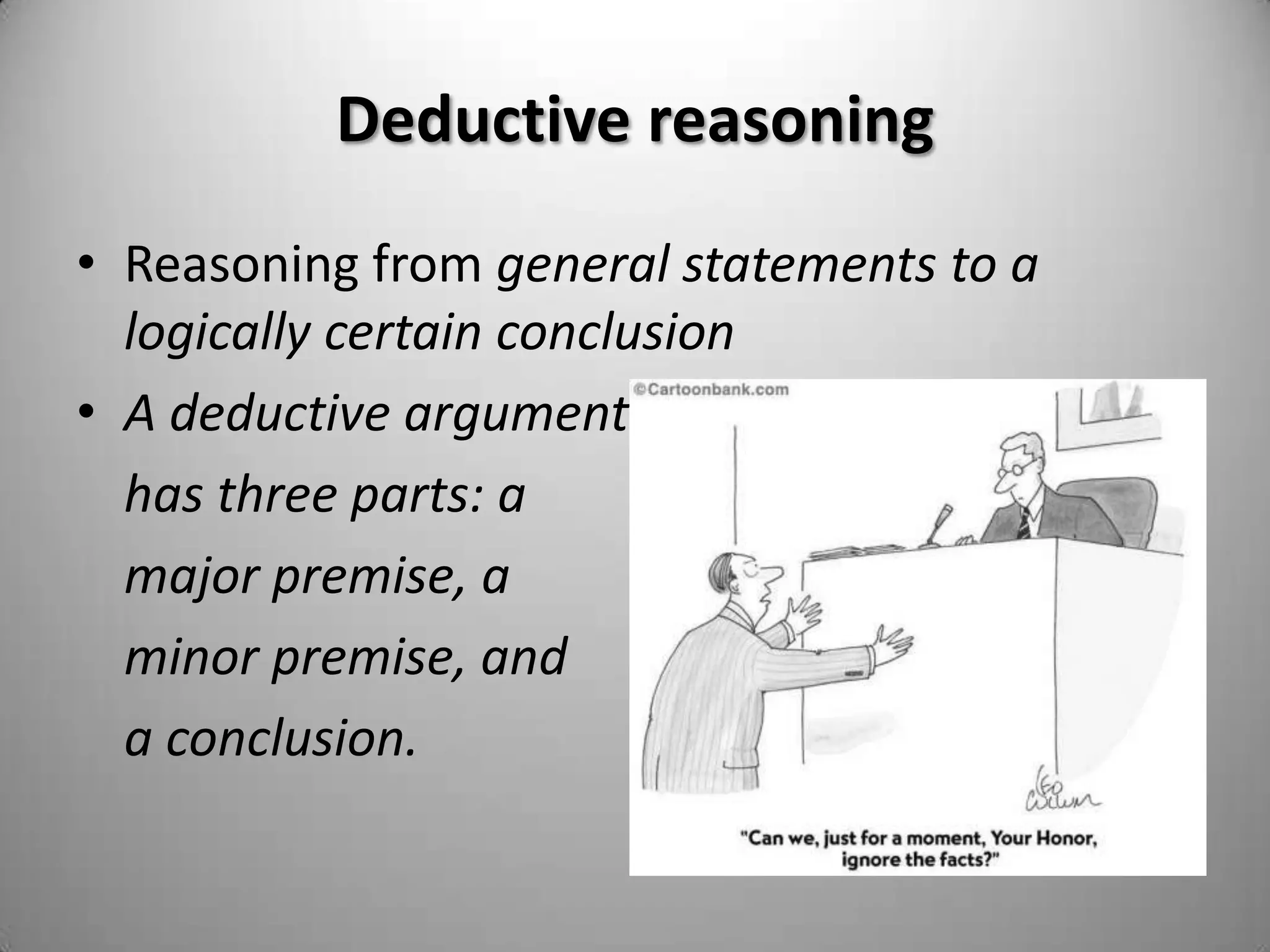
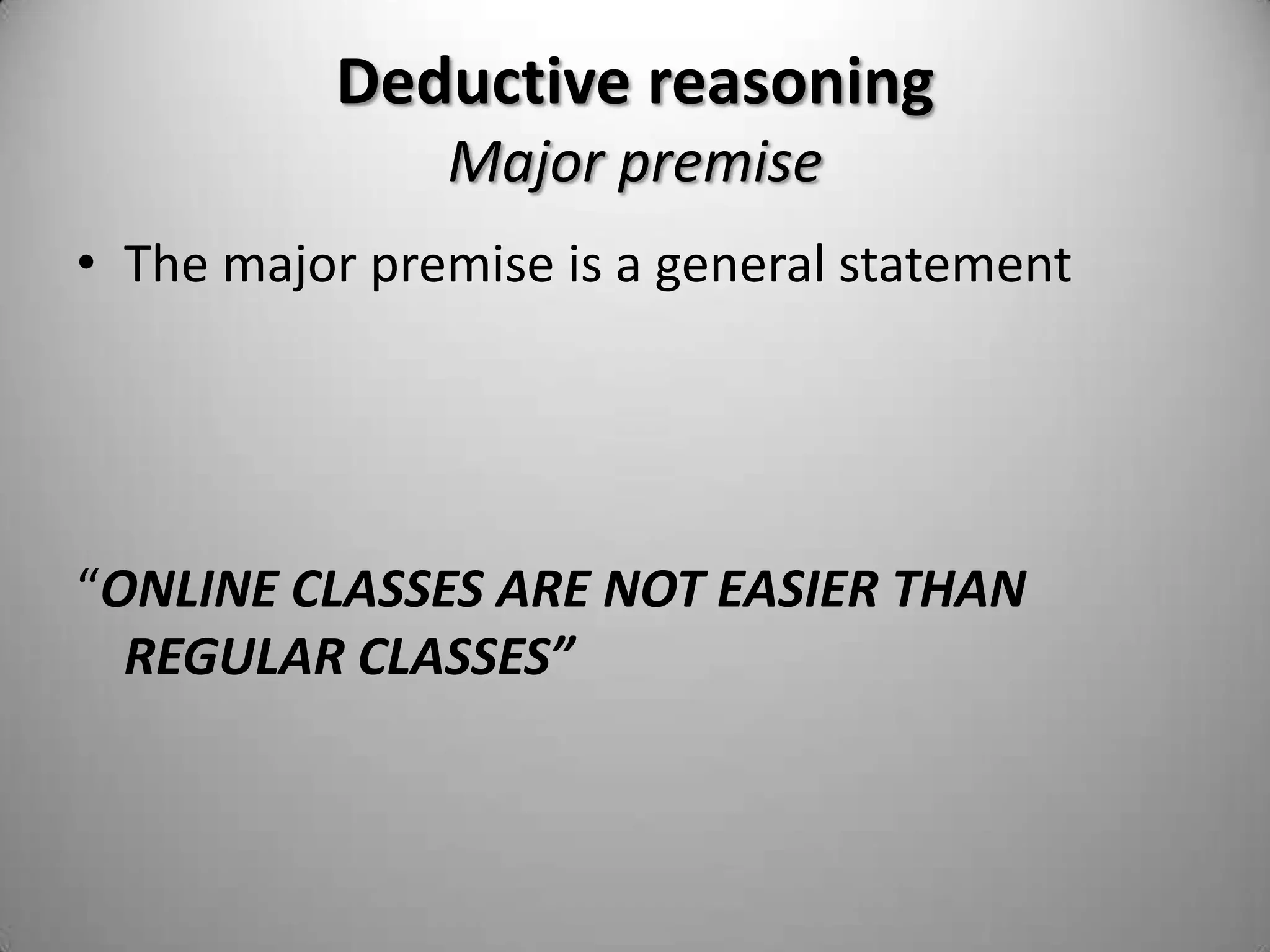
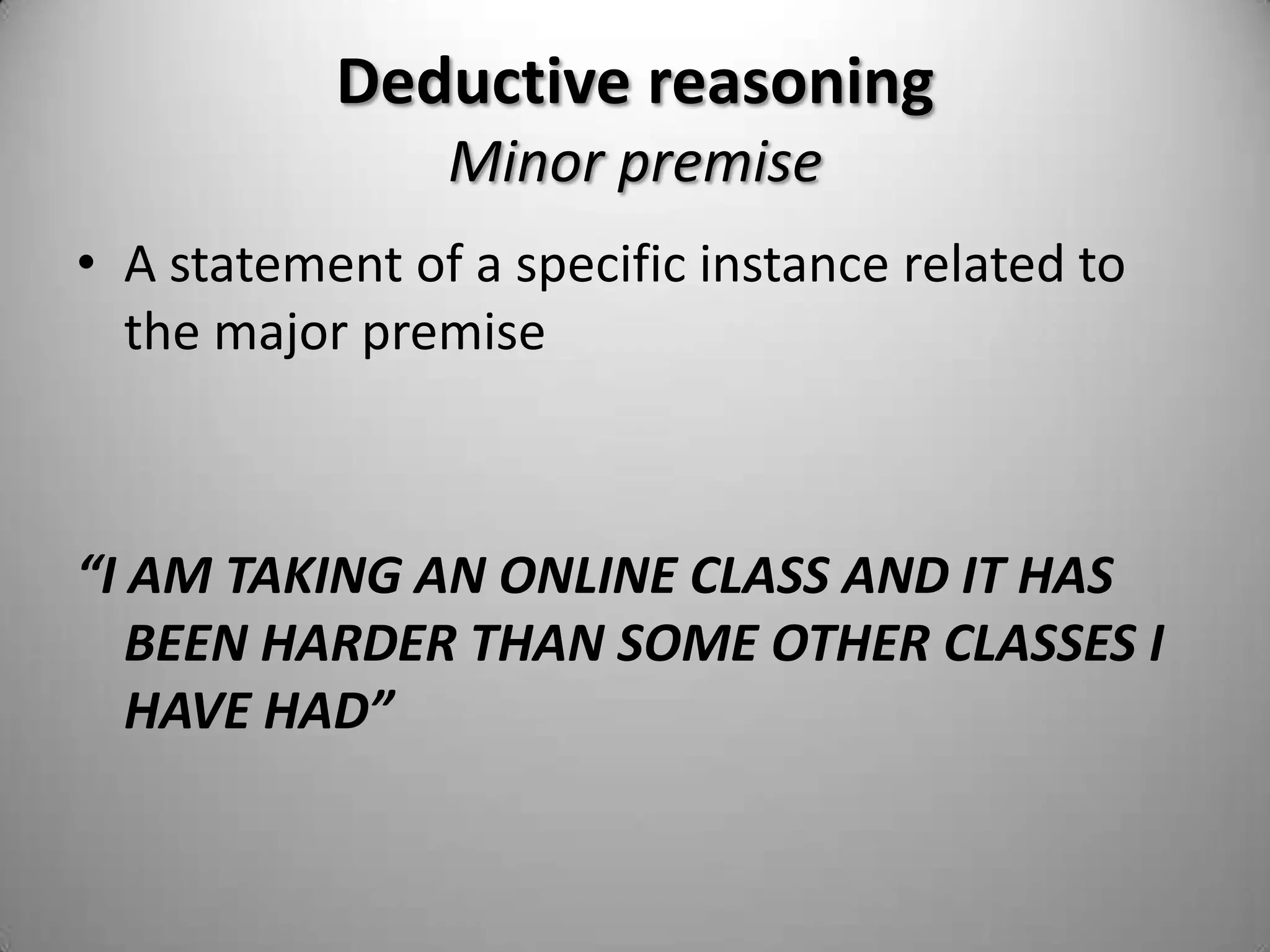
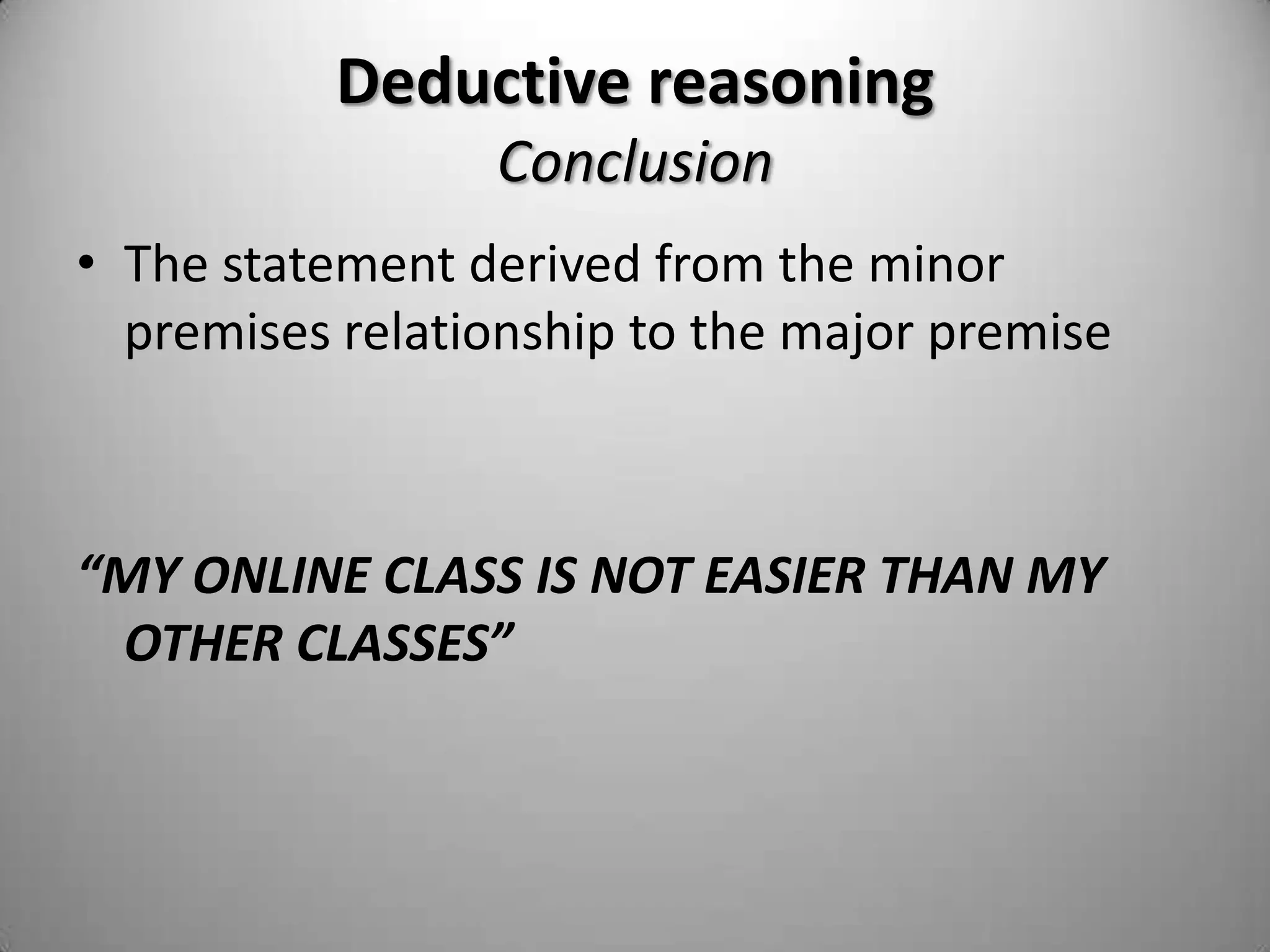
Reasoning is the process of creating conclusions from evidence. There are two main types of reasoning: inductive reasoning, which reasons from specifics to general conclusions; and deductive reasoning, which reasons from general statements to logically certain conclusions. Inductive reasoning includes example reasoning, causal reasoning, sign reasoning, comparison reasoning, and reasoning from authority. Deductive reasoning has three parts - a major premise, a minor premise, and a conclusion.


![Buenos días[1] Lectura Comentada](https://cdn.slidesharecdn.com/ss_thumbnails/buenosdas1lecturacomentada-151217191048-thumbnail.jpg?width=640&height=640&fit=bounds)


![Heritage places in australia[1]](https://cdn.slidesharecdn.com/ss_thumbnails/heritageplacesinaustralia1-110629205708-phpapp01-thumbnail.jpg?width=640&height=640&fit=bounds)


