REAL STRATEGIES FOR VIRTUAL
        ORGANIZING
    N. Venkatraman – John C. Henderson


                 Presented By,
                 B. Sundaravadivelu
                 ESIGELEC, Rouen, France
                 Email: buvanesh.s@gmail.com
POINTS TO DISCUSS

   What is Virtual Organizing

   Dimensions

   Customer Interaction

   Asset Configuration

   Knowledge Leverage
VIRTUAL ORGANIZING
   Virtual Organizing is a strategic approach that is
    singularly focused on creating, nurturing and
    deploying key knowledge assets in a complex
    network of relationships.

   Developed with IT at the center
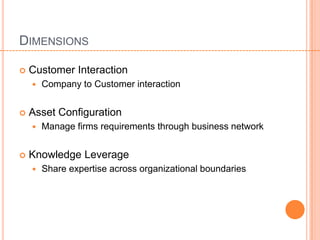
DIMENSIONS

   Customer Interaction
       Company to Customer interaction


   Asset Configuration
       Manage firms requirements through business network


   Knowledge Leverage
       Share expertise across organizational boundaries
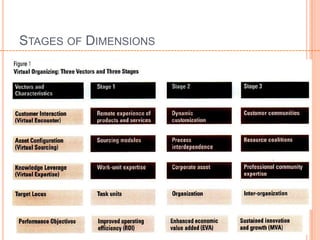
STAGES OF DIMENSIONS
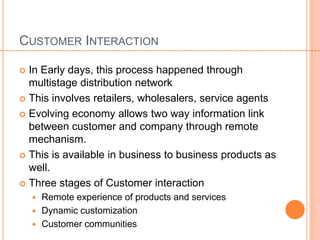
CUSTOMER INTERACTION

 In Early days, this process happened through
  multistage distribution network
 This involves retailers, wholesalers, service agents

 Evolving economy allows two way information link
  between customer and company through remote
  mechanism.
 This is available in business to business products as
  well.
 Three stages of Customer interaction
     Remote experience of products and services
     Dynamic customization
     Customer communities
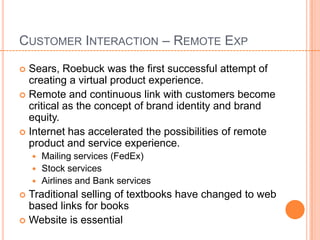
CUSTOMER INTERACTION – REMOTE EXP

 Sears, Roebuck was the first successful attempt of
  creating a virtual product experience.
 Remote and continuous link with customers become
  critical as the concept of brand identity and brand
  equity.
 Internet has accelerated the possibilities of remote
  product and service experience.
     Mailing services (FedEx)
     Stock services
     Airlines and Bank services
 Traditional selling of textbooks have changed to web
  based links for books
 Website is essential
CUSTOMER INTERACTION – DYNAMIC
CUSTOMIZATION

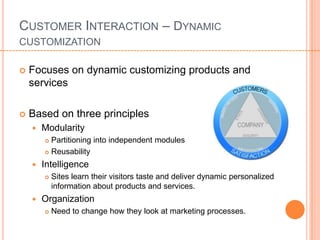
   Focuses on dynamic customizing products and
    services

   Based on three principles
       Modularity
         Partitioning into independent modules
         Reusability

       Intelligence
           Sites learn their visitors taste and deliver dynamic personalized
            information about products and services.
       Organization
           Need to change how they look at marketing processes.
CUSTOMER INTERACTION – CUSTOMER
COMMUNITIES

 Communities are information gathering and information
  disseminating platform.
 Five defining characteristics of virtual communities
       Focus
       Capacity to reach larger audience
       Appreciation of member generated content
       Competing offerings
       Commercial orientations
   Companies which have implemented
       Citibank – For customers to know their product
       Harley-Davidson – Share Harley owners pictures and stories
ASSET CONFIGURATION

 Acquiring critical assets and resources from external
  markets
 Effective contracting for complementary capabilities
  through a network of suppliers and subcontractors.
 Allows companies to focus on their core competencies
  which will also obtain complementary assets through
  inter-firm relationship.
 Three stages of Asset configuration
     Sourcing modules
     Process Interdependence
     Resource coalitions
ASSET CONFIGURATION – SOURCING MODULES

   Deals with the benefits of efficiently sourcing standard
    modules or components.

   Sourcing logic plays a vital role for any company.

   Selection of assets is complicated because the criticality
    of assets changes over time

   Personal computer market which was conceptualized by
    IBM in 1980.
ASSET CONFIGURATION – PROCESS
INTERDEPENDENCE

   Focuses on interdependence of business processes
    across organizational boundaries.

   Business process outsourcing with full control.

   This involves delegation of one or more business
    processes to an external service provider

   Examples:
     DirecTV: Integrated satellite television, phone
     FedEx: Virtual order taking and processing of orders.
KNOWLEDGE LEVERAGE

   The basic economic resource is not land, physical
    resources or capital but knowledge and intellectual
    assets.

   Knowledge assets can support rapid execution of
    strategies, increase learning rate of employees and their
    response rate to customers.

   Three states of Knowledge Leverage
     Work-Unit Expertise
     Recognizing knowledge as Corporate Assets
     Professional community expertise
KNOWLEDGE LEVERAGE – WORK UNIT EXPERTISE

   Tasks can be decomposed and can be done at different
    locations and time periods.

   IT functionality like group ware, video conferencing and
    intranets are necessary to make processes effective in an
    organization.

   Knowledge sharing sessions are held between teams to
    share expertise

   Companies distribute work to teams in different time
    zones.
CORPORATE ASSETS & PROFESSIONAL COMMUNITY
EXPERTISE

 Knowledge is a corporate wide asset that should be
  systematically managed.
 Emerging virtual communities serve as a primary
  mechanism for collecting and legitimizing knowledge and
  expertise
 Multiple   experts    from    different   locations  can
  simultaneously interpret the meaning of unforeseen event
 Companies face the challenge of how to compensate and
  motivate the expertise from multiple sources.
CONCLUSION

   Challenges for transition
       Designing new business model
       Interacting with customer for knowledge leverage
       Navigating across multiple communities
       Deploying IT platform


   Virtual organizing as a concept focuses on the importance
    of knowledge and intellect in creating value.
Real strategies for virtual organizing.ppt

Real strategies for virtual organizing.ppt

  • 1.
    REAL STRATEGIES FORVIRTUAL ORGANIZING N. Venkatraman – John C. Henderson Presented By, B. Sundaravadivelu ESIGELEC, Rouen, France Email: buvanesh.s@gmail.com
  • 2.
    POINTS TO DISCUSS  What is Virtual Organizing  Dimensions  Customer Interaction  Asset Configuration  Knowledge Leverage
  • 3.
    VIRTUAL ORGANIZING  Virtual Organizing is a strategic approach that is singularly focused on creating, nurturing and deploying key knowledge assets in a complex network of relationships.  Developed with IT at the center
  • 4.
    DIMENSIONS  Customer Interaction  Company to Customer interaction  Asset Configuration  Manage firms requirements through business network  Knowledge Leverage  Share expertise across organizational boundaries
  • 5.
  • 6.
    CUSTOMER INTERACTION  InEarly days, this process happened through multistage distribution network  This involves retailers, wholesalers, service agents  Evolving economy allows two way information link between customer and company through remote mechanism.  This is available in business to business products as well.  Three stages of Customer interaction  Remote experience of products and services  Dynamic customization  Customer communities
  • 7.
    CUSTOMER INTERACTION –REMOTE EXP  Sears, Roebuck was the first successful attempt of creating a virtual product experience.  Remote and continuous link with customers become critical as the concept of brand identity and brand equity.  Internet has accelerated the possibilities of remote product and service experience.  Mailing services (FedEx)  Stock services  Airlines and Bank services  Traditional selling of textbooks have changed to web based links for books  Website is essential
  • 8.
    CUSTOMER INTERACTION –DYNAMIC CUSTOMIZATION  Focuses on dynamic customizing products and services  Based on three principles  Modularity  Partitioning into independent modules  Reusability  Intelligence  Sites learn their visitors taste and deliver dynamic personalized information about products and services.  Organization  Need to change how they look at marketing processes.
  • 9.
    CUSTOMER INTERACTION –CUSTOMER COMMUNITIES  Communities are information gathering and information disseminating platform.  Five defining characteristics of virtual communities  Focus  Capacity to reach larger audience  Appreciation of member generated content  Competing offerings  Commercial orientations  Companies which have implemented  Citibank – For customers to know their product  Harley-Davidson – Share Harley owners pictures and stories
  • 10.
    ASSET CONFIGURATION  Acquiringcritical assets and resources from external markets  Effective contracting for complementary capabilities through a network of suppliers and subcontractors.  Allows companies to focus on their core competencies which will also obtain complementary assets through inter-firm relationship.  Three stages of Asset configuration  Sourcing modules  Process Interdependence  Resource coalitions
  • 11.
    ASSET CONFIGURATION –SOURCING MODULES  Deals with the benefits of efficiently sourcing standard modules or components.  Sourcing logic plays a vital role for any company.  Selection of assets is complicated because the criticality of assets changes over time  Personal computer market which was conceptualized by IBM in 1980.
  • 12.
    ASSET CONFIGURATION –PROCESS INTERDEPENDENCE  Focuses on interdependence of business processes across organizational boundaries.  Business process outsourcing with full control.  This involves delegation of one or more business processes to an external service provider  Examples:  DirecTV: Integrated satellite television, phone  FedEx: Virtual order taking and processing of orders.
  • 13.
    KNOWLEDGE LEVERAGE  The basic economic resource is not land, physical resources or capital but knowledge and intellectual assets.  Knowledge assets can support rapid execution of strategies, increase learning rate of employees and their response rate to customers.  Three states of Knowledge Leverage  Work-Unit Expertise  Recognizing knowledge as Corporate Assets  Professional community expertise
  • 14.
    KNOWLEDGE LEVERAGE –WORK UNIT EXPERTISE  Tasks can be decomposed and can be done at different locations and time periods.  IT functionality like group ware, video conferencing and intranets are necessary to make processes effective in an organization.  Knowledge sharing sessions are held between teams to share expertise  Companies distribute work to teams in different time zones.
  • 15.
    CORPORATE ASSETS &PROFESSIONAL COMMUNITY EXPERTISE  Knowledge is a corporate wide asset that should be systematically managed.  Emerging virtual communities serve as a primary mechanism for collecting and legitimizing knowledge and expertise  Multiple experts from different locations can simultaneously interpret the meaning of unforeseen event  Companies face the challenge of how to compensate and motivate the expertise from multiple sources.
  • 16.
    CONCLUSION  Challenges for transition  Designing new business model  Interacting with customer for knowledge leverage  Navigating across multiple communities  Deploying IT platform  Virtual organizing as a concept focuses on the importance of knowledge and intellect in creating value.

Editor's Notes

  • #7 Testing of software's by the users.
  • #8 Customers experienced the product through the pages.Egg head has closed its stores and opened up online storefront with Internet products, Business products and games.