Downloaded 13 times

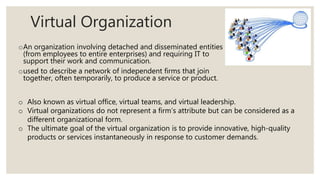


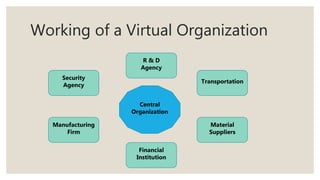
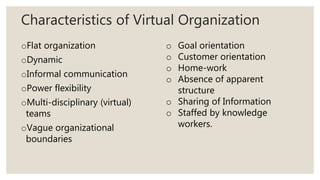
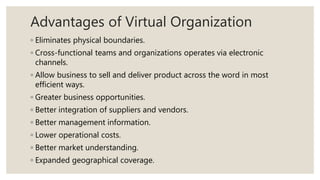
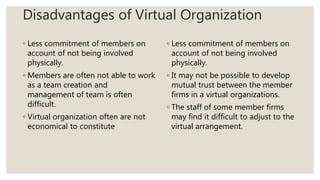
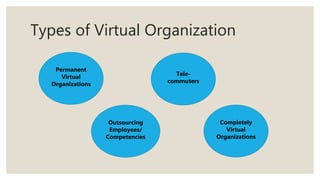
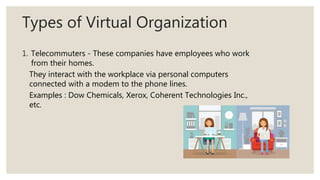
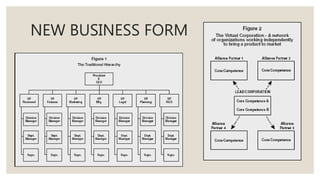
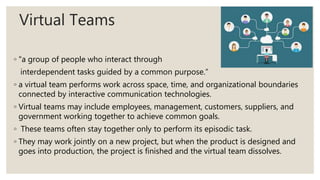

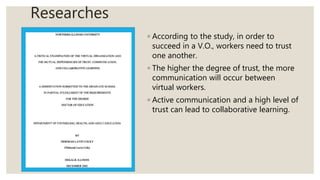
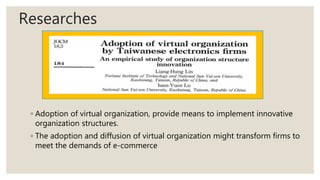



A virtual organization consists of independent entities that join together using information technology to collaborate remotely. They have permeable boundaries and flexible structures. Successful virtual organizations require high levels of trust, communication, and leadership skills to manage relationships between dispersed groups. Research has found trust and communication enable collaborative learning and innovation in virtual teams. Adopting virtual structures allows firms to be more adaptive and implement new business models like e-commerce.


