READINGS IN
READINGS IN
PHILIPPINE
PHILIPPINE
HISTORY
HISTORY
CHAPTER 1 BACKGROUND OF THE STUDY
History, Its
Meaning,
Importance and
Relevance
The Difference
Between Internal
and External
Critism
Repositories of
Primary Sources
CONTENTS
CONTENTS
It’s Meaning, Importance and Relevance
HISTORY:
LESSON 1
History?
Meaning of History
The word History is derived from the
Greek term “historia” which means
“inquiry or research”.
Meaning of History
The word History is derived from the
Greek term “historia” which means
“inquiry or research”.
Meaning of History
the term history refers to accounts or
inquiries of events that happened in
the past and are narrated in a
chronological order.
Meaning of History
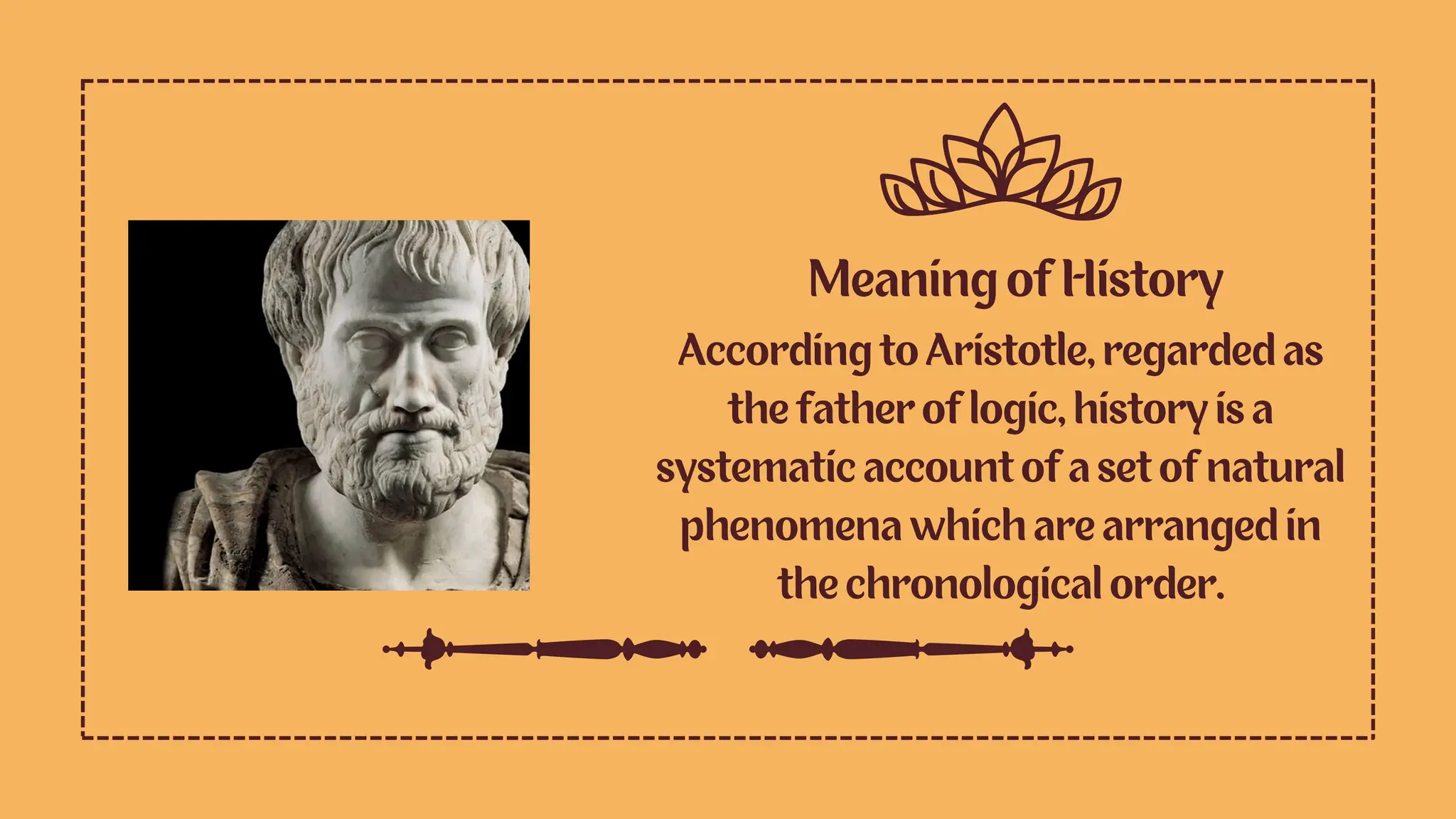
According to Aristotle, regarded as
the father of logic, history is a
systematic account of a set of natural
phenomena which are arranged in
the chronological order.
Meaning of History
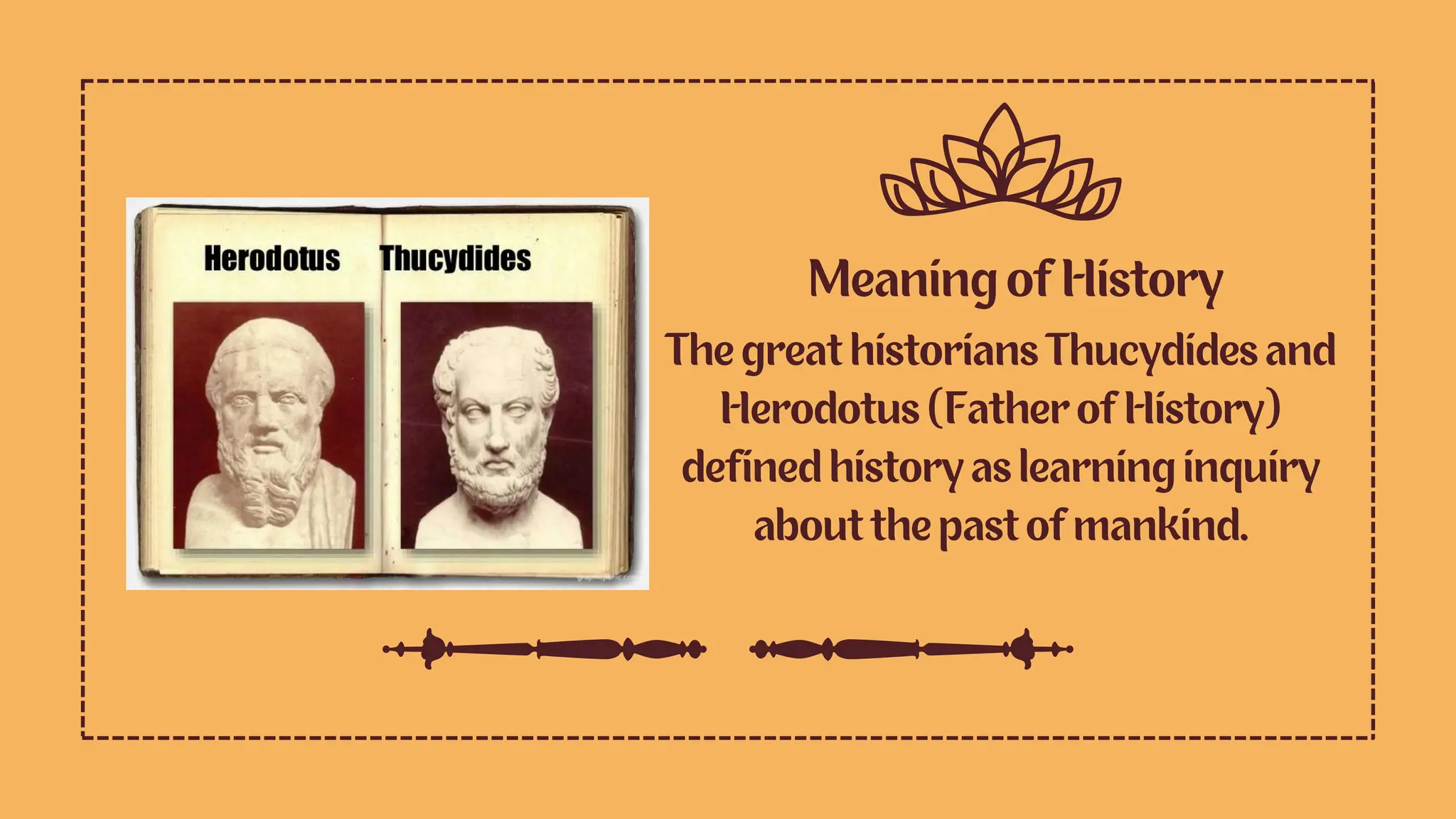
The great historians Thucydides and
Herodotus (Father of History)
defined history as learning inquiry
about the past of mankind.
Meaning of History
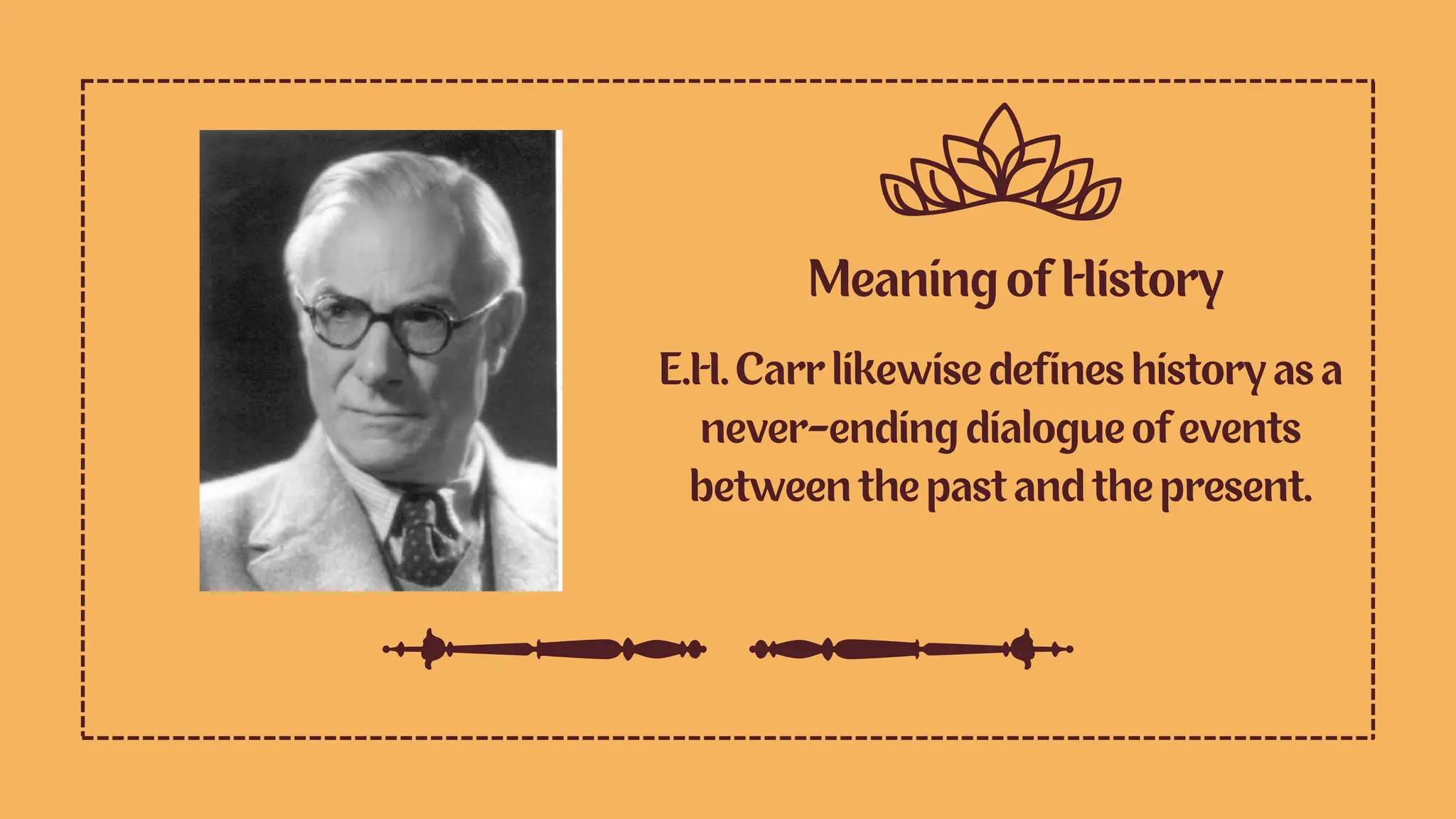
E.H. Carr likewise defines history as a
never-ending dialogue of events
between the past and the present.
Meaning of History
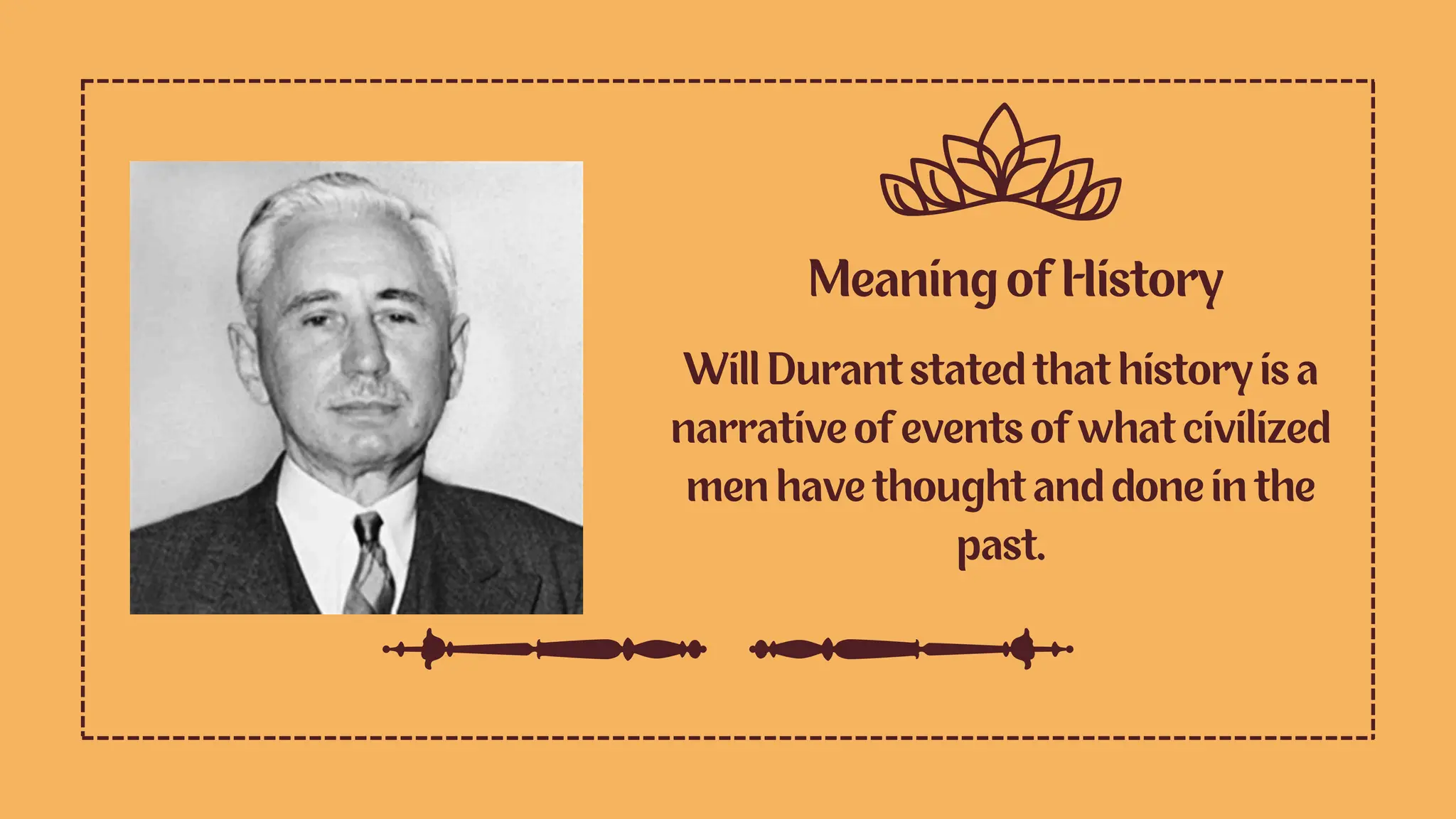
Will Durant stated that history is a
narrative of events of what civilized
men have thought and done in the
past.
Meaning of History
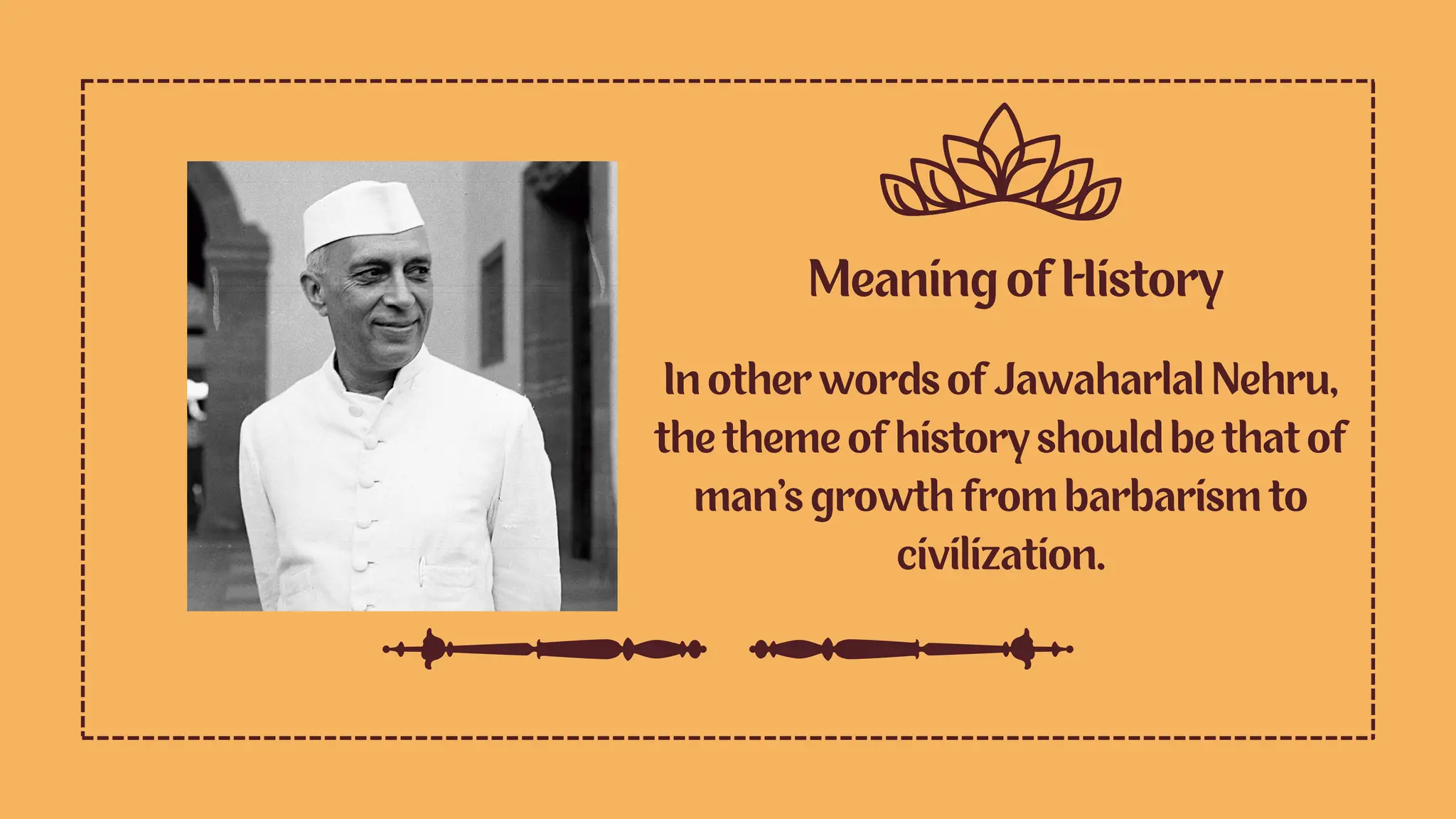
In other words of Jawaharlal Nehru,
the theme of history should be that of
man’s growth from barbarism to
civilization.
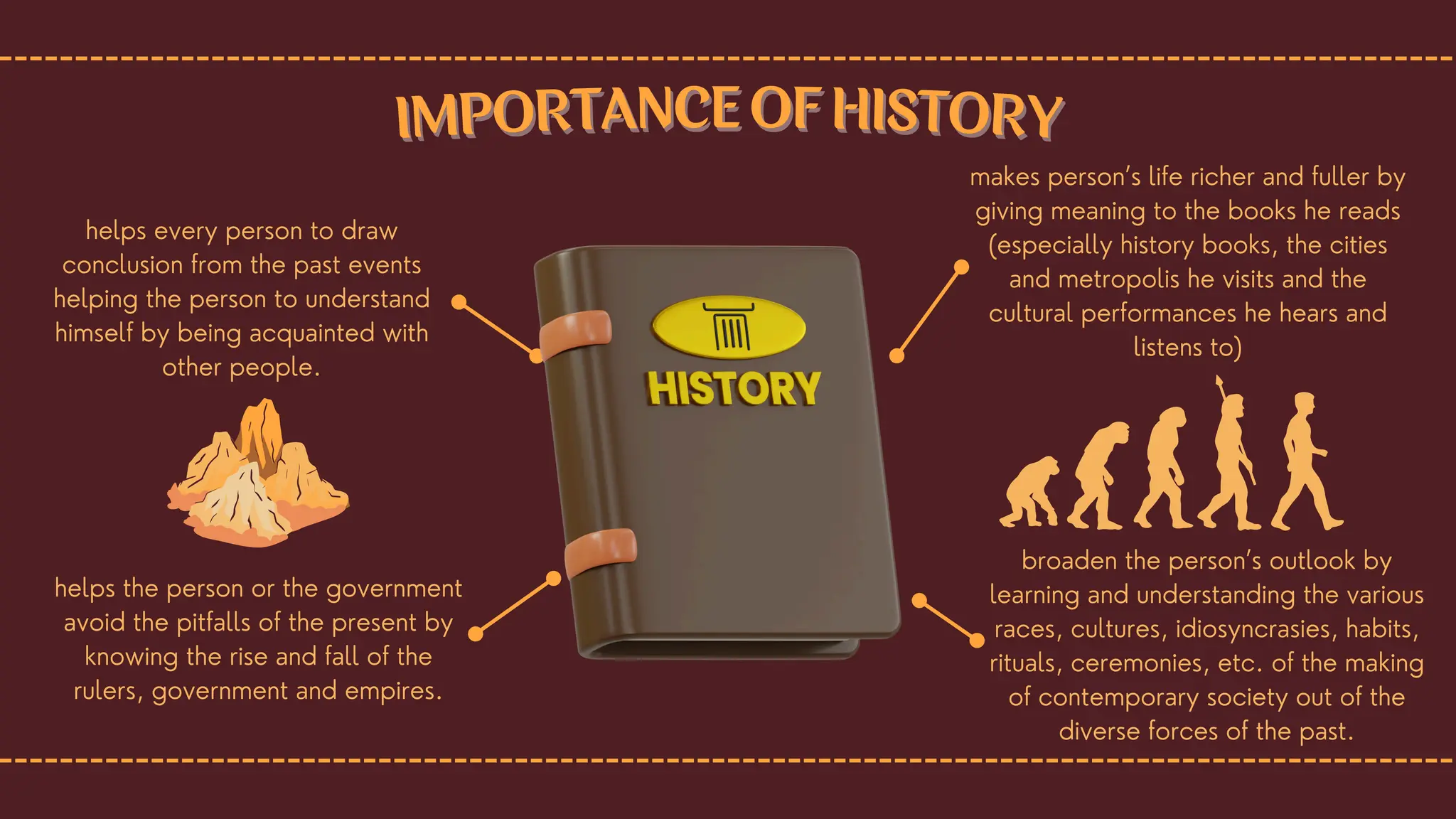
helps the person or the government
avoid the pitfalls of the present by
knowing the rise and fall of the
rulers, government and empires.
makes person’s life richer and fuller by
giving meaning to the books he reads
(especially history books, the cities
and metropolis he visits and the
cultural performances he hears and
listens to)
broaden the person’s outlook by
learning and understanding the various
races, cultures, idiosyncrasies, habits,
rituals, ceremonies, etc. of the making
of contemporary society out of the
diverse forces of the past.
IMPORTANCE OF HISTORY
helps every person to draw
conclusion from the past events
helping the person to understand
himself by being acquainted with
other people.
helps social and political scientists or
researchers engaged in research as for
example a political researcher doing a
research on federal form of
government has to draw his data from
the materials of history and finally,
history preserve the cultural values of a
nation because it guides society in a
confronting various crisis. As Allen
Nerins puts it, history is like a bridge that
connects the past with the present and
“pointing the road to the future”.
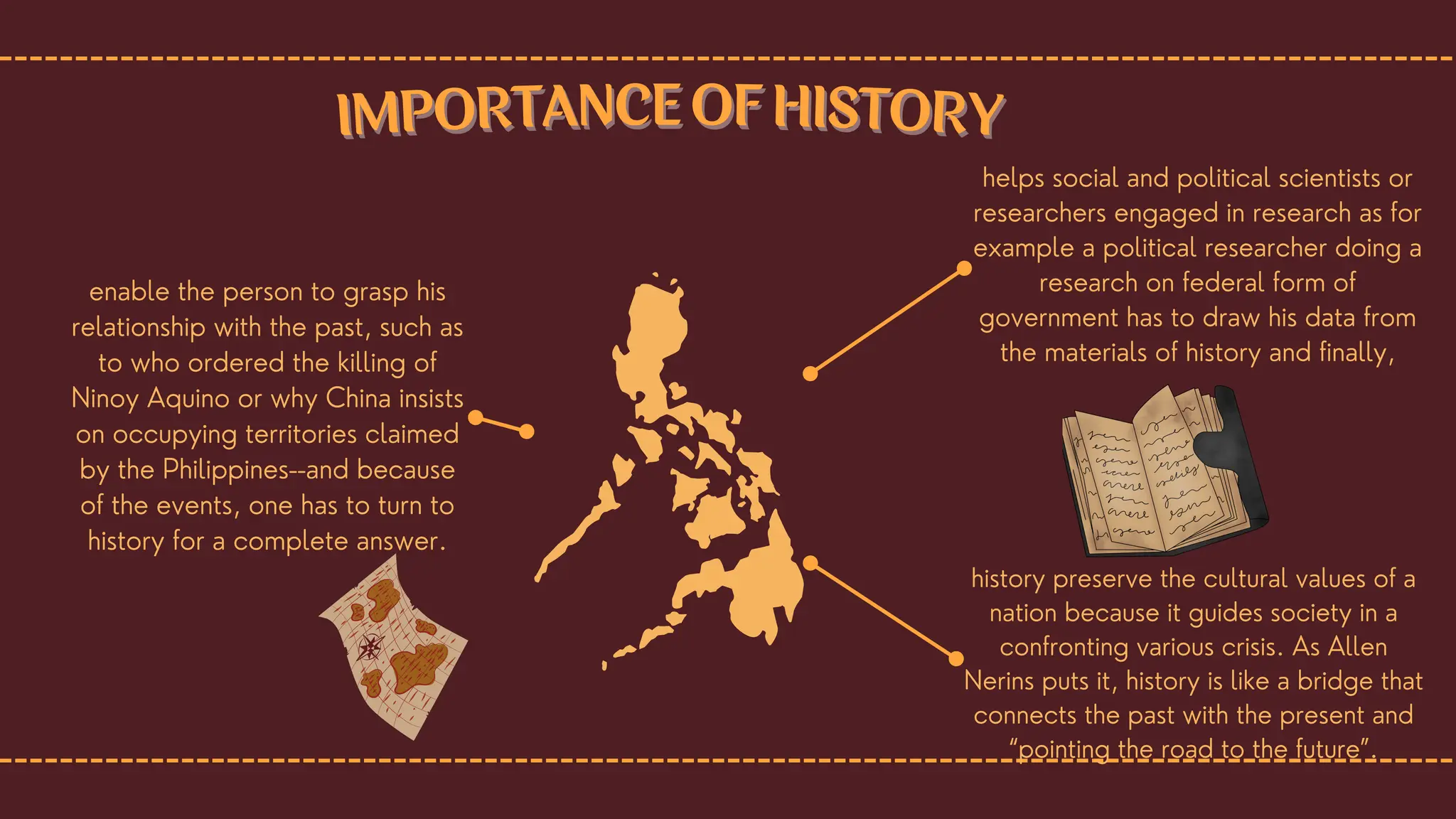
enable the person to grasp his
relationship with the past, such as
to who ordered the killing of
Ninoy Aquino or why China insists
on occupying territories claimed
by the Philippines--and because
of the events, one has to turn to
history for a complete answer.
IMPORTANCE OF HISTORY
Relevance of Studying
Philippine History
Philippine History
The answer to their unending questions is
that "history is inescapable," according to
Penelope J. Carfield. The saying "all
people are living histories - which is why
history matters" is true in this case. It is not
a "dead subject, as some believed.
History connects things through time and
the students are encouraged to take a
long view of such connections. An
example is the legacies of the past is
connected to the present so as to
determine what comes in the future.
Some students enrolled in Philippine History
subject often asked the question
What is the use or relevance of studying
Philippine History? It is just an additional
payment for an additional 3-unit core subject.
Why are we concerned about what
happened a long time ago?
Relevance of Studying Philippine History
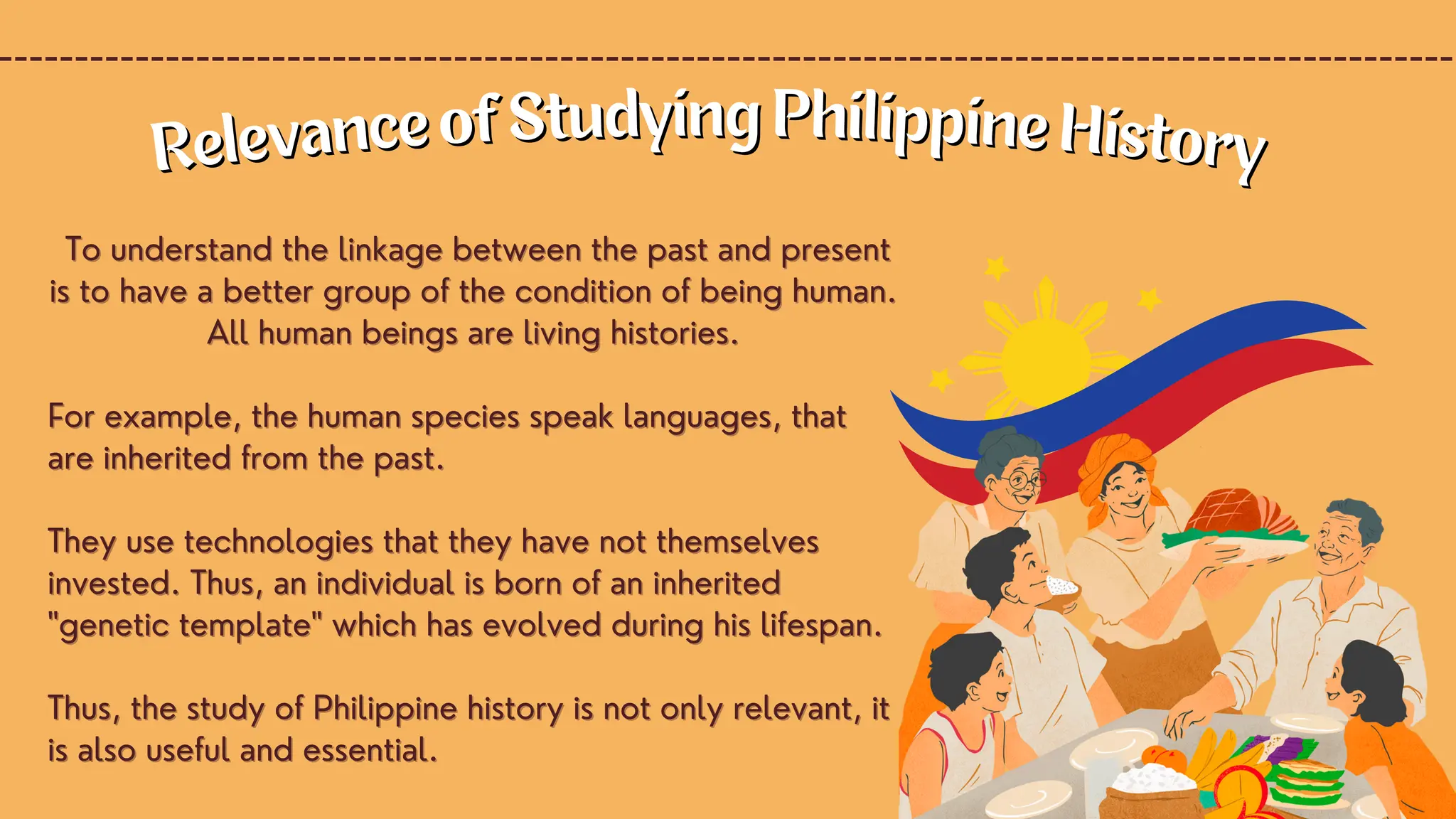
To understand the linkage between the past and present
is to have a better group of the condition of being human.
All human beings are living histories.
For example, the human species speak languages, that
are inherited from the past.
They use technologies that they have not themselves
invested. Thus, an individual is born of an inherited
"genetic template" which has evolved during his lifespan.
Thus, the study of Philippine history is not only relevant, it
is also useful and essential.
Relevance of Studying Philippine History
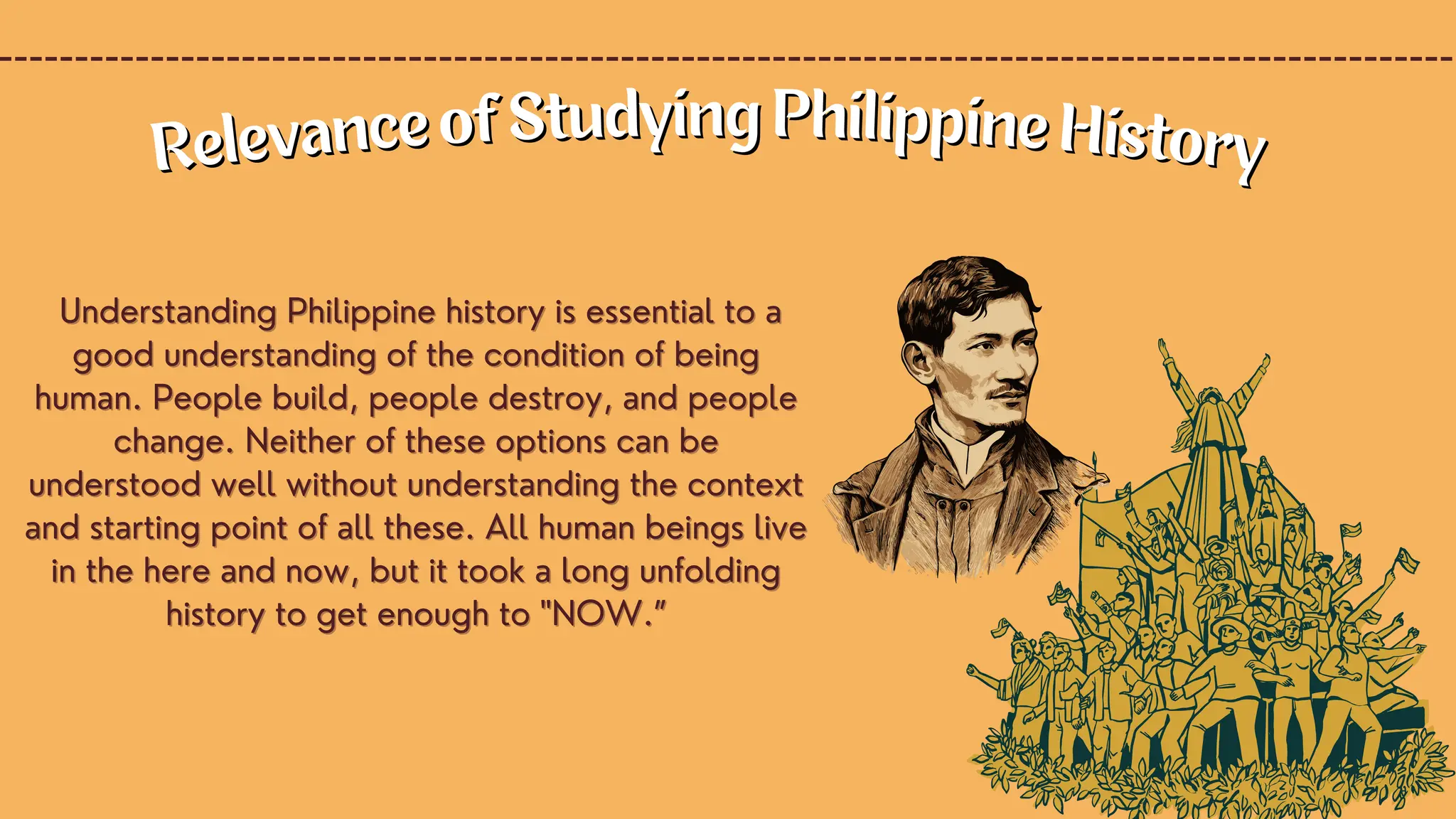
Understanding Philippine history is essential to a
good understanding of the condition of being
human. People build, people destroy, and people
change. Neither of these options can be
understood well without understanding the context
and starting point of all these. All human beings live
in the here and now, but it took a long unfolding
history to get enough to "NOW.”
Relevance of Studying Philippine History
Distinction Between
Distinction Between
Primary and Secondary Sources
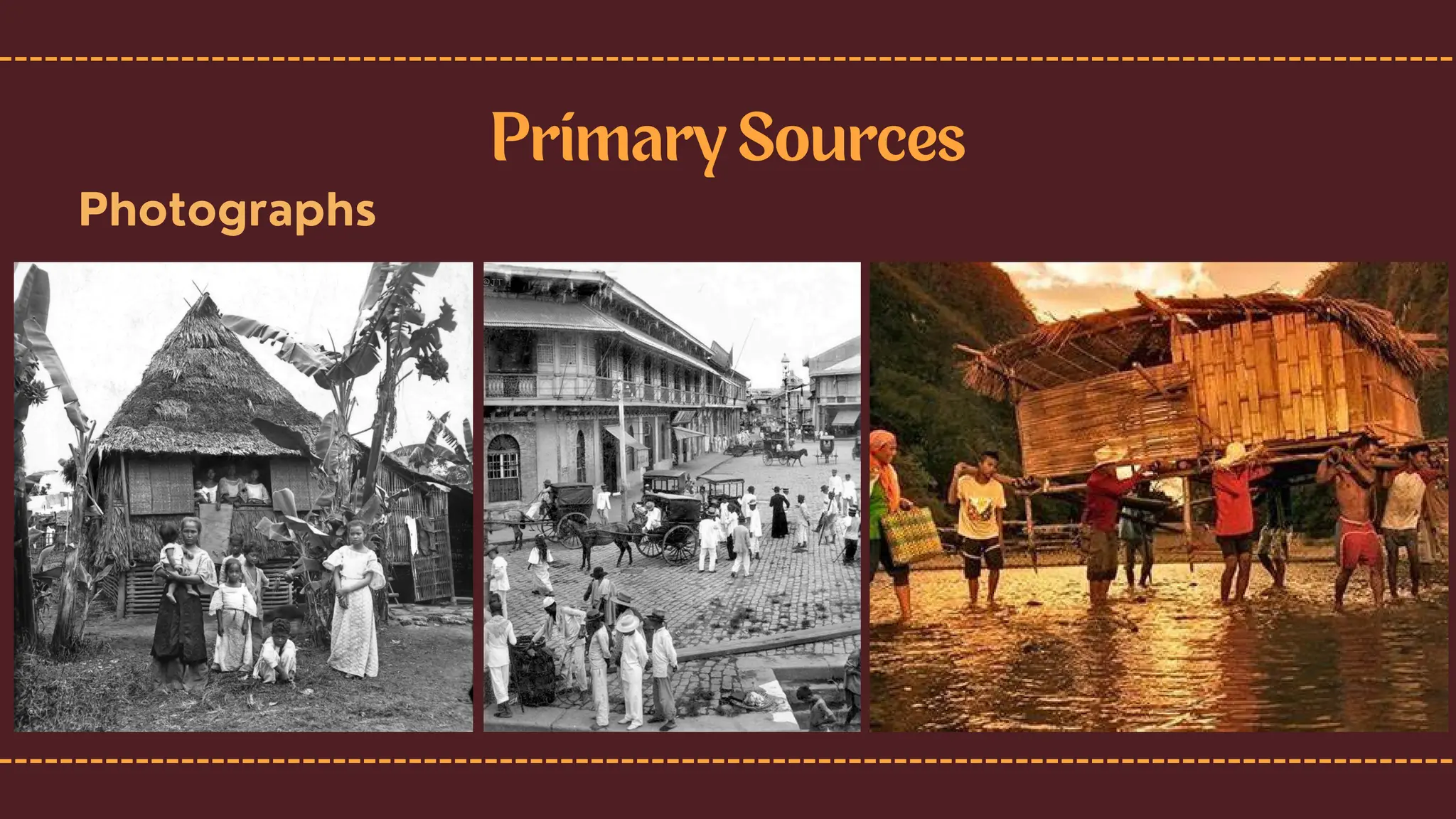
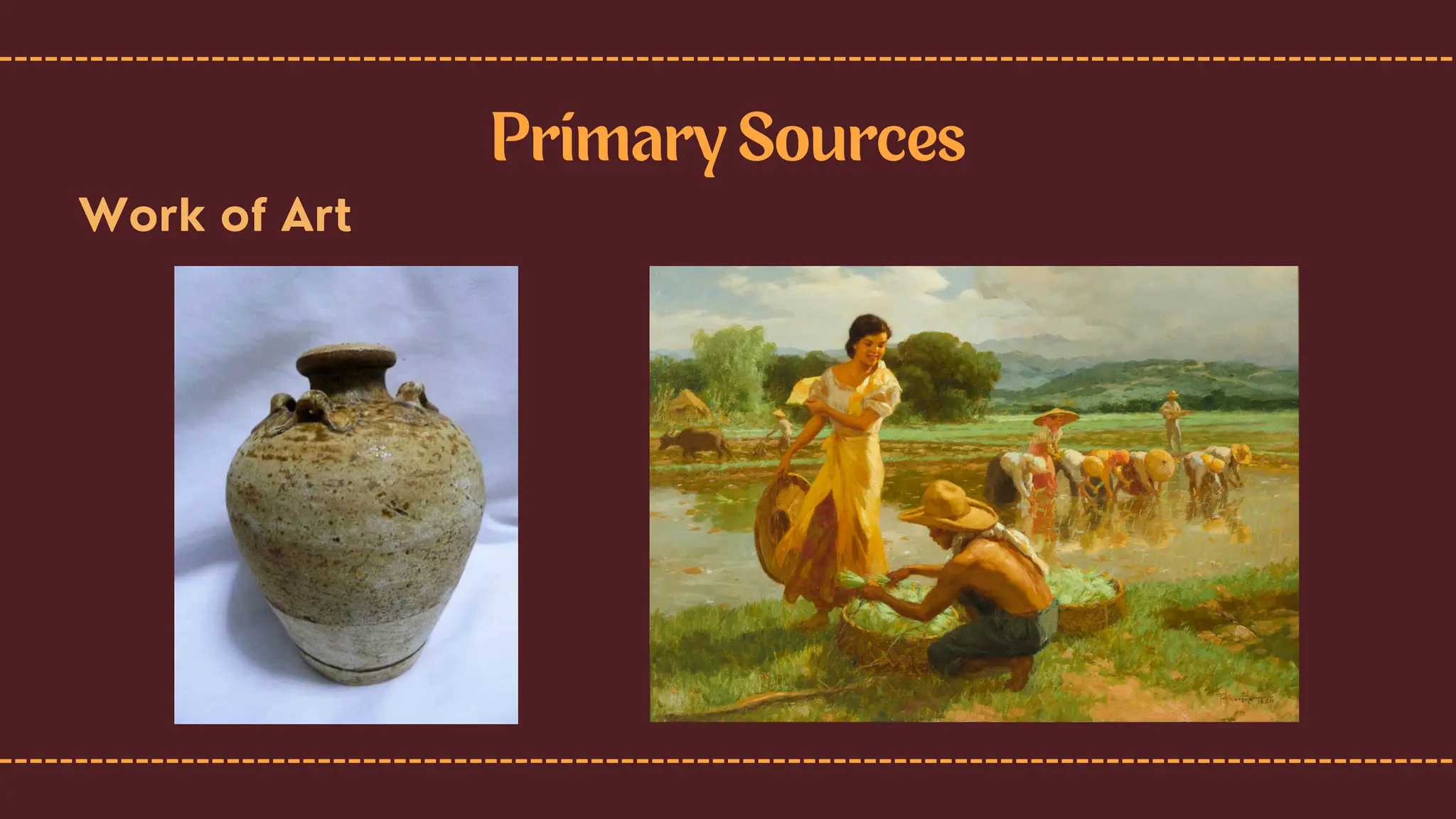
direct firsthand evidences
regarding an object, person,
or work of art.
Primary Sources
They include historical and legal
documents, eyewitness accounts,
results, experiments, statistical
data, pieces of creative writing,
audio, video recordings, speeches,
and art objects.
They also include interviews, surveys,
fieldwork, and Internet
communications via email, blogs,
listservs, and newsgroups.
Primary Sources
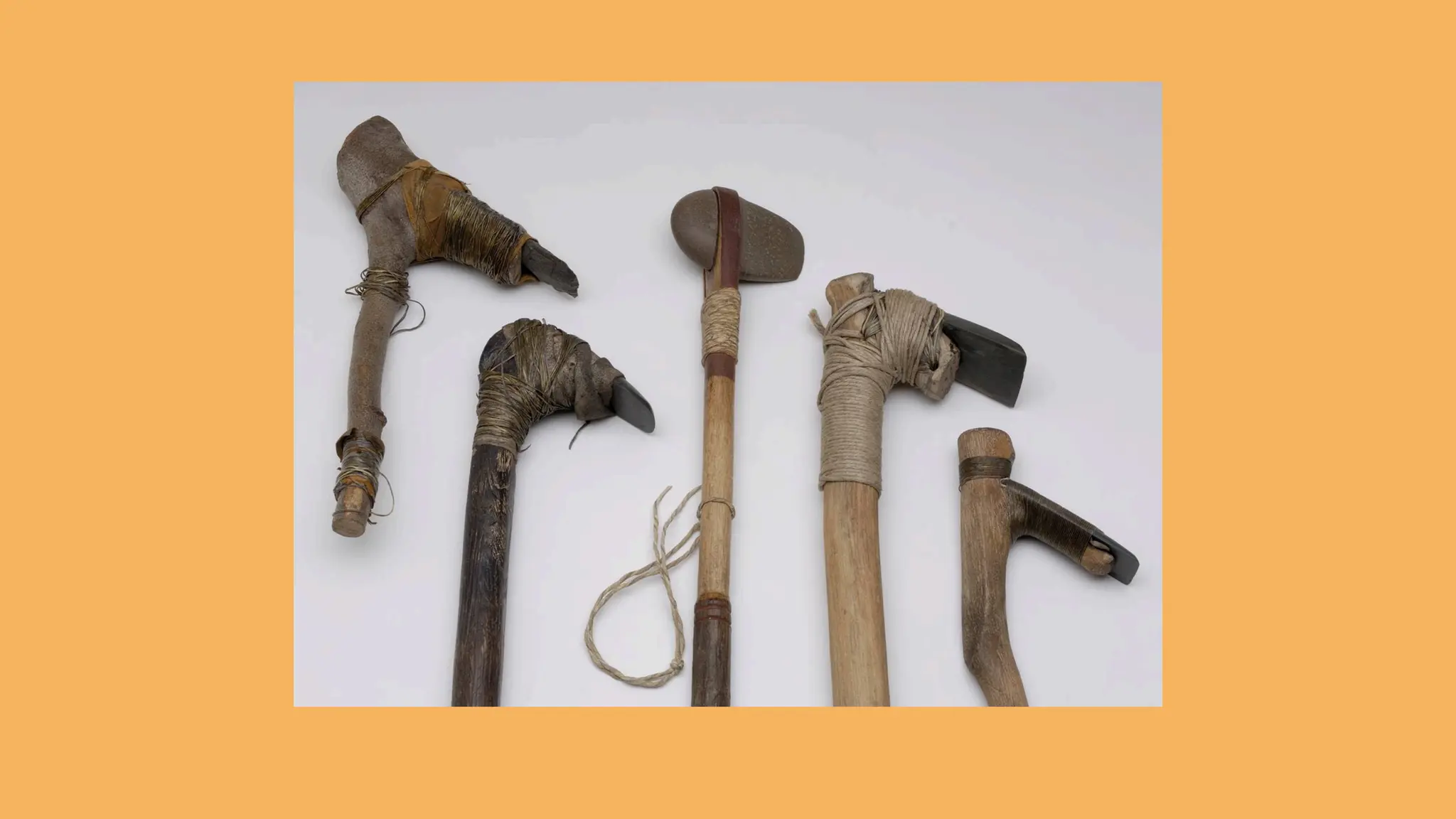
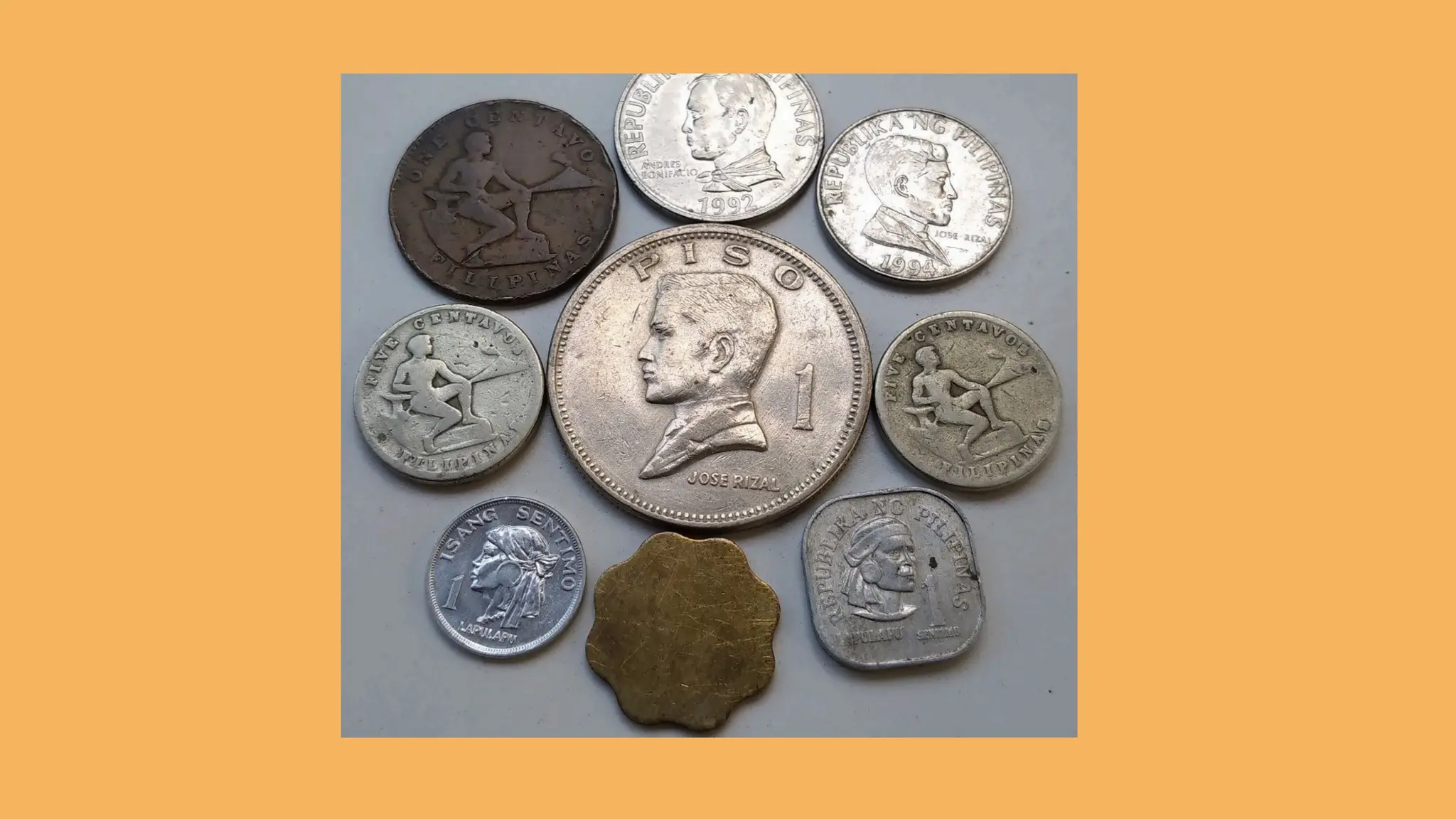
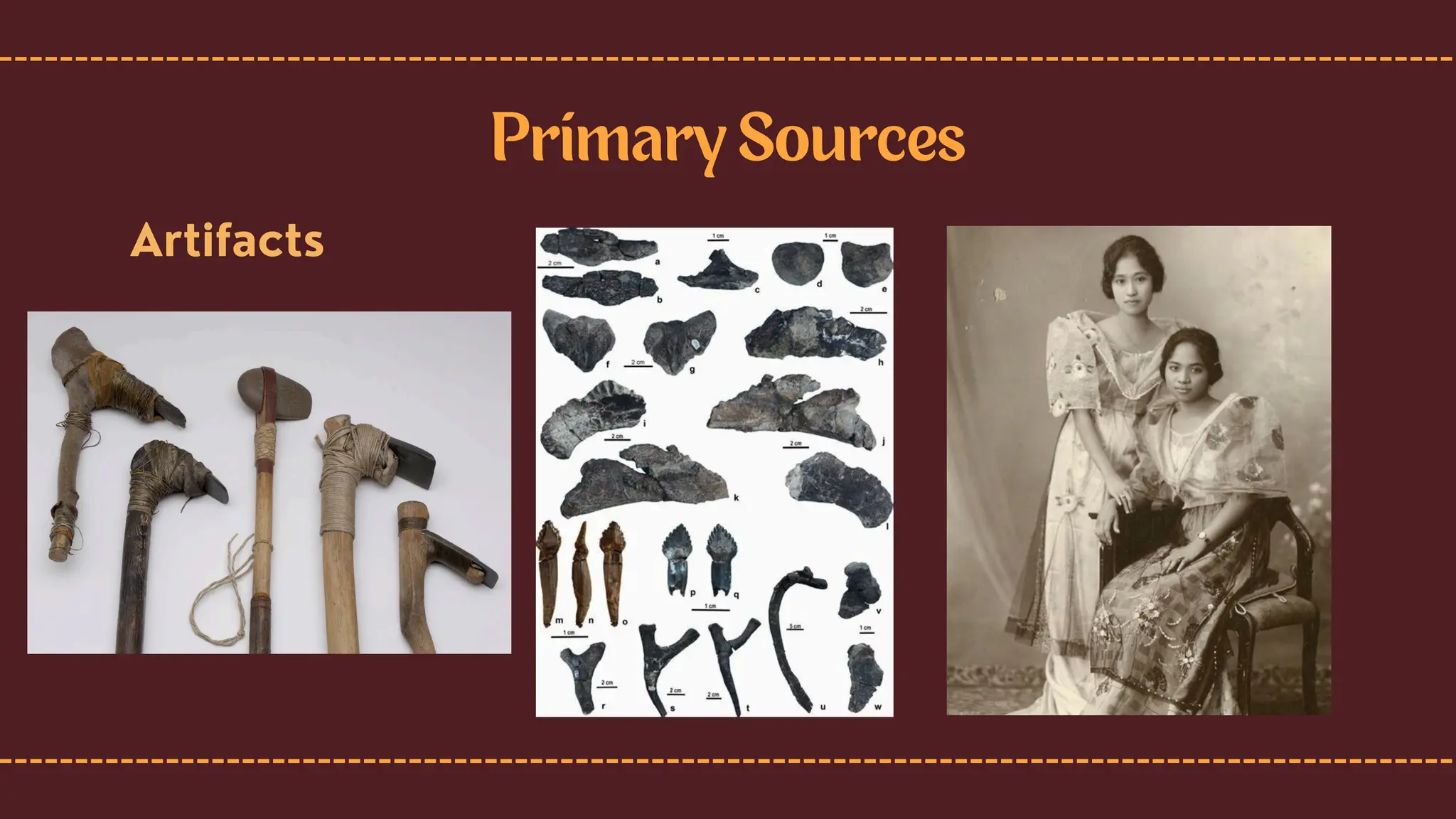
Artifacts
Primary Sources
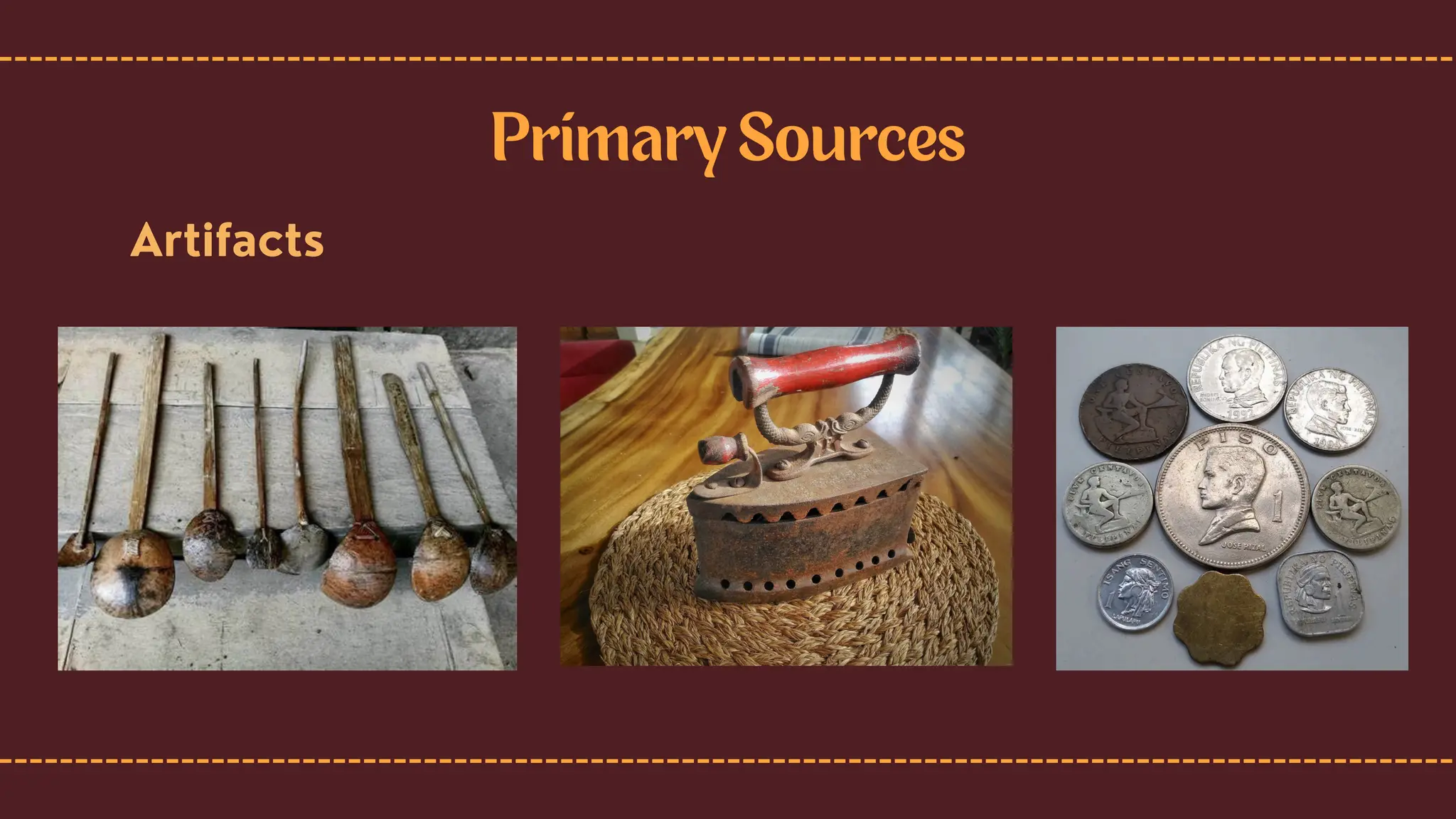
Artifacts
Primary Sources
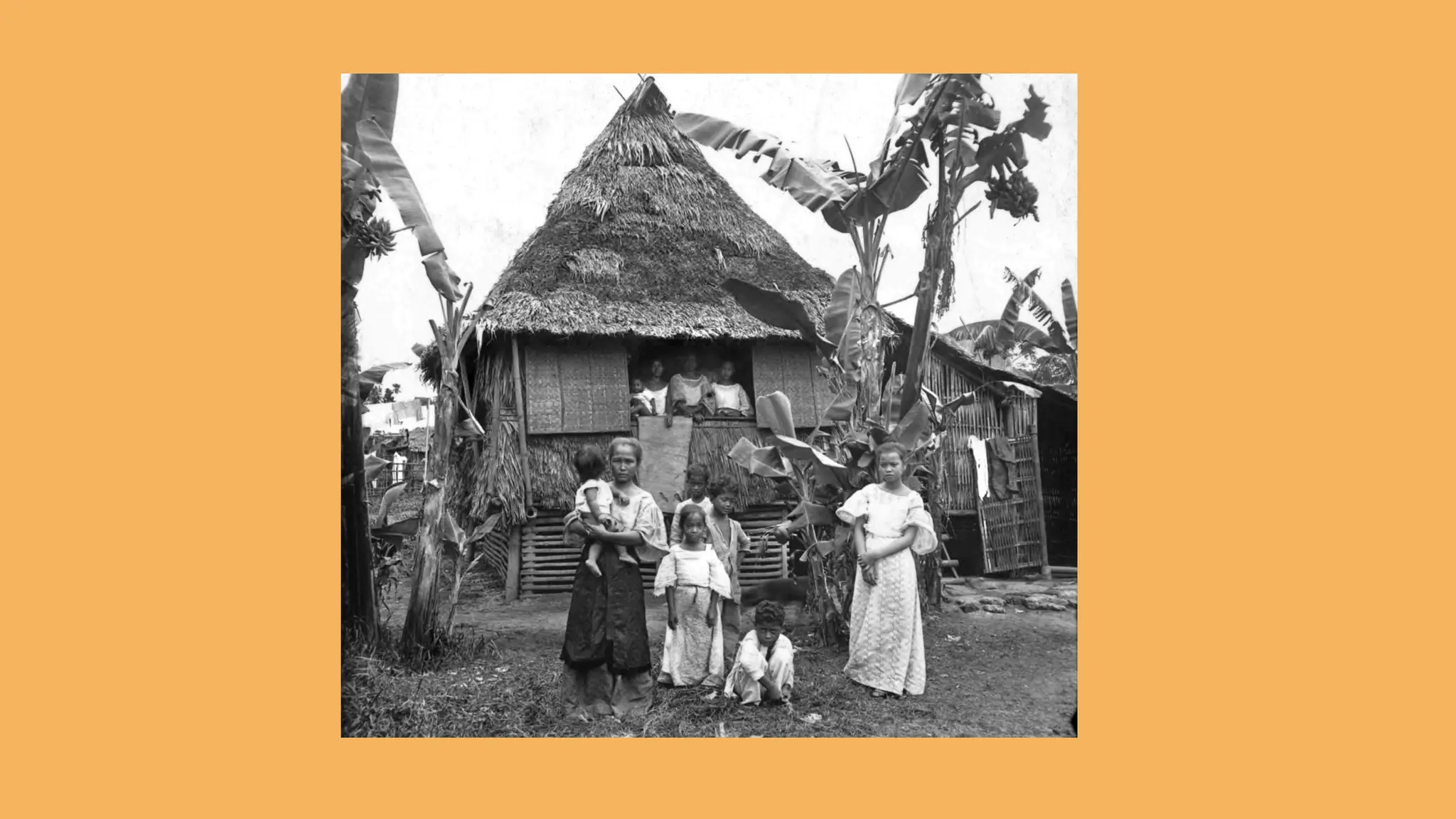
Photographs
Primary Sources
Work of Art
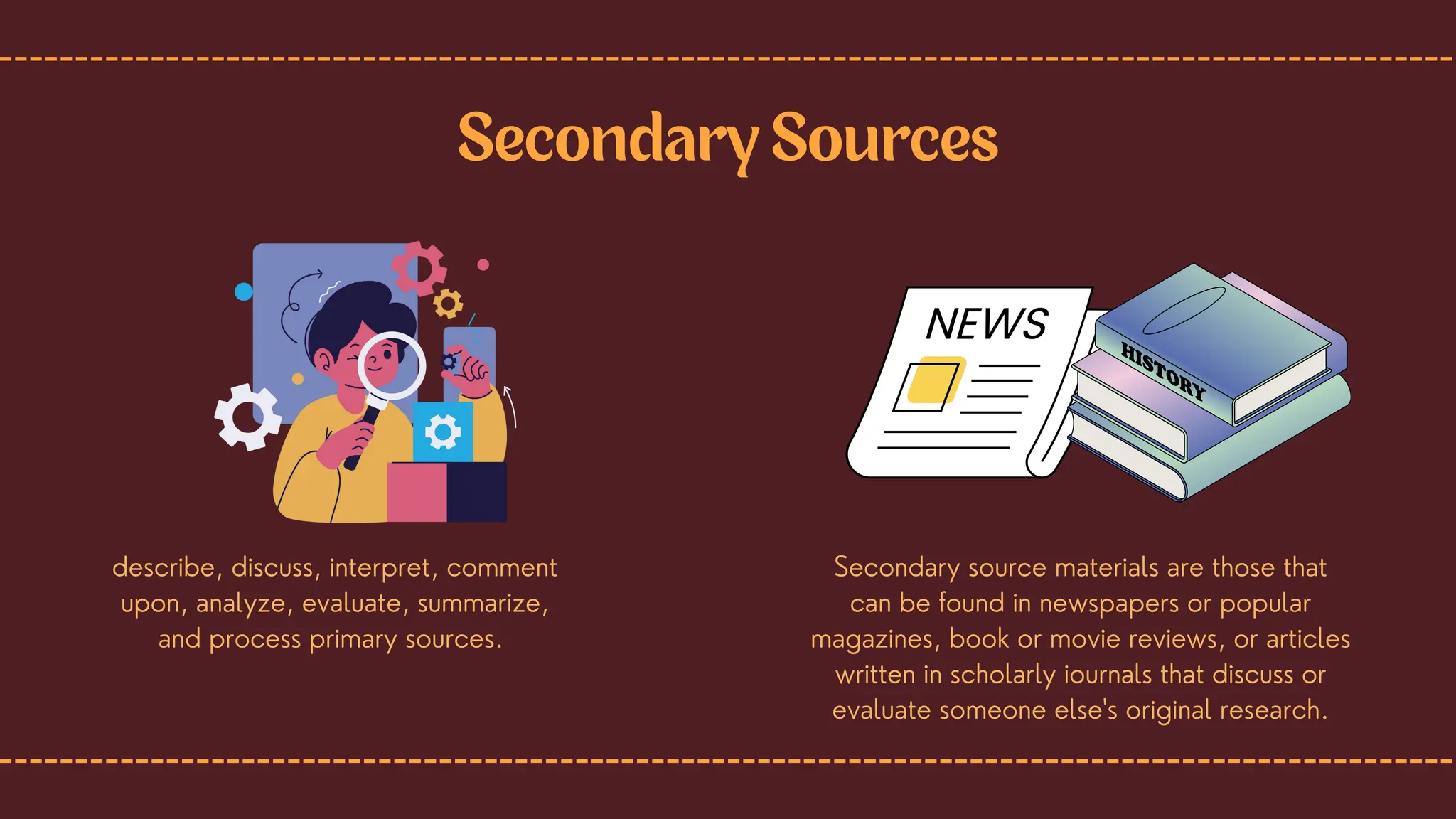
describe, discuss, interpret, comment
upon, analyze, evaluate, summarize,
and process primary sources.
Secondary Sources
Secondary source materials are those that
can be found in newspapers or popular
magazines, book or movie reviews, or articles
written in scholarly iournals that discuss or
evaluate someone else's original research.
Secondary Sources
Dictionaries Newspapers Books
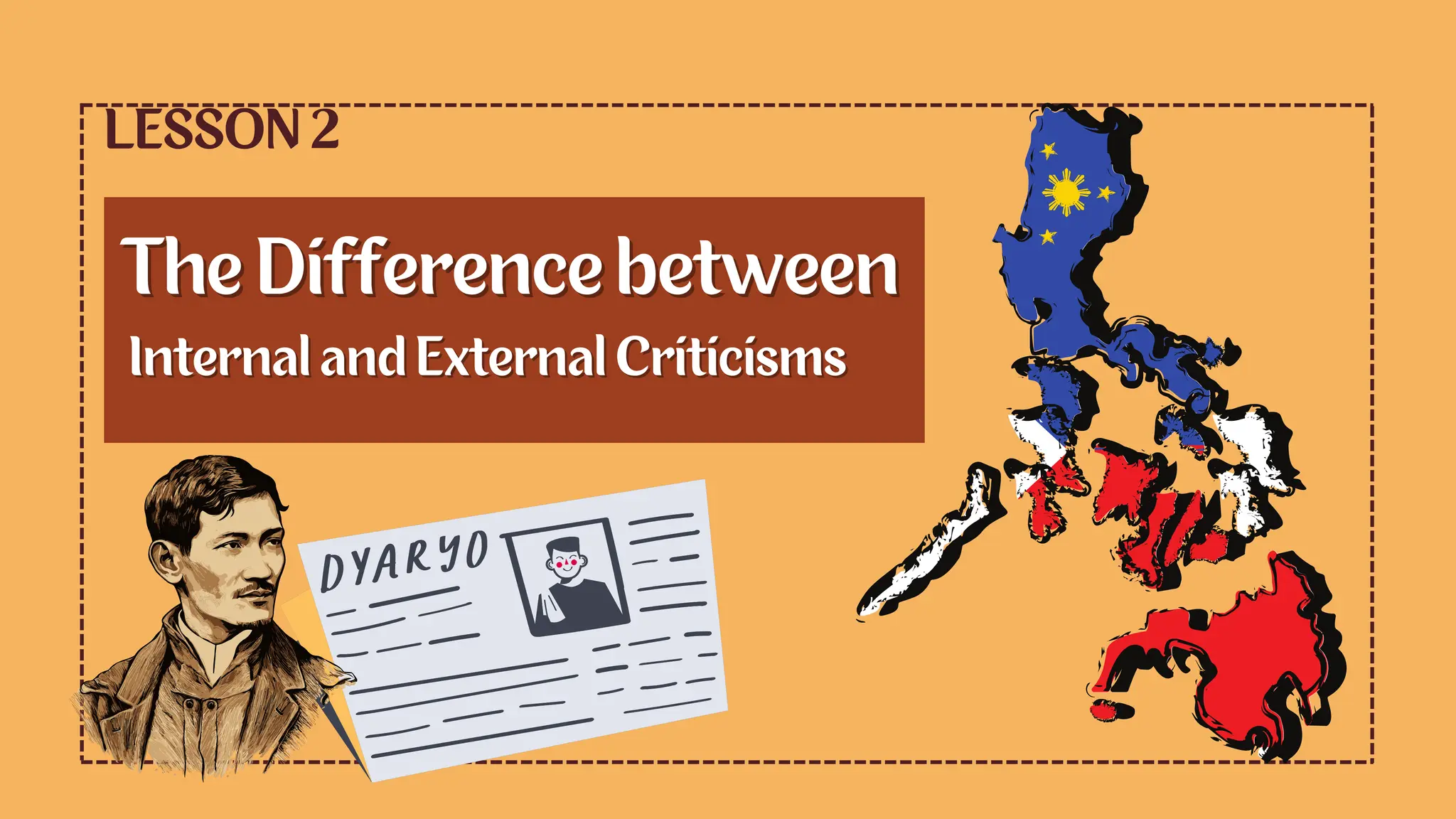
The Difference between
Internal and External Criticisms
LESSON 2
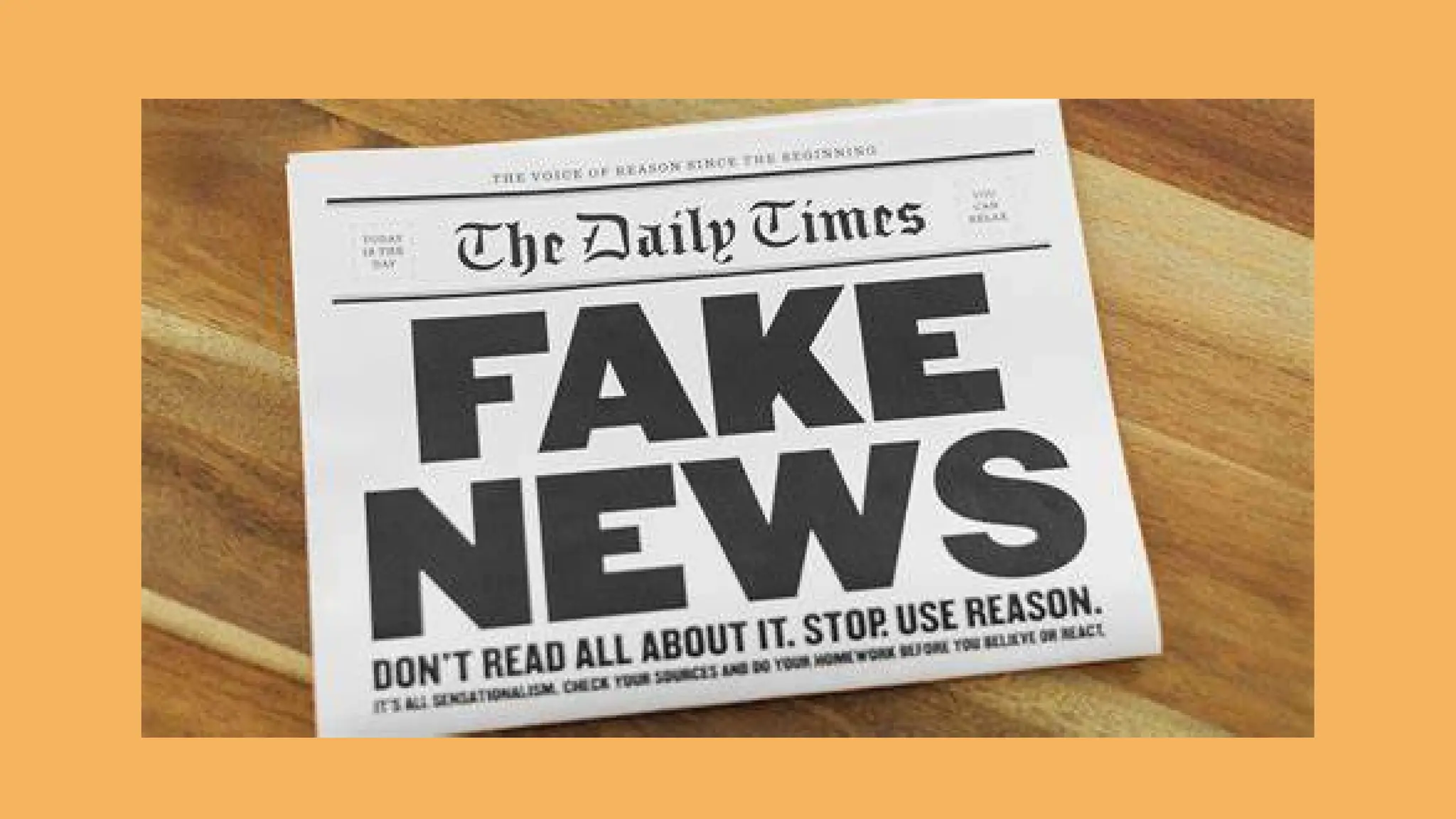
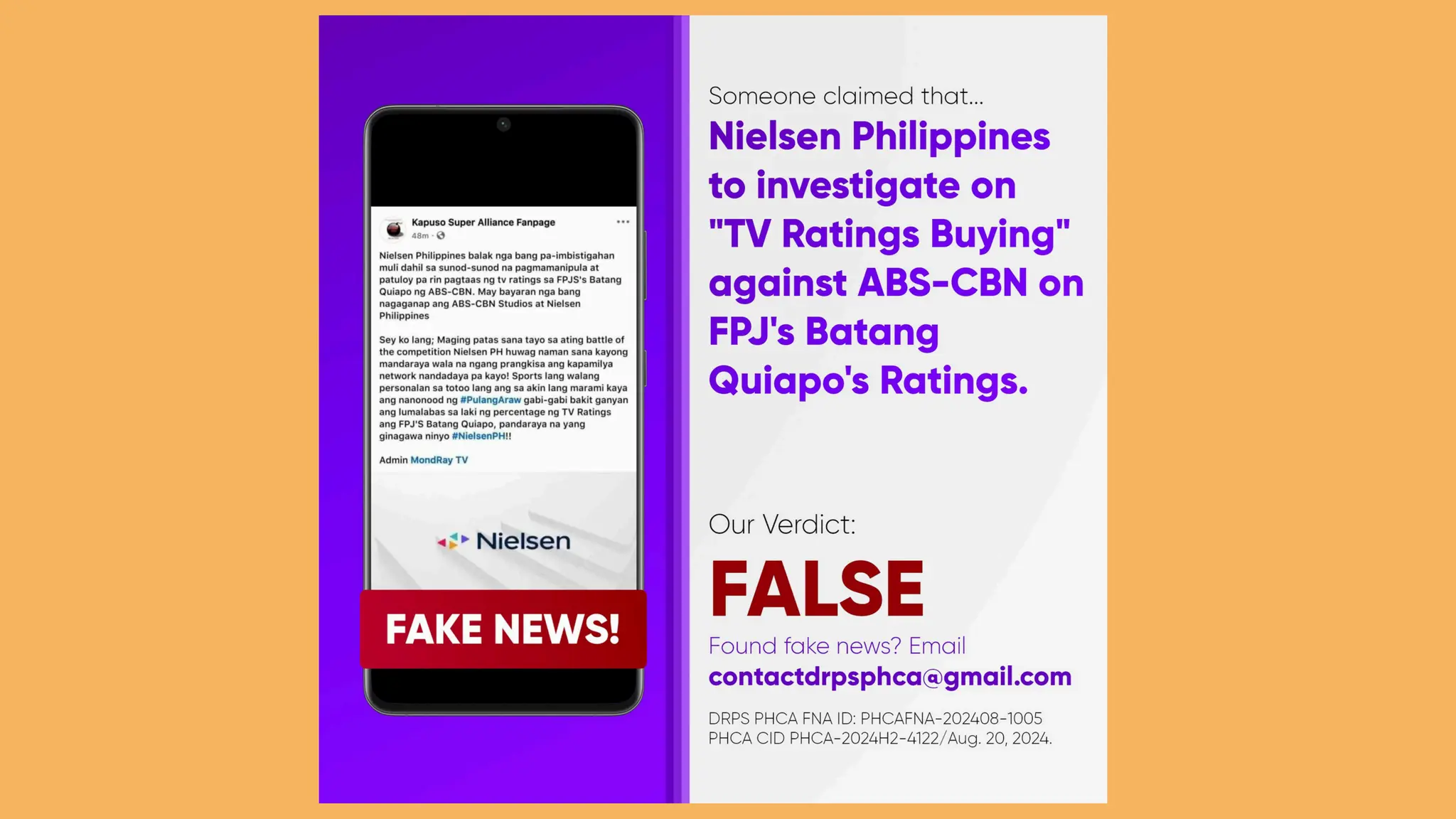
DUTERTE IS DEAD!!
“arrival of 300 military
vehicles and 20,000 US
and UK soldiers in the
Philippines.”
FAKE HISTORY!!
DIFFERENCE BETWEEN INTERNAL AND EXTERNAL CRITICISMS
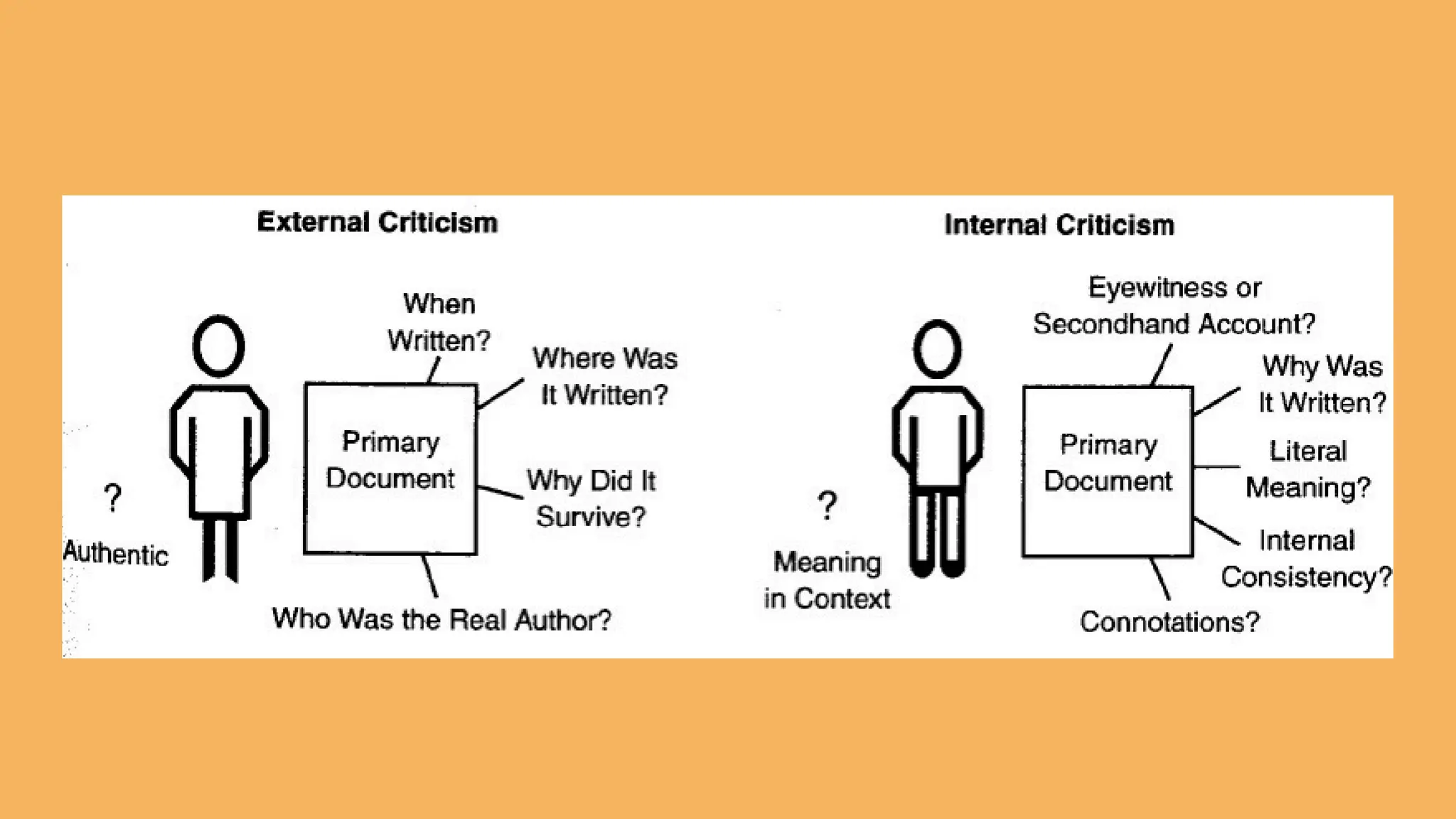
looks within the data itself to try to
determine truth -- facts and
"reasonable" interpretation.
Internal Criticisms
It includes looking at the apparent or
possible motives of the person
providing the data
used to assess the reliability and
legitimacy of historical sources.
DIFFERENCE BETWEEN INTERNAL AND EXTERNAL CRITICISMS
External Criticisms
External criticism applies
"science to a document."
It involves such physical and technical tests as
dating of paper a document is written on, but
it also involves a knowledge of when certain
things existed or were possible
Authentic historical Sources
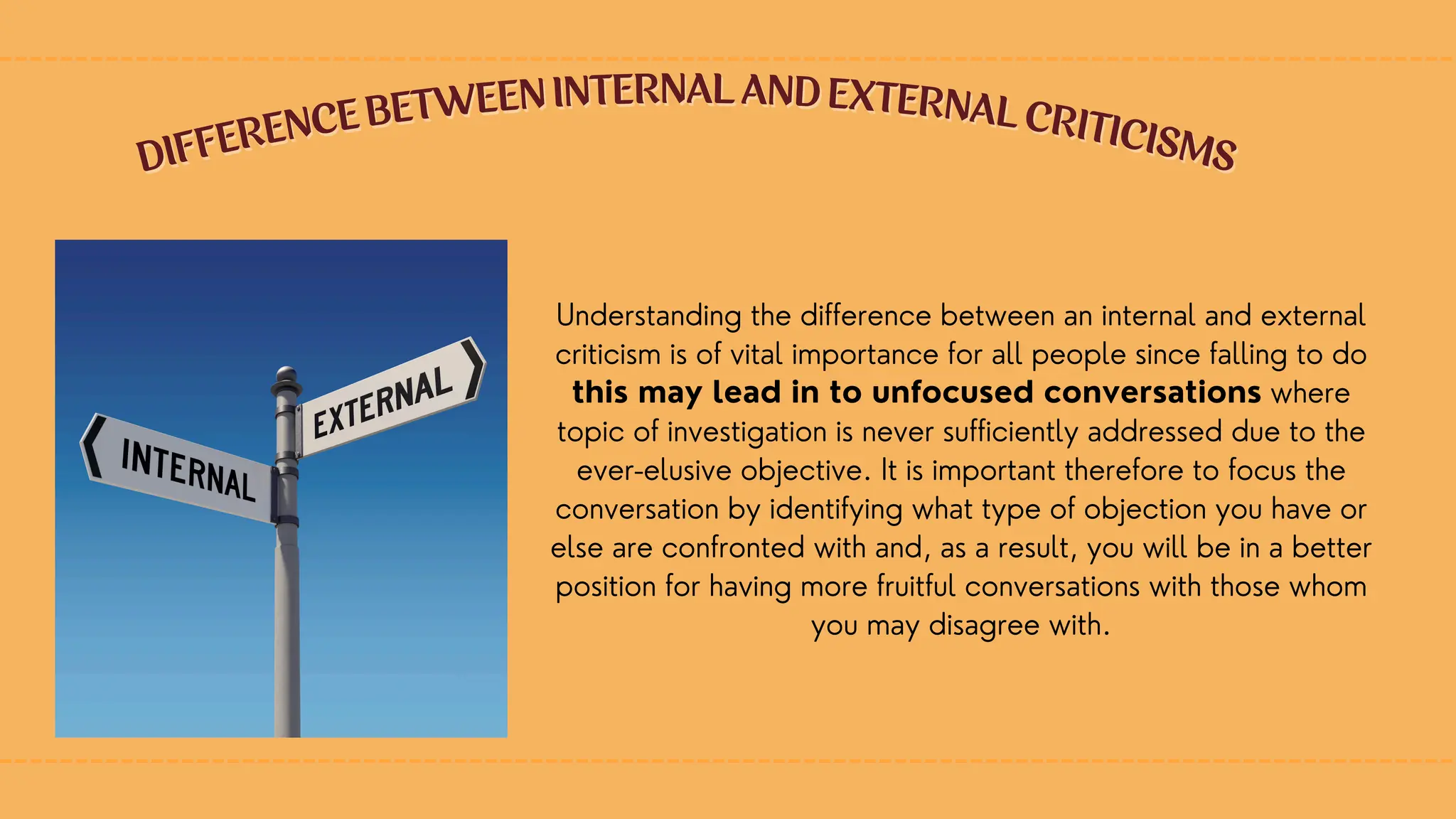
Understanding the difference between an internal and external
criticism is of vital importance for all people since falling to do
this may lead in to unfocused conversations where
topic of investigation is never sufficiently addressed due to the
ever-elusive objective. It is important therefore to focus the
conversation by identifying what type of objection you have or
else are confronted with and, as a result, you will be in a better
position for having more fruitful conversations with those whom
you may disagree with.
DIFFERENCE BETWEEN INTERNAL AND EXTERNAL CRITICISMS
Repositories
Repositories
of
of
Primary Sources
Primary Sources
LESSON 3
The main task of preserving and making the primary source
of information on Philippine history accessible to the public
lies on the National Archives of the Philippines. The

documents, records, and other primary sources
are basic components of cultural heritage and collective
memory -- the embodiment of community identities as well
as testaments to shared national experiences. Presently, it
is the home of about 60 million documents from the
centuries of Spanish rule in the Philippines, the American
and Japanese occupations, as well as the years of the
Republic.
Repositories of Primary Sources
local repositories of primary sources could be found in museums of provinces,
cities, and municipalities in the locality.
Repositories of Primary Sources
The Archiver is created by Republic Act 9470 on May 21, 2017. This new law
strengthened the record-keeping systems and administration program for archival materials
as it is the final repository for the voluminous notarized documents in the country.
For Republic Acts and other legislative enactments or statutes, the repositories are the
Official Gazette published by the National Printing Office.
Repositories of Primary Sources
For Supreme Court decisions, the repositories of the SC decisions are the Philippine
Reports, citations of books, treatises, pleadings and even court decisions are found in the
Supreme Court Reports Annotated (SCRA).
Repositories of Primary Sources
Thank you!
Thank you!

Readings in Philippine History Chapter 1

  • 1.
    READINGS IN READINGS IN PHILIPPINE PHILIPPINE HISTORY HISTORY CHAPTER1 BACKGROUND OF THE STUDY CHAPTER 1 BACKGROUND OF THE STUDY
  • 2.
    History, Its Meaning, Importance and Relevance TheDifference Between Internal and External Critism Repositories of Primary Sources CONTENTS CONTENTS
  • 11.
    It’s Meaning, Importanceand Relevance It’s Meaning, Importance and Relevance HISTORY: LESSON 1
  • 12.
  • 13.
    Meaning of History Theword History is derived from the Greek term “historia” which means “inquiry or research”.
  • 14.
    Meaning of History Theword History is derived from the Greek term “historia” which means “inquiry or research”.
  • 15.
    Meaning of History theterm history refers to accounts or inquiries of events that happened in the past and are narrated in a chronological order.
  • 16.
    Meaning of History Accordingto Aristotle, regarded as the father of logic, history is a systematic account of a set of natural phenomena which are arranged in the chronological order.
  • 17.
    Meaning of History Thegreat historians Thucydides and Herodotus (Father of History) defined history as learning inquiry about the past of mankind.
  • 18.
    Meaning of History E.H.Carr likewise defines history as a never-ending dialogue of events between the past and the present.
  • 19.
    Meaning of History WillDurant stated that history is a narrative of events of what civilized men have thought and done in the past.
  • 20.
    Meaning of History Inother words of Jawaharlal Nehru, the theme of history should be that of man’s growth from barbarism to civilization.
  • 21.
    helps the personor the government avoid the pitfalls of the present by knowing the rise and fall of the rulers, government and empires. makes person’s life richer and fuller by giving meaning to the books he reads (especially history books, the cities and metropolis he visits and the cultural performances he hears and listens to) broaden the person’s outlook by learning and understanding the various races, cultures, idiosyncrasies, habits, rituals, ceremonies, etc. of the making of contemporary society out of the diverse forces of the past. IMPORTANCE OF HISTORY IMPORTANCE OF HISTORY helps every person to draw conclusion from the past events helping the person to understand himself by being acquainted with other people.
  • 22.
    helps social andpolitical scientists or researchers engaged in research as for example a political researcher doing a research on federal form of government has to draw his data from the materials of history and finally, history preserve the cultural values of a nation because it guides society in a confronting various crisis. As Allen Nerins puts it, history is like a bridge that connects the past with the present and “pointing the road to the future”. enable the person to grasp his relationship with the past, such as to who ordered the killing of Ninoy Aquino or why China insists on occupying territories claimed by the Philippines--and because of the events, one has to turn to history for a complete answer. IMPORTANCE OF HISTORY IMPORTANCE OF HISTORY
  • 23.
    Relevance of Studying Relevanceof Studying Philippine History Philippine History
  • 24.
    The answer totheir unending questions is The answer to their unending questions is that "history is inescapable," according to that "history is inescapable," according to Penelope J. Carfield. The saying "all Penelope J. Carfield. The saying "all people are living histories - which is why people are living histories - which is why history matters" is true in this case. It is not history matters" is true in this case. It is not a "dead subject, as some believed. a "dead subject, as some believed. History connects things through time and History connects things through time and the students are encouraged to take a the students are encouraged to take a long view of such connections. An long view of such connections. An example is the legacies of the past is example is the legacies of the past is connected to the present so as to connected to the present so as to determine what comes in the future. determine what comes in the future. Some students enrolled in Philippine History Some students enrolled in Philippine History subject often asked the question subject often asked the question What is the use or relevance of studying What is the use or relevance of studying Philippine History? It is just an additional Philippine History? It is just an additional payment for an additional 3-unit core subject. payment for an additional 3-unit core subject. Why are we concerned about what Why are we concerned about what happened a long time ago? happened a long time ago? Relevance of Studying Philippine History Relevance of Studying Philippine History
  • 25.
    To understand thelinkage between the past and present To understand the linkage between the past and present is to have a better group of the condition of being human. is to have a better group of the condition of being human. All human beings are living histories. All human beings are living histories. For example, the human species speak languages, that For example, the human species speak languages, that are inherited from the past. are inherited from the past. They use technologies that they have not themselves They use technologies that they have not themselves invested. Thus, an individual is born of an inherited invested. Thus, an individual is born of an inherited "genetic template" which has evolved during his lifespan. "genetic template" which has evolved during his lifespan. Thus, the study of Philippine history is not only relevant, it Thus, the study of Philippine history is not only relevant, it is also useful and essential. is also useful and essential. Relevance of Studying Philippine History Relevance of Studying Philippine History
  • 26.
    Understanding Philippine historyis essential to a Understanding Philippine history is essential to a good understanding of the condition of being good understanding of the condition of being human. People build, people destroy, and people human. People build, people destroy, and people change. Neither of these options can be change. Neither of these options can be understood well without understanding the context understood well without understanding the context and starting point of all these. All human beings live and starting point of all these. All human beings live in the here and now, but it took a long unfolding in the here and now, but it took a long unfolding history to get enough to "NOW.” history to get enough to "NOW.” Relevance of Studying Philippine History Relevance of Studying Philippine History
  • 27.
    Distinction Between Distinction Between Primaryand Secondary Sources Primary and Secondary Sources
  • 28.
    direct firsthand evidences regardingan object, person, or work of art. Primary Sources They include historical and legal documents, eyewitness accounts, results, experiments, statistical data, pieces of creative writing, audio, video recordings, speeches, and art objects. They also include interviews, surveys, fieldwork, and Internet communications via email, blogs, listservs, and newsgroups.
  • 29.
  • 30.
  • 31.
  • 32.
  • 33.
    describe, discuss, interpret,comment upon, analyze, evaluate, summarize, and process primary sources. Secondary Sources Secondary source materials are those that can be found in newspapers or popular magazines, book or movie reviews, or articles written in scholarly iournals that discuss or evaluate someone else's original research.
  • 34.
  • 35.
    The Difference between TheDifference between Internal and External Criticisms Internal and External Criticisms LESSON 2
  • 36.
  • 37.
    “arrival of 300military vehicles and 20,000 US and UK soldiers in the Philippines.”
  • 42.
  • 43.
    DIFFERENCE BETWEEN INTERNALAND EXTERNAL CRITICISMS DIFFERENCE BETWEEN INTERNAL AND EXTERNAL CRITICISMS looks within the data itself to try to determine truth -- facts and "reasonable" interpretation. Internal Criticisms It includes looking at the apparent or possible motives of the person providing the data used to assess the reliability and legitimacy of historical sources.
  • 44.
    DIFFERENCE BETWEEN INTERNALAND EXTERNAL CRITICISMS DIFFERENCE BETWEEN INTERNAL AND EXTERNAL CRITICISMS External Criticisms External criticism applies "science to a document." It involves such physical and technical tests as dating of paper a document is written on, but it also involves a knowledge of when certain things existed or were possible Authentic historical Sources
  • 46.
    Understanding the differencebetween an internal and external criticism is of vital importance for all people since falling to do this may lead in to unfocused conversations where topic of investigation is never sufficiently addressed due to the ever-elusive objective. It is important therefore to focus the conversation by identifying what type of objection you have or else are confronted with and, as a result, you will be in a better position for having more fruitful conversations with those whom you may disagree with. DIFFERENCE BETWEEN INTERNAL AND EXTERNAL CRITICISMS DIFFERENCE BETWEEN INTERNAL AND EXTERNAL CRITICISMS
  • 47.
  • 48.
    The main taskof preserving and making the primary source of information on Philippine history accessible to the public lies on the National Archives of the Philippines. The documents, records, and other primary sources are basic components of cultural heritage and collective memory -- the embodiment of community identities as well as testaments to shared national experiences. Presently, it is the home of about 60 million documents from the centuries of Spanish rule in the Philippines, the American and Japanese occupations, as well as the years of the Republic. Repositories of Primary Sources Repositories of Primary Sources

  • 49.
    local repositories ofprimary sources could be found in museums of provinces, cities, and municipalities in the locality. Repositories of Primary Sources Repositories of Primary Sources The Archiver is created by Republic Act 9470 on May 21, 2017. This new law strengthened the record-keeping systems and administration program for archival materials as it is the final repository for the voluminous notarized documents in the country.
  • 50.
    For Republic Actsand other legislative enactments or statutes, the repositories are the Official Gazette published by the National Printing Office. Repositories of Primary Sources Repositories of Primary Sources
  • 51.
    For Supreme Courtdecisions, the repositories of the SC decisions are the Philippine Reports, citations of books, treatises, pleadings and even court decisions are found in the Supreme Court Reports Annotated (SCRA). Repositories of Primary Sources Repositories of Primary Sources
  • 52.